
nashville

Brothers Osborne on who’s welcome in country music

For John and TJ Osborne, work and family have long been intertwined.

Today the siblings are known to country music fans as Brothers Osborne, the rock-leaning twosome that’s put 13 songs on Billboard’s Country Airplay chart and been named vocal duo of the year half a dozen times at the annual CMA Awards. Before they moved to Nashville, though, the brothers grew up helping out with their dad’s plumbing business in the late 1990s in the small fishing town of Deale, Md.

“You know how every country star opens a bar in Nashville?” John asks. “I was thinking it’d be funny to start a Brothers Osborne plumbing company that services all the bars.”

With TJ on lead vocals and John on lead guitar, the brothers look back at those early days in Deale on their nostalgic new album, “Watertown,” which came out last week, 10 years after the release of their first LP. It’s got handsome, well-drawn songs about long-lost loves and teenage indiscretions, not to mention one tune about some of the colorful Osbornes who don’t play in the band.

“We got a mama that you wouldn’t want to take home to mama,” TJ sings in “Family Business,” which rhymes that line with “Got a daddy with a girlfriend who loves marijuana” and “Sister took a swing at her first boy’s father.”

“I always tell people that TJ and I are the most boring people in our family,” John says. “Our sister really did punch her ex-husband in the face.”

TJ, 41, calls the album a tribute to the people who shaped him and his brother, who’s 44. “When you’re a kid, you want to run away from home and spread your wings,” the singer says. “Then at some point, it’s like that place is almost calling you back.”

That the Osbornes are at an age to memorialize the old days puts them on the outskirts, to some extent, of a country scene crowded with ascendant zoomers like Ella Langley, Tucker Wetmore and Megan Moroney. Yet the brothers are hardly fuddy-duddys: In 2021, TJ became the first country artist signed to a major label to come out as gay; musically, he and John consistently make unexpected stylistic choices — take the ringing new wave guitars in “Family Business” — even as they court down-the-middle success, as with the new album’s lead single, “Born and Raised Hell,” which features the country radio kingpin Cody Johnson.

“John and TJ don’t make corporate country music,” says Ashley McBryde, who’s collaborated repeatedly with the brothers. McBryde calls John “a guitar god” and says TJ’s deep voice “could make your kneecaps come unglued”; she adds that she likes to listen to their records “while I’m doing yard work, slinging a chainsaw.”

“Our mission the whole time has been: How do we thread the needle of doing something that’s a little left of center while making it commercial enough that people can hear it?” TJ says over coffee at an outdoor cafe in Griffith Park. The Osbornes are in town on a recent afternoon between tour dates; last night they did dinner at Nobu in West Hollywood — “bougie as f—,” John acknowledges — then “climbed up the La Cienega mountain,” as the guitarist puts it, back to their hotel on Sunset.

“The last 50 yards, I felt like I was gonna puke,” John says.

Does Nashville have good sushi?

“They do now,” John replies. “Back in the day, there was just this place Ken’s — kind of a hole in the wall where you’d get these huge styrofoam containers of rolls. It was really cheap, and we’d all get really stoned and eat tons of sushi.”

The brothers learned to play from their dad in Maryland in a family roots-music combo called Deuce and a Quarter; each went to Nashville to do his own thing but didn’t really gain any traction until they teamed up — a union they say their mother envisioned from the jump.

“I think the second TJ was born, she thought to herself: I have a country band on my hands,” John says. “She’s very — what’s the word I want to use? — goal-driven, in a good way. So when we finally joined forces and things started taking off, there was a bit of ‘I told you so’ about it.” He laughs. “In her defense, she was right.” (The brothers’ sister Natalie also works in Nashville as an A&R exec at the indie label Leo33, where she signed Zach Top.)

Brothers Osborne — nominated again for vocal duo of the year at next month’s CMAs ceremony — came up in a tightknit peer group that also included McBryde, Maren Morris and Kacey Musgraves. The duo broke out with a No. 1 showing for “Stay a Little Longer,” a single from their platinum 2016 debut; since then they’ve scored hits with tunes with like “21 Summer,” “Nobody’s Nobody” and “Burning Man,” the last a collab with Dierks Bentley that also went to No. 1.

Asked why they’ve been embraced by the traditional Nashville biz in a way that’s sometimes eluded Musgraves, TJ shakes his head. “There’s so many Kacey songs that I’m just like, How was this not a huge hit for her?” he says. “There is a game you have to play with country radio — doing things for them that we were willing to do that I know Kacey was just like, ‘No thanks.’”

Why does he reckon he and his brother were willing to jump through the hoops?

“I mean, we knew it would help,” he says. “We grew up in a poor family where everyone worked their asses off just to get by paycheck to paycheck. So I think for us it was about the fact that we’re gonna put in the work and get noticed.”

“You have to be willing to compromise — not your art or your dignity but compromise your time,” John says, “in the hopes that you can pursue a career in music because it’s very competitive.”

Over the past few years, some of Nashville’s biggest hits have come from outsiders like Post Malone experimenting with country music. Speaking broadly, TJ says the trendiness of the genre “is a little annoying because people are like, ‘I hate all country music,’ until their career flounders and suddenly they do a country record. Some of these people, they don’t know anything about it.

“At the same time, the genre is the biggest it’s ever been, which probably set the stage for a song like ‘Choosin’ Texas’ to be the song that it was,” he adds of Langley’s pedal-steel-soaked mega-smash, which just logged its 25th week atop Billboard’s Hot 100 — longer than any other song in chart history.

“I was just up in Brooklyn at a gay bar, and I’m like, All the gays are singing along — what the f—?” TJ says. “Also very jealous of that. I want a song all the gays are singing.”

Five years after he came out in a widely publicized Time magazine story, TJ says he doesn’t think much about his position as one of the few openly gay men in country music. As we keep talking, though, some things seem to come to mind.

“There was a moment recently with all the equity and inclusion stuff where [my identity] started to feel political — that was weird,” he says. “It felt like picking sides, even though I’m like, This is just my sexuality. But I feel like we’re kind of getting back out of that a bit.”

Then again, TJ recalls his appearance at May’s ACM Awards, where he presented Langley with the prize for female artist of the year. “I made a joke about my gay ass being up here giving this award, and there were comments from people being like, ‘I don’t understand why you have to talk about it,’” he says. “It’s like, F—, maybe people aren’t as open to it as I thought. It was proof to me that there’s still a lot of ground to cover.”

Is TJ up for doing the work of opening minds?

“I am. And I think it’s important work because there’s so many different types of gay people. There’s also so many different types of rural Americans. We’ll go to some places, and there are people who I perceive to maybe have some sort of bigotry towards me but I read them wrong and they’re actually totally cool.

“Look, you’re not gonna be able to convince everybody,” he adds. “There’s people that just hate on people for the stupidest reasons. Girls have it the worst. Anytime a girl does anything — ‘She looks like a slut,’ ‘She’s fat,’ ‘She’s too skinny.’ There’s just some mean people out there.”

“We’ve heard it all,” John says.

“There was this amazing burn we got one time where we’d taken ‘21 Summer’ out of the set,” TJ says, “and someone commented, ‘I can’t believe Brothers Osborne played 21 guitar solos but not ‘21 Summer.’” He laughs. “See, at least that’s pretty clever.”
Source link

Why reported challenges with touchscreen voting machines don’t signal election rigging

The reports erupt on social media every election year: Voters say they tapped a candidate’s name on a touchscreen voting machine, only for the wrong person to light up as their selection.

With some trial and error, and occasionally help from poll workers, the voters are generally able to cast their intended ballots. Nevertheless, some come away from the experience assuming the worst — that the anecdotal issues are proof of a partisan election-rigging scheme.

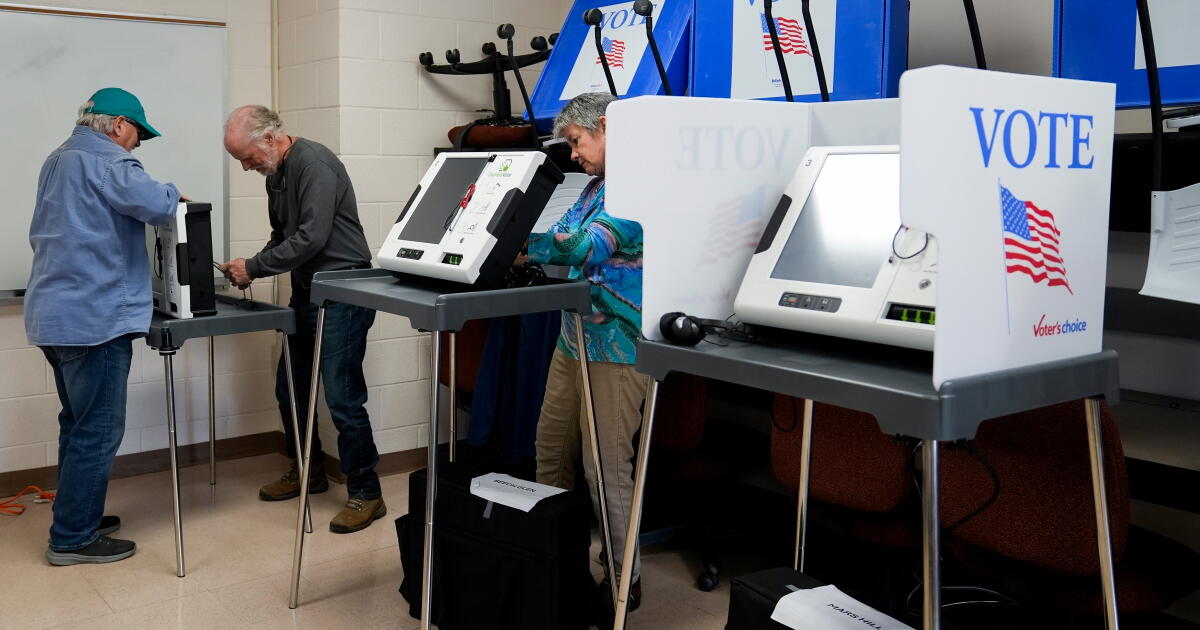
As early voting in November’s midterm elections gets underway in most states, with soaring turnout in many of them, the claims have returned in force, with voters — especially Democratic ones — in Kansas, Ohio, South Carolina, Tennessee and Texas documenting difficulties with the ballot marking devices.

Many voters have described their experiences on social media, with some falsely interpreting the troubles as attempts at election tampering to favor Republicans. The claims come as an AP-NORC poll shows many Democrats have lost trust in election results over the last four years, with many seeing the president interfering with the vote as a major concern.

Election officials say the touchscreen challenges are almost always the result of user error or an easily fixed screen miscalibration, and say the number of complaints this year isn’t higher than it has been in years past, despite the outsized attention on social media. They emphasize that voters can select a candidate as many times as needed, consult a poll worker for help and review selections before submitting their ballot.

Elections in the U.S. are decentralized, with thousands of election jurisdictions controlling the vote, each with different rules set by state and sometimes local governments. That structure makes the nation’s voting process extraordinarily complicated. It also shields it from widespread fraud.

“Almost all of the claims of vote flipping are understandable human error,” said David Becker, executive director of the Center for Election Innovation and Research, who noted disinformation purveyors often seize on well-meaning concerns to sow doubt in the voting process. “Is there one of us who hasn’t had a butt dial or mistyped something on our phones? It is not nefarious.”

Many voters, including Dolly Parton’s sister, report issues

The complaints about touchscreen machines switching votes have gathered tens of thousands of likes, shares and views on social media in recent days, popping up in various high-population areas across the country, including Tennessee’s Williamson and Davidson counties, homes to Franklin and Nashville.

Stella Parton, the sister of the late country singer Dolly Parton, wrote in a Facebook post on Wednesday that at her polling place near Nashville she had to “go back three times and correct my vote” because it kept defaulting to Republican Sen. Marsha Blackburn.

She added: “I’m putting this out here because when we vote, we take it seriously but we try not to hold up the long lines. Do it anyway. Don’t let them rig this election.”

Chad Gray, election administrator in Williamson County, said officials there had found no discrepancies in the voting equipment. If problems or questions do arise, he said, people from each party will examine the devices and make sure they are working properly.

Tennessee Elections Coordinator Mark Goins told WSMV in Nashville that the issues reported in his area were “not a vote-flipping situation.” “It’s more like an unintended touch that they may not even realize,” Goins said.

Another Facebook user explained in a video that when his mother-in-law attempted to vote for Democratic candidates in Kendall County, Texas, the machine kept selecting Republicans. He said she was ultimately able to vote as desired and contended that it could have been user error, but still concluded people were “jacking with our elections.”

Staci Decker, elections administrator in Kendall County, said “100% of the time” the issue can be attributed to a voter tapping the wrong part of the box onscreen or from voters tapping the screen too hard, causing it to become miscalibrated. She said her policy is for staff to recalibrate the screens every few days to ensure the accuracy of the touchscreen.

“This is part of an attempt at every election (especially the bigger ones) to scare voters away,” Decker said in an email. “Every single piece of equipment used in our election is tested before it can be used in an election.”

Reports of voting machine errors common during high-turnout elections

In South Carolina, where an X user said a machine made it hard for her to vote for Democratic Senate nominee Annie Andrews, state election officials haven’t seen any unusual increase in reports of voters having trouble making selections, said Sydni Bain, a spokesperson with the state’s election commission.

“We commonly receive some of these reports during elections, particularly statewide elections with high turnout,” she said. “We encourage all voters to be careful in making their selections and to review their ballot before it is cast.”

In Bexar County, Texas, where an X user reported having to tap the screen forcefully to get the machine to register her choice of Democrat James Talarico instead of Republican Ken Paxton for Senate, election officials said they couldn’t confirm any equipment issues.

“This could possibly be user error,” said John Moreno, the county’s assistant public information officer. “If a voter has concerns about their ballot, they should bring it to the attention of the on-site judge.”

Kristin Miles, president of the Texas Assn. of County Election Officials and election administrator in Bastrop County, said “vote-switching” claims come up every election cycle.

“Nearly every case comes back to the screen calibration on older touchscreen machines, not a change to anyone’s vote,” she said.

Officials emphasized that machines are tested before each election and that in most jurisdictions, there is a postelection audit that consists of a manual hand count of a sample of paper ballots.

Voting machine company explains what to do if you encounter problems

Voters across the country cast ballots in various ways, including with ballot marking devices that print a paper record or with paper ballots they fill out by hand.

The counties where most of the recent vote-flipping social media reports are concentrated use ExpressVote ballot marking devices from a company called Election Systems & Software. The machines let voters make their selections on a touchscreen. Then, a paper record is typically printed for review before the votes are tabulated.

Katina Granger, senior manager of public relations for the Nebraska-based ES&S, said the company works closely with election officials and provides technical support when needed but has not been made aware of any widespread issue with voting machines this cycle.

She said when a voter is having difficulty, they should ask a poll worker for assistance. If they’ve already printed a ballot that doesn’t reflect their intended selections, “they should notify a poll worker rather than cast it so the jurisdiction can follow its procedures for replacing the ballot.”

Swenson and Goldin write for the Associated Press. AP writers Anna Wilder in Austin, Texas, and video journalist Kristin M. Hall in Nashville contributed to this report.

Source link

Brandon Flowers on ‘Thrasher,’ the Killers and his fave L.A. breakfast

Brandon Flowers stands onstage at the Ford Theatre wearing a sharp black suit and a bejeweled bolo tie and tells the audience about his cousin Bobby’s job parking cars in the 110-degree heat of the Las Vegas Strip.

“That was gonna be me in another life, only my big plan was to work at the Bellagio,” he adds. “Nicer place, more tips.”

As the frontman of the Killers, Flowers, 45, has spent more than two decades singing about the struggles and the temptations at the heart of the American dream. But on his new solo album, “Thrasher,” he trades the Killers’ gleaming, synth-laced rock for the crackling sound of hand-played country music.

He cut the LP at Nashville’s historic RCA Studio A, where country giants like Dolly Parton and Waylon Jennings once worked; not only that, but to accompany him he recruited veteran session players including David Rawlings, Bruce Bouton and 85-year-old Charlie McCoy, who played harmonica on George Jones’ immortal “He Stopped Loving Her Today.”

Yet for all its old-school country cred, “Thrasher” also emphasizes Flowers’ roots as a Vegas showman — his tremulous croon, his go-for-broke emotion, his almost preacherly understanding of how to take a crowd up (and up) and how to take it back down. Think Glen Campbell or Donny Osmond.

“Or Wayne Newton,” says Rawlings with admiration. The guitarist, known for his long collaboration with Gillian Welch, performed with Flowers at July’s Newport Folk Festival. “It’s really thrilling to see the way he inhabits this stuff onstage,” he adds. “I have such incredible respect for anybody who knows how to entertain at that level because it’s an absolute gift — and it’s really hard work.”

Flowers, who grew up in Las Vegas and Utah and who shares three sons with his wife, spoke about the album in his dressing room last month a few hours before the Ford show. A sequel to “Thrasher,” recorded during the same sessions, is due out next year.

The Nashville OGs who played on these records — do you think they were impressed by you?
I think they were refreshed. I think they didn’t quite know what they were getting into and were pleasantly surprised.

For you, it was a different way of working, right? These players are artists. But it’s also just another day on the job.
You feel that: “Charlie’s got to leave at 4 to go to the Opry.” He still gets his licks in.

I wonder what it would’ve sounded like to cut 10 Killers classics with this band.
Probably like the Traveling Wilburys or something. The second album has some of that DNA. This one was more of a narrative album — a lot of stories. The other one, it’s more in the romantic realm. I’m excited to get it out. I have another one cooking.

A third album?
Well, because they’re so efficient. It’s opened up a door for me that I feel like I’ll always be able to explore. If I have 10 songs, I can go to Nashville for five days and cut the whole thing. We do two songs a day, no problem.

You’ve said there’s this idea in rock music that making an album needs to feel like climbing a mountain.
I blame it on U2. You don’t feel like you’re doing it right if you’re not doing that. We really went into that on “Sam’s Town” — we climbed Everest, man. When we finished “Sam’s Town,” I remember the last day — it was like 6 in the morning, the sun was up and we were finally done. What a relief it was.

Now the veil has been lifted.
It doesn’t have to be like that.

Did you get a feel for Nashville as a town while you were there?
I got a breakfast spot: Cafe Roze. I don’t want to blow it up too much because I want to be able to get in. But you know Cafe Stella in Silver Lake? They used to have my favorite breakfast in the world: sourdough, soft scramble, prosciutto and Parmesan. And they have that exact thing at Cafe Roze — it’s like I’m transported back. I could eat it every day with a side of avocado.

“Thrasher” follows a number of country excursions by rappers and pop stars. Do you have any anxiety about being seen as a carpetbagger?
No, because I’m not trying to bulldoze my way into the world and open a bar in Nashville. This is an authentic part of myself — I have an education in this music. People have a lot of preconceptions about country music, especially lately. Everyone says the same thing: cold beer, dirt road, Friday night. But there’s such an art to the tradition — it’s a soulful artistic endeavor. I’m trying to come at it from that angle.

What’s your relationship with modern country music — Morgan Wallen and Miranda Lambert and the like?
I don’t have one. It’s more people that are on the fringes, I guess — Jason Isbell or Sturgill Simpson. I got Sturgill’s guitar player because I was a fan of that stuff.

Before I heard “Thrasher,” I expected kind of a stripped-down Isbell vibe.
I could see him doing “In a Heartbeat” or “Miss America.” But once we got to Nashville and got the guys in the room, it just got a little more pep in its step.

Does being embraced by the Nashville industry feel like a reasonable goal?
That’s a whole other nut to crack. You hear stories about Dwight Yoakam having a tough time — and he brought some heat. Or John Prine just because he was from Illinois and not from further south. I’m not gonna go on a campaign to prove how worthy I am.

You’ve been dinged by people who think you’re putting on an accent on this record.
I feel like this is more how I speak than maybe they’re accustomed to. I don’t know, I might’ve leaned in a couple times. There is a Utah accent — it was something I was embarrassed by when I was younger. But now I’ve lived there 16 years of my life total, so it just starts feeding its way back in.

Is your vocal approach different for country than for rock?
There’s more quiet in these songs — more room for the story to be told. In the rock band, I’m competing — everybody wants to be heard — whereas this one, there’s this beautiful thing where the guys don’t mind being in the background. They want to frame the picture, and I’m the picture.

Did you find yourself making more of an effort to enunciate?
I’ve always been cognizant of that. Just today, there was a band — I won’t say who it was — but I was interested in hearing their new thing, and I didn’t understand a word until the chorus. I was rooting for the guy the whole time, but it’s like: How can I fall in love with this if I don’t know what’s happening?

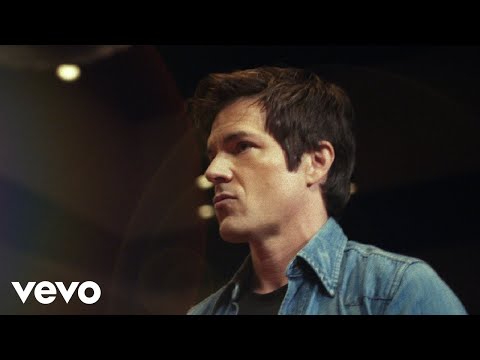
Brandon Flowers performs last month at the Ford Theatre.

Brandon Flowers performs last month at the Ford Theatre.

(Rob Loud)

Got some questions about specific songs. “One of Us” is about your brother-in-law, which made me realize how few people write songs about their in-laws.
He passed away unexpectedly a few years ago. You know, I’m the youngest of six, and he married my oldest sister. She’s 17 years my senior, so when they got married, I was a kid — he became my big brother and was a masculine figure in my life and all that. There’s your family and then there’s your found family, and he’s part of my found family. I wanted to honor him, and this is my way of doing it.

I assume your sister’s heard the song.
Oh yeah. A lot of those moments happen on this record where I had to play the song for the person, and you just can’t help but be brought closer together. You’re taking part in their grief but we’re also celebrating him. It was beautiful.

“Miss America” is about another one of your sisters.
The one next in line.

She’s addressing an abusive ex, and you sing it from her point of view — from a woman’s perspective.
It just started like that. I don’t remember a moment of thinking: Am I gonna do this from the outside or am I gonna step into her shoes? Maybe it’s something to do with that Tom Waits song [“Christmas Card from a Hooker in Minneapolis”] — something about that maybe gave me permission.

Did you play “Miss America” for that sister?
It felt like the gentlemanly thing to do. If she’d said no, I would’ve been heartbroken because I think “Miss America” is gorgeous — I’m really proud to be part of it. But I would’ve honored her wishes.

In “An American Dream,” the point of view seems to keep shifting. At one point I think the narrator becomes Elvis Presley?
Chorus 1, I’m singing with this man that used to give me cigars and tobacco when I was a kid — we’re singing it together. Giving a 13-year-old Red Man tobacco — there was nothing shady about it, or nothing too shady — but it was still a wild move. Then Chorus 2, Elvis and I are both singing — I see it that way.

Which era of Elvis are you envisioning?
Whenever I think of him, I think of him in ’68. Nobody’s ever looked that good — it’s not fair.

You’re known for your flights of lyrical fancy: “Burning down the highway skyline in the back of a hurricane,” for instance, from the Killers’ “When You Were Young.” Did country music allow for those flourishes?
Verse 2 of “Does It Ever Cross Your Mind?” is a great example: “I could’ve been born in Bangladesh but I wasn’t / I was born here with just enough jelly beans in my basket to ask you to go wishing on a star.” That’s fun.

In “An American Dream” you say, “We blew through starlight on bricklayers’ knees.”
We’re performers, and we’re here to entertain you. But we’re working-class men, me and Elvis.

Some of these lines get at this crucial point that I think your music makes, which is that pageantry and sincerity can coexist.
I think people get confused a lot — they might look at a line like the one you just talked about and think it’s total bulls—. It’s annoying to me to read a review and see where they just don’t get it — and they think they’re the smart one. I saw someone talking about my tropes, and they brought up the Bangladesh line. I thought: What are you talking about? That’s the most left-field line.

You’re challenging the listener to accept that over the top doesn’t necessarily mean phony.
It’s so American to be over the top and to still have substance. That’s the chorus of “An American Dream”: “Gold and silver / God and glitter.” I guess I’m trying to spoon-feed it there a little bit.

Plenty of Killers songs involve people making bad decisions. How do you think about the degenerate’s place in country music?
It’s funny how people aren’t quite familiar with how wild it was. The same person in me that was excited about old Depeche Mode stories still gets excited about old George Jones stories. And a part of me yearns for that. But I keep it under wraps.

Your oldest son is 19, which means you became a dad at a fairly young age.
It was just par for the course. I grew up in an LDS family — my sisters were having kids when they were 17 and 18. So having Ammon at 26 — that was the oldest anyone had had their first child in my family. They were like, “Brandon might be gay.”

How did you reconcile the rock star and new dad halves of your life?
It sort of gave me a direction early on because I was a little bit teetering in those days. Who’s ready to have this wild fame brought on them at such a young age? We weren’t the Beatles, but “Hot Fuss” and “Sam’s Town” were really successful records — we went straight to arenas. It was tough to navigate, and family gave me an anchor.

Do you hear before parenthood and after parenthood in your music?
There’s a song called “Be Still” on the fourth record — a song to the kids. But I don’t know if the writing changed that much. Everybody was getting older in the band, so whatever happened, you can’t place the blame just on me.

Source link