
names

Argentina names Jalisco New Generation Cartel terrorist organization

Inclusion in the terrorism registry enables the government to impose “financial sanctions and operational restrictions” aimed at limiting the capacity of criminal organizations and their members, according to the statement from President Javier Milei’s administration.

March 26 (UPI) — Argentina’s government on Thursday formally designated the Jalisco New Generation Cartel, known as CJNG, as a terrorist organization and ordered its inclusion in the country’s public registry of individuals and entities linked to terrorism and its financing.

In an official statement, Argentina’s presidential office said the decision is based on reports documenting the group’s transnational criminal activities and links to other terrorist entities.

The move aligns Argentina with U.S. security policy, which designated the cartel as a terrorist organization in 2025.

Inclusion in the registry enables the government to impose “financial sanctions and operational restrictions aimed at limiting the capacity of these criminal organizations and their members,” according to the statement from President Javier Milei’s administration.

It also “protects Argentina’s financial system from being used for illicit purposes” and strengthens international cooperation in security and justice matters “in close coordination with countries that have already designated the Jalisco Cartel as a terrorist organization.”

The government said CJNG has become one of the world’s most powerful drug trafficking organizations over the past decade, with a presence in Mexico, operations in the United States and expansion into at least 40 countries, including Argentina.

The statement also highlighted the measure’s impact on international cooperation, saying it reinforces security and judicial coordination with countries that have already classified the cartel as a terrorist group.

The Jalisco New Generation Cartel emerged in Mexico in the early 2010s amid the fragmentation of major drug cartels. Its leader and founder, Nemesio Rubén Oseguera Cervantes, known as “El Mencho,” died in February during an operation in Mexico supported by U.S. intelligence. The United States had offered a $15 million reward for information leading to his capture.

Milei’s government has previously designated as terrorist organizations groups already classified as such by the United States, including branches of the Muslim Brotherhood in Egypt, Lebanon and Jordan, the Palestinian militant group Hamas and Iran’s Quds Force.

Source link

Iran names successor to security chief killed in US-Israeli attack | US-Israel war on Iran News

Mohammad Bagher Zolghadr, ex-IRGC commander, to replace late Ali Larijani as chief of Iran’s Supreme National Security Council.

Iran has named Mohammad Bagher Zolghadr, a former commander of Iran’s Islamic Revolutionary Guard Corps (IRGC), as the successor to Ali Larijani, head of the country’s Supreme National Security Council (SNSC), who was killed in a US-Israeli air strike earlier this month.

President Masoud Pezeshkian’s deputy of communications announced the appointment on X on Tuesday.

Recommended Stories

list of 3 itemsend of list

The SNSC, formally chaired by Pezeshkian, coordinates security and foreign policy and includes top military, intelligence and government officials, in addition to representatives of Supreme Leader Mojtaba Khamenei.

Zolghadr, who served in the 1980s war against Saddam Hussein’s Iraq, went on to become head of the IRGC’s joint staff for eight years and then deputy commander-in-chief of the elite force for another eight years.

In 2005, he was named deputy interior minister for security and police in the government of then-President Mahmoud Ahmadinejad, a move that was seen at the time as bolstering the IRGC’s influence in politics.

Since 2023, he has been the secretary of the Expediency Council, a powerful body that plays both an advisory and mediating role between Iran’s various power structures and the supreme leader.

Zolghadr’s new position consolidates the IRGC’s growing clout in Iran amid growing uncertainty regarding decision-making at the top of the system. Mojtaba Khamenei has not been seen in public since he succeeded his assassinated father, Ayatollah Ali Khamenei, in early March.

Larijani, one of the most prominent non-clerical figures in Iranian politics, was killed last Tuesday in a week that saw the war spiralling throughout the region, upending global energy markets and roiling the world economy.

On Tuesday, the war showed no sign of de-escalation after US President Donald Trump’s claim that he was speaking to an unidentified “top person”, as he extended by five days a deadline to hit Iran’s power plants.

Iran’s Parliament Speaker Mohammad Bagher Ghalibaf said “no negotiations” were under way, accusing Trump of seeking “to manipulate the financial and oil markets”.

Source link

Simon Calder names ‘stunning’ European holiday destination with £16 flights and cheap drinks

The travel expert previously shared his recommendations for a gorgeous yet affordable European summer holiday, and one place is well worth a visit.

If you’re still to book your holiday for 2026, Simon Calder is on hand to help with suggestions on where to go. The travel expert has previously spoken out about his favourite affordable spots to take a trip, and they’re all gorgeous too.

Simon highlighted Portugal, Bulgaria, Montenegro and Albania as some of the most stunning yet affordable holiday destinations. He said: “In Western Europe, it has to be Portugal and in Eastern Europe, Bulgaria – obviously a very popular package holiday destination.”

In fact, according to research in 2023 by holiday specialists Jersey Island Holidays, Montenegro topped the charts as Europe’s most affordable destination, reports the Express. Although this was a few years ago, the destination still remains very affordable.

For example, Brits can secure a seven-night break in an all-inclusive four-star resort in Herceg Novi next month for £419pp, including flights, according to Love Holidays.

The Iberostar Waves Slavija hotel, which is right by the beach, will only set you back £409 for seven nights — excellent value for money.

It’s cheap when you’re actually there too. According to Cost of Living, the average price of a beer in Montenegro is €2.50, which is around £2.15.

The average pizza costs €12, whereas pasta and meat dishes come in at around €15, according to Porto Montenegro. Flights in April start at just £16 one-way from Gatwick Airport.

But Simon Calder isn’t the only one singing the praises of this holiday destination, as travel bloggers at Wander-lush crowned Montenegro Europe’s most “underrated nation”.

Kotor Bay stands out as one of Montenegro’s most spectacular locations, and conveniently for tourists, the nearest city and airport is Podgorica.

The experts highlighted that whilst Kotor ranks among the most striking towns on Kotor Bay, if they “had to choose the most beautiful place in Montenegro overall, it would be the harbour town of Perast”.

Travel experts at Starsinsider agreed, declaring that Montenegro “is the most underrated jewel of the Mediterranean”.

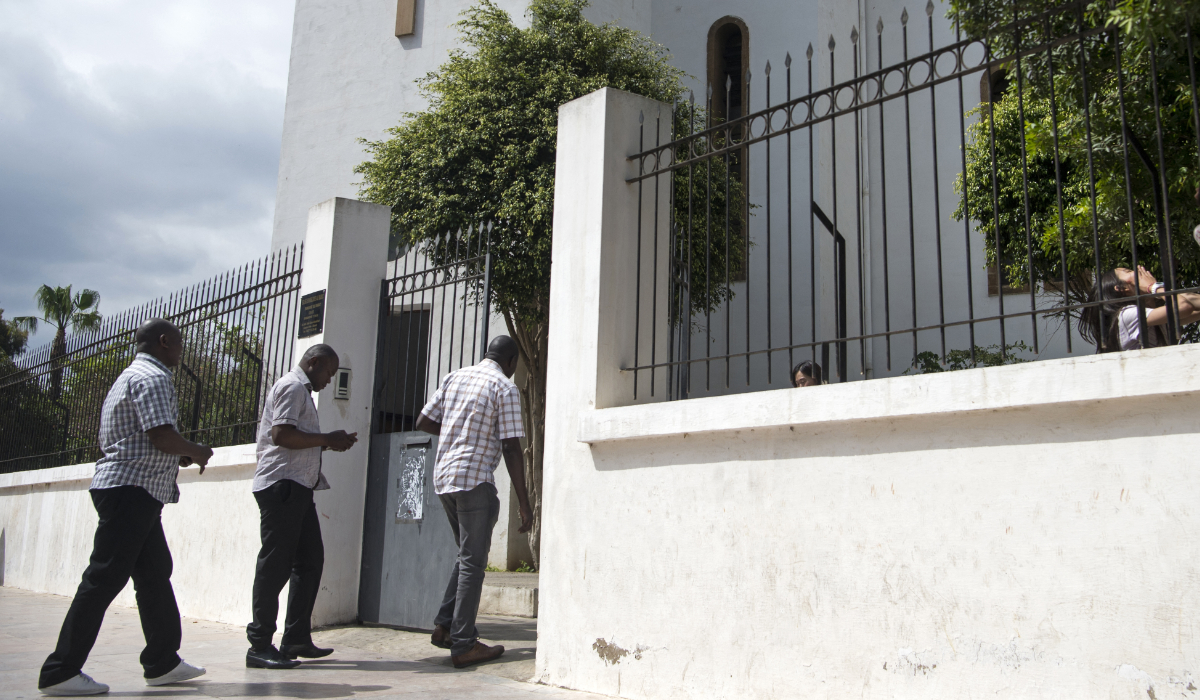
In Podgorica, one of the top attractions is Saborni Hram Hristovog Vaskrsenja, a “beautiful and very impressive” church that’s “absolutely worth visiting”, according to some travellers on Tripadvisor.

Kotor Bay has earned praise on the platform as “the best coastal road in the world” and a “beautiful and peaceful” destination for a getaway.

“We fell in love with Montenegro. The water is so clear, the mountains come down to the water, and it’s stunning scenery.

“That said, what I love about it is that it’s so unspoiled. I sure hope it can stay that way. So peaceful and lovely,” one person shared in a review.

Source link

Iran Names Mojtaba Khamenei Leader, Diming Hopes for Quick Peace

Iran on Monday named Mojtaba Khamenei as its new supreme leader following the killing of his father, Ali Khamenei, in strikes on the first day of the current war. The move signals that Iran’s ruling establishment intends to maintain its hardline course despite the dramatic loss of the country’s most powerful figure.

Mojtaba Khamenei, a 56-year-old Shi’ite cleric with strong connections to Iran’s security apparatus, was quickly endorsed by political leaders, military bodies and religious institutions. Public ceremonies and declarations of loyalty were organised across the country, reflecting a rapid effort by the political system to demonstrate continuity and stability at a moment of intense external pressure.

The appointment is widely seen as closing off any near-term possibility of a negotiated end to the conflict that has engulfed the region. With a figure closely aligned with Iran’s powerful security institutions now leading the state, analysts expect Tehran to maintain a confrontational stance rather than seek quick concessions.

Consolidation of power within the system

Iran’s political and military leadership rallied quickly behind the new leader. Statements from the defence establishment pledged unwavering loyalty to Mojtaba Khamenei, describing him as commander-in-chief and promising to follow him “until the last drop of our blood.”

The swift consolidation of authority highlights the enduring strength of the Islamic Republic’s institutional framework. The supreme leader sits at the top of Iran’s political hierarchy, exercising ultimate control over the military, judiciary and key elements of the state.

Supporters of the government described the succession as a demonstration that the system could withstand even the killing of its long-serving leader. Some Iranians interviewed by media outlets expressed pride and relief that the leadership transition had occurred quickly during wartime, viewing it as a sign of national resilience.

Others, however, reacted with disappointment or anxiety. Many critics of the government had hoped that the death of the elder Khamenei might open the door to political change. Instead, the elevation of his son long considered close to the security establishment suggests continuity rather than reform.

Divided reactions inside Iran

Public reactions within Iran have reflected the country’s deep political divisions. Supporters of the authorities praised Mojtaba Khamenei’s appointment as a defiant response to foreign pressure and an affirmation that the Islamic Republic remains intact.

Critics, however, say the change offers little hope for political liberalisation. Many opposition figures and activists have remained quiet, in part because of fears of repression during wartime. The government recently suppressed widespread protests, and security forces maintain a strong presence across major cities.

Observers note that Iran’s powerful security institutions including the Islamic Revolutionary Guard Corps retain extensive resources and influence. The Guard and associated networks also control major sectors of the economy, reinforcing the system’s ability to maintain power even during crises.

International pressure and escalating conflict

The leadership change comes amid escalating hostilities involving Israel and the United States. U.S. President Donald Trump has demanded Iran’s unconditional surrender and has suggested Washington should have influence over the selection of Iran’s supreme leader.

Trump has previously warned that any successor to Ali Khamenei could face the same fate if Iran continued what he described as hostile policies. Israeli officials have also indicated that senior Iranian leaders could remain targets unless Tehran abandons its military programmes and regional alliances.

Israel’s stated war aims include dismantling Iran’s missile and nuclear capabilities, and some officials have also spoken of ending the country’s clerical system of rule. Washington’s position initially focused on military capabilities but has hardened during the conflict.

Meanwhile, Israeli operations have expanded across the region, including strikes in Beirut and other areas linked to Iranian-backed groups such as Hezbollah. Fighting and airstrikes have resulted in significant casualties in Iran, Lebanon and Israel.

Energy shock and global economic impact

The war has triggered one of the most severe energy disruptions in decades. Shipping through the Strait of Hormuz, a narrow waterway near Iran’s coast through which roughly a fifth of global oil and liquefied natural gas supplies pass, has been effectively halted.

With tankers unable to move for more than a week, producers have faced storage shortages and in some cases have been forced to halt pumping. The supply shock sent Brent crude prices surging sharply, briefly approaching $120 per barrel before settling above $100.

The surge has rattled financial markets worldwide, pushing stock indexes in Asia and Europe sharply lower and raising fears of inflationary pressure in major economies. Rising fuel costs also carry political implications in the United States, where gasoline prices are closely watched by voters ahead of upcoming elections.

Regional fighting intensifies

Military operations have continued across multiple fronts. Israeli forces have struck targets in central Iran and carried out attacks on infrastructure, including an oil refinery that sent thick black smoke rising over the capital, Tehran.

At the same time, Iranian-aligned forces have launched attacks elsewhere in the region. A refinery in Bahrain was damaged in a strike that forced the national oil company to declare force majeure, further highlighting the widening scope of the conflict.

Casualties have mounted rapidly. Iranian officials say more than 1,300 civilians have been killed in U.S.-Israeli strikes, while deaths have also been reported in Lebanon and Israel. Israeli authorities confirmed fatalities from Iranian missile attacks, and several soldiers have been killed in fighting along the Lebanese border.

Iran’s system of rule

The role of supreme leader was created following the Iranian Revolution of 1979, which established the Islamic Republic under clerical leadership. The position combines religious authority with ultimate political power.

Ali Khamenei held the office for more than three decades, shaping Iran’s foreign policy and domestic governance during periods of sanctions, regional conflict and diplomatic negotiations with world powers. His death in wartime marked one of the most dramatic moments in the country’s modern political history.

Mojtaba Khamenei has long been viewed as an influential figure behind the scenes, particularly within security institutions. Though less publicly prominent than other clerics, he has been widely considered close to the Revolutionary Guard and to key power brokers within the political establishment.

Analysis: Hardline continuity and a longer war

The rapid elevation of Mojtaba Khamenei suggests that Iran’s ruling system is prioritising continuity and cohesion over reform or compromise. By choosing a figure closely aligned with the security establishment, the leadership appears determined to project strength during wartime.

This choice reduces the likelihood of immediate diplomatic concessions that might have opened a path to de-escalation. A leader closely tied to Iran’s military institutions is more likely to emphasise resistance and national defence rather than negotiation under pressure.

At the same time, the succession demonstrates the resilience of Iran’s political structure. Despite the loss of its long-time leader and ongoing military attacks, the state apparatus has moved quickly to stabilise authority and present a unified front.

For the wider region and the global economy, the implications are significant. If Iran continues to pursue a confrontational strategy under its new leader, the conflict could become prolonged, keeping energy markets volatile and increasing the risk of further escalation across the Middle East.

With information from Reuters.

Source link

Iran names Khamenei’s son as new supreme leader after father’s killing | US-Israel war on Iran News

Iran has named Mojtaba Khamenei as its new supreme leader, just over a week after the assassination of his father, Ayatollah Ali Khamenei, in joint United States-Israeli strikes that have plunged the entire region into a sprawling war.

The 56-year-old, who will now be charged with leading the Islamic Republic through the biggest crisis in its 47-year history, was named by clerics as his father’s successor on Sunday.

Key leaders, Iran’s powerful Islamic Revolutionary Guard Corps (IRGC), and the armed forces were quick to pledge their backing to the new leader.

Ali Larijani, secretary of the Supreme National Security Council, who has been tasked with steering Iran’s security strategy since the US and Israel launched their all-out offensive, called for unity around the new supreme leader.

Parliament Speaker Mohammad Bagher Ghalibaf welcomed the choice, saying that following the new supreme leader was a “religious and national duty”.

Mojtaba Khamenei has never run for office or been subjected to a public vote, but has for decades been a highly influential figure in the inner circle of the supreme leader, cultivating deep ties to the IRGC.

In recent years, Khamenei has increasingly been touted as a top potential replacement for his father. His selection could be a sign that more hardline factions in Iran’s establishment retain power, and could indicate that the government has little desire to agree to a deal or negotiations in the short term as the war enters its second week.

Al Jazeera’s Ali Hashem described Khamenei as his “father’s gatekeeper”.

“He adopts the positions of his father with respect to the United States, with respect to Israel. So we are expecting a confrontational leader. We’re not expecting any moderation,” he said.

“However, if this war comes to an end and he is still alive, and he is able to continue running the country, there is going to be big potential… to find new routes for Iran,” Hashem said.

Rami Khouri, a distinguished public policy fellow at the American University of Beirut, said Khamenei’s appointment signals “continuity” and that it remains to be seen whether the new supreme leader will push for negotiations to end the war.

Either way, he said, the appointment was “an act of defiance”. Iran is “telling the Americans and Israelis, ‘You wanted to get rid of our system? Well … this is a more radical person than his father who was assassinated,’” he said.

Heidari Alekasir, a member of the Assembly of Experts that was tasked with choosing the supreme leader, said the candidate had been picked based on the late Khamenei’s advice that Iran’s top leader should “be hated by the enemy” instead of praised by it.

“Even the Great Satan [US] has mentioned his name,” the senior cleric said in reference to US President Donald Trump’s earlier statement that Mojtaba Khamenei would be an “unacceptable” choice for him to lead Iran.

Israel’s military had previously warned any successor that “we will not hesitate to target you”.

On Sunday, Trump again promised to exert influence over who is selected as Iran’s next supreme leader, saying that, without Washington’s approval, whoever is picked for the role is “not going to last long”.

The selection of Khamenei’s son is certain to enrage Trump.

Supreme leader not decided by ‘Epstein’s gang’

The 88-member Assembly of Experts said on Sunday that it “did not hesitate for a minute” in choosing a new supreme leader, despite “the brutal aggression of the criminal America and the evil Zionist regime”.

Earlier, the clerical body had indicated it had reached a majority consensus on its choice, without naming who it was, with one member saying, “The path of ⁠Imam Khomeini and ⁠the path of the martyr Imam Khamenei has been ⁠chosen. The name of ⁠Khamenei will continue.”

Mojtaba Khamenei studied under conservative clerics in the seminaries of Qom, the heart of Shia theological learning, and holds the clerical rank of hojjatoleslam, a mid-level clerical ranking.

Ali Khamenei, who led Iran for 37 years, succeeding Ayatollah Ruhollah Khomeini, who had led the 1979 revolution, was killed in a US-Israeli strike on Tehran on February 28, at the outset of the war, which has now unleashed chaos throughout the Middle East.

The ⁠Israeli ⁠military has already threatened to kill any replacement for Khamenei, while Trump said the war may only end once Iran’s military and leaders have been wiped out.

“He’s going to have to get approval from us,” Trump told ABC News. “If he doesn’t get approval from us, he’s not going to last long,” Trump said on Sunday of any new supreme leader.

Iranian officials have rejected Trump’s push to be involved in the selection of the next leader, insisting that only Iranians can decide the future of their country.

On Friday, Iranian Parliament Speaker Mohammad Bagher Qalibaf appeared to ridicule the US president’s demands.

“The fate of dear Iran, which is more precious than life, will be determined solely by the proud Iranian nation, not by [Jeffrey] Epstein’s gang,” Ghalibaf wrote on X, referring to the late sex offender who had ties to rich and powerful figures in the US.

Dark skies

As clerics selected the new supreme leader, a dark haze hung over Tehran after Israel struck five oil facilities in and around the capital city overnight, setting them ablaze and filling the skies with acrid smoke.

As the war extended into its ninth day, the IRGC said they had enough supplies to continue their drone and missile attacks across the Middle East for up to six months.

IRGC spokesman Ali Mohammad Naini said Iran had so far used only first- and second-generation missiles, but would use “advanced and less-used long-range missiles” in the coming days.

Trump again refused to rule out sending American ground troops into Iran, but continued to insist that the war was all but won, despite the ongoing Iranian missile and drone strikes.

Analysts warn there is no clear path to ending the conflict, which US and Israeli officials say could last a month or longer.

Source link

Iran names Ayatollah Khamenei’s son as new leader after father’s killing | US-Israel war on Iran

NewsFeed

Iranian state television has announced that the Assembly of Experts has chosen Mojtaba Khamenei as supreme leader after a “decisive vote”. He’s the son of Ayatollah Ali Khamenei who was killed by the United States on February 28.

Source link

South Korea names Kusong as possible 3rd North Korea uranium site

South Korean Unification Minister Chung Dong-young attends a National Assembly Foreign Affairs and Unification Committee meeting in Seoul on Thursday. Photo by Asia Today

March 6 (Asia Today) — South Korean Unification Minister Chung Dong-young said Thursday that North Korea is operating uranium enrichment facilities in Yongbyon, Kangson and Kusong, marking the first time a senior South Korean official has publicly identified Kusong as a third such site.

Chung made the remarks during a plenary session of the National Assembly’s Foreign Affairs and Unification Committee. Until now, South Korea’s government and the International Atomic Energy Agency had publicly identified Yongbyon and Kangson as North Korea’s main uranium enrichment locations.

Chung said halting North Korea’s advancing nuclear capabilities should be the priority. He cited recent remarks by Rafael Grossi, head of the U.N. nuclear watchdog, and said North Korea’s enrichment facilities were producing 90% highly enriched uranium, a weapons-grade level. He also said Grossi had reported that another enrichment-related facility was being added at Yongbyon.

Kusong, a city in North Pyongan Province, has at times been mentioned by researchers and outside analysts as a possible nuclear-related site, but Chung’s statement was unusual because it came in an official public setting.

Chung also estimated that North Korea may have extracted about 100 kilograms of plutonium over six processing cycles during the past 30 years, including 16 kilograms last year, which he said would be enough to build roughly 20 plutonium-based nuclear weapons.

Asked about the effect of the recent U.S. strike on Iran on prospects for a new summit between North Korea and the United States, Chung said uncertainty had increased and that the development was “not a positive influence.”

— Reported by Asia Today; translated by UPI

© Asia Today. Unauthorized reproduction or redistribution prohibited.

Original Korean report: https://www.asiatoday.co.kr/kn/view.php?key=20260306010001810

Source link

Trump fires Homeland Security head Kristi Noem, names Mullin as replacement | Donald Trump News

United States President Donald Trump has announced that he will replace Department of Homeland Security Secretary Kristi Noem with Republican Senator Markwayne Mullin.

In a social media post on Thursday, Trump explained that he had reassigned Noem to be a special envoy for a new security initiative focused on the Western Hemisphere, dubbed the “Shield of the Americas”.

Recommended Stories

list of 3 itemsend of list

The staffing change, he added, will take effect starting March 31. It marks the first major cabinet-level shake-up of Trump’s second term so far.

Trump praised Noem upon her departure from the cabinet-level post, writing that she “has served us well, and has had numerous and spectacular results (especially on the Border!)”

But Noem has played a prominent role in some of the administration’s most controversial immigration policies, and her tenure at the Department of Homeland Security (DHS) has spurred questions about government spending and conflicts of interest.

The announcement that she would be leaving her post comes a day after she faced a grilling from Democrats during congressional hearings this week, with several politicians called for her resignation.

“DHS is supposed to be protecting our residents and upholding constitutional protections. But you’ve turned that on the head. You have actually turned the United States government against its own residents,” Representative Pramila Jayapal, a Democrat, said during Wednesday’s hearing.

“Yours is a case of failed leadership. Secretary, you need to resign, be fired or be impeached because you don’t have the right to lead this agency.”

The announcement of Noem’s removal also comes as DHS continues to weather a partial government shutdown.

Democrats have opposed approving new funding for the department in response to deadly shootings involving immigration agents under Noem’s leadership.

Those shootings were brought up again this week during Noem’s appearances before judiciary committees in the Senate and House of Representatives.

Democratic Representative Jamie Raskin, for instance, repeatedly accused Noem of launching a “smear campaign” against two US citizens shot dead during interactions with immigration agents: Renee Good and Alex Pretti.

“There have been three homicides in Minneapolis in 2026, and your agents committed two of them,” Raskin told Noem.

He also highlighted comments Noem made calling Good and Pretti “domestic terrorists“, despite evidence undercutting the administration’s depiction of the events leading to their deaths.

“Rather than work with state and local authorities to solve these homicides, you barred Minnesota’s investigators from the crime scenes,” Raskin said.

“It smells like a coverup, and it makes me wonder who the real domestic terrorists are.”

Noem, formerly the Republican governor of South Dakota, has also been scrutinised for a $220m advertising campaign promoting border security.

The advertising campaign shows Noem riding a horse near Mount Rushmore, a well-known national memorial in her home state.

The news outlet ProPublica previously reported that a government contract for the campaign went to a Republican consulting firm with ties to senior DHS officials.

Noem has denied any wrongdoing, stating that the bidding process was “competitive” and that the contract was “all done correctly, all done legally”.

On Thursday, before announcing the staffing change, Trump denied any connection to the advertising campaign, telling the news service Reuters that he “never knew anything about it”.

Noem played a key role in the administration’s mass deportation push, and she has frequently used rhetoric that vilified immigrants as dangerous and violent.

Though DHS’s mandate focuses on domestic security, Noem has made several international trips over the last year, including visits to Ecuador in July and November.

Trump has called a “Shield of the Americas” summit at his Mar-a-Lago estate this weekend, inviting world leaders from multiple countries to discuss regional security and combatting Chinese influence in Latin America.

Noem’s replacement as DHS head, Mullin, has served as a US senator since 2023. He was a representative in the House for a decade before that, representing Oklahoma.

Trump highlighted his membership in the Cherokee Nation, writing that Mullin would be a “fantastic advocate for our incredible Tribal Communities” as DHS leader.

“Markwayne will work tirelessly to Keep our Border Secure, Stop Migrant Crime, Murderers, and other Criminals from illegally entering our Country, End the Scourge of Illegal Drugs and, MAKE AMERICA SAFE AGAIN,” Trump said on Thursday.

Source link