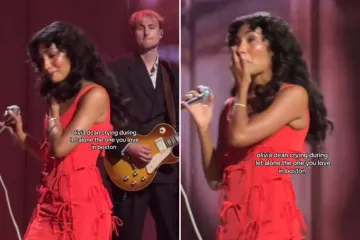
OLIVIA DEAN may be the queen of singing about self-worth, but she won’t be feeling the love right now.
The British chart-topper is facing a messy legal battle after being sued over her song I’ve Seen It.
Olivia is facing a messy legal battle after being sued over her song I’ve Seen ItCredit: GettyA lawsuit claims she copied the melody of Bill Withers’ 1981 soul classic Just The Two of UsCredit: Getty
A fresh lawsuit has been filed claiming she copied the melody of Bill Withers’ 1981 soul classic Just The Two of Us.
Publishers of the late singer’s catalogue allege Olivia’s track, which appears on her album The Art Of Loving, “shares musical features so striking” that they cannot be by chance.
Sign up for the Showbiz newsletter
Thank you!
Rather than going after Olivia or her co-writers directly, the lawsuit lists Olivia’s American record label Capitol Records and its parent company Universal Music Group as the defendants.
The song has been streamed 246million times on Spotify alone.
In comparison, Bill’s hit has 948million global streams.
Talking about penning the emotional track, Olivia previously said: “I’d had a lot of red wine.
“When I heard it back for the first time, I burst into tears.
“It felt like the loveliest note to end on.
“Whether it’s within your friends, your family, or just the love that exists in the strangers around you, it’s there, and it’s inside of you, too.”
APPRENTICE DUO LAND SWEET GIG
Apprentice contestant Lawrence Rosenberg will dress up as a croissant to launch a new bakeryCredit: BBCHe is reuniting with fellow contestant Kieran McCartney JonesCredit: PA
IT may sound like a flaky idea, but Apprentice star Lawrence Rosenberg will dress up as a croissant to launch a new bakery.
He is reuniting with Kieran McCartney Jones, his fellow competitor on the BBC One show, at Tuesday’s opening of Signorelli Broadgate in London.
And the pair will replicate the street-trader energy they wowed with on TV.
They gained an army of fans selling out supplies of their team’s carbonara at Greenwich Market this year in Lord Sugar’s talent hunt.
I don’t doubt they’ll make this stunt a success, too.
At the bakery, Lawrence will swap the egg costume he wore during the Apprentice challenge for a croissant outfit. He told me: “We’ll be begging for tips like Lord Sugar’s watching.
“I’ll be dressed in a croissant costume and you can even pretend to be Baroness Brady and mark our performance.”
Sliding into Instagram DMs, Iggy wrote: “I stepped away from music for a long time, but now I’m back in the studio, this felt like the right place to share my journey.”
Lily Allen posed for an arty shoot after wrapping up the UK and US legs of her West End Girl showCredit: Sharna OsborneShe is enjoying a break before returning to the stage in Auckland, New ZealandCredit: Sharna Osborne
The Smile singer shows off her pins in an arty shoot after wrapping up the UK and US legs of her West End Girl show.
Lily is enjoying a break before returning to the stage in Auckland, New Zealand, on October 21.
She will then play six shows across Australia – belting out the brutal album about her divorce from Stranger Things actor David Harbour.
Lily said: “Doing the shows feels like an act of storytelling.
“It’s almost like I’m in a play every night, because I have to brush myself down and take myself back to a time and a place that isn’t now.
“It doesn’t really feel like it’s about me any more. It’s about other women who have experienced something similar.”
PIXIE SHOWS A LOTTA STYLE
Pixie Lott looks fashionable as ever as she heads home from another night on stageCredit: Shutterstock Editorial
PIXIE LOTT looks fashionable as ever as she heads home from another night on stage.
Dressed in a quirky jacket and tiny hotpants, Pixie strutted through London’s West End.
She’s currently starring in Who Killed Marilyn? At the Emerald Theatre. Pixie plays the lead role of movie legend Marilyn Monroe, who died in 1962 aged just 36.
Talking about Marilyn, she said: “I grew up loving her. She was very strong and intelligent and witty.
“This whole story is told from her perspective.”
SUPERSTAR Ariana Grande is rumoured to be releasing a remix of a track from her hit album Petal.
In February 2024, she teamed up with Mariah Carey for a remix of her hit single Yes, And?
Previously, Ari featured on The Weeknd’s 2021 remix of Save Your Tears.
If she does have something in the works, I see history repeating itself.
DECEMBER 10’S HAIRY NIGHT OUT
Four members of Boyband December 10 were seen at the scare mazes at Thorpe Park’s Fright NightsCredit: Supplied
DECEMBER 10 are going from strength to strength, but four of the lads were in for a fright this week ahead of Halloween.
John, Hendrik, Cruz, and Nicolas were seen at the scare mazes at Thorpe Park’s Fright Nights.
Simon Cowell‘s boyband have a busy winter of gigs ahead including in London and Birmingham.
Not bad for a band many thought wouldn’t amount to much.
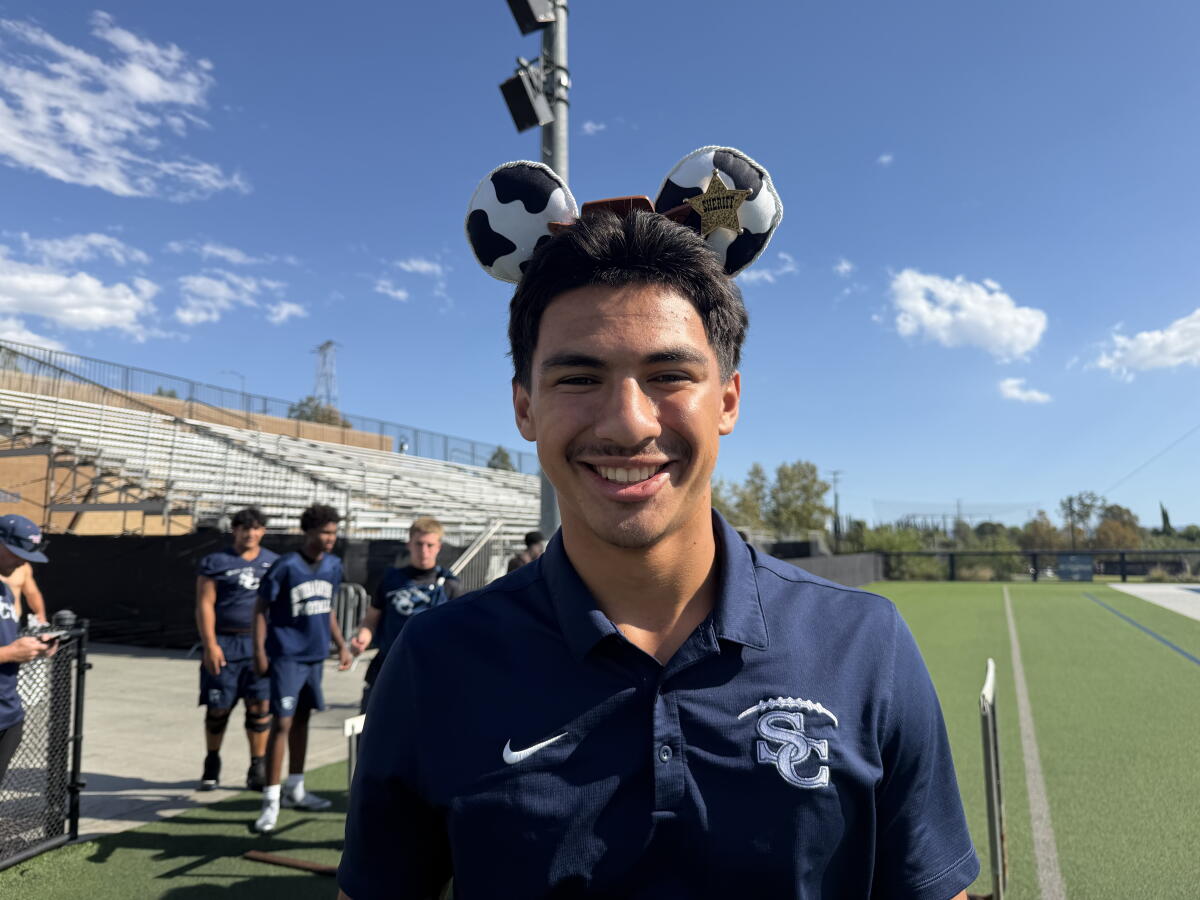
It was Disney Day at Sierra Canyon High, so standout sophomore linebacker Eli Zamorano showed up at football practice wearing Mickey Mouse ears atop his head on Monday.
Walking past, teammates either stared or smiled at the ears.
“He’s a kid who beats to his own drum,” coach Jon Ellinghouse said.
It makes perfect sense, for it was Zamorano as a freshman who was walking in rain and freezing temperatures last November on the field two hours before Sierra Canyon’s playoff game against Santa Margarita going through his pregame routine listening to music from Nirvana and not letting any elements disrupt him.
Freshman Eli Zamorano of Sierra Canyon thinks he’s in Green Bay with freezing temperatures walking in the rain to show everyone he’s ready. pic.twitter.com/FxJppvIfUk
“I’m not gonna let the weather determine my pregame,” he said. “And I’m actually used to the cold experience. My dad taught me to swim in cold water. That’s who I am.”
At 6 feet 2, 205 pounds, Zamorano is showing signs of becoming one of the best linebackers in the state for a 5-0 Sierra Canyon team that opens Mission League play on Friday against Loyola. He can be the player who’s in on every tackle up the middle or the player covering running backs out of the backfield. He watched his brother, Roman, now at Air Force, play for the Trailblazers last season at middle linebacker and has been taught by his father, Antonio, a former Garfield football player, to focus on toughness and fundamentals.
“It’s the mental toughness our dad taught both of us,” he said. “He played old-school football.”
Linebacker Eli Zamorano wearing his Mickey Mouse ears on Disney Day at Sierra Canyon.
(Eric Sondheimer / Los Angeles Times)
His father became a doctor, his mother a lawyer. They’ve shown their boys a path to success but each must find their own way, though having a doctor in the family while playing football is pretty neat.
“When we were little, 7 or 8 years old, he would take us to see his patients at the hospital,” Zamorano said. “So we learned a lot there. It’s like we have free health care. He walks in our room and feels the [ankle]. He knows what the risks are.”
Zamorano can play the ukulele, listens to music created years ago and doesn’t pay attention to what others think.
“I would like to say I’m a very enthusiastic kid,” he said. “I still like to live life to its fullest. I’m not going to let any outside voices determine what makes me, me. I kind of don’t listen to the music that people do nowadays, and a lot of people call me out. It makes me Eli. And you know, it’s just who I am.”
When he was 15, he spent nearly three months living in Rapa Nui, one of the world’s most remote Polynesian islands. His grandmother was born there. It’s also known as Easter Island and is a special territory of Chile. There’s wilderness, beautiful beaches, amazing sunsets and time for a teenager to reflect on the future.
“I was down there training hard, learning more about my culture, where my family’s from,” he said. “I actually did dancing. It was a really fun experience.”
Whether walking in freezing rain without an umbrella or wearing Mickey Mouse ears around campus, Zamorano always knows what he’s doing.
“A couple girls said they were cute,” he said of his borrowed ears.
Summer mornings in the Hill Tracts region of Bangladesh are a respite from the dissonance of honking cars and construction of the capital city of Dhaka. It was a welcome change to hear chickens and the sound of … wait, was that Julie Andrews’ voice echoing over the hills?
I was visiting my home country when I heard a group of schoolchildren playing ektaras, a traditional string instrument, and singing the “Do-Re-Mi” song for their morning assembly.
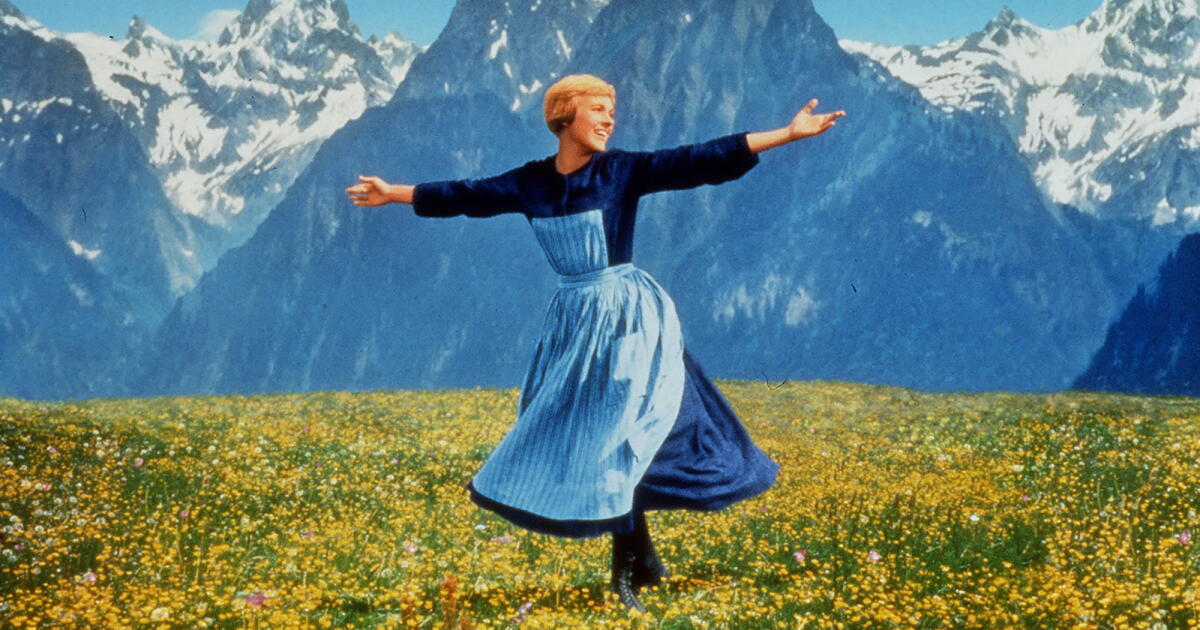
I used my phone to show them a picture of Andrews. “Do you know her?” They immediately leaped in excitement. They didn’t know the composer Richard Rodgers or lyricist Oscar Hammerstein II. But they knew Andrews — even though 60 years have passed since “The Sound of Music” and these children live in a remote Bangladeshi village. The recognition is evidence of something extraordinary.
Andrews is turning 91 on Thursday, and there are calls online to bubble wrap her, just in case. She is indeed a global treasure, and she has been earning plaudits and admirers for eight decades.
Andrews trained in the Italian bel canto tradition and from a young age sang challenging coloratura arias with precision, clarity and range. The bright, happy tone, perhaps a subconscious decision rather than anatomical alone, provided her respite from the doodlebug bombs that fell during her childhood in England in World War II. British critics had dubbed her as the “youngest prima donna,” a title usually reserved for opera greats, and it wasn’t undeserved. At just 12, she routinely floated high Fs above the treble staff during live performances.
Yet before opera could claim her, Broadway stepped in. From “The Boy Friend” to “My Fair Lady” and then “Camelot,” she won the hearts of theater goers and creators alike. Lyricist Alan Lerner described her as “an amazingly quick study in music … who meets any challenge with an unabated eyelid that makes you wonder how Britain ever lost the empire.”
Her voice then was so precise that the late maestro André Previn, who led the London Symphony Orchestra, proclaimed: “No one’s diction in any field of singing can come close. … You understand every syllable from the second balcony — I don’t understand how you do that.”
It’s inaccurate to romanticize her legacy in 2026 as simply nostalgic. That would overlook the depth and progressive nature of her characters. She was essentially the first female superhero on the big screen, as Mary Poppins — who could fly and create alternate realities with the snap of her heels, but whose more stunning superpower at the height of the Cold War was to charmingly portray capitalism as dangerous.
In “Victor/Victoria,” she navigated a gender-bending performance that challenged societal norms, playing a woman who impersonates a man impersonating a woman when it was taboo to speak about any layer of that. Her most overlooked and perhaps her best dramatic role was in “Duet for One,” a 1986 film about a musician who suffers from multiple sclerosis. Tragically this became a moment of life imitating art, foreshadowing her own destiny to lose her instrument after throat surgery in 1997.
Rather than retreat, Andrews adjusted and leaned into voice acting with characters like the dominant Queen Lillian in “Shrek” films, Gru’s hilariously villainous mother in “Despicable Me” and the mysterious Lady Whistledown in “Bridgerton,” for which she won an Emmy, twice.
In real life, the flying super governess fought to adopt two babies from Vietnam just after the fall of Saigon, helping to raise awareness of the need for adoptive parents. She then co-founded the Operation USA disaster relief charity and opened the Japanese wing for the United Nations Development Fund for Women.
Whether it was to support UNICEF after the devastating Bhola cyclone hit present-day Bangladesh in 1970 or jetting to Jordan and Senegal to support women’s and children’s activities, she was a quiet champion for the underserved. In her most famous role, in “The Sound of Music,” she was a savior for children being displaced by war.
Andrews is mostly out of the public eye, but her singing is eternal and accessible. YouTube is home to a trove of Andrews performances, including “This Is My Beloved” from “Kismet,” full-voiced “When You Wish Upon a Star,” from pianissimos to fortes, high B-flats and all — her classical skill shines through. These recordings remind us that beyond just the formulaic legato phrasing that singers from the Italian tradition follow, and the clear resonance, her work it set a gold standard for musical storytelling that few have surpassed since.
Julie Andrews is no longer trilling on the Alps, nor is she reprising her role as queen of Genovia in a “Princess Diaries” film, but her voice, and what it represented for more than 80 years, endures. It lives on not just in films and recordings but also ringing in the minds of children and adults alike, from her hometown of Walton-on-Thames to the Hill Tracts of Bangladesh. In an age of doom scrolling (and alarmingly low singing standards), her vast career offers a rare resonance and a continuing masterclass.
Shams-il Arefin Islam, a Yale-Berkeley College associate fellow who works on climate mitigation and adaptation, is a classically trained tenor.
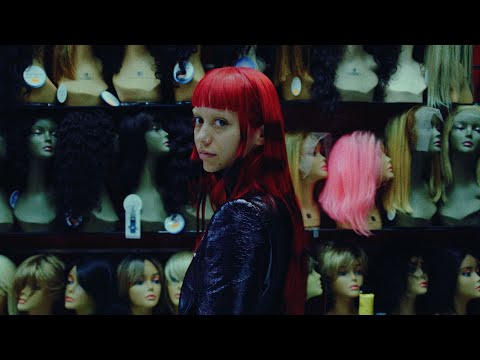
Earlier this summer, Akriila flew to Los Angeles and played two nights at the Roxy in West Hollywood. At 22, the Chilean singer-songwriter, most identifiable by her fire engine red tresses, is one of the most visionary newcomers in the latest wave of post-urbano Latin artists.
Fittingly, Akriila kick-started her career with a trap mixtape. The most-streamed tracks on her debut, 2024’s dazzling “Epistolares,” favor a progressive reggaeton vein. She also collaborated with Milo J on “Llora Llora” — a folksy lullaby off the Argentine rapper’s masterpiece “La Vida Era Más Corta.”
“Hot gays listen to Akriila” became a celebrated slogan on social media.
Turns out she was just getting started. Released Sept. 3, her latest album, “Lucy Miró al Mundo y Notó Que Está Girando” — its title a delicious riff on Beatles lore — eschews reggaeton altogether, in favor of a hallucinogenic collage of shoegaze, electronic glitch pop and South American roots sounds.
A guidepost of Chilean hyper-pop, it is also a heart-wrenching mash of tenderness and distortion. The lyrics describe the trauma of a recent transition, after she left her father’s home and ventured to live on her own — and though she’s now an established artist signed to Atlantic Records, her music is still aching and vulnerable.
“She is a reference point for all of us in contemporary music,” says producer Diego Raposo, a Dominican tastemaker who featured Akriila on his 2023 debut album. “I believe we’re witnessing something that we’ll probably never see again. Her music reminds me of Björk, Aphex Twin, even Shakira — but it’s also incredibly fresh and original.”
A few days before traveling to London for her inaugural European tour, Akriila spoke to De Los about the seduction of second verses, her obsession with ’90s dream pop and the growing pains of living alone.
This is such a dreamlike record. Was that intentional? I wanted it to feel not necessarily ethereal, but hazy, like you’re inside a bubble. I love the way my voice is processed, sharing the space with so many layers. It’s really cool when the vocals are part of a track instead of lying there in the center of the mix.
I was your age in the ’90s, and this album has a very strange emotional effect on me: It reminds me of what it felt like to be in my 20s, listening to dream pop for the first time. That makes perfect sense, and it connects with a favorite exercise of mine: Every week — ideally, every day — I listen to a full album from beginning to end. I started with new releases, but then set my sights on the classics.
The Sundays’ [1990 masterpiece] “Reading, Writing and Arithmetic” was the album that opened up the space mentally for what I wanted to do. I always say that I make alternative pop. I start with something that’s catchy and easily digestible, and then mix it with sounds that feel uncomfortable. As I was starting to work on this album, I listened to the Sundays, the Cardigans, and every single record that Prince ever made.
I can definitely feel the ’90s vibe in the closing track, “Lucy.” It’s gorgeous. That’s inspired by the Sundays’ “Gone,” and the drums sound like Cocteau Twins. I love the art of collage — stealing from different artists, but doing it my way. There are samples of PJ Harvey, Patti Smith, but also Rosalía. When I make videos, I’m always thinking of something that MTV would have played back in the day.
I keep thinking of this record as a concept album, even though the actual concept is more of a feeling than anything else. I totally get you. It’s not an album like the Who’s “Tommy” — an actual musical that takes the conceptual deal to another level. I feel we’ve forgotten the art of making albums now that we’re so focused on playlists and TikTok. I invest a lot of effort in making my albums conceptual, since I’m not into records that are random collections of tracks. “Epistolares” was all about sending letters and dedications. The deluxe version was more sentimental. This one is a concept album for sure. I could outline in detail why every moment of the record happens when it does.
The bridge on “Abrázame” is incredibly romantic. That bit really freaked me out in a good way. It was shorter at first, but then I asked [producer] Vinco to make it longer. Those guitars on the bridge are the most beautiful thing he’s ever done. The contradiction of “Abrázame” is that everyone kept telling me that it should continue going up and explode at the end, but I had already overused that device on “Epistolares.” So I did the opposite and gave it a happy ending. That ethereal, ambient thing at the end kills me.
Talking about songwriting devices, here’s a trademark Akriila move: A song may be moving forward, and suddenly there’s a fracture — everything breaks and decomposes. Why? I think I have ADHD and need things to be constantly changing. I’ve tried to make songs that are plain, but I just can’t do it. My favorite part of songwriting is working on the second verse. You’ve already presented the main idea and shown what the chorus is like. On the second verse you can change the beat or the lyrics, and do anything you like. [Producer] Clemente is just like me in that respect. Sometimes we take things to the limit, and then step back. It’s one of the great things about my creative team: We’re not married to the demos. We may do five versions of the same tune until it sounds right.
Your Chilean roots shine through on “Partedemipartedeti.” I listened to those folk bits and thought: Here’s someone who grew up listening to Los Jaivas and Inti-Illimani. When I first started obsessing about music, the stuff that I liked was all in Spanish. I listened to tons of records from Chile, Argentina and Mexico. “Carta a Mi Papá” is like a traditional balada from Chile. I stole those chords from “Quizás, Porque” by [Argentine supergroup] Sui Generis. I listened to a lot of Pescado Rabioso when I was a teen. My partner has a cassette deck in her car, and she’s always playing [Charly García’s] “Piano Bar.” I don’t identify only with Chilean music. It’s more of a música latinoamericana thing. I don’t think gringos are that good in the lyric writing department. Artists like Bandalos Chinos, Alex Anwandter and Zoé are really great composers.
Do you think you’re an old soul? People always tell me that [smiles]. We’re a team of three; I think Clemente is a really young soul. Vinco and I are the old ones.
Before making this record, you stopped living with your dad, moved to a place of your own, and experienced a time of profound loneliness. What does your father think of the finished album? He loves it. He is a musician himself, and it must have been hard for him when we started living apart. It was also difficult for me to get home and feel so lonely because there was no one waiting for me anymore. My dad still comes to my place once a week; he doesn’t want to bother me, so he leaves food in the reception area. It’s his way of making sure that I’m doing fine.
RITA Ora pulls up her socks and shows off her ’80s moves.
The singer and actress, 35, was seen dressed in long woollen socks and orange shoes as she shot the video to new single All Natural — directed by hubby Taika Waititi.
Rita Ora was seen dressed in long woollen socks and orange shoes as she shot the video to new single All NaturalCredit: InstagramRita posted pics and footage online, with the caption: ‘Talk to me’Credit: Instagram
Like Jennifer Lopez’s 2003 video to I’m Glad, it is inspired by the 1983 movie Flashdance.
She posted pics and footage online, with the caption: “Talk to me.”
Sign up for the Showbiz newsletter
Thank you!
Her fourth album is expected out next year.
Speaking to Bizarre’s Jack at a London screening to mark the 10th anniversary of his hit film, Hunt For The Wilderpeople, Taika said Rita’s long-awaited album was “amazing”.
Rita in new single All Natural — directed by hubby Taika WaititiJennifer Lopez in her music video I’m GladCredit: Splash News
He chuckled: “There is a very mates’ rates deal going on. I think it’s been free each time. It’s just fun to get to work together.
“It’s great because we’re kind of in similar industries, but they’re very different disciplines – and when you’re with someone, you want to be able to do some work together.
“I’m really amazed and surprised at what she does, but also super- confused all the time.”
“Heartwarming” is a cliche of theater reviewing that I have studiously tried to avoid, but I’m tempted to use the word in my review of “Begin Again,” the new musical based on the 2013 John Carney romantic comedy about two dreamers trying to rekindle the love of making music that the industry nearly destroyed.
The show, which is having its world premiere at the Old Globe’s Donald and Darlene Shiley Stage, is just so damn heartwarming that I can’t help but resort to the language of blurbs. But let the ticket buyer beware: Heartwarming is a feeling, not a complete verdict.
Featuring a book by Jenna Clark Embrey and Molly Beach Murphy and a score by Pat Monahan and his bandmates from Train (Jerry Becker and Matt Musty), “Begin Again” does a pretty good job of distilling and updating the movie. Carney’s film, notable mostly for the vibrantly gritty New York setting, the Oscar-nominated song “Lost Stars” and the lived-in performance of Mark Ruffalo, couldn’t help languishing in the shadow of the filmmaker’s breakout hit “Once,” which later became a Tony-winning musical.
“Begin Again” the musical is likely to suffer a similar fate. It lacks the quirky originality that made “Once” an unexpected Broadway juggernaut. But the new show, directed by Lorin Latarro and choreographed by David Neumann, has heart — there I go with that overused word again!
I succumbed to the show’s charms despite being aware that the comedy isn’t as freshly articulated as it should be and the music, while exuberant, doesn’t seem to emanate from the soul of Gretta, a reworked American version of the singer-songwriter character indifferently played by Keira Knightley in the movie.
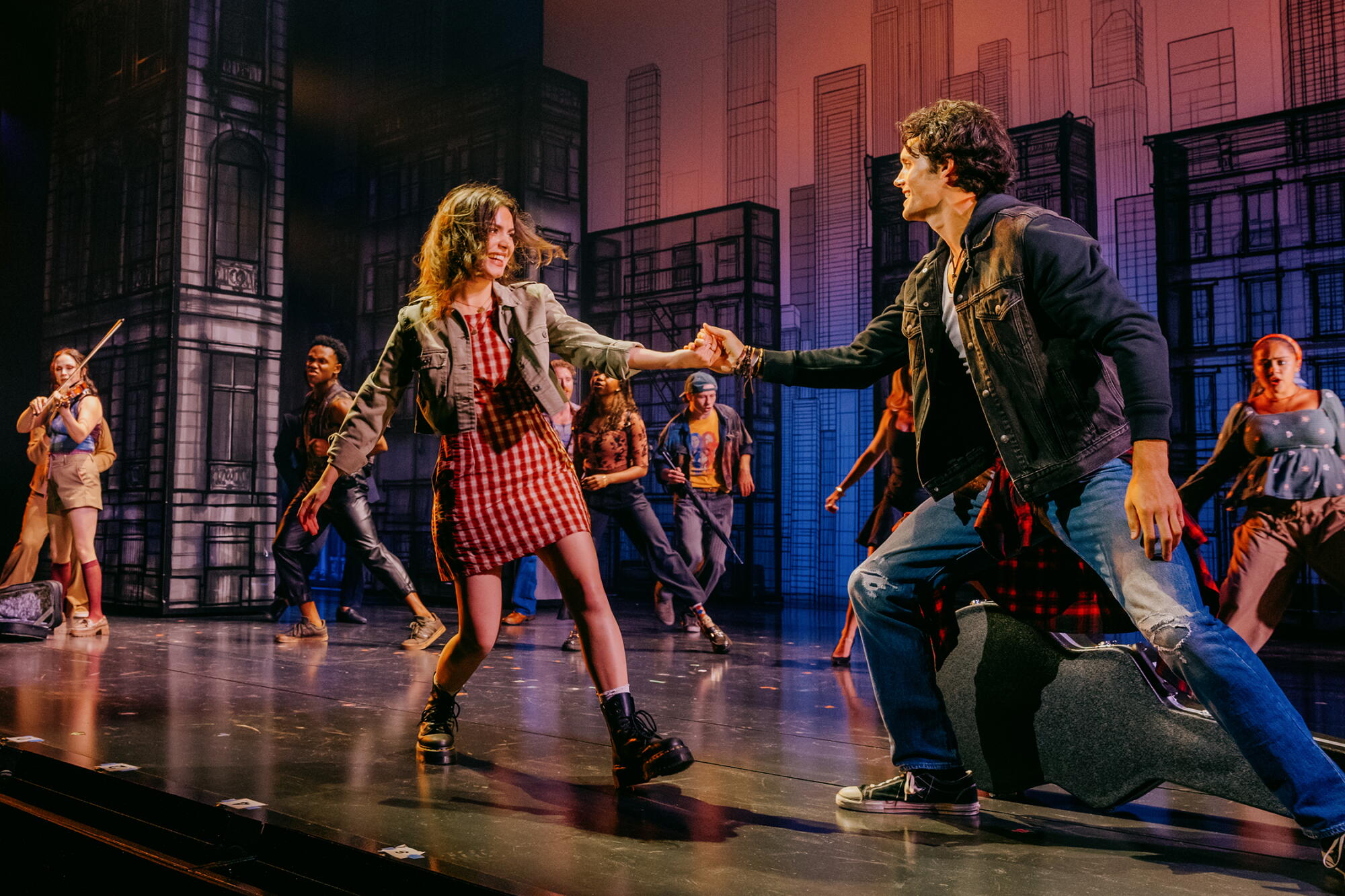
Emma Busse as Gretta, center left, and Kevin William Paul as Max with the cast of “Begin Again.”
(Jeff Lorch)
Gretta relates to her songs as though she were the next Joni Mitchell, but the new material she’s composing on the fly with her new friends doesn’t seem particularly intimate or revealing. I liked the indie rock sound, but mostly for the collaborative liftoff. Lyrically, I wasn’t drawn in. But who could resist the ecstatic momentum of her ad hoc band members buying into her grassroots dream?
Gretta, played with folksy innocence by Emma Busse, has traveled to New York from Pennsylvania with her boyfriend Max (Kevin William Paul). A musician with frontman good looks, he’s about to be packaged into a rock star. Gretta’s songwriting has paved the way for this opportunity, but Max is told that he’s being signed as a singer-songwriter and sharing credit is a deal-breaker.
Selfless, naive Gretta gives Max her blessing and her rights, and almost immediately he betrays her with another woman. Perhaps even more disloyally, he allows his producers to run her song “Don’t Let Go” through a pop blender that drains it of all its personal meaning and artistic integrity.
Alone in the big city, she takes refuge at the Queens apartment of college friend Stevie (Casey Whyland), formerly Steve in the movie, the comic sidekick role played by James Corden. Stevie, conveniently, is a sound engineer with an analog heart. She’s not only how Dan (an electric Patrick Heusinger), a washed-up music executive with a broken marriage and a drinking problem, discovers Gretta. But without Stevie’s technical ingeniousness, the prospect of recording an album in outdoor New York locations would never have been possible.
The professional meet-cute between Gretta and Dan happens at an open-mic night at a dive. Stevie calls a heartbroken Gretta to the stage to perform, and she reluctantly complies before giving up in embarrassment. She thinks she’s bombed, but Dan, who has “magic ears,” hears what the song could be.
Patrick Heusinger as Dan, left, and Adrienne Walker as Miriam with the cast of “Begin Again.”
(Jeff Lorch)
Just as Dan glimpses Gretta’s raw potential, she sees his lost purpose, and the two launch a mutual rescue mission. He brings Gretta to meet Saul (Nik Walker), who co-founded Distressed Records with him and just fired him for his erratic behavior. Saul doesn’t have Dan’s ability to spot future talent, but he agrees to give the singer a listen if they cut a demo. And so off Dan and Gretta go, with no budget, to make memorable music together.
Friends are their main resource — and that proves an inexhaustible boon. “Begin Again” really comes alive as Gretta, Dan and their expanding, can-do music network starts pooling its expertise.
You can hear the songs germinating from lonely inspiration to group transformation — and the sound is exhilarating. The process of songwriting, rather than being a solitary slog, is a collective joy, rapturously captured in the number “Write a Way.” And “Twilight Summer Sky,” the number performed on the rooftop of Stevie’s apartment building in Queens, represents perhaps the fruit of all the group’s effort.
“Begin Again” is a musical fantasy, not a work of realism. Gretta and Dan are seemingly brought together by fate to heal one another. As they separately go about their business in New York before they’re introduced, they continually pass like ships in the night in a New York that scenic designer Derek McLane summons in a shifting comic-strip landscape of high-rises that gives the city an industrial quaintness.
The action rewinds from Gretta and Dan’s initial meeting at the bar, and later fast–forwards to speed up some of the more boring bits of the album-writing process. The ensemble moves backward and forward with these narrative jump-cuts.
This literalness can seem overly cute. (I prefer the idiosyncratic yet fully integrated movement direction Steven Hoggett brought to John Tiffany’s Broadway production of “Once.”) But Latarro’s staging and Neumann’s choreography keep the storytelling moving at a pleasantly brisk clip. And Skylar Fox’s illusion design adds an element of visual sorcery.
The cast of “Begin Again.”
(Jeff Lorch)
It’s the actors, however, who elevate the material, supplying a depth of feeling where the writing offers something more general. Heusinger makes it possible to leave Ruffalo’s fine portrayal behind. This is a different and more dynamic Dan, at least in terms of the musical demands placed on the character. Paul’s Max is every bit a rock star, but Dan is convincing as both a burned-out music mogul with a self-sabotaging streak and a gifted artist in his own right who just needs someone to believe in his producing instincts again.
Adrienne Walker, who plays Miriam, Dan’s estranged wife, and Charlotte MacLeod, who plays Violet, Dan’s disaffected daughter, endow their characters with more lineaments than the book provides. Walker’s Saul doesn’t do what Yasiin Bey managed in the movie — make Distressed Records seem like a real New York record company — but his singing compensates for some of the clumsier aspects of his reduced role.
Whyland’s Stevie, serving as emcee when the occasion calls for one, combines genuine camaraderie with comic relief. The gender switch makes sense, and Whyland embodies the spirit of artistic cooperation that makes “Begin Again” such an invigorating experience.
I wish that the musical didn’t amplify Gretta’s artistic insecurities and distress over the breakup with Max. The character seems less self-assured and more wounded than she did in the movie, making her fervently held idealistic beliefs about creative independence seem borrowed from another character. But Busse brings an American innocence to the role, and her ardor about music and community seems genuine.
“Begin Again” transcends its limitations through the kinetic connection of the cast. When all the elements of the music come together, a triumphant feeling — call it uplift — charges the air.
TAYLOR Swift debuted Patient Zero music video at the MTV Video Music Awards after accepting a massive honor.
The Fate of Ophelia singer accepted the first-ever Artist Director Honor at the annual awards ceremony on Sunday.
Taylor Swift accepted the Artist Director Honor at the MTV Video Music Awards on SundayCredit: Getty ImagesThe singer also debuted the music video for her new single, Patient Zero, at the ceremonyCredit: Getty Images
Taylor’s good friend, Dakota Johnson, who also stars in the music video for her new single Patient Zero, presented her with the award.
The global pop star kept her acceptance speech short and sweet before introducing the world premiere of the highly anticipated music video.
Sign up for the Showbiz newsletter
Thank you!
She shared a teaser of the video, which also stars Colin Farrell, on Friday, before announcing that all will be revealed during Sunday’s ceremony.
Fans were taken aback by the video’s grim twist, as she portrayed Colin’s character’s deceased former partner, but it overall received rave reviews online.
“Taylor really wanted to team up with MTV to do something to celebrate the release of Patient Zero,” a source told Page Six about Taylor’s VMAs appearance.
“They created this award just for her. It’s their first time handing out this award.
The insider also said that the “timing made sense,” given the release of Taylor’s latest single, alongside three other new tracks.
The four new songs are a part of The Life of a Showgirl: The Encore, an extended deluxe edition of her 2025 album, The Life of a Showgirl.
Most read in Entertainment
“She really wanted to be there, and the network wanted to figure out a moment in the show that was special to her where she wasn’t just in the background, so MTV made this moment happen,” the source added about the collaboration.
Her husband, NFL tight end Travis Kelce, 36, skipped the event to play with the Kansas City Chiefs in their game against the Miami Dolphins in Florida earlier in the day.
Dakota Johnson presented Taylor with the award on stageCredit: GettyDakota also stars in the music video for Taylor’s track, Patient ZeroCredit: Getty
While Taylor has supported her man on the sidelines since the football season began, she couldn’t miss this night as she was the first recipient of the Artist Director Honor.
This marked the singer’s 31st Moon Man trophy, breaking her tie with Beyoncé for the most VMA wins.
The vocalist was also nominated for nine other awards – the second-most of the night behind Madonna, who had 11 nominations – and won the Video of the Year award.
Taylor has kept a lower profile since her and Travis’s extravagant July 4th wedding.
MOST AWARDED ARTISTS IN VMA HISTORY
Since the iconic MTV Video Music Awards first premiered to shake up pop culture in 1984, artists across all genres have tried their best to score the coveted Moonman trophy. Here are the top 10 musician’s who have taken home the most hardware:
Taylor Swift – 31 wins: Taylor is now the most-awarded artist in VMA history. She has won Video of the Year five times, including for her hit All Too Well, and picked up a record nine awards in one night for Midnights in 2023.
Beyoncé – 30 wins: Beyoncé’s haul includes six wins for Formation in 2016, plus Video of the Year for Single Ladies in 2009. Her total also includes two wins with Destiny’s Child.
Lady Gaga – 22 wins: Gaga dominated the 2010 VMAs, taking home seven awards for Bad Romance. She has also won Artist of the Year twice.
Madonna – 20 wins: The original VMA powerhouse has collected wins for Vogue, Ray of Light and Express Yourself, as well as the Video Vanguard Award.
Eminem – 15 wins: The rapper is the most-awarded male artist in VMA history, with wins including Without Me, The Real Slim Shady, Not Afraid and Houdini.
Ariana Grande – 13 wins: Ariana has collected 13 Moonmen, including Video of the Year and Best Pop for Brighter Days Ahead and three wins for Rain on Me with Lady Gaga.
Peter Gabriel – 13 wins: Peter holds one of the biggest records in VMA history: 10 wins at the 1987 ceremony, including nine for Sledgehammer.
R.E.M. – 12 wins: The rock band swept the 1991 VMAs with six wins for Losing My Religion and later added four for Everybody Hurts.
Justin Timberlake – 11 wins: Justin’s haul includes Video of the Year for Mirrors, multiple wins for Cry Me a River and the Video Vanguard Award.
Green Day – 11 wins: Boulevard of Broken Dreams powered Green Day’s VMA haul, winning six awards in 2005. 21 Guns added even more to their collection in 2009.
She showed her love for her husband last week while celebrating his touchdown against the Indianapolis Colts.
The Out of Style singer was caught on video screaming and clapping as Travis darted across the field to score.
She could also be heard yelling, “That’s my husband!” while pointing at her $1 million wedding ring.
Today marks the end of an era. Mark Swed — the last full-time classical music critic at a major American newspaper — has retired. On Thursday, members of The Times editorial staff gathered to celebrate Swed, but the mood was somewhat somber. Although we were glad for our beloved colleague, this was not a happy milestone for journalism — or classical music.
Swed is the rarest of writers: a critic with deep empathy and encyclopedic knowledge who can turn the sonic details of an orchestra playing Mahler’s Seventh Symphony into an epic journey for readers. At a time when orchestra leaders struggle to find new audiences for the art form, Swed’s writing did the job for them.
And in an era when everybody is an expert on TikTok, Swed’s informed criticism was a life raft in a sea of slop. He told us why the music mattered — in its historical context, as it related to the modern landscape, and what it meant to him personally. He made us better listeners, and most importantly, he made us curious. After reading his take, we wanted to run out to a concert, an opera or a new music festival.
That this particular kind of writing — and of seeing and explaining the world to readers — is going away with Swed, is truly a tragedy. Thankfully he is leaving of his own accord, and will hopefully continue to write a monthly column, but his loss still stings.
Like many, I watched with sorrow in February as the Washington Post slashed its staff, including its classical music critic, Michael Andor Brodeur. That blow came a little less than a year after the New York Times shook up its culture desk and reassigned its classical music critic, Zachary Woolfe, to serve as the obituaries editor. (The paper is now actively searching for a new classical music critic.)
A number of staffers spoke at Swed’s retirement lunch, and deputy A1 editor John Penner was among them. In his touching speech, Penner noted that Swed was the last of his kind, adding, “with no full-time critic writing anywhere in any newspaper about classical music, American journalism will be poorer, and its readers less informed, inspired and enlightened.”
Penner continued, saying what all of us gathered in that conference room knew to be true, “Mark’s 30 years at The Times coincided with this city’s Golden Age of classical music — the era of Salonen and Dudamel and Disney Hall. L.A. has been the most important and exciting music capital in the country, if not the world. (Why else would New York be stealing Gustavo from us now?) And central to that excitement and importance has been Mark’s writing and criticism. For my money, even when there were many music critics writing for many publications, Mark set the standard for classical music criticism, while opening our ears to new and under-appreciated music.”
Hear, hear.
I’m Arts editor Jessica Gelt wishing Swed a happy retirement and humbly asking him to come back to us now and again. This is your arts and culture news for the week.
You’re reading Essential Arts
Our critics and reporters guide you through events and happenings in the SoCal arts scene. In your inbox every Friday.
By continuing, you agree to our Terms of Service, which include arbitration and a class action waiver. You agree that we and our third-party vendors may collect and use your information, including through cookies, pixels and similar technologies, for the purposes set forth in our Privacy Policy such as personalizing your experience and ads.
The week ahead: A curated calendar
FRIDAY
Demand To Be Heard Festival The Sunflower Project presents a celebration centering the voices of survivors of abuse beginning with a screening of the film “Break The Silence: The Gabby Petito Story,” followed by a panel discussion with the Gabby Petito Foundation. Saturday and Sunday is the Resident Artist Showcase, featuring the work of six survivor/artists. Also Saturday are three three arts workshops focusing on music, candle making and body movement, respectively. Film screening, 6 p.m. Friday; 6:30 p.m. Saturday-Sunday, Resident Artist Showcase. Wisteria Theater, 7061 Vineland Ave., North Hollywood. Arts workshops, 11:30 a.m., 1 and 2:30 p.m. Art Share L.A. 801 East 4th Place, downtown L.A. towardsthesun.org
Jonah Elijah: Ambiguously Free The first U.S. museum solo exhibition by the L.A.-based contemporary painter and mixed-media artist features work that blends personal memories with broader mythologies, religion and history to explore Black culture. On view through December 16. Xela Institute of Art, 2176 Pacific Avenue, Long Beach. xela.art
Joshua Redman Quartet: Words Fall Short The saxophonist performs a new program of music with his ensemble — pianist Paul Cornish, bassist Philip Norris and drummer Nazir Ebo, plus special guest Skylar Tang, an up-and-coming Bay Area-born trumpeter and composer. 7:30 p.m. The Wallis, 9390 N. Santa Monica Blvd., Beverly Hills.thewallis.org
Melrose Gallery Walk Gallery spaces, including Hostler Burrows, Lawson-Fenning, Meg Turner, Object, Seventh House, The Window and 22RE, open their doors to celebrate the local design community. Free and open to the public. 5-8 p.m. Hostler Burrows, 6819 Melrose Ave. hostlerburrows.com
SATURDAY
Midterms: This Will Hurt Someone Brightwork newmusic performs a program of contemporary works inspired by civic life and social change, including Ted Hearne’s “Bye Bye Huey,” Natalie Dietterich’s “Philosophy of Furniture,” Ian Dicke’s “Get Rich Quick” (with video), Matt Marks’ “This Will Hurt Someone,” Hesam Abedini’s “What Remains” and “Frederic Rzewsk’s “Coming Together” (with video). 8 p.m. Sierra Madre Playhouse, 87 W. Sierra Madre Blvd. sierramadreplayhouse.org
Aperghis Trilogy Long Beach Opera performs three works by experimental composer Georges Aperghis: “Le corps à corps”,” Les Sept Crimes de l’amour,” “Récitations.” Directed by James Darrah Black. Christopher Rountree conducts. 7:30 p.m. The Queen Mary, 1126 Queen’s Way, Long Beach. longbeachopera.org
The Horror Show An immersive deep dive into the movie genre presented in six themed galleries: Gothic, Psychological, Science, Slasher, Religion and Ghosts, with behind-the-scenes looks at a range of titles that includes everything from Oscar winners to drive-in classics. But first, you must pass through “The Hallway,” bwahahaha. 10 a.m.–6 p.m. Wednesday–Monday, on view through July 25, 2027. Academy Museum, 6067 Wilshire Blvd. academymuseum.org
Senon Williams: here now, now gone, gone here A solo exhibition of the artist’s work, in which he collects materials such as nails, slips of paper, fragments of language and industrial remnants, then uses assemblage to rearrange them and discover deeper meaning. Noon-6 p.m. Tuesday-Friday, on view through Nov. 15. The Philosophical Research Society, 3910 Los Feliz Blvd. prs.org
Promised Lands: California’s Unratified Treaties and Native Resilience Archival materials, contemporary objects, images and voices from local tribal communities relate the complex history of the state with its indigenous people. 10 a.m.-4 p.m. Tuesday-Friday, 10 a.m.-5 p.m. Saturday-Sunday. Autry Museum of the American West, 4700 Western Heritage Way, Griffith Park. theautry.org
Rodgers & Hammerstein’s The Sound of Music Sing-A-Long Actor and comedian Melissa Peterman hosts the annual screening of the 1965 Oscar winner for best picture complete with a costume contest and more than a few of your favorite songs. 7:30 p.m. Hollywood Bowl, 2301 N Highland Ave. hollywoodbowl.com
Daymé Arocena’s Alkemi The Grammy nominee and Juno Award–winner blends Afro-Cuban beats with neo-soul, jazz and contemporary Latin pop. 7:30 p.m. The Wallis, 9390 N. Santa Monica Blvd., Beverly Hills. thewallis.org
San Pedro Festival of the Arts The 20th annual event, presented by Los Angeles Choreographers & Dancers, features 20 dance companies demonstrating a variety of styles and cultural traditions. 1-4:30 p.m. Peck Park, Upper Green near the Community Center, 560 N. Western Ave. triartsp.com
Tokio Ueyama: The Hollows Between Mountains The first museum exhibition in California of the Little Tokyo-based Japanese artist (1889–1954) features his drawings, prints, photographs and paintings as well as artists he was associated with, including Diego Rivera, Tōyō Miyatake, Edward Weston and Henrietta Shore. 11 a.m.-6 p.m. Wednesday–Sunday, on view through Feb. 28, 2027. UC Irvine Langson Orange County Museum of Art, 3333 Avenue of the Arts, Costa Mesa. langson.uci.edu
SUNDAY
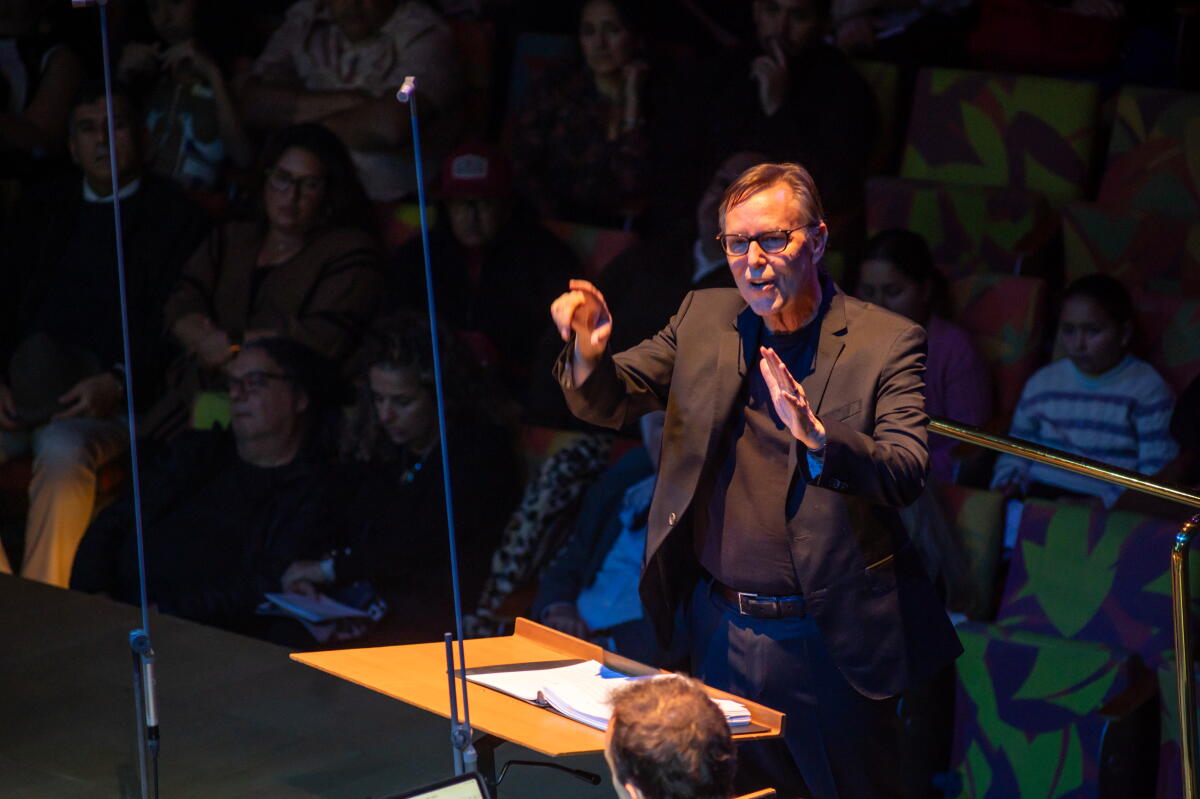
Grant Gershon conducts the Los Angeles Master Chorale at Walt Disney Hall, Nov. 16, 2025.
(David Butow/For the Times)
Brahms’ Requiem The Los Angeles Master Chorale, led by Grant Gershon, opens its silver anniversary season with a program that also includes Bruckner’s “Te Deum.” 7:30 p.m. Walt Disney Concert Hall, 111 S. Grand Ave., downtown L.A. lamasterchorale.org
WEDNESDAY
Rubén Blades & Roberto Delgado Big Band: Fotografías Tour The Panamanian salsa greats perform classic Afro-Cuban music flavored with rock, jazz and Latin American influences. Silvana Estrada opens. 8 p.m. Hollywood Bowl, 2301 N Highland Ave. hollywoodbowl.com
Menopause The Musical: 25th Anniversary Tour Four women at a lingerie sale share their experiences with “the change” through parody songs of pop hits. 7:30 p.m. Bank of America Performing Arts Center, 2100 E. Thousand Oaks Blvd., Thousand Oaks. bapacthousandoaks.com
The Broadway production of “The Outsiders.”
(Matthew Murphy)
The Outsiders The Tony Award-winning musical adaptation of S.E. Hinton’s coming-of age-novel set in 1960s Tulsa arrives with Ponyboy Curtis and his fellow greasers facing off against the upper-class Socs. Through Oct. 18. Hollywood Pantages Theatre, 6233 Hollywood Blvd., Hollywood. Oct. 20-Nov. 1. Segerstrom Center for the Arts, 600 Town Center Drive, Costa Mesa. tour.outsidersmusical.com
THURSDAY
Laura Benanti: Nobody Cares The Broadway star sings original songs and shares stories with her trademark wit in this one-woman show. Directed by Annie Tippe. 7:30 p.m. Thursday-Saturday. 2 p.m. Saturday-Sunday. The Wallis, 9390 N. Santa Monica Blvd., Beverly Hills.thewallis.org
The Dance and the Railroad Asian American theater collective Artists at Play and Latino Theater Company team up for a rare revival of an early David Henry Hwang play set during the 1867 Chinese railroad workers’ strike. Directed by Katherine Chou. Previews, 8 p.m. Thursday and Oct. 2. 8 p.m. Thursday-Saturdays, 2 p.m. Sundays, through Nov. 1. Los Angeles Theatre Center, 514 S. Spring Street, downtown L.A. latinotheaterco.org
Mahler’s Symphony No. 2: Resurrection Alexander Shelley conducts the Pacific Symphony with soprano Miah Persson, mezzo-soprano Dame Sarah Connolly and the Pacific Chorale. 8 p.m. Thursday-Oct. 2. Segerstrom Center for the Arts, 600 Town Center Drive, Costa Mesa. pacificsymphony.org
The SoCal scene
Gov. Gavin Newsom mingles with guests at the Lucas Museum of Narrative Art opening party.
(Carlin Stiehl/For The Times)
I spent my Saturday night at the Lucas Museum opening party where I got to stand in the lobby by the nifty elevators watching Gov. Gavin Newsom talk to Kim Kardashian. Later, I went to Skywalker Grill and saw U.S. Rep. Nancy Pelosi sitting at a table next to Leonardo DiCaprio and his entourage. It would be an understatement to say that the night was both bizarre and memorable.
Times theater critic Charles McNulty (the paper’s only remaining arts critic) has kept exceptionally busy this fall season. Late last week he wrote a review of “The Ford/Hill Project” At REDCAT, which transforms Senate testimony from Anita Hill and Christine Blasey Ford into a docu-play that explores the details of two of history’s most consequential Supreme Court confirmation hearings. “The restraint imposed by the production adds to its power. There’s no need to editorialize. The proceedings skewer themselves,” McNulty writes.
Huguette Caland in Stone Doorway, France, 1970.
(Huguette Caland Estate)
McNulty also drove to San Diego to see the Old Globe’s world-premiere musical adaptation of John Carney’s “Begin Again,” which explores the stories of two music-industry vets who embark on a grassroots recording project. The show features a score by rocker Pat Monahan and Train. “‘Heartwarming’ is a cliche of theater reviewing that I have studiously tried to avoid, but I’m tempted to use the word in my review of ‘Begin Again’,” McNulty writes.
McNulty penned one of his harshest reviews since last year’s take down of “Hamlet” after he went to Atwater Village Theatre to see Echo Theater Company’s world premiere production of “The Peterson Show,” by Janine Nabers. “Unfortunately, the production is hamstrung by fundamental problems in the writing, directing and acting, all pointing to a failure of control. Control of the story, control of the tone and control of the cast,” McNulty wrote of the show, which is about the impact of disgraced Bill Cosby-like star on his TV family.
Meanwhile contributor Tara Anne Dalbow wrote a beautiful story about the late, great artist Huguette Caland in advance of the largest U.S. retrospective of her work, opening Sunday at the Hammer Museum.
Ernest “Ernie” Wolfe III, owner of an eponymous gallery on Sawtelle, is dying of a traumatic brain injury and his family is looking for homes for his 15,000 pieces of African Art. Contributor Jane Horowitz writes about Wolfe‘s legacy and the (sometimes controversial) origins of his collection.
As one chapter closes with Swed’s retirement, a new one begins as we welcome our new entertainment and arts reporter, Laura Zornosa, who hit the ground running by writing three great arts stories: The first is about the private art collection of Armand Hammer (including Mary Cassatt’s “Summertime,”) coming up for auction at Sotheby’s; the second, covering opening day at the Lucas Museum where Zornosa interviewed guests on their thoughts about the place; and the third is a fun news brief about how Los Angeles Chamber Orchestra commissioned fanfares from half a dozen film composers, including John Williams and Ludwig Göransson, curated by “none other than Seth MacFarlane (best known as the creator and star of “Family Guy”).”
Enjoying this newsletter? Consider subscribing to the Los Angeles Times
Coy Middlebrook has been named the new artistic director of the Wallis.
(Jeff Lorch / The Wallis)
The Wallis Annenberg Center for the Performing Arts announced the appointment of longtime creative staffer Coy Middlebrook as its new artistic director. “Coy brings an extraordinary depth of knowledge about The Wallis and its audiences, along with deep relationships throughout the performing arts nationally and internationally. He understands both the artistic possibilities of this institution and the importance of its relationship to our community. I am excited to work with him as we build a future that is artistically ambitious, deeply connected and open to everyone,” said Wallis Executive Director and Chief Executive, Jean Davidson, in a news release.
Meanwhile Theatre Commons LA (TCLA), the nonprofit organization created and launched a year ago as part of a concerted effort by some of the city’s most prominent theater leaders to unify the city’s sprawling theater scene, has announced its first Executive Director, David E. Shane. Shane previously served as director of program services at the Alliance of Resident Theatres/New York where, according to a news release, “he set the strategic vision and goals for a robust suite of programs serving over 450 of New York’s nonprofit theaters.” He is tasked with doing the same thing in L.A. and we wish him the best of luck.
— Jessica Gelt
And last but not least
The Getty Museum has acquired the recently rediscovered 17th-century painting “Portrait of the Count-Duke of Olivares” by Spanish artist Diego Velázquez (1599-1660). It will be displayed in the museum’s East Pavilion this fall. According to ArtNews, “The acquisition means a Velázquez painting will for the first time be represented in the collection of a West Coast museum.”