murkowski

Cassidy says he supports Blanche for attorney general, likely paving way for confirmation

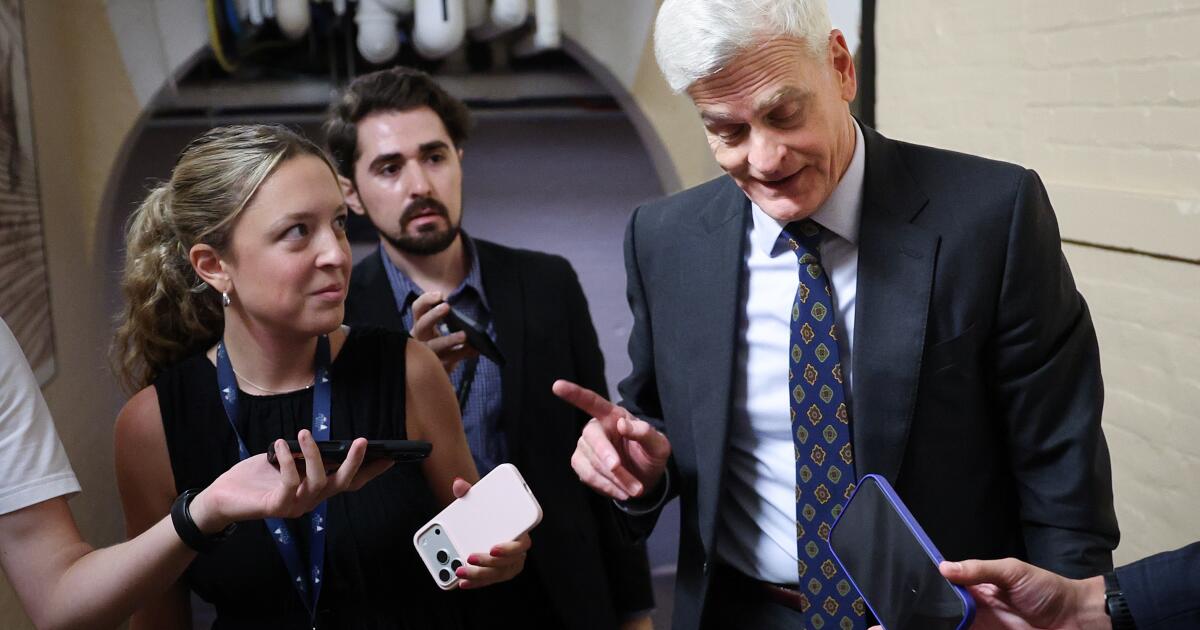
Sen. Bill Cassidy, a Republican from Louisiana, said Friday he will vote to confirm Todd Blanche as attorney general, likely delivering the decisive vote needed to push President Trump’s embattled nominee to oversee the Justice Department.

Cassidy, who had expressed reservations about Blanche’s nomination, had been the last undecided Senate Republican, and his support all but locks in the 50 votes Blanche needs to be confirmed after two other GOP moderates — Sens. Lisa Murkowski of Alaska and Susan Collins of Maine — said they would vote no. All Senate Democrats are expected to oppose the nomination.

Speaking from the Senate floor, Cassidy acknowledged Blanche was an imperfect pick, but that he had come to the conclusion that he would be better positioned to lead the Justice Department than another candidate, in part because he “knows the law.”

“Mr. Blanche is not perfect and he will tell you this,” Cassidy said. “But the choice is not between perfection and Mr. Blanche. It is between Mr. Blanche and another acting attorney general, who may not run the department effectively under President Trump and who indeed may not be as good as Mr. Blanche.”

Cassidy, who lost his reelection bid to a Trump-backed challenger, said he is aware his decision will come with criticism, but said: “What’s new?” He then appeared to become emotional, as he assured his constituents that he worked “hard to understand the issue and make the right decision.”

The Louisiana lawmaker’s decision puts Blanche’s turbulent nomination process back on course. His path to confirmation was complicated over his involvement in a settlement agreement that included the creation of a nearly $1.8-billion so-called anti-weaponization fund that would have been used to pay Trump allies, including Jan. 6 rioters.

In an order issued Sunday night, Blanche declared the settlement dead. It was seen as an effort to appease GOP senators who threatened to block his confirmation. Despite the promise to terminate the settlement, Murkowski said she was worried the Trump administration could proceed with the proposed compensation fund, noting that the Senate only had leverage over the fund because Blanche’s nomination is pending.

“Once we vote, that will end, and there is no telling what the future holds,” she said.

The Justice Department also clarified in writing that a tax audit immunity agreement, which was part of the settlement agreement Blanche negotiated, would apply only to claims open at the time of the settlement and does not protect Trump from examination of future tax filings.

It also makes clear that only the parties that brought the lawsuit — Trump, two of his sons and the Trump Organization — are covered by the tax agreement. The fund and the immunity were the result of the settlement reached after Trump, two of his sons and their businesses sued the Internal Revenue Service over the leak of tax documents.

Lawmakers and legal experts have questioned the lawfulness of the tax protections for Trump. A federal judge who oversaw the IRS case has described Trump’s lawsuit as an improper exercise in self-dealing, and on Thursday the union representing IRS workers asked another judge to block the immunity agreement.

Trump has continued to support the idea of the fund and told reporters this week that he would still like to compensate Jan. 6 rioters, who he said have been “hurt so badly.”

Asked about Trump’s continued support for the fund on Tuesday, the day the Senate Judiciary Committee advanced Blanche’s nomination, Sen. John Cornyn (R-Texas) said “there’s nothing we could do” to change Trump’s mind on it.

“Well, there’s nothing we could do to rein in the president when he said he likes the fund and he wishes it still exists. But the fact of the matter is it’s dead, and that’s all we could do under these circumstances,” Cornyn said.

When Cassidy announced his decision, Blanche was in Colombia, leading a U.S. presidential delegation to the inauguration of the country’s new president, Abelardo de la Espriella. As of Friday afternoon, he had not commented on the developments in Capitol Hill.

Karoline Leavitt, the White House press secretary, posted on social media a news article with only its headline: “Todd Blanche wins votes for Senate confirmation.”

This article includes reporting from the Associated Press.
Source link

Sen. Lisa Murkowski joins Susan Collins, says she’ll vote against Todd Blanche nomination

Aug. 7 (UPI) — Sen. Lisa Murkowski, R-Alaska, on Friday became the second Republican senator to say she’ll vote against Todd Blanche’s nomination for U.S. attorney general, putting his confirmation further at risk.

Murkowski joins Sen. Susan Collins, R-Maine, who said Tuesday that she’ll vote against Blanche’s nomination. Blanche, President Donald Trump‘s pick for the role, is now acting attorney general.

Murkowski questioned if Blanche, Trump’s former personal lawyer, would be an effective check against Trump if he’s confirmed as the leader of the U.S. Department of Justice.

In a social media post Friday, she listed various ways the Justice Department has been politicized and referred to the $1,776 billion “anti-weaponization” fund order that Blanche said he’s rescinded earlier this week.

“I am … keenly aware that the department’s nearly $2 billion dollar slush fund — which likely would have rewarded January 6 protestors — is only off the table because this nomination is pending and the Senate has leverage,” Murkowski wrote. “Once we vote, that will end, and there is no telling what the future holds.

“The country needs an attorney general who will check the worst impulses of this administration. I hope Mr. Blanche is able to achieve that, if confirmed, but I simply do not have confidence that will be the case.”

Collins also questioned Blanche’s independence and approval of the anti-weaponization fund — as well as its connected settlement agreement giving Trump and his family protection from tax investigations — in saying she will vote against the nomination.

Also, “more than 1,200 former Department of Justice employees have opposed his nomination, arguing that he has undermined the institution,” Collins said in her statement Tuesday. “For these reasons, I will vote against this nomination.”

With Murkowski and Collins voting against the nomination, Sen.Mitch McConnell still absent from the Senate and all Democrats saying they’ll vote against him, Blanche can’t lose any more votes and be confirmed.

It is uncertain how Sen. Bill Cassidy, a Republican and frequent Trump critic, will vote. Cassidy has so far declined to comment on the question.

Before Blanche rescinded the $1,776 billion fund order, Republican Sen. Thom Tillis and John Cornyn also said they’d vote against him. However, they reversed course on that Monday.

However, Trump said on social media Saturday — before Blanche issued his order on the fund – that if Blanche is not confirmed, he will remain acting attorney general and the fund “would immediately be back on the table,and I will get it done!”

Blanche has been in the acting attorney general role since Trump fired Pam Bondi in April.

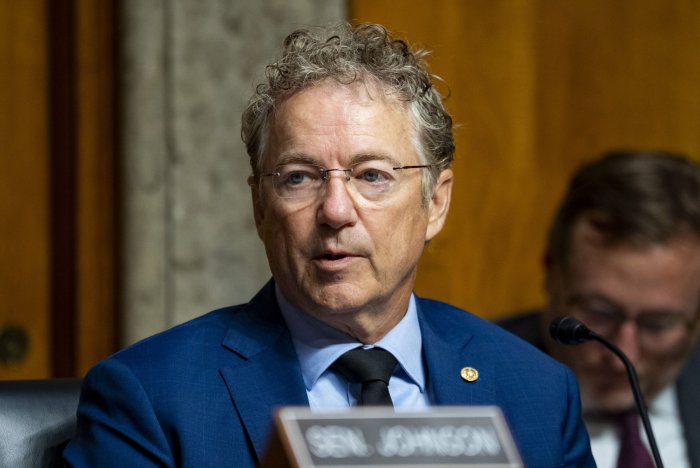
Chair of the Senate Homeland Security and Governmental Affairs Committee Rand Paul, R-Ky., speaks during a hearing at the U.S. Capitol on Thursday. The committee voted along party lines to hold Dr. Anthony Fauci in contempt of Congress after he invoked his Fifth Amendment right 111 times during a subpoenaed hearing on the pandemic response. Paul argues the Fifth Amendment does not apply due to a prior presidential pardon. Photo by Bonnie Cash/UPI | License Photo

Source link

Senate committee delays vote on CDC director nominee because of Murkowski absence

July 23 (UPI) — A Senate committee delayed a vote on the Trump administration’s Centers for Disease Control and Prevention director nominee, Erica Schwartz, because enough members were not present.

Sen. Lisa Murkowski, R-Alaska, was absent from the Senate Committee on Health, Education, Labor and Pensions meeting on Thursday because of a family emergency, which led committee chair Bill Cassidy, R-La., to postpone the vote, Politico reported.

Cassidy also said Thursday that he decided to vote for Schwartz because of a “good faith action” the CDC reportedly made to its website earlier in the day.

The action included changing language on its website about the lack of an association between vaccines and autism, which had been ordered changed by Health and Human Services Secretary Robert F. Kennedy Jr. last year.

Cassidy asked detailed questions during her nomination hearing about vaccines and how the agency, which has had a full-time director for just one month since President Donald Trump re-entered the White House, would restore confidence in its public health mission, The Hill reported.

“I’m confident that she knows what she’s doing and will stand against those who do not,” Cassidy said during the meeting.

“If confirmed, I look forward to working with Dr. Schwartz to protect children’s health and regain trust in the CDC,” he said.

“There’s more to do to repair the damage that has been done to the U.S. public health response, but this is a start,” the Louisiana Republican added.

Even with Cassidy deciding to vote for Schwartz, Republicans on the committee would have needed a Democrat or Sen. Bernie Sanders, I-Vt., who caucuses with the Democrats, to vote in favor.

Sanders ended that possibility when he expressed respect for Schwartz’s career but said that he was concerned she would not be able to hold off some of the controversial changes Kennedy has either proposed or forced on the agency.

“I will be voting against Dr. Schwartz because we need people in this country who are going to stand up, protect the American people and I don’t think you can see that right now with Secretary Kennedy in his position,” Sanders said.

The HELP committee’s next executive session is scheduled for July 30, which is also the next time it will consider nominations, making it the next opportunity for Schwartz’s nomination to come up for a vote.

The committee also put off a vote on Sean Kaufman, who is nominated to lead the Administration for Strategic Preparedness and Response, because Republicans did not have enough votes to forward the nomination to the full Senate.

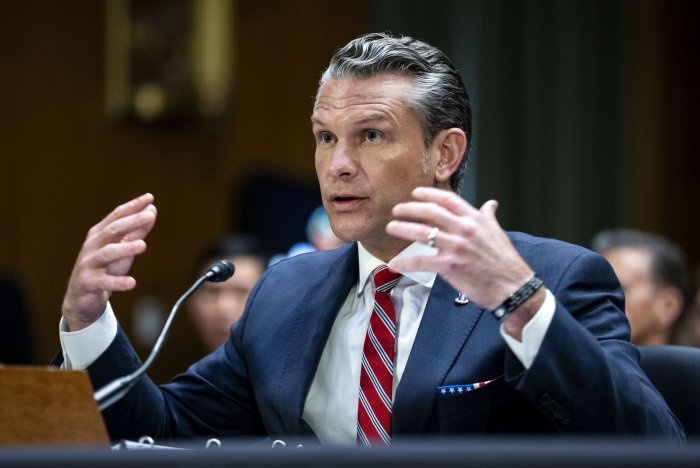
Secretary of Defense Pete Hegseth speaks during a Senate Appropriations Committee hearing on President Donald Trump’s June 24 supplemental funding request at the U.S. Capitol on Tuesday. Photo by Bonnie Cash/UPI | License Photo

Source link