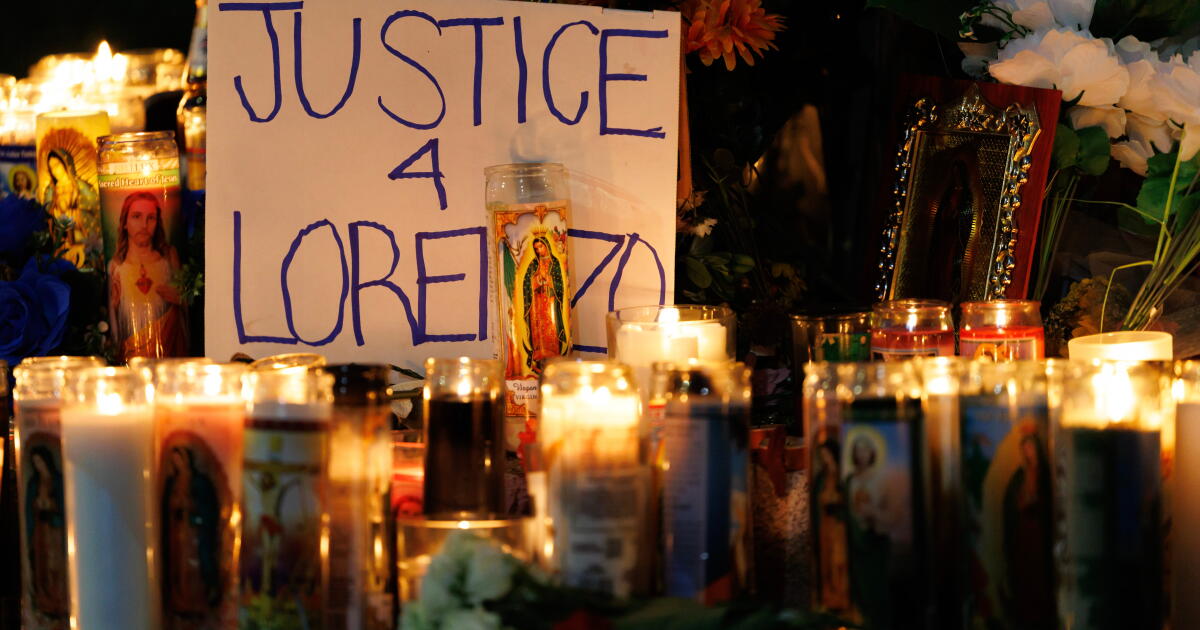
WASHINGTON — Lorenzo Salgado Araujo’s wife used to spend her evenings cooking a big meal for her husband and waiting for him to return home from his job as a home builder. Now, his son told members of Congress, Salgado Araujo’s wife spends those evenings visiting her husband’s grave at the cemetery.
In a packed Senate hearing room, a rapt audience of dozens listened to the sons of Salgado Araujo, the mothers of Ruben Ray Martinez and Renee Good, as well as the woman who video-recorded the death of Alex Pretti and the lawyer for the family of Johan Sebastián Durán Guerrero.
Salgado Araujo, Martinez, Good, Pretti and Durán Guerrero were shot and killed by federal agents since the start of the Trump administration’s crackdown on immigrants. Some were U.S. citizens; others were immigrants.
“We still have so many questions,” said Lorenzo Salgado, one of Salgado Araujo’s sons. “What are the names of the ICE agents who killed our dad? Why do they get to be protected behind anonymity, while my brother and I stand before cameras, showing our faces, proudly saying our first and last name?”
The forum on Tuesday was led by Rep. Robert Garcia (D-Long Beach) and Sen. Richard Blumenthal (D-Conn.). It was the fifth such event that the two lawmakers have hosted since December, forums aimed at shedding light on what the lawmakers call the “lawless and abusive tactics” by immigration agents.
The forums are not official hearings because they have been organized without Republican support. Nothing has changed since the first forum, the lawmakers said, accusing the Department of Homeland Security of failing to fully investigate the deaths and prevent further ones.
Blumenthal noted that two days prior in Austin, Texas, another man was shot by ICE agents. Wilber Rafael Garces Perez, a Venezuelan who was making a DoorDash delivery when ICE agents sideswiped his car, was seriously injured and placed in ICE custody with a bullet still lodged in his back.
Garcia said that, as of this month, Democrats on the House Oversight Committee have verified more than 1,000 instances of abuse by immigration agents under this administration.
“Every community in America should be asking itself: How long will it be until ICE is in our city?” Blumenthal said. “How long will it be until we have a grieving family, until another loss of life?”
Rachel Reyes sobbed as she recounted the moments leading up to the death of her son, Martinez. She said his death came nearly a year before Good’s and Pretti’s “yet far fewer people know his name” because the family was denied access to investigative reports and video evidence showing he had been shot by an immigration officer.
“It’s deeply distressing to know that Ruben’s final moments were consumed by confusion, fear, pain and disregard for his life,” she said. “Though the circumstances surrounding his death and these other victims are distinctly different, the pattern is the same: lives cut short by the same agency, agents without body cameras, no warnings, no attempt to de-escalate, excessive force followed by deflection, and a lack of accountability after the fact.”
Donna Ganger, the mother of Good, said her daughter should still be alive. Ganger described herself as a Republican and a Christian. While Jesus teaches forgiveness, she said, she deserves accountability too.
“I voted for President Trump under the impression that these agents were here to protect the citizens of the United States,” she said.
“This is madness,” Ganger added.
Stella Carlson said that when she saw Pretti, she decided to become “his backup.” Instead, she watched him die and then watched the agents who shot him flee. Two masked agents returned “and began to manipulate his dead body, ripping open his clothes as if to provide aid, but instead moving him around like a rag doll.”
Later, Carlson said, she witnessed top government officials lie about Pretti, calling him a domestic terrorist who wanted to “massacre law enforcement.”
“I am just a regular person, but I care deeply about my community, my state and my country,” she said. “I believe there is power in ordinary people speaking the truth.”
Good and Pretti were killed within weeks of each other in January during a period of increased immigration enforcement in Minneapolis.
Sean Murphy, who represents the family of Durán Guerrero, said he and Durán Guerrero’s widow recently attended a meeting with representatives of the Maine attorney general’s office to retrieve some of his property that isn’t considered evidence.
One item that wasn’t returned was his 3-year-old daughter’s car seat, which had been pierced by a bullet.
Sen. Alex Padilla (D-Calif.) asked each speaker what they think justice would look like.
Reyes said an independent investigation. Brent Ganger said that true justice isn’t possible because his sister can’t come back, but that accountability is possible if federal agents are held to the same accountability standards as local law enforcement.
To Carlson, justice would mean getting ICE off the streets and letting detainees return home. Murphy called for prosecution for the agent who killed Durán Guerrero.
For Lorenzo Salgado, justice would take another form: getting to see his mom heal and finally getting a full eight hours of sleep.
The forum came as congressional Democrats are seeking to edge out Republicans in the Nov. 3 election, and at times the Democrats seized it as a way to criticize the other party.
Rep. Jasmine Crockett (D-Texas) asked members of the audience to stand up if they’ve been affected detrimentally by ICE. Ronaldo Salgado looked around the room as about a dozen people stood.
“The reality is that there are so many more stories. There are so many more names that you will never hear,” she said. Later, referring to Republicans, she added, “It’s time to vote them out.”
Rep. Suhas Subramanyam (D-Va.) noted that Reyes voted for Trump and asked her to say anything she would want him to hear now. Reyes said that, like many Latinos, she deeply regrets her vote.
“I haven’t heard anything from any Republican whatsoever,” she said. “I’m very disappointed, and he lied.”
Good’s brother Brent Ganger said his family has waited long enough for accountability for the damage caused by ICE. As a moderate, he said, he hoped that all members of Congress — even those not in attendance — were listening.
“We will not be quiet, and we will not go away,” he said.