moon

3 Los Angeles night hikes where you can watch the ‘blood moon’ eclipse

I didn’t want to feel disappointed, so I suggested we leave.

My friend Mejin countered that we should give the moon a little more time to show itself.

We’d hiked up to Five Points, where five trails meet in Griffith Park, with the goal of watching the moon rise over the nearby Los Angeles River and Elysian Valley.

You are reading The Wild newsletter

Sign up to get expert tips on the best of Southern California’s beaches, trails, parks, deserts, forests and mountains in your inbox every Thursday.

But the smog was thick, and the view was obscured. I already felt beat down by life. Now, the moon was a no-show? But as Mejin and I chatted with passersby about why we were standing around — no one seemed as hyped about the moon as we were — we spotted a flicker of golden light, low in the sky.

In this edition of The Wild, our weekly outdoors newsletter, I will recommend three night hikes around L.A. where you should have great views to watch the moon rise. Each trail offers an opportunity to still get outside despite this oppressive heat wave L.A. is experiencing this week. And this week’s full moon is extra special. On Thursday night, we’ll be able to witness a partial “blood moon” eclipse. Sounds spooky, and it isn’t even Halloween yet!

First, let’s talk through the time of sunset and the moon’s rise so you can plan your hike accordingly:

  • Thursday: Sunset at 7:25 p.m., moon rise at 7:16 p.m.
  • Friday: Sunset at 7:24 p.m., moon rise at 7:43 p.m.
  • Saturday: Sunset at 7:22 p.m., moon rise at 8:09 p.m.
  • Sunday: Sunset at 7:21 p.m., moon rise at 8:37 p.m.
The golden orange moon in a deep blue sky with a city skyline below.

A view of the super blue moon as seen from the Hollywood Hills on August 2023.

(Jason Armond / Los Angeles Times)

In terms of the partial “blood moon” eclipse, here’s what you need to know, thanks to a story by Times staff writer Fedor Zarkhin:

  • “The main stage of the eclipse will begin at 7:34 p.m., when the moon will fall under the core, or umbra, of Earth’s shadow. It will gradually turn a reddish, copper color as sunlight bends and filters through the atmosphere to fall on the otherwise-obscured part of the moon.”
  • “The eclipse will peak at 9:13 p.m. — when 96% of the moon’s surface will fall under the Earth’s shadow.”
  • “The most visible phase of the eclipse will end at 10:52 p.m.”
  • “The eclipse will end entirely just after midnight.”

If you’d like to look for your own full moon hike, rather than using the list below, your hiking spot will ideally include:

  • Clear views to the east. The moon generally rises in the northern hemisphere in the eastern sky (at around 102 degrees on Thursday in L.A., coordinates you can find using your cellphone’s compass).
  • Open after hours. Several of our local parks are only open from sunrise to sunset (outside of special events). Make sure to check the hours (if there are any) if you’re planning to take a night hike not listed below.
  • A wide dirt or paved path. None of the hikes below are terribly technical. That’s intentional, as the best night hikes are those along a wide fire road or paved path.
A gorgeous yellow white natural satellite, also known as the moon, shines over jagged brown mountains and houses below.

The moon rising in Thousand Oaks over Simi Peak to the east in October 2021 in the phase known as waxing gibbous.

(Al Seib / Los Angeles Times)

  • Friends. It’s best to hike in a group at night, in part because your chatter and laughter will alert any animals that you’re nearby.
  • Hiking poles. Although none of these trails are terribly technical, there’s still an inherent risk that comes with hiking. Consider bringing poles for the trip down, just to give yourself a bit more purchase on the sandy soil.
  • Extra water. We’re all slowly melting in this heat wave. Pack more water than you’d normally bring because we’re probably all a bit more dehydrated than usual this week!
The moon rises above the snow capped San Gabriel mountains and the Los Angeles skyline.

The moon rises above the snow-capped San Gabriel Mountains and the Los Angeles skyline as rain clouds begin to envelope the sky. The view is from Kenneth Hahn State Recreation Area in January 2021.

(Genaro Molina / Los Angeles Times)

As always, please remember to practice the seven Leave No Trace principles out on the trail, which include picking up after yourself (including orange peels) and not playing loud music. This better ensures we leave it better than we found it so everyone, including our local wildlife, can continue to enjoy our public lands.

OK, toss an extra water bottle in your pack and let’s take a look at these hikes!

Seven people sit on a concrete square covered in graffiti with expansive views of cities and mountains below and all around.

Hikers sit on the ledge of the Topanga Lookout, a concrete base of a fire lookout that is believed to have been torn down in the 1970s after smog made the lookout tower irrelevant.

(Jaclyn Cosgrove / Los Angeles Times)

1. Topanga Lookout

Distance: 2.1 miles
Elevation gained: About 350 feet
Difficulty: Easy end of moderate
Dogs allowed: Yes
Nearest to: Topanga
Accessible alternative: An L.A. County beach with accessible offerings

The 2.1-mile trek out and back to the Topanga Lookout takes hikers along the Topanga Ridge Motorway (called Topanga Tower Motorway on some maps) to an iconic spot in the Santa Monica Mountains where, on a clear day, you can see dozens of miles away.

Along the way, you’ll spot massive rock slabs that look like the forgotten frisbees of Zeus and his pals. And you’ll be treated to a lush habitat of native plants, including prickly phlox, chaparral yucca, black sage, hollyleaf cherry and Coulter’s Matilija poppy.

Three lights are seen along a dirt path through thick green plants and large crunchy boulders

Hikers light the path to the Topanga Lookout in the Santa Monica Mountains.

(Jaclyn Cosgrove / Los Angeles Times)

To begin, you’ll park near the trailhead at Stunt and Saddle Peak roads. Be careful if crossing the road, as that large bumblebee you hear nearby is actually a sports car ripping along the road. From the trailhead, you’ll take Topanga Ridge Motorway for just over a mile northeast. You will pass an entry point for the Backbone Trail and a private road.

The trail starts as a wide paved path before transitioning after about a third of a mile to a dirt path of varying widths. Although it’s not overly technical — I chatted with a hiker walking it in slides — the trail has some uneven surfaces, so a headlamp or good flashlight is necessary when hiking it at night.

You will pass at least one spur trail — unofficial, user-generated — including one that’s steep and unstable. I overheard one youthful hiker tell their friends, “Dude, I almost died three times.” Not a ringing endorsement for that route. Plus, it didn’t sound like it offered any better views than you’ll get at the lookout spot.

As you approach the lookout, you’ll notice a steep path up to the concrete base. If you, instead, take the foot path to the right of the lookout, you’ll find stairs that allow you a much easier time getting to the top. You likely won’t find solitude — I interacted with a dozen hikers on a Wednesday night — but you will find incredible views of the Santa Monica Mountains and L.A. County. I was blown away.

A brightly lit dirt path with several plants, including sage and yucca, along the way with a deep blue sky above.

A headlamp lights the path ahead as the stars twinkle above near the Topanga Lookout in the Santa Monica Mountains.

(Jaclyn Cosgrove / Los Angeles Times)

I kept calling this spot the Topanga Overlook in my head, knowing that was wrong. It hadn’t clicked for me that this used to be the site of a fire lookout tower, hence the reason there’s a concrete structure here.

Believed to be built in 1934, the Topanga site was one of three fire lookout towers that the L.A. County Fire Department maintained in the Santa Monica Mountains with the other two located at Castro Peak and Triunfo Peak near the Ventura County line, according to a 1958 Times article. (For more history on fire lookouts in L.A. County, including how to hike to an existing one, you can read this article I wrote about Vetter Mountain.)

A bright moon in the night blue sky over a dark ridgeline and thousands of city lights.

An almost full moon rises over the Santa Monica Mountains and nearby cities.

(Jaclyn Cosgrove / Los Angeles Times)

The Forest Fire Lookout Assn. lists the reason for the Topanga Lookout’s demolition to be “unknown.” However, I think I figured out what happened.

Author Milt McAuley wrote in one of his Santa Monica Mountains hiking guidebooks that the lookout tower was removed in the 1970s but provided no further details. This was around the time that air quality was worsening in L.A. County.

The sunset as seen from the Topanga Lookout trail in the Santa Monica Mountains.

The sunset as seen from the Topanga Lookout trail in the Santa Monica Mountains.

(Jaclyn Cosgrove / Los Angeles Times)

“The County Fire Department has seen the day coming when the lookout tower would be outmoded,” Deputy Fire Chief George Brunton said in a 1969 Times article. “Too much smog cuts the effectiveness of the lookout operators and as the area becomes populated we no longer feel the need for these fixed fire spotters.”

Brunton told The Times that the county was launching a pilot program (somewhat literally) to use helicopters as fire lookouts. Officials had already closed the Triunfo tower and another at Parker Mountain near Saugus. “If the pilot program proves successful, other towers will be shuttered, according to Brunton,” the story reads.

Today, the Topanga Lookout and the surrounding area is mostly public land. Please respect any “No Trespassing” signs you see, as there remains some private land nearby, and if able, bring a trash bag with you. Unfortunately, not all visitors practice Leave No Trace!

The view from the Seco View Trail in Debs Park.

The view from the Seco View Trail in Debs Park.

(Jaclyn Cosgrove / Los Angeles Times)

2. Seco View and Oak Grove trails to overlooks

Distance: 1.4 to 1.86 miles
Elevation gained: 600 feet
Difficulty: Moderate
Dogs allowed: Yes
Nearest to: Northeast L.A.
Accessible alternative: L.A. River trail near the Taylor Yard bridge

This short jaunt through Ernest E. Debs Regional Park in the Montecito Hills offers great views at any time of day, with a bonus of great spots to sit at the top.

To begin, park at Hermon Park, or walk from the Highland Park Metro stop, as it is about a 0.7-mile walk to the trailhead from there.

From Hermon Park, head south, crossing Via Marisol from the crosswalk. From the crosswalk, you’ll walk west to the trailhead.

You will take the Seco View Trail southwest-ish for just over a quarter of a mile before turning left (or south) on Oak Grove Trail. You will follow Oak Grove Trail for about a quarter of a mile and then continue on Oak Grove Trail as it jags to the right (or west). You’ll quickly come to a wider dirt path. Turn left (or west).

A bench in golden light surrounded by dry grasses.

A green park bench at Debs Park.

(Gina Ferazzi / Los Angeles Times)

In just 300 feet, you’ll come to a paved path where you can turn left or right and reach benches either way. From here, the choice is yours to sit, rest and enjoy the moon rise.

On your way back, you have the option of following a wide-but-steep path down rather than returning on Oak Grove Trail.

A deep orange moon rises over hillsides dotted with lights from building.

The moon rises over Elysian Valley in late July.

(Jaclyn Cosgrove / Los Angeles Times)

3. Five Points via Fern Canyon Trail

Distance: About 2.4 miles
Elevation gained: About 475 feet
Difficulty: Moderate
Dogs allowed: Yes
Nearest to: Atwater Village
Accessible alternative: Griffith Park Observatory paved paths

This 2.4-mile journey will take you to Five Points (5-Points on some maps), where five trails meet and offer you the opportunity to extend your adventure (as long as you packed a map).

To begin, park at the Merry-Go-Round Lot 1 or nearby, keeping in mind that sometimes parking lots in the area close for setup and equipment for Shakespeare in the Park.

Exit the parking lot in the southeast corner and head to the Lower Beacon Trail, a wide flat dirt path parallel to the road. You’ll only be on this for about 200 feet.

Two hikers on a dirt path pass an opening in the greenery. A highway stretches out in the distance.

At Five Points in Griffith Park, where, on a clear day, you can see Santiago Peak, the highest peak in Orange County.

(Jaclyn Cosgrove / Los Angeles Times)

Soon, you will turn left (or southwest) onto the Fern Canyon Nature Trail.

You stay on this lush shady path for just under one-fifth of a mile, continuing southwest until you reach the Fern Canyon Trail, a wide dirt path.

You will follow Fern Canyon Trail as it takes you first west, then southeast before taking you eastward to Five Points.

If anyone in your party is thirsty, the Joe Klass Water Stop is nearby.

From Five Points, you can hang out until you spot the sturgeon moon, the name for this month’s full moon. And if it doesn’t come quickly, consider waiting.

A wiggly line break

3 things to do

A tribute will honor the life and music of Swamini Alice Coltrane Turiyasangitananda.

A tribute will honor the life and music of Swamini Alice Coltrane Turiyasangitananda.

(Adam Corey Thomas / TreePeople)

1. Celebrate Alice Coltrane’s birthday in Beverly Hills
TreePeople and Living Earth will host a tribute to Alice Coltrane from 7 to 10 p.m. Thursday at TreePeople’s outdoor venue in Beverly Hills. Proceeds from ticket sales will go toward the musicians, money needed to restore the ashram Coltrane established that burned in the 2018 Woolsey fire and to TreePeople, a local nonprofit that has planted more than 3 million trees in our region. Tickets range from $33 to $66 plus a $3.21 processing fee. Purchase at livingearth.la.

2. Bird-watch in a cemetery in Altadena
Pasadena Humane will host a wildlife walk from 6:30 to 8 p.m. Friday through Mountain View Cemetery in Altadena. Guests will learn about local birds, squirrels and coyotes, and also the history of the graveyard. Tickets are $7.18. Register at eventbrite.com.

3. Locate lizards in Culver City
Herpetologist Earyn McGee will host a lizard art walk from 10 a.m. to 1 p.m. Saturday at the Stoneview Nature Center (5950 Stoneview Drive) in Culver City. After taking a hike to observe lizards in their natural habitats, McGee will lead the group in an art activity at the nature center. Register at docs.google.com.

A wiggly line break

The must-read

A large elk tromps through grasses near a cliff with the blue Pacific Ocean in the background.

A male tule elk frolics near the Tomales Point Trail, part of the Point Reyes National Seashore in Inverness.

(Josh Edelson / For The Times)

Point Reyes National Seashore is a stunningly beautiful 110-square-mile expanse about an hour north of San Francisco. It’s at the heart of a debate between environmentalists and ranchers over the best way to manage the landscape. Times staff writer Susanne Rust wrote that after a lawsuit brought by environmentalists over the future of ranching there, in 2025 “a settlement was announced with the National Park Service laying out how the park would function going forward. Natural landscapes and wildlife would take priority over agriculture. Eleven of 13 historic ranching families would leave and be made whole for their losses.” But the remaining two families want to continue the fight. And they’re apparently finding the ear of the high-ranking officials of the Trump administration.

Happy adventuring,

Jaclyn Cosgrove's signature

P.S.

I’ve had a handful of moments on the trail when I felt like I was in real danger. The time I accidentally went off trail and ended up on an unstable hillside, dropping my pack in a river below. The time a bear slapped my tent. And because I’m a wimp, the moment when two entangled snakes emerged from the bushes and looked at me — before returning to their tryst. If you hike often enough, you will undoubtedly run into some kind of trouble. I’d love to hear from you. I write Between a Rock, an outdoors survival series that I hope helps educate other outdoors folks about how to respond in the face of emergencies. I’ve interviewed folks who’ve faced down mountain lions and bears, and underprepared strangers. You can submit your story via this form, and I will reach out if I’d like to hear more. I love these interviews because I always learn something too.

For more insider tips on Southern California’s beaches, trails and parks, check out past editions of The Wild. And to view this newsletter in your browser, click here.

Source link

China’s new moon mission could unlock secret of lunar ice: Why that matters | Space News

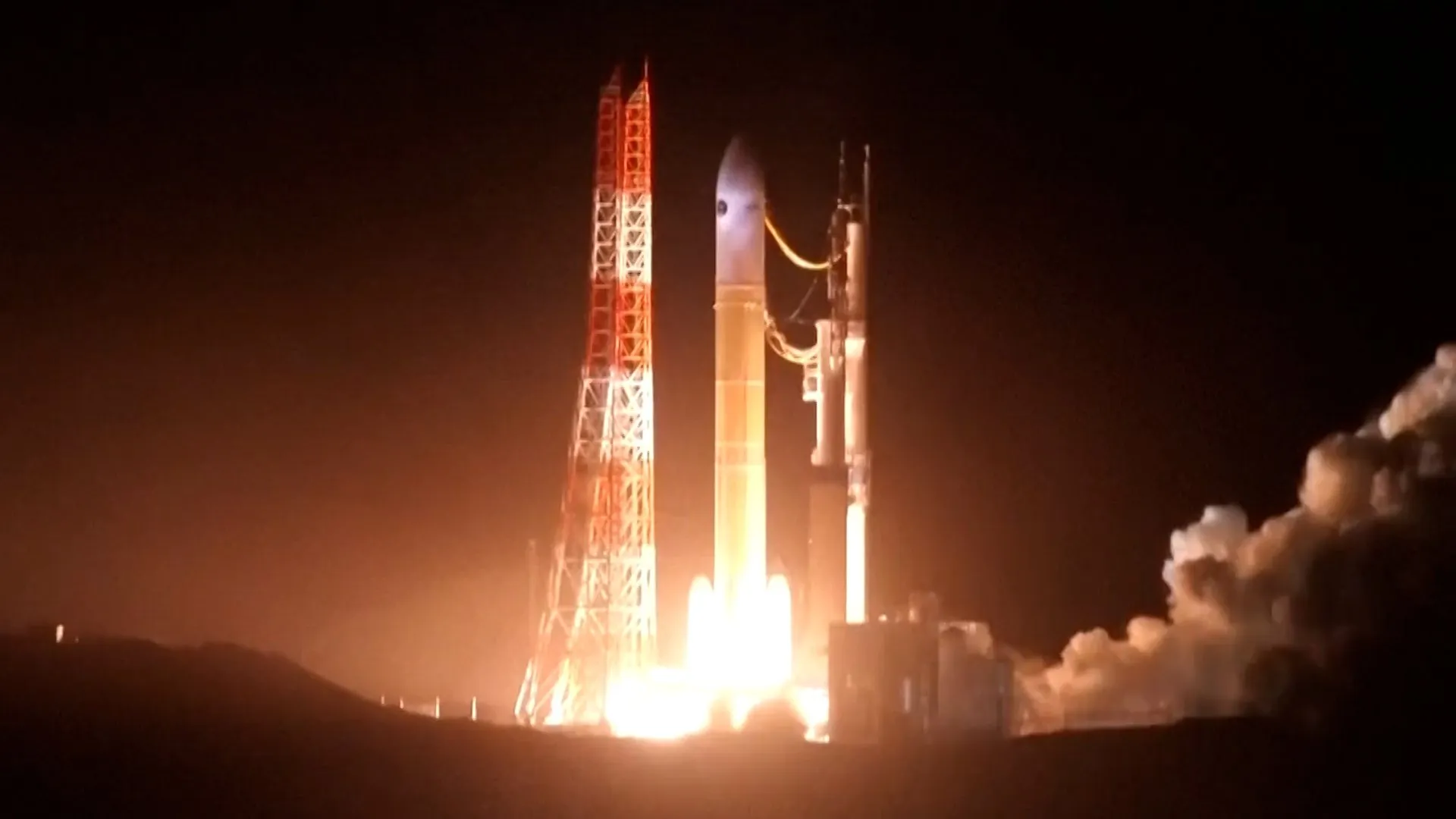
China is set to launch its Chang’e-7 unmanned, robotic space mission, possibly as early as Monday morning, to look for ice water in the permanently shadowed craters of the moon’s south pole.

This marks China’s seventh and most ambitious moon mission so far. Here is what we know about it.

What do we know about Chang’e-7?

The Chang’e‑7 launch window runs from Monday, August 24 to Monday, August 31, according to launch observers. That means the mission could lift off on any day in that period.

The Chang’e-7 comprises an orbiter, a lander, a rover and a hopper.

  • The orbiter is the main spacecraft which will remain in the moon’s orbit, mapping the surface and taking images while the mission is under way. It will also relay data and communications between the other Chang’e‑7 components and Earth.
  • The lander is the vessel that will touch down on the lunar surface, loaded with the necessary scientific instruments for lunar exploration, near the edge of the Shackleton Crater, a 21km-wide (13-mile-wide) pit close to the moon’s south pole. Lunar missions before this have never come this close to the pole.
  • The rover is a small robotic vehicle which can drive around the landing site and which carries equipment to analyse the local environment, including rocks and soil.
  • The hopper is a small robotic craft powered by solar energy, designed to “hop” – or fly – short distances from the surface of the moon and land again. It will be used to explore the Shackleton Crater.

How do we know there is water on the moon?

Over the past two decades, several space missions have established that there is water on the moon.

Since the 1960s, even before the first Apollo landing in 1969, scientists speculated that water could exist on the moon. However, when Apollo crews returned samples for testing in the late 1960s and early 1970s, they appeared to be dry.

Finally, in 2009, NASA deliberately crashed a rocket segment and its probe into a shadowed lunar crater to analyse the dust plume it kicked up. This provided one of the clearest direct confirmations that significant ice water does exist on the moon, building on earlier detections of water and hydrogen by probes.

In October 2020, NASA scientists announced that water on the moon is more widespread than previously known. They said water molecules had been found to be encapsulated within mineral grains on the lunar surface and speculated that more water is hidden in ice patches which are in permanent shadows.

NASA describes these permanent shadows as dark areas inside deep craters near the north and south poles of the moon where sunlight has not reached for millions or even billions of years. In 2018, prior to confirming it in 2020, NASA had detected water ice in shadowed parts of the moon through mapping.

Why is it important to find out more about the water on the moon?

Expanding knowledge about water on the moon is vital because ancient polar ice may have preserved a record of lunar volcanic activity and of water delivered by comets and asteroids to the Earth-moon system, offering clues to how our own oceans originally formed.

Additionally, if there is enough water on the moon that is realistically accessible, it could serve as a source of drinking water for crewed lunar missions, and could also help to keep equipment cool.

Hydrogen could also be extracted from moon water to provide fuel, while oxygen could be extracted to breathe, supporting onward missions to Mars or lunar mining.

Could anyone ‘own’ the water on the moon?

The 1967 United Nations Outer Space Treaty bans any nation from claiming sovereignty over the moon or owning it as territory. It does not explicitly prohibit commercial operations, but it requires private activities in space to be authorised and supervised by states and leaves key questions about resource ownership unresolved.

Which recent space missions have searched for frozen water on the moon?

In 2023, Russia’s lunar spacecraft, Luna-25, was launched to look for frozen water in the moon’s south pole. However, the Luna-25 spun out of control and crashed. The crash prevented any scientific data collection or water discovery.

Racing against the Luna-25 mission was India’s Chandrayaan-3, which also aimed to expand knowledge of lunar water ice. Chandrayaan-3 successfully landed in August 2023 and found critical new evidence of water on the surface of the moon’s south pole through soil temperature readings.

Why is exploring the moon’s south pole a challenge?

Attempted landings at the moon’s south pole have failed before because of its challenging terrain, which is full of craters and deep trenches.

The south pole is far from the equatorial region targeted by previous missions, including the crewed Apollo landings.

What is different about the Chang’e-7 mission?

The upcoming Chang’e-7 is aiming to expand knowledge about where, exactly, water is located in the craters of the moon, how deep it is, what form it is in and whether it is indeed possible to access it.

The Chang’e-7’s six-legged hopper has been designed to jump into and out of the deep, shadowed craters near the south pole that are hard for traditional rovers to reach, to look for water ice and other resources.

No previous space mission has used a dedicated hopper to jump in and out of lunar craters in this way.

Source link

SpaceX rocket segment to crash into the moon: What happened? | Space News

A piece of a SpaceX rocket which has been floating in space since last year was believed to have crashed into the moon at high speed on Wednesday.

The event, not visible to the naked eye, is expected to be confirmed by experts monitoring it with a telescope.

This event posed no danger to Earth but was also expected to create a new lunar crater, experts said.

Here’s what we know so far.

Has the rocket hit the moon yet?

It is believed to have hit the moon already, but this has not yet been confirmed as it takes time for signals to return from the moon to the Earth. The rocket segment was expected to hit the moon around 2:35am ET (06:35 GMT) on Wednesday, crashing into the surface at 5,400mph (8,690km/h).

The ⁠rocket piece is believed to have hit Einstein Crater on the moon’s western limb, which is often difficult to see from Earth.

Weighing 4 metric tonnes (4,000kg), it was expected to kick up a plume of lunar dust that would likely be illuminated by sunlight but would be difficult to spot with the naked eye from Earth.

The crash landing is unintentional, SpaceX has said.

Which rocket did this piece of space debris come from?

It comes from a SpaceX Falcon 9, which is a reusable model and has been used for several space missions.

It is made of two parts: upper and lower. The lower part can detach from the upper part and return to Earth. It is the upper part of the rocket which likely crashed into the moon.

Is this dangerous for the Earth?

“There is no danger to Earth,” NASA spokesperson Jimi Russell said in a statement on Tuesday.

“NASA will continue to track the booster for training purposes, as well as later observe the impact site for scientific purposes.”

What was the Falcon 9 doing near the moon?

The Falcon 9 rocket took off last January from Florida, United States, carrying two lunar landers. The booster returned to Earth, but the upper segment remained in space to push the landers onwards.

After pushing the lunar landers onwards, the upper segment of the rocket typically falls back into Earth’s atmosphere and burns up or plunges into the ocean.

But, because the January lunar lander mission required more thrust than missions closer to Earth, the rocket’s second stage remained in space, floating aimlessly among thousands of other pieces of space junk that active satellites have to steer clear of as a matter of course.

According to the United Kingdom’s Natural History Museum, humans have launched thousands of objects into space since the 1950s. “When these spacecraft, rockets, and satellites stop working or break apart, they stay in orbit instead of falling back down right away,” it says.

Why was this rocket section heading to the moon?

It was not until earlier this year that astronomers determined that the rocket section, which had dumped its remaining fuel and could no longer be controlled, was on an orbital trajectory which would end at the moon.

Generally, for such “high-energy missions”, SpaceX performs a manoeuvre to make sure the second stage “is safe per the appropriate rules and regulations”, said Julianna Scheiman, director of NASA science missions at SpaceX, at a Monday news conference.

“We did that,” she continued, but “what has happened is essentially a mixture of solar activity and gravity forces have put it on a path towards the moon”.

Does it matter if part of a rocket crashes into the moon?

This collision raises concerns about human-made debris in space generally. The rocket section was just one of many pieces of “space junk” already orbiting Earth.

There are more than 46,000 pieces of space debris weighing a total of 17,000 tonnes currently in orbit, the European Space Agency reported in late July.

“The environmental impacts that we’re most concerned about include climate and the ozone hole,” Eloise Marais, atmospheric chemist in the geography department at University College London, told Al Jazeera last year.

“Depletion of the protective ozone layer results from chemicals released by rockets during launch that can undergo reactions that deplete ozone,” Marais added, explaining that air pollutants such as particles of soot, which can absorb sunlight and warm the atmosphere, are released during rocket launches.

NASA and SpaceX are discussing ways to prevent future lunar impacts, NASA’s Scheiman said. The US space agency plans to build a lunar base and send routine astronaut missions to the lunar surface beginning later this decade under its multibillion-dollar Artemis programme. It would not want errant pieces of space junk impacting those assets.

How common is it for space objects to crash into the moon?

Not very. The moon routinely weathers impacts from space debris, including meteoroids. Collisions with artificial objects are less common.

A Chinese rocket segment crashed into the moon in March 2022 after completing a lunar test mission.

In 2009, NASA intentionally crashed a rocket segment into the moon to study the plume of lunar material kicked up by the impact.

In the 1970s, NASA also intentionally crashed stages ⁠from its Saturn V moon rocket into the moon to study the impact’s seismic effects.

Several spacecraft intending to land softly on the moon in recent years have crashed instead.

  • Russia’s nuclear-powered Luna-25 mission spun out of control and crashed ⁠in 2023. Its small power source of plutonium-238 likely remains harmlessly on the lunar surface.
  • India’s Chandrayaan-2 lander mission crashed in 2019.
  • Israel’s Beresheet lander crashed that same year. Among the Israeli lander’s payloads were tiny tardigrades, microscopic animals known for surviving radiation and other harsh environments and which may still be on the surface.

What are observers expecting to see?

Like many scientists, Scheiman said, “I also am very excited to see the observation.”

“This may be of some – probably minor – scientific interest, and we may learn some things from it,” said Bill Gray, creator of widely used astronomy software who published a report on the stage’s impact in April.

“It doesn’t present any danger to anyone, though it does highlight a certain carelessness about how leftover space hardware [junk] is disposed of.”

NASA hopes to soon establish a sustained human presence on the Moon, making it critical to better understand space debris in lunar orbit.

Source link

One of the world’s most unusual beaches that tourists say ‘looks like the Moon’

This ‘spectacular’ beach on a beautiful European island has often been labelled as the most unusual in the world, with its otherworldly scenes compared to those found on the moon

One of the world’s most unusual beaches is often compared to the Moon.

There are some spectacular beaches all around the world, from the sugar-white sands along Florida’s Emerald Coast to the glistening turquoise waters in the Maldives encircling their signature overwater villas. Yet, there’s one shore that is frequently labelled the most unusual in the world, and it’s just hours from the UK.

Resembling the otherworldly scenes of the Moon rather than at a typical sandy or pebbly shore on the Med, Sarakiniko Beach is truly remarkable. Found on the beautiful Greek island of Milos, the beach is strikingly formed of bone-white volcanic rock that has been naturally carved by the Aegean Sea and northern winds.

The unique rock formations are smooth and curved, with many serving as diving boards for visitors to jump or dive into the crystal-clear turquoise waters that engulf the volcanic terrain. Cliff diving and jumping are major activities at Sarakiniko Beach, with many also swimming through its natural caves and snorkelling in its azure waters.

Visitors can also lounge on its smooth, white surface, and have often cited its outer-space characteristics. One holidaymaker shared on TripAdvisor: “You have to visit to take a swim, jump from a higher or lower rock into the sea or just take a sun-bath. Great place that looks like the moon.”

A second commented: “Spectacular, a totally different place, I had never seen anything similar. Lovely. A shame that time did not accompany us because we would have loved to have had a snack and take a bath in this romantic place. It is like reaching a moonscape but with white stones.”

“This place looked like we were on another planet. So beautiful and unique a beach,” a third noted. While a fourth added: “Very nice beach with very clear waters. It stands out from all the beaches due to the white rocks… worth a visit.”

Despite its striking scenes, visitors have been warned about the sea anemones that lurk on the rocks in the water, which can cause painful skin reactions. However, it hasn’t deterred people from jumping in its pristine waters or marvelling at the moon-like scenes of this incredible shoreline in Greece.

Sarakiniko Beach is conveniently located about a 10-minute drive from the main port town of Adamas on Milos island, in the Cyclades group of the Aegean Sea. It’s also easily accessible from the island’s capital, Plaka, within a 10-minute drive, and just a 15-minute drive from the charming fishing village of Pollonia.

The best way to reach Milos is to catch a direct flight from London to Athens, which takes less than four hours, then a quick 45-minute flight from the Greek capital to Milos. Ferries are also available from Athens to Milos, with the quickest journey around two and a half hours, although this can significantly increase depending on the weather, so a flight might be the best option.

Do you have a travel story to share? Email webtravel@reachplc.com

Source link

The Geopolitics of Lunar Helium-3 pMining and the U.S. Sovereign Wealth Fund Stagnation

The greatest geopolitical and economic challenge facing the United States today is the proliferation of international Sovereign Wealth Funds (SWFs.) While the United States has the “sweet geopolitical spot in the world’s geography and topographic landmass,” its economic dominance is being challenged by the proliferation of international SWFs. It is true, at present, that the United States has the largest reserve of oil and mineral wealth in the world, yet with SWFs gaining traction in the world economy, the oil reserves and mineral wealth may not matter.

Those countries that have initiated SWFs as part of their economic and geopolitical life are on an upward trajectory. The United States, on the other hand, is on a downward path by not marshalling its vast mineral wealth in a comprehensive and dynamic SWF. If things continue on their present course, those countries utilizing their mineral wealth and excess cash surplus will eventually catch up and overtake the size of the US economy. This is an evolving threat to the national security of the United States and to its very polity.

The most immediate threat to the United States is the race to develop mining facilities on the Moon to harvest and transport the critical element of Helium-3 (He-3.)    He-3 is a critical element for the increasing economic demands of a modern world economy. Whoever can establish mining dominance for this critical element will become the world’s leading economic power in the world, regardless of that nation’s mineral wealth on Earth.

However, with its present economic and political strength, the United States has the means to reverse that trend if its two major political organizations can compromise on the very nature of the framework that establishes a United States SWF; this challenge is not easily dealt with.

Stay ahead of the geopolitical week.

MD Briefing delivers expert analysis across five global fronts — the Indo-Pacific, energy, geoeconomics, European security, and the Middle East — every Monday morning. Free.

This article discusses the legislative gridlock surrounding the creation of a United States SWF and the accelerating international competition that challenges the current United States dominance in space technology.

Commonwealth Fusion Systems (CFS) is currently constructing the SPARC at Devens, Massachusetts. CFS is constructing the SPARC to demonstrate to the world that it has solved the fusion problem. Despite some technological setbacks, CFS is on schedule to make the SPARC operational by the end of 2026, or early 2027. At the same time, CFS is currently constructing a fusion reactor (called a tokamak) in Virginia, which is scheduled to go online in the early 2030s. Critical to the ARC’s development is a shortage of the element He-3. He-3 is ignited by radio frequency and is the sparkplug that begins the plasma process, which is fusion energy, in the ARC tokamak.

The Commercial Landscape: U.S. Private Frontrunners

Terrestrial Helium-3 supply—derived primarily from nuclear stockpile maintenance—is severely capped at 22,000 to 30,000 liters annually. With surging demand for ultra-low-term quantum computer cooling, private aerospace firms are leading the transition to lunar harvesting:

  • Interlune: Founded by former Blue Origin executives, the company unveiled a full-scale prototype harvester developed with Vermeer to process one hundred metric tons of regolith per hour. Backed by a $6.9 million NASA contract for its Prospect Moon payload, Interlune secured a historic $300M+ supply agreement with Finnish quantum firm Bluefors. Its first mapping payload is scheduled for an upcoming commercial lunar launch.
  • Lunar Helium-3 Mining (LH3M): This firm holds five U.S. patents on a non-invasive, gas-separation architecture designed to extract solar wind volatile gases while bypassing traditional, high-wear mechanical regolith excavation.

The U.S. Sovereign Wealth Fund Gridlock

While Helium-3 is valued at roughly $20 million per kilogram, the asset cannot currently be utilized to seed an American Sovereign Wealth Fund due to severe political domestic gridlock:

  • The Legislative Catch-22: The U.S. Commercial Space Launch Competitiveness Act explicitly protects private enterprise, granting corporations exclusive ownership over extracted space resources. To capture this value, Congress would need to enact “space-severance taxes” or equity-for-infrastructure deals—both of which face massive ideological pushbacks in a deeply divided legislature.  It should be noted that American taxpayers have invested some $1.9 trillion (adjusted for inflation) in technology developed by NASA. Since the American people invested this money, they should be entitled to a return on investment.
  • The Deficit vs. Surplus Dilemma: Traditional SWFs rely on state-managed resource surpluses (e.g., Norway’s oil). The U.S. operates at a massive structural deficit. Republicans propose seeding a fund via tariffs or fossil-fuel extraction, while Democrats demand funding via corporate wealth taxes or clean-energy equity. These disputes, combined with immediate 2026 midterm election priorities, have stalled the SWF framework completely.

Global Geopolitical Competitors: State-Driven Alternatives

While the U.S. model depends heavily on the private market, international adversaries are leveraging unified state power to establish dominance over lunar resources:

  • China (CNSA): China’s Chang’e lunar exploration program is systematically mapping Helium-3 concentrations. Unlike the U.S. focus on near-term quantum cooling, Beijing explicitly views lunar He-3 as a long-term strategic energy priority to fuel Earth-based Deuterium-Helium-3 nuclear fusion reactors.
  • The China-Russia Coalition: Beijing and Moscow have formalized a binding industrial partnership to construct an automated nuclear reactor on the Moon’s South Pole by 2035–2036. This autonomous reactor is designed to resolve the “Lunar Night” problem, providing continuous power to massive, automated mining rovers and scientific labs under the International Lunar Research Station (ILRS) framework.
  • Japan (ispace): In the allied sector, Japanese lunar robotics firm ispace has partnered with European mining tech developers to pioneer its own automated, energy-efficient recovery models for lunar Helium-3.

·        Conclusion

·        The race for Helium-3 represents a critical shift from symbolic space exploration to deep-space industrial supply chains. While U.S. commercial tech is moving quickly, domestic policy gridlock risks ceding permanent, state-backed infrastructure dominance to the China-Russia ILRS coalition.

·        While the concept of using outer space resources to build national wealth is actively discussed by think tanks, Congress has separate, targeted pieces of legislation addressing artificial intelligence revenue, foreign transparency, and space resource exploration rules.

·         

·        The primary draft bills and legislative vehicles currently stalled in committee reveal how Congress is attempting to navigate these frameworks:

The American A.I. Sovereign Wealth Fund Act (S. 4825)

Introduced in June 2026 by Senate Finance Committee member Bernie Sanders (I-VT), this is the most direct legislative attempt to create a federal wealth fund.

  • The Mechanism: The bill proposes imposing a specialized excise tax on systemically critical artificial intelligence models and automation infrastructure. The revenue would seed a citizen-owned national wealth fund.
  • Why It’s Stalled: It is currently deadlocked in the Senate Finance Committee. The bill faces severe pushback from lawmakers who argue that taxing emerging domestic tech sectors will cause the U.S. to lose the AI race to China, preferring instead to seed a potential fund via tariffs or natural resources.

2. The Sovereign Wealth Fund Transparency Act (S. 1488)

Introduced by Senator Richard Blumenthal (D-CT), this bill tackles the national security and foreign policy side of state-owned investment vehicles.

  • The Mechanism: Rather than creating a U.S. fund, this bill forces heavy disclosure requirements, financial auditing, and security screening on foreign sovereign wealth funds operating within U.S. critical infrastructure, high-tech, and aerospace sectors.

Why It’s Stalled: Referred to the Senate Committee on Foreign Relations, it has remained stagnant due to concerns that over-regulating allied sovereign wealth funds (such as those from Gulf state allies or Singapore) could chill necessary foreign direct investment into U.S. tech startups.

3. Space Resource Extraction & Regulatory Frameworks (CRS / Commerce Committee Review)

There is currently no singular active bill trying to place federal royalties on lunar Helium-3 mining. Instead, the debate is gridlocked during budget reconciliation and agency authorizations within the House and Senate Commerce, Science, and Transportation Committees.

  • The Conflict: Congressional research reports on space resource extraction outline a widening gap in regulatory authority. NASA’s Artemis framework pushes heavily for in-situ resource utilization (ISRU) via public-private partnerships. However, some factions in Congress are pushing for strict government-owned procurement models to prevent private monopolies over lunar sites, effectively freezing long-term policy development
  • Midterm Postponements: Broad commercial space bills have been repeatedly delayed because committee attention is entirely consumed by urgent federal budget reconciliation battles and defense appropriations.development.

Summary of Bill Statuses

Bill / Initiative Primary Committee Current Status Core Roadblock
S. 4825 (American A.I. SWF Act) Senate Finance Stalled / Introduced Bipartisan disagreement over taxing tech vs. utilizing tariffs.
S. 1488 (SWF Transparency Act) Senate Foreign Relations Stalled / Introduced Fear of discouraging foreign venture capital in U.S. aerospace.
NASA Authorization & ISRU Policies Senate Commerce / Science Blocked in budget cycle Disagreements on private extraction rights vs. national ownership.

Conclusion

Until the two major political organizations can begin to compromise for the good of the American people, the United States will eventually revert to a second-class power.

Source link

Japan’s ispace to launch shared moon cargo service with SpaceX Starship

Japan’s ispace is expanding its role in the commercial lunar economy after two unsuccessful moon landing attempts in 2023 and 2025. The company is developing its next-generation Ultra lunar landers, including a mission under NASA’s Commercial Lunar Payload Services (CLPS) programme, as competition intensifies in the race to build sustainable infrastructure for future lunar exploration.

Ispace partners with SpaceX for shared lunar transport

Japanese lunar transport company ispace said on Wednesday it would launch a new lower-cost lunar cargo business using SpaceX’s Starship rocket and lunar landing system, marking a significant expansion of its commercial Moon ambitions.

Tokyo-based ispace has purchased 500 kilograms (1,102 pounds) of payload capacity aboard a future Starship mission expected to land on the Moon as early as 2030. The agreement, valued at $50 million, will allow the company to transport customer payloads through a shared-ride service while developing a lunar surface vehicle capable of carrying cargo from multiple clients.

The company described the new offering as a “lunar access integrator” service, providing a cost-effective way for governments, research organisations and commercial customers to send equipment to the Moon without requiring dedicated spacecraft.

Stay ahead of the geopolitical week.

MD Briefing delivers expert analysis across five global fronts — the Indo-Pacific, energy, geoeconomics, European security, and the Middle East — every Monday morning. Free.

Shared rides aim to cut lunar mission costs

Hideari Kamiya, ispace’s executive vice president, said the service would complement the company’s ongoing development of dedicated lunar landers described as “taxis” by functioning more like a shared transportation “bus” for lunar cargo.

The partnership expands an existing relationship between the two companies. ispace previously relied on SpaceX’s Falcon 9 rockets for its lunar missions in 2023 and 2025, although both attempts ended unsuccessfully before achieving a soft landing.

Ispace continues long-term Moon ambitions

Despite those setbacks, ispace continues to pursue its long-term lunar programme and plans to land three next-generation Ultra landers by 2030, including one mission under NASA’s Commercial Lunar Payload Services initiative.

Chief Executive Takeshi Hakamada said working with Starship would “exponentially” accelerate the company’s growth in the emerging lunar infrastructure market while allowing it to continue developing its own landing technology.

SpaceX expands commercial lunar partnerships

SpaceX welcomed the expanded partnership, saying Starship’s reusable design could significantly improve access to the Moon for commercial customers.

Stephanie Bednarek, SpaceX’s vice president of commercial sales, said ispace’s integration services would provide an important pathway for smaller payloads seeking affordable lunar transportation.

Although the agreement is not exclusive, NASA plans to use Starship for its first crewed lunar landing under the Artemis programme in 2028, while U.S.-based lunar rover developer Astrolab has also reserved space on future Starship missions.

Hakamada said SpaceX initially approached ispace with the idea of creating a shared lunar cargo integration business, adding that while competitors may eventually enter the market, few companies currently possess both the transportation expertise and the capability to continue supporting payloads after landing on the Moon.

Future outlook

The partnership reflects the rapid commercialisation of lunar exploration, with companies increasingly seeking lower-cost and more flexible ways to reach the Moon. If Starship enters operational lunar service on schedule, ispace could establish itself as a key provider of shared lunar logistics, expanding opportunities for governments, research institutions and private companies. However, the project’s success will depend on Starship meeting its development milestones and sustaining a reliable launch cadence, making the coming years critical for both companies’ ambitions in the emerging lunar economy.

With information from Reuters.

Source link