Military

Oil prices climb as Israel expands military operation in Lebanon

Published on Updated

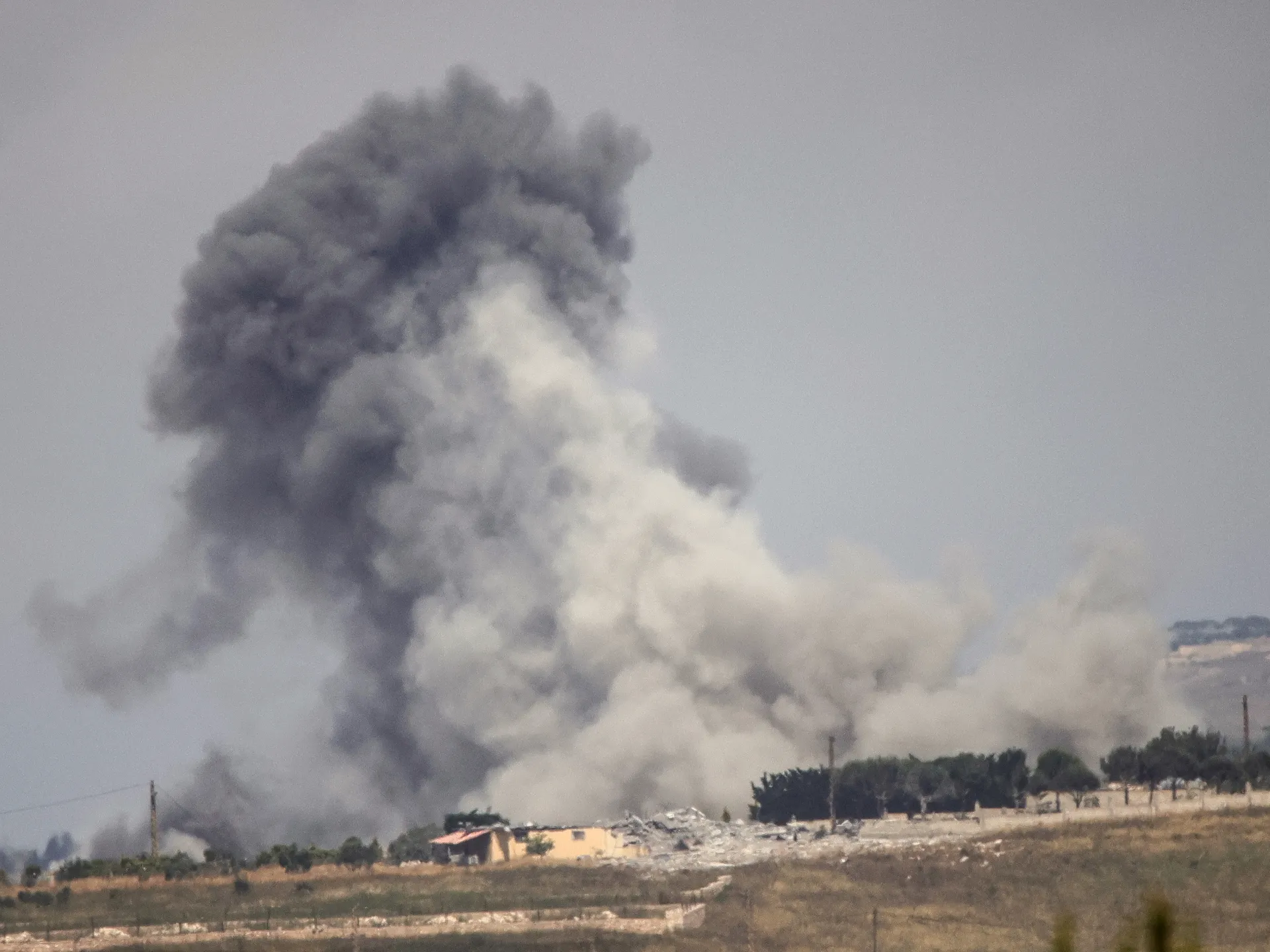
Crude prices climbed in early Asian trading on Monday after Israeli troops pushed further into Lebanon over the weekend, fuelling investor fears that the broader Middle East conflict could escalate rather than move towards a peace deal.


ADVERTISEMENT


ADVERTISEMENT

At the time of writing, West Texas Intermediate (WTI) crude was up 2.88% at $89.88 per barrel, while Brent crude rose 2.43% to $93.33 per barrel.

The Israeli advance has taken place despite a nominal ceasefire in place since 17 April and just days before the next round of direct talks between Lebanon and Israel, scheduled at the State Department on 2 and 3 June.

Asia-Pacific markets mixed

In other early trade dealings on Monday morning, Asia-Pacific markets were mixed with South Korea’s Kospi climbing 1.31%, while Japan’s Nikkei 225 edged up 0.17%. The broader Topix index, however, slipped 0.3%.

Australia’s S&P/ASX 200 fell 0.21%, while Hong Kong’s Hang Seng Index gained 0.73%. Mainland China’s CSI 300 dipped 0.32%.

Tokyo-listed shares in SoftBank Group, meanwhile, surged 5% after the Japanese conglomerate unveiled plans to invest €45 billion over the next five years to develop artificial intelligence infrastructure in France.

Wall Street pushes into record books

In the US, stock futures were flat after Wall Street pushed further into the record books on Friday. The major indexes extended the market’s recent winning streak and closed out a solid month of gains.

The S&P 500 rose 0.2%, notching its seventh consecutive gain and ninth straight winning week — the longest such streak since 2023. The benchmark index set an all-time high for the fourth day in a row.

The Dow Jones Industrial Average gained 0.7% and the Nasdaq composite added 0.2%. The Dow and Nasdaq also reached new heights after posting record highs earlier last week.

Big technology stocks have been behind much of the market’s record-breaking streak. Their pricey stock values give them more influence in directing the market higher or lower. In May alone, technology stocks within the S&P 500 rose more than 15%, while most of the sectors in the benchmark index actually lost ground.

“The rally has been largely tech-led and supported by resilient earnings, but the key question is whether it can be sustained,” wrote Angelo Kourkafas, senior global strategist at Edward Jones, in a research note.

Tech stocks also powered the market higher Friday. Microsoft rose 5.4% and Broadcom gained 4.7%.

Additional sources • AP

Source link

US Congress moves to deepen military ties with Israel: Why it matters | Military News

Lawmakers in the United States are quietly advancing a proposal that could deepen military ties between the US and Israel in unprecedented ways, at a time when public support for Israel among Americans is increasingly fractured.

Among the provisions included in the 2027 National Defence Authorisation Act (NDAA) released this week is Section 224, the “United States-Israel Defence Technology Cooperation Initiative”.

Recommended Stories

list of 4 itemsend of list

The NDAA, which Congress passes annually to set military policy and authorise defence spending, will undergo further debate and amendments before becoming law. Some legislators have already signalled opposition, with Representative Thomas Massie saying he would seek to remove the provision if it reaches the House floor.

The measure remains at an early stage, but analysts say if passed, it would limit political oversight over the defence relationship.

Analysts added that it could mark a significant shift in the US-Israel relationship, moving beyond a model centred on American military aid towards deeper institutional integration between the two countries’ defence industries and militaries.

Critics argue that such a move would make support for Israel less a matter of political choice and more a structural feature of US national security policy, embedding the relationship within joint military and industrial programmes that would be difficult to unwind.

What does the proposal include?

Section 224 incorporates elements of the US-Israel Future of Warfare Act legislation introduced by Representative Ronny Jackson, according to Track AIPAC. While the legislation did not advance as a standalone bill, key elements of it were instead folded into the NDAA.

The provision would require the US defence secretary to designate an official responsible for coordinating military cooperation between the two countries. According to the text, that official would be tasked with “synchronising cooperative efforts between the United States and Israel”, including “bilateral defence technology research, development, testing, evaluation, integration and industrial cooperation”.

The legislation envisages cooperation across a wide range of military technologies. It specifically identifies as priority areas; “counter-unmanned systems including aerial, maritime and ground platforms”, “anti-tunnelling and subterranean threats”, and “missile and air defence technologies”.

The proposal also seeks to deepen collaboration on emerging technologies, including “artificial intelligence, quantum machine learning and autonomous systems”, as well as “directed energy and advanced sensing”, “cyber defence, electronic warfare and digital resilience”, and “biotechnology, biomanufacturing, and medical defence”.

The inclusion of “network integration” and “data fusion” has drawn particular attention because it suggests significantly closer integration of military information systems between the two countries.

The United States and Israel already cooperate on defence projects, including missile defence systems such as Iron Dome. However, analysts say that Section 224 would expand cooperation into nearly every major area of emerging military technology, and could create a “lock-in” between the two countries military infrastructure.

Mark Hilborne, a senior lecturer, the School of Security Studies at King’s College London, told Al Jazeera the proposal goes well beyond the traditional foundations of the US-Israel defence relationship.

“While historically, the US-Israel defence relationship has included US military aid and weapons transfers, joint missile defence programmes such as Iron Dome, David’s Sling and Arrow, and intelligence and operational cooperation, the proposed agreement increases cooperation to include a wider set of emerging technologies,” he said.

“So this all suggests a much tighter integration – less about provision and perhaps sharing technologies and capabilities, and more about jointly developing these.

“It would point to a more institutionalised relationship, and perhaps one that might survive changing administrations in the US, as some of the development cycles could be very long and would become entrenched,” he said.

Why is it controversial?

The proposal comes amid growing debate in the US over military support for Israel, particularly as Israel’s genocidal war on Gaza continues, and concerns mount over the use of US-made weapons.

Human rights organisations and United Nations experts have repeatedly raised concerns about Israeli military actions in Gaza, where despite a so-called ceasefire in place since last October, at least 850 Palestinians have been killed. Israel is also advancing into southern Lebanon, where it has killed more than 3,000 people since the beginning of March.

These wars have led to increasing scepticism among Americans towards unconditional support for Israel, recent opinion polls suggest.

A New York Times poll in May found that only 30 percent of respondents believed Donald Trump made the right decision in ordering military strikes against Iran, while 64 percent said it was the wrong decision.

An Institute for Global Affairs poll released last week found that only 16 percent of Americans support continuing weapons transfers to Israel without additional restrictions. Thirty-eight percent said the US should stop supplying weapons entirely, while 24 percent said military aid should be conditioned on how the weapons are used.

Opposition has also emerged from parts of the Republican Party, which traditionally has always been aligned with Israel.

Former Representative Marjorie Taylor Greene criticised the proposal on social media, writing: “This is what complete capture to a foreign government looks like, and there hasn’t been a single shot fired.”

Massie, who has opposed military aid to Israel, likewise pledged to introduce an amendment removing the provision from the NDAA. The Republican senator was defeated in the primary elections last month, highlighting the financial and political influence of pro-Israel lobby groups in the US.

Influential conservative commentator, Tucker Carlson, has increasingly criticised US support for Israel, reflecting divisions within the broader MAGA movement. Criticism has also intensified among left-wing Democrats, with many calling for restrictions on military aid to Israel.

What could it mean in practice?

Critics of the measures warn that the proposal could create a form of institutional “lock-in” that makes both countries simultaneously reliant on each other for military development and procurement.

Some analysts say such integration would move key aspects of the US-Israel relationship away from highly visible aid votes or commercial contracting, and into the less transparent world of defence procurement and industrial partnerships at a state-to-state level.

Hilborne from the King’s College said the initiative could also have direct implications for Palestinians. “If joint R&D produces more effective technology, then systems related to surveillance, autonomous vehicles, AI and targeting, and various counter-drone or counter-missile technology would be improved, providing a capability boost to Israeli forces operating in Gaza or the West Bank,” he said.

“This enhanced integration would further embed US technology into Israeli forces. These would all be concerns from a Palestinian perspective.”

Critics also point to the economic implications, where expanded co-production agreements could lead to new manufacturing facilities and defence jobs in the United States, creating a further reliance on Israel.

Hilborne also argued that deeper integration could reduce Washington’s leverage over Israel. “The deeper integration may also mean that the US loses some degree of leverage over Israel, as it would be less able to withhold certain capabilities from Israel,” he said.

“As a consequence, Israel might be emboldened in its policies.”

The proposal could also have implications beyond the US-Israel relationship, according to Imad Salamey, an international relations professor at the Lebanese American University. “The proposed US-Israeli defence integration can be seen as the next phase of the Abraham Accords: moving from normalisation toward a US-backed regional security regime centred on Israel as the dominant military and technological hub,” he told Al Jazeera.

Such a framework would strengthen efforts to contain Iran, limit Turkiye’s independent regional influence and deepen security cooperation with Arab partners, he said.

“For Lebanon and Gaza, it may translate into greater pressure to accommodate Israeli-led security arrangements as part of a broader emerging Middle Eastern order.”

Whether Section 224 survives the legislative process is uncertain.

But its inclusion in the NDAA shows how some politicians, many backed by the pro-Israel lobby group AIPAC, are attempting to bind the two countries’ militaries closer together, creating long-term industrial links that future administrations may find difficult to reverse.
Source link

US Congress advances American-Israeli military integration plan | Government News

A provision in a bill before the United States Congress could tie the American and Israeli militaries far more closely together, deepening their cooperation on weapons research, production and technology.

The proposal, titled the “United States-Israel Defense Technology Cooperation Initiative,” appears as Section 224 of the House Armed Services Committee’s version of the fiscal year 2027 National Defense Authorization Act (NDAA), the annual US defence policy bill.

Recommended Stories

list of 2 itemsend of list

The measure is still at an early stage. The NDAA is passed by Congress each year to set US military policy and authorise defence programmes and spending levels.

If enacted, the provision could mark a major change in one of the world’s closest military relationships, shifting the two countries from a partnership centred largely on American military aid towards one in which their defence industries are more deeply intertwined.

Section 224 would require the US defence secretary to appoint an “executive agent”: a single official to coordinate military cooperation between the US and Israel.

That work would cover joint research and development, the shared production of weapons, and the linking of military systems and data.

“What Congress is trying to do now is find different ways of entrenching the relationship so deep in America’s own defence industrial base that it’s impossible to root it out,” Josh Paul, a former US State Department official and founder of the advocacy group A New Policy, said about the controversial provision.

“A new section of law in the National Defense Authorization Act (NDAA) would give Israel unprecedented access to American technology and would force the United States military to integrate Israeli defence technologies into our own critical military supply chain, giving Israel incredible leverage over America’s own defence priorities,” he added in a video posted on social media on Friday.

The two countries already build missile defence systems together, such as the Iron Dome.

The bill would extend their joint work into many more areas of modern warfare, from artificial intelligence (AI) to drones and cyber operations.

The provision comes amid turmoil in the Middle East following the joint US-Israeli attack on Iran earlier this year.

In February, US and Israeli forces attacked Iran together, triggering five weeks of war; Iran struck back at Israel and at US bases in the Gulf before a ceasefire took hold in April.

Israel is also facing genocide allegations in a case brought by South Africa at the International Court of Justice, the UN’s top court, over its war on Gaza.

Decades of support

The bill must first clear the House Armed Services Committee, which is due to take it up in early June, and then pass the full House and the Senate.

It was proposed by the committee’s Republican chairman, Mike Rogers, and its most senior Democrat, Adam Smith, giving it support from both main parties, even as opinion polls suggest growing opposition among American Democrats and some Republicans to further military support for Israel.

The US has supported Israel’s military for decades.

Since 2008, US law has required Washington to protect Israel’s “qualitative military edge”, keeping its forces stronger and more advanced than those of any rival in the region, on the grounds that a small country must rely on better weapons rather than greater numbers.

Under the current aid deal signed during the administration of former President Barack Obama, Washington provides Israel with about $3.8bn a year in military assistance. The 10-year agreement runs through 2028.

Israel is the largest recipient of US foreign aid since 1948, almost all of it now military and worth well over $300bn when adjusted for inflation. 

The nature of that support may now be changing. Israeli Prime Minister Benjamin Netanyahu said recently that he wants to end Israel’s reliance on US military aid within 10 years, saying his country had “come of age”.

Closer cooperation between the two defence industries, rather than cash, would likely fit that goal.

Source link

Iran reasserts control over Hormuz Strait as deal with US remains elusive | US-Israel war on Iran News

Iran has reasserted its control over the Strait of Hormuz, warning that foreign commercial and military vessels will be targeted, if they do not comply with regulations governing passage through the strategic waterway.

The announcement on Saturday came after the United States signalled that President Donald Trump was close to a decision on a potential deal with Iran, but Tehran denied an agreement had been reached.

Recommended Stories

list of 3 itemsend of list

“The management of the Strait of Hormuz is exercised with full authority by the Armed Forces of the Islamic Republic of Iran,” the operational headquarters of Iran’s armed forces, Khatam al-Anbiya Central Headquarters, said in a statement reported by Iranian media on Saturday.

“All ships, commercial vessels, and tankers are only required to travel through the designated routes and obtain permission from the Islamic Revolutionary Guard Corps [IRGC] Navy. Any violation of these regulations will seriously jeopardise the security of their traffic,” it added.

Iran also issued a warning to foreign military forces operating in the area, saying any attempt to interfere with maritime management or shipping movements would trigger a response.

On Friday, Trump met with advisers in the White House Situation Room and said a “final determination” on a possible deal with Iran would soon be made. But no statement followed the meeting.

US sources had told the AFP news agency the deal was waiting on Trump’s sign-off, but he made no decision after Friday’s meeting.

Iran’s Foreign Ministry spokesperson, Esmaeil Baghaei, said on Friday that while messages continue to be exchanged “no final agreement has been reached” on a deal with the US.

US ‘more than capable’ of restarting war

While attending a defence summit in Singapore on Saturday, Pentagon chief Pete Hegseth said that Washington was “more than capable” of restarting the war if a satisfactory deal is not reached.

US Central Command (CENTCOM) posted on social media that American forces “remain present and vigilant across the region”.

The efforts to reach a deal were thrown into question this week by US strikes on the Iranian port of Bandar Abbas, countered by retaliatory Iranian fire.

Iran’s IRNA state news agency said air defences shot down a drone “belonging to the US-Zionist aggressor enemy” on Saturday, citing a statement from the army.

Trump said his priorities in any deal include Iran agreeing to never develop nuclear weapons, and the reopening of the blockaded Strait of Hormuz.

“President Trump will only make a deal that is good for America and satisfies his red lines,” a White House official told AFP, adding: “Iran can never possess a nuclear weapon.”

Trump ‘betraying diplomacy’

Also on Saturday, Mohsen Rezaei, an adviser ⁠to Iran’s Supreme ⁠Leader, Mojtaba Khamenei, said in a social media post that Trump was “betraying diplomacy for ⁠the third time” by ⁠continuing the US naval blockade in the strait, and making what he described ‌as “excessive demands ‌in ‌negotiations”.

In a social media post on Friday, Trump said Tehran would remove mines from the strait and end its closure of the waterway with “no tolls”, while the US would lift its blockade.

Both countries would coordinate on removing and destroying Iran’s enriched uranium, he said, adding that “no money will be exchanged, until further notice”.

Iran’s Fars news agency, however, cited sources as saying Tehran was demanding “the immediate release of $12bn” in frozen assets before moving to the next phase of negotiations.

On the toll-free reopening of Hormuz, the sources said “no such clause appears in the text of the agreement”, while Trump’s comment on destroying Iran’s nuclear material “is fundamentally baseless”.

Iran’s ISNA news agency cited legislator Alireza Salimi as saying a plan “to implement Iran’s management and sovereignty over the Strait of Hormuz will soon be approved by parliament”.

Iran’s Tasnim news agency said the US blockade remains in place, and its ships “are receiving warnings from CENTCOM to stop and not cross the blockade line”.

Source link

Israeli soldiers reach Nabatieh, one of southern Lebanon’s biggest cities | Israel attacks Lebanon News

Israel’s military has advanced beyond Lebanon’s Litani River for the first time since 2006.

Israel’s military has advanced beyond the Litani River in southern Lebanon for the first time since 2006 and appear poised to encircle the major city of Nabatieh.

Senior Lebanese military sources on Saturday told the Turkish state news agency Anadolu that Israeli forces had crossed the Litani River, which Israel has declared the perimeter of its unofficial buffer zone.

Recommended Stories

list of 3 itemsend of list

Israeli forces are now on the outskirts of Nabatieh, a city that is key to southern Lebanon’s economy and a cultural hub for the region. If the Shia-majority city were to fall, it would mark a significant development in the war on Lebanon, which began in October 2023 and subsequent official ceasefire.

Nabatieh is viewed by many Lebanese as a symbol of resistance due to its historic role on the frontline of Israeli assaults.

Reporting from the southern city of Tyre, Al Jazeera’s Obaida Hitto said Israel was expanding its air campaign in southern Lebanon and encircling Nabatieh in preparation for a potential assault on the city.

“It looks like Israel is trying to make this final push to encircle Nabatieh, breaking through the second and third lines of defence of Hezbollah and isolating the western Bekaa Valley from the south of the country,” Hitto said.

Israel has issued evacuation orders for at least 10 villages in southern Lebanon, as it expands its invasion, despite being engaged in ongoing peace talks with Lebanese officials.

The Israeli army’s Arabic spokesperson, Avichay Adraee, instructed residents in several Lebanese villages to evacuate immediately, warning they could be killed if they remained.

The order came the day after officials from both countries met in Washington to discuss a permanent end to the war. It began in early March when Iran-backed Hezbollah began attacking Israel following the assassination of Iran’s Supreme Leader, Ali Khamenei.

Hitto said people fleeing their homes have few options, with more than 20 percent of the population — around 1.2 million people — displaced by fighting.

“Those options are turning into basically people living with relatives if they have that option, or people living in makeshift camps in public parks and public spaces. I’ve seen many families living in their vehicles for long periods of time,” Hitto said.

“Some of these families have been continuously displaced since 2023,” Hitto added.

The latest forced displacement orders are a further test to the nominal “ceasefire” in place since mid-April and repeatedly violated by Israel. It justifies its actions by saying it is targeting Hezbollah as part of efforts to disarm the group.

On Friday, at least 14 people were killed in Israeli air raids in southern Lebanon.

Lebanese officials are working to disarm Hezbollah, but the task has proved extremely difficult.

Lebanese and Israeli officials are currently engaged in negotiations to end the war, marking the first time the two sides have spoken directly in decades.

The talks are being facilitated by the United States, and a new round is expected in Washington next week.

Lebanon’s President, Joseph Aoun, held talks with Prime Minister Nawaf Salam on Saturday to discuss the security situation and  ongoing negotiations with Israel. According to the state-run National News Agency, they agreed to intensify efforts to end the war, which has triggered a humanitarian crisis.

Aoun also spoke by phone with US Secretary of State Marco Rubio and stressed the importance of Israel respecting the current ceasefire.

Source link

‘Arbitrary measures’: Lula slams US ‘terror’ designation for Brazil gangs | Government News

The president of Brazil, left-wing leader Luiz Inacio Lula da Silva, has denounced a decision by the United States to designate two of the South American country’s criminal networks as “terrorists”, warning that the label could be a “setback” for local law enforcement efforts.

The condemnation came in a 435-word message posted to Lula’s social media platforms on Friday.

Recommended Stories

list of 3 itemsend of list

In it, Lula drew a line between criminal activities and international terrorism, which is often understood to use violence for political or social aims.

“The terror inflicted by these organisations upon communities seeks to generate profit through crime — specifically through drug and arms trafficking,” Lula wrote.

Those activities, however violent, “must not be conflated with the ideologically, politically, or religiously motivated actions characteristic of international terrorism”, he added.

Lula’s statements came in response to an announcement a day earlier from the administration of US President Donald Trump.

Pushback against ‘terrorist’ label

On Thursday, US Secretary of State Marco Rubio revealed that he had designated Brazil’s two largest criminal groups — the Primeiro Comando da Capital (PCC) and the Comando Vermelho (CV) — “specially designated global terrorists”.

He also outlined plans to add the two groups to the list of “foreign terrorist organisations”, effective June 5.

Rumours had swirled for months that the Trump administration would apply the “terrorist” label to the two groups. But Lula and his ministers had pushed back, calling on Trump to hold off.

“Terrorist” designations freeze all US-based assets connected to the targeted groups, but they can also be used to penalise anyone who offers “material support or resources” to them.

Experts warn that such restrictions could potentially affect financial institutions and even the victims of such groups, including businesses and individuals who might be forced to pay extortion.

Lula has also expressed concern that the “terrorist” label could pave the way for US military intervention, a fear he reiterated in Friday’s statement, though he never named Trump outright.

“We remain fully prepared to develop joint solutions that yield mutual benefits for all nations involved,” Lula wrote.

“However, we will not tolerate the imposition of arbitrary measures from abroad, nor will we accept their use as a pretext to undermine our sovereignty or our economy. Unilateral, non-negotiated measures can undermine the fight against criminals and trigger actions that endanger the lives of people who have absolutely no connection to crime.”

A tight election in Brazil

A prominent left-wing leader in Latin America, Lula is in the midst of a heated election season, as he seeks a fourth nonconsecutive term as Brazil’s president.

Previously, he served as president from 2003 to 2011, before being re-elected to a third term in 2022.

In that race, he defeated the right-wing incumbent, Jair Bolsonaro, who would later be convicted of attempting to overturn the results of the race. Bolsonaro is currently serving a 27-year prison sentence.

His eldest son, Senator Flavio Bolsonaro, is thought to have been instrumental in Trump’s decision to issue the “terrorist” designations. The senator is currently running against Lula in the 2026 presidential election, and the two have been locked in a tight race.

This week, as he visited the White House, Senator Bolsonaro confirmed to reporters that he intended to seek “terrorist” designations for both the Primeiro Comando da Capital and the Comando Vermelho.

Trump has close ties to the Bolsonaro family, and he has previously intervened in elections around the world on behalf of right-wing candidates.

In Friday’s post, Lula accused Senator Bolsonaro of leveraging his family connections to “petition foreign authorities” for favour.

“It is deplorable that, once again, members of the Bolsonaro family have travelled to the United States to advocate for foreign intervention in Brazil,” Lula wrote.

He pointed to alleged efforts to stop the criminal prosecution of Jair Bolsonaro. Currently, one of the ex-president’s sons, Eduardo Bolsonaro, is facing obstruction charges related to efforts to lobby Trump to intervene in the case.

Trump ultimately did impose steep sanctions against Brazilian products in August 2025, citing the Bolsonaro trial as a reason.

Concerns about sovereignty

Under Trump, the US has taken an increasingly expansionist view towards the Western Hemisphere, reviving the 19th-century Monroe Doctrine, which described the Americas as Washington’s sphere of influence.

Trump himself has used crime as justification for taking unilateral military action in the region. Since September, his administration has conducted 59 strikes against alleged drug-trafficking boats in the Caribbean Sea and eastern Pacific Ocean, killing at least 196 people.

And on January 3, he launched an early-morning military operation against Venezuela, culminating in the abduction and imprisonment of then-President Nicolas Maduro on drug-trafficking charges.

While the Bolsonaro family has courted Trump in recent months, Lula has criticised those military-led actions as unjustified.

But security is expected to be a dominant issue in October’s presidential race. This week’s “terrorist” designations are likely to put Lula in an awkward position, forcing him to condemn the label without downplaying the extent of the violence.

Lula has attempted to brush off right-wing criticism that he has been lax on crime, pointing to his government’s recent $11bn investment in the “Brazil Against Organized Crime” programme.

That follows a separate $2bn programme in March to bolster the country’s prisons, improve homicide investigations and disrupt arms trafficking and other financial transactions carried out by criminal groups.

Still, Lula and Bolsonaro remain neck and neck in the lead-up to October’s election.

On May 16, the polling firm Datafolha found that both candidates would receive 45 percent of voter support in a one-on-one race, with 9 percent of voters indicating they would cast a null vote.

Another 1 percent identified as undecided.

Source link

Trump heads into Situation Room to potentially finalise Iran deal | Donald Trump

NewsFeed

US President Donald Trump posted online that he’s heading into the Situation Room at the White House to make a “final determination” on potentially finalising a peace deal with Iran. Al Jazeera’s Patty Culhane reports from the White House.

Source link

NATO states slam Russia after drone crashes in Romania | Antonio Guterres News

Romania and its NATO allies have reacted angrily after a Russian drone crashed into an apartment building in eastern Romania, injuring two people.

The foreign ministry in Bucharest on Friday labelled the crash of the drone, part of an overnight attack aimed at Ukraine, a serious violation of international law and called on NATO to accelerate the transfer of anti-drone capabilities. The incident is just the latest incursion along the alliance’s eastern flank, raising concern that the risk of an open confrontation between Russia and NATO states is rising.

Romania said the overnight drone was tracked by radar in its airspace before crashing onto the roof of a residential building in the city of Galati.

Two F-16 fighter jets and a helicopter were scrambled, as authorities issued emergency alerts to residents. Two people suffered minor injuries and several residents were evacuated after a fire was triggered by the crash.

‘Consequences’

The incident is just the latest of several, as the war in Ukraine has spilled over into neighbouring NATO countries, raising fears of potential escalation.

Estonia, Lithuania and Latvia, as well as Finland have all reported repeated incursions into their airspace in recent months. Drone incursions sparked a government collapse in Latvia earlier this month.

Shortly after the crash, Bucharest called for NATO to speed up the transfer of anti-drone capabilities. Outgoing Prime Minister Ilie Bolojan also said that Romania would, within hours, sign ⁠a contract which ⁠will give it anti-drone defences ‌under the EU’S SAFE programme.

On Friday morning, Romania summoned the Russia ambassador.

“We will officially communicate the consequences that this lack of responsibility on the part of the Russian Federation will have for the diplomatic relations between our countries, as well as the next steps at the European level regarding sanctions packages,” Foreign Minister Oana Toiu wrote on social media.

President Nicusor Dan stated that Romania ⁠will ⁠not accept that the war of aggression ⁠waged by Russia against ⁠Ukraine be transferred to its citizens, and added that he had asked the foreign ministry ⁠to present without delay ⁠a series ⁠of measures regarding the country’s relationship with Russia, “proportionate to ‌this very serious situation”.

NATO allies and others joined the chorus of anger.

French Minister for European Affairs Benjamin Haddad said the incident highlighted the threat Russia poses to European security, noting that French troops are stationed in Romania.

“Regardless of ⁠whether it was on purpose ⁠or the ⁠result ⁠of ineptitude, Russia is still dangerous and ‌we must defend ourselves against ‌it,” ‌Polish ⁠Foreign Minister Radoslaw Sikorski told ⁠the Reuters news agency.

European Commission President Ursula von der Leyen said the incident showed that “Russia’s war of aggression has crossed yet another line”.

A NATO spokesperson also condemned “Russia’s recklessness” on social media.

Ukraine’s Foreign Minister Andrii Sybiha, whose country is pressing the United States to help boost its air defences, pledged “Ukraine stands firmly by Romania” as he branded Russia a threat to the Black Sea region and the wider ‌European continent.

“We are ready ⁠to work closely together ⁠to strengthen protection from such threats,” he wrote on social media, adding that the bid to ⁠strengthen Ukraine’s ⁠air defence is a “strategic task” to protect not only ‌Ukraine but also to reduce risks for ‌neighbouring ‌countries.

United Nations Secretary-General Antonio Guterres warned that the escalating attacks risk spiralling “out of control”, with “unknown and unintended consequences”.

He said more civilians had been killed in the first four months of this year than during the same period in the previous three years, and called for diplomacy, immediate de-escalation and “a full and unconditional ceasefire”.

Rising risk

Concern that the war is threatening to spillover is building as Russia escalates hostilities in a bid to ward off rising political and economic pressure at home.

Ukrainian forces reported that they shot down 217 drones overnight on Friday. Russia attacked with 232 drones and one ballistic missile. Hits were recorded in 14 areas, the air force said.

Moscow has said it plans “systematic strikes” on Kyiv and has issued a barrage of threats at Ukraine’s European allies, listing facilities in Europe that it said are involved in manufacturing drones and components for Ukraine.

Moscow’s Foreign Intelligence Service recently warned the Baltic nations that their NATO membership won’t protect them from retaliation should they allow Ukraine to launch attacks from their territory, with analysts warning that the risk of an open confrontation between Russia and NATO states is rising.

That heightens concern regarding NATO’s Article 5 collective defence clause, which President Donald Trump has hinted the United States may not honour in some cases.

However, the alliance’s Secretary General Mark Rutte insisted on Friday that NATO will defend all of its territory.

“Russia’s reckless behaviour is a danger to us all,” he wrote on social media. “Last ⁠night showed yet again ⁠that the implications of their illegal war of aggression don’t ⁠stop at the border.”

“We will ⁠continue to strengthen ⁠our deterrence and defence at home and continue our support for ‌Ukraine as they defend against Russia’s aggression,” he ‌added.

Source link

US attacks Bandar Abbas again: Why is the port so important for Iran? | US-Israel war on Iran News

The United States has carried out strikes near Bandar Abbas, the second attack in less than a week on Iran’s strategically important port city, escalating tensions around the Strait of Hormuz despite a fragile ceasefire that has been in place between Washington and Tehran since April 8.

Reuters and The Associated Press, quoting unnamed US officials, reported that US forces shot down four Iranian drones and struck a ground control station for drones on Wednesday in Bandar Abbas.

Recommended Stories

list of 4 itemsend of list

The strikes followed explosions in Bandar Abbas on Tuesday. Iran’s Ministry of Foreign Affairs accused Washington of violating the ceasefire through “aggressive acts” in Hormozgan province, where the port city is located.

The semiofficial Iranian news agency Tasnim also reported that Iranian forces had fired on an “American airbase” in the region in response to a US attack near Bandar Abbas.

The escalation came after US President Donald Trump said during a cabinet meeting in Washington, DC, on Wednesday that “nobody’s going to control” the Strait of Hormuz as he spoke about ongoing negotiations between Tehran and Washington.

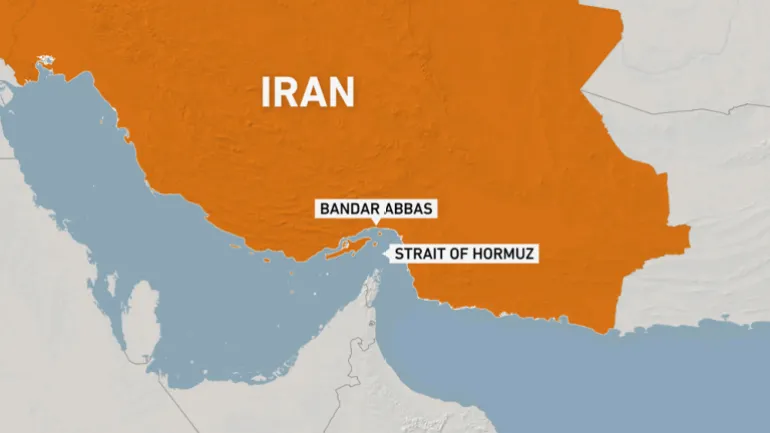
Bandar Abbas, home to key Iranian naval forces, occupies one of the most strategically sensitive positions in the Gulf. Its location on the Strait of Hormuz has made it central to both Iran’s military position and the wider confrontation with the US. Here is what we know:

Where is Bandar Abbas?

Bandar Abbas lies on Iran’s southern coast, on the northern side of the Strait of Hormuz, the narrow waterway linking the Gulf to the Gulf of Oman and Arabian Sea.

The city, which had a population of more than 526,000 people at the time of Iran’s 2016 census, sits roughly 60km to 70km (35 to 45 miles) north of the strait’s narrowest point.

Its position gives Iran oversight of one of the world’s most important shipping lanes. About one-fifth of global oil and gas supplies transit through the Strait of Hormuz during peacetime.

Since the ceasefire was announced on April 8, Iran has continued to control shipping through the Strait of Hormuz while US forces have imposed a blockade on Iranian ports.

Map

What is the military significance of Bandar Abbas?

Bandar Abbas is the headquarters of both Iran’s conventional navy and the naval arm of the Islamic Revolutionary Guard Corps (IRGC).

The conventional navy has used it as its base since 1977 when Iran moved much of its fleet from Khorramshahr at the western edge of Iran’s Gulf coastline, to Bandar Abbas, transforming the city into the country’s main southern naval command centre.

According to the Middle East Institute, the IRGC navy later relocated its headquarters from Tehran to Bandar Abbas to improve operational control along the Strait of Hormuz.

Although Trump and Israeli officials claimed Iran’s naval capabilities have been heavily damaged in their recent attacks, Tehran still maintains a fleet of fast attack boats operated by the IRGC navy.

The vessels are designed for “swarm” tactics and are being used against commercial ships that do not have authorisation from Iran to sail through the narrow Strait of Hormuz. They were used recently against two Indian ships and two foreign container vessels, the Panama-flagged MSC Francesca and the Liberian-flagged Epaminondas, which Iran said had not been given approval to transit the waterway.

INTERACTIVE - IRGC releases map of control over Strait of Hormuz - May 5, 2026-1777975253
(Al Jazeera)

Why is Bandar Abbas important to Iran’s economy?

The Strait of Hormuz is not just a military chokepoint but also an economic lifeline.

Analysts estimated that more than 90 percent of Iranian crude shipments transit through the strait.

That makes Bandar Abbas and nearby Gulf infrastructure critical to government revenues, including the trade networks that help Iran circumvent sanctions, particularly by exporting oil to China.

Why are the US attacks significant?

Samir Puri, a visiting lecturer in war studies at King’s College London, told Al Jazeera the ceasefire has not yet formally collapsed despite these latest exchanges of fire.

He described those incidents as “limited” compared with strikes carried out before April 8. These attacks can be characterised as “tit-for-tat military-to-military engagements rather than attacks on infrastructure or widespread destruction en masse”, he said.

“What the US military is attempting to do is explore whether it can physically deny the IRGC and Iran the ability to control the Strait of Hormuz,” he said.

“Iran, of course, wants to show it cannot be denied that capability.”

What does this mean for peace negotiations?

Diplomatic and military operations are unfolding simultaneously as Iran and the US have exchanged a volley of proposals and counterproposals for peace since the ceasefire began.

“This is unfolding on parallel tracks. There is a military track and a negotiating track all unfolding at the same time,” Puri said. These limited strikes are, therefore, ultimately being launched as part of the negotiations, he said.

“The negotiators can only present the leverage they have from the field of battle. Is the US going to put itself into a position in which it can say to Iranian negotiators that they do not control the Strait of Hormuz? Because if you try to amass forces around Bandar Abbas and launch attacks from that coastal area, we can strike back.

“But Iran will not want to be pushed into that position and will want to say it retains the ability to strike shipping and US bases hosted by Gulf allies and partners. So that’s the duality that’s unfolding right now.”

Puri said both Washington and Tehran still appeared to have incentives to continue mediation but the two sides are approaching negotiations with very different objectives.

“Trump and the US administration want to impose a victor’s peace on Iran. Iran’s reading of the same script that they’re being handed is very different, and Iran probably wants to stretch out these negotiations for as long as possible without conceding.”

“So again, you end up in a situation that wars elsewhere have seen – negotiations without an endpoint or even the promise of an endpoint but still an incentive for both parties to participate, for now.”

Source link