Trump’s DOJ subpoenas New York Times reporters
WASHINGTON — The Department of Justice has subpoenaed New York Times journalists after they reported on security concerns involving the new, Qatari-gifted Air Force One, marking a dramatic escalation of President Trump’s campaign against the media that has drawn condemnation for eroding a fundamental freedom of American democracy.
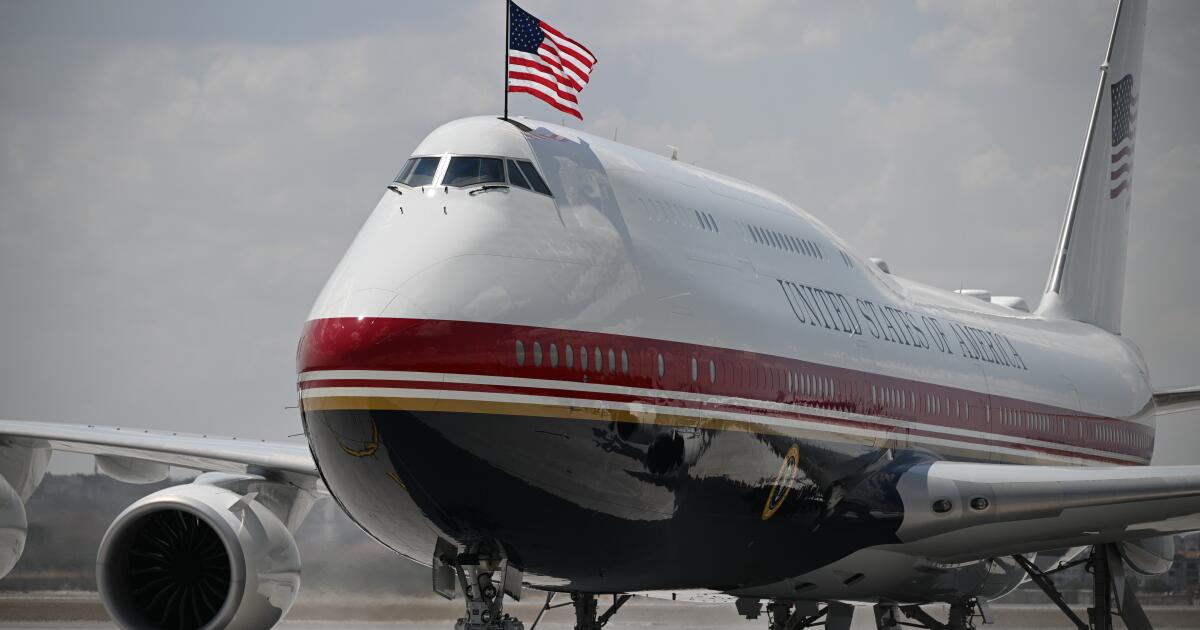
The new jet, a present from the U.S. ally on which the administration spent $400 million to retrofit and upgrade, entered service this month. But Trump used an older model Air Force One jet to leave a NATO summit in Turkey and later referenced threats against him made by Iran.
The subpoenas seek to force the reporters to testify before a federal grand jury in Manhattan next week, the New York Times said, adding that federal agents delivered some subpoenas to the reporters at their homes.
They were issued after FBI Director Kash Patel and other Justice Department officials met at the White House on Friday to talk about the matter, according to a person familiar with the discussions who was not authorized to discuss the issue publicly and spoke on condition of anonymity.
The journalists subpoenaed included Julian E. Barnes, Eric Lipton, Tyler Pager and Eric Schmitt, the Times reported.
“The appearance of federal law enforcement agents on the doorstep of news reporters should shock the conscience of any American who believes in the Constitution and the press freedom it protects,” David McCraw, a lawyer for the Times, said in a statement.
Bruce D. Brown, president of the Reporters Committee for Freedom of the Press, said Trump’s “war on the press is looking for another victim.”
He said in a statement that the subpoenas “break from long-standing Justice Department practice to protect the public interest and press independence by requiring prosecutors to only seek information from reporters as a last resort when all other avenues have been exhausted.”
The department said that “to be clear, reporters are not the targets, those leaking classified information are.”
Its statement said that “we value and appreciate the important role that the press plays in this country, but DOJ also plays an important role to make sure that the people entrusted with our nation’s secrets do what they’re supposed to do with that information, which means not sharing classified information.”
While recognizing “there may always be natural tension there,” the department said, “we are not going to ignore the law and stop investigating the people who work in the administration and think it’s OK to leak classified information impacting national security.”
Pattern of anti-press actions
Issuing subpoenas represents a further ramping up of Trump’s effort to threaten independent new organizations by leveraging the power of the federal government against them. It is also part of a systematic pattern by the Republican president to attempt to undermine press freedom in order to shield him from negative coverage.
Earlier this year, the Justice Department issued subpoenas seeking to compel testimony from reporters at the Washington Post and the Wall Street Journal. In both cases, the department later withdrew the subpoenas.
In January, FBI agents searched the home of Washington Post reporter Hannah Natanson, who has been covering Trump’s transformation of the federal government, as part of a leak investigation into a Pentagon contractor accused of taking home classified information.
Adam Steinbaugh, senior attorney for the Foundation for Individual Rights and Expression, said Friday’s subpoenas and the prospect of “hauling reporters before grand juries sends a chilling message to journalists and whistleblowers alike: Watch what you say, or expect a knock on the door.”
“These tactics are becoming more common,” Steinbaugh said in a statement. “That doesn’t make them normal.”
During his first term, Trump suggested that the press constituted an “enemy” of the American people. Since returning to the White House, he has waged an aggressive campaign against the media unlike any in modern U.S. history.
Trump’s attacks against news outlets and media figures he believes are overly critical of him has included filing lawsuits against outlets whose coverage he dislikes, threatening to revoke TV broadcast licenses and seeking to bend news organizations and social media companies to his will.
The Justice Department over the years has developed and revised internal policies governing how it will respond to news media leaks.
Though the department across presidential administrations has periodically seized the phone records of individual journalists in hopes of identifying sources for national security stories, it is extremely rare for the government to attempt to compel reporters to reveal their sources before a grand jury.
In April 2025, then-Atty. Gen. Pam Bondi rescinded a Biden administration policy that protected journalists from having their phone records secretly seized during leak investigations — a practice long decried by news organizations and press freedom groups.
Doing so again gave prosecutors the authority to use subpoenas, court orders and search warrants to hunt for government officials who make “unauthorized disclosures” to journalists.
A memo Bondi issued said members of the press are “presumptively entitled to advance notice of such investigative activities,” and subpoenas are to be “narrowly drawn.” Warrants must also include “protocols designed to limit the scope of intrusion into potentially protected materials or newsgathering activities,” the memo stated.
Security issues with new Air Force One
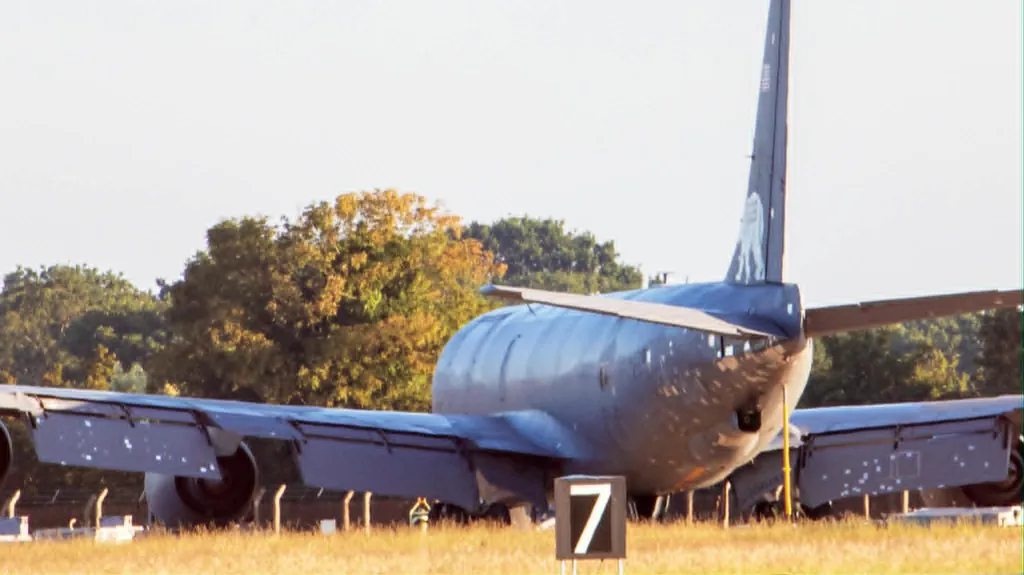
The president flew the new Air Force One to Turkey during this week’s visit. But he departed Wednesday on one of the older-model Air Force One jets for Mildenhall, a Royal Air Force base in Suffolk, England.
The newer plane also flew to Mildenhall. Trump then switched to that plane for the flight home to Joint Base Andrews in Maryland.
The abrupt swap came as a shaky ceasefire with Iran had collapsed, with the U.S. launching airstrikes on Iran and Tehran attacking three gulf Arab states. Iran and Turkey share a border, sparking speculation that the new jet lacked certain sophisticated security and countermeasure systems.
The New York Times, citing anonymous sources, reported that the switch had come at the urging of the Secret Service, and that the newer plane lacked some of the advanced security features of the older aircraft, including antimissile capabilities.
Trump denied any security concerns, posting on social media that the stop in Mildenhall was so that service members there could view the new jet. During the flight, Trump denied to the reporters accompanying him that security concerns involving Iran were a factor in flying two planes home.
Still, asked if he was aware of any credible threats against Air Force One by Iran, Trump responded, “I have a threat all the time. I’m No. 1 on their list.”
The White House did not answer messages seeking comment about the subpoenas of the Times journalists.
Weissert and Khalil write for the Associated Press. AP writers Eric Tucker, Alanna Durkin Richer, Michelle L. Price and Konstantin Toropin contributed to this report.