Mildenhall

Trump used elaborate ruse to fly out of Turkey following summit because of Iran threat, report says

President Trump secretly flew out of last month’s NATO summit in Ankara, Turkey, on an alternate military aircraft while the White House made it appear that the president was flying on Air Force One, the Washington Post reported.

The Post said Monday that the operation was prompted by an Iranian assassination threat against Trump. The ruse was carried out as journalists and some White House staff members were led to believe they were on the same plane as the president as he began his journey back to Washington from the annual gathering of leaders of North Atlantic Treaty Organization countries.

The Post cited material reviewed by the newspaper, a U.S. official familiar with the operation and another person with knowledge of the president’s travel. The Associated Press has not independently confirmed the report.

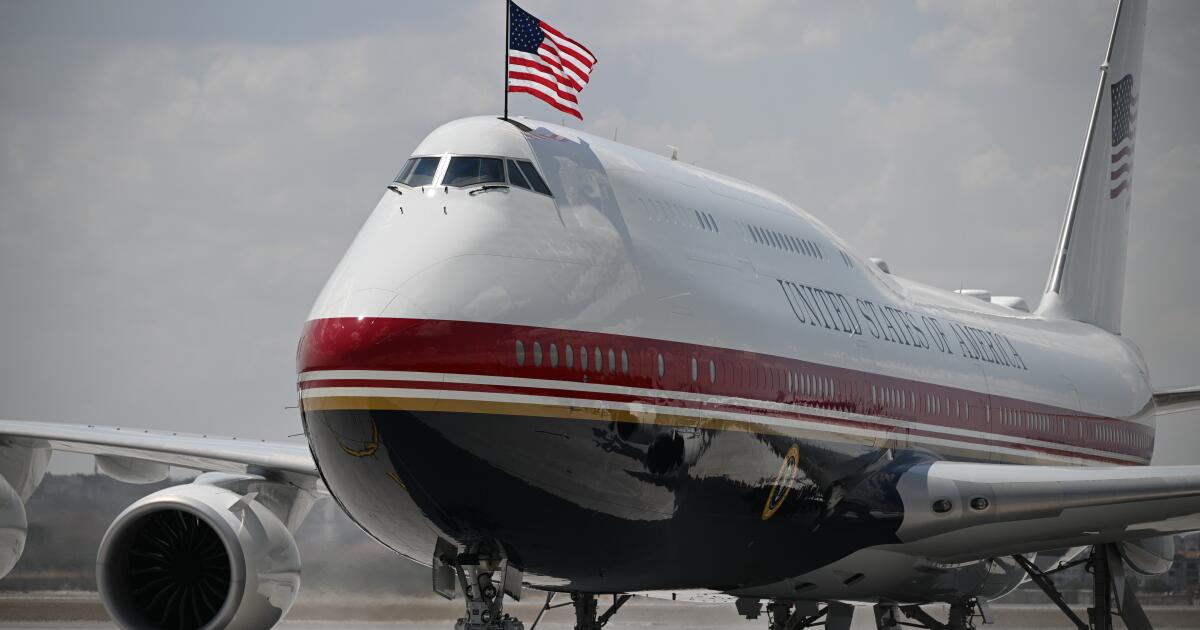
Trump had flown to the summit in a new Qatari-gifted and retrofitted red, white and navy blue jet. But ahead of departing Turkey, he said he would fly partway home on an older-model baby blue Air Force One plane instead.

The president at the time said the new luxury jet was being flown out ahead of his departure from Ankara to give some U.S. troops based in eastern England a chance to check out the new Air Force One.

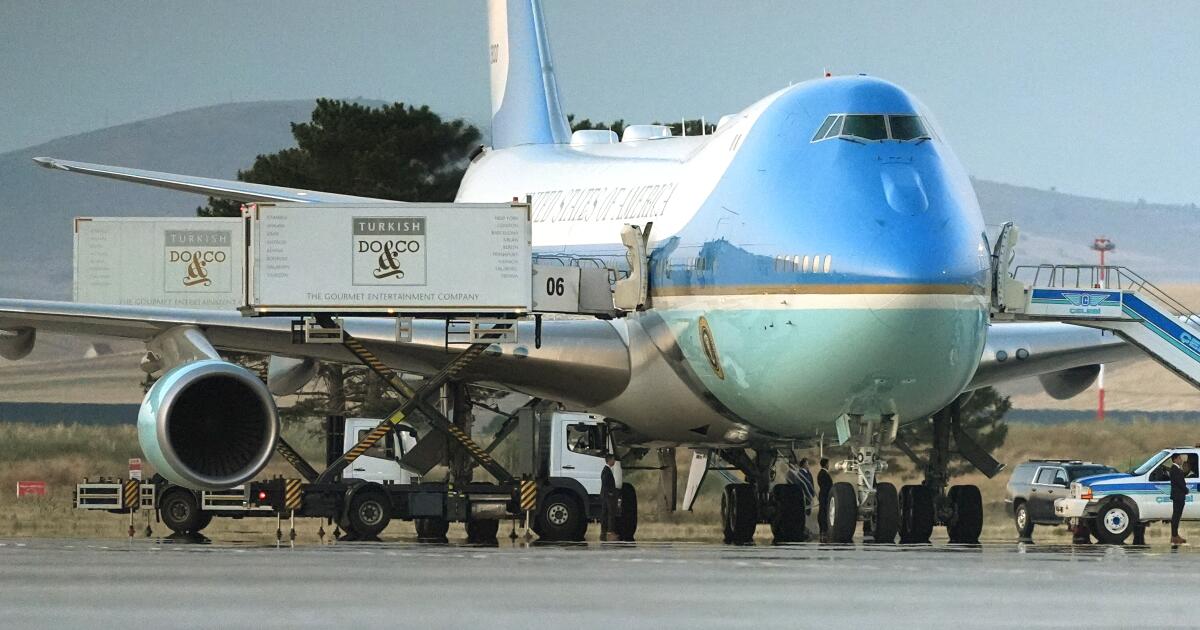
In Ankara, Trump boarded the old Air Force One jumbo jet in view of television cameras ahead of the plane flying to Royal Air Force Mildenhall in the United Kingdom.

However, according to the Post report, after boarding the legacy Air Force One jet, he was secretly shuttled minutes later to a smaller plane — an Air Force C-32A — via an airport catering truck typically used to load meals and other supplies. Trump flew to Mildenhall on that smaller jet.

The White House did not respond directly to questions about the Post report of the secret operation to whisk Trump out of the country on a third aircraft, or the reported elaborate ruse to make it appear he was on the baby blue Air Force One jet flying to Mildenhall.

“As the President has said recently, there are many enemies of America who have their sights on him, and we use every tool at our disposal to address those threats,” White House communications director Steven Cheung said in a statement.

The U.S. Secret Service declined to comment. The Air Force, which maintains the fleet of executive travel aircraft, referred questions to the White House.

While Trump was in Turkey, the U.S. military conducted a series of large strikes in Iran in retaliation for its attacks on merchant shipping in the region.

The New York Times and CBS News reported last month that intelligence officials had raised concerns about a potential attack on the president or his jet, triggering additional precautions and the decision not to use the newly inaugurated aircraft gifted to Trump by Qatar for the first leg of Trump’s trip home from Ankara.

The swap had spurred questions about the security of the Qatar-provided aircraft, and Trump said last month after the trip that it would undergo additional upgrades.

Cheung on Monday maintained that the new, Qatari-gifted plane was “a state-of-the-art aircraft that has been fitted with high-level security protocols that ensure the safety of the President and his staff.”

The new Post report on clandestinely putting Trump on a third aircraft and quietly whisking him out of the country adds a fresh layer to just how seriously concerned U.S. security officials were about the threat against Trump during the ongoing war with Iran.

Paul Eckloff, a former special agent with the Secret Service, said such an unusual move could either reflect actionable intelligence or an abundance of caution given volatility in the region with the wars in Iran and Ukraine.

“I would not say unprecedented, but it is an unusual occurrence,” Eckloff told the Associated Press.

The Post reported that to exit that plane without being seen by those uninvolved in the operation, Trump and several aides stepped aboard an airport catering truck, which was elevated planeside using hydraulics and positioned at a door on the opposite side of Air Force One’s entrance.

The small group of reporters who thought they were traveling with Trump were advised to lower their window shades ahead of takeoff.

After arriving at Mildenhall, news photographers captured images of Trump getting off the presidential plane — suggesting he reboarded Air Force One out of sight of the pack of journalists who thought they were traveling with him.

Democratic Sen. Richard Blumenthal called for a congressional briefing on what happened.

“It is unprecedented and it is surreal,” he said Monday on CNN, calling the incident “downright scary.”

After the brief visit to the base at Mildenhall, Trump boarded the new Air Force One aircraft to fly the rest of the way to Washington.

During a gaggle with reporters aboard the aircraft, Trump was asked directly if there were any credible threats against Air Force One by Iran.

“Well, I have a threat all the time. I’m No. 1 on their list before you,” Trump said. He added to the traveling reporters, “But if I go, you go.”

Associated Press writers Josh Boak, Aamer Madhani and Konstantin Toropin contributed to this report.
Source link

Trump’s DOJ subpoenas New York Times reporters

The Department of Justice has subpoenaed New York Times journalists after they reported on security concerns involving the new, Qatari-gifted Air Force One, marking a dramatic escalation of President Trump’s campaign against the media that has drawn condemnation for eroding a fundamental freedom of American democracy.

The new jet, a present from the U.S. ally on which the administration spent $400 million to retrofit and upgrade, entered service this month. But Trump used an older model Air Force One jet to leave a NATO summit in Turkey and later referenced threats against him made by Iran.

The subpoenas seek to force the reporters to testify before a federal grand jury in Manhattan next week, the New York Times said, adding that federal agents delivered some subpoenas to the reporters at their homes.

They were issued after FBI Director Kash Patel and other Justice Department officials met at the White House on Friday to talk about the matter, according to a person familiar with the discussions who was not authorized to discuss the issue publicly and spoke on condition of anonymity.

The journalists subpoenaed included Julian E. Barnes, Eric Lipton, Tyler Pager and Eric Schmitt, the Times reported.

“The appearance of federal law enforcement agents on the doorstep of news reporters should shock the conscience of any American who believes in the Constitution and the press freedom it protects,” David McCraw, a lawyer for the Times, said in a statement.

Bruce D. Brown, president of the Reporters Committee for Freedom of the Press, said Trump’s “war on the press is looking for another victim.”

He said in a statement that the subpoenas “break from long-standing Justice Department practice to protect the public interest and press independence by requiring prosecutors to only seek information from reporters as a last resort when all other avenues have been exhausted.”

The department said that “to be clear, reporters are not the targets, those leaking classified information are.”

Its statement said that “we value and appreciate the important role that the press plays in this country, but DOJ also plays an important role to make sure that the people entrusted with our nation’s secrets do what they’re supposed to do with that information, which means not sharing classified information.”

While recognizing “there may always be natural tension there,” the department said, “we are not going to ignore the law and stop investigating the people who work in the administration and think it’s OK to leak classified information impacting national security.”

Pattern of anti-press actions

Issuing subpoenas represents a further ramping up of Trump’s effort to threaten independent new organizations by leveraging the power of the federal government against them. It is also part of a systematic pattern by the Republican president to attempt to undermine press freedom in order to shield him from negative coverage.

Earlier this year, the Justice Department issued subpoenas seeking to compel testimony from reporters at the Washington Post and the Wall Street Journal. In both cases, the department later withdrew the subpoenas.

In January, FBI agents searched the home of Washington Post reporter Hannah Natanson, who has been covering Trump’s transformation of the federal government, as part of a leak investigation into a Pentagon contractor accused of taking home classified information.

Adam Steinbaugh, senior attorney for the Foundation for Individual Rights and Expression, said Friday’s subpoenas and the prospect of “hauling reporters before grand juries sends a chilling message to journalists and whistleblowers alike: Watch what you say, or expect a knock on the door.”

“These tactics are becoming more common,” Steinbaugh said in a statement. “That doesn’t make them normal.”

During his first term, Trump suggested that the press constituted an “enemy” of the American people. Since returning to the White House, he has waged an aggressive campaign against the media unlike any in modern U.S. history.

Trump’s attacks against news outlets and media figures he believes are overly critical of him has included filing lawsuits against outlets whose coverage he dislikes, threatening to revoke TV broadcast licenses and seeking to bend news organizations and social media companies to his will.

The Justice Department over the years has developed and revised internal policies governing how it will respond to news media leaks.

Though the department across presidential administrations has periodically seized the phone records of individual journalists in hopes of identifying sources for national security stories, it is extremely rare for the government to attempt to compel reporters to reveal their sources before a grand jury.

In April 2025, then-Atty. Gen. Pam Bondi rescinded a Biden administration policy that protected journalists from having their phone records secretly seized during leak investigations — a practice long decried by news organizations and press freedom groups.

Doing so again gave prosecutors the authority to use subpoenas, court orders and search warrants to hunt for government officials who make “unauthorized disclosures” to journalists.

A memo Bondi issued said members of the press are “presumptively entitled to advance notice of such investigative activities,” and subpoenas are to be “narrowly drawn.” Warrants must also include “protocols designed to limit the scope of intrusion into potentially protected materials or newsgathering activities,” the memo stated.

Security issues with new Air Force One

The president flew the new Air Force One to Turkey during this week’s visit. But he departed Wednesday on one of the older-model Air Force One jets for Mildenhall, a Royal Air Force base in Suffolk, England.

The newer plane also flew to Mildenhall. Trump then switched to that plane for the flight home to Joint Base Andrews in Maryland.

The abrupt swap came as a shaky ceasefire with Iran had collapsed, with the U.S. launching airstrikes on Iran and Tehran attacking three gulf Arab states. Iran and Turkey share a border, sparking speculation that the new jet lacked certain sophisticated security and countermeasure systems.

The New York Times, citing anonymous sources, reported that the switch had come at the urging of the Secret Service, and that the newer plane lacked some of the advanced security features of the older aircraft, including antimissile capabilities.

Trump denied any security concerns, posting on social media that the stop in Mildenhall was so that service members there could view the new jet. During the flight, Trump denied to the reporters accompanying him that security concerns involving Iran were a factor in flying two planes home.

Still, asked if he was aware of any credible threats against Air Force One by Iran, Trump responded, “I have a threat all the time. I’m No. 1 on their list.”

The White House did not answer messages seeking comment about the subpoenas of the Times journalists.

Weissert and Khalil write for the Associated Press. AP writers Eric Tucker, Alanna Durkin Richer, Michelle L. Price and Konstantin Toropin contributed to this report.

Source link

Another Battle Damaged KC-135 Tanker Seen Passing Through RAF Mildenhall

In another visible sign of the damage inflicted by Iran during the now-paused war, a KC-135 Stratotanker was spotted over the weekend at RAF Mildenhall in the United Kingdom peppered with temporary shrapnel damage repairs. The aircraft is at least the second to transit through the installation with damage from the war.

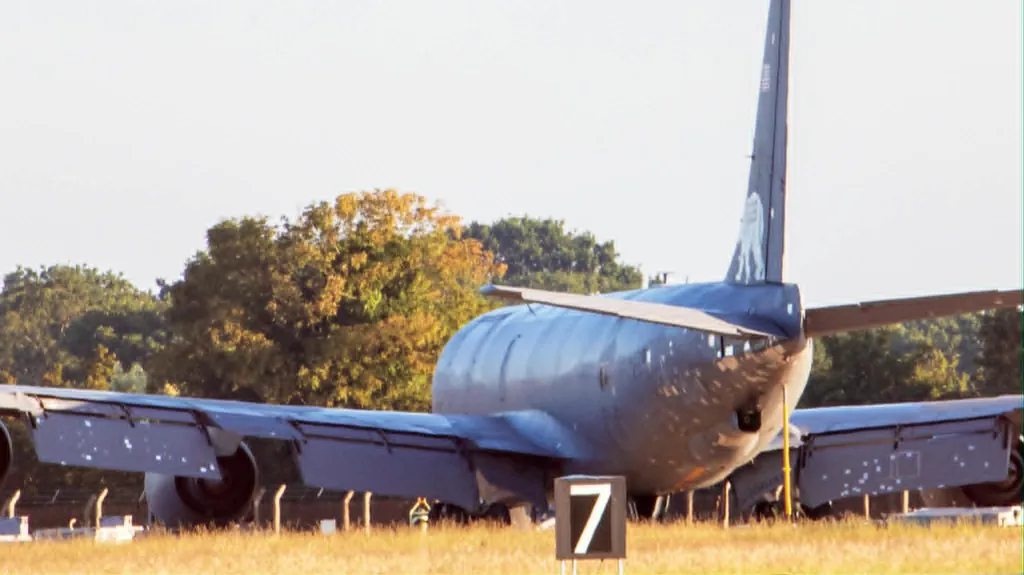
The photographs, from aviation photographer Andrew McKelvey, show the KC-135 heavily speckled with shrapnel damage to the tail, its vertical stabilizer as well as its flaps. It is also missing its refueling boom entirely.

Shrapnel damage patches appear on the KC-135’s tail, flaps, spoilers and vertical stabilizer. (Andrew McKelvey)
Shrapnel damage repairs can be seen on the jet’s vertical stabilizer. (Andrew McKelvey)

It is unclear where this jet was struck. There were five tankers reportedly damaged in the Iranian long-range strike on Prince Sultan Air Base (PSAB) in Saudi Arabia on March 14. However, data from FlightRadar24 shows that the jet was taking off and arriving at Ben Gurion International Airport in Tel Aviv Israel on the day before and after the attack on PSAB. In addition, that data shows it was still flying missions after that incident, which seems highly unlikely. The KC-135 could have been hit somewhere else or the data is wrong. We just don’t know at the moment.

“It’s still here and parked on the visitors ramps on the north side of the base,” McKelvey told us Monday morning EDT.

This jet, tail number 63-8028, belongs to the Alaska Air National Guard’s 168th Wing. It arrived at Mildenhall from Ben Gurion on Saturday, according to data from FlightRadar24. 

As we have reported in the past, dozens of U.S. Air Force refueling aircraft now deployed to Ben Gurion Airport are expected to stay in Israel at least until the end of this year, Israel’s N12 News reported on X.

“The presence of the aircraft—not the U.S. military—is causing significant operational difficulties at Ben Gurion Airport, as they are parked almost everywhere possible at the port,” the outlet added.

בישראל התקבלו מסרים מהאמריקנים שלפיהם עשרות מטוסי התדלוק המוצבים בנמל התעופה בן גוריון צפויים להישאר בארץ לפחות עד סוף השנה האזרחית. נוכחות המטוסים שלא הצבא האמריקני מעוררת קשיים משמעותיים בתפעולו של נתב”ג, שכן הם חונים כמעט בכל מקום אפשרי בנמל@Dean_Fisher_

— החדשות – N12 (@N12News) May 18, 2026

As noted earlier, this is at least the second KC-135 that has visited Mildenhall sporting shrapnel damage and temporary repairs. Last month, McKelvey shared images with us of a KC-135 from the Ohio Air National Guard’s (OANG) 121st Air Refueling Wing covered from nose to tail with these repairs. However, additional ones could have transited to Mildenhall or other installations in Europe before flying to Tinker Air Force Base in Oklahoma for far more comprehensive repair work. Tinker is home to the Oklahoma City Air Logistics Complex, which performs programmed depot maintenance and modifications on KC-46, KC-135, B-1B, B-52, E-3 and Navy E-6 aircraft.

As we explained in our story about the OANG jet: “While all tankers are precious assets, at least to a degree, due to the high demand on the fleet and its cumulative age, in this case there may be at least one positive side effect from the damage. Executing a battle damage repair plan in the field to get a KC-135 back in the air is a good real-life exercise, one that could prove vital if a future conflict in the Pacific were to erupt. Lessons will certainly be learned on many levels from Operation Epic Fury. And some of these lessons came the hard way even though they really shouldn’t have.

KC-135 seen with battle damage repairs landing at RAF Midlenhall.
Aviation photographer Andrew McKelvey

The pock-marked tankers are among more than 40 aircraft damaged or destroyed during Epic Fury. In addition to those hit by shrapnel, two tankers were involved in a mid-air collision in March over Iraq that killed all six crew members aboard one of the jets.

About two weeks after that incident, a KC-135 was pulled from the Boneyard at Davis-Monthan Air Force Base in Arizona and sent to Tinker.

“At the request of the KC- 135 System Program Office, the 309th Aerospace Maintenance and Regeneration Group regenerated KC-135R, tail number 58-011, to support operational requirements,” an Air Force spokesperson told us last month. “The aircraft departed on April 2, 2026, enroute to the Oklahoma Air Logistics Complex at Tinker AFB, Oklahoma City, Oklahoma.”

The Air Force declined to specify what those operational requirements were.

You can get an idea of the extent of U.S. aircraft losses from our recent graphic linked here.

Operation Epic Fury U.S. Aircraft Losses Visualized

Here are all the known American aircraft losses during the nearly six week-long war with Iran.https://t.co/5tzH2gks1l

— TWZ (@thewarzonewire) April 10, 2026

However, these aircraft losses are just part of the damage from Iranian missile and drone attacks.

“Iranian airstrikes have damaged or destroyed at least 228 structures or pieces of equipment at U.S. military sites across the Middle East since the war began, hitting hangars, barracks, fuel depots, aircraft and key radar, communications and air defense equipment,” The Washington Post reported earlier this month. “The amount of destruction is far larger than what has been publicly acknowledged by the U.S. government or previously reported.”

We have reached out to the wing and U.S. Air Forces Central (AFCENT) for more information about the damaged tankers and will update this story with any pertinent details provided.

Contact the author: howard@twz.com

Howard is a Senior Staff Writer for The War Zone, and a former Senior Managing Editor for Military Times. Prior to this, he covered military affairs for the Tampa Bay Times as a Senior Writer. Howard’s work has appeared in various publications including Yahoo News, RealClearDefense, and Air Force Times.


Source link