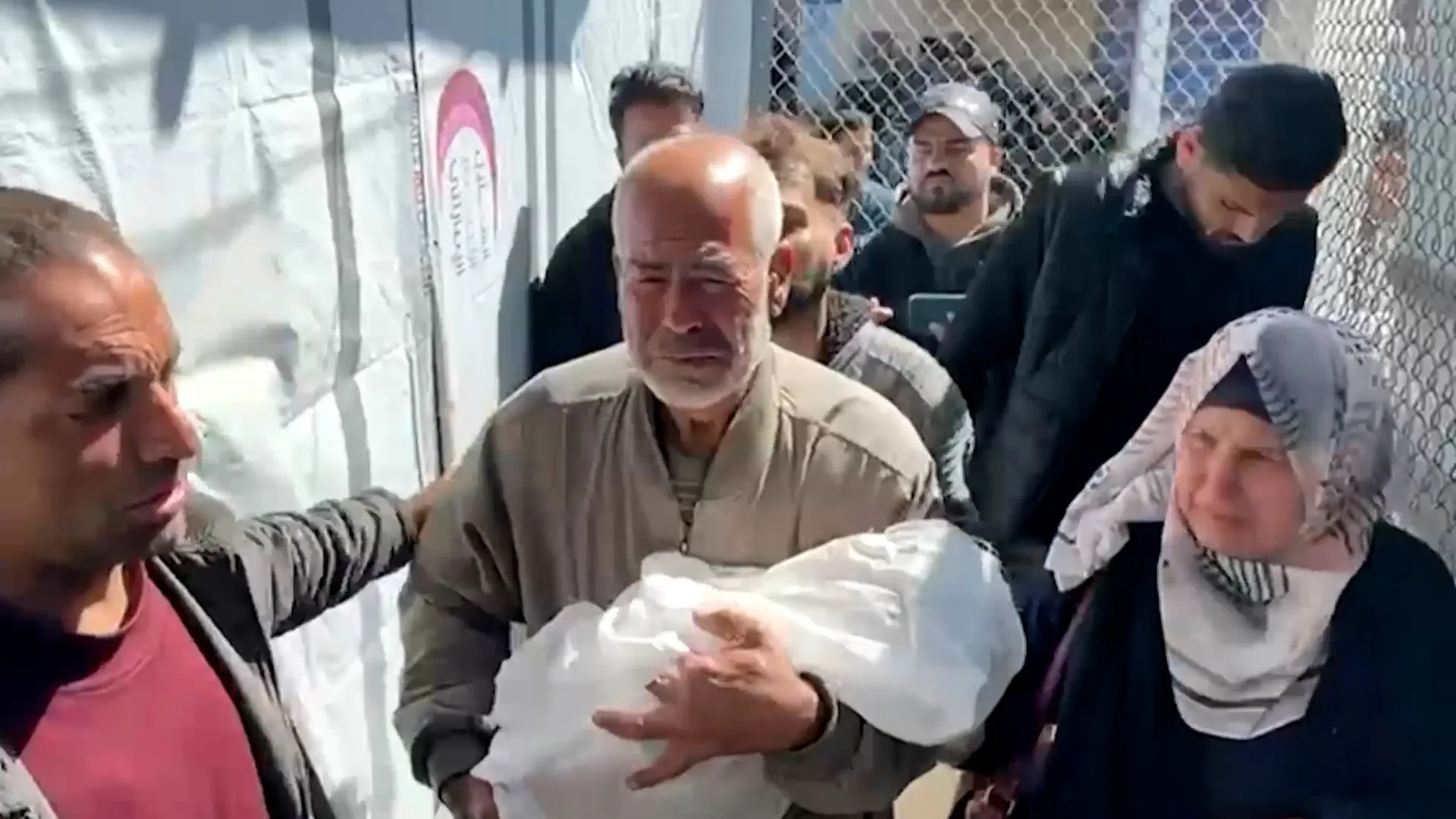
Palestinian boy Nidal Abu Rabeea died in Gaza after waiting 14 months for Israel to allow his medical evacuation, despite having the necessary clearance. Thousands of Palestinians are blocked from seeking urgent medical care through the partially reopened Rafah crossing.
After two years of a grinding war, Palestinians in the Gaza Strip are observing the holy month of Ramadan during an unabating economic catastrophe as Israel continues to impose restrictions on the entry of food and other supplies despite a “ceasefire” reached in October.
For most families, the daily struggle to secure a mere loaf of bread has replaced the traditional festive atmosphere before the war. An analysis by Al Jazeera, based on official data, reveals that skyrocketing prices for basic commodities have made a complete iftar meal to break the daily fast a distant dream for the vast majority of the population.
Skyrocketing costs
During periods when Israel tightened its siege or completely closed the crossings into Gaza, food prices spiked by more than 700 percent. While prices have retreated slightly since the “ceasefire” began in October, they remain significantly higher than pre-war levels.
According to Mohammed Barbakh, director general of policy and planning at the Ministry of Economy in Gaza, official data tracking prices from before the war began on October 7, 2023, to the first days of this Ramadan show staggering increases.
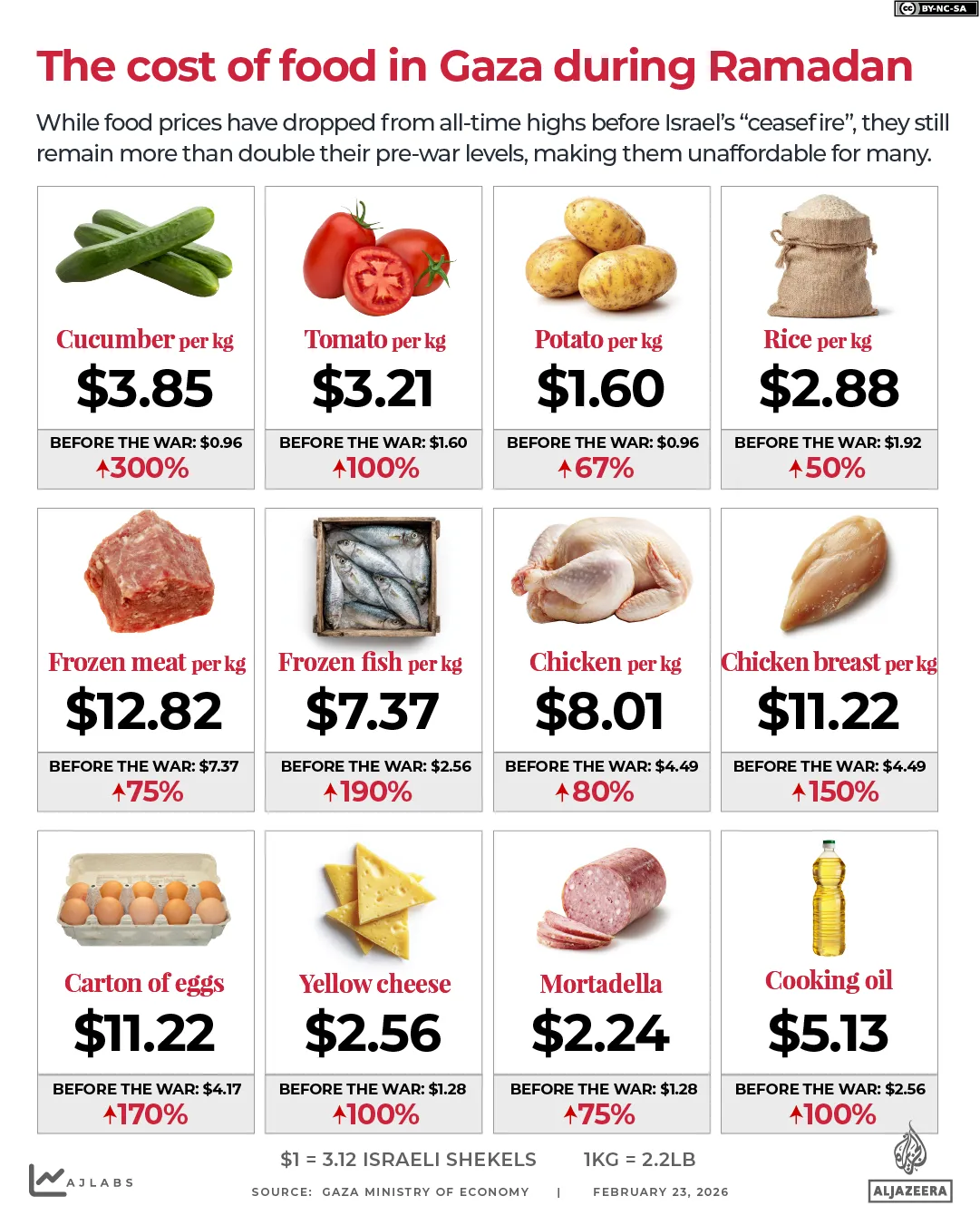
Al Jazeera’s analysis of the ministry’s price data reveals the following hikes:
Chicken: Prices rose from 14 shekels ($4.49) to 25 shekels ($8.01) per kilogramme (2.2lb), an 80 percent increase.
Frozen fish: Prices jumped from 8 shekels ($2.56) to 23 shekels ($7.37) per kilo, a 190 percent increase.
Frozen red meat: Prices rose from 23 shekels ($7.37) to 40 shekels ($12.82) per kilo, a 75 percent difference.
Eggs: A tray of 30 eggs now costs 35 shekels ($11.22) compared with 13 shekels ($4.17), a 170 percent increase.
Vegetables, a staple of the Palestinian diet, have also seen dramatic surges. Tomatoes have doubled in price while cucumbers have jumped by 300 percent, rising from 3 shekels ($0.96) per kilo to 12 shekels ($3.85). Cheese prices have increased by up to 110 percent, directly impacting the cost of suhoor, the predawn meal before the daily fasting during Ramadan begins.
(Al Jazeera)
The cost of a meal
Based on data from the Palestinian Central Bureau of Statistics, Al Jazeera estimated the cost of a basic iftar for a family of six. The meal includes two chickens, rice, salad, appetisers, a soft drink, cooking gas and oil.
The price of the meal has risen to about 150 shekels ($48), up from 79 shekels ($25.32) before the war, an increase of 90 percent.
For suhoor, a simple meal of cheese, hummus, falafel and bread now costs 31.5 shekels ($10.10), compared with 18.6 shekels ($5.96) previously.
The combined daily cost to feed a medium-sized family now stands at 181.5 shekels ($58.17), an 88 percent jump from pre-war figures.
Economic obliteration
These price hikes coincide with a collapse in purchasing power. A United Nations report released in late 2025 indicated that the annual per capita income in Gaza plummeted to $161 (503 shekels) in 2024, down from $1,250 (3,900 shekels) in 2022.
The labour market has essentially vanished. In a statement issued in October, Sami al-Amsi, head of the General Federation of Palestinian Trade Unions, said unemployment stood then at more than 95 percent as workshops, farmland and fishing fleets were destroyed.
“The worker is no longer looking for a job because there is no work at all,” al-Amsi said. “Today, the Palestinian worker is looking for a food parcel to survive.”
Blockade and monopoly
Economic researcher Ahmed Abu Qamar attributed the inflation to Israel’s restrictive entry policies and “coordination fees” imposed on trucks.
“The humanitarian protocol stipulates the entry of 600 trucks daily, yet the Israeli occupation effectively allows only between 200 and 250 trucks,” Abu Qamar told Al Jazeera, noting that the Strip actually requires 1,000 trucks daily to meet minimum demand.
He also highlighted a monopoly system under which only about 10 merchants are authorised to import goods through four Israeli companies, restricting competition and keeping prices artificially high. He called for a return to a free market system and the full opening of crossings to alleviate the burden on a population already crushed by conflict.
New Delhi, India – As Indian Prime Minister Narendra Modi emerged from his plane at Ben Gurion airport outside Tel Aviv on July 4, 2017, his Israeli counterpart, Benjamin Netanyahu, waited for him at the other end of the red carpet laid out on the tarmac.
Minutes later, the leaders hugged. Speaking at the airport, Modi said his visit was a “path-breaking journey” – it was the first time an Indian prime minister had visited Israel. Netanyahu recalled their first meeting in New York in 2014, where, he said, “we agreed to break down the remaining walls between India and Israel”.
Nine years later, as Modi prepares to fly to Israel on February 25 for his second visit, he can largely claim to have accomplished that mission, analysts say. A relationship that was once frowned upon in India, and then carried out clandestinely, is now one of New Delhi’s most public friendships. Modi has frequently described Netanyahu as a “dear friend”, despite the International Criminal Court having issued an arrest warrant in late 2024 for the Israeli premier over alleged war crimes carried out during Israel’s genocidal war on Gaza.
Indian diplomats and officials have justified the country’s pivot towards Israel as a “pragmatic approach” – Israel, with its tech and military expertise, has too much to offer to be ignored, they argue – balanced by efforts from New Delhi to strengthen ties with its Arab allies.
Yet, it has come at a cost, analysts say: to Palestine, and India’s relationship with it, and, according to some experts, to India’s moral credibility.
“The so-called realist turn of India has cost its moral power, which it used to enjoy in the Global South,” said Anwar Alam, a senior fellow with the Policy Perspectives Foundation think tank in New Delhi.
Amid an ongoing war in the Palestinian territory, Modi’s visit “amounts to legitimising the apartheid Israeli state”, Alam told Al Jazeera.
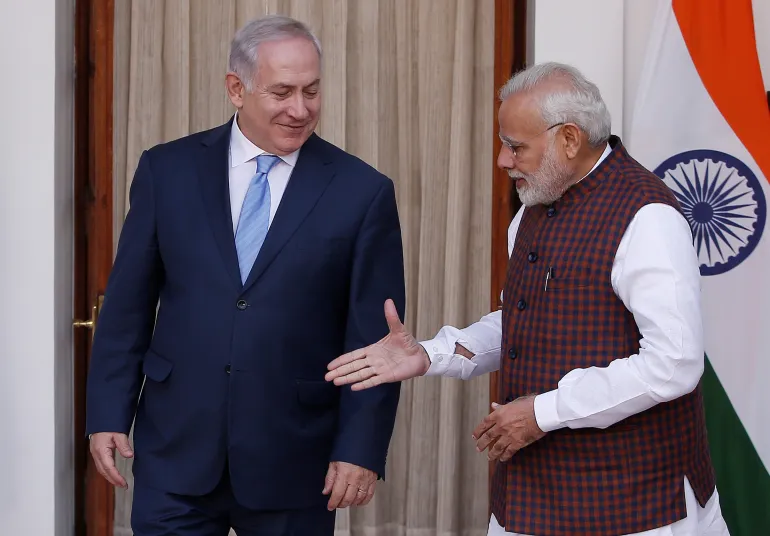
Indian Prime Minister Narendra Modi extends his hand for a handshake with his Israeli counterpart, Benjamin Netanyahu, during a photo opportunity ahead of their meeting at Hyderabad House in New Delhi, India, on January 15, 2018 [Adnan Abi/Reuters]
An ideological alliance
India was a staunch advocate for Palestine in the post-colonial world order, with major leaders backing Palestinian independence. In 1947, India opposed the United Nations plan to partition Palestine. And four decades later, in 1988, India became one of the first non-Arab states to recognise Palestine.
The end of the Cold War – India leaned towards the Soviet Union despite officially being non-aligned – forced a change in New Delhi’s calculations. Alongside an outreach to the United States, India also established diplomatic relations with Israel in January 1992.
Since then, defence ties have anchored the relationship, which has also expanded on other fronts in recent years.
Modi’s rise to power in India in 2014 proved to be the catalyst for the biggest shift in relations. Modi’s Hindu nationalist Bharatiya Janata Party (BJP) has an ideology rooted in the vision of making India a Hindu nation, a natural homeland for Hindus anywhere in the world – an approach that mirrors, in many ways, Israel’s view of itself as a Jewish homeland. Both Modi and Israel view “Islamic terrorism”, which critics say is also shorthand for justifications needed to pursue broader anti-Muslim policies, as major threats.
Under Modi, India has become Israel’s largest weapons buyer. And in 2024, as Israel waged its war on Gaza, Indian weapons firms sold Israel rockets and explosives, according to an Al Jazeera investigation.
Ahead of Modi’s upcoming visit, the two countries signed a memorandum of understanding that aims to further deepen defence ties, with India exploring the joint development of anti-ballistic missile defence with Israel. In Jerusalem, Modi is scheduled to address the Knesset, Israel’s parliament.
“Modi’s address is special because of how it underlines the scale of the shift in relations under the Bharatiya Janata Party towards an overtly pro-Israel policy,” Max Rodenbeck, project director at the Washington-based Crisis Group’s Israel-Palestine department, told Al Jazeera.
But Modi’s visit is also personal for Netanyahu, Rodenbeck said. Israel is months away from a national election that is, in effect, a referendum on Netanyahu’s government – from the intelligence failures that enabled the October 7 attack by Palestinian groups to the war on Gaza that followed, as well as his attempts to weaken judicial independence through reforms.
The visit appears “as almost a personal favour to Netanyahu by boosting his image as an international statesman just as Israeli election campaigning is getting underway”, Rodenbeck said.
While several Western leaders have visited Israel since it began its genocidal war on Gaza in October 2023, few leaders from the Global South have made the trip.
At a time when the Gaza war has shrunk the set of countries willing to be seen as Israel’s friends, especially among emerging economies, Modi’s visit is significant.
Israel does not “have many friends” globally at the moment, said Kabir Taneja, the executive director of the Middle East office at the Observer Research Foundation, a New Delhi-based think tank. “So India is playing that role,” he added. “[Modi’s visit] sort of shows that Israel is not fully isolated.”
Indian Prime Minister Narendra Modi and Israeli Prime Minister Benjamin Netanyahu attend an Innovation conference with Israeli and Indian CEOs in Tel Aviv, Israel, on July 6, 2017 [Oded Balilty/Reuters]
The July 2017 visit
In many ways, Modi’s visit to Israel this week will look to build on his July 2017 trip, which was a watershed moment in the bilateral ties, analysts note.
No Indian Prime Minister had previously visited Israel, but even lower-level diplomats would, until then, pair their Israel visits with parallel engagements in the Palestinian territory.
Modi broke with that policy. He did not visit Palestine in 2017, only making a trip there in 2018, by which time he had already also hosted Netanyahu in New Delhi. It had also been the first visit by an Israeli premier to India.
The 2017 Modi visit has been under scrutiny recently. An email released by the US Justice Department as part of the Jeffrey Epstein files showed that the late disgraced financier had advised a billionaire close to Modi during his trip.
After the visit on July 6, Epstein, a convicted sex offender, had emailed an unidentified individual he referred to as “Jabor Y”, saying: “The Indian Prime minister modi took advice. and danced and sang in israel for the benefit of the US president. they had met a few weeks ago.. IT WORKED. !”
India’s Ministry of External Affairs has dismissed these claims as the “trashy ruminations” of a convicted criminal.
Nonetheless, Modi’s visit to Israel solidified the bilateral relationship. Trade between the two nations has grown from $200m in 1992 to more than $6bn in 2024.
India is still Israel’s second-largest Asian trading partner after China in goods, dominated by diamonds, petroleum, and chemicals. India and Israel signed a Bilateral Investment Treaty (BIT) in September last year and have both been looking to close negotiations on a free trade deal.
At the same time, people-to-people ties have grown as well. After Israel banned Palestinians from working in the country following the Hamas-led attack on October 7, 2023, thousands of Indians lined up to work in Israeli construction companies.
“India and Israel have a fairly deep strategic and economic relationship that has been flourishing since Prime Minister Modi came to office,” said the Observer Research Foundation’s Taneja.
Modi was also among the first world leaders to condemn the Hamas-led attack and throw India’s support behind Israel.
“It really, really feeds into India’s posture against terrorism,” Taneja said about the India-Israel ties. “Israel is a country that India sees facing similar crisis when it comes to terrorism.”
India accuses Pakistan of sponsoring armed attacks on its territory and in Indian-administered Kashmir. Pakistan has accepted that its nationals have, in some instances, been behind these attacks, but has rejected accusations that it has trained or financed the attackers.
Israeli Prime Minister Benjamin Netanyahu and his wife, Sara, tie a garland made of cotton threads to the portrait of Mahatma Gandhi, as Indian Prime Minister Narendra Modi stands next to them, at Gandhi Ashram in Ahmedabad, India, on January 17, 2018 [Amit Dave/Reuters]
Over the horizon, a different Middle East?
Despite its close ties with Israel, New Delhi under Modi has not completely abandoned its position on the Palestinian cause, calling for a two-state solution and peace through dialogue. But it has been increasingly hesitant to criticise Israel over its war crimes in the occupied Palestinian territory.
India’s historical support for the Palestinian cause is rooted in its pivotal role in the non-alignment movement, the Cold War-era neutrality posture adopted by several developing nations. Even before India gained independence, the leader of its freedom struggle, Mahatma Gandhi, decried the “imposition of Jews over Arabs” through the creation of Israel.
India now no longer calls its approach non-alignment, instead referring to it as “strategic autonomy”.
“The Middle East is the only geography where this policy actually functions, and also provide[s] dividend[s],” Taneja told Al Jazeera. “India has good relations with Israel, Arab powers and Iran alike. One of the reasons [it works is] because India does not step into regional conflicts and confrontations.”
But under pressure from US President Donald Trump, India has stopped buying oil from Iran and taken steps to end its work on developing the strategically significant Chabahar port, which New Delhi viewed as a gateway into landlocked Central Asia and Afghanistan.
Now, Trump is threatening to attack Iran. The US has amassed warships and jets near Iran, even as Washington and Tehran continue to engage in diplomatic talks.
“I suspect India may be looking over the horizon to a Middle East where Iran has suffered heavy attack from the US and Israel, and no longer projects power in the region. In these circumstances, Israel will emerge as something of a regional hegemon,” said the Crisis Group’s Rodenbeck.
“India is perhaps positioning itself to benefit. Also, Modi sees Israel as influential in Washington, and may hope that friendliness to Israel wins points with Congress and Trump, which India badly needs.”
Oman’s Foreign Minister Badr Al Busaidi has confirmed that further talks between the United States and Iran will take place on Thursday amid spiralling tensions between the two countries.
“Pleased to confirm US-Iran negotiations are now set for Geneva this Thursday, with a positive push to go the extra mile towards finalizing the deal,” Albusaidi said in a social media post on Sunday.
Recommended Stories
list of 3 itemsend of list
The announcement comes as the US continues to amass military assets in the Middle East, raising concerns about an all-out war against Iran.
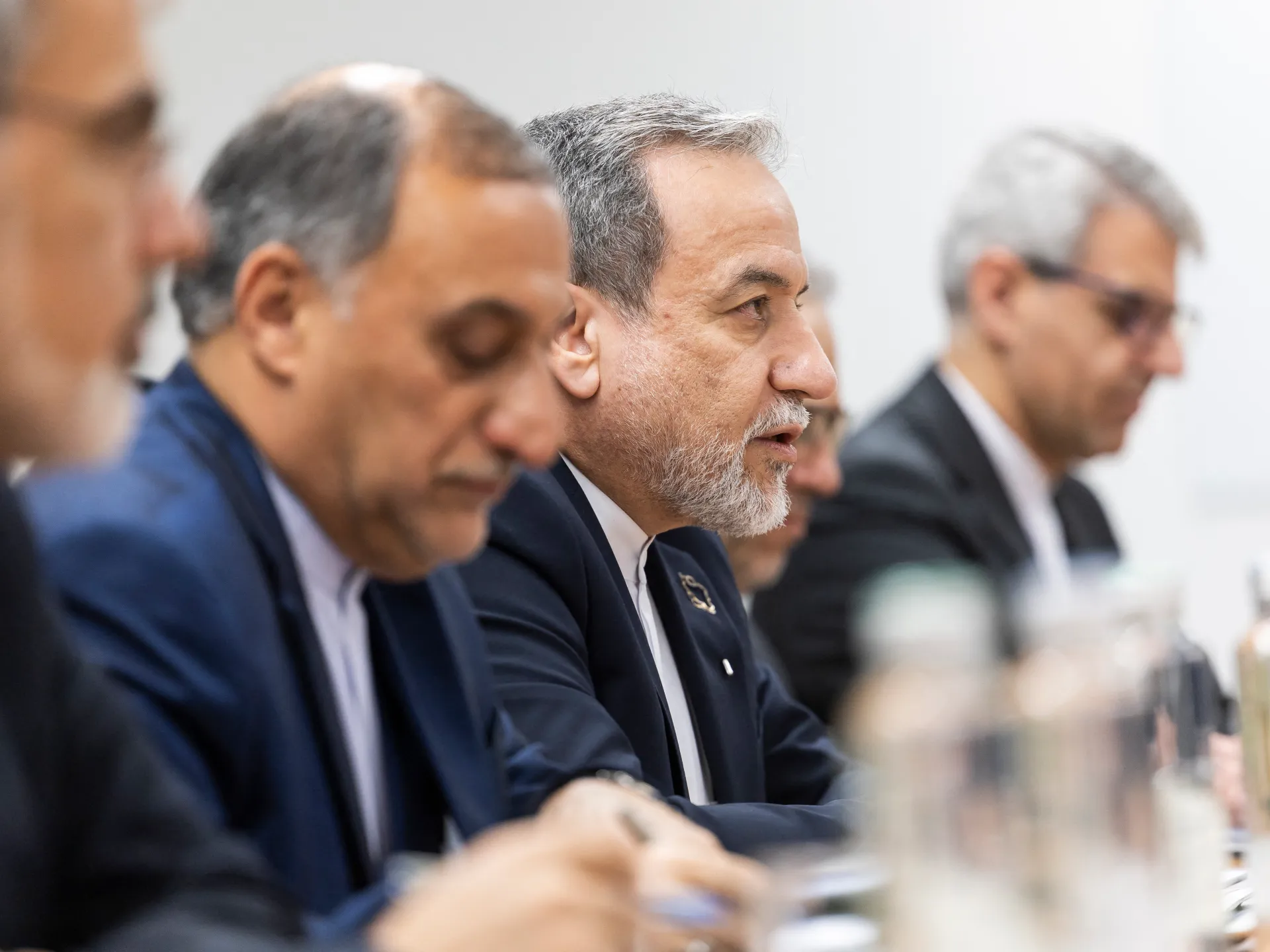
Hours before Oman’s announcement, Iran’s Foreign Minister Abbas Araghchi said Tehran was ready to put in place a “full monitoring mechanism” to guarantee the peaceful nature of its nuclear programme and ease tensions.
Asked by Face the Nation moderator Margaret Brennan why Iran would want to pursue enrichment on its soil rather than buy enriched uranium from abroad, given the US military build-up and risk of an escalation, Araghchi said the issue was a matter of “dignity and pride” for Iranians.
“We have developed this technology by ourselves, by our scientists, and it is very dear to us because we have created it – we have paid a huge expense for that,” he said.
“We’re not going to give [our nuclear programme] up; there is no legal reason to do that while everything is peaceful and safeguarded” by the United Nations nuclear watchdog, the International Atomic Energy Agency (IAEA), Araghchi said.
As a “committed member” of the Non-Proliferation Treaty (NPT), which requires non-nuclear-weapon states not to seek or acquire nuclear weapons, Iran is “ready to cooperate with the agency in full”, Araghchi added.
But he stressed that under the treaty, Tehran also has “every right to enjoy a peaceful nuclear energy, including enrichment”.
“Enrichment is a sensitive part of our negotiations. The American team knows about our position, and we know their position. We have already exchanged our concerns, and I think a solution is achievable,” the minister noted.
Enrichment is the process of isolating and garnering a rare variant, or isotope, of uranium that can produce nuclear fission. At low levels, enriched uranium can power electric plants. If enriched to approximately 90 percent, it can be used for nuclear weapons.
US officials, including President Donald Trump, have previously suggested that Washington is seeking “zero enrichment” by Tehran.
Earlier this month, US Secretary of State Marco Rubio said any deal with Iran would need to include agreements on ballistic missiles and support for its allies in the region.
Araghchi, however, said on Sunday that Iran was “negotiating only nuclear” at the present time.
“There is no other subject,” he told CBS News, adding that he was optimistic that a deal could be reached.
The second round of nuclear talks concluded in Geneva on February 17. The US and Iran also held indirect talks in Oman earlier this month.
The Iranian delegation is working ahead of the meeting to present a draft that includes “elements which can accommodate both sides’ concerns and interests” to reach a “fast deal”, Araghchi said.
The top Iranian diplomat added the agreement would likely be “better” than the Joint Comprehensive Plan of Action (JCPOA), negotiated by former US President Barack Obama in 2015.
“There are elements that could be much better than the previous deal,” he said, without elaborating. “Right now, there is no need for too much detail. But we can agree on our nuclear programme to remain peaceful forever and at the same time, for more sanctions [to be] lifted.”
Some observers were less optimistic about the chances of striking a deal. Trita Parsi, executive vice president of the Quincy Institute, told Al Jazeera that Iran is likely to put forward a proposal that goes beyond anything they ever offered, but even that may not be enough.
“Trump has been sold a narrative by the Israelis that portrays Iran far, far weaker than it actually is. As a result, he’s adopting maximalist capitulation positions that are simply unrealistic based on how the power reality actually looks,” Parsi told Al Jazeera.
“Unless this gets corrected, even if the Iranians put forward a very far-leaning proposal that is extremely attractive to the US, Trump may still say no because he’s under the false belief that he can get something even better.”
Official Fadi al-Qassem says all residents have left al-Hol camp, which long housed relatives of alleged ISIL (ISIS) members.
Published On 22 Feb 202622 Feb 2026
Share
Syrian authorities say they have fully evacuated and shut down a remote camp that once kept thousands of relatives of alleged members of the armed group ISIL (ISIS).
The last residents were sent out in a convoy Sunday morning, according to Fadi al-Qassem, the Syrian government official overseeing the camp.
Recommended Stories
list of 4 itemsend of list
“All Syrian and non-Syrian families were relocated,” al-Qassem told Agence France-Presse.
Al-Hol, located in a desert region of the northeastern Hasakah province, had long kept huge numbers of relatives of suspected ISIL fighters.
At its peak in 2019, the camp held some 73,000 people. Last month, there were about 24,000 residents, mostly Syrians but also Iraqis and more than 6,000 other foreigners of around 40 nationalities.
While the camp’s residents were not technically prisoners and most have not been accused of crimes, they had been held in de facto detention at the heavily guarded facility for years.
Since then, thousands of its detainees, including family members of suspected ISIL members, have left for unknown destinations. Hundreds have been sent to the Akhtarin camp in Aleppo province, while others have been repatriated to Iraq.
The Syrian Observatory for Human Rights, a war monitor based in the United Kingdom, reported an unspecified number of residents “left the camp individually, without waiting for the organised convoys”. Sources on the ground told Al Jazeera many Syrian nationals left al-Hol for their hometowns, while many of the foreigners travelled west to government strongholds of Idlib or Aleppo governorates.
Al-Qassem said residents who have been relocated are children and women who will “need support for their reintegration”.
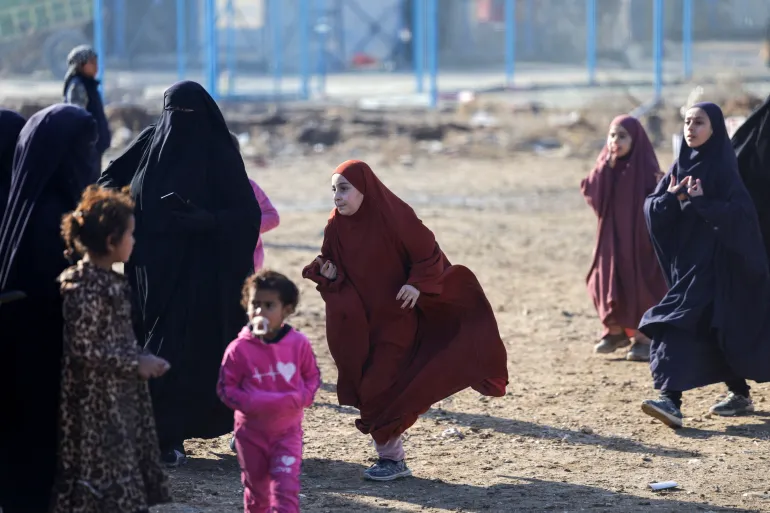
Women and children gather at al-Hol camp in Hasakah, Syria, in January [Khalil Ashawi/Reuters]
The future of the smaller Roj camp in northeastern Syria, which also houses relatives of alleged ISIL members but remains under the control of the Kurdish-led Syrian Democratic Forces (SDF), remains to be seen.
Most of its inhabitants are foreigners whose home countries have largely refused to receive them.
Syrian authorities turned back buses carrying 34 Australian women and children on February 16 after they left the Roj camp, headed toward Damascus with plans to travel on to Australia. Australian authorities later said they would not repatriate the families.
“We have no sympathy, frankly, for people who travelled overseas in order to participate in what was an attempt to establish a caliphate to undermine and destroy our way of life,” said Australian Prime Minister Anthony Albanese, explaining his country’s stance.
While it is “unfortunate” that children have been affected, Australia is “not providing any support”, Albanese added.
Israel to join with India, Greece, Cyprus and other Arab, African, Asian countries that ‘see eye to eye’, says PM.
Published On 22 Feb 202622 Feb 2026
Share
Israeli Prime Minister Benjamin Netanyahu has announced that Israel plans to build a network of allied nations in or around the Middle East to collectively stand against what he called “radical” adversaries.
Netanyahu made the comments on Sunday while announcing the upcoming visit to Israel of Indian Prime Minister Narendra Modi, whose country the Israeli leader said would be part of the “axis of nations that see eye to eye” with Israel.
Recommended Stories
list of 3 itemsend of list
Netanyahu, who is wanted by the International Criminal Court on war crimes charges, also referred to Greece, Cyprus and other unnamed Arab, African and Asian countries.
“In the vision I see before me, we will create an entire system, essentially a ‘hexagon’ of alliances around or within the Middle East,” Netanyahu said, according to the Times of Israel.
“The intention here is to create an axis of nations that see eye to eye on the reality, challenges, and goals against the radical axes, both the radical Shia axis, which we have struck very hard, and the emerging radical Sunni axis.”
Modi said he fully agrees with Netanyahu on the “bond between India and Israel”, including the “diverse nature of our bilateral relations”.
“India deeply values the enduring friendship with Israel, built on trust, innovation and a shared commitment to peace and progress,” Modi wrote in a post on X.
Since the start of Israel’s genocidal war on Gaza, its assaults have been weakening the Iran-led “axis of resistance”, including Hezbollah in Lebanon. Israel and Iran also directly clashed last June in a 12-day war, in which the US military also joined to attack Iran’s nuclear sites.
Netanyahu did not elaborate on what he meant by “emerging radical Sunni axis”, but he has previously identified the Muslim Brotherhood as its leading element.
Relations between Israel and several predominantly Sunni Muslim states have soured amid the bloodshed in Gaza, including with Turkiye, whose President Recep Tayyip Erdogan has sharply criticised Netanyahu, and Saudi Arabia, which has accused Israel of genocide.
Prospects for normalisation between Israel and Saudi Arabia also appear to be eroding. In recent months, the kingdom has rebuked Israel’s recognition of Somalia’s breakaway region, Somaliland, as well as the Israeli moves towards annexation in the occupied West Bank.
Since 2020, Israel has pushed to establish formal ties with Arab and Muslim states as a way to shore up its regional standing as part of the US-backed so-called “Abraham Accords”.
Under that framework, Israel has been enjoying close relations with the United Arab Emirates, Bahrain and Morocco.
Recreational activities combined with yoga in Gaza help children recover a sense of normalcy despite war, teacher says.
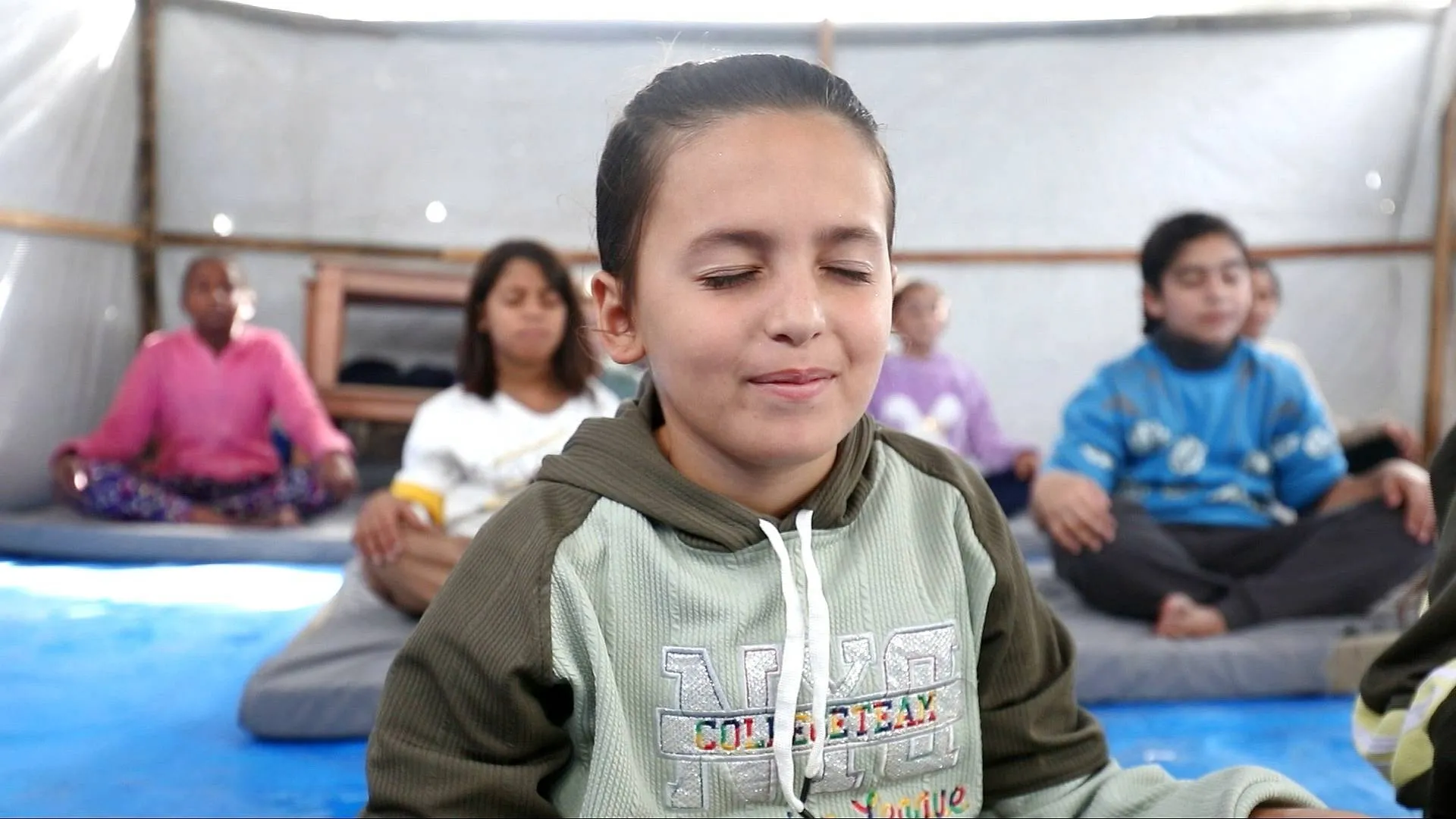
Gaza City – In northern Gaza, a Palestinian teacher has transformed a tent into a small space for yoga classes, offering children moments of peace from the hardships of daily life in the besieged enclave.
The idea to bring the practice to Gaza City came from Hadeel al-Gharbawi, who has been working on finding ways to help children cope with trauma. Through simple movements and breathing, the class offers moments of calm, safety and joy.
Recommended Stories
list of 3 itemsend of list
Children sit cross-legged on a thick mat, eyes shut. Some concentrate, while others fight back shy smiles, sneaking sideways glances to see whether their classmates are following the teacher’s instructions, amused by the unfamiliar exercise.
“I wanted to expand the activities I do with children beyond drawing and colouring. I searched online and discovered that yoga can help children recover from trauma,” al-Gharbawi told Al Jazeera.
“Since yoga isn’t widely available here in Gaza, I decided to learn online and practice it with the children. Through yoga, they can release stress and cope with the difficult life around them.”
Children in Gaza have been exposed to continuous cycles of violence and trauma, profoundly affecting their mental health, according to a report by the World Health Organization.
The constant bombing, displacement, loss of family members and physical pain of Israel’s two-year war on Gaza have caused emotional distress, social withdrawal and grief, among other symptoms, the report says.
International organisations have been warning that the conflict will leave a long-lasting impact.
“All children in Gaza require mental health, and psychosocial support services after two years of horrific war, displacement, and exposure to traumatic events,” the United Nations Children’s Fund (UNICEF) said earlier this month.
This is why yoga classes are more than physical exercise in Gaza; they allow children to step away from fear, release emotions, and feel in control, even for a few minutes, the participants say.
“We come here to do yoga, to learn and to do art,” Suwar, a displaced student, told Al Jazeera. “These activities allow us to forget, even for a short time, the war, the harsh weather and the queues for water. Yoga, in particular, gives us a moment of calm and helps us feel safe and happy.”
Alongside yoga, the tent offers educational and recreational programmes that al-Gharbawi said aim to activate the children’s imaginations.
“Combining learning with playful and therapeutic activities helps the children deal with trauma and regain a sense of normalcy,” al-Gharbawi said.
Uganda Ministry of Foreign Affairs says Mohamed Dagalo’s meeting with President Yoweri Museveni focused on ending war.
Sudan has condemned Uganda for hosting the head of the paramilitary Rapid Support Forces (RSF), Mohamed Hamdan Dagalo, as an “insult” to humanity and the Sudanese people.
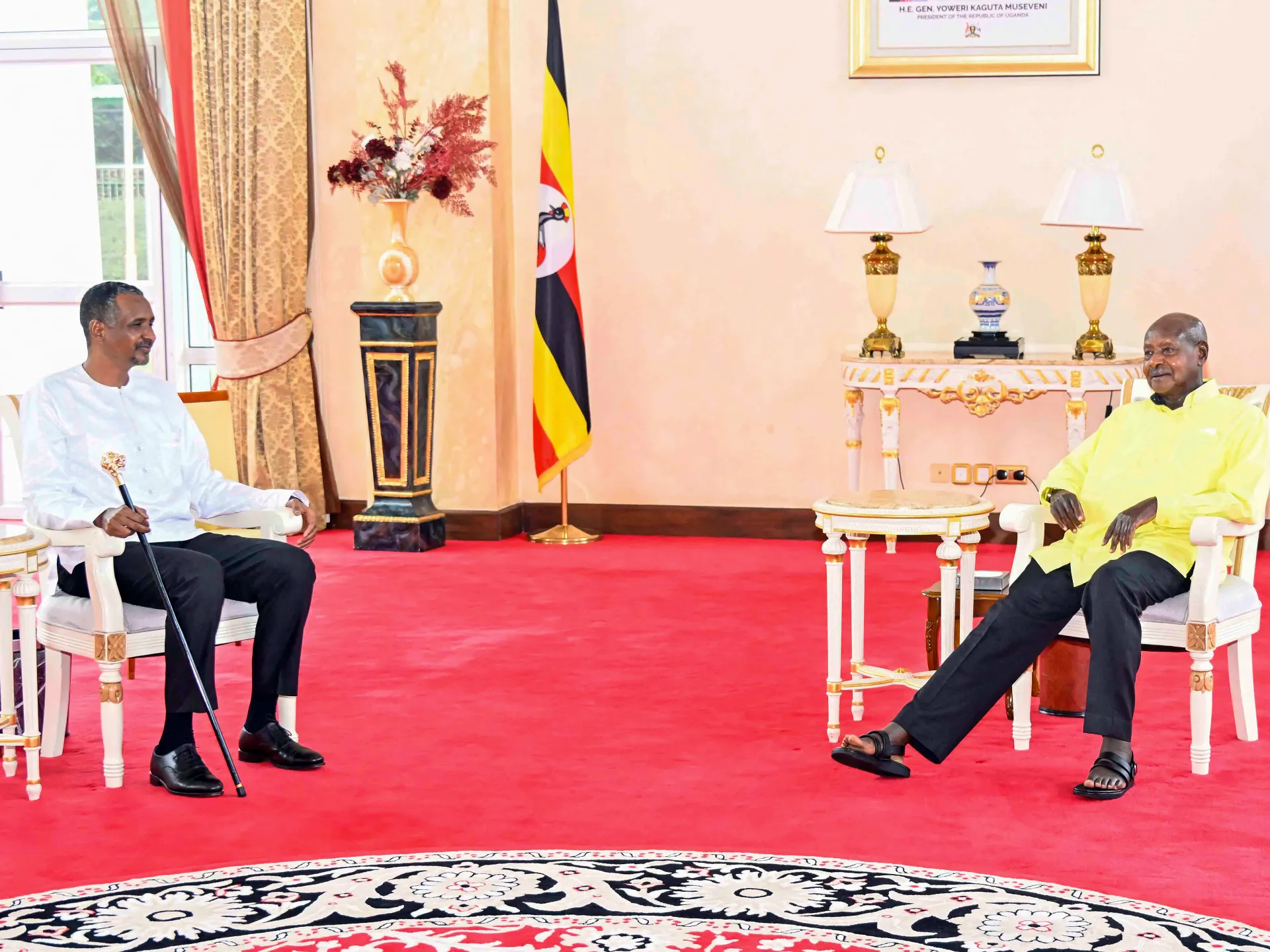
In a statement on Sunday, Sudan’s Ministry of Foreign Affairs denounced the reception of Dagalo, also known as “Hemedti”, in the “strongest terms” and his meeting on Friday with Ugandan President Yoweri Museveni.
Recommended Stories
list of 3 itemsend of list
“This unprecedented step insults humanity before it insults the Sudanese people, and at the same time, it disregards the lives of innocent people killed due to the behaviour of Hemedti and his terrorist militia,” the Foreign Ministry wrote.
Rights groups and international organisations have accused the RSF of war crimes and targeting civilians in Sudan.
Khartoum said hosting Dagalo “disregards” human values.
It “completely disregards the laws governing relations between member states of regional and international organisations that prohibit providing any support for rebel forces against a legitimate, internationally recognised government”, the Foreign Ministry added.
In 2023, Sudan was plunged into a civil war between the Sudanese army, led by Abdel Fattah al-Burhan, and the RSF.
According to the Office of the United Nations High Commissioner for Refugees (UNHCR), at least 11.7 million people have been displaced by the conflict and an estimated 150,000 people have been killed.
Last week, the United States imposed sanctions on three RSF commanders over their alleged roles in the 18-month siege and capture of el‑Fasher, the capital of North Darfur State in western Sudan.
In a statement, the US Department of the Treasury accused the RSF of perpetrating “a horrific campaign of ethnic killings, torture, starvation, and sexual violence” during the siege and capture of el-Fasher, which fell to the RSF in October.
Separately, a UN mission found that the RSF campaign in el-Fasher was a “planned and organised operation that bears the defining characteristics of genocide”.
‘Poisonous’ identity politics
Uganda’s Ministry of Foreign Affairs issued its own statement on Dagalo’s visit and said his meeting with Museveni focused on “ending the ongoing conflict in Sudan and restoring regional stability”.
Museveni reiterated in his remarks to Hemedti that peace in Sudan could only be achieved through dialogue and warned against what he described as identity politics.
“When I last came to Sudan, I met [former] President [Omar al-] Bashir and advised against the politics of identity instead of the politics of interest,” Museveni said.
“Identity politics is poisonous. It does not yield good results. What is important are shared interests that unite people,” he said while calling for both parties to prioritise “peace over military confrontation”.
For his part, Dagalo thanked Museveni and said he shares the Ugandan president’s “principles and your commitment to peace”, according to a statement released by the Ugandan government.
“He noted that Sudan continues to face serious humanitarian and institutional challenges as a result of the conflict and stressed the need for a peaceful resolution,” the statement added.
Twelve Palestine Action activists, including hunger strikers, who were charged with breaking into the British site of an Israeli-linked defence firm, reunited with their families outside London’s Central Criminal Court after they were granted bail on Friday.
On February 16, a group of Palestinian footballers, clubs and advocacy groups referred the heads of FIFA and UEFA to the International Criminal Court (ICC). The 120-page filing accuses Gianni Infantino and Aleksander Čeferin of “aiding and abetting war crimes (specifically, the transfer of civilian population into occupied territories) and crimes against humanity (specifically, apartheid)”.
This historic case marks the first time sports leaders are being accused of these crimes and sends a warning to presidents of all other corporate entities in and beyond athletics. It offers a perfect opportunity to challenge the impunity of Israeli apartheid, occupation and genocide.
Football is the world’s most popular form of cultural expression, with some five billion fans across the planet. Therefore, the stakes of this charge are immense in terms of the spectacle of accountability and legal precedent.
In the course of its campaign in Gaza, of genocide generally and “athleticide” particularly, Israel has killed 1,007 Palestinian sportspeople and destroyed 184 sports facilities, while damaging 81 others.
Although this “athleticide” cannot be directly attributed to the Israel Football Association (IFA), its activities linked to clubs from illegal Israeli settlements located on the occupied Palestinian territory and their participation in domestic and international tournaments can be seen as abetting Israeli crimes of occupation and apartheid.
Despite facing demands for the suspension of these clubs or the IFA, UEFA and FIFA leadership have taken no action. In a recent interview, FIFA chief Infantino said he opposed a ban on Israeli teams from participation in global football, calling it “a defeat”. He went on to add that he was in favour of enshrining in FIFA statutes that no country should ever be banned from “playing football because of the acts of their political leaders”.
Ironic, when you consider he is the very person who oversaw the suspension of Russia from FIFA in 2022 and the banning of Crimean clubs from playing in the Russian league, linked to UEFA, after the Russian occupation of the Ukrainian peninsula in 2014.
The complaint is filed against Infantino and Čeferin because private organisations cannot be defendants before the ICC, but those individuals responsible for their policies can be.
The focus of the complaint is the fact that the IFA has been permitted to materially support, recognise, and include in domestic and international competitions clubs that are based in the stolen settlement land of the occupied West Bank.
Article 64(2) of FIFA Statutes prohibits member associations and their clubs from playing on the territory of another member association without the latter’s approval.
The complaint alleges that by allowing the IFA to oversee clubs that operate on stolen land, Infantino and Čeferin are accountable for normalising illegal Israeli settlements, in direct contravention of a 2024 pronouncement by the International Court of Justice (ICJ) and a resolution from the United Nations General Assembly, which found the settlements to be “unlawful” and required Israel to “cease immediately all new settlement activities, and to evacuate all settlers from the Occupied Palestinian Territory”.
The existence of sanctioned Israeli clubs in West Bank settlements, the referral argues, contributes to the transfer of the civilian population into the occupied territory, contrary to the Rome Statute Article 8(2)(b)(viii), by normalising colonisation.
Likewise, because Israeli clubs in the occupied territory prohibit Palestinians from spectating matches or playing for or managing these teams, the continued sanction of these organisations falls under the definition of aiding and abetting apartheid (a crime against humanity pursuant to Rome Statute Article 7(1)(j).
In continuing to allow the membership of these clubs and the IFA in global and European sport, the filing alleges that Infantino and Čeferin have acted in full knowledge that they have participated in the violation of international law based on the fact that they have deliberately ignored numerous reports and letters advising them to intervene.
Now that the complaint has been formally filed, the Office of the Prosecutor of the ICC will conduct a preliminary examination to confirm that the elements of jurisdiction, admissibility, and the interests of justice have been satisfied. They will then have the option to either decline to open the investigation or proceed to investigate the legal issues raised in the complaint.
If an investigation does ensue, evidence-gathering will occur and arrest warrants or summonses may ultimately be issued. If that happens, this would set an important precedent and give momentum to the campaign for justice for Palestine.
It is notable that while Israeli Prime Minister Benjamin Netanyahu has been able to dodge an ICC arrest warrant by cowering away from Rome Statute signatory states, it would be impossible for Infantino and Čeferin to do so while still fulfilling their roles, assuming it is enforced.
Football is, without question, one of the most popular sports on the planet. When such a cultural juggernaut is connected to business, what emerges is an industry like no other. FIFA and UEFA are global regulatory monopolies, meaning their rules and regulations act the same way a country’s legislation acts on its population. They also preside over a huge, lucrative industry worth hundreds of millions of dollars.
Given the amount of eyeballs and money at stake, the impact of a ban on participation is enormous, as Russia understands all too well after being subjected to suspension. This is no doubt exactly why the presidents of these organisations have refused to act against Israel under the guise of “political neutrality”.
As former UN special rapporteur on the occupied Palestinian territory, Michael Lynk, told us: “When an occupying power is blatantly committing war crimes by creating civilian settlements in occupied territory, the rest of the world – including states, corporations and international sporting organisations – is required to ensure the enforcement of international law by doing everything in their power to bring the violations to a swift end. Yet, FIFA and UEFA are sportswashing the illegal Israeli occupation by allowing the Israeli Football Association to include clubs based in the illegal settlements to participate in their domestic leagues. Nothing could be further from the rules of fairness and equity.”
The bottom line is that sport is and has always been political. The veneer of “political neutrality” conceals the reality that politics is the name of the game for FIFA and UEFA.
Nobody is entitled to stand above international law. It is time for the ICC to prove it.
The views expressed in this article are the authors’ own and do not necessarily reflect Al Jazeera’s editorial stance.
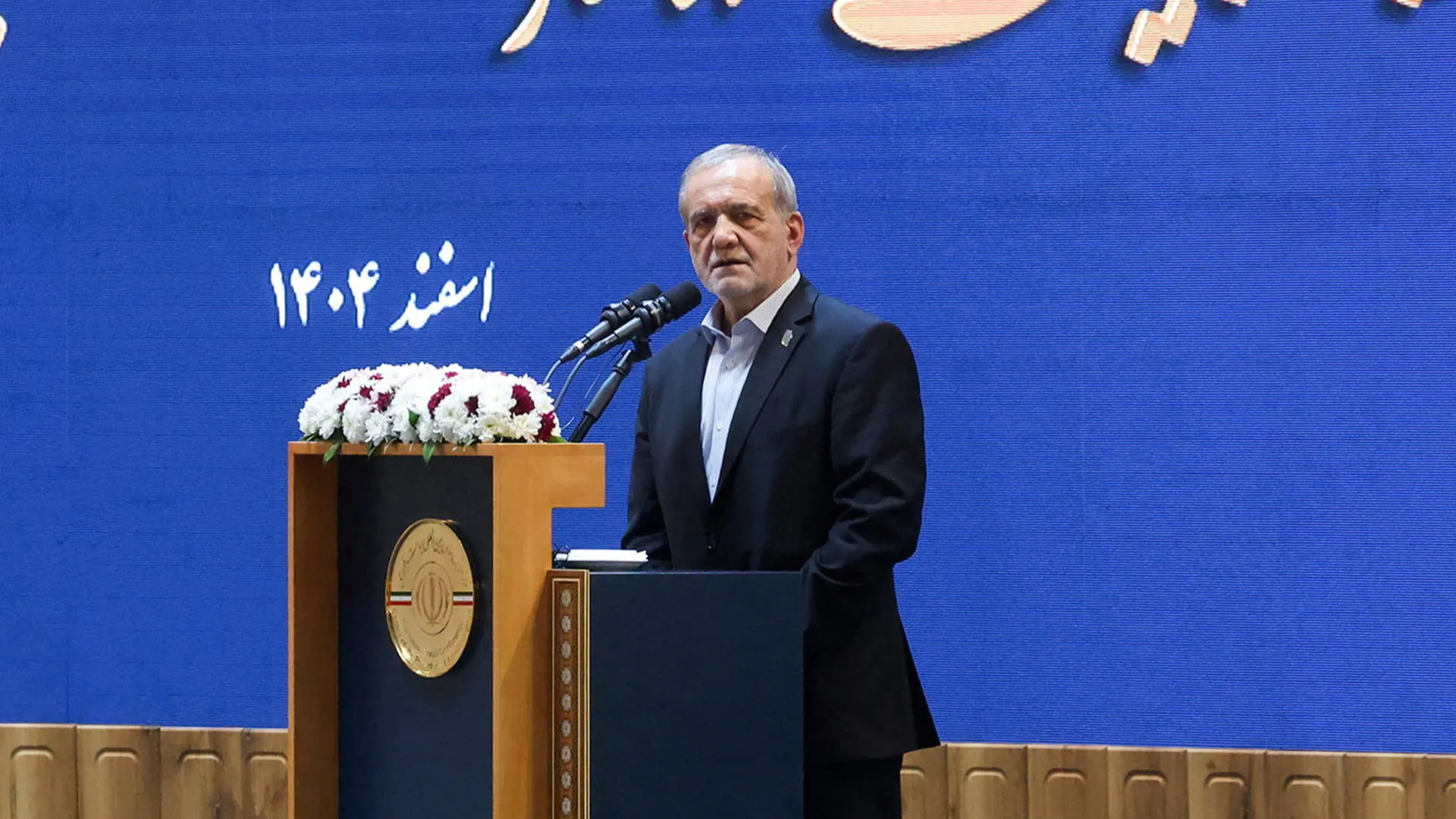
Iranian President Masoud Pezeshkian says Tehran will not bow to US pressure over nuclear talks, after Donald Trump warned on Thursday that ‘bad things’ will happen if Iran fails to reach a deal within 15 days.
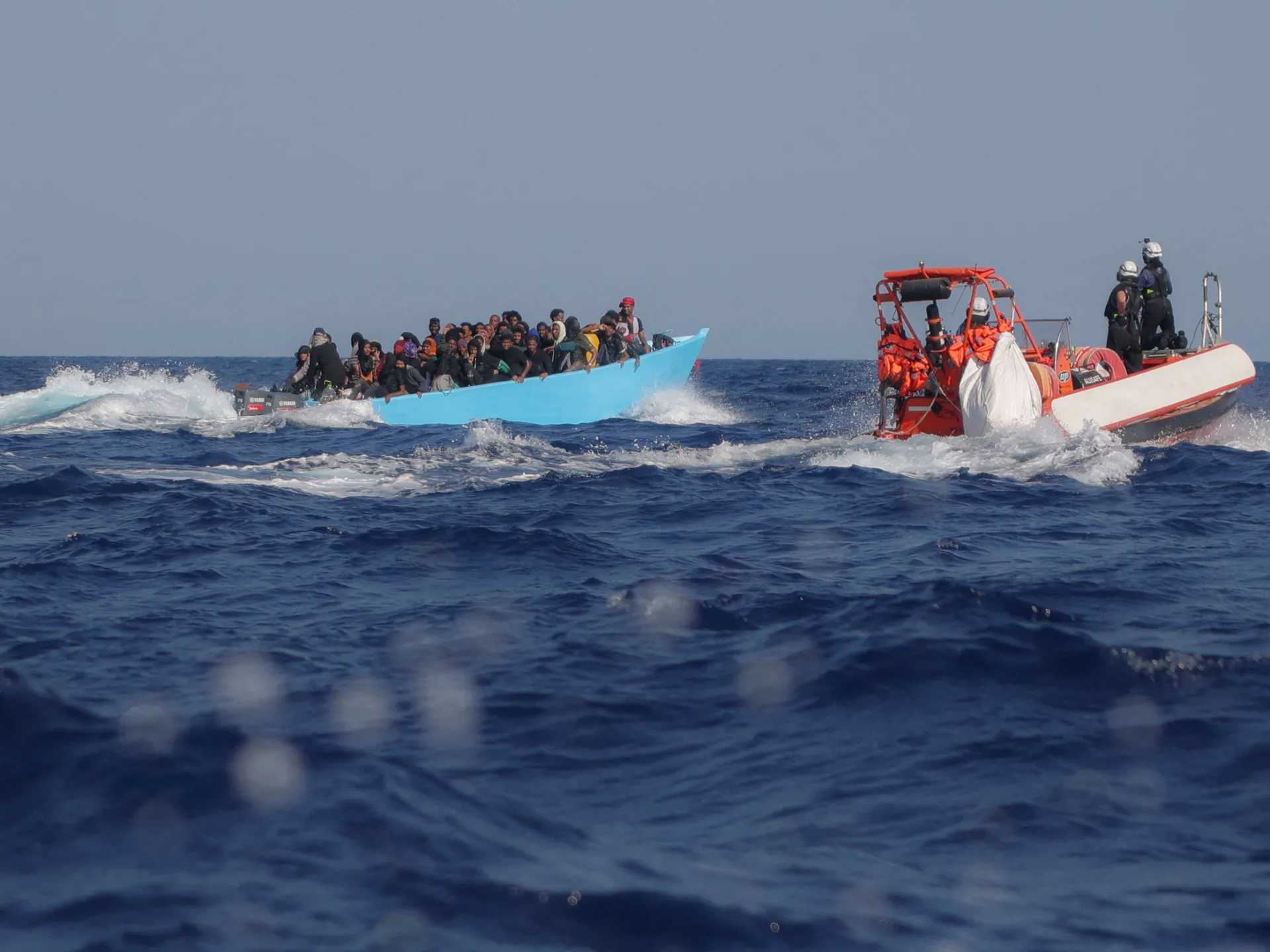
Bodies of five asylum seekers wash ashore in Libya as three others die in a separate incident off the coast of Greece.
Police in Libya have recovered the bodies of five asylum seekers that washed ashore near the capital, Tripoli, as authorities in Greece announced the deaths of three others in a separate incident off the coast of Crete.
The bodies in Libya were found on Saturday by residents of the coastal town of Qasr al-Akhyar, according to a police officer.
Recommended Stories
list of 4 itemsend of list
Hassan Al-Ghawil, head of investigations at the Qasr Al-Akhyar police station, told the Reuters news agency that the bodies were all of dark-skinned people. Two of them were women.
He said people in the area had reported seeing a child’s body wash ashore before the waves returned it to sea.
“We reported to the Red Crescent to recover the bodies,” said Ghawil. “The bodies we found are still intact, and we think there are more bodies to wash ashore.”
The tragedy came weeks after the International Organization for Migration said some fifty-three migrants, including two babies, were dead or missing after a rubber boat carrying 55 people capsized off the coast of Zuwara town in western Tripoli.
It also came as Greek authorities were responding to a separate incident in the eastern Mediterranean.
The Athens News Agency reported on Saturday that authorities had recovered three bodies and rescued at least 20 people after a wooden boat carrying migrants and asylum seekers capsized off the coast of Crete.
Most of the survivors were Egyptians and Sudanese people, the agency reported. They also included four minors.
According to the Greek public broadcaster ERT, the wooden boat capsized when passengers were trying to climb up the ladders during a rescue effort involving a commercial ship.
The search for survivors was continuing with four patrol boats, an aircraft, and two ships from the European border agency Frontex, a spokesperson for the Greek coastguard told the AFP news agency.
According to ERT, survivors said about 50 people had been on board the wooden boat.
A second boat carrying about 40 migrants and asylum seekers was spotted in the area, leading to another rescue operation.
Thousands of people attempt the perilous crossing from Libya to Europe over the Mediterranean every year. Libya has become a transit route for people fleeing conflict and poverty to Europe since the fall in 2011 of longtime ruler Muammar Gaddafi.
Last week, a UN report said migrants in Libya, including young girls, are at risk of being killed, tortured, raped or put into domestic slavery, and called for a moratorium on the return of migrant boats to the country until human rights are ensured.
Many of the migrants and asylum seekers departing Libya seek to arrive in Crete, the gateway to the EU.
According to the United Nations High Commissioner for Refugees (UNHCR), more than 16,770 people seeking asylum in Europe arrived in Crete in 2025.
Faced with the surge in arrivals, the conservative Greek government suspended the processing of asylum applications for three months last summer, particularly for those arriving from Libya.
The UNHCR says 107 people died or went missing in Greek waters in 2025.
Egypt, Jordan, Saudi Arabia, denounce US ambassador’s remarks suggesting Israel has right to much of the Middle East.
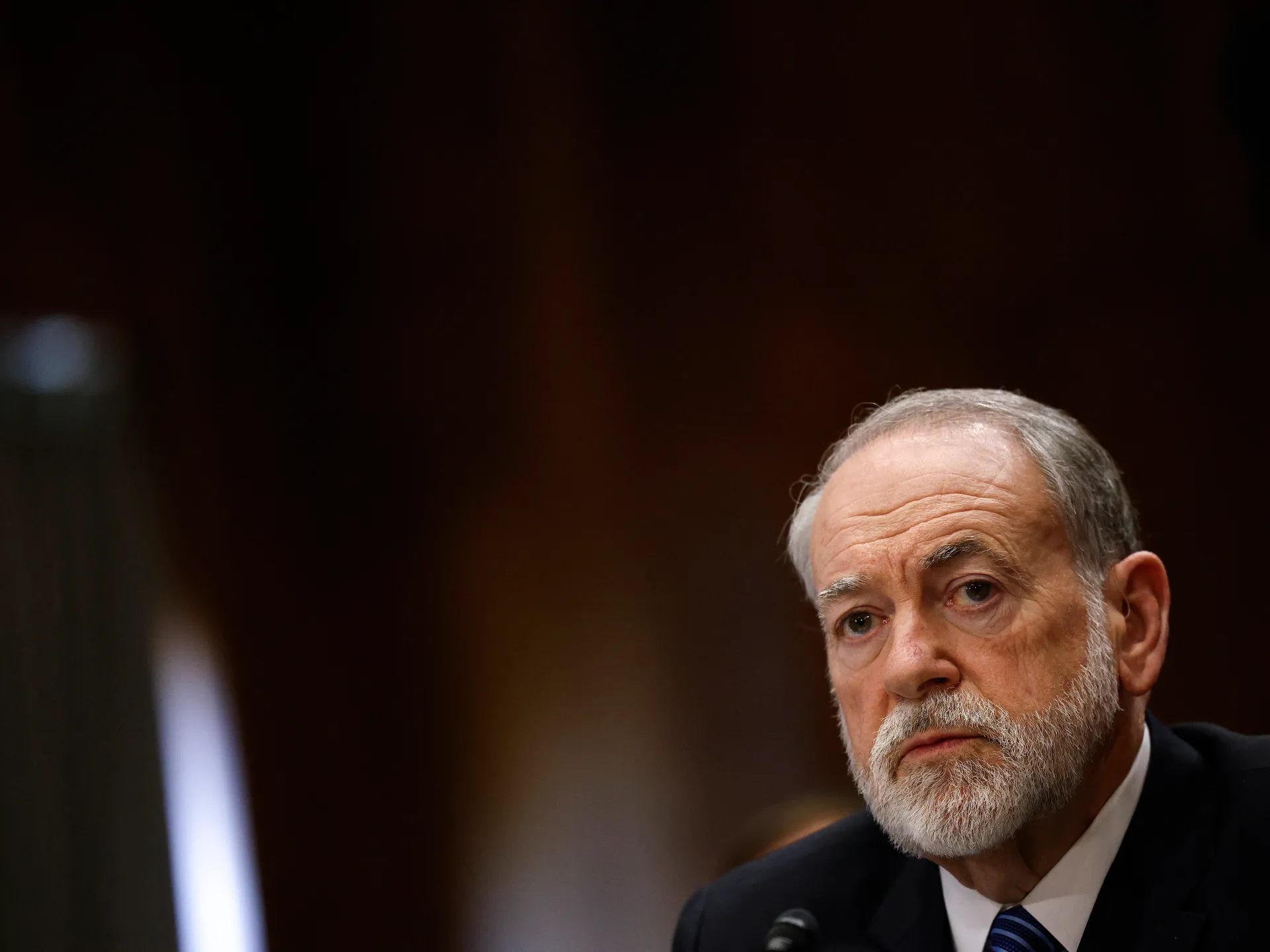
United States Ambassador to Israel Mike Huckabee has triggered an avalanche of criticism from Arab and Muslim countries after suggesting Israel has a right to expand its territory across a large swath of the Middle East.
Carlson asked Huckabee, a self-professed Christian Zionist and staunch supporter of Israel, to clarify his stance on the Biblical promise of the land spanning the area between the Euphrates River in Iraq and the Nile River in Egypt to the descendants of Abraham, and if the modern Israeli state had the right to claim that lineage.
“It would be fine if they took it all,” said Huckabee.
Such territory would encompass modern-day Lebanon, Syria, Jordan and parts of Saudi Arabia.
The US ambassador later appeared to walk back the claim, saying it was “somewhat of a hyperbolic statement”. He also said Israel was not looking to expand its territory and has a right to security in the land it currently holds.
‘Extremist rhetoric’
Huckabee’s comments sparked immediate backlash from neighbouring Egypt and Jordan, Saudi Arabia, the Organisation of Islamic Cooperation and the League of Arab States, which in separate statements called them “extremist”, “provocative” and “not in line with Washington’s official position”.
Saudi Arabia’s foreign ministry described Huckabee’s comments as “extremist rhetoric” and “unacceptable”, and called for the US Department of State to provide clarification.
Egypt’s Ministry of Foreign Affairs called the remarks a “blatant violation” of international law, adding that “Israel has no sovereignty over the occupied Palestinian territory or other Arab lands.”
Jordan’s foreign ministry dismissed them as “absurd and provocative,” a violation of diplomatic norms and “an infringement on the sovereignty of states in the region”.
“Statements of this nature — extremist and lacking any sound basis — serve only to inflame sentiments and stir religious and national emotions”, the League of Arab States also said in a statement.
Huckabee, whom US President Donald Trump nominated as ambassador in 2024, has long opposed the idea of a two-state solution for Israel and the Palestinian people, and denied the existence of an illegal Israeli occupation of the West Bank. Back in 2008, Huckabee went so far as to question Palestinian identity altogether, saying, “There’s really no such thing as a Palestinian.”
But Israeli law does not clearly demarcate the country’s borders. Israel also occupies the Golan Heights in Syria, which it illegally annexed in 1981.
The US is the only country that recognises Israel’s claimed sovereignty over the Syrian territory, and only since 2019, during Trump’s first term as president.
After its 2024 war with Hezbollah, Israel also set up military outposts in five points inside Lebanon.