Middle East

US, Egypt, Qatar, Turkiye urge restraint in Gaza as Israeli attacks continue | Israel-Palestine conflict News

The talks between the four countries lauded the first stage of the truce, including expanded humanitarian assistance, return of captives, force withdrawals and reduction in hostilities.

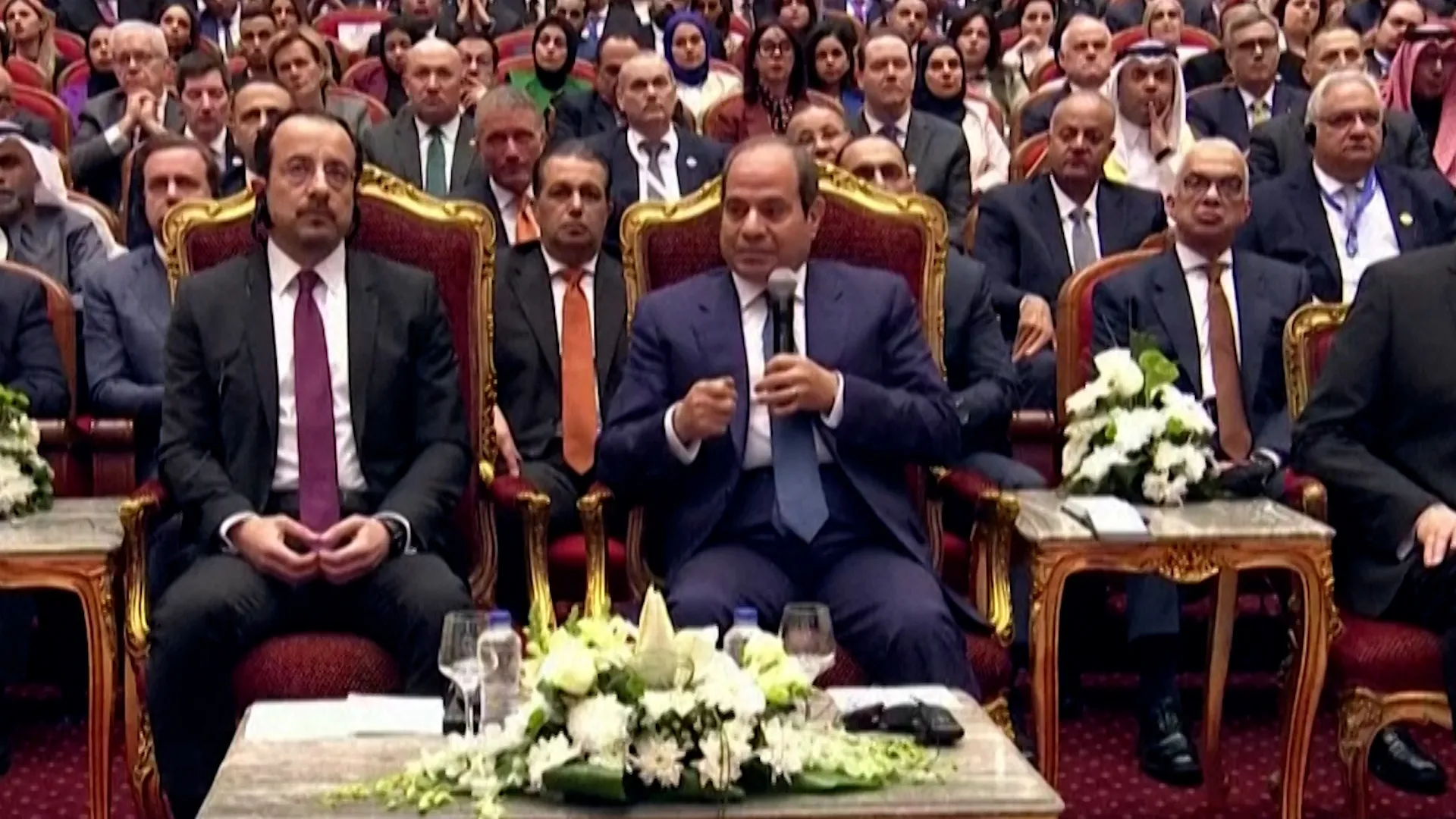
The United States, Egypt, Qatar and Turkiye have urged the parties to the Gaza ceasefire to honour their commitments and show restraint, the chief US envoy says after talks in the US city of Miami.

Senior officials from the four mediator countries met Steve Witkoff, US President Donald Trump’s special envoy, on Friday to review the first phase of the ceasefire between Israel and Hamas, which took effect on October 10, according to a joint statement released on Saturday.

Recommended Stories

list of 4 itemsend of list

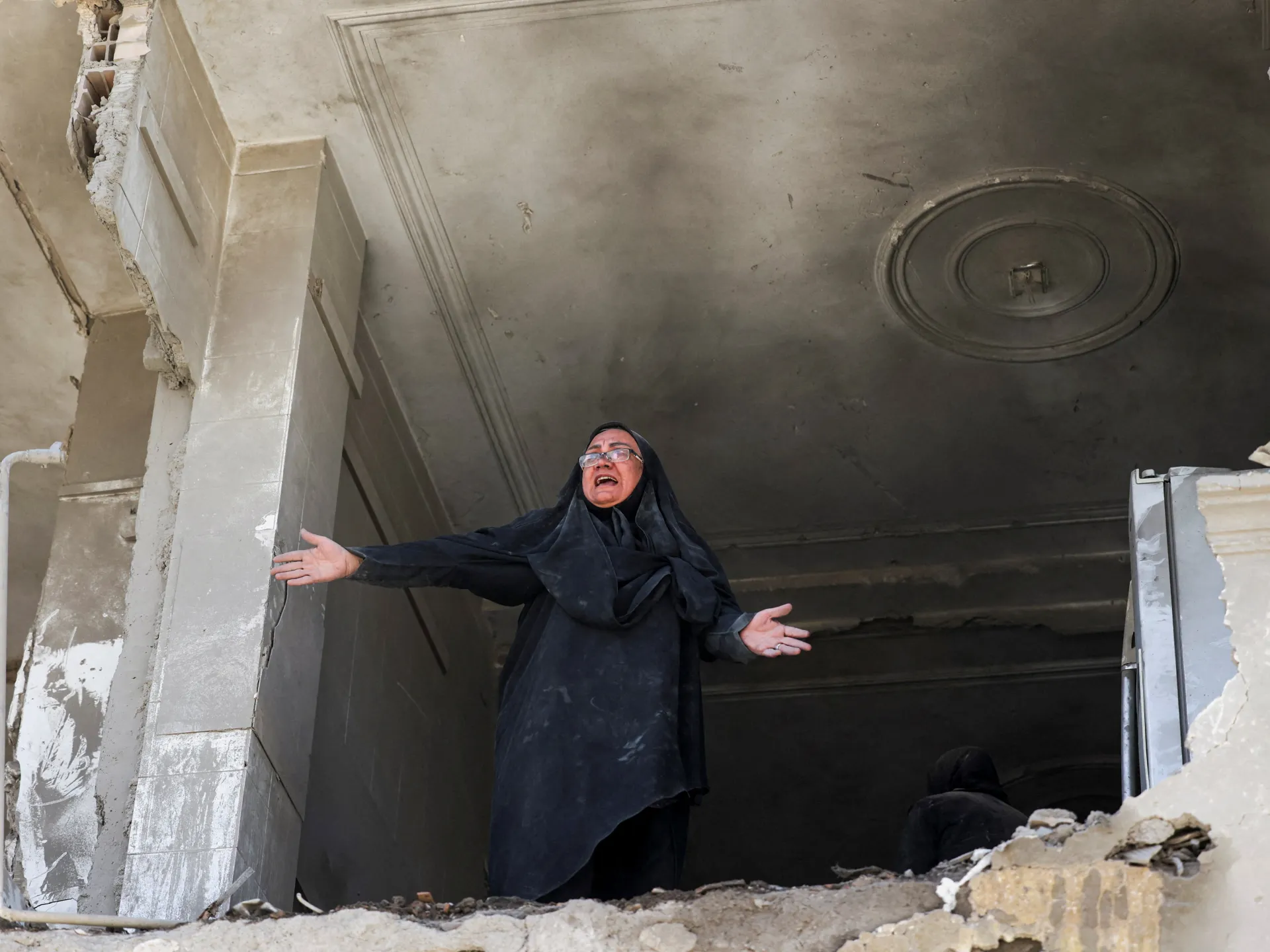
The meeting was held against the backdrop of ongoing Israeli attacks on the enclave. The Palestinian Civil Defence in Gaza said that six people were killed on Friday when an Israeli strike hit a school housing displaced people, raising the number of Palestinians killed by Israeli fire since the deal took effect to about 400.

“We reaffirm our full commitment to the entirety of the President’s [Trump’s] 20-point peace plan and call on all parties to uphold their obligations, exercise restraint, and cooperate with monitoring arrangements,” Witkoff said in a statement posted on X.

First phase of truce

Saturday’s statement cited progress yielded in the first stage of the peace agreement, including expanded humanitarian assistance, the return of captives’ bodies, partial force withdrawals and a reduction in hostilities.

It called for “the near-term establishment and operationalisation” of a transitional administration, which is due to happen in the second phase of the agreement, and said that consultations would continue in the coming weeks over its implementation.

Under the truce deal’s terms, Israel is supposed to withdraw from its positions in Gaza, an interim authority is to govern the Palestinian territory instead of Hamas, and an international stabilisation force is to be deployed.

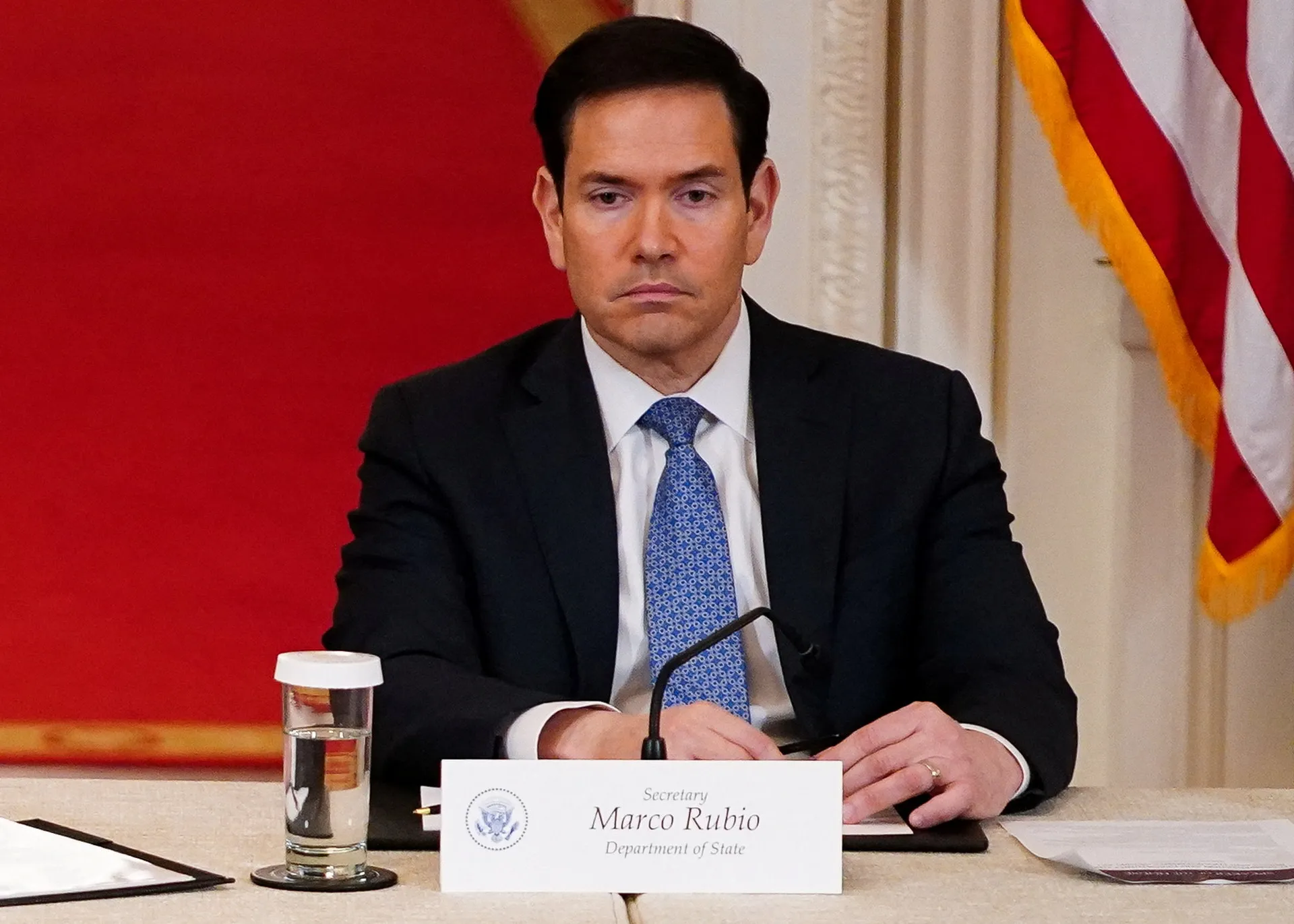
On Friday, US Secretary of State Marco Rubio expressed hope that countries would contribute troops for the stabilisation force, but also urged the disarmament of Hamas, warning the process would unravel unless that happened.

Hamas statement

A meeting was also held between Hamas’s chief negotiator, Khalil al-Hayya, and Turkish intelligence chief Ibrahim Kalin in Istanbul on Saturday.

In a statement from Hamas after the meeting, the group said it was committed to abiding by the ceasefire agreement, despite Israeli violations.

“The delegation stressed the urgent need to halt these continuous violations,” the statement added.

“The delegation also reviewed the deteriorating humanitarian situation in the Gaza Strip with the onset of winter, emphasising the critical priority of urgently bringing in tents, caravans, and heavy equipment to save our people from death by cold and drowning, given the destruction of infrastructure and homes.”

Winter storms have been worsening the conditions for hundreds of thousands of displaced Palestinians in Gaza, as aid agencies warn that Israeli restrictions are preventing lifesaving assistance from reaching people across the besieged enclave.

Bodies recovered, Israeli strikes continue

On Saturday, an Israeli air strike targeted two people in northern Gaza, according to a statement from the military, which alleged that they “posed an immediate threat” to Israeli troops after crossing the so-called yellow line, which separates areas under Israeli army control from those where Palestinians are permitted to move.

No details were yet available on whether the two people were killed or injured.

Gaza’s Civil Defence on Saturday also said it recovered the bodies of 94 Palestinians from the rubble in the enclave.

The bodies were retrieved in central Gaza City and transferred to the forensic department at Al-Shifa Medical Complex to arrange their burial in the Martyrs’ Cemetery in the central city of Deir el-Balah, according to a statement from the Civil Defence.

Thousands of Palestinians are believed to still be buried under the rubble of destroyed buildings in Gaza.

The Israeli army has killed more than 70,700 people in Gaza, mostly women and children, and injured more than 171,000 others since it began its genocidal war on the enclave in October 2023.

Source link

Lebanon claims first phase of Hezbollah’s disarmament close to complete | Israel attacks Lebanon News

The PM says the part of the plan on south of the Litani River is ‘only days away from completion’.

Lebanon is close to completing the disarmament of Hezbollah in the south of the Litani River before a year-end deadline as part of a ceasefire deal with Israel, according to Prime Minister Nawaf Salam.

Saturday’s statement comes as the country races to fulfil the key demand in the US-backed deal agreed in November last year and ended more than a year of fighting between Israel and Hezbollah.

Recommended Stories

list of 3 itemsend of list

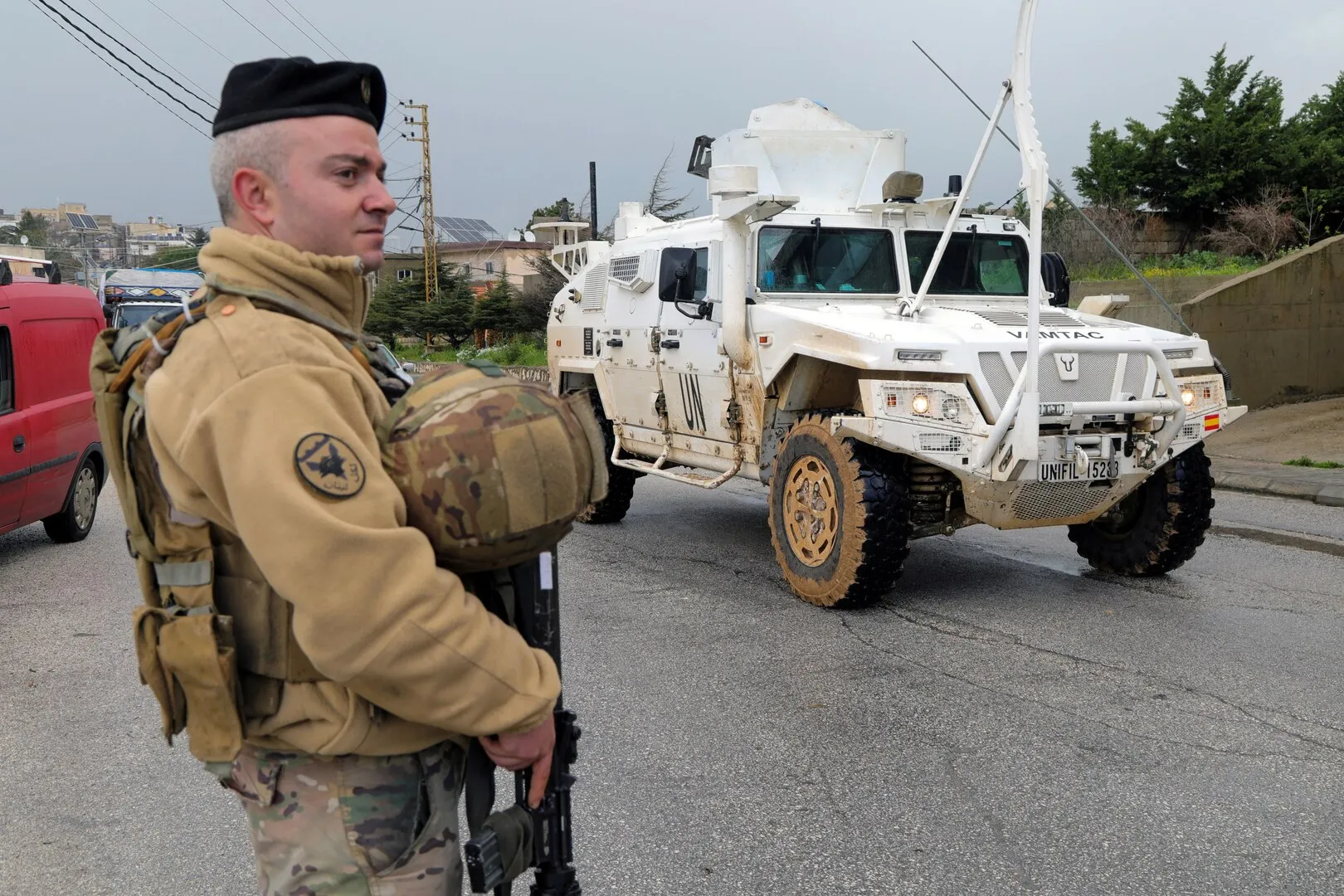
The agreement requires the disarmament of the Iran-aligned Lebanese armed group, starting in areas south of the river adjacent to Israel.

Lebanese authorities, led by President Joseph Aoun and Salam, tasked the US-backed Lebanese army on August 5 with devising a plan to establish a state monopoly on arms by the end of the year.

“Prime Minister Salam affirmed that the first phase of the weapons consolidation plan related to the area south of the Litani River is only days away from completion,” a statement from his office said.

“The state is ready to move on to the second phase – namely [confiscating weapons] north of the Litani River – based on the plan prepared by the Lebanese army pursuant to a mandate from the government,” Salam added.

Committee meeting

The statement came after Salam held talks with Simon Karam, Lebanon’s top civilian negotiator on a committee overseeing the Hezbollah-Israel truce.

In a meeting on Friday, the committee focused on how to return displaced people to their homes, addressing civilian issues to help prevent renewed war if the year-end deadline to disarm Hezbollah is not met.

The 15th meeting of the committee reflected a longstanding US push to broaden talks between the sides beyond monitoring the 2024 ceasefire.

At Friday’s meeting in the southern Lebanese coastal town of Naqoura, civilian participants discussed steps to support safe returns of residents uprooted by the 2023-24 war and advance economic reconstruction, the US Embassy in Beirut said.

Since the ceasefire, Israeli warplanes have repeatedly targeted parts of Lebanon, mostly southern Lebanon, but sometimes even the capital.

Israel says it is questioning the Lebanese army’s efforts to disarm Hezbollah.

Hezbollah, a Shia Muslim armed group, has tried to resist the pressure – from its mainly Christian and Sunni Muslim opponents in Lebanon as well as from the US and Saudi Arabia – to disarm, saying it would be a mistake while Israel continues its air strikes on the country.

Israel has publicly urged Lebanese authorities to fulfil the conditions of the truce, saying it will act “as necessary” if Lebanon fails to take steps against Hezbollah.

Source link

AFCON moves to 4-year cycle as new Africa Nations League created | Football News

On the eve of the 2025 AFCON, football’s governing body in Africa create new four-year cycle and form a Nations League.

African football is getting a major shake-up with the creation of the African Nations League and conversion of the biennial Africa Cup of Nations to a four-year cycle.

Patrice Motsepe, the president of the Confederation of African Football, announced the changes Saturday during his news conference before the 2025 Africa Cup hosted by Morocco.

Recommended Stories

list of 4 itemsend of list

Motsepe said that the 2027 Africa Cup, to be hosted by Uganda, Kenya and Tanzania, will go ahead as planned and that the following edition – originally scheduled for 2029 – will be moved forward to take place in 2028. The next Africa Cup after that will be in 2032.

This would allow the first African Nations League to take place in 2029. Motsepe said it would involve each of the continent’s 54 members, divided into four geographical zones, with games in September and October before the finals are held in November.

“What is new is that … in Africa there’s going to be a competition every year where the best African players who play in Europe and worldwide will be with us on the continent,” Motsepe said.

CAF officials did not immediately specify if the African Nations League will be held on a biennial or annual basis.

Source link

Israel launches new raids in Syria’s Quneitra, establishes checkpoints | Conflict News

Syrian state television denounces the Israeli incursion as another violation of the nation’s sovereignty.

Israeli forces have advanced into the Quneitra area of Syria’s occupied Golan Heights and set up two military checkpoints, an Al Jazeera correspondent on the ground reports.

The Israeli military operation on Saturday took place in the villages of Ain Ziwan and al-Ajraf in the southern part of the country.

Recommended Stories

list of 4 itemsend of list

For months, Israeli forces have conducted near-daily incursions into southern Syria, particularly in the Quneitra governorate, carrying out arrests, erecting checkpoints, and bulldozing land, all of which have prompted growing public anger and unrest.

Syrian state television said the Israeli incursion was a violation of Syrian sovereignty, noting that the army used five military vehicles to set up the checkpoint in Ain Ziwan.

The latest raid comes one day after Israeli forces advanced towards the towns of al-Asha, Bir Ajam, Bariqa, Umm al-Azam and Ruwayhina in the southern Quneitra countryside, according to the Syrian News Agency (SANA).

Dozens of Syrians on Friday protested the Israeli incursion in the city of al-Salam in the Quneitra Governorate, condemning the ongoing Israeli attacks against citizens and their properties.

The demonstrators, part of a group called “Syrians with Palestine”, held banners denouncing what they stated were repeated Israeli violations of Syrian lands.

Despite a reduction in direct military threats, the Israeli army continues to carry out air raids that have caused civilian casualties and destroyed Syrian army sites and facilities.

Over the past year, Israel has launched more than 600 air, drone or artillery attacks across Syria, averaging nearly two attacks a day, according to a tally by the Armed Conflict Location and Event Data (ACLED).

Israeli military incursions have become more brazen, more frequent and more violent since Israel expanded its occupation of southern Syria following the ousting of President Bashar al-Assad in December 2024.

Disengagement accord

After al-Assad’s fall, Israel declared the 1974 Disengagement Agreement – brokered after the 1973 war, in which Syria failed to regain the occupied Golan Heights – void.

The agreement had established a UN-patrolled buffer zone, which Israel has since violated, advancing deeper into Syrian territory.

Citing al-Assad’s flight, Israel says the accord no longer applies, while carrying out air raids, ground incursions, reconnaissance flights; setting up checkpoints; and arresting or disappearing Syrians. Syria has not responded with attacks.

In September, Syrian President Ahmed al-Sharaa stated that Israel had conducted more than 1,000 air attacks and more than 400 ground incursions in Syria since al-Assad was overthrown, describing the actions as “very dangerous”.

Syrians believe that the continuation of these violations hinders efforts to restore stability in the region and undermines attempts to improve the economic situation in southern Syria.

Al Jazeera visited Quneitra in recent weeks and spoke to Syrians about Israeli incursions and abductions there, which have stoked fears.

Syria and Israel are currently in talks to reach an agreement that Damascus hopes will secure a halt to Israel’s air raids on its territory and the withdrawal of Israeli troops who have pushed into southern Syria.

In the background, the United States has been pushing diplomatic efforts to restore the 1974 deal.

Source link

Iran executes man accused of spying for Israel’s Mossad: State media | Israel-Iran conflict News

Aghil Keshavarz is the tenth person put to death for espionage since June conflict with Israel.

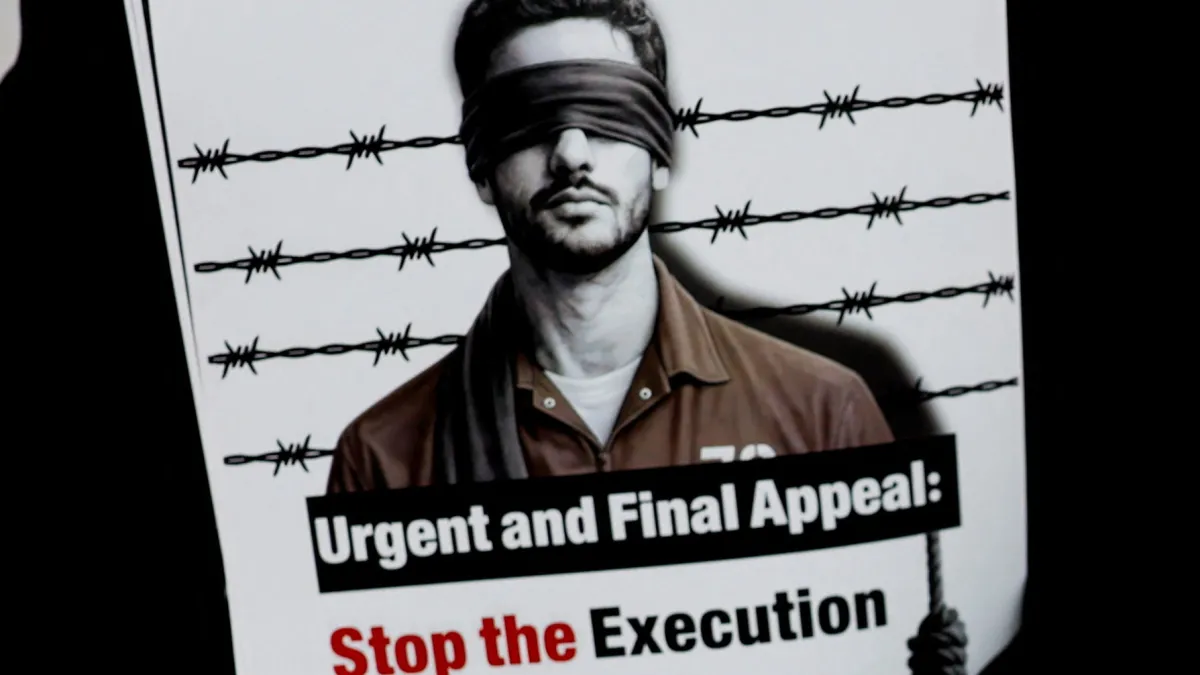
Iran has executed a man convicted of spying for Israel’s Mossad intelligence agency, judicial authorities announced, as Tehran continues a widening crackdown on alleged collaborators following the 12-day Israel-United States-Iran war earlier this year.

Aghil Keshavarz was put to death on Saturday morning after the Supreme Court upheld his conviction on espionage charges, according to Mizan, the judiciary’s official news agency.

Recommended Stories

list of 2 itemsend of list

The 27-year-old architecture student was arrested earlier this year in the northwestern city of Urmia after military patrols caught him photographing an army headquarters building.

The execution adds to a growing number of people put to death for espionage since the June conflict, with at least 10 executed by September alone.

In September, Iran executed a man it said was “one of the most important spies for Israel in Iran”.

In October, Tehran toughened legislation against alleged spies for Israel and the US, making espionage automatically punishable by death and asset confiscation.

According to the Mizan report, Keshavarz was accused of conducting more than 200 missions for Israeli intelligence services across Tehran, Isfahan, Urmia and Shahroud.

The missions allegedly included photographing target sites, conducting opinion polling, and monitoring traffic patterns at specific locations.

Authorities said he communicated with both Israel’s Mossad and military officials through encrypted messaging platforms, receiving payment in cryptocurrency after completing assignments.

The judiciary said Keshavarz had “knowingly cooperated” with Israeli services with the intention of harming Iran’s Islamic Republic.

The Oslo-based Iran Human Rights group has previously disputed similar espionage convictions, saying suspects are often tortured into false confessions.

Israel’s offensive in June involved 12 days of air attacks, including several against Iran’s top generals and nuclear scientists, as well as civilians in residential areas, for which Iran retaliated with barrages of missiles and drones. The US also carried out extensive strikes, on Israel’s behalf, on Iranian nuclear sites during the conflict. According to Amnesty International, Israeli attacks on Iran killed at least 1,100 people.

In response to the June war and protests in recent years over the state of the economy and women’s rights, as well as calls for regime change, Iran has sentenced more people to death.

Source link

MSF urges Israel to let critical aid into Gaza as children freeze to death | Israel-Palestine conflict News

Doctors Without Borders, known by its French initials MSF, has warned that babies and children in the Gaza Strip are dying from harsh winter weather, calling on Israel to ease its aid blockade as the military continues to violate the ceasefire and press on with its genocidal war.

Citing the death of a 29-day-old premature baby, Said Asad Abedin, from severe hypothermia in southern Gaza’s Khan Younis, MSF said on Friday that winter storms “combined with the already dire living conditions [are] increasing health risks”.

Recommended Stories

list of 4 itemsend of list

The death toll from extreme weather stood at 13 as of Thursday, according to Gaza’s Ministry of Health. Another two-week-old baby, Mohammed Khalil Abu al-Khair, froze to death without access to proper shelter or clothing earlier this week.

Ahmed al-Farra, head of the maternity paediatric department at Nasser Medical Complex, said in a video update that “hypothermia is very dangerous” for babies. “If nothing is offered for these families in the tents, for warming, for mobile homes, for caravans, unfortunately, we will see more and more” deaths, al-Farra said.

Children are “losing their lives because they lack the most basic items for survival,” Bilal Abu Saada, a nursing team supervisor at Nasser Hospital, told MSF. “Babies are arriving to the hospital cold, with near-death vital signs.”

In addition to the growing number of deaths, MSF said its staff has recorded high rates of respiratory infections that it expects to increase throughout the winter, posing a particular danger to children under five.

“As Gaza is battered by heavy rains and storms, hundreds of thousands of Palestinians continue to struggle in flooded and broken makeshift tents,” the organisation added. “MSF calls on Israeli authorities to urgently allow a massive scale up of aid into the Strip.”

No letup in Israeli attacks

Palestinian news agency Wafa, meanwhile, reported that Israeli forces demolished buildings, carried out artillery shelling and shot guns in areas east of Gaza City on Saturday morning, with more gunfire reported east of Khan Younis.

On Friday, an Israeli strike on a shelter for displaced Palestinians killed at least six people. The Israeli military claimed to be firing on “suspects”.

Graphic videos from the scene showed body parts and terrified civilians trying to carry wounded people out of danger.

Military vehicles also descended upon the town of az-Zawiya, located west of Salfit in the occupied West Bank, where forces severely beat and injured a number of citizens and stormed homes, the agency said.

‘I can still hear his tiny cries’

Heavy rain, high winds and freezing temperatures have battered Gaza in recent weeks, flooding or blowing away more than 53,000 tents that have served as makeshift shelters for displaced Palestinians.

With huge swaths of buildings and infrastructure destroyed, streets are quick to flood and sewage overflows. Displaced families have sought refuge in the shells of partially fallen-down buildings despite the risk of collapse, with 13 buildings caving in across Gaza last week.

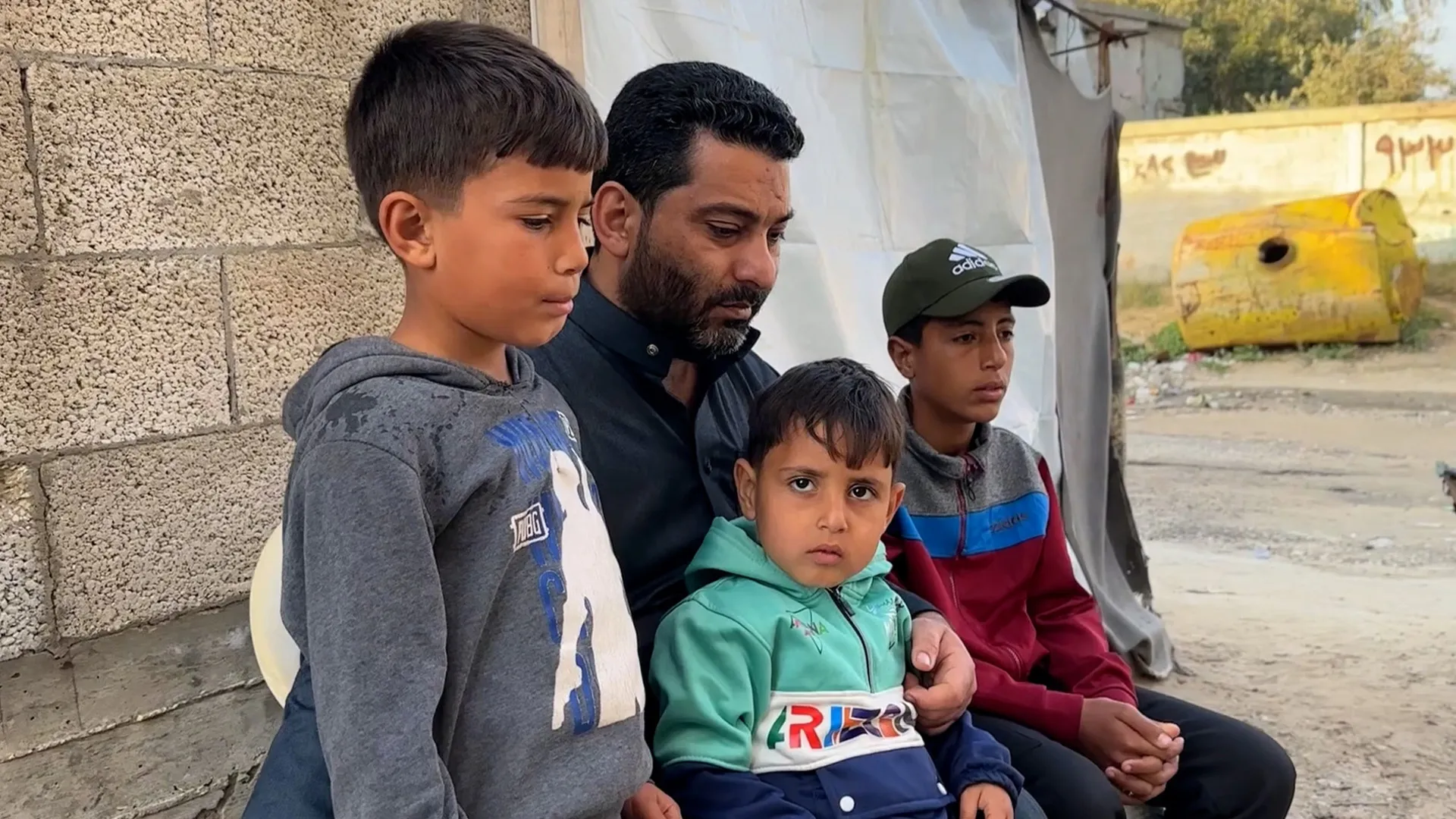
The winter weather and Israel’s blocking of vital aid and mobile homes for shelter have proven deadly for children and babies.

Late in the evening of December 13, Eman Abu al-Khair, a 34-year-old displaced Palestinian living in al-Mawasi west of Khan Younis, found her sleeping baby Mohammed “cold as ice”, his hands and feet frozen and “his face stiff and yellowish”, she told Al Jazeera.

She and her husband couldn’t find transportation to get to hospital, and intense rain made it impossible to make the trek by foot.

After rushing Mohammed by animal-drawn cart to Red Crescent Hospital in Khan Younis at dawn, he was admitted to intensive care with a blue face and convulsions. He died two days later.

“I can still hear his tiny cries in my ears,” Eman said. “I sleep and drift off, unable to believe that his crying and waking me at night will never happen again.”

Mohammed “had no medical problems,” she added. “His tiny body simply couldn’t withstand the extreme cold inside the tents.”

Since the October 10 ceasefire took effect, Israel has continued to block the entry of humanitarian aid into the Gaza Strip despite calls from a host of United Nations agencies, international organisations and other states for it to stop.

The UN has said that Israel has prevented tents and blankets from reaching Palestinians, even as an estimated 55,000 families have seen their belongings and shelters damaged or destroyed in the storm.

Dozens of child-friendly spaces have also been damaged, affecting 30,000 children, according to the UN.

Natasha Hall, a senior advocate for Refugees International, told Al Jazeera that aid is entering Gaza in a “trickle” in part due to its opaque list of “controlled dual-use items” that has included nappies, bandages, tools, tents and other essentials.

“It’s unclear how those could be used as weapons or any kind of dual use,” Hall said.

Source link

Trump’s name added to Kennedy Center exterior, one day after vote to rename | Donald Trump News

Relatives of the late President John F Kennedy slammed the centre’s board, saying the name cannot be changed under law.

Donald Trump’s name has been added to the Kennedy Center in Washington, DC, just one day after his hand-picked board members controversially voted to rename the arts venue, the first time a national institution has been named after a sitting US president.

Workmen added metal lettering to the building’s exterior on Friday that declared, “The Donald J Trump and the John F Kennedy Memorial Center for the Performing Arts.”

Recommended Stories

list of 4 itemsend of list

“Today, we proudly unveil the updated exterior designation – honoring the leadership of President Donald J Trump and the enduring legacy of John F Kennedy,” the centre said on social media.

Family members of former President Kennedy, who was killed by an assassin’s bullet in 1963, as well as historians and Democratic lawmakers, have criticised the move, saying only an act of Congress could alter the name of the centre, which was designated as a living memorial to Kennedy a year after his assassination.

“The Kennedy Center was named by law. To change the name would require a revision of that 1964 law,” Ray Smock, a former House of Representatives historian, told the Associated Press (AP) news agency. “The Kennedy Center board is not a lawmaking entity. Congress makes laws,” Smock said.

A smile lights the face of President John F. Kennedy as he is cheered during his speech to a big Democratic Party rally in Milwaukee, May 12, 1962, a $100 a plate Jefferson-Jackson Day dinner. The president told the crowd that “we cannot permit this country to stand still”. (AP Photo)
A smile lights the face of President John F Kennedy as he is cheered during a speech to a Democratic Party rally in Milwaukee, US, in 1962 [File: AP Photo]

The AP reports that the law naming the centre explicitly prohibits the board of trustees from making the centre into a memorial to anyone else, and from putting another person’s name on the building’s exterior.

Kerry Kennedy, a niece of former President Kennedy, said in a post on social media that she will remove Trump’s name herself when his term as president ends.

“Three years and one month from today, I’m going to grab a pickax and pull those letters off that building, but I’m going to need help holding the ladder. Are you in?” she wrote on X.


Naming a national institution after a sitting president is unprecedented in US history. Landmarks such as the Washington Monument, Lincoln Memorial and indeed, the Kennedy Center were all named after the deaths of the renowned US leaders.

Kennedy’s grandnephew, former Congressman Joe Kennedy III, also said the Kennedy Center, like the Lincoln Memorial, was a “living memorial to a fallen president” and cannot be renamed, “no matter what anyone says”.

Trump claimed on Thursday that he was “surprised” by the renaming of the Kennedy Center, even though he personally purged the centre’s previous board after calling it “too woke”.

He has also previously spoken about having his name added to the centre and appointed himself chairman of the centre’s board earlier this year.

Trump has sought to rein in the Kennedy Center since the start of his second term as part of an assault on cultural institutions that his administration has accused of being too left-wing.

Source link

Al-Majd Europe: The secret shell company smuggling Palestinians out of Gaza | Israel-Palestine conflict News

A shell company with Israeli ties exploited Palestinians desperate to flee the ongoing war in Gaza, charging them large sums of money to covertly exit the country in what may be an official plan to ethnically cleanse the territory.

In an exclusive digital investigation, Al Jazeera probed last month’s mystery flight that spirited 153 passengers from Gaza to South Africa, unearthing figures working for Al-Majd Europe, an unregistered front organisation that falsely claimed to be working for humanitarian aims.

Recommended Stories

list of 3 itemsend of list

The Palestinians arrived at OR Tambo International Airport, which serves the cities of Johannesburg and Pretoria, on November 13. Refused entry by border police as they did not have departure stamps from Israel on their passports, they were stuck on the aircraft for 12 hours before being allowed to disembark.

South African President Cyril Ramaphosa admitted the passengers “out of compassion”, but said at the time that his government, which has long been a strong supporter of the Palestinian cause, would investigate as it seemed that they had been “flushed out” of the Gaza Strip.

Forced evacuations

Israeli officials have previously openly stated that they support what they have termed the “voluntary emigration” of Palestinians from Gaza, in what effectively would be their forced evacuation.

In March 2025, Israel’s security cabinet set up a controversial bureau to get Palestinians to leave Gaza voluntarily, which was headed by former deputy director of the Ministry of Defence, Yaakov Blitstein. Israeli Defence Minister Israel Katz said at the time that 40 percent of Gaza residents were “interested in emigrating”.

The previous month, Al-Majd Europe set up its online presence with a new website stating that it focused on relief efforts in Muslim countries, specifically “for Gazans wishing to exit Gaza”, with claims that it had organised mobile health clinics in the enclave and trips for Palestinian doctors abroad that Al Jazeera later discovered to be false.

A passenger from the November flight to South Africa, whose identity was kept hidden for his own protection, said he contacted the organisation after finding the link online, which promised not only a way out of Gaza, but safety and medical treatment for injuries. “Initially, it said it was free. Then they asked for $1,400 [per person]. Then the price went up to $2,500,” he said.

Testimonies gathered by Al Jazeera showed that payments requested varied from $1,000-2,000 per person, with strict criteria for signing up. Only families would be accepted on condition that they kept their departure secret, with details on flight departures only released a few hours before takeoff.

Passengers say they were told to arrive at the Karem Abu Salem crossing (called Kerem Shalom in Israel) in southern Gaza. When they arrived, their personal belongings were confiscated, and they were put on buses to Ramon Airport, near the Israeli city of Eilat, apparently by Israeli authorities.

Nigel Branken, a South African social worker who helped tho Palestinians on the plane, previously told Al Jazeera that there were “very clearly … marks of Israel involved in this operation to take people … to displace them”.

Evacuees told Al Jazeera they were not informed of their final destination until moments before boarding. They were then escorted onto a flight registered to a brand new airline called FLYYO without exit stamps in their travel documents.

Al Jazeera discovered that FLYYO has organised a number of similar flights, all taking off from Israeli airports, headed to Romania, Indonesia, South Africa, Kenya and other destinations.

False identity

Further scrutiny of Al-Majd Europe, which said it was a “humanitarian foundation established in 2010 in Germany”, with a head office located in Sheikh Jarrah, a neighbourhood in occupied East Jerusalem, later revealed its identity to be a sham.

Al Jazeera found no company registered by that name on any German or European database. The supposed address does not appear in official Jerusalem records, with the location on Google Maps corresponding to a hospital and a cafe.

While digging into the flights, Al Jazeera found two faces linked to the organisation – both Palestinians. The first was Muayad Hisham Saidam, which the organisation lists as its humanitarian projects manager in Gaza.

A search of Saidam’s name reveals that in May 2024, his wife created a public page to ask for donations to help her family leave Gaza. A year later, Saidam posted an image of himself boarding a plane chartered by Fly Lili, another Romanian airline, announcing that he was departing Gaza.

Using the angle of his shadow, time of the flight and the location of the plane on the Ramon Airport runway, Al Jazeera discovered Saidam was likely on a flight on May 27, 2025, which left Israel for Budapest, with 57 Palestinian passengers from Gaza.

It appears that Saidam’s identity is real, and that his family was likely evacuated to Indonesia. But his connection to Al-Majd Europe is unclear.

The second public face of the organisation belongs to a man named only as Adnan, though he appears to have no digital footprint.

On November 13, the day of the Johannesburg flight, a page containing a number of partner companies was deleted from Al-Majd’s website. Using open-source intelligence techniques, Al Jazeera recovered the page, which showed a number of well-known groups that Al-Majd claimed to have been working with, including the International Red Cross.

One name stood out: Talent Globus – a recruitment company established in Estonia in 2024, with a fund containing only $350. Its website lists four employees, including Director Tom Lind, a businessman with Israeli and Estonian citizenship.

Lind’s name has been linked to a number of other companies where he’s listed either as a founder or director – all without official registration or physical addresses.

Lind’s name appeared in reports by Israeli newspaper Haaretz as one of the coordinators of the flights of Palestinians leaving Ramon Airport.

In May 2025, Lind posted on his LinkedIn page that he had left Talent Globus, and was instead focused on “humanitarian efforts to support Palestinians”. He said that, alongside a network of individuals and groups, he had assisted with the evacuation of a “substantial number” of people from Gaza.

Photos of the other three employees of Talent Globus from its website – James Thompson, Maria Rodriguez, David Chen – all turned out to be stock images.

And much like those employees, it appears as though Al-Majd itself is a fake humanitarian group, leading to the question of what those behind the organisation are trying to hide.

Publicly, Israel has seemed to back down from its plan to encourage “voluntary emigration”. But Al Jazeera’s investigation poses more questions – is Al-Majd part of a bigger plan, a way to quietly empty Gaza of its inhabitants, one secret flight at a time?

Source link

UN chief Guterres condemns Houthi detention of 10 more UN staff in Yemen | Houthis News

A spokesperson for Antonio Guterres calls for UN staffers’ immediate release, as 69 now detained in the country.

United Nations Secretary-General Antonio Guterres has condemned the detention of 10 more UN staff members by the Houthis in Yemen.

Stephane Dujarric, a spokesperson for Guterres, confirmed on Friday that the previous day’s arrests had brought the total of detained local staffers to 69, calling for their immediate release.

Recommended Stories

list of 3 itemsend of list

“These detentions render the delivery of UN humanitarian assistance in Houthi-controlled areas untenable. This directly affects millions of people in need and limits their access to life-saving assistance,” Dujarric said.

The Houthis, who control most of northwestern Yemen, including the capital Sanaa, have stepped up their arrests of UN staff since the start of Israel’s genocidal war on Gaza in October 2023, accusing them of spying for the United States and Israel.

The UN has repeatedly rejected Houthi accusations that its staff or operations in Yemen are involved in spying, a charge that carries the death penalty in the country.

On Thursday, the organisation confirmed that the detainees were all Yemeni nationals.

The latest arrests came days after Guterres discussed detained UN, diplomatic and NGO staff with Sultan Haitham bin Tariq of Oman, which has served as a mediator in the conflict in Yemen.

Guterres also commented this week on the Houthis’ recent referral of three detained UN staffers to a criminal court, saying they had been charged in relation to “their performance of United Nations official duties” and calling for charges to be dropped.

Shift in balance of power

A decade of civil war has plunged Yemen into one of the world’s worst humanitarian crises, according to the UN.

Guterres said this week that 19.5 million people in the country – nearly two-thirds of the population – need humanitarian assistance.

The conflict has recently entered a new phase, as separatists with the Southern Transitional Council (STC) extended their presence in southeastern Yemen – marking one of the largest shifts in power since the war began.

They now claim to control areas including the eastern governorates of oil-rich Hadramout and al-Mahra and the port city of Aden.

The STC, which wants to establish an independent state in the south of Yemen, has fought in the past alongside the internationally recognised, Saudi-backed government, which is based in Aden, against the Houthis.

However, the STC’s advance in the south brings it into direct confrontation with the government in Aden, known as the Presidential Leadership Council (PLC), which condemned the seizure of territory as “unilateral and a blatant violation”.

The STC’s leader, Aidarous al-Zubaidi, has a seat on the PLC, officially as one of its vice chairmen.

But relations have often been shaky between the group and the internationally recognised government, which came under major pressure in areas under its control over power outages and a currency crisis this year.

The two entities have previously fought, most notably in 2018 and 2019, in Aden and its surrounding governorates.

This week, Guterres urged all parties to exercise “maximum restraint, de-escalate tensions, and resolve differences through dialogue”.

Source link

Gaza’s tech workers code from rubble as Israel’s war destroys digital life | Israel-Palestine conflict News

In a territory where 81 percent of buildings lie damaged or destroyed, a small community of young Palestinians is fighting to preserve what remains of Gaza’s digital world.

Coders, repair technicians and freelance workers are labouring under impossible conditions to keep the besieged enclave connected to the outside world.

Recommended Stories

list of 3 itemsend of list

Against all odds, Gaza’s youths continue to adapt. They work offline, code in notebooks, store solar power whenever the sun is out, and wait for rare moments of connectivity to send their work to clients around the world.

In a war that has taken nearly everything, digital skills have become a form of survival – and resilience.

Many now also rely on online work to make a living. But even that fragile lifeline is now hanging by a thread after more than two years of Israel’s genocidal war.

Gaza coders
Palestinians work on laptops and mobile devices in Gaza despite widespread destruction of telecommunications infrastructure [Al Jazeera]

According to the Palestinian Central Bureau of Statistics, Israeli forces have “deliberately and systematically destroyed” the telecommunications infrastructure.

“We just always look for another way to get connected, always find another way,” said Shaima Abu Al Atta, a coder working from a displacement camp. “This is what actually gave us purpose because if we didn’t do this, we would just die surviving and not doing anything. We would die internally.”

Before the war erupted in October 2023, Gaza had a modest but vibrant tech scene. Innovation hubs hosted coding bootcamps, and hundreds of freelancers worked remotely for international clients. Much of that ecosystem now lies in ruins.

Shareef Naim, an engineer who led a technology hub, described what was lost. His building housed more than 12 programmers with contracts for companies outside Gaza, he said. “The team was very active,” Naim told Al Jazeera.

Today, the structure is destroyed, though some team members are still trying to work from tents and emergency shelters.

Gaza coders
Technicians in Gaza work to repair telecommunications equipment amid severe shortages of spare parts and electricity [Al Jazeera]

Computer technician A’aed Shamaly says, “The main challenge is electricity. Today, electricity is not available all the time, and if it is available, it is unstable,  and there will be a lot of cuts. Prices are also high.”

Electricity, when available at all, is unstable and prohibitively expensive, $12 per kilowatt compared with $1.50 for 10 kilowatts before the war, he said. “There are no spare parts,” he added, so technicians must scavenge components from broken equipment pulled from bombed buildings.

The scale of destruction is staggering. According to the United Nations Satellite Centre (UNOSAT), approximately 198,273 structures across Gaza have been damaged, with 123,464 completely destroyed. The telecommunications sector has been particularly hard hit.

Data from the Palestinian Central Bureau of Statistics reveals that 64 percent of mobile phone towers were out of service as of early April 2025. In Rafah, coverage has collapsed to just 27 percent, down from near-universal access before the war.

During the war, connectivity watchdog NetBlocks documented repeated disruptions, including what it called a “near-total telecoms blackout” in January 2024 that lasted for days.

Israel has long restricted Gaza to outdated 2G mobile technology while allowing 4G in the occupied West Bank.

The telecommunications sector’s value has cratered from $13m in 2023 to just $1.5m in 2024, an 89 percent collapse. Estimated losses exceed half a billion dollars, while reconstruction is projected to cost at least $90m.

Gaza coders
Palestinians struggle to maintain internet connectivity in Gaza, where most telecommunications infrastructure has been destroyed [Al Jazeera]

The consequences ripple across Gaza’s economy and society.

Remote work was a crucial income source in a territory where unemployment exceeded 79 percent even before October 2023. Now, erratic internet access has pushed many freelancers into joblessness just as Israeli-induced famine has sent food prices soaring.

The telecommunications collapse has also paralysed the banking system, preventing money transfers and leaving families unable to access cash. Healthcare has been disrupted, with the World Health Organization documenting deaths caused by the inability to contact emergency services in time.

Even during the fragile ceasefire that took effect in October 2025, Israel has blocked essential repair equipment from entering Gaza. The restrictions form part of what analysts describe as a deliberate strategy to maintain control over Palestinian digital infrastructure and suppress the flow of information to the outside world.

The future remains deeply uncertain, as efforts to push a fragile ceasefire forward appear to stall and Israel threatens the possibility of returning to full-scale war.

Source link

US to host Qatari, Turkish and Egyptian officials for Gaza ceasefire talks | Israel-Palestine conflict News

The United States Middle East envoy, Steve Witkoff, will hold talks in Miami, Florida, with senior officials from Qatar, Egypt and Turkiye as efforts continue to advance the next phase of the Gaza ceasefire, even as Israel repeatedly violates the truce on the ground.

A White House official told Al Jazeera Arabic on Friday that Witkoff is set to meet representatives from the three countries to discuss the future of the agreement aimed at halting Israel’s genocidal war on Gaza.

Recommended Stories

list of 3 itemsend of list

Axios separately reported that the meeting, scheduled for later on Friday, will include Qatari Prime Minister and Foreign Minister Sheikh Mohammed bin Abdulrahman bin Jassim Al Thani, Turkish Foreign Minister Hakan Fidan and Egyptian Foreign Minister Badr Abdelatty.

At the same time, Israel’s public broadcaster, quoting an Israeli official, said Prime Minister Benjamin Netanyahu is holding a restricted security consultation to examine the second phase of the ceasefire and potential scenarios.

That official warned that Israel could launch a new military campaign to disarm Hamas if US President Donald Trump were to disengage from the Gaza process, while acknowledging that such a move was unlikely because Trump wants to preserve calm in the enclave.

Despite Washington’s insistence that the ceasefire remains intact, Israeli attacks have continued almost uninterrupted, as it continues to renege on the terms of the first phase, as it blocks the free flow of desperately needed humanitarian aid into the besieged Palestinian territory.

According to an Al Jazeera analysis, Israeli forces carried out attacks on Gaza on 58 of the past 69 days of the truce, leaving only 11 days without reported deaths, injuries or violence.

In Washington, Trump said on Thursday that Netanyahu is likely to visit him in Florida during the Christmas holidays, as the US president presses for the launch of the agreement’s second phase.

“Yes, he will probably visit me in Florida. He wants to meet me. We haven’t formally arranged it yet, but he wants to meet me,” Trump told reporters.

Qatar and Egypt, who are mediating and guaranteeing the truce after a devastating two-year genocide in Gaza, have urged a transition to the second phase of the agreement. The plan includes a full Israeli military withdrawal and the deployment of an international stabilisation force (ISF).

Fragile truce, entrenched occupation

Qatar’s prime minister warned on Wednesday that daily Israeli breaches of the Gaza ceasefire are threatening the entire agreement, as he called for urgent progress towards the next phase of the deal to end Israel’s genocidal war on the besieged Palestinian enclave.

Sheikh Mohammed made the appeal following talks with United States Secretary of State Marco Rubio in Washington, where he stressed that “delays and ceasefire violations endanger the entire process and place mediators in a difficult position”.

The ceasefire remains deeply unstable, and Palestinians and rights groups say it is a ceasefire only in name, amid Israeli violations and a rapidly deteriorating humanitarian situation in Gaza.

Since the truce took effect on October 10, 2025, Israel has repeatedly breached the agreement, killing hundreds of Palestinians.

Gaza’s Government Media Office says Israel committed at least 738 violations between October 10 and December 12, including air strikes, artillery fire and direct shootings.

Israeli forces shot at civilians 205 times, carried out 37 incursions beyond the so-called “yellow line”, bombed or shelled Gaza 358 times, demolished property on 138 occasions and detained 43 Palestinians, the office said.

Israel has also continued to block critical humanitarian aid while systematically destroying homes and infrastructure.

Against this backdrop, Israel Hayom quoted an Israeli security official as saying the so-called “yellow line” now marks Israel’s new border inside Gaza, adding that Israeli forces will not withdraw unless Hamas is disarmed. The official said the army is preparing to remain there indefinitely.

The newspaper also reported that Israeli military leaders are proposing continued control over half of Gaza, underscoring Israel’s apparent intent to entrench its occupation rather than implement a genuine ceasefire.

Compounding the misery in Gaza, a huge storm that recently hit the Strip has killed at least 13 people as torrential rains and fierce winds flooded tents and caused damaged buildings to collapse.

Israel’s two-year war has decimated more than 80 percent of the structures across Gaza, forcing hundreds of thousands of families to take refuge in flimsy tents or overcrowded makeshift shelters.

Source link

Disney+ to be part of a streaming bundle in Middle East

Walt Disney Co. is expanding its presence in the Middle East, inking a deal with Saudi media conglomerate MBC Group and UAE firm Anghami to form a streaming bundle.

The bundle will allow customers in Bahrain, Kuwait, Oman, Qatar, Saudi Arabia and the UAE to access a trio of streaming services — Disney+; MBC Group’s Shahid, which carries Arabic originals, live sports and events; and Anghami’s OSN+, which carries Arabic productions as well as Hollywood content.

The trio bundle costs AED89.99 per month, which is the price of two of the streaming services.

“This deal reflects a shared ambition between Disney+, Shahid and the MBC Group to shape the future of entertainment in the Middle East, a region that is seeing dynamic growth in the sector,” Karl Holmes, senior vice president and general manager of Disney+ EMEA, said in a statement.

Disney has already indicated it plans to grow in the Middle East.

Earlier this year, the company announced it would be building a new theme park in Abu Dhabi in partnership with local firm Miral, which would provide the capital, construction resources and operational oversight. Under the terms of the agreement, Disney would oversee the parks’ design, license its intellectual property and provide “operational expertise,” as well as collect a royalty.

Disney executives said at the time that the decision to build in the Middle East was a way to reach new audiences who were too far from the company’s current hubs in the U.S., Europe and Asia.

Source link

Tannane goal from own half sets Morocco on way to FIFA Arab Cup 2025 title | Football News

Morocco beat Jordan 3-2 as a strike from inside his own half by Oussama Tannane set the tone for a spectacular final.

Oussama Tannane’s wonder goal from inside his own half set Morocco on their way to their second FIFA Arab Cup title with a 3-2 win after extra time in the final against Jordan at the Qatar-hosted event.

A full house at Lusail Stadium in Doha on Thursday was quickly on their feet in the fourth minute when Qatar-based footballer Tannane drilled an effort from well over the halfway line – estimated at 59 metres – to catch out goalkeeper Yazeed Abulaila.

Recommended Stories

list of 4 itemsend of list

The Jordan keeper desperately scrambled back to his line in an attempt to stop the shot and collided with the post, resulting in a lengthy four-minute stoppage before he was cleared to continue and play resumed.

It was only the start of a turbulent final that saw Jordan come back to claim the lead, for the match to be sent to extra time, with Jordanian hearts broken seconds away from their first FIFA Arab Cup title in normal time.

Morocco's Oussama Tannane scores their first goal past Jordan's Yazeed Abu Laila
Oussama Tannane scores Morocco’s first goal past Jordan’s Yazeed Abulaila [Thaier Al-Sudani/Reuters]

Jordan, who were defeated finalists at the 2025 AFC Asian Cup, pulled level on the night three minutes into the second period when Ali Oliwan pulled away from his marker to head home from close range after a well-worked corner.

Jordan then took the lead for the first time after Mahmoud Almardi’s shot hit the raised hand of Achraf El Mahdioui inside the box, allowing Oliwan to convert from the penalty spot for his second in the 68th minute.

The drama was far from over, however, as second-half substitute Abderrazak Hamdallah levelled in the 88th minute – tapping in on the goal line after a scramble from a corner.

It was Oliwan, though, who had the chance of glory with virtually the final kick of normal time when – put clean through on goal – he was unable to beat the keeper to seal the final for Jordan with what would also have been his hat-trick.

Morocco's Marwane Saadane shoots at goal
Morocco’s Marwane Saadane shoots at goal, which resulted in his side’s win [Thaier Al-Sudani/Reuters]

Where many may not have taken their seats for Tannane’s opener, the same may have been the case for the start of extra time as Mohannad Abutaha volleyed a spectacular left-footed effort into the top right corner from the left edge of the box.

Like Tannane’s, it was a strike worthy of winning any final, but VAR ruled out the goal for a controversial handball as the Jordanian controlled the ball before unleashing the effort.

Worse was to follow when Hamdallah tapped in his second time – and the winning goal – after Marwane Saadane’s bicycle kick from a set piece fell kindly into his path from close range.

Morocco previously lifted the Arab Cup in 2012, defeating Libya in the final staged in Saudi Arabia. The Atlas Lions succeed Algeria, who defeated their North African neighbours Tunisia in the final four years ago.

Morocco's Abderazak Hamdallah celebrates
Abderrazak Hamdallah celebrates scoring third goal for Morocco, which sealed the FIFA Arab Cup 2025 final in Lusail, Qatar, December 18, 2025 [Mohammed Salem/Reuters]

Earlier, Morocco dominated the first period and Tannane, who plays his club football for Umm Salal in the Qatar league, had a glorious opportunity to double the lead on the stroke of half time when Abulaila spilled a cross into his path, but the forward failed to make a clean connection with his left-footed follow up and Issam Smeir slid to clear off the line.

The Jordanian stopper had to be on his feet throughout the first period and produced his best save in the 17th minute when Karim El Berkaoui, after exchanging a one-two with Tannane, drove across the face of goal from the edge of the box, but Abulaila was equal to it, low to his right, to push the effort wide.

Morocco, the first African nation to reach a World Cup semifinal when they achieved the feat at Qatar 2022, will now turn their attention to hosting the 2025 Africa Cup of Nations, where the squad will be further boosted by a number of their European-based stars who had to prioritise club over country during the Arab Cup.

The FIFA Arab Cup sold more than a million tickets for the 2025 event, doubling what was sold at the previous competition four years ago.

Morocco players and staff pose for a picture after winning the FIFA Arab Cup
Morocco players and staff pose for a picture after winning the FIFA Arab Cup [Thaier Al-Sudani/Reuters]

Source link

What’s next for the global economy in 2026? | Business and Economy

2025 was the year of tariffs and a global shift in economic power.

Two words that largely define the economy right now: Global reordering.

President Donald Trump’s Tariffs have landed as a shock to global trade. This is 2025.

Major economies are rewriting their playbooks, and alliances are being redrawn.

From Africa’s minerals boom to the global AI race, countries are scrambling for influence – even as debt piles up.

They are spending more, borrowing more and making tough choices from defence to climate policy and labour shortages.

And through it all, people are bearing high costs.

Source link

Winter storms worsen Gaza humanitarian crisis as UN says aid still blocked | Israel-Palestine conflict News

Winter storms are worsening conditions for hundreds of thousands of displaced Palestinians in Gaza, as aid agencies warn that Israeli restrictions are preventing lifesaving shelter assistance from reaching people across the besieged enclave.

The United Nations has said it has tents, blankets and other essential supplies ready to enter Gaza, but that Israeli authorities continue to block or restrict access through border crossings.

Recommended Stories

list of 4 itemsend of list

In Gaza City’s Shati refugee camp, the roof of a war-damaged family home collapsed during the storm, rescue workers said on Wednesday. Six Palestinians, including two children, were pulled alive from the rubble.

It comes after Gaza’s Ministry of Health said a two-week-old Palestinian infant froze to death, highlighting the risks faced by young and elderly people living in inadequate shelters.

A spokesperson for UN Secretary-General Antonio Guterres said the storms had damaged or destroyed shelters and personal belongings across the territory.

“The disruption has affected approximately 30,000 children across Gaza. Urgent repairs are needed to ensure these activities can resume without delay,” Farhan Haq said.

The Palestinian Civil Defence in Gaza added in a statement that “what we are experiencing now in the Gaza Strip is a true humanitarian catastrophe”.

Ceasefire talks and aid access

The worsening humanitarian situation comes as Qatar’s Prime Minister Sheikh Mohammed bin Abdulrahman bin Jassim Al Thani held talks in Washington, DC, with United States Secretary of State Marco Rubio on efforts to stabilise the tenuous ceasefire in Gaza.

According to Qatari officials, the talks focused on Qatar’s role as a mediator, the urgent need for aid to enter Gaza, and moving negotiations towards the second stage of a US-backed plan to end Israel’s genocidal war against the Palestinian people in Gaza.

Al Jazeera’s Alan Fisher, reporting from Washington, said Sheikh Mohammed stressed that humanitarian assistance must be allowed into Gaza “unconditionally”.

“He said aid has to be taken into Gaza unconditionally, clearly making reference to the fact that a number of aid agencies have said that Israel is blocking the access to aid for millions of people in Gaza,” Fisher said.

The Qatari prime minister also discussed the possibility of an international stabilisation force to be deployed in Gaza after the war, saying such a force should act impartially.

“There has been a lot of talk in the US over the past couple of weeks about how this force would work towards the disarmament of Hamas,” Fisher said.

Sheikh Mohammed also called for swift progress towards the second phase of the ceasefire agreement.

“He said that stage two of the ceasefire deal has to be moved to pretty quickly,” Fisher said, adding that US officials were hoping to announce early in the new year which countries would contribute troops to a stabilisation force.

Israeli attacks continue

Meanwhile, violence continued in Gaza despite the ceasefire, with at least 11 Palestinians wounded in Israeli attacks in central Gaza City, according to medical sources.

The Israeli army said it is investigating after a mortar shell fired near Gaza’s so-called yellow line “missed its target”.

Al Jazeera journalists in Gaza reported Israeli artillery shelling east of the southern city of Khan Younis. Medical sources said Israeli gunfire also wounded two people in the Tuffah neighbourhood of eastern Gaza City.

In the occupied West Bank, where Israeli military and settler attacks have escalated in recent days, Palestinian news agency Wafa reported that Israeli troops shot and wounded a man in his 20s in the foot in Qalqilya. He was taken to hospital and is reported to be in stable condition.

Since October 2023, at least 70,668 Palestinians have been killed and 171,152 wounded in Israeli attacks on Gaza, according to Palestinian health authorities. In Israel, 1,139 people were killed during the Hamas-led October 7 attack, and more than 200 others were taken captive.

Source link

PSG beat Flamengo on penalties to win FIFA Intercontinental Cup | Football News

European champions Paris Saint-Germain pushed all the way in Intercontinental Cup final in Qatar by South Americans.

Back-up goalkeeper Matvei Safonov saved four penalties as Paris Saint-Germain edged out Brazilians Flamengo 2-1 in a shootout to win the FIFA Intercontinental Cup final in Qatar.

PSG led through Khvicha Kvaratskhelia before Jorginho’s spot-kick levelled for Flamengo as the game finished 1-1 after extra time on Wednesday.

Recommended Stories

list of 4 itemsend of list

Copa Libertadores winners Flamengo defeated Mexicans Cruz Azul and African champions Pyramids last week to earn the right to face PSG and pushed the European champions all the way with a dogged display.

But Luis Enrique’s men, who received a bye to the final, were indebted to Safonov and followed in the footsteps of Real Madrid, who lifted the inaugural title last year.

PSG thought they had taken the lead in the ninth minute when Fabian Ruiz cleverly hooked the ball into an empty net after Flamengo goalkeeper Agustin Rossi miskicked a clearance while trying to prevent a corner.

But the goal was ruled out by VAR because Rossi had narrowly failed to stop the ball from going out of play.

But PSG did break the deadlock eight minutes before half-time courtesy of another Rossi error.

The Argentinian turned Desire Doue’s low cross, which looked to be too strong for Kvaratskhelia, straight into the Georgian’s pass for the simplest of tap-ins.

Flamengo managed to stay in the game, though, and were awarded a penalty on the hour mark for a foul by Marquinhos on Uruguay midfielder Giorgian de Arrascaeta after a VAR review.

Former Chelsea and Arsenal player Jorginho stepped up to send Safonov the wrong way in trademark fashion.

PSG pressed for a winner, sending on Bradley Barcola and Ousmane Dembele, who set up a last-gasp chance for Marquinhos.

But the centre-back could not react quickly enough to get his effort on target as the ball flashed across goal and the game headed into extra time.

Both teams saw half-chances come and go in the added half-hour, with Dembele flashing a shot narrowly off target in the 116th minute.

That set the stage for Safonov – playing in place of regular first-choice Lucas Chevalier, who is still regaining full fitness after an ankle injury – to steal the headlines and spare the blushes of Dembele and Barcola, who both missed for PSG.

Source link