miami

Deported to Central African Republic, a transgender woman who lived openly in Miami is hiding again

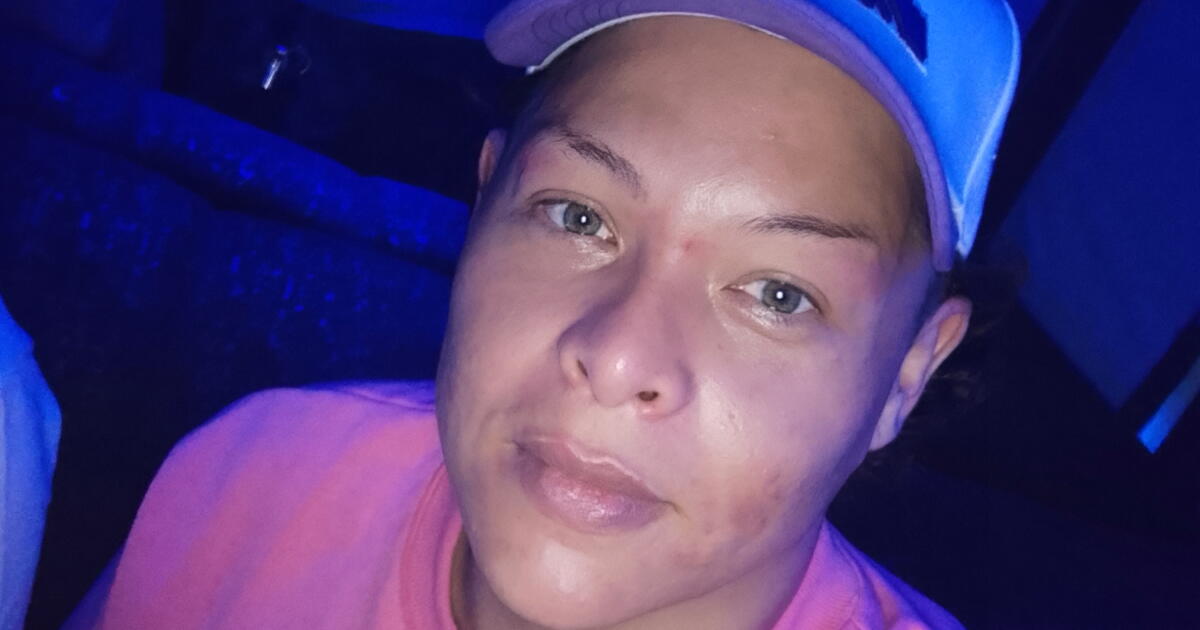
In Miami, Daniela Fuentes styled hair for clients and performed in drag at a nightclub called Azúcar. She wore her blond wig in public and dressed as the woman she had known herself to be since adolescence in Cuba.

Now, more than 6,000 miles away in the Central African Republic, she wears men’s clothes, lowers her voice and tries not to draw attention to the breasts she developed after beginning hormone treatment as a teenager. As part of U.S. efforts to deport people to countries other than their own, authorities sent her Aug. 29 to a place where she has no ties and where advocacy groups have reported arbitrary detention, torture, and other rights violations of sexual and gender minorities.

“Everything is difficult here because I have to hide who I am,” said Fuentes, a 32-year-old transgender woman living on a compound she rarely leaves, sharing a room with four Cuban men also deported from the U.S. “I don’t know this place, the people or the language, and I have no idea what will happen to me.”

The Central African Republic — one of the world’s poorest countries, a place with a history of conflict that the U.S. State Department advises American travelers to avoid — is one of at least 12 African nations that signed agreements to accept “third-country” deportations, a policy the U.S. Supreme Court last month allowed to continue, at least temporarily.

In the Central African Republic — where transgender people have little to no legal protections and are marginalized in much of society — Fuentes dons her wig only in the privacy of her bathroom. She described disguising herself as protection, first in U.S. detention and now in a country she first heard of when she was already headed there on a deportation flight.

“My whole life, my whole identity, was taken away from me,” Fuentes said.

Public records say a judge ordered Fuentes to leave the U.S. but offer no other information. Immigration and Customs Enforcement officials did not reply to emailed questions.

Tens of thousands of people have been deported to “third countries”

Fuentes’ compound in the capital, Bangui, is an apartment complex where the government houses male deportees.

Fuentes said she can leave but that officials have advised her and others to avoid it — they have no identification, which could lead to issues with the police. It also means they can’t work, she said, and she’s waiting on travel documents that would allow her to leave the country. The International Organization for Migration, an agency associated with the United Nations, has provided food, and the migrants say they’ve crowdsourced for donations to buy groceries.

The U.S. — via agreements often not made public — has deported about 25,000 people to more than two dozen countries that aren’t their own, the vast majority to Mexico, according to a tally by Third Country Deportation Watch, a partnership of Refugees International and Human Rights First. The U.S. has not released numbers or details.

From January 2025 to August 2026, more than 500 were sent to countries in Africa, according to a Human Rights Watch report published Thursday — including at least 12 people who identify as lesbian, gay, bisexual or transgender and were deported to places that criminalize same-sex relations or public same-sex romantic conduct. Some advocates say the number is likely higher.

“These are not bureaucratic errors or isolated incidents,” said Bridget Crawford, of the group Immigration Equality. “They are the predictable result of policies that purposefully abandon our legal and moral obligation to protect LGBTQ+ immigrants fleeing persecution.”

The U.S. government says the policy is lawful and that receiving governments provide assurances deportees won’t be persecuted or tortured.

Daniela Fuentes says ICE detained her with men before deportation

Fuentes grew up in La Lisa, on Havana’s outskirts, and said she understood from childhood that she was different. She began living as a woman in adolescence and started taking hormones at 18.

She ran a salon from her home, coloring and cutting hair. She said she was harassed because of her gender identity and attacked at least twice, leaving scars on her arm and head. Police also questioned her about operating a private business, she said — though housefront businesses are common in the area.

In 2023, Fuentes sold her home and left amid a deepening economic crisis and a crackdown on dissent — even as Cuba, one of Latin America’s most progressive countries for LGBTQ+ rights, adopted new inclusion laws. Making her way to the U.S., she said, she presented as a man traveling through Central America; she believed it was safer.

After seven months in Mexico, she said, she entered the U.S. through Texas via CBP One, a President Joe Biden-era online appointment system that allowed migrants to live in the country for two years on humanitarian grounds. Then she went to Miami.

There, she began living openly as a woman again. She found work styling hair and performed at Azúcar. Though she lacked permanent legal status, Fuentes said Miami offered something she’d rarely experienced: the freedom to move through daily life as herself.

That ended when officers encountered her outside a motel. Fuentes said they learned she had missed an immigration court hearing in Texas. She said she asked that the case be moved to Florida but received no response.

Fuentes said she was taken into custody and later placed in immigration detention with men. Officials confiscated her wig and gave her a male detainee’s uniform, she said.

Such treatment is in line with a January 2025 executive order directing officials to exclude transgender women from women’s prisons and detention centers.

“When I learned that they were going to put me with men, I almost fainted,” Fuentes said.

Deportees said they boarded a flight without knowing the destination

Fuentes was held at two detention facilities in Florida, then transferred to Texas. When armed officers arrived there, she said, she suspected she was facing deportation, but they didn’t reveal she was being sent to Africa until about five hours into the flight.

Other deportees on the flight told AP they also weren’t told the destination until they were on the plane. Dozens have been sent to the Central African Republic, including an Iranian woman facing persecution in her home country and an Afghan whose brothers worked with the U.S. military.

Fuentes said she does not understand why she was sent to Africa rather than Cuba. She told AP she has no lawyer.

The U.S. does repatriate Cuban citizens, as part of agreements to resume deportation flights in 2023, despite tensions in relations between the countries. Charter flights have arrived in Havana regularly.

Yasmany Moreno, another Cuban deportee in Bangui, said that upon arriving, the group had no visas or documents establishing their legal status in the country. Officials spoke of providing assistance for 90 days, he said, but the deportees didn’t know what would happen afterward or where they would live.

Several told AP their longer-term status remained unclear and that U.S. authorities had taken their identity documents.

A policy officer at the Central African Republic’s Foreign Ministry said the deportees are in “good hands” and are being monitored by the International Organization for Migration. He spoke on condition of anonymity because he was not authorized to discuss the matter publicly.

The U.S. this year committed to $85 million in funding to IOM for Central African Republic operations including “assistance to migrants” and “community stabilization.”

IOM says migrants can seek asylum in the country, request assistance to return home or get help traveling to another place they’re authorized to enter. It referred questions about the deportees’ status and individual cases such as Fuentes’ to Central African Republic officials. A government spokesperson didn’t reply to phone calls and text messages seeking comment.

Human Rights Watch’s report says some people deported to third countries face detention, abuse and the prospect of persecution. Eswatini has held deportees in a maximum-security prison without charges. Equatorial Guinea has held them against their will at a hotel owned by the president’s family.

“Several of these African governments are not only complicit in U.S. abuses but have violated the human rights of these deported people themselves,” Michael Garcia Bochenek, of Human Rights Watch, said in a statement.

Fuentes and other deportees say they can’t work, with most days spent at the compound

Fuentes said the Cuban men in her room know she is a woman and look out for her. She rarely feels safe enough to leave. Once, at a supermarket, workers pointed at her breasts and initially refused to sell her fruit, she said. Other people in Bangui have mocked her and pointed at her.

“My personal appearance is awful,” she said. “I look like a different human being.”

Moreno described restrictions on the group’s movements, saying officers accompanied them to the market and on occasional outings but restricted them from going out at night.

Fuentes and Moreno said they have no passports or other identification and cannot work. Most days, Fuentes remains at the compound, looking at her phone and waiting for travel documents.

She said Cuba has agreed to accept her return — a Cuban embassy document shows she is authorized.

But Fuentes said she hopes to seek asylum elsewhere, possibly Canada.

“The harassment and economic hardship that caused me to flee still remain,” she said.

Banchereau writes for the Associated Press. Jean Fernand Koena in Bangui, Central African Republic; Tim Sullivan in Minneapolis; and Cristiana Mesquita in Havana contributed to this report.

Source link

Miami judge rules federal noncitizen voting law violates US Constitution | Courts News

Judge Leibowitz’s decision underscores state jurisdiction over voter qualifications, limiting federal actions.

A United States federal judge has ruled that a law criminalising voting by noncitizens is unconstitutional, dealing a setback for President Donald Trump’s administration as it cracks down on alleged election fraud ahead of November’s midterm elections.

US District Judge David Leibowitz in Miami dismissed a federal case on Thursday against Chelsea Cox, a Florida resident originally from Jamaica who had been charged in October 2025 with illegally voting in the 2020 presidential election.

Recommended Stories

list of 3 itemsend of list

Leibowitz, who was nominated to the bench by former Democratic President Joe Biden, found that under the US Constitution, only individual states, not the US Congress, have the authority to set voter qualifications.

Since every state already requires US citizenship to vote, he wrote, it is up to Florida, not the Department of Justice, to prosecute Cox for breaking that rule. “Florida can and does,” he wrote, noting the state already has its own laws against the conduct Cox is accused of.

The ruling applies only to Cox’s case and it does not bind judges elsewhere, though about 45 similar cases remain pending nationwide. At least four other defendants have raised the same constitutional challenge.

Court filings show Cox entered the US as a tourist in 1999, overstayed her visa, and later used a fraudulent birth certificate from the US Virgin Islands, a US territory in the Caribbean, to obtain a Florida driver’s licence and register to vote in 2012.

Trump has falsely claimed that noncitizen voting, which is already illegal and rare, cost him the 2020 election, and has cast it as part of a broader effort by Democrats to dilute Republican support.

The Department of Justice has charged at least 60 people with the offence since Trump returned to office in January 2025.

Among 129 people charged with “voting by an alien” since 2021, none was accused of conspiring to sway an election, backing a candidate, or being paid to vote, according to Reuters. Most were found to be lawful permanent residents who had registered by mistake or on the incorrect advice of an election worker or government clerk.

Cox’s lawyer, Bruce Udolf, welcomed the ruling and said he hoped authorities would not now seek to deport her, citing her declining health conditions.

Source link

The holiday destination in Asia boasting festivals and futuristic landmarks that’ll make you feel like you are in Miami

AZERBAIJAN is nicknamed the Land of Fire and is a fascinating mix of Eastern and Western culture.

Antoinette Cumberbatch shares her account of discovering the country’s delicacies, hot weather, rich history, plus a party scene reminiscent of Miami.

Azerbaijan’s capital city Baku is also famous for hosting a Formula 1 race Credit: Getty Images
The Sea Breeze Resort on Azerbaijan’s golden coast is perfectly located for sports activities and beach clubs Credit: Supplied by PR

Watching US rapper Busta Rhymes work the screaming crowd in the balmy 32ºC heat, I feel like I’m in Miami.

In fact, I’m actually dancing the night away beside the Caspian Sea at Azerbaijan’s lively Dream Fest, held each July.

It takes place 35 minutes’ drive from the enthralling capital, Baku, at Sea Breeze Resort on the golden coast, also home to a huge array of sports activities and buzzing beach clubs.

Fish Box serves up excellent sushi, from £13.50 a platter, and with my spacious one-bed pad at White Villas, I get a private garden. Villas sleeping two start from £110 a night (Seabreeze.az).

ON TRACK

‘Skip the centre for traditional brown bars’ European city with direct UK trains


WINE NOT

I visited one of Europe’s best budget seaside cities – now 32C with cheap drinks

Fire Starter

Hours earlier, I’d explored another side of Azerbaijan, which straddles Europe and Asia, discovering why it’s nicknamed the Land of Fire.

On the outskirts of Baku, the Ateshgah Fire Temple vividly brings this to life.

Here, history isn’t tucked behind glass – instead, fire flashes red-hot between ancient stones from an altar in the middle, and I duck through low doorways to learn how merchants stopped here while travelling along the Silk Road. Entry costs £6.50 (Ateshgahtemple.az).

Another eternal flame is Yanar Dagh, a hillside of natural gas where fire burns continuously at a scorching 1,000ºC.

Succulent grilled beef saj is a delicacy at the traditional Novbahar restaurant Credit: Novbahar/Instagram
On the outskirts of Baku, the Ateshgah Fire Temple vividly brings the country’s nickname to life Credit: Getty Images

I finish my fiery sightseeing with a visit to Baku’s Bar19 at Flame Towers, an imposing structure by day and a dazzling sight at night, serving up city views alongside Flame cocktails – a sweet mix of Bacardi, Passoã, amaretto and lime juice, £13 (Fairmont.com).

Come morning, I stroll along the city’s waterfront, Baku Boulevard, to take in more futuristic landmarks, such as Deniz Mall and indoor arena Crystal Hall, plus the world’s largest flying flag in State Flag Square.

Then I explore Icherisherer, the official name for the Old City and a UNESCO World Heritage site since 2000.

I wander the labyrinth of passageways, where cats sleep in doorways and locals sell goods including carpets and pillbox sheepskin hats, haggling to nab one of the latter for £12. In other corners, I find locals offering home-made Turkish delight and playing draughts.

Partying at Azerbaijan’s lively Dream Fest made Antoinette feel like she was in Miami Credit: Supplied by PR
A stroll around Highland Park provided an ideal location to see the panoramic view of Baku Credit: Supplied by Antoinette Cumberbatch

A few minutes’ walk from Icherisherer and an array of designer shops, is Art Gallery Hotel, set in a grand Art Deco building with walls adorned with striking pieces.

Luxurious rooms feature quirky headboards, gold lamps and large showers, and stays start from £85 per night (Arthotelbaku.com).

Dumpling Day

Sitting among retro ornaments and mismatched furniture at restaurant Ryumochnaya By Beerbasha, I feast on delicious pasztet – a chicken pâté with jam – £2.20, and moreish chicken Kyiv, £5.65.

The most surprising but incredible dish is a sweet tomato salad with cherry sauce, £5.25 (@Ryumochnaya_beerbasha).

At the more traditional Novbahar, I fill up on dushbara – tiny dumplings in a savoury broth, £2.60 – gutab flatbread filled with pumpkin, £1.30, and succulent grilled beef saj, £17.50. The local pinot grigio pairs nicely, too (Novbahar.az).

As my trip draws to a close, I climb the 12th-century Maiden Tower – 28m high and one of Baku’s most recognisable landmarks – for the sea views.

Entry costs £6.50. But for vistas of the entire city, I find Highland Park unbeatable.

The funicular up to its beautiful gardens costs less than 50p and, as I soak up the panoramic view of Baku, it leaves me awestruck. Just like Azerbaijan itself.

BTW

Direct flights to Azerbaijan start from £466 return.

Find out more about Dream Fest at Dream musicfest.com.

Source link

Trump administration invites Putin to attend G20 summit in Miami | Vladimir Putin News

US Secretary of State Marco Rubio says summit would be opportunity for Russian president to engage with global leaders.

United States President Donald Trump has invited his Russian counterpart Vladimir Putin to the upcoming G20 summit in Miami, Florida, the latest step meant to build ties between the two countries amid Russia’s ongoing invasion of Ukraine.

US Secretary of State Marco Rubio told reporters on Wednesday that Putin had been invited to travel to the summit in December, saying that he hopes the Russian leader will take the opportunity to meet with global leaders.

Recommended Stories

list of 3 itemsend of list

“In order to solve problems, you have to meet with the people that you disagree with or the people that you might have some issues with,” Rubio said. “So we’ve invited President Putin to the G20.”

“We think it’s an opportunity for him to engage not just with the president, but with other world leaders. We hope that’s an invitation he’ll accept,” Rubio said.

Rubio’s remarks followed a meeting with Russian Foreign Minister Sergey Lavrov on the sidelines of the United Nations General Assembly (UNGA), currently convening in New York City.

During a speech to the UNGA on Wednesday, Ukrainian President Volodymyr Zelenskyy called on the world to place more financial pressure on Russia.

“When someone gives Russia more money through trade, they give this war more time. And that is exactly why we insist on limiting trade with the aggressor, and why we are burning Russia’s revenues ourselves,” he said, adding that he is sceptical that Russia is sincerely interested in taking steps that could end the war.

Trump has searched in vain for an agreement between Russia and Ukraine to end the war sparked by Russia’s full-scale invasion in 2022.

Ukrainian officials have called for a pause on strikes targeting energy infrastructure and for steps to facilitate shipping for the Black Sea. Russia has given little sign that it is interested in such an arrangement.

“We are not going to have a pause in our special military operation,” Lavrov told the UN Security Council on Wednesday, accusing Europe of wanting to pause the fighting in order to “pump the Kyiv regime with weapons”.

Rubio, however, continued to express optimism about the possibility of a temporary ceasefire.

“I think both sides have expressed an interest in some limited ceasefire that involves grain and energy,” he said. “Obviously, you know, that won’t be easy, either.”

Zelenskyy told reporters that Kyiv remains open to a maritime truce in the Black Sea.

“We are waiting for Russia’s response,” he said, adding that his country is ready “to ensure safe shipping and food security in the Black Sea if Russia is ready to take real steps towards de-escalation, too”.

“We have to start somewhere,” he added.

The International Criminal Court (ICC) issued an arrest warrant for Putin in 2023 for the alleged war crime of deportation of Ukrainian children to Russian territory. The arrest warrant obliges member states to arrest Putin if he travels to their countries, but the court has no enforcement mechanism for this. The US is not a member of the ICC.

Source link

Arab News | Pilots in Amazon cargo plane Miami crash released from hospital

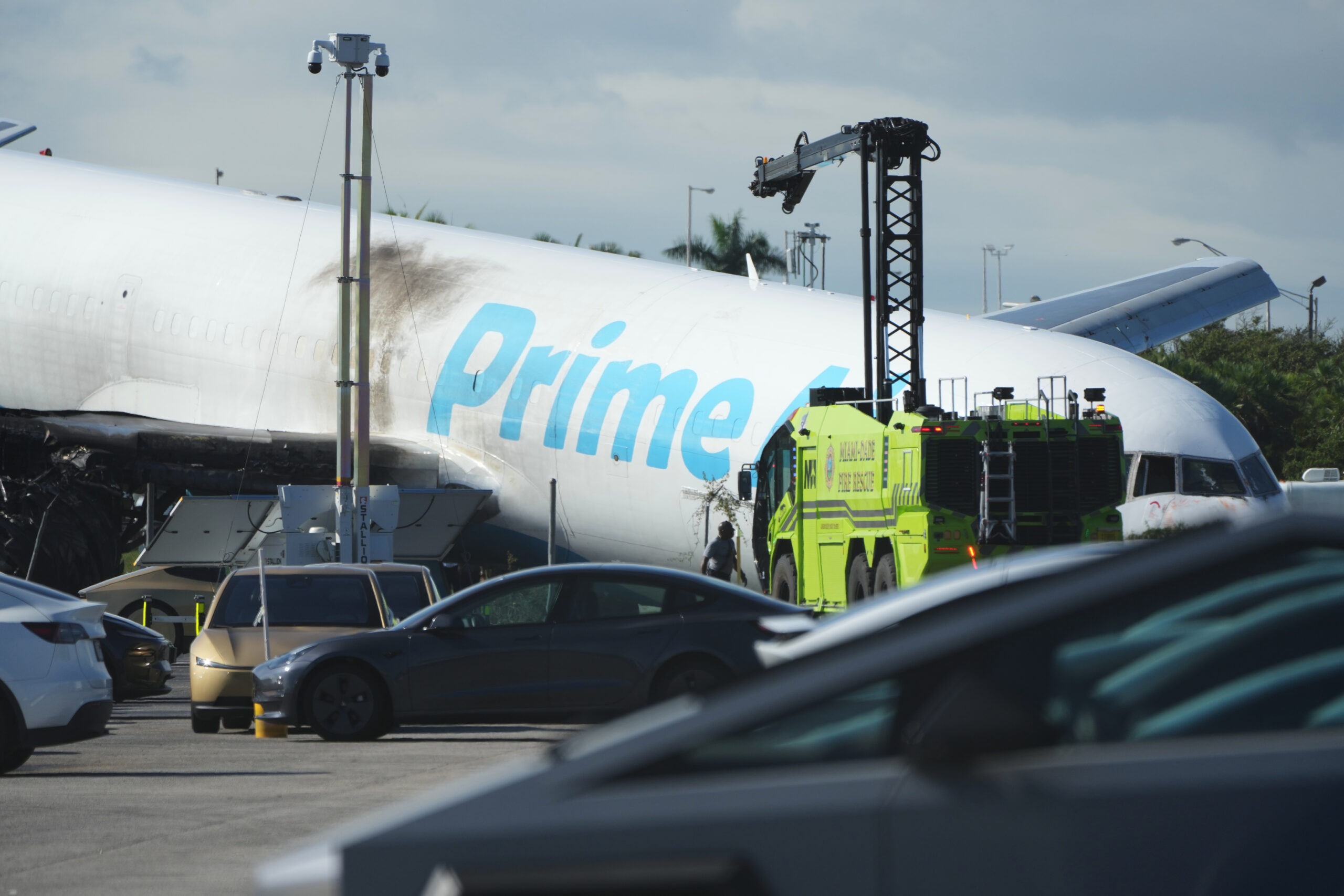
Miami: The two pilots of an Amazon cargo plane that overran the runway while landing at Miami International Airport, striking a van and killing five people, have been released from hospital, officials said Tuesday.

Three people are in hospital, two in critical condition and one stable, following Sunday’s accident, Miami-Dade Sheriff Rosie Cordero-Stutz said at a news conference.

Cordero-Stutz said the National Transportation Safety Board (NTSB) was leading the investigation into the accident while the Miami-Dade Sheriff’s Office would conduct its own inquiry into the deaths on the ground.

NTSB chief Jennifer Homendy said officials were reviewing flight data and cockpit voice recorders from the plane.

Flight data released by investigators on Tuesday suggests the plane tried to abort a landing, before it tore through a perimeter fence and slammed into two vehicles.

NTSB investigator Chihoon Shin said the plane attempted to perform a “go-around” — a routine safety maneuver where a pilot stops a landing attempt and returns to the air to safely make another approach — before abandoning it.

The pilots then applied the brakes to try to stop the plane and put the throttle into idle, Shin said.

Homendy said the plane’s pilot and co-pilot, aged 55 and 37, would be interviewed on Wednesday.

The plane came to a halt about 1,300 feet (400 meters) past the end of the paved runway surface, Homendy said. The five fatalities were in a cleaning-services van.

Hundreds of flights were delayed at Florida’s busiest airport following the crash.

Homendy said the plane was a Boeing 767-300 built in 1994 and operated by 21 Air LLC, based in Miami and contracted to Amazon.

It was on its third flight of the day, and arriving from San Juan, Puerto Rico.


Source link