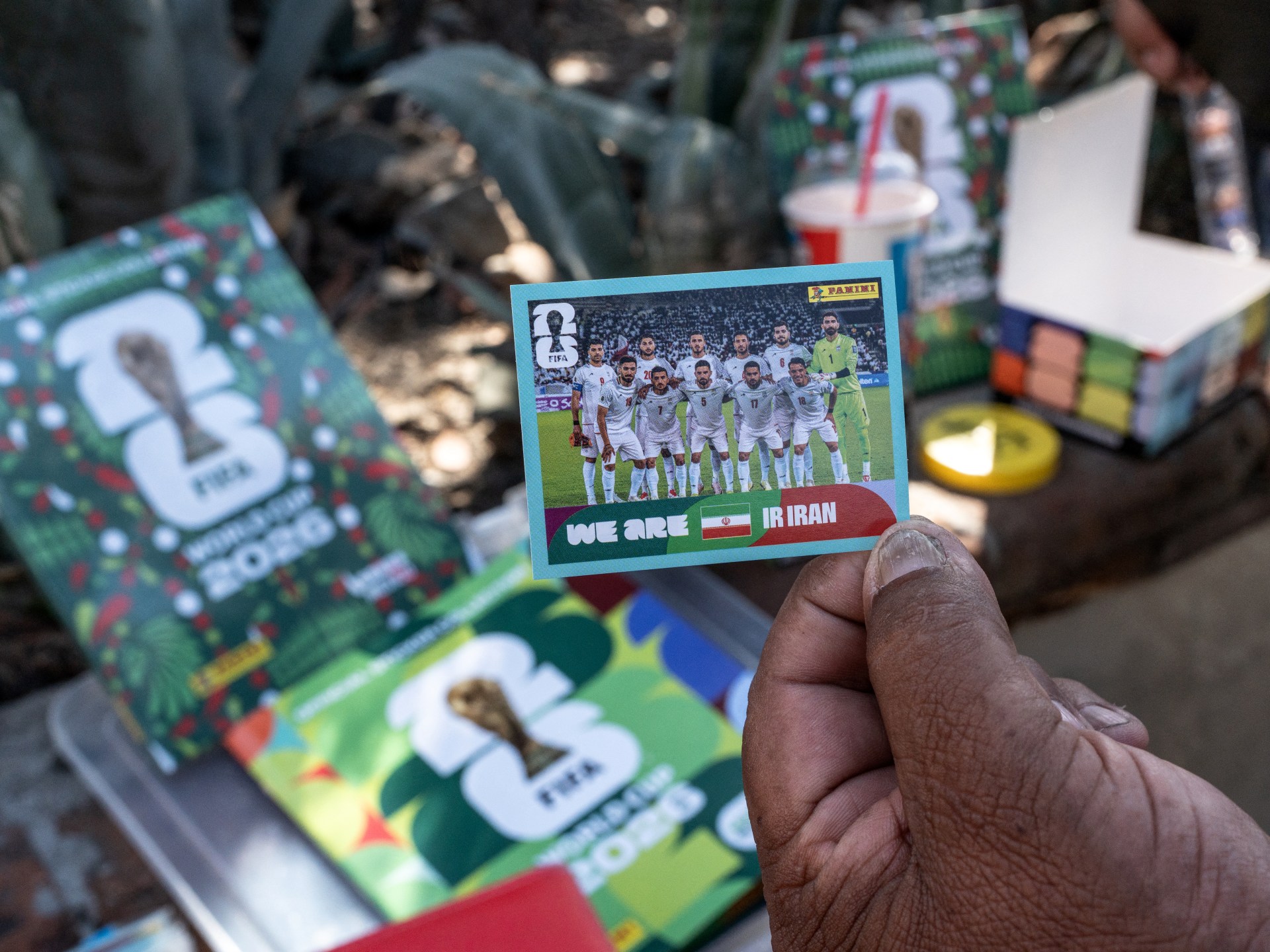
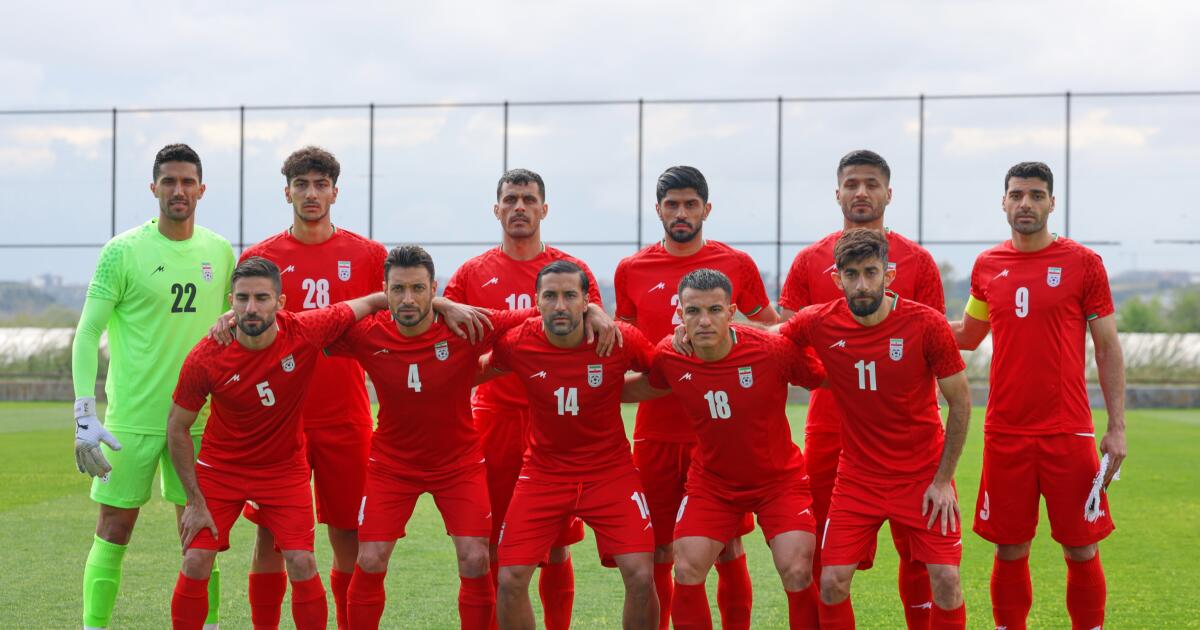
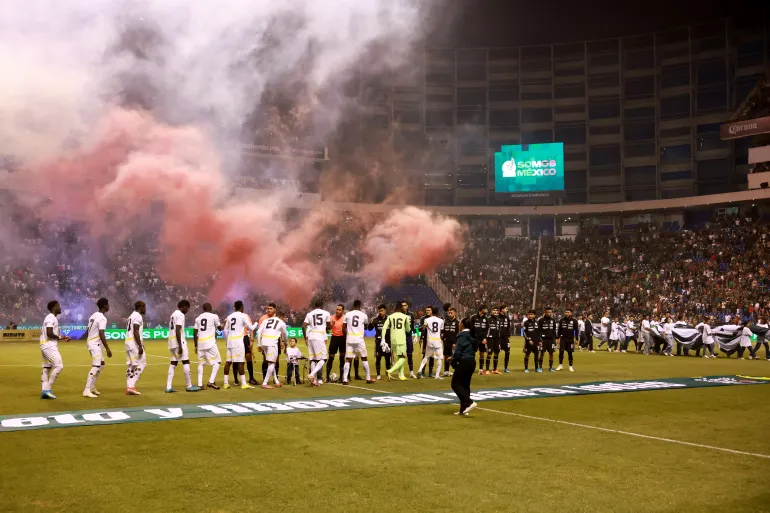
Iran’s World Cup squad has landed in Tijuana, Mexico ahead of the World Cup – amid a diplomatic row with cohosts United States, which is at war with Tehran and has refused visas for several members of the Iranian delegation.
The squad touched down shortly after 5am (1200 GMT) in the Mexican city, across the border from San Diego in California, after an overnight flight from Turkiye, where they have been training for the past three weeks.
The Iranian football federation negotiated at the last minute to move the team’s base camp from Arizona to Mexico, due in part to uncertainty over whether they would be granted visas to enter the US.
The US awarded visas to all the players on Friday, just 10 days before their first match, but several members of the support squad were not given visas, including “key managerial and administrative members,” according to the federation.
The dispute comes days before the tournament kicks off on Thursday, when Mexico play South Africa in Mexico City.
Iran will be based in the city throughout the tournament, despite playing their entire group stage on the US West Coast.
When they do play in the US, it will be the first World Cup to see a host nation receive the team of a country it is at war with.
‘Hold the US accountable’
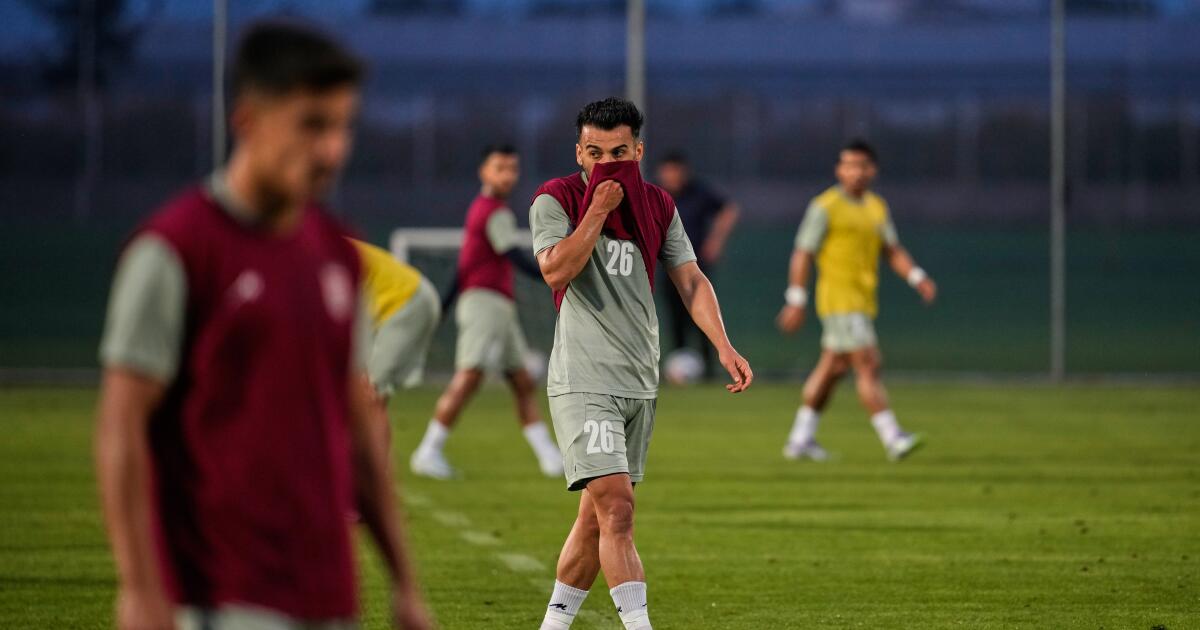
Iran’s team spent nearly three weeks at a training camp in Antalya, using their time in Turkiye to apply for visas for the three host nations.
On the eve of their departure for Mexico, the players received their US visas, Washington’s envoy to Turkiye, Tom Barrack, said on X late on Friday.
But Iran’s embassy to Turkiye said 15 administrative and management staff had been denied visas.
“You have now escalated the deliberate and discriminatory treatment against Iran’s national football team to its highest level,” the embassy posted on X on Saturday, calling for world football’s governing body FIFA “to hold the US accountable for violations of its rules”.
Adding to the tensions, Iran’s ambassador to Mexico said on Saturday that the squad had been notified that under their visa conditions the team must enter and leave US soil on the same day as their matches.
“We can enter in the morning and we must leave the same day,” Iran’s envoy Abolfazl Pasandideh told reporters.
That appeared to contradict what the team’s spokesman Amir Mahdi Alavi told state TV earlier.
“The visas issued for the national team are multiple-entry visas, and the national team will arrive at the match venue one day before the first game and, for the following games, two days prior to each match,” Alavi said.
FIFA rules for World Cups stipulate that a team’s coach must give a news conference on the eve of the match at the venue where the game will be played.
(Al Jazeera)
‘Political interference’
Iran’s Football Federation – whose chief Mehdi Taj was reportedly among those denied a visa – has described the decision as “political interference in sport in its worst form”.
In response, a US administration official confirmed that “the visas necessary for Iran to compete in the World Cup, including for athletes and necessary support staff, have been issued.”
Without directly addressing the matter of those whose visas were refused, the official added: “We will not allow the Iranian team to abuse this system to sneak terrorists into the United States under false pretences.”
In April, US Secretary of State Marco Rubio said any problem would not be with the Iranian players but “some of the other people (they) would want to bring with them,” suggesting some had ties to the Islamic Revolutionary Guard Corps, which is on the US blacklist of “terrorist” groups.
Iran are in Group G and will play New Zealand and Belgium in Los Angeles on June 15 and 21, followed by Egypt in Seattle on June 26.
Iran’s national soccer team set off from Turkey for their World Cup training base in Mexico on Saturday, with some members of their entourage reportedly still without U.S. visas, before three group matches in the United States later this month.
The Iranian Football Federation’s secretary-general, Hedayat Mombeini, and its vice president, Mehdi Mohammad Nabi, were among 14 staff and officials without U.S. visas before games in Los Angeles and Seattle, according to Iranian state television.
It was unclear whether the federation’s president, Mehdi Taj, had been issued a visa.
The team’s participation in the World Cup has been complicated by the Iran war. Problems with processing visas had earlier led Iran to move its training base from Tucson, Ariz., to Tijuana, Mexico, which is on the border with California.
The federation accused the U.S. of “vindictive behavior” in refusing visas for “key managerial and administrative members” of the team.
The decision had “effectively denied the Iranian national team the opportunity for a level playing field and a competition free from discrimination,” according to a statement on the federation’s website. It added that the federation would pursue the matter through world soccer authority FIFA.
The Iranian Embassy in Ankara, Turkey, meanwhile, responded to an earlier social media post from U.S. Ambassador Tom Barrack, in which he congratulated his embassy staff for processing the Iran team’s visas.
“You cannot whitewash conduct that violates FIFA regulations and breaches the United States’ host obligations merely by praising yourselves,” the Iranian post read. “This represents the worst possible form of politically biased interference in sport.”
One U.S. official earlier told the Associated Press that all players on the Iranian team were approved for visas, while a second official said visas had been issued for players, coaches, trainers and some support staff. A third official suggested that some applicants affiliated with the team had been rejected for requesting visas “under false pretenses.”
The officials spoke on condition of anonymity because they weren’t authorized to discuss the visas publicly.
The squad has been preparing for the World Cup at a training camp in Antalya. The team said that it has already received visas from the Mexican Embassy in Ankara.
The players, dressed in blue blazers over white T-shirts, left the luxury Mardan Palace hotel in Antalya on Saturday afternoon. They boarded a private jet at the Mediterranean city’s airport and were due to fly directly to Mexico.
Iran plays its first two games in Inglewood against New Zealand on June 15, and Belgium six days later, then heads to Seattle to face Egypt on June 26. Iran and the U.S. could meet in the round of 32 on July 3 in Arlington, Texas, if both teams come second in their groups.
In March, U.S. President Donald Trump had discouraged Iran from participating in the tournament, saying he didn’t think it was “appropriate” and raising concerns over players’ “life and safety.” A day later, Iran’s national team pushed back, saying “no one can exclude” it from playing.
Iran finalized its team on Monday, including 17 home-based players whose clubs haven’t played since February because of the war. Star forward Sardar Azmoun was dropped in March, reportedly because of a social media post that angered Iranian authorities during the war.
Change in water bottle policy
FIFA announced that it will now allow fans to bring their own water bottles to some stadiums during the World Cup, adjusting a policy that had barred spectators from bringing refillable water bottles into the tournament’s 16 stadiums across North America, including some with limited or no shade from the sun.
FIFA in a social media post said fans will be permitted to bring one soft plastic 20-ounce, factory-sealed, disposable water bottle into any match taking place in the United States or Canada.
In a video released by FIFA, Chief Operating Officer Heimo Schirgi said fans will still not be permitted to bring in hard sided, reusable water bottles “due to safety and security reasons.”
Going green
As the tournament opens on Thursday, 13 of the 16 stadiums have earned LEED certification, the world’s most widely used green building rating system, the U.S. Green Building Council said. Ten have been certified since 2024 through the rigorous process to ensure buildings meet strict sustainability standards. The council expects at least two of the three remaining stadiums to achieve certification in the coming weeks.
Together, the LEED-certified stadiums have installed over 11,500 solar panels to generate clean electricity. Because of the changes made, they will save over 100 million gallons of potable water annually and eliminate more than 5 million single use plastics annually, according to information shared by the stadiums. Four venues are reusing, recycling or composting nearly all waste, preventing it from reaching a landfill.
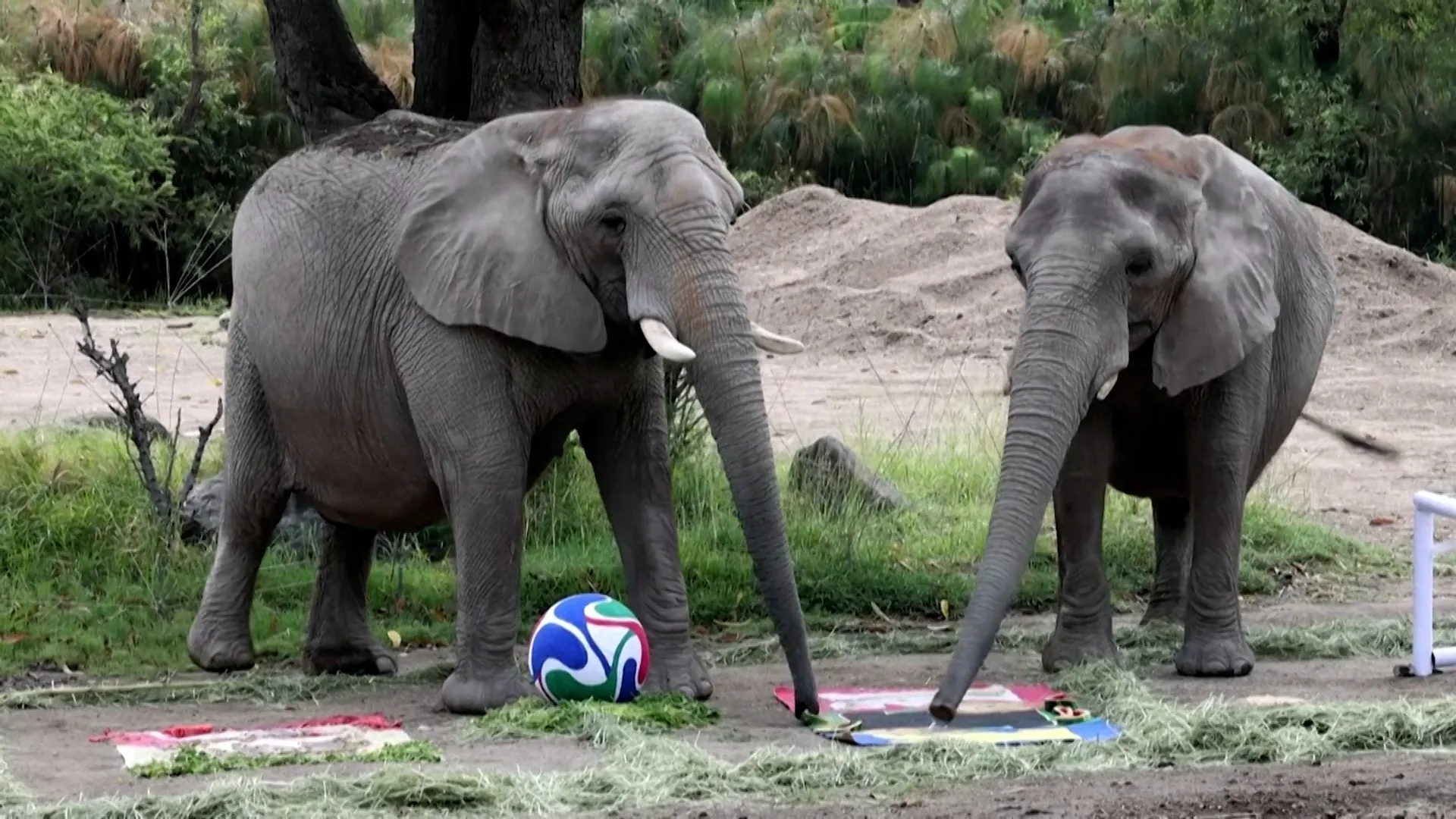
Animals at Guadalajara Zoo in Mexico are making their own predictions for the 2026 FIFA World Cup. Elephants, gorillas, a puma and giraffes picked winners from a selection of upcoming matches, continuing a World Cup tradition made famous by Paul the Octopus, who correctly predicted 12 of 14 results at the 2010 tournament.
When Iran qualified for the FIFA World Cup last March, the men’s national team didn’t expect their participation to hinge on visas being granted by hosts, the United States, only at the last moment – if at all.
Nor did Iranian fans eager to support Team Melli expect to be banned from entry by the US. President Donald Trump signed an executive order last June halting visa issuance to a handful of countries, including Iran, which the US designated a “state sponsor of terrorism”.
Recommended Stories
list of 4 itemsend of list
Perhaps most unanticipated for Iranians was that the host nation of the largest sporting event in the world would launch a war on their country just months before the tournament began.
For Amir Ghalenoei’s side, the joint US-Israel war was more than a wrench thrown into World Cup preparation plans; it was tangible and personal, as thousands across the country were killed by missile attacks.
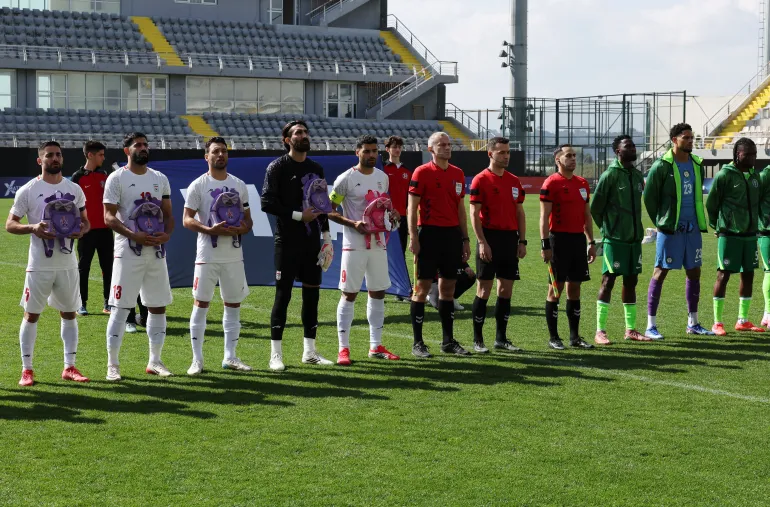
It was the US bombing Azadi Stadium, home to several local matches and where the national team trained. It was the men’s team holding tiny backpacks in remembrance of the students massacred in a US strike on a school in Minab the day the war began.
Iran’s Milad Mohammadi, Hossein Kanaani, Shoja Khalilzadeh, Alireza Beiranvand and Mehdi Taremi hold schoolbags in memory of the victims of the girls’ school bombing in Minab, Iran, as they line up with the match officials and the Nigerian players before the friendly match in Mardan Sports Complex, Antalya, Turkiye, March 27, 2026 [Umit Bektas/Reuters]
After months of politically charged rigmarole between the US and Iran – which led to them switching basecamps to Mexico instead – the men’s national football team will find themselves playing in the shadow of war. That too, if the US grants them visas in time.
For Iranian football fans, travelling to the US was “almost impossible” even without the visa challenges or the war. There are no direct means of transport between the countries, which do not have formal diplomatic relations.
“Aside from the visa issue, you have to take two- or three-way routes from Tehran to get to the US,” said Ali, a fan who did not want to share his full name for safety reasons.
“Returning from the US to Iran is a big challenge in itself, with the possibility of being arrested by the [Iranian] government,” he added. The war has increased scrutiny of antinational sentiment within Iran, resulting in executions of people arrested on accusations of spying for Israel or the US.
Political repercussions extend to the sport sphere, too. Iran’s top footballer Sardar Azmoun was expelled from the national team in March for a perceived act of disloyalty to the government, when he posted a picture on social media of a meeting with Dubai ruler Mohammed bin Rashid Al Maktoum. Relations between the UAE and Iran have been tense during the war, with Iran hitting the Emirates repeatedly and accusing it of allowing the US to use its territory for attacks on Iran.
The US war on Iran, now nearing its 100th day, has also deterred fans globally from attending the World Cup.
“Football is called the Beautiful Game for a reason, for its ability to unite people,” South African football fan Byron Pillay told Al Jazeera.
“But it’s hard to believe in that magic with the politics and war rhetoric off the field of play, specially when one of the tournament hosts is central to that.”
Compatriot Riaz Hamed echoed those reservations. “With the stance of America in particular, regarding the treatment of fans and immigrants in the country, I don’t believe it to be entirely safe to attend.”
Fears have been stoked by reports from organisations such as Human Rights Watch, which said an asylum seeker who attended the Club World Cup final last year in New Jersey with his children was arrested by the Immigration and Customs Enforcement (ICE) department and deported to his country of origin.
Khayran Noor, an international sports lawyer based in Kenya, emphasised that sport cannot be separated from wider geopolitical dimensions.
“If participation can be shaped by geopolitical realities outside the game itself, does that ultimately undermine the inclusive ideals these tournaments claim to represent?” Noor said in an interview with Al Jazeera.
“Football is global, but global mobility is not; the World Cup sits directly at the intersection of that contradiction.”
Mounting visa rejections have also spooked fans from attempting to attend the World Cup.
The US has launched a FIFA Priority Appointment Scheduling System (PASS), which expedites visa interviews for fans who have bought tickets through FIFA. But it does not guarantee a visa.
Last month, a group of nearly 150 Ghana football fans saw their visa applications rejected.
Godwin Nii Armah, 32, scrapped his travel plans for the World Cup for personal reasons, but knew he might have shared the same fate as those compatriots. He also admitted that travelling to Toronto, Boston and Philadelphia to support the Black Stars would have been a costly logistical headache in addition to international flights and visa fees.
Ghana nationals have to pay a $185 fee with their US visa application and 100 Canadian dollars ($71) for the Canadian visa. Add the two, and the amount is comparable to the monthly per capita income in Ghana.
Noor questioned whether future FIFA host agreements should include obligations relating to accessibility and mobility before hosting rights are awarded.
“If teams and fans from particular parts of the world face structural barriers before they can even attend, then the broader spirit of inclusion that these tournaments seek to embody risks being undermined.”
She acknowledged that while states understandably retain sovereign responsibilities regarding border control and national security, global sporting events often require exceptional frameworks.
Fans from 27 of the 48 nations headed to the World Cup need a US visa to apply, costing anywhere between $185 to $435 – amounts that represent wages that an average person in many countries in the Global South would earn over several months.
Canada is marginally more visa-friendly, while Mexico remains the most accessible World Cup host nation.
That was why South Africa chose to send a small supporters group to Pachuca, Mexico, where South Africa have set up basecamp and play two group stage matches.
Sahil Ebrahim is among the “lucky few” in that delegation. After decades of supporting Bafana Bafana from a TV screen in Cape Town, Ebrahim attended the Qatar 2022 World Cup.
Now the 40-year-old is on his way to his second World Cup, where he will witness the tournament opener live in Mexico City, when South Africa play the hosts on June 11.
Contrary to the South African football team, who faced a 24-hour delay in their departure over a visa bungle by the federation, Ebrahim said the Department of Sport did an “excellent job” expediting their visas with the Mexican embassy.
The process, however, paled in comparison with the 2022 World Cup in Qatar, where Hayya cards centrally aligned all visa, ticket and transport details for each fan, Ebrahim acknowledged.
While South Africa’s friendly against Jamaica on Friday, June 5, is closed to the public, Ebrahim and the supporters’ group will watch an exhibition game on Sunday where the Bafana legends of 2010 will take on their Mexican counterparts. South Africa had hosted the World Cup in 2010, a first for an African nation.
“Ultimately, major sporting events succeed not only because people watch them, but because people participate in them,” Noor said.
“The question is not who can watch the World Cup – the question is who can truly participate in it.”
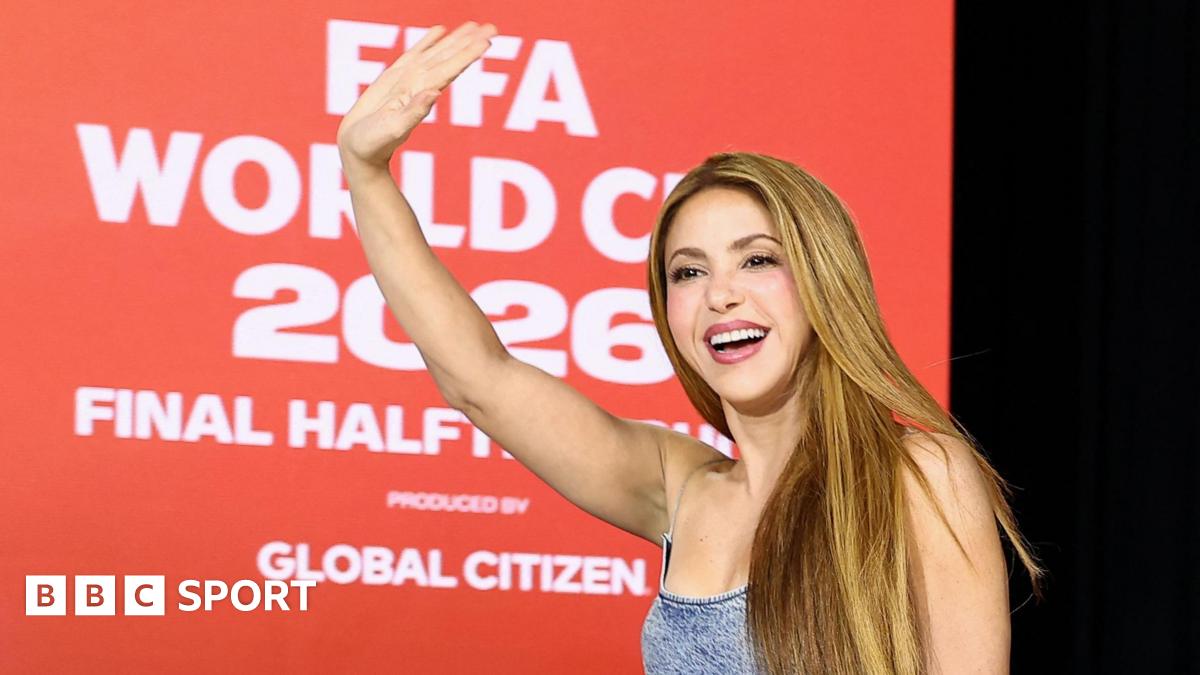
Colombian pop star Shakira will perform her official song for the 2026 World Cup at the competition’s opening ceremony in Mexico.
Shakira will perform Dai Dai, along with Burna Boy, on Thursday, 11 June at Estadio Azteca in Mexico City, before Mexico and South Africa play the first of the tournament’s 104 games (20:00 BST).
Dai Dai – an Italian phrase meaning “let’s go” or “come on”.
Colombian reggaeton star J Balvin and South African singer-songwriter Tyla will also perform at the show in Mexico.
Opening ceremonies will precede each of the first matches played in the host nations of USA, Canada and Mexico.
Canadian singer-songwriters Michael Buble and Alanis Morissette will headline the opening ceremony at BMO Field in Toronto before Canada take on Bosnia and Herzegovina on Friday, 12 June (20:00 BST).
In the USA, pop star Katy Perry and rapper Future will perform before the USA take on Paraguay at SoFi Stadium in Los Angeles on Friday, 12 June (Saturday, 02:00 BST).
Shakira, along with Madonna and K-pop boyband BTS, will also co-headline the Super Bowl-style half-time show at this summer’s World Cup final on 19 July.
The FIFA World Cup 2026 could be the final act for some of football’s finest talents.
Although some of this tournament’s players will set a men’s football record by appearing in their sixth World Cup, age is catching up, and other players have struggled with injuries.
Recommended Stories
list of 4 itemsend of list
Al Jazeera takes a look at who might be making their final bow on the global stage at the tournament in North America:
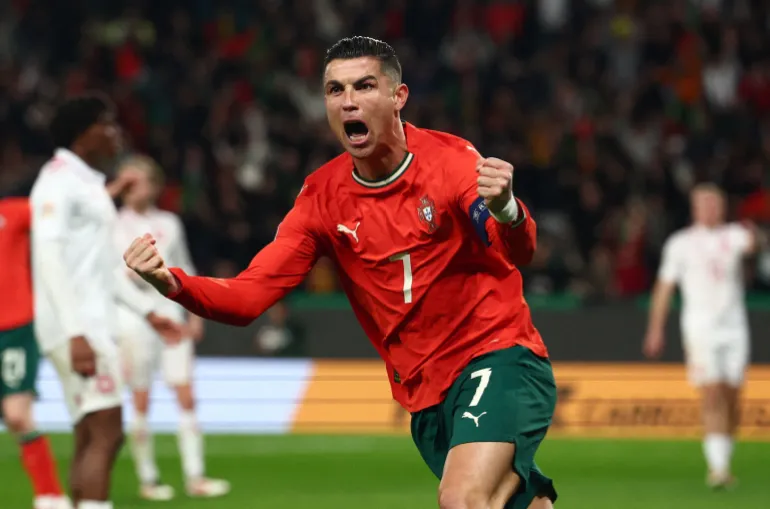
Cristiano Ronaldo – Portugal
Although fitness has been one of Ronaldo’s biggest strengths during his illustrious career, at 41, the Portugal forward knows his playing days are numbered.
Numbers have always been on the former Manchester United and Real Madrid forward’s side, though, and he fired in 30 in 37 matches for Al-Nassr this season, while his tally for Portugal currently sits at 143 goals.
The second-oldest player at this year’s tournament, only behind Scotland’s 43-year-old Craig Gordon, Ronaldo heads to his record sixth World Cup, well aware it could be his final chance to lift the coveted golden trophy: the only one missing from his glittering cabinet.
Cristiano Ronaldo will play in his sixth, and possibly his last, World Cup this year [Pedro Nunes/Reuters]
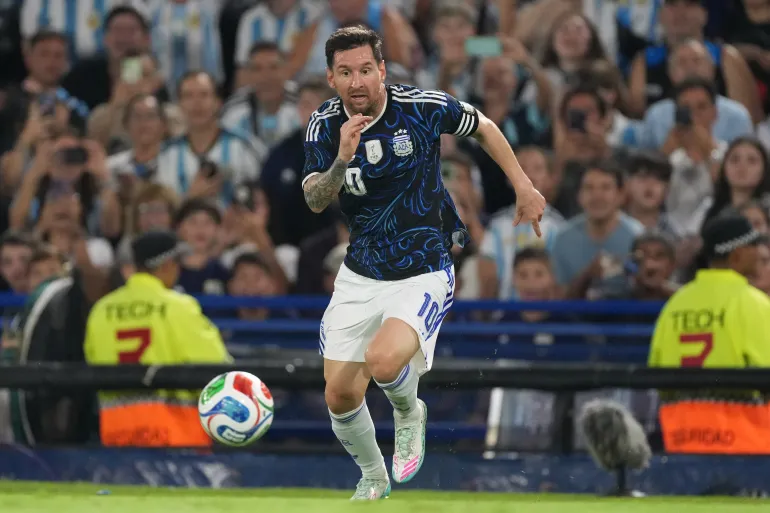
Lionel Messi – Argentina
Like Ronaldo, Messi is also off to his record sixth finals appearance, one where he will lead Argentina’s defence of the title they won in Qatar four years ago.
Argentina’s all-time leading scorer and appearance holder, Messi, has struggled with injury in the build-up to the tournament, raising doubts about whether he will feature in each game and if his body can keep up with the gruelling demands of an expanded World Cup.
The eight-time Ballon d’Or winner’s impact and talent, however, are such that, even at 38, he remains the heartbeat of the football-crazy South American nation.
Injuries have cast doubt over Lionel Messi’s involvement in the upcoming World Cup [File: Matias Baglietto/Reuters]
Luka Modric – Croatia
After playing a key role in Croatia’s run to the 2018 final and a third-place finish in 2022, Modric is ready for his fifth and final appearance at the World Cup. As the 40-year-old heads to the tournament after undergoing cheekbone surgery, the veteran knows the team still relies heavily on him for his playmaking prowess.
The ageing midfielder, also the Balkan nation’s captain, still enjoys a hero’s status within a side that has often defied expectations on the global stage. Enjoy his magic in midfield before he bows out.
Luka Modric, Croatia’s midfield magician, is set for his swansong [File: Antonio Bronic/Reuters]
Neymar Jr – Brazil
At 34, Brazil‘s all-time leading scorer Neymar is much younger than Messi or Ronaldo, but unlike the two greats of the game, his place in the national team is not guaranteed. Neymar’s comeback in the Brazil squad after a two-and-a-half-year hiatus electrified football fandom, and only time will tell whether it was a gamble or a tactical masterclass by coach Carlo Ancelotti.
With a history of fitness issues, a series of injuries and mounting age (he would be 38 by the 2030 World Cup), what looks more certain is that this could be Neymar’s fourth and final act at the tournament.
Brazil’s beloved Neymar Jr is off to the World Cup after a two-and-a-half-year hiatus from the national set-up [File: Dylan Martinez/Reuters]
Manuel Neuer – Germany
Such is the “aura” of Neuer, as coach Julian Nagelsmann said last month, that the 40-year-old came out of retirement to be named Germany‘s first-choice goalkeeper for the 2026 World Cup. Back in the squad after nearly two years, fans will have a final chance to see him at the World Cup.
Widely regarded as one of the greatest goalkeepers, Neuer has played at four World Cups, most notably having a key role in Germany’s 2014 World Cup triumph on Brazilian soil.
Manuel Neuer reversed his retirement decision to play for Germany at the World Cup for the final time [File: Kai Pfaffenbach/Reuters]
Mohamed Salah – Egypt
Arguably Africa’s greatest player of all time, Salah became a global superstar on the back of his success at Liverpool, where he won nine trophies. At 33, and no longer at the peak of his powers, this could be the forward’s second, and possibly final, World Cup.
An underwhelming season and his subsequent departure from Liverpool may have tempered expectations. Yet Egyptians continue to place their faith in their beloved number 10, hoping he can inspire the nation and help deliver something it has never experienced before: the joy of celebrating a World Cup victory.
Egypt are back at the World Cup for only the third time, and Mohamed Salah’s second [File: Siphiwe Sibeko/Reuters]
Kevin de Bruyne – Belgium
A big part of Belgium’s “golden generation” between 2014 and 2022, playmaker De Bruyne continues to flourish in his duties for club and country. Age, however, is starting to catch up with the playmaker, who turns 35 later this month.
The Napoli midfielder’s performance is central to Belgium’s odds of a deep run at the 2026 World Cup, and he will be eager to drive them to a memorable finish in what will be his fourth and presumably final appearance at the tournament.
Kevin De Bruyne will appear at this fourth World Cup [File: Wolfgang Rattay/Reuters]
Virgil van Dijk – Netherlands
Experienced centre-back van Dijk is not quite the force he was a few years ago, when he won the Champions League and Premier League in back-to-back seasons with Liverpool.
The Netherlands captain turns 35 next month, and the Dutch could move on with a younger defensive core by the time the 2030 edition comes around.
After reaching the 2022 World Cup quarterfinals and Euro 2024 semifinals, van Dijk will hope to take the team one step further in what will be his third finals.
Netherlands captain Virgil van Dijk turns 35 on July 8 [Piroschka Van De Wouw/Reuters]
Sadio Mane – Senegal
Widely regarded as one of the world’s best wingers, Mane heads to the World Cup seeking to make up for the disappointing leg injury that denied him a shot at Qatar 2022.
At 34, the Senegal international is far from the peak of his career, which saw him enjoy trophy-laden spells at Liverpool and Bayern Munich.
Despite his mounting age, Mane remains the team’s source of inspiration and creativity, and he was an integral part of the side that beat Morocco in the Africa Cup of Nations final – only for the result to be overturned due to Senegal’s mid-game protest.
Mane will feature in his third, and likely final, World Cup, given that the Teranga Lion has said the last AFCON was his last, although the coaching team have said they have not given up on changing his mind.
Sadio Mane is Senegal’s top scorer with 53 goals [Siphiwe Sibeko/Reuters]
Guillermo Ochoa – Mexico
Part of an esteemed group which includes Messi and Ronaldo, Ochoa is also set to play at a record sixth World Cup. The goalkeeper, who will turn 41 next month, had not been part of the national squad in recent years, but was picked for the tournament, which is being co-hosted by his country, Mexico.
Known for being a formidable figure in Mexico’s previous World Cup campaigns, Ochoa will retire at the end of the team’s run at the tournament.
Guillermo Ochoa is the first Mexican to play at six World Cups [Kai Pfaffenbach/Reuters]
The FIFA World Cup begins on June 11. You can follow the action on Al Jazeera’s dedicated World Cup 2026 page with all the latest news, match build-up and live text commentary, and keep up to date with group standings, real-time match results and schedules.
Making a rib stop on the way to a game and then eating your barbecue inside your car — or, better, on the hood of your car if you don’t want sauce-stained seats — has been a classic move since the days the Lakers used to play at the Forum in Inglewood. Lately, however, it’s getting harder to find old-school L.A. barbecue — the wood-smoked ribs and links and small ends that have long powered this city. Luckily, Inglewood is home to two outposts from the first family of L.A. barbecue: Woody’s (see separate entry), started by the late Woodrow “Woody” Phillips and Phillips Bar-B-Que from Woody’s cousin Foster Phillips, who still inspires younger pitmasters. Where Woody’s has patio seating, Phillips, in traditional barbecue style, is a take-out-only shop with a tightly packed parking lot off Centinela Avenue. It’s the only location that remains after the 2024 closure of Phillips’ Crenshaw spot. Recently, I stopped in for pork ribs so tender the meat easily came free from the bone; small ends, a meaty cut Phillips helped popularize; plus sides of greens and an especially cheesy macaroni and cheese. If you order your rib sauce hot, it may not be as spicy as it was in the old days, but it still has the sweet taste of nostalgia.
First-timers visiting the 35,000-square-foot Mercado La Paloma, take heed: The line likely trailing out the door and into the parking lot is specifically for Holbox, the most decorated and popular among the market’s seven food vendors. Chef Gilberto Cetina’s mariscos creations are revolutionary in their freshness and jigsaw-intricate flavors. Tuna tostada, scallop aguachile, coctel mixto and smoked kanpachi taco number among must-try dishes. Other wonderful options in the mercado await without the Holbox queues. Begin at Komal, where Fátima Juárez’s quesadillas and tacos, as beautiful as they are delicious, showcase the earthy-fragrant masa she crafts daily from heirloom corn varieties, and Chichén Itzá, where the Cetina family serves lush, orange-scented cochinita pibil and other specialties from the Yucatán. The mercado is such a vital sanctuary for the city that fellow critic Jenn Harris and I ranked it number one on our recent guide to the 101 Best Restaurants in Los Angeles.
Mexico and Canada have backed extending the USMCA trade agreement for another 16 years as negotiations over its future continue. The proposal comes amid an ongoing trade dispute with the United States.
The countdown to the FIFA World Cup 2026 has entered the single-figure mark, with the tournament getting under way in nine days in Mexico City.
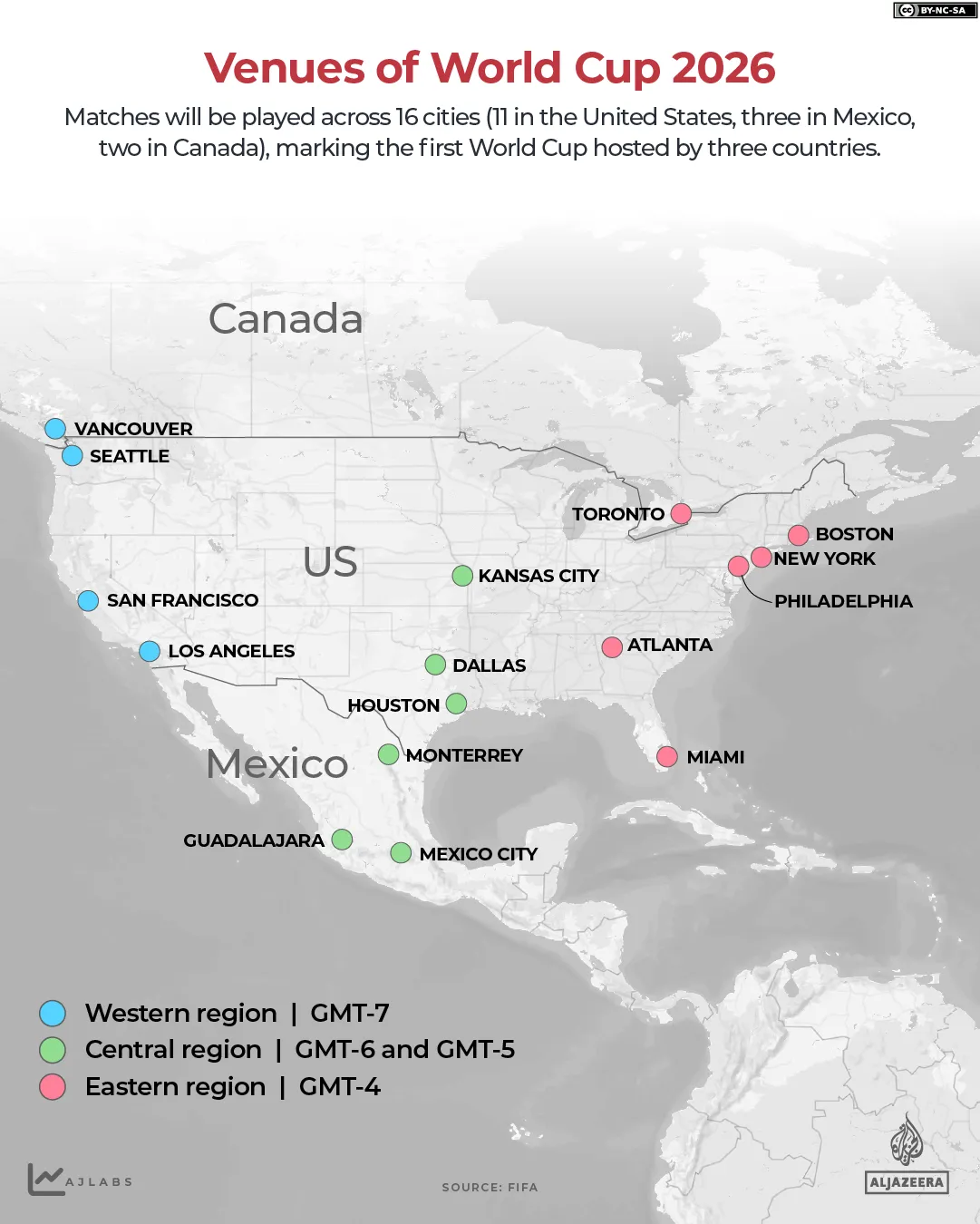
The biggest edition of the World Cup, with 48 nations and 104 games, will be hosted by three countries for the first time, as the United States and Canada share the honours with Mexico.
Recommended Stories
list of 3 itemsend of list
All 48 teams heading to the tournament have released their final 26-man squads, marking possible final appearances for greats like Lionel Messi and Cristiano Ronaldo.
Young stars looking to dethrone the icons, including Spain’s Lamine Yamal and Brazil’s Endrick, will look to make their mark in their first appearance at the global event.
Here are all 48 World Cup squads for the FIFA World Cup 2026:
Midfielders: Houssem Aouar, Nabil Bentaleb, Hicham Boudaoui, Fares Chaibi, Ibrahim Maza, Yassine Titraoui, Ramiz Zerrouki
Forwards: Mohamed Amine Amoura, Nadir Benbouali, Adil Boulbina, Fares Ghedjemis, Amine Gouiri, Riyad Mahrez, Anis Hadj Moussa
Argentina World Cup squad
Goalkeepers: Emiliano Martinez, Geronimo Rulli, Juan Musso
Defenders: Leonardo Balerdi, Gonzalo Montiel, Nicolas Tagliafico, Lisandro Martinez, Cristian Romero, Nicolas Otamendi, Facundo Medina, Nahuel Molina
Midfielders: Leandro Paredes, Rodrigo De Paul, Valentin Barco, Giovani Lo Celso, Exequiel Palacios, Alexis Mac Allister, Enzo Fernandez
Forwards: Julian Alvarez, Lionel Messi, Nicolas Gonzalez, Thiago Almada, Giuliano Simeone, Nicolas Paz, Jose Manuel Lopez, Lautaro Martinez
The World Cup 2026 will be Lionel Messi’s swansong [File: Gustavo Garello/AP]
Australia World Cup squad
Goalkeepers: Patrick Beach, Paul Izzo, Mathew Ryan
Defenders: Aziz Behich, Jordan Bos, Cameron Burgess, Alessandro Circati, Milos Degenek, Jason Geria, Lucas Herrington, Jacob Italiano, Harry Souttar, Kai Trewin
Midfielders: Cameron Devlin, Ajdin Hrustic, Jackson Irvine, Connor Metcalfe, Aiden O’Neill, Paul Okon-Engstler
Goalkeepers: Patrick Pentz, Alexander Schlager, Florian Wiegele
Defenders: David Affengruber, David Alaba, Kevin Danso, Marco Friedl, Philipp Lienhart, Phillipp Mwene, Stefan Posch, Alexander Prass, Michael Svoboda
Midfielders: Christoph Baumgartner, Carney Chukwuemeka, Florian Grillitsch, Konrad Laimer, Marcel Sabitzer, Xaver Schlager, Romano Schmid, Alessandro Schopf, Nicolas Seiwald, Paul Wanner, Patrick Wimmer
Forwards: Marko Arnautovic, Michael Gregoritsch, Sasa Kalajdzic
Belgium World Cup squad
Goalkeepers: Thibaut Courtois, Senne Lammens, Mike Penders
Defenders: Timothy Castagne, Zeno Debast, Maxim De Cuyper, Koni De Winter, Brandon Mechele, Thomas Meunier, Nathan Ngoy, Joaquin Seys, Arthur Theate
Midfielders: Kevin De Bruyne, Amadou Onana, Nicolas Raskin, Youri Tielemans, Hans Vanaken, Axel Witsel
Forwards: Charles De Ketelaere, Jeremy Doku, Matias Fernandez-Pardo, Romelu Lukaku, Dodi Lukebakio, Diego Moreira, Alexis Saelemaekers, Leandro Trossard
Bosnia and Herzegovina World Cup squad
Goalkeepers: Nikola Vasilj, Martin Zlomislic, Osman Hadzikic
Defenders: Sead Kolasinac, Amar Dedic, Nihad Mujakic, Nikola Katic, Tarik Muharemovic, Stjepan Radeljic, Dennis Hadzikadunic, Nidal Celik
Midfielders: Amir Hadziahmetovic, Ivan Sunjic, Ivan Basic, Dzenis Burnic, Ermin Mahmic, Benjamin Tahirovic, Amar Memic, Armin Gigovic, Kerim Alajbegovic, Esmir Bajraktarevic
Defenders: Alex Sandro, Bremer, Danilo, Douglas Santos, Gabriel Magalhaes, Ibanez, Leo Pereira, Marquinhos, Wesley
Midfielders: Bruno Guimaraes, Casemiro, Danilo Santos, Fabinho, Lucas Paqueta
Forwards: Endrick, Gabriel Martinelli, Igor Thiago, Luiz Henrique, Matheus Cunha, Neymar Jr, Raphinha, Rayan, Vinicius Jr
Brazil’s forward Neymar has found himself in the five-time champions’ World Cup squad despite recent injuries [File: Mauro Pimentel/AFP]
Canada World Cup squad
Goalkeepers: Dayne St Clair, Maxime Crepeau, Owen Goodman
Defenders: Alistair Johnston, Derek Cornelius, Richie Laryea, Niko Sigur, Joel Waterman, Luc de Fougerolles, Moise Bombito, Alphonso Davies, Alfie Jones
Midfielders: Stephen Eustaquio, Ismael Kone, Tajon Buchanan, Mathieu Choiniere, Ali Ahmed, Nathan Saliba, Liam Millar, Jacob Shaffelburg, Jonathan Osorio
Attackers: Jonathan David, Cyle Larin, Tani Oluwaseyi, Promise David
Forwards: Gilson Benchimol, Jovane Cabral, Dailon Livramento, Ryan Mendes, Nuno da Costa, Garry Rodrigues, Willy Semedo, Helio Varela
Colombia World Cup squad
Goalkeepers: Camilo Vargas, Alvaro Montero, David Ospina
Defenders: Davinson Sanchez, Jhon Lucumi, Yerry Mina, Willer Ditta, Daniel Munoz, Santiago Arias, Johan Mojica, Deiver Machado
Midfielders: Richard Rios, Jefferson Lerma, Kevin Castano, Juan Camilo Portilla, Gustavo Puerta, Jhon Arias, Jorge Carrascal, Juan Fernando Quintero, James Rodriguez, Jaminton Campaz
Forwards: Juan Camilo Hernandez, Luis Diaz, Luis Suarez, Carlos Gomez, Jhon Cordoba
Defenders: Josko Gvardiol, Duje Caleta-Car, Josip Sutalo, Josip Stanisic, Marin Pongracic, Martin Erlic, Luka Vuskovic
Midfielders: Luka Modric, Mateo Kovacic, Mario Pasalic, Nikola Vlasic, Luka Sucic, Martin Baturina, Kristijan Jakic, Petar Sucic, Nikola Moro, Toni Fruk
Forwards: Ivan Perisic, Andrej Kramaric, Ante Budimir, Marco Pasalic, Petar Musa, Igor Matanovic
(Standby: Lovro Majer, Franjo Ivanovic, Dion Drena Beljo, Ivan Smolcic, Karlo Letica, Adrian Segecic, Luka Stojkovic)
Defenders: Dylan Batubinsika, Gedeon Kalulu, Steve Kapuadi, Joris Kayembe, Arthur Masuaku, Chancel Mbemba, Axel Tuanzebe, Aaron Wan-Bissaka
Midfielders: Brian Cipenga, Meshack Elia, Gael Kakuta, Edo Kayembe, Nathanael Mbuku, Samuel Moutoussamy, Ngal’ayel Mukau, Charles Pickel, Noah Sadiki, Aaron Tshibola
Forwards: Cedric Bakambu, Simon Banza, Fiston Mayele, Yoane Wissa, Theo Bongonda
Ecuador World Cup squad
Goalkeepers: Hernan Galindez, Moises Ramirez, Gonzalo Valle
Defenders: Piero Hincapie, Willian Pacho, Pervis Estupinan, Felix Torres, Joel Ordonez, Jackson Porozo, Angelo Preciado, Yaimar Medina
Midfielders: Moises Caicedo, Alan Franco, Kendry Paez, Gonzalo Plata, Pedro Vite, Jordy Alcivar, Denil Castillo, John Yeboah, Nilson Angulo, Alan Minda
Forwards: Enner Valencia, Kevin Rodriguez, Jordy Caicedo, Anthony Valencia, Jeremy Arevalo
Egypt World Cup squad
Goalkeepers: Mohamed El Shenawy, Mostafa Shobeir, El Mahdy Soliman, Mohamed Alaa
Midfielders: Rouzbeh Cheshmi, Saeid Ezatolahi, Mehdi Ghaedi, Saman Ghoddos, Mohammad Ghorbani, Alireza Jahanbakhsh, Mohammad Mohebi, Amir Mohammad Razzaghinia, Mehdi Torabi, Aria Yousefi
Forwards: Ali Alipour, Dennis Dargahi, Amirhossein Hosseinzadeh, Mehdi Taremi, Shahriar Moghanlou
Iraq World Cup squad
Goalkeepers: Fahad Talib, Jalal Hassan, Ahmed Basil
Defenders: Hussein Ali, Manaf Younis, Zaid Tahseen, Rebin Sulaka, Akam Hashem, Merchas Doski, Ahmed Yahya, Zaid Ismail, Frans Putros, Mustafa Saadoon
Midfielders: Amir Al Ammari, Kevin Yakob, Zidane Iqbal, Aimar Sher, Ibrahim Bayesh, Ahmed Qasim, Youssef Amyn, Marko Farji
Forwards: Ali Jassim, Ali Al Hamadi, Ali Yousef, Aymen Hussein, Mohanad Ali
Ivory Coast World Cup squad
Goalkeepers: Yahia Fofana, Mohamed Kone, Alban Lafont
Goalkeepers: Yazid Abulaila, Noor Bani Attiah, Abdallah Al Fakhouri
Defenders: Mohammad Abu Hashish, Abdullah Nasib, Hussam Abu Dhahab, Yazan Al Arab, Mohammad Abu Alnadi, Salem Obaid, Saed Al Rosan, Ehsan Haddad, Anas Badawi
Midfielders: Amer Jamous, Noor Al Rawabdeh, Rajaei Ayed, Ibrahim Sadeh, Mohannad Abu Taha, Nizar Al Rashdan, Mohammad Al Dawoud, Mahmoud Mardahi
Forwards: Mohammad Abu Zraiq, Ali Olwan, Mousa Al Tamari, Odeh Fakhoury, Ibrahim Sabra, Ali Azaizeh
Mexico World Cup squad
Goalkeepers: Raul Rangel, Guillermo Ochoa, Carlos Acevedo
Defenders: Jorge Sanchez, Israel Reyes, Cesar Montes, Johan Vasquez, Jesus Gallardo, Mateo Chavez, Edson Alvarez
Midfielders: Erik Lira, Orbelin Pineda, Alvaro Fidalgo, Brian Gutierrez, Luis Romo, Obed Vargas, Gilberto Mora, Luis Chavez
Forwards: Roberto Alvarado, Cesar Huerta, Alexis Vega, Julian Quinones, Guillermo Martinez, Armando Gonzalez, Santiago Gimenez, Raul Jimenez
Morocco World Cup squad
Goalkeepers: Yassine Bounou, Munir El Kajoui, Ahmed Reda Tagnaouti
Defenders: Noussair Mazraoui, Anas Salah-Eddine, Youssef Bellammari, Achraf Hakimi, Zakaria El Ouahdi, Nayef Aguerd, Chadi Riad, Redouane Halhal, Issa Diop
Midfielders: Samir El Mourabet, Ayoub Bouaddi, Neil El Aynaoui, Sofyan Amrabat, Azzedine Ounahi, Bilal El Khannouss, Ismael Saibari
Defenders: Kristoffer Vassbakk Ajer, Fredrik Bjorkan, Henrik Falchener, Sondre Langas, Torbjorn Heggem, Marcus Holmgren Pedersen, Julian Ryerson, David Moller Wolfe, Leo Ostigard
Midfielders: Thelonious Aasgaard, Fredrik Aursnes, Patrick Berg, Sander Berge, Oscar Bobb, Jens Petter Hauge, Antonio Nusa, Andreas Schjelderup, Morten Thorsby, Kristian Thorstvedt, Martin Odegaard
Forwards: Erling Haaland, Alexander Sorloth, Jorgen Strand Larsen
Panama World Cup squad
Goalkeepers: Orlando Mosquera, Luis Mejia, Cesar Samudio
Defenders: Cesar Blackman, Jorge Gutierrez, Amir Murillo, Fidel Escobar, Andres Andrade, Edgardo Farina, Jose Cordoba, Eric Davis, Jiovany Ramos, Roderick Miller
Midfielders: Anibal Godoy, Adalberto Carrasquilla, Carlos Harvey, Cristian Martinez, Jose Luis Rodriguez, Cesar Yanis, Yoel Barcenas, Alberto Quintero, Azarias Londono
Forwards: Ismael Diaz, Cecilio Waterman, Jose Fajardo, Tomas Rodriguez
Defenders: Juan Caceres, Gustavo Velazquez, Gustavo Gomez, Junior Alonso, Jose Canale, Omar Alderete, Alexandro Maidana, Fabian Balbuena
Midfielders: Diego Gomez, Mauricio Magalhaes, Damian Bobadilla, Braian Ojeda, Andres Cubas, Matias Galarza, Alejandro Gamarra
Forwards: Gustavo Caballero, Ramon Sosa, Alex Arce, Isidro Pitta, Gabriel Avalos, Miguel Almiron, Julio Enciso, Antonio Sanabria
Portugal World Cup squad
Goalkeepers: Diogo Costa, Jose Sa, Rui Silva
Defenders: Tomas Araujo, Joao Cancelo, Diogo Dalot, Ruben Dias, Goncalo Inacio, Nuno Mendes, Matheus Nunes, Nelson Semedo, Renato Veiga
Midfielders: Samuel Costa, Bruno Fernandes, Joao Neves, Ruben Neves, Bernardo Silva, Vitinha
Forwards: Francisco Conceicao, Joao Felix, Goncalo Guedes, Rafael Leao, Pedro Neto, Goncalo Ramos, Cristiano Ronaldo, Francisco Trincao
Qatar World Cup squad
Goalkeepers: Salah Zakaria, Meshaal Barsham, Mahmoud Abunada
Defenders: Boualem Khoukhi, Pedro Miguel, Sultan Al Brake, Al Hashmi Al Hussain, Ayoub Al Alawi, Issa Laye, Lucas Mendes, Homam Al Amin
Midfielders: Ahmed Fathi, Jassim Gaber, Assim Madibo, Abdulaziz Hatem, Karim Boudiaf, Mohammed Mannai
Forwards: Almoez Ali, Akram Afif, Tahsin Mohammed, Edmilson Junior, Ahmed Al-Janehi, Ahmed Alaa, Hassan Al Haydos, Mohammed Muntari, Yusuf Abdurisag
Saudi Arabia World Cup squad
Goalkeepers: Nawaf Al Aqidi, Mohamed Al Owais, Ahmed Alkassar
Defenders: Saud Abdulhamid, Jehad Thakri, Abdulelah Al Amri, Hassan Tambakti, Ali Lajami, Hassan Kadesh, Moteb Al Harbi, Nawaf Boushal, Ali Majrashi, Mohammed Abu Alshamat
Midfielders: Ziyad Al Johani, Nasser Al Dawsari, Mohamed Kanno, Abdullah Al Khaibari, Alaa Al Hejji, Musab Al Juwayr, Sultan Mandash, Ayman Yahya, Khalid Al Ghannam
Forwards: Salem Al Dawsari, Abdullah Al Hamdan, Feras Al Brikan, Saleh Al Shehri
Scotland World Cup squad
Goalkeepers: Craig Gordon, Angus Gunn, Liam Kelly
Defenders: Grant Hanley, Jack Hendry, Aaron Hickey, Dom Hyam, Scott McKenna, Nathan Patterson, Anthony Ralston, Andy Robertson, John Souttar, Kieran Tierney
Midfielders: Ryan Christie, Findlay Curtis, Lewis Ferguson, Tyler Fletcher, Ben Gannon-Doak, John McGinn, Kenny McLean, Scott McTominay
Forwards: Che Adams, Lyndon Dykes, George Hirst, Lawrence Shankland, Ross Stewart
Forwards: Arda Guler, Baris Alper Yilmaz, Can Uzun, Deniz Gul, Irfan Can Kahveci, Kenan Yildiz, Kerem Akturkoglu, Oguz Aydin, Yunus Akgun
Uruguay World Cup squad
Goalkeepers: Sergio Rochet, Fernando Muslera, Santiago Mele
Defenders: Guillermo Varela, Ronald Araujo, Jose Maria Gimenez, Santiago Bueno, Sebastian Caceres, Mathias Olivera, Joaquin Piquerez, Matias Vina
Midfielders: Maximiliano Araujo, Giorgian de Arrascaeta, Rodrigo Bentancur, Agustin Canobbio, Nicolas de la Cruz, Emiliano Martinez, Facundo Pellistri, Brian Rodriguez, Juan Manuel Sanabria, Manuel Ugarte, Federico Valverde, Rodrigo Zalazar
Forwards: Rodrigo Aguirre, Federico Vinas, Darwin Nunez
USA World Cup squad
Goalkeepers: Chris Brady, Matt Freese, Matt Turner
Defenders: Max Arfsten, Sergino Dest, Alex Freeman, Mark McKenzie, Tim Ream, Chris Richards, Antonee Robinson, Miles Robinson, Joe Scally, Auston Trusty
Midfielders: Tyler Adams, Sebastian Berhalter, Weston McKennie, Cristian Roldan, Brenden Aaronson, Christian Pulisic, Gio Reyna, Malik Tillman, Tim Weah, Alejandro Zendejas
Forwards: Folarin Balogun, Ricardo Pepi, Haji Wright
The FIFA World Cup begins on June 11. You can follow the action on Al Jazeera’s dedicated World Cup 2026 page with all the latest news, match build-up and live text commentary, and keep up to date with group standings, real-time match results and schedules.
Bafana Bafana’s departure was delayed due to non-issuance of visas for several players and support staff.
Published On 2 Jun 20262 Jun 2026
The South African national team members have left for their World Cup training base in Pachuca, Mexico, in advance of their opening game against the tournament cohosts on June 11.
The delegation that left on Monday did not include assistant coach Helman Mkhalele, who has yet to obtain a United States visa.
Recommended Stories
list of 4 itemsend of list
The charter flight departed Johannesburg following a frantic 24 hours after the squad was originally scheduled to leave on Sunday, but was held back by a delay in obtaining visas in what was described as an administrative bungle by the South African Football Association (SAFA).
Mkhalele, a former international winger who played 66 times for Bafana Bafana, including at their World Cup debut in France in 1998, will have to travel later after his visa application was initially denied.
Blaming the US Consulate General in Johannesburg for the delay, SAFA president Danny Jordaan told the South African Broadcasting Corporation, “They refused the visa, but gave no reasons. It is very difficult to deal with the process where you get no information.”
“We don’t know [why it was denied], we are clutching in the dark, but we hope the matter will be resolved [soon]. All of the players are [on the flight] and 99 percent of the technical staff.”
South Africa are due to play Jamaica in a friendly on Friday before taking on Mexico in the showpiece opening match in Mexico City.
“Now we are very happy that we can go to Mexico,” South Africa coach Hugo Broos said. “The past days have been a little bit stressful with all the problems we had, but those problems are behind us now, and we can focus on what’s coming.”
“These 10 days go very fast. Once we get there, we will start working, focusing on the first game against Mexico, so time will pass very quickly. I think everybody is looking forward to starting the World Cup.”
South Africa are in Group A and will face Czechia in Atlanta on June 18 and South Korea in Monterrey, Mexico, six days later.
They are appearing in their fourth World Cup and looking to advance from the group stage for the first time.
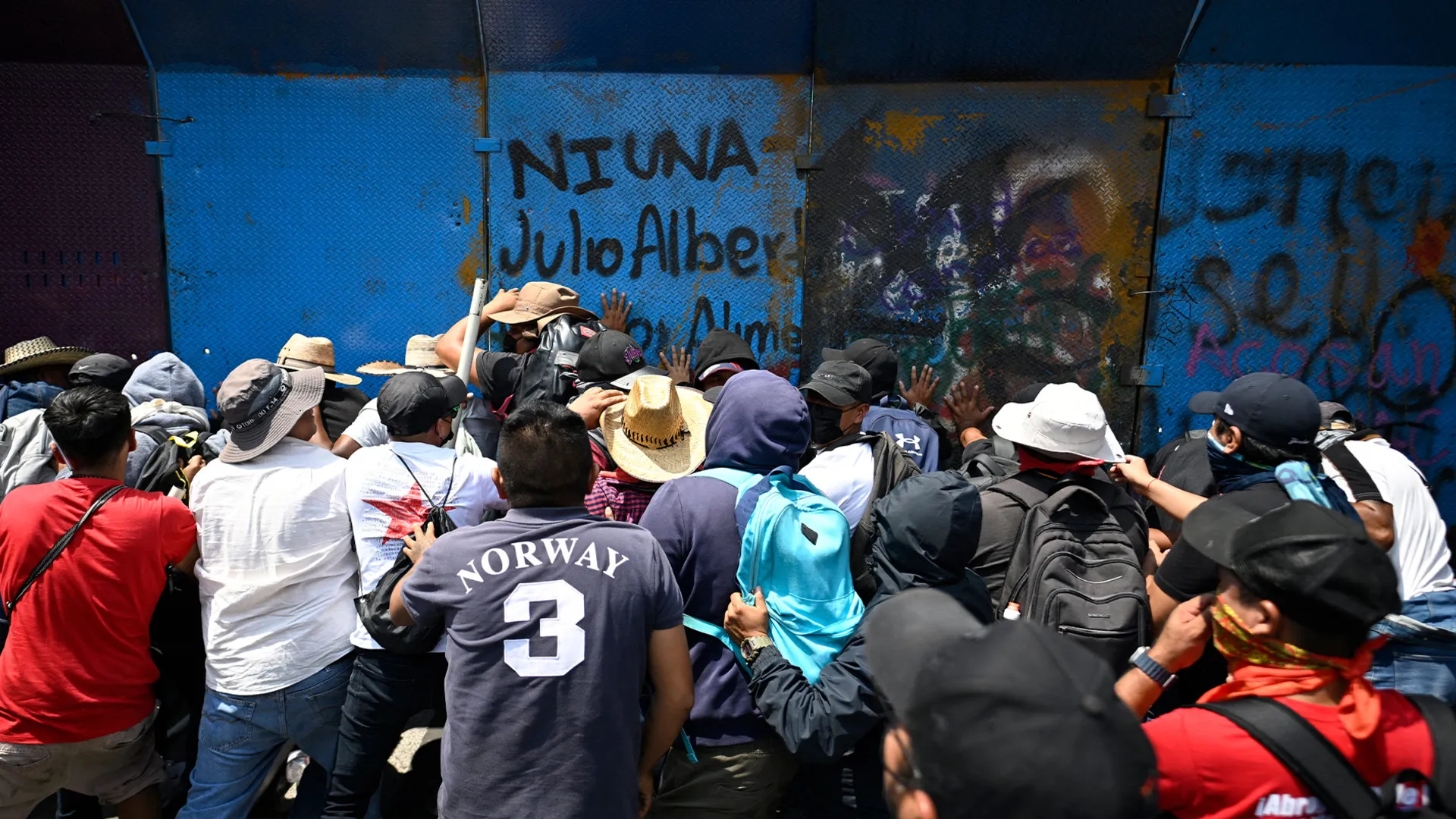
Teachers marched in Mexico City demanding better pay and pensions, warning of further protests ahead of the 2026 FIFA World Cup. Al Jazeera’s Julia Galiano reports police fired tear gas after some demonstrators pushed through barricades near a FIFA fan zone.
Netflix’s latest worldwide wager is a menu of programming designed to feed the building fútbol frenzy that will explode in mid-June, when the FIFA World Cup begins. They might even win some Stateside converts ahead of the platform’s presentation of the CONCACAF Gold Cup and Nations League finals in 2027 and 2029.
“We say our goal is to entertain the world; in order to [do that], we need to entertain every single country” where Netflix has a presence, says Francisco Ramos, the streamer’s vice president of original content, Latin America. “Our superpower is that we’re so deeply rooted into local storytelling, then that becomes global.
“Netflix is uniquely qualified at building global audiences” for international sports content, he says. “We are very conscious and deliberate about it.”
Not that original sports content is anything new for the streamer; its first-ever original international series, “Club de Cuervos,” was a Mexican dramedy about a soccer club. But this salvo is precision-guided to hit as about 5 billion viewers get hyped for the global tournament.
“Four years ago, during the World Cup, we launched [an Argentine] documentary called ‘Sean eternos: Campeones de América’ [‘Captains of the World’], and it was massive, and then Argentina ended up winning a few months later,” says Ramos. “Right now, as the World Cup arrives, it’s very passionate.”
It’s not just Latin America that’s being targeted with new programming: There’s a trio of documentaries about Jamie Vardy, Liverpool’s 2005 Champions League-winning team and footballer-turned-actor Vinnie Jones under the “Untold UK” banner; “Poldi,” on German superstar Lukas Podolski; and “The Bus: A French Football Mutiny,” about the national team’s rocky 2010 World Cup journey.
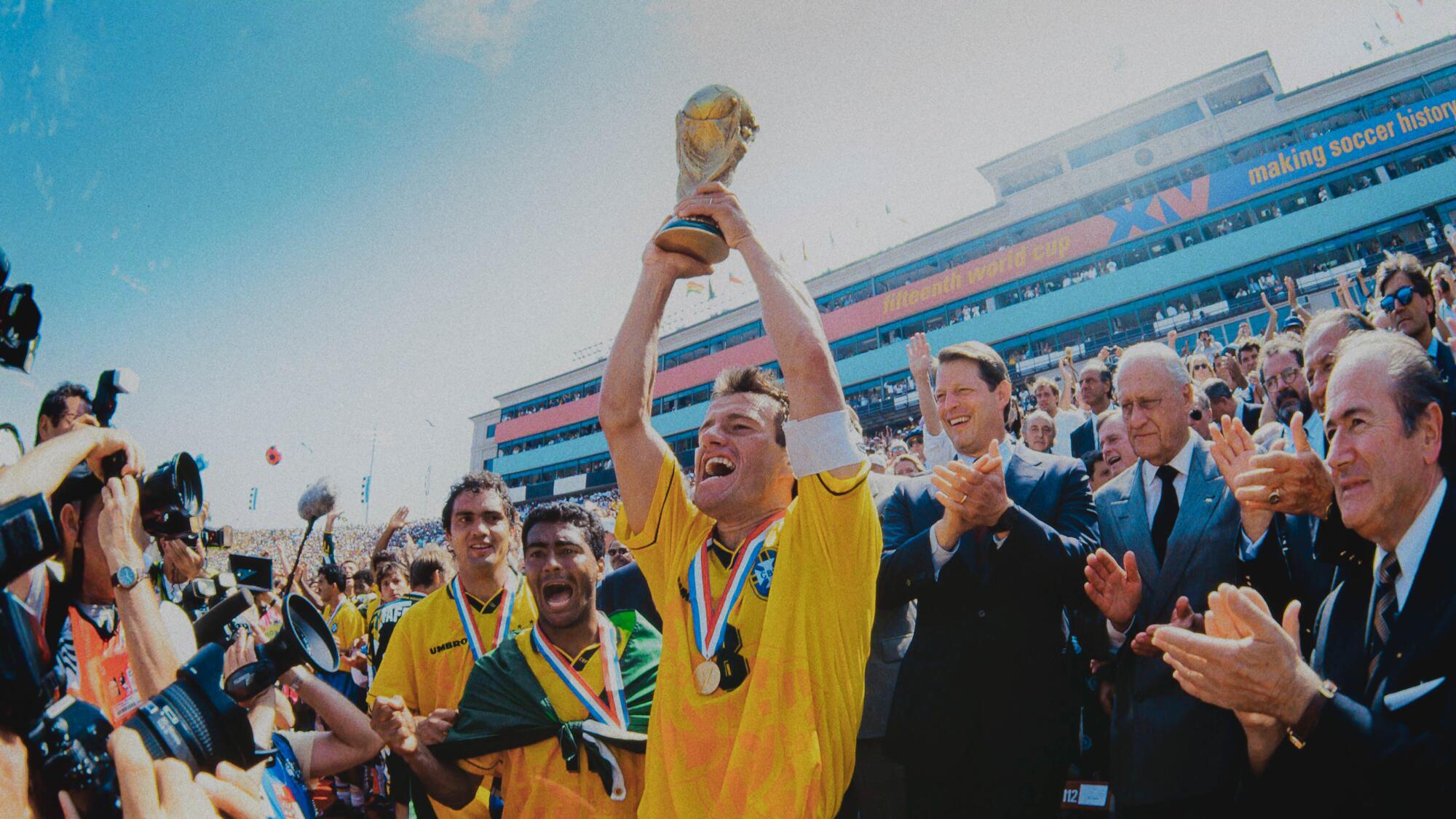
A scene from “USA ’94: Brazil’s Return to Glory.”
(Netflix)
The World Cup-contending squad
For fans, the slate offers documentaries on landmark moments in Cup history (“USA ’94: Brazil’s Return to Glory”), superstar players (“Emi Martínez: The Kid Who Stops Time” and “James”) and even up-and-comers in a prestigious amateur tournament in Brazil (“The Root of the Game”).
But for the uninitiated, apart from the streamer’s FIFA soccer simulation game coming this summer, the gateway drug may be “Ronaldinho: The One and Only.” The doc spotlights one of the most improvisational and dynamic players ever, soccer’s Magic Johnson. The legendary attacking midfielder was a wizard on the pitch and a charisma machine off it.
“Ronaldinho retired from soccer [in 2018], and he’s still in the mainstream. He has 80 million followers on Instagram,” says Luis Ara, director of “Ronaldinho” and “USA ‘94.” “You have [superstars Lionel] Messi and Neymar [da Silva Santos Júnior] talking about him like he’s God.
“He was always so cool … for him, it was not only about winning a game; it was also about entertaining the people.”
Scripted offerings include the feature “Mexico ’86,” starring a wildly hustling Diego Luna. It’s a nasty comedy about the wheeling and dealing (and outright bribery) that landed Mexico the right to host its second World Cup. Non-soccer fans might enjoy the snarky dialogue and bare-knuckled machinations — it plays like a Spanish-language, soccer-themed “Succession” or “Marty Supreme.”
“Brazil ’70: The Third Star” is a miniseries about that country’s campaign to win a third World Cup, led by a name even non-fans know: Pelé. Rodrigo Santoro stars as Coach João Saldanha.
“Brazil was in the midst of the dictatorship; they had to somehow generate some sort of national pride,” says Ramos. “The only thing that unites Brazilians 100% is their team. It becomes this compelling thing about how society is so intertwined with sports, and how sports are so intertwined with politics in Latin America.”
Soccer superstar Ronaldinho Gaúcho is interviewed in the new Netflix documentary “Ronaldinho.”
(Netflix)
Is converting new American fans a realistic goal?
When soccer is the No. 1 sport in so many nations, why isn’t it bigger here?
It might have to do with the U.S. not having been a major player on the world stage, at least on the men’s side. The men’s team’s highest World Cup finish in the modern era is the quarterfinals in 2002, while U.S. women’s teams have won a record four World Cups. But the men have qualified for the tournament this year — which will be played partially in the States — and analysts say the team has improved, though they’re no one’s favorites to win it all.
Ramos says if American audiences stop seeing it as a competition between football and fútbol, they might come to appreciate soccer’s nuances.
“Take a look at the last 20 minutes of the World Cup four years ago, between France and Argentina. It’s the most extraordinary, beautiful art of people moving, and moving in extraordinary coordination. It’s like, the most-watched online thing ever.”
Beyond Netflix’s big bet on the World Cup slate, it’s not hard to get Ramos and Ara to make further wagers on this year’s tournament.
“Four teams have huge chances to win: Spain, France, Argentina and Brazil,” says Ara. “My heart is with Uruguay, but I don’t know if we’re gonna have a chance. Because of my bond with Brazil nowadays, I wish they could win again. A player once said to me, ‘Brazil is the second national team for any fútbol supporter.’ ”
“Oh my God, I will get in trouble,” says Ramos. “I’m Mexican, and it takes place in Mexico [and the U.S. and Canada], but … I’m gonna go with Argentina. My No. 2 would be Brazil.”
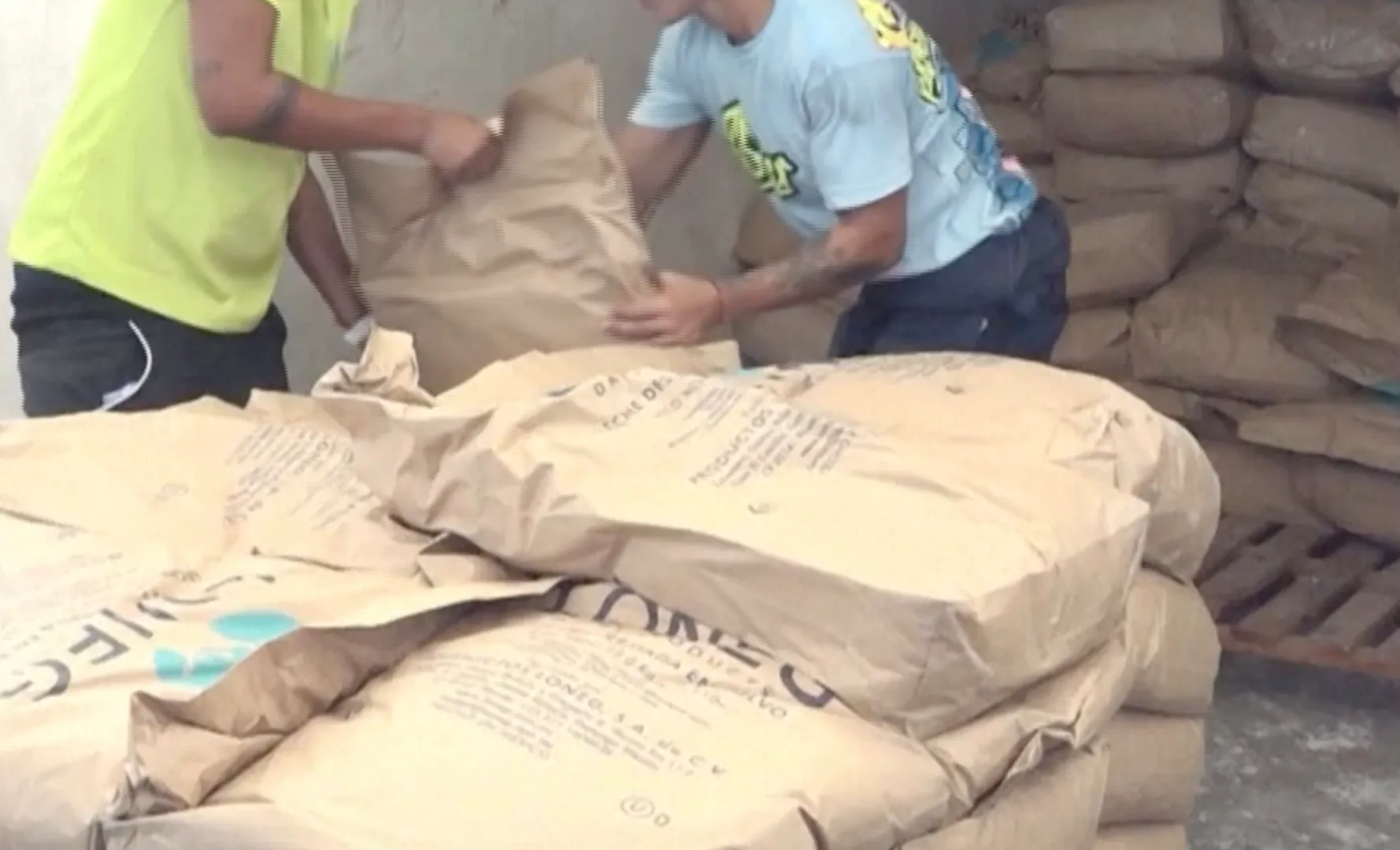
Cuba has begun distributing donated powdered milk from Mexico and Uruguay as the island faces severe shortages and a deepening economic crisis. Officials say young children, pregnant women and paediatric facilities will be prioritised.
Mexico approved a constitutional reform that adds foreign intervention or interference in electoral processes as a new ground for annulling elections. File Photo by Sashenka Gutierrez/EPA
May 29 (UPI) — Mexico’s Congress approved a constitutional reform that adds foreign intervention or interference in electoral processes as a new ground for annulling elections.
The measure, promoted by the ruling party, the National Regeneration Movement, or Morena, has sparked debate over national sovereignty, electoral security and the limits of legal interpretation in future elections.
The reform amends Article 41 of the Constitution to establish that an election may be annulled when acts of foreign intervention or interference that influence electoral results are proven.
The initiative was initially approved by the Chamber of Deputies and later received Senate approval. It must now be ratified by at least 17 state legislatures before it can take effect.
The proposal was introduced by Ricardo Monreal, Morena’s coordinator in the Chamber of Deputies, who argued that Mexican law had until now lacked a specific sanction for cases of foreign interference in elections.
“Currently there is no sanction for anyone who seeks to invade our country or interfere in electoral processes,” Monreal said during the legislative debate, according to El Universal.
The lawmaker said the annulment could only be applied when there is “full and conclusive evidence” that foreign governments or external agents intervened in an election.
The Chamber of Deputies approved the reform with 307 votes in favor, 128 against and one abstention.
The ruling coalition argues that the measure seeks to strengthen national sovereignty against possible attempts at external influence, including irregular financing, disinformation campaigns, digital operations or political pressure originating abroad.
President Claudia Sheinbaum publicly backed the initiative and said there is a “real risk” of foreign intervention in future Mexican electoral processes.
Several local media outlets reported that the government has linked the reform to an international environment marked by growing geopolitical disputes, digital influence campaigns and external pressure on Latin American governments.
However, opposition parties questioned both the substance of the reform and the speed with which it advanced through Congress.
Rubén Moreira, parliamentary leader of the Institutional Revolutionary Party, warned that the initiative was introduced only days before it was debated and argued that there was not enough time to thoroughly analyze the legal implications of concepts such as “interference” or “foreign intervention,” according to reports by El País.
Lawmakers from the National Action Party and the Citizens’ Movement party also warned of the risk that the new provision could be used discretionarily to challenge election results under broad interpretations of what constitutes foreign influence.
During the legislative debate, Morena rejected those accusations and said the reform is not intended to censor news media, social media platforms or individual expressions.
Monreal said that a news article, an interview or a social media post would not, by themselves, be sufficient grounds to justify the annulment of an election.
He also said secondary legislation will be needed to precisely define the legal circumstances under which foreign intervention occurred and which authorities will be empowered to determine it.
The debate comes amid growing political tensions between Mexico and United States over issues related to drug trafficking, border security and regional cooperation.
It also coincides with a broader debate across Latin America over the influence of foreign governments, transnational digital campaigns and mechanisms to protect electoral sovereignty.
Mexico’s consulate in Los Angeles helps thousands of citizens each week, assisting them with registering births, obtaining passports and, increasingly since President Trump’s second term began, accessing legal help for loved ones who have fallen afoul of his administration’s immigration policies.
Although it serves the country’s biggest Mexican community, all 53 Mexican consulates in the U.S. provide services that make Mexican people’s lives easier — just like the nine U.S. consulates in Mexico improve the lives of Americans south of the border.
The U.S. State Department has launched a review that might lead to the closure of an unknown number of Mexican consulates. Although it hasn’t said why, the review is happening against the backdrop of the immigration crackdown, some thorny bilateral issues and far-right theories that the consulates have been interfering in U.S. politics and encouraging Mexicans to migrate northward.
Azucena Aviles, a 33-year-old mother who drove more than an hour to the L.A. consulate this month to renew her Mexican passport and get one for her daughter, said consular services are invaluable — especially in California, which is home to nearly 13 million people of Mexican descent, including an estimated 1.7 million who are in the U.S. illegally.
“It wouldn’t be fair if they messed with the Mexican people, especially with our support systems, which come from the Mexican consulate and which, in some way, help or protect our fellow Mexicans,” she said.
Trump has been exerting growing pressure on Mexico, with questions looming over issues including human rights, national sovereignty and regional diplomacy.
His administration has given only the broadest of explanations for launching its review.
“Department of State is constantly reviewing all aspects of American foreign relations to ensure they are in line with the President’s America First foreign policy agenda and advance American interests,” Dylan Johnson, assistant secretary of State for global public affairs, wrote in an email.
Among the possible reasons for the review is that it could somehow fit into the Trump administration’s immigration efforts to deport people in the U.S. illegally. The largest contingent of such people — an estimated 4.3 million, according to the Pew Research Center — are Mexican.
Relations between the two countries could also play a role, with Trump increasing pressure on Mexico in the run-up to free trade negotiations important to both nations’ economies, taking a more aggressive approach toward the U.S.’ southern neighbor and even threatening to take military action against Mexican cartels.
Mexican President Claudia Sheinbaum has avoided head-on conflicts with Trump and instead relied on diplomacy, including sending top officials to Washington and seeking to maintain a strong relationship with the Trump administration by cracking down on Mexican cartels. Sheinbaum and her predecessor have also been key allies in slowing migration to the U.S. and speeding up the deportation of other Latin American migrants.
But Sheinbaum has taken a firmer stance in regards to the deaths of Mexicans in U.S. immigration detention centers, calling them unacceptable and saying the conditions in such lockups were “incompatible with human rights standards and the protection of life.” She instructed Mexican consulates to visit detention centers daily to help ensure detained citizens are being held in safe conditions.
Relations rapidly deteriorated in recent weeks after the U.S. indicted several Mexican officials on drug trafficking charges, and two CIA officers died following an anti-narcotics operation in northern Mexico — American involvement that Sheinbaum said her government had not authorized. That drug raid raised uncomfortable questions in Mexico about the extent of U.S. involvement in domestic security operations.
Years of tit-for-tat tariffs between the two countries have also added strain.
A review of foreign consulates is “usually a sign that a bilateral relationship is in a very, very rocky moment,” said Arturo Sarukhan, a former Mexican ambassador to the U.S. In Mexico’s case, it comes at “the worst moment of the U.S.-Mexico relations” in decades, given all the current points of contention, he said.
Further straining relations is a theory being amplified by Peter Schweizer, a writer with a following among Trump loyalist who has claimed that Mexican consulates interfere in U.S. politics and encourage migration to the U.S. Experts say that although a few Mexican consulate officials may have sought to influence politics back home, there is no evidence of them interfering in U.S. elections.
In response to the State Department review, Sheinbaum said the idea that Mexican consulates are “playing politics in the United States is completely false.” She said the job of consulates anywhere is to “always protect” citizens.
Sarukhan too said that although consulates defend the rights of Mexican citizens, there is no evidence that they are interfering in U.S. elections.
Whatever the reasons for the consulate review, it has stoked worries.
During a weekly public forum at the L.A. consulate, a woman who didn’t give her name and whose husband had been in U.S. immigration detention asked for help finding him a lawyer, highlighting one crucial service consulates provide for their citizens.
An older man said he had heard about the review and asked about possible closures.
Carlos González Gutiérrez, Mexico’s top diplomat in Los Angeles, responded that, as Sheinbaum said, there would be “no reason whatsoever” for the U.S. to close a Mexican consulate.
Indeed, consulates would have significant, devastating effects for Mexican immigrants,” especially in isolated areas, said Ariel Ruiz Soto, a senior policy analyst for the Migration Policy Institute.
Every day, consular officials go to the Immigration and Customs Enforcement holding center in downtown Los Angeles to identify and interview as many detained Mexican nationals as they can.
González Gutiérrez, 62, begins every weekly public forum by noting how many detained Mexicans consular officials have interviewed since the immigration crackdown began in Los Angeles last June.
At that May 11 meeting, the figure stood at 1,940. Nearly half had deep roots in the U.S., he said. About 46% have been deported, 35% have children born in the U.S., 69% entered the country through a port of entry, 6% overstayed a visa and 2.5% requested asylum. Most were men, and many worked in construction, agriculture, gardening and the service industry.
He also disputed the claim that Mexican consulates are interfering in U.S. politics.
“We are guests of this country’s government, just as U.S. consuls are guests of the Mexican government. In that sense, we are neither activists nor spies,” said González Gutiérrez. “We carry out our work openly, within a pluralistic and democratic society.”
Pineda and Janetsky write for the Associated Press. Janetsky reported from Mexico City.
Canada has announced plans to buy a fleet of early warning planes from Sweden’s Saab rather than a competing option from Boeing as it seeks to reduce its reliance on the United States.
Prime Minister Mark Carney said on Wednesday that Canada would opt for Saab’s GlobalEye, which is based on Bombardier’s Global 6500 jet. Boeing’s E-7 Wedgetail plane – which has suffered from delays and cost overruns – had also been in contention.
Recommended Stories
list of 4 itemsend of list
“With a suite of advanced sensors and mission systems, Saab’s GlobalEye will be a key resource for the Canadian Armed Forces to detect and deter threats across the Arctic,” Carney told a defence conference in Ottawa.
The Prime Minister pledged in March that Canada would take full responsibility for protecting its vast Arctic territory, after relying for decades on a partnership with the US to monitor its more than 4.4 million square km (1.7 million square miles) of land and sea, a territory larger than India.
Carney’s Liberal government last year announced plans to ramp up defence spending. The US and other allies had complained for years that Canada was not meeting longstanding NATO targets on military expenditure; Carney announced in March that Canada hit that target of spending 2 percent of its GDP on defence last year.
In a statement, Saab said it planned to invest in research and development work in Canada as part of any deal.
Although Carney did not give details of the fleet size or the cost of a potential contract, military officials had earlier said they were looking to buy six early warning aircraft.
Philippe Lagasse, associate director of international affairs at Ottawa’s Carleton University, said Canada’s decision to buy the GlobalEye planes was “an important test case for the Carney government’s policy of pivoting away from American military capability”.
He said in a statement that the decision confirms Canada’s relationship with Sweden, a new NATO ally that has also been eager to strengthen its ties to the Canadian military.
Canada has previously said it wants to work more closely with the Nordic countries in the Arctic on defence and other issues, in a global environment in which the US has become a less reliable partner.
“GlobalEye is already creating jobs in Canada, and working with the Canadian supply chain. This decision ties our two nations even closer together,” Swedish Prime Minister Ulf Kristersson said in a social media post.
Saab is also in the running to sell Canada some of its Gripen fighters.
Canada has a deal to buy 88 F-35 jets from Lockheed-Martin, but last year, after the US slapped tariffs on key Canadian imports, Carney asked the military to probe whether it could cut back the order and buy some planes from another manufacturer.
Carney later told reporters Ottawa would make a decision on the fighter fleet in due course and declined to comment when asked whether the military would be operating two jets.
Last week, a Pentagon official, speaking after Washington suspended planned biannual defence talks with Canada, said the delay in making a decision on the F-35s showed how Ottawa was prioritising politics over defence issues.
Still, Lagasse of Carleton University said he expected Canada would ultimately decide to stick with a fleet of F-35 jets rather than splitting the fleet by buying some Saab Gripens.
“If the government was determined to buy Gripens, I would have expected them to make the announcement alongside this [GlobalEye] decision,” he said.
Trade tensions
The announcement came amid ongoing trade tensions between US and Canada after US President Donald Trump slapped tariffs on Canada after taking office last year, alongside multiple comments threatening to annex the country and make it the 51st state of the US.
Historically, nearly 80 percent of Canada’s exports have been to the US. While the vast majority of those were protected under the USMCA, the trade agreement between the two countries that also includes Mexico, that is now due for a review, which starts on July 1, and Trump has said the US does not really need that deal.
While the US has announced bilateral talks with Mexico, there has been no mention of Canada.
Deputy US Trade Representative Jeffrey Goettman will lead bilateral talks in Mexico City on Thursday and Friday focused on “economic security and rules of origin for key industrial goods,” the department said in a statement on Wednesday.
USTR said the US and Mexico will hold a second round of negotiations in Washington on June 16-17, focused on agriculture and “a level playing field,” with a third set of talks in Mexico City scheduled for the week of July 20.
The first Trump administration held trilateral negotiating rounds with both Mexico and Canada to create the existing USMCA, which replaced the 1994 North American Free Trade Agreement in 2020.
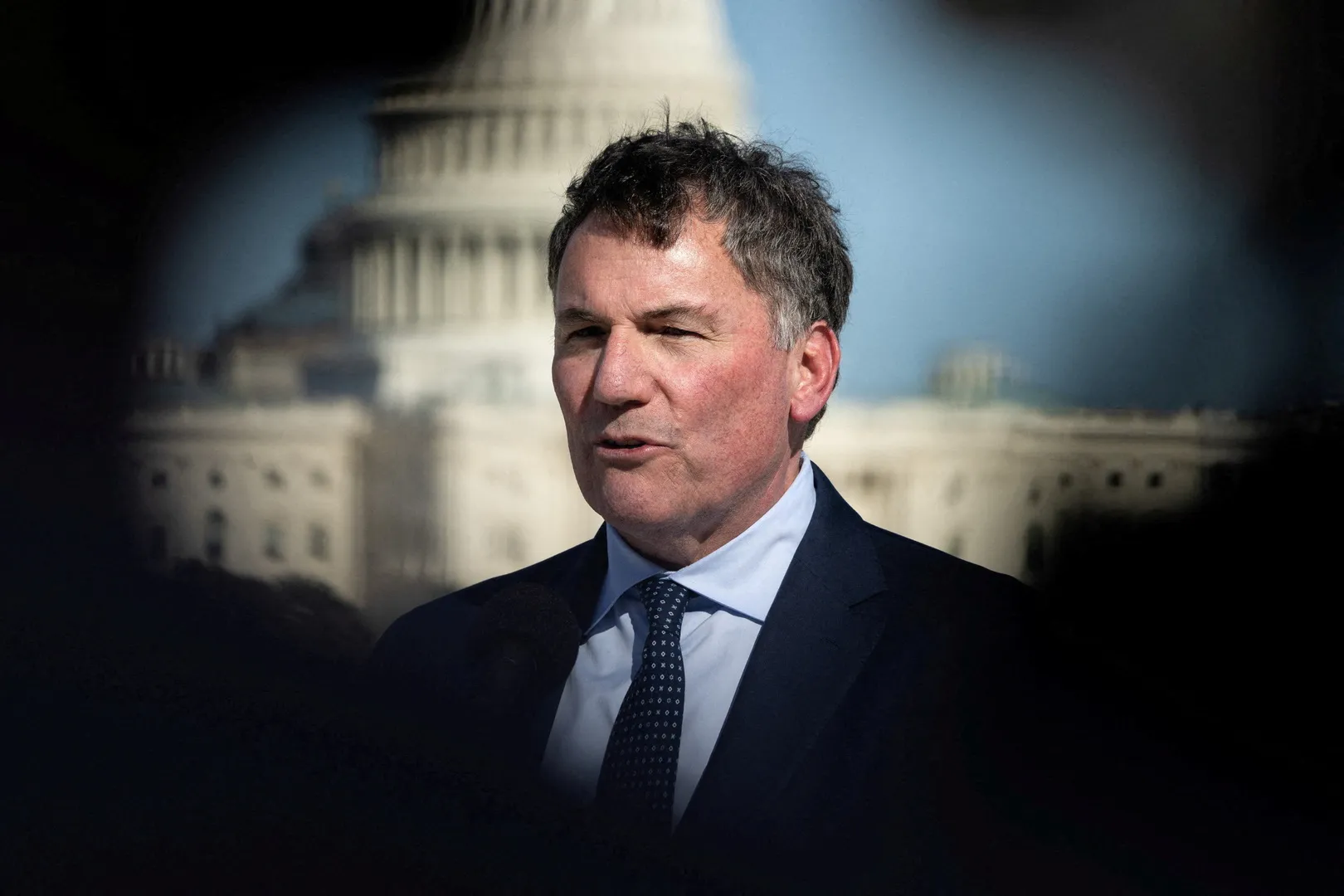
But so far, there have been few discussions between US Trade Representative Jamieson Greer and his Canadian counterpart, Canada-US Trade Minister Dominic LeBlanc, since early March, and no formal launch of a US-Canada negotiating process.
Mexican President Claudia Sheinbaum has announced that her country will host the Iranian national football team during the upcoming FIFA World Cup, due to tensions with the United States.
On Monday, Sheinbaum said that FIFA, the global football governing body, had approached Mexico about hosting Iran, after the US said it did not wish to do so.
Recommended Stories
list of 3 itemsend of list
“We have no reason to deny them the possibility of staying in Mexico,” Sheinbaum said during her daily media conference.
Previously, Iran had been scheduled to play all three of its group matches in the US.
But the administration of US President Donald Trump has previously said it is not “appropriate” for Iranian team members to be in the country, “for their own life and safety”.
It has yet to grant the Iranian team the necessary visas to travel to the US, despite Trump’s assertion that players and staff would be “welcome”.
Since February 28, the US and Israel have been at war with Iran, and peace negotiations are tense but ongoing.
The head of Iran’s football federation, Mehdi Taj, confirmed on Sunday that the team planned to move its training base from Tucson, Arizona, to the Mexican border city of Tijuana.
Taj explained that team leaders got approval for the move after meeting with FIFA officials in Istanbul, as well as holding an online conference with FIFA’s Secretary General, Mattias Grafstrom.
Switching the team’s base to Mexico, Taj said, would help avoid visa complications, with the team able to travel directly to Mexico aboard Iran Air flights.
But the US-Israeli war against Iran has cast a pall over the World Cup, making the Iranian team’s participation uncertain.
Roughly 3,468 people have been killed in Iran since February’s war began, and more than 26,500 have been injured. Further fatalities have been reported across the region.
The war has also thrown the global economy into turmoil, driving up the costs of fuel and agricultural fertiliser, among other goods.
Iran’s football team has long been a top squad in its region: It currently ranks near the top of the Asian Football Confederation. Its participation in the 2026 tournament marks its fourth straight World Cup qualification.
Trump, however, has sent mixed messages about Iran’s presence at the World Cup, suggesting at times that Iran should sit out the tournament. At other moments, he has expressed ambivalence.
In March, for instance, Politico asked Trump about Iran’s presence at the World Cup. Trump reportedly responded, “I really don’t care”, before calling Iran a “badly defeated country”.
The US, Mexico and Canada are co-hosting the games, with 78 matches in the US alone, including the final. Kick off is on June 11.
Iran is set to play its first two Group G matches in Los Angeles against New Zealand on June 15 and Belgium on June 21, before facing off against Egypt in Seattle on June 26.
The Trump administration’s hardline approach to immigration has raised additional concerns about whether the US will be a welcoming host for fans from around the world.
Already, Trump has moved to suspend visa processing for applicants from nearly 75 countries, including Iran, Brazil, Colombia, Ivory Coast and Senegal, which have teams at the World Cup.
Residents from some of those countries, however, are not required to receive visas to enter the US for short-term visits.
On Monday, Sheinbaum explained that she had been approached by the Iranian team and FIFA officials for help hosting players and staff.
“The United States doesn’t want the Iranian team to spend the night,” Sheinbaum said. “So they asked us, ‘Can we stay the night in Mexico?’ We said sure, no problem.’”
Iran is moving its World Cup training base from Tucson, Ariz., to Tijuana, the president of the country’s soccer federation said Saturday, removing one of the final hurdles to its participation in this summer’s tournament.
Iran is scheduled to open World Cup play at SoFi Stadium, facing New Zealand on June 15. It will play Belgium in Inglewood six days later before finishing the group stage against Egypt in Seattle. But there had been questions over the Iranian team’s security in the U.S. after American and Israeli attacks on the country began nearly four months ago.
This World Cup will be the first in which a qualifying team will play in a host country with which it was at war. In March, shortly after the war began, Iranian officials began to question whether they should travel to the U.S. for the tournament — doubts that increased after President Trump posted on social media to say he did not believe it was appropriate for Iran to come “for their own life and safety.”
Because the World Cup is being shared with Mexico and Canada, Iran requested permission to move its base across the border, a request Mehdi Taj, president of the Iran Football Federation, said Saturday had been granted.
FIFA, the World Cup organizer, did not immediately confirm to move.
“All team base camps for the countries participating in the World Cup must be approved [by] FIFA,” Taj said in his statement obtained by the Associated Press. “Fortunately, following the requests we submitted and the meetings we held with FIFA and World Cup officials in Istanbul, as well as the webinar meeting we had yesterday in Tehran with the respected FIFA secretary general, our request to change the team’s base from the United States to Mexico was approved.”
Iran’s federation said moving the base camp will resolve potential visa issues since the team will enter the U.S. through Mexico. Taj that the team “may even be able to travel to and from Mexico using Iran Air flights.”
Tijuana is about 50 minutes by air from LAX, about 55 minutes quicker than a flight from Tucson. Iranians have been banned by the U.S. government from receiving visas to enter the U.S., although exceptions are to be made for athletes, coaches, and support personnel involved in the World Cup.
Iran were expected to fly from Turkiye to Arizona to continue World Cup 2026 preparations but will switch to Mexico.
Published On 23 May 202623 May 2026
Iran will base their squad in the Mexican border city of Tijuana during this year’s World Cup after football’s world governing body FIFA approved a request to move their training camp from Arizona, the head of Iran’s football federation said on Saturday.
“We will be based in the Tijuana camp, which is near the Pacific Ocean and on the border between Mexico and the United States,” Iran’s Football Federation President Mehdi Taj said in a video posted on its Telegram social media account.
Recommended Stories
list of 4 itemsend of list
Taj added that the switch would help avoid visa-related complications following the US-Israel war on Iran, and that the squad would be able to fly directly to Mexico with Iran Air.
Iran will play their first two Group G matches in Los Angeles, against New Zealand on June 15 and Belgium on June 21, before facing Egypt in Seattle on June 26.
“The total distance between us and the venue of our games in Los Angeles is 55 minutes by flight,” Taj said, adding that Tijuana was closer to their match venues than the team’s previously planned camp in Arizona.
Iran has faced uncertainty for months over travel and security arrangements for the World Cup, which will be cohosted by the United States, Canada and Mexico, and had asked for their games to be moved from the US.
Iranian officials said this month that their players and staff had yet to receive US visas, less than a month before the start of the tournament. They began visa applications during their stay in Turkiye for pre-tournament training.
Parts of the Puebla stadium for high-profile warm-up for 2026 edition were closed to spectators due to FIFA sanctions.
Published On 23 May 202623 May 2026
Mexico have beaten Ghana 2-0 in Puebla in a World Cup warm-up that offered a glimpse of the excitement building less than three weeks before the country opens the tournament.
While Puebla is not among Mexico’s World Cup host cities, fans in green shirts at Cuauhtemoc Stadium created an electric atmosphere throughout the night on Friday.
Recommended Stories
list of 4 itemsend of list
Repeated Mexican waves rolled around the stadium despite visible empty sections closed under FIFA sanctions linked to discriminatory chants at previous national team matches.
Brian Gutierrez set the tone immediately, curling home from the edge of the box after two minutes.
Teenage Liga MX sensation Gil Mora struck the post in the first half, and Alexis Vega had a header ruled out for offside before the break.
“He’s a different player, we’ve always said that,” Mexico coach Javier Aguirre said of Mora, who made his first appearance for Mexico since November after returning from injury.
“He’s brave, direct, vertical … he gives us great joy because he’s Mexican and because he’s back without pain.”
The teams were met by a lively atmosphere at Estadio Cuauhtemoc [Henry Romero/Reuters]
Ghana, with recently appointed coach Carlos Queiroz absent and assistants leading from the bench, threatened an equaliser early in the second half after forcing a pair of saves from the Mexican goalkeeper and hitting the crossbar.
But substitute Guillermo Martinez ended the visitors’ hopes in the 54th minute, finishing off a counterattack to double Mexico’s lead.
Coach Aguirre used the friendly to continue evaluating players ahead of naming Mexico’s final World Cup squad on June 1, with Europe-based players Luis Chavez, Edson Alvarez and Jorge Sanchez making second-half appearances after recently joining training camp.
The coach praised the effort shown by players battling for places in the final squad, saying: “The fact they tried and gave their best effort, for me, that’s already worthwhile.
“It’s not easy (to pick the team), it’s the most complex part of my job … It’s a bit about trying to see all the possible scenarios with my coaching staff.”
The world’s best football players will travel to North America this summer for the most anticipated sporting event of the year: the FIFA World Cup 2026.
While the 48-team tournament will feature young prodigies and veterans alike, some stars will not be at the tournament, having missed out due to injuries or because their nations failed to qualify.
Al Jazeera takes a look at the top stars who will not be at the World Cup:
Khvicha Kvaratskhelia (Georgia)
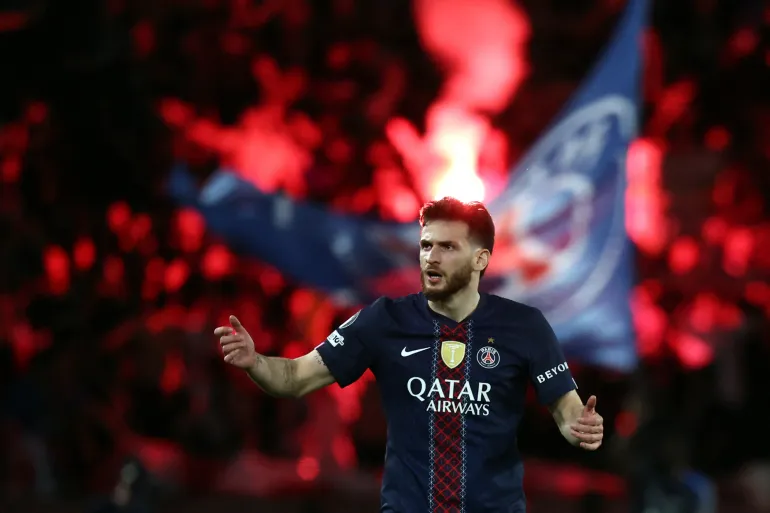
Georgian Khvicha Kvaratskhelia, PSG’s most creative player, will not be at the World Cup [File: Anne-Christine Poujoulat/AFP]
One of the most feared wingers in European football, Kvaratskhelia will not be on the plane to North America as his country, Georgia, failed to qualify for the finals in June and July.
The Paris Saint-Germain winger, the standout player in the Champions League this season, is yet to play at a World Cup. His last major tournament with Georgia ended in a round-of-16 run at Euro 2024.
Robert Lewandowski (Poland)
The 2026 edition was probably Lewandowski’s last chance of featuring at another World Cup [File: Kacper Pempel/Reuters]
A teary-eyed Lewandowski left the pitch after Poland’s final World Cup qualifier on March 31 as the nation narrowly missed out on the 2026 edition. The 37-year-old Barcelona striker even hinted at international retirement after the failure to qualify but has yet to confirm the decision.
Lewandowski has played a record 165 games for Poland, beginning with a goal on his debut against San Marino in 2008 when he was 20. His 89 goals are nearly twice as many as any other Polish player, but he has played at the World Cup only twice with a last-16 finish in 2022 being the best result.
Gianluigi Donnarumma and Sandro Tonali (Italy)
Tonali, left, and Donnarumma are important players at their respective clubs, Newcastle United and Manchester City [File: Scott Heppell/Reuters]
Italy’s failure to qualify for the World Cup for a third consecutive time means the tournament will be devoid of some of the finest Azzurri talents, including star goalkeeper Donnarumma and midfielder Tonali.
After suffering a shock penalty shootout defeat to Bosnia and Herzegovina in the playoffs, Italy became the first former champions to miss three World Cup finals in a row. The last time the Italians played at a World Cup was in 2014 when they crashed out in the group stage in Brazil.
“The World Cup curse”, as described by the Italian media, will keep Donnarumma – one of the best goalkeepers in the world – and Tonali away from playing at the world’s biggest football tournament.
Victor Osimhen and Ademola Lookman (Nigeria)
Osimhen, left, and Lookman are the two brightest attackers in Nigeria’s squad [AFP]
After Italy, Nigeria are the biggest nation to miss out on a ticket to the World Cup 2026, thanks to an abysmal qualifying campaign. The Super Eagles had dreamed of soaring high in North America, but their wings were clipped after a shock penalty shootout defeat to the Democratic Republic of the Congo in the African playoffs.
Nigeria’s failure to make it to the World Cup means fans will miss out on watching Lookman, arguably their best player at AFCON 2025, and Osimhen, one of the most feared strikers in Africa.
The dynamic duo of Lookman and Osimhen has often brought joy to Nigerian fans, whose team is missing successive World Cup finals for the first time in 36 years.
Hugo Ekitike (France)
Ekitike had been dreaming of a maiden World Cup appearance [David Klein/Reuters]
France forward Ekitike’s dreams of making his World Cup debut were shattered when he ruptured his Achilles tendon while playing for Liverpool against PSG in April.
The injury, which could sideline him until January 2027, saw the 23-year-old leave the pitch in tears on a stretcher during the second leg of a Champions League quarterfinal tie at Anfield.
At the start of the 2025-2026 season, Ekitike was far behind in the France pecking order, but an impressive season at Liverpool, which saw him score 17 goals in all competitions until his injury, had put him in the running to be picked by coach Didier Deschamps for the World Cup.
Estevao and Rodrygo (Brazil)
Winger Estevao is one of Brazil’s most promising young talents [File: Sameer Al-Doumy/AFP]
One of the brightest talents in global football, winger Estevao was set for his much-awaited World Cup debut until a hamstring injury crushed his dream. The 19-year-old suffered a grade four hamstring injury while playing for his club, Chelsea, in April, which ultimately kept him out of Brazil’s World Cup squad.
Joining Chelsea from Palmeiras in May 2024, Estevao’s eight goals and four assists in his debut season in England caught everyone’s attention. The teenage sensation had also established himself as a regular member of Brazil’s squad under Carlo Ancelotti.
Alongside Estevao, Real Madrid winger Rodrygo, who made five appearances for Brazil at the 2022 World Cup, will not be at this year’s edition after suffering a torn meniscus and ACL in his right knee.
The 25-year-old picked up the injury while playing for Madrid in March and is expected to be out until the end of 2026.
Xavi Simons (Netherlands)
An injury sustained while playing for Tottenham Hotspur will keep Xavi Simons out of the Dutch World Cup campaign [AFP]
Attacking midfielder Simons will not be with the Netherlands at the World Cup 2026 after he suffered an anterior cruciate ligament (ACL) injury while playing for his club, Tottenham Hotspur, against Wolverhampton Wanderers in a Premier League game.
Simons, 23, was expected to be a key figure in Ronald Koeman’s Netherlands squad for what would have been his second World Cup after his debut in 2022.
He has earned 34 caps, most recently featuring in friendlies in March.
Bryan Mbeumo (Cameroon)
Cameroon’s failure to qualify for the World Cup came as a surprise as the Indomitable Lions hold the African record for the most appearances with eight overall.
After losing to DR Congo in the semifinals of the African playoffs, Cameroon’s World Cup dreams died and, with them, Mbeumo’s chances of playing in North America.
Mbeumo has had a decent season at Manchester United, scoring 10 goals and bagging three assists across all competitions.
Mbeumo is one of several African stars who will not be at the upcoming World Cup [Stu Forster/Getty Images]
Honourable mentions
A few other high-profile players will also miss the tournament.
Spain midfielder Fermin Lopez misses out after requiring surgery on a fracture in his right foot while Germany’s Serge Gnabry has been ruled out with a torn adductor muscle in his right thigh.
England have omittedCole Palmer and Phil Foden from their squad after both had disappointing seasons.
Japan’s Takumi Minamino was left out after suffering an ACL tear while Kaoru Mitoma also misses out after suffering a hamstring injury.
Defender Eder Militao was dropped from Brazil’s squad after undergoing surgery for a hamstring injury while Ancelotti also dropped forwards Joao Pedro and Richarlison.
Slovenia goalkeeper and captain Jan Oblak will be absent after they failed to qualify, and central midfielder Dominik Szoboszlai faces a similar fate after Hungary missed out too.