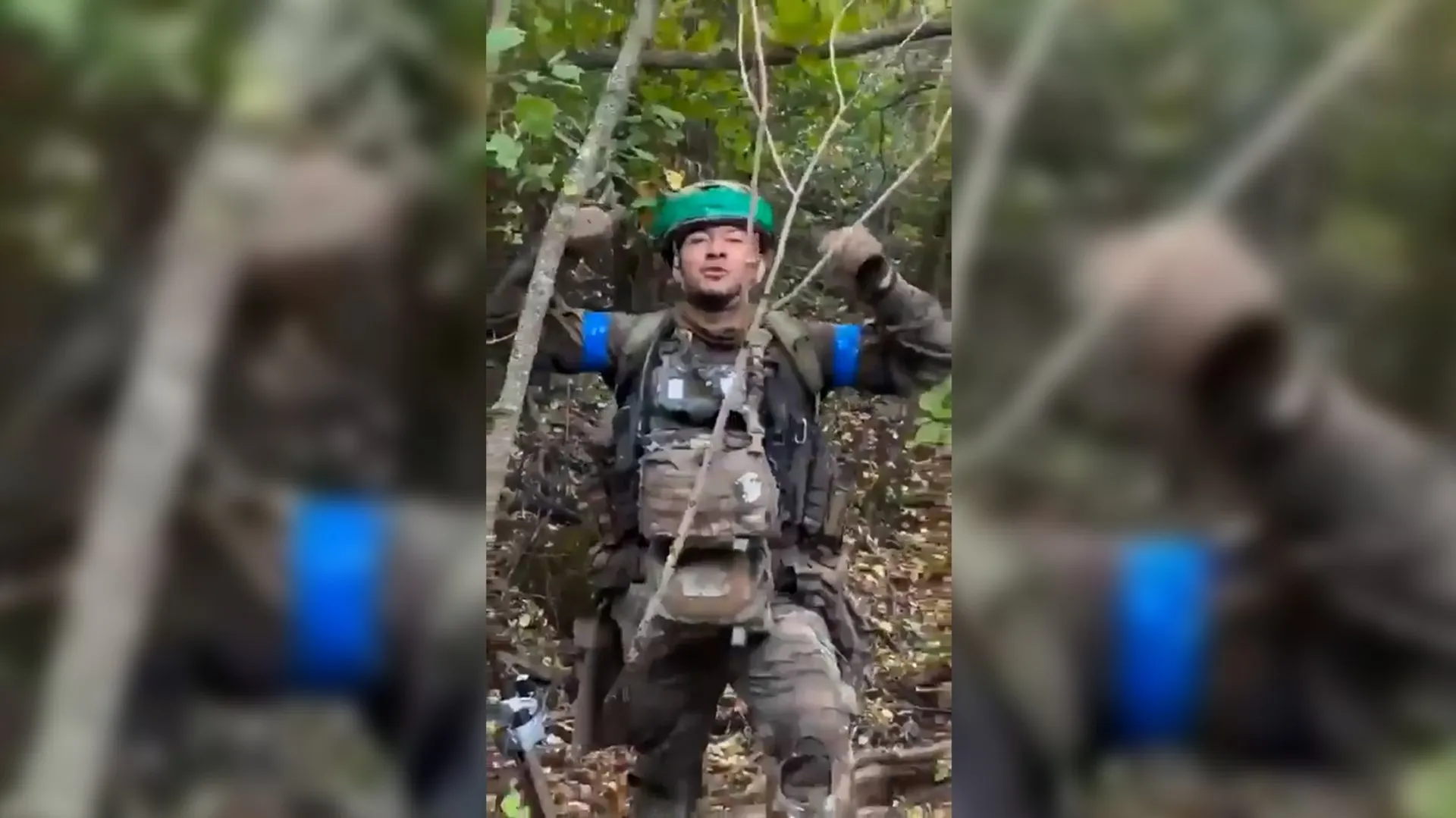
Mexico is investigating a viral video said to show mercenaries chanting drug cartel slogans in Ukraine. President Claudia Sheinbaum announced the inquiry. Mexico previously warned Kyiv cartel members were joining its International Legion to gain drone warfare experience.
The minuscule yet distinctly humanoid figure of a fairy flaps its wings as it flies into the ancient ruins of a bygone kingdom. Guiding a young heroine to meet a mysterious faun, for a moment, the fantastical creature looks as though it might cross the threshold of the screen.
It is in that instant that Guillermo del Toro — wearing 3D glasses while sitting at the Academy Museum of Motion Pictures’ imposing David Geffen Theater for a tech check — chuckles with pride as if to say, “Look at that.” Later that night, almost 1,000 fans were transported into his entrancing 2006 masterwork, “Pan’s Labyrinth,” (a.k.a. “El Laberinto del Fauno”) at the premiere of the new 3D version.
Back in theaters across the country on Friday (which is also Del Toro’s 62nd birthday), “Pan’s Labyrinth” is celebrating its 20th anniversary with a new 4K restoration, available in both 2D and in the aforementioned 3D transfer that Del Toro himself oversaw.
Doug Jones, left, plays the faun that beckons to Ofelia, right, played by Ivana Baquero in “Pan’s Labyrinth.”
(Scott A. Garfitt / Andreea Alexandru / Invision / AP)
As brutal as it is spellbinding, the Mexican filmmaker’s modern classic unfolds during the Spanish Civil War — more precisely, in 1944 — as young Ofelia (Ivana Baquero) and her pregnant mother move into the camp run by the ruthless Capt. Vidal (Sergi López).
Amid the bloodshed, Ofelia discovers an underworld of magical entities, including the alluring faun (Doug Jones), who convinces her that she is a princess who must reclaim her royal status.
By winning three Academy Awards and being nominated for two more — one for Del Toro’s screenplay, the other for foreign language film, representing Mexico — “Pan’s Labyrinth” signified an artistic watershed moment in Del Toro’s career. These accolades came after he directed two comic-book adaptations for Hollywood studios: “Blade II” and “Hellboy.”
Beyond the recognition, the experience felt spiritually transformative for the Guadalajara native; not the least because of the hurdles he overcame to bring it to fruition.
“‘Pan’s’ marks a big divide in what I did before and what I did after. I became invested in a different way in filmmaking,” Del Toro tells me. “I don’t know how to describe it, but filmmaking became a religion, as opposed to something that I could do. It fused with me.”
Though the film is now regarded as one of the greatest works of the 21st century, when Del Toro set out to make it, the industry was not receptive to his ideas.
“Everything I thought I wanted to say about war in ‘Devil’s Backbone’ seemed obsolete, because we had gone through 9/11 and the world had changed,” Del Toro recalls. “I didn’t want to do an American movie. I was being offered a lot of comic- book movies and said, ‘I got to do a companion piece for “Devil’s Backbone” no matter what.’ But nobody wanted to do the movie.”
One key objection was the mature tone of the narrative, in which the child protagonist is directly confronted and endangered by the evils derived from fascist ideologies.
“They said, ‘If it’s a fairy tale then it should be a family movie,’ because I’d been offered ‘Narnia’ a year before by [former Walden Media chief executive] Cary Granat,” Del Toro tells me.
“He said, ‘Why don’t you do ‘Narnia’?’ And I said, ‘Because I want to do my own version of a fairy tale where the lion doesn’t resurrect and it’s about a pitiless world against a boundless imagination.’”
Del Toro’s interest in stories where the woes of children are taken seriously was spurred by ‘Los Olvidados,’ Luis Buñuel’s classic from 1950, about a group of neglected children surviving a harsh reality in the streets of Mexico City.
“When I saw ‘Los Olvidados,’ I was in my early teens,” says Del Toro. “I thought every time somebody told a story about a child that was unsentimental and that was a little brutal — it could be ‘The Spirit of the Beehive’ or ‘Los Olvidados’ or ‘The Red Balloon’ or even Bobby Driscoll in ‘The Window’ — whenever you saw a child in real danger, a child in jeopardy, a child in moral dilemma, like ‘The Fallen Idol,’ I really was transported.”
Children, Del Toro believes, are often invisible to adults. They are “cartoons” in the eyes of “regular adults.” Thus, when his mother started reading child psychology books to better understand a young Del Toro, he read them as well, so that he could try to manipulate her.
Del Toro laughs mischievously as he remembers his antics. “I would do exactly what the book said, and I realized I could work within that preconception and make my grandma buy me horror comic books or make my mom allow me to miss school,” Del Tor recalls. “Ofelia is very strong. That was the point of the movie for me. I wanted to see the clash of wills between a young kid and a fascist captain, and I wanted to see the kid win.”
(Teresa Isasi / Picturehouse)
Del Toro’s mother, Guadalupe, died in 2022. But she lives on in cinema, thanks to the 1985 landmark queer Mexican film “Doña Herlinda and Her Son,” by director Jaime Humberto Hermosillo, where she played the titular Doña Herlinda.
And if you look closely, you’ll also find Del Toro in the movie, which was filmed in Guadalajara.
“I have a cameo with my ex-wife in it. Lorenza. She’s the receptionist and I appear dancing in Chapala, but I’m super thin, so you can never recognize me,” he says. “I’m dancing with a girl that I liked, but I was already in the throes of dating the one who became my wife, Lorenza.”
Then there was the question of the picture’s language. Del Toro wouldn’t waver on making “Pan’s Labyrinth” in Spanish.
“Many of them said, ‘We’ll do it if you do it in English — set in Spain, same ending, the girl dies, no problem, but in English.’ And I said, ‘I can’t. It’s not true to the movie.’ I’m not saying you can never do that, but it’s always this ‘Zorro’ thing like, ‘Are you in a hurry, señor?’ or ‘Come to the hacienda,’” he says, doing a funny, exaggerated accent on the Spanish words.
“If you’re trying to contrast reality versus fantasy, the reality has to be in its language, in its location,” Del Toro adds, emphasizing his resolve to make the movie in his native tongue. “I thought, ‘This is about the reality clashing with the fantasy. I have to make the reality stylized, but I don’t want to do it in English, because then everything is a construct. Everything is just an idea.’”
In 2026, the film’s bilingual appeal is a major component of the marketing strategy that Cineverse — the entertainment company that Del Toro approached to handle the restoration and rerelease of “Pan’s Labyrinth” — is implementing to reach audiences across the country.
“A lot of our messages are in English and in Spanish. The messaging around the making of the 3D — Guillermo likes to say ‘F— AI,’ but we positioned it as ‘Made for humans, for humans. Hecho por humanos, para humanos,’” says Yolanda Macias, chief motion pictures officer at Cineverse. “That’s a really strong message that has resonated with our fans.”
A Mexican American woman whose parents emigrated from Jalisco, Macias sees “Pan’s Labyrinth” as a timeless movie that’s as relevant today as it was two decades ago.
“We are not ignoring a very important segment of the audience, which is the Latino population who have always, in my experience, shown an interest in creators from Mexico or from Latin America,” Macias says. “And we are so proud of Guillermo for being that person for this audience.”
When first envisioning “Pan’s Labyrinth,” Del Toro found himself grappling with existential concerns related to the meaning and relevance of what each person leaves behind when they are gone. Can anything we mortals create stand the test of time? Does it matter?
(Gina Ferazzi / Los Angeles Times)
“One of the things I was going through was I thought, ‘Is making movies worth it? You give them years and years and years, and then they just move down the current into the oblivion of the culture,’” Del Toro says. “A central theme in the film is, ‘Can we give our lives to something that doesn’t change the world?’ That’s why the movie ends with a little flower blooming in a dried tree. That’s all that is left of her story in the real world.”
His films will one day too become flowers left not only as proof of his time on earth, but perhaps as messages for those to come who have the sensibility to appreciate them.
“You can say, ‘Ofelia lived in the other kingdom,’ but in the real world, there’s only one tiny flower. And that’s why it says, ‘For those that know where to look.’ Because that’s what we do as filmmakers. When you ‘discover’ a filmmaker, you say, ‘I discovered this guy Fellini.’ Well, he’s been there for a while, but sure. Or you discover Miyazaki or Mamoru Oshii … They’re continents, but they are only in maps that are very secret. I like that image.”
So long as they are found, Del Toro doesn’t worry that much about how people encounter them.
“[Films] live on to a certain degree. Like when we were shooting ‘Frankenstein,’ I said, ‘We will live forever in the Netflix queue,’” he recalls, trying not to laugh. “Theatrical is the best. There’s no comparison. But I remember my childhood, I saw all the Universal monster movies on TV, and they were monumentally important for me. There’s something to be said about accessibility that is also important.”
I agree with him — and mention that some of the most revelatory movie-watching experiences for me as a young cinephile happened thanks to bootleg DVDs, which I would buy as a teen in Mexico City.
“I love the pirate DVDs in Mexico,” says Del Toro with a laugh. “I’ll tell you a little story: We went to promote ‘Hellboy’ in Mexico City, and we were having coffee. A guy came in and said, ‘You want to buy movies?’ And he had ‘Hellboy’ already, opening week … and it didn’t have a cover either!”
Another distinction that “Pan’s Labyrinth” holds is that it was the last film in Spanish that Del Toro directed. But that could change, he says; he still has another project he’d like to make in Mexico.
“I actually have an idea that I would love to shoot, but I want to make it a drama. I don’t want to make it a fantasy movie,” he explains. “I have a great story that I want to shoot one day. It’s a kidnapping scene from three points of view. The victim, the people doing the pickup, and another component that I will not reveal.” (Del Toro’s late father, Federico, was famously kidnapped in Guadalajara in the late 1990s.)
The thought of Del Toro making another Mexican film in the future, reminded me that the original screenplay for his period ghost story, “The Devil’s Backbone,” was set in Mexico, but a lack of funding forced him to shift the production to Spain, with the help of Pedro Almodóvar’s company El Deseo.
“It was about a traveling circus during the [Mexican] revolution with a mother, a father and a boy. It was full of jarred fetuses. The boy was a clown, and the father was a magician. I was trying to do Bergman’s ‘Hour of the Wolf’ or ‘The Magician’ — modest but creepy,” he explains. “But it was very different. I had the orphanage, I had the legend of the fetuses and a ghost; and I had the devil live in the monastery.”
In any language, Del Toro is a fierce advocate against the use of generative AI in artistic creation. He believes that anything touched by humans has a better chance to endure. The love audiences still hold for “Pan’s Labyrinth” is a testament to this sentiment.
“[Pan’s Labyrinth”] is very truthful to who I was. And whenever you are able to be truthful, people feel that it matters to you,” Del Toro says. “And when you think it matters to someone, you cherish it.”
Nine inmates and one visitor killed in Sinaloa prison riot, local authorities say.
Published On 9 Oct 20269 Oct 2026
Ten people have been killed and 16 others injured in a fight at the El Castillo Penitentiary Centre in the city of Mazatlan, in Mexico’s northwestern state of Sinaloa, state authorities said.
The Sinaloa Public Security Secretariat said on Thursday that a fight inside the prison had left nine inmates and a family visitor dead.
Recommended Stories
list of 3 itemsend of list
Sinaloa’s Secretary of Public Security, Sinuhe Tellez, said in a video posted on social media that the visitor was a minor.
The 16 injured inmates were transferred for medical attention, the secretariat said.
An inter-institutional group of security forces moved in, and the prison is now “under control”, with authorities remaining at the site, the secretariat added.
Social work staff are contacting the families of the dead, Tellez said, noting that visits to the prison had been suspended as a precaution and the rest of the prison population was safe.
Sinaloa is a battleground for warring factions of the Sinaloa drug cartel and is one of six Mexican states the US State Department advises Americans not to visit over security concerns.
Officials have not said whether the violence at the prison was linked to that conflict.
She was part of a generation whose parents were from the rancho of El Cargadero, Zacatecas, and started families in el Norte while waiting out the Mexican Revolution in the 1910s and the Cristero Revolt in the 1920s. Many returned to their home village when things calmed down.
After growing up in Mexico, my grandmother moved to California with my grandfather and their children in the 1960s. Only the American government considered her a native-born U.S. citizen, while society dismissed her as a Mexican. We grandchildren always considered our Mama Chela a doña — a grand Mexican dame who never wore pants and frequently covered her hair with a veil out of modesty. All she remembered from her early childhood in Arizona were snippets of the nursery rhymes “Did You Ever See a Lassie?” and “The Bear Went Over the Mountain.”
The El Cargadero diaspora, which mostly settled in Anaheim, saw our forebears’ American birth as a stroke of provenance allowing them to legally enter the U.S. and give their progeny a head start that other Mexicans could only dream of. It’s a story I’ve repeatedly told over my decades-long journalism career, and no one has yet challenged my description of my grandmother as an immigrant.
If they did, I’d think they had too much time on their hands, or maybe that they were a wackjob contrarian.
Cue Steve Hilton.
The Republican candidate for California governor is trying to make a scandal out of his Democratic opponent, Xavier Becerra, portraying himself as the son of Mexican immigrants. Twice last week during their CNN debate, Becerra said his parents came to California “with $12.” In previous interviews during his decades in the political spotlight, Becerra has shared that his father, Manuel, was born in Sacramento in 1928 and moved to Mexico as a child during the Great Depression, eventually returning to the land of his birth.
Hilton, who has been endorsed by President Trump, has as much a chance of becoming the Golden State’s next governor as Stephen Miller. But he and his supporters have latched on to Becerra’s statement like it was the borderlands version of stolen valor. Critics combed through Becerra’s family genealogy like Indiana Jones searching for the Holy Grail, then posted their findings online — Becerra’s dad grew up in Tijuana before coming back to California, then married in Guadalajara before returning in the 1950s to Sacramento, where Xavier was born — to claim that Becerra is one giant, pandering fraudster.
“Unlike Xavier Becerra, I am an immigrant,” the British-born son of Hungarian refugees harrumphed on social media. He followed up by declaring that Becerra is “LYING” about his family’s American experience “in order to score identity points.”
What more proof do California voters need that Hilton is laughably out of touch with how we live? Many Mexican Americans, including my cousins and me, consider family members raised in Mexico to be immigrants, even if they were born in the U.S. Growing up down south forever shapes your language, work ethic, appreciation for how hard life can be and so much more. When they return to the U.S., such people often find themselves ostracized as paisa — country — and must learn the mores of American life, just like those born abroad.
To argue that calling them immigrants is technically wrong is like getting angry at people who don’t pronounce Los Feliz the Spanish way. For Becerra’s critics to claim he’s stretching his immigrant roots to appeal to Latino voters is an insult to Latinos. We know a cultural faker when we see one, and the Becerra family story isn’t an anomaly; it’s our lives.
Gubernatorial candidate Steve Hilton addresses patrons at Victorio’s Ristorante in North Hollywood in September.
(Jason Armond / Los Angeles Times)
“It’s a weird gotcha,” said Cal State Fullerton Chicano studies professor Alexandro José Gradilla, whose wife’s grandmother was born in California and raised in Mexico, then bounced between the two countries for the rest of her life. “What’s the dis? Where’s the dunk? It’s so normative, especially of that generation. We cannot have the 2026 definition of immigration, the border and policy apply to a completely different landscape.”
Becerra’s critics subscribe to “this very American bias that an immigrant only moves once to the U.S., the land of opportunity, of hope — all that mythology,” Gradilla continued. During the Ellis Island era, he noted, European immigrants returned to their home countries with their U.S.-born children, and then those children faced many of the same hardships as first-time arrivals when they came back to the U.S. as adults.
“‘We don’t call those people expats or returnees — ‘immigrant’ is the only intelligible label we understand,” the profe concluded. “Until we come up with a better label, Becerra’s dad is an immigrant.”
There are many legitimate reasons to bash Becerra, from his refusal to participate in more debates to his paltry number of public rallies to a platform that sounds like more of what created California’s current woes. His family history isn’t it.
Hilton’s fixation on Becerra’s immigrant bona fides shows how desperate he is to gain some traction, any traction, with Latino voters. He at least has picked up on Latinos’ regard for immigrant success stories. But after bragging about being the candidate of legal immigrants, for Hilton to hold being born here against someone who went back and forth between the U.S. and Mexico is a weak salsa pendejada.
Hilton would have been better off with his conservative base if he had labeled Becerra the son of an anchor baby.
At a press conference with elected officials to oppose Proposition 39, which would mandate voter identification, my colleague Nicole Nixon asked Becerra about Hilton’s attacks on his dad. Becerra finally unlocked the inner cholo so many of us have been waiting to see, instead of the Chicano Ned Flanders he’s been projecting for decades.
“So this is what happens when people who don’t understand immigration start to pontificate,” he responded, summarizing his family story once again and pointing out the discrimination his father faced as someone of Mexican heritage, birthright citizenship be damned.
“Steve Hilton may not know that [Mexican American history] because he’s not from the U.S.,” Becerra said. “Steve Hilton may not know that because even though he’s an immigrant, he hasn’t taken the time to research.”
Wow, the brown Democratic candidate calling the white Republican candidate a dumb immigrant — California politics sure have changed!
But Becerra’s smackdown had a point. Conservatives deeply misunderstand what it is to be Mexican American. We’ve never fit into the American assimilation story and so have created our own narrative, one that people like Hilton refuse to accept at their own peril.
Hilton needs to take a Chicano studies class, where discussions about the fluidity of Mexican identity inevitably come up.
And, wouldn’t you know it, Gradilla planned to bring up that very subject with his students this week — he didn’t even know about Hilton’s attacks against Becerra until I told him.
“For Hilton, anyone of Mexican heritage in this country needs to be grateful, you need to be loyal, and you need to be here,” Gradilla said. “Who would ever want to leave the U.S.? Well, some people have to.”
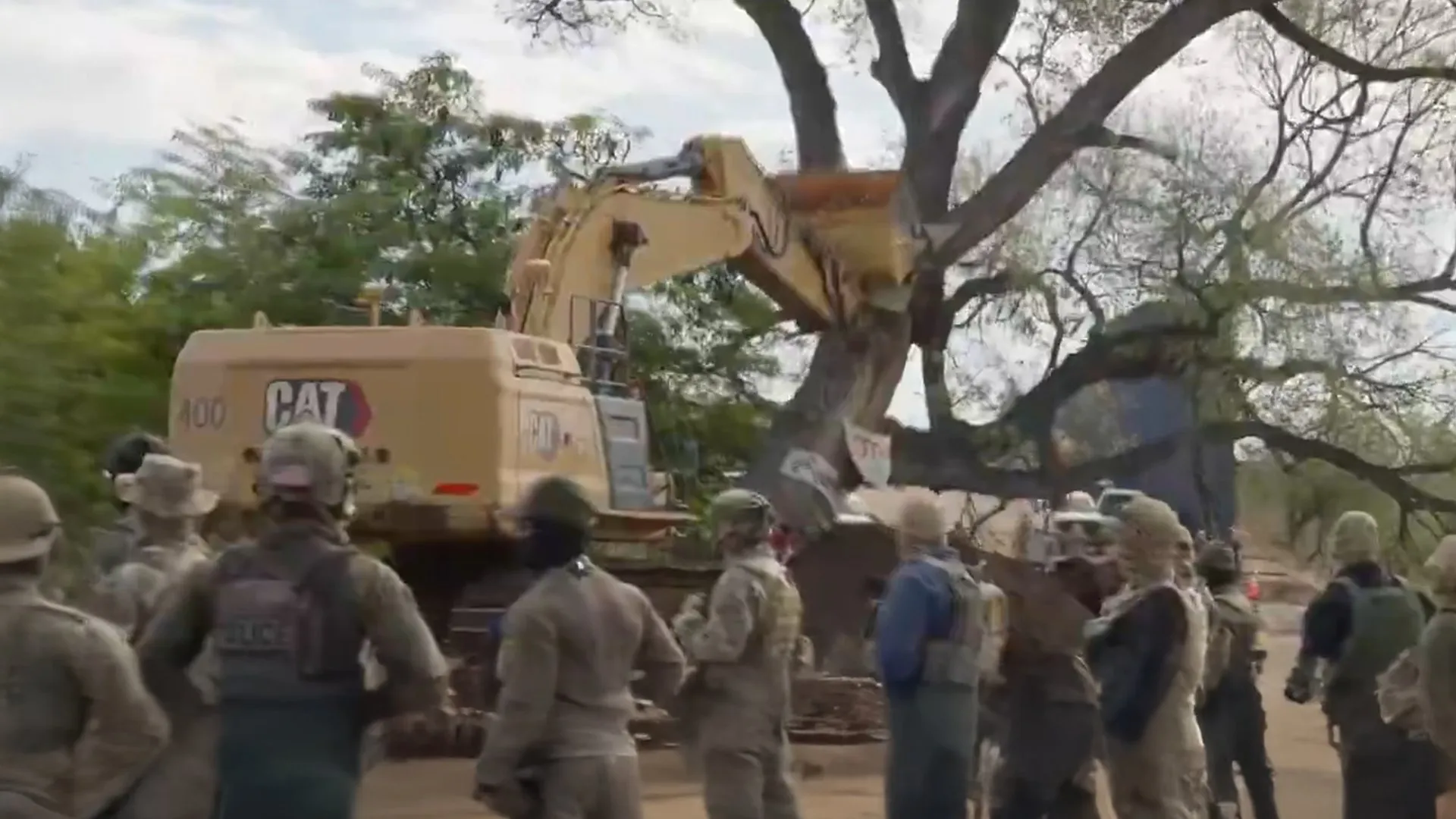
A 200-year-old cottonwood tree has been cut down to make way for an expansion of a US-Mexico double border wall. Activists staged protests for months and camped at the tree to prevent it from being cut down.
Cacan Sullivan’s goal came after teenager Julian Hall, 18, had given Mauricio Pochettino’s side the lead in Mexico friendly.
Published On 4 Oct 20264 Oct 2026
Cavan Sullivan became the youngest US international goalscorer in history as the United States defeated archrivals Mexico 3-0 in a friendly international in Arizona on Saturday.
Sullivan, who is poised to join English Premier League side Manchester City next year, netted a superbly taken goal in the 62nd minute to double the USA lead at the State Farm Stadium in Glendale.
Recommended Stories
list of 4 itemsend of list
At 17 years and five days, Sullivan beat Mathis Albert’s five-day-old record as the youngest US goalscorer.
Albert, aged 17 and 31 days, scored during Tuesday’s 4-2 defeat of Chile.
“These are the moments you dream of when you’re three, four, five or six-years-old,” Sullivan said.
“I manifested this moment, not just these past couple of hours when I found out I was starting, but my whole life,” he added.
Sullivan’s strike came after another teenager — 18-year-old Julian Hall — had given Mauricio Pochettino’s side the lead in the 28th minute.
Hall’s goal was his third in as many games since being handed his international debut by US coach Pochettino in last week’s defeat of Peru. Hall also scored in the victory over Chile.
The loss puts more pressure on Mexico coach Rafael Marquez, who is still seeking his first win since taking over following the World Cup.
Mexico dominated possession and territory early on but were unable to find a way through a well-organised United States defence.
Instead, it was the hosts who took the lead just before the half-hour mark with a superbly worked goal from Hall.
Gio Reyna surged into the penalty area to collect a pass from Alex Freeman and ghosted past Mexico midfielder Erik Lira to reach the byline.
Reyna’s low cross was parried away by Mexico goalkeeper Raul Rangel, but only as far as Hall, who lashed in from close range to make it 1-0.
Mexico’s best chance came early in the second half when Roberto Alvarado’s rasping shot from the edge of the area was tipped over the bar by US goalkeeper Diego Kochen.
Pochettino’s side doubled their lead on 62 minutes when Sullivan’s persistence in chasing down a long ball was rewarded after Rangel mishit a pass to the American outside his area.
Sullivan coolly took his time and chipped home from long range to make it 2-0.
“I just remember chipping the ball, hoping it didn’t hit the crossbar or go over,” Sullivan said of his strike. “I was getting nervous when it was in the air and then everything was a blur.”
A miserable night for Mexico got worse shortly afterwards when substitute Luis Chavez was shown a red card for shoving a hand into the face of Sebastian Berhalter in the 68th minute.
The United States completed the scoring in the 84th minute when Malik Tillman latched onto a poor Mexico backpass and smashed a shot into the top corner for 3-0.
Heavy rains could cause life-threatening flooding and landslides on Mexico’s Pacific Coast, the US National Hurricane Center warned.
Published On 24 Sep 202624 Sep 2026
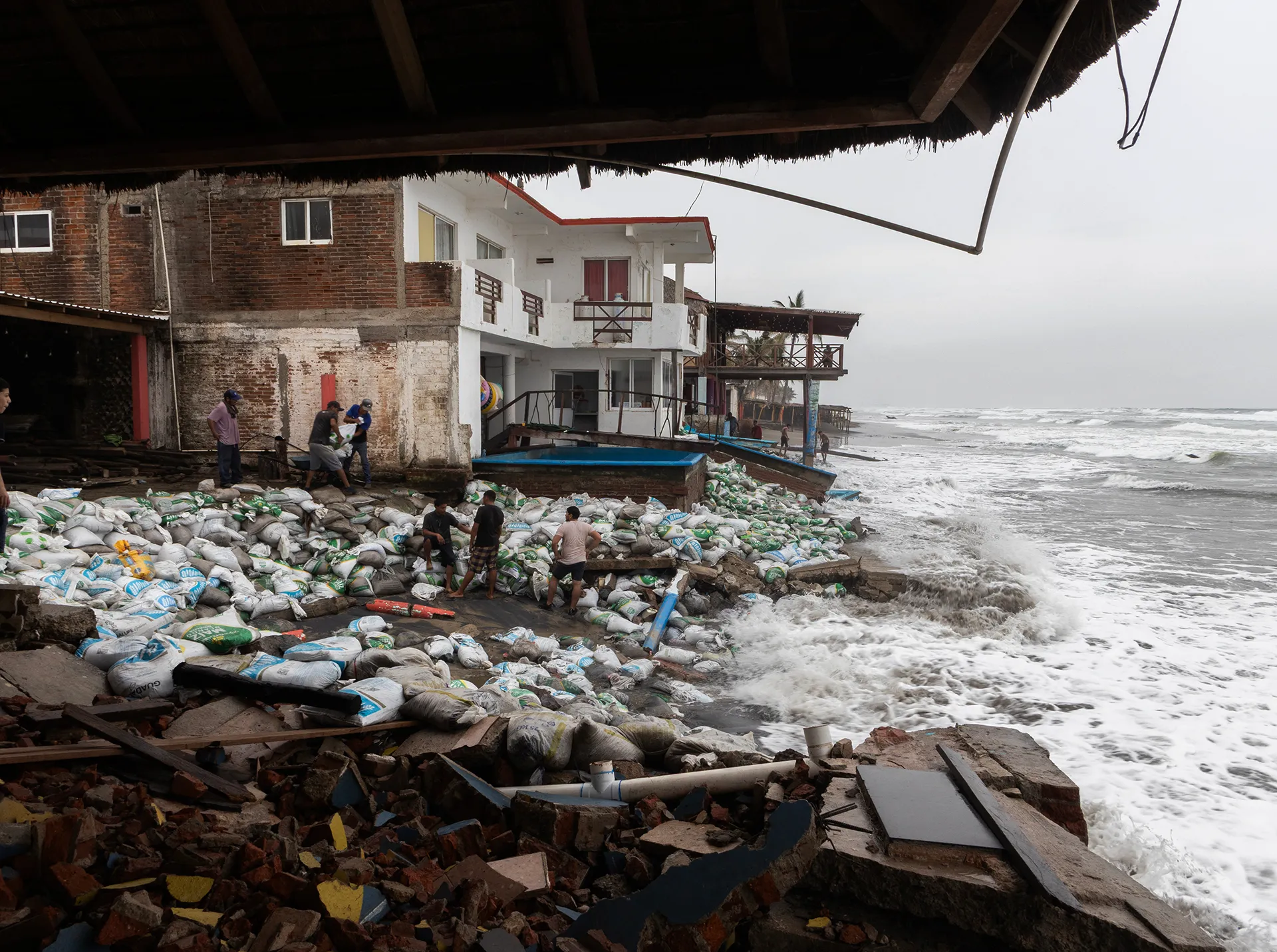
Hurricane Polo has sent heavy rain and strong waves across Mexico’s Pacific coast, while Tropical Storm Nolo is approaching Hawaii with the potential for catastrophic flooding.
Early on Thursday, the hurricane was swirling about 130 miles (209 kilometres) south-southwest of the Mexican city of Zihuatanejo. It was moving northwest at 7mph (11kph) and forecast to turn west-northwest later in the day, taking it further out to sea, before turning northwest on Saturday.
Polo was forecast to maintain Category 5 strength as it moves along Mexico’s coast over the next few days.
While the eye and the strongest winds were expected to remain at sea, the heavy rains could cause life-threatening flooding and landslides, warned the US National Hurricane Center in Miami.
A hurricane watch was issued for Hawaii county and disaster preparations are under way because Tropical Storm Nolo could hit the island on Friday or Saturday, warned the National Weather Service.
John Bravender, a weather service warning coordination meteorologist, said during a news conference on Wednesday afternoon that the tropical storm could develop into a major hurricane.
Hawaii County Mayor Kimo Alameda told residents in a video message that they should start preparing for the storm. He urged them to put together emergency kits with food, water and medications, as well as trim vegetation and clear drains.
“This is a very serious situation,” he said. “We do believe that the rain is going to come. It’s coming already.”
Governor Josh Green’s office said public schools and state and county offices across Hawaii’s Big Island will close on Thursday and Friday, while Maui County will shut them on Friday ahead of the threat of heavy rain, winds and flooding.
US-led anti-cartel alliance backs sanctions against crime groups after Trump urges stronger action.
United States President Donald Trump has pledged to use “unmatched military might” against drug cartels in the Western Hemisphere during a meeting of the Washington-led Shield of the Americas coalition in New York City.
In a meeting with leaders and foreign ministers from the anti-cartel alliance, Trump on Tuesday urged member countries to join the US in targeting 24 criminal organisations, which he earlier described as the “ISIS of the Western Hemisphere”.
Recommended Stories
list of 3 itemsend of list
He said he was asking “all nations in the Shield of the Americas to formally designate narco-terrorists as common threats to stability and apply crushing sanctions” against all of the groups. The meeting took place on the sidelines of the annual United Nations General Assembly (UNGA) in New York City.
The coalition’s 15 governments later issued a joint statement saying they intended to impose asset freezes and visa restrictions on members and supporters of the groups and to pursue criminal charges against them.
At the top of the list are two groups that have been declared “terrorist” organisations by Washington: Mara Salvatrucha (MS-13) – one of Central America’s most powerful criminal gangs – and Tren de Aragua, a Venezuelan gang that is also active in Colombia, Peru and Chile.
The list also includes major Mexican cartels, Colombian armed groups such as the National Liberation Army, Brazil’s Primeiro Comando da Capital and Comando Vermelho groups, and Peru’s Shining Path.
Al Jazeera’s Alessandro Rampietti, reporting from Bogota, Colombia, said the statement was largely symbolic for now, because each country must follow its own legal procedures.
“For example, here in Colombia, it will require a law to pass in Congress. We understand that the government here has asked Congress to move forward in drafting such a law. So while the consequences may not be immediate, this is clearly an important step towards building what the US has been trying to do in Latin America [through] this alliance,” he added.
The coalition is made up of governments closely aligned with Trump, including Argentina, Ecuador and El Salvador, whose leaders he has praised or endorsed. Colombia and Peru joined after Trump-aligned presidents took office in recent months.
Brazil and Mexico have not joined.
US Secretary of State Marco Rubio, who also attended, praised “the emergence of strong leaders who are committed to the challenge of taking on transnational terrorism”.
The gathering was the administration’s latest effort to rally the region behind a more aggressive approach to drug trafficking. Since returning to office last year, Trump has designated cartels as foreign terrorist organisations and ordered dozens of strikes on boats in the Caribbean and eastern Pacific that US officials say were carrying narcotics bound for the US.
The strikes have killed more than 223 people, and UN experts say they violate international law and could amount to crimes against humanity.
The Trump administration’s National Security Strategy, released late last year, laid out plans for a revamped Monroe Doctrine, the 19th-century policy asserting US primacy in the hemisphere that critics associate with decades of US intervention.
Trump has also spoken of retaking the Panama Canal and annexing Greenland and Canada. On Tuesday, he signed an agreement on Greenland that stopped short of his demand that the island become US territory.
The focus on the hemisphere has raised concerns across the region.
Brazilian President Luiz Inacio Lula da Silva, in his UN speech, bristled at the approach, warning countries in Latin America and the Caribbean of “renewed hegemonic temptations”.
A number of passengers needed medical treatment after the accident near the Sumidero Canyon in Chiapas, south-eastern Mexico
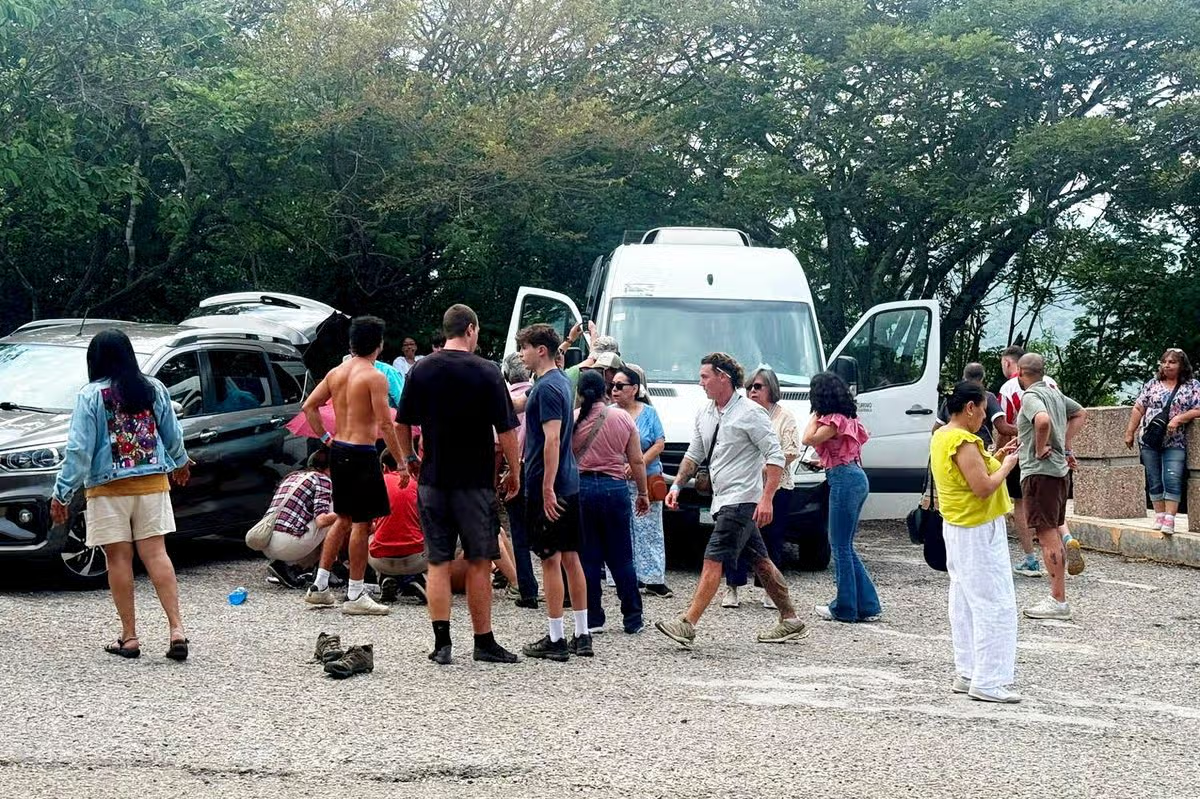
A photo of the aftermath of the accident(Image: James Gamble / SWNS)
A group of backpackers including several Brits cheated death when their Mexican tour bus was stopped by a single bollard – as it rolled towards a terrifying 1,000m drop. They paid for a tour of the Sumidero Canyon in Chiapas, south-eastern Mexico, in July and, after walking around to take in the view, boarded their tour bus at the top of a steep drop – when it started rolling backwards.
The group say they feared they were headed for the canyon and many of them started diving off the bus headfirst to save themselves. Luckily, the bus hit a bollard and came to a stop before going over the edge.
But many of the passengers have been left traumatised by the near-death ordeal, with some suffering physical injuries and needing hospital treatment. James Gamble, 30, from Portsmouth, said: “I honestly thought I was going to die. It was hands-down the most terrifying experience of my life.
“Everyone was diving off the bus headfirst, thinking we were headed for the canyon. I just imagined the bus tilting backwards with nothing I could do.
“It was horrific. I didn’t stop shaking for an hour afterwards; people who weren’t even on the bus were crying and having panic attacks.”
James says that one passenger, Madeleine Glen, had tried to grab the handbrake as the bus was rolling, but it was already up. Several passengers were hospitalised following the terrifying incident after injuring themselves fleeing the bus.
Sophie Badelt, 22, from Switzerland, hit her head on a parked car as she dove from the moving bus and was bleeding profusely. A British nurse from another tour of the canyon helped to bandage her head while they waited for an ambulance.
Brit Hugo Evans, 20, was also injured in the ordeal and bandaged at the scene by paramedics. He said: “I dove out of the van, headfirst – that was the only option. I was in a blind panic. I thought we were going to die for sure.
“I hit my head on the floor and there was a lot of blood. I thought we were headed for the cliff. Everyone was freaking out when Sophie was screaming… She was drenched in blood. It was terrifying.”
The tour left on July 9 and cost 600 Mexican Pesos (£25.66) per person. All the passengers have since been refunded, and Sophie says that she has been compensated for her medical bills after weeks of back-and-forth.
There were three Dutch passengers – Britt van Engelen, 28, Yesol Sihn 29, and Floris van Neer, 30. Also onboard was Belgian tourist Hanne, 23, and Australian pair Garrison Hamlin, 28, and Brodie Hampson, 28.
James, a former journalist, says he stayed on the bus until it came to a halt and that he has been left shaken by the ordeal. He added: “We took some photos of the canyon at the viewpoint and were told to get back on the bus. The van was parked on a hill and I was sat near the back.
“We all piled back on the bus and, as the last people were getting on, we started rolling backwards. Maddy tried the handbrake, but it was already up and panic set in within seconds.
“Then there was an almighty crash as we hit the bollard and the five of us still on darted off the bus. The first thing we saw was Sophie lying on the floor, crying desperately for help and with blood seeping out of her head.”
US judges affirm migrants must have opportunities to voice safety concerns before deportation to unfamiliar nations.
Published On 19 Sep 202619 Sep 2026
A US federal appeals court has rejected the Trump administration’s policy of rapidly deporting migrants to countries other than their own – a ruling that could next go before the Supreme Court.
On Friday, a three-judge panel of the 1st US Circuit Court of Appeals in Boston largely upheld a February decision that found the Department of Homeland Security’s so-called third-country removal policy unlawful.
Recommended Stories
list of 3 itemsend of list
The case stems from a class-action lawsuit testing what due process migrants are owed before being sent to nations with which they have no ties.
Writing for the panel, US Circuit Judge Seth Aframe said migrants must be given a “meaningful” chance to raise safety concerns before removal, rejecting the Trump administration’s narrower reading of the law.
The court did overturn part of the ruling on procedural grounds, concerning whether officials must first try deporting migrants to countries they have ties to.
Trina Realmuto, a lawyer for the plaintiffs at the National Immigration Litigation Alliance, said the decision confirmed that “due process and the protections Congress enacted against persecution and torture cannot be circumvented by putting someone on a plane to a country that was never part of their removal proceedings”.
The DHS did not immediately comment. The Trump administration is expected to appeal the ruling.
Under Trump, the US has struck agreements allowing it to send more than 25,000 migrants to at least 29 third countries, most often Mexico, according to Third Country Deportation Watch, a tracker run by the rights groups Refugees International and Human Rights First.
The policy, adopted in March 2025, allowed removals with only minimal notice if officials had diplomatic assurances against persecution.
The controversial programme has reached the Supreme Court twice.
In 2025, the justices cleared the way for eight men, including nationals of Cuba, Myanmar and Vietnam, to be deported to South Sudan, a country the US State Department advises against visiting because of “crime, kidnapping, and armed conflict”.
The DHS called the removals “a win”, while rights groups said they flouted basic protections.
The Trump administration’s immigration agenda has faced a string of setbacks this month.
A federal judge blocked planned caps on student and journalist visas, calling the government’s justification “exceptionally weak”, while a coalition of 22 states and Washington, DC, sued to stop a separate rule that would let officials deny green cards to immigrants who lawfully use public benefits.
US President Donald Trump had tried to pressure the Fed to lower rates, but it voted unanimously to raise them instead. In response, Trump is now threatening to end trade with countries the US has a trade deficit with – namely Canada, Mexico and the European Union.
Native authorities issue condolences after two adults and a child swept away by floodwaters in southwestern US state.
Published On 17 Sep 202617 Sep 2026
Indigenous authorities in the United States have said that three people have been killed in flooding in the southwestern state of New Mexico, where heavy rains left roadways blocked by water.
Navajo Nation President Buu Nygren said on Wednesday that police had responded to reports of people being swept away by floodwater at 12:30am (06:30 GMT) near the community of Newcomb in northwestern New Mexico.
Recommended Stories
list of 3 itemsend of list
Nygren said that two adults and a child were killed in the incident and offered condolences to the community, while advising residents to exercise caution in areas impacted by rainfall.
“There are no words that can ease the pain of losing a loved one so suddenly, and our hearts are especially heavy knowing that three lives were lost,” Nygren said. “To the family, relatives, and loved ones who are grieving today, we offer our deepest condolences. We pray that you are surrounded by strength, comfort, and the love of your family and community in the difficult days ahead.”
The National Weather Service (NWS) in Albuquerque, New Mexico, issued a special briefing on Tuesday warning of the possibility of widespread thunderstorms in the coming days. The service repeated those warnings on Wednesday, noting that moisture levels are expected to be at record levels for mid-September.
“A Flash Flood Watch is in effect for the western third of New Mexico and the South Central Mountains today,” NWS Albuquerque said in a social media post on Wednesday. “However, flash flooding could occur anywhere in central and northern New Mexico today.”
Heavy rainfall is predicted across parts of Arizona, New Mexico, Colorado and Utah through Thursday. Flash flood warnings were issued for parts of northwestern New Mexico, along with flash flood watches for large areas of central and northern Arizona.
The deaths on Wednesday come several weeks after three hikers were swept away and dozens were rescued after heavy rainfall caused flooding at the Grand Canyon, a popular destination for tourists and outdoor recreation in Arizona.
The line at Holbox during the midweek lunch hour has become a cultural sensation, a queue of locals and visitors trailing past the automatic doors and around the parking lot like devotees angling for the latest iPhone series or limited-release sneakers. Believe the lauds, including ours when we named Holbox as The Times’ 2023 Restaurant of the Year. Gilberto Cetina’s command of mariscos is unmatched in Southern California — his ceviches, aguachiles and tostadas revolutionary in their freshness and jigsaw-intricate flavors. The smoked kanpachi taco alone — clinched with queso Chihuahua and finished with salsa cruda, avocado and drizzles of peanut salsa macha — is one of the most sophisticated things to eat in Los Angeles.
Holbox could be considered for the top ranking on its own strength. But in a year when disasters tore at our city, honoring the power of community feels more urgent than ever. Cetina’s seafood counter doesn’t thrive in a vacuum. Holbox resides inside the Mercado La Paloma in South L.A. The mercado is the economic-development arm of the Esperanza Community Housing Corp., a nonprofit organization founded in 1989 that counts affordable housing and equitable healthcare among its core missions. When the mercado was in the incubation stage, Esperanza’s executive director Nancy Ibrahim interviewed would-be restaurateurs about their challenges and hopes in starting a business. Among the candidates was Cetina’s father, Gilberto Sr., who proposed a stall serving his family’s regionally specific dishes from the Yucatán. Their venture, Chichén Itzá,was among the eight startups when the mercado opened in a former garment factory nearly 25 years ago, in February 2001.
Step into the 35,000-square-foot market today, and the smell of corn warms the senses. Fátima Juárez chose masa as her medium when she began working with Cetina at Holbox in 2017. Komal, the venue she opened last year with her husband, Conrado Rivera, is the only molino in L.A. grinding and nixtamalizing heirloom corn varieties daily. Among her deceptively spare menu of mostly quesadillas and tacos, start with the extraordinary quesadilla de flor de calabaza, a creased blue corn tortilla, bound by melted quesillo, arrayed with squash blossoms radiating like sunbeams.
Wander farther, past the communal sea of tiled tables between Holbox and Komal, to find jewels that first-timers or even regular visitors might overlook.
Taqueria Vista Hermosa, run by Raul Morales and his family, is the other remaining original tenant. Order an al pastor taco, or Morales’ specialty of Michoacan-style fish empapelado smothered in vegetables and wrapped in banana leaf. The lush, orange-scented cochinita pibil is the obvious choice next door at still-flourishing Chichén Itzá, but don’t overlook crackling kibi and the brunchy huevos motuleños over ham and black bean puree. The weekends-only tacos de barbacoa de chivo are our favorites at the stand called Oaxacalifornia, though we swing through any time for the piloncillo-sweetened café de olla and a scoop of smoked milk ice cream from its sibling juice and snack bar in the market’s center. Looking for the comfort of noodles? Try the pad see ew at Thai Corner Food Express in the far back.
The everyday and the exquisite; the fast and the formal (just try to score a reservation for Holbox’s twice-a-week tasting menu); a food hall and sanctuary for us all. Mercado La Paloma embodies the Los Angeles we love.
MARFA, Texas — Landowners, ranchers and business owners in the Big Bend region of Texas along with a nonprofit organization dedicated to protecting the region’s landscape and heritage are suing to stop the Trump administration’s plans to build a wall and other border infrastructure through the remote section of the state.
The lawsuit, filed by Conserve Big Bend and with the support of dozens of landowners, comes as the administration is ramping up a $46-billion effort to line the roughly 2,000-mile southern border with a collection of 30-foot steel bollard walls, vehicle barriers and technology intended to keep out smugglers and migrants.
In Texas, the effort has run up against numerous lawsuits and bipartisan opposition from sheriffs, elected officials, tour guides, environmental groups and landowners.
Officials backing the wall “were woefully unprepared for the hornet’s nest they stirred up because they had no idea how much we love this place,” said David Keller, an archaeologist and historian who specializes in the Big Bend and lives in the region.
“For us, the Big Bend is not an empty place on the map,” he said. “It is our home.”
As part of its wall-building efforts, the administration has waived numerous regulations and statutes designed to protect the environment, archaeology or wildlife, on the basis that there’s an urgent need to protect the border in what Homeland Security has called areas of “high illegal entry.”
But in the lawsuit announced Monday, the plaintiffs argue that when it comes to the Big Bend region, that’s not an accurate description. They’ve cited historical statistics issued by Customs and Border Protection showing how few people cross the border in Big Bend compared with other areas along the U.S.-Mexico border.
Big Bend has about 500 miles of border with Mexico — roughly one quarter of the length of the border from the Pacific Ocean to the Gulf of Mexico. But the region only accounted for about 1% of arrests, according to the lawsuit’s stats.
The plaintiffs are arguing that the Department of Homeland Security is misusing powers from Congress that allow the secretary broad authority to waive regulations in order to build border walls or other infrastructure in areas where there are large numbers of people trying to cross into the country illegally.
“That determination is legally and factually unsound and unsupported,” the plaintiffs wrote.
The lawsuit filed Monday is the latest in efforts to slow or stop the administration’s plans in Texas and elsewhere.
The biggest outcry has come over Customs and Border Protection’s plans for the Big Bend National Park, which sits in a far southwestern corner of Texas where the Rio Grande separates the U.S. from Mexico.
The park’s remote and rugged location, its steep limestone canyon walls and crystal clear starry night views attract visitors from around the world. The government has said in court hearings that no final plans have been decided for what will be built in the park but plans made public so far have included building a new road, installing detection technology and barriers to stop vehicles from crossing the border.
When bulldozers were spotted clearing land in the park in August, people across the state were outraged. CBP Commissioner Rodney Scott temporarily paused construction-related activity in the park but many activists and residents would like to see even more changes to the administration’s plans in the broader Big Bend region.
Native American groups have argued that the construction could inhibit their ability to practice their faith and is damaging important religious sites while environmentalists worry the wall will cause flooding or keep animals from migrating.
Landowners who’ve lived and worked along the Rio Grande for years have questioned how they’ll feed livestock or water their crops if they can’t access the river.