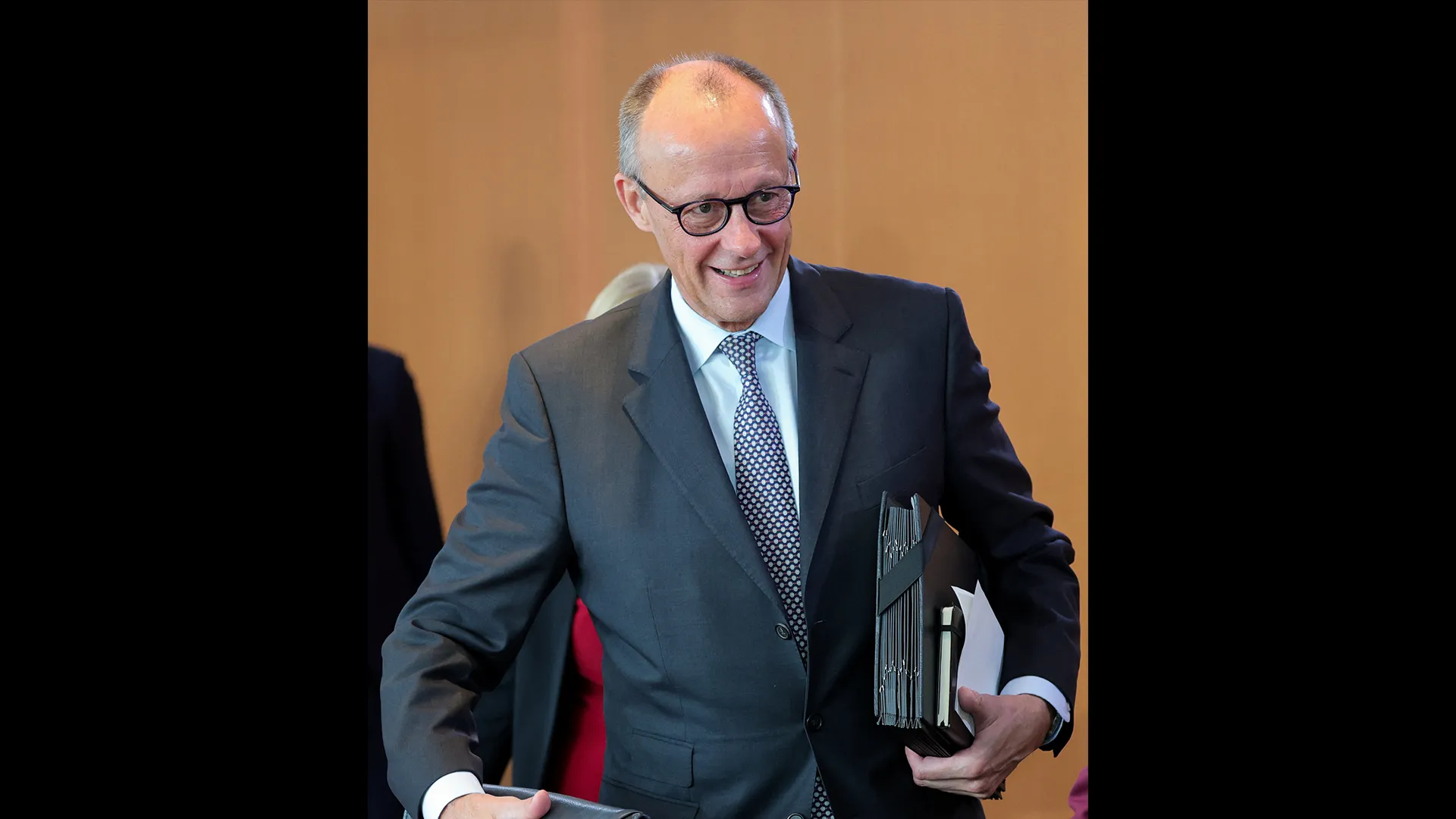
Germany doesn’t expect Trump to change following the midterm losses. Chancellor Friedrich Merz believes the US president will keep using his powers to bypass the Democrats in Congress, a position he admits he envies.
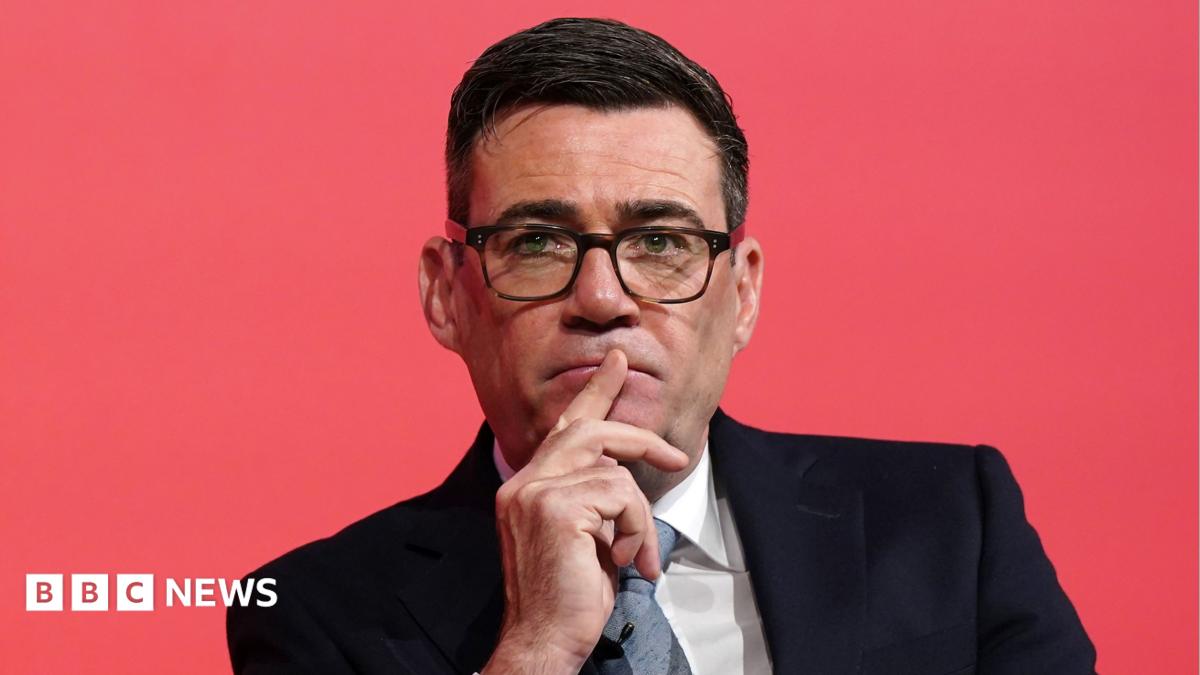
Burnham is set to be greeted with military honours at the German capital’s Chancellery ahead of his first face-to-face meeting with the chancellor.
On Thursday, the two leaders will formally ratify the 2025 Kensington Treaty, a partnership committing both countries to tackle hostile activity through deeper cooperation on science, technology, defence, security and growth.
Speaking ahead of the visit, Burnham said the UK and Germany were “joining forces to find, expose and disrupt” threats.
He continued: “Attacks on our infrastructure, our businesses and our democracies are not a distant threat.
“They reach into people’s homes and workplaces, and they are designed to make us weaker and more divided.”
European leaders have warned the threat of hybrid attacks against Europe by Russia has intensified in recent weeks.
Hybrid warfare or hybrid attacks are loose terms which tend to describe non-military methods designed to exert pressure and destabilise an adversary – for example cyber attacks, sabotage or misinformation.
Last month, a senior Russian diplomat was summoned by the British government over an “egregious and reckless attack” on Leipzig airport.
It is a major international freight hub used for providing support to Ukraine. Moscow has denied any involvement in the incident.
Meanwhile, questions have also been raised this week about Germany’s reliability as an intelligence partner, following the bombshell arrest of a former spy chief on suspicion of espionage.
August Hanning has been accused of espionage, treason and obtaining classified information for a foreign power, the German Federal Prosecutor’s Office says.
He ran the Federal Intelligence Service (BND) from 1998 to 2005 and has since been working as a private consultant.
The talks also come during a period in which Merz’s own political future has come under intense scrutiny.
Burnham replaced Prime Minister Sir Keir Starmer in July after the former leader was forced out by his own MPs just two years after winning a landslide election victory.
Similarly, Merz has faced persistent rumours he could be replaced by his party due to his poor approval ratings and following setbacks in regional elections.
Although the chancellor appears to have overcome an immediate crisis in his leadership, questions remain over his future.
Far-right and far-left parties gain ground in local elections as Merz’s approval rating sinks.
Published On 7 Oct 20267 Oct 2026
Chancellor Friedrich Merz has hit out at what he called political “extremism” in Germany after recent stinging defeats in local elections to far-right and far-left parties.
“This is a task for our society as a whole, and it is one I intend to play my part in,” he said on Wednesday at an event in Berlin.
Recommended Stories
list of 3 itemsend of list
Merz said “extremism” was forcefully making its way into the country’s parliaments, a day after a member of the far-right Alternative for Germany (AfD) was elected president of the state parliament in Saxony-Anhalt and the Left Party won out in Berlin’s state election last month.
“Anyone who casts their vote for the AfD is playing the extremists’ game and undermining credibility,” Merz said. “In any case, this is incompatible with the values of my party, the CDU [Christian Democratic Union of Germany].”
Despite winning the vote in the September 6 election in Saxony-Anhalt, the AfD fell three seats short of the absolute majority it had had sought. AfD lawmaker Tobias Rausch won the presidency of the parliament in the eastern German state Tuesday, backed by the left-populists in a secret ballot.
Founded in 2013 as a Eurosceptic movement, the AfD won over voters with an increasingly hardline opposition to immigration after about a million people fled to Germany in 2015, many of them from war-torn Syria.
The party has since become a dominant political force in much of eastern Germany, especially among voters disillusioned with mainstream parties, though most traditional parties have pledged not to enter coalitions with the AfD.
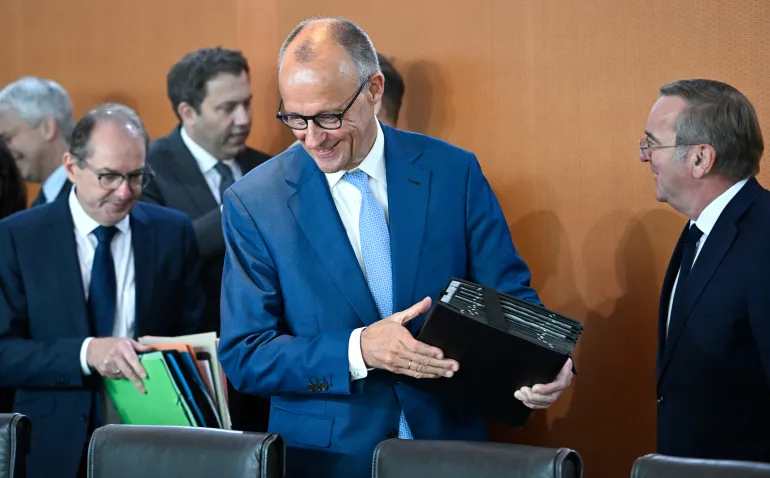
German Chancellor Friedrich Merz arrives for the weekly cabinet meeting in Berlin on October 7, 2026 [Tobias Schwarz/AFP]
Berlin election
Merz’s comments followed the far-left Left Party’s victory in the Berlin state election on September 20, in another defeat for the chancellor’s ruling Christian Democrats.
Lead candidate Elif Eralp campaigned on the soaring cost of housing in the German capital and immediately promised to follow through with a pledge to nationalise private housing associations that account for a large share of the city’s housing stock.
The result, which roughly doubled the party’s previous score, could see her become the first mayor of Berlin from the Left Party, which grew out of the former East German communist party following the reunification of the country 36 years ago.
Eralp, the 45-year-old daughter of left-wing Turkish parents who fled a coup in 1980, said the increasingly difficult rental situation was the biggest social problem in the capital.
She promised to proceed with nationalising the housing associations she said drove property speculation, in accordance with a referendum from 2021 in which 58 percent of voters backed a proposal to promulgate the move.
While the AfD has attracted most attention, the Left Party has also benefitted from a general turn against the mainstream centre-left and centre-right parties.
Meanwhile, Merz has received a record low approval rating. Earlier this month, a survey by Germany’s public broadcaster ARD found that only one in 10 respondents were satisfied or very satisfied with his performance, the lowest figure for any chancellor since the survey began in 1997.
Another major election test will come in North Rhine-Westphalia, Germany’s most populous state, where voters are set to elect a new parliament in April.