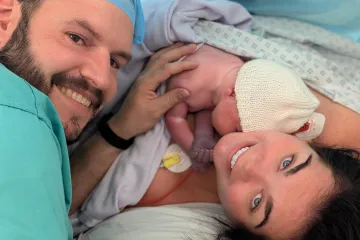
Scarlett Moffatt has shared some adorable photos of her two sons meeting for the first timeCredit: Instagram/@scarlettmoffattThe star beamed in her hospital bed with her partner ScottCredit: Instagram/@scarlettmoffatt
In the new photos, Scarlett is sitting up in her hospital bed surrounded by her expanded little family.
Clark is laying on one of Scarlett’s legs wearing a small cream coloured baby suit, while Jude is sitting between Scarlett’s legs.
Sign up for the Showbiz newsletter
Thank you!
Jude smiles widely at his little brother, who is partly resting on his lap.
Proud dad Scott is beaming by the bedside while the sweet moment unfolds, taking it all in.
Jude appeared happy to be a big brotherCredit: Instagram/@scarlettmoffattScarlett welcomed her little one earlier this weekCredit: Instagram/Scarlett Moffatt
Scarlett gushed in the post’s caption on Instagram: “The moment Jude met Clark.
“Watching the boy who first made me a mammy become a big brother is a moment I’ll treasure forever.
“And judging by the last slide, Clark did very well with his choice of Transformer toy for his big brother.”
Announcing news of the birth on October 9, Scarlett shared online: “Our beautiful boy is here! Clark Xander Dobinson.
“Arriving a little earlier than expected and not quite as straightforward as planned, our little family of four was made complete on Monday.
“Our hearts have never been so full, and I’d do it all again for you, Clark.”
Iran’s Foreign Ministry says reopening the strait has been its main goal, while the US continues to focus on nuclear talks.
Published On 4 Oct 20264 Oct 2026
The Strait of Hormuz is going to remain closed until the United States accepts Tehran’s seven-day plan to reopen the waterway, Iran’s top negotiator and parliament speaker has said.
Iranian state-linked news agency Nournews, quoting Mohammad Bagher Ghalibaf, reported on Sunday that Washington made “some proposals through a mediator” days after the US replied to Iran’s diplomatic proposal.
Recommended Stories
list of 4 itemsend of list
The US should know “that the era of wasting time and dictating unilateral demands is over”, Ghalibaf said, adding Iran’s position remains “clear and definite”.
He emphasised that “the Strait of Hormuz will not open until our seven conditions based on the Islamabad memorandum are met”, and that Iran is “present on the military battlefield and will confront them with new surprises”.
He added that Iran was neither “excited” nor “intimidated” by the latest US proposals and would “both fight and negotiate”.
US President Donald Trump ruled out an Iranian proposal to reopen the Strait of Hormuz last week, hours after Iran put forward a roadmap to reopening the strait, through which one-fifth of global oil and natural gas is shipped during peacetime.
Last month, Trump threatened to “annihilate” Iran in his speech on the floor of the United Nations General Assembly (UNGA).
On Sunday, Iranian Foreign Minister Abbas Araghchi also said Iran is “serious about finding diplomatic solutions just as we are serious about defending ourselves”.
Speaking to foreign ambassadors and diplomats in Tehran, Araghchi said Iran had clearly explained its conditions for reopening the strait and that Tehran hoped Washington would choose diplomacy and accept its proposal.
However, Araghchi warned that if the US takes military action again, Iran is “more prepared than before and will take whatever action is necessary to defend ourselves”.
Iranian Ministry of Foreign Affairs spokesman Esmaeil Baghaei added that Tehran used the UNGA platform last month to provide world leaders with its position on ending the US-Israel war on Iran.
He said the US has continued to focus on nuclear talks, while reopening the strait has been Iran’s main goal.
“We are at this stage mainly focusing on the strait, and our principal concern is to reach a solution and to have peace and stability restored within this waterway,” Baghaei said.
The Strait of Hormuz has been largely blocked and disrupted for more than seven months, since the US and Israel launched strikes on Iran on February 28, driving one of the worst maritime shipping disruptions in decades.
About one-fifth of global oil and natural gas is shipped through the Strait of Hormuz during peacetime, as the US-Israel war on Iran has created several trade chokepoints [File: Al Jazeera]
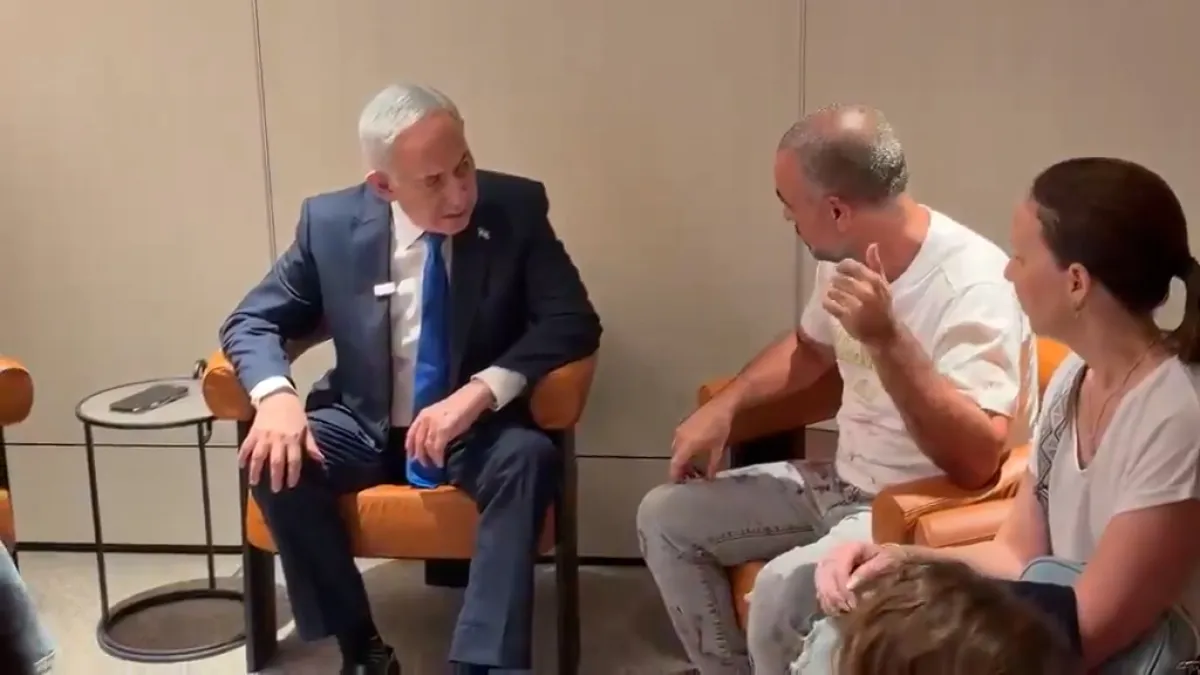
Israeli Prime Minister Benjamin Netanyahu has met Yaniv Hayun, the Flydubai passenger that helped restrain a pilot who stabbed a colleague. Netanyahu called the passenger a ‘hero’ during a meeting at Ben Gurion Airport in Tel Aviv shortly after the flight landed.
Perhaps no one genre of music screams “Mexican” more than mariachi music.
Yet a close second is probably the melodic sound of British rock band the Smiths.
Many have pondered why Mexicans and Mexican Americans have such an affinity for those blokes from across the pond. Maybe it’s that lead singer Morrissey’s outsider mentality and melancholic words resonate with the demographic — or there’s something acutely relatable about the melodramatic musings of a romantic yearner.
He noted that Morrissey’s malaise mirrors the sentiment of many ranchera songs, also citing that his effeminate onstage persona is a perfect subversion of Mexican machismo. These elements make the singer an anglophone mash-up of Pedro Infante and Juan Gabriel, Arellano added.
Both the Smiths and mariachi music can drive even the most macho Mexican man to tears with their poetic lyrics and layered instrumentals.
To celebrate the special choke hold these musical stylings have on Mexican Americans in Southern California, the L.A.-based group Mariachi Tierra Mia is putting on a “Mariachi Meets the Smiths” show at the Ford amphitheater on Sunday. The show will merge not only the cultural resonance of the two in Mexican American culture, but also unite the sounds.
The idea to incorporate elements of mariachi music into a cover of a Smiths tune happened by happenstance in December 2024.
Members of Mariachi Tierra Mia were performing at a Christmas party when an attendee requested that the group perform the 1984 Smiths track “Heaven Knows I’m Miserable Now.”
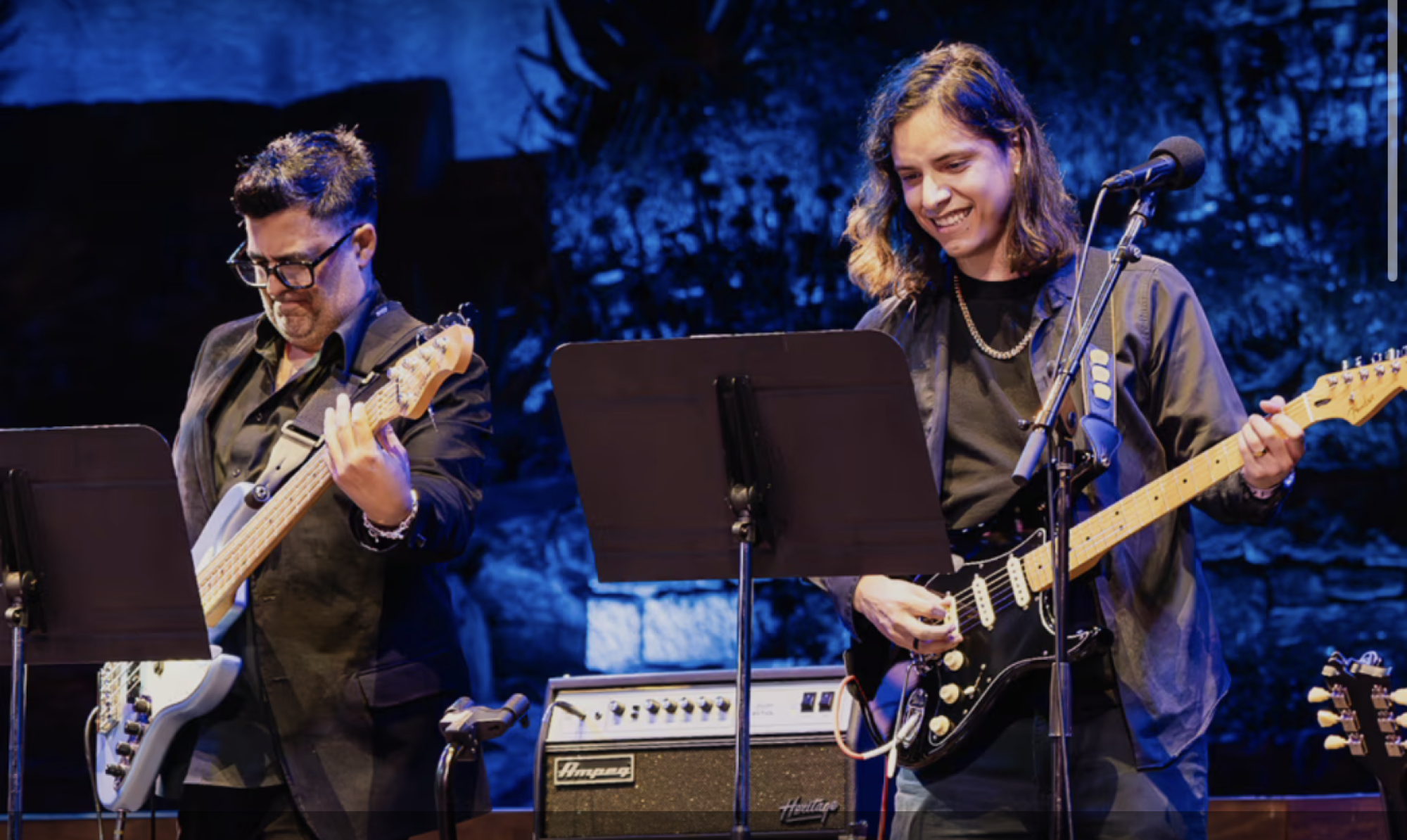
Members of rock band The Last Line of Defense who will perform at The Ford as part of “Mariachi Meets The Smiths.”
(Mariachi Tierra Mia)
The ensemble’s leader, Maira Solis, didn’t know the song — but her husband and fellow bandmate Ivan Peña signaled that he did. Later on in the night, he performed the song alongside two dancing, masked luchadors.
The video of Peña belting out the song while outfitted in his mariachi regalia struck a chord with audiences online after the group posted it on social media.
“The relationship between Mexicanos and the Smiths needs to be studied,” Peña told The Times. “[The video] seemed like a very innocuous thing, but days later, it had 3 million views. That was the first time that ever happened to us, and to me, personally.”
The overwhelmingly positive response to Peña’s rendition of the Morrissey-penned tune let him know that people had an appetite to see the Smiths and mariachi blended together.
Born in 1991, Peña was born years after the Smiths broke up, but was introduced to the group’s catalog at age 5, while his uncle drove him around in a lowrider. The first tracks he heard from the band were “Heaven Knows I’m Miserable Now” and “Ask.”
“I don’t think the music has aged a wink. It’s just gotten better with time,” he said. “It’s clearly resonated across generations. Now you even see Gen Z getting in on it too and realizing music of the past is so substantial.”
But the fandom surrounding the Smiths, and more specifically Morrissey, has entered more complex territory in light of the Smiths frontman’s past political commentary.
“I get that he’s a polarizing guy. I know he’s notorious,” Peña said. “I [say], separate the art from the people behind it … because the piece itself is not at fault for the shortcomings or views of the people who made it.”
Sunday night’s concert will be split in two acts, with the first being a bilingual mariachi set by Mariachi Tierra Mia composed of genre standards and more modern covers. For the second act, Peña’s rock group the Last Line of Defense will perform songs by the Smiths and be joined by the mariachi group to merge the sounds.
Incorporating the mariachi to create straightforward covers of the Smiths’ material proved challenging as Peña did not want to put a spin on the songs’ composition — no added notes and no new harmonies were allowed.
“You could task a mariachi band with doing a one-for-one adaptation of the Smiths’ songs, [but] most of the tracks do not work on the mariachi setting,” he said. “Whereas the guitar is leading the charge in a rock band. The guitar and the vihuela are essentially the rhythm section, so you have to translate guitar riffs to the melody section of the mariachi, [which is the] trumpets and violins.”
According to the 34-year-old musician, very few of the English band’s song fit into that mold.
He knows that fans love the original material and he wants to respect the essence of the time-tested songs. Out of that reverence for the group’s music, Peña noted that all the Smiths covers will be performed only in English.
Peña’s final take on why Mexicans are so infatuated with the Smiths?
“Mexicans love catchy music,” he said. “It’s all of the feels. It’s the good, the bad, and a bit of longing. The lyrics aren’t lying to you. [We can all relate to] Morrissey’s angst, his rebellion, his malaise, and, on the other side of that, his optimism.”
SACRAMENTO — With just over six weeks until the Nov. 3 election, the two candidates for California governor hit the campaign trail Thursday to promote plans to address the state’s high cost of living and continue rebuilding after the deadly wildfires that burned thousands of Los Angeles homes last year.
Democrat Xavier Becerra and Republican Steve Hilton are vying to replace termed-out Gov. Gavin Newsom, who is considering a run for president in 2028.
While Becerra holds a comfortable lead in the solidly-Democratic state, according to recent opinion polls, Hilton has aggressively attacked the veteran Democratic official as an “empty suit” who would bend to special interests in Sacramento.
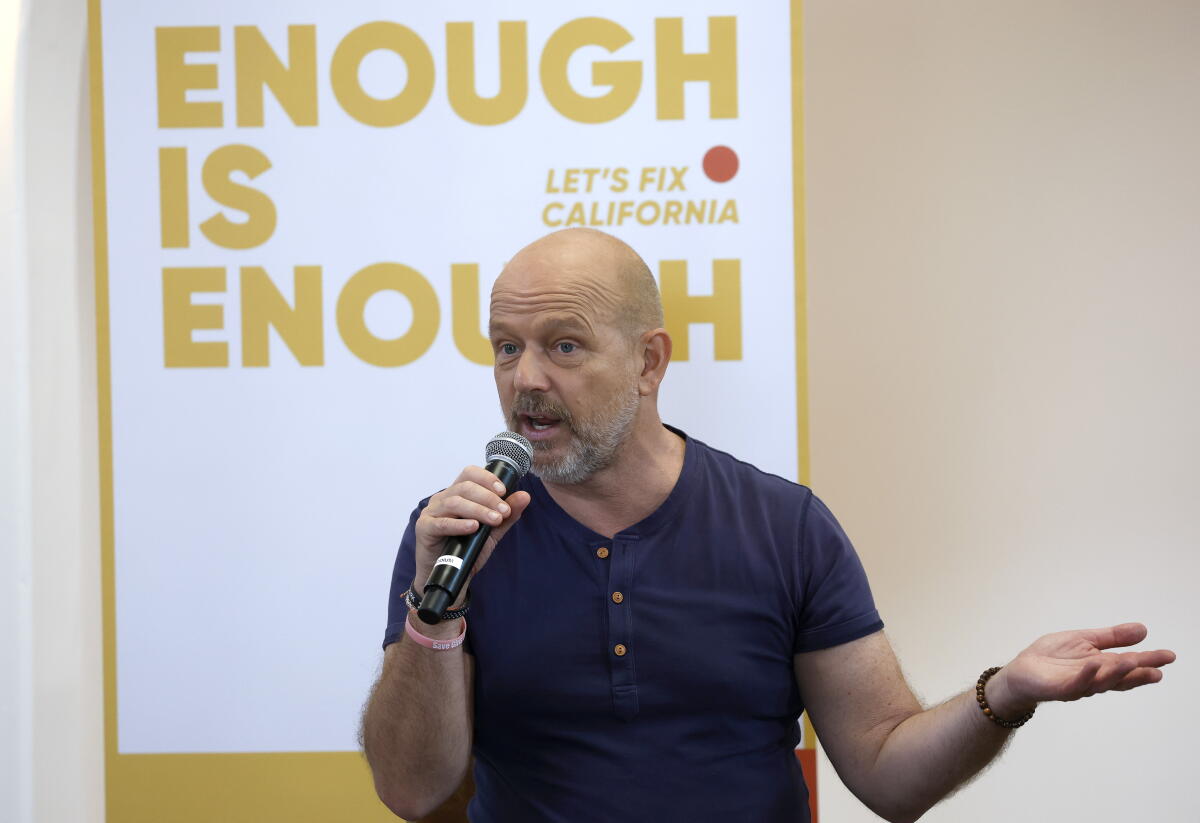
“Xavier Becerra will be a rubber stamp for Democrat laws that raise your costs. That is the simple choice in this election,” Hilton said during a morning press conference in front of the state Capitol.
With a stack of file boxes representing the more than 1,100 bills passed by the legislature this year towering over him, Hilton, a former Fox News host and one-time advisor to a UK prime minister, pledged to veto any bill that would lead to higher costs if he is elected governor.
“We have to go in a new direction. Lower your costs, cut the BS, the bureaucracy, and these bills that raise costs for every Californian,” he said.
Hilton called out bills now on Newsom’s desk that would expand the state’s antitrust law and tighten rules for packaging made of recycled materials, measures opposed by business groups. Another signed by Newsom earlier this year allows Los Angeles and Contra Costa counties to surpass a 2% limit on local sales taxes.
California Republican gubernatorial candidate Steve Hilton speaks during a town hall with union film industry workers at Blue Cloud Movie Ranch on Wednesday in Santa Clarita.
(Justin Sullivan / Getty Images)
He has promised to slash state regulations and the government workforce to deliver $3 gas, tax-free earnings up to $150,000 and vehicle registration fees capped at $73.
Becerra, a former secretary of U.S. Health and Human Services, met with survivors of the devastating 2025 Altadena wildfires, first responders and community leaders before outlining his plans to prevent such destruction and to deal with fires when they do inevitably break out.
Becerra said his first priority is to secure the $30 billion in disaster aid that the federal government has failed to deliver.
“Job one, if I’m fortunate to become the governor, will be to fight, fight, and fight, get that money that people for nearly two years here in Altadena and the Palisades and elsewhere have been waiting for,” he said, speaking to reporters on what used to be the deck of a home belonging to a member of the Altadena Town Council.
Becerra recalled that during his 24 years in Congress there was widespread, bipartisan support for sending federal assistance to disaster areas, including areas devastated by hurricanes on the Eastern Seaboard or floods in the South. California deserves the same response, he said.
He said he would seek to leverage tax dollars to help communities better prepare for wildfires, creating buffers and hardening structures because of wildfires that will inevitably occur in certain communities.
“It’s not a matter of if, it’s a matter of when,” Becerra said.
Becerra said he would seek to work with local governments to create a functional emergency alert system throughout the state. In the aftermath of 2025 wildfires, there was heavy criticism about delayed emergency notifications and evacuation orders.
He also said that wildfires now occur year-round, not just during what was once called fire season, and it was critical to make sure that firefighters were prepared to respond year round by not expecting them to work more than 60 or 70 hours per week when a fire breaks out.
“We want people to stay in these positions because when the fires hit, we can’t be asking where is the fire force,” he said.
When asked about the cost of gas, Becerra blamed the Trump administration for a “reckless, illegal war in Iran” and “crazy, illegal” tariffs that have contributed to higher prices.
Hilton, who is endorsed by President Trump, blamed the state’s high cost of living squarely on state policies, not on fuel prices driven up by the war.
“We don’t need to make changes at the federal level to lower peoples’ costs in California,” Hilton said. “I’m focused on what I can do as governor to lower costs in California, and that is to roll back the Democrat policies that have given us the highest costs. It’s not federal policies that have given us the highest gas prices in the country, it’s Democrat policies in California.”
A Public Policy Institute of California survey released earlier this week showed Becerra with a 22-point lead over Hilton, driven by Democrats’ large voter registration advantage.
According to a May report from the Secretary of State’s office, just under 45% of voters were registered as Democrats, 25% Republicans and 22% with no party preference. The remaining 7% were registered with another political party.
Becerra and Hilton are scheduled to meet in a Sept. 30 debate hosted by CNN.