Medicaid

Vance says $1.3 billion in Medicaid payments to California will be deferred over fraud concerns

Vice President JD Vance said Wednesday that the Trump administration is deferring $1.3 billion in Medicaid reimbursements to California over concerns the state is allowing “fraudsters” to drive up costs to taxpayers, including by pushing unnecessary medications on unsuspecting patients.

“There are California taxpayers and American taxpayers who are being defrauded because California isn’t taking its program seriously. But also, you have people who’ve been prescribed medications that they don’t even need,” Vance said. “Sometimes they’ve had drugs put into their bodies that they don’t need because fraudsters have actually encouraged false prescriptions and false administration and medications.”

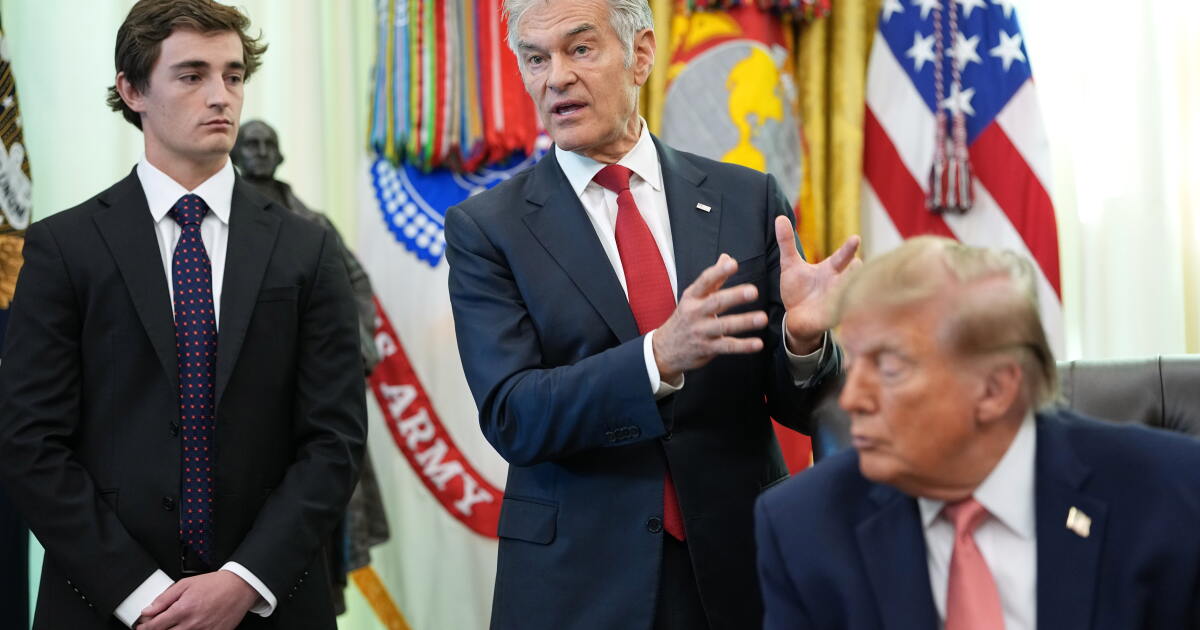
Vance, standing alongside Dr. Mehmet Oz, the administrator for the Centers for Medicare and Medicaid Services, said the administration is also sending letters to all 50 states informing them that if they do not “effectively and aggressively prosecute Medicaid fraud in their states,” they will see federal funding cut off as well.

“We want California to get serious about this fraud,” said Vance, who President Trump named his “fraud czar” last month.

Oz called out what he said was widespread fraud in hospice services and similar in-home care programs nationally — and particularly in the Los Angeles region — and announced a six-month moratorium on new Medicare enrollment for hospices and home health agencies.

“A third of all these programs in the entire country are in Los Angeles. Ask yourself, how is that possible? It’s not,” Oz said. “They’re not that many people dying in Los Angeles. We’re not talking about California, just Los Angeles.”

He said he and others in the administration determined that “at least half of the hospices, in the entire area around Los Angeles, are fraudulent,” and had shut down 800 of them that last year had “charged the federal taxpayer $1.4 billion,” which “will no longer be paid.” That is a major increase from the 450 providers the administration said it had suspended as of last month.

The announcement was the latest attempt by the Trump administration to highlight and rein in fraud in federal healthcare benefits programs, particularly in blue states. The actions were met with immediate push back from California officials.

“We hate fraud. But that’s NOT what this is,” Gov. Gavin Newsom’s office posted on the social media site X. “Vance and Oz are attacking programs that keep seniors and people with disabilities OUT of nursing homes. Pretty sick.”

Newsom’s office said that the growth of In-Home Supportive Services placements in California was “simple,” and due to California “keeping more people OUT of far more expensive nursing homes!”

Such services cover assistants who help people with daily tasks such as bathing, laundry or cooking; provide needed care such as injections under the direction of a medical professional; and accompany them to and from doctor’s appointments. A 2020 report by the California state auditor found that nearly three-quarters of IHSS caregivers assist a family member.

Newsom’s office wrote IHSS care costs $30,000 a year, while nursing home care costs $137,000 a year. “SAVING TAXPAYERS: $107K per person,” it wrote.

California Atty. Gen. Rob Bonta also criticized the administration’s moves.

“Once again, California appears to be targeted solely for political reasons,” Bonta said. “The Trump administration is planning to defer over $1 billion in Medicaid funding for vital programs that helps seniors and people with disabilities remain safely in their homes.

“My team is carefully reviewing all available information. We have not hesitated to challenge unlawful actions by the Trump administration, and we will continue to act whenever Californians’ rights or access to critical services are threatened,” he said.

Democratic Sen. Alex Padilla also lashed out at the Trump administration.

“The Trump Administration is attacking California over claims that they can’t back up,” Padilla wrote on social media. “Let’s be real, this isn’t about fraud — it’s about punishing a state that didn’t vote for him. Political retribution plain and simple.”

Fraud in California’s hospice industry has been a problem for years.

Authorities in the state promised to crack down on the issue after a Times investigation in late 2020 revealed that unscrupulous providers were billing Medicare for hospice services and equipment for patients who were not actually dying — with the hospice industry in the state exploding in size.

California’s Medicaid program, known as Medi-Cal, is expected to cost about $222 billion for the budget year starting July 1, including both state and federal funding. Roughly 15 million Californians, more than a third of the state, are on Medi-Cal.

Vance, a potential 2028 presidential hopeful, has taken up his work as “fraud czar” with vigor, traveling around the country to drive home the idea that the Trump administration is working diligently to bring down healthcare costs by addressing waste, fraud and abuse that is rampant across the system.

He has said that waste and abuse is particularly prevalent in Democratic-led states such as California, New York and Minnesota.

“We have red states and blue states that go after fraud aggressively, but we also, unfortunately, have some states, mostly blue states, unfortunately, that do not take Medicaid fraud very seriously,” he said Wednesday.

Vance specifically threatened to cut off what he said is billions in federal funding for state-run fraud control units that are meant to prosecute people who abuse the system, but which he said aren’t doing the work. “This is a tool that we want the states to use, but unfortunately, a lot of states aren’t using these tools at all,” he said.

The focus on fraud comes against a backdrop of criticisms that other policy measures pushed by the administration have driven healthcare costs up or made it harder for people to access healthcare — including cuts to Obamacare subsidies and new work requirements in Medicaid, which are expected to strain hospitals around the country and led to millions of people losing healthcare coverage.

Democrats and Republicans have argued over who is to blame for rising healthcare costs, and Vance and Oz have clashed with California leaders before.

In January, Newsom filed a civil rights complaint against Oz after he posted a video accusing Armenian crime groups of carrying out widespread healthcare fraud in Los Angeles. In the video, Oz was shown driving around Van Nuys, saying about $3.5 billion worth of Medicare fraud had been perpetrated by hospice and home care businesses — and “run, quite a bit of it, by the Russian Armenian mafia.”

Newsom called Oz’s claims “baseless and racist.”

The administration previously launched investigations into potential healthcare fraud in at least five states — California, Florida, Maine, Minnesota and New York — and halted some $243 million in Medicaid payments to Minnesota over fraud concerns.

The Centers for Medicare & Medicaid Services has also acknowledged using errant figures to justify a fraud probe in New York, deepening concerns in the administration’s methods for identifying problematic activity.

Vance said the deferral of funds to California and the letters warning other states to get serious is not about political retribution, but a wake up call. He said the Trump administration wants to help states root out fraud and abuse, including with new technologies — but can’t do so if they are not “willing to help themselves” first.

“We don’t want to turn off any money. What we want to do is ensure that people are taking fraud seriously. We want to protect Medicaid, we want to protect Medicare,” Vance said. “But we can’t do that if the states that are administering those programs are allowing those programs to be fleeced by fraudsters.”

The Associated Press contributed to this article.

Source link

Trump’s drug strategy aims to bolster addiction services — despite gutting government support

The White House’s newly released strategy for tackling the nation’s drug and addiction crisis calls for a number of ambitious public health approaches that some experts say are laudable but will be hampered by the administration’s own actions.

The sweeping 195-page National Drug Control Strategy, published May 4, advocates for making access to treatment easier than getting drugs, preventing young people from developing addictions in the first place, increasing support for people in recovery, and reducing overdose deaths.

Those broad goals are widely supported by public health researchers, addiction treatment clinicians, and recovery advocates.

But accomplishing such goals will be difficult in the face of the administration’s mass layoffs of federal employees, cancellation of research and community grants, attacks on organizations and practices that serve people who use drugs, and cuts to Medicaid, the state-federal health insurance program for low-income people that is the largest payer for addiction and mental healthcare nationwide.

Many components of the National Drug Control Strategy are “things that we would agree with and that we fully support,” said Libby Jones, who leads overdose prevention efforts at the Global Health Advocacy Incubator, a public health advocacy group.

But there are “disconnects in what the strategy says is important and then what they’re actually going to fund,” she said of the Trump administration. “Those inconsistencies feel particularly loud in this strategy.”

The White House’s National Drug Control Strategy, released every two years, is a touchstone document meant to lay out the federal government’s coordinated approach to what in recent decades has been one of the country’s defining problems.

Since 2000, more than 1.1 million people have died of drug overdoses. Although deaths have decreased recently, the numbers remain elevated compared with earlier decades, and research suggests overdose death rates among Black Americans and Native Americans are disproportionately high.

The strategy document published this week is the first of President Trump’s current term. In keeping with the administration’s approach to addiction issues, it places heavy emphasis on law enforcement efforts to reduce the supply of illicit drugs. The document repeatedly refers to the ongoing “war” against “foreign terrorist organizations” — the Trump administration’s term for drug cartels — and touts increased enforcement at U.S. borders.

It also outlines plans to implement artificial intelligence technologies to screen for illicit drugs brought into the country and wastewater testing to detect illegal drug use nationwide.

The second half of the strategy focuses on reducing the demand for drugs through public health prevention efforts, addiction treatment, and support for people in recovery. It promotes the role of religion in recovery and calls for the widespread use of overdose reversal medications, such as naloxone.

In a news release, the White House’s Office of National Drug Control Policy called the document a “roadmap” that will “continue dismantling the drug supply and defeating the scourge of illicit drugs in our country.”

The Trump administration did not respond to requests for comment about how the strategy aligns with its other actions.

In December, Trump signed a reauthorization of the SUPPORT Act, which continues several grants related to treatment and recovery and the requirement for Medicaid to cover all FDA-approved medications for opioid use disorder. In January, he announced the Great American Recovery Initiative, including a $100-million investment to address homelessness, opioid addiction, and public safety.

However, few details have been provided about the initiative, and in January, about a month after the SUPPORT Act passed, billions of dollars in addiction-related grants were abruptly terminated and reinstated within a frantic 24-hour period.

That “whiplash” left “a sense of instability and uncertainty in the field,” said Yngvild Olsen, a national adviser with the Manatt Health consultancy. She led substance use treatment policy at the Substance Abuse and Mental Health Services Administration, or SAMHSA, under the Biden administration and left about six months into Trump’s second term.

That insecurity was exacerbated by the president’s 2027 budget request, which proposes cuts to several addiction and mental health programs and the consolidation of key federal agencies working on those matters. Jones’ group and nearly 100 others in the field have signed a letter asking Congress to reject the proposals, as it did with similar requests last year.

The national drug strategy adds new, potentially contradictory information to this confusing landscape.

Increasing Access to Treatment

One of the most significant public health goals in the strategy, mentioned at least half a dozen times, is to make it easier to get treatment than it is to buy illegal drugs.

National data underscores the necessity: More than 80% of Americans who need substance use treatment don’t receive it.

The administration’s actions on health insurance may make it difficult to improve that statistic.

Medicaid is the main source of healthcare coverage for adults with opioid use disorder. When implemented, the Medicaid work requirements in Trump’s One Big Beautiful Bill Act are projected to strip that coverage from about 1.6 million people with substance use disorders.

The last time Medicaid rolls were purged — after COVID-era protections expired — many people who had been receiving medication treatment for opioid addiction stopped it and fewer people started treatment, according to a study published last year.

Olsen, who is also an addiction medicine doctor, said she loves the strategy’s emphasis on making treatment readily available to anyone who wants it. But she said that’s “hard to really imagine when now people may have to pay for it themselves because they may be losing their Medicaid insurance coverage.”

One analysis estimated the upcoming Medicaid changes could lead 156,000 people to lose access to medications for opioid use disorder and result in more than 1,000 additional fatal overdoses per year.

People with private insurance may be affected too.

The Trump administration has refused to enforce Biden-era regulations aimed at bolstering mental health parity, the idea that insurers must cover mental illness and addiction treatment comparably to physical treatments. And recently, the administration said it would redo those regulations altogether, raising fears that addiction treatment could become increasingly unaffordable.

The administration did not respond to specific questions about how it reconciles its actions on Medicaid and parity with the goal of increasing treatment.

Prioritizing Prevention

The strategy highlights preventing addictions before they begin as one of the keys to reducing demand for drugs. It calls for “promoting a drug-free America as the social norm” and implementing school and community-based programs that are backed by science.

“Investing in primary prevention, before drug use starts, saves lives and resources,” it says, citing several studies about the cost-effectiveness of such programs.

Yet, the president’s budget proposes cuts to these types of programs, and federal layoffs have decimated the agencies that would implement such work.

The White House’s most recent budget request proposes cutting roughly $220 million from SAMHSA’s Center for Substance Abuse Prevention and nearly $40 million from the Drug-Free Communities program.

Since the new administration started, SAMHSA has lost about half of its staff, and the Centers for Disease Control and Prevention is down about a quarter.

“It’s not clear to me that they’re really going to be able to have the funds or the people to be able to carry that out,” Olsen said of the strategy’s prevention goals.

Another wrinkle appears in the strategy’s discussion of marijuana. The document points to marijuana use as one of the drivers of increasing drug use disorders and reports that “convergent evidence from multiple sources” suggests cannabis use increases the risk of psychosis. It calls for developing new tools to treat marijuana withdrawal and addiction.

However, just two weeks ago, the White House moved to reclassify medical marijuana to a lower tier of scheduled substances and is moving to hold a hearing to do the same for marijuana broadly.

“The administration, on the one hand, is moving in a direction of liberalizing access to cannabis,” Jones said, “but at the same time, in the strategy, it talks about the dangers of doing so.”

“There’s a disconnect there that just makes you question: Which one do you believe?” she added.

The administration did not respond to specific questions about its marijuana policies.

Stopping Overdose Deaths

One of the more surprising elements of the National Drug Control Strategy comes in the last paragraph of the final chapter. It focuses on public drug-checking programs, which often involve using test strips to help people who use drugs determine whether there are more-dangerous substances, such as fentanyl or xylazine, in the batch they bought. That helps them determine whether or how to safely use those drugs.

“Rapid test strips and similar technologies that detect fentanyl and other drugs are an important tool that should be legal,” the strategy document says.

However, SAMHSA announced in a recent letter that it would no longer pay for test strips, as part of the Trump administration’s “clear shift away from harm reduction and practices that facilitate illicit drug use.”

The administration has similarly attacked harm reduction programs in an executive order and its budget requests. It did not respond to specific questions about how this position interacts with the drug control strategy.

Regina LaBelle, a Georgetown University professor who served as acting director of the Office of National Drug Control Policy during the Biden administration, wrote about the contradiction in a blog post: “It is the height of rhetoric over reality to champion a tool while simultaneously cutting off the funding used to acquire it.”

KFF Health News is a national newsroom that produces in-depth journalism about health issues and is one of the core operating programs at KFF—an independent source of health policy research, polling, and journalism.

Source link

Nebraska poised to become the first state to implement a Medicaid work requirement signed by Trump

Nebraska on Friday will become the first state to enforce work, volunteer or education requirements for new Medicaid applicants, eight months before the federally mandated requirements kick in.

Advocates worry that the state is launching so rapidly that key details remain unresolved and some people who are eligible for coverage will lose it.

State officials say they’re prepared, training staff and sending letters, emails and texts to people who could be impacted.

Health policy experts, advocates and other states will be watching closely.

“It can be used as a lesson for other states, both where things go well and where things don’t go well,” said Jennifer Tolbert, deputy director of KFF’s Program on Medicaid and the Uninsured.

The law is expected to leave some without insurance

The work requirement is part of a broad tax and policy law that President Trump signed last year. Nebraska Republican Gov. Jim Pillen announced in December that the state would implement it eight months before it was required, saying the aim was “making sure we get every able-bodied Nebraskan to be a part of our community.”

The state had one of the lowest unemployment rates in the U.S. in February: 3.1%.

The federal policy won’t apply to all Medicaid beneficiaries, just those who are enrolled under an expansion that most states chose to make to allow more low-income people to get healthcare coverage.

Under the change, many Medicaid participants ages 19 through 64 will have to show that they work or do community service at least 80 hours a month, or are enrolled in school at least half-time. They’ll also have their eligibility reviewed every six months rather than annually, so they could lose coverage faster if their circumstances change.

Exceptions will be made for people who are too medically frail to work or in addiction treatment programs, among others.

An Urban Institute report from March estimated that the changes would mean about 5 million to 10 million fewer people nationally would be enrolled in Medicaid than would have been otherwise.

Choices states make about how to run their programs are expected to be a major factor in exactly how many people lose coverage.

“The higher the administrative burden, the more likely people are found noncompliant and disenrolled,” said Michael Karpman, who researches health policy at Urban.

Nebraska plans to use data to help determine who qualifies

Not everyone who has coverage will need to submit proof that they’re working.

The state says it will first match enrollees with other data it has to see if participants are working or exempt. The state says it has that information for most of the roughly 70,000 people enrolled in Medicaid through the expansion.

That leaves between 20,000 and 28,000 who would have to provide more information, plus an average of 3,000 to 4,000 new enrollees each month.

At first, they will just need to show that they met the requirements in just one month of the previous 12. The time frame will shift to six months in 2027.

There’s some flexibility. For instance, instead of showing they work 80 hours in a month, someone could instead provide records that demonstrate they earned at least $580, the amount someone earning minimum wage would make in 80 hours.

People who don’t submit requested information within 30 days of being asked could have their applications denied or lose coverage they already have.

The change is causing worry and confusion

Bridgette Annable, who lives in southwest Nebraska, received a letter saying she must meet the work requirements or lose the benefits that pay for her insulin and diabetic supplies.

The 21-year-old mother now has a part-time job, despite being advised against it to protect her mental health. She’s worried about her ability to keep working.

“I am working 30 to 25 hours a week — as much as my employer can provide,” Annable said. “Although I call out of work often due to fibromyalgia pain and bipolar episodes that leave me too tired to leave the house. I have enough energy to take care of my daughter and do some cleaning, but that’s about it.”

Amy Behnke, the chief executive officer of the Health Center Association of Nebraska, said that staff members who help people enroll with Medicaid and their clients have a lot of questions, including some that the state hasn’t yet answered.

Some examples: Apprenticeship programs are supposed to count for work requirements, but does that apply only to those certified by the state’s labor department? There’s an exemption for people who travel to a hospital for care, but there’s not clarity on how far the journey must be.

KFF’s Tolbert noted that the state issued its 295-page list last week of conditions that could qualify someone as medically frail. “We don’t know if it’s a comprehensive list,” she said.

“The speed at which we are choosing to implement work requirements hasn’t left a lot of space for really meaningful communication,” Behnke said.

And Nebraska could have to make changes after the federal government provides guidance that is expected in June.

Mulvihill and Beck write for the Associated Press. Mulvihill reported from Haddonfield, N.J.

Source link

Column: Pay attention to the deficit, even if Trump won’t

Americans could be forgiven if they’re unaware that President Trump recently performed one of his most essential tasks and sent his annual budget request to Congress, though months late and stunningly incomplete.

After all, so much else has been dominating the news lately: the Mideast war that Trump promised not to start. Price rises he’d vowed to end. His repeated insults of Pope Leo XIV. His portraying himself as Jesus Christ, then lying about having done so. An incompetent attorney general to fire. And the president’s actual priorities — plans for a $400-million White House ballroom and a massive “Triumphal Arch” nearby!

It’s a lot.

Once again, as in Trump’s first term, the public and press are inattentive to the nation’s fiscal health relative to past years. But that reflects the president’s own disengagement with reconciling spending and revenue — this from a president many Americans voted for based on his purported prowess as a businessman. For decades back to Ronald Reagan’s time, so-called deficit wars in Washington were a big story. Now, even Republicans in Congress complain of Trump’s absence from the fiscal fray as they struggle to belatedly finish this year’s budget work that was due last fall, and to end a weeks-old partial government shutdown, before turning to the budget for the fiscal year starting Oct. 1.

Yet it’s worth paying attention to U.S. budgets even if Trump won’t, for the sake of our children and grandchildren who’ll inherit the bills. In one document, a federal budget reflects the nation’s priorities. And these days, in the perennial guns-versus-butter debate, Trump has made his feelings all too plain.

“We’re fighting wars,” he told a group at the White House on April Fools’ Day. “We can’t take care of day care … Medicaid, Medicare, all these individual things.”

Forget that Trump swore to end wars. Or that last year, long before he went to war against Iran, he cut $1 trillion over 10 years from Medicaid and other healthcare programs in his misnamed “One Big Beautiful Bill.”

Yes, budgets can be boring, especially to a president with a famously short attention span. Trump and many of us Americans are distracted constantly by all the shiny objects he throws at the national consciousness by his words, acts and social media postings at all hours.

Yet the budgetary trend is clear to anyone bothering to look: As president, Trump is once again exacerbating the nation’s unsustainable course of piling up debt. According to the nonpartisan Congressional Budget Office, among other credible sources, debt is now approaching the highest level in U.S. history, which was reached during World War II. It already surpasses the size of the entire economy and threatens higher borrowing costs and reduced investments.

For all the achievements Trump likes to claim — ending eight wars in a year! — here’s one that’s real: He is on a path to break his own record for the most debt in a single presidential term, $8.4 trillion in Trump 1.0, which was nearly double the increase under President Biden.

Need further proof of Trump’s brazen mendacity? Of course you don’t, but here it is: In the face of the well-documented budget record, Trump declared both this year and last year to a joint session of Congress, on national television, that he would balance the federal budget —“overnight,” he said in February.

The inequitable tax cuts and big spending increases for the military and immigration crackdowns that Trump and the Republican-controlled Congress enacted last year are significantly greater than in his first term, and are driving up the debt despite Republicans’ deep healthcare cuts. Just months after Trump took office, the ratings firm Moody’s downgraded the nation’s sterling credit rating for the first time in more than a century.

And now, in his new budget request, Trump seeks to inflate military spending from under $1 trillion when he regained office to $1.5 trillion, for the biggest year-to-year increase in military budgets since World War II.

This fiscal irresponsibility is happening at the worst possible time. For the last quarter of the 20th century, presidents and Congresses of both parties annually debated how to reduce deficits and several times reached consequential multi-year deals, culminating during the second Clinton term in four straight years of surpluses. (Those surpluses ended — wait for it — with Republicans’ tax cuts and war spending during the George W. Bush administration.)

Politicians back then were moved not just by the deficits of their time — deficits that, as a share of the economy, were less than half what they are now. They also were responding to experts’ warnings of a demographic tsunami by the 2020s: With the aging of the huge baby-boomer population, spending for Social Security, Medicare and Medicaid would greatly increase even as the workforce whose payroll taxes support those programs shrank. Today the number of people 65 or older is almost three times what it was 50 years ago, and rising.

This reckoning is upon us, though you wouldn’t know it as Trump keeps calling for cutting revenue and spending more for lawless wars, immigration raids and monuments to himself. Barring bipartisan action, in 2033 Social Security’s retirement fund and Medicare’s hospital fund will no longer be able to cover beneficiaries’ full claims, according to their trustees’ annual report, necessitating reduced benefits or shifts of money from other worthy programs.

Trump did put Vice President JD Vance in charge of a “war on fraud.” But that holds about as much promise as Elon Musk’s fiscal fiasco — remember DOGE? — that cost money instead of cutting $2 trillion as promised.

Like other problems, Trump likely will leave the fiscal follies to his successor, who, should he or she win two terms, would preside as Social Security and Medicare become insolvent. I’ve yet to hear any of the early 2028 presidential aspirants — or Trump — address or be asked about that.

Let the debate, belatedly, begin.

Bluesky: @jackiecalmes
Threads: @jkcalmes
X: @jackiekcalmes

Source link