mckinney

As Abdul El-Sayed breaks a barrier, anti-Muslim vitriol surges on multiple fronts

Abdul El-Sayed made history this month in Michigan by becoming the first Muslim nominated by the Democratic Party to run for the U.S. Senate. But elation among many of his fellow Muslim Americans was tempered by awareness of persisting and widespread anti-Muslim sentiment across much of the nation.

Some Republicans, including President Trump, swiftly began referring to the nominee by his full name, Abdulrahman Mohamed El-Sayed, while depicting him as a danger to America. “Every single Muslim holding public office in America is a Trojan horse, and a threat to both national security and our republic,’’ said U.S. Rep. Nancy Mace, R-S.C., in a post on X.

El-Sayed says such attacks betray a weakness in those who launch them.

“We all pray for the same things. … We want what’s good for our kids and our families,” he told MS NOW after his primary victory. “They’re going to use Islamophobia, because their ideas are tired.”

The vitriol extends far beyond the political class. Tensions related to anti-Muslim sentiment have heightened in several communities around the country, where some residents have bitterly opposed proposals to build new mosques.

“American Muslims have made incredible political and societal progress in recent years,” said Edward Ahmed Mitchell, national deputy director of the Council on American-Islamic Relations, or CAIR. He cited increased visibility in entertainment and sports and the election of Democrat Zohran Mamdani as New York City’s first Muslim mayor.

“But there also is a very concerted backlash to this progress,” Mitchell said. “You’ve seen this in the resurgence of anti-Muslim hate and rhetoric, the targeting of mosques.”

A Dallas suburb is a flashpoint

McKinney, Texas, a large suburb in the Dallas-Fort Worth area, is one of the flashpoints. Despite angry anti-Islam remarks at a heated city council meeting on Aug. 4, the council voted unanimously to approve a site plan for the McKinney Islamic Association’s proposed new mosque, classroom building and gym.

Among those urging the council to give the plan fair treatment was George Fuller, a former mayor of McKinney, a nonpartisan position. Opponents of the mosque project booed him, and some shouted “traitor” as he left the council chamber. One woman could be seen on video physically accosting him.

“I have never witnessed so much hate, anger and lack of humanity in our beautiful community gathered in one place as I did today at City Hall,” Fuller later wrote on Facebook.

During the hearing, which lasted more than four hours, the speakers included U.S. Rep. Keith Self, a Republican whose district includes McKinney. To loud applause, he urged the council to reject the mosque proposal.

“I know you’re in the accommodation phase, but the intimidation phase follows quickly,” Self said. “Child marriage. Honor killings. Don’t tell me it can’t happen here.”

Fuller also went to the microphone, evoking the broader phenomenon of divisive political rhetoric.

“Sadly, we live in a time when some have discovered that the easiest way to gain attention or win elections is not by offering solutions but by manufacturing fear, dividing communities, demonizing neighbors and turning misinformation into a political strategy,” he said.

In North Carolina, anger flares over approval for a new mosque

The scenario was similar in Mooresville, North Carolina, when town commissioners held a public comment session on Aug. 3 about a proposed mosque that had already been approved, with early phases of construction underway.

Angry residents at the meeting voiced hostility to Islam and assailed the commissioners for not being more forthcoming about the project as it took shape over previous months. One speaker cited violence in Nigeria by Islamist extremists as a reason for concern in Mooresville. Another depicted Islam as “a political regime with the ultimate goal of takeover in regions and nations.”

CAIR’s regional manager, Al Rieder, issued a statement denouncing “the hateful and conspiratorial anti-Muslim rhetoric” that surfaced at the meeting and expressed concern about the safety of Muslims in the area about 25 miles north of Charlotte.

“Muslims are your neighbors, your doctors, your teachers, your local politicians, your police,” he said.

A few hours after the public meeting, the town commissioners released a summary of the mosque project, which calls for a two-building Islamic center on a parcel acquired in 2019 by a local Muslim organization.

The commissioners said that the parcel is in an area zoned to allow religious assembly and that the mosque proposal was handled the same way as a proposal for a new church.

“All decisions must be based on adopted ordinances, objective standards and legal requirements, which do not allow for different rules for different religious groups,” the commissioners said. “We encourage all members of our community to remain respectful in their discussions and interactions as this project moves through the appropriate processes.”

In Oklahoma, Muslim leaders fight against the rebuff of a new mosque

A mosque controversy has been raging for many months in Broken Arrow, Oklahoma, Tulsa’s largest suburb.

Back in January, at a stormy meeting attended by hundreds of people, the city council voted 4-1 to reject a rezoning proposal by the region’s Islamic Society to build Broken Arrow’s first mosque. Before the vote, dozens of residents voiced anti-Muslim views while opposing the project.

Council members who rejected the mosque had raised concerns about its potential impact on infrastructure such as roads, sewers and flood plain management.

But the Islamic Society is persisting with its quest. On Aug. 3, it filed a lawsuit against the mayor and four councilors, alleging that the vote reflected “a wave of bigoted opposition from members of the community and local politicians.” The lawsuit contends that the council violated state and federal laws governing religious land use, treating the mosque proposal differently from other comparable rezoning requests.

“They did not want a mosque in their city. They did not want Muslims here,” said Meghan Murphy, an attorney with CAIR’s Legal Defense Fund, at a news conference announcing the lawsuit. ”So they made up a reason, and in doing so they violated the law.”

Some see a terrorism threat while others see baseless scaremongering

Opposition to mosque construction isn’t a new phenomenon: In Murfreesboro, Tennessee, an effort launched in 2010 to block a mosque project dragged on for more than three years. The mosque was built anyway as the case moved through the courts, but members of the Muslim community faced public protests, vandalism, arson and a bomb threat during that span.

The latest anti-mosque campaigns coincide with a broad wave of anti-Muslim rhetoric from Republican officeholders over the past year. In Congress, several bills were introduced targeting sharia, the moral and spiritual framework that guides Muslims in prayer and ethical conduct. Some Republicans say they’re concerned about growing Muslim populations in major cities and potential ties to terrorism — fears that CAIR and other civil rights groups say are unfounded and being exploited for political purposes.

Republican governors in Texas and Florida have endorsed efforts to shut down CAIR, saying it has ties to terrorism. CAIR has denied the allegations and filed lawsuits calling the governors’ efforts unconstitutional.

Muslim American leaders view the vitriol as political scaremongering.

“Every election year, we expect a rise in anti-Muslim hate,” said CAIR’s Mitchell. “It’s been worse this year than it has been in years.”

Crary writes for the Associated Press.

Source link

City attorney likely to be first incumbent to lose primary since 1933

The last time Angelenos sacked an incumbent city attorney in the primaries, almost 30% of them were unemployed.

That was May 2, 1933, the nadir of the Great Depression, when sprawling encampments blanketed downtown, King Kong ruled movie theaters and violent crime reached a fever pitch not seen again for almost half a century.

Incumbent City Atty. Hydee Feldstein Soto’s near-certain defeat on Tuesday may have little in common with Erwin P. Werner’s primary loss 93 years ago, but themes of Depression-era Los Angeles echo through the contest.

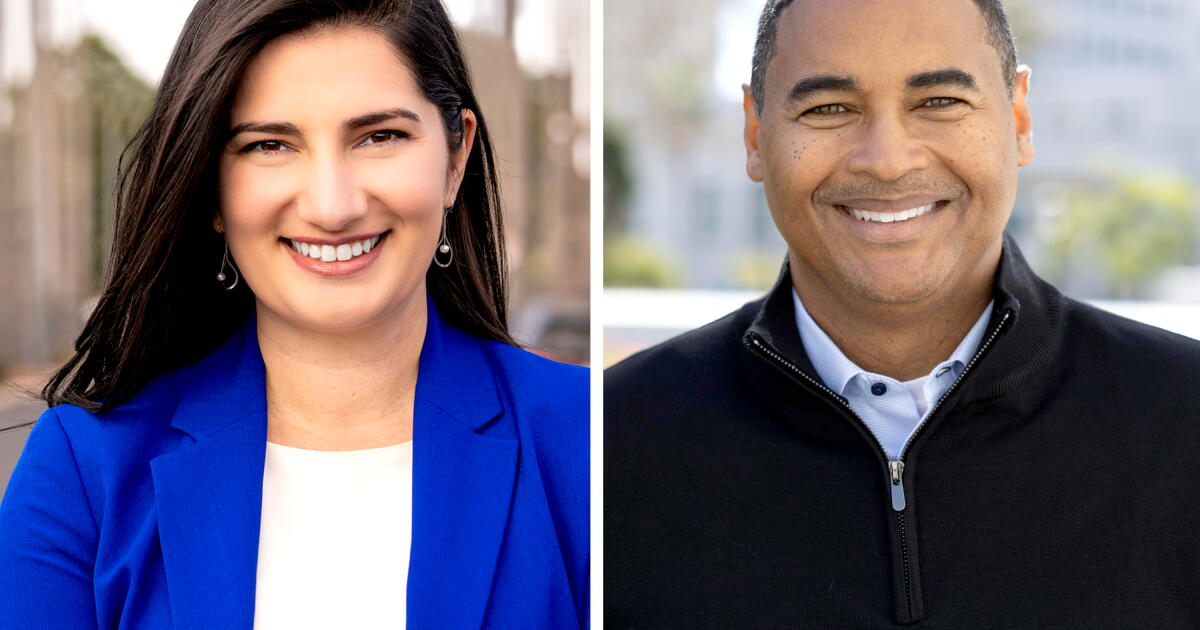
Marissa Roy, a deputy attorney general with the California Department of Justice who leads the race with ballots still being counted, wooed voters with shoe-leather and social media savvy, promising to use the office to fight for wage workers and tenants. But it was the city’s powerful unions and its increasingly democratic socialist bloc that propelled her to the top spot, mirroring the coalition that drove California’s sharp left turn in the early 1930s.

Meanwhile, county prosecutor John McKinney tapped into voter frustration with homeless encampments, a blighted downtown and general distrust of City Hall to pull off a last-minute heist of the second runoff spot. McKinney only started campaigning in earnest five weeks ago, but managed to win votes with a tough-on-crime campaign — even as some categories of city crime have dipped to historic lows.

Karen Bass, left, shares a laugh with Hydee Feldstein Soto

L.A. Mayor Karen Bass, left, shares a laugh with L.A. City Atty. Hydee Feldstein Soto, right, at Avance Democratic Club’s politics and tacos event on May 16.

(Christina House / Los Angeles Times)

As of Thursday morning, Roy had nearly double the number of votes of Feldstein Soto. McKinney led the incumbent by 13 percentage points for the second runoff slot. The race has not yet been called, but Feldstein Soto issued a statement effectively conceding the race Wednesday morning. She acknowledged that “the voters had spoken” and referenced “her successor’s administration.”

Her campaign did not respond to a request for comment for this story.

The ouster of Feldstein Soto would be nearly unprecedented. Werner’s 1933 loss is the only similar instance since the city adopted its current primary ballot process in 1917, according to the City Clerk’s office. No other incumbent city council member or mayor has ever failed to advance out of the primary when facing two or more opponents.

“This is not something that has happened in the lifetimes of most people who follow city government,” said Mike Bonin, former City Council member and executive director of the Pat Brown Institute for Public Affairs at Cal State L.A.

McKinney’s sudden emergence in the race in May saw him hijack the incumbent’s support from law enforcement. His campaign received $3 million worth of independent expenditures. An official with a group supporting McKinney — who spoke on condition of anonymity because they were not authorized to speak to the media — said an internal poll showed Feldstein Soto falling nearly 10 points outside the runoff a week before election day.

Since Roy had already captured the support of the county Democratic Party and energized left-leaning voters, that put Feldstein Soto in the center, analysts said, which left her vulnerable in a race that most people casting ballots hadn’t closely followed.

“To the extent that people had any information, they knew that one of them basically wanted to be tougher and somebody on the other side wanted to be kinder, that left her with very little room to maneuver,” said Roy Behr, a longtime consultant to veteran politicians in the city.

Roy “micro-targeted” likely progressive voters in social media spots, experts said, presenting as an affable presence in her ever-present purple blazer while sharing her vision of serving as the “people’s lawyer.”

 Marissa Roy

Marissa Roy, a deputy attorney general with the California Department of Justice, appears poised to finish first in the June 2 primary race for L.A. city attorney.

(Gary Coronado / For The Times)

Boosted by a massive influx of cash from rental giant Airbnb, some of McKinney’s ads played up his hard-luck upbringing in one of New Jersey’s most violent cities. His campaign also sent out texts that painted his opponents as “George Gascón”-style Democrats, invoking the former progressive district attorney as a bogeyman for voters anxious about crime.

AI-generated videos depicted McKinney as a stoic, suit-clad crime fighter walking through a dystopian version of L.A.’s Metro system.

“The debate isn’t necessarily two candidates on one stage appealing to one person, it’s for attention and information in the same sphere,” said Spencer Slovic of Mycorrhiza Digital, who ran Roy’s digital advertising. “That battle of information will play out almost in different realms.”

Without a compelling story for her powerful but poorly understood role, Feldstein Soto often struggled to explain her achievements in office.

In a recent interview with The Times, she said she delivered on “public safety, public integrity and public services.” She went on to discuss granular improvements she made to the office, such as limiting access to law enforcement databases by former employees, modernizing internal systems and improving the rapport between the city attorney’s office and LAPD. By her own admission, she doesn’t often publicly celebrate her accomplishments.

“I didn’t hold some big press conference and hop up on a white horse and declare myself Joan of Arc and the savior of all things Los Angeles,” she said. “Which I could have done.”

Tumult during Feldstein Soto’s lone term in office was easier for voters to identify. The cost of litigation exploded. A high-ranking city lawyer accused her of abusing her power, prosecuting political enemies, mistreating employees and engaging in “inappropriate alcohol consumption.” Feldstein Soto claimed she improved her office’s rapport with the LAPD, but the police union’s decision to rescind its endorsement of her and instead back McKinney cost her a key voting bloc.

Feldstein Soto’s messaging was at times muddled and lacked the flair of her challengers, political observers said. Campaign finance records show she paid for 80 email blasts, mailers and other messages that sought to influence voters.

John McKinney

John McKinney, a Los Angeles County prosecutor, appears set to advance to a run-off against Marissa Roy in the race for L.A. city attorney.

(Kayla Bartkowski / Los Angeles Times)

In one video, she stood in front of a static background and talked for three minutes straight about her record while describing her opponents as representing the “extreme left” and “extreme right.” She attacked both for receiving large sums of money from “special interests,” especially McKinney for accepting Airbnb’s largesse. Feldstein Soto sued the rental giant for price gouging in the wake of the 2025 wildfires.

Roy’s campaign sent out 180 communications, records show, the bulk of them ads for Instagram and Facebook, where her team said they saw instantly which stories resonated with likely voters and which were duds.

Slovic said a “clip of Hydee talking about how she wasn’t going to prosecute the Trump administration” seemed to touch a nerve with voters.

“That was by far our best performing ad,” he said, adding, “What Democrats really want in primaries is someone who will fight and have some sort of backbone.”

McKinney had just 23 communications, campaign records show, plus 19 more made by independent groups. He often leaned into the same gritty visuals that defined mayoral candidate Spencer Pratt’s viral AI spots.

In a race for a position most voters don’t understand, McKinney’s and Roy’s ability to play a consistent character may have proved critical, political analysts said.

The vast majority of voters started off with no strong feelings about the race,” Behr said. “Nobody had any votes locked down other than their friends and neighbors.”

Source link