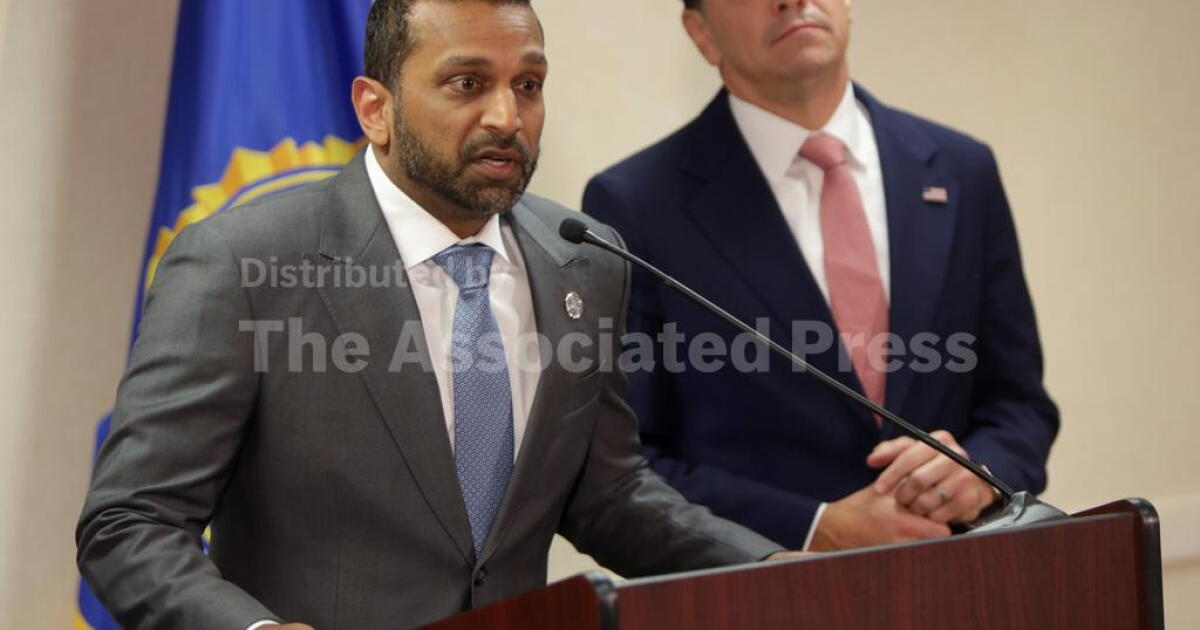
WASHINGTON — The FBI is investigating an apparent hack of a national law enforcement database that it maintains, a person familiar with the matter said Saturday.
The National Crime Information Center, known as the NCIC, is a computerized database of criminal justice information that is available to local, state and federal law enforcement agencies and includes records on fugitives, missing persons, criminal history data, stolen property and other topics.
The FBI declined to comment Saturday on the apparent hack, which was first reported by CNN and confirmed to the Associated Press by a person familiar with the matter who was not authorized to speak by name and spoke on condition of anonymity.
The scope of the problem was not immediately clear.
Asked about the subject on Saturday, President Trump said in a Fox News Channel interview: “We just heard about it, and I will say that it’s not good.”
News that the NCIC was targeted comes as the country has encountered a series of digital outages in the government and private sector that Trump administration officials have said were caused by routine efforts to upgrade computer systems and fix vulnerabilities, not a cyberattack. There was no immediate indication that the FBI incident was related to those outages.
The bureau has historically been a frequent target for hackers.
In September, a criminal hacking group known as ShinyHunters revealed that it had obtained a massive trove of data on FBI employees and applicants and had compromised the bureau’s jobs portal. And in March, the FBI disclosed that it was investigating “suspicious activities” on an internal system that contains sensitive information related to surveillance operations and investigations.
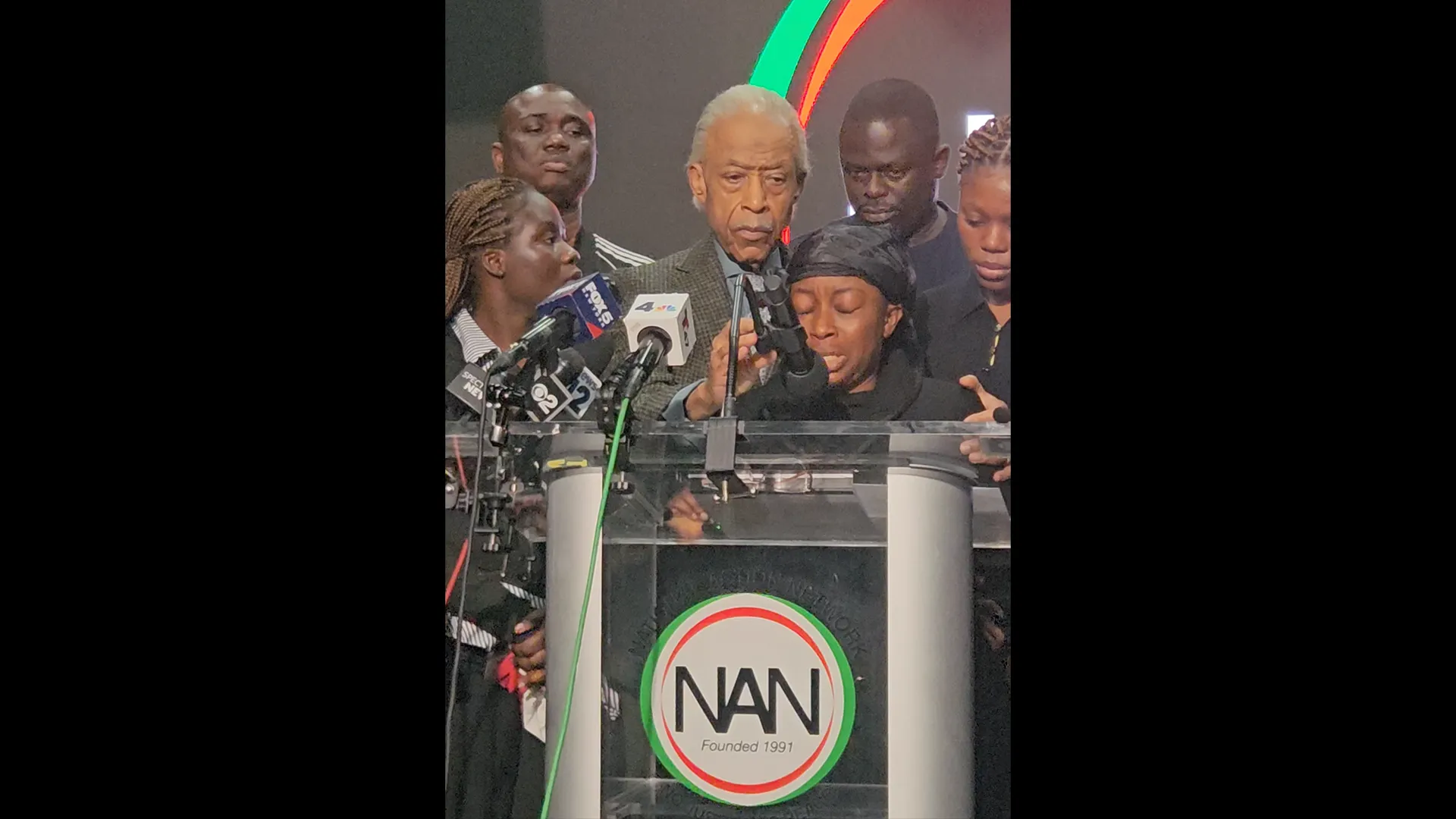
The family of slain Ghanaian teenager Javits Frimpong have reiterated their demands for justice and accountability after police arrested a 17-year-old suspect. Frimpong was shot on his way to school in New York’s Bronx borough and died in hospital on October 29.
WASHINGTON — The top federal prosecutor in Miami who had been tasked with overseeing an investigation into foes of President Trump has resigned, joining other high-profile Justice Department officials departing in the wake of the midterm elections, officials said Friday.
Jason Reding Quiñones’ resignation follows frustrations among Washington officials with his management of the office assigned to lead the so-called grand conspiracy investigation, according to people familiar with the matter who spoke on the condition of anonymity to discuss personnel issues.
The Justice Department’s top national security official, John Eisenberg, also resigned Friday, Atty. Gen. Todd Blanche said. On Thursday, Assistant Atty. Gen. Harmeet Dhillon, who led a radical overhaul of the department’s Civil Rights Division, also announced her departure.
Quiñones was confirmed by the Senate last year as U.S. attorney for the Southern District of Florida, where the Justice Department had centered its meandering probe into whether former law enforcement and intelligence officials conspired against the Republican president.
His departure comes as the investigation has shown signs of faltering amid a spate of staff turnovers and delays. Investigators in recent weeks have put off scheduled grand jury testimony of several witnesses, according to multiple people familiar with the matter who spoke on condition of anonymity to discuss an ongoing investigation.
Blanche said in a social media post that the department is grateful for Quiñones’ “leadership in combating violent crime, drug trafficking, sex trafficking, and transnational crime, including the indictment of Raúl Castro.”
Castro, the former Cuban president, was indicted by Quiñones’ office in May on charges related to the 1996 downing of civilian planes flown by Miami-based exiles.
Quiñones said Friday that he is leaving with “immense pride in what we accomplished together and profound gratitude for the opportunity to serve our great Nation.”
“I am grateful to President Trump for his trust and to the extraordinary men and women of the great Southern District of Florida for their dedication, friendship, and unwavering commitment to justice and the rule of law,” Quiñones wrote in a social media post.
The “grand conspiracy” investigation has proceeded in fits and starts for over a year with repeated setbacks and departures. Last April, a lead national security prosecutor in the investigation of former CIA Director John Brennan was replaced on the team after raising questions about the strength of the case.
Shortly afterward, Joseph diGenova, a former U.S. attorney for the District of Columbia, took over the probe. DiGenova resigned from the Justice Department in September without bringing any criminal charges.
Eisenberg was sworn in as assistant attorney general in charge of the department’s National Security Division in June 2025 and oversaw cases involving espionage, terrorism, export control violations, cyber crimes and other matters.
Among the division’s most high-profile cases under his watch was the prosecution of former national security adviser John Bolton, who pleaded guilty this year to allegations of mishandling classified information and is awaiting sentencing.
“He has served with distinction, strengthening our nation’s ability to address threats, both foreign and domestic,” Blanche said in a statement.
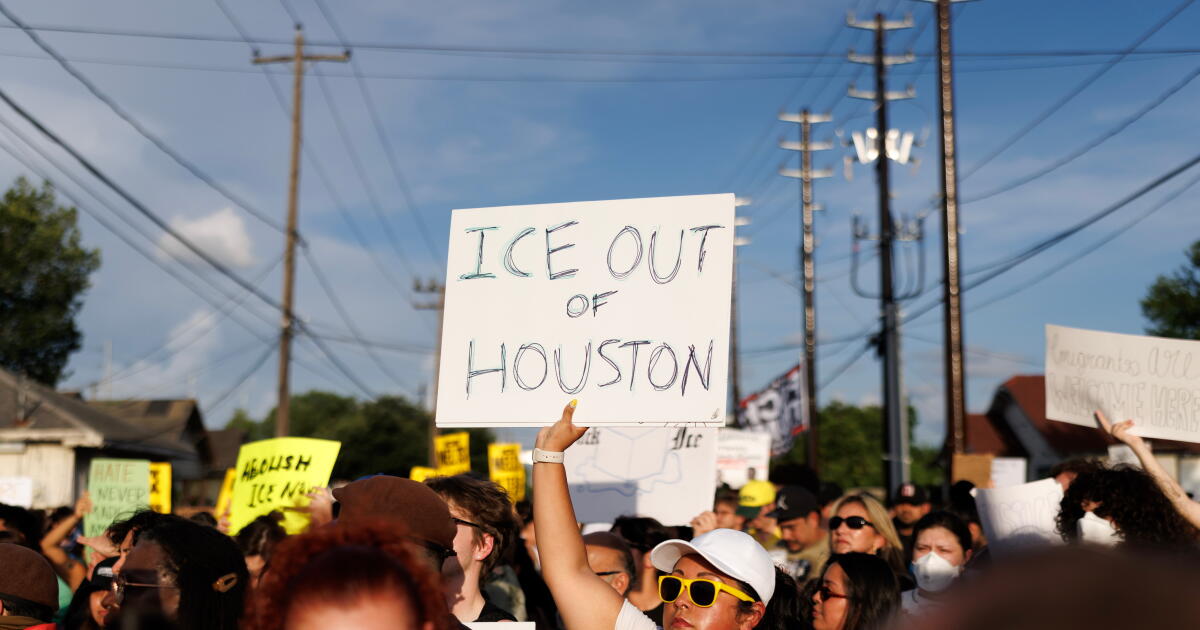
HOUSTON — The mayor of Houston on Friday said the city would limit cooperation with federal immigration authorities, heralding “a new model” of immigration enforcement after Democrats won power in Texas for the first time in decades.
Mayor John Whitmire said the city would go after immigrants “that pose a danger, not those that are going about their family business, work and education.”
A traffic incident “will not even … you write a citation or you warn them and they go about their way. No contact with (U.S. Immigration and Customs Enforcement) over nonviolent, non-jailable offenses. It reduces the fear and anxiety.”
Details of the change were to be spelled out in an executive order but the move by the nation’s fourth-largest city is one of the first steps to curb ICE’s powers since Tuesday’s election.
The Trump administration’s immigration crackdown in Houston has sparked protests after an ICE officer fatally shot a Mexican homebuilder this summer and another struck a man with a car.
A grand jury last week indicted ICE officer Mario Alberto Morales on a charge of aggravated assault with a deadly weapon. Prosecutors say Morales intentionally rammed his car into Miguel Parra Hernandez, whose leg was broken. ICE has asserted that Parra Hernandez ran in front of the vehicle, an account that prosecutors say is contradicted by video.
Trade and security are expected to be on the agenda as delegations and leaders from dozens of African countries gather in Moscow for a two-day summit with Russia.
The third instalment of the Russia-Africa Summit will run through October 28–29 and will be chaired by Russian President Vladimir Putin and the current African Union chair, Burundian President Evariste Ndayishimiye.
Recommended Stories
list of 4 itemsend of list
Russia has boosted security and trade cooperation with African nations as it grapples with Western sanctions imposed in response to its war against Ukraine.
So who will be attending and what is at stake?
Here’s what we know.
What is the Russia-Africa Summit?
The Russia-Africa Summit is a two-day diplomatic and economic meeting being held in Moscow on Wednesday and Thursday.
Leaders and delegations from 48 African countries are meeting to discuss bilateral cooperation spanning politics, defence and technology.
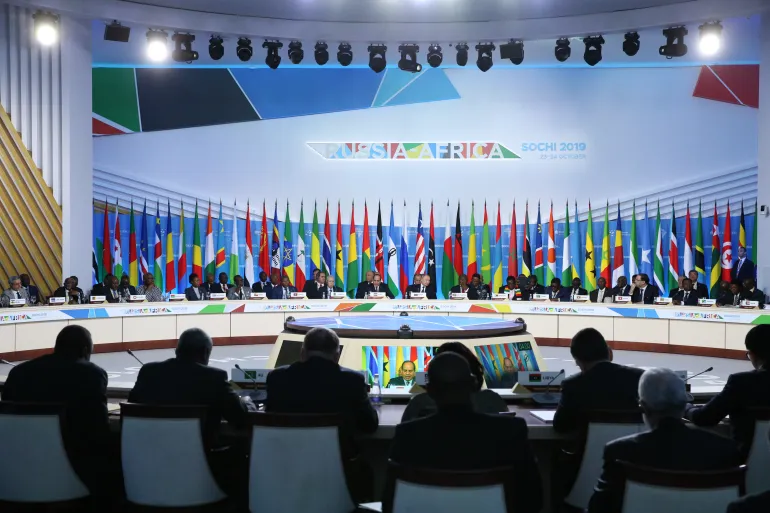
This high-profile forum is the third of its kind. The first summit took place in October 2019 in Sochi, marking an unprecedented turn in Russian-African relations.
Russian President Vladimir Putin (C), Egyptian President Abdel Fattal el-Sisi (L) and South African President Cyril Ramaphosa (R) seen during the plenary at the Russia-Africa Summit on October 24, 2019 in the Black Sea resort of Sochi, Russia [Mikhail Svetlov/Getty Images]
What’s on the agenda for the summit?
The event’s official theme is Developing Mutually Beneficial Cooperation and “unlocking the potential of every African country”.
More than 40 sessions and about 100 speakers will cover trade, investment, technology transfer, food and energy security, healthcare, education and youth exchange.
There will also be a business programme, culminating in a plenary session.
Who is attending?
Representatives from 48 African countries will participate, as well as 22 heads of state, according to Kremlin presidential aide Yury Ushakov. Heads of state from 17 countries attended the last summit in 2023.
Fewer leaders came to the last two summits, compared with the first gathering in 2019, when 43 took part, a decline which Moscow blamed on Western pressure.
Russian President Putin is scheduled to meet with his Egyptian counterpart Abdel Fattah el-Sisi and Ethiopia’s Prime Minister Abiy Ahmed.
The guest list includes leaders closely tied to Russia’s growing security role in Africa, including Burkina Faso’s Ibrahim Traore and Niger’s Abdourahamane Tchiani.
Kenya’s William Ruto, Uganda’s Yoweri Museveni and Namibia’s Netumbo Nandi-Ndatiwah are also expected, as well as Sudan’s Abdel Fattah al-Burhan and Mohamed al-Menfi, the chairman of the Presidential Council of Libya.
What is the relationship between Russia and Africa like?
Russia has gained far more influence in Africa through security than trade, according to a report by the African Security Analysis group (ASA), a security consultancy.
Russia’s security presence has risen significantly in the region. In 2023, Russian forces, mostly from the Wagner Group, operated in only a few African countries, but the ASA now counts Russian missions or troops in at least nine countries.
Trade between African countries and Russia has exceeded $28bn. It was estimated to be about $16.8bn in 2019, when the first summit was held. But trade is mainly concentrated in a few countries and overshadowed by that of China and the European Union.
Russia’s strongest ties to the continent are in energy, fertilisers, defence and nuclear power, where the state-owned firm Rosatom has signed a string of agreements.
Russia has been an essential supplier of fertilisers and wheat to many countries in the region.
In 2023, Russia exported 200,000 tonnes of grain to Mali, Somalia, the Central African Republic, Burkina Faso, Eritrea and Zimbabwe.
Why does this summit matter?
This is the first summit since 2023, so it will be an indicator of how far the relationship has developed and where it is heading, analysts say.
A final declaration and a Russia-Africa Partnership Forum plan should be adopted by the end of the Summit to cover 2027-2029.
Analysts have said that meetings on the sidelines could be more important than the main event, as talks between African delegations and Russian defence officials can illustrate where Moscow plans to expand its military ties.
The recruitment of Africans to fight in Ukraine could also be a growing problem for Moscow, as it has already caused diplomatic concern in countries such as Kenya.
Amnesty International has used the run-up to the summit to raise the issue of Africans being recruited to fight with Russia.
In an open letter, the directors of Amnesty’s African section urged leaders attending the summit to demand that Moscow end what the group describes as deceptive and coercive recruitment of Africans to fight in its war in Ukraine.