matches

What are the key matches to watch as the UEFA Champions League returns? | Football

Atletico vs Man United and Man City vs PSG headline the Champions League match day two action as the competition returns.

The UEFA Champions League (UCL) 2026-27 enters its second round of matches this week, with 36 teams in action across Europe as clubs return to the elite football competition.

After the first set of league fixtures, two-time title holders Paris Saint-Germain lead the points table with three points, followed by six-time champions Bayern Munich and five-time winners Barcelona, who also won their opening matches.

Recommended Stories

list of 4 itemsend of list

The competition’s league phase format, now in its third year, started in September and runs until January 2027. It will be followed by the knockout rounds, with the champions crowned in early June.

Here’s all you need to know about this year’s competition:

What is the Champions League?

The Champions League is an annual club competition that features the best teams from across Europe.

This season marks the third time that 36 teams will participate in the main round, an increase from 32 under the old format.

What is the 2026-27 Champions League format?

Since 2003, the UCL has featured 32 clubs split into eight groups of four, with the top two from each section advancing to the last 16.

That has changed radically in recent years.

From the 2024-25 season, the 36 clubs are pooled into a single league in a “Swiss system” more commonly associated with chess.

Earlier, participating teams played six games in the group stage, facing each opponent home and away. Now, each club plays eight games, one each against eight different opponents.

How does the Champions League knockout format work?

At the end of the league phase, the top eight qualify directly for the knockouts, while those between the ninth and 24th places have to compete in two-legged knockout-phase playoffs.

Teams ranked 25th and below are eliminated.

The UCL knockout format is straightforward – it begins with the round of 16, followed by the quarterfinals, semifinals and the final.

When are the league phase and knockout matches?

The league phase matches are scheduled for:

  • Match day 1: September 8-10
  • Match day 2: October 13 and 14
  • Match day 3: October 20 and 21
  • Match day 4: November 3 and 4
  • Match day 5: November 24 and 25
  • Match day 6: December 8 and 9
  • Match day 7: January 19 and 20
  • Match day 8: January 27

The knockout phase matches are scheduled for (all dates in 2027):

  • Playoffs: February 16, 17 and 23, 24
  • Round of 16: March 9, 10 and 16, 17
  • Quarterfinals: April 6, 7 and 13, 14
  • Semifinals: April 27, 28 and May 4, 5
  • Final: June 5

Which are the best Champions League matches to watch?

The key matches to follow on matchdays two and three are as follows:

Top five UCL matches to watch this week

  • Arsenal vs Lille, Tuesday 19:00 GMT
  • Atletico vs Manchester United, Tuesday 19:00 GMT
  • Galatasaray vs Barcelona, Tuesday 19:00 GMT
  • Manchester City vs PSG, Wednesday 19:00 GMT
  • AS Roma vs Real Madrid, Wednesday 19:00 GMT

Top five Champions League matches to watch next week:

  • PSG vs Barcelona, October 20, 19:00 GMT
  • Liverpool vs Villarreal, October 20, 19:00 GMT
  • Como vs Manchester United, October 21, 16:45 GMT
  • Bayern Munich vs Arsenal, October 21, 19:00 GMT
  • Real Madrid vs RB Leipzig, October 21, 19:00 GMT

What are the key UCL storylines to follow?

Man City’s home clash with PSG headlines the upcoming round of matches, marking the troubled Etihad club’s first Champions League match since an independent commission found them guilty of breaking more than 100 Premier League financial rules.

Elsewhere, City’s crosstown rivals, under-fire Man United, are also in action this week. They head to Madrid to face an in-form Atletico, hoping to register just their third win this season.

Meanwhile, manager Jose Mourinho will face his former club AS Roma when Real travel to the Italian capital.

Who are the top players to watch in the Champions League?

PSG’s Ferran Torres, who scored a hat-trick in the first UCL match, is a joint top scorer in this year’s UCL alongside Ermedin Demirovic of Stuttgart.

Also watch out for Man City’s Erling Haaland, Bayern Munich’s talented Michael Olise and PSG forward Ousmane Dembele, all of whom scored two goals in their respective UCL openers.
Source link

Why are Ireland vs Israel football matches so controversial? | Football News

When European football’s governing body announced the schedule for its upcoming Nations League competition in February, one fixture became an instant point of contention.

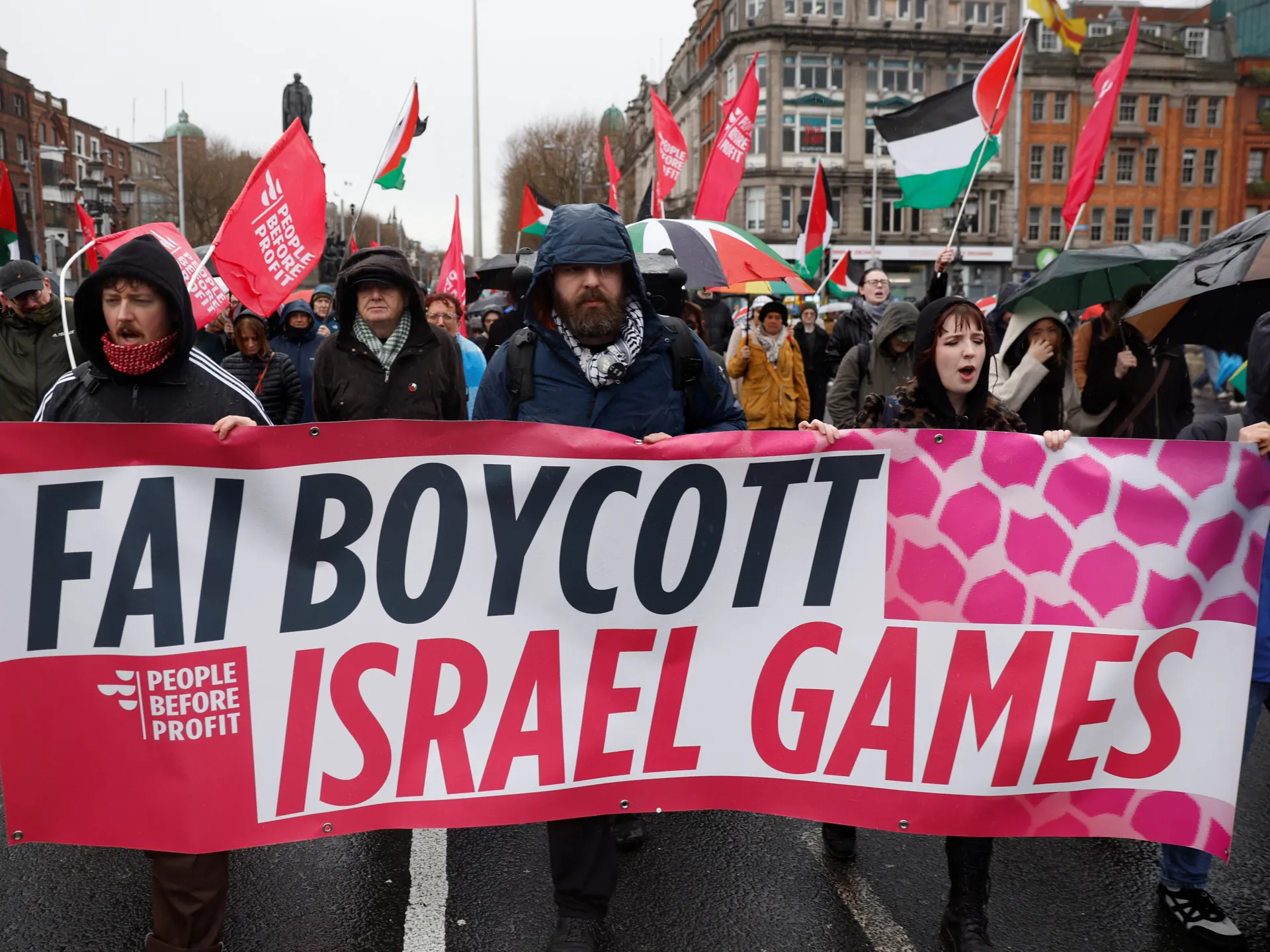
The Republic of Ireland and Israel were allocated the same group in League B of the UEFA Nations League 2026-27, provoking strong opposition from Irish fans, footballers and celebrities due to Israel’s genocidal war in Gaza. It also led to calls for a boycott of the fixture regardless of the consequences.

Recommended Stories

list of 3 itemsend of list

Seven months on, the Ireland vs Israel game is expected to be played as scheduled but amid vociferous criticism, louder calls for Irish football officials not to send a team to the game and bitter Israeli responses to the backlash.

What’s happening between Ireland and Israel?

They will play two matches in the space of eight days amid tense political relations  and in the face of increasing opposition from the Irish public.

The fixtures will be played on a home-and-away basis, with Ireland “hosting” its home leg in Debrecen, Hungary, on Sunday, September 27. Israel’s “home” match will be played in Serbia on October 4.

Why does Ireland have to play against Israel?

Ireland and Israel are members of UEFA, European football’s governing body. As UEFA members, and in order to progress to the top tier of European football competitions and improve their rankings in international football, both nations participate in UEFA-run tournaments.

The UEFA Nations League pits closely ranked nations against each other in groups, where all teams face each other twice in round-robin-style matches.

Ireland and Israel were drawn together in Group B3 along with Austria and Kosovo.

Who is leading the calls to boycott the Ireland vs Israel match?

Ever since the fixture was first confirmed on February 12, the Football Association of Ireland has been under pressure to boycott the matches due to Israel’s genocide in Gaza and Ireland’s status as a Palestine ally.

In May, leading Irish footballers joined celebrities in a campaign by Irish Sport for Palestine, urging Ireland to boycott the match against Israel. A United Nations inquiry confirmed in June 2025 that Israel was committing a genocide in Gaza.

The campaign group says Israel has breached UEFA and FIFA statutes by allowing teams to play on occupied Palestinian land and should be stripped of its membership at both football bodies.

Last November, 93 percent of FAI members voted for its leadership to pressure UEFA to suspend Israel under those statutes, a mandate campaigners say the Irish governing body should “respect and represent”.

The letter, entitled “Stop the Game”, was signed by League of Ireland players, former men’s coach Brian Kerr and twice women’s player of the year Louise Quinn.

The letter includes a statement from Shamrock Rovers captain and Professional Footballers’ Association of Ireland (PFA) chair, Roberto Lopes.

International rights organisations have also called on UEFA and FIFA to exclude Israel from its competitions.

“It’s unconscionable that Israel will participate despite clear evidence that Israel’s football association continues to support illegal settlements,” Amnesty International said in a statement.

“When rules are broken, when occupation, apartheid and genocide are ongoing, we cannot look the other way,” it added.

What have Ireland’s officials said about the match?

Ireland’s Prime Minister Micheal Martin gave a green light to the matches, citing the challenges of mixing sport and politics.

“We have been critics and have opposed very strongly Israeli government policy within Gaza in particular. We condemned the Hamas attack on Israel, which was absolutely horrific,” ‌‌the Taoiseach told The Irish Times.

“I think sport is an area that can be challenging when it crosses into the realm of politics.”

In February, FAI Chief Executive David Courell said the national team had no choice but ‌‌to ‌‌fulfil its obligations or risk harming the long-term sporting interests of Irish football, including potential disqualification from future competitions.

Last week, Ireland manager Heimir Hallgrimsson responded to the boycott calls, saying his team were not “playing with genocide”.

“We’re playing against genocide,” Hallgrimsson said.

What is the public sentiment in Ireland?

The rights groups calling for a boycott of the match have cited several public polls, run by local newspapers, footballers’ bodies and individuals online, which indicate that a vast majority are in favour of opting out of the Nations League fixtures.

A poll by the PFA in February showed that 63 percent of those surveyed did not want Ireland to play the fixtures. A similar poll by the Irish Mirror newspaper indicated that 71 percent of the public would support the FAI if they refused to play the game.

Bohemian FC, an Irish football club with a strong pro-Palestine stance, have thrown their weight behind the calls for a boycott and have urged the FAI to call off their participation.

Bohemian’s Director of Football Pat Fenlon believes it is up to the FAI to “take a stand for what’s happening in Gaza”.

“What an opportunity it would be to be the first country to stand up and say this is totally wrong,” Fenlon told Irish Sport for Palestine.

“The game shouldn’t be played,” he said.

According to officials at the club, the Irish public is aware of the potential consequences but believe that boycotting is “the right thing to do”.

“It is not acceptable to put a price on standing up for what is right and in solidarity with the Palestinian people,” the club’s communications director Luke O’Rodrian told Al Jazeera.

He accused the FAI of showing “sheer cowardice”.

O’Rodrian said the boycott calls have been supported by trade unions representing workers, particularly those employed by the FAI, the PFA and the Irish Football Supporters Partnership, who represent Ireland’s football supporters.

In the country’s political sphere, Mary Lou McDonald, leader of Ireland’s main opposition party Sinn Fein, has also called for the FAI to “do the right thing by its players” by telling them not to take the field.

How did Israel respond?

The Israeli FA responded to Hallgrimsson’s statement on Monday by saying: “We are not playing with ignorance, hypocrisy and stupidity; we’re playing against the coach who embodies them”.

Martin defended Hallgrimsson, describing Israel’s remarks as “unacceptable”, adding that “Israel can’t keep denying what the world knows”.

Why are the matches being played in Hungary and Serbia?

The first leg of the fixture will be held at the Nagyerdei Stadion in Debrecen, Hungary, and the second, which is Ireland’s “home” game, will be played at the TSC Arena in Backa Topola, Serbia.

Israel has not played an international fixture at home since September 2023 as it has been barred by UEFA from hosting teams due to security concerns.

While the October 4 fixture was scheduled to be held in Dublin, the FAI moved it following the protests and boycott calls. That game will be played behind closed doors.

Irish state broadcaster RTE, which ‌‌has ‌‌contractual obligations to show the games, will provide stripped-back coverage.

There will be no studio presentation or punditry and commentary will be taken from the international feed. RTE has not taken advertising or sponsorship around either game.

What would happen if Ireland boycotted the match?

UEFA does not have a fixed fine for refusing to play a Nations League match, and forfeiting teams could face a mix of fines, point penalties and forfeitures.

Officials at Bohemian FC pointed towards a recent report in the Irish Examiner newspaper, which highlighted that the punishment given to Lithuania, Latvia and Estonia when they refused to fulfil recent UEFA fixtures against Belarus was a 3-0 walkover and, in one case, a fine of 5,000 euros ($5,684).

O’Rodrian said there was “real anger” among grassroots towards the FAI.

“The FAI exaggerated the potential consequences to force their delegates to vote in favour of proceeding with fulfilling these fixtures,” he said.

Meanwhile, Bohemians’ Director of Football Fenlon believed such a stance would always come at a cost.

“[They are] talking about losing money, about losing points and punishment, but we’re talking about more than 20,000 children killed [in Gaza],” he said.

“There will be a cost. Stand on the right side. We shouldn’t be playing Israel in anything.”

Source link

AFCON 2027 qualifiers: Teams, top players, schedule, format, matches | Football

The qualifiers for the 2027 Africa Cup of Nations begin on Thursday, with 48 countries competing to earn spots in Africa’s biggest football tournament.

Tanzania, Kenya and Uganda will cohost AFCON 2027, as the competition returns to East Africa for the first time in 51 years.

Recommended Stories

list of 4 itemsend of list

Divided into 12 groups, the teams will be involved in a six-round qualifying process that runs to March next year.

Here’s everything to know about AFCON 2027:

Which teams are in the AFCON 2027 qualifiers?

The draw for the AFCON 2027 qualifiers took place in Cairo, Egypt, in May.

The 48 teams competing in the qualifiers are as follows:

  • Group A: Morocco, Gabon, Niger, Lesotho
  • Group B: Egypt, Angola, Malawi, South Sudan
  • Group C: Ivory Coast, Ghana, The Gambia, Somalia
  • Group D: South Africa, Guinea, Kenya, Eritrea
  • Group E: Democratic Republic of the Congo, Equatorial Guinea, Sierra Leone, Zimbabwe
  • Group F: Burkina Faso, Benin, Mauritania, Central African Republic
  • Group G: Cameroon, Comoros, Namibia, Congo
  • Group H: Tunisia, Uganda, Libya, Botswana
  • Group I: Algeria, Zambia, Togo, Burundi
  • Group J: Senegal, Mozambique, Sudan, Ethiopia
  • Group K: Mali, Cape Verde, Rwanda, Liberia
  • Group L: Nigeria, Madagascar, Tanzania, Guinea-Bissau

What are the top AFCON 2027 qualifying matches?

From the first two rounds:

  • Ivory Coast vs Ghana – Thursday, September 24 at 19:00 GMT
  • Nigeria vs Madagascar – Friday, September 25 at 16:00 GMT
  • Morocco vs Gabon – Friday, September 25 at 19:00 GMT
  • Egypt vs Angola – Friday, September 25 at 19:00 GMT
  • Algeria vs Zambia – Friday, September 25 at 19:00 GMT
  • Senegal vs Mozambique – Friday, September 25 at 19:00 GMT
  • South Africa vs Guinea – Saturday, September 26 at 16:00 GMT

What is the schedule for the 2027 Africa Cup of Nations qualifiers?

The six rounds of AFCON 2027 qualifying will be held across these FIFA international windows:

  • Rounds 1 and 2: September 21-October 6, 2026
  • Rounds 3 and 4: November 9-17, 2026
  • Rounds 5 and 6: March 22-30, 2027

How many teams can qualify for the Africa Cup of Nations?

In total, 24 teams qualify for AFCON 2027.

The general rule is that the top two teams in each group will advance to the finals.

However, in groups containing Kenya, Uganda and Tanzania – who have automatically qualified as cohosts – only the highest-ranked team outside the respective host country will go through.

The qualifiers will be played in a home and away format, with each team playing six matches.

When and where is AFCON 2027?

The 36th edition of AFCON will be held in Kenya, Uganda and Tanzania, bringing the tournament back to East Africa after five decades.

The tournament will run from June 19 to July 17, 2027, at 10 venues across the countries.

The stadiums are in the Tanzanian cities of Dar-es-Salaam, Arusha, Zanzibar, the Kenyan capital Nairobi, and Hoima, Kampala and Lira in Uganda.

Who won the last AFCON?

Senegal defeated Morocco 1-0 in the latest AFCON final on January 18, as Pape Gueye’s extra-time goal in a chaotic contest guided them to their second continental title.

But in March, the Confederation of African Football (CAF) made the extraordinary move to strip Senegal of their crown and award it to Morocco.

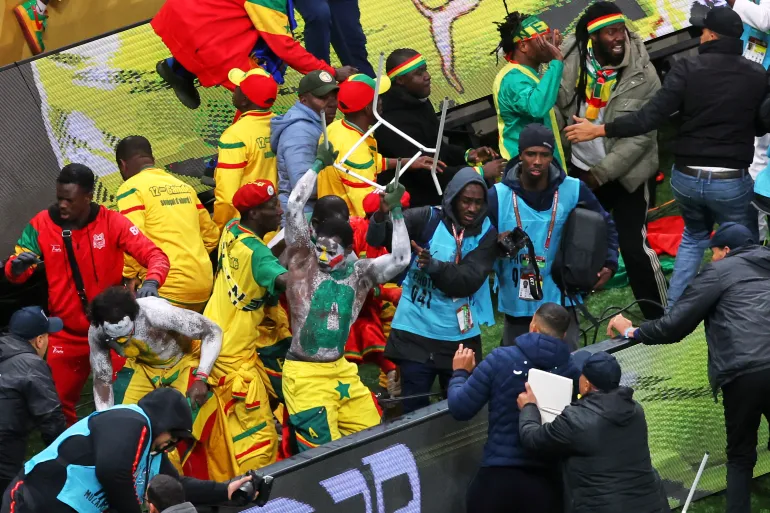
The controversial decision came after a review of an incident at the end of normal time in the final, which saw most of the Senegalese team temporarily leave the field to protest an added-time penalty awarded to Morocco, which was missed after a lengthy delay.

Senegal have appealed against CAF’s decision, and the appeal will be heard by the Court of Arbitration for Sport on October 8.

FILE - Senegal supporters protest after a controversial penalty was awarded to Morocco during the Africa Cup of Nations final soccer match between Senegal and Morocco on Jan. 18, 2026, in Rabat, Morocco. (AP Photo/Youssef Loulidi, File)
Senegal supporters protest after a controversial penalty was awarded to Morocco during the Africa Cup of Nations final [File: Youssef Loulidi/AP Photo]

Salah, Diaz and Lookman: The top players in AFCON 2027 qualifiers

Two-time African Footballer of the Year Mohamed Salah, who now plays club football for Trabzonspor in the Turkish Super Lig, stars in record seven-time African champions Egypt’s squad.

Fans should also watch out for Real Madrid forward Brahim Diaz and teen midfield sensation Ayyoub Bouaddi in the Morocco squad, led by new coach Mohamed Ouahbi, as well as Ademola Lookman and Samuel Chukwueze in the Nigerian side.

Elsewhere, Ghana are strengthened by the return of their attacking midfielder Mohammed Kudus, who missed the FIFA World Cup 2026 during a seven-month injury absence, while Senegal’s midfield features several talents such as Ibrahim Mbaye and Iliman Ndiaye.

Will Mane and Hakimi play in the AFCON qualifiers?

Morocco will be without their key player and captain Achraf Hakimi for the opening two matches as he serves a two-match suspension, alongside Ismael Saibari, who is banned for three games, for unsporting behaviour during the shambolic AFCON final in January.

Senegal will be without Sadio Mane, two-time African Footballer of the Year, as the Al-Nassr player sits out the match against Mozambique with what newly-appointed coach Patrick Vieira described as a “physical issue”.

Jun 13, 2026; East Rutherford, New Jersey, USA; Morocco defender Achraf Hakimi (2) in action against Brazil during a Group C match of the 2026 FIFA World Cup at New York New Jersey Stadium. Mandatory Credit: Vincent Carchietta-Imagn Images
Morocco defender Achraf Hakimi in action during the FIFA World Cup 2026 [Vincent Carchietta/Imagn Images]

Which other key players will miss the AFCON qualifiers?

Nigeria’s star striker Victor Osimhen will miss the opening qualifiers against Madagascar and Guinea-Bissau as he continues his recovery from a muscle problem. One of Africa’s finest forwards, Osimhen picked up the injury while playing for his Turkish club Galatasaray.

Naby Keita is among the several established names excluded from the Guinea squad, while Tunisia’s Hannibal Mejbri and Ivory Coast’s Amad Diallo are both out with injuries.

Gabon will be without former captain and all-time top scorer Pierre-Emerick Aubameyang, who quit international duty, saying he felt “humiliated” by his exclusion and subsequent reinstatement after the AFCON in Morocco in January.

Many other players also called time on their international careers this year. This includes Riyad Mahrez, who guided Algeria to the AFCON 2019 title; Edouard Mendy, Senegal’s first-choice goalkeeper during their AFCON 2021 triumph; and Ghana’s Spanish-born forward Inaki Williams.

How to watch and follow AFCON 2027 qualifying matches?

Fans can catch all the action from the AFCON 2027 qualifiers on the following broadcasters or streaming platforms:

  • North Africa and Middle East: beIN SPORTS
  • Sub-Saharan Africa: SuperSport
  • East Africa: Azam TV, TBC Tanzania, KBC Kenya
  • South Africa: SABC Sport
  • Francophone Africa: Canal+

The complete list of global broadcasters is here.

Al Jazeera Sport will also bring you live coverage of select matches.

Source link

Israel vs Republic of Ireland – how Uefa Nations League matches became so contentious

Hungary has been deemed a suitable host nation for Israel matches because the two nations enjoy stronger diplomatic ties than those between Israel and many other European nations, and it has been willing to provide the necessary policing and security arrangements for matches to operate smoothly.

The FAI decided in the summer to play its ‘home’ fixture against Israel at a neutral stadium, citing “operational challenges that could impact on the delivery of the game on home soil”.

Reports have claimed the FAI was concerned protests could prevent the match from taking place in Dublin.

The FAI gave no official reason for the selection of Backa Topola, but choosing a venue in Serbia – in a town so remote – in theory renders security management easier and reduces the possibility of protest.

In 2025, Serbian foreign minister Marko Duric described Israel as one of Serbia’s “closest friends and strategic partners”. Serbia has also purchased military equipment, including drones and missiles, from Israel in recent years.

The decision to play in neutral stadiums has not curtailed opposition.

Fans of various Irish clubs have demonstrated against the matches during domestic fixtures in recent weeks, and on Monday more than 160 Irish athletes signed an open letter by the Irish Sport for Palestine group urging a boycott. The signatories include boxer Tyrone McKenna and former European champion athlete Ciara Mageean.

FAI CEO David Courrell said last week Uefa had rejected a request for the teams to be kept apart in future draws, director of football John Martin described the games as a “very uncomfortable situation for everyone”. Manager Heimer Hallgrimsson, meanwhile, said playing the match did not constitute legitimisation of Israel’s “genocide”.

“We’re not playing with genocide, we’re playing against genocide,” Hallgrimmson said. “We’re playing against Israel, we’re not playing with Israel.”

In response, the Israel Football Association accused Hallgrimsson of “ignorance, hypocrisy and stupidity”.

The Republic of Ireland faced Israel in Women’s EuroBasket qualifiers last autumn and earlier this year after “extensive deliberations”.

Source link