Looking to hire a car for your summer holiday? Which? has put together a ranking of some of the best and worst car hire firms, including those that have the most hidden fees and the ones likely to keep you waiting at the airport
Hiring a car gives you freedom on holiday(Image: Getty Images)
Hiring a car can be an excellent way to explore somewhere new, but a recent survey by Which? Has revealed that one in eight car hire customers end up paying more than they expected to get on the road.
The consumer magazine surveyed over 3,600 people who’d hired a car in the past two years, asking a range of questions about their experience with customer service, value for money, ease of car pick-up and drop-off, and clarity around the overall cost.
Shockingly, 13% of participants in the survey ended up paying more than the price that they were quoted, showing that extras aren’t always made clear when customers are booking. These included surcharges for drivers over 70 and extra insurance costs that weren’t in the headline price.
Third from the bottom of the rankings was car hire giant Avis, a fixture at airports and other transport hubs. It has over 50 branches across the UK and thousands more across the world. While Avis scored highly for accurate descriptions, quality vehicles, and quick returns, it only scored two stars out of five for collection speed, and the clarity of its costs and conditions. With an average rental price of £55, it’s also far from being the cheapest option. Avis declined to comment.
Second from the bottom was Dollar, owned by the same parent company as Hertz, which also scored well for having accurate vehicle descriptions, easy-to-find locations, and easy returns. However, it received two-star scores when it came to collection speed and three stars for overall value for money.
When approached for comment, a Hertz spokesperson said: “We welcome feedback and are committed to providing a clear and transparent booking experience for our customers. Key information – including rates, inclusions, rental requirements and additional driver policies – is displayed throughout the reservation process and is available for review before payment.
“All Hertz customers also have access to a no-fee additional driver option through our free Gold+ Rewards loyalty program, which allows members to add a spouse or domestic partner at no additional charge.”
Coming in last in Which?’s survey was Goldcar. 28% of renters told Which? they had received additional charges, some of which weren’t deducted until after they returned home. Nearly a fifth of respondents said they had to queue for 30 minutes or longer to collect their car, also giving them two stars for customer service. One survey respondent said: “The risk of post-contract extras outweighs the cheaper price. Avoid at all costs.”
A spokesperson for Goldcar said: “Goldcar Spain is, of course, disappointed that the alleged experiences have been identified by Which? Travel. With regard to insurance cover, the company offers premium cover to provide a seamless process should damage occur during a customer’s rental. A customer, of course, has the right to choose to buy their cover separately; however, if this is the case, they will be charged for any damages that occur during the rental and will then need to claim the costs back from the chosen provider.
“Whilst the company has not been given the opportunity to see the footage referred to by Which? Travel is committed to investigating any incidents where a customer believes they have received service that does not match expectations for a low-cost brand.
“The company introduced a Code of Ethics for counter sales and a Guide of Good Sales Practices in 2021, both of which are reviewed annually based on customer feedback about their sales experience. If an employee breaches the Code of Ethics, they are immediately warned and penalised economically and if breaches are repeated they can be subject to termination of their contract.”
At the top of the rankings was Autoreisen, a Canary Islands-based car hire company that received five stars across all categories, despite also being the cheapest on average at £16 a day. It was named as a Which? Recommended Provider alongside the UK’s Arnold Clark, and the worldwide brand Alamo.
Arnold Clark was also the only UK rental firm that was awarded five stars for clarity of costs. One satisfied customer said: “There was no time shilly-shallying and no problem hiring in my age group (82). I was in and out in no time and dropped off back at my home.”
Guy Hobbs, head of travel research for Which?, said: “Too often we hear from holidaymakers who have faced poor customer service and unexpected charges that turn a seemingly cheap rental into an expensive one.
“The good news is that some firms show it doesn’t have to be this way. To get the best experience this summer, travellers should choose a reputable provider. Our Which? Recommended Providers are all excellent options, and using a trusted broker such as Zest Car Rental can provide extra reassurance and support if any issues arise.”
Which?’s rankings for best and worst car hire firms for 2026
Autoreisen
Cicar
Arnold Clark
Alamon
TopCar
Centauro
Enterprise
Sixt
Drivalia
Europcar
Thrifty
Budget
Hertz
Avis
Dollar
Goldcar
Have a story you want to share? Email us at webtravel@reachplc.com
Health officials say three people died during massive celebrations in Mexico City after Mexico’s 2-0 World Cup win over Ecuador. The victims — a 19-year-old woman, a 48-year-old woman and a 44-year-old man — died of asphyxiation. Thousands had crowded into the streets to celebrate Mexico’s first World Cup knockout-round win since 1986.
Weekly insights and analysis on the latest developments in military technology, strategy, and foreign policy.
Uncrewed systems will be at the heart of the UK Armed Forces in the future, under a more than $6.6-billion initiative that looks to transform all three services and the way they fight. Perhaps most dramatically, the new defense plan will see the Royal Navy sacrifice its future destroyer for a “hybrid,” distributed concept, with autonomous vessels being paired with crewed ones. But there are equally far-reaching measures set to reconfigure the British Army and Royal Air Force (RAF) around uncrewed and autonomous capabilities, some of which remain very high-risk as they are still deep or even early in development.
Warfare is changing. It’s why we’re making the largest ever drone investment in our Armed Forces.
🚢 Autonomous submarine hunting frigates ✈️ Drone “wingmen” to fly alongside Apaches 💥 Thousands of low-cost kamikaze strike drones 🛰️ Surveillance drones to replace older systems pic.twitter.com/lQLxPjDLTS
In a speech today, U.K. Prime Minister Keir Starmer set out his government’s long-awaited Defense Investment Plan. The aim of this is nothing less than “keeping the country safe for years to come,” the government said, and for this, the UK Armed Forces will lean heavily on autonomous systems. Most of these don’t currently exist in physical form, at least as far as we know. At the same time, the effort stresses the rapid fielding of capabilities. This illustrates just how ambitious, and risky, the plan is.
The Defense Investment Plan provides a budget of more than £5 billion ($6.6 billion) over four years just for drones and related capabilities. This is part of a much larger overall spend on defense, amounting to £298 billion ($395 billion) over the same period. This sum also includes £15 billion ($20 billion) of additional spending on top of last year’s Spending Review.
As the conflicts in Iran and Ukraine show, drones are reshaping warfare.
That’s why more than £5 billion is to be invested in drones over the next four years. This will drive a transformation, with new technology and infrastructure keeping us at the leading edge of innovation. pic.twitter.com/TSkAJg8vRh
By the end of the decade, Starmer asserted, the proportion of U.K. GDP spent on defense will be higher than at any time during the last 30 years and is in line with NATO ambitions to reach a level of 3.5 percent of GDP.
I welcome the UK’s Defence Investment Plan. Stronger UK defence makes us all safer. This is a good step towards reaching the 3.5% of GDP on defence agreed in The Hague last year
Defence spending and production will be an important focus of the #NATOsummit next week
The government points to the conflicts in Ukraine and Iran, specifically, as evidence of the need for a “drone transformation.”
“Drones are rapidly reshaping warfare, with cheap systems destroying high-value targets and innovation cycles measured in weeks, not years,” the government said, in announcing the plan. “Ukraine uses roughly 200,000 drones a month to defend itself from Russia’s barbaric invasion, while at the height of the Iran conflict, 700 offensive drones were being launched per day,” it adds.
Royal Navy
The changes forecast for the Royal Navy have so far garnered the most attention.
As part of a previously announced plan to create a so-called “Hybrid Navy,” the service will receive four new types of uncrewed vessels that will operate in conjunction with crewed warships and aircraft.
Of these new vessels, the Type 91 will be an uncrewed missile platform, serving as a ‘floating magazine’ to increase the overall firepower of the fleet. A combination of air defense, long-range land attack, and anti-ship missile capabilities seems likely, although any armament fit will likely be readily changeable and highly modular. The lessons of the conflict in the Red Sea provided dramatic evidence of how quickly missile cells can be depleted in an intense air-warfare environment.
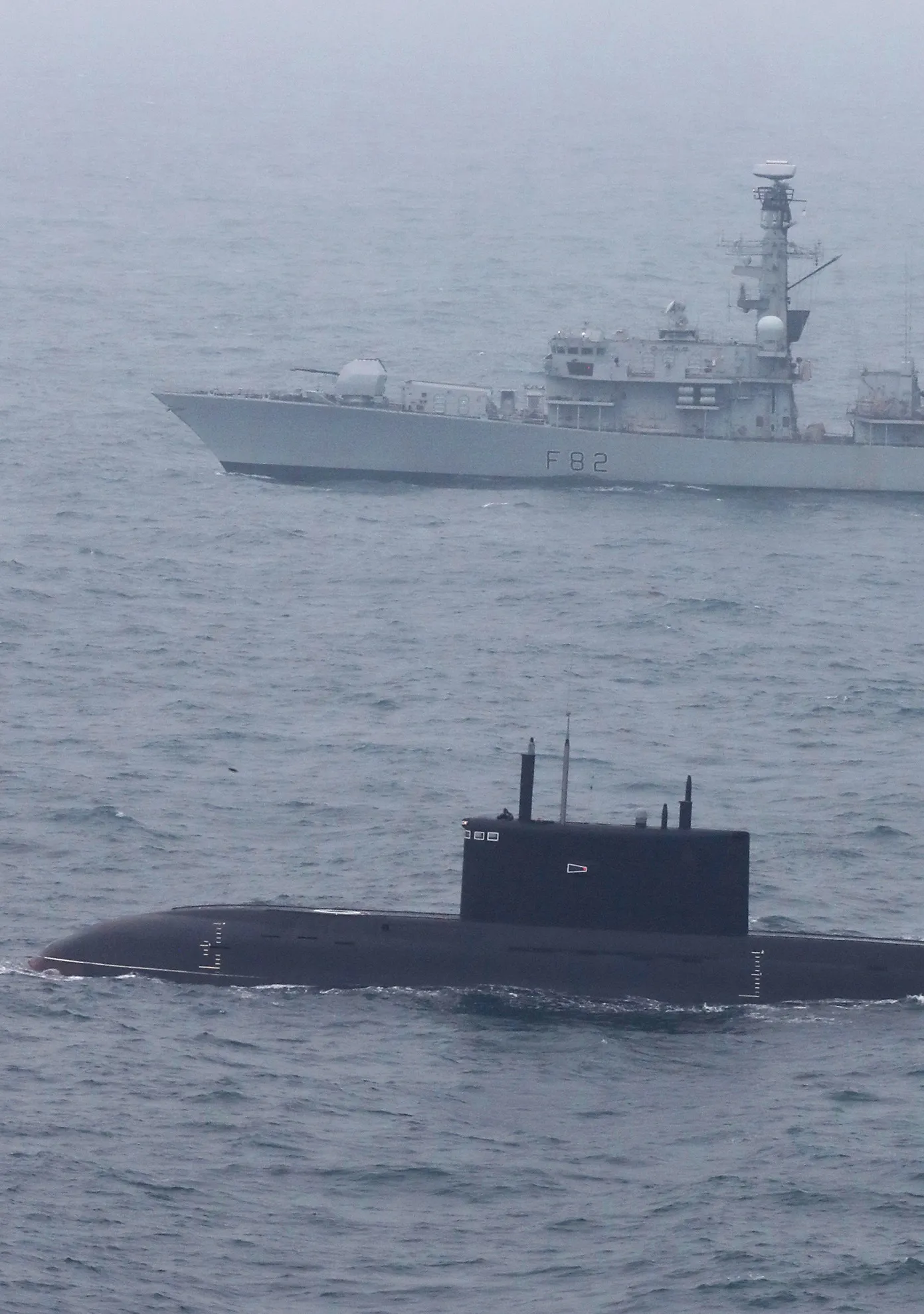
Also uncrewed, the Type 92 vessels are described as “sense platforms” and will have a primary anti-submarine warfare (ASW) tasking. As such, they will ensure the Royal Navy’s sensor reach is extended further into the North Atlantic, where the Type 92s will support previously ordered frigates in the hunt for Russian submarines.
The Royal Type 23 frigate HMS Somerset escorting a Russian submarine through the English Channel. Crown Copyright LPhot Dan Rosenbaum
The Type 93 is defined as an extra-large uncrewed underwater vessel and is intended as an adjunct to crewed hunter-killer submarines. They will carry both sensors and weapons (presumably torpedoes) to help search and destroy enemy submarines. This is an area in which the Royal Navy has been struggling particularly, with significant gaps in its fast-attack submarine force due to limited availability.
Finally, the Type 94 is another uncrewed sense platform, but is optimized for air defense missions. It will use its sensors to look for aerial threats on behalf of both the fleet and in support of homeland missions.
This NDP image shows Type 91, 92 and 94 alongside a Type 26 for scale. Type 94 carries the air defence radar and is the largest of the three, around 100m length. Type 91 and 92 are planned to be 70 and 90m in length. That suggest displacements anywhere from 800-3,500 tons. pic.twitter.com/GIwh2pov0c
The Types 91 and 94 will eventually be tied together by at least six Common Combat Vessels, which will form part of a networked Maritime Air Defense system. Arriving in service in the 2030s, the crewed Common Combat Vessels will serve as the “brains” behind this architecture, and the overall system will eventually take over the air defense tasking currently handled by the Type 45 destroyers.
The Type 45 destroyer HMS Dragon (bottom) conducting replenishment at sea while operating in the Middle East. Crown Copyright LPhot Helayna Birkett
The Maritime Air Defense system and the Common Combat Vessels, which are widely assumed to be roughly frigate-sized vessels, supersede earlier plans for the new Type 83 destroyer. This was previously expected to replace the Type 45 in the late 2030s, although for some time now its future had appeared threatened by increasing Admiralty interest in ‘arsenal ship’ concepts like the Type 91.
The Hybrid Carrier Air Wing outlined in the Defense Investment Plan is something we have discussed before.
“The Royal Navy must continue to move towards a more powerful but cheaper and simpler fleet, developing a ‘high-low’ mix of equipment and weapons that exploits autonomy and digital integration. Carrier strike is already at the cutting edge of NATO capability, but much more rapid progress is needed in its evolution into ‘hybrid’ carrier air wings, whereby crewed combat aircraft (F-35B) are complemented by autonomous collaborative platforms in the air, and expendable, single-use drones. Plans for the hybrid carrier air wings should also include long-range precision missiles capable of being fired from the carrier deck.”
F-35Bs launch from HMS Prince of Wales to take part in NATO Exercise Ramstein Flag 2026. Crown Copyright PO Phot Chris Sellars
While there is no further mention of the deck-launched long-range precision missiles at this point, the Defense Investment Plan does note that Project Pantheon will serve as the development effort for the Hybrid Carrier Air Wing and will include trials of unnamed jet-powered drones alongside the F-35B.
While not referred to specifically, the Royal Navy has already outlined its ambition for ‘cat and trap’ drone operations aboard U.K. carriers, which is known as Project Ark Royal.
If realized, the project will see the two Queen Elizabeth class carriers start to operate drones that can undertake a variety of missions and then increasingly heavier, complex, and higher-performance ones. Later on, full catapult-assisted takeoff but arrested recovery (CATOBAR) capability could also add fixed-wing crewed aircraft, as we have explored in the past.
Larger fixed-wing drones are an aspiration that the Royal Navy is already working toward under Project Vixen, which you can read more about here.
As we have discussed in the past, there are many technological hurdles ahead as the Royal Navy looks to introduce carrier-capable drones. Beyond the launch and recovery systems, it will also need to develop control stations, datalinks, unique procedures, and much more to ensure the drones can be safely and effectively integrated within the carrier air group, for example. Even working out the intricacies of deck handling and flow integration involving drones combined with crewed fixed-wing jets and helicopters will be a considerable effort.
Project Pantheon certainly looks like it will move all of this ahead, although it should be noted that the size of the jet-powered drones for the program has not been stated. Already, the Royal Navy has conducted trials involving smaller, jet-powered drones, with the QinetiQ Banshee Jet 80+, best known as a target drone, being launched from HMS Prince of Wales in 2021. Even the Banshee could provide a suitable platform for a rapidly introduced decoy or one-way attack munition.
Banshee Jet 80+ drones on the flight deck of HMS Prince of Wales. Crown Copyright
The Royal Navy’s elite amphibious and special operations-capable light infantry force, the Commandos, are also earmarked for further investment including “new high-speed boats and the latest drone and autonomous technology.”
Less surprising was the government’s commitment to strengthen the U.K.’s nuclear deterrent, including allocating more than £63 billion ($83 billion) over the next four years to fund the four Dreadnought class ballistic missile submarines and the SSN-AUKUS nuclear attack submarines, as well as a new warhead for British Trident submarine-launched ballistic missiles (SLBMs).
‘£64bn will be invested into renewing the UK’s nuclear deterrent’
The money will go into building new submarines, developing a new sovereign warhead, and buying 12 F-35A fighter jets, to guarantee “British and European security”, Starmer says https://t.co/vzwgATWaj2pic.twitter.com/9tf0Wc2mFG
Moving on to the British Army, this service will benefit from more investment into “inexpensive expendable autonomous systems and loitering munitions.” This will include around $66 million boost over the next 12 months for the Army’s Rapstone program, which will pay for additional first-person view (FPV) and interceptor drones.
A British Army Puma AE 2 drone is launched during a tactical training exercise, while another soldier flies the device with a laptop and controller. Crown Copyright Graeme Main
The British Army gets a new uncrewed ground vehicle (UGV) program, as yet unnamed, which plans to rapidly develop and produce uncrewed vehicles and associated mission systems via U.K. industry.
In the air, Project Nyx will provide the British Army with up to 24 autonomous armed drones that will operate in a crewed-uncrewed teaming arrangement with the service’s recently upgraded Apache attack helicopters. Planned to be operational by 2030, the drones will be outfitted for reconnaissance, precision strike, and electronic warfare.
A British Army Apache and Royal Air Force Chinook. Crown Copyright AS1 Haydn Brumley Banks
Lastly, under Project Corvus, up to 24 surveillance drones will replace the British Army’s much-troubled Watchkeeper drone system, carrying out intelligence, surveillance, target acquisition, and reconnaissance (ISTAR).
A British Army Watchkeeper drone. Crown Copyright Sgt Donald C Todd (RLC)
Royal Air Force
While standout announcements for the Royal Air Force are fewer than for the other services, the flying branch does secure around $10.6 billion for the Global Combat Air Program (GCAP) over the next four years. This should drive forward the effort to a next-generation stealth fighter for the Royal Air Force, alongside Japan and Italy.
More intriguingly, the Defense Investment Plan mentions a “new, national Collaborative Combat Air program,” which would appear to supersede various earlier ‘loyal wingman’-type programs. The Collaborative Combat Air program aims to develop “new autonomous fighter jets which will fly alongside crewed jets,” and a demonstrator is expected to be in the air by at least 2030.
As part of the nuclear deterrence budget, the Royal Air Force will also receive the 12 F-35As that will be armed with U.S.-owned B61-12 tactical nuclear bombs, allowing them to join NATO’s nuclear mission. You can read more about that plan — and questions about its feasibility — here.
A Royal Air Force Typhoon FGR4 and a U.S. Air Force F-35A prepare to land at Nellis Air Force Base, Nevada, during Exercise Red Flag in 2026. Crown Copyright William Lewis
Finally, the Storm Shroud system will provide the Royal Air Force with a new uncrewed electronic warfare drone, which will enter service this year. The Storm Shroud has already been trialed in exercises and is equipped with the Leonardo BriteStorm stand-in jammer, which you can read more about here.
A Storm Shroud drone during trials at MoD Boscombe Down. Crown Copyright AS1 Leah Jones
All three services will benefit from an initiative to boost munitions and weapons stockpiles, a growing concern for militaries across the board, which has been highlighted by depletions through transfers to Ukraine and conflict in the Middle East.
The United Kingdom will spend £11 billion ($14.5 billion) to increase U.K. stockpiles, including long-range strike weapons, low-cost cruise missiles, and one-way effectors. Conceivably, a lot of these efforts will be kickstarted by separate projects originally launched to provide Ukraine with U.K.-made weapons. By 2030, there is a plan to build at least six new energetics factories as part of an overall increase in national munitions production capacity.
Less obvious are the cuts that the British Armed Forces will face in some areas.
The government says it will phase out its Storm Shadow air-launched cruise missiles, many of which have already been transferred to Ukraine. The plan says that “We are now pivoting to the next generation of low-cost cruise missiles,” without providing further details.
Also facing the axe are more than 30 Wildcat and the oldest (Mk 6A variant) Chinook helicopters, as well as plans to upgrade a satellite communications system.
A Royal Navy Wildcat helicopter from 815 Naval Air Squadron embarked on the aircraft carrier HMS Prince of Wales. Crown Copyright PO Phot Chris Sellars
A drone-based defense plan
By putting drones squarely at the forefront, Starmer’s long-delayed Defense Investment Plan is certainly eye-catching. It also comes with immense developmental risk, involving many concepts that remain unproven in the real world.
However, there are still plenty of stress factors, not least the demands of senior officers from all three services for additional funding.
Tensions around the Defense Investment Plan have already led to fierce discussions between the Ministry of Defense and the Treasury. These came to a head when John Healey resigned as defense secretary earlier this month.
In an effort to placate criticisms, Starmer added another £1 billion ($1.3 billion) to the defense budget after Healey walked. However, Healey had reportedly been pushing the Treasury for a total rise closer to £18 billion ($23.8 billion).
I want the Defence Investment Plan to be a success. And I thank the MOD officials who’ve worked so hard over many months on it. I welcome the extra funding and focus the Treasury has ceded over the last couple of weeks. (1/6)
The government has also responded to criticism that it is moving too slowly to address emerging threats and changing security demands.
“The Defense Secretary [Dan Jarvis] has spent the last two weeks refocusing the Defense Investment Plan so that it prioritizes getting the latest kit into the hands of military personnel,” the MoD said.
So, there we have it. The U.K. government has injected $6.6 billion into a defense plan that aims to do no less than reconfigure the British Armed Forces as “a flexible, integrated force with attack drones flying alongside Army helicopters, RAF jets made invisible from enemy detection with new drones, and a hybrid Royal Navy made up of crewed and uncrewed vessels.”
It is a bold vision and one that will face further challenges, not just in terms of cost and technological hurdles, but also from senior officers who will still question whether traditional crewed platforms — as well as all other military requirements — are adequately funded.
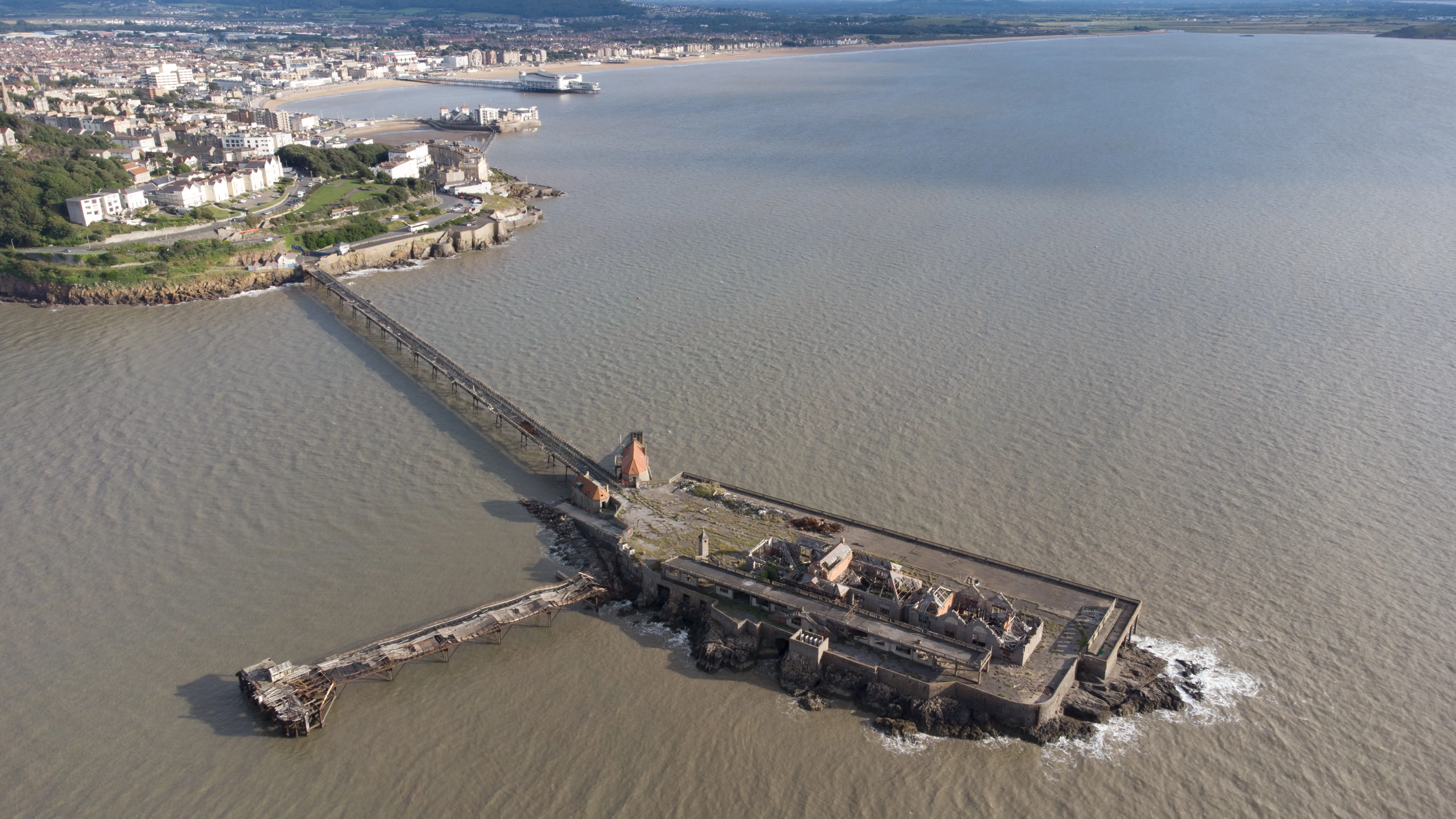
A HISTORIC UK pier that links to a tiny island is set to become a new tourist attraction following a 30-year closure.
Birnbeck Pier in Weston-super-Mare has been closed to the public since 1994 due to safety concerns.
Sign up for the Travel newsletter
Thank you!
Birnbeck Pier in Weston-super-Mare is getting a £20million renovation to reopenCredit: Getty
And now the Grade-II listed Victorian pier has been reconnected to the mainland for the first time in years, as part of a £20million project to reopen the pier.
It is the UK’s only pier that connects to an island – Birnbeck Island.
The pier regeneration is also part of a wider £44million project that includes the renovation of the 1888 boathouse, clock tower and landside pavilion as well.
Other derelict buildings by the pier include the Grade II Listed Toll House and its extension, which are known locally as the ‘shell shop’.
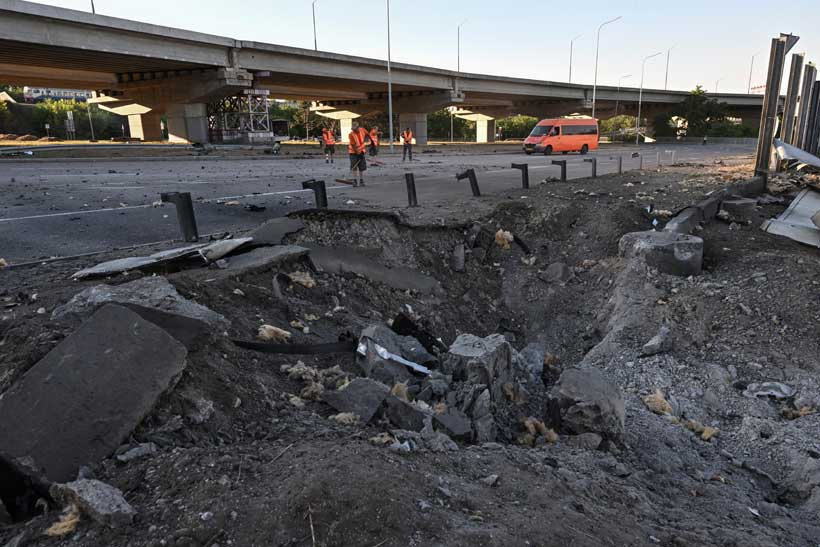
President Volodymyr Zelenskiy warned that Russian forces are preparing for a large-scale attack on Ukraine, urging residents to be cautious and pay attention to air raid alerts. In his nightly address, he noted that recent Russian strikes have resulted in at least six deaths across various regions. There has been a pattern of heavy attacks on Kyiv and other major cities, with ten fatalities reported last Monday. The historic Pechersk Lavra monastery was also significantly damaged during these strikes.
Zelenskiy confirmed that Ukrainian military efforts would continue, targeting the oil sector. Recently, Ukrainian drones struck an oil refinery in Tyumen, western Siberia, and an oil facility in Moscow twice. On Saturday, Russian forces used glide bombs to attack the city of Zaporizhzhia, resulting in five deaths and ten injuries. Other attacks included a bombing near Sumy that killed one person, as well as drone strikes in the Kherson region and shelling in Poltava that injured three children.
Mexico City’s government said it is considering measures to limit the sale of alcohol in public spaces, after more than 700,000 people gathered downtown to celebrate Mexico’s football team advancing to the knockout stage of the World Cup.
Mexico’s victory against South Korea saw massive street celebrations, with fans dressed in green El Tri jerseys or wearing colourful Lucha Libre masks and dancing in the rain, waving flags, singing anthems and blowing on vuvuzelas.
Recommended Stories
list of 4 itemsend of list
The next morning, Reforma Avenue — one of the city’s main arteries — was littered with rubbish, and many of its yellow cempasuchil flowers had been trampled over. Authorities collected some 40 tonnes of waste around the historic centre.
Mexico City’s government secretary Cesar Cravioto told a news conference on Friday that part of the government’s duty of care during the massive football event is prevention, and this involves controlling illegal sales of alcohol on the streets.
Cravioto said the government would ask restaurants and bars in the area to prevent customers from taking alcoholic drinks off premises and that convenience stores nearby could be asked to stop selling alcohol in the hours before a big game.
The government said it was planning on setting up seven more large screens around the centre-in addition to the current 12 — to help disperse crowds, and that it would deploy more personnel to limit the sale of beer by street vendors.
“We will keep insisting that fans have fun but without excessive alcohol consumption,” Cravioto said.
In Boston, another World Cup host city, Scottish fans, known as the “Tartan Army”, drank such vast quantities of beer after Scotland’s team beat Haiti 1-0 at the city stadium that several bars reported running dry.
Mexico is set to face the Czech Republic in the group stage on Wednesday.
A massive 850-square-meter street mural of football star Neymar da Silva, created by six artists over two days in Brazil’s Novo Hamburgo, is turning heads ahead of the highly anticipated FIFA World Cup.
Data center developer Switch is said to be in talks to raise billions of dollars at a valuation of at least $50B. Brookfield Asset Management (BAM), KKR (KKR), and other private equity and institutional investors have been in talks
While Toone was absent, others have taken their opportunity in an England shirt.
Aston Villa midfielder Lucia Kendall impressed in England’s 1-0 victory over Spain, while Manchester City’s Laura Blindkilde Brown started against Iceland.
United team-mate Jess Park has also played in the number 10 position, while Chelsea’s Lauren James is an option if she is not used as a winger.
While Toone says she has enjoyed watching her team-mates thrive, she is eager to prove herself to manager Sarina Wiegman again this week.
“You are never guaranteed to be selected, no matter what your journey has been like in an England shirt,” said Toone.
“Every time the squad comes out, you’re still worried you might not make it. Missing the last few camps, I knew I had to make myself available for this selection.
“I came to the last camp to see Alessia [Russo] and the girls and I reminded Sarina that I’m a number 10 and I’ll be ready for the next camp.”
Despite her eagerness to impress Wiegman, Toone says she has to remember “not to put too much pressure” on herself and to enjoy her return to action.
“I do play my best football when there is no pressure. That is what I’ve tried to do. I know I’ve been out for a long time,” she added.
“I made sure I used the time wisely and I feel like I’m in a really good place.”
Arsenal striker Alessia Russo, Toone’s best friend, says it is nice to have her “comfort blanket” back in the England squad for this month’s matches.
“I obviously did miss her when she wasn’t here. Everyone kept asking me if I was OK. I was like: ‘I’m fine!’
“She’s worked so hard to get back. Injuries are rubbish but she’s really matured over the last year or two and within her body. I’m really happy to have her back.”