
Vitol trading bet backfires as Iran conflict jolts oil markets: WSJ
Vitol trading bet backfires as Iran conflict jolts oil markets: WSJ
Source link
Vitol trading bet backfires as Iran conflict jolts oil markets: WSJ
Source link

NEW Delhi doesn’t ease you in. Noise and colour come at you from every direction, and it both rewards your curiosity and leaves you exhausted.
One moment you’re weaving through packed markets in a rickshaw, the next you’re sitting in quiet contemplation at the Lotus Temple, which is shaped like an open petal.
Entry is free (Bahaihouseofworship.in).
I also find calm at Crowne Plaza New Delhi Okhla in the south of the city.
Modern design is peppered with subtle Indian touches, and rooms are opulent with light streaming through large windows and bathrooms with big tubs and separate rain showers.
Plus, there’s a rooftop pool, where I take a refreshing dip before tucking into wok-tossed vegetable hakka noodles, £6.50, at the Edesia restaurant.
Come morning, after feasting at the breakfast buffet on an incredible dosa with coconut curd and mouth-watering medu vada (a crunchy, lentil doughnut), a rickshaw ride through the narrow streets of Old Delhi’s Chandni Chowk proves not for the faint-hearted, but essential for soaking up the culture.
I pass street performers walking tightropes, while food vendors fry pakora and kachori at astonishing speed.
Wandering through Khari Baoli, a market dating back to the 17th century, I’m hit by clouds of fragrant spices, before I visit the Red Fort, a magnificent structure built from deep-red sandstone that served as the residence of Mughal emperors for almost 200 years.
Entry costs £4.80 (Asi.nic.in/pages/worldheritageredfort).
The next day, I explore the newer district of the city. Standing proud at the heart of the capital is India Gate, built in 1931 as a memorial to fallen soldiers.
A 10-minute taxi away is the free National Gandhi Museum, which is full of photographs, letters and personal items from Gandhi’s life (Gandhimuseum.org/museum).
And I find I need three hours at the Swaminarayan Akshardham temple, to wander the gardens and explore the exhibitions, which cost just £2.50.
The landmark also comes alive lit up at night with a spectacular fountain show, tickets cost 90p (Akshardham.com).
Hauz Khas Village offers a different rhythm and is a brilliant labyrinth of shops, bars and cafes.
I find Chumbak, an adorable homeware shop filled with playful glassware, notebooks and ornamental plates (Chumbak.com), before unwinding with a masala chai at The Tea Room From Blossom Kochhar (Facebook/Thetearoomhkv).
After a stroll around the calm of Deer Park, home to monkeys, peacocks and a handful of spotted deer, I catch the sunset from the terrace at Hauz Khas Social.
Here, delicious momos – vegetable dumplings coated in rich masala sauce, £3 – pair perfectly with a glass of crisp chardonnay, £6.10 (Socialoffline.in).
Another evening, I head to Karol Bagh market, home to Hooter Restro & Bar, which offers superb paneer curry with buttered naan, £6 (@Hooter_restrobar), before watching live musicians performing on the buzzy rooftop at Epic Restro Bar (@Epicrestrobar).
India is also the birthplace of yoga, so before I set off to explore this intoxicating country further, I decide to join an early-morning class at Seema Sondhi, £10 (Theyogastudio.info).
It proves to be the perfect moment to reflect on an exhilarating and unforgettable city break.
B&B at Crowne Plaza New Delhi Okhla costs from £72 (Ihg.com/crowneplaza).
Direct UK flights to Delhi cost from £556 return.
The platforms have grown in popularity, with some users making bets on global events.
Source link

A HISTORIC market in England is getting a massive revamp – and its in a town named one of the best places to live.
Founded back in 1170, Kingston’s Ancient Market is one of the oldest in London and even the entire UK.
Today, it is home to about 30 local traders including fishmongers, a bakery and street food.
Plans have now been submitted to give the Kingston Market Square a major revamp turning the square into a ‘piazza’, with 45 new Borough Market-like stalls made from sustainable materials with solar panels on top.
The piazza would host pop-ups as well as farmers’ markets, weekend events and concerts too.
If the plans are approved, the Market House nearby would get a refurb as well with the ground floor turned into a restaurant and cafe and the first floor becoming an events space.
Read more on travel inspo
And there would be a new roof terrace overlooking the revamped square.
The statue of Queen Anne that currently sits in the square, will be relocated to the edge of the square too.
The planned revamp is also part of a bigger project to completely revive the area.
Since last year, Between the Bridges – the same operator as the Between the Bridges attraction on South Bank in London – has been operating the 800-year-old Kingston Ancient Market.
Throughout the year, the market usually hosts a number of different events including a Maker’s Market and Christmas market.
The market is open every day from 10am to 5pm.
One recent visitor said: “The market is charming, and offers some very nice gourmet foods, both to take home and dine out for lunch.
“Great atmosphere, particularly in the lead up to Christmas when it really comes alive with a kind of German Christmas market feel and the smell of mulled wine fills the air.”
Another added: “Kingston-upon-Thames is one of London’s most beautiful suburbs.
*If you click on a link in this box, we will earn affiliate revenue.
Margate House, Kent
This stylish boutique hotel is in a seaside townhouse, a short walk from Margate’s coolest bars and restaurants. Decked out with plush velvet sofas, candles flickering and striking independent art, inside feels like a warm welcome home. Rooms are stunning, especially the ones that give you a glimpse of the sea.
The Alan, Manchester
The Alan looks extremely grand, being built into a beautiful Grade II listed building. Spread across six floors, with 137 rooms, each one looks like a fancy design magazine. From the concrete coffee tables to the pink plastered walls, the industrial-inspired designs perfectly replicate the history of the city.
The Queen at Chester Hotel
This historic hotel has welcomed the likes of Charles Dickens and Lillie Langtry through its doors. Rooms have richly-patterned carpets with super soft bed linen and premium toiletries in the bathroom. Go for a superior room for extra goodies including bathrobes and snack boxes.
The University Arms Hotel, Cambridge
This Cambridge hotel is in the ideal spot, within walking distance to bars, shops and hotspots like the university colleges and Parker’s Piece. The inside couldn’t be prettier, with huge stained glass windows, grand chandeliers, and rooms with enormous clawfoot bath tubs.
“The historic square is also a delightful place surrounded by beautiful and historic buildings.”
Last year, Kingston was also named the second best place to live in the UK by The Times.
The Better Lives Index, which is produced by the International Longevity Centre (ILC) think tank, ranks the authorities across the UK based on nine categories.
Categories include life expectancy at birth, the child poverty rate, pollution, disposable income, housing costs, ‘avoidable’ mortality, life expectancy at 65, economic activity for over-16s and economic inactivity of 50 to 64-year-olds.
If visiting the market or Kingston, make sure to head to the edge of the market square where you will find All Saints Church, which dates back to 1120.
Venture through the town too, where you can peruse a number of independent shops and grab a bite to eat at one of the restaurants right next to the river.
You can also head to a couple of pubs with outdoor gardens right next to the river.
If the sun is shining, you can even rent your own boat and sail on the River Thames.
From Central London, it takes just 25 minutes to get to Kingston on the train.
For more places outside of London to explore, there’s an English village under an hour from the city that makes the perfect day out.
Plus, have a look at the trendy London neighbourhood with world-famous new museum and cool hotels.

Published on •Updated
Oil prices have fallen sharply and Asian markets surged on Wednesday after the US and Iran agreed to a two-week ceasefire that includes reopening the Strait of Hormuz but traders are cautious so far until the truce proves durable.

Brent crude stood at $92.99 per barrel as of Wednesday morning, up 28.30% since the war began in late February but well below the peaks of recent weeks which went up to $110 per barrel.
WTI crude sat at $94.70 per barrel, still 41.30% above pre-war levels despite the ceasefire-driven selloff. Wholesale gasoline was at $2.94 per gallon, also up more than 41% since the conflict began.
The moves follow a dramatic overnight plunge after US President Donald Trump said he was holding off on threatened strikes against Iranian bridges, power plants and other civilian infrastructure.
Iran’s foreign minister confirmed the Strait of Hormuz would be open to shipping for the next two weeks under Iranian military management.
Asian markets responded with enthusiasm. Japan’s Nikkei 225 gained 5.0% in early Wednesday trading, South Korea’s Kospi soared 5.9% and Hong Kong’s Hang Seng jumped 2.6%.
European markets told a different story. The Stoxx Europe 600 was down 6.82% in early trading, reflecting the accumulated damage from weeks of war-driven volatility rather than Wednesday’s ceasefire bounce — European markets having closed before the overnight news broke.
On Wall Street, the S&P 500 is down by 3.81% in pre-market US trading, having swung sharply during Tuesday’s session before clawing back losses after Pakistan’s prime minister urged Trump to extend his deadline and called on Iran to reopen the strait.
The ceasefire has done little to fully settle markets.
Attacks were still reported in Israel, Iran and across the Gulf region in the early hours of Wednesday, and neither side has specified when the truce formally begins.
The worry that has stalked markets since late February remains, namely that a prolonged disruption to Gulf oil flows will keep energy prices elevated long enough to push a fresh wave of inflation through the global economy — with or without a ceasefire.
Published on
Both European and Asian markets opened slightly lower on Tuesday as investors brace for US President Donald Trump’s deadline for Iran to either agree to a deal, or have their energy infrastructure targeted by air strikes.
The deadline falls at 8 pm Eastern Time (2 am CET), giving Iran until then to accept a deal that would keep the Strait of Hormuz open to all shipping or face what Trump has called the “complete demolition” of its civilian infrastructure, including every power plant and bridge in the country.
At the time of writing, Benchmark US crude is trading at $113.5 a barrel while Brent crude, the international standard, is around $111. Both prices are up around 1%.
The Euro Stoxx 50 and the broader pan-European Stoxx 600 are both up 0.5% as well.
The UK’s FTSE 100 is flat while Germany’s DAX 30 is around 0.2% higher, and France’s CAC 40 and Italy’s FTSE MIB have risen close to 1% each.
Over in Asia, there is a mixed reaction from markets in anticipation of the deadline.
South Korea’s Kospi has jumped 0.8% while Tokyo’s Nikkei 225 is effectively trading flat.
Hong Kong’s Hang Seng is down 0.8% while the Shanghai Composite is slightly higher by 0.3%. Additionally, Australia’s ASX 200 and Taiwan’s Taiex both rose 2%.
On Easter Sunday, President Trump renewed the threat publicly for the last time before the deadline stating that “Tuesday will be Power Plant Day, and Bridge Day, all wrapped up in one, in Iran. There will be nothing like it!!!”
On Tuesday morning, US futures are all trading between 0.1% and 0.3% lower.
The moves follow a strong close on Monday as the S&P 500 rose 0.4%, coming off its first winning week in the last six. The Dow Jones Industrial Average added 165 points, or 0.4%, and the Nasdaq composite climbed 0.5%.
Monday also offered the first chance for US markets to react to a report from Friday that stated American employers hired more workers last month than economists expected.
These were encouraging signals for an economy that’s had to absorb painful leaps in costs for gasoline since the Iran war started.
The average price for a gallon of regular gasoline is nearly $4.12 across the country, according to AAA. It was below $3 a couple days before the US and Israel launched attacks to begin the war in late February.
In other trading, gold is up 0.77% at around $4,685 while silver is rose roughly 0.2% to $72.95 an ounce.
Published on
With European markets reopening after the Easter holidays, investors are set to navigate a mix of geopolitical risks and crucial economic data that may shape sentiment over the coming week.
Attention will focus on Iran’s response to US President Donald Trump’s deadline to reopen the Strait of Hormuz, a critical chokepoint for global oil supplies. Any escalation or de-escalation could quickly affect energy markets, driving oil prices and inflation expectations.
J.P. Morgan noted on Thursday that oil prices could reach as high as $150 a barrel if supply disruptions persist until mid-May.
Beyond geopolitics, inflation data, central bank signals and corporate updates will also draw attention as markets gauge the outlook for the second quarter.
The macroeconomic calendar kicks off on Tuesday with the release of eurozone PMI data, a key leading indicator of economic activity. Recent readings have pointed to slowing growth in the bloc, with the composite PMI signalling only marginal expansion amid softening demand and heightened uncertainty.
On Wednesday, investors will examine the latest eurozone retail sales and industrial producer price figures from Eurostat. These will shed light on consumer demand and upstream inflation pressures.
The European data schedule remains relatively light but still significant. Euro area financial accounts will provide additional detail on lending trends, while UK markets stay attuned to labour market and growth signals following recent signs of stagnation.
Focus then shifts to the US, with the release of the Federal Reserve’s latest meeting minutes on Wednesday. These will be scrutinised for hints on policymakers’ views regarding the timing of any potential rate cuts.
Thursday brings key US labour data, including weekly jobless claims, offering further insight into employment conditions.
The week ends with the US consumer price index for March, including the closely watched core CPI reading. A stronger-than-expected figure could dampen hopes for policy easing and spark volatility in global markets, including Europe.
On the corporate side in Europe, activity is limited, although Raiffeisen Bank International’s annual general meeting on Thursday will be watched for any signals on banking sector health and regional credit conditions.
Published on •Updated
OPEC+ members met virtually on Sunday and afterwards announced plans to hike crude quotas by 206,000 barrels per day (bpd) in May as the Strait of Hormuz, which is the world’s most important route for black gold, continues to face disruptions as a result of the US-Iran conflict.
However, the modest rise agreed by the eight key producing countries — Saudi Arabia, Russia, Iraq, the UAE, Kuwait, Kazakhstan, Algeria and Oman — is not likely to bring down oil prices as it represents less than 2% of the supply disrupted by the Hormuz closure. Moreover, the increase is more symbolic than material as the oil can’t be exported until the Strait of Hormuz opens.
“In their collective commitment to support oil market stability, the eight participating countries decided to implement a production adjustment of 206 thousand barrels per day from the 1.65 million barrels per day additional voluntary adjustments announced in April 2023. This adjustment will be implemented in May 2026,” the group said in a statement.
The members’ statement also noted that the 1.65 million barrels per day may be returned in part or in full subject to evolving market conditions and in a gradual manner.
“The countries will continue to closely monitor and assess market conditions, and in their continuous efforts to support market stability, they reaffirmed the importance of adopting a cautious approach and retaining full flexibility to increase, pause or reverse the phase out of the voluntary production adjustments, including reversing the previously implemented voluntary adjustments of the 2.2 million barrels per day announced in November 2023,” the statement also said.
The latest statement from OPEC+ comes as oil prices have surged since the Iran conflict began, with Brent and US crude nearing $120 a barrel, driving up fuel costs and putting pressure on consumers and businesses worldwide.
Meanwhile, J.P. Morgan said in a note on Thursday that oil prices could go as high as $150 a barrel if supply flows remain disrupted until mid-May.
US President Donald Trump has given Iran a deadline of Tuesday to open the Strait of Hormuz and has vowed to hit the country’s power plants and bridges otherwise.
European markets were closed on Monday for the Easter holiday.

WITH the long weekend just around the corner, a trip to some of England’s most beautiful towns is the perfect way to spend one of the days.
So our team of experts have revealed their favourites, all the way from Yorkshire to Cornwall.
Fowey is frequently overlooked for the busier and more famous Padstow, but therein lies its charm.
Crowd free, but with all the magic of a sleepy, typically Cornish town, – great cafes whipping up homebaked treats, locals sharing weekend gossip in the quirky bookstore and, most importantly, those glorious harbour views.
Pick up a coffee and freshly prepped sarnie from Olive Branch Cafe – the oozing eggo mayo and crispy onion one is a crowd pleaser – then wander to Fowey Old Grammar School Garden for a picnic-style lunch among the flowers and overlooking the bobbing sailboats.
For a sitdown meal that you’ll be dreaming of for years to come, North Street Kitchen at the opposite end of the town is where to head.
This restaurant looks a little like a battered old garage from the outside but it serves up incredible seafood from an ever changing chalkboard menu according to what the local fishermen have caught that day.
– Sophie Swietochowski, Assistant Travel Editor
The Cotswolds is always a busy place during bank holidays, but my hometown of Witney is one where you can avoid the crowds but enjoy the beautiful buildings its known for.
There is the amazing Huffkins and Hunters Cake Company for a cuppa and a slice of cake, or hop in the queue at Sandwich de Witney for hugely overfilled baguettes.
Kids will love Cogges Manor Farm where they can feed some of the animals, or you can practise your mug painting at The Pottery Place in town.
Want to stay longer? I recommend the Blue Boar Inn as a cosy place to stay, or splash out on Estelle Manor just out of town – named one of the best hotels in the world.
– Kara Godfrey, Deputy Travel Editor
This historic Cheshire town is perfect for a Bank Holiday trip – with an intoxicating mix of beautiful architecture, history and great food and drink.
Head to The Rows for shopping that dates back 700 years with the medieval timbered, double level shopping galleries hosting a range of brands.
Shopaholics can get their beauty fixes at the new Harrods H beauty hall that opened in the town last month – the first outpost of the posh brand outside of London.
Or stroll along the two miles of city walls, the most complete Roman and medieval walls in Britain that offer a unique perspective of the town.
A new Ivy Brasserie opens its doors this April and for street food from around the globe, head to the New Chester Market.
– Lisa Minot, Head of Travel
When you think of Weston-Super-Mare in Somerset you probably picture the Grand Pier, and that’s with good reason.
The famous attraction is a great day out and doesn’t have to cost much either. You can swap a couple of quid for pennies and get competitive with your family on the slot machines.
If you do want a bit more of an adrenaline rush though, the pier does have other attractions including a 300-metre indoor Glo Kart track, House of Horross and a freefall ride.
After a fun day on the pier, make sure to walk along the two-mile beach and grab an ice cream.
– Cyann Fielding, Travel Reporter
*If you click on a link in this box, we will earn affiliate revenue.
Sidmouth, Devon
Take a trip to Sidmouth on the Jurassic Coast and wander down Jacob’s Ladder to its pretty shingle beach. Make sure to walk along the promenade and check out the independent shops and boutiques. Stay at the four-star Harbour Hotel for sea views and traditional afternoon tea from £135 per room.
Whitby, North Yorkshire
With a history of sailors and vampires, a dramatic coastal path, and the very best in pints and scampi, it takes a lot to beat Whitby. Pop in the amusements, eat award-winning fish and chips, and board the all-singing Captain Cook boat tour on the harbour. The Royal Hotel overlooks the harbour with stays from just £68 per room.
Old Hunstanton, Norfolk
This town has some of the best beach walks beside striped limestone cliffs, a Victorian lighthouse and 13th century ruins. The beach has golden sands with rolling dunes and colourful beach huts, backed by a pretty pinewood forest. Stay at a beachfront hotel from £100 per room.
Seahouses, Northumberland
This is an authentic British seaside break, with fishing boats bobbing on its pretty harbour and fresh catches of the day to enjoy in local restaurants. There’s no flashing arcades here, but there’s a great beach with rockpools, boat trips, and you may even spot a grey seal, too. Treat yourself to a stay at the Bamburgh Castle Inn from £129 per room.
This sprawling Victorian seaside town is a hit with families visiting the North Norfolk coast, and it’s clear to see why.
Entire days can easily be spent on golden stretches of sand backed by beach huts, with bucket and spade in hand.
But it’s worth pulling yourself away from the shores for a ride on the heritage steam railway, where the pretty Poppy Line runs from Sheringham to Holt.
There’s even an Easter Eggspress egg hunt taking place onboard, costing £26 per adult and £18.20 per child with unlimited rides all day.
Plus theatre fans will love a visit to Sheringham Little Theatre, where family-friendly productions, quiz and bingo nights fill the historic theatre with a lively buzz.
Stroll along to Stevenson’s Fish and Chips to grab a takeaway tea and catch the sunset, and you’ve done a visit to this seaside town right.
– Jenna Stevens, Travel Reporter
For decades this seaside town on the South coast has been loved for its traditional holiday vibes, from fish and chips to buckets and spades.
But recent years have seen the creative crowd arrive. The town is now a haven for artists inspired by the sea and foodies flock here to sample the produce of local artisan producers and chefs.
The converted beach huts that make up East Beach Studios are now home to tiny, vibrant galleries and workshops for local artists and this year the
Dwell initiative will see 30 artists take over vacant or traditional shopfronts turning the high street into a rotating exhibition space.
Enjoy fine dining at the end of the pier at the Tern restaurant, breakfast on the beach at The Perch and a tipple or two from the local producers including Slake Gin, Merakai Brewing and Titch Hill.
– Lisa Minot, Head of Travel
Sometimes I like a lazy day in my homecounty over a Bank Holiday weekend, and being in Hertfordshire, Welwyn Garden City is a lovely spot for a daytrip.
While it might be lacking in the shop department, apart from its fab John Lewis store, it certainly is thriving when it comes to cafes and restaurants along Howardsgate like Megan’s to Welwyn Coffee Lab, Postino Lounge and the Two Willows.
One of my favourite spots is slightly out of the town. Called Tewingbury Farm, it’s primarily a hotel and wedding venue, but visitors are welcome to pop in anytime.
I particularly rate the oven-fired pizzas which you can tuck into at the Courtyard which has outdoor fires, and games like pool and table tennis.
In classic Easter fashion, it’s lovely to then take a stroll around the ground and farm where you’ll spot plenty of cows and pigs.
– Alice Penwill, Travel Reporter
This North Yorkshire market town doesn’t feel as if it’s aged a day since its time as an agricultural hub in the 19th century.
Today it’s a proper foodie destination. Very friendly traders – this is Yorkshire, after all – flog their delicious goods from market stalls every Saturday. Think hot and steaming sausage rolls, blue cheese chocolate truffles (they’re delicious, I promise) and cannolis seeping sweet ricotta.
There’s live music taking place all Easter weekend at the Brass Castle Taphouse brewery as well as Easter egg hunts for the little ones at the Abbey.
Make sure to visit the glorious Castle Howard while you’re here, a gorgeous Baroque estate that’s home to one of the most spectacular arboretums.
– Sophie Swietochowski, Assistant Travel Editor
Margate remains one of the trendiest seaside towns in the UK and, having lived there for a few years, can vouch for it being the perfect day trip.
There’s nothing better than stepping out the train station and seeing the huge sandy beach, overlooked by the multicoloured bars and restaurants.
Pop into the Turner Art Museum for some culture, or the unusual Crab Museum (the only one of its kind in Europe, bizarrely), followed by some of the rides at the free-to-visit theme park Dreamland.
The pretty Old Town is full of shops, ice cream parlours and book shops for some perusing and photo taking.
For the best pizza in town, head to Palm’s Pizzeria for a slice, or go to Bottega Caruso for some fabulous Italian food that was even backed by Madonna, weirdly enough.
– Kara Godfrey, Deputy Travel Editor
I’ve been going to Southwold for years, playing games at the arcades on the pier, watching those braver than I go crabbing, and trying to lay down my towel on the beach while the breeze blows against me.
One of the best ways to spend an afternoon is stocking up on food and taking it for a beach picnic.
For drinkers, I’d recommend heading into Adnams Brewery where you can buy some of its locally brewed gin or beer which is an untraditional seaside souvenir, but tasty nonetheless.
The seaside town has everything you need for a quintessentially British day out, like its line multi-coloured beach huts for pictures and plenty of fish and chip shops.
In my opinion, for the best chippie tea, head to the Sole Bay Fish Company which is out of the town towards the harbour.
– Alice Penwill, Travel Reporter
Historically, Totnes has made the news for feeling like a ‘hippy’ town and more recently, it has been referred to as the ‘New Age capital of the UK’.
This is because the Devonshire town, situated on the River Dart is home to amazing independent shops, a strong eco-conscious spirit and a relaxed lifestyle.
The highstreet is full of cosy coffee shops, quaint bookshops and boutiques ideal for gift hunting.
Do not miss the weekly market on Fridays and Saturdays between 9am and 4pm. You can grab tasty street food and find antique gems.
On one visit I even picked up a phrenology head for a few quid…
– Cyann Fielding, Travel Reporter
Here are some other beautiful Easter breaks to go on this weekend.
Or here are some all-inclusive weekends that are cheaper than a night out with your mates.
Investors remain wary, as the Wall Street Journal report came on the same day the US president threatened to destroy Iran’s key oil export hub and desalination plants unless it accepts a deal, while also suggesting that diplomacy was making progress.
The news comes as governments around the world scramble to implement measures to ease the burden of surging fuel prices while also seeking to conserve energy, with around one-fifth of global crude oil and gas passing through the waterway.
The Wall Street Journal, citing administration officials, said Trump and his aides had concluded that a mission to reopen the waterway would extend beyond his four- to six-week timeline. It added that he had decided to focus on targeting Iran’s missiles and navy, before seeking to pressure the country diplomatically to reopen the Strait.
Further fuelling concerns, a drone struck a Kuwaiti oil tanker in Dubai waters, causing a fire on Tuesday morning. Dubai authorities said the blaze had already been extinguished, but concerns about a potential oil spill remain.
Maritime traffic disruptions in the Strait of Hormuz, through which roughly a fifth of the world’s oil normally passes, remain a key pressure point for global energy supplies. US Secretary of State Marco Rubio said Trump has “options available” in response to Tehran’s threats to control the strait, after Iran was reported to have effectively created a “toll booth” there.
Both major oil benchmarks fell on Tuesday, though West Texas Intermediate and Brent crude remained well above $100 a barrel. At 7 a.m. CET, the international benchmark Brent was trading at nearly $113, while WTI crude was above $102 a barrel.
Most equity markets in Asia rose briefly, but by this point Tokyo’s Nikkei 225 was down 1.3%, South Korea’s Kospi had fallen 3.3%, Hong Kong’s Hang Seng had shed 0.5%, and the Shanghai Composite index was down 0.4%.
US futures were up between 0.6% and 0.8%.
In other early Tuesday trading, gold and silver prices rose. Gold was up 0.7% at $4,587.80 an ounce, while silver climbed 2.4% to $72.25 per ounce.
The US dollar stood at 159.61 Japanese yen, down from 159.71 yen. The euro was trading at $1.1472, up from $1.1465.
Published on •Updated
European markets are set to open lower on Monday, with futures pointing to declines across major indices as investor sentiment remains cautious amid rising oil prices and geopolitical tensions in the Middle East.
As of early morning trading, Germany’s DAX was down around 0.5%, the FTSE 100 fell roughly 0.3%, and France’s CAC 40 was also in negative territory, according to IG data.
The weaker outlook follows losses in Asia, where shares mostly dipped overnight as concerns persisted around soaring oil prices and the potential for further escalation in the US war with Iran.
The declines follow steep losses on Wall Street on Friday, marking a fifth consecutive losing week — the longest such streak in nearly four years.
“US equity markets remained under sustained pressure, with the S&P 500 falling 2.1% for the week and the Nasdaq 100 sliding 3.2%. The Dow Jones held up comparatively better, declining 0.9%, owing to its lower technology weighting. Both the Nasdaq 100 and the Dow Jones have now officially entered correction territory after recording drawdowns of more than 10% below their respective peaks,” IG market analyst Fabien Yip said in a commentary note.
Japan’s benchmark Nikkei 225 fell 4.5% in early trading, Australia’s S&P/ASX 200 dropped 1.2%, and South Korea’s Kospi slid 3.2%. Hong Kong’s Hang Seng declined 1.7%, while the Shanghai Composite edged 0.7% lower.
Investor worries have been particularly acute due to the risk of disrupted access to the Strait of Hormuz, a critical route for global oil shipments.
Benchmark Brent crude rose above $116 a barrel in early trading, marking an increase of more than 50% since the Iran conflict began on 28 February. Prices were just over $70 a barrel when the war started. US benchmark crude was also up, at around $101 a barrel, reflecting continued volatility in global energy markets.
The surge comes as US President Donald Trump raised the possibility of American forces seizing Iran’s Kharg Island, the country’s main oil terminal in the Persian Gulf. He made the comment in an interview published early Monday by the Financial Times.
“Maybe we take Kharg Island, maybe we don’t. We have a lot of options,” Trump told the newspaper. “It would also mean we had to be there (on Kharg Island) for a while.”
Asked about Iranian defences there, he said: “I don’t think they have any defence. We could take it very easily.”
The US has already launched airstrikes it said targeted military positions on the island. Iran has threatened to launch its own ground invasion of Gulf Arab countries and new attacks if US troops land on its territory.
Meanwhile, G7 finance ministers, energy ministers and central bank governors are set to hold an emergency meeting today to discuss the conflict and its consequences. It will mark the fourth time since the start of the war in Iran the G7 has convened at a ministerial level.


2d illustrations and photos
As emerging markets head toward their weakest month in years, some asset managers are moving in the opposite direction and adding to positions.
Firms including TT International and AllianceBernstein are buying beaten-down bonds and currencies, betting that central banks will shift
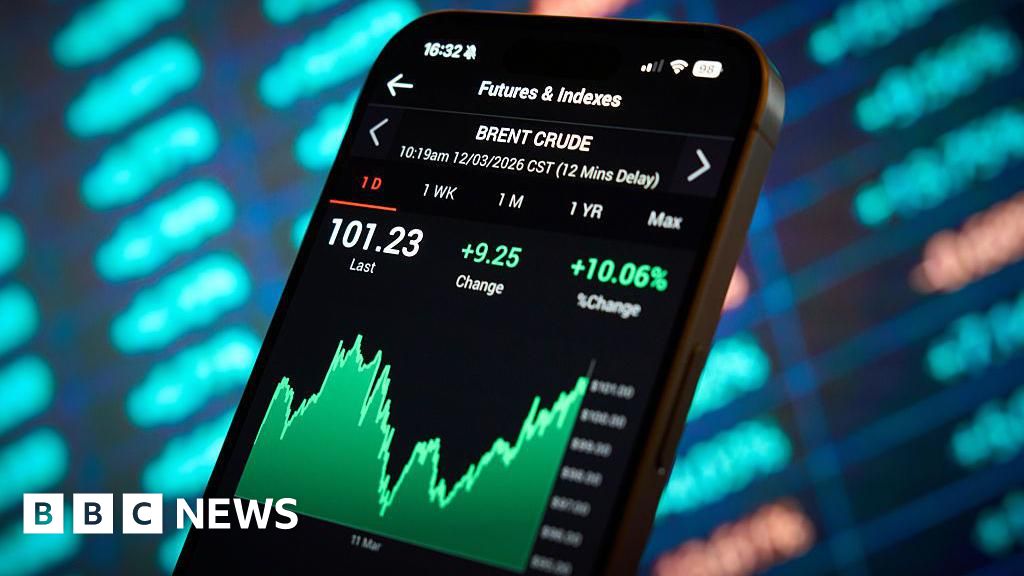
Oil markets have been sensitive to Donald Trump’s comments on the war. But are traders growing less responsive?
Source link
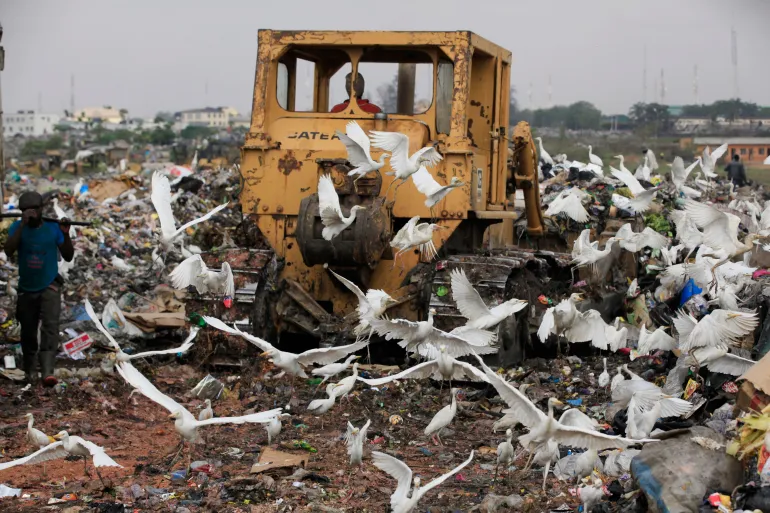
Kano, Nigeria – On a bustling day in northern Nigeria, Marian Shammah made her way to the Sabon Gari Market, one of the largest electronics hubs in Kano state.
The 34-year-old cleaner was in need of a refrigerator, but with rising costs and a meagre income, she saw the second-hand appliances sold at the market as a lifeline.
list of 3 itemsend of list
After locating the one she wanted, she paid the vendor 50,000 naira ($36) and took it home. But just a month later, the freezer collapsed.
“Only the top half of the refrigerator was working, and the freezer wasn’t working,” said Shammah.
Her food spoiled, her savings disappeared, and she was soon back in the market searching for another appliance.
Although Shammah could have bought a new local appliance for just over 30,000 naira ($30) more, she – like millions of Nigerians – believes second-hand products from America and Europe “last longer” than new products sold in Nigeria.
Observers say this trend is part of a larger crisis. Nigeria has become a major destination for the developed world’s discarded electronics – items often near the end of life, sometimes completely dead, and frequently toxic because they contain hazardous materials. When they break down, they add to landfills, worsening an already dire e-waste crisis on the African continent.
Around 60,000 tonnes of used electronics enter Nigeria through key ports each year, with at least 15,700 tonnes already damaged upon arrival, according to the United Nations.
The trade in used electronic goods is powered largely by foreign exporters. A UN tracking study between 2015 and 2016 showed that more than 85 percent of used electronics imported into Nigeria originated from Germany, the United Kingdom, Belgium, the Netherlands, Spain, China, the United States, and the Republic of Ireland.
Many of these imports violate international restrictions, like the Basel Convention, an environmental treaty regulating the transboundary movement and disposal of hazardous electronic waste to developing countries with weaker environmental laws.
Across West Africa, the Basel Convention’s “E-Waste Africa Programme”, a project focused on strengthening e-waste management systems across the continent, estimates that Benin, Ivory Coast, Ghana, Liberia, and Nigeria collectively generate between 650,000 and 1,000,000 tonnes of e-waste annually – much of it the result of short-lifespan second-hand imports.

The United Nations describes e-waste as any discarded device that uses a battery or plug and contains hazardous substances – like mercury – that can endanger both human health and the environment. Several of the toxic components commonly found in e-waste are included on the list of 10 chemicals of major public health concern maintained by the World Health Organization (WHO).
According to the WHO, used electrical and electronic equipment (EEE) presents a growing public health and environmental threat across Africa, with Nigeria at the centre of the trade.
“Much of the equipment shipped as used electronics is close to becoming waste,” said Rita Idehai, founder of Ecobarter, a Lagos-based environmental NGO, warning that devices imported and sold as affordable second-hand goods often fail shortly after arrival and quickly enter the waste stream.
The consequences are far-reaching. Many imported fridges and air conditioners, for instance, still contain CFC-based and HCFC-based refrigerants such as R-12 and R-22 – chemicals banned in Europe and the US for causing ozone depletion or being linked to cancer, miscarriages, neurological disorders, and long-term soil contamination. These gases live for 12 to 100 years, meaning leaking equipment adds to a multi-generational environmental burden.
After these imported items stop working or fall apart, informal recyclers then dismantle the electronics with their bare hands, Al Jazeera observed. In Kano, the recyclers inhale poisonous fumes and manage the heavy metals without protection. Their work earns them a meagre 3,500–14,000 naira ($2.50-$10) per week, they said, and the after-effects linger – including persistent coughing, chest pain, headaches, eye irritation, and breathing difficulties after long hours of burning cables and dismantling electronic devices.
The health crisis extends into Kano’s communities.
Among casual recyclers and residents who live close to e-waste dumps, many report symptoms that range from chronic headaches and skin irritation to breathing issues, miscarriages and neurological concerns, according to health surveys done by the International Journal of Environmental Research and Public Health. These ailments are consistent with longtime toxic exposure, the researchers said.
Recent field assessments conducted by Nigeria’s Federal University Dutse also stressed that in and around Kano state, where the Sabon Gari Market is located, there are rising levels of heavy metals in soil and drainage channels.
Dr Ushakuma Michael Anenga, a gynaecologist at the Benue State Teaching Hospital and second vice president of the Nigerian Medical Association, warned that toxic exposure from informal e-waste recycling poses grave health risks to communities in Kano.
“Exposure to heavy metals and refrigerant gases in e-waste causes extreme brief and long-term health issues, generally affecting the breathing and renal organs,” he told Al Jazeera.
“Common casual practices like exposed burning and dismantling result in direct, high-level exposure for workers and nearby residents. Children and pregnant girls are particularly inclined due to the fact that those toxicants can disrupt development or even skip from mother to unborn baby, [while] recyclers who work without defensive equipment face repeated, frequently irreversible damage.”

In Sabon Gari Market, second-hand electronics are advertised as less costly lifelines for households and poor business owners burdened by inflation.
Many customers say foreign-used home equipment appears sturdier and seems like better value for money than new imports from the developing world. Meanwhile, others are just looking for cheap options in difficult economic times.
“I usually go for second-hand or foreign-used electronics because brand-new ones are too expensive for me,” Umar Hussaini, who sells used electronics at the market, told Al Jazeera.
“Sometimes you can get them for half the price of new ones, and they look almost the same, so it feels like a good deal at the time.”
But the last refrigerator he bought stopped cooling after just three months. With no warranty or guarantee, the seller refused responsibility.
“For weeks, we couldn’t store food properly at home, and we ended up buying food daily, which was more expensive,” he said. “However, I have to buy another one again.”
For small business owners like Salisu Saidu, the losses can be even more devastating. He bought a used freezer for his shop, believing it had been serviced. Within weeks, it failed.
“I lost a lot of frozen food, which meant I lost money and customers,” he told Al Jazeera.
Around his neighbourhood, broken electronics are often dumped out in the street, sometimes emitting smoke or sparks.
“There’s also a lot of electronic waste piling up around,” he said, calling for tighter import controls, proper certification, and mandatory warranties to protect buyers from being sold what he described as “damaged goods disguised as fairly used”.

At Sabon Gari Market, another vendor, Umar Abdullahi, is surrounded by imported refrigerators, air conditioners and washing machines stacked tightly together.
The products in his shop are advertised as “London use” or “Direct Belgium”, while he negotiates the sale of a double-door fridge for 120,000 naira ($87).
Abdullahi’s store is where Shammah returned after the refrigerator she bought failed. But he admits that much of what he sells to customers arrives unchecked.
“We buy them untested from suppliers in Europe, and we also sell them untested so we can make our profit,” he told Al Jazeera.
This despite the fact that international rules under the Basel Convention, as well as Nigerian environmental regulations, prohibit the shipment of material considered e-waste – with penalties including fines and jail terms.
Nwamaka Ejiofor, a spokesperson for Nigeria’s National Environmental Standards and Regulations Enforcement Agency (NESREA), said the country does not permit the import of e-waste. However, the entry of used electronics is allowed under regulated conditions.
“The importation of used electrical and electronic equipment is regulated and may be allowed only where such equipment meets prescribed conditions, including functionality and compliance requirements,” she told Al Jazeera.
“Nigeria applies a combination of regulatory, administrative and enforcement measures to ensure that imported used electronics comply with national law and the country’s international obligations,” she added, listing out measures including environmental regulations, cargo inspection and verifying that imported equipment is “functional”.
However, despite this, some traders find loopholes in the system, including declaring cargo they plan to sell as personal belongings or second-hand household goods to avoid scrutiny.
Although NESREA says enforcement has improved, critics say the steady flow of mediocre goods continues largely unchecked. Even dealers at Sabon Gari Market acknowledge that most appliances are sold “as is”, without certification or guarantees.

Behind the second-hand electronics trade is a network of collectors and exporters who source discarded appliances across Europe.
Baban Ladan Issa, who ships used electronics from Ireland to Nigeria, said items are gathered from weekend markets, private homes that are replacing old gadgets, and contractors clearing out equipment from offices, hotels and hospitals.
“Some suppliers mix working and damaged goods together,” he told Al Jazeera, noting that while he tries to avoid faulty items, not all buyers do the same.
Once assembled, shipments worth millions of naira are sent to Lagos through ships then down to sellers in the market in Kano state, sometimes packed in containers or hidden inside vehicles to reduce inspection risks.
Shipping records seen by Al Jazeera showed consignments labelled as “personal effects”, a classification that can limit detailed checks at ports.
Chinwe Okafor, an environmental policy analyst based in Abuja, said the problem is systemic.
“Exporting nations regularly take advantage of loopholes by means of labelling nonfunctional e-waste as ‘second-hand goods’ or ‘for repair,’” she told Al Jazeera. “In some instances, research estimates that over 75 percent of what arrives in developing countries is truly junk.”
“This permits wealthy countries to keep away from highly-priced recycling at home while pushing unsafe materials into nations with weaker safeguards.”
Ibrahim Adamu, a programme officer with the NGO Ecobarter, added that mislabelling, poor inspection technology and corruption at ports make enforcement difficult.
“The highest profits are captured by exporters and brokers who arbitrage the gap between disposal costs in Europe or Asia and the strong demand for ‘tokunbo’ goods in Nigeria,” he said, using the local name for used imported electronics.
To forestall this, he said Nigeria “must reinforce border inspections” and implement a policy whereby producers and manufacturers bear financial responsibility. At the same time, “the international network has to adopt binding bans that [hold] manufacturers and exporters responsible”, Adamu said.

Although Nigeria has regulations governing the import of electrical and electronic equipment, enforcement gaps keep exposing markets like Kano’s Sabon Gari to ageing and near-end-of-life appliances, locals say.
Ibrahim Bello, a used electronics importer with a decade in the business, said many shipments that arrive from Europe are in less-than-ideal condition.
“Around 20 to 30 percent of the items we receive have issues when they arrive,” he told Al Jazeera. “Some are already damaged, while others stop working after a short time because they are old.
“That’s just part of the business.”
Retailer Chinedu Peter gave similar estimates. “From what I’ve experienced, maybe 40 percent of the electronics have some fault as they come,” he said, adding that environmental and protection checks don’t happen as they are meant to.
“Such a lot of items enter without special checks.”
Both men feel that clearer rules and certified testing systems will improve trust. But until then, thousands of ageing, unsuitable products will continue to flood Nigeria.
Shammah, back at Sabon Gari Market just weeks after her refrigerator broke, was once again searching through rows of stacked appliances, hoping her next purchase might last longer than the last.
“I don’t really trust these fairly used appliances again, but I still have to buy something because we need it at home,” she told Al Jazeera.
“This time I’m thinking … I can buy a new one from a proper shop, even if it takes longer, because I don’t want to lose my money again.”
Asian stock markets saw major declines on Monday as gold futures dropped 8% and crude oil prices continued to climb amid heightened uncertainty in the Middle East.
As the effective closure of the Strait of Hormuz continues to choke global supply, benchmark US crude rose above $100 a barrel on Monday morning in Europe.
Brent crude, the international standard, went up to more than $113 a barrel. The price of Brent crude has zigzagged lately from about $70 per barrel before the war began to as high as $119.50.
European stock indexes opened with losses, with the FTSE in London losing 1.5%, the CAC-40 in Paris being down by 1.6%, and the DAX in Frankfurt dropping by 2% at the opening.
Earlier on Monday, the International Energy Agency warned that the global economy faces a “major, major threat” because of the Iran war and that at least 40 energy assets across nine countries were damaged.
Meanwhile, the de-escalation of the conflict is nowhere near in sight.
Trump warned over the weekend that the US would “obliterate” Iran’s power plants if it does not fully open the Strait of Hormuz within 48 hours, prompting Tehran to say it would respond to any such strike with attacks on US and Israeli energy and infrastructure assets in the region.
“Trump’s ultimatum and Iran’s retaliatory warnings point to a widening conflict that keeps energy disruption and market volatility elevated, with no clear off-ramp in sight,” said Ng Jing Wen, analyst at Mizuho Bank in Singapore.
In Europe, the benchmark natural gas futures were trading above €60 per MWh at the market open.
This follows last week’s gains as escalating threats to Middle Eastern energy facilities heightened fears of deeper supply disruptions.
In Asia, stock markets were also significantly impacted by the uncertainty around the Middle East crisis, with Japan’s benchmark Nikkei 225 dropping 3.5%. In Taiwan, the Taiex shed 2.5%, South Korea’s Kospi dropped 6.5%, Hong Kong’s Hang Seng slipped 3.8% and the Shanghai Composite declined 3.6%.
Higher oil prices, which also shook stock markets on Friday, dashed hopes for a possible upcoming cut in interest rates by the Federal Reserve, analysts said. Before the war, traders were betting that the Fed would cut rates at least twice this year. Central banks in Europe, Japan and the United Kingdom also recently held their interest rates steady.
The S&P 500 fell 1.5% Friday to close its fourth straight losing week, its longest such streak in a year.
The Dow Jones Industrial Average dropped 443 points, or 1%, and the Nasdaq Composite tumbled 2%.
On Wall Street, roughly three out of every four stocks in the S&P 500 fell on Friday.
Stocks of smaller companies, which can feel the pinch of higher interest rates more than their bigger rivals, led the way lower. The Russell 2000 index of smaller stocks fell a market-leading 2.3%.
In the bond market, the yield on the 10-year Treasury finished last week with a jump to 4.38% Friday from 4.25% late Thursday and from just 3.97% before the war started.
The two-year Treasury yield, which more closely tracks expectations for what the Fed might do, rose to 3.88% from 3.79%.
In currency trading, the US dollar rose to 159.53 Japanese yen from 159.22 yen. The euro cost $1.1526, down from $1.1571.
Key indexes in Japan, South Korea and Hong Kong tumble as Iran threatens attacks on energy infrastructure across region.

Published On 23 Mar 202623 Mar 2026
Stock markets in the Asia Pacific have fallen sharply amid US President Donald Trump’s ultimatum warning Iran to reopen the Strait of Hormuz or face the annihilation of its energy infrastructure.
Japan’s benchmark Nikkei 225 and South Korea’s KOSPI plunged 4 percent and 4.5 percent, respectively, in early trading on Monday.
list of 4 itemsend of list
In Hong Kong, the Hang Seng Index tumbled about 2 percent.
Australia’s ASX 200 dropped about 1.6 percent, while the NZX 50 in New Zealand dipped about 1.3 percent.
Futures on Wall Street, which are traded outside of regular market hours, saw moderate losses, with those tied to the S&P500 and the Nasdaq Composite down about 0.5 percent.
Oil prices remained volatile amid fears of further disruption to global energy supplies.
Futures for Brent crude, the international benchmark, rose more than 1.5 percent to top $114 a barrel, before easing to about $112 as of 02:00 GMT.
Trump on Saturday threatened to “obliterate” Iran’s power plants within 48 hours if Tehran does not end its effective blockade of the strait, through which about one-fifth of global oil and natural gas exports usually transit.
Tehran has pledged to completely close the waterway, which is still being transited by a small number of Chinese, Indian and Pakistani-flagged vessels, and launch retaliatory attacks on energy and water infrastructure across the region if Trump follows through on his threat.
Based on the timing of Trump’s warning on Truth Social, the deadline for his ultimatum is set to expire at 23:44 GMT on Monday.

Trump’s threat has added to fears of a cascading global energy crisis as the US and Israel’s war on Iran approaches the one-month mark with no clear end in sight.
Oil prices have surged more than 50 percent since the start of the war, which began with US-Israeli strikes on February 28.
Analysts have warned that energy prices are likely to rise significantly further if the strait remains effectively closed, with some observers predicting oil to hit $150 or even $200 a barrel.
Trump on Sunday held a phone call with UK Prime Minister Keir Starmer to discuss the situation in the Middle East, including the effective closure of the strait.
The two leaders agreed that unblocking the strait is “essential to ensure stability in the global energy market”, Starmer’s office said in a statement.
Trump has provided conflicting messages about the goals of the war and how long it might last.
Hours before issuing his ultimatum on Saturday, Trump said that his administration was “very close to meeting our objectives as we consider winding down” military operations against Iran.
Israeli military spokesperson Lieutenant Colonel Nadav Shoshani last week told reporters that officials had detailed plans for at least three more weeks of war.
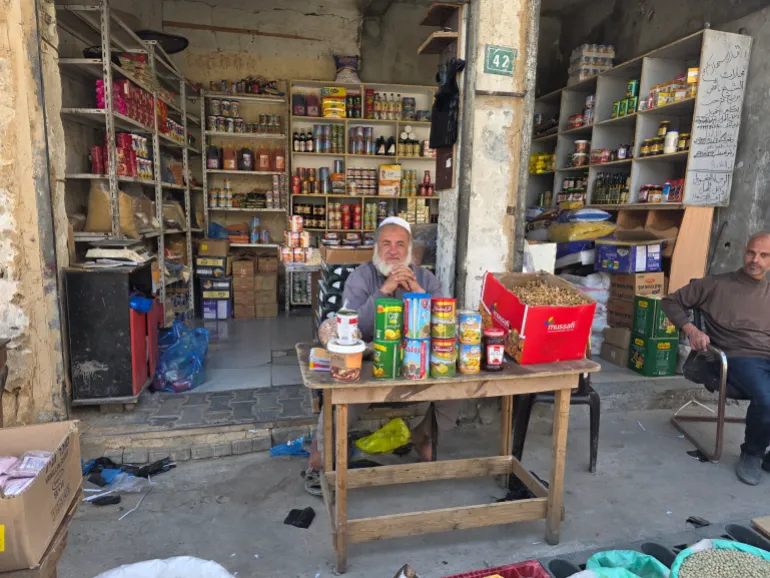
Khan Younis, Gaza Strip – Historic landmarks often withstand centuries of volatile change, but when rockets and missiles fall, even the most enduring stones become fragile.
For generations of families in Gaza’s southern city of Khan Younis, the Grain Market was the first stop when they went shopping.
list of 3 itemsend of list
Reaching it meant walking past the historic Barquq Castle, a centuries-old structure dating back to 1387 and the very foundation of Khan Younis.
But for residents, the castle was more than an old monument; it was a familiar landmark marking the entrance to one of the city’s liveliest commercial spaces.
The aromatic scent of spices and dried herbs would accompany any walk towards the Grain Market.
But that was before Israel’s genocidal war on Gaza began. Israeli attacks inflicted heavy damage on the Grain Market and the Barquq Castle. The market has now been reduced to shattered alleys, with dust and heavy silence filling the air.
Sitting in his store along a row of damaged old shops, 60-year-old Nahed Barbakh, one of the city’s oldest and most well-known traders of staple food supplies, spent decades watching customers stream through the market. Now, only a handful pass by his shop.
“I’ve been in this spot for decades, day in and day out, watching people bring life to this place,” Nahed said. “Look at it now – it’s empty. These days, there shouldn’t even be space to walk because of the crowds preparing for Eid.”
He paused before gesturing towards the nearby castle.
“We always felt the weight of history here because we are so close to Barquq Castle. Now that history and life itself have been struck by the occupation.”
But Israeli fire did not take into account the market’s historic status. The Grain Market, long considered the economic heart of Khan Younis, was also among the first sites of destruction during the second month of Israel’s genocidal war on Gaza. More than two years of Israeli bombardment and repeated waves of displacement have left the market unrecognisable.
“The occupation killed many of our friends who worked here,” Nahed said quietly. “Those who survived have been financially broken. That’s why you see most of these shops are still closed.”
He pointed to some shelves behind him.
“My shop used to be fully stocked with goods at its high capacity. We even had extra warehouses to supply what people needed, especially during the busiest seasons.”
Before he could finish his sentence, a deafening blast interrupted him — the sound of an Israeli tank fire.
“And this is the biggest reason people are afraid to return,” Nahed said abruptly. “The yellow line is only a few hundred metres away from this street. At any moment, bullets can reach here.”
The yellow line is the name given to the demarcation line behind which Israeli forces withdrew as part of the first phase of October’s ceasefire agreement. It effectively divides Gaza into two, and Palestinians have repeatedly been shot for approaching it.
The yellow line has divided Khan Younis, dramatically reshaping the city’s geography. Israel has repeatedly shifted the line, moving it deeper into Gaza.
The Grain Market, once firmly at the centre of urban life, now sits close to the yellow line.
What used to be the city’s commercial heart has effectively turned into its edge, where people hesitate to walk, leaving the revival of daily commerce life a distant prospect.

The Grain Market traces its origins to the late 14th century, when the Mamluk ruler Younis al-Nawruzi established Khan Younis in 1387 as a strategic stop along the trade route linking Egypt and the Levant.
Built as an extension of the Barquq Castle, which functioned as a caravanserai for travelling merchants, the market became a central commercial hub where traders and travellers exchanged goods, moving between Africa, the Levant and beyond.
The Grain Market occupies roughly 2,400sq metres (25,830sq feet). Its single-floor shops line a central street running east to west, intersected by narrow alleys branching towards smaller courtyards. The buildings preserve elements of their original construction, including sandstone walls and traditional binding materials that have survived centuries of repairs and modifications.
Over time, the market evolved into the primary commercial centre of Khan Younis, adapting to modern commerce while retaining its historic character.
But today, many of its shops stand damaged or shuttered.
According to Gaza’s Ministry of Tourism and Antiquities, the market is now among more than 200 heritage sites damaged in attacks by Israeli forces across the Gaza Strip since October 2023.
At the southern end of the Grain Market, where rows of vegetable stalls once overflowed with fresh produce, only one makeshift stand has opened.
Om Saed al-Farra, a local, stepped cautiously towards the stall, inspecting the small piles of vegetables laid out on a wooden crate. The expression on her face reflected more than surprise; it was disbelief at what the market had become.
“The market is deplorable now,” she said. “There used to be many stalls here and many choices for people.”
She gestured towards the empty stretch of the market’s vegetable section, once one of its busiest corners.
“These days were once filled with extensive joyful preparations for Eid, when families crowded the market to shop for food and essentials,” al-Farra said. “Now the market feels unusually gloomy, its stalls largely empty and its familiar vibrance gone. Everything is limited. Even if you have money, there are hardly any places left here for us to buy from.”

Although parts of the market’s infrastructure remain physically standing, many traders have not returned.
According to Khan Younis Mayor Alaa el-Din al-Batta, the Grain Market was once one of the city’s most vital economic lifelines.
“Just as it once connected continents, even under blockade, it continued to connect people across Gaza,” al-Batta said. “It holds a deep place in the memory of our residents. But once again, the occupation has brought destruction, targeting both our history and a critical lifeline for the people.”
For nearly two decades, Israel has controlled Gaza’s land crossings, airspace and coastline under a strict blockade. Since the genocide began in October 2023, restrictions have tightened further, pushing businesses and trade to collapse.
In a narrow western alley where scattered stones cover the ground, two cloaks hung outside a small shop. Inside, 57-year-old tailor Mohammad Abdul Ghafour leaned over his sewing machine, carefully stitching a torn shirt.
His shop was the only one open in the grey alley.
“I’ve been here since childhood,” Abdul Ghafour said. “My father opened this shop in 1956, and I grew up learning the profession right here in the market.”
Israel’s bombardment not only destroyed the place where he worked; it also killed dozens of his family members.
“On December 7, 2023, Israel committed a horrific massacre against my family,” he said. “I lost my father, my brothers, and more than 30 relatives.”
Burying his family members was only the beginning of the long, painful separation from the market and his shop.
“We were forced into displacement more than 12 times. I had many chances to leave as two of my children live in Europe,” Abdul Ghafour said. “But all I could think about was returning to my shop.”
When Israeli forces withdrew to the yellow line, he came back alone.
“I cleaned the street by myself. And if I had to do it again, I would. Whoever loves his land never abandons it,” he said. “I charge my batteries for my machine and come every day. My return encouraged some residents to come back too. But people still need shelter, water, and basic services before more families return.”
Resident Mohammad Shahwan stood in Nahed’s shop checking a list of items he hoped to buy.
“We left the crowded al-Mawasi as soon as we could to return to our damaged home,” he said, referring to the stretch of coastal Khan Younis that thousands of Palestinians have been forcibly displaced to. “But the number of residents here is still very small because of the destruction and lack of services.”
Still, Mohammad Shahwan said he was relieved to find the shop open at all.
“For the first time in two years, we’ll make traditional Eid biscuits,” he said, holding the list of ingredients. “The last two Eids were dark for my family after we lost my 17-year-old son, Salama. He and his aunt were killed by an Israeli strike.”
He could have bought the now-expensive supplies elsewhere, he said, but returning to the Grain Market carried its own meaning. “I wanted to buy them from here, just like we always did.”

According to Mayor al-Batta, restoring the historic market will require a major reconstruction effort.
“The Grain Market needs a comprehensive restoration process to function again,” he said. “So far, our work has only been limited to clearing rubble and delivering limited water supplies for returning residents.”
The rebuilding process will require specialised materials and expert restoration work to preserve what is left of the historic structure. Municipal workers have already collected leftover stones from the ruins in the hope that they can one day be used in rebuilding parts of the market.
But reconstruction remains impossible under current conditions.
“More than five months have passed since the ceasefire began, yet not a single bag of cement has entered Gaza,” al-Batta said.
“We want to restore our historic identity and revive life for our people. But neither can happen while Israeli restrictions and violations continue.”

Hundreds of tankers sit idle on both sides of the Strait of Hormuz as Iran has effectively closed the waterway, pushing oil prices above $100 – the highest since 2022, after the start of the Russia-Ukraine war.
Oil tanker traffic in the strait, through which one-fifth of global oil passes, has plunged after Israel and the United States launched attacks on Tehran on February 28. Asian countries, including India, China and Japan, as well as some European countries, source large portions of their energy needs from the Gulf. A disruption in supply will rattle the global economy.
With an aim to cushion from the shock, the International Energy Agency (IEA) has decided to release 400 million barrels of oil from emergency reserves, the largest coordinated drawdown in the agency’s history. But it has failed to push the prices down.
The agency had released about 182 million barrels after Russia’s invasion of Ukraine to stablise the oil prices.
According to the agency, oil shipments through the strategic waterway have fallen to less than 10 percent of pre-war levels, threatening one of the most critical arteries in the global energy system.
IEA members collectively hold about 1.25 billion barrels in government-controlled emergency reserves, alongside roughly 600 million barrels in industry stocks tied to government obligations.
The figure may appear vast, but it shrinks quickly against the scale of global energy demand.
“This feels like a small bandage on a large wound,” energy strategist Naif Aldandeni said, describing the world’s largest coordinated emergency oil release as governments scramble to steady markets shaken by war.
The US Energy Information Administration (EIA) estimates world consumption of petroleum and other liquids will average 105.17 million barrels per day in 2026. At that rate, 400 million barrels would theoretically cover just four days of global consumption.
Even when compared with normal traffic through the Strait of Hormuz – around 20 million barrels per day – the released oil equals only about 20 days of typical flows.
Aldandeni told Al Jazeera that emergency reserves can calm panic in markets but cannot replace the lost function of a disrupted shipping corridor.
“The release may soften the shock and calm nerves temporarily,” he said, “but it will remain limited as long as the fundamental problem — the freedom of supply and tanker movement through Hormuz – remains unresolved.”
Oil prices reflect those anxieties. Brent crude ended trading on Friday at $103.14 per barrel, after surging to nearly $120 earlier as fears of disrupted production and shipping intensified.
Oil expert Nabil al-Marsoumi said the price surge cannot be explained by supply fundamentals alone.
“The closure of the Strait of Hormuz added roughly $40 per barrel as a geopolitical risk premium above what market fundamentals would normally dictate,” he told Al Jazeera.
From that perspective, releasing strategic reserves serves primarily as a temporary tool to dampen that premium rather than fundamentally rebalance the market.
Prices above $100 per barrel are uncomfortable for major consuming economies already struggling to curb inflation and protect economic growth.
Recent EIA projections suggest global demand has not yet declined significantly because of the war, remaining close to 105 million barrels per day. The market pressure, therefore, stems less from falling consumption and more from fears of supply shortages and delays in deliveries to refineries and consumers.
The latest escalation could deepen those fears.
United States President Donald Trump said on Friday that the US Central Command (CENTCOM) had “executed one of the most powerful bombing raids in the History of the Middle East and totally obliterated every MILITARY target in Iran’s crown jewel, Kharg Island”.
He added that “for reasons of decency” he had “chosen NOT to wipe out the Oil Infrastructure on the Island”, but warned Washington could reconsider that restraint if Iran continues to disrupt shipping through the Strait of Hormuz.
CENTCOM confirmed the operation, stating US forces had struck “more than 90 Iranian military targets on Kharg Island, while preserving the oil infrastructure”.
Iranian officials have meanwhile warned they would target energy facilities linked to the US across the region if Iranian oil infrastructure comes under direct attack.
Kharg Island is not simply a military location. It serves as the primary export terminal for Iranian crude, making it a critical node in the country’s oil supply network.
If attacks move from obstructing shipping to targeting export infrastructure itself, the crisis could shift from a chokepoint disruption scenario to one involving direct losses of production and export capacity.
In such circumstances, the oil released from emergency reserves would act only as a temporary bridge rather than a lasting solution to lost supply.
Major oil companies such as QatarEnergy, the world’s largest producer of liquefied natural gas (LNG), Kuwait Petroleum Corporation and Bahrain state oil company Bapco have shut production and declared force majeure, while Saudi Aramco, the world’s largest oil producer, and UAE state oil company ADNOC have shut down their refineries.
Even under a less severe scenario – where maritime disruption persists but infrastructure remains intact — the ability of strategic reserves to stabilise markets remains constrained by logistics.
The US Department of Energy said the US Strategic Petroleum Reserve held 415.4 million barrels as of 18 February 2026. Its maximum drawdown capacity is 4.4 million barrels per day, and oil requires about 13 days to reach US markets after a presidential release order.
That means even the world’s largest emergency stockpile cannot flood the market with crude immediately. The release must move through pipelines, shipping networks and refining capacity before reaching consumers.
Aldandeni said the current intervention would likely produce only a temporary stabilising effect, while al-Marsoumi warned that prolonged disruption in the Strait of Hormuz – or the spread of threats to other chokepoints such as the Bab al-Mandeb Strait in the Red Sea could quickly send prices further higher.

Black smoke could be seen in Dubai’s financial district where witnesses reported hearing explosions on Friday morning. Authorities there said a building was hit by debris from an intercepted missile.
Published On 13 Mar 202613 Mar 2026
Share
The index provider reviews the S&P 500 every quarter using rigorous criteria on market capitalisation, profitability, liquidity and sector balance to ensure it reflects the largest and most representative top 500 US companies.
The latest update will bring Vertiv Holdings, Lumentum Holdings, Coherent Corp. and EchoStar Corporation into the index.
They replace Match Group, Molina Healthcare, Lamb Weston Holdings and Paycom Software, with the changes taking effect before the market opens on Monday 23 March.
With trillions of dollars in assets tracking the S&P 500, the rebalance typically prompts buying from passive funds, often providing a short-term lift to new members.
Shortly after the S&P Global announcement, on Friday 6 March, all four companies’ shares rose on average 8% as investors began anticipating the increased flow.
Three out of the four incoming firms supply critical infrastructure for the AI boom, from power and cooling systems to high-speed optical components.
According to S&P Global, the changes show how sustained AI investment has become a structural force in the market, to the point that it is reshaping the index composition.
Big Tech is guiding for roughly €600bn in AI spending this year alone.
Vertiv Holdings specialises in critical digital infrastructure, offering power management, thermal management and modular systems that support high-density computing in data centres.
The company has seen explosive demand for liquid cooling and high-power solutions as AI workloads drive energy consumption far beyond conventional levels.
According to Vertiv’s fourth quarter 2025 earnings, released in February, organic orders grew 252% year-on-year in the final quarter, pushing its backlog to $15bn (€13bn) –– a 109% rise from the previous year.
The book-to-bill ratio reached approximately 2.9 times and full-year 2026 guidance points to organic sales growth of 27% to 29%, indicating very strong requisition.
The firm’s strong performance reflects its central role in enabling the hyperscalers’ expansion of AI infrastructure.
Inclusion in the S&P 500 is expected to increase visibility and liquidity through passive fund inflows. This milestone underscores Vertiv’s evolution into a key enabler of the physical infrastructure powering AI growth.
Lumentum Holdings develops advanced optical components, lasers and transceivers that deliver the ultra-high-speed connectivity required inside data centres and across communications networks.
Its products are essential for handling the massive bandwidth demands of AI model training and inference.
In early March, Nvidia announced a multi-year strategic partnership with Lumentum that includes a $2bn (€1.7bn) investment to expand capacity, advance US-based manufacturing and deepen research and development collaborations.
This partnership came alongside multibillion-dollar purchase commitments for advanced laser components.
The S&P 500 addition elevates the profile of optical technologies as a foundational layer in next-generation AI infrastructure.
For Lumentum, the move reinforces its position as a critical supplier in the race to scale AI systems efficiently and at unprecedented speeds.
Coherent Corp. focuses on photonics and laser technologies, with a strong emphasis on silicon photonics and high-speed optical interconnects designed for large-scale AI computing clusters.
The company has repositioned its portfolio to tackle latency and power-efficiency challenges in hyperscale environments.
Similar to Lumentum, the company recently disclosed a parallel strategic partnership with Nvidia, also including a $2bn (€1.7bn) investment and multibillion-dollar purchase commitments for advanced optics.
The collaboration targets technologies vital for future data centre architectures and supports expanding US manufacturing.
The S&P 500 inclusion recognises Coherent’s transformation and the structural demand from global AI build-outs.
Greater institutional interest and enhanced liquidity are widely expected once the rebalance takes effect. This development cements the company’s role as an indispensable partner in the infrastructure underpinning rapid advances in AI.
EchoStar Corporation is the outlier of the group as it is the only company being added to the S&P 500 that is not directly tied to the expansion of AI infrastructure.
The firm delivers satellite communications, video entertainment and broadband services, primarily through its DISH network operations.
The addition brings dedicated exposure to the communications sector, balancing the heavy tilt toward AI infrastructure providers in this quarterly update.
In line with its fellow entrants, EchoStar has delivered triple-digit gains over the past year, reflecting resilience in the telecom space amid broader technology shifts.
The move complements the data centre focus of the other new companies and underscores how communications continues to shape the composition of the US’ flagship equity index.
The quarterly adjustments follow a pattern of the S&P 500 evolving alongside technological shifts. While passive inflows deliver an immediate boost, the longer-term impact lies in better alignment with the sectors driving the modern economy.


