maestro

Horror maestro Kiyoshi Kurosawa pivots to samurai intrigue

To know Japanese filmmaker Kiyoshi Kurosawa’s work is to feel his love for danger.

Inexplicable malevolence, dread-filled moods and worrisome behavior haunt his genre-speckled oeuvre, from 1997’s unnerving serial-killer freak-out “Cure” through his vengeance-fueled internet cautionary tale “Cloud” from two years ago.

“What makes for good movies is a plot driven forward progressively through things that actively happen,” the 71-year-old director says recently over Zoom from his home in Tokyo, using a translator. “Audiences need to be drawn to this idea of: What will happen next?”

His fans don’t necessarily get an explanation for the unease Kurosawa sometimes generates, but it’s part of the draw. That mindset has made him a horror maestro for over three decades. Outside that genre, he enjoys a reputation for being an acutely psychological chronicler of contemporary anxieties, as in his award-winning 2008 drama of job loss and family secrets, “Tokyo Sonata.”

Now, though, Kurosawa has not only made his first film set prior to Japan’s modernizing Meiji era — a category of feudal period dramas known as jidaigeki — but an old-fashioned murder mystery to boot, complete with solutions to satisfy the most die-hard Agatha Christie reader.

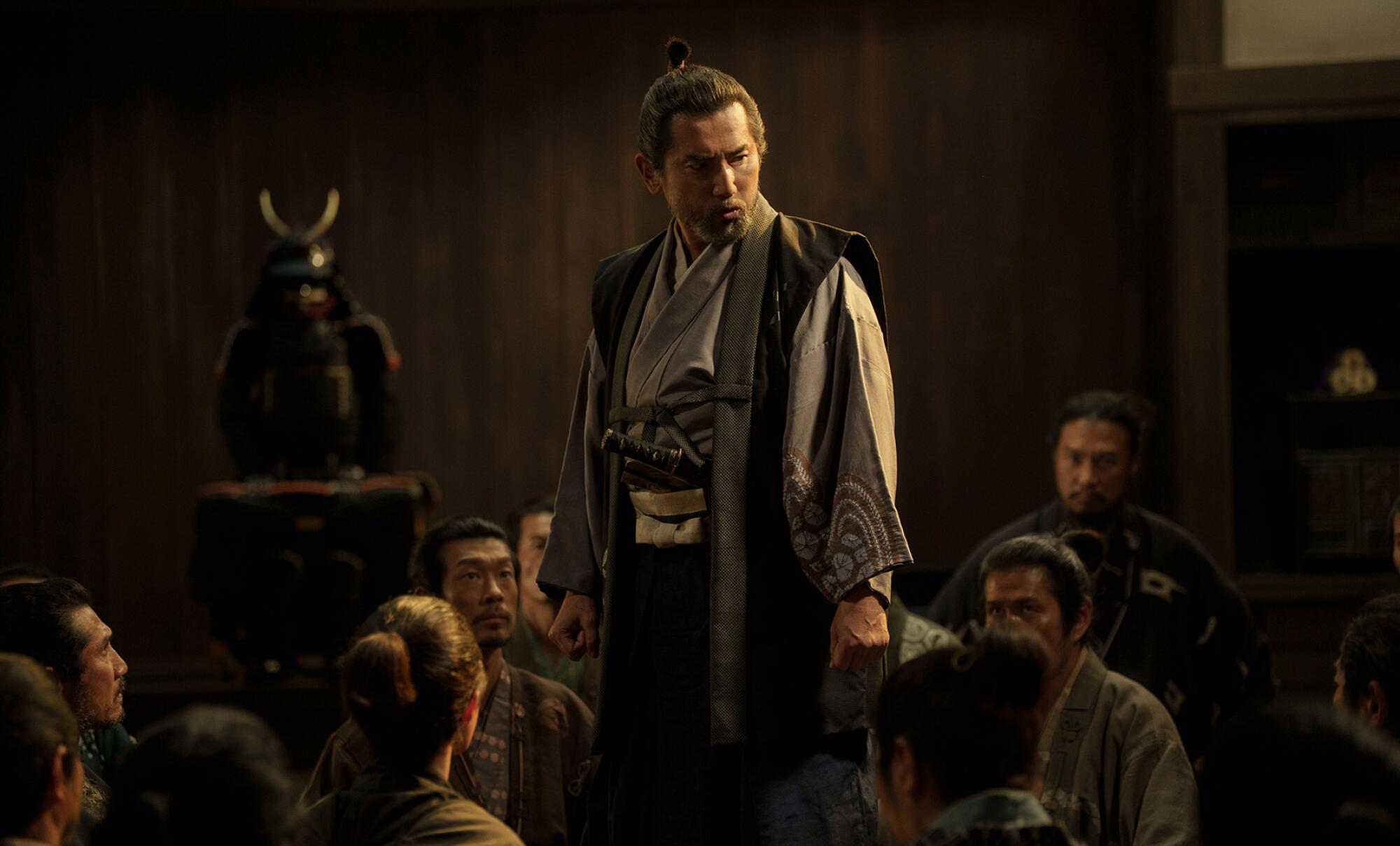
A samurai master stands among kneeling subjects.

Masahiro Motoki in the movie “The Samurai and the Prisoner.”

(Janus Films)

“The Samurai and the Prisoner,” which Kurosawa adapted from Honobu Yonezawa’s acclaimed 2021 novel (it recently premiered at Cannes), unfolds during the fractured Sengoku period in the 16th century, the same era as one of his favorite jidaigekis, “Throne of Blood,” directed by his unrelated namesake, Akira Kurosawa. In a besieged mountainside castle, rebellious Lord Murashige (Masahiro Motoki), trying to consolidate disparate clans of warriors, engages in a battle of wills with his nemesis’ emissary, Kanbei (Masaki Suda), whom he’s imprisoned. But when a succession of murders threatens to undermine his leadership, Murashige turns to his crafty hostage for help.

The result, broken up into seasons and marked by an impending sense of doom, is a multipart puzzle box as intricately folded and tucked as the traditional clothing on display. But it’s also a savvy, deliberative portrait of leadership in a fractured time, with a unique takeaway: Knowing oneself is as essential to the job as knowing who one’s friends and enemies are.

Kurosawa had always wanted to make a jidaigeki — the furthest he’d ever gone into the past was his World War II film “Wife of a Spy” — and yet creating one from scratch sounded too difficult and expensive. But the book’s scenario of a put-upon samurai leader compelled to unravel a series of puzzles to keep his castle’s unity appealed to his taste in a particular crime-solver: someone representing a wider system of responsibility and codes, rather than the classic American private eye.

“I’m drawn to police detectives, not private detectives,” he says, pointing to the duty-bound, badge-wearing protagonist in “Cure,” a Criterion-anointed classic now held in the same pantheon of serial killer tales as “Seven” and “Manhunter.”

“Police are part of an organization, with orders from above that make them responsible for figuring out the crime. If they could, they’d love to live their life peacefully without conflict, but they can’t because of their profession.” He considers his disinterest in gumshoes working on their own a quintessentially Japanese perspective. “Why try to solve a mystery and in the process end up in all these horrible situations, when you can just quit?” he asks with a wry smile.

A man sits chained in a cellar.

Masaki Suda in the movie “The Samurai and the Prisoner.”

(Janus Films)

In “Samurai,” Murashige hews closer to someone overwhelmed by responsibility. Says Kurosawa, “Murashige is neither a police or private detective. It’s that he is in a minor position of power, but to maintain order, he must let go of that power to solve the mystery. It’s not curiosity leading him. The chain of mysteries is a trial he must go through.”

It’s a gauntlet made thornier whenever Murashige, who believes in mercy over violence, engages with Kanbei, chained in a dungeon but with a dangerous mind nonetheless. “In that era, hierarchy was incredibly important, very visible,” says Kurosawa. “If one person is standing, the rest must be kneeling. With Kanbei and Murashige, there is always a shifting of the power, and when they begin to see eye to eye, suddenly we don’t know who holds the power.”

To play the wily Kanbei, Kurosawa enlisted his young “Cloud” star Suda, whom he calls a genius. Directing Suda was its own destabilizing experience, he says.

“He had an almost demonic, devil-like quality and it was hard to tell if the lines he was saying as Kanbei were truths for the character or complete lies — or if he didn’t know,” recalls Kurosawa. “It was mesmerizing to me, his words becoming something that we increasingly can’t trust.”

His interest in Murashige, meanwhile, a real-life tactician fictionalized here as an under-the-gun leader presented with myriad problems, poses the question: Did Kurosawa make a film about directing films? “I never thought about that, but that might be,” he considers. “I’m constantly having to ask things of people, ordering people around, sometimes negotiating. But filmmaking is something I love. There are times when I wish I could escape those scenarios, but I can’t. I’m always held back by that sense of responsibility. That’s how I’ve been working for decades. It’s the first time I’m probably saying that out loud, but the various contradictions I hold within myself as director are reflected in Akira Murashige.”

A woman kneels before her husband in feudal Japan.

Yuriko Yoshitaka, left, and Masahiro Motoki in the movie “The Samural and the Prisoner.”

(Janus Films)

Kurosawa is a late bloomer as an auteur. His breakthrough, “Cure,” hit Japanese theaters when he was 42. But he’d been directing features since 1983, first, Japan’s homeground adult movies called “pink films,” then, in the 1990s, direct-to-video yakuza gangster films known as “V-cinema.” (That’s “V” as in video.)

“It was a good training ground,” he remembers. “They had to be under 90 minutes, had limited shoot days, had to use certain actors, had to have scenes with yakuza. I learned that when you keep to the constraints you’re given, there’s also a kind of freedom. I had no personal interest in yakuza but I had to think: What’s the most unique yakuza I could come up with?”

With V-cinema behind him, Kurosawa came to exemplify the J-horror phenomenon with 2001’s “Pulse,” an ultra-disturbing, early tech apocalypse about online ghosts that was infamously bought by Harvey Weinstein and held from American release for years so it could be remade. Moving on from the trauma of his Hollywood flirtation, he’d distinguish himself with festival awards and a varied career.

But Kurosawa isn’t exactly precious about his filmography. “If possible, I’d love to forget all of my past works and go forward with new films with a completely fresh perspective,” he says. “However, I realize that often I’m repeating past themes. I think of this as something that’s very unfortunate.”

That doesn’t mean he won’t ever return to the horror genre, which he still likes and tries to keep up with. “I have a feeling viewers wouldn’t find scary what I find scary,” he worries, with a smile. “But it excites me that young directors are exploring the genre’s possibilities.”

Kurosawa can sound philosophical about the challenge each new film represents. Making one means coming from “a place of zero, from nothing.” As he puts it, “What one wants to do is a pretty unstable concept. You could want something today and not tomorrow. So instead of chasing that, I should be considering: What is correct?”

There is a professorial tone to Kurosawa. He taught for 18 years at Tokyo University of the Arts, including to future Oscar winner Ryusuke Hamaguchi (“Drive My Car”).

“I’ve probably said something similar to my students,” he acknowledges, adding that he and Hamaguchi were closer to likeminded friends than to student-teacher. “But in filmmaking, he never listened to a single thing I said. I would tell him to make adjustments and he was always concrete in what he wanted to do. And I thought that was very admirable.”

Now, they’re festival peers — both had films at Cannes this year — and Kurosawa’s cinematographer on “Samurai” was Sasaki Yasuyuki, who had previously worked with Hamaguchi. Kurosawa takes the opportunity for a friendly jab. “I thought, ‘I’m going to steal him away from Hamaguchi.’ And I was successful!”

Now, when he meets younger fans and budding filmmakers, their enthusiasm excites him, though it seems to cause him some consternation. Apparently, a lot of people pirate his films so they can be completists. “They tell me this happily,” he says. “I have mixed feelings about this, because they shouldn’t be doing that, but there’s a sparkle in their eye, and I have to accept they really wanted to see my films. So while carrying these complex feelings, I tell them, ‘Thank you.’”

Kurosawa is also of two minds regarding what he frequently hears from Japanese film students, that their goal is getting into top festivals, winning awards and securing global recognition.

“Maybe they need to interrogate what’s in front of them more closely,” he says. “I question it a bit.” He pauses. “I want to say, ‘Have you thought about making a 90-minute yakuza film first?’”

Source link

Assessing the Legacy of the Fed’s ‘Maestro’

As the financial world remembers the former Fed chair, economists weigh his massive macroeconomic legacy.

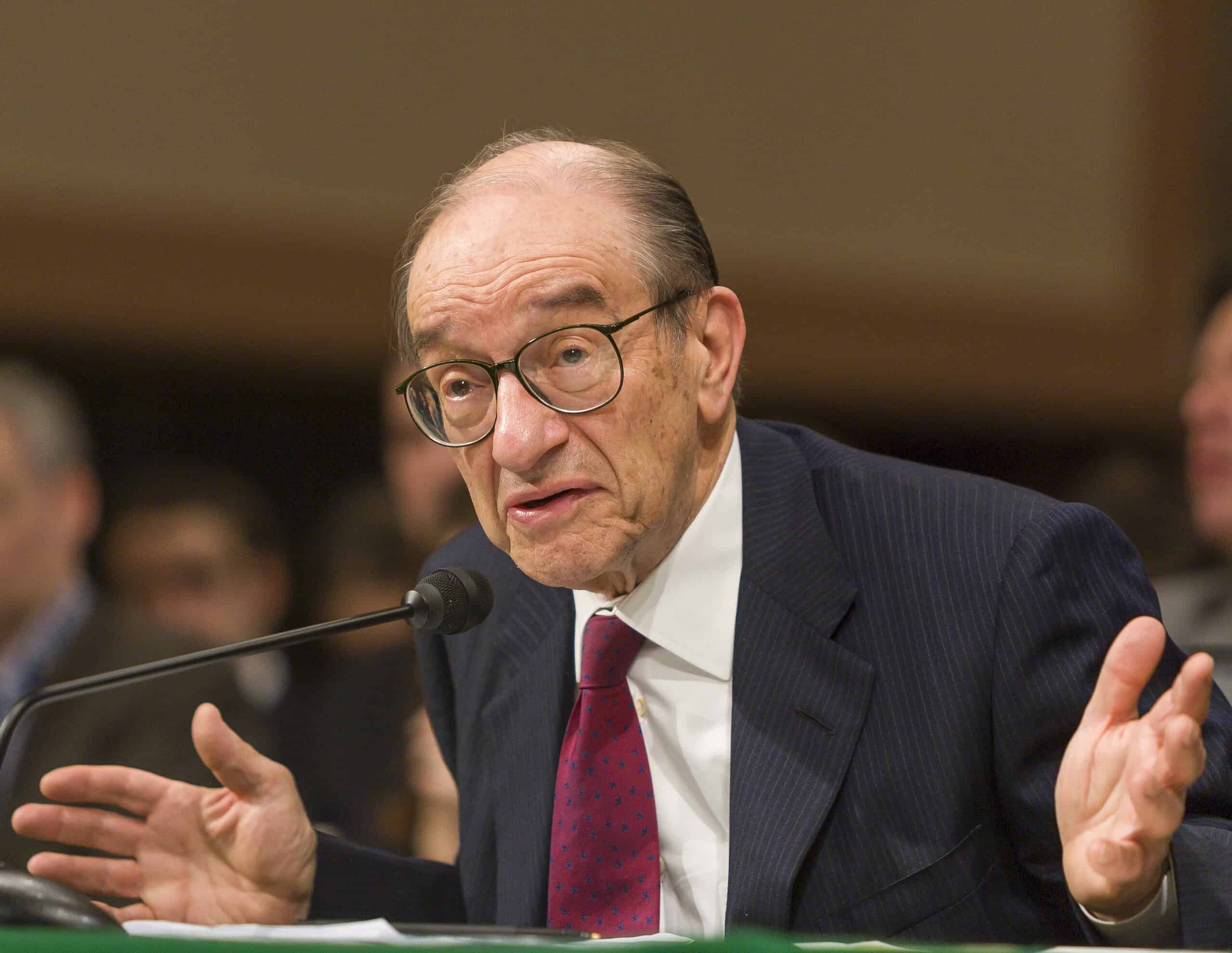
Alan Greenspan, the second-longest serving chairman of the Federal Reserve’s Board of Governors, has died just months after his 100th birthday.

Known as “The Maestro,” Greenspan helmed the Fed under five U.S. presidents, from August 1987 until January 2006. He managed the central bank through two market crashes, two recessions, and various financial crises. Through it all, the U.S. economy experienced significant macroeconomic expansion, rising asset prices, and a dramatic shift in corporate finance.

The Greenspan Put

Early in his tenure, Greenspan intervened to mitigate the impact of the 1987 stock market crash, a move known as the “Greenspan put.” The monetary policy lowered interest rates and injected liquidity, stabilizing the economy, restoring investor confidence, and mitigating financial shocks. However, Fed intervention also incentivized investors to take excessive risks, fueled speculative bubbles such as the 1990s dot-com bubble, and led to market expectations of future interventions.

The Greenspan put is a bit of an illusion, Kenneth Rogoff, professor of Economics at Harvard University and former chief economist at the International Monetary Fund, wrote in an email exchange.

“When markets collapse, the interest rate required to maintain stable inflation will typically also temporarily collapse,” Rogoff wrote. “His biggest mistakes were in regulatory policy, where he had too much faith in financial market innovation and too hands-off an attitude towards regulation. We are now, in the second year of the [second] Trump administration, repeating that mistake.”

A Man Remembered

“He was a great central banker who helped lead his country through two decades of prosperity,” said Ben Bernanke, a Distinguished Fellow in Residence at Brookings Institution and Greenspan’s successor at the Fed, in a statement. “I always found him generous with his time and insights. We are still learning from him, even if he is no longer with us.”

Don Kohn, a senior fellow at Brookings and former Fed governor and vice chair, remembered Greenspan encouraging Fed staff and fellow policy makers to voice new ideas and analytical insights while asking them to find the weak points in the hypotheses he put forward.

“But those ideas, insights, and challenges need to be backed by evidence and solid reasoning,” he wrote in a post on Brookings’ website. “Once when he asked me what I thought we should be doing on policy, I started my response with, ‘My gut tells me…’ He quickly cut me off: ‘That’s not your gut, Don, that’s your experience and knowledge.’”

Greenspan’s willingness to experiment to lower the unemployment rate, which peaked at 7.4% in 1992, drew many admirers.

“He pushed it lower than the conventional wisdom had ever thought possible, and discovered that it was possible to have more Americans in work without sparking inflation,” Justin Wolfers, professor of Economics and Public Policy at the University of Michigan, wrote in an email exchange. “Hundreds of thousands more people found work, and their families could afford a better life because he showed that there’s nothing natural about what many economists had called the natural rate of unemployment.”

Although Wolfers did not agree with all of Greenspan’s decisions, he noted that “his intellectual courage and devotion to the public good were never in doubt. He lived a big life and made a difference.”

Contact the author at rdaly@gfmag.com

Source link

A night out with Cuban jazz maestro, Arturo Sandoval

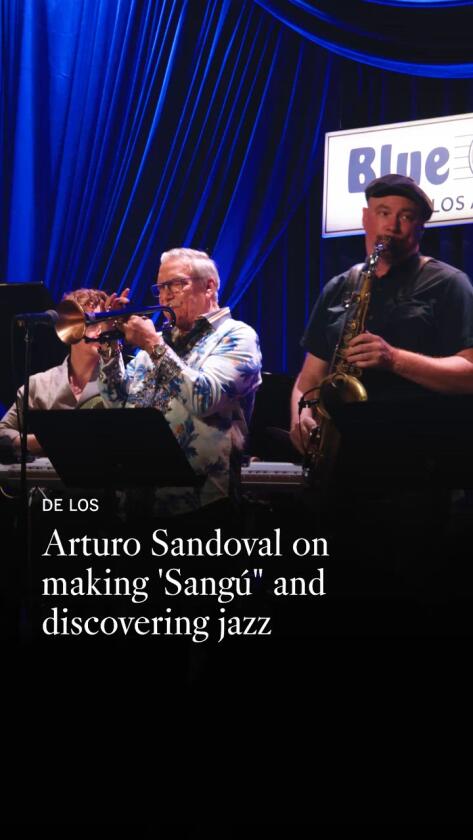
On a Thursday in early June, under the hot bright lights of the famous Blue Note jazz club in Hollywood, the legendary trumpeter and composer Arturo Sandoval took center stage with a microphone in hand — and a hip wiggle for good measure. Rocking a silk shirt adorned with rhinestones, and backed by his incredibly nimble band, the Cuban-born virtuoso kicked off his four-night residency at the club with sizzling banter and panache.

“I had to watch what I said in Cuba,” he told the audience. “Now I live in the United States of America, man — I say whatever the hell I want. Do you like it? Well, if you don’t, I don’t care!”

Now 77, Sandoval feels he was liberated by the power of jazz. Released in May, his dynamic new album, “Sangú” — Spanglish for “sounds good!” — is bursting with the free-spirited energy he’s cultivated in the decades since he came to the United States from Cuba. Sandoval maintains a fiery pace throughout the album, commanding not only the trumpet, but the timbales and piano. (He even recorded his own scat singing for the appropriately-titled track, “Scat.”)

Once derided by the revolutionary government as “Yankee imperialism,” jazz music became a staple of Sandoval’s daily diet. As a young trumpet player in Cuba’s national band, he sought refuge in the sounds of Charlie Parker and Dizzy Gillespie by tuning into Voice of America: a radio program covertly broadcast from the States. Sandoval eventually served three-and-a-half months in jail in the 1970s when he was caught listening to the program — but with famed pianist and director Chucho Valdés, Sandoval would pioneer a distinctly Afro-Cuban jazz fusion with the Orquesta Cubana de Música Moderna, which was renamed Irakere and won a Grammy for best Latin recording in 1980.

It was in 1990, while touring Europe with his hero Gillespie, that Sandoval finally defected from Cuba with his wife and son — and found the refuge he’d been seeking in the U.S.

“Jazz is synonymous with freedom,” he said. “And I’ve always said the most important word in any dictionary around the world is the word ‘freedom.’”

Inside his Tuscan-style home in the Valley, Sandoval’s shelves are lined with the myriad of awards he’s collected in the time since he arrived in the States: an Emmy award for scoring the 2000 movie based on his own life, “For Love or Country,” which starred Cuban American actor Andy García; 10 Grammy statuettes and the Presidential Medal of Freedom, which was presented to him by President Obama in 2013.

Just last month, Sandoval was also awarded knighthood by the King of Spain. “Does that make me Don Arturo Sandoval?” he audibly asked the ChatGPT application on his phone; indeed, it does. (“My wife gets a little jealous of ChatGPT,” he added with a laugh.)

Come July 4, Sandoval will perform at the America250 concert in Washington D.C., which is a bipartisan celebration of the United States’ 250th birthday. Co-chairs of the event include former President George W. Bush, former First Lady Laura Bush, former President Obama and former First Lady Michelle Obama. Seated next to his Bösendorfer grand piano, Sandoval spoke with The Times while on break from his world tour to discuss the new album, his collaborations with Karol G and Ariana Grande, as well as his weakness for a good cigar.

This interview was edited and condensed for clarity.

  • Share via

What keeps you playing the trumpet after all these years?
I have no choice. The piano is not that complicated, but the trumpet is a pain in the butt. The trumpet is merciless. You have to practice every single day, otherwise it sends you a bill.

How do you smoke cigars and stay healthy enough to play the trumpet?
I’ve been a big time cigar smoker since I was 14 years old. I never miss a day. I had a good one already. Every year they put me in the MRI to check my lungs. And the doctor always says, “Man, you have lungs like a person who never smoked.” A cigar is completely different from cigarettes. [With] a cigar you don’t inhale to the bottom of the lung, you know, it’s from here [taps his throat]. That’s the art.

You’ve been knighted by the king of Spain! How does that feel?
Great! We’re having 30 people over tonight. My wife is cooking for everyone. The consul [from Spain] called me three or four days ago [and] said, “Arturo, I got a surprise for you. I just got a package from the king at my house, ready to give it to you.” And I said, “What kind of joke is that?” My four grandparents came from Spain to Cuba — from my mother’s side, they were from Tenerife, Isla Canaria. From my dad’s side, they were Gallegos from Galicia. Even if I weren’t related to my family in Spain, whatever — I love Spain!

Given how restricted music and expression were in Cuba, how did you get into the international jazz community?
We put together a big band called Orquesta Cubana de Música Moderna [later called Irakere]. I met a journalist who played the saxophone — he said, “Man, you ever hear any jazz music?” He played for me a compilation or recordings of Dizzy Gillespie and Charlie Parker. That was in ’67 or ’68. Ten years later, I got a phone call from the guy — there was a jazz cruise going around the Caribbean and they [were in Havana] for 48 hours. I told him, “Pretend we never had this conversation!” But I went to the harbor. When the boat arrived, I saw Maestro Gillespie coming down the stairs. I didn’t know how to say one word in English. But God has always been good to me.

A guy behind him started talking to me in perfect Spanish. He was a percussionist playing with the great Stan Getz … a bunch of good musicians there. Dizzy started asking me questions through him. They said, “You have a car?” I had a Primo 1951, but it was falling apart. He said, “Ok, show me Havana.” He stayed for a jam session that night with Irakere. Gillespie went back to New York and told everybody about those musicians he heard in Cuba. Then one day a guy came to Irakere’s rehearsal and introduced himself with a translator — he was the president of CBS Records. A few months later, he put us on the plane [to New York] and drove us in a little bus straight to [perform at] Carnegie Hall. CBS made a recording of that, [which gave us] our first Grammy.

Many years later, in 2013, you were awarded the Presidential Medal of Freedom. What’s something special you remember about that night?
My granddaughter Lola was there, she was 6. It’s customary to take a photo with the president and the first lady. And we did, the whole family. When we got together for the photo, Lola started pulling at Obama’s jacket. He looked her and said, “May I help you?” She said, “Mr. President, I missed school today. I need a note from you.”

I said, “Oh Lord.” But Obama smiled and said, “Of course.” Then he got a paper with the White House [logo] on top and wrote, “Please excuse Lola from the school today … [Signed,] Barack Obama.”

Legendary jazz trumpeter Arturo Sandoval, shown performing at Dorothy Chandler Pavillion in Los Angeles in 2016.

Legendary jazz trumpeter Arturo Sandoval, shown performing at Dorothy Chandler Pavillion in Los Angeles in 2016.

(Courtesy of Timothy Norris)

Your new album is so cinematic. What’s the story behind it?
One day my son and his wife, who’s my manager, came over and said, “Papa, you’re getting old. You have to change your repertoire.” I said to my son, “I’ve been feeding you for 50 years and then you come and tell me what to do? Gimme a break!” But to be honest, when the pandemic happened, I was locked [inside] here. I used to travel a lot, and I was so frustrated and sad. So for two-and-a-half years, I started writing two or three new tunes a day and recorded a few hundred on my own. They picked 100 out of those; I said, “[Now] pick 12.”

When I got with the band, when somebody told me what to play — a little faster, a little slower — I said, “What the heck, man?” But I did it. And they were right. I’m so happy, blessed and grateful because they are amazing musicians. Nobody’s weird. No drugs, no alcohol, strictly into the music.

You joined Karol G’s band at Coachella this year — how did that happen?
As an old man, it’s not every day you have the opportunity to play Coachella. She called me last year to play on a tune in her latest album, “Ivonny Bonita.” So when they invited her to Coachella, she said, “Arturo, we’d like to play with you there.” She’s got great charisma and knows how to put a show together. To play for [more than] 150,000 people each night? That’s not my daily gig. I was nervous, but grateful for the opportunity. And when I checked my followers on Instagram, I got like 5,000 people in a few days — that never happens to me!

Let’s talk about Instagram!
Oh that’s a funny story. [In 2018] I did an album of duets with Stevie Wonder, Pharrell Williams, Ariana Grande … big time people. When Pharrell wrote a song for our duet, we were in the studio, cutting the track. He said, “Arturo, I’m producing for Ariana Grande in a studio across the hall. You would like me to call her?” I said, “Of course, man.” They sang together, Pharrell and Ariana. And by the end, I got my phone and said, “Ariana, can we take a photo with Pharrell?” She took my phone out of my hand to take [a selfie] and said to me, “Put it on Instagram.” I didn’t know what that was. She said, “You don’t know what Instagram is?” Sorry, I’m old! But I put it on Instagram, thanks to Ariana Grande. She’s so talented, man.

How do you stay dedicated to music after all this time?
People talk a lot about the word “talent.” What’s that? A lot of people supposedly have big talent, but they don’t have the passion, the discipline, the commitment. See those roses in my yard? If somebody gave you a seed, you put it in a vase with fresh dirt. Add some vitamins and water, and if you’re lucky, you’re gonna have a rose. But if they gave somebody the exact same seed and they left it on a table somewhere, that rose is gonna die! I’m 77 years old and I still practice every day. Nothing goes to my head. All those awards would mean nothing if I didn’t take care of what I had.

Source link