The Dodgers needed to turn things around Sunday to wrap up the first half on a high note. Manager Dave Roberts said as much the night before.
“When you give teams free bases, extra outs, it’s hard to win a game, regardless of the opponent,” he said. “Emmet [Sheehan] needs to go out there and throw the baseball well tomorrow. We’ve got to find a way to win a game tomorrow to feel somewhat better about going into the break.”
Instead, the Dodgers fell to the Arizona Diamondbacks 5-3, swept for the first time this season. It was Arizona’s first sweep at Dodger Stadium since September 2017.
Perhaps the break is coming at a good time.
“I guess,” Roberts said. “Gives guys a reset. … We’ve got some good teams coming up and we’ve got to play good baseball.”
Sheehan at least did his job, holding the Diamondbacks to three runs in 5⅓ innings. It was clear from the first at-bat that his pitch count could limit how deep he pitched into the game. Sheehan won a 14-pitch battle to strike out Ketel Marte.
The right-hander then struck out the side and was efficient enough to pitch into the sixth. He exited after his pitch count reached 101.
Max Muncy swings at a pitch in the seventh inning.
(Ronaldo Bolaños / Los Angeles Times)
Shohei Ohtani sparked the offense with his ninth leadoff home run of the season — and 22nd overall — on a two-hit day. But he’ll get treatment this week instead of playing in the All-Star Game.
It wasn’t a clean defensive game for the Dodgers. In the midst of the Diamondbacks’ two-run fifth, All-Star center fielder Andy Pages tracked a long fly back to the wall but missed the catch as the ball bounced off his glove for an error.
In the sixth, the tying run scored when All-Star third baseman Max Muncy’s throw to the plate hit Geraldo Perdomo in the back as he ran home for another error.
“Just a slump,” Muncy said. “You go through slumps both offensively and defensively, mentally. It’s just one of those stretches for us right now, and I think everyone’s ready for the break.”
Regardless of some sloppiness, the Dodgers have had a successful season going into the break.
“Just flush it,” Roberts said. “We’re still in a really good spot. Don’t let it carry over to the second half.”
They have the best record in the majors (61-36) and an 11½-game lead in the National League West. They also had six players selected as All-Stars.
So, as Major League Baseball pauses play and honors some of the best performers in each league, now’s a good time to hand out our first-half awards.
The Dodgers’ 9-2 loss to the Diamondbacks on Saturday wasn’t enough to prevent them from going into the All-Star break with the best record in the majors — that much is ensured. But the uninspired all-around performance sealed a series loss on the final weekend of the season’s first half.
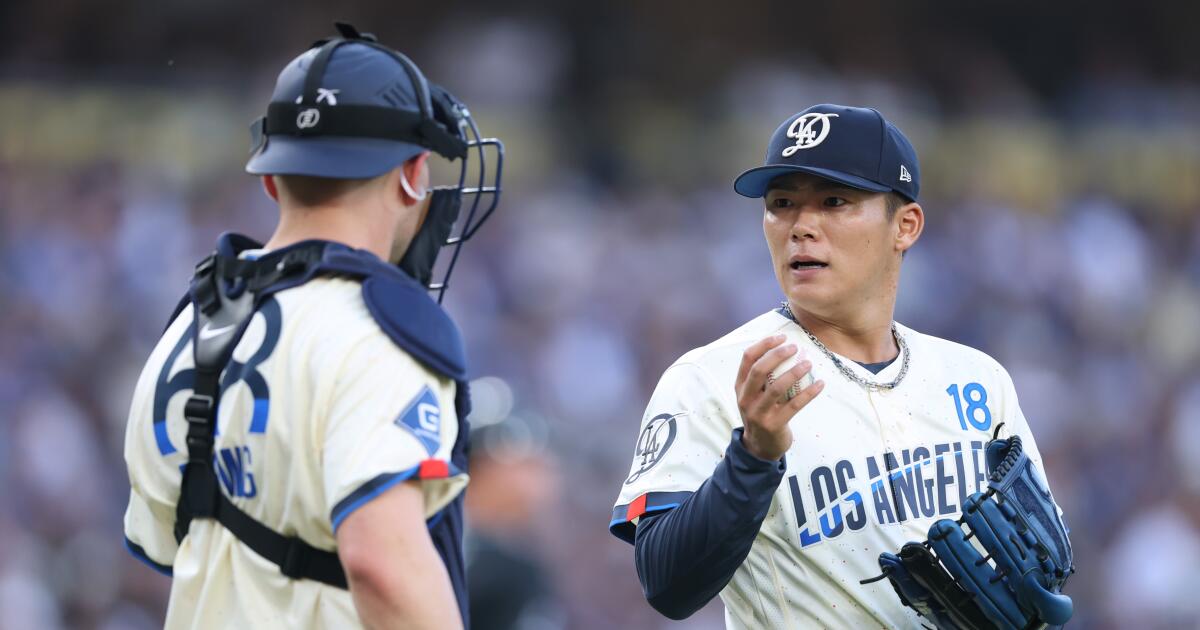
The Dodgers (61-35) put little pressure on the Diamondbacks pitching staff. And Dodgers starting pitcher Yoshinobu Yamamoto wrapped up his first-half campaign with his highest-scoring start of the season; he surrendered six runs in six innings.
Over the All-Star break, Yamamoto (2.85 ERA) will get the week to rest. Before the game Saturday, manager Dave Roberts confirmed Yamamoto, an All-Star for the second consecutive year, will not pitch in the game.
The timing of his start Saturday, three days before the Midsummer Classic, suggested as much. Shohei Ohtani is scheduled to have his left knee drained coming out of the All-Star break and will not travel to Philadelphia. So Justin Wrobleski, who was added to the National League roster Saturday, is the only Dodger set to pitch in the All-Star Game.
Yamamoto held the Diamondbacks to one run through the first five innings. But his final inning quickly unraveled. It started with a leadoff walk and peaked with a three-run home run from James McCann.
The Dodgers finally rallied for two runs in the sixth and then fell quiet again. The Diamondbacks then scored three runs against Landon Knack in his three-inning season debut coming off the injured list.
Yamamoto’s uncharacteristic sixth inning ended his streak of quality starts at five, including two that lasted eight innings or more. He leads the team with 110⅔ innings pitched.
“His delivery is so consistent, repeatable,” Roberts said before the game. “He uses his body so efficiently. I just see how he takes care of himself, and the tax wasn’t going to be a problem for him.”
Yamamoto’s workload, along with Wrobleski’s emergence, have helped the Dodgers weather injuries to pitchers who were expected to be major contributors.
In a promising sign for closer Edwin Díaz’s recovery timeline, he started a rehab assignment with single-A Ontario on Saturday. Díaz made just seven appearances for the Dodgers before undergoing an operation to remove loose bodies from his right elbow in late April.
“He’s been throwing pretty effortlessly, free, maybe a week after he started throwing,” pitching coach Mark Prior said.
He estimated that Díaz would return in about three to four weeks if his progression goes smoothly.
Blake Snell — who also had loose bodies removed from his pitching elbow, undergoing a NanoNeedle Scope procedure on May 19 — threw two simulated innings to batters Saturday.
Snell is scheduled to begin a minor-league rehab assignment next weekend, Roberts said. Prior believes Snell will need at least four to five outings, likening it to a spring training buildup.
“The goal would be to get him fully built up to 90ish pitches before he comes back,” Prior said.
Tyler Glasnow, who had been sidelined for more than two months with a lingering back injury, threw a bullpen session Friday.
“It was like 95, 96 [mph] in his ‘pen, but he does that rolling out of bed when he’s healthy,” Prior said. “But it’s a good sign.”
Glasnow has had plenty of back and forth in his rehab, however. Twice he started playing catch only to be shut down when back spasms returned.
“The schedule is starting to move with a little bit more consistency than it had been,” Prior said. “So he’s in a good spot.”
Glasnow is scheduled for another bullpen session on Monday.
The Belgian side that beat Algeria 2-1 in their opening group stage game of the 2014 World Cup read like an all-star fantasy team of players in their prime.
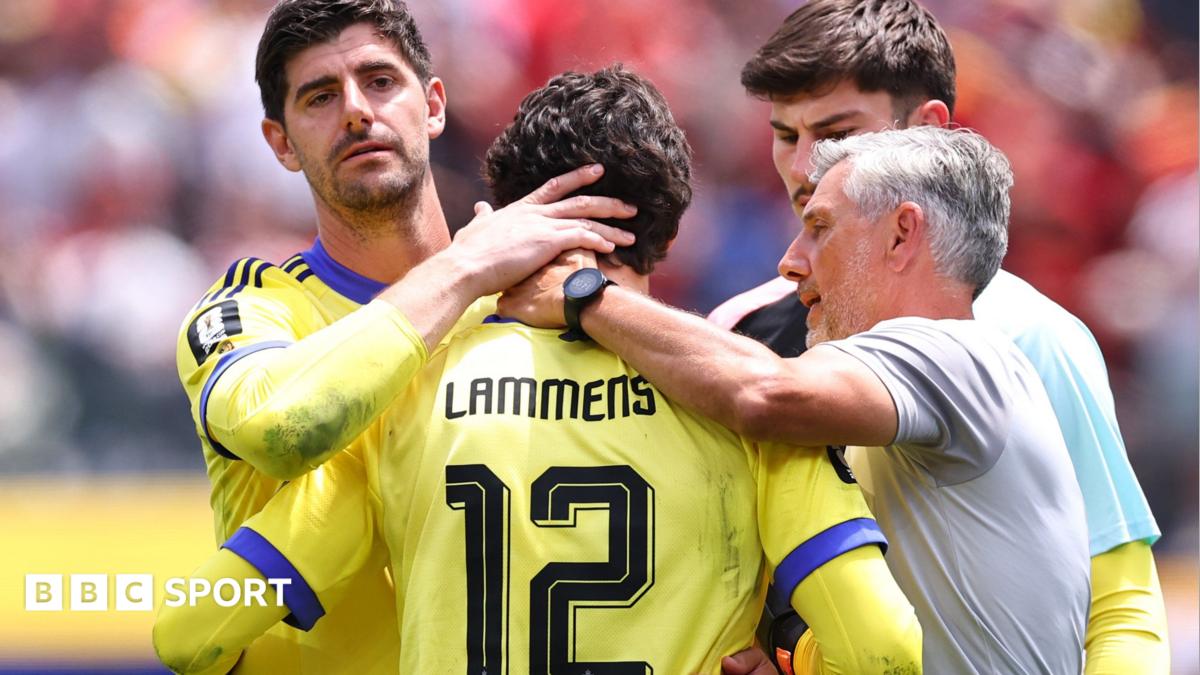
Courtois, De Bruyne, Witsel and Lukaku all started, as did Eden Hazard, Mousa Dembele and Vincent Kompany, with Dries Mertens and Marouane Fellaini coming off the bench.
Belgium topped their group in their first World Cup since 2002 and reached the quarter-finals, before going one better and reaching the final four in 2018 and winning the third-place play-off.
The same group of players reached the quarter-finals of both Euro 2016 and 2020, before crashing out of the group stages of the 2022 World Cup in Qatar.
Critics say such a talented group should have achieved more, but for a nation of less than 12 million people, was international success ever a realistic aim?
“To be a golden generation you have to win some gold and then you can be called that,” said Spanish football journalist Guillem Balague.
“It’s put the expectations very high in Belgium and it’s interesting that people look back at that group of players because with Lukaku, De Bruyne, Tielemans, Trossard they have actually had a good run.
“They were third in the last World Cup and that seems to have been forgotten with Roberto Martinez as their manager. I’m not sure how much more you could ask for.
“In the context of other teams like an England side that had the golden age, with an Italy that have had such experience and managed to get a wonderful Euros, with Spain on the up as well, to demand Belgium to win is a maybe a little bit too much.”
Along with those celebrated names, Leandro Trossard (31), Brandon Mechele (33), Timothy Castagne (33), Hans Vanaken (33), and Thomas Meunier (34) have likely played their last World Cup minutes.
“I’m disappointed for those that maybe might not come back with the national team,” manager Rudi Garcia said after the match.
“I took a team that I wanted to take as far as possible. My veteran players, who are maybe on their way out, that they could have one last hurrah.
“It is a shame because I think everyone deserves to go far in this World Cup.”
ARLINGTON, Texas — Wyatt Langford lined a shot off the wall in left field to bring home Alejandro Osuna in the ninth inning, lifting Texas to a 7-6 victory over the Angels after the Rangers blew a five-run lead Thursday night.
Langford struck out three of his first four times up as the designated hitter after getting activated from the 10-day injured list in his return from a left hamstring strain.
Osuna led off the ninth with a single and went to second on pinch-hitter Nicky Lopez’s sacrifice bunt. Langford lined a 1-and-1 fastball from former Texas closer Kirby Yates (0-4) over Jose Siri’s head for the winning single.
Jo Adell had a tying, pinch-hit single to cap a five-run seventh a night after homering twice in the Angels’ 13-1 victory.
Cole Winn (4-2) got Adell on a sharp liner to center field to end the ninth with the potential go-ahead run at third after replacing All-Star closer Jacob Latz, who went 1⅔ innings in his first outing in nine days.
Nathan Eovaldi struck out a season-high 10 for Texas but failed to get his 10th win for the fifth consecutive start. He exited with no outs in the seventh after Dezner Guzman reached on catcher’s interference, Logan O’Hoppe walked and Wade Meckler’s single scored Guzman.
Peyton Gray replaced Eovaldi and gave up a two-run single to Nolan Schanuel, who had four hits, and an RBI single to Jorge Soler.
Brandon Nimmo, Ezequiel Duran and Justin Foscue homered for Texas in the first four innings against Reid Detmers. The left-hander hadn’t given up more than one long ball in any of his first 18 starts.
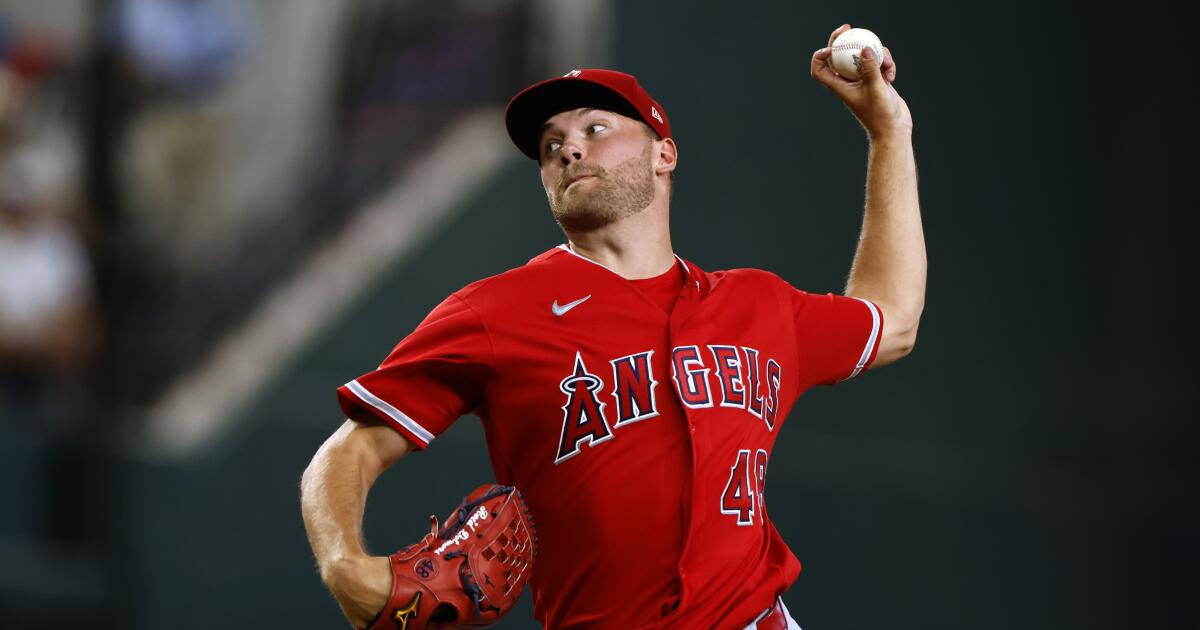
Up next: Neither team announced the rotation for its final series before the All-Star break. Indications are the Angels will go with RHP Grayson Rodriguez (2-2, 8.06 ERA) on Friday at Minnesota. He has been on the injured list since mid-June because of lower back tightness. Texas is home against Houston.
Weekly insights and analysis on the latest developments in military technology, strategy, and foreign policy.
In his latest spat with a fellow NATO member, U.S. President Donald Trump condemned Spain as a “wasted cause” and “terrible partner” in the alliance. Speaking at the NATO Summit in Ankara, as NATO Secretary General Mark Rutte looked on, Trump said he wanted to cut off all trade relations with Spain. While Spanish officials have stressed that relations won’t be affected, it does raise questions about the long-term status of the U.S. military presence in Spain, should the situation deteriorate further.
.@POTUS: “Spain is a wasted cause. We don’t want to do any trade business with Spain anymore by the way… Spain is a terrible partner in NATO. They don’t participate, they don’t pay. I don’t want anything to do with Spain.” pic.twitter.com/3prqux6p54
— Rapid Response 47 (@RapidResponse47) July 8, 2026
“We don’t want to do any trade business with Spain anymore… I’d like you to cut it off,” Trump said. “Spain is a terrible partner in NATO. They don’t participate; they don’t pay. I don’t want anything to do with Spain. Cut off all trade with Spain, please, including visits. Watch them, watch them come running back; oh, they’ll come running back.”
He continued: “We don’t have to trade with them. I don’t want to do any more trade with them… Don’t even talk to them; they’re hopeless, bad people, because you know they have everybody else going and paying and working… They’re open about it, they’re hostile about it, and let’s see how hostile they remain when they call up, and they ‘please, please, we want to trade with you, sir. We want to trade with you, sir.’ They make so much money with us, and we’re going to see that they make a lot less. I want no business with them.”
According to U.S. Congress figures, mutual trade between the two countries was worth $75 billion in 2025, and the United States made $3 billion more from the relationship than Spain.
In an effort to heal the rift, Spanish Prime Minister Pedro Sánchez later insisted that relations with the United States were “very positive,” and that he had spoken to Trump.
“We talked about the World Cup… there was no tension whatsoever, on the contrary it was all very friendly,” said Sánchez.
Spanish Prime Minister Pedro Sanchez downplays tensions with President Donald Trump after the US leader threatens to halt trade with the NATO ally, describing their exchange as informal and courteous with “absolutely no tension.” pic.twitter.com/SRNfdfuWkV
— Al Arabiya English (@AlArabiya_Eng) July 8, 2026
The BBCreported that government sources in Madrid said that Spain had no plan to change their “excellent social, cultural, and economic relationship.”
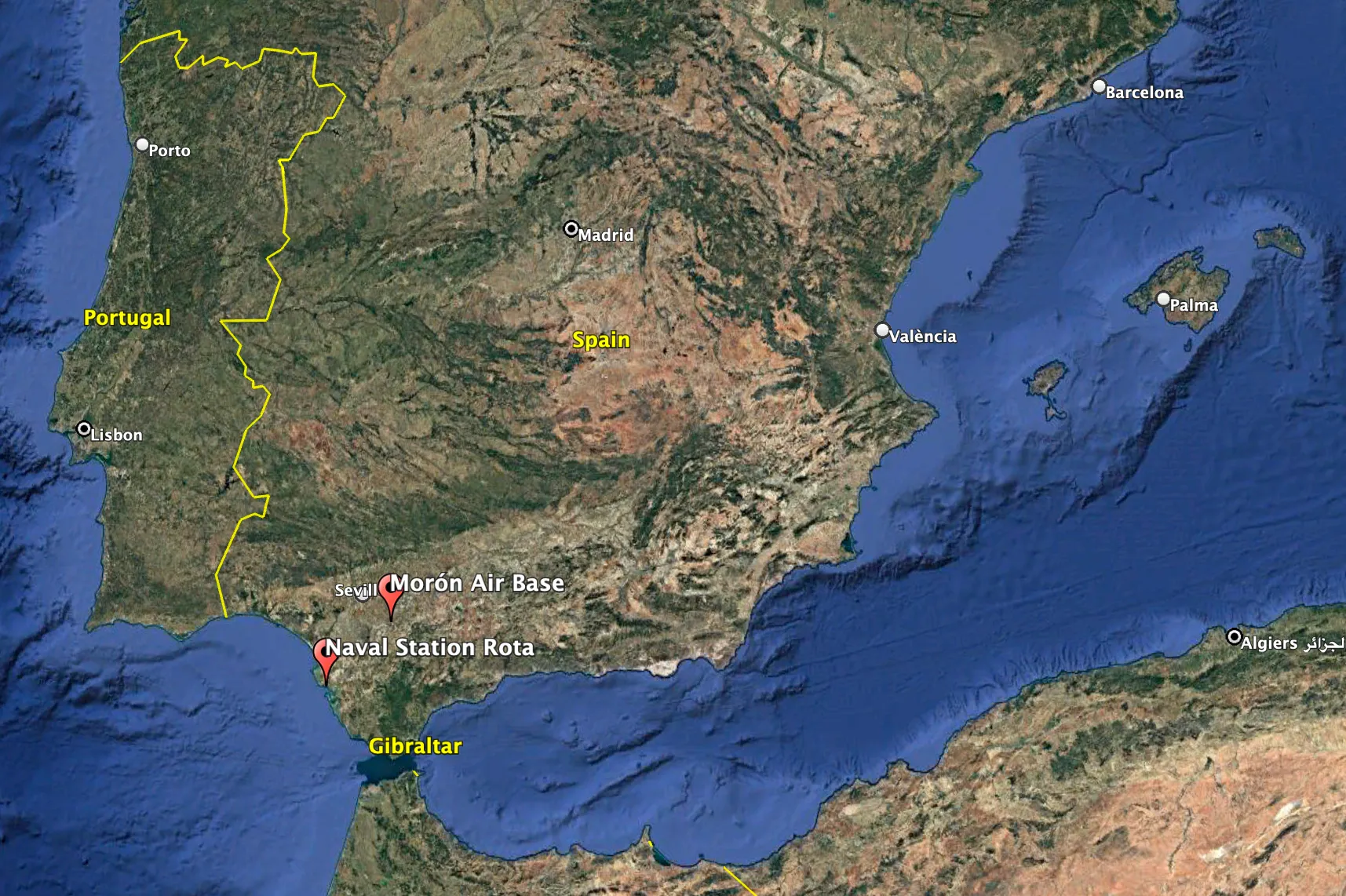
The background to this is Trump’s unhappiness with the Sánchez government refusing the U.S. military permission to use its bases at Morón and Rota in Spain for missions during the war against Iran.
Another point of conflict is Sánchez’s refusal to increase defense spending to five percent of GDP, in line with NATO targets.
This is not Trump’s first threat to cut off trade relations with Spain. The same had happened back in March, in response to Sánchez’s stance on the Iran war.
While there was no change to trade between the two countries after that, were relations between the United States and Spain to worsen, the continued access to Morón and Rota would become a question.
The approximate location of Morón and Rota in southern Spain. Google Earth
Of the two, Naval Station Rota, in the province of Cádiz, is the most critical. It sits in a strategic position at the mouth of the Mediterranean, which is one of the world’s most important naval control points.
Described by the U.S. Navy as “the gateway to the Mediterranean,” Rota is one of the most strategically important U.S. military hubs in Europe, critical to supporting U.S. and allied naval operations across multiple theaters. The installation is central for Naval Forces Europe-Africa/Central (EURAFCENT) and the U.S. Sixth Fleet.
Located on a 6,100-acre Spanish Navy facility in southern Spain, Rota functions as a major logistical gateway linking North America with Europe, the Mediterranean, Africa, and the Middle East.
Naval Station Rota. Google Earth
The base supports the movement of personnel, equipment, fuel, and supplies through its three operational piers, a 670-acre airfield capable of supporting U.S. Navy and Air Force aviation operations, and some of the largest weapons and fuel storage facilities in Europe.
Perhaps the highest-profile resident unit at Rota is Destroyer Squadron 60 (DESRON 60), one of three U.S. Navy destroyer squadrons permanently based outside the continental United States and the only one of these to call Europe home.
In 2024, the Arleigh Burke class destroyer USS Oscar Austin arrived at Rota, as the first of two additional destroyers to join the Forward Deployed Naval Force-Europe, which will have an eventual total of six. These warships are notably modified with special defenses tailored to the European theater, as you can read about here.
The USS Oscar Austin arrives at its new homeport of Naval Station Rota, Oct. 15, 2024, as the first of two additional DDGs to join the Forward Deployed Naval Force-Europe. U.S. NavyA SeaRAM defense system awaits testing aboard USS Porter, March 3, 2016. Porter, a destroyer forward-deployed to Rota, Spain, was preparing for deployment in the U.S. Sixth Fleet area of operations. U.S. Navy photo by Lt.j.g Laura Adams/Released U.S. Naval Forces Europe-Africa/
Other key Navy units at Rota include Helicopter Maritime Strike Squadron Seven Nine (HSM-79), the “Griffins,” flying the sub-hunting MH-60R Seahawk, and Explosive Ordnance Disposal Mobile Unit Eight.
MH-60R Seahawk helicopters assigned to Helicopter Maritime Strike Squadron 79 land on the flight deck of the Spanish Galicia class landing platform dock Castilla during a bilateral flight operations exercise at Rota, April 28, 2026. U.S. Navy photo by Mass Communication Specialist 1st Class Drace Wilson Petty Officer 1st Class Drace Wilson
Turning to Morón, this airbase is located southeast of the city of Seville in southern Spain. While Naval Station Rota is a springboard for U.S. maritime forces, Morón provides a similar role for the Air Force. Its strategic position means it plays a key role as a forward operating location for air operations, rapid response missions, and contingency support across Europe, Africa, and the Middle East.
Morón Air Base. Google Earth
The base’s capabilities include airfield operations, aircraft support, logistics, maintenance, communications, security, and host-nation support, all of which are geared toward rapid deployment and sustainment of U.S. forces when and where they are needed.
U.S. Marines with Special Purpose Marine Air-Ground Task Force-Crisis Response-Africa (SPMAGTF-CR-AF) 19.1, Marine Forces Europe and Africa, prepare to conduct a helicopter support team training event using a U.S. Marine Corps MV-22 Osprey at Morón Air Base, Spain, March 13, 2019. U.S. Marine Corps photo by Sgt. Katelyn Hunter Staff Sgt. Katelyn Hunter
Resident U.S. Air Force units at Morón, under the Third Air Force, include the 496th Air Base Squadron, a geographically separated unit (GSU) that comes under the command of the 86th Airlift Wing at Ramstein Air Base in Germany. The 86th Airlift Wing flies C-130J airlifters as well as C-21A and C-37A staff transports.
Morón also serves as a critical node in the transatlantic and transeuropean tanker bridges, making it a key logistical gateway for the massive movements that are critical to buildups in Europe and the Middle East, as well as for more routine transatlantic deployments.
A KC-10, KC-46, and three KC-135s sit on the flight line at Morón Air Base on April 14, 2022. At the time, the three airframes represented the entire might of the U.S. Air Force’s refueling arsenal. The KC-10 has since been retired. U.S. Air Force photo by Staff Sgt. Nathan Eckert Tech. Sgt. Nathan Eckert
As well as other U.S. Air Force assets that temporarily deploy to Morón, including from the Bomber Task Force, the base also regularly hosts deployments of U.S. Marine Corps aircraft.
Two B-1B Lancers with the 9th Expeditionary Bomb Squadron from Dyess Air Force Base, Texas, are prepared for takeoff in support of Bomber Task Force Europe at Morón Air Base, Spain, April 4, 2024. U.S. Air Force photo by Senior Airman Zachary Wright Staff Sgt. Zachary Wright
Both Morón and Rota operate under the U.S.-Spain Agreement on Defense Cooperation, which allows the United States and Spain to operate alongside one another and share critical infrastructure.
Morón Air Base and Naval Station Rota remain key nodes in the U.S. military’s global posture, providing a strategically positioned bridge between Europe, Africa, and the Middle East. Their combined capabilities allow U.S. forces to rapidly move, stage, and sustain aircraft, ships, personnel, and equipment across multiple theaters.
A Spanish Air Force Eurofighter flies next to a U.S. Marine Corps MV-22 Osprey with Special Purpose Marine Air-Ground Task Force-Crisis Response-Africa 20.1, Marine Forces Europe and Africa, as part of a tactical recovery of aircraft and personnel (TRAP) exercise near Morón Air Base, Spain, May 6, 2020. U.S. Marine Corps photo by Cpl. Kenny Gomez Sgt. Kenny Gomez
A loss of access to Morón and Rota would extend far beyond a bilateral dispute between Washington and Madrid. While the United States could maintain operations through other European and regional locations, replacing the unique combination of air, maritime, and logistical capabilities provided by the two installations would take time and impose additional strain on U.S. forces. Loss of access to these bases, especially Rota, could be one of Spain’s most powerful cards to play if Trump’s rhetoric turns into action.
More importantly, any decision by a NATO member to restrict access to critical allied infrastructure would have broader implications for the alliance, raising questions about the reliability of defense commitments and the political cohesion that underpins collective security.
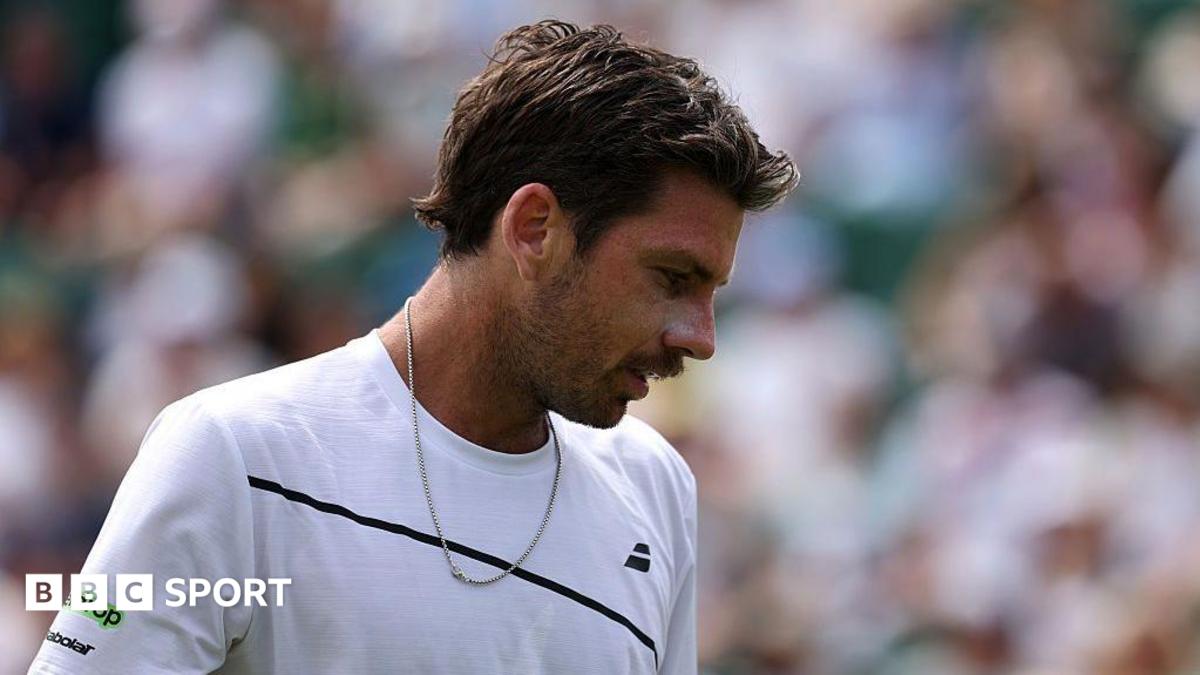
Norrie had played just one match on grass before this year’s Wimbledon after retiring injured in the French Open first round with a rib injury.
And the former world number eight looked rusty as he broke Zheng, ranked 144th, just once in the entire match.
Zheng hit 21 aces to Norrie’s four, while the 22-year-old committed just four double faults to Norrie’s 10.
Harriet Dart came close to completing a gritty comeback win but ultimately fell 6-3 3-6 6-4 to former French Open champion Jelena Ostapenko.
The pair were scheduled to play on Court 17 on Monday, but Raducanu’s withdrawal saw their match moved to Court One.
Wildcard Dart made sure fans with tickets for the show court were not disappointed as she forced a deciding set against the world number 31 in an entertaining two-and-a-half hour display.
Ostapenko will face either Antonia Ruzic of Croatia or compatriot Darja Semenistaja – the lucky loser who replaced Raducanu in the draw.
Meanwhile, 17-year-old British wildcard Mika Stojsavljevic lost 6-2 6-1 to 2021 Olympic champion and 11th seed Belinda Bencic.
Felix Gill and Max Basing were beaten on their Grand Slam main-draw debuts, losing to 23rd seed Rafael Jodar and qualifier Shintaro Mochizuki respectively.
Alicia Dudeney, who was also making her main-draw major bow, lost 6-3 6-3 to American Alycia Parks.
Mimi Xu and Hannah Klugman, both navigating the step up to senior tennis, lost to Daria Kasatkina and 2024 Wimbledon singles champion Barbora Krejcikova respectively, while Oliver Tarvet was beaten by 25th seed Arthur Rinderknech in four sets.
There are 19 home players across the two singles draws – although 17 are playing opponents ranked inside the world’s top 55.
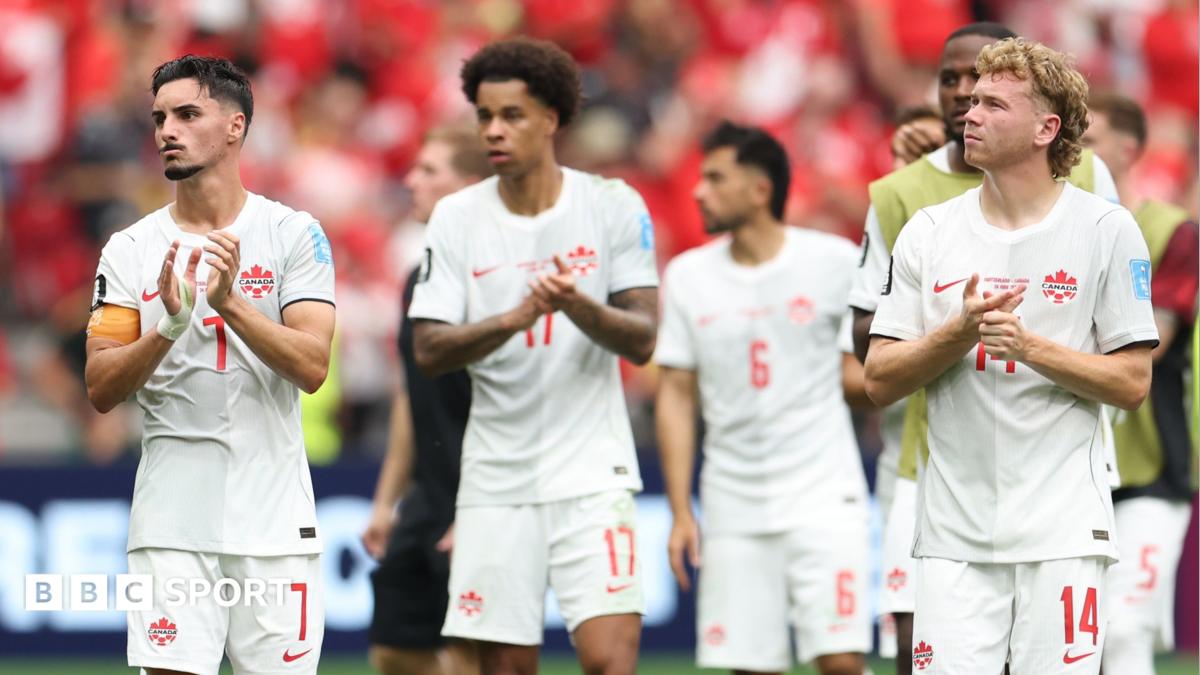
Losing their final group game to Switzerland on Wednesday means co-hosts Canada will play no further matches in their home country at this year’s World Cup.
Had Canada avoided defeat to finish top of Group B, they would have stayed in Vancouver for their last-32 tie and potentially a last-16 fixture.
However, a 2-1 loss at BC Place meant Canada finished second behind Switzerland and so Jesse Marsch’s side will travel to Los Angeles to play South Africa on Sunday (20:00 BST).
The former Leeds boss, who has guided Canada out of the group stage at a World Cup for the first time, said: “We wanted to be here in Vancouver, but we still have a massive opportunity ahead of us to find a way to push for the next match and find a way to still electrify the nation, even though it’ll be from Los Angeles.
“We came up a little short and that’s unfortunate. But we’re in the knockout round and we’re going to make sure that we’re up for it better.”
After drawing their opening game against Bosnia-Herzegovina in Toronto, Canada thrashed Qatar 6-0 in Vancouver, where they ended the group stage with a first loss of the tournament.
Striker Jonathan David told Sports Illustrated:, external “It was nice to have a pro-Canada crowd that pushed us on every game.
“We’re a bit disappointed and it’s mixed emotions. Obviously, we wanted to stay in Vancouver, so not getting that is a blow for everyone, but we’ll talk about it and get ready for the next one.”
SACRAMENTO — Pinch-hitter Jonah Heim launched a tying homer with two outs in the ninth and the Athletics surrendered 11 straight runs before rallying from seven down to defeat the Angels 12-11 in 10 innings Friday night.
Zack Gelof started the comeback with an RBI single in the sixth, and the A’s got two-run homers from Jacob Wilson in the seventh, Max Muncy in the eighth and Heim in the ninth to tie it 11-11.
Nick Kurtz walked with the bases loaded in the bottom of the 10th to force home the winning run. It was the largest comeback win for the A’s (38-38) this season.
Gelof extended his hitting streak to 23 games — the longest active run in the majors.
Tyler Soderstrom hit a one-out double in the ninth before Heim connected for his second career-tying pinch-hit homer. The first came earlier this month in a 15-14 loss to Milwaukee in Las Vegas.
Henry Bolte drew a leadoff walk from Kirby Yates (0-3) in the 10th. Following a double steal, Muncy flied out and Gelof was hit by a pitch to load the bases. Samy Natera Jr. entered and walked Kurtz on five pitches, scoring automatic runner Lawrence Butler.
A’s starter Jeffrey Springs gave up six runs on four hits and four walks in 3 2/3 innings. Elvis Alvarado (3-1) pitched two scoreless innings to earn the win.
José Soriano struck out six in five innings. He permitted six hits, four runs and four walks.
Up next: RHP J.T. Ginn (5-3, 2.91 ERA) pitches Saturday for the A’s in the third game of the four-game series. The Angels had not announced their starter.
WASHINGTON — A unanimous Supreme Court ruled Thursday for gun rights and against drug laws.
In a 9-0 ruling, the justices struck down part of the longstanding federal gun control law that makes it a crime for an “unlawful user” of illegal drugs to possess a gun.
The Trump administration had urged the court to uphold the conviction of a Texas man who was investigated for alleged terrorist ties and admitted to being a regular user of marijuana.
Rejecting that claim, Justice Neil M. Gorsuch, speaking for the court, said the law was far too broad and overly harsh.
“The law automatically bans an individual from possessing a gun from the moment he becomes an unlawful user of any controlled substance until he ceases being one,” he wrote. “It doesn’t matter what controlled substance an individual uses, in what amounts he does so, or whether his drug use has ever made him a danger to himself or others.”
And it can lead to a 15-year prison term, he added.
He noted, however, the court was not ruling on “addicts” or people who were under the influence of drugs when they were arrested.
The American Civil Liberties Union welcomed the ruling.
“Today’s unanimous 9-0 decision makes it clear that the government cannot make it crime for people to own a gun, which the Supreme Court has held is a fundamental constitutional right, simply because they use marijuana,” said Cecillia Wang, legal director at the American Civil Liberties Union. “With nearly half of Americans reporting marijuana use at some point in their lives, this ruling protects the rights of millions and curbs the government’s ability to impose arbitrary and discriminatory penalties.”
Since 1968, federal law has prohibited gun possession by felons, fugitives and other persons deemed to be dangerous. Included was anyone who is “an unlawful user of or addicted to any controlled substance.”
But the 5th Circuit Court of Appeals ruled in a Texas case this restriction on guns violated the 2nd Amendment. It said “there is no historical justification for disarming a sober citizen not presently under an impairing influence.”
Appealing to the Supreme Court, the Trump administration urged the justices to uphold the law.
“Habitual illegal drug users with firearms present unique dangers to society—especially because they pose a grave risk of armed, hostile encounters with police officers while impaired,” said Solicitor Gen. D. John Sauer.
He asked the court to rule in the case of a Pakistani native who was investigated by the FBI for his suspected ties to the Islamic Revolutionary Guard Corps.
In 2020, Ali Danial Hemani and his parents “traveled to Iran to participate in a celebration of the life of Qasem Soleimani, an Iranian general and terrorist who had been killed by an American drone strike the month before,” the administration told the court last year.
The FBI obtained a warrant to search Hemani’s family home.
Agents found a Glock 9mm pistol, 60 grams of marijuana and 4.7 grams of cocaine.
Hemani said he used marijuana about every other day.
A federal grand jury in Texas charged him with possessing a firearm as an unlawful habitual user of marijuana.
Republic of Ireland striker Amber Barrett said the side “are going to give everything we have” in Tuesday’s match against France when they have the chance to secure automatic qualification for the World Cup.
Barrett came off the bench in the 76th minute and scored the winner against the Netherlands in the closing stages of the match in Cork in front of a crowd of more than 12,000.
Now, Carla Ward’s side have the opportunity to secure a spot in back-to-back World Cups when they travel to Grenoble to face France, who are top of the group.
Even if they draw or lose, they will have the fallback of a seeded play-off spot, but Barrett insists they are going out to get the job done on Tuesday.
“We do not have anything to lose,” Barrett told RTE after the game.
“When we started the group, what everyone was looking at was not finishing fourth. We avoided that tonight and we have nothing to lose on Tuesday, we are going to give everything we have.
“Whatever happens, we still have the play-offs in October and December.”
Laurent Bonadei’s side were the 2-1 victors against the Republic of Ireland at Tallaght Stadium in March.
Barrett added that despite the side coming into the “cup final” unbeaten in three matches, they will not underestimate the French.
“Before, if you were 2-2 against the Netherlands, you would probably be rubbing your hands together and saying’ we will take this’, but Carla [Ward] said from the start of the week, let everyone know we will be going to win the game.
“Tuesday is a cup final. Against the Netherlands, we were for it and we were trying to win that game, there was no doubt about it.
“It is a massive game on Tuesday, we will enjoy tonight but we are not taking for granted the French, they are an unbelievable side. Recover, get ready and let’s go again.”
The last time Angelenos sacked an incumbent city attorney in the primaries, almost 30% of them were unemployed.
That was May 2, 1933, the nadir of the Great Depression, when sprawling encampments blanketed downtown, King Kong ruled movie theaters and violent crime reached a fever pitch not seen again for almost half a century.
Incumbent City Atty. Hydee Feldstein Soto’s near-certain defeat on Tuesday may have little in common with Erwin P. Werner’s primary loss 93 years ago, but themes of Depression-era Los Angeles echo through the contest.
Marissa Roy, a deputy attorney general with the California Department of Justice who leads the race with ballots still being counted, wooed voters with shoe-leather and social media savvy, promising to use the office to fight for wage workers and tenants. But it was the city’s powerful unions and its increasingly democratic socialist bloc that propelled her to the top spot, mirroring the coalition that drove California’s sharp left turn in the early 1930s.
Meanwhile, county prosecutor John McKinney tapped into voter frustration with homeless encampments, a blighted downtown and general distrust of City Hall to pull off a last-minute heist of the second runoff spot. McKinney only started campaigning in earnest five weeks ago, but managed to win votes with a tough-on-crime campaign — even as some categories of city crime have dipped to historic lows.
L.A. Mayor Karen Bass, left, shares a laugh with L.A. City Atty. Hydee Feldstein Soto, right, at Avance Democratic Club’s politics and tacos event on May 16.
(Christina House / Los Angeles Times)
As of Thursday morning, Roy had nearly double the number of votes of Feldstein Soto. McKinney led the incumbent by 13 percentage points for the second runoff slot. The race has not yet been called, but Feldstein Soto issued a statement effectively conceding the race Wednesday morning. She acknowledged that “the voters had spoken” and referenced “her successor’s administration.”
Her campaign did not respond to a request for comment for this story.
The ouster of Feldstein Soto would be nearly unprecedented. Werner’s 1933 loss is the only similar instance since the city adopted its current primary ballot process in 1917, according to the City Clerk’s office. No other incumbent city council member or mayor has ever failed to advance out of the primary when facing two or more opponents.
“This is not something that has happened in the lifetimes of most people who follow city government,” said Mike Bonin, former City Council member and executive director of the Pat Brown Institute for Public Affairs at Cal State L.A.
McKinney’s sudden emergence in the race in May saw him hijack the incumbent’s support from law enforcement. His campaign received $3 million worth of independent expenditures. An official with a group supporting McKinney — who spoke on condition of anonymity because they were not authorized to speak to the media — said an internal poll showed Feldstein Soto falling nearly 10 points outside the runoff a week before election day.
Since Roy had already captured the support of the county Democratic Party and energized left-leaning voters, that put Feldstein Soto in the center, analysts said, which left her vulnerable in a race that most people casting ballots hadn’t closely followed.
“To the extent that people had any information, they knew that one of them basically wanted to be tougher and somebody on the other side wanted to be kinder, that left her with very little room to maneuver,” said Roy Behr, a longtime consultant to veteran politicians in the city.
Roy “micro-targeted” likely progressive voters in social media spots, experts said, presenting as an affable presence in her ever-present purple blazer while sharing her vision of serving as the “people’s lawyer.”
Marissa Roy, a deputy attorney general with the California Department of Justice, appears poised to finish first in the June 2 primary race for L.A. city attorney.
(Gary Coronado / For The Times)
Boosted by a massive influx of cash from rental giant Airbnb, some of McKinney’s ads played up his hard-luck upbringing in one of New Jersey’s most violent cities. His campaign also sent out texts that painted his opponents as “George Gascón”-style Democrats, invoking the former progressive district attorney as a bogeyman for voters anxious about crime.
AI-generated videos depicted McKinney as a stoic, suit-clad crime fighter walking through a dystopian version of L.A.’s Metro system.
“The debate isn’t necessarily two candidates on one stage appealing to one person, it’s for attention and information in the same sphere,” said Spencer Slovic of Mycorrhiza Digital, who ran Roy’s digital advertising. “That battle of information will play out almost in different realms.”
Without a compelling story for her powerful but poorly understood role, Feldstein Soto often struggled to explain her achievements in office.
In a recent interview with The Times, she said she delivered on “public safety, public integrity and public services.” She went on to discuss granular improvements she made to the office, such as limiting access to law enforcement databases by former employees, modernizing internal systems and improving the rapport between the city attorney’s office and LAPD. By her own admission, she doesn’t often publicly celebrate her accomplishments.
“I didn’t hold some big press conference and hop up on a white horse and declare myself Joan of Arc and the savior of all things Los Angeles,” she said. “Which I could have done.”
Tumult during Feldstein Soto’s lone term in office was easier for voters to identify. The cost of litigation exploded. A high-ranking city lawyer accused her of abusing her power, prosecuting political enemies, mistreating employees and engaging in “inappropriate alcohol consumption.” Feldstein Soto claimed she improved her office’s rapport with the LAPD, but the police union’s decision to rescind its endorsement of her and instead back McKinney cost her a key voting bloc.
Feldstein Soto’s messaging was at times muddled and lacked the flair of her challengers, political observers said. Campaign finance records show she paid for 80 email blasts, mailers and other messages that sought to influence voters.
John McKinney, a Los Angeles County prosecutor, appears set to advance to a run-off against Marissa Roy in the race for L.A. city attorney.
(Kayla Bartkowski / Los Angeles Times)
In one video, she stood in front of a static background and talked for three minutes straight about her record while describing her opponents as representing the “extreme left” and “extreme right.” She attacked both for receiving large sums of money from “special interests,” especially McKinney for accepting Airbnb’s largesse. Feldstein Soto sued the rental giant for price gouging in the wake of the 2025 wildfires.
Roy’s campaign sent out 180 communications, records show, the bulk of them ads for Instagram and Facebook, where her team said they saw instantly which stories resonated with likely voters and which were duds.
Slovic said a “clip of Hydee talking about how she wasn’t going to prosecute the Trump administration” seemed to touch a nerve with voters.
“That was by far our best performing ad,” he said, adding, “What Democrats really want in primaries is someone who will fight and have some sort of backbone.”
McKinney had just 23 communications, campaign records show, plus 19 more made by independent groups. He often leaned into the same gritty visuals that defined mayoral candidate Spencer Pratt’s viral AI spots.
In a race for a position most voters don’t understand, McKinney’s and Roy’s ability to play a consistent character may have proved critical, political analysts said.
“The vast majority of voters started off with no strong feelings about the race,” Behr said. “Nobody had any votes locked down other than their friends and neighbors.”
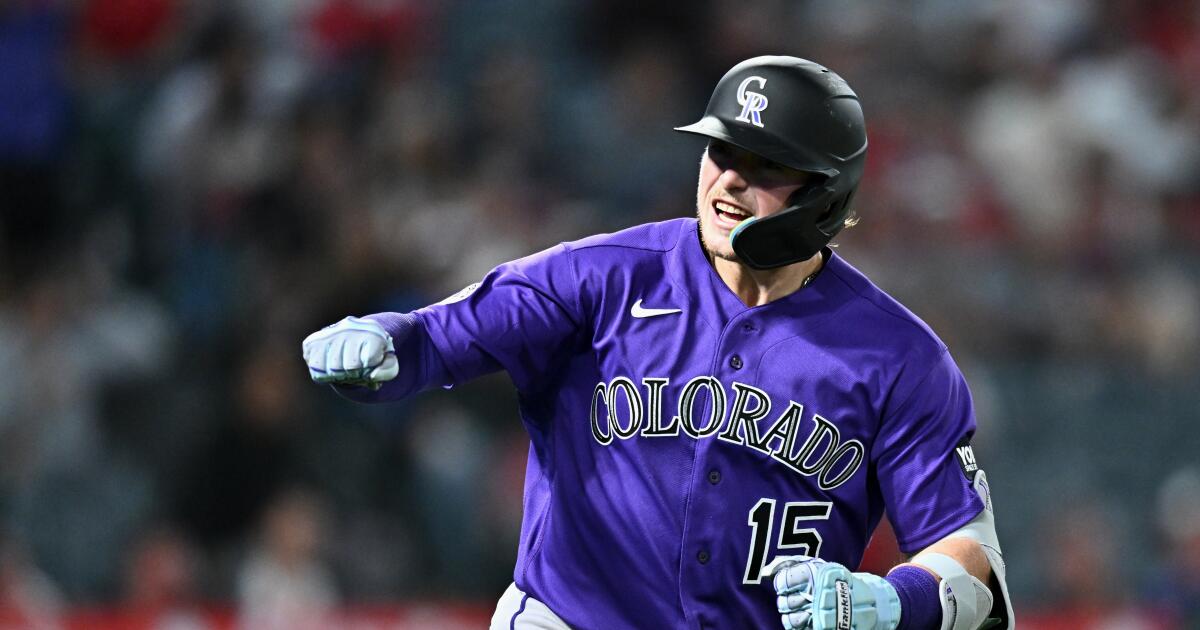
TJ Rumfield hit a go-ahead sacrifice fly in the ninth inning and the Colorado Rockies used a five-run eighth to rally past the Angels 9-8 on Monday night.
Hunter Goodman put Colorado ahead 8-6 with a three-run homer in the eighth. Jake McCarthy homered earlier for the Rockies, who have won more games this season (23) than they did before the All-Star break last year.
Jorge Soler’s two-run triple for the Angels tied it 8-8 in the bottom of the eighth.
McCarthy doubled in the ninth to move Kyle Karros to third before Rumfield drove him home with a sac fly to right field for a 9-8 lead. McCarthy finished two for four at the plate, including a solo homer in the third for a 2-0 lead.
Troy Johnston plated Colorado’s first run with an RBI single in the first, and Sterlin Thompson added an RBI single in the fifth to pull the Rockies to 5-3.
Karros’ RBI double in the eighth sparked the five-run rally. Tyler Freeman tacked on an RBI single and Goodman capped the outburst with his 14th homer — a three-run drive over the left-field wall.
Antonio Senzatela (5-0) threw 1 2/3 scoreless innings for the win. Kyle Freeland gave up six runs, five earned, and seven hits in 5 2/3 innings.
Kirby Yates (0-1) gave up the go-ahead run in the ninth.
José Soriano pitched the first 4 2/3 innings for the Angels, giving up three runs on three hits and striking out seven. He also hit two batters with pitches and walked seven — a career high. He became the first Angels pitcher to issue seven free passes in a game since Garrett Richards on Sept. 2, 2013.
Jo Adell hit an RBI single in the third before Jose Siri drilled his second career grand slam to put the Angels up 5-2 in the third. Vaughn Grissom scored on a throwing error by Goodman in the fifth for a 6-3 lead.