Crew members express relief upon return from record-breaking deployment of 265 days that strained conditions on board.
Published On 9 Oct 20269 Oct 2026
The United States aircraft carrier USS Abraham Lincoln has returned to its home port after a 322-day deployment, including a record 265 consecutive days at sea, during which it helped wage the US-Israel war on Iran.
The vessel returned to Naval Air Station North Island in San Diego, California, on Thursday, where members of its crew were greeted by family and friends.
Recommended Stories
list of 3 itemsend of list
“It feels amazing,” 20-year-old Abel Ramirez told The Associated Press news agency, adding that his parents had driven from Texas to meet him. “There was a certain point when I never thought I would come off.”
The record-setting deployment of the USS Lincoln became a symbol for larger criticisms of the US war effort, which has dragged on since February with no clear end in sight and has strained US military stockpiles.
The prolonged deployment prompted a series of news reports calling attention to deteriorating conditions, food shortages and a series of reported suicide attempts by crew members.
Pentagon chief Pete Hegseth praised the sailors on Wednesday in remarks that accused the media of trying to turn the ship into “a symbol of dysfunction or a symbol of low morale or a symbol of a failed mission”.
President Donald Trump and members of his administration have frequently lashed out at the news media for critical reporting on the war on Iran. Trump himself has called the reporting about the USS Lincoln “fake news”.
“The Lincoln has been out there for a period of time, a good period of time,” he said at an Oval Office meeting on August 17. “I know people on the Lincoln, and they say it’s beautifully maintained and beautifully taken care of.”
Earlier that month, when confronted with the amount of time the USS Lincoln had spent at sea without a port stop, Trump quipped that its deployment was “not nearly long enough“.
The reports of mental health strain on the USS Lincoln come as public opinion polls show low approval ratings among US voters for the war against Iran.
On Thursday, the Pew Research Center released a poll that found 65 percent of Americans disapproved of Trump’s handling of the war, compared with 33 percent who approved.
The war has also fuelled concerns about the cost of living ahead of the upcoming midterm elections. Since the war began, Iran has hindered commercial traffic through the Strait of Hormuz, a critical waterway for the trade of fuel, fertiliser and other goods.
Sailors returning home on the USS Lincoln said that they were looking forward to fresh meals and spending time with their families.
Alma Solano Velez said that her husband, one of the US service members on board, shared a list of foods he had been craving over his 10-month deployment: oxtail, barbecue chicken, broccoli and shrimp empanadas, among others.
She added that he had spoken about “the lack of food and showers” and was looking forward to seeing their four-year-old daughter.
A woman who appeared on ITV’s Long Lost Family shared the heartbreak she recently endured following her sister’s death
12:27, 01 Oct 2026Updated 12:29, 01 Oct 2026
Long Lost Family: Elaine talks about Gail and sees photo of Naomi
Long Lost Family took an emotional turn as two adopted sisters met after spending decades apart.
The moving ITV show, presented by Davina McCall and Nicky Campbell, returns to screens tonight with another tearjerking episode. In the show, Nicky meets Naomi, who is longing to find her biological twin sisters and mother.
Naomi has spent much of her life wondering about the family she never knew. Now living in Gloucestershire with her husband of 30 years, she is finally retracing the events surrounding her adoption and searching for answers about her birth family.
Adopted as a baby, Naomi grew up in a loving home with her adoptive parents in Plymouth. She always knew she had been adopted, but as she got older, questions about her biological family became increasingly difficult to ignore
When Naomi was a teenager, her parents showed her a letter they had kept since her adoption. What she discovered inside came as a major shock.
The letter revealed that Naomi’s birth mother had been just 19 when she gave birth. It also contained a revelation Naomi had never expected: her birth mother had given birth to twin girls, who had subsequently been adopted by other families.
Naomi recalled: “I was obviously very surprised when I found out that I had sisters. It was shocking.”
Both of Naomi’s adoptive parents died while she was in her 20s. In the years that followed, her desire to uncover more about her origins and find her birth family only grew stronger.
With Naomi’s birth mother now identified, the search turns to the two sisters she never knew she had. The team manages to uncover their names, Gail and Elaine, but the discovery brings both hope and heartbreak. They learn that Gail has sadly died, leaving Elaine as the only surviving twin.
Elaine tells presenter Nicky that she and Gail grew up together in a happy, loving home with their adoptive parents. Despite being separated from their birth mother as babies, the sisters shared a close childhood and had a positive upbringing.
But in the 1990s, Gail was diagnosed with Motor Neurone Disease (MND). The illness gradually progressed over the following years, profoundly affecting her life before she sadly died in 2020.
Elaine also revealed that she recently lost her mum and her adoptive mother. Given her circumstances, she was elated to meet her sister.
Sobbing, Elaine said, “The fact that she’s gone to so much effort to find us, she must really want to meet us.”
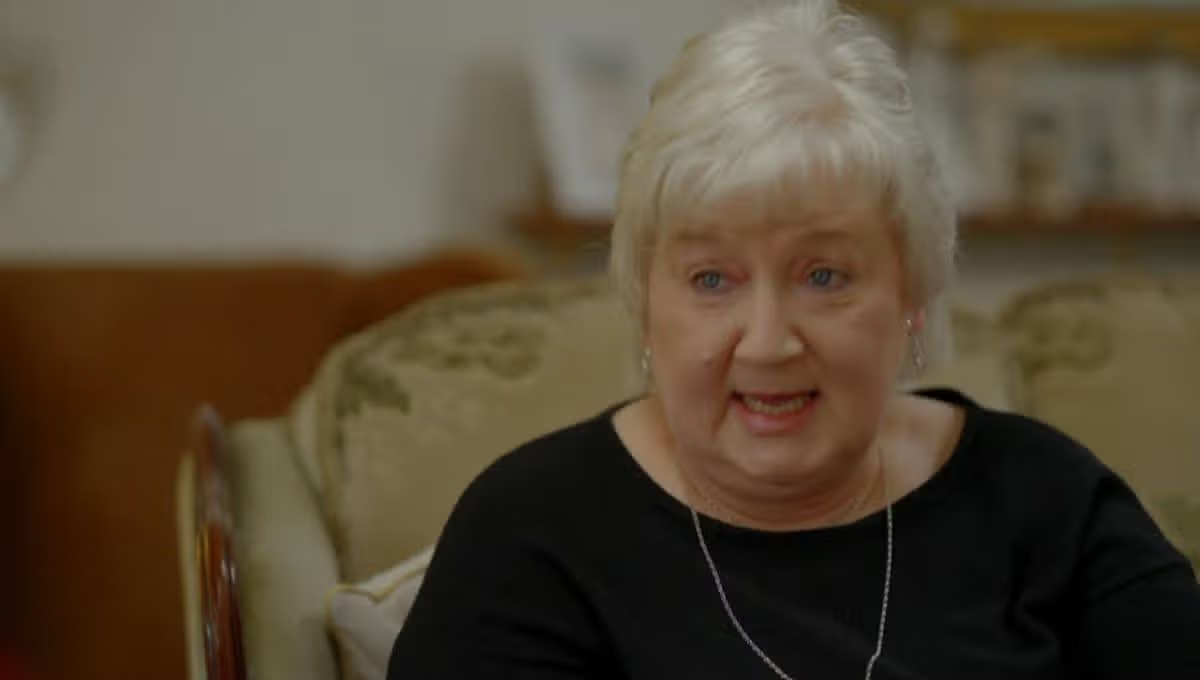
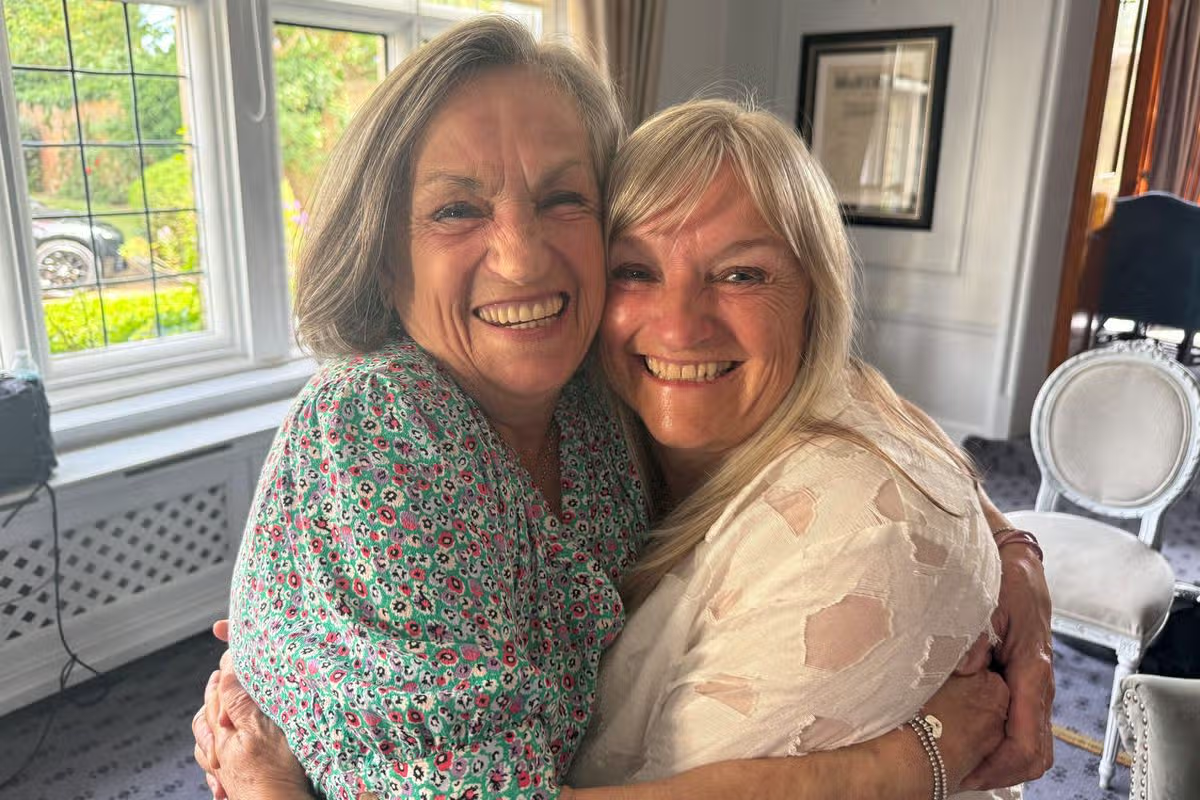
When the sisters finally met, the pair couldn’t let each other go. Elaine said, “I’m so glad you found me. You’ve looked for so long, long, and I didn’t even know you existed.”
Naomi later said, “She was as warm and welcoming as her photo looked. Um, all I could have hoped for.”
Long Lost Family continues on Thursday 1st October at 9pm on ITV and ITVX.
Mohammed Abu Hijleh still finds it hard to believe that his mother passed away just over a week ago; she had suffered from nothing more than diabetes. But the restrictions Israel imposes on various cities, towns, and villages in the occupied West Bank can alter a Palestinian’s life in an instant.
Zahriya Abu Hijleh, 66, was attending her niece’s wedding reception in her hometown of Deir Istiya, northwest of Salfit, on September 20, when she suddenly felt dizzy and collapsed.
Recommended Stories
list of 3 itemsend of list
After she was taken to the town’s medical centre, the doctor immediately ordered her transfer to Salfit Governmental Hospital, a facility just an eight-minute drive from Deir Istiya.
Mohammed requested an ambulance, but the vehicle could not enter the town because the iron gate operated by Israeli forces at the entrance was closed. Instead, an ambulance from the medical centre transported her to the gate, and from there, she was taken off the stretcher, carried past the gate on foot, and transferred to a second ambulance waiting on the other side.
It is a scenario that happens repeatedly in the occupied West Bank, Mohammed told Al Jazeera.
“My mother was breathing her last; had the gate been open, we wouldn’t have lost her on the way,” he said.
Medics later determined that Zahriya had suffered a pulmonary embolism and required urgent treatment, according to her family.
“Sadly, she died due to the delay,” Mohammed said. “She had no prior health issues other than diabetes.”
A Palestinian student crosses an Israeli checkpoint as students return to school for the new academic year, near Hebron in the Israeli-occupied West Bank, September 6, 2026 [Mussa Qawasma/Reuters]
Comprehensive closures
The military checkpoints and iron gates erected by Israel in the West Bank have become a significant source of misery for Palestinians.
They disrupt daily life, causing delays for people trying to reach work, schools, and universities, while also posing a daily threat to the lives of the sick.
Israel periodically imposes closures on the West Bank for various reasons, including Jewish holidays. The current closure runs from September 27 to October 3, coinciding with the Jewish festival of Sukkot.
While Israeli settlers move freely between West Bank cities, and even storm Palestinian villages and towns under Israeli army protection, Palestinians are forced to wait for hours at closed checkpoints.
Ibtihal Mansour from Nablus endured such an ordeal last Friday while visiting her in-laws’ home in the village of al-Janiya, near Ramallah.
The family left the village at 10am, hoping to reach Nablus within 45 minutes. But they encountered closures at the Atara and Ein Siniya checkpoints north of Ramallah, effectively trapping them in the area.
“We tried taking alternative routes west of Ramallah, but were surprised to find the road between Ramallah and Nablus blocked by settlers, with all vehicle traffic completely halted. We remained on the roads, trying to find any way through, until midnight, a span of more than 14 hours,” she told Al Jazeera.
Her children were crying, exhausted after spending so long confined in the vehicle. Passing through one roadblock near Nablus, in an area called al-Lubban Asharqiya, a soldier forced Ibtihal to wake the children. When her 11-year-old son did not wake up, she said that the soldier punched him in the head, causing him to jolt awake crying.
“The scene was heartbreaking; I felt a deep lump in my throat and profound sorrow. Long hours of waiting in the vehicle ended with an assault like this, and the ordeal didn’t even end there,” she said, explaining that they had to turn back. “We were forced to spend the night at my sister-in-law’s home in Ramallah before setting out early the next morning for Nablus.”
Like Ibtihal’s family, many Palestinians travelling between cities and villages are forced to stay overnight in hotels or at relatives’ homes. Some municipalities have converted wedding halls and mosques into shelters for those stranded, providing meals donated by residents of towns near the checkpoints.
The Colonization and Wall Resistance Commission (CRRC) recorded 942 checkpoints, closure points, and obstacles across the occupied West Bank as of September 25, up from 793 in March 2024.
The total length of the obstacles amounts to approximately 107.7km (70 miles), according to data from the UN Office for the Coordination of Humanitarian Affairs.
The CRRC says the closures effectively fragment Palestinian communities, making access to workplaces, schools, medical facilities, and agricultural land dependent on whether roads and crossings are open.
Al Jazeera has reached out to Israeli authorities for comment on the road closures and the allegations from Palestinians in this article, but has yet to receive a response.
Strangling Hebron and Jerusalem
In Hebron – which has an Israeli settler presence in the centre of the Old City – the Israeli army has closed the Ibrahimi Mosque to Palestinians and tightened restrictions at checkpoints and gates leading to the site until Wednesday, all while securing access for settlers to celebrate Jewish holidays.
Issa Amro, coordinator of the Youth Against Settlements group, told Al Jazeera that soldiers have closed checkpoints and imposed curfews in several city neighbourhoods, restricting resident movement and making it increasingly difficult to reach the Old City and the Ibrahimi Mosque.
“The area west of the mosque contains settlements and closed zones, while access from the east is limited to a few roads. These measures make reaching the site both more difficult and more dangerous,” he explained.
The situation in occupied East Jerusalem is also fraught, as Israel imposes strict restrictions on Palestinian movement and access to the Al-Aqsa Mosque, while thousands of Israeli settlers enter the site and move about unhindered under heavy security escort.
Activist Fakhri Abu Diab told Al Jazeera that Israel’s closures in occupied East Jerusalem during the Jewish holidays are part of attempts to impose religious sovereignty over the city.
Abu Diab explained that Israeli settlers and hardliners head either to storm the Al-Aqsa Mosque or to synagogues to perform religious rituals, while Palestinians are forced to remain at home.
He described how the closures disrupt daily life in East Jerusalem, shutting shops, schools, and workplaces, and halting movement.
“Israeli police restrict the movement of Jerusalemites. Families and vehicles attempting to move about risk being attacked by extremists and settlers, while the latter are permitted to roam freely and dominate the streets,” he said.
Former “Today” show host Billy Bush feel from grace a decade ago when a tape leaked of him giggling on a hot mic while then “Apprentice” star Donald Trump boasted about grabbing women.
This week it was announced that Bush was joining Fox News Media as a contributor covering pop culture, entertainment, and cultural issues.
Bush joins other right-leaning personalities who’ve rebuilt their careers at Fox following scandals elsewhere.
It’s not surprising that former “Today” host Billy Bush joined Fox News as a regular contributor this week. What is surprising is that it took so long.
Ten years have passed since Bush, cousin to former President George W. Bush, was caught on a hot mic giggling while then-“Apprentice” star Donald Trump boasted about grabbing women “by the pussy.” The “Access Hollywood” clip, filmed in 2005 when Bush hosted the entertainment news program, was leaked a month before the 2016 presidential election, meaning just about everyone in America saw it.
A disgraced Bush lost his job and reputation. Trump won the White House.
Once known for his boyish charm and impressive collection of cowboy boots, Bush spent a decade re-ingratiating himself to the public on the syndicated television news magazine “Extra,” a considerable step down from the “Today” show. He reported on Hollywood and celebrity culture before launching his own digital show and podcast more than a year ago.
Now he finally has gone where popular conservative public figures go following scandals, stumbles or mishaps that all but destroy their livelihoods: Fox News. Rupert Murdoch’s crown jewel has given a second chance to more than a few successful, right-leaning personalities who have been shamed by mainstream media or canceled by a public who doesn’t find sexual assault boasts particularly funny.
Jeanine Pirro’s political career was derailed in 2006 after tapped phone calls she had with former New York City Police Commissioner Bernard Kerik were revealed. She had been plotting to bug her then-husband’s yacht in an attempt to catch him in an affair. After the transcripts went public, she lost the race for state attorney general to Andrew Cuomo. The scandal marked the end of her political career in New York — but the start of her career as a Fox News contributor and host. She stayed with the network for two decades. Pirro left last year when Trump nominated her to serve as the U.S. attorney for the District of Columbia. She subsequently was confirmed by the Senate.
Pete Hegseth joined Fox News as a full-time host in 2017 after reportedly being forced out of leadership positions at two prominent veterans advocacy nonprofits, Veterans for Freedom and Concerned Veterans for America. Multiple disturbing accusations were made within the organizations about his sexual impropriety, financial misconduct and heavy drinking. Hegseth left Fox in 2024, when Trump announced him as the nominee for secretary of Defense. He subsequently was confirmed by the Senate.
The pipeline from scandal to Fox News to Capitol Hill was noted when Bush, now 52, made his debut Tuesday night on “Jesse Watters Primetime.” Host Watters joked that “Trump might hire you for the Cabinet” now that he had joined Fox News. Bush suggested a role for himself as White House press secretary. Watters countered that, saying, “Trump is expected to hire a woman.”
Bush joked that he has “female energy.”
The joke was tone deaf, even if Bush does deserve a second chance for his part as the dumb sidekick to Trump’s abhorrent comments during that “Access Hollywood” segment so long ago.
In a statement about his new role at the network, Fox said Bush would host “as a contributor, where he will appear across all platforms” The press release failed to mention his 2016 hot mic leak but managed to name-check Bush’s digital talk show and video podcast, “Hot Mics With Billy Bush.”
Bush may have dashed his chances of moving into Trump’s inner, or even outer, circle when on his “Hot Mics” show he said this of the president: “I had two relatives who served in that role and both had deep, deep, deep reverence for that office. The man that’s in there now has turned it into a bordello.”
He was taking issue with Trump’s ban on CNN, Politico and MS Now. The trio of news networks was denied access to the White House complex last week and had their press badges revoked after the president took issue with their coverage of him. In an unusual display of solidarity across the industry, more than 50 media organizations called for the immediate reversal of the ban. Bush praised the networks — including Fox — for their show of support.
How will Bush navigate his dislike for Trumpian policy at a news organization that’s devoted years of coverage to propping up Trump? By walking a fine line, apparently.
“I’m excited to join FOX News Media and its loyal audience to share my perspective on the people, ideas and moments shaping today’s culture … as well as the ones trying to undo it!” Bush said about his new job shaping culture.
Let’s go back in time to the day when parents sent all their children to the same neighborhood public school, one brother after another, one sister after another. Coaches were thrilled. The youngest couldn’t wait to follow the big brothers, especially in football, to the school where they were once ball boys.
Fast forward to Thursday night at Davidson Field in Newport Beach. The quarterback for La Serna High was Grady Long. He’s the last of the Long brothers playing for La Serna. First was Dylan, a quarterback who went to Cal Poly Pomona to play baseball. Second was Jake, a quarterback who just got drafted by the Angels this year. Third was Owen, a 225-pound linebacker for Arizona State.
On the other team was junior quarterback JD Annett of Corona del Mar. Eldest brother Kaleb is the backup quarterback at Central Florida. Middle brother Brady is playing quarterback at Eastern Washington. JD made his first varsity start last week, then came Thursday night when he and Grady engaged in an entertaining duel that deserved to be on TV. Corona del Mar won 30-24 in a game that had four lead changes in the second half.
Long passed for 347 yards and two touchdowns. Annett passed for a career-high 289 yards and two touchdowns. He also ran for two touchdowns. Each had best friends help them. Landon Armenta had nine catches for 221 yards and one touchdown for La Serna. Nolan Scott caught seven passes for 115 yards and one touchdown for Corona del Mar.
They’ve been best friends since kindergarten. La Serna raised in Whittier. What a game tonight for Landon Armenta and Grady Long in loss to Corona del Mar. pic.twitter.com/aZ4nmN5gUG
The game ended with drama. Long was driving La Serna to a potential game-winning score when he completed a pass to the 24-yard line on fourth down. The clock showed 0.00 on the scoreboard. Just like the Michigan-Western Michigan college game earlier this season, the officials put one second back on the clock for a final play. The La Serna crowd was getting excited. But then the officials realized La Serna was just short of a first down. Corona del Mar took possession and ran off the one second to win.
“It was a great football game,” La Serna coach Andy George said. “We ran out of time. Both teams played hard. Nothing but growth from here.”
It was a game between two 4-0 teams. One had to lose but it was fun for all, each team answering the other until time ran out.
As Annett was leaving the field with a big smile, he said he was going to FaceTime his brothers. In defeat, the 6-foot-4 Long, who’s also a star pitcher for the baseball team, held his head high speaking to family and friends, showing despite a loss he’s ready for the next game, the next challenge.
Even though the Longs have no more boys arriving at La Serna, there’s a sister who will be freshman next year at La Serna. And the brothers say she’s the best athlete in the family.
Can you say flag football?
This is a daily look at the positive happenings in high school sports. To submit any news, please email eric.sondheimer@latimes.com.
On Thursday’s episode, the show hears from Jake, 36, who lives in Australia but was born and grew up in the UK in a single parent family. Jake always knew that he was the result of an extra marital affair. His mother had been a nurse and had met his married father when he was a doctor at the same hospital.
Jake recalled that when he was a newborn, his father occasionally visited, bringing his two children Katie and Tom, who were aged five and three at the time. One of Jake’s most precious keepsakes are two photographs of his brother and sister holding him as a baby.
However, sadly, his mother’s relationship with their father did not last, and Jake never saw his siblings again. When he was 14, Jake and his mum emigrated to Australia.
Despite not seeing his siblings since he was a child, Jake has been desperate to find them and contacted Long Lost Family for help, emotionally saying: “I feel like I always missed out. I missed out on something, that, you know, was really a connection that I craved really. I’ve always somewhat felt a little bit alone. And I just need that connection.”
Sadly, Jake was unable to successfully meet his father after attempting to track him down and therefore unable to learn any more about his siblings. Jake had also tried multiple other avenues to find his siblings, but Katie and Tom appeared to have vanished off the face of the earth.
Even Long Lost Family struggled locating the siblings through their conventional searches. However, the team soon discovered in the series’ files something surprising after receiving thousands of applications.
Months before Jake had applied to the show, Long Lost Family received an application from a woman in Canada called Katie, who was looking for a birth father – with the same surname as Jake’s father. Following a DNA test, it confirmed that Katie was Jake’s half-sister, in an incredible discovery.
Katie is a lawyer who now lives in Toronto and she had no idea that she even had a younger brother. The duo’s brother, Tom, supports Katie’s decision but has chosen not to be involved in any filming at this time.
In an exclusive clip obtained by the Mirror of Thursday’s episode, it sees host Davina share the news with Jake, who breaks down in tears over the discovery.
Asking where his siblings live, Davina explains: “So… Katie, her mum met her stepdad. They moved to… Australia!” Jake is left floored by this discovery as he too moved from the UK to Australia. The guest exclaims: “No way, you’re kidding! No way!” before wiping away tears.
Jake adds: “So they weren’t even that far away. I can’t believe it!” Davina then adds that Katie is a lawyer and she has since moved to Toronto.
The guest then asks: “Did they enjoy Australia? Were they happy?” with Davina responding: “They’ve had good lives, I think the family situation, it’s been difficult for all of you, I think, in different ways.
“I think it’ll be really nice for you to be able to speak together about it. Weirdly, we found her because… she applied to Long Lost Family to find your dad.” This piece of information leaves Jake in tears as he exclaims: “Wow!”
Viewers will have to tune into Thursday’s episode to see the two siblings have an emotional reunion.
Long Lost Family continues on Thursday 17th September at 9pm on ITV and ITVX
Avril, 77, was recently reunited with her daughter Eleanor after 60 years on Long Lost Family after being told she’d never find her child
18:32, 14 Sep 2026Updated 18:33, 14 Sep 2026
Avril, 77, was recently reunited with her daughter Eleanor after 60 years on Long Lost Family after being told she’d never find her child (Image: ITV)
A Long Lost Family star has made an emotional admission after being told for years that she would never find her daughter.
Avril, now 77, was only 15-years-old when she became pregnant, her mum then shipped her off to a mother and baby home in Carlisle, where she gave birth to a baby girl she called Michelle.
At only eight-weeks-old, Avril gave Michelle up for adoption and she was renamed Eleanor. Avril sought the help of Long Lost Family’s Davina McCall and Nicky Campbell, who travelled to Newcastle, to find her daughter, where she was emotionally reunited after 60 years apart on the ITV show.
However, this wasn’t Avril’s, who also has daughter Sharon, first attempt to reconnect with her first child, having previously contacted a rival programme to assist her in finding her long-lost daughter.
Speaking to Express.co.uk, Avril admitted that The Trisha Goddard Show rejected her because they believed they would never locate her. She explained: “I was listed on a couple of adoption agencies. I tried The Trisha Goddard Show, and she used to help people find their family.”
The ITV programme, which broadcast on Channel 5 from 2004 to 2012, regularly featured emotional family reunions, deep-rooted family secrets or disputes concerning adopted children.
But after reviewing Avril’s case, Channel 5 bosses conceded that even with the programme’s resources, they wouldn’t be able to trace her daughter, reports the Express.
She recalled: “Basically, I was told that I would never be able to find her because she had been issued a new birth certificate.
“So that led me to believe that there wouldn’t be an original birth certificate, and I was told that by two or three different professional people. But after 30 years, you just think, ‘Well, there’s not much else I can do. Hopefully, she might be able to find me’, but you just don’t know.”
The TV star went on to share that her other daughter, Sharon, proved to be her greatest supporter when she considered approaching another television programme for assistance. She said: “I have another daughter, Sharon, and I told her about Michelle.
“She was the one who said, ‘Yes, you should do it’. So that’s what I did. I wrote to Long Lost Family, and it went from there.”
The mother and daughter were eventually reunited on Eleanor’s birthday, with Avril telling her: “There aren’t any words to tell you, Eleanor. That I’ve always loved you and that you’re still mine. You’re my child.”
It comes as the reunited mother and daughter recently appeared on This Morning, where Avril said of meeting for the first time and if they had an instant bond: “Yeah, she was back in my arms where she belongs.”
There is a specific point every September when the rain starts in the UK that I accept summer’s officially over.
Holiday Expert Rob Brooks has sought out the best value long haul deals in dream destinationsCredit: Rob Brooks
Then I find myself looking beyond my usual European resort searches, and wondering just how much further the exact same holiday budget could take me on my next one.
Conveniently, right now is also a brilliant window for you to start hunting.
Airlines are releasing their fresh seat availability for the next 12 months, hotels are opening up their early-bird room rates, and some properly absurd package prices are dropping onto holiday sites.
When you break a full package down into a nightly cost per person – including flights, hotels, and sometimes full all-inclusive – long-haul stops start looking like an unattainable luxury.
I tracked down direct London half-term flights to New York with a 4-star hotel for £578pp, nine nights in Bali for £630pp, and a 4-star Caribbean all-inclusive break for under £500pp.
So whether it’s bagging some sunshine this winter or getting booked ahead for next year – here are nine long-haul holidays you can bag for seriously cheap prices.
1. Oistins, Barbados – £127pp per night
You could laze on the beach in Barbados from just £127pp per nightCredit: Alamy
Barbados carries a reputation for high-end price tags, but target the lively south coast and the maths changes completely.
Oistins and Christ Church give you pristine white sand, local rum shacks, and direct access to the legendary Friday night fish fry without the West Coast luxury premium.
And unlike a lot of long haul beach destinations, self-catering works brilliantly here – grab breakfast at a local bakery, then use your savings to eat fresh seafood by the beach.
If you did fancy a deal for Barbados, I’d keep an eye on Virgin Atlantic and British Airways for direct Heathrow slots, or TUI for regional departures.
I found a seven-night self-catering stay at the 3-star Butterfly Beach Hotel from £890pp, flying direct from London Heathrow on 9 June 2027.
That breaks down to just over £127pp per night for direct flights and a beachfront stay… in Barbados!
2. New York, USA – £116pp per night
If you’re wanting to tick off a trip to the New York, you can bag an entire package hol from £578ppCredit: Getty
If Manhattan has been sitting on your bucket list, February is the absolute golden window to grab a budget package.
Yes, you’ll need a proper winter coat, but you get much smaller crowds, shorter queues at headline attractions, and room rates that drop by hundreds of pounds compared to peak autumn or Christmas.
Skip the inflated hotel blocks right on Times Square: Lower Manhattan puts you steps from Chinatown, Little Italy, and Soho, with quick Subway links everywhere else.
Plus, airlines fiercely compete on this route, driving package prices down when new seat blocks open up.
I even clocked five nights at the 4-star Wyndham Garden Chinatown over February half-term – departing 14 February 2027 – for £578pp, flying direct from London Heathrow.
When you break it down, that works out to less than £116pp per night for five nights in the Big Apple.
3. Tokyo, Japan – £101pp per night
Aerial view of Tokyo cityscape with Fuji mountain in Japan.Credit: Getty
February is an underrated time to explore Tokyo, in my opinion.
It’s dry, crisp, and significantly calmer than the cherry-blossom season.
You can wander through historic temples, ramen alleys, and neon cityscapes without fighting through wall-to-wall tour groups.
To maximise your budget, target hotels slightly outside the main tourist hubs of Shinjuku or Shibuya. And because Tokyo’s rail network is unmatched, staying a few stops out slashes your hotel bill without adding any stress.
The 4-star Tokyo Bay Shiomi Prince Hotel sits in the quiet bay area with direct rail links into central Tokyo and Disney Resort.
And it’s where I found a seven-night package for £805pp, including flights from Manchester with hold luggage included, departing 17 February 2027 – working out to a little under £101pp per night.
4. Hanoi, Vietnam – £95pp per night
Hanoi in Vietnam is home to some incredible landscapes – and Rob found a super cheap 5* stayCredit: Alamy
Hanoi is where you head if you want a long-haul trip that feels like a genuine adventure.
It’s a sensory overload of ancient temples, bustling night markets, and amazing street food stalls.
There’s also a brilliant local coffee culture, serving as the ultimate launchpad for overnight cruises around Ha Long Bay.
June brings tropical warmth and greener mountain landscapes, unlocking some of the lowest package pricing on the board.
You can grab seven nights with breakfast at the 5-star Lucien Hanoi Lakeside Hotel and Rooftop for £758pp, with indirect Manchester flights and hold luggage departing 6 June 2027.
That’s a full 5-star south-east Asian escape for just £95pp per night.
5. Jumeirah Village Circle, Dubai – £75pp per night
Dubai is the ultimate option if you want guaranteed long haul sunshine without committing to a two-week journey.
A seven-hour flight gets you world-class dining, rooftop pools, and massive shopping malls.
The single biggest insider trick to saving money in Dubai is looking just past the expensive beach strip.
Inland developments like Jumeirah Village Circle offer far higher hotel specs for a fraction of the cost.
Plus these spots have plenty of cheap, frequent taxis connecting you to the beach in 15 minutes.
Our booking data shows Dubai is dominating long-haul demand right now too.
It’s no wonder either, because I found a seven-night bed and breakfast stay at the 4-star The First Collection at JVC for £598pp, including direct Gatwick flights and hold luggage, departing 20 June 2027.
That comes out to just £75pp per night, which is a pretty extraordinary price for a Dubai holiday of this quality.
6. Patong, Phuket – £72pp per night
You could visit Phuket in Thailand on a package break from £72pp per nightCredit: Getty
Thailand remains the reigning champion for ground-level value.
While long-haul flights require an upfront investment, everyday costs in Thailand – from street-food meals to local transport – cost pennies once you arrive.
Patong is Phuket’s lively epicentre, packing hundreds of restaurants, beach bars, and night markets into a walkable strip.
But connecting flights via Dubai, Doha, or Abu Dhabi keep the package prices remarkably low throughout autumn.
So I managed to track down a seven-night stay at the 3-star Red Planet Phuket Patong for £650pp, including indirect Heathrow flights and hold luggage departing 5 October 2026.
That delivers a week under the Thai sun for an incredible £72pp per night.
7. Playa del Carmen, Mexico – £71pp per night
Mexico’s Playa del Carmen has incredible beaches with turquoise watersCredit: Getty
Mexico’s Riviera Maya serves up the perfect balance of Caribbean beaches, a bit of history, and incredible food.
And Playa del Carmen is ideal because it combines palm-lined beaches with a buzzing, walkable strip along 5th Avenue.
That said, all-inclusive is a must here for keeping your spending under control, particularly for families.
Autumn sits in the tropical shoulder season, unlocking huge package drops while still delivering daily sunshine.
I flagged what I think is a bit of a pricing loophole right now: seven nights all-inclusive at the 4-star The Reef Coco Beach, including direct Manchester flights departing 5 October 2026, for £500pp.
That’s full all-inclusive on a Caribbean beach for £71pp per night – tough to beat!
8. Kuta, Bali – £70pp per night
You could visit Diamond Beach in Bali, IndonesiaCredit: Getty
Bali is unbeatable if you want an extended, laid-back break where your spending money goes miles further.
Kuta and neighbouring Legian are a convenient, high-value base packed with beachfront cafes, surf spots, and local markets.
It’s worth ticking this paradise island off your bucket list while prices are low, and in Kuta you can try everything from surfing to ticking off amazing temples.
The Sevn Legian hotel is an ideal base to book, with modern rooms, a great pool and a swim-up bar.
I clocked seven nights at the 4-star Sevn Legian for £630pp, including indirect London Heathrow flights and hold luggage departing 25 February 2027.
That works out at just £70pp per night for seven nights in Bali. Run, don’t walk…
9. Punta Cana, Dominican Republic – £68pp per night
Punta Cana in the Dominican Republic comes out on top, with a £478pp package dealCredit: Getty
If your goal is a classic Caribbean beach break with no extra spending once you arrive, Punta Cana easily takes the number one spot in my list.
All inclusive dominates this coastline – 97% of Punta Cana bookings with On the Beach opt for it – and our recent data shows package prices sitting at near-record lows (down 14% fortnight-on-fortnight).
You get turquoise water, swaying palm trees, and expansive 4-star beachfront resorts for three-star European prices.
And even better, I found a seven-night all-inclusive stay at the 4-star Sunscape Coco Punta Cana for just £478pp, including direct Manchester flights departing 6 October 2026.
That’s flights, 4-star accommodation, all meals, and all drinks in the Caribbean for a staggering £68pp per night.
This is definitely the one I’d be booking right now.
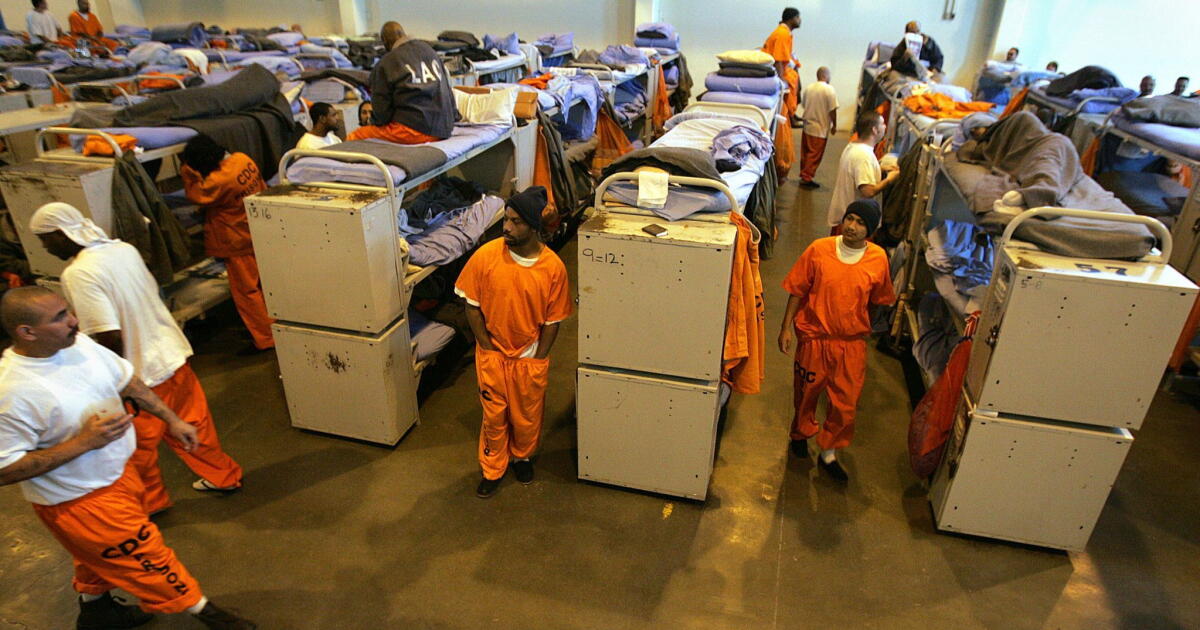
For an issue that received so much publicity at its peak — images of prisoners in triple bunk beds and overflowing into multipurpose rooms — the end of California’s prison crisis came quietly last week, when the state brought home the last of its inmates held in a private lockup northwest of Tucson.
Making good on a pledge by Gov. Gavin Newsom to finish the process begun in 2012, state prison officials have wrapped up the contracts with all out-of-state prisons. California’s prison overcrowding problems are now a thing of the past.
“At one point, at the height of our overcrowding, we had nearly 10,400 inmates out of state,” said Ralph Diaz, secretary of the California Department of Corrections and Rehabilitation. “To me, that meant 10,400 inmates away from their families, away from California. It was just a place we didn’t want to be.”
The use of private prisons — six facilities in states as far away as Mississippi — began in 2006. Inmates were shuttled away at various intervals over the 13 years that followed, a cost that was unavoidable to help resolve a problem that was years in the making.
Prison spending in the state’s new fiscal year will total some $15.7 billion — a $2.6-billion increase in the last four years and only slightly lower, by percentage, than what the budget earmarks for colleges and universities.
How the inmate population came down, though, is a story of criminal justice programs that sought to limit prison time to those convicted of the most serious and violent felonies. In the year before a major realignment of criminal justice services to California’s counties, 58% of new prison sentences were for property or drug crimes.
But the changes that shifted many of those crimes away from prison — keeping more offenders in local jails, reducing penalties for property crimes and a sweeping expansion of parole — have not come without controversy. Critics have said too many lower-level offenders have been responsible for new crimes. And a vocal coalition of victim advocates drafted a plan for voters to change those parole rules through a measure that has qualified for the November 2020 ballot.
State prison officials said last week the total population across 34 facilities now stands at just under 126,000 inmates — below the maximum number allowed by the courts. But the room for growth is not sizable enough to return to the era of long prison sentences, a shift that would require the state to do something almost unheard of in recent years: build more prisons.
Nor will it be as cheap to house those inmates in California. Corrections officials said it cost an average of $31,106 per inmate sent out of state last year — but those in state cost an average of $82,910 a year.
Still, the end of the out-of-state transfers marks an important moment. Diaz, who was appointed by the governor in March to run the prison system, said it sends an important message about accountability.
“It feels a lot better when I’m able to pick up the phone and send someone directly within a day to a prison under my care,” he said.
A man from London was determined to find his sister, following the death of their mother
Michael was searching for his sister on Long Lost Family(Image: ITV)
A brother and sister have finally been reunited after they both applied to appear on the ITV show.
The latest episode of Long Lost Family, which aired on Thursday (September 10), followed Michael, 56, who was trying to find his older sister, whom he had never met. The retail worker from South East London was determined to fulfill his mother’s dying wish to track down his sister, who had been given up for adoption as a baby.
Mary had been in a Catholic mother and baby home when she took care of her daughter, Angela, for three months before she was placed for adoption. But Michael explained that his mother didn’t think she had a choice.
Their mother, Mary, died of cancer eight years ago at the age of 74, and she had asked Michael to find his sister, Angela, for her. “She said, could you please try and find Angela for me please?” Michael shared. Ever since then, he has been desperate to find her.
Two years ago, in an attempt to find his sister, Michael took a DNA test and got a match with a woman named Gemma. The DNA report suggested that she was his half-sister. He assumed that Gemma was Angela’s new adoptive name and messaged her, however, he never received a reply.
“It’s made me happy, but in another way, it’s made me sad because obviously she’s been looking. It makes me think, why is she not on here, she’s given up. I’m so close now,” he said.
Michael went on: “I’m so close. And it’s like just a brick wall is just there. But I want to knock this brick wall down, but it’s very difficult.” In a twist, the Long Lost Family team discovered that Gemma, who had been named Angela at birth, had also contacted the show in the past to find her biological family.
Gemma was told about her mother’s death off-screen before host Nicky Campbell informed her that she had a brother, and passed on an emotional message. “Your brother, Michael, wanted to tell you that she didn’t want to give you up for adoption. She thought about you every day. She always, always loved you, and she wanted to tell you that. She wanted to see you and tell you that”, Nicky told Gemma.
Later in the episode, Davina McCall informed Michael of the wonderful news that Gemma had been found. This left him feeling incredibly emotional to hear that his sister wanted to have contact with him.
Davina explained: “She has been looking for 30 years. She was really sad to hear that your mum had died, but she was so grateful that someone was looking for her. She applied for Long Lost Family, so it’s incredible.”
Michael couldn’t wait to meet her but wistfully said, “I just wish my mum was here. 30 years? Oh god, if only I had knew.” Gemma traveled from Manchester to London to meet her brother, and when they came face-to-face, they could not stop crying. “This has been the best day of my life. It’s like a dream come true, I finally met my sister,” Michael added.
THE Office star Lucy Davis has tackled a terrifying zip-wire challenge amid her terminal cancer fight.
The 53-year-old announced last month that she’s been diagnosed with incurable stage four breast cancer.
The Office star Lucy Davis has bravely taken on a gruelling hike and terrifying zip wireCredit: reallucydavis/ InstagramShe took to Instagram to share her zip line challengeCredit: reallucydavis/ Instagram
She admitted “I don’t know how long I have left” as she revealed the tragic news with her followers in a video on social media.
However, Lucy said she was determined to have as much fun as she can during the time she has left and she’s doing exactly that.
Sign up for the Showbiz newsletter
Thank you!
The daredevil shared her pride on Wednesday after completing a gruelling hike followed by a scary zip line through a California canyon.
She took to Instagram to share pictures of herself on the hike as well as video of the moment she bravely took on the zip line.
Lucy took the zip line in her strideCredit: reallucydavis/ InstagramShe hiked across the California canyonCredit: reallucydavis/ Instagram
Lucy penned: “I loved this #zipline and I was a bit proud of myself for doing it because they said to be prepared for a 25 minute walk, so I took my pain meds an hour before in preparation.
“In previous zip lines, I’ve always been driven up to the first line, and the walking is in between the lines.
“But no. This was a legit hike up to the first zip. It took me one hour and 15 minutes.
“I was so grateful for the support of the guides and my friend @jharris1231 who helped me up, and the other people on the hike that never judged me or made me feel stupid. Thank you.”
Her fans flocked to the comments section as one expressed: “Still living to the fullest and experiencing life. Good on you!”
Another person commented: “Oh wow, you’re fabulous Lucy. Still chokes me up though.”
Somebody else gushed: “You are such an inspiration. Also, whenever I see you I remember Aunt Hilda, she was so comforting as a character.
“You really played her so well, you’re truly amazing. So talented and inspiring.”
She revealed last month that she’s got incurable cancerCredit: instagram/reallucydavisShe’s best known for her role in The OfficeCredit: BBC
Yet another added: “My gosh Lucy, so much courage! You are such an inspiration.”
Lucy took to Instagram last month to share her heartbreaking news.
She wrote: “Hi friends:) I wanted to share something with you all that I’ve kept to myself for a while but for various reasons would like to share now.
“A year and a half ago I was diagnosed with Stage 4 Breast Cancer, which has metastasized to my bones. Specifically to my spine, right hip, and my ribs. The cancer is incurable, and too late for chemo.
“The initial lump that I felt, wasn’t a ‘lump’ as such; rather a kind of hard spot. Really tiny.
“I almost didn’t bother getting it checked. So I guess I’m saying don’t ignore anything – get everything checked out.”
Lucy told her fans that she’s at peace with “whatever comes next,” as she shared the clip of her ringing the cancer treatment bell.
While she rang the bell, Lucy confessed she has been told by doctors it’s “too late” for her to receive Chemotherapy.