local official

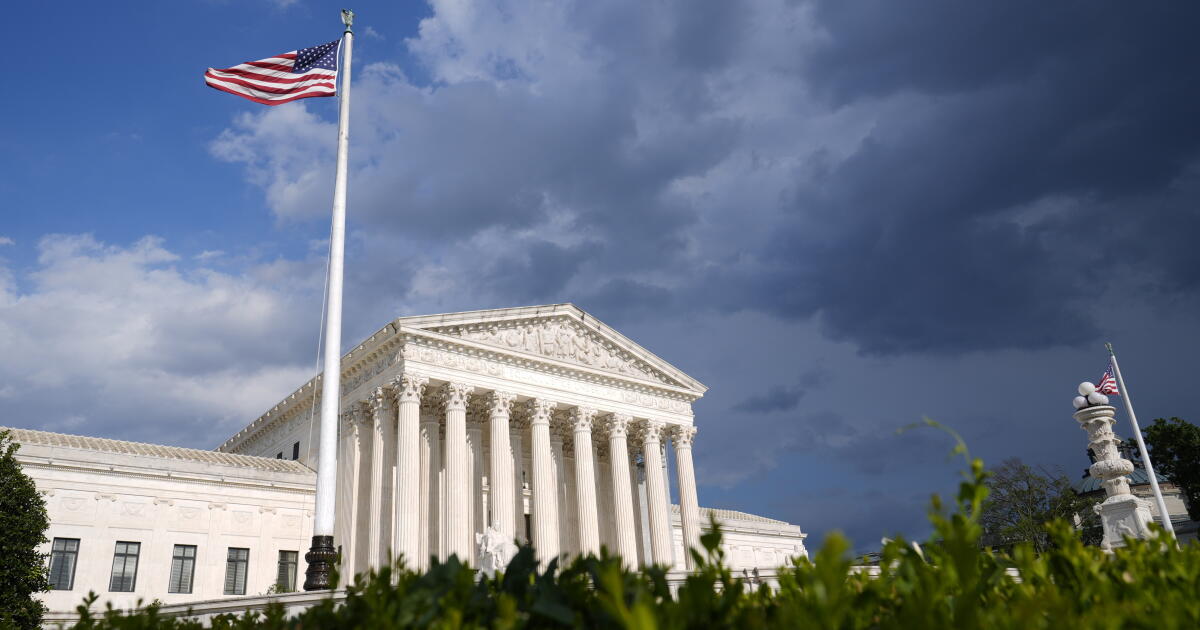
Supreme Court considers whether to bar victims from suing federal agents

The Constitution protects the rights of Americans but normally does not allow them to sue federal agents for violating those rights.

This rights vs. remedies dispute has divided the Supreme Court for nearly 50 years.

It did so again Monday when the justices heard arguments on whether to throw out a lawsuit brought by a federal prison inmate in Hawaii who suffered a broken tailbone in a gang fight.

Kekai Watanabe said he told prison nurse Francis Nielsen he was in intense pain. He was given only an over-the-counter pain medication. Seven months later, an X-ray finally revealed the damage from the fracture and the source of his continuing agony.

Acting on his own, Watanabe sued Nielsen for cruel and unusual punishment in violation of the 8th Amendment.

A federal judge dismissed his suit, citing the Supreme Court’s decades of skepticism over such lawsuits. However, the 9th Circuit Court of Appeals revived his claim and pointed to a 1980 ruling that allowed a similar suit brought by a mother whose son died of an asthma attack in a federal prison.

It was the last time the high court had upheld a lawsuit for money damages against a federal agent for violating a constitutional right.

But the Supreme Court agreed to hear an appeal in Nielsen vs. Watanabe. And during Monday’s arguments, the justices debated whether to further narrow such lawsuits or to reject them entirely.

The court’s conservatives say only Congress can authorize lawsuits for money damages against federal agents and employees. And they noted that in the Federal Tort Claims Act, Congress authorized damage suits against the United States for such claims.

“The power to create damages remedies belongs to Congress, not federal courts,” said Lucas Walker, an attorney for the prison nurse. “It’s time to end the Bivens experiment.”

He was referring to a 1971 decision in which the Supreme Court for the first time authorized such a constitutional claim for money damages against federal agent. In that case, known as Bivens, the suit was against several FBI agents for an unreasonable search during a drug raid in violation of the 4th Amendment.

Walker argued the court should overturn the Bivens case as well as the later ruling allowing a suit involving gross medical negligence.

But Joshua Wesneski, an attorney for Watanabe, said the prospect of being sued for wrongdoing “has a powerful deterrent effect.”

This issue has taken on new significance because of the aggressive and sometimes violent actions of federal immigration agents. They may be charged with a crime but they are not subject to being sued for damages by victims or their families.

After the Civil War, Congress passed an enforcement law that authorized suits against state and local officials acting under color of law who violated constitutional rights. But there is no comparably broad law for federal officers and agents.

That’s why a Los Angeles police officer who uses excessive force can be sued in a federal court, but the same is not true of a federal immigration agent.

Democrats in the Senate may try to change that in the year ahead.

Sens. Alex Padilla (D-Calif.) and Richard Blumenthal (D-Conn.) have proposed an “Accountability for Federal Law Enforcement Act” to allow victims to sue for “damages for constitutional and civil rights violations committed by federal law enforcement agents.”

They said Congress needs to extend the same legal accountability to federal agents that has long applied to police and other state and local officials.

“Recent incidents — from violent ICE and CBP raids to abuses by federal task forces — have underscored this gap in accountability,” Padilla said. “These events have eroded public trust and shown how federal officers can act with impunity even when their conduct clearly violates constitutional protections.”
Source link

Scott Colom and Black Mississippians on cusp of history as vote count continues

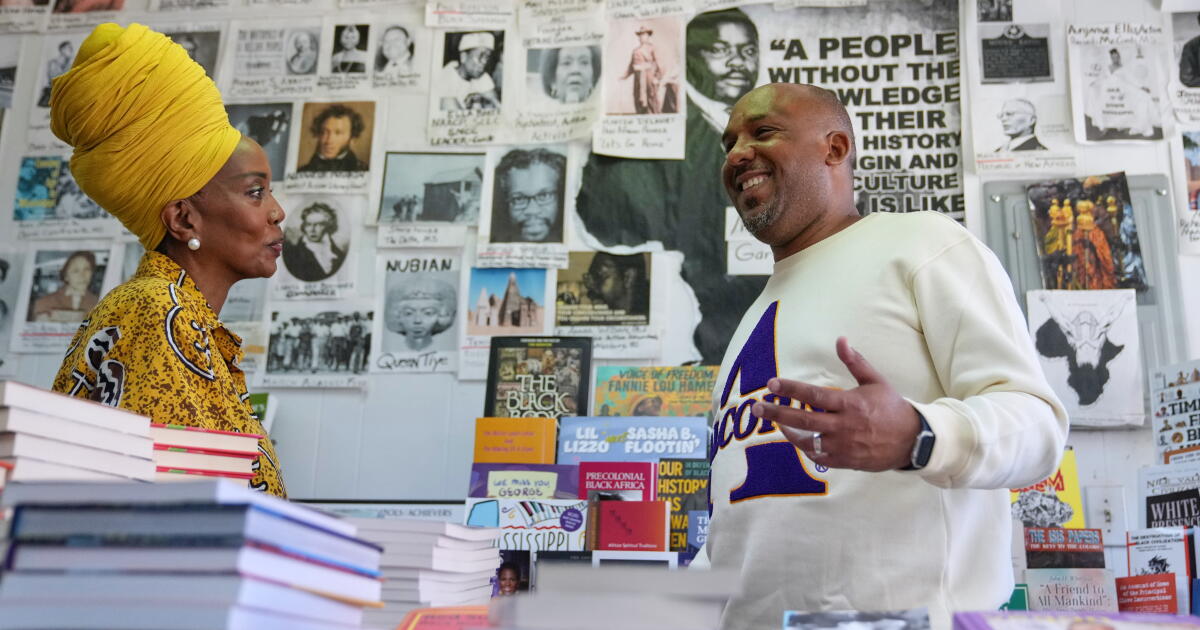
Democrat Scott Colom hasn’t won Mississippi’s U.S. Senate race, but the local prosecutor was welcomed as a historic figure Friday as he strolled through the Farish Street business district where civil rights leaders once organized.

“It’s so wonderful! It’s so wonderful to have Scott Colom as our representative,” said Maati Jone Primm, who owns Marshall’s Music and Book Store in Jackson.

The state is still tallying ballots that could make Colom the first Black senator from this Deep South state since Reconstruction. The possibility of Colom defeating Republican Sen. Cindy Hyde-Smith puts many Black voters somewhere between cautious optimism and outright celebration in a state where nearly 40% of the population is Black but the top representation for generations has been white.

“I’m so glad we are at the point where we are,” said Sorie Tarawally, a 76-year-old attorney who has long known Colom’s father. He called the 43-year-old candidate “the man, our messiah, our savior.”

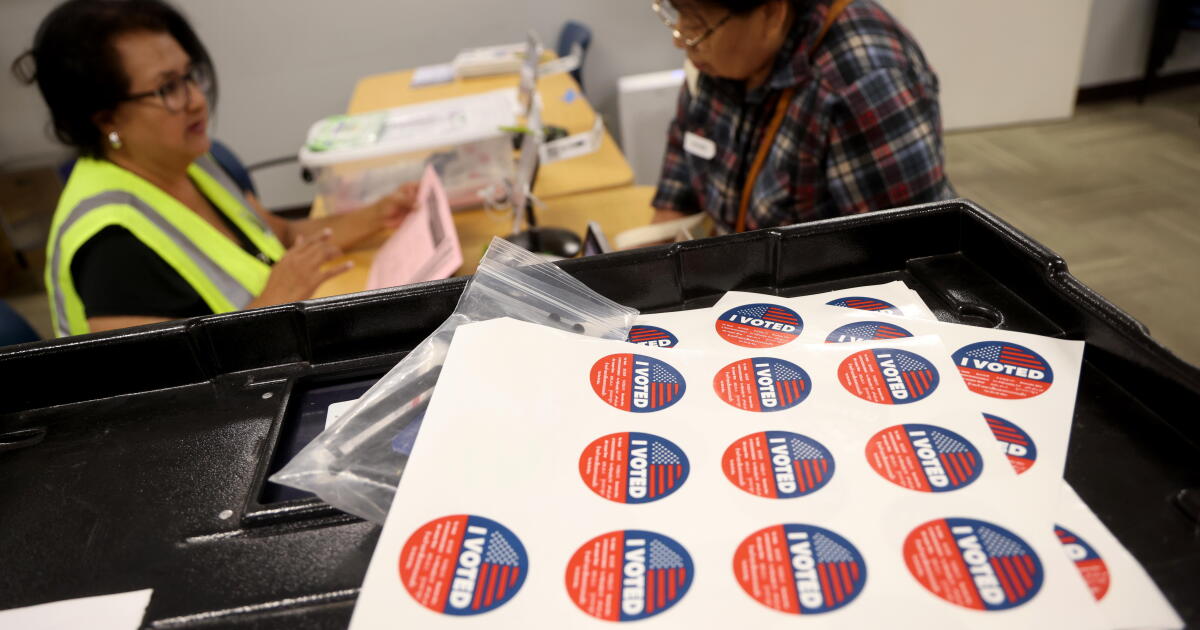
The contest remains too early for the Associated Press to call, and Colom’s historic bid will hinge on a tedious process playing out in elections offices across Mississippi’s 82 counties. Local officials are receiving and examining absentee and provisional ballots, called affidavit ballots, before deadlines next week. Volunteers and lawyers representing each campaign look on in anticipation of potential litigation.

“We’re going to make sure everything is followed according to the law, and I have confidence in those local officials,” Colom said. “They’re doing their jobs. Got to be patient with them.”

Hyde-Smith has not appeared publicly since election night, when she essentially declared victory despite her razor-thin lead at the time with ballots still uncounted. Ballots tallied since have leaned in Colom’s favor.

Colom chided Hyde-Smith for not explaining her strategy going forward.

“She’s still our senator. Where is she? Why is she not doing any interviews?” he asked. “Why can’t she explain what her pathway to success is?”

In a social media post on Friday, Hyde-Smith wrote, “We are not backing down. This election is not over. Our team is working across Mississippi to monitor the remaining ballots and protect the integrity of the process. We will see this through to the very end!”

Uncertain number of outstanding ballots

The pool of outstanding ballots includes absentee ballots, which can be counted in Mississippi as long as they are received by Tuesday, five business days after the election. The rest are affidavit ballots, which are cast at the polls when there’s a glitch: Perhaps the person’s name was not on the rolls or the person did not have proper identification, or a poll worker determined the person’s identification did not precisely match the name on the list.

Citizens who had identification issues have until Tuesday to address those matters in person at their local elections office. For people who were not on a precinct’s rolls, local officials can verify a person’s status using previous records and information on the affidavit that person filed when filling out a ballot. That person typically has no responsibility to come to a local elections office; ballot status can be found on the Mississippi secretary of state’s office website.

Counties have until Friday to certify complete results to the secretary of state.

Mississippi law has no provision for a statewide recount. Campaigns could seek court orders, usually county by county, seeking to examine ballots.

A potentially seismic effect in state

Democrats already have won control of the Senate, so the result in Mississippi would not change the balance of power in Washington.

But it would mark a seismic shift in the state, where white conservatives have dominated the Statehouse and congressional delegation for nearly 150 years. Through Jim Crow segregation and the civil rights era, those leaders were nearly all Democrats. In the decades since, as the Democratic Party rid itself of white nationalists, Republicans have taken over the leadership. For Black Mississippians, the result was the same: a lack of proportional representation at the top levels of state government and in Washington.

Colom was initially viewed as a long shot, and it wasn’t until late October that Senate Democrats’ top campaign group started spending on advertising to support him. But the midterms revealed a broad backlash against redistricting efforts in the South that were aimed at boosting Republicans and, by extension, reducing Black representation.

Primm’s bookstore, where Colom visited Friday, opened in the 1930s and is recognized as the oldest Black-owned bookstore in the U.S.

She said the Farish Street neighborhood still represents Black Mississippians’ “first migration, from the plantation to the city.” Having Colom there as a potential senator “makes us so proud, and it gives us someone to aspire to. Our youth need to see the possibilities for their lives, and we do when we see our next senator from Mississippi.”

As he campaigned, Colom emphasized that he can represent all Mississippians, and he said President Trump’s policies — the war with Iran and tariffs, especially — cut across all demographic lines. He celebrated the extended ballot counting process as a benefit to the state’s 2.95 million residents.

“I’m so glad the national press is getting to see the beauty of our state,” he said.

But Colom and his Black supporters also have never ignored the significance of his candidacy.

“We are motivated by the gross inequalities we have seen in society and how only one side seems to benefit,” said Tarawally, who was born in Sierra Leone and arrived in the Deep South to attend law school at the University of Mississippi. “So, we want a person who speaks to our benefit.”

Colom ended his campaign with an ad set at the Jackson home of Medgar Evers, the civil rights leader who was gunned down in 1963 in his own driveway, dying in front of his wife and children.

“It’s a powerful reminder of the sacrifice to gain the ballot, and nobody sacrificed more than Medgar Evers and his family,” Colom said Friday.

“What was important to me about that ad is we didn’t ask people to vote for me. We just talked about the sacrifice, talked about the story,” he continued. “We just wanted that to be the closing ad because I wanted that to be the last message that the people of Mississippi heard.”

Barrow and Bates write for the Associated Press.

Source link

Trump’s DOJ subpoenaed L.A. election officials: What happens next?

The war over California’s elections intensified late this week after three Los Angeles County officials were slapped with criminal grand jury subpoenas related to their handling of thousands of state ballots, which the Justice Department has demanded be set aside amid claims they could be cast by noncitizens.

Labor unions and voting rights groups hit back, sending a fresh wave of action into the tempest of federal lawsuits already swirling around the ballot clawback order. The storm surged back through the 9th Circuit Court of Appeals on Friday morning and appeared on a path to the U.S. Supreme Court, which would decide whether to hear the case.

Voting by noncitizens is exceedingly rare, law enforcement experts and elections officials say. Yet the Trump administration has doggedly pursued claims to the contrary. Under the subpoenas, L.A. County officials are being ordered to hand over troves of internal documents — emails, text messages and other material — related to their handling of the administration’s demand to sequester 20,000 contested ballots.

The subpoenas also order them to produce any evidence they may have collected “which tends to indicate an alien has voted.”

Prosecutors charge that widespread noncitizen voting disenfranchises Americans by diluting their lawful votes.

Meanwhile, Los Angeles County Registrar of Voters Dean Logan and hundreds of workers who report to him are heading into Tuesday’s election under the cloud of criminal investigation, with department bureaucrats ordered to appear in federal court in Santa Ana on Wednesday morning.

“Threats and intimidation have no place in elections,” Logan said.

Who has been subpoenaed and what do the orders seek?

So far, at least three workers from the Los Angeles County Registrar-Recorder’s Office have been summoned as part of the probe, though the Associated Press reported that prosecutors in all four of California’s federal districts were sending out similar orders.

The Justice Department already subpoenaed thousands of voter records from state and local officials related to claims that noncitizens were voting en masse in California. Now, prosecutors are seeking virtually any written communication from within local election offices about how they responded to those demands to identify and remove such voters, including lists of employees who were told of the directive.

Courts have questioned the reliability of the Justice Department‘s list of potential noncitize voters.

Additionally, the workers must hand over any communications — including self-deleting texts from apps such as Signal — related to the office’s efforts to block noncitizen voting.

The subpoena also demands any evidence the city might have collected indicating even a single noncitizen has voted in an election, as well as details about anyone who might have “aided and/or abetted” them.

“When California has actual knowledge of noncitizens in their voter rolls, if they help them vote, they are now aiding and abetting a criminal offense,” California Central District First Assistant U.S. Atty. Bill Essayli told Fox News this month.

He doubled down with a post on social media this week, saying his office “will hold accountable anyone who unlawfully participates in our elections and those who aid them.”

Is the Los Angeles County registrar of voters under criminal investigation?

Maybe.

Logan has not been subpoenaed, but the subject of a criminal investigation typically is not subpoenaed to testify before a grand jury because the Constitution’s 5th Amendment protects people from having to testify against themselves.

The Justice Department declined to comment on whether or not Logan might be prosecuted.

“While DOJ maintains that a civil remedy is still available, all agree that noncitizen voting is properly addressed through criminal law,” a spokesperson said.

Instead, the threat of prosecution hangs over virtually any worker who processes ballots the Justice Department might seek to contest.

“They will all go to jail for a long period of time!!!” President Trump posted on social media as the fight ramped up this month.

A lawsuit filed Thursday on behalf of workers by the Service Employees International Union and its partners called the subpoenas part of “a coordinated campaign to intimidate, threaten, and coerce state and local officials and employees who are engaged in the hard and important work of administering the ongoing midterm 2026 election.”

The union’s suit also alleged that thousands of California voters could be disenfranchised if courts don’t block the federal government’s efforts “to coerce them into halting the processing and counting of ballots.”

“Threatening these election workers with criminal prosecution for faithfully executing their responsibilities in accordance with federal and state law is plainly illegal and, unless enjoined, risks disenfranchising tens of thousands of lawfully registered voters,” the suit said.

Elected officials also rushed to condemn the move.

“The Trump Administration’s escalating attacks on our hardworking elections officials in California are unacceptable,” California Atty. Gen. Rob Bonta wrote on social media.

Can the subpoenas be blocked?

That depends.

An expected order from the Supreme Court could neuter much of the Justice Department’s demand, as the bulk of what officials have been asked to hand over relates to the 20,000 contested ballots whose fate will be decided in Washington, D.C.

The union suit also asks the court to shield election officials from prosecution for counting ballots, which effectively could block the underlying criminal investigation.

Will my vote be counted?

State and local officials have vowed to run the election as usual. The courts have so far supported their effort, with a panel of 9th Circuit judges writing Friday that they “decline the United States’ invitation to contravene the Elections Clause by undermining the Constitution’s plain text.”

The judges — two Trump appointees and one nominated to the bench by President Biden — ruled 2-1 in favor of California.

“If the United States believes different procedures are necessary for vote-by-mail ballots, we believe it should take that suggestion to Congress, not the courts,” the panel held.

That decision, handed down just before noon Friday, all but ensures the issue will reach the Supreme Court and be decided there before polls close Tuesday.

But with hundreds of thousands of ballots already returned and hundreds of thousands more moving through the mail over the weekend, the legal fight still could cause delays. And a ruling for the Justice Department from the Supreme Court could snarl the process further.

“Major concerns remain that granting the United States’ requested relief might result in immense hardship to Defendants and harm the public interest by risking the disenfranchisement of eligible voters and putting the entire tabulation process in jeopardy,” the 9th Circuit panel wrote.

Source link