lived

Deported to Central African Republic, a transgender woman who lived openly in Miami is hiding again

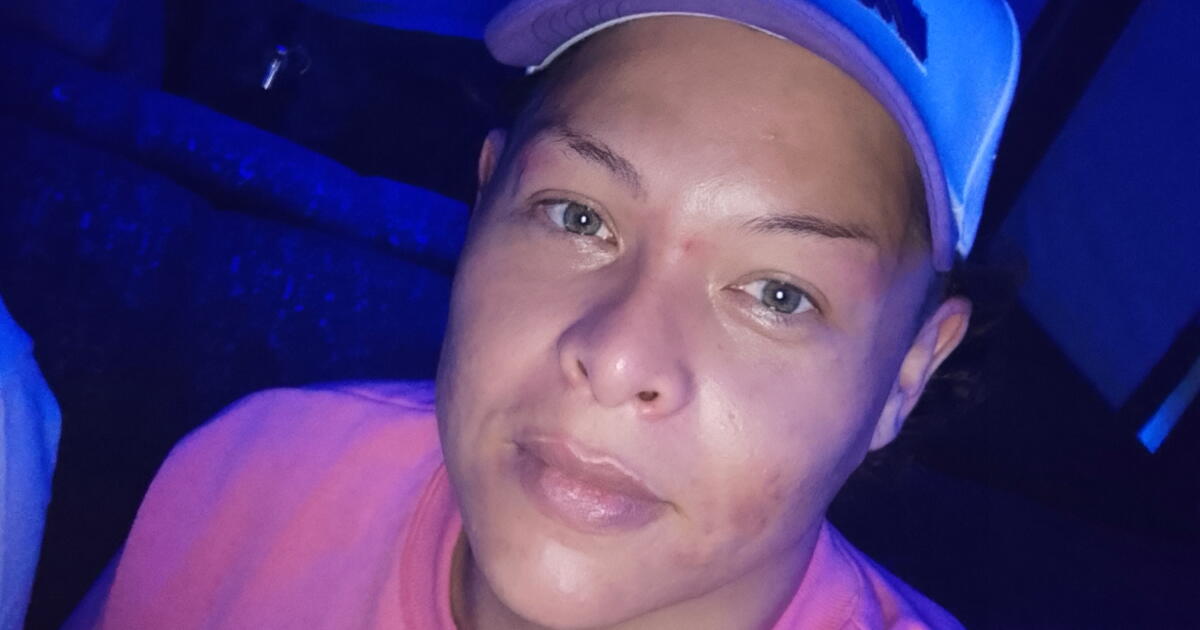
In Miami, Daniela Fuentes styled hair for clients and performed in drag at a nightclub called Azúcar. She wore her blond wig in public and dressed as the woman she had known herself to be since adolescence in Cuba.

Now, more than 6,000 miles away in the Central African Republic, she wears men’s clothes, lowers her voice and tries not to draw attention to the breasts she developed after beginning hormone treatment as a teenager. As part of U.S. efforts to deport people to countries other than their own, authorities sent her Aug. 29 to a place where she has no ties and where advocacy groups have reported arbitrary detention, torture, and other rights violations of sexual and gender minorities.

“Everything is difficult here because I have to hide who I am,” said Fuentes, a 32-year-old transgender woman living on a compound she rarely leaves, sharing a room with four Cuban men also deported from the U.S. “I don’t know this place, the people or the language, and I have no idea what will happen to me.”

The Central African Republic — one of the world’s poorest countries, a place with a history of conflict that the U.S. State Department advises American travelers to avoid — is one of at least 12 African nations that signed agreements to accept “third-country” deportations, a policy the U.S. Supreme Court last month allowed to continue, at least temporarily.

In the Central African Republic — where transgender people have little to no legal protections and are marginalized in much of society — Fuentes dons her wig only in the privacy of her bathroom. She described disguising herself as protection, first in U.S. detention and now in a country she first heard of when she was already headed there on a deportation flight.

“My whole life, my whole identity, was taken away from me,” Fuentes said.

Public records say a judge ordered Fuentes to leave the U.S. but offer no other information. Immigration and Customs Enforcement officials did not reply to emailed questions.

Tens of thousands of people have been deported to “third countries”

Fuentes’ compound in the capital, Bangui, is an apartment complex where the government houses male deportees.

Fuentes said she can leave but that officials have advised her and others to avoid it — they have no identification, which could lead to issues with the police. It also means they can’t work, she said, and she’s waiting on travel documents that would allow her to leave the country. The International Organization for Migration, an agency associated with the United Nations, has provided food, and the migrants say they’ve crowdsourced for donations to buy groceries.

The U.S. — via agreements often not made public — has deported about 25,000 people to more than two dozen countries that aren’t their own, the vast majority to Mexico, according to a tally by Third Country Deportation Watch, a partnership of Refugees International and Human Rights First. The U.S. has not released numbers or details.

From January 2025 to August 2026, more than 500 were sent to countries in Africa, according to a Human Rights Watch report published Thursday — including at least 12 people who identify as lesbian, gay, bisexual or transgender and were deported to places that criminalize same-sex relations or public same-sex romantic conduct. Some advocates say the number is likely higher.

“These are not bureaucratic errors or isolated incidents,” said Bridget Crawford, of the group Immigration Equality. “They are the predictable result of policies that purposefully abandon our legal and moral obligation to protect LGBTQ+ immigrants fleeing persecution.”

The U.S. government says the policy is lawful and that receiving governments provide assurances deportees won’t be persecuted or tortured.

Daniela Fuentes says ICE detained her with men before deportation

Fuentes grew up in La Lisa, on Havana’s outskirts, and said she understood from childhood that she was different. She began living as a woman in adolescence and started taking hormones at 18.

She ran a salon from her home, coloring and cutting hair. She said she was harassed because of her gender identity and attacked at least twice, leaving scars on her arm and head. Police also questioned her about operating a private business, she said — though housefront businesses are common in the area.

In 2023, Fuentes sold her home and left amid a deepening economic crisis and a crackdown on dissent — even as Cuba, one of Latin America’s most progressive countries for LGBTQ+ rights, adopted new inclusion laws. Making her way to the U.S., she said, she presented as a man traveling through Central America; she believed it was safer.

After seven months in Mexico, she said, she entered the U.S. through Texas via CBP One, a President Joe Biden-era online appointment system that allowed migrants to live in the country for two years on humanitarian grounds. Then she went to Miami.

There, she began living openly as a woman again. She found work styling hair and performed at Azúcar. Though she lacked permanent legal status, Fuentes said Miami offered something she’d rarely experienced: the freedom to move through daily life as herself.

That ended when officers encountered her outside a motel. Fuentes said they learned she had missed an immigration court hearing in Texas. She said she asked that the case be moved to Florida but received no response.

Fuentes said she was taken into custody and later placed in immigration detention with men. Officials confiscated her wig and gave her a male detainee’s uniform, she said.

Such treatment is in line with a January 2025 executive order directing officials to exclude transgender women from women’s prisons and detention centers.

“When I learned that they were going to put me with men, I almost fainted,” Fuentes said.

Deportees said they boarded a flight without knowing the destination

Fuentes was held at two detention facilities in Florida, then transferred to Texas. When armed officers arrived there, she said, she suspected she was facing deportation, but they didn’t reveal she was being sent to Africa until about five hours into the flight.

Other deportees on the flight told AP they also weren’t told the destination until they were on the plane. Dozens have been sent to the Central African Republic, including an Iranian woman facing persecution in her home country and an Afghan whose brothers worked with the U.S. military.

Fuentes said she does not understand why she was sent to Africa rather than Cuba. She told AP she has no lawyer.

The U.S. does repatriate Cuban citizens, as part of agreements to resume deportation flights in 2023, despite tensions in relations between the countries. Charter flights have arrived in Havana regularly.

Yasmany Moreno, another Cuban deportee in Bangui, said that upon arriving, the group had no visas or documents establishing their legal status in the country. Officials spoke of providing assistance for 90 days, he said, but the deportees didn’t know what would happen afterward or where they would live.

Several told AP their longer-term status remained unclear and that U.S. authorities had taken their identity documents.

A policy officer at the Central African Republic’s Foreign Ministry said the deportees are in “good hands” and are being monitored by the International Organization for Migration. He spoke on condition of anonymity because he was not authorized to discuss the matter publicly.

The U.S. this year committed to $85 million in funding to IOM for Central African Republic operations including “assistance to migrants” and “community stabilization.”

IOM says migrants can seek asylum in the country, request assistance to return home or get help traveling to another place they’re authorized to enter. It referred questions about the deportees’ status and individual cases such as Fuentes’ to Central African Republic officials. A government spokesperson didn’t reply to phone calls and text messages seeking comment.

Human Rights Watch’s report says some people deported to third countries face detention, abuse and the prospect of persecution. Eswatini has held deportees in a maximum-security prison without charges. Equatorial Guinea has held them against their will at a hotel owned by the president’s family.

“Several of these African governments are not only complicit in U.S. abuses but have violated the human rights of these deported people themselves,” Michael Garcia Bochenek, of Human Rights Watch, said in a statement.

Fuentes and other deportees say they can’t work, with most days spent at the compound

Fuentes said the Cuban men in her room know she is a woman and look out for her. She rarely feels safe enough to leave. Once, at a supermarket, workers pointed at her breasts and initially refused to sell her fruit, she said. Other people in Bangui have mocked her and pointed at her.

“My personal appearance is awful,” she said. “I look like a different human being.”

Moreno described restrictions on the group’s movements, saying officers accompanied them to the market and on occasional outings but restricted them from going out at night.

Fuentes and Moreno said they have no passports or other identification and cannot work. Most days, Fuentes remains at the compound, looking at her phone and waiting for travel documents.

She said Cuba has agreed to accept her return — a Cuban embassy document shows she is authorized.

But Fuentes said she hopes to seek asylum elsewhere, possibly Canada.

“The harassment and economic hardship that caused me to flee still remain,” she said.

Banchereau writes for the Associated Press. Jean Fernand Koena in Bangui, Central African Republic; Tim Sullivan in Minneapolis; and Cristiana Mesquita in Havana contributed to this report.

Source link

‘We’ve lived in world’s prettiest village for years but now leaving over worrying change’

Two residents of the village of Bibury, Gloucestershire, are taking matters into their own hands after becoming fed up with a change in tourists’ behaviour after the Covid-19 pandemic

A couple who live in one of the UK’s most beautiful villages, located in the Cotswolds, have announced their plans to leave after a major change in the area following the Covid-19 pandemic.

Brian and Jill Skarda have decided to leave the village of Bibury, Gloucestershire, a place named “the most beautiful village in England” by William Morris, due to the worsening behaviour of visitors.

Brian and Jill originally moved to Bibury, which was also branded the “world’s most beautiful village” by Forbes last year, that lies along the River Coln, from Barnsley. During their time in the area, they joined the parish council and became part of everyday life.

Writing in the Village Life magazine in a column known as Tales from the Riverbank, Mr Skarda admitted “we have had enough invasive tourism”.

Mr Skarda, who highlighted Arlington Row as a key point of issue, explained that he felt tourists are now getting too up close and personal with locals, so much so they had been finding it harder to go about their own lives.

He explained: “We have decided that we have had enough invasive tourism in Arlington Row…We have been here for over 14 years and noticed that since Covid, visitor behaviours have changed.

“They have become more inconsiderate and the sheer numbers of tourists …meant that, on occasions, we have virtually been unable to get out of our front door.”

In the latter part of his column, the Independent reported that Mr Skarda said he hoped that Bibury would one day “resolve its tourism issues” after complaining the area was being “ruined by the very people who come to see it”.

When it comes to Bibury, Mr Skarda isn’t the only person to have taken issue with the seasonal influx of tourists.

Speaking to the Independent, parish council chairman Craig Chapman said overtourism was having an impact on the local environment too.

He added: “Over the summer with the hot weather, people would not just sit on the river bank but would go in the water and even bring chairs in to sit on to cool down.

“The main concern is the wildlife, but also the whole area with people using it like it is a recreational area. When they go into the water they can upset the habitat.”

So great are the concerns about the impact on Bibury’s environment that last month, they announced they were going to put up fences around the river to stop people paddling in it.

Mr Skarda’s and Mr Chapman’s remarks about the village comes as debate grows about the impact of overtourism in places like Bibury and Castle Combe.

Every year, thousands of people from all over the world and the UK flock to these aesthetically pleasing places, many of which they have seen in films, to admire them.

Whilst these visits can be good for the local economy, locals are often caught in the crossfire.

Source link

The new novel ‘Proof of Progress’ captures the serendipity of a life well lived

Maria Astorini, a retired character actress and a minor star, is 37 years late delivering her memoir. But the project, which she has tried her best to forget, has been pulled out from under the rug by her publisher. Forced to deliver a manuscript, Maria writes an autobiography clocking in at a shade over 200 pages.

The result is Elizabeth Castellano’s second novel “Proof of Progress,” a wry, poignant and very funny twirl through a life that swerves past triumph and failure, boredom and joy, public life and private sorrow. I recently spoke with her about Bloomingdale’s, Calvin Trillin, and how cellphones are the enemy of good fiction.

You’re reading Book Club

An exclusive look at what we’re reading, book club events and our latest author interviews.

✍️ Author Chat

”Proof of Progress” traces the life of your protagonist, Maria Astorini, from childhood to her mid-60s. It reminded me of something Bob Dylan wrote recently about growing older, which is that you finally get rid of the illusion that life is under your control.

For Maria, there is a lot of serendipity that feels like fate, of being in the right place at the right moment, or meeting the right person, which sends her off in a different direction. I like that in a novel. It was also helpful to be writing primarily about an era without phones, so that she’s able to meet a lot of people.

We’re seeing this a lot in contemporary narratives: writers setting their stories in pre-phone eras, so their characters can actually interact with each other.

She’s talking to people, she’s meeting people, so she’s able to be sent on different paths. Even meeting her husband probably wouldn’t have happened with the phone.

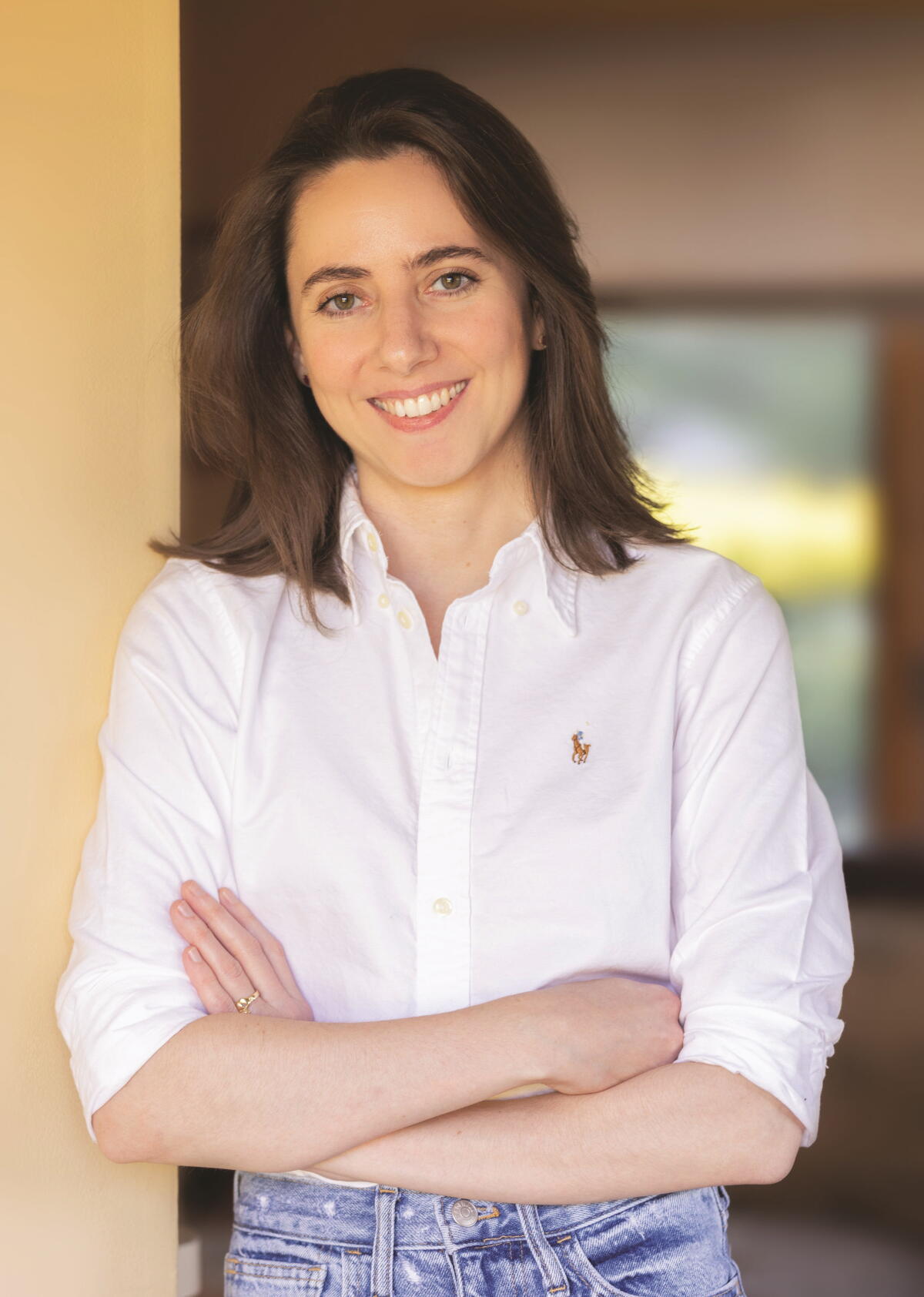
A smiling woman (the author) leans casually in a doorway.

“Proof of Progress” is Elizabeth Castellano’s second novel.

(Harper Collins / Carl Timpone)

You have written a very funny book, and funny books don’t get the respect they deserve.

Anytime you have humor in a book, you’re not taken quite as seriously. Even in Barnes & Noble, when you look for humor, it’s on the back wall or on the floor. And that’s where you find the David Sedaris books, which is crazy. My last book was about a beach town, so I got lumped in with the beach read group. I had people who were looking for a fun beach read and then they picked up my book, and it’s about zoning code violations. I’m happy that this book is being marketed as literary and humorous. I’m in better shape in that sense.

It’s really hard to write funny. Or is it?

The best way I can describe it is like a stand-up comedian having a notebook full of jokes and anecdotes and she has to put together an HBO special. Sometimes I just had one line of something funny. I had all these ideas and thoughts and different things from old books that I was writing. I tried to put all of it together and find a character that could tell this story, and the through line that I could create from all of this material. So I wrote it backwards and out of order.

Who do you think is funny? Who do you like to read?

J.D. Salinger, David Sedaris, Maria Semple. I love Calvin Trillin. I think he’s a great writer.

Your protagonist is very late on a contract and has to rush to get the book written, which gives the narrative propulsion and momentum.

I had a two-book deal, so while I was working on the publicity for my first book, I raced to finish this book. And when I was finished, I realized it didn’t work and had to throw out the whole manuscript. I saved maybe six or seven little anecdotes from that original book. So it took another year to write. That was the inspiration for “Proof of Progress.”

Your writing career is a bit like Maria’s acting career, in that you chanced upon it.

I was a theater major. I don’t think I took one English course. Then I graduated right into the Recession of 2008. There were no jobs. Eventually, I applied to be an apprentice buyer at Bloomingdale’s, even though I hate shopping. That was the last resort. Then I decided, maybe I’ll be a writer, because it felt like something that I could do. I wrote a lot of things that were rejected before I wrote my first book, “Save What’s Left” [2023]. And that’s probably why I wrote Maria the way I did. We zig, we zag, we endure.

This Q&A was edited for length and clarity.

📰 The Week(s) in Books

Kyle MacLachlan's face reflected in six different directions.

Kyle MacLachlan’s new memoir is a funny, candid and self-aware reflection on his 40-year career in Hollywood.

(Christopher Patey / For The Times)

We loved him as Special Agent Cooper in “Twin Peaks” and as Jeffrey Beaumont in “Blue Velvet,” but according to Kyle Maclachlan’s new memoir, “Fictional Selves,” there is another unknown character: “Other Kyle,” the actor’s ever-present shadow figure. “There’s definitely another entity, an observer, the ego, the harder self,” MacLachlan tells Rachel Brodksy.

After a nine-year absence from fiction, John Green has returned with “Hollywood, Ending,” a darkly humorous show business cautionary tale that Green couldn’t have written “without spending a lot of time on film sets,” he tells Emily St. Martin. “I hope the book is a love letter to movies. But I also wanted to be honest about how difficult it is to make a work of art that, in order to be commercially successful, has to be loved by millions of people.”

Katya Suvorova’s memoir, “Ungrateful Immigrant Daughter,” is a “heart-wrenching tale of immigration” that “pulls back the velvety red curtain to reveal one story behind the oversexualized stereotypical post-Soviet mail-order bride narrative so ingrained in post-Cold War U.S. culture,” writes Diana Ruzova.

Finally, Vroman’s and Book Soup, two of L.A.’s most beloved bookstores, have been sold by longtime owner Joel Sheldon to tech executive Robert Hoffman, reports Suhauna Hussain.

📖 Bookstore Faves

Outpost Books is a new bookstore in South Pasadena.

Outpost Books is a new bookstore in South Pasadena.

(Simran Malik)

Walking into Outpost Books is like stepping into a smart book lover’s cozy den. With its southwestern-themed design and a well-curated selection of new and used books, the indie book store in South Pasadena already feels like home to this community of rabid book lovers. I spoke with owner Nicole Novembrino about her new store.

Why a bookstore?

I was a sales rep for a publisher of art books, but I looked at my life, wondering what I could do for a living that would give me real meaning and purpose. I love books, and so I decided to open a bookstore. It’s not easy, and you can second-guess yourself a million times along the way, or get a normal job. But I’m so glad I did it. Everyone in the neighborhood is so happy!

Why did you choose to open in South Pasadena?

I live in El Sereno nearby, and South Pasadena is such a great community. When we first opened, people were coming in and thanking us for opening in the neighborhood. There aren’t any other bookstores in this particular South Pasadena neighborhood. I definitely didn’t want to take any business away from other stores.

Pasadena loves its bookstores.

This is a very bookish community. The donations I’m getting from people are really smart volumes. I think I’ve had just one Nora Roberts book! The landlords are great, as well. They came to our opening and told me the store is all they could have dreamed of for the space, which is so sweet.

The kids section is really fun, with the tent and the fake tree stumps.

We have a lot of kids books with a southwestern theme. I’ve been collecting them over the years from my trips to the desert. You might find a book called “Armadillo Rodeo” in there.

How did you land on the western theme?

My mom is from New Mexico, so every family vacation was a trip to the Southwest, and I loved stopping and collecting things at the trading posts along the way. I wanted to give the store that kind of feel. I chose the name Outpost for that reason. It is a lived-in place where you can just hang out and find cool things and read.

Outpost Books, 1010 ½ Fair Oaks Ave., South Pasadena, (626) 399-0595

Source link