Lisa Murkowski

Senate advances Democrats’ Iran war powers measure in 8th vote

May 20 (UPI) — In its eighth war powers resolution vote since the United States went to war with Iran, the U.S. Senate has advanced legislation seeking to curb President Donald Trump‘s ability to engage in conflict with Tehran.

Senate Democrats have repeatedly used War Power Resolution privileges to force votes on ending Trump’s use of military force in the Middle Eastern country without congressional approval and have vowed to continue to do so for as long as necessary.

In its eighth vote on the resolution Tuesday, Democrats were able to court enough Republican votes to advanced the measure in a 50-47 result, with three lawmakers not voting.

The Democratic victory is largely procedural, as it discharges the resolution from committee for floor consideration, limited debate and a final vote on whether to send it to the House for consideration.

The Democrats have slowly cobbled together a handful of Republican votes as the war and its effects on the economy drag on.

Republican Sen. Bill Cassidy of Louisiana cast the deciding vote to push the legislation over the threshold on Tuesday, days after thee 15-year-veteran lost the Republican primary to Rep. Julia Letlow, whom Trump endorsed in turning against Cassidy for voting to convict him during his second impeachment trial in 2021.

“While I support the administration’s efforts to dismantle Iran’s nuclear program, the White House and Pentagon have left Congress in the dark on Operation Epic Fury,” he said in a social media statement, referring to the Defense Department name for its military operation against Iran.

“In Louisiana, I’ve heard from people, including President Trump’s supporters, who are concerned about this war. Until the administration provides clarity, no congressional authorization or extension can be justified.”

Since the war began on Feb. 28 with the joint U.S.-Israeli attacks on Iran, Democrats have been accusing the Trump administration of waging an unlawful war, stating the Constitution mandates that only Congress can authorize such military force.

The president is required to end the use of U.S. forces after 60 days unless Congress authorizes the action or extends the deadline, which was May 1.

Trump argues the resolution effort is moot, stating the conflict is over, and pointing to the fragile cease-fire announced in April.

The cease-fire “gives you additional time,” he told reporters earlier this month, describing the Democrats behind the legislative effort as “not patriotic people.”

Sen. Tim Kaine, D-Va., the sponsor of Tuesday’s bill, said he was grateful that “enough of my colleagues stood up for the Constitution and listened to their constituents.”

“President Trump’s deeply unpopular war of choice in Iran has imposed a tremendous cost on the American people — including deaths and injuries of our service members and soaring gas prices,” he said in a statement.

The vote, he continued, sends “a strong message” to the Trump administration “that the American people aren’t interested in more war in the Middle East.”

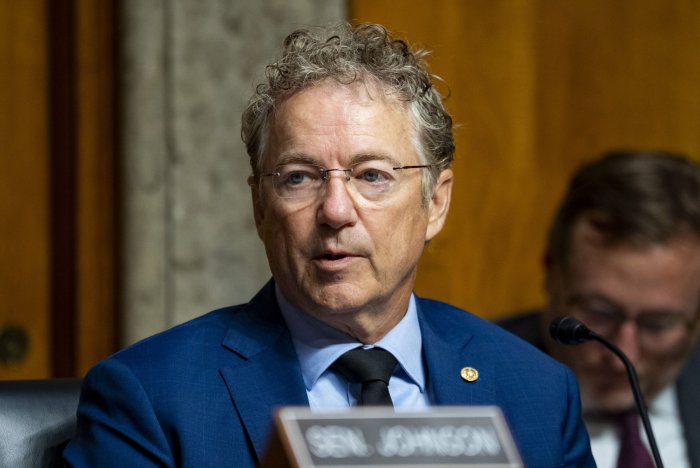
The other three Republicans to vote in favor of the resolution were Sens. Susan Collins of Maine, Lisa Murkowski of Alaska and Rand Paul of Kentucky.

Sen. John Fetterman of Pennsylvania has been the lone Democrat to consistently vote with the Republicans on this war powers measure.

Source link

Senate advances bill aimed at ending Iran war as Cassidy, after primary loss, flips to support it

The Senate advanced legislation Tuesday that seeks to force President Donald Trump to withdraw from the Iran war, as a growing number of Republicans defied the president’s wishes.

Since Trump ordered the attack on Iran at the end of February, Democrats have forced repeated votes on war powers resolutions that would require him to either gain congressional approval for the war or withdraw troops. Republicans had been able to muster the votes to reject those proposals, but Louisiana Sen. Bill Cassidy — fresh off a primary election loss in which Trump endorsed his opponent — switched sides to deliver a crucial vote to pass the legislation.

The 50-47 vote tally demonstrated the small but crucial number of Republicans voting to halt the war with Iran. The legislation will get a vote on final passage, but the timing was not immediately clear.

Republican Sens. Rand Paul of Kentucky, Susan Collins of Maine and Lisa Murkowski of Alaska had all previously voted for similar war powers resolutions and did so again Tuesday. Cassidy voted for the legislation for the first time.

After his primary election loss last week, Cassidy returned to Washington saying that he was proud of his work to uphold the Constitution and would carefully consider how he would vote on several priorities of the Trump administration.

Groves writes for the Associated Press.

Source link

With Sen. Cassidy’s primary defeat, Trump’s revenge campaign continues

President Trump succeeded in his effort to defeat Sen. Bill Cassidy in Louisiana’s Republican primary, a signal of the enduring strength of the president’s hold on his party despite an unpopular war and soaring gas prices.

Cassidy was one of seven Republican senators in 2021 who voted to convict Trump on the impeachment charge of inciting an insurrection on Jan. 6 that year. He placed last in a three-way race Saturday against U.S. Rep. Julia Letlow, who was endorsed by Trump, and state Treasurer John Fleming.

“His disloyalty to the man who got him elected is now a part of legend, and it’s nice to see that his political career is OVER!” Trump said of Cassidy on social media late Saturday.

With 92.3% of ballots tallied, Letlow had 44.8% of the vote and Fleming had 28.3%. Cassidy trailed with 24.7%.

Letlow and Fleming will advance to a runoff next month. Whoever wins that contest is virtually assured victory in November in deep-red Louisiana. In his last reelection in 2020, just months before his vote to convict Trump, Cassidy won 59% of the vote.

In a primary season where Trump is crusading to vanquish members of his party with whom he’s been at odds, the Louisiana race comes just days before the president tries to oust another Republican foe, Rep. Thomas Massie of Kentucky. But Trump has opted so far to stay out of a hard-fought Texas GOP runoff later this month between incumbent Sen. John Cornyn, a traditional conservative, and state Atty. Gen. Ken Paxton, who is more politically aligned with the president’s MAGA movement.

Massie, who faces a primary that has become the most expensive of its kind, said Sunday on ABC’s “This Week” that’s he’s confident he will prevail Tuesday despite a string of social media insults from the president and fundraising by Trump allies such as billionaires Miriam Adelson and Paul Singer.

“I think it’s going to help my fundraising,” Massie said. “People don’t like this.”

With state polls showing Massie with a slight lead, the congressman said, “that’s why the president is losing sleep and tweeting about me.”

Trump’s success in defeating Cassidy left the Louisiana senator defiant: “Let me just set the record straight. Our country is not about one individual, it is about the welfare of all Americans and it is about our Constitution.”

“If someone doesn’t understand that and attempts to control others through using the levers of power, they’re about serving themselves, they’re not about serving us,” he added.

Trump has attacked Cassidy for his 2021 vote and his opposition to some aspects of his agenda, particularly vaccine and other health policies pushed by Health Secretary Robert F. Kennedy Jr. During Kennedy’s Senate confirmation hearings last year, Cassidy, who is a doctor, expressed deep skepticism about the nominee’s anti-vaccine views, but ultimately voted to confirm him.

Trump recently blamed Cassidy for thwarting the nomination of wellness influencer Casey Means as surgeon general. Means is a longtime ally of Kennedy’s, and Cassidy had also questioned her stance on vaccinations.

On Saturday morning, Trump continued his attacks, calling Cassidy a “a disloyal disaster” on social media. He later congratulated Letlow on her first-place finish.

In his concession speech, Cassidy said: “I find that people of character and integrity don’t spend their time attacking people on the internet.”

Despite the president’s opposition to his candidacy, Cassidy had run ads featuring images of Trump, praising top White House issues that the senator had supported including the president’s massive tax package enacted last year, while casting Letlow as insufficiently conservative.

The outcome also notches a high-profile win for Kennedy’s political operation, which supported Letlow and opposed Cassidy in the race. The two men have repeatedly clashed over nominations and the department’s changes to vaccine policy. With certainty of his departure when his term ends in January, Cassidy could make the health secretary’s job even more difficult as he finishes out his term with an eye to his legacy and priorities.

Cassidy’s departure will also leave a leadership vacuum for the GOP atop the Senate Health Committee next year. The panel oversees health agencies and confirmations for key leadership positions at the agencies, and Cassidy brought his medical expertise to the role. He has built a reputation as a healthcare policy wonk willing to work across the aisle.

Only two other Republican senators who broke with Trump in his 2021 impeachment trial, Susan Collins of Maine and Lisa Murkowski of Alaska, remain in the Senate. Collins, who represents a state Trump lost in 2024, has largely avoided the president’s wrath while she fights for her political life in one of the most competitive races of the midterms. Murkowski won reelection in 2022.

“You can disagree with President Trump, but if you try to destroy him you’re going to lose because this is the party of Donald Trump,” South Carolina Sen. Lindsey Graham said Sunday on NBC’s “Meet the Press.”

“There’s no room in this party to destroy his agenda or to destroy him or his family as a Republican,” Graham said. “It’s just a reality.”

Cohrs Zhang writes for Bloomberg. Bloomberg writers Tony Czuczka and Se Young Lee contributed to this report.

Source link

Senate passes resolution to begin budget reconciliation to fund DHS

April 23 (UPI) — Senate Republicans were up all night voting, eventually adopting a budget reconciliation package Thursday morning to prepare to fund the Department of Homeland Security.

The Senate plans to fund the department without Democrats’ help. The resolution was adopted at around 3:30 a.m. EDT Thursday by a vote of 50-48 after about six hours.

The only Republicans to vote against the resolution were Sens. Lisa Murkowski, R-Alaska, and Rand Paul, R-Ky. The bill now goes to the House. If the House adopts the resolution, the final funding bill can be written and voted on by Congress.

They are following a deadline of June 1 set by President Donald Trump.

“We have a multistep process ahead of us, but at the end Republicans will have helped ensure that America’s borders are secure and prevented Democrats from defunding these important agencies,” said Senate Republican Leader John Thune, R-N.D.

Thune told fellow senators to keep the package narrow to ensure speedy passage.

Since the January deaths of Renee Good and Alex Pretti in Minnesota, both shot and killed by DHS officers, Democrats have refused to support funding the department without reforms. The department has been shut down since Feb, 14, though Trump told the department to use emergency funds to pay essential workers.

Just before the Easter recess, the Senate passed a bill that would fund most of DHS but not ICE and Border Patrol. But the House rejected it.

Republicans are hoping to fund the department through 2029 at a cost of between $70 and $80 billion.

The late-night vote-a-rama included votes about amendments that could be added to the resolution. Two Republican Senators who are vulnerable in the November elections — Sens. Susan Collins, R-Maine, and Dan Sullivan, R-Alaska — broke ranks on some amendments.

Collins and Sullivan voted for amendments to lower health care costs, to reverse last year’s Supplemental Nutrition Assistance Program cuts and to tackle insurance companies that delay or deny medical care. Sen. Josh Hawley, R-Mo., joined with Collins and Sullivan on the latter.

Sen. Bernie Sanders, I-Vt., also sponsored an amendment that would tell the budget committee chair to help cut prescription drug prices by half. Hawley, Collins and Sullivan supported Sanders on it. Sanders said his amendment would codify ensuring that Americans wouldn’t pay more for prescriptions than Canadians or Europeans.

The amendments wouldn’t have the power to force Republicans’ hands, but they would make Republicans go on record about their views of these items.

“This reconciliation, or this budget act, will show who’s on whose side, and clearly if Republicans vote against our amendments, they’re not on the side of the American people,” Democratic Leader Chuck Schumer, D-N.Y., said on the Senate floor.

Homeland Security Secretary Markwayne Mullin told Fox and Friends on Tuesday that the department will run out of money for salaries next month.

“I’ve got one payroll left, and there is no more emergency funds so the president can’t do another executive order because there’s no more money there,” The Hill reported he said.

The resolution does not include the SAVE America Act, the voter security bill that Trump and other Republicans have pushed for. Sen. John Kennedy, R-La., sponsored an amendment to add similar restrictions, but it failed 48-50. Collins, Murkowski, Sen. Thom Tillis, R-S.C., and Sen. Mitch McConnell, R-Ky., voted against it.

FBI Director Kash Patel speaks during a press conference at Department of Justice Headquarters on Tuesday. The Trump Administration announced charges against the Southern Poverty Law Center, which the government alleges funneled over $3 million toward white supremacist and extremists groups. Photo by Bonnie Cash/UPI | License Photo

Source link

Senate Republicans again block Democrats’ bid to limit war powers

April 23 (UPI) — Senate Republicans have again blocked the Democrats from curbing President Donald Trump‘s ability to wage war with Iran, as negotiators try to find a diplomatic end to the conflict during the fragile cease-fire.

The Senate voted 51-46 on Wednesday afternoon against Sen. Tammy Baldwin‘s War Powers Resolution, the fifth time since March 4 that the Senate has voted against directing the removal of U.S. Armed Forces from hostilities with Iran until authorized by Congress.

As with previous votes, Wednesday’s was mostly along party lines with Republican Sen. Rand Paul of Kentucky again voting with his Democratic colleagues, and Democratic Sen. John Fetterman of Pennsylvania again voting with the Republicans.

“This entire war has been unnecessary, illegal and unwise. And we need to put a check on this president before it gets even worse,” Baldwin said from the Senate floor on Wednesday.

“Unfortunately, the president has shown us that he did not have a plan after day one. The president said the war would be over in a matter of days; we are coming up on the two-month mark with no real end in sight. And over the course of 50-plus days we have seen nothing short of a disaster.”

Sen. Tammy Duckworth, D-Ill., a veteran, vowed in a statement that the Democrats will continue to do all in their power to end the war.

“It’s infuriating that Senate Republicans keep shirking their oaths and giving Donald Trump the green light to plunge our nation even deeper into his war of choice, further endangering our troops abroad and surging prices at home,” she said.

“This wanna-be dictator keeps breaking every single promise he’s made to the American people who are sick and tired of watching Republicans duck their responsibility to stop this chaos.”

The war began Feb. 28 with the United States and Israel attacking Iran.

Since then, 13 Americans have been killed. At least 3,646 people have been killed in Iran, according to HRANA.

Gas prices have surged as Iran has restricted access to the important Strait of Hormuz energy transportation route, and the United States is enforcing a blockade of Iran’s ports, cutting it off from sea-based trade.

The vote was held as a two-week cease-fire was to end before President Donald Trump announced an indefinite extension amid negotiations. On Wednesday, Iran’s military claimed to have seized two cargo ships in the conflict over the waterway.

Since the war began, Democrats have been seeking to rein in Trump’s war powers, arguing the ongoing war with Iran violates the Constitution, which mandates that only Congress has the power to declare war.

Democrats in the Senate have pledged to use their powers to force weekly debates on the war as well as weekly votes, forcing Republicans to repeatedly and publicly state their position on the conflict.

The vote was held less than a week before the 60-day limit of the war passes. On April 28, the War Powers Act will compel Trump to seek congressional authorization for the war.

Sen. Lisa Murkowski, R-Alaska, has said that Trump should have sought Congress’ authorization, and appears to be leading Republican efforts to draft legislation for the continuation of the use of military force as that deadline comes.

“My focus is on the safety of America’s armed forces and the American civilians who are on the ground in the Middle East,” she said in a statement in early March, just days after the war began.

“At this point, we have little choice but to continue the military operation to degrade and destroy Iran’s capability for nuclear weapons.”

Source link