Licenses

Venezuela: Trump Administration Issues Banking Licenses as Rodríguez Eyes ‘Long-Term’ US Energy Ties

Rodríguez hosted US Energy Assistant Secretary Kyle Haustveit at Miraflores Palace. (Presidential Press)

Caracas, April 15, 2026 (venezuelanalysis.com) – The US Treasury Department’s Office of Foreign Assets Control (OFAC) issued two new general licenses on Tuesday facilitating transactions with Venezuelan state institutions.

 for Venezuela on Tuesday: a commercial license (No. 56) and a financial license (No. 57), signaling a partial easing of restrictions while maintaining key controls.

General License 56 (GL56) authorizes US entities to negotiate and sign “contingent contracts” for future commercial operations in Venezuela. This allows firms to move forward with agreements, investments, or projects, though their final execution remains subject to separate OFAC approval.

The waiver maintains important restrictions, including a ban on payments in gold or cryptocurrencies, as well as prohibitions on transactions involving China, Russia, Iran, North Korea, and Cuba. It likewise forbids transactions involving Venezuelan debt and does not unblock currently frozen Venezuelan assets.

For its part, General License 57 (GL57) permits a broad range of financial operations with the Venezuelan Central Bank (BCV), as well as Venezuela’s public banks: Banco de Venezuela, Banco Digital de los Trabajadores, Banco del Tesoro, and entities in which these institutions hold a 50 percent or greater stake.

The allowed transactions include opening and managing accounts, conducting US dollar transfers, issuing loans, and providing banking services. The BCV was sanctioned in April 2019, effectively isolating Venezuela from international financial circuits and increasing costs for basic transactions.

The latest sanctions waivers are expected to facilitate financial flows to the Venezuelan economy, including the transfer of Venezuelan oil revenues that are currently controlled by the Trump administration. US authorities have returned a confirmed US $500 million out of an initial deal estimated at $2 billion, while US and Venezuelan officials have confirmed the purchase of US-manufactured medicines and hospital equipment using Venezuelan funds.

Analyst Hermes Pérez warned that reincorporation into the SWIFT system and establishment of US-based accounts could take several months due to security and technological requirements. Other economists argued that GL57 could allow the Central Bank to stabilize the Venezuelan foreign exchange system.

For several years, a parallel exchange rate between the US dollar and the Venezuelan bolívar has coexisted with the official one set by the Central Bank, often with a gap above 50 percent that fueled distortions in retail activities and currency speculation.

Since the January 3 military strikes and kidnapping of Venezuelan President Nicolás Maduro, the Trump administration has issued several licenses to expand US influence in the Caribbean nation, particularly in key economic sectors such as hydrocarbons and mining.

In parallel, Venezuelan authorities have promoted several pro-business reforms, while multiple Trump officials and corporate executives have come the South American country and held meetings with the acting government led by Delcy Rodríguez.

The latest waivers coincided with the visit to Caracas of a US Department of Energy delegation led by Assistant Secretary Kyle Haustveit. Rodríguez hosted the official on Wednesday in a work meeting at the presidential palace.

During a short, televised intervention, Rodríguez argued that OFAC licenses do not provide sufficient “legal certainty” and reiterated calls for Trump to lift unilateral coercive measures against the country.

“An investor requires greater legal certainty. A license does not provide long-term legal guarantees because it is subject to temporality,” she argued. Rodríguez claimed Washington and Caracas have “enough maturity” to establish “long-term” energy cooperation ties.

“We are working very hard on changes that can attract investment, and which can build an energy cooperation agenda with the United States,” she said.

Rodríguez additionally disclosed recent meetings with representatives from ExxonMobil and ConocoPhillips, stating that authorities have “taken into account recommendations” from oil majors in recent legislative overhauls. Both ExxonMobil and ConocoPhillips refused to accept hydrocarbon reforms under former President Hugo Chávez in the 2000s, later securing multi-billion-dollar arbitration awards against the Caracas as compensation for the nationalization of their assets.

Haustveit and the Energy Department delegation were also present on Monday during the signing of agreements with Chevron that granted the Texas-based conglomerate an increased stake in the Petroindependencia joint venture and awarded an additional extra-heavy crude bloc for exploration to the Petropiar mixed company. Chevron owns minority stakes in both joint enterprises with Venezuelan state oil company PDVSA.

Shell, Eni and Repsol are among the other energy giants to have recently advanced in deals with the Venezuelan government under the improved conditions of the new Hydrocarbon Law.

US Chargé d’Affaires in Venezuela Laura Dogu was also present at the Chevron deal-signing ceremony and the meeting with Haustveit’s delegation. However, the White House announced Wednesday that her post will be taken over by veteran diplomat John Barrett.

Barrett, who previously served as chargé d’affaires at the US Embassy in Guatemala since January 21, 2026, was recently accused by Guatemalan President Bernardo Arévalo of interference during judicial elections for the Constitutional Court held in March.

Edited by Ricardo Vaz in Caracas.

Source link

Trump Administration Issues New Licenses Opening Venezuela Mining to Western Firms

Venezuela contains extensive gold reserves in the east of the country. (AP)

Caracas, March 30, 2026 (venezuelanalysis.com) – The US Treasury Department has published three sanctions waivers related to the Venezuelan mining sector.

On Friday, the Treasury’s Office of Foreign Assets Control issued general licenses 51A (GL51A), 54 (GL54) and 55 (GL55) to authorize Western conglomerates’ dealings with Venezuelan minerals.

GL51A allows US entities to engage in operations to purchase, transport, and sell “Venezuelan-origin minerals, including gold.” However, it does not permit extraction or refining activities. The waiver replaced General License 51, which established conditions only for gold-related operations.

GL54 allows US entities to provide “goods, technology, software, or services” connected to mining activities in Venezuela. Finally, GL55 grants corporations permission to engage with Venezuelan state entities to negotiate contracts, but requires them to apply for a specific license before the contracts are enacted.

The latest US Treasury sanctions exemptions mirror recent licenses related to the Venezuelan energy industry, blocking transactions with entities from Cuba, China, Iran, North Korea, and Russia. They likewise mandate that all Venezuela-bound payments be made to a US Treasury-run account. Since January, the Trump administration has imposed control over Venezuelan oil exports, collecting revenues before disbursing a portion at its discretion to Caracas. 

On Friday, Canadian conglomerate Roland Mineral Enterprises announced plans to “aggressively seek out and acquire interests in Venezuelan mineral properties.”

“Recent material events in Venezuela, including the new Draft Mining Law, make Venezuelan gold, silver and copper deposits and resources especially attractive for pioneering, transformative and rapidly adaptable resource companies like Roland Mineral Enterprises,” a press statement read.

Roland went on to disclose deals to access information on Venezuelan natural resource deposits and declare interest in gold projects such as Las Cristinas, estimated to contain over 14 million ounces of gold.

Western interest in Venezuelan minerals was boosted by a recent visit from US Interior Secretary Doug Burgum, who holds the natural resource portfolio. Burgum, accompanied by over 20 US and Canadian mining executives, held a meeting with Venezuelan Acting President Delcy Rodríguez and trumpeted the lucrative opportunities in the sector.

Burgum’s visit also saw US $100 million worth of gold bars shipped to the US in a deal involving Trafigura.

The negotiation of mining contracts remains contingent on an ongoing process to introduce new legislation. On March 9, the Venezuelan National Assembly preliminarily approved a new Organic Mining Law establishing favorable conditions and incentives for foreign capital.

Legislators have advanced in debating a second and updated version of the law, approving the first 55 of its 130 articles on Thursday. A final session is expected in early April. According to a draft of the latest version of the law seen by Venezuelanalysis, the bill establishes a new regulatory framework for mining at different scales, while also allowing private companies to take disputes to international arbitration.

The law expands conditions for private mining concessions, which can last up to twenty years and be renewed for two additional ten-year periods, and do not require National Assembly approval. Additionally, the executive can lower fiscal responsibilities for mining firms at its discretion. The law establishes 13 and 6 percent caps for royalties and a mining tax.

The law’s approval will repeal the current mining law, approved by the Hugo Chávez government in 1999, as well as a 2015 decree imposing state control over mining activities. Since 2015, the Nicolás Maduro administration looked to mining as a potential revenue source, particularly in the 112,000 square-kilometer Orinoco Mining Arc. Nevertheless, the sector was targeted by US sanctions, while the proliferation of irregular mining groups has generated environmental and human rights concerns.

Venezuela possesses vast proven reserves of gold, iron, and bauxite, as well as lesser quantities of copper and nickel. Analysts have also drawn attention to Venezuela’s significant reserves of coltan.

Venezuela’s mining reform follows a pro-business overhaul of the country’s Hydrocarbon Law. In recent weeks, Western energy giants Chevron, Eni, Repsol, and Shell have signed agreements for oil and gas exploration under the improved conditions of the new law. Acting President Rodríguez has touted the country’s reforms in lobbying foreign investors.

In parallel to oil and mining, Venezuelan authorities are also preparing to open the state-run electric sector to private capital. Acting President Rodríguez announced legislative reform plans, while a spokesman for the FEDECÁMARAS business lobby reported that Siemens and General Electric recently sent delegations to evaluate Venezuela’s electrical infrastructure.

Edited by Lucas Koerner in Fusagasugá, Colombia.

Source link

Why the FCC is unlikely to pull TV licenses over Iran news coverage

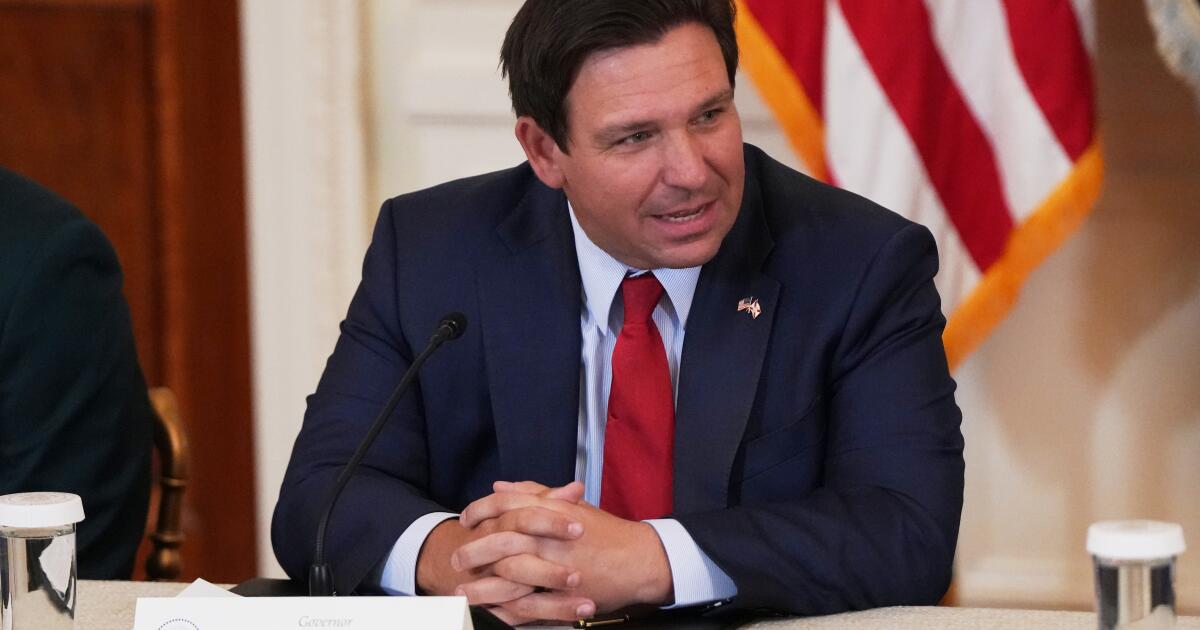
Federal Communications Commission Chairman Brendan Carr is using his bully pulpit to push back against coverage of the U.S. military action in Iran that his boss President Trump doesn’t like, marking an extraordinary escalation in his clashes with the media.

On Saturday, Carr posted a message on X suggesting TV stations could lose their government licenses to use the public airwaves if they “don’t operate in the public interest.”

Underneath his statement, Carr shared a social media post from Trump, who complained about the New York Times and Wall Street Journal stories on the five refueling tankers were hit during an Iranian missile strike on the Prince Sultan Air Base in Saudi Arabia.

Carr seized on Trump’s missive to issue a warning to TV outlets, which are frequently threatened by the president when he is angry at their coverage.

It’s the latest attempt by the FCC chair to apply pressure on media companies that irritate Trump with critical coverage of his administration.

Since becoming FCC chairman last year, Carr has repeatedly threatened to use the levers of power he has to punish TV and radio stations when they get in Trump’s crosshairs. His behavior has alarmed free speech advocates.

“Broadcasters that are running hoaxes and news distortions — also known as the fake news — have a chance now to correct course before their license renewals come up,” Carr wrote, without providing evidence to back up his claims. “The law is clear. Broadcasters must operate in the public interest, and they will lose their licenses if they do not.”

Carr’s threats are based on his assertions that said he wants to enforce the FCC’s public interest obligation for broadcasters that use the airwaves. He made similar remarks in the fall, which prompted two major TV station groups to keep ABC’s “Jimmy Kimmel Live!” off the air for a week due to remarks the host made regarding slain right-wing activist Charlie Kirk.

Trump and Defense Secretary Pete Hegseth have repeatedly attacked news organizations for any reporting that doesn’t say the war in Iran is anything but a rousing success.

On Friday, Hegseth said took aim at CNN and said “the sooner David Ellison takes over that network the better.”

Ellison, the chief executive of Paramount who, along with his father, has forged strong ties to the White House, will have control over CNN in addition to CBS if the company’s deal to acquire the news outlet’s parent Warner Bros. Discovery is completed.

Carr made the appointment of an ombudsman for CBS News a condition to approve Ellison’s Skydance Partners deal to acquire Paramount last year. Paramount also drew scrutiny over its controversial decision to pay $16 million to settle Trump’s legal salvo against “60 Minutes” over the editing of an interview with his 2024 opponent, then-Vice President Kamala Harris. Most legal analysts viewed the case as frivolous.

The FCC has no jurisdiction over CNN, which is why most of Carr’s barbs are aimed at ABC, CBS and NBC, which air on local TV stations. He once wrote on X, “More Americans trust gas station sushi than the legacy national media.”

Trump said in a social media post Sunday that he was “thrilled” with Carr’s remarks and would support his efforts to go after what he called “Highly Unpatriotic ‘News’ Organizations.”

“They get Billions of Dollars of FREE American Airwaves, and use it to perpetuate LIES, both in News and almost all of their Shows, including the Late Night Morons, who get gigantic Salaries for horrible ratings,” Trump wrote.

Andrew Jay Schwartzman, a Washington-based public interest communications attorney, believes Carr’s conduct and threats violate the 1st Amendment, adding that any serious attempt to revoke licenses would be tied up in legal challenges.

“Even if he started to try to deny a license renewal as quickly as he could, Brendan Carr would be long gone before that case would be over,” Schwartzman said. “The law intentionally sets out a very steep burden for the FCC to deny a license renewal; the process takes many years, during which time the licensee continues to operate normally under ‘continuing operating authority.’”

Carr’s remarks Saturday drew immediate blowback from Democrats and 1st Amendment advocates, noting the FCC’s role does not include policing the free press.

“Once again, this FCC pretends it has the power to control news coverage,” FCC Commissioner Anna Gomez said Monday in a statement. “In reality, the FCC has vanishingly little power over national news networks. It licenses local broadcast stations, not networks, and no licenses are up for renewal until 2028.”

Calif. Gov. Gavin Newsom weighed in as well, posting, “If Trump doesn’t like your coverage of the war, his FCC will pull your broadcast license. That is flagrantly unconstitutional.”

Sen. Ron Johnson (R-Wis.), usually a reliable voice of support for the Trump administration, expressed his concerns over Carr’s remarks.

“I’m a big supporter of the 1st Amendment,” Johnson told Fox News on Sunday. “I do not like the heavy hand of government no matter who’s wielding it. I’d rather the federal government stay out of the private sector as much as possible.”

Gomez added that while attempts to pull licenses border on folly, Carr’s threats and attacks on the media can create a chilling effect and erode the public’s confidence in the press.

“Over the past year, this FCC has attacked the media as part of a years-long campaign by this Administration and its allies to discredit factual, independent coverage while blaming the press for growing public distrust,” Gomez said. “Meanwhile, it is the FCC’s own credibility and public trust that are rapidly eroding.”

Trump is not the first president to target TV station licenses in response to negative news coverage. At the height of the Watergate scandal in the 1970s, Richard Nixon’s allies attempted to challenge the TV licenses for three stations owned at the time by the Washington Post.

The effort didn’t get far.

The last Los Angeles outlet to lose its broadcast license was KHJ in 1987, when the station was part of RKO General, a media company owned by the General Tire and Rubber Co. The case was related to corporate malfeasance and not broadcast content on the stations.

The process to revoke the RKO licenses took seven years from the moment the FCC voted in favor of the move.

“Since then, only small mom-and-pop radio stations have been litigated,” Schwartzman said. “The cases nearly always involve lying to the government, felony convictions or failure to pay regulatory fees. In one recent case, a small owner convicted of tax evasion still kept his license.”

There would be other logistical hurdles to the FCC making good on Carr’s threats.

As Gomez noted, Carr’s FCC only has regulatory control over the TV stations that carry the network signals. If stations were drop network programming for any reason, they could violate their affiliation contracts and lose the right to carry NFL football and other content that delivers big ratings and revenue.

Sinclair Broadcast Group wanted Kimmel to apologize to Kirk‘s family and contribute to his organization Turning Point USA before putting the host’s late night show on the air.

That did not happen and “Jimmy Kimmel Live!” returned to Sinclair’s stations anyway.

Source link