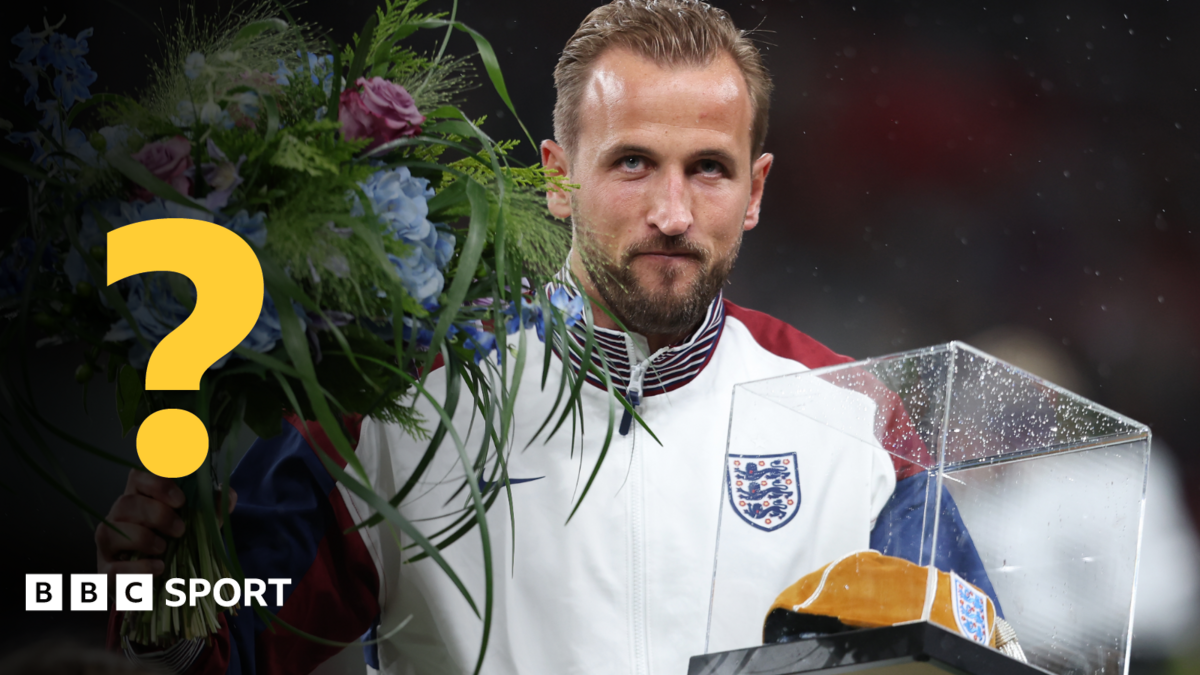
Frank Lampard has been named the League Managers Association manager of the year after guiding Coventry back to the Premier League.
Lampard’s Sky Blues finished 11 points clear at the top of the Championship to clinch the title and return to the top flight for the first time since the 2000-01 season.
The former England midfielder, who has previously managed Derby, Everton and had two spells in charge at Chelsea, was presented with the Sir Alex Ferguson award by England manager Thomas Tuchel.
The award, named after the former Manchester United manager, is voted for by managers throughout the leagues and takes into account success and the resources available.
Tuchel read out a letter from Ferguson, who said Lampard’s Coventry play “great football with confidence and belief”.
“I have enjoyed watching you. Best of luck in the Premier League next season,” he added.
Brentford‘s Keith Andrews, Arsenal‘s Mikel Arteta, Aston Villa‘s Unai Emery, Bournemouth‘s Andoni Iraola, Manchester City‘s Pep Guardiola, Lincoln City’s Michael Skubala and Bromley’s Andy Woodman were also shortlisted.
Manchester City‘s Andree Jeglertz won the Women’s Super League award after leading them to the title.
Arteta, who led Arsenal to their first Premier League title in 22 years, won the Premier League award while Lampard also took the Championship equivalent.
Skubala, who won League One with Lincoln, took the award for the third tier and Woodham won the League Two award after he led Bromley to the title.
The WSL2 award was taken by Karen Hills, who led Charlton to the WSL for the first time.
Steve Bruce and Martin O’Neill were inducted into the Hall of Fame after each reaching 1,000 games as a manager.
The award for Lampard is the most significant individual honour in his coaching career.
His Derby side lost in the Championship play-off final in 2019 and he was then appointed at former club Chelsea, where he spent 13 years as a player.
He was sacked after 18 months in charge in 2021 but later returned as a caretaker.
In between, he spent less than a year in charge of Everton during which he oversaw an escape from relegation but was later sacked.
This season his Coventry side were the Championship’s highest scorers with 97 goals in 46 games. They also had the best defence.
Chris Wilder, who won the award while in charge of Sheffield United in 2019, and Ipswich manager Kieran McKenna, the 2024 winner, are other recent managers to receive the LMA’s top award while managing outside of the Premier League.
Nouakchott, Mauritania – Across a vast stretch of the Sahel and West Africa, armed groups are expanding their reach, military governments are replacing fragile democracies, and “counterterrorism” efforts continue to contend with armed violence, often rooted in poverty and challenging living conditions.
While the Sahel has become synonymous with instability, tucked between the region and the Atlantic coast sits Mauritania, a country that has somehow managed to douse the flame. The explanation for this resilience often begins with a woman in a headscarf sitting across from a young man or a woman in a prison cell, talking about God.
Mauritania’s mourchidates are female Islamic spiritual guides, trained, certified, and deployed by the state under the Ministry of Islamic Affairs since 2021. They are not a new phenomenon, as the programme has its roots in Morocco.
Morocco’s mourchidates were introduced after the 2003 Casablanca bombings, a series of coordinated attacks in the Moroccan city that killed dozens and injured hundreds, as part of a broader religious reform.
Youssra Biare, a Moroccan researcher, states: “Morocco’s mourchidates offer one of the most established examples of women’s religious leadership as a tool for peace-building and preventing violent ‘extremism’.”
Since the programme’s launch in 2006, Morocco’s mourchidates have received formal theological and social training, which enables them to provide religious guidance and family counselling.
“Beyond their role in countering extremist narratives, they address the social and emotional factors that can make young people vulnerable to radicalisation,” Biare told Al Jazeera.
“For countries such as Mauritania, the Moroccan model demonstrates how investing in well-trained female religious leaders can strengthen community trust, promote moderate religious discourse, and create culturally grounded approaches to youth de-radicalisation and social cohesion.”
The mourchidates operate across schools, youth centres, mosques, hospitals, and, critically, prisons. They provide religious counsel grounded in mainstream Islamic scholarship, challenge the theological justifications that armed groups use, and offer a credible alternative to their narratives.
What makes the programme distinctive is the involvement of women with dedicated religious scholarship. More than social workers with a passing familiarity with Islamic texts, the mourchidates are trained in Quranic interpretation, Islamic jurisprudence, and the history of theological thought.
When they sit with detainees convinced that violence is a religious obligation, they can engage on their own terms and dismantle those arguments point by point.
Prison as a battleground for ideas
Prisons have long been recognised globally as sites of radicalisation, where recruitment networks operate. Mauritania, however, has pursued a different approach. Inside its prisons, mourchidates engage detainees linked to armed groups operating in the Sahel region, including those convicted of planning or participating in attacks across Mauritania, as well as those joining radicalised groups in neighbouring countries.
Their work goes beyond pastoral care to critically engage prison populations on an ideological level. They sit with these people over extended periods, building trust and addressing the theological arguments that justified violence, such as the belief that attacks on civilians could be sanctioned in the name of religion.
By patiently challenging these interpretations and offering alternative readings of Islamic texts, the mourchidates gradually open space for detainees to reconsider their choices.
De-radicalisation, when it works, tends to be built on relationships. The mourchidates, through their close ties to communities, are often well-placed to build these relationships in ways that male guards, military officials, or even male religious scholars are not always able to.
Mauritania stands out as a rare island of stability in West Africa’s fight against radicalism due to its use of female Islamic guides [Michelle Cattani/AFP]
A significant portion of what mourchidates do is preventive, operating in community spaces to reach young people before they become vulnerable to recruitment. Armed groups exploit unemployment, marginalisation, and legitimate grievances to draw young men and women to their cause, often using the language of faith.
Countering this radicalisation requires a coherent narrative more than a militaristic approach, and that is precisely what the mourchidates provide.
“One of the strengths of the Mauritanian model is that it understood early on that violent extremism cannot be addressed through security responses alone,” Aminata Dia, a Mauritanian founding member of Elles Du Sahel Network and the executive director of the nonprofit Malaama, told Al Jazeera.
“The country invested in prevention, religious dialogue and community trust-building, particularly through the mourchidates programme,” she said.
Yahia Elhoussein, a scholar who runs a maourchidate school in Nouakchott, told Al Jazeera that this approach works due to its credibility.
“The mourchidates were deployed by the Ministry of Islamic Affairs to different parts of the country, where they educated young people on the true teachings of Islam, such as tolerance, charity, and accountability, playing an important role in de-radicalisation without any use of force,” Elhoussein said.
Why Mauritania stands apart
The results, while difficult to quantify, are reflected in Mauritania’s regional trajectory. The country has not been immune to threats from armed groups, enduring attacks in the mid-to-late 2000s that pushed it to reassess its approach.
What followed was a comprehensive strategy combining intelligence, community engagement, religious reform, and programmes like the mourchidates. Since then, Mauritania has largely avoided the scale of attacks that have devastated its neighbours, such as Mali and Burkina Faso.
Security analysts point to Mauritania as a case study for a preventive model, investing in conditions that make radicalisation less likely rather than responding solely to violence. The mourchidates are central to that model.
Trained women volunteers travel throughout the country to homes, markets, mosques, prisons, and schools to raise awareness among the most vulnerable [Michelle Cattani/AFP]
None of this suggests that Mauritania has solved the problem, or that its approach is without limitations. The country faces governance challenges, while the broader Sahel region continues to experience expanding armed violence, poverty, displacement, and weak state presence, pressures that no single programme can fully address.
Critics note that the reach of the mourchidates, while meaningful, remains constrained by resources and scale.
There are also questions about how replicable this model is elsewhere. Morocco’s version has been partially adapted in other Muslim-majority countries, but conditions in Mauritania, a deeply religious society, such as respected female scholarship, credible state authority, and political will, make it unique.
In Burkina Faso, Mali, and Niger, replicating this model would require rebuilding trust between the state and the community, which appears to have eroded.
At a time when international counterterrorism policy in the Sahel is dominated by military presence, drone strikes, and external interventions, Mauritania’s experience offers a different lesson. Some of the most effective tools for preventing violent activism are not found in special forces and military operations but in trained women, armed with knowledge and patience.
“Mauritania’s mourchidates prove that community-based approaches can be more effective than any other approach,” said Elhoussein.
DECADES on from when ‘Ladette’ culture dominated the 1990s, the trend appears to be making a comeback – with popular TV stars at the forefront.
Olivia Attwood and Helen Flanagan are leading the charge as they rally against a polished media profile in favour of authenticity… just like original ladettes Sara Cox, Zoe Ball and Denise Van Outen.
Sign up for the Showbiz newsletter
Thank you!
TV presenter Olivia Attwood is leading the Ladette resurgenceCredit: InstagramOriginal ladette Denise Van Outen back in the day posing in a cheeky bikini topCredit: GettyOlivia was fed alcoholic shots by her friend in the pool in a recent wild holidayCredit: InstagramHelen Flanagan has come under fire for being on a sexy reality show as a mum-of-threeCredit: Paramount +/ Cris Ríos Bordón
From Olivia’s raucous holiday with Pete Wicks instead of her husband, to Helen starring in steamy dating shows with three kids at home, the girls are proving they won’t apologise for doing what they want – despite facing backlash over their part in the era’s resurgence.
It follows a spell of female stars in the spotlight – like Holly Willoughby – who took on the “good girl” image – with any suggestion of naughtiness carefully constructed for dramatic effect.
PR and Entertainment expert Lynn Carratt said: “The ladette era was famous in the late 90s, early 00s as an era in which women ruled supreme.
“And now it appears the boozy and unfiltered 90s trend is enjoying a second wave.
Zoe Ball was an original Ladette, pictured at the Brit Awards in 1999Credit: GettyShe and Sara Cox were known for their boozy behaviour in the 90sCredit: Getty
“TV stars Olivia Attwood and Helen Flanagan appear to be leading the revival with the same throwback energy – loud, emotional, unpredictable, and unapologetically visible – like Sara Cox and Zoe Ball, back in the day.”
While Holly Willoughby was famous for juggling being the nation’s sweetheart on This Morning, alongside her role as a doting wife and mother of three, younger female celebrities don’t feel the need to pretend they have it all figured out.
The 45-year-old would feign shock and giggle behind her hand at any filthy humour on her ITV2 show Celebrity Juice, which aired after 9pm, but her hangovers after the National Television Awards became a well known skit.
In 2016, dressed in her ballgown from the night before, Holly hosted This Morning alongside Phillip Schofield in a tux, telling viewers: “I haven’t been home yet. I came straight here.”
It became a running joke every year about Holly’s “wild” night out – but those behind the scenes suggest it was all carefully curated.
In 2016 Phillip Schofield and Holly Willoughby were wearing their clothes from the night before after the NTAsCredit: ITV
Then, along came former Love Island star Olivia who has become ITV‘s newest darling – presenting a host of shows including Bad Boyfriends and Getting Filthy Rich.
The 34-year-old has recently separated from her husband of three years, footballer Bradley Dack.
She says the split has made her feel “incredibly passionate” about being self-sufficient.
“Navigating what I’ve been going through, the fact I have my own place and car, I can’t even imagine not being able to look after myself,” she says.
Olivia shakes her bum in a thong bikiniCredit: Not known, clear with picture deskThe Love Islander gave an unfiltered look at her summer holidayCredit: InstagramShe was married while away with her new lover PeteCredit: Instagram
Last summer, she ended up in the doghouse with her then-husband Brad when she was pictured cuddled up to close pal Pete on a yacht in Ibiza.
The pair have since struck up a secret romance following her marriage split in January. Pals insist “there was no overlap”.
Soon after her wild week with pals in Ibiza where she was spotted dancing on a boat in a thong bikini, downing shots and posting hungover pics, Olivia was back on This Morning presenting.
She posted hungover snaps with PeteCredit: InstagramIt’s a similar snap to Zoe Ball taken at the Brits in 1997Credit: Getty
Lynn added: “You have to hand it to Olivia Attwood, she has managed to do what few reality stars achieve to do and turn notoriety into a high-profile media career.
“She is a permanent fixture on ITV with presenting roles and prime-time appearances, she has built a success podcast brand, as well as appearing on Kiss.
“She one of reality TV’s most in-demand personalities and has developed a polished media profile. But sitting alongside that something far more chaotic behind the scenes: headline-making holidays, relationship drama and brutally honest social media posts that regularly ignite debate and she likes to party.
“One minute she’s fronting glossy TV projects, the next she’s dominating tabloid headlines with candid revelations about love, life and everything in between.
“It seems like controlled chaos, but it’s working for her.”
Olivia hosting This Morning with Dermot O’LearyCredit: Shutterstock Editorial
She has been outspoken about the criticism she’s faced for taking part, particularly as a mother.
‘I find it empowering,” Helen said previously.
“There have been comments on social media suggesting I shouldn’t be doing a show like that as a mum of three, but no one would say that about a dad.
“Women should be allowed to have fun and enjoy themselves too.”
Helen Flanagan is currently appearing on Celebrity Ex on the BeachCredit: Times Newspapers LtdHelen with her three kids she shares with footballer ex Scott SinclairCredit: Instagram
Lynn added: “Helen has stepped firmly back into the reality TV spotlight and is currently appearing on Celebrity Ex on the Beach, enjoying herself in a villa under 24/7 filming, sun-soaked conditions and constant emotional scrutiny.
“The former soap star and mum of three was filmed constantly in bikinis, drinking, flirting and kissing on screen, embracing a level of unfiltered reality television that feels ripped straight from the early 2000s.
“Helen’s comments strike at the heart of the debate surrounding modern ladette culture: who gets to be seen as ‘wild’, and who gets judged for it.”
So why now is there a resurgence of the 90s ladette era?
Lynn continues: “In an era of heavily curated Instagram perfection and tightly managed celebrity branding, audiences are increasingly drawn to the opposite – unpredictability, imperfection and personalities who don’t play it safe.
“Olivia Attwood and Helen Flanagan sit at the centre of this shift.
“One balancing mainstream ITV success with headline-grabbing personal drama, the other embracing high-emotion reality television where nothing is off-limits.
“And right now, they are doing anything but staying quiet.”
French liberal MEP Christophe Grudler told Euronews the Commission’s proposed European preference, once adopted, covering public procurement in strategic sectors such as clean tech, cars and energy-intensive industries (aluminium and steel) should be limited to a core group of non-EU countries.
ADVERTISEMENT
ADVERTISEMENT
The “Made in Europe” provisions of the so-called “Industrial Accelerator Act” have triggered a fierce political battle between supporters, led by Germany and Nordic countries, of a broad definition including “like-minded” partners, and those, led by France, pushing for a narrower approach.
In its proposal unveiledon 4 March, the Commission leaned towards the broader interpretation.
“The Commission’s option is very poor. It reflects a completely outdated view of trade policy,” Grudler said, adding, “When the Americans introduced the Buy American Act, they didn’t worry about whether it would strain ties with Europe. At some point, we need to stop being naive.”
The MEP is set to be one of the lead negotiators on the proposed new rulesin the European Parliament as talks begin shortly.
The European preference aims to counter foreign competition, notably from the US and China. The Commission proposes excluding non-EU countries depending on how open they are to the EU taking part in their procurement markets as well as existing trade agreements.
Geography should prevail, Grudler said
But Grudler argues geography should be the guiding principle, limiting “Made in Europe” to countries closest to the EU — first and foremost the European Economic Area: Iceland, Liechtenstein and Norway.
Switzerland could also be “a good candidate”, he said.
“Switzerland has had a public procurement agreement since 1989. It is a bilateral agreement stating that all European companies have access to the Swiss public procurement market, and that all Swiss companies have access to the European public procurement market. It is therefore a rather good candidate.”
The UK could also be considered to some extent, but “conditions will need to be examined” following Brexit, he added. “There is also a point where Europe has to make sure it comes out financially ahead.”
He wants the law to send “a strong signal” to investors backing key EU industries, “particularly energy-intensive sectors and clean technologies.”
“It is another step in Europe’s resilience against unfair competition from other continents.”
However China has voiced strong opposition to the Commission proposal, seen in Beijing as restricting its access to EU procurement and investment.
“This legislation is Europe standing firm for its strategic industries,” Grudler said.
“China has overcapacities in cars or in steel. They are relying on the naivety of Europeans to do business, to generate double-digit growth again, and then to invest in research and development and get ahead on everything, all the while cheating through direct subsidies to destroy our industries.”