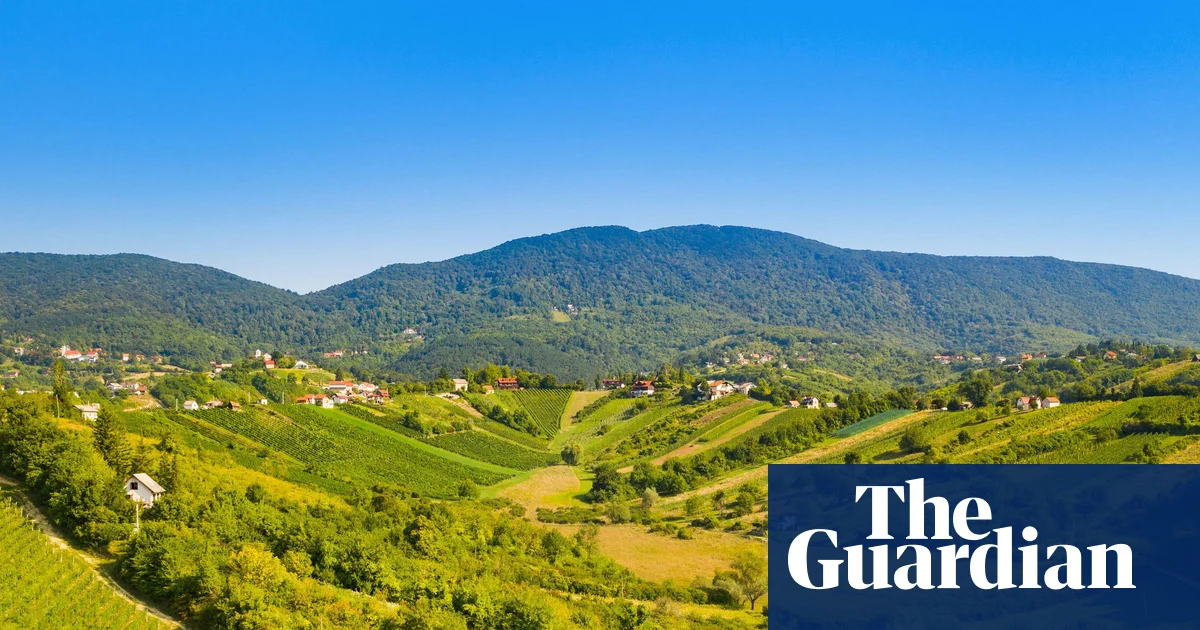
landscape

Decoding Africa’s Payments Landscape: AI, Regulation and Trade Innovation

Africa’s Payments landscape is undergoing a significant transformation, fueled by advanced technologies and a surge in Cross-Border Trade. With AI and modular financial solutions taking root, African markets are quickly adopting faster, more secure, and seamless Payment experiences. But this shift isn’t just about digitisation—it’s about building a more resilient and inclusive financial ecosystem that empowers both businesses and individuals. 

Embracing Complexity: The Catalyst for Modular Design

Africa’s Payments ecosystem isn’t a single, uniform market—it’s a complex tapestry of 54 countries, each with unique currencies, regulatory standards, and varying financial infrastructures. For corporates and financial institutions, this diversity presents challenges, but it also creates fertile ground for innovation. 

The very intricacies that complicate Cross-Border Payments also encourage creative, technology-driven solutions that are tailored to local needs. This dynamic landscape invites forward-thinking approaches, making Africa a proving ground for Payment innovations with the potential to transform how value moves across the continent and beyond.

Africa’s diverse regulatory landscape demands adaptability in Cross-Border Payments. With each nation enforcing unique licensing, settlement, and risk rules, achieving a unified platform remains a significant challenge. Adding to the complexity is the growing insistence on local data storage to meet data sovereignty requirements, making compliance and technology integration even more intricate.

Instead of allowing regulatory hurdles to impede progress, industry leaders are using these complexities to build more adaptable and resilient systems. They’re advancing modular, “plug-and-play” platforms with strong governance, clear data separation, and flexible hybrid cloud infrastructure. This approach turns obstacles into opportunities for real innovation and growth.

This drive toward modularity has accelerated the adoption of Banking as a Service (BaaS), recasting Payments from a cost center into a strategic growth lever. Where corporates once saw Cross-Border Payment infrastructure as a burdensome expense, BaaS now allows secure, compliant Payment capabilities to be embedded directly into business platforms. 

With a single integration, companies can navigate regulatory complexity, unlocking new revenue streams and harnessing Payment data to refine operations, understand customers, and deliver tailored services. Payments have become more than transactions—they’re a source of insight and innovation, fueling growth and competitive advantage.

AI as a Strategic Accelerator

Artificial Intelligence is transforming Transaction Banking in Africa, acting as a catalyst that enhances human expertise to improve efficiency and transparency. Rather than relying on the traditional first-in, first-out approach, AI now enables financial institutions to sort and route queries by urgency and complexity, streamlining exceptions and prioritising immediate needs. This reduces manual intervention and turnaround times, freeing teams to focus on deeper client relationships and higher-value tasks that improve service quality and satisfaction.

But AI’s impact goes far beyond boosting efficiency—it is transforming security and fraud detection across Africa’s digital Payments. As digital adoption rises, so does financial crime. AI uses real-time, behavior-based analytics to monitor transactions and learn each client’s typical patterns. This allows quick detection of anomalies and proactive fraud prevention, improving accuracy and reducing unnecessary disruptions while safeguarding customer trust.

As financial institutions adopt advanced AI systems, strong governance becomes critical. Without careful oversight, AI models built on limited or skewed data can unintentionally reinforce biases—delaying Payments or impacting service for certain groups. To maintain trust and fairness, banks must ensure they have strong accountability, transparent training of AI models and proactive monitoring so algorithms serve all customers equitably and uphold the highest industry standards.

The Rise of Regional Payment Rails

Intra-African trade is experiencing unprecedented growth. As more businesses look beyond national borders, the demand for fast, accessible, and reliable Payment systems has never been greater. This surge in regional commerce is prompting the development of innovative Payment infrastructures that make Cross-Border transactions more seamless and inclusive.

Moving beyond the confines of Domestic Mobile Money networks, Telecom companies are developing Payment rails to enable real-time Payments that cross African borders with ease. This shift is especially transformative for small and medium-sized enterprises, opening fresh opportunities for growth and Cross-Border collaboration. By promoting interoperability and removing costly intermediaries, these regional networks make Payments faster, more affordable, and increasingly accessible.

As these Telecom-driven platforms continue to expand, they are enabling Africa’s Multi-Rail Payments ecosystem. Their ability to foster resilience, scalability, and efficiency is setting the stage for a future where regional Trade is not just possible, but practical for businesses of all sizes. This wave of innovation is redefining the landscape, ensuring that regional Payment Rails support and propel Africa’s economic growth for years to come.

Global Trade Dynamics and the Currency Shift

Africa’s Cross-Border Trade is being reshaped by ongoing US dollar shortages and shifting macroeconomic forces. For import-dependent markets, these scarcities delay settlements, increase transaction costs, and tie up vital working capital. This environment demands new solutions and is pushing businesses to seek more efficient, reliable ways to move value across borders.

Concurrently, the region is experiencing rising Trade flows with Asia, and African businesses are rapidly adopting alternative Payment infrastructures. Platforms like the Cross-Border Interbank Payment System (CIPS) and greater use of the Chinese Renminbi offer new settlement options and critical flexibility. This shift reduces reliance on established networks such as Swift, giving companies more robust and diversified Payment infrastructure. As a result, importers and exporters can count on greater predictability, faster settlements, and lower intermediary costs—ultimately accelerating and scaling Cross-Border Trade across Africa.

Orchestrating the Future

Africa’s financial future is emerging as an ecosystem that is intelligent, instant, and seamlessly connected. Thriving in this landscape will require more than just advanced technology. It demands a clear understanding of local realities and global shifts. The leaders will be those who turn Africa’s complexity into intuitive, secure, and streamlined client experiences—setting new standards for growth, resilience, and trust in the continent’s rapidly evolving Payments Sector.

Source link

‘A landscape raw and wild’: by train to the heart of the Yorkshire Three Peaks | Yorkshire holidays

Limestone stretches on all sides like an inland ocean – appropriately enough, since the shimmering white rock has its ancient origins in coral, shells and the skeletons of sea creatures. We advance carefully, stepping on clints (blocks of rock) and avoiding grykes (the deep fissures between them). It’s a warm, dry day and, even if it were not, limestone drains better than most types of terrain. For a long while, it’s broad, flat and hallucinatory and then, suddenly, the rocky sea collapses like a waterfall and we’re at the edge of a huge fault. The words Yorkshire Dales might evoke pretty villages and walled-in sheep fields, but this landscape is raw and wild, the kind of natural realm WH Auden celebrated in his poem In Praise of Limestone, and the kind that prompts geological speculation and inward ruminations. To cap it all, there are just three of us and nothing much and no one else all the way to the far horizons.

It’s my first decent yomp of the spring. I’ve come here with two walking pals on the egregiously under-promoted direct train that connects Rochdale and Manchester with the national park and Yorkshire’s Three Peaks. While the Leeds-Settle-Carlisle service – which recently celebrated its 150th birthday – is deservedly famous, the Yorkshire Dales Explorer, which started in June 2024, is much less celebrated. It’s also far less frequent. Trains travel between Leeds and Settle, continuing to Carlisle or Morecambe, 20 times a day Monday to Saturday, 11 times on Sundays. Trains between Manchester Victoria and Settle run on Saturdays only and just once in the morning each way and once in the late afternoon.

On the limestone escarpment on Moughton Scar above Austwick. Photograph: Chris Moss

We alight at Horton-in-Ribblesdale, the penultimate station before the terminus at Ribblehead, where rises the magnificent viaduct. Both stops are great for walkers, but ours takes us immediately into the heart of the Three Peaks. Pen-y-ghent is behind us as we leave the station, Ingleborough ahead and, to the north, on our far right, is Whernside. All have summits of about 700 metres and if you’re super fit, you can do them in one day – even between the two train services if you want a challenge. The men’s running record is 2hrs 46mins 3secs, set by Andy Peace, of Bingley Harriers, in 1996. Victoria Wilkinson, from the same club, set the women’s record, 3hrs 9mins 19secs, in 2017. It’s more than 23 miles (37km), and trained, fit walkers can manage it in 8-10 hours.

Ours is a less daunting mission: walking on a plateau between the peaks down to Settle, for a pub lunch. It’s still an adventure in the sense that there are very few marked footpaths on the OS app (OL2 is the Ordnance Survey printed map), but this is open access land and so you find your own route. We use cairns to navigate, climbing from the station platform at about 250 metres to the Moughton trig point at 427 metres, where we get a sweeping view of the Yorkshire Three Peaks and Bowland Fells to our south and west, and a chance for a cuppa. I hear my first skylarks of the season, but the air is also filled with the unmistakeable gurgling croak of ravens. Shake holes break up the limestone pavement and you have to be alert to these sudden depressions, but the only significant obstacle is getting down the scars, where the elevation suddenly drops tens of feet. At Long Scar we pause to plot a path and to take in the vertical edge, and in the middle distance, the Norber Erratics – 100-plus boulders transported long ago by glaciers and abandoned wantonly above the village of Austwick.

But the edge is enthralling. You can imagine this formation as an underwater cliff, aeons ago, though glaciation, weather and uplift have played their part in creating the static drama. It could be a rift in the Patagonian steppe or a Yorkshire-tinted section of Arizona’s Monument Valley. We sight an obelisk and head for that and soon find ourselves at the edge of another drop, Moughton Scar, where we descend again, passing a massive quarry; here the material hewed out of the strata is a tough gritstone called greywacke, the colour of cement.

The ‘magnificent’ Ribblehead viaduct. Photograph: Amazing Aerial/Alamy

It’s green and agricultural the rest of the way, and while we’re hitting the 10-mile stage of the walk, it’s fine to have wobbly legs now we’re off the tricky pavement. Wild garlic is bursting through, newborn lambs are dozing, and daffodils are sprouting around the tiny hamlet of Feizor, where there’s a teashop that used to be for walkers but now seems to pull in mainly car tourists.

We plough on, over two small rises, and finally on to the banks of the Ribble, which begins its long, meandering journey close to where we began. Settle is full of bikers, shoppers and sightseers, but there are also pints and late lunches in the pubs. We’re contented and have earned our pies. We can either get the late train back or hop on the number 11 minibus to Clitheroe. Those travelling from farther afield have the backup option of later trains to Leeds or Lancaster.

Ours was an ideal first long walk if you’re getting back into exercise after the wet winter. If you want to use the train to attempt the Three Peaks, I’d recommend splitting up the hikes over a weekend. Horton to Pen-y-ghent and then on to Ribblehead, 10 miles all told, is a nice day’s jaunt. You can do Whernside and Ingleborough on the following day, covering a similar distance, ending back at Horton. There’s a choice of campsites and a pub with rooms – the Station Inn – at Ribblehead.

The three hills have different qualities. Pen-y-ghent is a proper big lump, with a dramatically steep southern face that requires a short scramble. Ingleborough is a similar shape, but more haughty and spread out, almost mesa-like in its flat-topped appearance. Whernside is a long-elevated whale-back ridge, running north to south.

I can see the Three Peaks from my kitchen window, 22 miles away as the raven flies. The day before our hike, it had rained at home. But it had snowed on the top of the peaks, making them look out of place. They bear the full brunt of cold westerlies and are higher than anything nearby, and consequently create a micro-season of their own. Bear that in mind if you’re aiming to bag them on your next weekend outing.

Source link

How landscape artist Ruth Shellhorn transformed Disneyland

I always encourage people to slow down when they visit Disneyland, especially when taking their first few steps under the train tunnel onto Main Street, U.S.A. There’s too much you’ll miss if you’re racing from attraction to attraction. For to set foot in Disneyland is to be guided by many an invisible hand.

Winding, circular and branching paths not only direct guest flow, but create the tone for the experience. The sensation is meant to evoke one of lushness and grandeur, to envelope oneself in a garden as much as a land of play.

You’re reading Mr. Todd’s Wild Ride newsletter

Todd Martens’ newsletter delivers news and commentary on the past, present and future of theme parks, right from the theme park capital of the world — Southern California.

A principal in defining the feel of Disneyland — and an influence felt today in all meticulously designed theme parks — is master landscape artist Ruth Shellhorn. A South Pasadena native, her work for decades often went overlooked, spoken of in the shadows of brothers Jack and Bill Evans, horticultural experts who also played an instrumental role in the development of the modern theme park as homes to arboretum-worthy spaces.

It was Shellhorn, however, who used plants and trees to unify the park’s contrasting elements and to help direct guest flow. She even heightened the illusion of magnifying the splendor of Disneyland’s Sleeping Beauty Castle. Her work was an argument that a stroll through a theme park should evoke natural as much as man-made wonder, a journey into fantastical lawns and courtyards.

Shellhorn, who died in 2006, faced her share of discrimination for being one of the sole women in a Disneyland leadership role, says Cindy Mediavilla, a retired lecturer from UCLA’s department of information studies and co-author of the book “The Women Who Made Early Disneyland.”

“She was treated like chopped liver by the men,” says Mediavilla, “but she perseveres, and her work is still relevant to the park today.”

And it’s still being discovered. San Francisco’s Walt Disney Family Museum, home currently to an exhibit on Disneyland’s early days, will host a virtual chat June 17 on her work. Her contributions are also detailed in part in a relatively new behind-the-scenes tour at Disneyland, “Women Who Make the Magic.” The latter, a $110 add-on to a Disneyland day, is part of the park’s initiatives to appeal to those who want to dig deeper into Disneyland history, and also touches on the likes of Mary Blair, Kim Irvine, Martha Blanding and others.

A group of people in front of a half-built Disneyland castle

Harper Goff, Bill Evans, Dick Irvine, Walt Disney, Ruth Shellhorn and Joe Fowler examine Disneyland plans in April 1955, just months before the park would open.

(Ruth Patricia Shellhorn Papers, UCLA Library Special Collections / Disney)

What might be most astonishing about the way Shellhorn transformed Disneyland is that she did it all in a matter of months. She was recommended to park founder Walt Disney by a friend and brought onto the Disneyland project about four months before its July 1955 opening.

“The Evans brothers are mostly focused on Adventureland, which is where they can put in all these fabulous plants that they’ve been collecting, but they aren’t as effective in figuring out how to design the other areas of the park,” says Todd James Pierce, a creative writing professor and Disney historian whose book “Three Years in Wonderland” documents early Disneyland.

“Landscape is going to be one of the last things that goes in, and so these problems don’t really present themselves as critical to Walt until the buildings start going up,” says Pierce.

While I went into the Disneyland walking tour familiar with Shellhorn’s work, the guided trek inspired me at last to dig more fully into her contributions. It was Shellhorn, for instance, who finished the floral portrait of Mickey Mouse at the entrance gates, choosing dwarf pink phlox for his tongue, according to Kelly Comras’ 2016 biography of the landscape architect.

Comras documents, too, how Shellhorn helped design Main Street entrance areas, namely the benches and green spaces that surround a flagpole. Shellhorn chose reddish concrete paving, white-flowering trees and perennials in shades of red, white and blue to “embellish Disney’s patriotic theme,” writes Comras.

Disneyland blueprints.

Photo of blueprints for Disneyland’s tree planting design from a 2005 Times article on Ruth Shellhorn.

(Ken Hively / Los Angeles Times)

The author notes how weeks before opening, Disney replaced the flagpole with a bandstand. Shellhorn protested, arguing that it disrupted sightlines to the castle and overpowered the space. The landscape architect won.

“Ruth liked a lot of control,” says Pierce. “Walt would call her stubborn and I think that’s probably true.”

Shellhorn’s diaries are in UCLA’s Special Collections, where she privately expresses frustrations about Disneyland’s male-focused chain of command.

“She talks about how upset she gets with other art directors, in terms of them coming into her space,” Pierce says. “Some of that is gendered. It’s a group of men who are designing Disneyland, and here is this high-powered, very professional, extremely talented woman who is coming in to talk about how these men’s different areas are going to work together. There’s a hierarchy that’s a bit difficult.”

And yet Shellhorn successfully tied together multiple disparate spaces.

Disneyland’s centerpiece hub area, the entrance to its core themed lands and gateway to the castle, is, for example, a key area where Shellhorn played a major part. Shellhorn directed the grading of the bulldozers in constructing the moat around the fantasy palace, and also gave the entrance to each land a specific botanical personality — grasslike bamboo, for instance, near Adventureland, as well as jacarandas and senegal date palms to give it tropical bursts of color. Her compositions, writes Comras, “made the area flow together so seamlessly that visitors were unaware of her artistic intervention.”

Shellhorn, it should be noted, was extremely accomplished by the time she came to Disneyland, being named in 1955 a “woman of the year” by this newspaper. Her non-Disneyland work was pivotal in redefining commercial spaces throughout the Los Angeles region. She was perhaps best known for helping define the Southern California look of Midcentury Modern architecture for the now-defunct Bullock’s department store chain, which transformed the American shopping mall from an errand to a social outing.

But it’s her work at Disneyland that endures, and forever elevated the look, tone and feel of the American amusement park. So don’t just stop and smell the flowers next time you’re at Disneyland. Take a moment to remember the woman who initially had the vision for them.

The week in SoCal theme parks

Concept art of the cockpit of the Millennium Falcon ride.

Beginning May 22, new scenes inspired by the film “The Mandalorian and Grogu” will come to Millennium Falcon: Smugglers Run.

(Artist concept / Disneyland Resort)

  • A new mission for Millennium Falcon: Smugglers Run. The big news in local theme parks this week is the transformation of the arcade-style Millennium Falcon flight simulator ride in Disneyland’s Star Wars: Galaxy’s Edge. The refreshed version of the attraction will open Friday with a new storyline and increased levels of interactivity inspired by the film “The Mandalorian and Grogu.” Guests will now have the option to vote upon which “Star Wars” locale to visit as they seek to help the bounty hunter and his little pal break up a deal between a gang of pirates and Imperial officers. I’ll be experiencing the ride this week, so stay tuned to Mr. Todd’s Wild Ride for first impressions.
  • Get to know some sharks. San Diego’s Sea World will on Friday unveil a reimagined shark-focused exhibit. “Shark Encounter” still features the park’s signature moving tunnel as well as enhanced visuals to heighten its educational-focused objectives, including a multi-screen video installation to highlight shark diversity and dispel myths about the species. Eleven different varieties are highlighted in the park, including the endangered Australian leopard shark.
  • Prepare for liftoff across America. Disney has revealed new details on Soarin’ Across America, which opens at Disney California Adventure on July 2. The reimagined attraction, designed to celebrate the 250th anniversary of the founding of America, will feature the Mount Rushmore National Memorial, Grand Canyon West, the New England coastline and more. The celebration of patriotism has already opened at Walt Disney World’s Epcot, meaning there’s plenty point-of-view ride videos circulating the web. I’ve opted not to watch them, wanting to go in fresh when it comes to Anaheim, and thus will save my thoughts until I can experience the attraction firsthand.
  • It’s water park season! Confession: I have never been to a SoCal water park. Maybe this is the summer I change that? Knott’s Soak City Waterpark is now open in Buena Park, and Hurricane Harbor next door to Magic Mountain in Valencia will begin its summer season on Saturday.
  • Give up the dream of a third Disneyland park (for now). Wish-focused articles inspired rumors that the Disneyland Resort was prepping for a third park in Anaheim after permits were filed for its Toy Story Parking lot, land that will no doubt be reimagined after the resort builds a new parking garage on its Eastern side. I hate to be the bearer of bad news, but don’t bet on a third park coming to Disneyland anytime soon. While the resort recently won approval on its Disneyland Forward project, which paves the way for new attractions, hotels and dining to land in Anaheim, nothing in those plans implies a third park. Instead, they point to expansions of the existing Disneyland Park and Disney California Adventure, while implying that the current Toy Story lot will be remade into a mixed-use shopping, dining and hotel area. To further dash anyone’s hopes, biz writer Samantha Masunaga has more.

The best thing I ate at the parks

A decadent puffy dessert with lots of cream on top of a pastry.

A special Butterbeer cream puff is available until the end of the month at Universal Studios Hollywood.

(Todd Martens / Los Angeles Times)

It’s Butterbeer season at Universal Studios Hollywood, meaning the theme park is offering a few limited-time Butterbeer-flavored treats through May 31. Butterbeer in drink form isn’t, admittedly, my favorite, as the butterscotch is tempered with vanilla trappings that give it a cream soda-type feel. It’s an acquired taste. But when the park puts Butterbeer in dessert items, they tend to be pure butterscotch decadence. So it was with this rich but pleasing cream puff currently available at the Three Broomsticks in Wizarding World. The $7.99 delectable comes with a soft, doughy shortbread cookie topped with butterscotch-infused whip cream. The sauce — buttery and caramel at its most addictive — extends down into the fluffy cookie, creating a gooey, toffee-shortbread swirl after the first bite. For butterscotch fans, it’s a delight.

Ride report

A character in a theme park ride juggling mugs of beer.

Mr. Toad’s Wild Ride was, in 1955, a technological marvel.

(Todd Martens / Los Angeles Times)

I’ve been working my way through Roland Betancourt’s fascinating book, “Disneyland and the Rise of Automation,” which traces how the park’s early technological innovations would forever change entertainment and influence postwar America. Relatively early Betancourt talks about the importance of Mr. Toad’s Wild Ride, which inspired me to get back on the ride the other week. Namely, he argues, it elevated the theme park art form in making use of prior patents to create a fully automated, story-driven attraction. Where there had once been simple gags, now there was narrative — and in the case of Mr. Toad’s, a message about drunken, reckless driving. And its effects, while today may seem relatively rudimentary, still work, especially when the vehicle shakes to simulate the traversal of railroad tracks before a mirror effect has us barreling toward a collision with a locomotive.

Tell us your stories. Ask us your questions.

Have a theme park tale to share? Whether it was a good day or less-than-perfect day, I would love to hear about it. Have a question? A tip? A fun photo from the parks to share? Email me at todd.martens@latimes.com. I may feature your note in an upcoming newsletter.

Ride on,

Todd Martens

P.S.

An animatronic figure with glasses and a green cap on a science contraption.

A stolen animatronic from Walt Disney World’s Wonders of Life pavilion at Epcot is a mystery at the heart of documentary “Stolen Kingdom.”

(Antenna Releasing)

Explore a darker side of Disney fandom via the documentary “Stolen Kingdom.” And by darker, I mean criminal. The film, from writer, director, producer Joshua Bailey, focuses on so-called “urban explorers” — folks who document deserted or abandoned buildings, hoping to give their audience a sort of backstage view of spaces that have been left behind.

Over the years at Walt Disney World, urban explorers have broken into abandoned water parks or areas once dedicated to animal preservation. The film builds to the tale of a stolen animatronic figure from the closed Wonders of Life pavilion at Epcot. Some of these items can end up on the increasingly lucrative Disney black market, where once stolen — or sometimes trashed collectibles — can fetch big money via auction. Depending on your point of view of these social media-driven attention seekers, “Stolen Kingdom” will fascinate or infuriate.

The film is screening Thursday at Laemmle North Hollywood and Friday at Brain Dead Studios. Head to the movie’s website to purchase tickets or find other SoCal showings.

Source link