Australia’s Liam Paro is the new IBF welterweight champion with a points win over Belfast’s Lewis Crocker at the Pat Rafter Arena in Brisbane, Australia on Wednesday.
Paro, who previously held the IBF’s light-welterweight title, becomes the first Australia-born boxer since Jeff Fenech to become a multi-weight world champion, earning a 115-113 nod on all three cards after a gruelling battle.
The 30-year-old produced a display of skill and heart to dethrone Crocker who was making the first defence of the title he won in Belfast last September, improving his record to 28 wins with one defeat.
Crocker, 29, appeared on the brink of a stoppage late in the fight but just couldn’t find the finishing shot with Paro reeling, suffering a first career reverse in his 23rd contest and will now seek to rebuild.
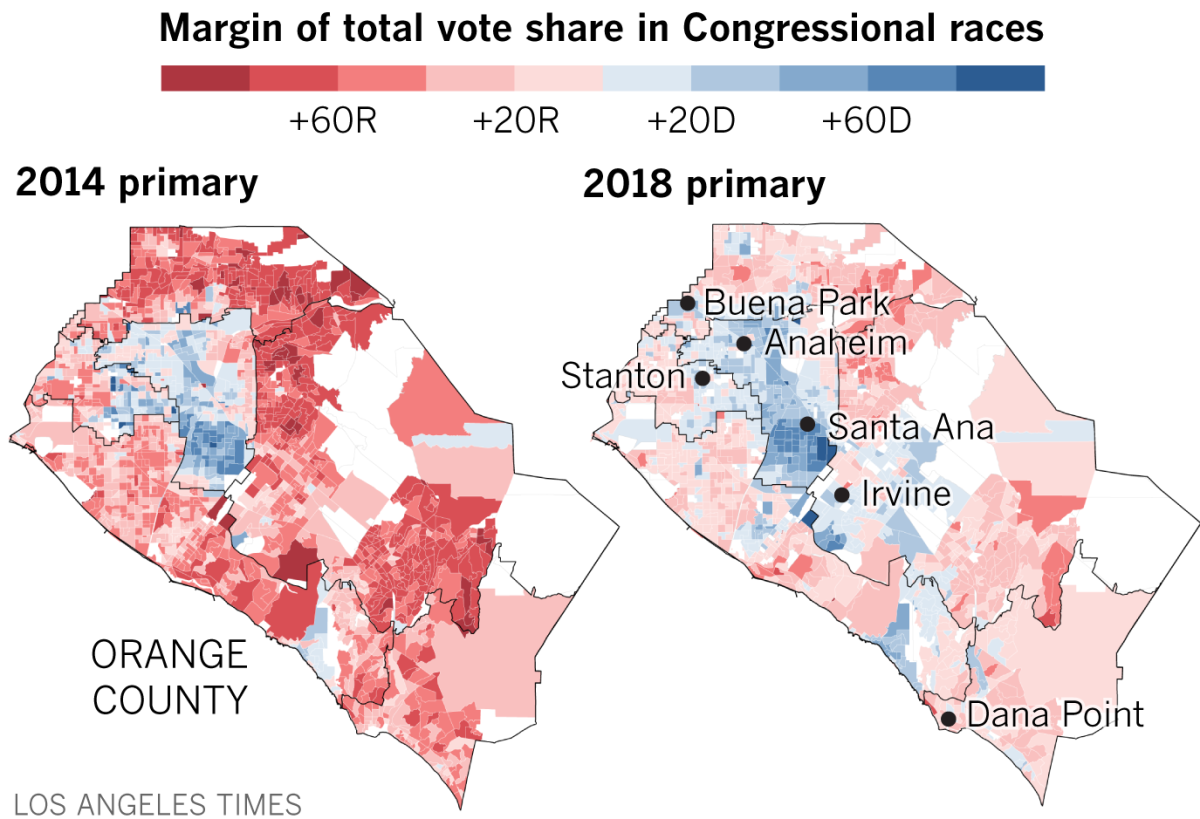
Civic pride, sure. But what is it really worth to the city of Anaheim to have its name on the hometown baseball team?
Hundreds of millions of dollars, the city has said. As the Angels’ stadium lease approaches its end, and as Anaheim prepares for negotiations either with Arte Moreno or a potential new owner, it’s worth keeping in mind.
So too is a concept floating around City Hall in Anaheim: What if we could put a new stadium and a youth sports complex next to one another?
It’s leverage: If the Angels’ owner wants to build atop the stadium parking lots, the city can pursue an exemption to a state law that currently restricts what can be built there, which could mean more money for the team and its development partners. In exchange for the exemption, the team name would revert to the Anaheim Angels.
If that’s the carrot, this is the stick: The city would have to approve the zoning changes that could make the land “two to three times more valuable than it is as a parking lot,” Anaheim Mayor Ashleigh Aitken said.
Said Aitken: “There are no gifts. For an ownership to truly be a partner to the city in what that property could be, there is going to have to be some realization that Anaheim is not Los Angeles.”
The Angels’ stadium lease expires in 2032, and the team can extend it through 2038. A new owner could move the Angels — or at least leverage the threat of a move — but Anaheim offers a 150-acre site with what every owner in pro sports covets: land around the venue to turn the property into a year-round money-making operation.
The standard ballpark villages include restaurants, shops, hotels, homes, offices and entertainment venues. The Ducks are launching one, called OC Vibe, around Honda Center, and within walking distance of Angel Stadium.
Katie Wright, who books sports events for Anaheim’s tourism bureau, said there would be a market if her city built a sports park.
“The demand for, specifically, soccer, baseball and softball is tremendous,” Wright told the Anaheim City Council in April. “They would be filled every single weekend, I think.”
What Anaheim has that Ontario and Irvine do not: Disneyland down the street for visiting families, a variety of restaurants within walking distance, and hotel rooms aplenty. In Anaheim, 40% of the city’s general fund comes from taxes on hotel rooms.
“With Angels baseball right next to a youth sports facility, to have the synergy of hotels and restaurants, and players interacting with the Little League kids and soccer fields,” Aitken said, “I just think it’s a unique opportunity.”
Everything old is new again: In 1996, Anaheim pitched a youth sports center called the “Little A” in part of the stadium parking lots as part of a ballpark village that never materialized.
What might be in the best interest of the city now might not be in that of the developer, whether that turns out to be the Angels or a real estate partner. While a sports park might drive tax revenues to the city, a developer might pay the most for land used for hotel and retail properties, said Louis Tomaselli, the Irvine-based executive managing director at JLL, a nationally prominent commercial real estate brokerage.
“A youth sports complex would likely be at or near the bottom from a land value perspective,” Tomaselli said.
That’s all part of the negotiation, and for now the city of Anaheim has no party with which to negotiate. That leaves room for all sorts of brainstorming, including Aitken’s curiosity about flanking the development with high-rise residential buildings, similar to the condominiums that have risen next to Petco Park in San Diego. In some of them, you can watch the game from your balcony.
But let’s get back to the value of the Anaheim name on the baseball team.
“A lot of times, we get the question, ‘Exactly where is Anaheim?’” Wright, the Anaheim tourism official, told the City Council. “We’re always fighting to say, ‘We’re not L.A.’”
In 2005, when Anaheim sued the Angels after Moreno slapped the Los Angeles label on the team, the city commissioned experts that testified the name change would cost Anaheim nearly $200 million over the following decade and close to $400 million through 2029. The Angels dismissed both numbers as wildly high, but that is what the city presented in court.
I asked Sean Moran of Los Angeles-based Innovative Partnerships Group for an update. Moran estimated the worth of the Anaheim name at $26.5 million per year — or more than $500 million over the life of a 20-year deal — based on the value of references to the city on game broadcasts, digital and social media, highlight clips, betting sites, in fantasy leagues, and more.
“I don’t think you can put a monetary value on civic pride and respecting your fan base,” Aitken said. “So, if a new owner wants to come in and start fresh and really respect the fan base in Orange County, the name should not even be a negotiating point.
“It should be the first thing you do, out of respect for where this team is located, and the fan base that is so loyal in good times and bad.”
Perhaps. But, if I’m the new owner of the Angels and the city is on record saying its name on the team is worth hundreds of millions of dollars, the first thing I say to the city in negotiations is: You can get your name on the team for that $500 million, which would help me build a new ballpark that could cost $1.5 billion.
Who else could benefit from that? Moreno, as the need for a new owner to pay for a ballpark could lower the sale price.
Even without that exemption from state law, a new owner could pursue a fair amount of development on land Anaheim has failed to develop for 60 years, on a site the city’s own land use plan envisions as “an exciting mix of high energy uses while providing additional housing.” Or a new owner could simply inherit the existing lease and deal with potential development later.
You can start to get the shape of what the bargaining might look like. Avelino Valencia (D-Anaheim), the assembly member who introduced the bill in Sacramento intended to spur the return of the Anaheim Angels name, included a provision that says resolution would take precedence over legislation.
“If there is another outcome that takes place, in negotiations or deal-wise, there would be no need for this, right?” Valencia said.
All of that could be years down the road, so no sense arguing all the finer points now. Aitken promises a series of community meetings first, so that Anaheim residents can share how they envision the future of the Angel Stadium property, with or without a baseball stadium.
This should come up for discussion too: The Anaheim Angels name might be ideal for the city, but what, if anything, should the city give up to get it? The last time the city asked, Moreno just said no. If a new owner would be willing, should the taxpayers of Anaheim consider subsidizing the name?
Hong Kong’s first biodiversity loan backs Henderson Land’s ambitious green waterfront transformation.
Henderson Land Development secured Hong Kong’s first biodiversity loan from HSBC and Hang Seng Bank to develop the city’s quarter-mile-long waterfront property.
The Central Yards project is the company’s flagship mixed-use development on the harborfront in the Central Business District. Although the loan amount remains undisclosed, local reports estimate it at HK$100 million ($12.8 million).
In mid-May, the two banks said the loan would provide a “scalable blueprint” for companies to achieve their sustainability goals and enhance Hong Kong’s position as a leading international sustainable finance center, helping companies integrate ecological and urban development.
The move aligns with what a growing number of Asia-based businesses want. HSBC’s latest sustainability survey found that 60% of Asian businesses now regard climate transition as a primary strategic focus.
400 Trees, 280 Native Plants
The funding would support smart systems to manage and maintain a newly created urban forest with more than 400 trees and 280 native plant species planted at several sites along the “New Central Harbourfront.” It would also cover surveys, assessments, and monitoring of the project’s urban biodiversity, Henderson said in a mid-May statement, along with HSBC and Hang Seng.
Central Yards boasts more than 300,000 square feet of open green space, including the district’s largest elevated garden, which spans more than 160,000 square feet. The first phase of the project should open in the second half of 2027, with the second phase tentatively scheduled for completion in 2032.
Jane Street Asia will be Central Yards’ anchor tenant. The quantitative trading firm signed a lease in June 2025 for 223,437 square feet in the building at HK$137 per square foot per month (HK$30.6 million per month), excluding fees. The deal ranks among the largest leasing transactions in Central in the decades since Hong Kong’s 1997 Handover and the resumption of mainland Chinese rule over the former British colony. Henderson paid a record-setting HK$50.8 billion for a 50-year land grant to the prime site in 2021.
Vacancy rates for premium Hong Kong office space marginally increased to 13.5% in March, up from 13.4% the month before.
This article appears in the June 2026 issue of Global Finance Magazine.
Country singer Tyler Farr is recovering after he missed his weekend show.
The “Rednecks Like Me” singer was slated to perform at the Goshen Stampede in Goshen, Conn., on Saturday, but the festival announced just hours before gates opened that Farr had an accident on his Chapel Hill farm, about 45 minutes outside of Nashville.
“Due to a motor vehicle incident on his farm, Tyler Farr was taken to a local hospital and diagnosed with a severe concussion,” read the Instagram post. “Tyler Farr will no longer be able to perform at the Goshen Stampede on June 13, 2026. We appreciate everyone’s understanding and will share additional event information as it becomes available. We wish Tyler a speedy recovery.”
David Foster and the All Stars took Farr’s place in the lineup. The event featured two rodeos with bull riding and steer wrestling, monster trucks, carnival rides and country music. Farr shared Goshen Stampede’s post to his since-expired Instagram stories but hasn’t shared any further updates.
Representatives for the country musician did not immediately respond to The Times’ request for comment.
This isn’t the country music star’s first rodeo. Farr, who released “Quit Bein’ Country” last fall, stopped by Taste of Country’s podcast to promote his new EP and told the outlet that he got into a car wreck on the way there and said his truck was too high.
“There’s a big lift on it, and if it had been a normal vehicle, it’d probably been something you could have just buffed out, but the reinforced-steel, ultra off-road bumper I have broke a taillight and knocked the bumper off [the other vehicle],” he said, adding that his truck didn’t have a scratch. “Luckily the person was cool, cop was cool.”
Apparently the last time he was in an accident (before the one in December), his 2013 hit “Redneck Crazy” went to No. 1 on the charts.
The singer has also been candid about his love for country living and turkey hunting.
“When I moved to Nashville, it wasn’t to be in the Hall of Fame,” he told Land.com last year. “That wasn’t a goal … I’m a pretty simple person. My goal was literally to be on the Opry, have a hit song, little country house in the woods, some land, a tractor.”
There’s a good reason why David Sedaris is the most beloved humorist in America. He has an unerring ability to tap into the absurdity and petty annoyances of American culture more cogently than any other writer of his generation. He is also funny as hell.
Sedaris’ latest collection, “The Land and Its People,” finds the author grappling with the seductions and consolations of technology, creeping mortality, unwanted sexual advances and feral dogs, for starters. I recently chatted with Sedaris about books, nannies and iPhones.
My fiction is always way, way over the top. I can’t write any story where people are reasonable.
— David Sedaris
You’re reading Book Club
An exclusive look at what we’re reading, book club events and our latest author interviews.
By continuing, you agree to our Terms of Service, which include arbitration and a class action waiver. You agree that we and our third-party vendors may collect and use your information, including through cookies, pixels and similar technologies, for the purposes set forth in our Privacy Policy such as personalizing your experience and ads.
✍️ Author Chat
Your first book was a collection of short stories. Was it always the intent to move into writing essays, or did you have designs on being a novelist?
It never occurred to me that I would write essays about my life. I started off writing fiction, and then I started doing these readings in Chicago. Then I was to read at this variety show at this place called Park West. I was limited to about five minutes, and so I just plucked something from my diary. And it worked. I would walk onstage wearing a tie with a stack of diaries in my hand. Then I started doing these radio shows, and I thought I could read my fiction, but it had to be nonfiction. So a lot of the earliest pieces that I ever read were just things plucked from my diary.
What actually happened was that after this piece I wrote called “The Santaland Diaries” had been on the radio, I had this other book that I had already written, and I was just kind of waiting for someone to call and ask if they could publish it. But it couldn’t be published unless “Santaland” was included.
That book was “Barrel Fever” in 1994 which was a big hit. Now you were that rare creature: a bestselling essayist.
With essays, there’s a kind of shorthand to it. If you’re writing fiction, you have to world-build with every story, whereas with an essay I can just get up on stage and say “my sister and I went shipping” and people know who my sister is, and I can just get right into it. My fiction is always way, way over the top. I can’t write any story where people are reasonable.
What makes you unique is that you are onstage in front of an audience more often than 99% of authors. You can workshop material to see if it lands, much like a comic.
Yes, and I don’t ever want to waste an opportunity to do that. The frustrating thing about being on a book tour is that I can no longer make any changes to the book. So I’ve been bringing out some little, short things I’ve been working on to get it on its feet.
Much of your writing is observational. Do you find, given your public profile, that it becomes harder to do that?
It depends on where I am. If I’m hanging out in places where people don’t read, or in another country, then it doesn’t make any difference. The bigger problem is that when you’re spying on the world now, the world is just looking at their phones.
“The Land and Its People” is the new collection of essays by David Sedaris.
(Little, Brown and Company)
I know you aren’t big on the phone, or at least taking pictures with your phone. In one of your essays in the new book, you are on a Kenyan safari with your partner Hugh and you adamantly refuse to snap a single photo.
If you’re at a book signing, you meet someone and then stand up and someone takes a picture with their phone. I’d rather talk to that person, you know? The picture thing, it just doesn’t make any sense to me. It doesn’t mean anything. I was invited to the Academy Awards because I wrote something about a movie, which was crazy. But it never for one moment occurred to me to go up to anybody to take a selfie. All that means is that I bothered this person. By the way, I have never once asked Hugh to send me his safari pictures.
What books make you laugh out loud?
I’m always happy to find a funny book, but they are hard to find. Did you read “Rejection” by Tony Tulathimutte?
It’s on my nightstand.
Oh my God, I laughed out loud so many times at that book. And he’s not a humorist. I’m not even sure if he thinks the book is funny. There’s a short story in there, about a guy who’s just a complete a— and his girlfriend moves in with him and he makes her put all of her stuff in the oven.
I like things that are funny that aren’t supposed to be funny. Somebody said to me a few weeks ago, “How can we laugh with the world in such terrible shape?” I said, it’s easy. Just get rid of any sense of empathy or compassion! If you’re writing satire, you have to go big. You can’t tone it down. Then it’s not satire anymore, it’s just cereal milk.
You do write in the new book about this kind of language policing that is prevalent now.
I hate it. I mean, the New Yorker is pretty good to me. I can’t complain. But I turned something in to them, and they told me I couldn’t use the word “nanny” in the piece. I mean, a nanny is a real profession, like a pharmacist. I told them I wouldn’t cut it. It just makes me think about young people who are starting out, who can’t say no because they need the money.
(This Q&A was edited for length and clarity.)
📰 The Week(s) in Books
(Illustration by Jim Cooke / Los Angeles Times; Photo via Getty Images)
Leigh Haber is blown away by Anne Patchett’s 10th novel, “Whistler.” “This exquisite writer has once again delivered an incandescent work of fiction — sweet, but never sentimental, infinitely wise and suffused with love,” Haber writes.
Songwriter and Sheryl Crow collaborator David Baerwald has written a novel called “The Fire Agent,” about his grandfather Ernest, a musician and a prisoner of war in a Japanese internment camp during World War I. “One of my characters tells Ernst that he has ‘yuyo,’ which might best be described as grace,” Baerwald tells Bethanne Patrick. “Its Japanese meaning is closer to the state of a river rock that has been washed over and tumbled thousands of times, so that it’s both distinct, and a meaningful part of its environment.”
Rasheed Newson, a showrunner for “The Chi” and “Bel-Air,” has written “There’s Only One Sin in Hollywood,” a novel about an often-neglected chapter of Hollywood’s Golden Age. “I wanted to do a deep dive into Black queer history during the Golden Age of cinema,” Newson tells Meredith Maran. “The first thing that came to me was Xavier’s character. I decided to make him the 10-years-younger, queer rival of Sidney Poitier, to highlight the acceptable versus unacceptable — meaning, straight versus gay — 1950s Black movie star.”
Finally, Adam Messinger, a staffer at West Hollywood’s Book Soup, attempts to answer the question: Why are books shrinking? One possible culprit may be social media. “Holding the book up to take a photo of it is easier,” writer and social media influencer Caroline Mason tells Messinger. “Although I do sometimes still drop it.”
📖 Bookstore Faves
Lost Books in Montrose looks and feels unlike any other bookstore in L.A. — a verdant terrarium filled with new and used books and vinyl. Created by Last Bookstore co-owners Jenna and Josh Spencer, Lost Books also sells plants. Moss has colonized the ceiling, and tall trees keep sentry over the store’s diverse and eclectic inventory. I asked Josh Spencer about how Lost came about.
What was the thinking behind opening Lost?
It was spontaneous. My wife and I were eating dinner in the very charming neighborhood of Montrose, and saw a very cool vacant storefront. It also happened to be on Honolulu Avenue, and with both of us being from Hawaii, we took it as a sign. We did not want to franchise the Last Bookstore at the time, and wanted the new store to have its own name and unique vibe.
You also sell plants. Where did that idea come from?
My wife grew up in a rain forest on Maui. She loves plants, and we thought that a pairing of nature with literature was exciting and not done before.
Who are your customers?
Mostly locals in Montrose, La Cañada, La Crescenta, Glendale. But we get a fair number of tourists and also people from other parts of L.A. People who love beauty, nature and books. And vinyl!
Are you seeing that big vinyl resurgence we’ve been hearing about?
Absolutely! Our vinyl does very well for us.
What genres or types of books do well for you there?
Classics, kids books, mysteries, graphic novels, art, self-help, memoirs, cookbooks and gardening of course!
Lost Books is located at 2233 Honolulu Ave., Montrose.
(Please note: The Times may earn a commission through links to Bookshop.org, whose fees support independent bookstores.)
WASHINGTON — The Supreme Court on Wednesday struck down part of a historic California law inspired by Cesar Chavez and the farm workers union, ruling that agricultural landowners and food processors have a right to keep union organizers off their property.
The justices by a 6-3 vote said the state’s “right of access” rule violates property rights protected by the Constitution, which states private property shall not be “taken for public use without just compensation.”
Writing for the court, Chief Justice John G. Roberts Jr. said “the access regulation is not germane to any benefit provided to agricultural employers or any risk posed to the public…The access regulation grants labor organizations a right to invade the growers’ property. It therefore constitutes a per se physical taking,” he wrote in Cedar Point Nursery vs. Hassid.
He cited as precedents a pair of California cases. One ruled for the owner of a beachfront home in Ventura who objected to giving the public access to the shore and a second from 2015 which ruled for a grape grower from Fresno who objected to giving his grapes to a government-sponsored cooperative.
“The upshot of this line of precedent is that government-authorized invasions of property — whether by plane, boat, cable, or beachcomber — are physical takings requiring just compensation,” Roberts said.
The three liberal justices dissented. They described the rule as a regulation, not a taking of property.
The California Legislature in 1975 became the first in the nation to extend collective bargaining rights to farm workers. Months later, a new agricultural labor board adopted the “right of access” rule to allow organizers to seek out those who were working on farmland.
Earlier this year, the state’s lawyers said the rule was still needed because farm laborers often worked in remote areas and were not fully aware of their rights to join a union.
It has come under attack in recent years by agribusinesses that have called it a “union trespassing” rule that violates their property rights.
A lawyer for the Pacific Legal Foundation, which represented the farm owners, cheered the ruling as “a huge victory for property rights.” It “affirms that one of the most fundamental aspects of property is the right to decide who can and can’t access your property,” said Joshua Thompson, a senior attorney for the group, based in Arlington, Va..
Karla Walter, a director of employment policy for the liberal Center for American Progress, called it a major setback for union organizing.
“Today the Supreme Court’s conservative majority overturned nearly a half-century of progress for California’s farm workers, who have struggled to exercise their right to bargain for decent wages and to protect their health and safety,” she said. “Reaching farm workers — the overwhelming majority of whom are Latinx and migrant workers — where they work is critical to protecting their rights and interests.”
The case decided Wednesday began in 2015. The owners of the Fowler Packing Co. in Fresno, which produces grapes and citrus fruit, refused to allow union organizers onto their property.
A few months later, union organizers entered a strawberry packing plant near the Oregon border and disrupted the work, according to Mike Fahner, owner of the Cedar Point Nursery.
The two companies then joined in a lawsuit seeking to have the California union access regulation declared unconstitutional. They lost before a federal judge and the 9th Circuit Court of Appeals in San Francisco, but the Supreme Court voted to hear their appeal.
Lawyers for the Pacific Legal Foundation representing the farm owners argued the Constitution “forbids the government from requiring you to allow unwanted strangers on to your property.”
In defense of the rule, California officials called it a temporary regulation of property, not a taking of the grower’s land. Union organizers may enter a farm for one hour before the start of the workday or for an hour at the end of the day.
The state’s lawyers said the rule is similar to federal and state laws that allow meat and poultry inspectors to go into packing plants or health and safety inspectors to visit warehouses, manufacturing plants or construction sites.
A cross section of a 250-year-old Pasadena oak tree that was uprooted in a 1993 windstorm is among the first things visitors will see upon entering the Huntington’s new exhibit, “This Land Is…” Jagged cracks in the trunk, which was once rooted in the Huntington’s lawn, are feebly held together by wooden joints.
It’s a fitting emblem of what’s to come in a long-planned show curated to coincide with the country’s upcoming semiquincentennial, and crafted to pose land itself as central to the country’s complex past. After taking in the exhibit, attendees can draw their own conclusions about the land’s role as a “geographical and metaphorical space of promise, struggle, and belonging.”
Share via
On a recent late afternoon, the Pasadena sun drilled down on the facade of the Huntington’s MaryLou and George Boone Gallery, where the show’s organizers waited beside four chiseled columns with their hands tucked behind their backs, swaying in anticipation.
“It’s the first time anyone is seeing it,” said Linde B. Lehtinen, the museum’s senior curator of photography.
Joining her are Josh Garrett-Davis, curator of Western American history, and Armando Pulido, assistant curator for special projects. All three smile with excitement.
For the better part of the last two and a half years, Lehtinen and Garrett-Davis have spearheaded the curation of “This Land Is…,” which opens Sunday and runs through early next year.
For them the fallen oak tree represents hope amid disturbance: Another once-towering elder on the museum’s North Vista was uprooted during a windstorm in 2025 — one of its acorns has since sprouted and now stands more than 6-feet tall.
Still, it only brushes the surface of an exhibition that seamlessly draws upon a plethora of works crafted across U.S. history. Want to plan a visit? Here are five things you shouldn’t miss seeing.
1/2
“This machine kills fascists,” etched on the back of Woody Guthrie’s guitar on display at The Huntington. (Robert Gauthier/Los Angeles Times)
2/2
A closer view of the “This Machine Kills Facists” etching. (Robert Gauthier/Los Angeles Times)
Woody Guthrie’s guitar, inscribed with ‘This Machine Kills Fascists’
In 1940, Woody Guthrie sat in a Midtown Manhattan hotel, toiling over lyrics for what would become “This Land Is Your Land.” Today, it’s been adopted as a quasi-anthem for the U.S. and the epitome of American progressivism.
For this exhibition, the museum acquired Guthrie’s C.F. Martin and Co. guitar, a seamless blend of spruce, mahogany, celluloid, ebony and mother-of-pearl. On its back, a carved inscription reads, “This Machine Kills Fascists.”
“The idea for ‘This Land Is…’ emerged … because the scope and breadth of his voice in terms of his activism and how prolific he was … and thinking about how he reflected on and experienced American land,” Lehtinen said.
Alongside the guitar is a copy of the Declaration of Independence, annotated by John McKesson, secretary of New York’s Fourth Provincial Congress, in the days following July 4, 1776. According to Lehtinen, the two objects were paired as instruments of protest and change.
“We talked to [Guthrie’s] granddaughter Anna Canoni, and she said to us at one point that he used guitars like pens or tools, and that was so appropriate to how we were thinking about its relationship to this document,” she added.
A map of the Butte Community, Gila River Relocation Center drawn by an internee.
(Robert Gauthier/Los Angeles Times)
Japanese flower farmers photographed before, during and after internment
Not far from the Guthrie guitar is a panoramic portrait of the Kuromi family, posing amid a flower farm that stood where Los Feliz Boulevard is now. To its right is a watercolor painting of the Gila River War Relocation Center in Arizona, where many members of the family were forcibly transported to and imprisoned during World War II.
“I was looking at a historic preservation report, and the name was the same as my mechanic in Los Feliz,” Garrett-Davis said. “The next time I went to get my oil changed, I took a printout of that panorama and was going to show it to them and ask, ‘Do you know anything about this? Is this related?’
“I walked into their office, and a copy of that photo had been on their wall for years. In 10 years, I had never noticed it,” he said with a laugh.
After their internment, the Kuromi family returned to their farm in 1945 to find their equipment stolen. The process of regaining access to their land was slow, but they eventually settled back in, and operated the farm until losing their lease in 1961.
‘A Harvest of Death’ and mail from home on the Civil War front
One of the most grotesque displays on view is an albumen print of an 1863 photo titled “A Harvest of Death,” taken by Timothy H. O’Sullivan after the Battle of Gettysburg. Within its frame lies the bodies of fallen soldiers, sprawled out and lifeless on the grass.
“That evocative title signals some of the other things that we have been thinking about, whether it’s looking at gardens or loss … in this case, these are bodies that have been left, and they’re decomposing,” Lehtinen said.
Paired with the print is a letter from a young woman named Harriet Bailey to her uncle on the front lines of the Civil War, containing seeds delicately etched with drawings of a ship, facesand a dog. The two pieces represent a stark contrast in experiences during the same conflict, once again touching upon the theme of hope amid disturbance.
“This is a remnant of home that he’s actually being sent while on the battlefield,” she continued. “So, the joy and lightness to what is an incredibly somber moment in American history.”
“Archiving the Watershed” is a collection of artifacts from the Colorado River assembled by Otis R. “Dock” Marston on display.
(Robert Gauthier/Los Angeles Times)
The Colorado River, mapped out through an adventurer’s eyes
This display is described as a “tiny slice” of the Huntington’s archive on Otis Reed “Dock” Marston, a historian and river runner who made it his life’s goal to collect information on the Colorado River. According to Garrett-Davis, Marston had around 185 binders full of photographs, often placed on a cut-out map of where they were taken and organized mile-by-mile, from below the U.S.-Mexico border all the way into Utah.
This taps into a focal point of the exhibition: adapting it to a West Coast perspective. In this way, the idea of independence is viewed expansively as it unfolds across time and place.
“The Huntington has a wonderful collection of presidential papers and documents relating to the Colonial era, but we also have materials on California … from the lens of the West,” said Huntington President Karen R. Lawrence.
“We can show the West’s visual culture at the same time that we can show the original copies of the Declaration of Independence … we have a breadth that’s quite rare.”
Artist Noni Olabiisi’s, “Troubled Island” mural on canvas, depicting the struggling of the Haitian revolution.
(Robert Gauthier/Los Angeles Times)
‘Troubled Island’ and a mirrored struggle
The Haitian Revolution may seem out of place in an exhibition celebrating the U.S., but Haiti was the second independent nation in the Western Hemisphere. Its independence from the French was proclaimed in 1804, just two decades after the American colonies signed the Treaty of Paris.
In the mural “Troubled Island,” Noni Olabisi chronicles the Haitian struggle for independence, including how suffering under French colonists led to the 1791 slave rebellion. The piece was first painted for the William Grant Still Arts Center in West Adams in 2003, referencing an opera of the same name.
The opera was composed by Still with a libretto from the Missouri-born poet, playwright, novelist and social activist Langston Hughes, who connected Haiti’s struggle for freedom to his home country’s.
“We wanted to focus on parts that might seem peripheral but are actually quite central to American history,” Garrett-Davis said.
Three years later, Olabasi would render the same powerful mural on canvas.
‘This Land Is…’
Where: The Huntington When: June 14 to Jan. 11, 2027 Cost: $29 to $34, depending on date and season Info:huntington.org
Now open is a revamped, kids-focused area in Looney Tunes Land, a remake of the former Bugs Bunny World and Whistlestop Park. All told, it’s a 5-acre space with nine rides, including two kiddie coasters, as well as still-to-come play areas, a live show and an in-development augmented reality experience.
You’re reading Mr. Todd’s Wild Ride newsletter
Todd Martens’ newsletter delivers news and commentary on the past, present and future of theme parks, right from the theme park capital of the world — Southern California.
By continuing, you agree to our Terms of Service, which include arbitration and a class action waiver. You agree that we and our third-party vendors may collect and use your information, including through cookies, pixels and similar technologies, for the purposes set forth in our Privacy Policy such as personalizing your experience and ads.
I last walked through the area about two summers ago, and it was in a derelict state. I’m happy to report it’s more welcoming, prettier and dotted with plant life and landscaping.
Gone is the vintage Magic Flyer, once Magic Mountain’s oldest coaster (the park’s eldest thrill seeker is now Gold Rusher). Also among the casualties: Tweety’s Escape, a steel swing that placed children in birdcages that had begun to look like mini jails. It was a grim-appearing ride.
The remaining attractions have all received some much-needed TLC. Some even have added mini storylines. What was Whistlestop Train, for instance, is now Taz’s Tasmanian Train Tours. It follows a narrative in which the ride’s titular character has escaped the zoo and is eluding capture, generally causing havoc on the countryside. It’s a calm, slow-moving ride through a small green space, and we see failed attempts to trap Taz, such as an overgrown mice contraption. The ride concludes with a mechanical not-so-hidden Taz, but not before glimpsing a statue of Tasmanian She-Devil in full kiss mode.
A look into the Bugs Bunny-focused area of Magic Mountain’s new Looney Tunes Land.
(Myung J. Chun / Los Angeles Times)
The reimagining comes two years after Six Flags Entertainment Corp. and the Cedar Fair Entertainment Co. completed a merger, which in SoCal brought Magic Mountain and Knott’s Berry Farm under the same ownership. Six Flags’ corporate creative producer Clayton Lawrence says post-merger, the company pinpointed upping the family appeal at Magic Mountain as among its first orders of business.
That meant last summer devoting resources to improving the Hurricane Harbor water park, which Lawrence says specifically attracts families and grandparents. This year, attention was turned to the primary park in Looney Tunes Land.
“We really thought about what this park needs,” Lawrence says. “What will the parents need? How do we slow the guests down a little bit? This park has so many thrills in it — so many coasters — that we wanted to create a place that was nice to take a break from all the action and also develop areas where grandparents and parents could watch little ones burn off energy.”
It’s safe to say that Magic Mountain’s core audience is likely always going to be thrill seekers. And that fan base will be served next year with the planned opening of a new coaster that will overlook the Looney Tunes area.
The kiddie coaster the Road Runner Express at Six Flags Magic Mountain.
(Myung J. Chun / Los Angeles Times)
Magic Mountain attracted 3.3 million visitors in 2024, according to data released by the Themed Entertainment Assn. While Lawrence was not able to break down which percentage of that number included those traveling with children 12 and under, it’s safe to say that a greater family appeal is viewed as one of the ways to boost a SoCal audience.
“There’s a lot of people who grew up coming up here, or their first ride was inside Bugs Bunny World,” Lawrence says. “A lot of families have a daredevil teen who can go on the rides, but they also have a little one. This is about the multi-demo family.”
Looney Tunes Land is broken into four mini areas — Taz-Mania, Road Runner Ridge, Bugs Bunny Play Park and Camp Duck Amok. While there are no major distinctions between the spaces, there are slight differences. Taz’s footprints, for instance, are found in the gravel-colored pavement of Taz-Mania, and in the Daffy Duck locale the flooring looks a bit like rockwork. A small outback-like trail in Taz-Mania will soon be home to an augmented reality game, and a much-needed green space in the Bugs Bunny spot will later this summer be populated with tunnels and little climbing structures.
Asqwer Turki, 13, poses for a picture with Wile E. Coyote at the new Looney Tunes Land at Magic Mountain.
(Myung J. Chun / Los Angeles Times)
There are fun additions to spot on the refreshed rides. The Canyon Cruiser beginner’s coaster, for example, nods to classic Looney Tunes cartoons, specifically prank-filled episodes featuring Daffy Duck, Bugs Bunny and Elmer Fudd. The children’s theater has been remade into Bunny Bowl, and given giant carrots that call the attention of guests.
Such light thematic touches, said Magic Mountain President Brian Oerding, have been missing from parts of the park. They’re vital, he says, in lengthening a guest’s day.
“We’ve learned that softening the hardscape creates a better environment, a better experience, and that means you’re going to want to hang out more,” Oerding says. “Some folks will walk by black asphalt and not think anything about it, but when you look into Looney Tunes Land, and you look at the softness of the pavement and the additional landscaping, we’ve created a happier space. Mom and Dad are happier, and that means they’ll hang out longer.”
Mountain Park President Brian Oerding officially opens the new Looney Tunes Land at Magic Mountain.
(Myung J. Chun / Los Angeles Times)
Looney Tunes Land has also given Magic Mountain some much-needed in-park entertainment, as the area has been lacking a live show for a number of years. “Vacation Mayhem” comes in at just under 15 minutes and features Bugs, Daffy, Porky Pig and Sylvester imagining their perfect getaway spots in song.
Things go wrong, of course, and Bugs even explores some vices by gambling in Las Vegas, which was an odd choice I thought for a kids show, but Looney Tunes did always have a bit of an edge. Nevertheless, the musical numbers, ranging from reworkings of “The Gold Diggers’ Song (We’re in the Money)” to “Hello Muddah, Hello Fadduh (A Letter From Camp)” keep it zipping along.
“If we don’t believe that entertainment and character shows are important, we’re missing it,” Oerding says. “Yes, the rides are cool, but we haven’t done an actual entertainment show in here in a long time.”
And Lawrence says Looney Tunes is essentially a model for the entire park. No, that doesn’t necessarily mean more kiddie rides in the coming years, only that Six Flags is looking at other places where the park can use some beautification.
“This is what we want to do for the rest of the park,” Lawrence says. “Disciplined design. Nice hardscape.”
And here’s hoping for some more plants and an additional fountain or two.
This week in SoCal theme parks
Alexis Rosales of Bell gets drenched by Luke Brodowski, performing as Fluke Mayfield at Knott’s Berry Farm’s Ghost Town Alive! in 2024.
(Allen J. Schaben / Los Angeles Times)
It’s the most wonderful time of the year. Knott’s Berry Farm begins its summer season on Friday, and that means the return of Ghost Town Alive! This interactive live show, now a decade old, is unlike anything at any other SoCal park, and in my mind it’s the best summer entertainment available. This hybrid live-action role-playing game and work of interactive theater enables guests to live out mini-Wild West adventures while interacting with more than two dozen actors. Players follow a loose story centered on the drama in the fictional town of Calico, in the park’s Ghost Town area. It’s silly, it’s wacky and there’s even a daily newspaper. Ghost Town Alive! runs on select days, and I’ll see you there Friday.
World Cup, Lego Style! Carlsbad’s Legoland is celebrating the arrival of the World Cup with a host of limited-time activities and Lego creations. The park, for instance, has built a 30-foot-long re-creation of SoFi Stadium, and elsewhere has created brick versions of a host of soccer stars. There are interactive events as well, such as accuracy challenges and games that have attendees trying to score goals off of Lego minifigures. Legoland’s FIFIA World Cup Experience 2026 launches Thursday and runs through July 19.
Oogie Boogie Bash tickets drop — and a Haunted Mansionstreet parade? The Disneyland Resort’s popular after-hours event Oogie Boogie Bash returns Aug. 18, and tickets for Magic Key passholders go on sale June 16 (the general public sale is June 18). New this year to the Disney California Adventure experience is what the resort is calling “Madame Leota’s Swinging Wake.” Though not a full-scale parade, expect Haunted Mansion characters — the concept art shows floats of the attraction’s “stretching room” portraits — as well as ghostly dancers. But with something new, something must depart. “Madame Leota’s Swinging Wake” is replacing the “Frightfully Fun Parade.” Ticket prices vary by day, starting at $139. October dates, for instance, top off at $199.
“Harry Potter” will hover above Dodger Stadium. A theme park-like drone show is arriving Saturday at Dodger Stadium. More than 1,200 drones will soar over the park as part of a “Harry Potter”-inspired production, which will also feature music, trivia and an appearance from the film’s Bonnie Wright (Ginny Weasley). Expect re-creations of “Potter” iconography such as Hogwarts Castle, magical creatures, the Sorting Hat and more. The hourlong show begins at 9 p.m. and Butterbeer will be on hand. Tickets start at $52.90 for adults.
Tell us your stories. Ask us your questions.
Have a theme park tale to share? Whether it was a good day or less-than-perfect day, I would love to hear about it. Have a question? A tip? A fun photo from the parks to share? Email me at todd.martens@latimes.com. I may feature your note in an upcoming newsletter.
Ride on,
Todd Martens
P.S.
Last week I put out a call for Disneyland fans to share their Carousel of Progress memories. The theater attraction, centered around a rotating auditorium, debuted at the 1964 World’s Fair before making its way to Disneyland in 1967. It was moved to Florida’s Walt Disney World in 1975. The Walt Disney Co. announced recently that the Florida version would be undergoing a top-to-bottom overhaul, but its dedication to technological optimism throughout the decades would remain.
I’m thoroughly enjoying the remembrances. Many cited it as a favorite. “My father was a musician, and it became a family tradition that we’d sit in the back row and sing ‘[There’s] a Great Big Beautiful Tomorrow’ loudly at the top of our lungs from the very beginning of the ride, which I’m sure newcomers thought was weird and probably annoying,” wrote one reader. Another noted, “The mid-60s were exciting years to be a kid, as the future seemed so promising and exciting; the [Carousel of Progress] plugged right into that enthusiasm.”
Many shared similar sentiments. “The animated activities of the characters and their dialogue embraced the ‘Happiest Place on Earth” theme that was prevalent throughout Disneyland in those earlier days,” said one fan. A few, however, called out that the attraction was sponsored by General Electric, making it feel a bit like an advertisement. As one reader summarized: “It was incredibly clunky product placement, even to a kid’s ears.”
Bembou Silaty, Guinea – Mamadou Aliou walks through the small village of Bembou Silaty in northwestern Guinea carrying an irresolvable contradiction.
The 38-year-old works in the environmental health and safety department for a bauxite mining company, yet he is also an activist striving to improve life in his community, which often means criticising the actions of another mining company in the area.
Recommended Stories
list of 3 itemsend of list
“Before these companies arrived, we cultivated our land, and it sustained us,” Aliou told Al Jazeera.
“We could cover our daily needs, especially food. But now, when a piece of land is registered and belongs to a mining company, you have nothing there any more.”
The foreign-linked mining companies are part of the global scramble for Guinea’s bauxite. The West African nation holds the world’s biggest reserves of the ore, which is the source material for alumina and ultimately aluminium, a metal essential for car and aircraft frames, windows, wind turbines, and solar panels.
Over the past three decades, Guinea has multiplied its bauxite production tenfold. More than a dozen projects of bauxite production are currently ongoing in the country, according to the online cadastre.
As the global energy transition demands ever more aluminium, it has placed Guinea in a strategically crucial position. Approximately 75 percent of the bauxite exported by the country over the past decade has ended up in China, which produces 60 percent of the world’s aluminium.
Companies from Russia, the United States, and the United Arab Emirates have also established themselves in the country to secure the ore. In Bembou Silaty, an Indian company that began operations in 2019 now holds an exploitation concession until 2034.
Located in the prefecture of Telimele (Kindia region), Bembou Silaty has undergone a transformation since bauxite was discovered on its land about five years ago.
Yet, on the ground, many lament the cost: Contaminated water, loss of farmland, and a steep decline in agricultural productivity.
Mamadou Aliou, left, speaks to another resident in Bembou Silaty [Nuria Vila Coma/Al Jazeera]
‘No land, no money’
In the traditional bauxite heartlands of Kindia and Boke, the main roads are in notably good condition, a cut above the rest of the country. Steady jobs in technical roles or transport logistics have created economic opportunities for some Guineans.
Yet Bembou Silaty remains a quiet, peaceful village without electricity, and farming methods that are untouched by mechanisation.
Less than 2km (1.2 miles) away, however, the lush green landscape and mild climate of the rainy season give way to the electric-powered site of the Indian mining company.
There, excavators and trucks laden with bauxite constantly traverse the wide, unpaved roads, built to accommodate the heavy traffic, in a noisy, busy zone where the mining economy bulldozes its way forward.
People working in technical roles at the mine can earn up to about $300 a month.
For other locals who make a living from farming, most don’t have a regular wage and rely on the yield from their crops.
Across Guinea, an estimated half of the population depends on agriculture for their livelihood.
Locals in Bembou Silaty say every hectare claimed by mining is a hectare lost to farming, in a country that spent more than $500m importing rice in 2024.
“They give you compensation for your land, but it’s not enough, and in the end, it’s mismanaged,” Aliou said.
“Within a month or two, someone who received 50 or 100 million Guinean francs ($5,700-11,400) has nothing left. No land, no money. They have to start over, from below zero.”
Locals who still own land continue to grow rice, cassava, peanuts and cashews in the village, but they have ever less space and agricultural productivity is falling.
The village women have set up an association, “Allawalli” (which means “God help us” in Fula), to work cooperatively.
Resident Fatoumata Binta Bah and her family lament having lost their land [Nuria Vila Coma/Al Jazeera]
‘Not enough’
Walking through the alleys of Bembou Silaty, a few houses stand out.
They are made of cement, which withstands the rains better than the more common mud-brick homes, though many remain unfinished.
Locals say they were built with compensation money.
Fatoumata Binta Bah, a neighbour of Aliou’s, comes from a family of farmers. They once cultivated cashews, their livelihood.
Then the Indian mining company started up operations and offered them less than 50 million Guinean francs (about $5,700) for their land. That compensation, paid as a lump sum, seemed like a decent amount of money, she says.
But now, the money is gone, and their new house is still incomplete.
“The land they took from us was productive. That’s what we lived on,” said Bah, 20, as she prepared tea over a fire in the family courtyard.
“In the end, it wasn’t enough,” she lamented.
The Indian company did not respond to Al Jazeera’s questions on the purchase of land.
Meanwhile, on the outskirts of the village, surgical holes drilled into the ground mark where mining companies have tested for bauxite – a reminder to the farmers that the impact on the land is felt even before extraction begins.
In a recent report, Djami Diallo, the Guinean minister of the environment and sustainable development, stated that each year, certain companies had their impact studies and evaluation reports rejected for failing to comply with environmental standards.
Three or four companies in Boke, Kindia’s neighbouring region that is considered the bauxite capital in the country, were said to be affected. But the minister acknowledged that “just because companies do not meet the conditions to obtain the compliance certificate does not mean that everything stops.”
Locals carry water from a communal tap in Bembou Silaty [Nuria Vila Coma/Al Jazeera]
Clean water, the greatest challenge
Not all homes in Bembou Silaty, a community of about 5,000, have indoor toilets and plumbing. In the centre of the village, there are communal latrines for those who do not have facilities available in their homes. Showers can be taken in the same place, using a bucket and water collected from the spring.
One small gain for the community since the mining company’s arrival is a new water point in the village. The tap serves nearly all the residents. Even Aliou uses it to fill buckets for his household – for cooking and drinking – though he says he knows the water contains iron, as contamination occurs.
Still, he considers himself luckier than his friends in the neighbouring village of Koussadji Dow, who rely on now-brown, contaminated river water.
Tala Oury Sow, a trader and farmer, washes her cooking utensils in the murky river water – a daily struggle.
She starts speaking softly, surrounded by neighbours, but her voice rises to a shout.
“Do you think we can live like this?
“We had hoped the mining company’s arrival would improve things, but it has gotten worse,” she protested.
“Since the mining companies came, we’ve had this problem with the water. The children get sick, and the parents too,” added Mariama Kindi Diallo, a farmer, in her courtyard.
“The doctors tell us not to drink the rain or river water. There are no roads, no school, no phone signal. What are we supposed to do? We are asking for help to have a dignified life,” she pleaded, as her family and neighbours nodded in agreement.
The Indian company did not respond to requests for comment on these issues.
Guinea’s capital, Conakry [Nuria Vila Coma/Al Jazeera]
‘We need refineries here’
To escape the increasingly difficult conditions in villages like Bembou Silaty, some people leave the rural areas and head to the capital, Conakry.
Bauxite mining so dominates Guinea that one can chance upon a driver of one of the trains hauling ore from the mines to the port of Kamsar.
Alpha, who did not want his real name published, works for a United States-backed company and provides a window into the immense volume of resources being exported.
“We operate six trains of 150 wagons each day,” he said, explaining that the annual target for 2025 was to export 17.5 million tonnes of bauxite.
“The government wants to change things, because the profits we make in Guinea right now are small. We need refineries here to increase the state’s revenue,” he added.
Alpha lives near the coast, where his job has allowed him to build a house for his family and achieve a standard of living unattainable for most of his compatriots.
The government of Mamady Doumbouya, which came to power in a 2021 coup, is attempting to reorganise the mining sector. It is pressing investors to process bauxite within Guinea, ensuring a portion of the value stays in the country.
Processing bauxite into aluminium can multiply its price by 37 times.
Instability in Iran amid the US and Israel’s war has contributed to rising aluminium prices, which surpassed $3,600 per tonne in April.
Doumbouya is set to lead the country for the next seven years, after winning the December 2025 elections with nearly 87 percent of the vote. While opponents view him as illegitimate, many Guineans agree on the need to reform the mining sector.
Achieving this, however, requires a huge increase in electricity generation – power that is non-existent in villages like Bembou Silaty and unreliable even in Conakry, where blackouts are frequent when fans and TVs are switched on at night.
Guinea is working with neighbouring Senegal on a solution: Using Senegalese gas to generate enough electricity to process its bauxite on African soil. Currently, both countries export raw materials, while jobs and wealth are created elsewhere.
A train carrying bauxite is seen in Conakry, Guinea [Nuria Vila Coma/Al Jazeera]
Following the bauxite route
More than 3,000km (1,900 miles) away, across the ocean, Spain is also a part of the Guinean bauxite story.
Parets del Valles, a municipality of 18,000 people less than 30km (19 miles) from Barcelona, represents the journey’s end.
From the town centre to its industrial outskirts, businesses specialising in aluminium are plentiful: Aluminium distribution, carpentry, and window fitting, much of them serving household needs.
For Spain, Europe’s largest consumer of Guinean bauxite, more than 90 percent of its imports come from Guinea-Conakry.
The aluminium produced there, mainly in the country’s north, feeds the automotive industry and serves both industrial and domestic purposes.
Parets is another world compared with the bauxite’s point of origin in Guinea.
In Spain, there is light, hot water, paved roads – all the base elements of a decent life. It’s why many say growing numbers of West Africans are arriving in Parets and across the Valles Oriental region. This is part of a broader trend in Catalonia and Spain, according to the Spanish National Statistics Institute (INE): The Guinean population has quadrupled in Spain since 2000 – from 2,700 to 11,000 people – and in Catalonia from 1,000 to 4,000.
These figures don’t include those who go unregistered.
Increasingly, more boats are leaving directly from Guinea, towards the Canary Islands and on to mainland Europe. According to Frontex, the European Union border security agency, more Guineans arrived in the Canary Islands, Spain, in 2023 (2,324) than in the previous 13 years combined. In 2024 and 2025 combined, another 6,000 Guineans arrived.
Migrants, predominantly men from Senegal and increasingly from Guinea, come alone, settling where they have contacts and job prospects. The newest arrivals, often very young, spend long hours with their mobile phones as their sole companion – the only tether to the country they left behind.
Many left, following the bauxite trail, hoping to find something more in the places where their resources are both enjoyed and exploited.
As Aliou, back in Bembou Silaty, says: “If you compare the bauxite we export with what we get in return, the difference is enormous. We gain almost nothing. Just enough to survive.”
This article was produced in collaboration with the Catalan association SETEM Catalunya, promoted by the Connect for Global Change consortium and Lafede.cat, and with financial support from the European Union and the Government of Catalonia (Generalitat de Catalunya)
Spencer Pratt is a showboat, a loudmouth, a troll and a self-proclaimed villain who seems willing to say anything in his quest to be the next mayor of Los Angeles.
Little wonder that his critics rolled their eyes when the former reality television star told CNN host Elex Michaelson a few weeks ago that his campaign role model is Jesus Christ, because “he was a politician.” How on earth did Pratt — a man who tosses insults with the ease of someone spitting loogies — come off boasting that his political hero was the Prince of Peace?
But anyone who ridicules the exchange as a blasphemous moment by a deluded wannabe isn’t paying attention — which is exactly the error that has allowed Pratt to storm L.A. politics. He isn’t running on an explicitly Christian message — that would be risky in a city with large Jewish, Catholic and secular constituencies. But the proud born-again evangelical is channeling the zeal of an old-fashioned tent revival, even if some of his rhetoric falls far outside the bounds of the Good Book.
In his recent memoir, Pratt recounted his conversion — actor Stephen Baldwin baptized him in a river during the 2009 season of the reality show “I’m a Celebrity, Get Me Out of Here.” Before that, his Christianity had consisted of wearing a black diamond cross necklace he described as “thirty grand of Jesus bling” bought from a Beverly Hills boutique. Pratt credits his faith with providing direction at a low moment in his life, as he embraced Jesus with such fervor that a pastor told him to stop joining altar calls so much during church services — once was enough.
“I needed the receipt stamped weekly,” Pratt wrote, “like a parking validation, just to make sure it stuck.”
Seventeen years later, he’s still seeking that affirmation.
The memoir comes off as a millennial version of “The Confessions of St. Augustine” — perhaps the most famous literary example of someone who saw their wreck of a life not as a series of mistakes to apologize for but as necessary failures on the road to grace. That’s why Pratt and his followers don’t see his sketchy past as a disqualifier, but rather his biggest strength. Only someone who says he was reborn in the inferno of the Palisades fire could possess the clarity and willpower needed to bring salvation to an accursed land, they argue.
In another era, Pratt would have been a welcome edition to the roster of bombastic Southern California preachers a la Aimee Semple McPherson, Chuck Smith and Gene Scott, as well as radio titans such as George Putnam and John Kobylt. His claims that only he can deliver us from damnation and that we need to repent of City Hall’s status quo at the ballot box are nothing less than a modern-day gospel to his followers. Pratt feels the pulse of L.A.’s civic malaise far better than Mayor Karen Bass or another of his opponents, City Councilmember Nithya Raman. Like any good pastor, he knows how to distill that discontent into soundbites and stories.
That’s why the self-designated “Pratt Daddy” has cast this moment in L.A. history as a modern-day Armageddon, urging voters to wage war against apostates and usher in a Second Coming, lest the city continue its supposed descent into hell. He admits in his memoir to holding “epiphanies and apocalyptic visions” in equal measure — no wonder he told a Canadian podcaster in March that life for him is a “spiritual battlefield” where “however I can be to stop evil at this point feels like a purpose.”
Spencer Pratt is shown on a television while journalists work during the 2026 Los Angeles mayoral debate at Skirball Cultural Center on May 6.
(Jason Armond / Los Angeles Times)
Far from me to criticize someone’s faith. But I urge Pratt to reacquaint himself with the words of the messiah in whose path he professes to follow. Humility, frugality, turning the other cheek — it’s what Jesus taught and what Pratt has long rejected.
Instead of offering compassion or viable initiatives, Pratt consistently calls the unhoused “zombies,” “vagrants,” “drug addicts” and “bums,” with a particular fixation on the naked ones. He vowed to ABC 7 recently that he would push people off L.A.’s streets and onto federal land — like herding stray wildlife. The mayoral hopeful added that “scam homeless nonprofits” exacerbate homelessness, which must have been news to Scripture-based organizations such as the Los Angeles Catholic Worker, Union Rescue Mission and the Salvation Army, which have been trying to help homeless people since before Pratt was born.
“These people, when I unplug them … they’re all going to Seattle, where the mayor will welcome them,” Pratt proclaimed.
Jesus would not only roll out the welcome mat for homeless people — he would embrace them.
Spencer, what New Testament book says that your crude campaign against the most destitute among us is holy?
Christ never looked down on itinerants, famously saying, “The Son of man hath not where to lay his head.” In the Book of Mark, when Jesus sent his disciples out into the world, he told them to bring no food or money, because good people would take care of them.
“And if any place will not welcome you or listen to you, leave that place and shake the dust off your feet as a testimony against them,” Jesus said.
Christ did do some name calling, but his ire was directed at the powerful, the braggarts, the hypocrites — the Pratts of his time. The Nazarene saved his kindest words for the meek, the poor, the peacemakers — who are sorely lacking in Pratt’s caravan of disaffected liberals, Trumpers and the wealthy. Christ didn’t offer counsel to the comfortable but to outcasts — lepers, prostitutes, people possessed by demons or afflicted with disease — whose modern-day contemporaries live on our streets and whom Pratt World blames for all of L.A.’s ills.
Jesus especially embraced outsiders — the Canaanite woman he initially compared to a dog because she sought help for her daughter, the Samaritan lady at the well, the Roman centurion in the Book of Matthew of whom Jesus proclaimed, “I have not found so great faith” anywhere in Israel. Pratt would have rounded up all of them in donkey carts and dumped them in Babylon, if he had been around back then.
I understand how frustrating it is to see homeless encampments in neighborhoods and to deal with unhoused people who disrupt one’s day, as my wife does at her restaurant in Santa Ana. But whenever annoyance gets the better of me, I remember what Jesus told his followers: “Inasmuch as ye have done it unto one of the least of these my brethren, ye have done it unto me,” warning that he would keep this in mind on Judgment Day.
Those who didn’t take his advice? “Depart from me, ye cursed,” Christ thundered, “into everlasting fire, prepared for the devil and his angels.”
Christianity — and good society — calls for us to look to our better angels, not to demonize others, as Pratt regularly does. He knows this too.
“When the whole world hates you,” Pratt wrote, “it’s comforting to think at least the big guy upstairs has your back, so long as you repent.”
But repentance means admitting you’ve done wrong. Instead, Pratt is doubling down on his anti-homelessness nastiness as more and more people join his crusade.
Let’s see how many Angelenos embrace this false prophet on election day.
President Trump plans to celebrate the nation’s 250th anniversary — and his own 80th birthday — next month by watching bare-chested and bloody UFC fighters kick, punch and choke each other on the storied South Lawn of the White House.
Later, during the administration’s summer-long festival to commemorate the signing of the Declaration of Independence, IndyCars will race in a fossil fuel-burning extravaganza around and around the National Mall — home to the U.S. Capitol and the Washington and Lincoln monuments.
Both venues are National Park Service land and are administered by the agency.
The planned spectacles — UFC Freedom 250 and the Freedom 250 Grand Prix — stray so far from the park service’s traditional mission and ethos that advocates and career employees are crying foul.
“These events are inappropriate and disrespectful to the history and importance of the White House and the National Mall,” said Jonathan Jarvis, who began his career as a park ranger on the Mall in 1976 and was named director of the National Park Service by President Obama in 2009.
White House officials insist that IndyCar and the UFC are extremely popular with everyday Americans: the race and the fights will be exuberant celebrations of patriotism and pride, they say.
The UFC event, in particular, “will be one of the greatest and most historic sports events in history, and President Trump hosting it at the White House is a testament to his vision to celebrate America’s monumental 250th anniversary,” said White House spokesperson Davis Ingle.
President Trump is hosting a UFC match on the White House grounds in honor of the 250th anniversary of the United States.
(Alex Wong / Getty Images)
To organize this summer’s events, the Trump administration asked the National Park Foundation — a congressionally chartered nonprofit that works closely with the park service and collects private donations to help maintain hiking trails and fund programs to get kids outdoors — to lend a hand.
Because of the scale of the planned celebrations, the foundation created a limited liability company, “Freedom 250,” to “execute events, activities, and celebrations in or around national parks,” according to the Freedom 250 website.
Freedom 250 has its own employees, but the foundation provides funds and the park service approves the events and reviews their budgets, according to the website.
Which is why advocates are appalled.
“Essentially, this is a hijacking of one of America’s oldest and most well-respected conservation organizations,” said Aaron Weiss, director of the Center for Western Priorities, an environmental nonprofit based in Denver. “There are so many very good people at the foundation, with so many years doing real work on behalf of America’s national parks, it’s heartbreaking to watch.”
When Jarvis was director of the park service — and therefore an ex-officio board member of the foundation — the two organizations worked hand in hand to ensure that the foundation’s work complemented that of the park service. They organized the annual Easter Egg Roll on the White House South Lawn and lit the Christmas tree on the Ellipse, Jarvis said.
Workers continue to paint the bottom of the Lincoln Memorial Reflecting Pool on the National Mall.
(Alex Wong / Getty Images)
Occasionally, the president made special requests, which were reviewed carefully to ensure they were consistent with park service principles. Michelle Obama’s famous “Kitchen Garden” passed the test, Jarvis said with a chuckle, providing fruits and vegetables for family meals — and the occasional state dinner — for years.
It’s hard to imagine any career parks employee, or the foundation board members he served with, coming up with the current agenda, Jarvis said.
In addition to the IndyCar race and cage fights, the National Park Foundation is sponsoring“Freedom Trucks” — six red, white and blue tractor trailers traveling the country as rolling museums — andRededicate 250, a large Christian revival meeting held on the Mall earlier this month that raised objections about the mixing of church and state.
“I think the foundation is being told what to do,” Jarvis said. “And I think it’s hard to say no to the White House these days.”
Josh deBerge, a spokesperson for the National Park Foundation, insisted that no money from Freedom 250 is being spent on the IndyCar race or the UFC fights.
But the IndyCar race is listed as a “signature” event on the Freedom 250 website, and both IndyCar and the UFC are listed as Freedom 250 sponsors.
Danielle Alvarez, a former Trump campaign senior advisor, is a spokesperson for Freedom 250. She acknowledged that the race and the cage fights are happening on national park land and under the banner of Freedom 250, but said neither is receiving funds or logistical support from her organization.
“Many groups have adopted ‘Freedom 250’ branding as part of their festivities, even though it does not mean it is backed by Freedom 250 funding,” Alvarez said in a text message. “The shared terminology is a natural expression of collective pride in 250 years of American independence.”
Neither IndyCar nor the UFC responded to requests for comment.
All of this comes as the Trump administration has taken an ax to the National Park Service, cutting its staff by 25% through buyouts and layoffs since 2025, and proposing another 25% staff reduction this year.
A worker applies hot wax during the restoration process of the Gen. Nathanael Greene statue in Stanton Park on Capitol Hill.
(Tom Williams / CQ-Roll Call / Getty Images)
Trump has also proposed slashing nearly $800 million from the park system’s roughly $3-billion operating budget — potentially diminishing the ability to keep facilities clean and control crowds. Already this year, Yosemite National Park has ditched a reservation system, leading to enormous crowds in the valley and on nearby trails.
Parks advocates fear it’s part of a broader and deliberate strategy to marginalize an agency that has long been a sanctuary for environmentalists and progressives — most of whom presumably did not vote for Trump.
In addition to the staff and budget cuts, Trump last year instructed the National Park Service toscrub any language he would deem negative, unpatriotic or smacking of “improper partisan ideology” from signs and presentations visitors encounter at parks and historic sites.
Instead, he ordered the agency to ensure that its signs remind Americans of our “extraordinary heritage, consistent progress toward becoming a more perfect Union, and unmatched record of advancing liberty, prosperity and human flourishing.”
Those marching orders left opponents and free speech advocates in disbelief, wondering how park employees were supposed to put a sunny spin on monuments acknowledging slavery, Jim Crow laws and the incarceration of Japanese Americans during World War II.
Trump opponents also question the political wisdom of picking on an agency that’s routinely ranked among the most admired branches of the large and sprawling federal government. Even Americans who pay little attention to politics will probably never forget standing in Yosemite Valley and admiring a towering waterfall.
There were more than 323 million visits to America’s national parks in 2025, dwarfing attendance — 135 million — at professional football, baseball, basketball and hockey games combined.
That has not stopped the assault by the current administration.
Black granite was installed last month as the new walkway for the West Wing Colonnade at the White House.
(Andrew Harnik / Getty Images)
“The ideologues in power now take a very dim view of the federal government in general, and the last thing they want is a highly popular and successful federal agency,” Jarvis said. “So if they can kill it, or diminish it through neglect, they win. They don’t really care about the public’s opinion.”
Chuck Sams, the last director of the National Park Service, stepped down the day Trump was inaugurated. Since then, the agency has not had a Senate-confirmed director.
Sams agreed that the Trump administration seems to have it in for the Park Service and worried that the guardrails that used to prevent the executive branch from doing whatever it wants with park land are disappearing.
Destroying the East Wing of the White House for Trump’s proposed ballroom and paving over portions of the White House Rose Garden lawn are prime examples, Sams said.
During his tenure, any proposed change to the White House or its grounds was approached in a “very concerted and deliberate manner with a lot of educated professionals weighing in,” Sams said. “Was it slow? Absolutely, but that was because everyone understood these places belong to the people.”
Asked what he thought of the IndyCar race and the cage fights, Sams said, “We are in uncharted territory, on uncharted ground.”
A digital register of land ownership in the West Bank is seen as an escalation of Israel’s occupation.
Published On 29 May 202629 May 2026
Occupied East Jerusalem, Palestine – A controversial Israeli plan to digitally register property ownership in the occupied West Bank is a “dangerous colonial occupation step that represents a direct assault on the historical and legal rights of the Palestinian people to their land and property”, the Palestinian Land Authority has said.
The Palestinian Jerusalem Governorate and the Colonization and Wall Resistance Commission (CRRC) have urged Palestinians in the West Bank not to engage with any Israeli “entities, committees, platforms, or procedures” of lands and property.
Recommended Stories
list of 4 itemsend of list
Israel reportedly launched the online “Land Registry and Settlement of Rights” platform on which it plans to “update” property ownership in the occupied West Bank on Wednesday this week.
The Jerusalem Governorate and the CRRC have called on the international community, the United Nations, the International Criminal Court and all international human rights and legal institutions to “take their urgent responsibilities to stop these illegal procedures and hold the occupying state accountable for its continuous violations against the Palestinian people, their land, and their resources”, they said.
Moayad Shaaban, head of the CRRC, which is part of the Palestine Liberation Organization, said the move reveals “the occupation’s transition from traditional policies of field control to digital and administrative colonial engineering aimed at imposing permanent legal realities on the occupied Palestinian territory”.
‘Annexation’ by land registry
In May 2025, the Israeli Security Cabinet launched a new, aggressive land settlement process throughout the West Bank, with the aim of “completing the legal and administrative annexation of the occupied territories through fully registering the lands under Israeli authority”, the Jerusalem Governorate said.
Then, in July 2025, Israel’s parliament approved a symbolic measure calling for the annexation of the occupied West Bank. The move was first tabled in 2024 by Israel’s far-right Finance Minister Bezalel Smotrich, who himself lives in an illegal Israeli settlement.
On February 15, 2026, the permanent acquisition and registration of approximately 58 percent of Area C – the part of the West Bank over which Israel exerts total control – began.
(Al Jazeera)
Under that decision, Palestinian land registration in the Israeli “Tabu” – the land registry extract – began for the first time since the occupation of the West Bank in 1967. It is a final measure that will be difficult to challenge in Israeli courts, the Israel Hayom newspaper reported in February.
With the onset of land settlement, the Israeli Land Registry unit will take over the regulation and registration of land ownership in Area C. It also has the power to issue sales permits and to collect fees. Israel aims to complete the full settlement of 15 percent of the West Bank by the end of 2030.
Some 700,000 Israeli settlers already live in the West Bank and East Jerusalem, as illegal settlement has expanded under the government of Prime Minister Benjamin Netanyahu.
Rights groups say settlement approvals, along with rising settler violence against Palestinian communities, have accelerated since Israel launched its genocidal war on Gaza on October 7, 2023.
Brits should take note of strict dress code rules in a number of holiday hotspots across Spain, Portugal, Italy and Croatia with hefty fines for rule-breakers
(Image: Getty Images)
Brits planning to hit the beach or pool in the likes of Spain, Portugal, Italy and Croatia this summer may want to take note of some strict rules, or risk potentially hefty fines.
In recent years, a number of holiday hotspots have clamped down on dress codes for both locals and tourists, particularly when it comes to the likes of bikinis, pool cover-ups and swim shorts.
The issue isn’t that people are wearing these on the beaches, but rather when they wander into local towns. In fact, since 2022 Italian hotspot Sorrento has banned wearing swimwear away from beaches and pools. Anyone caught flouting the restrictions could face fines of up to €500 (approximately £433).
You’re not going to get a fine if you’re walking around your hotel or a beach club in your swimwear, or if you’re at a pool or beach. However, if you stay in your swimwear to walk into the town and try to enter shops or restaurants, that’s where you could potentially face some trouble.
We take a look at some of the holiday hotspots with these strict rules below…
Spain dress code rules
A number of Spanish hotspots have been introducing beachwear dresscodes in recent years. In Barcelona you could face fines of up to £260 for wandering around the town, while in Majorca you could face fines of up to £500 if you’re wearing beachwear away from the main beaches and pools. The rule also applies to anyone wandering around shirtless. Plenty of restaurants also have firm signs and rules banning visitors from wearing beachwear in their establishments.
Meanwhile in Malaga, wandering into the city centre in your beachwear could land you a fine of up to €300 (approximately £259).
Italy dress code rules
In Sorrento, locals have argued that they’re trying to protect the area’s decency with the rules, and swerve people rocking up to lunch spots in just swim shorts or bikinis. The ban doesn’t just apply to swimwear; it also applies to visitors who walk around the town topless.
Portofino, Positano and Capri all enforce similar rules with with fines of up to €500 (approximately £433) if you’re spotted walking around the main town in beachwear.
Other Italian hotspots with similar restrictions include Venice where walking around the historic city centre in swimwear or bare-chested is strictly prohibited, and could land you an on-the-spot fine of up to €250 (approximately £216).
Portugal dress code rules
In Albufeira, new dress codes were brought into force last year. That includes fines from €300 to €1,500 (approximately £259-£1298) for those who are found wearing swimwear outside of beach or pool zones, for example when wandering down the town streets. The dress codes came as part of a wider crackdown on unruly tourist behaviour.
Croatia dress code rules
In Dubrovnik, tourists are banned from entering the UNESCO World Heritage Old Town in swimwear or shirtless, with fines of up to €700 for rule-breakers (approximately £606). It’s not the only Croatian city to enforce rules of this nature; in Split, you could face fees from €150 (approximately £129).
Meanwhile over on the party island of Hvar, new rules include fines for wandering around in swimwear or being shirtless out and about in town.
Have you been caught out by a holiday hotspot’s dress code? Email us at webtravel@reachplc.com.
Weekly insights and analysis on the latest developments in military technology, strategy, and foreign policy.
This summer, the U.S. Navy will demonstrate the ability of the aircraft carrier USS Gerald R. Ford, with its two A1B nuclear reactors, to power a base on land. The test at Naval Station Norfolk in Virginia is part of a larger effort to ensure facilities can remain up and running even if existing power sources are lost due to attacks and other contingencies. Using ships to provide electricity ashore is not new, but being able to use a Ford class aircraft carrier in this way might open up additional operational possibilities, as well as help in future disaster relief scenarios.
Acting Secretary of the Navy Hung Cao briefly mentioned the planned test at a hearing before members of the House Armed Services Committee on May 14.
“This summer, Norfolk Naval Base [sic] is going to be powered from an aircraft carrier,” Cao said on May 14. “We’re going to export the energy from the aircraft carrier to the base.”
The supercarrier USS Gerald R. Ford seen returning to Naval Station Norfolk in Virginia. USN
“The Department of the Navy is executing a multi-pronged strategy to ensure the delivery of firm, baseload power to our installations for energy resilience and mission assurance,” a Navy spokesperson subsequently told TWZ directly when we reached out for more information. “One line of effort in the strategy is to deliver power from a Ford class nuclear-powered aircraft carrier to a compatible shore installation, to demonstrate the capability to meet emergent, mission critical needs. An initial test of this capability is being planned for later this year at Naval Station Norfolk.”
USS Ford returns home after 11-month deployment for Iran war and Maduro’s capture
Supercarriers like Ford are already very much floating cities, with typical crew complements ranging from roughly 4,000 to 5,000 individuals, including members of the embarked air wing. They have immense power-generation requirements.
As noted, each Ford class carrier has two A1B nuclear reactors, the exact power output of which is classified. However, they are said to offer a 25 percent increase in “reactor energy” compared to the A4Ws used on Nimitz class aircraft carriers, as well as be simpler to operate. Based on that, the A1B is generally assessed to be rated at some 700 MWt. Two of them would then have a combined rating of 1,400 MWt. This is a fraction of what is offered by typical commercial power-generating reactors in the United States today. At the same time, those reactors are also designed to provide electricity across entire regions rather than just to a single military base.
A1B reactor components, seen under wraps, destined for the future Ford class aircraft carrier USS Doris Miller. BWXT
Turning an aircraft carrier into a floating powerplant could be valuable in a wide array of non-combat scenarios abroad and at home, including during disaster relief missions. Getting the power back on is often a critical component of those operations, which in turn can help restore access to medical care and other essential services.
Many critical U.S. military facilities are themselves in areas prone to natural disasters, the impacts of which can be severe and have significant second-order ramifications. Bases provide epicenters for recovery, too, routinely providing essential services after disasters. They could do so after attacks or in other contingencies. Making sure they have uninterrupted power in any of those scenarios would be critical. There are also long-standing concerns about the resiliency of America’s aging power grids, which could also be an indirect threat vector, including from cyberattacks.
A stock picture of USS Gerald R. Ford. USN
During his testimony, Acting Secretary Cao highlighted how a carrier serving as a powerplant could also provide other support in a non-combat scenario.
“The energy that’s produced from these, we can … use it for a four-stage distiller making water, fresh potable water,” he said. “On a carrier, we’re pumping millions of gallons over the side every day of fresh potable water that tests at pH 7 [neutral pH], right, that we can now export in places like California, where you have a drought.”
As noted, none of this is entirely new. The U.S. military has a long history of using ships, including conventionally-powered aircraft carriers, to provide power ashore. One of America’s very first carriers, the USS Lexington (CV-2), helped provide electricity to Tacoma, Washington, between December 1929 and January 1930. At the time, the city’s grid relied on hydroelectric power sources, the output from which had dropped severely due to a mix of environmental factors. In 1931, Lexington also brought medical personnel and humanitarian aid to Nicaragua following an earthquake, an early example of the general value of carriers in the disaster relief role.
A contemporary picture showing power lines linking the aircraft carrier USS Lexington to Tacoma, Washington’s power grid. U.S. National Archives
During World War II, the U.S. Navy and the Royal Navy in the United Kingdom collectively utilized at least seven Buckley class destroyer escorts as floating power plants. The Buckley class was well suited for this use given its propulsion system, which consisted of steam turbines powering electric motors. At least one of these ships, the USS Donnell, was converted to this role after suffering severe damage during combat operations in the North Atlantic. It was deemed to be too expensive to repair the ship to return to service in its original role.
An especially relevant past example is that of the MH-1A. This was a floating nuclear power plant converted from a World War II Liberty ship, originally named the SS Charles H. Cugle and later renamed Sturgis. The U.S. Army Corps of Engineers (USACE) operated MH-1A, which had a power rating of 10 MW, and used it to provide electricity in the Panama Canal Zone between 1968 and 1975. The ship and its reactor were subsequently returned to the contiguous United States. MH-1A was defueled in 1977. It remained in storage for decades before the decision was finally made to decommission it, a lengthy process that was only completed in 2018. Sturgis was subsequently scrapped.
An undated image of the converted Sturgis with the MH-1A reactor plant in the Panama Canal Zone. USACEA defueled reactor pressure vessel seen being removed from the Strugis as part of the decommissioning process in 2017. USACE/Christopher Gardner
At the time of writing, it is unclear if the Navy has any ships or barges in inventory that are explicitly capable of providing power ashore. Electricity is routinely provided to naval vessels in port from grids ashore, and the ability to send power the other way, at least in an ad hoc manner, has come up in the past. For instance, in 1982, the Navy considered sending the Los Angeles class attack submarine USS Indianapolis to Hawaii to serve as a floating nuclear power station in the wake of Hurricane Iwa. Indianapolis was not ultimately deployed for this purpose in that case.
Floating Nuclear Power Plant (FNPP) “Akademik Lomonosov”
Powership Video
There are still questions about the viability of employing Navy carriers like Ford in this way today. For one, ships sitting in port are inherently more vulnerable than ones at sea. Carriers are high-value assets that would be top targets in any major conflict, to begin with. Using a carrier as a replacement for traditional power sources, especially for a base that may have already have been or still be under attack, could come along with substantial additional force protection requirements. At the same time, carriers are inherently well-protected and relatively hardened platforms, especially against lower-end, smaller-scale threats.
Around the Yard at NNS: John F. Kennedy (CVN 79) Builder’s Sea Trials
Pulling any of the Navy’s heavily in-demand aircraft carriers, which provide unique power projection capabilities, out of rotation to sit in port generating power could be a tough sell. That being said, carriers that are in between deployments could be used in this way, in some cases with relatively minimal disruption to other aspects of the force generation cycle. The seriousness of the contingency in question would also factor into the Navy’s assessment of its general force requirements and priorities.
It is worth noting here that the U.S. military has already been making investments in other forms of energy resiliency at established bases, as well as the ability to provide significant amounts of power at forward locations, in recent years. Acting Secretary Cao’s comments last week about the upcoming test at Naval Station Norfolk were prompted by a question about ongoing work on new small modular nuclear reactors, or SMRs, to help power U.S. military bases. The U.S. Army is currently the lead service for those efforts, as you can read more about here. The U.S. Air Force has also been heavily involved.
Part of a prototype next-generation modular reactor sits inside a US Air Force C-17 in February 2026. The Air Force helped transport the reactor to the Utah San Rafael Energy Lab (USREL) for testing. US Military
“We’ve got to have an overall programmatic champion for the SMR program,” Chief of Naval Operations (CNO) Adm. Caudle, the service’s top officer, who also testified at the hearing alongside Cao, said. “So I think we’re dithering a bit there, and not really landing on the pilot, and laying out the program of record.”
“While the Army may be tapped to be the overall lead for it [SMR], I see no world in which the Navy is not going to be part of that discussion and bring our expertise through our long-established Naval Reactors [office], deep understanding of reactor physics, and understanding [of] safe operation.”
As an aside, the Navy just recently announced its intention to expand its nuclear-powered fleets by using this method of propulsion on the future Trump class battleships. This, in turn, has raised new questions about the outlook for those ships, which you can read more about here.
When it comes to using Ford class aircraft carriers as floating nuclear power plants, the test this summer will help in determining whether this could be another mission to add to the repertoire of these ships.
Centre James Hume says Ulster’s players are “embracing” the chance to make history in the Challenge Cup final on Friday.
Richie Murphy’s side face Montpellier in Bilbao as they look to end a 20-year trophy drought and also secure their place in next season’s Champions Cup, having missed out through the United Rugby Championship [URC] with a ninth-place finish.
With no URC play-offs to look forward to, Friday represents the final act of Ulster’s season and the opportunity to bring a first trophy back since the 2006 Celtic League success.
There have been some near misses since, with Hume part of the squad that lost out in the 2019-20 Pro 14 final, so the 27-year-old is keen to make up for that disappointment.
“I’m definitely embracing it,” Hume said.
“Richie [Murphy, head coach] said just this morning, ‘you have a chance to write your name in history’.
“I think it’s my eighth season and there’s times where you get really, really close, like the semi-final in 2022 [a last-gasp loss to the Bulls in South Africa]. The Pro 14 final during Covid – stuff just didn’t go as we had planned.
“This is a massive opportunity for us to bring some silverware back home to Belfast, where there hasn’t been since 2006, so we’re buzzing for it.”
After Friday’s disappointment when a late Glasgow try saw the Scottish club claim a dramatic 26-22 win in Belfast, Ulster’s eggs are firmly in Friday’s Challenge Cup final basket if they want to play in next season’s Champions Cup.
With a cup final to look forward to, Hume insists “you can’t let that affect you too much” as they prepare to face the side sitting second in the Top 14.
The three-times capped Ireland international admits away defeats in the league against Scarlets and Ospreys “cost us” but the challenge of European rugby is one in which Ulster have produced some of their best moments this season.
“It seems that when we play in Europe against teams that aren’t in our league [URC], we seem to play better rugby or it’s like more enjoyable to attack against.
“French defences are a bit more erratic and not as organised as what the northern hemisphere rugby usually is within our league, so sometimes that presents different opportunities and maybe suits us a bit more, but we’ll see in the weekend.”
Here, kids can have a barbecue feast, roast marshmallows around the campfire and enjoy a brand-new lunch menu in the great outdoors.
The other returning favourite, Smokey Joe’s Shindig, is back with live entertainment, dancing, music and games as well as barbecue food.
New this year at Steep Ravine are two new high-speed ziplines.
Camp Smokey will return with open air dining and marshmallow roastingCredit: Bluestone Resorts
The Summit Flight is an exciting 279metre long zipline suitable for all ages.
But if Summit Flight is a little too daunting then the Double Glide is a good way to ease children in as it has shorter zips designed to build confidence.
Another activity at the Steep Ravine is Wellies in the Wild: Mud Mission where children can dig and take on some mud play.
The guided adventure has hands-on activities, marshmallow toasting, and guests get a tasty Welsh cake to finish.
Inside Smokey Joe’s Shindig is live entertainment and musicCredit: Bluestone Resorts
Camp Smokey and Smokey Joe’s Shindig will reopen from May 23, with the new zip line experiences rolling out initially for guests staying before July 16.
Summer breaks start from £400, based on a four-night stay at a Caldey Lodge arriving on June 8.
The Welsh resort had to close Steep Ravine at the end of 2024 following severe storm damage, since then work has been ongoing to restore the site.
James McNamara, Director of Product and Programme Development at Bluestone said: “Steep Ravine has always been about bringing people together outdoors – whether that’s around the campfire at Camp Smokey or experiencing the adventure of the Ravine itself.
“We’re excited to welcome guests back this month and reopen a place that means so much to so many people.”
Former Emmerdale star Anthony Quinlan played Pete Barton for seven years and has opened up about how he adapted his accent to secure the role
Emmerdale bosses told one star to tone down their accent before offering them a role(Image: ITV)
A former Emmerdale star has revealed the surprising adjustment he had to make before landing his role on the ITV soap.
Anthony Quinlan is best known for portraying Pete Barton in the beloved drama for seven years between 2013 and 2020, before his character departed the Dales for a fresh start in Liverpool.
The fan-favourite was at the heart of numerous dramatic storylines, and Anthony has now shared insights into his audition experience and what it was like working alongside his on-screen relatives.
Chatting on behalf of Freebets.com, the home of the best slot sites, the Manchester-born actor explained: “A friend of mine was actually auditioning for the character of Pete at the time and I wasn’t even aware the audition process was happening.
“I later had an audition in London, then a second round in Yorkshire and then a screen test. I think there were five of us left for the first screen test and I got a call later that afternoon and they said ‘we really like you but we need to tone down the ‘Mancness’, you’re far too ‘Manc’ for a Yorkshire TV show.”, reports the Daily Star.
“They called me back to audition again over the weekend with another actor so I had the weekend to work on being a bit less ‘Manc’, which I think I managed, although it did creep back in once I was on screen and I auditioned again on the Monday and a couple of days later I heard I’d got the role. I was over the moon. What a great show to be a part of.” Anthony recalled his debut on set, expressing how “so privileged” he feels to belong to one of Emmerdale’s most legendary families across the soap’s 50-year run.
He explained: “We were actually on location on the first day. Kate Oates was the producer at the time and she was absolutely outstanding. Her ideas were so original and she really brought authenticity to the show, using real locations.
“So on the first day it was myself and Joe Gill [who played Finn Barton], working on the farm with Bill Ward [who played our dad James Barton] and a director called Duncan Foster, who was brilliant at easing us in.
“Then Natalie Robb arrived as Moira. I’d watched Bill Ward on Coronation Street for years and what a lovely man and an outstanding actor. Joe, I think that was his first job, what a great talent he is and Natalie Robb is part of the furniture at Emmerdale. It was great to watch how she operates on set and take some mental notes from that.
“We were so privileged. There was so much drama surrounding that family and the audience invested in us, which prompted the writers to invest in us more too. The whole Debbie [Dingle, played by Charley Webb] and Ross [Barton, played by Michael Parr] storyline early on, where Pete marries Debbie and Ross has been sleeping with her behind his back and the whole fight kicking off, that whole drama was unbelievable.
“Over the years I was really fortunate. We did some beautiful stuff with Zoe Henry [who plays Rhona Goskirk], that was a real standout moment and then the whole storyline about their mum Emma Barton [played by Gillian Kearney], coming into the show.
“There were stunts too and I remember Mike Parr hanging me upside down off a viaduct in Harrogate, about 120 feet in the air, which was absolutely terrifying. I did the stunt myself and I remember chasing Kelvin Fletcher [who played Andy Sugden] around Tholthorpe racetrack on a motorbike. Lots of high octane stuff as well as high drama. No day was the same. What a great experience.”
Pete was mentioned in an Emmerdale storyline last year, though Anthony has made it clear a comeback isn’t imminent. He said: “Never say never. but i’s not on the cards at present and nothing has formally been approached.
“A return to Emmerdale is definitely something worth seriously considering if it was ever properly presented but right now I want to keep building on the momentum of the last year or so as things are picking up and in the right direction.”
Emmerdale airs weeknights on ITV1 at 8pm and available to stream from 7am on ITVX
The league’s worst team this season is getting the No. 1 pick in the NBA draft.
The Washington Wizards won the draft lottery on Sunday and are poised to pick first overall for the first time since choosing John Wall in that spot in 2010. Wall was the Wizards’ on-stage representative for the lottery.
Washington had a 14% chance of winning No. 1, tied with Brooklyn and Indiana for the best odds. The Wizards had basically a 50-50 chance of getting either a top-four pick or the No. 5 spot.
But three consecutive years of losing — the three worst seasons in the franchise’s 65-year history — finally paid off Sunday for the Wizards, who went 17-65 this season and even allowed Miami’s Bam Adebayo to score 83 points for the league’s second-highest single-game total ever.
The Wizards swung deals to land Trae Young and Anthony Davis last season, and now they have a chance to add an immediate impact player with the No. 1 pick.
Utah will pick No. 2, Memphis will pick No. 3 and Chicago will pick No. 4.
The Clippers got the fifth pick — via a trade with the Pacers — followed by No. 6 Brooklyn, No. 7 Sacramento, No. 8 Atlanta, No. 9 Dallas, No. 10 Milwaukee, No. 11 Golden State, No. 12 Oklahoma City, No. 13 Miami and No. 14 Charlotte.
The draft begins June 23 in New York. The draft combine in Chicago starts on Monday.
No. 1 pick possibilities
There are four candidates that generally are considered front-runners to be the No. 1 pick, all of them entering the draft after their freshman years of college. They are:
— BYU’s AJ Dybantsa, who led the nation in scoring at 25.5 points per game in his lone college season.
— Duke’s Cameron Boozer, the AP player of the year who averaged 22.5 points and 10.1 rebounds.
— Kansas’ Darryn Peterson, who averaged 20.2 points in 24 games for the Jayhawks.
— North Carolina’s Caleb Wilson, who averaged 19.8 points and 9.4 rebounds on 58% shooting.
All four of those players, and a few other likely first-round selections, were all among those in the studio for the announcement of the lottery results Sunday at Chicago’s Navy Pier.
“Standing here is kind of crazy,” Dybantsa said. “One of these teams is going to be home.”
Last of this format (probably)
This was the eighth, and likely final, year of this version of an NBA draft lottery, with the worst teams having a 14% chance of winning.
Framework fell into place last month on changes meant to further discourage tanking, and the league’s Board of Governors is expected to ratify that plan in the next few weeks — with general managers meeting in Chicago on Tuesday to discuss them presumably for one last time.
The three worst teams, starting next season, would have a 5.4% chance of winning — with the next seven teams all having an 8.1% chance of winning. The lottery would grow from 14 to 16 teams if the plan, as expected, is approved.
In the fragmented mysteries of the great Argentine filmmaker Lucretia Martel, her explorations always start with sensory flashes: faces, spaces, objects, sounds in transfixing procession. The language is its own, resulting in disorienting but undiluted depictions of the worlds of modern elites (“La Ciénega,”“The Headless Woman”) and 18th century colonists (“Zama”) alike.
But now, with her first feature documentary, “Our Land (Nuestra Tierra),” Martel unravels a political crime and the larger offenses behind it with a vital clarity. The film is centered on the 2009 murder of Javier Chocobar, an Indigenous Chuchagasta man from Argentina’s northwestern Tucumán province, who was shot while defending his ancestral homeland from a thuggish incursion. The weight of the issue at hand — stolen land, territorial rights and the overdue recognition of a colonized country’s original peoples — brings out a tantalizing lucidity from the typically elusive Martel on a serious subject that requires discipline.
In one sense, she’s dealing with a rights issue too painful to be aggressively aestheticized, but she’s also exploring a blood-soaked injustice that can’t be treated conventionally. She begins, in fact, with rolling satellite images from space — as if to say: This appropriation of nature is the world’s problem, not just Argentina’s.
What follows, toggling between a courtroom and vast, contested land (filmed with dreamlike urgency by cinematographer Ernest de Carvalho), is a righteous, visually arresting swirl of fact and feeling, past and present. It’s also anchored by the stories of a community desperate to claim territory they’ve cultivated for centuries. “Our Land” is as honorable a documentary as you’re likely to encounter this year about what fighting looks like in today’s era of grab-what-you-can thievery.
First, we hear from the defendants, captured by Martel’s cameras at their 2018 trial in Buenos Aires (an unconscionable nine years after the shooting). The three accused men — a businessman and two ex-cops — flounder at positioning themselves as the true victims when their own handheld video of the incident shows otherwise: The confrontation with the Chuchagastas only escalated because they brought a gun. Their lawyers obnoxiously push a narrative of ownership versus trespassers, backed by reams of documents and tossed-around historical dates.
But as Martel patiently unfolds the Chuchagastas’ perspective — personal narratives that come to life in intimate photos, atmospheric sound design and warm home footage — we begin to understand that documents and files are a bogus battleground given their hundreds of years of careful tending. One community member distrusts dialogue to begin with, calling it a means to “give up something.”
“Our Land” is the work of a director whose attention is rigorous, whose care is genuine, but who is also conscious of her outsider’s perspective. It’s an ally’s respect. There’s no better proof of that than in her drone shots of this embattled community’s sun-soaked valley: elegant, purposeful, even awkward (a bird hits one) visitations from the air. They’re a reminder that she’s the filmmaker, surveying a story that belongs to others. Documentaries don’t get much more honest than that.
‘Our Land (Nuestra Tierra)’
In Spanish, with subtitles
Not rated
Running time: 2 hours, 3 minutes
Playing: Now playing at Laemmle Monica Film Center and Laemmle Glendale
ONE year after its announcement, Paultons Park is finally set to open its new Viking-themed land in a matter of days.
Called Valgard – Realm of the Vikings, the £12million land will have its very first inverting rollercoaster, a swing ride and Middle Age themed ‘feast’ dining.
Sign up for the Travel newsletter
Thank you!
Paultons Park is opening its Viking-themed land on May 16Credit: Paulton’s Park /Liz Lean PRThe theme park will have three new rides including Vild SwingCredit: Paulton’s Park /Liz Lean PR
Follow The Sun’s award-winning travel team on Instagram and Tiktok for top holiday tips and inspiration @thesuntravel.
Paultons Park, which was voted ‘Theme Park of the Year,’ is opening its new land on May 16.
Riders will climb a huge vertical hill before they twist and fly through the air upside down.
There will also be the swinging ride called Vild Swing, which is suitable for families.
It’s a first-of-its-kind attraction in the UK that launches riders 12metres into the air and allows them to experience a feeling of weightlessness.
Drakon is the theme park’s first inverting rollercoasterCredit: Paulton’s Park /Liz Lean PRThe swing ride ‘Vild Swing’ is suitable for familiesCredit: Paulton’s Park /Liz Lean PR
She said: “On the kids’ favourite rides, such as the Velociraptor and Cat-O-Pillar coasters, we were able to fit in about three rounds in 15 minutes.
“Ghostly Manor even won Best New Attraction at last year’s UK Theme Park awards, one of ten gongs Paultons bagged that I’ve have to agree with thanks to a number of key factors.
“These include the short queues, incredible customer service (employees all cheerful), the cleanliness (bathrooms spotless) and the attention to detail and the fact that they don’t charge for parking, unlike several other big theme parks.
“We spent the entire weekend outside, grinning from ear to ear. And we were blown away, in the good sense.”
A day ticket to Paultons Park is £46.75pp which includes park entry, free parking as well as entry to see the gardens, animals and character meets.