Christine Lagarde ECB Departure: Key Takeaways
With Lagarde stepping down early, Europe must weigh experience and policy priorities in choosing a successor.
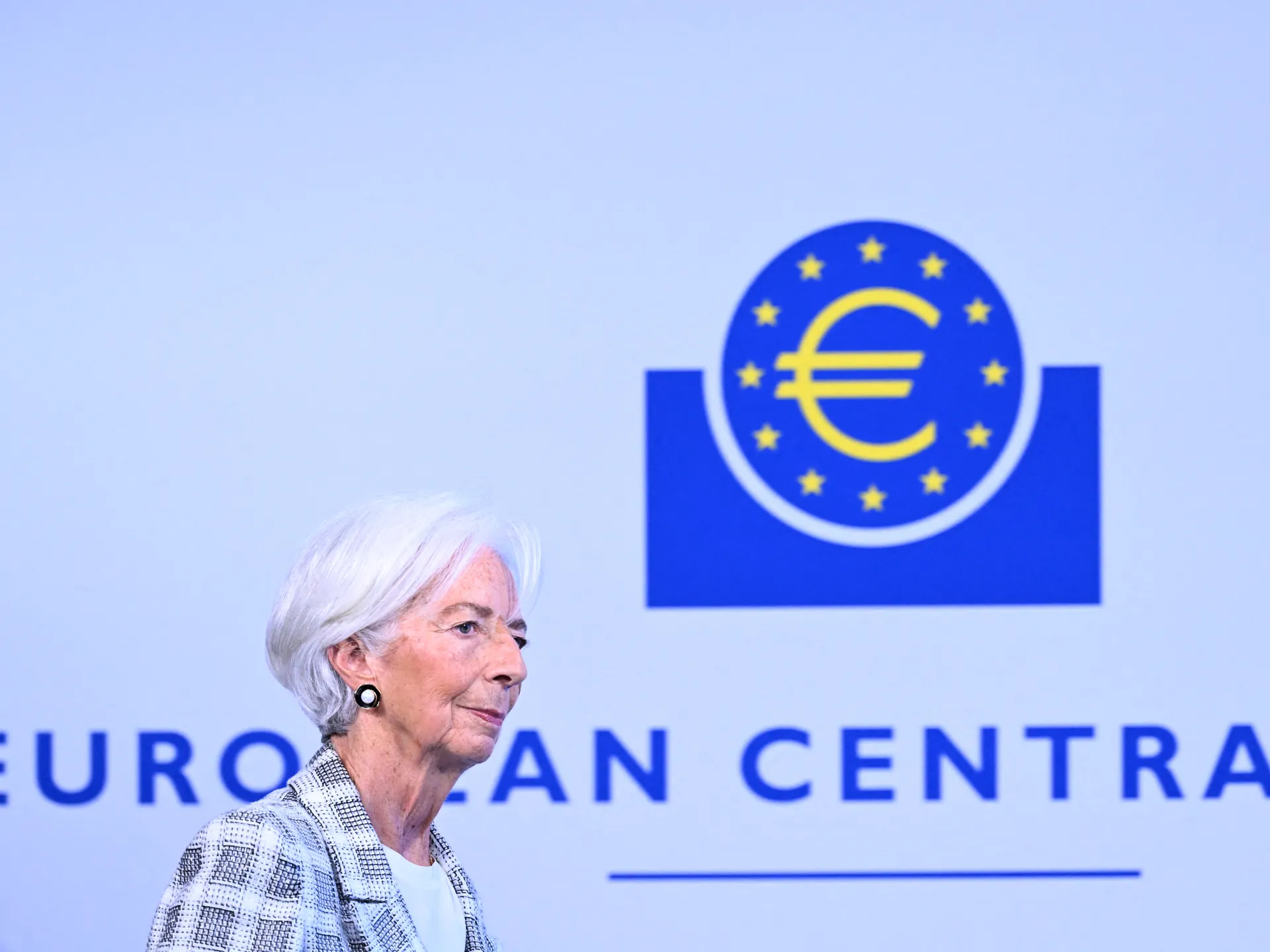
Christine Lagarde confirmed today at the European Central Bank’s policy press conference that she would step down as the bank’s president in February, nine months before her term ends in October 2027. She plans to remain in office until after the bank’s February 2027 policy meeting.
Her early departure has brought two leading contenders into focus as European leaders prepare to choose her successor.
Lagarde cited her desire to speak and engage freely on non-monetary policy matters, which the European Central Bank’s presidential neutrality does not allow.
“At this time, in relation to many corners of the world, not just Europe, I think that my voice can help,” she said. “My action can help in relation to principles that are dear to my heart. I don’t think I can be comfortable with that neutrality at the present time. And I’m interested in the truth, and I see the truth being very often damaged, contradicted by misrepresentation.”
Likely Successor
Whoever replaces Lagarde will likely come from the same background. Unlike her three predecessors, she is not a national central bank governor or a classic economist. Lagarde was a lawyer, government minister, and managing director of the International Monetary Fund.
Her political experience helped the European Central Bank, or ECB, when it needed to manage bond purchases and emergency lending to banks, and to provide oversight of various rescue programs with the IMF.
However, she did not have a strong track record of communicating inflation expectations to the market. During the ECB press conference on March 12, 2020, she triggered a market panic when she said that narrowing bond spreads was “not the function or business of the ECB.”
“My guess would be that going forward, whoever they pick, they’re going to want somebody who is better at that part of the job,” said Rebecca Christie, a senior fellow at economic think tank Bruegel.
The two frontrunners are Spain’s Pablo Hernández de Cos and the Netherlands’ Klaas Knot.
Pablo Hernández de Cos is the general manager of the Bank for International Settlements, or BIS. Previously, he served as the governor of the Bank of Spain, was a member of the ECB’s Governing Council, and chaired the Basel Committee on Banking Supervision and the Advisory Technical Committee of the European Systemic Risk Board.
Klaas Knot is currently a visiting fellow at the Peterson Institute for International Economics. Knot served as president of De Nederlandsche Bank, chaired the Financial Stability Board, and served on the ECB’s Governing Council and General Council, the European Systemic Risk Board, the IMF’s Board of Governors, and the BIS Board of Directors.
“There are some other names in the mix that have come up, but I would say there isn’t a clear third frontrunner,” said Christie.
“As a former head of the G20’s Financial Stability Board, Knot is exceptionally well qualified to handle potential financial risk,” added Holger Schieding, chief economist at multinational private and merchant bank Berenberg Bank, in an email response.
Whether a candidate is perceived as a “hawk” or a “dove” will likely play less of a role than it did in the past, he said. “Many central bankers have changed their views somewhat on the job, such as [ECB Executive Board member Isabel] Schnabel starting as a dove and ending up as a perceived hawk.”
However, with Schnabel scheduled to leave on Jan. 3, 2027, to become the IMF’s financial counselor and director of the Monetary and Capital Markets Department the following day, Christie said there will be no female representation on the ECB’s Executive Board or among the 21 national central bank governors who constitute its Governing Council.
Smooth Transition
Any plausible succession outcome would not change Schieding’s outlook on corporate investment and financing, he said.
“As Christine Lagarde clearly articulated today, there are a number of very capable potential candidates for the position of the next ECB president, and the process of selecting her successor is already underway,” said Yael Selfin, Vice Chair and Chief Economist at KPMG in the U.K. “We would therefore expect a relatively smooth transition. Any volatility in financial markets is more likely to be driven by other unfolding events in Europe and beyond.”