Why have France’s school protests become a wider political crisis? | Protests News
Protests are sweeping France as anger over conditions in schools meets frustration with high living costs and a government accused of doing little to address problems facing people.
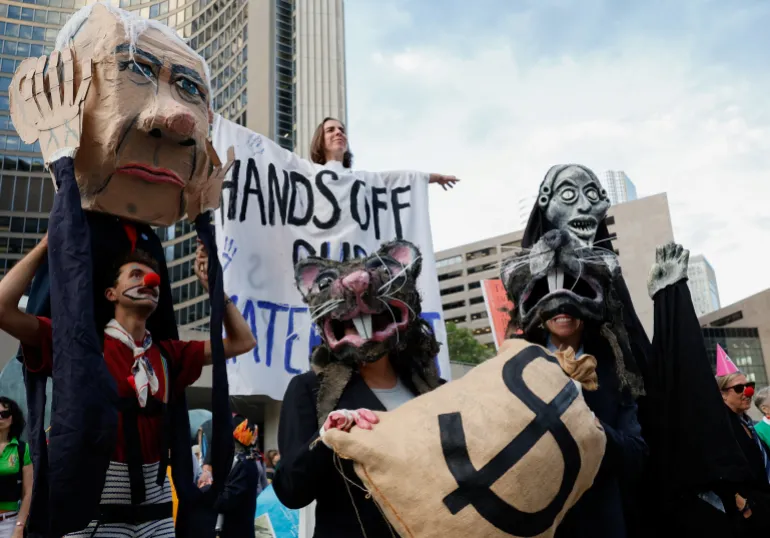
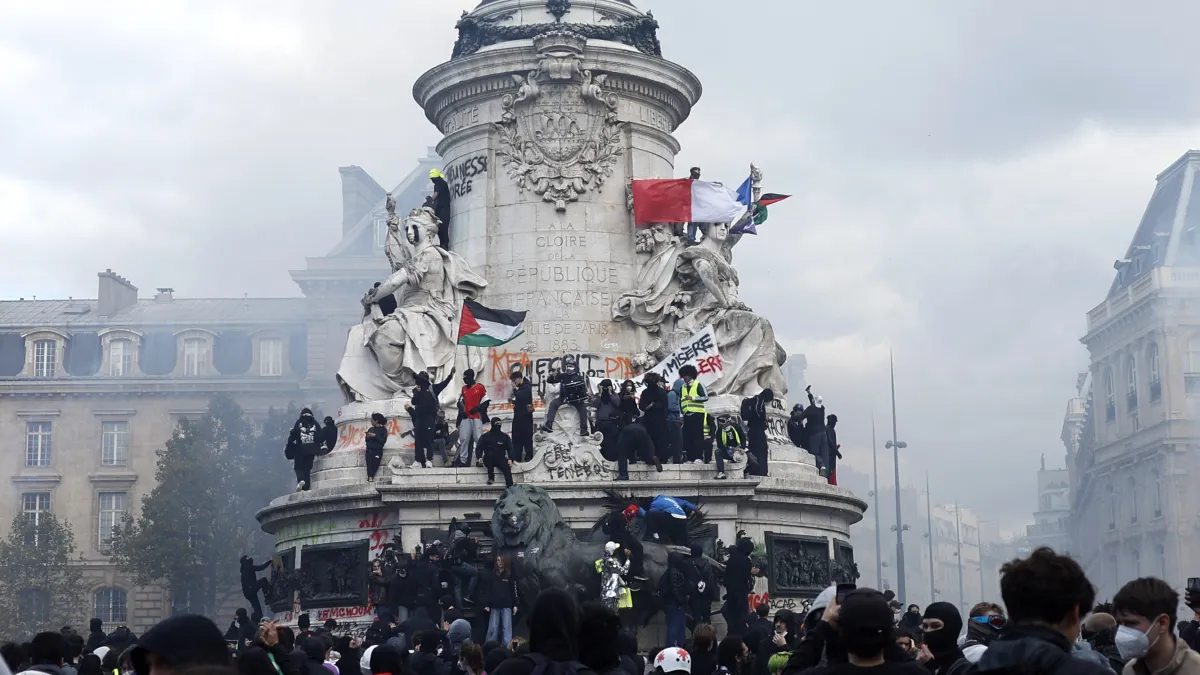
About 550,000 people demonstrated nationwide on Saturday, according to the Interior Ministry. Most marched peacefully, while a small minority attacked buildings, looted shops and clashed with police, who fired tear gas and charged protesters.
Recommended Stories
list of 4 itemsend of list
Prime Minister Sebastien Lecornu said 1,200 people were arrested and 150 police officers were injured. Behind the confrontations lies a political crisis, fuelled by anger at deteriorating services and overstretched household budgets, and compounded by a sense that France’s political institutions offer little hope of change.
Here is how school blockades became a nationwide movement – and what that means for President Emmanuel Macron.
How have the protests spread, what are protesters demanding?
The movement began last month in high schools in Paris’ working-class northern suburbs, where students protested against teacher shortages and poor facilities. School blockades and demonstrations later spread to cities including Bordeaux, Rennes, Nantes, Lyon, Lille and Marseille.
Saturday brought together students and trade unions, alongside supporters of the “yellow vest” movement that emerged in 2018 to challenge rising living costs and economic inequality.
Emile Chabal, a professor of contemporary history at the University of Edinburgh, told Al Jazeera the demonstrations were “the logical outcome of a series of protests” stretching back to the yellow vests.
That movement was driven by financial pressures and resentment at “the French presidential system”, he told Al Jazeera, alluding to a structure which often leads to the election of a centrist candidate, such as President Emmanuel Macron.
Saturday combined those longstanding grievances with students’ anger at deteriorating state schools. The yellow vests had demanded better public services.
Bringing students’ grievances together with wider social demands, therefore, represented “the worst possible outcome for the French government”, Chabal said.
Students’ immediate demands concern conditions in France’s lycees (public high schools), which generally educate pupils aged 15 to 18. They want smaller classes, enough teachers, better buildings and less exhausting timetables. Their complaints also reflect broader concerns about whether the state can provide the education and opportunities young people need.
But for workers, including school staff, the dispute also concerns wages and the resources available to deliver public services.
The school protests coincided with a nationwide public sector strike against the government’s budget plans. Bringing all these concerns together under one umbrella represented “the worst possible outcome for the French government”, Chabal said.
It comes as the proposed 2027 budget includes a 54 billion euro ($60.8bn) package of cost-cutting and tax measures, which the government says is necessary to reduce France’s deficit. The proposals include freezing the pay scale used to calculate civil servants’ basic salaries, which unions say would be the fourth consecutive annual freeze.
Donatella della Porta, a sociologist and political scientist, said students were inspiring wider mobilisation around inequality, cuts to public investment and democratic rights, with demands for social welfare spending rather than militarisation.
“They do not want to fight wars; they want a different future,” she told Al Jazeera.
She also linked the movement to young people’s mobilisation over Gaza, with Palestinian flags appearing at demonstrations across several European countries.
How has the government responded?
The government has focused its immediate response on public order, with President Macron saying those responsible for violence would be “prosecuted and punished”.
His comments came as a fire largely destroyed the historic town hall in the city of Limoges, while public buildings and shops were attacked elsewhere.
But those involved in violence represent only a small minority of the much larger mobilisation. Jean-Luc Melenchon, leader of the left-wing France Unbowed party, has accused the government of repressing school students and allowing the confrontation to intensify.
His argument reflects a wider political dispute about whether the government treats the protests chiefly as a security problem or addresses the grievances that have brought different groups together.
Experts say France’s problems extend beyond disagreement over individual budget measures and reflect deeper discontent. Emile Chabal, from the University of Edinburgh, said political paralysis since the 2024 parliamentary elections, which left no bloc with an outright majority, had created “an environment in which no political party or movement is able to channel social discontent”.
That fragmentation makes it difficult to build a durable agreement on spending, taxation or public services. It also leaves protesters questioning whether changing governments produces meaningful changes in policy.
The protests are also “a tough blow for Macron”, Chabal said, whose promises of youthful energy and a reformed, dynamic France have been undermined by “his inability to articulate his political project and his deeply unempathetic persona”.
Chabal added that the unrest included violence sometimes seen on the fringes of French demonstrations, with direct-action tactics associated with the yellow vests. Targets included shops and, more unusually, public buildings. He described the destruction of Limoges’ town hall as particularly significant because of its place in France’s civic history.
Other researchers emphasise the role of policing. Guya Accornero, a specialist in social movements at Lisbon’s University Institute, said previous confrontations had created lasting tensions between protesters and police.
During the current protests, a 15-year-old lost a hand to a police stun grenade, while a 14-year-old suffered a shattered jaw after being struck by a tear gas canister fired at close range, according to Human Rights Watch. The organisation condemned excessive force against children, saying the demonstrations had been overwhelmingly peaceful.
“Young people have been violently repressed also when using non-disruptive tactics,” she told Al Jazeera.
Who could benefit politically?
There is no clear answer from the experts who spoke to Al Jazeera. Paul Smith, an associate professor in French history and politics at the University of Nottingham, believes far-right leader Marine Le Pen stands to gain.
“I see only one beneficiary and that’s Le Pen,” he told Al Jazeera, suggesting the unrest could also damage Melenchon’s presidential prospects.
Chabal cautioned against assuming a far-right gain, but he said fear of disorder had historically benefited conservative or centrist parties in France, including after the 1968 protests.
Le Pen has not entirely dismissed the protesters’ grievances, describing them on X on Saturday as “legitimate social demands”, while claiming they had been “held hostage by the far left”.
The far-right may seek to reap the rewards of public discontent, but experts say it is more likely to channel that anger towards immigration and the scapegoating of migrants, rather than blaming the structures of neoliberalism and capitalism for the protesters’ woes, as Melenchon has suggested.
With a presidential election due in April 2027, candidates face competing pressures, demonstrating that they can restore order while convincing voters they will address the conditions behind the mobilisation.
The challenge, Chabal said, is how to create change in “an environment in which no political party or movement is able to channel social discontent”.