L.A

Welcome to Bass’ virtual State of the City (Part II)

Good morning, and welcome to L.A. on the Record — our City Hall newsletter. It’s Noah Goldberg, with an assist from David Zahniser, Sandra McDonald and Alene Tchekmedyian, giving you the latest on city and county government.

Mayor Karen Bass is planning to give her second State of the City address of the year on Monday, with a digital twist from years past.

Traditionally the speech is given — in person — before City Council members and other machers at City Hall or another location. This year’s speech will be delivered by video.

Of course, Bass already did one State of the City speech this year, holding forth on the Olympics, the World Cup and Palisades fire rebuilding in a February address at Exposition Park.

The video State of the City will probably be more about the city budget, which also will be released Monday. The city is facing a budget gap of a few hundred million, according to Matt Szabo, the city administrative officer.

“Mayor Bass will update L.A. on the State of our City through a video that anyone can watch, anytime, anywhere,” said Paige Sterling, a spokesperson for Bass. “From Day One through today, Mayor Bass’ focus is changing the direction of L.A. by reversing long-standing [and long ignored] trends on homelessness, housing, public safety and infrastructure.”

You’re reading the L.A. on the Record newsletter

Sign up to make sense of the often unexplained world of L.A. politics.

Parisian payback

The city controller released information this week that showed how much L.A. paid for flights to Paris for L.A.’s delegation to the 2024 Summer Olympics.

One purchase stuck out: $22,000 for a first-class ticket for Bass to fly to Paris and back. It was purchased March 6, the same day Bass boarded the flight to the City of Light, according to the city, which released the information in response to a public records act request.

One reason for the high cost was the last-minute purchase, the mayor’s office said, which it said was the consequence of a packed mayoral schedule that makes advance planning difficult.

Secondly, the city was transferring over its travel booking platform to a company called Concur, and the only flights available for the mayor to purchase to arrive in Paris in time on the platform were first-class seats.

The mayor then reimbursed the city for $12,270, with half coming from her personal bank account, while the other half came from her Karen Bass For Mayor 2022 account, according to checks. That left the city on the hook for $10,000.

“Mayor Bass voluntarily paid for the majority of the ticket herself. City rules didn’t require her to, but she did it anyways. This was the only flight that would get her there on time, and this was the only ticket available,” said Kolby Lee, a spokesperson for the mayor.

Bass and a council delegation, including Councilmember Katy Yaroslavsky, were in Paris that March to “see behind the curtain” about how a city prepares to host the Games, Bass said at the time.

Yaroslavsky’s round trip cost the city $1,600.

Raman out of council leadership

Sometimes the drama at City Hall comes in the fine print. Last Friday, the City Council released its agenda for its April 14 meeting. Casual observers would be forgiven for missing a small change on the first page.

Under Council President Marqueece Harris-Dawson’s name, and under the name of President Pro Tempore Bob Blumenfield, there was a third name: Assistant President Pro Tempore John S. Lee.

That makes Lee No. 3 in council leadership, appointed to the position by Harris-Dawson. For all intents and purposes, the largely ceremonial position means he gets to sit on the dais and preside over council if Harris-Dawson and Blumenfield can’t make it.

But on the fourth floor of City Hall, where council offices are, the move had staffers chattering.

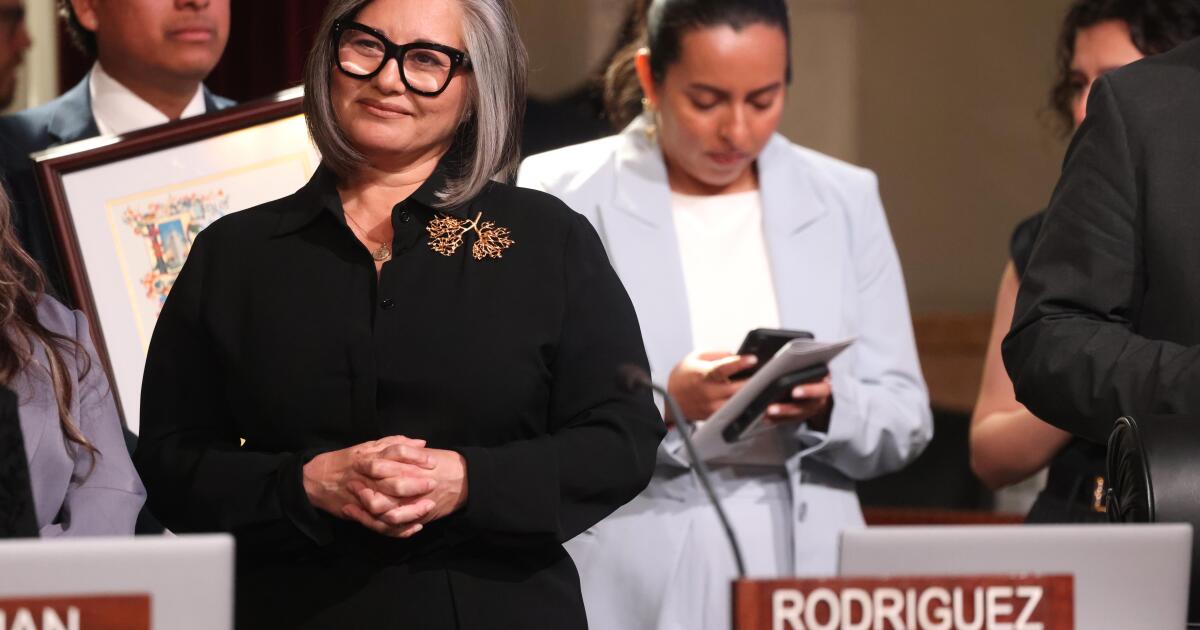
Lee replaces Councilmember Nithya Raman, who threw her hat in the ring to run for mayor against Bass — an ally of Harris-Dawson.

Bass had previously thrown her weight behind Raman during the council member’s tough 2024 reelection campaign.

Some thought Harris-Dawson was punishing Raman for her surprise bid against Bass, but Raman said that wasn’t the case.

“When I first announced my candidacy for Mayor, I told the Council President that I would step back from all of my appointed roles. One change has now been made. I remain focused on serving my district and the City of Los Angeles,” Raman said in a statement.

Harris-Dawson didn’t immediately respond to a request for comment.

There’s a long tradition of council members stepping down from leadership positions or getting the ax when they run for higher office.

In 2021, then Councilmember Joe Buscaino was voted out as president pro tempore after making disparaging remarks about numerous council members (including Raman) while he was running for mayor.

In 2011, then-Councilmember Eric Garcetti stepped down from his role as council president during his run for mayor.

Spotlight on Soto

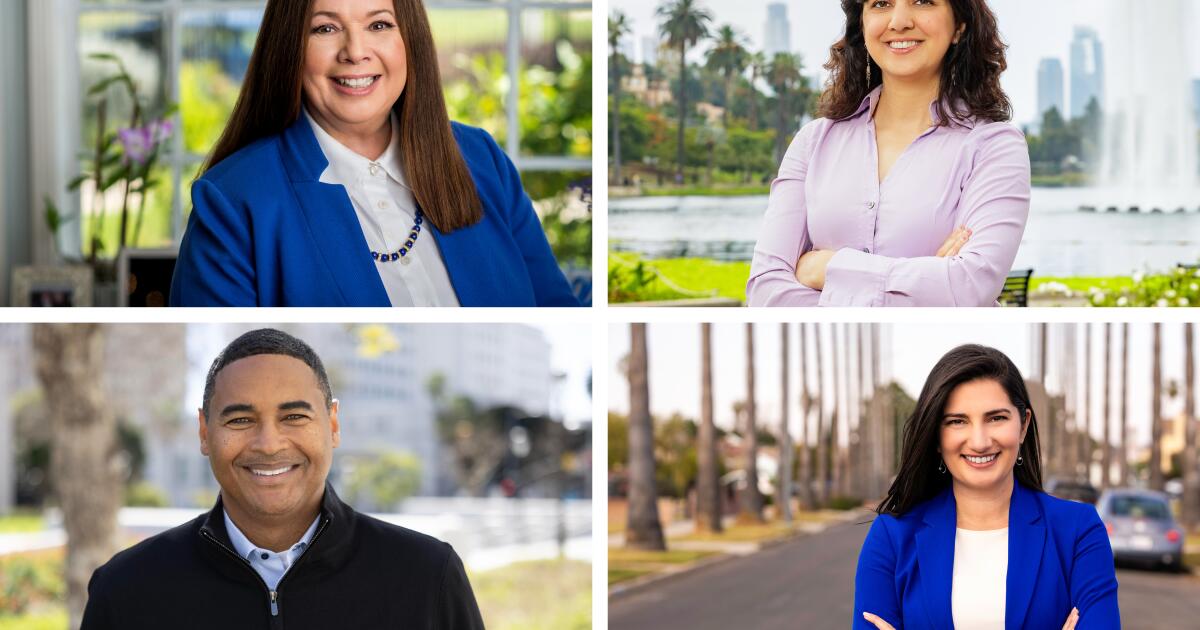
Los Angeles City Atty. Hydee Feldstein Soto, who is seeking reelection in the June 2 primary, is taking heat from challenger Marissa Roy for her appearance last weekend at the Hope Fest LA rally at the L.A. Coliseum.

The event was put on by Hope California, which is led by evangelical pastor Ché Ahn, a supporter of President Trump and a write-in candidate for California governor. Ahn spoke at a Stop the Steal rally in Washington, D.C., the day before the Jan. 6, 2021, storming of the Capitol, and has repeated the unfounded claim that Joe Biden stole the election from Trump. (“I don’t have facts. I don’t have proof. That’s just my own personal opinion,” Ahn, who also opposes abortion, told The Times.)

Feldstein Soto is pro-choice and anti-Trump, and the speakers immediately preceding her expressed anti-gay and anti-trans views.

Roy said the positions expressed at the rally were wildly out of step with those of Los Angeles voters, and criticized the city attorney’s appearance at the rally as “disturbing.”

“Los Angeles is overdue for a City Attorney who fights for the people,” Roy said in a statement.

At the rally, Feldstein Soto spoke about the scourge of human sex trafficking, including of children along the Figueroa corridor in Los Angeles. She had been invited to the event by a human trafficking survivor to speak about their shared commitment to the issue, spokesperson Naomi Goldman said.

“The primary purpose of the City Attorney’s attendance was to shine a light on the exploitation of women and girls, and to stand in solidarity with those affected. She stayed at the event briefly to deliver her remarks and then departed,” Goldman said.

State of play

— THE KIDS ARE ALRIGHT: A strike that would have shut down schools for nearly 400,000 students was averted at the eleventh hour early Tuesday after the Los Angeles Unified School District reached a tentative agreement with the union that represents workers including custodians, bus drivers and cafeteria workers. Mayor Bass stepped into negotiations at the last minute to help avert a disruptive work stoppage.

— LA USD$: The price of the union deal will be nearly $1.2 billion in annual contract costs, and questions remain about whether the district can afford it.

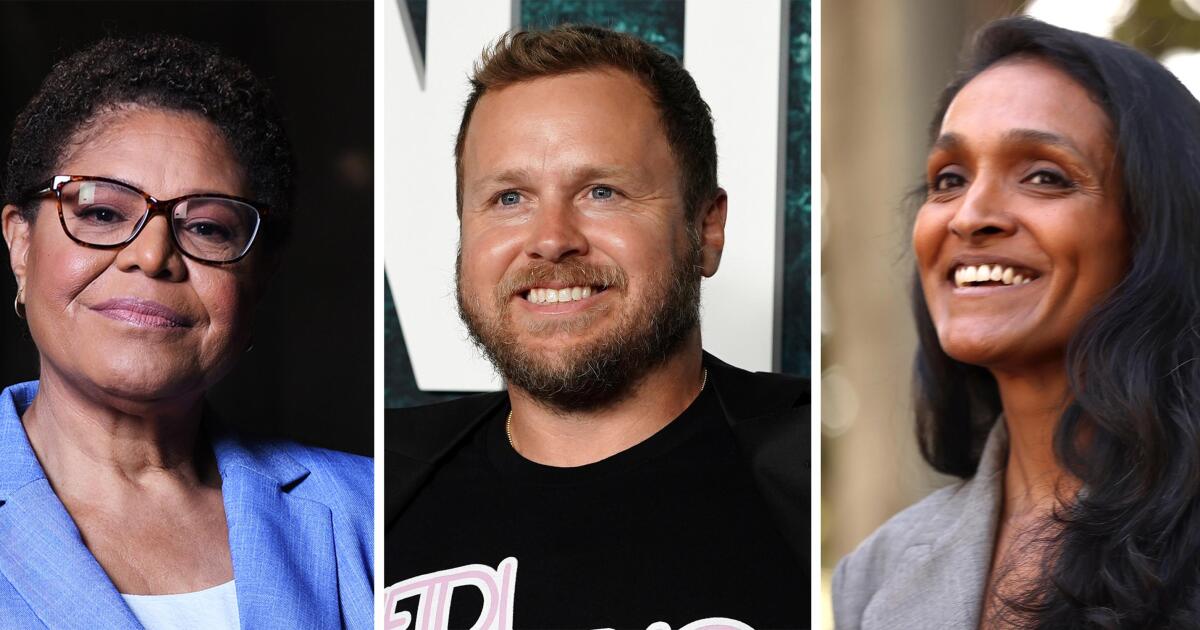
— ONE AND DONE?: Mayoral candidate Spencer Pratt went on the Joe Rogan Experience this week and told the podcaster that Angelenos are fed up with their leadership. He explained the rules of the city’s June 2 primary to Rogan, saying that there would be no runoff — as most analysts expect — if a candidate wins 51% of the vote. “I think I become mayor June 2 and it won’t even go to November,” Pratt said.

COUNTY BUDGET: The county unveiled its nearly $50-billion budget plan Monday, proposing $2.7 million invested to beef up the team of people investigating fraud within a deluge of recent sex abuse lawsuits, suggesting a broadening probe at the district attorney’s office. The supervisors must now review, then vote on the budget.

— HAHN AND OFF: L.A. County Supervisor Janice Hahn was booed by her neighbors in San Pedro at a Tuesday night town hall meeting after she spoke in support of a proposed substance abuse rehabilitation center in the South Shores neighborhood. “There will be a difference of opinion on this project, but let’s not tear each other apart,” Hahn urged residents, who picketed last weekend at the site of the proposed project.

— E-HIKE: A Los Angeles City Council panel is pushing to ban electric bikes from most city recreational trails, saying the machines pose a threat to hikers and equestrians. The council’s Arts, Parks, Libraries, and Community Enrichment Committee voted 3 to 0 in favor of the measure, which now goes to the council’s Transportation Committee before potentially advancing to the full City Council, which would have to approve the ban before it takes effect.

QUICK HITS

  • Where is Inside Safe? The mayor’s signature program moved more than 25 people off the street and inside in Koreatown this week.
  • On the docket next week: The mayor will release her budget on Monday, along with her second State of the City. She is planning to hold a news conference on the budget Monday.

Stay in touch

That’s it for this week! Send your questions, comments and gossip to LAontheRecord@latimes.com. Did a friend forward you this email? Sign up here to get it in your inbox every Saturday morning.

Source link

L.A. Times Book Prize winners talk AI, book bans, diverse novels

Some of our finest contemporary writers got their laurels Friday night at the 46th Los Angeles Times Book Prizes ceremony at USC’s Bovard Auditorium.

At the awards ceremony, which opens the annual L.A. Times Festival of Books weekend, Oakland-born writer Amy Tan and literary nonprofit We Need Diverse Books received achievement honors, and finalists in 13 other categories became prize winners.

The presenters and awardees who took the stage balanced a spirit of playfulness — Times senior editor Sophia Kercher called the weekend’s festival “my personal Coachella” and Times columnist LZ Granderson saluted his fellow “booktroverts” — and one of reverence as they celebrated writing as an instrument for advocacy, imagination and history-keeping.

As Bench Ansfield virtually accepted his award in the history category for “Born in Flames: The Business of Arson and the Remaking of the American City,” which exposes a pattern of landlords setting residential fires to collect insurance payouts, he said, “It’s a scary time to be a historian in the United States.”

“Our field, like so many other fields, is under attack,” Ansfield said. “To understand the crises in front of us, we have to understand our history.”

Among the crises highlighted was AI encroachment, the subject of science and technology category winner Karen Hao’s “Empire of AI: Dreams and Nightmares in Sam Altman’s OpenAI.” The AI expert and investigative journalist’s book is a critical investigation into the rise of OpenAI and its impact on society.

In Hao’s acceptance speech, read by presenter Jia-Rui Cook in her absence, the author said she “can’t help but be disturbed by how the themes of this book have grown more relevant by the day.”

“That said, I have never been more hopeful of our chance to advance a different future,” the author said, adding that L.A.’s history of resistance movements — including the recent Hollywood strikes — made it an apt place to accept her award.

“Gatherings like this are one of many radical acts of resistance against the imperial project that seeks to strip us of our meaning and our humanity,” Hao said. “Let us continue to resist defiantly together and let us remember lessons in history: When people rise, empires always fall.”

Tan echoed Hao’s sentiments as she accepted the Robert Kirsch Award, which celebrates literature with regional and thematic connections to the Western United States, for her acclaimed portfolio of writing exploring identity and cultural inheritance — often through the lens of the immigrant experience.

In her speech, “The Joy Luck Club” writer said that while she never particularly considered herself a “political writer,” her stance on that has changed as government actions have made her think critically about her own identities.

“My birthright and that of millions of others is now being argued before the Supreme Court, and no matter what the outcome is, it’s been a kick in the gut to know that those in the highest echelons of government and those who support them believe that we don’t belong.”

As an author, Tan said, “I imagine the lives of the people I write about,” and that act of compassion, for writers, inherently “reflects our politics and our beliefs. And so yes, I am a political writer.”

Later, Caroline Richmond, executive director of We Need Diverse Books, celebrated the work of her nonprofit — the recipient of this year’s Innovator’s Award — which has made it so her daughter “has never really had to look that far to find herself on the page.”

Still, she said ongoing book bans are threatening those strides toward a more diverse literary marketplace.

“The work is very much far from over,” Richmond said, “but I have to remind myself that the people banning books are never the good guys in history, and it’s up to us in this room and beyond — as readers, as book lovers — to fight back because diverse books, we really need them now more than ever.”

As the ceremony wore on, the room was as charged with celebration as it was with resistance.

When writer-editor and former child actor Adam Ross accepted the Christopher Isherwood Prize for “Playworld,” a semi-autobiographical novel about a teen growing up in 1980s New York, he gleamed with joy about his second novel being out in the world and finding readers.

“When it became clear to me that I was writing something that was going to be a lot bigger and take a lot longer than I planned, I promised myself I would use all of my ability to capture my experience of a particular era in an enduringly magical city, and to hopefully express it in such a way that any reader willing to embark on a journey with me, but upon finishing close the book and say, ‘Yes, I know exactly what that was like,’” Ross said in his acceptance speech.

“Winning this award makes me feel like I succeeded in that endeavor,” the author said.

Other winners included Ekow Eshun, who topped the biography category for “The Strangers: Five Extraordinary Black Men and the Worlds That Made Them,” which parses Black masculinity as embodied by various civil rights activists, philosophers and other visionaries, and Bryan Washington, who accepted the fiction award for “Palaver,” which details the tense reunion of a Jamaican-born mother and her queer son, who are navigating years of estrangement in Tokyo.

The 31st annual L.A. Times Festival of Books will host 500-plus authors and celebrities and 300-plus exhibitors across more than 200 events including panels, book signings and cooking demonstrations. Top-billed guests include musician-memoirist Lionel Richie, veteran actor and recent Golden Globe Carol Burnett Award honoree Sarah Jessica Parker, and the mastermind behind “Curb Your Enthusiasm,” Larry David.

The schedule for the Saturday-Sunday event can be found here.

Here’s the full list of finalists and winners for the Book Prizes.

Robert Kirsch Award

Amy Tan

Innovator’s Award

We Need Diverse Books

The Christopher Isherwood Prize for Autobiographical Prose

Adam Ross, “Playworld: A Novel”

The Art Seidenbaum Award for First Fiction

Andy Anderegg, “Plum”

Krystelle Bamford, “Idle Grounds: A Novel”

Addie E. Citchens, “Dominion: A Novel”

Justin Haynes, “Ibis: A Novel” | WINNER

Saou Ichikawa translated by Polly Barton, “Hunchback: A Novel”

Achievement in Audiobook Production, presented by Audible

Molly Jong-Fast (narrator), Matie Argiropoulos (producer); “How to Lose Your Mother”

Jason Mott, Ronald Peet, and JD Jackson (narrators), Diane McKiernan (producer); “People Like Us: A Novel”

James Aaron Oh (narrator), Linda Korn (producer); “The Emperor of Gladness: A Novel”

Imani Perry (narrator), Suzanne Mitchell (producer); “Black in Blues”

Maggi-Meg Reed, Jane Oppenheimer, Carly Robins, Jeff Ebner, David Pittu, Chris Andrew Ciulla, Mark Bramhall, Petrea Burchard, Robert Petkoff, Kimberly Farr, Cerris Morgan-Moyer, Peter Ganim, Jade Wheeler, Steve West, and Jim Seybert (narrators), Kelly Gildea (producer); “The Correspondent: A Novel” | WINNER

Biography

Joe Dunthorne, “Children of Radium: A Buried Inheritance”

Ekow Eshun, “The Strangers: Five Extraordinary Black Men and the Worlds That Made Them” | WINNER

Ruth Franklin, “The Many Lives of Anne Frank”

Beth Macy, “Paper Girl: A Memoir of Home and Family in a Fractured America”

Amanda Vaill, “Pride and Pleasure: The Schuyler Sisters in an Age of Revolution”

Current Interest

Jeanne Carstensen, “A Greek Tragedy: One Day, a Deadly Shipwreck, and the Human Cost of the Refugee Crisis”

Stefan Fatsis, “Unabridged: The Thrill of (and Threat to) the Modern Dictionary”

Brian Goldstone, “There Is No Place for Us: Working and Homeless in America” | WINNER

Gardiner Harris, “No More Tears: The Dark Secrets of Johnson & Johnson”

Jordan Thomas, “When It All Burns: Fighting Fire in a Transformed World”

Fiction

Tod Goldberg, “Only Way Out: A Novel”

Stephen Graham Jones, “The Buffalo Hunter Hunter”

Mia McKenzie, “These Heathens: A Novel”

Andrés Felipe Solano translated by Will Vanderhyden, “Gloria: A Novel”

Bryan Washington, “Palaver: A Novel” | WINNER

Graphic Novel/Comics

Eagle Valiant Brosi, “Black Cohosh”

Jaime Hernandez, “Life Drawing: A Love and Rockets Collection” | WINNER

Michael D. Kennedy, “Milk White Steed”

Lee Lai, “Cannon”

Carol Tyler, “The Ephemerata: Shaping the Exquisite Nature of Grief”

History

Char Adams, “Black-Owned: The Revolutionary Life of the Black Bookstore”

Bench Ansfield, “Born in Flames: The Business of Arson and the Remaking of the American City” | WINNER

Jennifer Clapp, “Titans of Industrial Agriculture: How a Few Giant Corporations Came to Dominate the Farm Sector and Why It Matters”

Eli Erlick, “Before Gender: Lost Stories from Trans History, 1850-1950”

Aaron G. Fountain Jr., “High School Students Unite!: Teen Activism, Education Reform, and FBI Surveillance in Postwar America”

Mystery/Thriller

Megan Abbott, “El Dorado Drive” | WINNER

Ace Atkins, “Everybody Wants to Rule the World: A Novel”

Lou Berney, “Crooks: A Novel About Crime and Family”

Michael Connelly, “The Proving Ground: A Lincoln Lawyer Novel”

S.A. Cosby, “King of Ashes: A Novel”

Poetry

Gabrielle Calvocoressi, “The New Economy”

Chet’la Sebree, “Blue Opening: Poems”

Richard Siken, “I Do Know Some Things”

Devon Walker-Figueroa, “Lazarus Species: Poems”

Allison Benis White, “A Magnificent Loneliness” | WINNER

Science Fiction, Fantasy & Speculative Fiction

Stephen Graham Jones, “The Buffalo Hunter Hunter”

Jordan Kurella, “The Death of Mountains”

Nnedi Okorafor, “Death of the Author: A Novel”

Adam Oyebanji, “Esperance”

Silvia Park, “Luminous: A Novel” | WINNER

Science & Technology

Mariah Blake, “They Poisoned the World: Life and Death in the Age of Forever Chemicals”

Peter Brannen, “The Story of CO2 Is the Story of Everything: How Carbon Dioxide Made Our World”

Karen Hao, “Empire of AI: Dreams and Nightmares in Sam Altman’s OpenAI” | WINNER

Laura Poppick, “Strata: Stories from Deep Time”

Jordan Thomas, “When It All Burns: Fighting Fire in a Transformed World”

Young Adult Literature

K. Ancrum, “The Corruption of Hollis Brown”

Idris Goodwin, “King of the Neuro Verse”

Jamie Jo Hoang, “My Mother, the Mermaid Chaser”

Trung Le Nguyen, “Angelica and the Bear Prince” | WINNER

Hannah V. Sawyerr, “Truth Is: A Novel in Verse”

Source link

How to have the best Sunday in L.A., according to Paul W. Downs

Paul W. Downs can’t help it that even on the weekends, his life intersects with “Hacks,” the HBO comedy he co-created and co-showruns with his wife, Lucia Aniello, and their friend Jen Statsky. (He also appears on the show as Jimmy LuSaque Jr., the besieged manager of its two stars, played by Emmy winners Jean Smart and Hannah Einbinder.) The fifth and final season of “Hacks” premiered last week, but on Downs’ days off, he often finds himself at its previous filming locations or hanging out with cast members who have become like family.

In Sunday Funday, L.A. people give us a play-by-play of their ideal Sunday around town. Find ideas and inspiration on where to go, what to eat and how to enjoy life on the weekends.

Downs moved to Los Angeles in 2011, but soon after, he and Aniello were hired to write (and for him to act) on the über-New York show “Broad City,” keeping them away from the West Coast for years. Now the couple live in Los Feliz, which they enjoy with their young son.

“I love Los Feliz because it’s a real neighborhood with restaurants and bars, but also feels close to nature with Griffith Park,” Downs says. “Also it’s very central to my Eastside friends and Westside agents.”

And if he had to live at a local mall, like the character Ava Daniels did in the third season of “Hacks,” which would he choose?

“It would be the Americana, obviously.”

Here’s how he’d spend a perfect day in L.A.

10 a.m.: A late rise and a li’l barista

I’m sleeping in if I can, which I can’t because I have a toddler, but let’s say I can sleep ’til 10. That would be insane.

Then I’m making coffee at home. I’m making it with my 4-year-old because he likes to make my coffee now. He always wanted to help, now he really wants to do it on his own. I’m still there to supervise, but he does do a lot of it.

I do batch brew. I’m doing Verve Coffee that I’m grinding there, and then I’m brewing four cups because I need my coffee. I had a Moccamaster for a long time, but I recently got a Simply Good Coffee. There’s no plastic — it’s all glass and metal.

11 a.m.: Chocolate croissants for everyone

We’re driving to Pasadena and we’re going to [Artisanal Goods by] CAR, which is the place to get the best chocolate croissant, I think, in the world. I don’t just think in L.A., I think they’re better than Paris. I’m going there with my wife and my kid and I’m having another coffee and some pastry. We’re ordering three [chocolate croissants]. We’re not doubling up.

11:45 a.m.: The family business

We’re driving to Fair Oaks in Pasadena. There’s a place called T.L. Gurley. We shot “Hacks” there, actually. Not only in Season 1, but also full circle in Season 5. We’re going to shmay around and look at antiques. My kid is going to want to play a vintage pinball machine. We’re going to find a little piece of art for the house or what have you. It’s not necessarily that I’m on the hunt. It’s to pass the time and to have some fun. If I could do anything and have a leisurely day and take my mind off work, that’s what I’m doing.

People love to interact with my kid when he’s there. We’re really training him to appraise things at a young age. My parents are part-time dealers of antiques. My grandmother bought and sold antiques. It’s kind of a family business.

1:30 pm.: Baguettes and books

We’re driving to Larchmont and we’re getting a sandwich at Larchmont Village Wine, Spirits & Cheese. I’m doing prosciutto-mozzarella-basil on a baguette.

Then we’re going to Chevalier’s Books. What’s sad is that I’m often not looking for leisure material. I’m looking for something that I’m interested in learning more about or writing about, or that they’re turning into a show I want to audition for. But we’re also doing Little Golden Books for my son. He’s obsessed. We’re not huge on screen time, so we really encourage the book-buying.

2:30 p.m.: Cast pool party

We’re having some family fun in the pool and we’re doing that until evening. We invite people over all the time. My sister-in-law is a New Yorker, but she actually wrote last season on “The Rooster” and she’s often writing on shows in L.A., so she’s often here and she’ll have a couple friends come over. I know this sounds like a piece of PR or something, but we’ll really literally have Hannah [Einbinder] and maybe Mark Indelicato from “Hacks” come over to swim. Jen, our co-creator of “Hacks,” will come over.

6:00 p.m.: Family dinner

Sometimes we’ll order Grá to the house, which is a pizza place in Echo Park — excellent sourdough crust pizza. But if we don’t do that, an ideal evening is an early dinner at All Time on Hillhurst in Los Feliz. We’re ordering the ceviche and my son is having all of it and not sharing with anybody at the table.

8:45 p.m.: A thrilling ending to the day

After putting my kid to bed, my wife and I, in an ideal world (full disclosure: we haven’t done this in two years), we’ll watch something together that we’ve been meaning to watch. We have a long list of movies and we either want to revisit or that we haven’t seen that we need to watch.

We don’t watch a lot of comedies. It’s a dream to watch a “Black Bag” or a little espionage thriller. We really like that because it’s so different than the stuff that we’re working on in the day.

Often the things we watch are things that we admire. We like deconstructing it as fans of film and television. We do like talking about the making of it, but it’s less of a critique and more of a listing of the things we appreciated about it.

10:30 p.m.: No work tomorrow

And then it’s lovemaking ’til morning on a perfect Sunday. If it’s a perfect Sunday, there’s also a Monday that’s off.

Source link

How to find L.A. hikes where spring is in full bloom

I’ve come to resent the frenzy around superblooms.

You are reading The Wild newsletter

Sign up to get expert tips on the best of Southern California’s beaches, trails, parks, deserts, forests and mountains in your inbox every Thursday

Not because I don’t love seeing our hillsides blanketed with nature’s bounty, but because it misses the point that every wildflower that bursts out of the ground is its own sort of miracle. Have you ever slowed down on the trail just to stare at an individual California poppy and considered how in the world a seed that’s a fraction of an inch (1/20 to be exact-ish) became this bright orange delicate thing before you?

For me, each wildflower I spot on the trail is an opportunity to practice gratitude. I hope I can persuade you to consider the same.

With that same energy, I’d like to teach you how I find wildflowers and other plants I love, both as a hiker and outdoors journalist. Here is what I consider as I’m searching for the best spring hikes.

A large gnarled tree with huge brown branches with small green leaves over a dirt path.

A large oak tree provides shade over a trail in Franklin Canyon Park.

(Jaclyn Cosgrove / Los Angeles Times)

1. Learn the landscapes

L.A. County is home to a multitude of diverse plant habitats, with each offering its own range of wildflowers, shrubs, trees and more. And often, these landscapes can be interspersed among each other.

Hikers around L.A. commonly encounter plant habitats and ecosystems that include:

  • Coastal sage scrub: Found at lower elevations (generally below 3,000 feet), this fire-adapted plant community often includes bright yellow bush sunflower, sticky monkey flower (orange blooms), deerweed (orange and yellow blooms) and fragrant California sagebrush and black sage, which features white and bluish blooms; this is a great plant habitat to hike when you want to really stop and smell things.
  • Chaparral: Often said to be the most extensive vegetation type in California, chaparral is found throughout Southern California’s mountain ranges up to about 5,000 feet, although it does grow higher; chaparral is a “continuous cover of low-growing shrubs creating a mosaic in shades of green,” according to research by the U.S. Forest Service; common flowering plants found in chaparral include woolly bluecurls, chamise (white flowers), ceanothus (shrubs with fragrant purple, white and sometimes pink blooms) and manzanitas.
  • Oak woodlands: A plant habitat often found in low- to mid-elevations (generally below 5,000 feet) in foothills and valleys, this ecosystem is “officially defined as an oak stand in which at least 10% of the land is covered by oaks and other species, mostly hardwoods,” writes author Kate Marianchild in “Secrets of the Oak Woodlands”; wildflowers that often grow here include California buttercup (yellow blooms), Collinsia heterophylla (purple and white blooms), hummingbird sage (super cool plant with magenta flowers) and more.
A coast live oak with a swing, a flowering golden yarrow and a Bush monkeyflower, sometimes called sticky monkey flower.

Several coast live oaks, including this one with a swing, live along the Gabrielino Trail, left. Top right, there are several native plants and wildflowers along the Gabrielino Trail, including golden yarrow. Bottom right, Bush monkey flower, sometimes called sticky monkey flower, is a native shrub found along the Gabrielino Trail.

(Jaclyn Cosgrove / Los Angeles Times)

  • Riparian habitats: This is the term used to describe the lush landscape found around rivers, creeks and in moisture-rich canyons and includes riparian woodlands; it is less defined by elevation and more so is used to describe the life found around water. Wildflowers and plants that bloom include western columbine, scarlet monkey flower and miner’s lettuce (white and pale pink blooms). You can often also find California bay laurels, which have a zesty pungent smell (that not everyone loves).
    • Where to see it: Essentially anywhere along the 28.8-mile Gabrielino Trail, which runs parallel in several sections to the San Gabriel River and Arroyo Seco.
A funky short red plant pokes out of pine needles.

The snow plant (sarcodes sanguinea Torr.) is starting to come up around pine trees at the Chilao Picnic Area in the Angeles National Forest. It grows in the spring, after snow has melted, has no chlorophyll and gets its nutrition from fungi growing on conifer roots in the soil.

(Raul Roa / Los Angeles Times)

2. Go higher for late-season blooms

Thanks to our proximity to the San Gabriel Mountains, the wildflower season often extends into late spring and early summer.

In Angeles National Forest, you can easily hike above 5,000 feet and even farther into the sub-alpine regions where you’ll find mixed conifer forests and a range of wildflowers and other interesting plants. One of my favorites to spot is the snow plant, a funky red parasitic plant that “derives sustenance and nutrients from mycorrhizal fungi that attach to roots of trees,” according to the California Native Plant Society. Other blooms you might spot include various types of lupine, pumice alpine gold and some types of paintbrushes.

Grape soda lupine grows in Angeles National Forest, including here along the Cooper Canyon trail.

Grape soda lupine grows in Angeles National Forest, including here along the Cooper Canyon trail.

(Jaclyn Cosgrove / Los Angeles Times)

3. Determine whether an area has burned in recent years

Many of the most beloved areas of the Santa Monica and San Gabriel mountains have burned in recent years. The immediate aftermath is devastating to witness: blackened hillsides with shrubs and trees burned down to nubs and stumps.

But, as the ecosystem starts to heal, several wildflowers known as “fire followers” will start popping up.

“Often boasting beautiful blooms, some germinate only when their seeds are exposed to heat, while others take advantage of the charred, mineral-rich soil left behind, helping to secure the land and reduce erosion,” according to TreePeople.

I’ve found this to be true in areas that burned in the 2020 Bobcat fire, where trails burst with blooms from several types of lupine (including grape-soda lupine, my personal favorite), phacelias, including large flowered phacelia and caterpillar phacelia, and withered snapdragon.

A field of thick orange flowers.

California poppies bloom next to the California State Route 138 near the Antelope Valley California Poppy Reserve State Natural Reserve on March 12. The state’s wildflowers typically bloom from mid-March through April.

(Kayla Bartkowski / Los Angeles Times)

4. Check the data and help others do the same

Before heading out, I often head to iNaturalist, a citizen science app where users submit photos of animals, plants and other living organisms they observe. I will usually look at what other users have submitted in recent weeks. And on every hike, I typically submit at least 20 observations of wildflowers, lizards and trees I noticed. (As of today, I’ve submitted 675 observations of 341 species, including eight California poppy observations and seven black bear observations, which are really just photos of scat.)

To use iNaturalist, you can either visit its desktop site or use the app, which is available for iPhone and Android. You can easily search specific plants — although rare and endangered specimens will have their locations hidden — to discern whether any have been spotted along the trail you’re headed to. This is one of the ways I discovered an abundant showing of wildflowers in Towsley Canyon and in the Santa Monica Mountains, which hopefully is still there thanks to the recent rainfall.

As you can tell, there is much to learn about the diverse landscapes covering Southern California. I hope this newsletter prompts you to learn even more as you venture out there.

May your adventures lead you to a day full of springtime color and a deep sense of gratitude for whatever you find!

A wiggly line break

3 things to do

A person carries a bag of weeds.

Violet Tiul, 12, removes invasive mustard weed at Friends of the Los Angeles River’s Habitat Restoration & Earth Month Celebration at the Sepulveda Basin Wildlife Preserve in Los Angeles on May 24, 2025.

(Carlin Stiehl / Los Angeles Times)

1. Celebrate Earth Month at the L.A. River
Friends of the L.A. River needs volunteers from 8 to 11 a.m. Saturday at the Sepulveda Basin for its Earth Month habitat restoration day. Other local groups at the event will include the California Native Plant Society and the L.A. and San Fernando Valley chapters of the Audubon Society. Volunteers will yank weeds and install native plants and be rewarded with guided nature walks around the native reserve. Binoculars will be provided. Learn more at support.folar.org.

2. Explore the night sky in Joshua Tree
The Mojave Desert Land Trust will host an interactive evening exploring the night skies from 7 to 10 p.m. Friday at its headquarters in Joshua Tree. Interns from the trust’s Women In Science Discovering Our Mojave (or WISDOM) will share their research findings, and afterward, guests will be treated to s’mores and a night sky viewing with a National Park Service ranger. Learn more and register at mdlt.org.

3. Hike with bats and more in Calabasas
Malibu Creek State Park will host a guided night hike from 7:30 to 9 p.m. in Calabasas. Guests will learn about nocturnal animals as they hike about three miles round trip. Register at eventbrite.com.

A wiggly line break

The must-read

A visitor stands before wildflowers in a beautiful landscape.

Carrizo Plain National Monument in San Luis Obispo County.

(Christopher Reynolds / Los Angeles Times)

If you’re feeling up for a road trip, may I suggest heading to the Carrizo Plain National Monument? Times staff writer Christopher Reynolds outlined how, even though we are past its peak wildflower season, the monument is still a gorgeous display of springtime blooms. “By the time my wife and I arrived in the first days of April, the flowers were past their peak, but the hills were still green and many meadows popped with yellow, purple and blue,” Reynolds wrote. “If I’m reading my wildflowers handbook right, these were tidy tips, Goldfields, Owl’s Clover, thistle sage, Valley Larkspur, coreopsis, phacelia and hillside daisies.”

We are so lucky to live among such rich biodiversity!

Happy adventuring,

Jaclyn Cosgrove's signature

P.S.

Would you like to meet me IRL? I am hosting “L.A. Hiking 101” at 1:45 p.m. Sunday at Mudd Hall 203 during the L.A. Times’ Festival of Books at USC. The festival is free to attend, as are several of the panels, mine included. I will share how to find some of the best hikes around L.A., what I’ve learned writing about our local wildlands and, as a fun show-and-tell, what I carry in my pack when I’m out on a day hike. Space is limited, so grab your ticket now for my talk. I am eager to hear what questions you have. See you there!

For more insider tips on Southern California’s beaches, trails and parks, check out past editions of The Wild. And to view this newsletter in your browser, click here.


Source link

How Coachella grew from a small desert festival into a global cultural behemoth

Commenters who never have been — and never will go — complain about the cost, the influencers, the hype. Purists wax poetic about the days when they disappeared into three days of music and the field wasn’t overtaken by brands like Barbie and e.l.f. cosmetics. Defenders claim they can camp their way to an affordable weekend, and others spend the whole time posting. A select few even talk about great performances they saw — it’s still a music festival.

You’re reading the Essential California newsletter

Sign up to start every day with California’s most important stories.

But one thing everybody can agree on: Coachella has changed. I should know. I’ve been covering it as a journalist since 2007.

Rapid advancements in technology and mass adoption of social media have brought out the best and worst of the festival — not just on screens thousands of miles away, but to those of us trying not to trip over the makeshift photoshoot you might have seen on Instagram.

Coachella pre-2010 was a purist’s paradise

Some of Coachella’s most iconic moments happened before smartphones: The Flaming Lips in a human hamster ball in 2004; Daft Punk’s 2006 pyramid set; Rage Against the Machine reuniting and calling for the George W. Bush administration to be tried for war crimes in 2007. If you even had a cellphone when Coachella started in 1999 it was probably a Nokia brick or a flip phone with an antenna that had limited talk and text options.

In the early years, there were no brand activations on the field; nobody knew what an influencer was and the only corporate sign you saw was for Heineken in the beer gardens. (There was no Heineken House with its own stage, just signs advertising the beer.)

The grounds were also considerably smaller, making it easier to explore the different stages and discover new music. You didn’t have fancy food options, but a slice of Spicy Pie was less than $10. (Coachella upgraded its food options from festival staples to weekend outposts of L.A. restaurants in 2014.)

The music was the draw. The festival’s track record includes artists like the Killers, the Black Keys, Childish Gambino and Kendrick Lamar climbing up from small type to headliner on the lineup poster.

Livestreams and influencers made Coachella’s reach global

The vibes started to shift in 2010 as smartphones grew in popularity, although the service on the field was spotty. It was the first year Coachella offered a livestream — available via Facebook and MySpace. The next year, the stream moved to YouTube, where it remains and draws millions of viewers.

As Coachella expanded to twin weekends due to popular demand on the ground in 2012, it also had the first viral moment fans could enjoy from thousands of miles away: Dr. Dre and Snoop Dogg brought 2Pac back to life via a hologram.

Celebrities were always at Coachella (I spotted Ryan Seacrest, Corbin Bernsen, David Hasselhoff and Danny DeVito in my early years), but the rise of social media made celebrity culture a key part of the event. By 2011, TMZ was posting about stars like Lindsay Lohan. Clips from Coachella went viral and ended up on shows like “Tosh.0” and referenced in “Community.”

The art, which was always part of the festival, became bigger and more iconic. On the growing photo app Instagram, larger-than-life sculptures of astronauts started appearing in selfies.

Brands saw an opportunity. American Express, H&M and Samsung launched activations on-site in 2015. The party scene outside the festival, with non-affiliated events that were timed because everyone was in town for Coachella, became marketing vehicles. Brands are still cashing in more than a decade later.

The next watershed moment was Beyoncé in 2018. Today, most headlining sets at the fest feel as if they are designed for the viewing experience on the livestream rather than the fans on the field (ahem, Justin Bieber and his laptop). But Beyoncé’s spectacle was just as mind-blowing on-site as it was at home. A year later, the “Homecoming” special debuted on Netflix, widening the reach.

Coachella became a key part of the pop culture landscape, and then it became a cornerstone of the influencer economy.

Behind all the hype, there’s still a music festival hiding

I inadvertently photobombed approximately 500 people just trying to go to and from the press tent last weekend and my inbox is overflowing with requests for coverage of off-site events with brands, celebs and TikTok influencers, including social media clips.

But at the end of the day, Coachella is still a music festival, and a really good one at that. The Strokes, David Byrne, Jack White, Iggy Pop, Turnstile, Wet Leg, Fujii Kaze and even Less Than Jake in the Heineken House were some of the best performances I had seen in years.

Coachella is what you make of it. And besides, everyone knows there are fewer influencers on Weekend 2.

Today’s top stories

A health worker administers a measles test.

A health worker administers a measles test on Fernando Tarin, of Seagraves, Texas, at a mobile testing site outside Seminole Hospital District on Feb. 21, 2025.

(Julio Cortez / Associated Press)

Increasing measles cases in California

  • California in 2026 has already seen its highest number of annual measles cases in seven years amid an ongoing resurgence of a disease once considered effectively eradicated in the U.S.
  • The re-emergence comes as vaccination rates have tumbled nationwide in recent years.

Testing LAX’s long-awaited train

  • LAX’s 2.25-mile electric train system will begin running without passengers next week as testing advances following a series of delays.
  • The Automated People Mover system began construction in 2019 and was initially slated to open to the public in 2023.
  • Specific bottles of Xanax, one of the most widely prescribed medications to treat anxiety and panic disorders, has been recalled due to its failure to dissolve at a standard rate.
  • FDA officials are not warning against consuming the product at this time.

What else is going on

Commentary and opinions

This morning’s must-read

Another must-read

For your downtime

A reporter lies on an AI massage table.

Reporter Deborah Vankin gets a massage by an “Aescape” robot at Pause Wellness Studio.

(Christina House / Los Angeles Times)

Going out

Staying in

A question for you: Are you planning on leaving California for another state? If so, tell us why.

Laura says, “I left California during the pandemic. Part of the push factor for me was politics, but not blue politics. I had been living in OC since 2018 and was surprised it was so Conservative (and conservative). That became a bigger source of discomfort for me as the vaccine question demonstrated how our neighbors’ decisions can impact us directly. Rather than moving elsewhere in California, which would have sorted out the political discomfort nicely, I moved to a much more affordable state where I had family.”

Email us at essentialcalifornia@latimes.com, and your response might appear in the newsletter this week.

And finally … from our archives

Kendrick Lamar rapping into a microphone on a dark smoky stage with a dark red backdrop

Kendrick Lamar performs at Coachella Music & Arts Festival at the Empire Polo Club on April 16, 2017.

(Amy Harris / Invision / AP)

On April 16, 2018, Compton’s own Kendrick Lamar became the first hip-hop artist to win the Pulitzer Prize for music.

He won for his album “Damn.,” which the Times’ Mikael Wood heralded as Lamar’s graduation to pop superstardom.

Have a great day, from the Essential California team

Jim Rainey, staff reporter
Hugo Martín, assistant editor, fast break desk
Kevinisha Walker, multiplatform editor
Andrew Campa, weekend writer
Karim Doumar, head of newsletters

How can we make this newsletter more useful? Send comments to essentialcalifornia@latimes.com. Check our top stories, topics and the latest articles on latimes.com.

Source link

USOPC ‘quite confident’ of LA28 direction amid ticket sales uproar

Fans are frustrated with LA28. City Council members are battling over billions of dollars and overdue contracts. But in front of the U.S. Olympic and Paralympic Committee board of directors, LA28 found support for the private organizing committee’s progress with a little more than two years remaining before the Games open in L.A.

Despite pushback from locals, LA28 leadership, including chief executive officer Reynold Hoover and chief executive officer responsible for revenue John Slusher, spoke to the USOPC on Wednesday about the ticket sale process, explained the superbloom-inspired look of the Games and celebrated the committee’s recent commercial success that surpassed more than $2 billion in sponsorship agreements.

“We were quite encouraged to hear from them,” USOPC chair Gene Sykes said during a conference call Wednesday after a board of directors meeting, “and quite confident in the direction of LA28 from an operational standpoint.”

The private group responsible for bringing the Games back to L.A. for the first time in four decades opened ticket sales this month after attracting a record number of interested fans. The first week of sales — reserved for locals in Southern California and Oklahoma City near competition venues — “significantly exceeded first-week sales for any previous Olympic Games,” LA28 said in a statement.

But many fans were shocked to see opening ceremony tickets topping $5,000. They complained about a shortage of options for the most in-demand sports and were surprised to see a 24% service fee. Global sales opened on April 9 and many of the problems, including website glitches and unavailable tickets, persisted.

The USOPC board discussed the fee with LA28, and recognized that it is “part of a framework that is a framework they accept,” Sykes said, “as opposed to challenging it or trying to make it something different.”

The fee is included in the listed price of the tickets, which start at $28. There will be 1 million tickets sold at $28 each, and nearly half of the Olympic tickets are under $200. More than 75% are under $400 and about 5% of tickets are more than $1,000.

“I know they’re thinking very, very seriously about how to manage the ticket activity so that it satisfies everybody,” Sykes said.

LA28 will have 14 million tickets available between the Olympics and Paralympics, which would break Paris 2024’s record of 12 million tickets sold. The current ticket drop, which is open to fans worldwide, ends April 19. LA28 expects to have a second drop this year, but has not released specific details about when.

Ticket headaches have added to a controversial run-up to the Games for LA28, which also faced backlash after chairman Casey Wasserman was mentioned in the Epstein files released in February. The LA28 executive committee backed Wasserman after a review with the assistance of outside counsel. Wasserman announced that month he would sell his talent agency but planned to continue working with LA28.

When asked Wednesday what the USOPC board believed Wasserman’s role with LA28 should be moving forward, Sykes said the organizations have had discussions and are monitoring the “impact on our community.” But it is ultimately the LA28 board’s decision to select its chair. Wasserman was appointed by former Mayor Eric Garcetti to lead the Olympic effort in 2014.

“Separate from the LA28 board … LA28’s leadership Reynold Hoover and John Slusher, but many other people among the hundreds of people who work for LA28 have continued to assemble a very strong team,” Sykes said, “and show measurable progress on all the fundamental things that they need to do to make the Games a very, very strong Games, and have a remarkable experience. We remain very confident that that progress is both evident and very solid and that [it] will involve the planning with partners, athlete engagement, public support and corporate interest, all of which remain very strong, and I think, very encouraging. The ongoing committee is executing effectively, and we’re very happy to work with them.”

Source link