Kuwait

US, Iran launch more attacks as mediators urge warring sides to uphold MoU | Drone Strikes News

The United States and Iran have traded attacks for a second day, straining their fragile ceasefire further after US President Donald Trump said the truce was “over”.

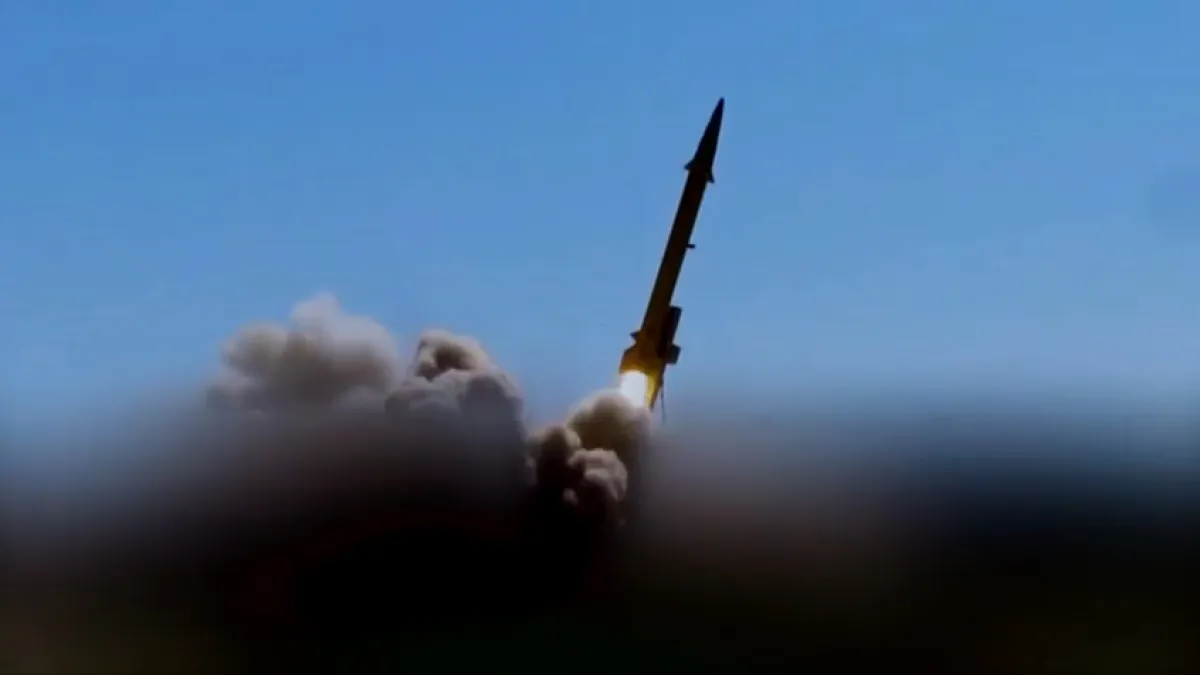
The US military said late on Wednesday that the attacks were aimed at Iran’s “ability to threaten the freedom of navigation in the Strait of Hormuz”.

Recommended Stories

list of 3 itemsend of list

The US struck approximately 90 military targets, including missile and drone storage as well as logistics sites along Iran’s coastline, said the Central Command (CENTCOM), which oversees US military operations in the Middle East.

In a post on his Truth Social platform, Trump called the US attacks “retribution for yesterday’s bombing of ships by Iran. If it happens again, it will get much worse!”

The latest attacks come a day after the US said it hit more than 80 targets in Iran in response to Iranian attacks on commercial vessels in the Strait of Hormuz.

Iran’s Islamic Revolutionary Guard Corps (IRGC) said on Thursday it carried out attacks on “key infrastructure and facilities” at bases used by the US military in Arifjan and Ali Al Salem in Kuwait, and Juffair and Sheikh Isa in Bahrain in response to the latest US bombardment.

The Iranian army later said its forces targeted a Patriot missile system in Kuwait, a satellite antenna in Qatar and US military fuel depots in Bahrain.

Kuwait’s Ministry of Defence said it was intercepting missiles and drones, while Qatar issued an “elevated security threat” alert.

The renewed fighting threatens to undermine a memorandum of understanding (MoU) the two sides agreed last month to extend an April ceasefire and gradually reopen the Strait of Hormuz to shipping.

The attacks come a day after Trump said the ceasefire with Iran was “over” and criticised the Iranian leadership. However, he left the door open to more talks and suggested that any strikes would end quickly.

Speaking to reporters on board Air Force One as he travelled back to the US after attending the NATO summit in Turkiye, Trump said the Iranian side had “called a little while ago” and that they wanted “to make a deal so badly”.

US attacks across Iran

US strikes hit a railway bridge in Iran’s northeast, according to several official media, and the news agency IRNA reported strikes on a military base in coastal Bushehr, which hosts the nation’s only civilian nuclear power plant.

The Iranian railway (IRIR) said the train service on the Tehran-Mashhad line had been temporarily suspended as a result.

It said technical teams were on site to repair the damaged section so that the rail service could resume as soon as possible, adding that buses had been arranged to transport affected passengers.

Warplanes hovered over Iran’s Kish Island, and explosions rocked the port cities of Bandar Abbas, Konarak and Chabahar, part of which lost electricity, IRNA reported.

At least three people were killed in an attack on the outskirts of Ahvaz, capital of the southwestern province of Khuzestan, IRNA reported, citing the deputy governor of the region.

At least one firefighter was killed in an attack on an airport facility in Iranshahr, IRNA reported.

Iran’s Health Ministry said at least 14 people were killed and 78 others injured over the past two days.

Calls for diplomacy

In mid-June, the US and Iran signed an MoU to extend their ceasefire. It also led to the lifting of the US naval blockade of Iran and the gradual reopening of the Strait of Hormuz.

The MoU came following mediation by Pakistan and Qatar, which served as a launch point for 60 days of talks on more intractable issues, including the future of Iran’s nuclear programme, the administration of the Strait of Hormuz and access to billions of dollars in frozen Iranian funds.

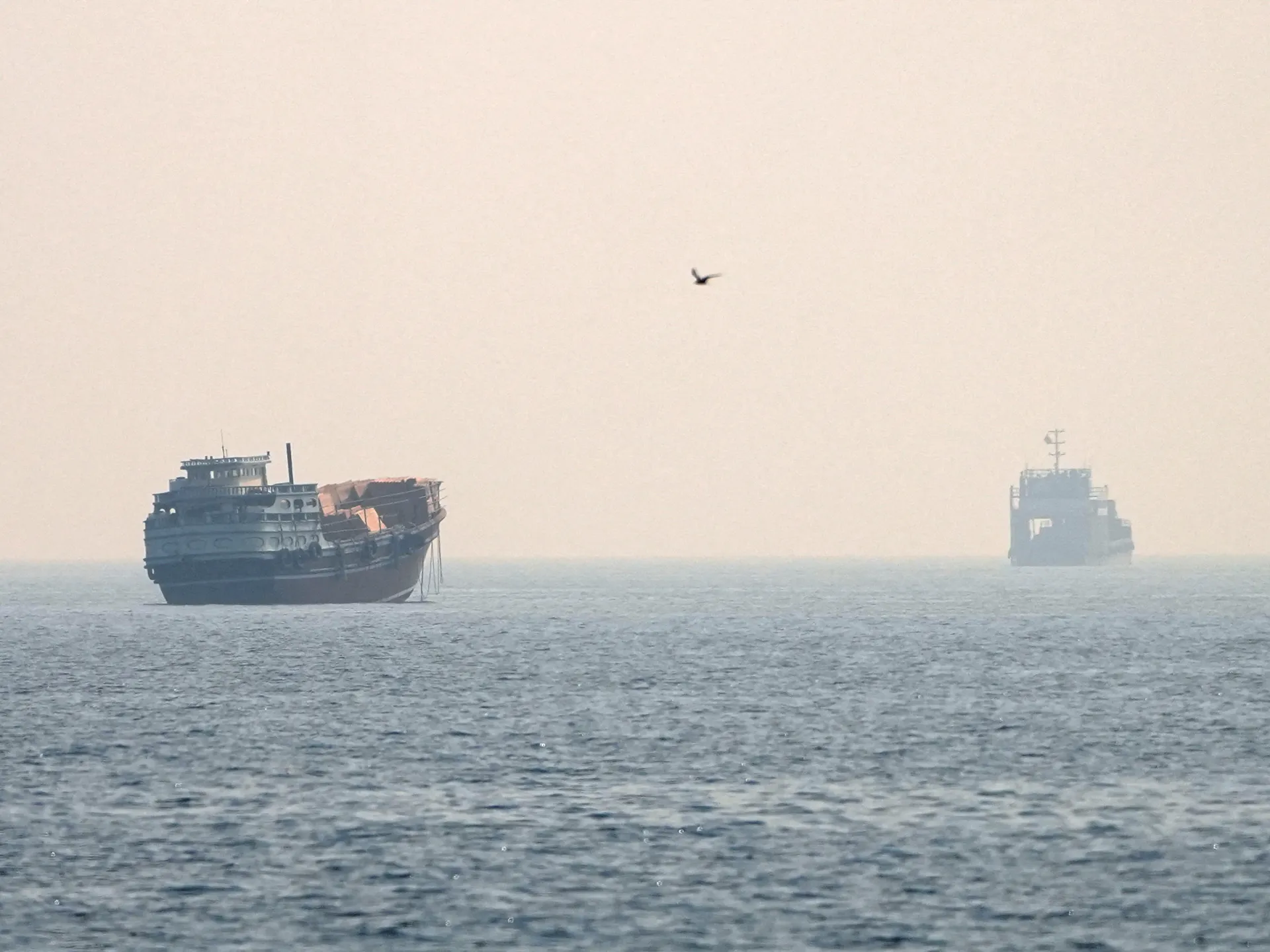
Since US-Israeli strikes triggered war in February, Tehran has effectively blocked the strait, threatening to hit vessels that deviate from its authorised route.

Reporting from Tehran, Al Jazeera’s Resul Serdar Atas said the US and Iran are “stuck in an equation – almost a deadlock” over the Strait of Hormuz.

“For the Americans, they say that Iran will not have control over the Strait of Hormuz. For the Iranians, control of the strait is indispensable.”

He said Iran sees control over the strait as the “ultimate deterrent, and if it gives that up, then it loses its negotiating position” with the US.

The US hopes that by targeting infrastructure that affects Iran’s ability to control the strait, including maritime traffic control centres, it will be forced to “return to the MoU”, Scott Uehlinger, a former senior CIA officer, told Al Jazeera.

United Nations chief Antonio Guterres called “on all parties to exercise maximum restraint”, as did Pakistan.

Qatari ⁠Prime ⁠Minister Sheikh Mohammed bin Abdulrahman bin Jassim Al Thani told Iranian Foreign ⁠Minister Abbas Araghchi in a phone ⁠call on Thursday that Iran and the US should commit to diplomacy.

Sheikh Mohammed, who is also the foreign minister, said Washington and Tehran should implement the MoU to end the war.

Iran said the two officials had spoken over the phone and “underscored the importance of using diplomatic means to resolve regional issues”.
Source link

Iran ceasefire is ‘over,’ Trump says, and orders additional strikes

A tentative armistice between the United States and Iran reached less than a month ago appeared all but dead Wednesday after the two sides traded fresh military strikes, and as President Trump directed further attacks on the Islamic Republic.

The escalation marked a dramatic turn after the Trump administration spent weeks selling a diplomatic breakthrough with Tehran that proved controversial across the political aisle, lifting oil sanctions and a naval blockade on Iran in exchange for the promise of talks over the status of the Strait of Hormuz and its decades-old nuclear program.

Now, speaking to reporters at the NATO summit in Turkey, Trump said he believed the truce — which diplomats describe as a memorandum of understanding — was “over” and that it was a “waste of time” dealing with Iranian leadership.

“They’re scum. They’re sick people,” Trump said of Iranian leaders, whom he had characterized last month as “very rational people” and “very nice to deal with.”

The president’s dim views of the ceasefire agreement’s fate were shared by Iran’s foreign ministry, which issued a statement on Wednesday saying the American attacks, the reinstatement of a U.S. naval blockade on the Strait of Hormuz, and Israel’s continuing attacks in Lebanon rendered “important and fundamental” parts of the deal “ineffective.”

The truce’s unraveling was underscored by Trump ordering the U.S. military to launch a series of strikes against Iran on Wednesday afternoon to “further degrade their ability to threaten” the commercial shipping through the Strait of Hormuz.

“The United States is holding Iran accountable for recent unjustified aggression against commercial shipping and civilian crews freely navigating a vital international waterway,” U.S. Central Command said in a statement on social media.

Earlier in the day, Trump signaled that the United States planned to “hit them hard” and floated the possibility of taking over Kharg Island, which is vital to Iran’s economy. His remarks quickly prompted oil prices to rise and global stock markets to fall, a worry that Trump acknowledged but which did not seem to sway his decision-making in relation to Iran.

“If we hit Iran, oil goes up a little bit, it is all right,” Trump said. He later added that the United States may “do some other thing that could lift it a little bit, but I don’t think it’s gonna lift it a lot at all.”

As Trump signals the continuation of fighting, his administration has been seeking more than $67 billion in funding to cover expenses related to the Iran war, a request that Congress has not yet approved as lawmakers have been split over the president’s handling of the conflict.

“The American people are paying the price for Trump’s total failure in Iran,” Senate Minority Leader Chuck Schumer (D-N.Y.) said in a statement Wednesday. “Our troops are back in harm’s way and high gas costs are continuing to punish working families.”

The president’s stance on the war marked the latest setback to a fragile truce that has barely held since the 14-page agreement was signed June 17, as the U.S. and Iran engaged over the last few weeks in cycles of attacks and counterattacks.

Trump was noticeably angrier at Iran on Wednesday as he cast doubt over the deal. Last month, Trump had complimented Iranian leadership for trying to reach a peace deal and celebrated the reopening of the Strait of Hormuz, a crucial shipping route for the world’s oil and gas. But based on his remarks, it was clear he was out of patience.

“I am not happy with them,” Trump said. “They’re cuckoo. There’s something wrong with these people. For 47 years, they’ve been the bully of the Middle East and they are not the bully anymore. They are not the bully anymore.”

Trump expressed frustration with Iran’s negotiators and their resistance to abiding by U.S. demands to reopen the strait. When asked if he intended to send troops to Iran, the president dismissed the idea.

“Why would I go in now?” Trump said. “I’d go in when they’re completely eliminated or an agreement is made.”

Still, the president kept the door open for negotiations, saying that his envoys Steve Witkoff and Jared Kushner “want to negotiate.”

“They’re good people, Steve Witkoff, Jared Kushner, but they have to come back to me,” Trump said. “As far as I’m concerned, it’s just a waste of time dealing with [the Iranians]. They’re liars.”

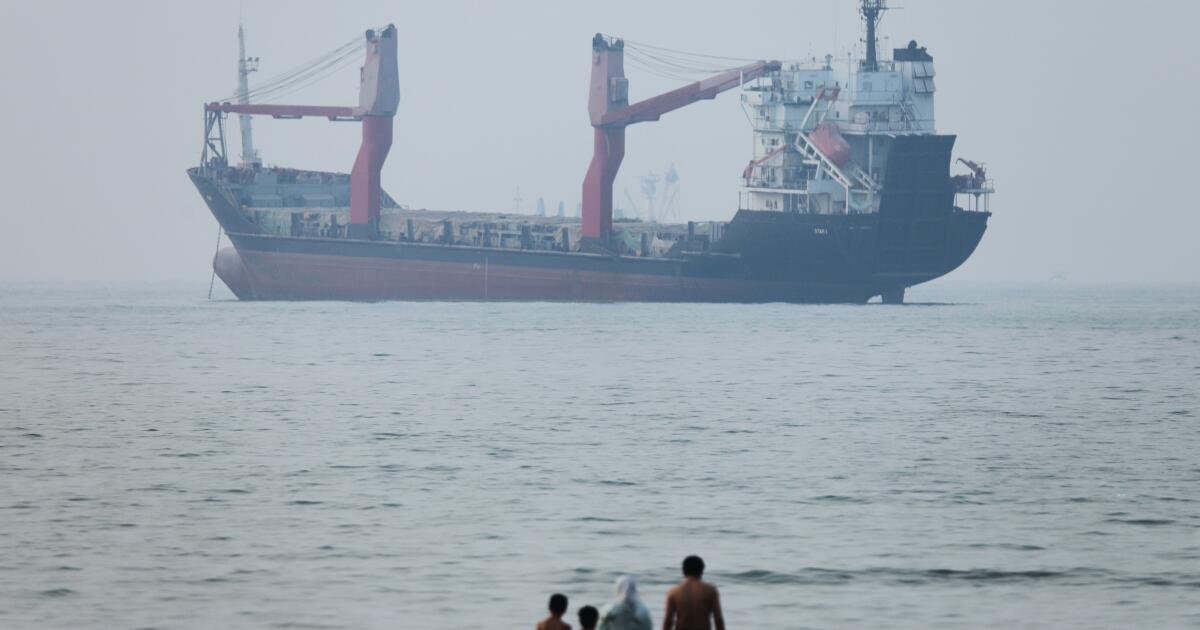
The latest breakdown to the ceasefire followed a now-familiar chain reaction of tit-for-tat attacks, starting with a series of strikes on three oil tankers transiting the Strait of Hormuz on Tuesday, including a Qatari vessel carrying natural gas, according to the United Kingdom Maritime Trade Operations center.

The Qatari tanker was off the coast of Oman when it was hit and caught fire, the maritime monitor said, in what experts say was a move to thwart ships attempting to use an alternate transit route to the one Iran specified. Iran did not claim responsibility, but a report on Iranian state television said the Qatari tanker came under attack after ignoring warnings to turn back.

The two other vessels were damaged but were able to continue to their destination, according to the U.K. group.

Qatar, which has played a vital role in facilitating negotiations between the U.S. and Iran, condemned the attack on its tanker as “unacceptable.”

The U.S. responded with a wave of strikes against more than 80 Iranian targets aimed at “impos[ing] heavy costs for targeting and attacking commercial shipping crewed by innocent civilians in an international waterway,” according to a statement from U.S. Central Command. That tally included roughly 60 Islamic Revolutionary Guard Corps small boats in the strait.

Iranian state media said U.S. strikes targeted Sirik, Qeshm Island and Bushehr and Bandar Abbas, while a U.S. drone strike on the port city of Mahshahr killed one Revolutionary Guard member.

Ahead of the strikes, the White House revoked the 60-day temporary license given to Tehran to sell and deliver oil during the truce.

Iran’s military countered with its own strikes on 85 U.S. military facilities in Bahrain and Kuwait; it also shot down an MQ-9 drone, according to a statement on Wednesday.

Kuwait said its military intercepted two ballistic missiles and 13 drones, but that none had resulted in material damage or casualties.

Global oil prices surged 6% on news of Trump’s reversal on the deal, rising to more than $78 a barrel, down from the peak during the war but still above prewar levels.

The renewed violence appeared to have little effect on the funeral for Iran’s Supreme Leader Ayatollah Ali Khamenei, who was killed in an Israeli strike on Feb. 28, in the war’s opening hours.

The funeral, a days-long period of mourning, is set to end on Thursday, when Khamenei’s body will return from Iraq to be buried in the city of Mashhad, his birthplace. Negotiations were to begin once more.

In his remarks Wednesday, Trump said Iranian leaders had asked for a “timeout” to attend the funeral, and that he had promised not to kill them.

“And I said give it to them, and they start shooting missiles,” Trump said.

Whether those talks — which were meant to deal with the thorniest issues between the two countries, including the Strait of Hormuz and Iran’s nuclear program — will go ahead remains unclear. Iran, for its part, maintained a defiant attitude.

“The era of bullying and extortion is over,” wrote Mohammad Ghalibaf, Iran’s parliamentary speaker. “It leads nowhere. We don’t fold.”

Ali Akbar Velayati, a senior advisor to the supreme leader, posted on X that Trump’s policy had “driven the region towards fire.”

“We had previously warned that the region is not a place for the political gambling of small countries, and we have repeatedly proven that adventures are met with an immediate response,” he wrote.

He added that the Axis of Resistance — a reference to Iran’s network of allied groups in Lebanon, Iraq and Yemen — would not be “silent against humiliation and adventurism” and has “its finger on the trigger.”

Bulos reported from Beirut and Ceballos from Washington.

Source link

Iran attacks Bahrain, Kuwait after U.S. strikes

July 8 (UPI) — Iran’s military said Wednesday it conducted retaliatory strikes against the United States, targeting dozens of U.S. assets in Bahrain and Kuwait, as the fight over control of the Strait of Hormuz threatened to escalate the war.

In a statement carried by state-run Islamic Republic of Iran Broadcasting, Iran’s Armed Forces said they had attacked 85 “key U.S. military installations” at Salman Port and the 5th Fleet, both in Bahrain, and Ali Al Salem Air Base in Kuwait.

The statement was followed by a second one announcing a “new wave” of missiles targeting U.S. bases in Bahrain.

The extent of the damage, if any, was not immediately clear, but the Kuwait Army confirmed in a statement that its air defenses were confronting “hostile missile and drone attacks.”

“We will not allow U.S. interference in the affairs of the Strait of Hormuz,” Khatam al-Anbiya Central Headquarters, Iran’s top military command body, said in a statement. “Transit through the SoH is only permitted via the routes designated by Iran.”

The strikes came hours after the U.S. military announced late Tuesday the completion of its attacks in Iran, a response to three commercial vessels being struck while transiting the Strait of Hormuz.

The maritime chokepoint has become a dangerous fault line in the war between the United States and Iran.

Washington is seeking to re-establish navigational freedom within the strait, while Iran is attempting to exert and maintain control of the waterway it has sought to exercise since the war began. Neither side appears to be budging, threatening the end of cease-fire negotiations and a return to all-out war.

Both sides accuse the other of violating conditions of the memorandum of understanding they agreed to implement last month to halt the fighting. Indirect negotiations held early this month in Doha produced little to no progress and the renewed fighting may upend the process altogether.

After three commercial vessels were recently struck while transiting the Strait of Hormuz, the U.S. military said it hit more than 80 targets inside Iran.

Before launching its retaliatory attacks early Wednesday, Khatam al-Anbiya Central Headquarters vowed in a statement carried by state-run Fars News Agency that it would “give a crushing response to America’s aggression and terrorist action.”

It said that “under no circumstances” would it allow U.S. interference in the affairs or management of the Strait of Hormuz.

Source link

Iran targets U.S. sites in Bahrain, Kuwait

Iranian Foreign Minister Abbas Araghchi (L) and Iraqi Foreign Minister Fuad Hussein hold a joint press conference following their meeting at the Ministry of Foreign Affairs in Baghdad, Iraq, on Sunday. Photo by Ceerwan Azeez/EPA

June 28 (UPI) — The Iranian military launched fresh attacks at U.S. sites in Bahrain and Kuwait on Sunday morning amid an escalation of violence that threatens a fragile peace agreement.

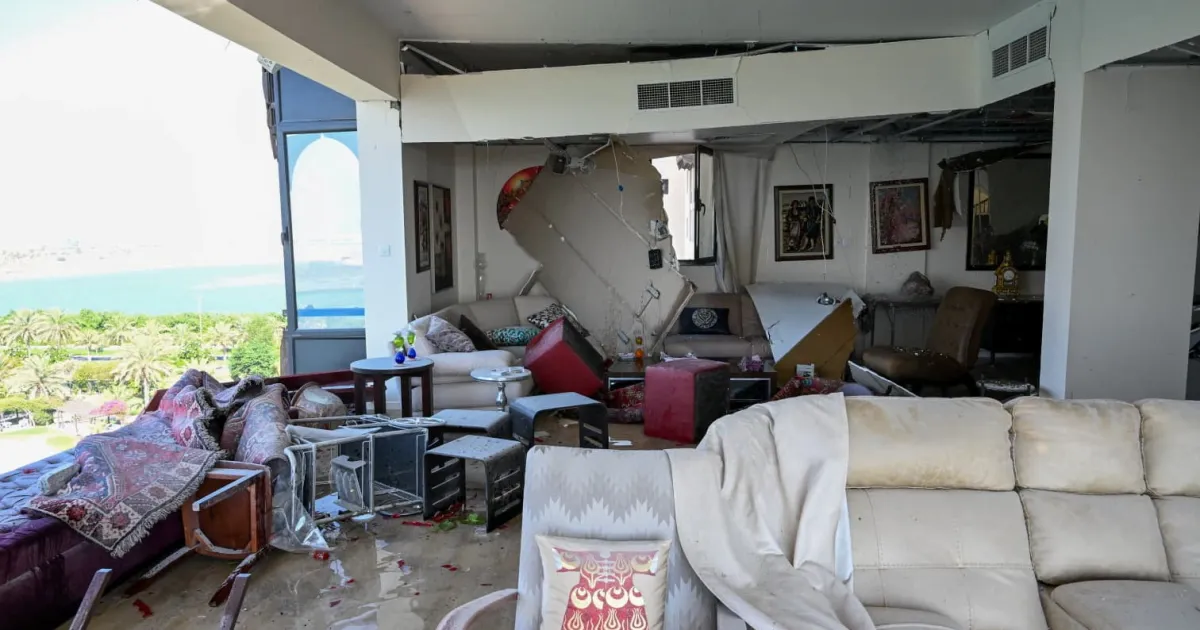
Bahraini and Kuwaiti government sources said each intercepted attacks from Iran, including two ballistic missiles in Kuwait’s airspace. Bahrain said one of the strikes damaged a residential building near an international airport, The Guardian reported.

Neither country declared any casualties, The New York Times reported.

The renewed violence came after an Iranian drone struck a Singapore-flagged cargo ship while transiting the Strait of Hormuz on Thursday. The U.S. military accused Iran of also striking a Panama-flagged tanker carrying oil on Saturday.

The United States responded Saturday with its own attacks targeting Iranian drone sites. U.S. Central Command said the strikes were “in direct response to continued Iranian aggression against commercial shipping.”

President Donald Trump announced the U.S. strikes in a post on Truth Social that also threatened further violence against Iran. He accused the country of violating a memorandum of understanding that both he and Iranian President Masoud Pezeshkian signed earlier this month.

“It is very possible that they will never learn!” Trump wrote of Iran.

“There may come a point when we are no longer able to be reasonable, and will be forced to militarily complete the job that we very successfully started. If that happens, the Islamic Republic of Iran will no longer exist!”

Shipping via the Strait of Hormuz largely came to a halt in March after the United States and Israel launched attacks on Iran beginning Feb. 28. Iranian Foreign Minister Abbas Araghchi said Sunday that under the MOU signed June 17, Iran is the sole country responsible for managing the strait.

He warned the United States against interfering in shipping through the waterway, the Times reported. He said that further interference could delay the full reopening of the strait.

“Under the memorandum of understanding, no other entity or country has any responsibility in this regard,” he said at a news conference in Baghdad.

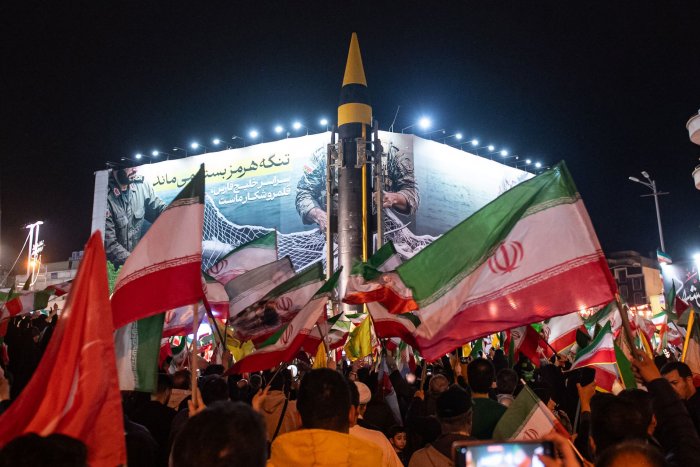
A missile identified as “Khorramshahr-4” was on display during a public rally in Tehran’s Enghelab Square on April 21, 2026. Photo by Behnam Tofighi/UPI | License Photo

Source link

Iran attacks Kuwait and Bahrain in response to US strikes | US-Israel war on Iran News

Iran has launched attacks on Bahrain and Kuwait after the United States struck five Iranian targets, escalating tensions and threatening the fragile ceasefire agreed by the two sides earlier this month.

The Islamic Revolutionary Guard Corps (IRGC) confirmed the attacks on Sunday, saying it launched ballistic missiles and drones at the US Ali Al Salem airbase in Kuwait and the US Fifth Naval Fleet at Port Salman in Bahrain.

Recommended Stories

list of 3 itemsend of list

Bahrain condemned the attacks, saying they violated its sovereignty and undermined “opportunities for de-escalation and stability in the region”, while Kuwait described the “repeated heinous Iranian aggressions” as a “flagrant violation of its sovereignty”.

The US military hit Iran’s Sirik, Bandar-e Lengeh and Qeshm Island on Saturday. US Central Command (CENTCOM) said its navy and air force “conducted strikes tonight on 10 Iranian military targets at multiple locations in and near the Strait of Hormuz”, saying the attacks were a response to an Iranian drone attack on the Kiku oil tanker.

It said the Panama-flagged vessel was carrying more than two million barrels of crude oil when it was attacked as it transited near the strait early on Saturday.

Britain’s UKMTO maritime security agency ⁠said the tanker hit on Saturday had sustained damage to its bridge, with all crew reported safe.

Strait of Hormuz

The weekend attacks come after the US struck Iran on Friday following drone attacks on vessels near the Strait of Hormuz.

The Singapore-registered Ever Lovely container ship was hit by a drone on Thursday. No injuries were reported. The US responded by hitting locations near Sirik, while Iran responded by attacking US military locations in the region.

Iran has said vessels transiting the strait can only use its designated route and warned that ships using any other routes would be violating the ceasefire agreement.

The International Maritime Organization suspended its plan to evacuate ships stranded in the strait on Thursday after the attack on the Ever Lovely.

President Donald Trump said late on Saturday that Tehran had violated the ceasefire agreement, which was signed on June 17.

“There may come a point when we are no longer able to be reasonable, and will be forced to militarily complete the job that we very successfully started,” he posted on social media. “If that happens, the Islamic Republic of Iran will no longer exist!”

Iran’s Ministry of Foreign Affairs condemned the US strikes on its monitoring and surveillance facilities on its southern coast. It said the “brutal attacks” were in violation of the Memorandum of Understanding (MoU) and the United Nations charter.

It added that they showed the US “does not place the slightest value and credibility on its commitments” and said Iran would defend its sovereignty and territorial integrity against “US military aggression”.

Agreement under strain

The MoU signed by the US and Iran extended a ceasefire in their war that began with US-Israeli attacks on Iran on February 28, giving both sides 60 days to negotiate an end to the fighting.

Access through the Strait of Hormuz is a key element of the MoU. During the war, Iran blocked the waterway through which about 20 percent of the world’s oil passes, triggering a global energy crisis.

Article 5 of the MoU states that Iran will “make arrangements using its best efforts for the safe passage of commercial vessels” through the strait during the 60 days. It states that Iran and Oman, along with other Gulf states, will discuss the future administration of the strait.

Wolfgang Pusztai, a defence analyst, told Al Jazeera that while neither the US nor Iran have an interest in a bigger escalation, “there is a risk that this might happen unintentionally.”

“If there are some hits in residential areas, if a larger number of civilians are getting killed in the Arab Gulf states, if an American base is hit severely so that the American soldiers are killed, this might easily get out of control,” he said.

Source link

Rubio hails U.S.-gulf Arab unity despite that region’s persistent concerns about Iran agreement

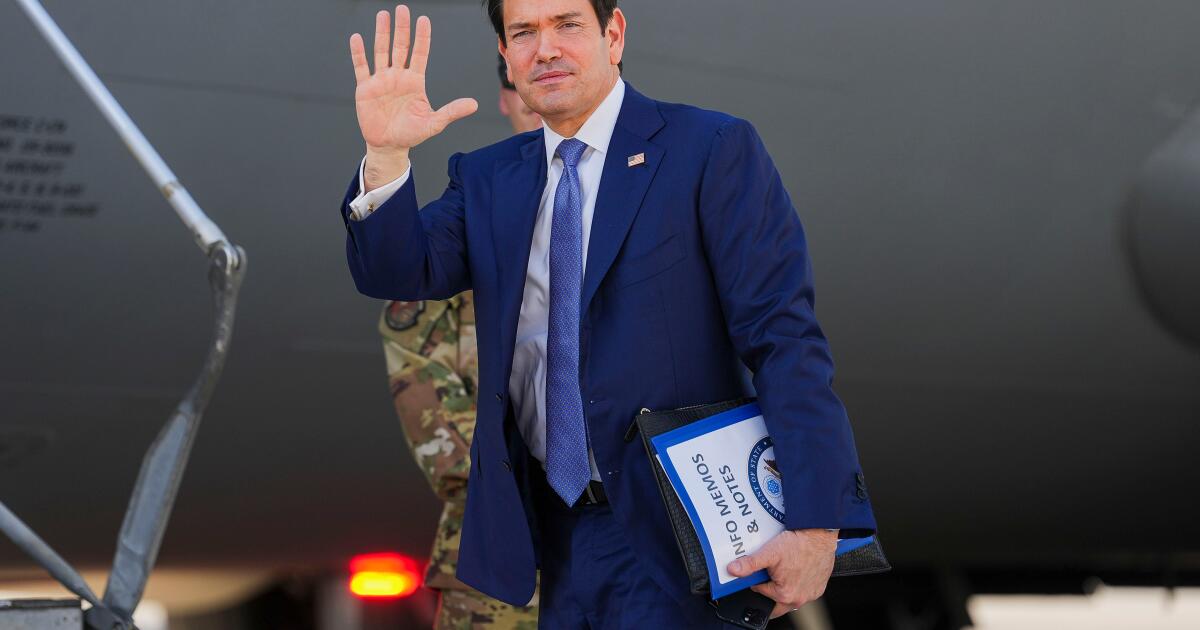
U.S. Secretary of State Marco Rubio said Thursday that relations between the United States and its gulf Arab partners are rock solid, despite fears by some of them that they might be left out of discussions aimed at ending the war with Iran.

Rubio used a three-day, three-nation trip to the United Arab Emirates, Kuwait and Bahrain this week to try to convince all the members of the Gulf Cooperation Council that the Trump administration does indeed have their backs in negotiations to end the war President Trump and Israel launched on Feb. 28.

That conflict sharply curtailed the region’s oil exports and saw several gulf countries take direct retaliatory Iranian missile and drone hits.

“They’ve shared with us some very concrete concerns, ideas,” Rubio said in Bahrain, the last stop on the trip. “And when I say concern, the biggest concern is that they really just want to be informed every step along the way as we enter these negotiations at both the technical and political levels.

“We want them to be involved and we want the views of all these countries to be reflected,” he said. “We don’t want to and will not be making any decisions or commitments that in any way undermines the prosperity, stability or security of our gulf partners.”

Although the U.S. and the gulf council members — Bahrain, Kuwait, Oman, Qatar, Saudi Arabia and the United Arab Emirates — eventually released a joint statement after the meeting that extolled areas of agreement about the end goals of the Iran deal, there were small signs of potential discontent.

The joint statement said the two sides “stressed the need to maintain momentum and unity as negotiations proceed toward a more permanent end to hostilities and the shared objective of preventing Iran from ever developing or otherwise acquiring a nuclear weapon.”

They also expressed opposition to any attempt by Iran to impose tolls or fees, or assert control over the Strait of Hormuz. They welcomed an Omani initiative to create a safe lane to evacuate stranded sailors from the waterway and stressed that any economic benefit Iran might realize “is conditional and reversible, contingent on Iran’s compliance” with the temporary agreement and a final deal.

The joint statement painted a rosy picture, yet the council secretary, Gen. Jasem Mohamed Albudaiwi, suggested in a statement that doubts remain.

He said it was emphasized during the meeting that any future understandings or arrangements must incorporate the requirements of the gulf council countries to safeguard their interests and ensure “their security and stability.” His statement, released by the group, hinted that the gulf council members felt snubbed in the earlier talks.

“Such arrangements must be based on the principles of international law, respect for state sovereignty, good neighborliness, and non-interference in internal affairs, thereby contributing to the consolidation of regional security and stability,” he said.

Before Rubio spoke to the group, the meeting host, Bahraini Foreign Minister Abdullatif bin Rashid Al Zayani, said that although the memorandum of understanding is welcome, many questions remain outstanding.

“While this progress is encouraging, it is critically important that Iran fully adheres to its obligations,” including under the memorandum, he said.

He said that means preventing Iran from getting a nuclear weapon, preserving freedom of navigation, ending all missile and drone attacks, halting support for proxy groups and abandoning attempts to interfere with Iran’s neighbors.

Lee writes for the Associated Press.

Source link

Pragmatic choice: Israel’s war backfires as Gulf backs US-Iran deal | US-Israel war on Iran

Doha, Qatar – Gulf states have welcomed a breakthrough agreement between the United States and Iran to end a war they never wanted.

Six countries – Saudi Arabia, the United Arab Emirates (UAE), Qatar, Kuwait, Bahrain and Oman – form the Gulf Cooperation Council (GCC), which was created in 1981 following fears of the perceived expansionist ambitions of the new Iranian government.

Recommended Stories

list of 4 itemsend of list

Since the 1979 Islamic revolution, Israel has attempted to isolate Iran and its wide network of regional proxy groups. But in a twist of irony, Israeli aggression in this pursuit has pushed some Gulf states closer to Tehran.

When Israel and the US launched strikes on Iran on February 28 – and Tehran responded by attacking Gulf states – they were again forced to reassess their relationship with their neighbour.

Gulf relations with Iran, at present, appear more shaped by realism than reconciliation, but this approach could help them navigate the uncertain road ahead.

“The ongoing conflict … compelled the Gulf states to pursue a more pragmatic relationship with Tehran, one that will include enhanced dialogue to deter conflict,” Farah al-Qawasmi, a researcher at the Gulf Studies Center at Qatar University, told Al Jazeera.

Embracing de-escalation – not Iran

All six GCC member states have welcomed a memorandum of understanding (MoU) signed by Iran and the US last week. But this is shaped more by the Gulf states wanting the war to end rather than a newfound trust of Iran.

“An agreement between the two parties is being [highly] advocated by the Gulf states in [an] attempt to prevent and contain regional conflicts,” al-Qawasmi said.

Shortly after the US and Iran agreed in 2015 to the Joint Comprehensive Plan of Action (JCPOA) – putting guardrails on Tehran’s nuclear programme – Gulf states remained sceptical about their neighbour.

The current war has only heightened these suspicions, but it has also seen regional states seek diplomacy with Tehran rather than military confrontation, despite Iran directly attacking Gulf cities.

“The Gulf states still feel like diplomacy is better than using force to get a deal … to change Iran’s behaviour and to insulate them from Iran’s destabilising actions,” Rob Geist Pinfold, a lecturer on security studies at King’s College London, told Al Jazeera.

Pinfold points out that Iran closed the Strait of Hormuz via drones and missiles, not nuclear weapons, making dealing with that threat a priority for Gulf states rather than Tehran’s nuclear programme.

Gulf states will want a more comprehensive agreement between Iran and the US, rather than the nuclear-focused JCPOA, said Pinfold.

“If you talk to people in Gulf capitals, they will tell you that the nuclear programme is a tomorrow problem for them,” he said.

“The today problem is Iran’s use of drones and proxies to destabilise and undermine the sovereignty of Gulf states, but also states throughout the region.”

US Secretary of State Marco Rubio’s three-day tour of the Gulf, which ends Thursday, is seen as a way of allaying these fears and assuring the GCC that Tehran will not be strengthened by the agreement.

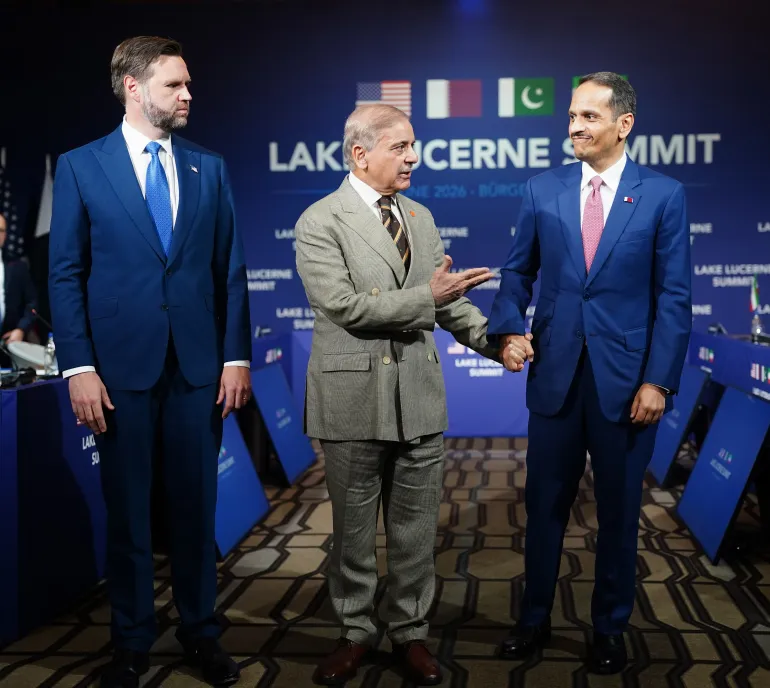
STANSSTAD, SWITZERLAND - JUNE 21: (EDITOR'S NOTE: Alternate crop) U.S. Vice President JD Vance looks on as Pakistan's Prime Minister Shehbaz Sharif speaks while gesturing towards Qatar's Prime Minister and Minister for Foreign Affairs Sheikh Mohammed bin Abdulrahman bin Jassim Al-Thani at the start of a quadrilateral meeting between the U.S., Iran, Pakistan, and Qatar at the Lake Lucerne Summit, aimed at advancing a deal to end the Middle East conflict at the Buergenstock Resort, Lake Lucerne on June 21, 2026 near Stansstad, Switzerland. Vance is visiting Switzerland for negotiations with Iran to end the war and open the Strait of Hormuz that have been delayed by Israeli strikes in Lebanon. (Photo by Nathan Howard-Pool/Getty Images)
US Vice President JD Vance, left, looks on as Pakistan’s Prime Minister Shehbaz Sharif, centre, speaks and gestures towards Qatar’s Prime Minister and Minister of Foreign Affairs Sheikh Mohammed bin Abdulrahman bin Jassim Al Thani, right, at the start of a quadrilateral meeting between the US, Iran, Pakistan and Qatar [File: Nathan Howard/Pool via Getty Images]

Seat at the table

Mehran Haghirian, the director of research and programmes at the Bourse & Bazaar Foundation, believes Gulf states are in a better position to guide the outcome of the current US-Iran talks than in 2015.

“They are at the heart of the negotiations,” Haghirian said regarding the Gulf states’ role in the current talks.

In its role as a co-mediator, Qatar is essentially representing the GCC and their interests during the talks, while articles five and six of the Iran-US MoU place Gulf states at the centre of the agreement.

Among the biggest concerns for the GCC are the future of the Strait of Hormuz, with Tehran demanding tolls on shipping, and calls for the creation of a regional investment fund for Iran.

“There really cannot be any new Hormuz authority by Iran that would not include other GCC countries,” Haghirian told Al Jazeera.

US Vice President JD Vance claimed last week that the investment fund would be financed by the Gulf coalition, but Rubio said this week that regional allies would not be asked to contribute to any reconstruction fund for Iran.

Qatar’s Prime Minister Sheikh Mohammed bin Abdulrahman bin Jassim Al Thani has described the reported $300bn figure as “aspirational” in an interview with the Financial Times, while no Gulf state has yet said if it will contribute to the fund.

‘Maximum pressure era’

The analysts stress that the GCC is not a monolith – with Gulf states having contrasting and changing approaches towards Iran.

Oman, Qatar and Kuwait were broadly supportive of the JCPOA. Saudi Arabia, the UAE and Bahrain were more sceptical, but even these states publicly backed the agreement, said Haghirian.

When Trump pulled the US out of the JCPOA in 2018, Saudi Arabia, the UAE and Bahrain believed they had “found a partner in DC”.

That led to a “maximum pressure era” that brought a period of brinkmanship in the region, said Haghirian.

Suspected Iran-linked attacks on Saudi Arabia’s Abqaiq-Khurais oil facilities and vessels off the coast of Fujairah in 2019 were “the initial reaction by the Iranians to that maximum pressure” campaign, he added, but paradoxically, this also triggered a recalibration of relations.

The UAE and Iran restored ties in 2022, and a China-brokered Saudi-Iran agreement took place in 2023.

“That was enough of a reason for Saudi Arabia [and] the UAE, particularly, to basically restructure their approach towards Iran,” Haghirian said.

The war and accelerated pragmatic rapprochement

While Israel has used war to attempt to increase its presence in the Gulf region – reportedly sending an Iron Dome battery to the UAE – other Gulf states view both Iran and Israel as unsettling forces in the region.

“Israel started the war, which was a destabilising act, and then Iran escalated by targeting the Gulf states, which was in turn a destabilising act,” Pinfold said.

Despite this, the Gulf states targeted by Iran still demonstrated patience and pragmatism in dealing with their neighbour.

Qatar, for example, has played a leading role in mediating between the US and Iran, even after being on the receiving end of Iranian drone and missile attacks.

“All six got attacked, and that’s really a level of foreign policy decision-making that is very difficult for any state to be able to really undertake, considering the fact that it was a military attack,” Haghirian said.

“But again, this pragmatism came out within this context to engage Iran and to actually speak for themselves at these negotiations. This war has really initiated a complete rebalancing of the entire region.”

Source link

Rubio: US ‘completely aligned’ with Gulf allies on Iran | Politics

NewsFeed

US Secretary of State Marco Rubio said Washington will be “completely aligned” with Gulf allies in Iran peace talks. Rubio met Kuwait’s Crown Prince Sheikh Sabah Al Khalid Al Sabah during a visit to the region after the US and Iran signed an MoU.

Source link

How the Gulf will manage collective security after the Iran war ends | US-Israel war on Iran News

As Washington and Tehran move towards a long-term ceasefire agreement, Gulf states will likely look for new long-term security solutions when a war in their region – which they did not start – finally ends.

It comes as United States President Donald Trump cancelled new strikes on Iran saying that a deal with Tehran was imminent, and that a “time” and “place” for signing would soon be announced.

Recommended Stories

list of 4 itemsend of list

In Tehran, officials appeared more cautious with one senior Iranian official telling Al Jazeera that the government was still reviewing a proposed Memorandum of Understanding with Washington.

Subsequent comments by Pakistan Prime Minister Shehbaz Sharif point to a deal being made, and what follows in the coming days could have important implications for collective regional security.

Attacks on the Gulf

The United States operates military facilities in at least 19 locations across the MENA region, including permanent bases in Bahrain, Egypt, Iraq, Jordan, Kuwait, Qatar, Saudi Arabia and the United Arab Emirates, according to the Council on Foreign Relations. Between 40,000 and 50,000 US troops were stationed across the region before the war on Iran started.

This US-Gulf nexus appeared to insulate states from conflicts engulfing other parts of the region, but over the past four months, Gulf states hosting US military facilities have been targeted by Iran.

“If there is a way to describe the prevailing security model in the region since the 1980s, the concept of security partnerships best encapsulates it,” said Mahjoub Al-Zuwairi, an academic and expert on Middle East politics.

“The countries of the region have chosen to align their security with broad international alliances. For decades, this model has provided a reasonable deterrent and logistical and intelligence depth that is difficult to replace.”

Iranians attend the funerals of Iran's Revolutionary Guards
Iranians in Tehran at the funerals of Iran’s Revolutionary Guards Corps (IRGC) commanders, army officers and others killed in the early days of the United States and Israeli strikes on Iran, March 11, 2026 [AFP]

A security umbrella with holes

The war on Iran has exposed a paradox – while Iranian officials have repeatedly referred to their Gulf neighbours as “brothers”, they have also repeatedly targeted them during the war.

Despite the protestations of Gulf states that no attacks on Iran were launched from their soil, they have been repeatedly targeted.

At least 28 people have been killed across the six Gulf Cooperation Council (GCC) states in suspected Iranian drone and rocket attacks, since the US and Israel launched their offensive on Iran on 28 February. This has led to questions about the US-Gulf security arrangement.

“Just the war itself has pierced that sense of security, the US security umbrella is moribund at worst, or ineffective at best,” Simon Mabon, professor of international relations at Lancaster University, told Al Jazeera.

“They’ve long relied on it for their own security. Yet the presence of US forces on their territory directly meant they became targets. They can’t escape their geography [and] despite the tensions, despite the hostilities, despite the attacks, Iran isn’t going away. They have to find a way of dealing with this reality.”

The economic cost of war

The closure of the Strait of Hormuz has proven be a setback for some Gulf states working to diversify their energy-reliant economies towards tourism, services and finance, but not all have been affected equally.

Saudi Arabia was able to redirect some oil exports through its East-West pipeline to the Red Sea, while Oman – whose main ports are outside the Strait of Hormuz – has also benefited from rising energy prices.

The UAE, Bahrain, Kuwait and Qatar have been more heavily affected due to their dependence on the waterway for their energy exports, but the war has encouraged new thinking on long-standing security and economic arrangements.

“There are new pipelines being set up, but the capacity of these alternatives is infinitely smaller than the Strait itself,” said Mabon. “It will take enormous investment and years of development before they can come close to replacing it.”

Moving closer to Iran?

One possible lesson from the conflict is that Gulf states may seek engagement with Iran rather than confrontation, something that Gulf states had already made some groundwork on before the US-Israel war began.

The UAE restored diplomatic ties with Tehran in 2022, and a year later, Saudi Arabia and Iran agreed to normalise relations in a deal brokered by China.

Al-Zuwairi says that the conflict could revive plans for MENA-led regional security arrangements, as envisioned in the 2019 Hormuz Peace Initiative, which proposed a Gulf security framework involving Iran, Iraq and the six GCC states.

But the distrust fostered since then – notably Tehran’s strikes on its Gulf neighbours – would make such a formation unlikely in the near future. 

“The recent war has opened the door wide to reconsidering the Gulf security system with its neighbours,” Al-Zuwairi said.

“How can Tehran propose a non-aggression pact while raining missiles on neighbouring cities? The initiative appears theoretically sound but practically bankrupt unless Iranian behaviour changes.”

Looking beyond Washington?

The solution for the Gulf could be a hybrid arrangement where ties with Washington are maintained, but other regional and domestic options are explored, including greater investment in local defence industries.

A possible blueprint for this could be the mutual defence agreement between Saudi Arabia and Pakistan last September, stating that an attack on one country would be considered an attack on both.

Yet previous instances when Gulf states felt abandoned by the US have led to divergent responses, with the UAE and Bahrain deepening ties with Israel, but a new paradigm means that a more collective action to the issue of security might be considered.

“The war has demonstrated that every guarantor, no matter how many banners it flies, primarily protects its own interests,” said Al-Zuwairi.

“The region ends up paying the price for a war it did not choose … The security of the Gulf will not be created in Washington … It will be created when Gulf countries recognise that they must build it themselves, because when fires start, it is always those closest to the flames who pay the price.”

Source link

Iran attacks Bahrain, Kuwait after U.S. hits surveillance radar sites

June 6 (UPI) — The United States said it intercepted several Iranian ballistic missiles and drones shot toward the Strait of Hormuz, the Persian Gulf, Bahrain and Kuwait Friday night.

The U.S. Central Command said seven missiles were fired toward Kuwait and Bahrain Friday after it shot down four Iranian drones headed toward the strait. It said six of the missiles were intercepted and one didn’t reach its target.

Bahrain and Kuwait said there were no injuries, but Kuwait said there was some “material damage.”

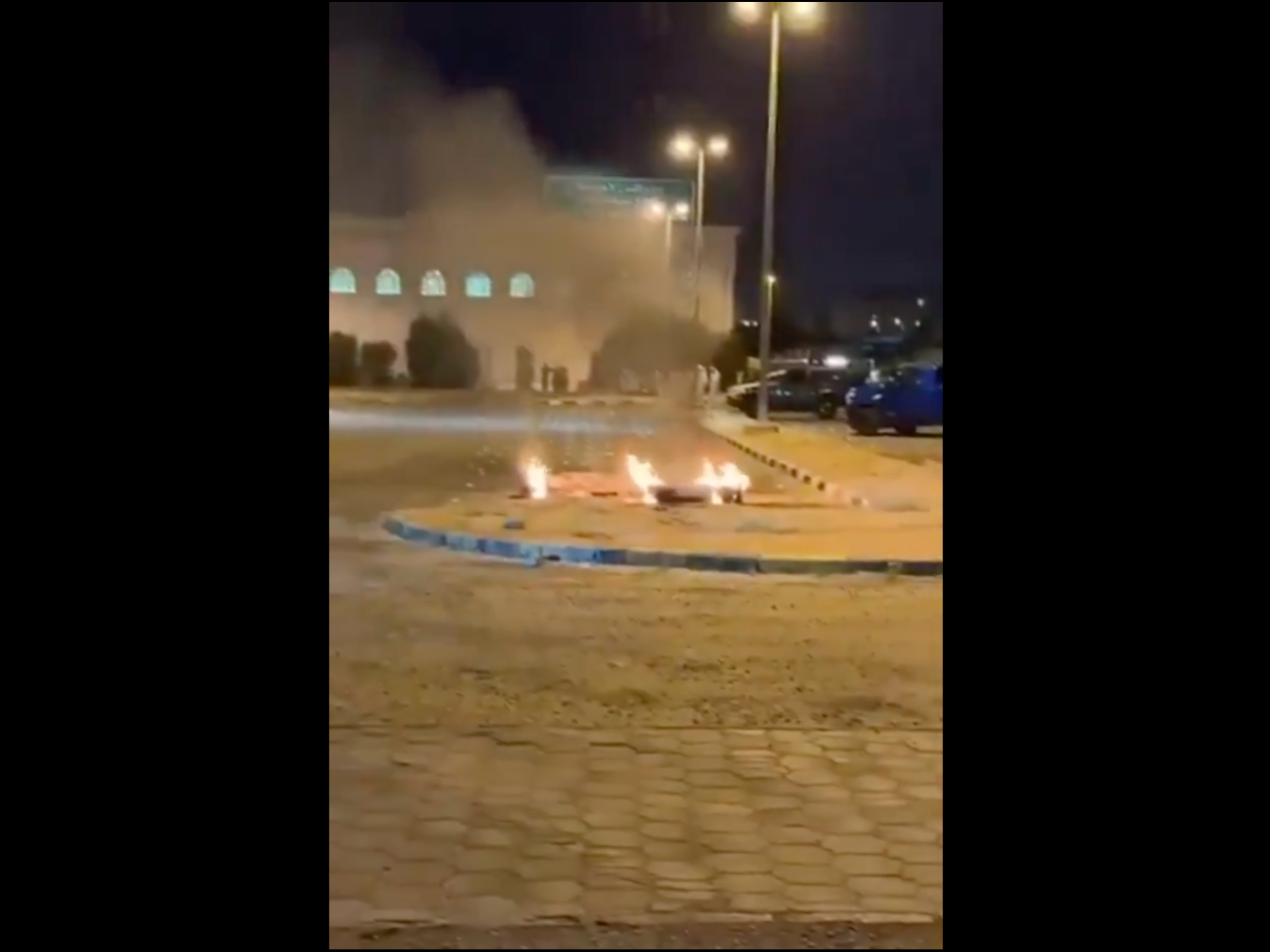
The Kuwaiti Army, attributed to the official spokesperson for its defense ministry Brigadier General Saud Abdulaziz Al-Otaibi, posted on X: “The armed forces detected and responded at dawn today to 7 hostile ballistic missiles within Kuwaiti airspace, which were intercepted over several residential areas, resulting in the fall of some debris.

“The Iranian criminal aggression caused material damage with no human casualties.”

CENTCOM also said there were no American casualties.

“There are currently no reports of harm to U.S. personnel, and Iranian claims of damaging U.S. 5th fleet headquarters in Bahrain are false,” CENTCOM said in a press release.

Kuwait and Bahrain called the strikes a violation of their sovereignty and a threat to regional security. Egypt, Jordan and Qatar also condemned the strikes Saturday.

Iran said it launched the strikes against U.S. military bases in the region after the United States struck Iran. CENTCOM said it hit coastal surveillance radar sites in Goruk and Queshm Island “to defend against further maritime attacks.”

Iran called the U.S. attacks a “flagrant” violation of the cease-fire, which has been in place since April. It said the American side “not only lacks the will to reduce tensions,” but “seriously endangers the security of the region.”

“These facilities are tasked with safeguarding the country’s border security and ensuring the security of navigation in international waterways,” the Iranian Foreign Ministry said in a statement. “The attack constitutes a clear violation of the April 8 ceasefire and an act of military aggression against the national sovereignty and territorial integrity of the Islamic Republic of Iran.”

Iran said the U.S. strikes violate international law.

“This action, which comes as a continuation of the hostile and provocative conduct of the U.S. regime against the Islamic Republic of Iran, demonstrates the complete disregard of the U.S. ruling establishment for the fundamental principles of international law and the Charter of the United Nations,” the foreign ministry said.

Tehran also said the U.S. is responsible for “all the effects and consequences of these illegal actions, as well as any possible escalation of tension.”

Iran’s Revolutionary Guard claimed the clash started when the U.S. military tried to “illegally” escort oil tankers through the waterway, which Iran has largely closed off during the war.

The Gulf Cooperation Council condemned the Iranian missile attacks Saturday.

“These treacherous Iranian terrorist acts represent a dangerous and irresponsible escalation, a blatant violation of all international laws and norms, and a direct threat to regional stability,” Jasem Mohamed Albudaiwi, secretary general of the Gulf Cooperation Council, said in a statement.

The Gulf Cooperation Council, formed in the 1980s, is an economic pact that includes Bahrain, Kuwait, Oman, Qatar, Saudi Arabia and the United Arab Emirates.

“The Council countries stand in a united and steadfast position alongside the Kingdom of Bahrain and the State of Kuwait, fully supporting all measures and steps they undertake to protect their security, safeguard their sovereignty and territorial integrity, as well as ensure the safety of their peoples,” Albudaiwi said.

Source link

Kuwait labels Iran attack ‘heinous aggression’ | Conflict

NewsFeed

Kuwait’s defence ministry has labelled an attack on the country’s international airport as ‘heinous Iranian aggression’. One person was killed and dozens were injured after Iranian drones struck a terminal on Wednesday, causing ‘significant material damage’.

Source link

Kuwait and Bahrain attacked as Iran launches missile and drone barrage | US-Israel war on Iran

NewsFeed

Kuwait and Bahrain have condemned an Iranian missile and drone attack, which Tehran says targeted US military facilities in the Gulf. A strike hit Kuwait’s airport, causing at least one death, dozens of injuries and flight suspensions. Tehran says the strikes are retaliation for US attacks on Iran.

Source link

Iranian strikes shut Kuwait Airport as U.S.-Iran fighting intensifies

All flights in and out of Kuwait Airport were suspended until further notice Wednesday after it was hit by Iranian missiles and drones, injuring several people and causing extensive damage amid an escalation in the U.S.-Iran war after the flared up again at the weekend. File photo by Stringer/EPA

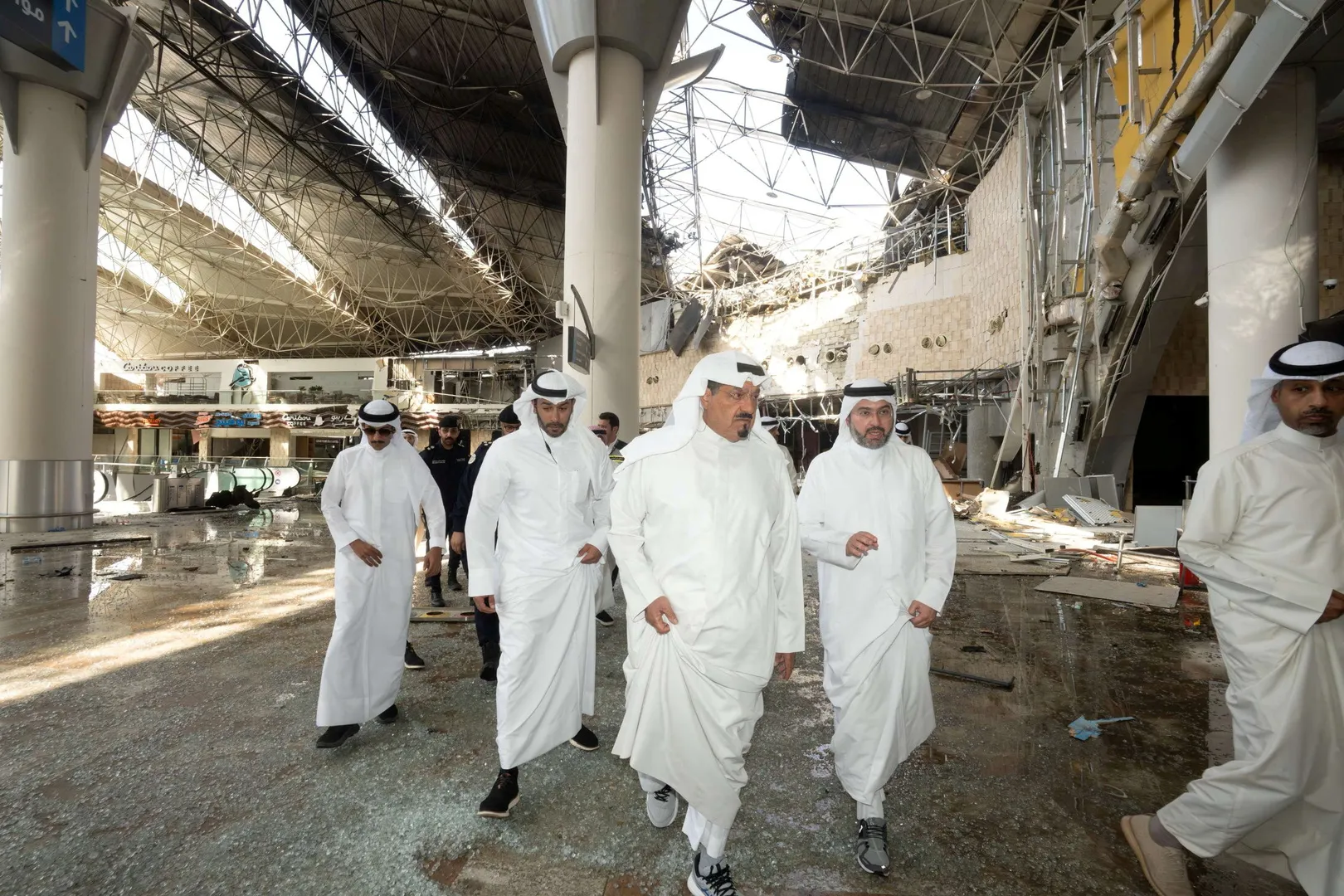
June 3 (UPI) — Kuwait closed its main airport in Kuwait City on Wednesday after Iranian missile and drone strikes injured several people and caused “significant damage” to its main terminal building as renewed hostilities between the Iran and the United States escalated.

The airport activated its emergency plan, suspending all flights indefinitely after its Terminal 1 building was the target of “Iranian aggression, resulting in significant damage to several airport facilities, in addition to recording human injuries,” the Directorate General of Civil Aviation said in an update on X.

DGCA spokesman Abdullah Al-Rajhi said it has been decided to suspend air traffic and divert flights to alternative airports until further notice pending the completion of repair work to enable the airport to resume operations, saying that inspection and comprehensive assessment by technical and specialized teams was already underway.

Kuwait International Airport only fully reopened on Monday after being closed on and off since the start of the war on Feb. 28.

The attack came hours after Iran and the United States and Iran exchanged fire across the region Tuesday with Iranian forces attacking its Gulf neighbors and the American military striking a vessel attempting to evade its naval blockade and launching “self-defense” strikes on Iran’s Qeshm Island.

The airport was hit in the early hours, shortly after U.S. Central Command said a series of Iranian missiles and drones directed at its regional neighbors had either failed to reach their targets or been repelled by U.S. forces, including two Iranian missiles fired at Kuwait that “fell short or broke apart enroute,” and three others launched at Bahrain that were intercepted by U.S. and Bahrain air defense forces.

CENTCOM said later that an additional wave of Iranian drones targeting U.S. forces in Kuwait was downed by air defenses with no American personnel or assets harmed and dismissed as fake Islamic Revolutionary Guard Corps claims they struck U.S. 5th Fleet headquarters in Bahrain and a U.S. air base in the region with missiles and drones.

No U.S. personnel were harmed. CENTCOM forces remain vigilant and ready to defend against unwarranted Iranian aggression during the ongoing ceasefire.

Moments earlier, U.S. Central Command (CENTCOM) forces shot down three one-way attack drones launched by Iran toward civilian mariners that were rightfully transiting regional waters. American forces also conducted self-defense strikes on an Iranian military ground control station on Qeshm Island.

The American military also downed three attack drones launched by Iran toward civilian mariners that CENTCOM said were sailing legitimately in regional waters and struck on an Iranian military ground control station on Qeshm Island.

“No U.S. personnel were harmed. CENTCOM forces remain vigilant and ready to defend against unwarranted Iranian aggression during the ongoing cease-fire,” it said.

CENTCOM also released footage of a U.S. warplane firing a Hellcat missile at an empty Iran-bound oil tanker in the Strait of Hormuz that it said ignored warnings to stop.

“U.S. Central Command enforced blockade measures against Botswana-flagged M/T Lexie as it transited international waters toward Kharg Island. The ship’s crew ignored repeated warnings, failing to comply with directions from U.S. forces multiple times over a 24-hour period. A U.S. aircraft ultimately disabled the vessel by firing a Hellfire missile into the ship’s engine room, preventing the tanker from reaching Iran,” CENTCOM said.

Wreathes are seen amongst the statues at the Korean War Veterans Memorial during Memorial Day weekend in Washington on May 27, 2023. Memorial Day, which honors U.S. military personnel who died while in service, is held on the last Monday of May. Photo by Bonnie Cash/UPI | License Photo

Source link

US says it attacked Iran’s Qeshm Island; Tehran targets Kuwait, Bahrain | US-Israel war on Iran

NewsFeed

The US military says it carried out ‘self-defence’ strikes on Iran’s Qeshm Island after Iran earlier launched missiles and drones at US bases in Kuwait and Bahrain. Despite the exchange, the US says the US-Iran ceasefire remains in effect.

Source link

Iran Launches New Attacks On Kuwait, Bahrain

U.S. Central Command (CENTCOM) Tuesday evening said “U.S. forces successfully defeated multiple Iranian ballistic missiles and drones” in attacks launched at allies Kuwait and Bahrain. Iran said the strikes were in response to U.S. attacks. This is yet another round of tit-for-tat strikes that have become something of regularity since the ceasefire deal was reached between the U.S. and Iran.

In a post on X, CENTCOM said “Iran launched several ballistic missiles toward regional neighbors; however, all failed to hit their intended targets. Two Iranian missiles fired at Kuwait fell short or broke apart enroute, and three missiles launched at Bahrain were immediately intercepted by U.S. and Bahrain air defense forces. Moments earlier, U.S. Central Command (CENTCOM) forces shot down three one-way attack drones launched by Iran toward civilian mariners that were rightfully transiting regional waters.”

Additional video showed what appears to be Patriot munitions fired to intercept Iranian missiles.

American forces “also conducted self-defense strikes on an Iranian military ground control station on Qeshm Island,” CENTCOM stated. “No U.S. personnel were harmed. CENTCOM forces remain vigilant and ready to defend against unwarranted Iranian aggression during the ongoing ceasefire.”

Kuwait officials say they came under ballistic missile attack, while explosions were reported in Bahrain.

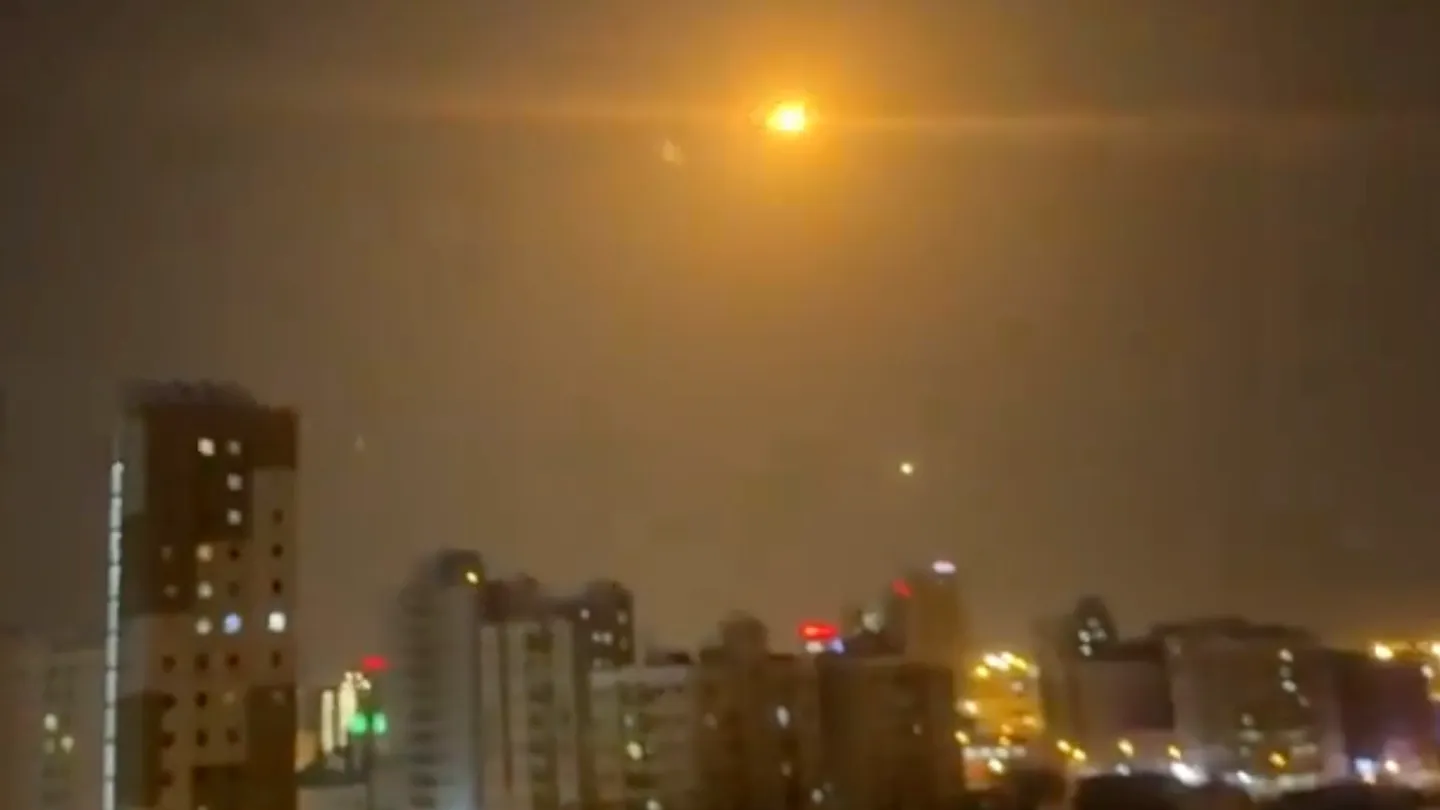
“Kuwaiti air defenses are currently confronting hostile missile and drone attacks,” Kuwait’s Army stated on X. “The General Staff of the Army notes that if explosion sounds are heard, they are the result of air defense systems intercepting the hostile attacks. Everyone is requested to adhere to the security and safety instructions issued by the competent authorities.”

“The siren has been sounded,” Bahrain’s Interior Ministry stated on X. “Citizens and residents are urged to remain calm and head to the nearest safe place.”

Iran said it launched retaliation strikes.

“Following the hostile actions of the U.S. in the Persian Gulf, the Strait of Hormuz, and Qeshm Island, American bases in Kuwait were hit,” the official Iranian IRIB news outlet claimed on X in a post that included video of what appears to be missiles landing.

IRIB posted another video it claimed showed an air defense munition exploding in a civilian area. TWZ cannot independently confirm any of these claims.

The Iranian news outlet also showed video of what it said were missiles flying over Bahrain.

Earlier on Tuesday, U.S. Central Command (CENTCOM) announced U.S. forces “disabled an unladen oil tanker that was attempting to sail toward an Iranian port on the Arabian Gulf.” 

In a post on X, CENTCOM said it “enforced blockade measures against Botswana-flagged M/T Lexie as it transited international waters toward Kharg Island. The ship’s crew ignored repeated warnings, failing to comply with directions from U.S. forces multiple times over a 24-hour period.”

A U.S. aircraft “ultimately disabled the vessel by firing a Hellfire missile into the ship’s engine room, preventing the tanker from reaching Iran,” the command added.

This marks the sixth commercial vessel disabled by CENTCOM, which has also redirected 122 as the ceasefire with Iran continues.

You can see video of the Hellfire strike on the M/T Lexie below.

Meanwhile, there are unconfirmed reports that Iran has also attacked Iraq as well. We have reached out to CENTCOM for more information and will update this story with any pertinent details provided.

It isn’t clear who fired on who first that set off this chain of events. The U.S. has been responding to attacks on ships in the Strait of Hormuz area, including on U.S. Navy ships, with strikes like those described on Qeshm island, but we don’t know if that was exactly the case in this instance.

This is a developing story.

Contact the author: howard@twz.com

Howard is a Senior Staff Writer for The War Zone, and a former Senior Managing Editor for Military Times. Prior to this, he covered military affairs for the Tampa Bay Times as a Senior Writer. Howard’s work has appeared in various publications including Yahoo News, RealClearDefense, and Air Force Times.


Joseph has been a member of The War Zone team since early 2017. Prior to that, he was an Associate Editor at War Is Boring, and his byline has appeared in other publications, including Small Arms Review, Small Arms Defense Journal, Reuters, We Are the Mighty, and Task & Purpose.


Source link

Iran war day 94: US strikes Iranian sites; Kuwait intercepts missiles | US-Israel war on Iran News

While a peace deal between the US and Iran remains elusive, Israel has deepened its offensive into southern Lebanon.

The United States military says it has struck Iranian military sites, and Iran’s Islamic Revolutionary Guard Corps (IRGC) says it has targeted a US base in response, the latest in a series of exchanges as negotiations to end the three-month US-Israel war on Iran are conducted.

US President Donald Trump also on Monday described Iran as eager to reach an agreement.

“Iran really wants to make a deal, and it will be a good one for the USA and those that are with us,” he posted on his Truth Social platform.

Here is the latest on the US-Iran negotiations as both sides announced on day 94 of the war on Iran that they traded attacks:

In Iran

  • Production restored at South Pars: Iran has restored gas production at three offshore platforms in the South Pars gasfield after Israel attacked them in March.
  • US says it attacks Iranian military sites: The US military’s Central Command (CENTCOM) said it conducted “self-defense strikes” on Iranian radar and drone sites in the city of Goruk and on Qeshm Island at the weekend.
  • Iran executes two men over January protests: Iran executed two men convicted over their role in antigovernment protests in January, according to the Mizan news agency. The men were found guilty of setting fire to a mosque in Tehran, damaging public property and clashing with security forces, Mizan reported.

War diplomacy

  • Iran says messages being sent to US: Iranian Foreign Minister Abbas Araghchi said Tehran is continuing to exchange messages with the US on a deal to end the war.
  • Trump’s stance: Araghchi’s comments came after US media reported that Trump has called for tougher terms in the preliminary agreement.

In the Gulf

  • Kuwait intercepts missiles and drones: The General Staff of the Kuwaiti army said its air defences were “confronting hostile missile and drone attacks”. If sounds of explosions are heard, they are the result of air defences intercepting the projectiles, the army added.

In Lebanon

  • Israel pushes farther into Lebanon: Prime Minister Benjamin Netanyahu has ordered Israel’s military to push farther into Lebanon after Israeli forces made their deepest incursion into the country in more than 25 years.
  • Hezbollah says it downs Israeli drone: The Lebanese armed group said it shot down an Israeli Hermes 450 drone over the western sector of southern Lebanon using a surface-to-air missile on Sunday evening. It said in a statement on Telegram that the strike was in response to Israeli violations of a ceasefire that went into effect on April 8.
  • Hezbollah strikes Israeli forces in southern Lebanon: Hezbollah also said its fighters fired a large number of rockets and artillery shells at Israeli forces on the eastern outskirts of the town of Yohmor al-Shaqif in southern Lebanon early on Monday.
  • US proposes new plan: The US has put forward a proposal to de-escalate hostilities in Lebanon, a US official told Al Jazeera, adding that Secretary of State Marco Rubio held separate talks with Lebanese President Joseph Aoun and Netanyahu.

In Israel

  • Israel said rocket fired from Lebanon intercepted: The Israeli military said it intercepted a rocket that set off sirens in northern Israel and destroyed the launcher from which Hezbollah fired the projectile. Earlier, Israel’s Ynet News website reported that air raid sirens had been heard in Western Galilee, the town of Kiryat Shmona and surrounding areas.

In the US

  • The IRGC says it strikes US airbase: The IRGC said it struck an airbase that was used for an attack on a telecommunications tower on Sirik Island, located in the southern province of Hormozgan, Iran’s Fars news agency reported. The IRGC did not specify the location of the facility.
  • Trump says Iran wants to make a deal: In a new Truth Social post, Trump claimed Tehran “really wants to make a deal” and whatever deal is reached will “be a good one” for the US “and those that are with us”.

Source link