Korean

BTS’ Jungkook tops 3 bln Spotify streams with ‘Seven,’ first for Korean artist

BTS member Jungkook, seen here performing in New York’s Central Park in September 2023, topped 3 billion Spotify streams with his single “Seven,” his agency BigHit Music said Tuesday. File Photo by John Nacion/UPI | License Photo

“Seven,” a hit solo track by BTS member Jungkook, has surpassed 3 billion streams on Spotify, making him the first Korean artist to hit the threshold with a single song, his agency BigHit Music said Tuesday.

“Seven” is also the only song released in 2023 globally to reach the milestone, according to the agency.

A passionate serenade about wanting to spend every day with a loved one, “Seven” blends a catchy melody with a warm acoustic guitar sound and rhythms from UK garage, a genre of electronic music that emerged in Britain in the early 1990s.

The song’s music video surpassed 600 million views on YouTube in April.

Since its release, “Seven” has enjoyed worldwide success, debuting at No. 1 on the U.S. Billboard Hot 100 and reaching No. 3 on the British Official Singles Chart Top 100.

K-pop supergroup BTS, to which Jungkook belongs, is currently on its largest-ever scale world tour, “Arirang.”

Copyright (c) Yonhap News Agency prohibits its content from being redistributed or reprinted without consent, and forbids the content from being learned and used by artificial intelligence systems.

Source link

Ex-diplomats allege North Korean UNESCO official has intelligence ties

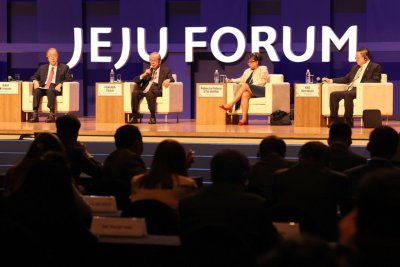
Former Japanese Prime Minister Yasuo Fukuda (2-L) speaks during the 2024 Jeju Forum for peace and prosperity at a convention center on the country’s southern Jeju Island, South Korea. Photo by YONHAP / EPA

June 19 (Asia Today) — Former North Korean diplomats have alleged that a North Korean education specialist affiliated with UNESCO and being considered as a speaker at an international forum in South Korea may be connected to Pyongyang’s intelligence apparatus.

Jang Kwang-chol is under consideration to participate by video in a session titled “UNESCO and the Future of Education: Challenges and Prospects” at the 21st Jeju Forum for Peace and Prosperity, according to forum organizers.

The forum, jointly hosted by South Korea’s Foreign Ministry, the Jeju provincial government and other organizations, is scheduled to take place from Wednesday through June 26 at Haevichi Hotel & Resort Jeju and Jeju Stone Park.

The former diplomats’ allegations regarding Jang could not be independently verified. Neither UNESCO nor the North Korean government was quoted as responding to the claims.

Several former North Korean diplomats said Pyongyang selects Foreign Ministry officials for assignments at United Nations agencies to secure international assistance, collect information about foreign governments and South Korea and earn foreign currency.

They alleged that officials selected for such work sometimes receive fabricated or altered professional backgrounds tailored to the agency where they will serve.

Before deployment, the officials may formally transfer their affiliation to an intelligence organization such as North Korea’s Reconnaissance General Bureau, the former diplomats claimed. Such an arrangement, they said, allows the officials to operate with greater independence than ordinary North Korean diplomats.

UNESCO materials identify Jang as an education specialist who earned a doctorate in education from Kim Hyong Jik University of Education and previously worked for North Korea’s Education Ministry.

The former diplomats alleged that at least part of that professional background could serve as a cover for intelligence-gathering duties.

Ko Young-hwan, a former first secretary at the North Korean Embassy in the Republic of Congo, told Asia Today that North Korea has frequently dispatched what it calls international civil servants to U.N. organizations.

“When they were sent abroad in the past, their affiliations were transferred to organizations under the Workers’ Party, such as the United Front Department or the External Information Investigation Department, also known as Office 35,” Ko said.

“After those organizations were consolidated, I understand that their affiliations were transferred to the Reconnaissance General Bureau.”

Ko, who later headed South Korea’s National Institute for Unification Education, said he believed Jang could fall into that category.

North Korea created the Reconnaissance General Bureau in 2009 by combining intelligence and operational units that had previously been divided among the Workers’ Party and the military.

South Korean authorities have described the bureau as North Korea’s principal organization for overseas intelligence collection, cyber operations and clandestine activities.

Former North Korean diplomats also said officials assigned to international organizations operate with fewer restrictions than diplomats posted to embassies.

Ko recalled an official who worked at UNESCO headquarters in Paris while he was serving in the North Korean Foreign Ministry.

“He attended a weekly self-criticism session at the embassy only once a week and did not have to report unless something unusual occurred,” Ko said.

Ryu Hyun-woo, a former acting North Korean ambassador to Kuwait, said such officials can operate independently under special circumstances.

“They are diplomats who act alone in exceptional situations,” Ryu said. “I understand that they receive separate, specialized training before being dispatched.”

The Jeju Forum’s organizers said education innovation is one of this year’s major themes and that Jang is being considered because he is a UNESCO-affiliated official suited to the education session.

The organizers have not publicly suggested that his proposed participation is connected to intelligence activity.

Some observers, however, have interpreted the invitation as a possible attempt to reopen communication with North Korea amid strained inter-Korean relations.

The outreach comes after the Jeju provincial government provided North Korea with about 160 million won ($116,000) worth of agricultural and medical supplies, including hallabong citrus seedlings, chemicals used to combat pine wilt disease and kidney dialysis equipment.

The provincial government’s North Korea assistance program has also drawn scrutiny following reports that Jeju Gov. Oh Young-hun had contact with Ri Ho-nam, a former counselor at the North Korean Embassy in Beijing who has been identified by South Korean sources as an operative involved in inter-Korean affairs.

No evidence was presented in the article showing that Jang had engaged in espionage or other illegal activity in connection with the Jeju Forum.

— Reported by Asia Today; translated by UPI

© Asia Today. Unauthorized reproduction or redistribution prohibited.

Original Korean report: https://www.asiatoday.co.kr/kn/view.php?key=20260619010006871

Source link

Canada nears decision on Korean, German submarine bids

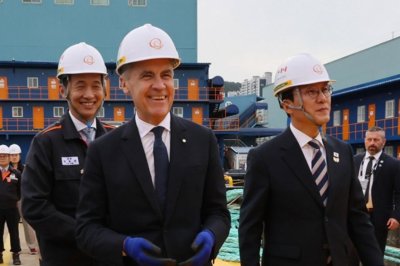
Canadian Prime Minister Mark Carney (C), accompanied by South Korean Prime Minister Kim Min-seok (R) and Hanwha Group Vice Chairman Kim Dong-kwan during their visit to Hanwha Ocean Co.’s shipyard on Geoje Island in South Gyeongsang Province, southeastern South Korea. Photo by YONHAP / EPA

June 17 (Asia Today) — Canada is expected to select a preferred bidder within 30 days for a major submarine procurement program, narrowing the competition to South Korea’s Hanwha Ocean and Germany’s Thyssenkrupp Marine Systems.

The Canadian Patrol Submarine Project calls for the acquisition of up to 12 conventionally powered submarines to replace the Royal Canadian Navy’s four aging Victoria-class vessels.

The acquisition, infrastructure and long-term maintenance program has been estimated by South Korean industry officials at at least 60 trillion won, or about $39.7 billion. Some estimates place its potential value over several decades as high as 120 trillion won, or about $79.4 billion.

Stephen Fuhr, Canada’s secretary of state for defence procurement, said Ottawa expected to choose a preferred bidder within 30 days, according to Politico.

The selection would grant one bidder the right to enter detailed negotiations with the Canadian government, although it would not constitute a final contract award.

Canada previously identified Hanwha Ocean and Germany’s Thyssenkrupp Marine Systems as the two qualified suppliers for the program.

The contest has entered its final stage as South Korea promotes a package combining submarine construction, government-backed financing and broader industrial cooperation.

Canadian procurement chief visits South Korea

Fuhr visited Hanwha Ocean’s shipyard in Geoje, about 205 miles southeast of Seoul, on Feb. 2 with Canadian government and business representatives.

He toured the shipyard’s assembly facilities and automated production equipment and boarded the ROKS Jang Yeong-sil, the first 3,000-ton submarine in South Korea’s Dosan Ahn Changho Batch-II class, while it was undergoing sea trials.

Fuhr was accompanied by Hanwha Ocean Chief Executive Kim Hee-cheul and senior South Korean officials.

He later visited the South Korean Navy’s Submarine Force Command in Jinhae to examine its training, logistics and maintenance systems.

Hanwha Ocean said the visit allowed the Canadian delegation to assess South Korea’s submarine manufacturing capacity and its ability to provide long-term maintenance and operational support.

Canada seeks submarines for three oceans

Canada wants its future fleet to operate across the Atlantic, Pacific and Arctic oceans while maintaining interoperability with the United States and other allies.

Its requirements include long range, extended endurance, under-ice capability and reliable maintenance support.

Hanwha Ocean is offering a version of South Korea’s Dosan Ahn Changho-class submarine, also known as the KSS-III.

The company has emphasized that the platform is already in production and can be delivered more quickly than a newly developed design. It has also proposed cooperation with Canadian universities, shipyards and defense companies.

Thyssenkrupp Marine Systems is offering the Type 212CD submarine, a new design being developed for Germany and Norway.

The German bidder has highlighted its long-standing relationships within NATO, European defense supply chains and proposed investment in Canadian industry.

Germany and Norway have also reportedly examined changes to their own production schedules to make earlier delivery slots available to Canada.

Industrial benefits could determine outcome

Canada has made domestic jobs, industrial investment and long-term economic benefits central elements of the procurement.

The government has said work associated with the submarines should strengthen Canada’s marine and defense industries throughout the fleet’s operational life.

South Korea has therefore sought to expand its proposal beyond the construction of submarines.

Canadian officials have discussed potential South Korean investment in Canada’s automotive and transportation industries, according to people familiar with the negotiations.

South Korean companies have responded by exploring a hydrogen-powered commercial vehicle and fueling network rather than committing immediately to a conventional automobile assembly plant.

Hyundai Translead, Hyundai Motor Group’s North American trailer manufacturing subsidiary, has signed a dealership agreement with Canadian commercial vehicle dealer Breadner Trailers for Hyundai’s XCIENT hydrogen fuel-cell trucks.

The trucks have accumulated more than 1 million miles, or 1.6 million kilometers, of commercial driving in North America, according to Hyundai.

Glenn Copeland, president of Hanwha Ocean’s Canadian subsidiary, previously said Hyundai Motor Group had presented an initial proposal to Canadian officials for a hydrogen freight transportation corridor.

The plan could support Canada’s transportation decarbonization policies while adding a civilian industrial component to South Korea’s submarine offer.

Seoul prepares financial support

The South Korean government and state financial institutions are also preparing export financing to support the bid.

The Korea Trade Insurance Corp. and the Export-Import Bank of Korea have expanded financing programs for major overseas projects in defense, nuclear power and other strategic industries.

South Korean officials have said as much as 100 trillion won, or about $66.1 billion, from a broader export financing initiative could be made available for defense and nuclear energy projects. The amount does not represent financing committed exclusively to the Canadian submarine program.

Hanwha Ocean has also sought to demonstrate the strength of its domestic supply chain.

At the World Defense Show in Riyadh in February, the shipbuilder signed cooperation agreements with 11 South Korean defense and submarine equipment companies, including LIG Nex1, Hanwha Aerospace, Kolon Spaceworks, KTE and Firstec.

Hanwha Ocean says more than 80% of the components used in its proposed submarine can be supplied domestically.

A South Korean defense industry official said the final decision would depend not only on submarine performance but also on financing, delivery schedules, maintenance support and benefits for Canadian industry.

“Canada’s submarine project is more than a weapons sale,” the official said. “The remaining competition will be decided by which bidder can offer the most credible combination of capability, delivery and long-term industrial cooperation.”

— Reported by Asia Today; translated by UPI

© Asia Today. Unauthorized reproduction or redistribution prohibited.

Original Korean report: https://www.asiatoday.co.kr/kn/view.php?key=20260616010005537

Source link

South Korean team develops low-cost green hydrogen catalyst

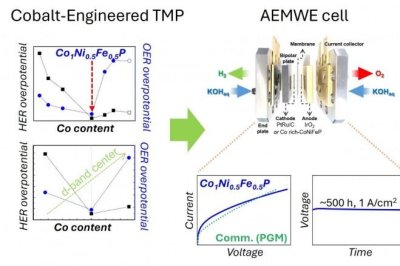
A graphic summarizes the performance of a cobalt-optimized, non-precious-metal catalyst used in an anion-exchange membrane water electrolysis system. Image courtesy of Chung-Ang University

June 15 (Asia Today) — South Korean researchers have developed a catalyst that could substantially reduce the cost of producing green hydrogen while delivering performance and durability comparable to catalysts made with expensive precious metals.

A research team led by Professor Don-Hyung Ha of Chung-Ang University developed multimetallic phosphide nanoparticles that do not require platinum, iridium or other costly precious metals, the university said Monday.

The research was conducted jointly with a team led by Professor Inho Nam of Chung-Ang University’s Department of Chemical Engineering and researchers led by Sung Jong Yoo of the Korea Institute of Science and Technology’s Center for Hydrogen and Fuel Cells.

The catalyst was used to build a high-performance anion-exchange membrane water electrolysis system, a technology considered a potential lower-cost option for producing clean hydrogen.

Water electrolysis uses electricity to split water into hydrogen and oxygen. When the electricity comes from renewable sources, the resulting fuel is commonly called green hydrogen because the production process does not directly emit carbon dioxide.

Many high-performance electrolyzers, however, rely on scarce and expensive catalysts containing platinum or iridium. Their cost and limited availability have been major obstacles to the large-scale commercialization of green hydrogen.

Anion-exchange membrane water electrolysis could reduce dependence on those metals because it can operate with less expensive materials. Existing non-precious-metal catalysts, however, often undergo changes to their surface structures during operation, resulting in lower efficiency and shorter operating lives.

The researchers sought to address the problem by designing nanoparticles made from cobalt, nickel, iron and phosphorus.

They used real-time spectroscopic analysis to examine changes in the catalyst’s oxidation state and surface structure while it was operating.

The team found that optimizing the amount of cobalt caused a stable, highly active structure to form on the catalyst’s surface during electrolysis. The researchers identified this surface reconstruction as a key factor in maintaining high catalytic activity and long-term durability.

In single-cell tests, a system using the catalyst at both the hydrogen-producing and oxygen-producing electrodes reached a current density of 5.73 amperes per square centimeter at 2 volts.

When the catalyst was used only at the oxygen-producing electrode, the system reached 11.43 amperes per square centimeter at the same voltage.

Higher current density generally indicates that an electrolyzer can produce more hydrogen from a given electrode area, although overall commercial performance also depends on factors including energy efficiency, system size, operating conditions and manufacturing cost.

The system also operated continuously for 500 hours at a commercially relevant current density of 1 ampere per square centimeter without a significant decline in performance, the researchers said.

The results indicate that non-precious-metal catalysts can deliver performance approaching that of systems using platinum-group metals.

The study combined control of the catalyst’s chemical composition, real-time analysis of its operating surface and performance testing in a complete electrolysis cell. The researchers said the integrated approach strengthens the catalyst’s potential for practical application.

“This study is academically significant because we precisely controlled the composition of a non-precious multimetallic phosphide catalyst and used real-time analysis to clarify how its surface changes during operation,” Ha said.

“It could serve as a milestone in developing low-cost water electrolysis electrodes that replace expensive precious-metal catalysts while providing both high performance and durability,” he said.

The research was supported by South Korea’s Ministry of Science and ICT through the H2GATHER program, the H2 NEXT ROUND program and a Korea Institute of Science and Technology clean hydrogen technology development program.

The study, titled “Cobalt-Engineered Multimetallic Phosphides with Switchable HER-OER Activity for Durable Anion Exchange Membrane Water Electrolysis,” was published online May 26 in Advanced Functional Materials.

— Reported by Asia Today; translated by UPI

© Asia Today. Unauthorized reproduction or redistribution prohibited.

Original Korean report: https://www.asiatoday.co.kr/kn/view.php?key=20260612001005481

Source link

Second South Korean ship clears Strait of Hormuz

Crude carrier Universal Winner, a South Korean oil tanker operated by Korean shipping company HMM, reaches waters off the southeastern port city of Ulsan, South Korea, 10 June 2026, about three weeks after exiting the Strait of Hormuz, where it had been stranded amid tensions in the Middle East. Photo by YONHAP / EPA

June 11 (Asia Today) — A South Korean-operated liquefied natural gas carrier that had been stranded near the Strait of Hormuz because of the U.S.-Iran war has passed through the waterway, South Korea’s Foreign Ministry said Wednesday.

The vessel was headed to a third country, not South Korea, and eight South Korean crew members were aboard, officials said.

“One South Korean vessel has passed through the Strait of Hormuz and is sailing,” the Foreign Ministry said. “Consultations related to this passage were led by the foreign-chartered company.”

The ministry said it understood the ship was heading to its final destination in a third country.

A Foreign Ministry official said Seoul has repeatedly emphasized to Iran the need for the prompt and safe navigation of all vessels in the Strait of Hormuz, including South Korean ships. The official said the government is also continuing to communicate with related countries.

According to the Ministry of Oceans and Fisheries, one LNG carrier operated by a South Korean shipping company resumed operations and left the inner side of the strait as of 7 a.m. Wednesday.

As a result, the number of South Korean-operated ships waiting inside the strait fell from 25 to 24. The number of South Korean crew members in the area declined from 147 to 139.

Foreign Ministry officials said the South Korean vessels are anchored in safe areas near Qatar, the United Arab Emirates and other nearby waters, following guidance from the Oceans Ministry.

“The government’s top priority is the free and safe passage of South Korean vessels and crew members in the strait,” a Foreign Ministry official said. “We are carrying out diplomatic efforts through multiple channels regarding the remaining 24 vessels.”

The charterer of the ship that passed through the strait was identified as QatarEnergy, Qatar’s state-owned energy company, and the final destination was believed to be Pakistan.

The case differs from the earlier passage of the Universal Winner, a very large crude carrier operated by HMM, which left the strait after direct negotiations between the South Korean government and Iran. In the latest case, the charterer led the decision-making and consultations.

Diplomatic observers said the involvement of QatarEnergy as the charterer and Pakistan as the destination may have helped the vessel secure passage. Pakistan has maintained close communication with Iran over Middle East tensions, and consultations involving the Pakistani Navy and the charterer may have reduced safety concerns.

The passage was reportedly completed shortly before Iran announced a full closure of the Strait of Hormuz. Iran said Wednesday local time it would completely close the strait in response to U.S. airstrikes.

Diplomatic observers said South Korea is likely to prioritize safety for the remaining 24 vessels for the time being, rather than pushing for immediate passage, as risks in the strait have increased.

— Reported by Asia Today; translated by UPI

© Asia Today. Unauthorized reproduction or redistribution prohibited.

Original Korean report: https://www.asiatoday.co.kr/kn/view.php?key=20260612010004185

Source link

South Korean business group urges power market reform

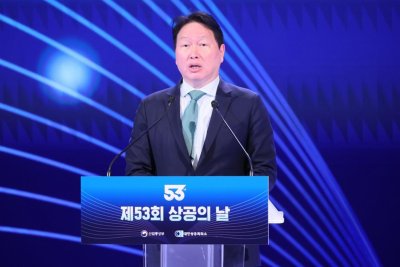
Chey Tae-won, chief of the Korea Chamber of Commerce and Industry (KCCI), speaks during a ceremony marking the 53rd Commerce and Industry Day at the headquarters of the Korea Chamber of Commerce and Industry in Seoul, South Korea, 31 March 2026. Photo by YONHAP / EPA

June 11 (Asia Today) — South Korea needs to reform its electricity market to respond to surging power demand from artificial intelligence and the expansion of renewable energy, the Korea Chamber of Commerce and Industry said Wednesday.

The chamber said the current power market structure is not enough to support private investment or the growth of new energy businesses, including energy storage systems and virtual power plants.

The business group raised the issue during a seminar in Seoul co-hosted with the Korean Resource Economics Association. Participants discussed ways to reform the electricity market and promote new energy businesses as AI adoption and renewable power generation expand.

“As the power industry shifts from a centralized structure to a distributed and digital-based system, various new businesses are emerging,” said Cho Hong-jong, president of the Korean Resource Economics Association and a professor at Dankook University. “To make the energy transition a reality, it is necessary to build a competitive system based on market principles.”

Joo Sung-kwan, a professor at Korea University, said South Korea’s current electricity market has structural limits because wholesale prices are set a day before electricity is supplied, based mainly on fuel costs.

“This creates significant rigidity because real-time supply and demand conditions cannot be flexibly reflected in prices,” Joo said.

Joo said the market needs pricing signals that respond to supply and demand. Prices should rise when electricity supply is tight to encourage lower consumption and fall when supply is sufficient to promote use, he said.

For new energy businesses to secure profitability and increase investment, Joo said South Korea should move from the current day-ahead market to a real-time market. He also called for a price-bidding system in which power generators and electricity retailers submit bid prices.

Panelists also said South Korea needs a market environment and regulatory system that can attract private investment.

Lee Seo-jin, a professor at Hongik University, said tailored compensation systems for new energy businesses and a predictable policy environment are more important than simple market opening.

Huh Yoon-ji, a professor at Dankook University, said wholesale price normalization and retail electricity rate reform must proceed together to secure economic viability. She also called for independent governance to supervise the electricity market.

Industry officials said the pace of reform should accelerate.

Lee Hyo-seop, vice president of Encored, said his company is preparing a virtual power plant business using AI-based forecasting technology, but uncertainty over the schedule for electricity market reform is making business development difficult.

Yeom Sung-oh, Seoul representative of Gurin Energy, said power supply flexibility and sustainability will be crucial in the AI era. He called for preemptive institutional support covering power grids, energy storage systems and data centers.

The Korea Chamber of Commerce and Industry said private-sector energy businesses are essential to address rising electricity demand from AI and the growing variability of renewable energy.

“Companies need a more predictable electricity market so they can invest in high-cost new technologies,” said Kim Min-seok, head of the chamber’s Green Energy Center. “Institutional foundations, including regulatory innovation and a supportive market environment, must be established.”

“To secure competitiveness in power infrastructure in the AI era, discussion on electricity market reform can no longer be delayed,” Kim said.

— Reported by Asia Today; translated by UPI

© Asia Today. Unauthorized reproduction or redistribution prohibited.

Original Korean report: https://www.asiatoday.co.kr/kn/view.php?key=20260611010003798

Source link

South Korean president orders probe into election agency

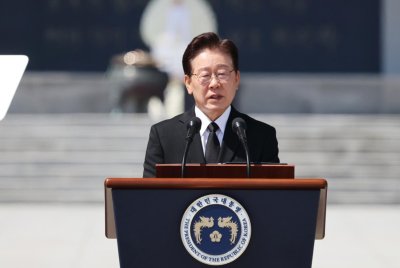
South Korean President Lee Jae-myung delivers his speech during a ceremony marking the country’s 71st Memorial Day to commemorate veterans and independence activists at the National Cemetery in Seoul, South Korea, 06 June 2026. Photo by KIM HONG-JI / EPA

June 7 (Asia Today) — President Lee Jae-myung sharply criticized the National Election Commission on Sunday over allegations that voting rights were violated during South Korea’s June 3 local elections.

Lee called on the National Assembly to conduct a parliamentary inquiry and ordered the administration to create a joint investigation team involving prosecutors and police.

“The National Election Commission caused serious disruption to the people’s exercise of voting rights during the June 3 local elections,” Lee wrote on Facebook. “The incident itself is difficult to understand, but its response afterward and explanation to the public were also insufficient.”

Lee said the right to vote is a constitutional right that must not be restricted or infringed upon for any reason.

“This is a grave matter that damaged the foundation of popular sovereignty,” he said. “As one citizen and as the president responsible for the government, I express deep regret.”

Lee asked lawmakers to quickly pursue a parliamentary inquiry to determine the facts and prepare measures to prevent a recurrence.

He also called for discussions on fundamental institutional reforms of the election commission.

“The government will also consider every possible measure at the administrative level, given the seriousness of the matter,” Lee said. “I have instructed the creation of a joint investigation team involving prosecutors and police to clarify responsibility and thoroughly determine the full circumstances of the case.”

Lee noted that the commission is an independent institution and said its independence comes with major responsibilities.

“The chairperson of the National Election Commission is regarded as one of the five highest constitutional officeholders because the commission is an independent institution with corresponding authority, duties and responsibility, just like the executive, legislative and judicial branches,” Lee said.

“The more independent an institution is, the more important public trust becomes,” he said. “An independent institution that has lost public trust has no reason to exist.”

Lee urged the commission to conduct a fundamental review of its organization and election management system. He said the commission should take the incident seriously and show a strong commitment to reform at a level the public can trust.

— Reported by Asia Today; translated by UPI

© Asia Today. Unauthorized reproduction or redistribution prohibited.

Original Korean report: https://www.asiatoday.co.kr/kn/view.php?key=20260607010002243

Source link

South Korean food conglomerate, Harim affiliate deals top $938 million

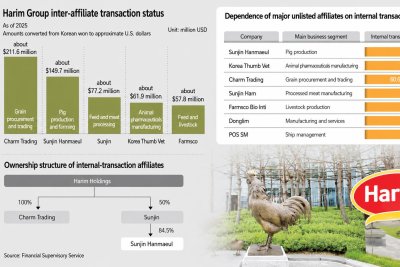
Harim Group’s internal affiliate transactions reached high levels in 2025, with Charm Trading recording about $211.6 million in internal transactions and some unlisted affiliates depending on group transactions for more than 80% of sales. Data from Financial Supervisory Service. Graphic by Asia Today and translated by UPI

June 3 (Asia Today) — Harim Group’s domestic transactions among affiliates exceeded 1.4 trillion won, or about $914 million, last year, raising concerns that some unlisted units remain heavily dependent on business from within the group.

An analysis of Financial Supervisory Service filings and affiliate transaction data showed Harim Group’s domestic internal transactions totaled 1.44 trillion won, or about $938 million, in 2025.

That accounted for about 11.5% of the group’s total revenue of 12.41 trillion won, or about $8.11 billion.

Harim Group has a vertically integrated business structure spanning feed production, livestock, food processing, distribution and logistics. The structure has drawn attention because several unlisted affiliates reported high levels of sales from transactions with other group companies.

Sunjin Hanmaeul, an agricultural company involved in pig farming, generated 229.2 billion won, or about $150 million, of its 256.6 billion won, or about $168 million, in total revenue last year through transactions with affiliates including Harim Holdings and Sunjin. That means 89.3% of its sales came from internal group transactions. Sunjin Hanmaeul is a sub-subsidiary of Harim Holdings.

Korea Thumb Vet, an animal pharmaceutical affiliate, also generated 94.8 billion won, or about $62 million, of its 130.1 billion won, or about $85 million, in total revenue from affiliate transactions. The company is also a sub-subsidiary of Harim Holdings.

Charm Trading, a Harim Holdings subsidiary responsible for grain procurement and trading, posted 323.9 billion won, or about $212 million, in internal transactions out of 534.5 billion won, or about $349 million, in total revenue last year. That was the largest amount among the group’s affiliate transactions.

Sunjin, a core affiliate in the feed and processed meat businesses, recorded 118.138 billion won, or about $77 million, in sales through affiliate transactions. Sunjin also owns an 89.4% stake in Sunjin Hanmaeul, whose internal transaction dependence reached 89.3%.

Other unlisted affiliates also showed high dependence on internal transactions. Sunjin Ham, a processed meat manufacturer, posted an internal transaction ratio of 99.9%. Farmsco Bio Inti, a livestock production affiliate, recorded 85.8%, while ship management company POS SM reported 85.4% and manufacturing and services affiliate Donglim posted 80.2%.

Harim Group was sanctioned by the Fair Trade Commission in 2021 over allegations that affiliates steered business to Orpum, a private company wholly owned by Kim Jun-young, the eldest son of Harim Chairman Kim Hong-kuk and an assistant managing director at Pan Ocean.

At the time, the commission said affiliate support provided unfair economic benefits to the owner family and imposed corrective orders and fines. Harim challenged the decision and the case is currently in administrative litigation.

The continued transaction structure involving major affiliates such as Charm Trading, Sunjin Hanmaeul and Korea Thumb Vet has drawn attention because it appears to have changed little since the commission’s sanctions.

Harim Group’s succession structure is widely seen as centered on Kim Jun-young. Through Orpum and Korea Investment, Kim has secured influence within the ownership structure of Harim Holdings, and key affiliates are also included under that structure.

Some level of internal transactions may be inevitable in a vertically integrated industry. But critics say it is a separate issue when some unlisted affiliates continue to depend on internal group transactions for 60% to nearly 100% of their revenue, especially as regulators strengthen oversight of tunneling and unfair support involving owner families.

The Fair Trade Commission says it does not determine illegality based only on the share of internal transactions.

“Internal transactions become a problem when illegal conduct such as unfair business steering or private benefit-taking is involved,” a commission official said. “If unfair support or private benefit-taking is found, the transaction can be subject to sanctions under relevant laws.”

— Reported by Asia Today; translated by UPI

© Asia Today. Unauthorized reproduction or redistribution prohibited.

Original Korean report: https://www.asiatoday.co.kr/kn/view.php?key=20260604010001065

Source link

South Korean banks face $716 million in long-overdue loans

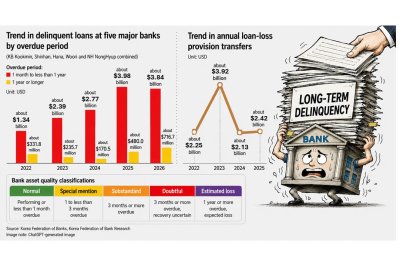
South Korea’s five major banks saw long-term delinquent loans rise to about $716.7 million in 2026, while loans overdue for one month to less than one year remained elevated at about $3.84 billion. Data from Korea Federation of Banks and Korea Federation of Bank Research. Graphic by Asia Today and translated by UPI

June 3 (Asia Today) — South Korea’s major commercial banks are facing growing pressure from a sharp rise in long-overdue loans, with the amount of loans unpaid for more than one year exceeding 1 trillion won, or about $716 million, in the first quarter.

Loans overdue for less than one year, which could later worsen into long-term delinquencies, also approached 6 trillion won, or about $3.84 billion. The increase suggests that borrower distress is deepening, especially among corporate borrowers, despite banks’ efforts to dispose of nonperforming loans.

The sequential expiration of COVID-19 loan maturity extensions also appears to be adding pressure on delinquent borrowers.

Banks, which have continued to post strong earnings, are concerned that rising long-term delinquencies could increase loan-loss provision burdens. The longer a loan remains overdue and the lower its chance of recovery becomes, the more banks must set aside in provisions.

If the Bank of Korea raises its base rate in the second half, borrowers’ repayment burdens could grow further, increasing the risk of additional long-term delinquencies. Analysts say asset quality management could become a key factor determining banks’ earnings performance.

According to financial industry data released Wednesday, the combined balance of loans overdue for at least one year at KB Kookmin Bank, Shinhan Bank, Hana Bank, Woori Bank and NH NongHyup Bank reached 1.0972 trillion won, or about $716 million, in the first quarter.

That was up 49.3% from 734.9 billion won, or about $480 million, a year earlier. Compared with 261 billion won, or about $170 million, in 2024, the figure has more than quadrupled. It was also more than double the 508 billion won, or about $332 million, recorded in 2022 during the COVID-19 pandemic.

The increase appeared across all five banks. By bank, NH NongHyup had the largest balance of long-term overdue loans at 474.8 billion won, or about $310 million, followed by KB Kookmin at 166.9 billion won, or about $109 million, Hana at 155.2 billion won, or about $101 million, Shinhan at 151.5 billion won, or about $99 million, and Woori at 148.8 billion won, or about $97 million.

Loans overdue for at least one month but less than one year totaled 5.8851 trillion won, or about $3.84 billion, approaching the 6 trillion won mark. The figure was slightly lower than 6.1002 trillion won, or about $3.98 billion, a year earlier, but remained high by historical standards.

By category, loans overdue for at least one month but less than three months rose from a year earlier to 2.8225 trillion won, or about $1.84 billion. Loans overdue for at least six months but less than one year, which are considered more likely to become long-term delinquencies, reached 1.1111 trillion won, or about $726 million. Both were record highs since the banks began disclosing the relevant data.

The surge in long-term delinquencies is widely attributed to a sharp increase in new overdue loans in 2024 and 2025. Higher interest rates and weak domestic demand weakened borrowers’ repayment capacity, with some distressed borrowers slipping into long-term delinquency.

The increase appears particularly concentrated among corporate borrowers, whose loans are relatively large and harder to recover. At the end of March, the banking sector’s corporate loan delinquency rate stood at 0.68%, up 0.06 percentage point from 0.62% a year earlier.

“Distress pressure has continued for a long period in sectors such as construction and real estate leasing because of the weak housing market,” an official at a commercial bank said.

A renewed period of rate increases could add to the problem. The Bank of Korea left open the possibility of at least one base rate increase in the second half during last month’s monetary policy meeting, raising concerns that banks could face greater asset quality pressure.

Higher base rates can push up market rates, including bank bond yields, increasing borrowers’ interest burdens. That could deepen distress among loans already in arrears and increase new delinquencies, potentially expanding the volume of long-term overdue loans later.

That would likely translate into higher loan-loss provisions for banks. Banks classify loans into five asset-quality categories: normal, precautionary, substandard, doubtful and estimated loss.

When a loan is classified as substandard, banks must set aside provisions equal to 20% of the loan amount. As the overdue period grows longer and repayment capacity worsens, the required provision ratio rises. Doubtful loans, which are overdue for more than three months and have low recovery prospects, require 50% provisioning. Loans classified as estimated losses after more than one year overdue require 100% provisioning.

That means if a doubtful loan deteriorates into an estimated loss, the provisioning burden doubles.

A rise in provision expenses would directly weigh on bank earnings. In 2022, the five major banks set aside 3.5422 trillion won, or about $2.31 billion, in annual loan-loss provisions, while their combined net profit rose 18.6% from a year earlier to 13.7472 trillion won, or about $8.98 billion.

But in 2023, when banks set aside more than 6 trillion won, or about $3.92 billion, in provisions because of real estate project financing distress and other factors, their net profit growth slowed to 2.6%.

Provision expenses fell sharply the following year, but as delinquencies continue to rise, the possibility of renewed growth in provisions has increased. Analysts say careful risk management has become more important.

“As the delinquency period lengthens, the sale price of nonperforming loans tends to fall, so if long-term delinquencies increase, banks disposing of bad loans will also face greater loss burdens,” a financial industry official said.

“The key will be whether banks can prevent new distress from expanding while effectively clearing existing bad loans,” the official said.

— Reported by Asia Today; translated by UPI

© Asia Today. Unauthorized reproduction or redistribution prohibited.

Original Korean report: https://www.asiatoday.co.kr/kn/view.php?key=20260604010001073

Source link

South Korean small businesses seek labor consulting

Han Seong-sook, minister of SMEs and startups. Photo by Asia Today

June 2 (Asia Today) — South Korean small business owners called for more practical labor consulting and measures to ease payroll burdens during a government meeting Tuesday.

The Ministry of SMEs and Startups held a roundtable on labor difficulties facing small businesses at the Korea Certified Public Labor Attorneys Association in Yeongdeungpo-gu, Seoul.

Minister Han Seong-sook, government officials and representatives from convenience stores, restaurants and cafes attended the meeting to discuss labor management difficulties in the field.

Participants said complicated wage rules, including weekly holiday allowances and severance pay, have become a major management burden. They urged the government to provide professional consulting support.

At the meeting, the ministry announced support measures to help small businesses manage labor issues. The measures include a question-and-answer guidebook on commonly missed labor rules, regional on-site briefings and stronger online guidance through short-form videos.

The ministry also plans to help resolve disputes through counseling centers and labor lawyers. It said it will link a 24-hour artificial intelligence labor law counseling service with Small Business 24, a government support platform for small businesses.

Small business groups, however, expressed disappointment with the measures. They said expanding online and offline counseling channels could become a formality unless the government also secures enough budget and staffing to handle a surge in labor complaints.

They also said 24-hour AI counseling may have limits because labor disputes often involve complicated facts and competing interests that differ from case to case.

Participants emphasized that small businesses need more than basic information or counseling. They said the government should build a field-based consulting system and adopt policies that directly reduce labor cost pressures.

They said the government needs a bolder approach that goes beyond publicity-focused measures to address the core problems facing small businesses, including complex employment structures and allowance management.

“We will implement the measures announced today without disruption to create an environment where small business owners can run their businesses with confidence,” Han said.

The government said it will continue listening to difficulties in the field and review possible improvements to the system.

— Reported by Asia Today; translated by UPI

© Asia Today. Unauthorized reproduction or redistribution prohibited.

Original Korean report: https://www.asiatoday.co.kr/kn/view.php?key=20260602010000499

Source link

Unification minister to be probed over alleged leak of N. Korean nuclear info

Unification Minister Chung Dong-young, seen here on May 12 at the Catholic Conference of Korea, will face an investigation over allegations that he leaked classified information related to North Korea’s nuclear facilities, prosecutors said Thursday. File Photo by Yonhap

Unification Minister Chung Dong-young will face a prosecution investigation over allegations that he leaked classified information related to North Korea‘s nuclear facilities.

The Seoul Southern District Prosecutors Office said Thursday that it received the case from the Seoul Central District Prosecutors Office on May 21 and assigned it. Chung is accused of violating laws governing the disclosure of official secrets.

During a parliamentary committee session on March 6, Chung said North Korea is operating another uranium enrichment facility in the northwestern region of Kusong, along with previously reported ones in Yongbyon and Kangson.

The government has previously officially identified Yongbyon and Kangson as the main locations hosting the North’s uranium enrichment facilities, with Kusong being identified as a site for the first time.

At the time, the United States was reportedly said to have conveyed its concerns through South Korean diplomatic, security and intelligence agencies.

The unification ministry responded that Chung’s remarks were based on comments by the head of the International Atomic Energy Agency and reports and analyses released by research institutions, as well as media outlets.

The ministry said Thursday the prosecution’s assignment of the case was merely a procedural step following the complaint and should not be interpreted as the formal launch of an investigation.

Copyright (c) Yonhap News Agency prohibits its content from being redistributed or reprinted without consent, and forbids the content from being learned and used by artificial intelligence systems.

Source link

Starbucks’ Korean sales fall after backlash to ‘Tank Day’ ad campaign | Protests

Coffee chain has seen ‘very significant’ drop in sales after campaign that evoked deadly crackdown, local operator says.

Starbucks Korea has suffered a “very significant” drop in sales after a marketing campaign that evoked a brutal 1980 military crackdown on pro-democracy protesters triggered a public outcry, according to the coffee chain’s local operator.

Shinsegae Group, whose subsidiary E-Mart owns the coffee chain in South Korea, has faced mounting criticism over its so-called “Tank Day” campaign, launched on the anniversary of the May 18 Gwangju Uprising, when the military government deployed troops and tanks to suppress pro-democracy demonstrations.

Recommended Stories

list of 4 itemsend of list

In a news conference on Tuesday, Shinsegae Group chairman Chung Yong-jin made a public apology and asked people not to take out any anger on Starbucks Korea employees and front-line staff.

“I take it very seriously, the fact that many people felt deep pain and anger because of Starbucks Korea’s inappropriate marketing campaign,” Chung said.

“I will take all responsibility for the incident.”

Chung also asked people not to take out their frustration on staff at Starbucks shops, saying the responsibility lies with management. There were no immediate reports of major incidents at stores.

Chung issued his first apology on May 19, saying in a statement that the campaign caused “deep pain to the victims and bereaved families of the May 18 Democratization Movement as well as to the public”.

Shinsegae fired the head of Starbucks Korea last week after apologising over the campaign. Starbucks Global also apologised and said that an investigation had begun.

A Shinsegae official said sales had fallen sharply since the marketing controversy.

“While sales are not our main concern at the moment, we have seen a very significant drop,” said the official.

At Tuesday’s news conference, Jeon Sangjin, a senior Shinsegae Group executive, said the company had yet to find conclusive evidence that Starbucks Korea marketing employees intended to mock the pro-democracy movement, an accusation the employees have denied.

However, he said some employees refused management requests to hand over their smartphones during a weeklong internal review.

Jeon said the company would look at the results from the police inquiry, and any employee found to have intended to ridicule protesters would be fired.

The anger over the campaign has triggered public calls for boycotts, amplified by government officials, including Interior and Safety Minister Yoon Ho-jung, who said Starbucks products will no longer be used at government events and lamented the chain’s “anti-historical behaviour”.

The country’s president, Lee Jae Myung, said on X last week that the campaign displayed “inhumane and disgraceful behaviour by cheap profiteers who deny the values of the South Korean community, basic human rights and democracy”.

Hundreds of people are estimated to have died ⁠or gone missing when Chun Doo-hwan’s military government cracked down on the protests in Gwangju.

Many details remain unconfirmed, including who gave the order to open fire.

Source link

South Korean AI power diagnostics system heads to Germany

Employees check power demand and supply at the regional office of the Korea Electric Power Corp. in Suwon, 30 kilometers south of Seoul, South Korea. Photo by YONHAP / EPA

May 21 (Asia Today) — Korea Electric Power Corp.’s AI-based preventive diagnostics technology will be introduced to Germany’s power equipment market under the company’s largest-ever single technology transfer deal.

Korea Electric Power said Wednesday it signed a $1.34 million, or about 2 billion won, contract with German power equipment company Maschinenfabrik Reinhausen in Berlin on Tuesday. The South Korean utility will receive technology transfer fees from the German company over seven years.

The technology, called SEDA, analyzes about 100,000 pieces of substation equipment data a day. The system uses AI to detect abnormalities in power facilities by linking data from Internet of Things sensors, facility specifications and maintenance records.

Maschinenfabrik Reinhausen, founded in 1868, specializes in transformer load tap changers, sensors and digital solutions. The company has annual revenue of about 19 trillion won, or $12.6 billion.

The German company plans to apply SEDA to its TESSA 2.0 power equipment asset management platform. The platform monitors the condition of transformers, switchgear and other power equipment.

Korea Electric Power began using SEDA in South Korea in 2021. The system has been applied to 359 of the country’s 925 substations, or about 40%, and the company is gradually expanding its use.

The company said SEDA has detected an average of 15 abnormal signs per year over the past five years. Last year, the system helped prevent equipment damage worth 36.6 billion won, or about $24.3 million.

“This technology transfer is highly significant because it gives Korea Electric Power a key foothold for entering global markets, including Europe and North America,” said Yeo Geun-taek, head of the company’s transmission and substation operation office.

— Reported by Asia Today; translated by UPI

© Asia Today. Unauthorized reproduction or redistribution prohibited.

Original Korean report: https://www.asiatoday.co.kr/kn/view.php?key=20260521010006459

Source link

Korean Americans have his back, but Robert Lee Ahn will need more to become L.A.’s next congressman

The race for the 34th Congressional District in the core of Los Angeles was supposed to be a battle for the soul of the Democratic Party. The two dozen hopefuls vying for a spot in the top-two primary were full of self-proclaimed fighters ready to oppose President Trump and establishment Democrats.

Instead, it’s shaping up to be a contest between the powerful group of Latinos who make up a majority of the district’s voters and the small but politically potent Korean American community, as Assemblyman Jimmy Gomez and former city planning Commissioner Robert Lee Ahn grabbed the runoff spots that will determine L.A.’s next member of Congress.

“This is really ethnic politics 101,” said Matt Barreto, a UCLA professor of political science who helps run the polling firm Latino Decisions.

Ahn, an attorney and a relative unknown in the crowded primary field, surprised many with a victory that vaulted him ahead of multiple Latino candidates in a district where more than half the voters are Latino. If elected in the June 6 runoff, he would be the only Korean American member of Congress and the first in nearly 20 years.

But it wasn’t surprising to anyone who studies the intricacies of identity politics in Los Angeles, or to those who had been paying attention to Ahn’s aggressive focus on Korean American voters.

Ahn’s campaign staff spent dozens of hours registering voters at malls and outside restaurants in Koreatown, signing up hundreds of new voters. Ahn made his pitch at multiple Korean churches in the district, and a large portion of his donor base was from the Korean American community, which helped him raise more money than Gomez in the latter part of the campaign despite a deluge of cash Gomez received from political committees.

And when Virginia state legislator Mark Keam, also a Korean American, flew to Los Angeles to endorse Ahn, a bank of TV cameras from Korean American news stations was there.

Robert Lee Ahn raised the most money by far in latest campaign finance reports »

Daniel Hong, a 38-year-old who works in the film industry, voted for the first time Tuesday even though he’s been a citizen for about 20 years. Hong, who is Korean American, said he read numerous articles about Ahn and received multiple phone calls from his campaign.

“That was the first time anybody has ever reached out to me for my vote,” said Hong as he stood outside a polling place set up in a Korean Presbyterian church.

Deborah Choi, 62, said she voted for Ahn so “he can speak for Korean Americans here.” The first wave of Koreans immigrated to the U.S. “so many years ago,” Choi said, but their representation in the highest elected offices remains low. She hopes her 36-year-old son will one day run for office too.

Though county election officials have yet to process more than 13,000 ballots, the 41-year-old Ahn remains thousands of votes ahead of the third-place candidate, fellow former planning Commissioner Maria Cabildo.

With turnout expected to hover around 15% of registered voters, preliminary returns show Ahn’s strategy paid off big. The biggest strongholds of votes for Ahn centered on Koreatown, Westlake and Chinatown, while the 42-year-old Gomez was ahead in neighborhoods throughout the northeast part of the district.

In early absentee ballot returns headed into primary election day, Korean Americans made up nearly a quarter of votes even though they comprise just 6% of registered voters.

Few Korean Americans have come this close to winning a seat in Congress since 1998, when Republican Jay Kim of Diamond Bar lost to a primary challenger after three terms in office. (David Min, a UC Irvine professor, announced a challenge to GOP Rep. Mimi Walters of Orange County this week.)

“Korean Americans in Southern California have been hungry for political representation for a very long time,” said Taeku Lee, a professor of politics and law at UC Berkeley. Lee said the recent campaign that helped propel David Ryu, the first Korean American elected to the L.A. City Council, may have also helped the community learn on-the-ground skills that mobilized voters in the congressional race.

The symbolism of Ahn’s win was not lost on his supporters Tuesday night.

“It’s very significant,” said Jinha Park, a radiologist who attended Ahn’s election night party at a Mexican restaurant in Westlake. “The Korean American community has always felt voiceless at the federal level.”

The question now, as the two Democrats ready for what could be a costly runoff, is whether Ahn, the son of Korean immigrants, can broaden his appeal beyond the Korean American voters who are motivated to send him to Washington.

He faces a fierce challenge: While progressive candidates to his left spoke passionately about fighting for “sanctuary cities” that protect undocumented immigrants and single-payer healthcare, Ahn emphasized the “business sensibility” he would bring to the office and argued there was room to negotiate with Republicans on certain issues, an idea that could prove unpopular in a district where just 9% of voters are Republican, and where Bernie Sanders beat Hillary Clinton in last year’s presidential primary.

Ahn will also have to make a case to Latino voters, who make up more than half of registered voters in the district, why they should choose him over Gomez. The three-term assemblyman is the son of Mexican immigrants, has amassed dozens of establishment endorsements from Democratic elected officials, labor unions and environmental groups, and touted his progressive record in the Legislature.

Among his backers is Xavier Becerra, who rose to become the highest-ranking Latino U.S. congressman and vacated the seat to become California’s attorney general.

Votes that went to the remaining Latino candidates in the primary made up more than 38% of voters at last count, and the district has sent a Latino to Congress for more than half a century.

“When [Ahn is] running against a guy named Gomez, as good as his outreach might be in the Latino community, Latinos’ gut and heart is going to be more with Gomez,” said UCLA professor Barreto.

Ahn dismissed the idea. “The notion that Latinos will only vote for a Latino … I think we’re really going to transcend that with our campaign,” Ahn said in an interview Wednesday. He appears to be positioning himself as an outsider, which would be similar to the campaign Ryu ran when he made his successful council run in 2015. Ahn called Gomez a “professional politician that is powered by special interests.”

Gomez’s camp shot back, saying voters will see through Ahn’s formidable fundraising and realize his credentials don’t match with the district.

“More than anything, he’s ideologically out of step with the district,” said Parke Skelton, a campaign consultant for Gomez. Skelton said Ahn, who changed his registration from Republican to Democrat in 2012, “has taken positions that really put him out of the mainstream Democratic base in this district.”

christine.maiduc@latimes.com

For more on California politics, follow @cmaiduc.

ALSO

Half the candidates in L.A.’s latest congressional race have their own immigrant story. With Trump, this contest is personal.

Results from L.A.’s congressional primary

Updates on California politics

Sign up for our free Essential Politics newsletter


Source link

South Korean defense firms face growing pressure from U.S. cyber rules

A visitor inspects a K2 Black Panther, a South Korean fourth-generation main battle tank, during the final day of the Black Sea Defense and Aerospace Exhibition 2026 in Bucharest, Romania, 15 May 2026. Photo by ROBERT GHEMENT / EPA

May 19 (Asia Today) — South Korea’s fast-growing defense industry is confronting a major new obstacle in the U.S. market as the Pentagon fully implements strict cybersecurity certification requirements across its global supply chain.

The U.S. Department of Defense has begun enforcing the final version of the Cybersecurity Maturity Model Certification, or CMMC, program, requiring all companies participating in U.S. defense contracts to meet specific cybersecurity standards.

Industry officials warn that Korean defense firms unable to obtain certification could be excluded not only from exports to the United States but also from ship maintenance, repair and overhaul projects and future joint weapons development programs.

The certification system applies not only to primary contractors but also to subcontractors supplying parts and components.

Even companies with advanced technology and competitive pricing can be blocked from bidding if they fail to meet required cybersecurity levels.

For many South Korean defense firms, the most critical threshold is CMMC Level 2, which is required for handling Controlled Unclassified Information, or CUI, tied to U.S. military programs.

The requirement is considered especially important for South Korea’s ambitions to participate in U.S. Navy ship maintenance and repair projects, as well as broader bilateral defense cooperation initiatives.

Defense analysts say the new rules are becoming a de facto trade barrier across Western defense markets.

“Losing access to the U.S. market effectively means being pushed out of the global defense supply chain,” one industry expert said.

Defense Acquisition Program Administration has launched information sessions and consulting support programs in response to growing industry concerns.

The agency is working with regional defense innovation clusters, the Korea Defense Industry Association and the Defense Agency for Technology and Quality to help companies prepare for certification.

But smaller suppliers say the burden remains overwhelming.

Industry estimates suggest that achieving Level 2 certification can cost companies from hundreds of thousands to several million dollars due to infrastructure upgrades, consulting fees and final audits. Preparation alone can take more than a year.

Large defense contractors have already formed dedicated task forces, but many second- and third-tier suppliers lack both funding and cybersecurity specialists.

Because the CMMC system requires certification across the entire supply chain, failure by even a single subcontractor could jeopardize broader export opportunities involving larger Korean defense firms.

Additional complications stem from differences between U.S. and South Korean encryption standards.

One key CMMC requirement involves use of cryptographic modules certified under U.S. National Institute of Standards and Technology guidelines known as FIPS standards.

Many South Korean defense companies, however, rely on domestic encryption systems validated under the country’s K-CMVP framework overseen by intelligence and defense authorities.

Industry experts are calling for government-level negotiations between Seoul and Washington to seek mutual recognition or equivalency between Korean and U.S. encryption standards.

Some officials argue such talks could be linked to ongoing negotiations over a Reciprocal Defense Procurement Agreement between the two allies.

Concerns are also growing over South Korea’s lack of domestically accredited third-party CMMC assessment organizations, forcing companies to rely on U.S.-based auditors and raising concerns about defense technology exposure.

Analysts say South Korea’s defense industry must now treat cybersecurity as strategically important as weapons performance itself if it hopes to become a top-tier global arms exporter.

— Reported by Asia Today; translated by UPI

© Asia Today. Unauthorized reproduction or redistribution prohibited.

Original Korean report: https://www.asiatoday.co.kr/kn/view.php?key=20260519010005245

Source link

South Korean SK group to merge strategy meeting, Icheon Forum

SK Group Chairman Chey Tae-won speaks during a meeting with South Korean President Lee Jae Myung and Nvidia founder and CEO Jensen Huang on the sidelines of the Asia-Pacific Economic Cooperation (APEC) summit in Gyeongju, South Korea. Photo by JUNG YEON-JE / EPA

May 15 (Asia Today) — SK Group will merge its annual strategy meeting with the Icheon Forum, its knowledge management platform, industry officials said Friday.

The group plans to hold the New Icheon Forum from June 11-13 at the SKMS Research Institute in Icheon, Gyeonggi Province.

The event combines SK’s management strategy meeting, usually held in June, with the Icheon Forum, which has been held in August. The company plans to hold the New Icheon Forum every June.

The move is aimed at strengthening execution by bringing strategic discussions into a single forum.

This year’s forum is expected to focus on accelerating artificial intelligence.

SK Group Chairman Chey Tae-won and chief executives from major affiliates including SK Innovation, SK Telecom and SK hynix are expected to attend.

Participants plan to discuss specific measures for each affiliate to secure leadership in the AI industry and strategies to create groupwide synergy.

— Reported by Asia Today; translated by UPI

© Asia Today. Unauthorized reproduction or redistribution prohibited.

Original Korean report: https://www.asiatoday.co.kr/kn/view.php?key=20260515010004232

Source link

U.S. to consider Korean drones for online defense platform

Visitors look at artificial intelligence-based unmanned aerial vehicles at the booth of Korean Air Co. during Drone Show Korea, the biggest drone exhibition in Asia, at the BEXCO convention center in Busan, South Korea. Photo by YONHAP / EPA

May 15 (Asia Today) — South Korea and the United States signed a letter of intent Friday to cooperate on drone and counter-drone systems, South Korea’s Defense Ministry said.

The agreement was signed at the ministry’s headquarters in Seoul by Jun Joon-beom, director general of the Defense Artificial Intelligence Planning Bureau, and Patrick Mason, deputy assistant secretary of the U.S. Army for defense exports and cooperation.

Under the agreement, the two sides will work to build a joint supply chain for drone and counter-drone systems and strengthen cooperation on standardization.

The U.S. Defense Department plans to consider registering Korean-made products on an online platform for drone and counter-drone transactions that it aims to establish this year.

South Korean officials said the platform could allow both countries to purchase and operate Korean-made systems, improving interoperability and reducing logistics costs.

The two countries also plan to cooperate on common standards for drone and counter-drone systems to improve the efficiency and compatibility of combined South Korea-U.S. operations.

In the near term, they will seek to adopt a common battery standard for small drones. They will also exchange information and conduct joint research toward a shared standards system.

“We hope the signing of this letter of intent will accelerate the establishment of common standards and certification systems for drone and counter-drone systems,” Jun said.

Mason said allies such as South Korea could overcome existing acquisition barriers and quickly field efficient and interoperable drone systems.

“We will ensure that the best available technologies are provided to South Korean and U.S. combined warfighters,” Mason said.

Before the signing ceremony, Won Jong-dae, South Korea’s deputy defense minister, met U.S. officials and said the agreement marks the beginning of the South Korea-U.S. alliance evolving into a “drone alliance.”

Won said the ministry would work with related agencies, including the Industry Ministry and the Transport Ministry, to build a stable joint supply chain between the two countries.

Jang Ji-hyung, head of the technical research division at the Defense Agency for Technology and Quality, said the agency would play a central role in producing practical results from drone and counter-drone cooperation.

The two defense authorities plan to form a working-level consultative body to continue cooperation.

— Reported by Asia Today; translated by UPI

© Asia Today. Unauthorized reproduction or redistribution prohibited.

Original Korean report: https://www.asiatoday.co.kr/kn/view.php?key=20260515010004281

Source link

North Korean hackers pose as police in spear phishing attacks

The National Office of Investigation (NOI), provides a briefing on emails sent by North Korean hackers, using false identities of South Korean government agencies and news organizations, at the NOI headquarters in Seoul, South Korea. Photo by YONHAP / EPA

May 14 (Asia Today) — A North Korean hacking group linked to the country’s military intelligence agency has posed as police investigators, defense officials and North Korea experts in spear phishing attacks targeting South Korean security and policy figures, a cybersecurity company said Thursday.

Genians, a South Korean information security company, said it detected cyberattacks suspected of being linked to APT37, a North Korea-backed hacking group associated with the Reconnaissance General Bureau.

The group is known for cyber espionage targeting people involved in North Korea affairs and for hacking operations aimed at financial gain.

The latest attacks targeted people working in defense, national security and North Korea-related fields. Spear phishing is a targeted hacking method that uses customized messages and information to trick specific individuals, rather than sending generic malicious emails to large groups.

Hackers used personal details to build trust

According to Genians, the hackers used a range of impersonation tactics to lower victims’ guard, including posing as police officers, defense officials, airline ticket issuers and North Korea research groups.

In one message, the hackers claimed they had obtained North Korean nuclear power plant materials and were preparing a program to help researchers better understand the subject.

In another, a person claiming to be a police investigator said a hacking case had uncovered the recipient’s email address on a suspicious server.

The attackers also used publicly available information and personal data obtained through previous hacking attempts to make their messages appear credible.

In some cases, they used actual names, affiliations and background information before creating emotional rapport, such as claiming to be a defense official approaching retirement who wanted to work on meaningful projects with others in the same field.

Genians said the attacks continued through last month. The final save time of one malicious file was identified as the morning of April 17.

The document was linked to an account named “Lailey,” which Genians said was also used in 2022 attacks impersonating the National Unification Advisory Council and the U.N. human rights office in Seoul.

North Korea seen strengthening cyber operations

The report comes after North Korea reorganized and renamed several intelligence bodies.

In March, North Korea changed the name of its Ministry of State Security to the State Intelligence Bureau. Last September, it expanded and renamed the Reconnaissance General Bureau as the Reconnaissance Intelligence General Bureau.

The Reconnaissance Intelligence General Bureau is believed to be the organization behind APT37.

Genians said the use of the word “intelligence” in both agencies’ names suggests North Korea is seeking to strengthen its external information collection, analysis and cyber operations.

Cybersecurity experts warned that ordinary cryptocurrency holders could also become targets because North Korea uses hacking to generate foreign currency.

South Korea’s National Intelligence Service has said North Korea stole more than 2 trillion won, or about $1.4 billion, through cryptocurrency and other hacking operations targeting South Koreans and foreign virtual assets last year. The agency said it was the largest amount ever stolen by North Korean hackers.

North Korea is also believed to use cyberattacks to steal defense, information technology and other industrial technologies.

— Reported by Asia Today; translated by UPI

© Asia Today. Unauthorized reproduction or redistribution prohibited.

Original Korean report: https://www.asiatoday.co.kr/kn/view.php?key=20260514010003935

Source link

S. Korean destroyer to deploy with anti-drone upgrades amid Hormuz tensions

The South Korean Navy’s 3,200-ton Eulji Mundeok destroyer (front) and other vessels engage in the first live-fire drills of the year in waters off Taean, South Korea. File. Photo by YONHAP / EPA

May 8 (Asia Today) — South Korea’s Navy will deploy the destroyer Wang Geon to the Gulf of Aden next week with newly upgraded anti-drone defense systems, following heightened security concerns after an explosion aboard a South Korean-operated vessel near the Strait of Hormuz.

Defense Ministry officials said the 4,400-ton destroyer, assigned to the Cheonghae anti-piracy unit, is scheduled to depart from the naval port in Jinhae on May 15.

The deployment comes 10 days after an explosion and fire aboard the HMM Namu cargo vessel near the United Arab Emirates in waters close to the Strait of Hormuz. While South Korean officials later said it remains unclear whether the ship was attacked, the incident intensified concerns over growing threats to commercial shipping in the region.

The Wang Geon is expected to replace the destroyer Dae Jo Yeong in early June as part of the Navy’s regular six-month rotation in the Gulf of Aden.

Military officials and defense analysts said the latest deployment reflects a broader shift in South Korea’s maritime security posture as regional tensions escalate across the Middle East.

The destroyer has reportedly been equipped with enhanced counter-unmanned aerial systems designed to respond to drone and missile threats increasingly seen in the Red Sea and Gulf region.

According to defense industry experts, the upgrades include electronic jamming systems capable of disrupting hostile drones, along with improved integration between the ship’s close-in weapon systems and Rolling Airframe Missile interceptors.

The destroyer’s upgraded combat system is also expected to improve simultaneous threat detection and response capabilities against drone swarm attacks and low-cost unmanned systems.

South Korean officials have closely monitored attacks by Yemen’s Houthi rebels, who have used drones and cruise missiles to target more than 100 vessels since late 2023, according to international assessments.

The Wang Geon is the fourth Chungmugong Yi Sun-sin-class destroyer operated by the South Korean Navy. The vessel previously served in anti-piracy missions and is now undertaking its 10th overseas deployment.

The ship carries a Korean vertical launch system, anti-submarine missiles and Hyunmoo-3 cruise missiles designed for precision strike operations.

The deployment also follows remarks by President Lee Jae-myung last month supporting multinational efforts to secure freedom of navigation in the Strait of Hormuz.

During a virtual summit hosted by France and Britain on April 17, Lee said South Korea was a “key stakeholder” in Hormuz security and pledged to make a “practical contribution” to protecting maritime navigation.

Government officials later confirmed the comments signaled Seoul’s willingness to expand the operational scope of the Cheonghae unit beyond the Gulf of Aden.

Military planners are reportedly considering broader operations near the Strait of Hormuz, though officials said any expanded multinational mission could require parliamentary approval.

Lawmakers from both the ruling and opposition parties have argued that participation in multinational military operations during wartime conditions would need National Assembly consent under South Korean law.

The Cheonghae unit was originally established in 2009 to combat Somali piracy, but defense analysts say its mission has increasingly evolved toward countering asymmetric threats from state-backed groups and regional militias.

Since its creation, the unit has supported the safe passage of more than 40,000 vessels and gained international attention during the 2011 rescue of the Samho Jewelry crew from Somali pirates.

Officials say the Wang Geon’s upcoming deployment marks a turning point as South Korea expands its role in global maritime security operations amid rising instability in the Middle East.

— Reported by Asia Today; translated by UPI

© Asia Today. Unauthorized reproduction or redistribution prohibited.

Original Korean report: https://www.asiatoday.co.kr/kn/view.php?key=20260508010001759

Source link

South Korean submarine crosses Pacific in bid for Canada deal

Sailors aboard the ROKS Dosan Ahn Chang-ho, a 3,000-ton South Korean naval submarine, bid farewell to family members at a naval port in Changwon, South Gyeongsang Province, South Korea, 25 March 2026. The submarine is departing across the Pacific for the first time to take part in joint drills with Canada in June aimed at bolstering maritime security and defense industry cooperation. Photo by YONHAP /EPA

May 8 (Asia Today) — South Korea’s first domestically designed 3,000-ton submarine has completed a long-distance Pacific deployment as Seoul seeks to strengthen its bid for Canada’s next-generation submarine procurement program.

The South Korean Navy said the Dosan Ahn Chang-ho departed Pearl Harbor-Hickam in Hawaii on Friday with two Canadian Navy submarine personnel aboard and is scheduled to arrive at Esquimalt Harbor in Victoria, British Columbia, in late May.

The submarine left Jinhae Naval Base on March 25 and traveled through Guam and Hawaii before heading toward Canada.

The deployment is seen as a major test of the submarine’s endurance, reliability and operational performance, as South Korean shipbuilders compete for Canada’s submarine project, estimated at about $42 billion.

The Dosan Ahn Chang-ho is expected to travel up to about 18,600 miles round trip, much of it independently. Defense officials say the mission is intended to demonstrate the submarine’s long-range capabilities, quiet operation, onboard living conditions and air-independent propulsion system.

Two Canadian Navy personnel, Maj. Britany Bourgeois and Petty Officer Jake Dixon, joined the submarine for the final leg from Hawaii to Canada.

The submarine is expected to take part in joint training with the Canadian Navy after arriving in late May. The exercises are expected to focus on anti-submarine warfare and interoperability.

Canadian officials are expected to assess whether the South Korean submarine meets key requirements for long-range patrols and operations near Arctic waters.

The Dosan Ahn Chang-ho will later participate in the U.S.-led Rim of the Pacific exercise, known as RIMPAC 2026, alongside South Korea’s next-generation Aegis destroyer Jeongjo the Great.

South Korea’s participation is expected to highlight its growing ability to operate with U.S. and allied naval forces in complex maritime environments.

Canada’s submarine procurement program calls for the acquisition of 12 submarines. South Korean shipbuilders Hanwha Ocean and HD Hyundai Heavy Industries are competing against Germany’s Thyssenkrupp Marine Systems for the contract.

Defense analysts say the Pacific deployment gives South Korea an opportunity to demonstrate proven operational capabilities directly to Canadian officials rather than relying only on written proposals or technical specifications.

The Dosan Ahn Chang-ho is the lead vessel of South Korea’s KSS-III Batch-I class. The submarine has an underwater displacement of about 3,700 tons, is 83.5 meters long and was designed and built in South Korea.

South Korean defense officials say the deployment marks a milestone for the country’s submarine program and reflects the expansion of the Navy’s operating range from coastal waters to the open ocean.

If South Korea wins the Canadian contract, it would mark the largest single defense export deal in the country’s history.

— Reported by Asia Today; translated by UPI

© Asia Today. Unauthorized reproduction or redistribution prohibited.

Original Korean report: https://www.asiatoday.co.kr/kn/view.php?key=20260508010001855

Source link

South Korean, Canadian leaders discuss Hormuz, energy security

South Korean President Lee Jae-myung engaged in a phone discussion in his
presidential office. Photo by Yonhap / EPA

May 8 (Asia Today) — South Korean President Lee Jae-myung spoke by phone Friday with Canadian Prime Minister Mark Carney to discuss ways to strengthen cooperation between the two countries, the presidential office said.

The two leaders agreed that South Korea and Canada should work more closely with the international community to support a peaceful resolution to tensions in the Middle East, secure freedom of navigation in the Strait of Hormuz and maintain stable energy supplies.

Kang Yu-jung, senior presidential spokesperson, announced the details in a written briefing.

Lee and Carney also reviewed follow-up measures from their bilateral summit held on the sidelines of last year’s Asia-Pacific Economic Cooperation summit in Gyeongju, South Korea, and assessed that the efforts were proceeding smoothly.

The leaders agreed that bilateral relations are expanding beyond security cooperation into the economy, energy, advanced industries and culture. They pledged to deepen strategic cooperation based on that momentum.

“For South Korea, Canada is a key partner,” Lee said. “At a time when the international order is increasingly complex and global energy supply chains remain unstable, I hope South Korea and Canada will further strengthen cooperation in security, the economy, energy, critical minerals and advanced industries.”

Carney expressed agreement and said it was important for middle powers such as Canada and South Korea to strengthen solidarity through a more practical approach.

The two leaders agreed to maintain frequent communication and direct officials at various levels to pursue concrete results across multiple areas of cooperation.

— Reported by Asia Today; translated by UPI

© Asia Today. Unauthorized reproduction or redistribution prohibited.

Original Korean report: https://www.asiatoday.co.kr/kn/view.php?key=20260508010001895

Source link

South Korean mothers seek probe into overseas adoptions

1 of 2 | Lee Ae-rirana, a birth mother whose daughter was adopted to the United States, cries in front of a photo of her late daughter, Park Mi-ae, outside the Truth and Reconciliation Commission in Seoul on Friday. Photo by Asia Today

May 8 (Asia Today) — Five South Korean birth mothers who lost children to overseas adoption filed petitions Friday seeking a truth investigation into alleged abuses involving foreign adoptions.

The women submitted the petitions to South Korea’s Truth and Reconciliation Commission, saying their children were taken through kidnapping, false documents, deception by adoption agencies or without parental consent.

TRACE, a coalition advocating for truth-finding on overseas adoptions and child rights, held a news conference outside the commission’s office in central Seoul and disclosed several cases.

“The methods differed, but the result was the same,” the group said. “The mothers lost their children, and the children had to live their lives believing they had been abandoned.”

One case involved Lee Ae-rirana, 53, who said she was told after giving birth in 1993 that her baby daughter was seriously ill. A week later, she was told the child had died.

More than a decade later, Lee learned that her daughter, Park Mi-ae, had been adopted to Minnesota. Park later left her adoptive family after conflict, experienced homelessness and died in 2023, according to the group.

Another mother, Lee Gui-im, said she temporarily placed her two sons in a childcare facility in 1983 because of financial hardship after being told she could take them back when they reached middle school.

When she returned three months later with winter clothes for the boys, she learned they had already been sent to France for adoption.

Lee said an adoption consent form kept by the facility contained a signature in the birth mother’s name that she had never written. She said she could not read or write at the time.

Other cases included children who were reported missing but later sent overseas by orphanages and children allegedly taken through kidnapping or abduction before being placed for adoption.

Han Tae-soon, who was reunited with her daughter through DNA testing 44 years after the child disappeared at age 5 and was adopted to the United States nine months later, attended the event to support other mothers.

Han is pursuing legal action against the government and adoption agencies, accusing them of turning missing children into orphans for overseas adoption.

Park Min-seo, an attorney at Wongok Law Office, said no one involved in the adoption process made a proper attempt to verify the children’s identities.

TRACE called for investigations into false records and illegal adoptions by agencies and childcare facilities, a full review of overseas adoptions conducted without parental consent, a dedicated investigative body, a formal government apology and a support system to reunite birth parents and adoptees.

— Reported by Asia Today; translated by UPI

© Asia Today. Unauthorized reproduction or redistribution prohibited.

Original Korean report: https://www.asiatoday.co.kr/kn/view.php?key=20260508010001911

Source link