Djokovic defeats top seed Zverev to reach China Open semifinals | Tennis
Novak Djokovic to face Daniil Medvedev in the semifinals in Beijing after the Russian defeats Francisco Cerundolo.
Published On 5 Oct 2026
Novak Djokovic has brushed aside ongoing injury-related struggles and produced a trademark comeback to defeat top seed Alexander Zverev 4-6, 6-4, 6-4 for a place in the China Open semifinals, extending his unbeaten record in the tournament.
Playing the ATP 500 event in Beijing for the first time since 2015, the six-time champion was pushed to the limit by reigning French Open and US Open champion Zverev, who delivered 19 aces in the match on Sunday.
Recommended Stories
list of 4 itemsend of list
Meeting for the first time in nearly 16 months, Djokovic struggled to contain the German’s power in the early stages as the 29-year-old Zverev claimed the opening set, but the Serb gradually worked his way into the match and refused to let his opponent pull away.
“I had a terrible start – two double faults at the beginning. It was quite cold, and honestly, I didn’t feel warmed up, but my fault,” Djokovic said.
“I gave him an early break, and then it was hard to come back in the first set.”
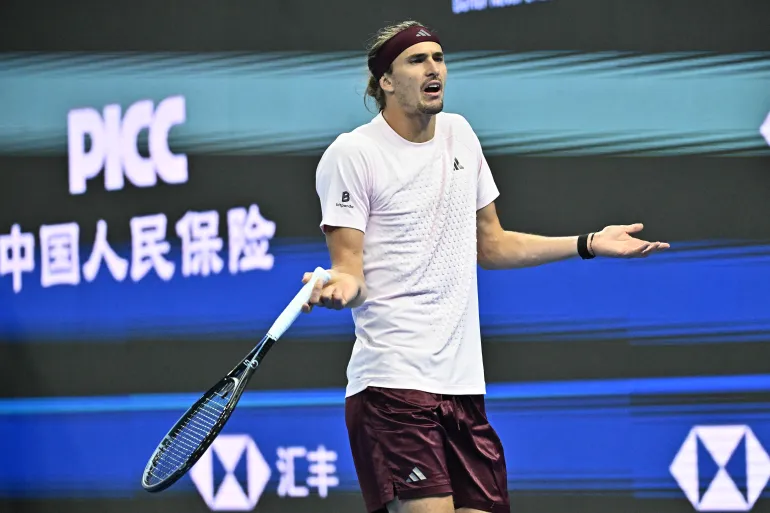
The contest was briefly interrupted by a moment of controversy when Zverev argued that the electronic advertising signage had gone dark during a rally and requested a video review after losing the point.
Replays showed a section of the signage had switched off although not as Zverev was missing the forehand. The chair umpire ordered the point to be replayed, prompting a frustrated exchange from Djokovic.

‘Held my nerves’
The turning point came late in the second set when Djokovic broke at 5-4 to level the match, shifting the momentum in his favour after a tightly contested battle.
With little separating the pair in the third, the Serbian struck again at 5-4 on the Zverev serve, securing the decisive break to seal the victory in two hours and 35 minutes.
“I was trying to be aggressive and come to the net and change up the pace, not giving the same pattern,” Djokovic said.
“I am just glad that I held my nerves, played good shots at important moments, 5-4 in the second and third.”
The pair had not met since Roland Garros in 2025, where Djokovic won in four sets, and Sunday’s encounter again highlighted the Serb’s ability to deliver under pressure despite a season disrupted by physical issues.
With the victory, Djokovic moved a step closer to a seventh China Open title and an elusive first trophy of the year while denying Zverev another opportunity to strengthen his bid for the world number one ranking.
Djokovic will face Daniil Medvedev in the semifinals after the Russian defeated Francisco Cerundolo 7-6(4), 6-3 earlier.

Rybakina withdraws from Wuhan after China Open exit
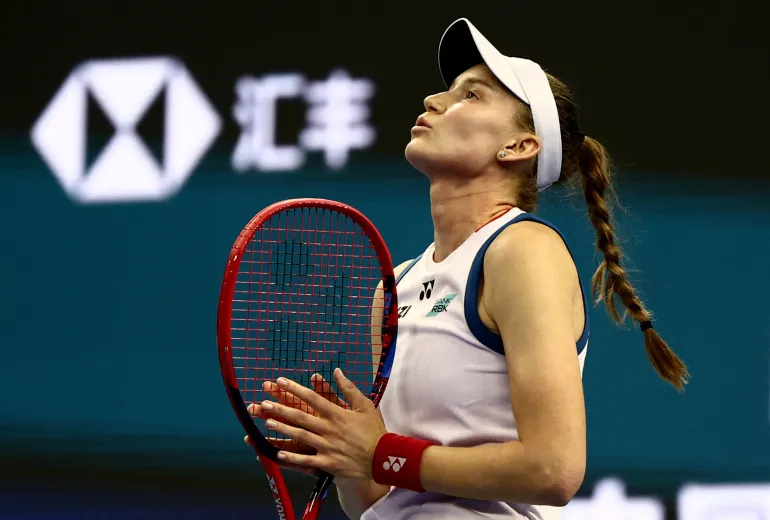
World number one Elena Rybakina withdrew from this month’s Wuhan Open due to a foot injury, tournament organisers said on Sunday, a day after the Kazakh suffered a shock defeat in her opening match at the China Open.
Rybakina, who lost to world number 118 Alina Charaeva in Beijing, said she would take time away from competition to recover.
“I’m very sorry to the fans who were looking forward to seeing me play,” Rybakina said in a story posted on the tournament’s Instagram account.
“I’ll take some time to rest and recover. Thank you for your understanding and continued support.”
The 27-year-old has been managing a lingering lower leg and foot problem that also forced her to retire from her Cincinnati quarterfinal against Iga Swiatek in August.
Despite the setback, Rybakina recovered in time for the US Open, where she claimed her third Grand Slam title, rose to world number one and became the first player to qualify for the season-ending WTA Finals.
Rybakina is next expected to compete this month in the Ningbo Open in China, where she will try to defend her title.
The Wuhan Open is scheduled to take place from October 12 to 18.