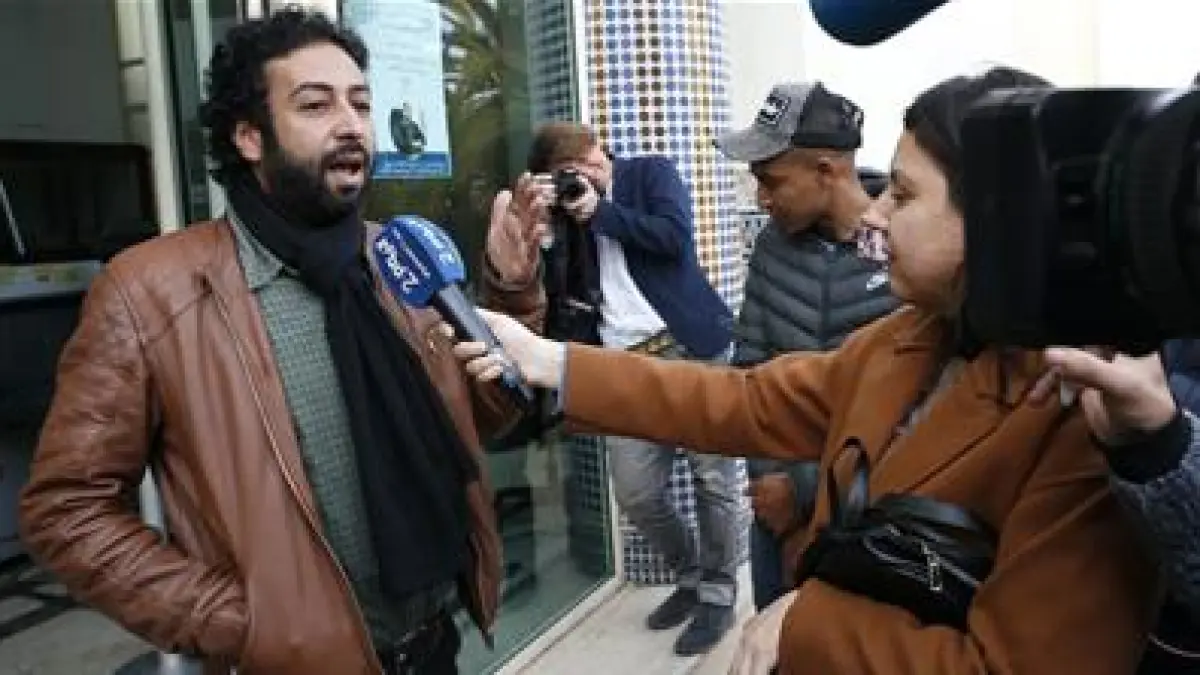
Rabat, Morocco – “I was surveilled not because of a specific article. I was investigating land dispossession in Morocco. I then learned I was a Pegasus target,” Omar Radi, a journalist and human rights defender, told Al Jazeera, referring to the mobile surveillance tool developed by Israeli company NSO Group.
The findings emerged in June 2020, when Amnesty International Security Lab examined his phone. Radi, now based in Germany, said he had spent two years, from 2018 to 2020, noticing signs including his phone’s battery draining quickly, its temperature rising and the network slowing down.
The physical surveillance, he said, was barely discreet.
“They came every day to get a daily report from the parking attendants in my street, the shops I used to go to, and my friends,” he said. “I would sometimes turn around and walk towards the people following me to take photographs, but they ran quickly and hid their faces.”
His case is among four detailed in a new Amnesty International report, We Start With the Verdict: Inside Morocco’s Surveillance Machine, produced with 14 media organisations and coordinated by the international network of journalists Forbidden Stories.
The other three are Fouad Abdelmoumni, a veteran activist; Abdessadak El Bouchattaoui, a human rights lawyer; and Hicham Mansouri, a journalist in exile who had been imprisoned in 2015 on charges of adultery and sexual exploitation, which Amnesty describes as trumped-up.
The report draws on interviews with a whistleblower using the pseudonym Safir, a former employee of Morocco’s General Directorate for Territorial Surveillance (DGST). Amnesty said it corroborated key parts of Safir’s testimony with independent sources, technical evidence and interviews with 10 people identified as surveillance targets, including Radi.
“The Amnesty report connected many dots as to what I was living and feeling while I was under tight surveillance,” Radi said.
“It explains the extraordinary aspect of my police interrogations and my trial, where many of my rights weren’t respected, because even the judicial police and the judges were under monitoring,” he added.
Amnesty identifies the DGST as the agency behind the deployment of Pegasus spyware in Morocco and documents what it describes as abuses of the spyware against activists and journalists between 2017 and 2021.
Morocco denies surveillance
Morocco has previously rejected Amnesty’s allegations that its authorities used Pegasus to target journalists, activists and other critics.
In statements issued in 2020 and 2022, Moroccan authorities challenged Amnesty to provide material evidence supporting its claims.
Amnesty said it wrote to Moroccan authorities four weeks before publishing its latest report and invited them to respond, but received no response.
Al Jazeera also sought comment from Moroccan officials but had not received a response at the time of publication.
Moroccan media have also challenged the latest report. Le360 cited arguments that the presence of a phone number in Pegasus targeting records does not, by itself, prove that a device was infected or establish who ordered an alleged attack.
The outlet also argued that Amnesty had not provided the conclusive technical and material evidence Moroccan authorities had demanded.
The report says Morocco’s Pegasus operations were fully active by October 2017, pointing to the case of human rights lawyer El Bouchattaoui, whose number was entered into the system in September 2017 and selected for targeting weeks before he received an infection link by text message.
Amnesty said its analysis of Pegasus records matched 103 Moroccan phone numbers to individuals identified as potential targets between September and December 2017. Of those, 65 were identifiable as civil society members, including 34 human rights defenders, 22 journalists and media workers, five lawyers and four academics.
According to Amnesty, Safir described a surveillance apparatus that combined digital and physical methods. Targeted individuals were secretly filmed and recorded in detention, offices, cars, cafes and even bedrooms, he said.
Phone shops, he added, were coopted to sell targets devices infected with spyware. Neighbours of human rights defenders, he said, were recruited as informants to file daily reports on their movements.
Safir also described the use of remote control systems (RCS) at internet cafes. Field agents would identify which cafe a target was visiting, he said, giving the DGST access to activity on machines it had already infected and allowing an operator to track calls, read messages, access photographs and record audio.
The report says similar tactics were used against activist Abdelmoumni, who was secretly filmed at home with his fiancee in 2021. Abdelmoumni said he believed the footage was captured through a hidden camera in an air-conditioning unit, based on the recording’s angle.
Safir described the episode as a “textbook case” of a DGST surveillance and cleanup operation designed to leave no trace.
Journalists describe pressure and intimidation
Taoufik Bouachrine, one of Morocco’s best-known journalists and host of the Talk on Politics podcast, was not named in Amnesty’s report but described a similar pattern.
“In Morocco, as in all Arab countries, inventive methods are used to silence journalists and deter them from investigative journalism, particularly when it concerns the unlawful exercise of power, financial corruption, and the intertwining of political authority and money,” he told Al Jazeera.
The first method, he said, is fabricating criminal cases against journalists, “often involving allegations of sexual misconduct in a conservative society that amount to a journalist’s moral execution”.
The second, he said, is a smear campaign run through armies of online trolls and operatives who target journalists and their families.
Bouachrine, 57, was arrested in 2018 on charges of rape and human trafficking and sentenced to 15 years in prison. He has denied the charges, saying his prosecution was tied to his journalism.
The United Nations Working Group on Arbitrary Detention found Bouachrine’s detention arbitrary and said he had been subjected to judicial harassment. The European Parliament adopted a resolution calling for his release, along with other journalists tried on similar charges.
He served more than six years before being released under a royal pardon. By then, Akhbar Al-Youm, the newspaper he founded, had already closed. Bouachrine said authorities had cut off its advertising revenue.
“This is another method of destroying investigative journalism,” he added, “turning off the advertising tap and leaving a newspaper to die slowly.”
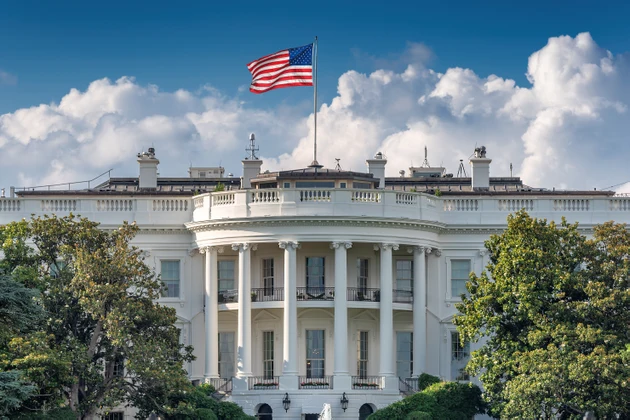
Reporters from CNN, MS NOW and Politico have been denied White House access after Donald Trump banned the three outlets. The organisations say the move infringes First Amendment protections for a free press and restricts access based on coverage.
Reporters from CNN, MS NOW, and Politico were denied access to White House after Trump calls news outlets ‘fake news’.
Journalists from CNN, MS NOW and Politico have been barred from entering the White House and have had their press credentials deactivated or confiscated, as United States President Donald Trump’s ban on the three news organisations took effect.
Journalists were turned away from the grounds on Saturday after Trump announced on Friday that CNN, MS NOW and Politico would be barred from the White House, accusing the outlets of reporting what he called “fake news”. Trump has said other outlets could also face bans.
Recommended Stories
list of 3 itemsend of list
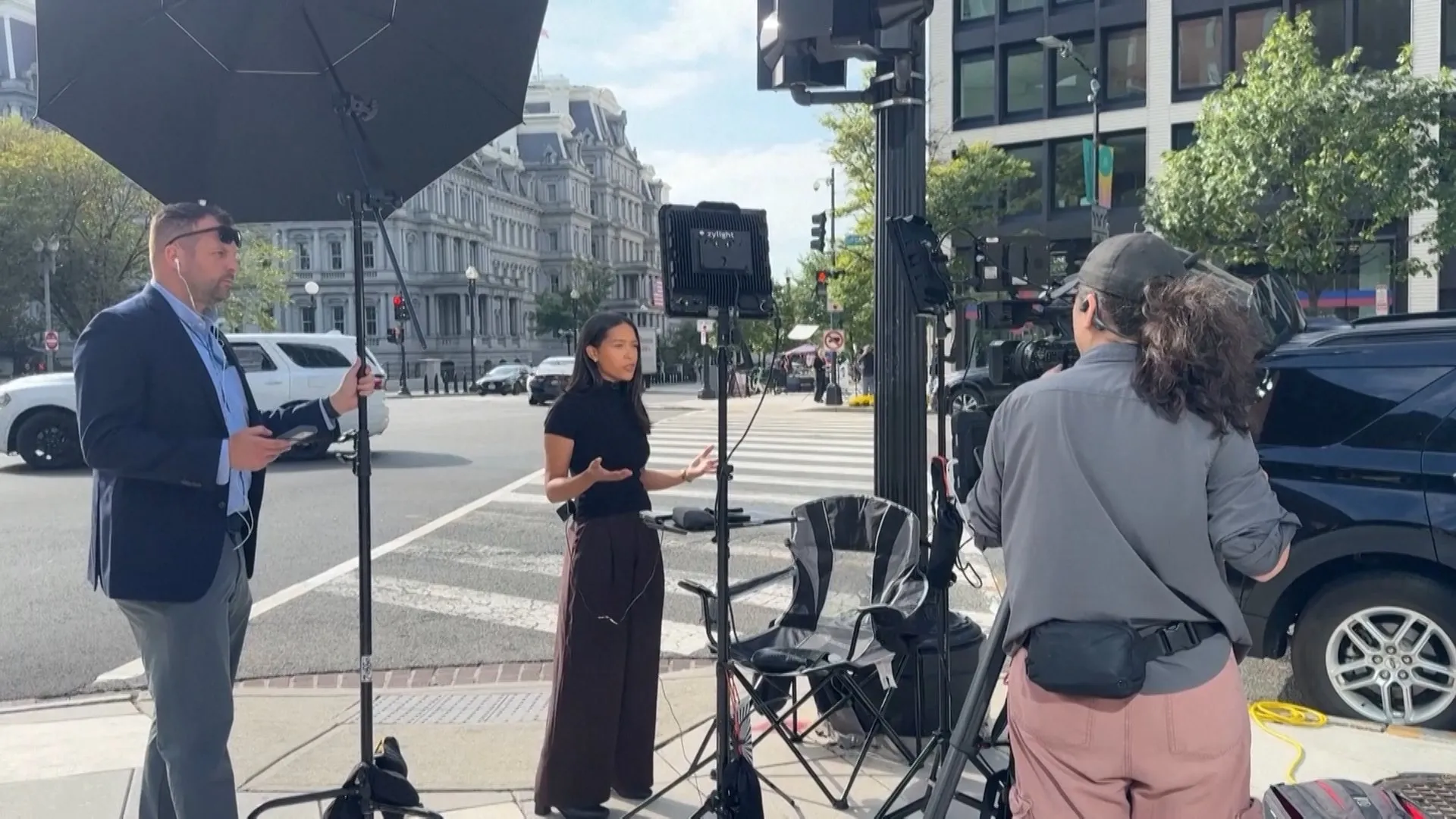
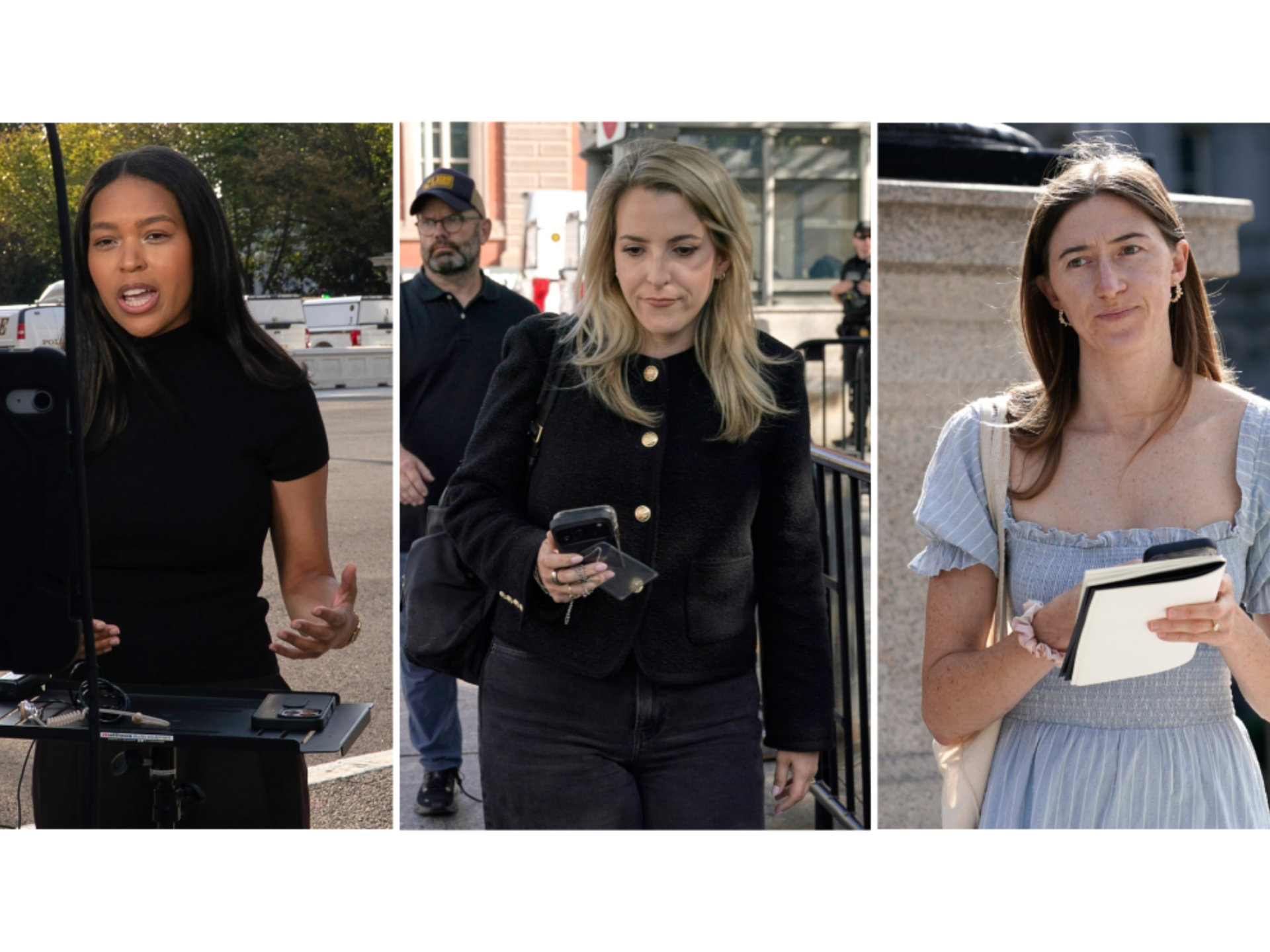
CNN White House reporter Betsy Klein and MS NOW White House correspondent Akayla Gardner both reported on air that they had been denied access. Gardner said an officer confiscated her badge after telling her it had been disabled and that the decision was “above him”. An MS NOW photographer also had their badge disabled, she said.
Politico reporter Cheyenne Haslett was subsequently turned away, with Politico saying the Secret Service denied her entry and confiscated her White House access pass.
“A few minutes ago, our colleague Cheyenne Haslett attempted to enter the White House to do her job as a POLITICO reporter,” the news organisation said. “Secret Service denied her entry to the complex and confiscated the pass that allows her access to the White House.”
“We stand by her and all reporters here covering the White House,” Politico added. “As we said yesterday, we will vigorously defend our First Amendment rights.”
“The White House belongs to the American people and the decisions made inside are funded by our tax dollars,” MS NOW said in a statement. “MS NOW intends to take any and all steps necessary to defend our First Amendment rights and the essential role of independent journalism in our democracy.”’
CNN media analyst Brian Stelter called the move “a direct threat to press freedom in the United States”.
“It’s so much bigger than CNN,” Stelter said. “This is a free speech test in America.”
The White House Correspondents’ Association said Trump had described “his own planned action as a ‘ban on the free press’”, and said constitutional press protections do not depend on whether a president approves of a news organisation’s coverage.
The ban is the latest in a series of confrontations Trump has had with news organisations during his first and second term.
In 2025, his administration restricted Associated Press access to the Oval Office and presidential travel after the agency declined to adopt the administration’s preferred name, “Gulf of America”, for the Gulf of Mexico. That case remains ongoing.
A key precedent is a 1977 federal appeals court ruling, Sherrill v Knight. The court found that once the White House establishes press facilities for credentialed journalists, access cannot be denied arbitrarily or for less than compelling reasons. It also said journalists denied credentials must receive notice of the factual basis, an opportunity to respond, and a final written explanation.
It is not yet clear what legal recourse CNN, MS NOW or Politico may pursue, or how courts would apply Sherrill to the administration’s decision to revoke existing credentials.
Al Jazeera’s Alan Fisher reported from Washington, DC, on Friday that Trump’s ban will likely be challenged soon.
“The United States has the First Amendment [of its Constitution] that says the government cannot restrict access to this sort of thing,” he said.
Press freedom advocates are watching closely.
Jameel Jaffer, executive director of the Knight First Amendment Institute at Columbia University, said in a news release that the move raises constitutional concerns.
“If President Trump means to expel these news organizations from the White House press pool, his action is doubly unconstitutional because the press pool is a ‘public forum’ under the First Amendment, which means the president can’t exclude journalists from it on the basis of their viewpoints,” Jaffer said.
The fight over access could now become a broader test of the limits on the White House’s ability to control which journalists can cover the administration.
“It’s difficult to imagine a more blatant violation of the First Amendment than Trump banning news outlets from the People’s House for criticizing the government,” said Seth Stern, chief of advocacy at the Freedom of the Press Foundation. “It’s also hard to imagine a dumber move.”
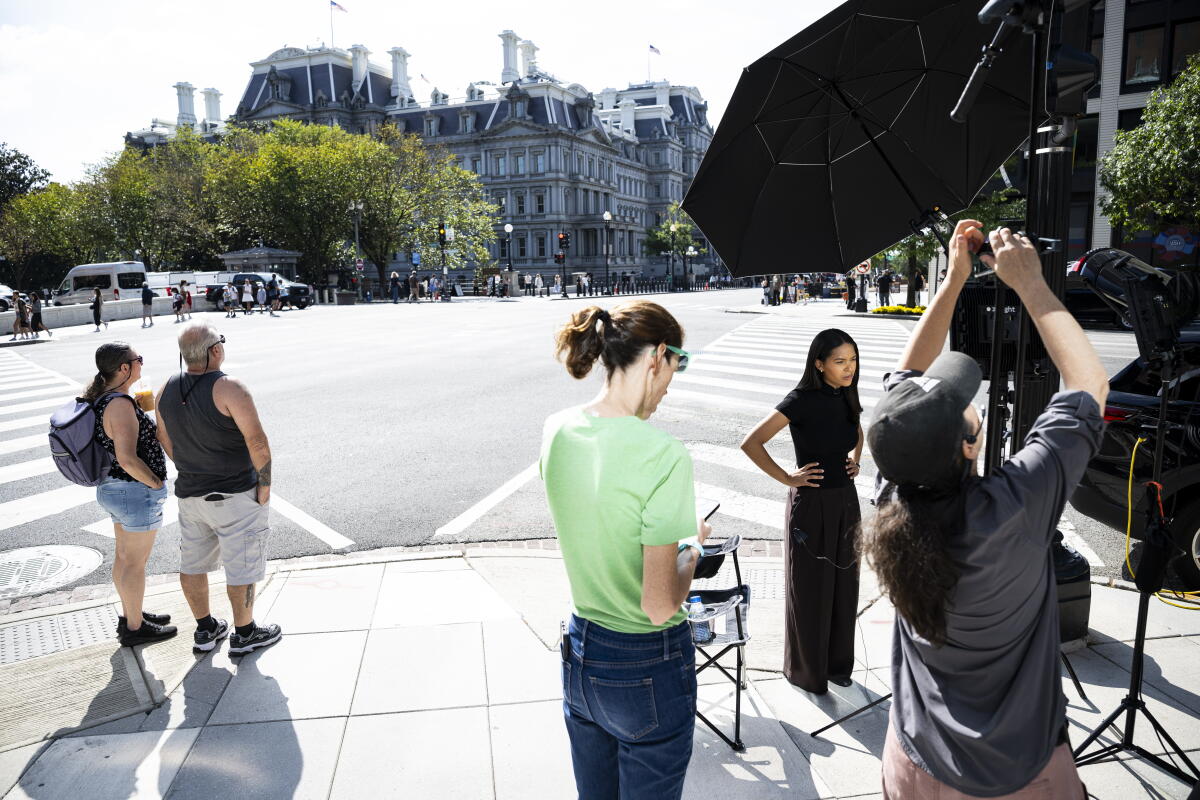
NEW YORK — Journalists from three major news organizations — CNN, MS NOW and Politico — were denied access to the White House on Saturday morning, with reporters from the two cable networks both going live to report they’d been barred following a ban imposed by President Trump.
The actions escalated Trump’s long-running efforts to restrict news coverage by journalists he finds objectionable, and is the latest test of 1st Amendment protections in the United States. Trump said Friday he would ban all three organizations because of their coverage — which he called “fake news.”
Politico said its White House reporter Cheyenne Haslett was denied entry to the White House and had her badge confiscated Saturday. The announcement came shortly after the turning away of MS NOW and CNN journalists.
Editor in chief Jonathan Greenberger said in a statement to the Politico newsroom: “We stand by her and all reporters here covering the White House. … We will vigorously defend our First Amendment rights.”
CNN and MS NOW have issued similar statements.
“We will not be deflected from our duty to hold the government and other public bodies to account,” CNN said. The statement was shown on the air before senior White House reporter Betsy Klein began to report on her ban.
Journalists from three major news organizations — MS NOW, CNN and Politico — were denied access to the White House on Saturday morning.
(Graeme Sloan / Getty Images)
MS NOW said in a statement that it stands behind its journalists. “The White House belongs to the American people and the decisions made inside are funded by our tax dollars,” the network said in a statement Saturday. “MS NOW intends to take any and all steps necessary to defend our First Amendment rights and the essential role of independent journalism in our democracy.”
In his second term, Trump and his administration have upped the ante and punished certain media outlets, both in the courtroom and through regulatory action. Trump has also lashed out at individual reporters in person or over social media, sometimes in strikingly personal terms.
Turned away, badges confiscated
Both CNN White House reporter Betsy Klein and MS NOW reporter Akayla Gardner went on the air to report they’d been banned from entering the White House.
Network correspondents are usually present on the weekends when the president is in Washington or at nearby Camp David. Trump is at the presidential retreat in Maryland this weekend.
Gardner was turned away and her entry badge confiscated, she said. She noted she had walked through two gates successfully, but once she got to where her badge needed to be scanned, an officer told her it was disabled and asked her to hand it over. He said the decision “was above him,” she reported. An MS NOW producer was able to get in, but a photographer’s badge was also disabled, Gardner said.
CNN Senior White House Reporter Betsy Klein, left, walks to the White House, Saturday.
(Jose Luis Magana / Associated Press)
Klein, senior White House reporter at CNN, also said her badge had been deactivated.
CNN media analyst Brian Stelter called the move “a direct threat to press freedom in the United States.”
“It’s so much bigger than CNN,” Stelter said. “This is a free speech test in America.”
Continued attacks on press freedom
The president wrote on his social media site Friday that effective immediately, “I am banning” CNN, MS NOW and Politico “from the White House as a result of their constant ‘reporting’ FAKE NEWS!” Minutes later, speaking at an event in the Oval Office, Trump was asked to explain his statement.
“Because they’re fake news,” he said. “You get so tired of reading and seeing fake news. When you look at CNN, it’s just fake. That’s why their ratings are no good. When you look at MS NOW … , it’s fake news.”
President Donald Trump arrives at the Ellipse before departing the White House on Friday. Trump hosting a MAGA fundraiser at his private club in Sterling, Virginia, before spending the weekend at Camp David.
(Chip Somodevilla / Getty Images)
“And when you look at Politico … the stories they wrote are fake. So there’s a lot of news and there may be others to join them, and maybe they can get better,” he said. “But our country has to have honest news.”
The move follows the president’s decision last year to bar Associated Press reporters from the Oval Office, Air Force One and other events in retaliation for the news outlet’s decision not to follow his lead in changing the name of the Gulf of Mexico, which lies partially in Mexican and other waters. The AP said that it would note when appropriate that Trump had ordered it renamed the “Gulf of America.”
The AP filed suit and the case is ongoing. Since returning to office, Trump has pursued other legal action against a variety of outlets, including the New York Times, the Wall Street Journal and the BBC. His administration is also involved in a long-simmering confrontation involving ABC over renewal of its broadcast licenses.
On Sept. 11, 2001, there were no smartphones and no social media. What the country watched that morning — a jet airliner colliding with the south tower of the World Trade Center, the ash rolling through the streets, the paper still falling in the afternoon — was through a television set and the journalists who had to deliver the unfathomable details.
The jarring images shattered the peacefulness of a sunshine-filled late summer morning in New York.
“Everything seemed so perfect,” said MS NOW’s Chris Jansing, reflecting on the moments before anchoring her network’s continuous coverage. “It was another day of doing a job I loved, living in a city I loved.”
By nightfall, nearly 3,000 people were dead in lower Manhattan, at the Pentagon and in a field outside Shanksville, Pa. The experience of covering the terrorist attacks and their grim aftermath transformed Jansing and other journalists who were there. Twenty-five years later, it’s never far from their minds.
“It’s with me in ways large and small,” said NJ Burkett, a correspondent who covered the tragedy for New York station WABC. “When I look at my phone and it says 9:11, it takes me back.”
The Times asked five of the on-air personalities who are still working today to look back on the day they were called to cover the tragedy and its lasting impact.
Bret Baier: “I just said yes to everything.”
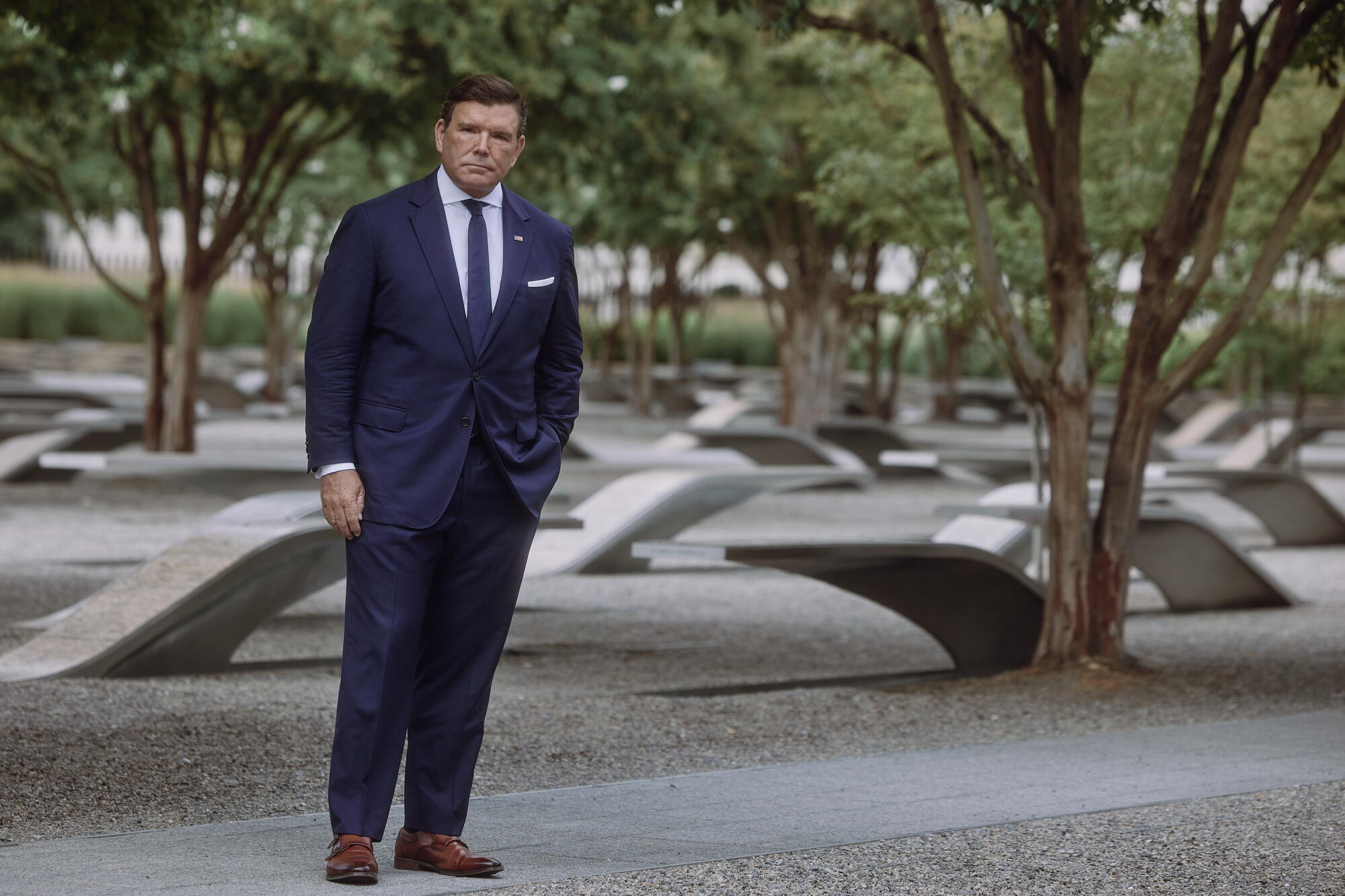
Fox News anchor Bret Baier at the National 9/11 Pentagon Memorial in Arlington, Va., on Aug. 25, 2026.
(Jared Soares/For The Times)
On every anniversary of Sept. 11, Fox News anchor Bret Baier uses the hashtag #NeverForget. He can recall every moment of that day.
Baier, 56, was driving to the Fox News bureau in Atlanta when he first heard on his car radio that a plane had hit the World Trade Center. He was a 31-year-old correspondent for the network, covering stories throughout the southeast U.S. and Latin America. When he arrived at the office, a call came from New York headquarters telling him to book a flight to the city so he could file reports from the World Trade Center site for Fox TV affiliates around the United States.
After a second plane hit the south tower of the World Trade Center 17 minutes later, all flights in the U.S. were halted. Baier and his producer were told to get a car and start driving.
“I just remember going really fast when I was driving,” Baier said. “I remember thinking what is happening with the world, and how big this story is. How big this moment is.”
By the time the duo reached northern Georgia, their plans changed again. A jetliner struck the Pentagon while a San Francisco-bound United Airlines flight crashed in Shanksville, Pa. Fox News executives told Baier and his producer to reroute to Arlington, Va.
After the 10-hour drive, Baier started the first of 10 straight days of reporting on the recovery efforts at the site. While the World Trade Center provided the most dramatic and enduring pictures of the stunning attack, the loss of life at the Pentagon was staggering as well, as 125 people died along with the 64 passengers and crew members on American Airlines Flight 77.
Baier was eventually pulled into the larger military story that followed 9/11. Fox News, just 5 years old, did not have a full-time Pentagon correspondent. Baier was offered the job while traveling overseas with Defense Secretary Donald Rumsfeld, who was making the case for war against Afghanistan.
“I called a buddy on a satellite phone to get me an apartment in Washington,” he said. “Fox packed up my stuff in Atlanta.”
But the unplanned move changed Baier’s life. In six years on the Pentagon beat, he traveled to 74 countries. He was embedded with the military in war zones. “I just said yes to everything,” said Baier, who has anchored Fox News’ Washington newscast “Special Report” since 2009.
Baier recalled it was in the weeks after Sept. 11 that he first wore an American flag pin on his lapel. He never felt conflicted about it, even though such displays were prohibited at other network news divisions. “I thought I could report on America, ask tough questions and still be an American, pulling for us to win,” he said. “I wanted to be tough but fair, but also show that as a country we were standing together against this horrible attack.”
Byron Pitts covering the terrorist attacks in lower Manhattan for CBS News on Sept. 11, 2001.
(CBS)
Byron Pitts: “It’s the only story I think about every day.”
A newcomer to New York 25 years ago, Byron Pitts, then a CBS News correspondent, admitted it took him a few moments to understand the massive scope of what happened the morning of Sept. 11, 2001. He arrived early at the network’s headquarters on the West Side of Manhattan to screen an interview he did with entertainer and civil rights icon Harry Belafonte. Shortly after he started, a producer knocked on his door and told him there was a plane crash at the World Trade Center.
Pitts, 65, acknowledged the producer but kept working. “I thought it was a novice pilot bumping into a building,” he recalled. “I thought it would be three hours out of my day and it won’t make television.”
The producer came back shortly and said, “You need to go down there.”
An irritated Pitts hailed a cab and headed down the West Side Highway. While in the car, he learned a second plane had hit the south tower. Traffic was stopped and he had to head downtown by foot.
As Pitts got closer to the site, he tried to use his past experiences covering fires and other disasters during his career to judge the severity of the situation.
But the horrible scenes that unfolded before him were incomparable. One was a lifeless body near the lobby of the north tower. He thought it was a homeless man until he saw a uniform. He later learned it was Father Mychal Judge, the chaplain of the New York Fire Department killed by fallen debris. Judge’s body was later carried away by a group of first responders. Pitts saw a woman and a man standing at a window of one of the towers holding hands, and then jumping.
“Gravity takes over and their hands split, and he moves a little faster than she does,” Pitts said. “And we see them on the ground. That was the moment I realized something significant was going on.”
Pitts crossed paths with Mika Brzezinski, then a CBS News correspondent, now the cohost of MS NOW’s “Morning Joe.” As debris came down and smoke filled the air, they headed into an elementary school that Pitts believes was a command post for the fire and police departments. They took turns calling into CBS News on a hard-line phone, one delivering accounts of the unfolding catastrophe while the other looked outside to gather details amid the blinding smoke and dust.
Pitts said from that day forward, he never went to a story assignment without a handkerchief.
Pitts was awed not just by the enormity of the event, but also by how despite the rigid hierarchy of CBS News, he was “the new kid on the block” who had to present the story on Dan Rather’s evening newscast that night.
“My approach became almost childlike, so I would not become overwhelmed,” he said. “I tried to make it as simple as possible. I said, ‘Dan, I’ve never heard New York City this quiet.’ I was thinking — what simple thing can I say that you would understand if you’ve never been in New York.”
A few weeks later, Pitts headed off to Afghanistan to cover the U.S. military action. His evening news report on Sept. 11 won an Emmy Award and his star rose at CBS News, leading to “60 Minutes” and then ABC News in 2014, where he is currently a co-anchor of “Nightline.”
Pitts knows the good fortune he’s had in TV journalism is linked to the tragedy that started with a producer’s knock on his door 25 years ago. “I feel some measure of guilt but mostly gratitude,” he said. “It’s the only story I think about every day.”
Pitts said he uses his 9/11 experience to provide perspective. “When we’re discussing politics, a mass shooting, or the latest awful day in Iran, I know for a fact there is one guy in the room who has seen worse and who can say, ‘we’ll be OK,’ ” he said.
Chris Jansing: “You had to balance the news response with the human response.”
Chris Jansing paid her dues as a local reporter in upstate New York before she joined MSNBC (now called MS NOW) as a daytime anchor in 1998. She loved living in Manhattan, and took friends from out of town to the World Trade Center observation decks and Windows on the World, the restaurant on the 106th floor of the north tower.
“It was so iconically New York,” she said. “And I was proud to live in the city.”
Jansing, 69, had little time to process her emotions when she was told to “get in the chair” before 9 a.m. that morning at MSNBC’s Secaucus, N.J., studios after the first plane hit.
“You had to balance the news response with the human response,” she recalled.
For several hours, Jansing co-anchored the network’s coverage alongside Gregg Jarrett. The look of 24-hour cable news evolved that day, as the tsunami of information led to Fox News, MSNBC and CNN all adding running tickers at the bottom of the screen.
Jansing went to the roof of the network’s building after Brian Williams took over the anchor chair. Trauma centers in the area had been alerted, and she was told to watch for ambulances. “There was still a hope and a prayer that there would be injured folks who would overwhelm the hospitals in New York and would need to be brought to New Jersey,” Jansing recalled. She saw none.
Jansing has never watched the coverage of that day, which is now on YouTube. She had real-life reminders every day in her Manhattan neighborhood when she walked by the Rescue Company 1 firehouse that lost half its battalion at the crash site. She adopted a dog left behind by a 9/11 victim, a Dachshund named Baron. She remains friends with every producer she worked with on the story. The experience also reinforced her purpose in a career approaching its 50th year.
“I will always think that those moments are what keep you going,” said Jansing, currently chief political reporter for MS NOW. “They were an affirmation that’s kept me in the job,”
NJ Burkett, a correspondent for WABC, on the 13th floor of the Walt Disney Co. offices in Manhattan on Aug. 31, 2026.
(Roshni Khatri/For The Times)
NJ Burkett: “I put myself in increasingly dangerous situations.”
Burkett, 64, recalls how pedestrians were gathered around WABC’s windowed street level studio on the Upper West Side of Manhattan when he arrived for work on 9/11. He presumed the crowd was there for a big name guest on “Live with Regis and Kelly.” They were actually watching monitors showing news reports of the first plane that hit the north tower.
As Burkett and his cameraman Marty Glembotzky headed downtown in a truck, he already knew it was a terror attack. He recalled covering the 1993 terrorist bombing of the World Trade Center and regretted not getting footage of the firefighters’ rescue efforts. This time around he wanted to go inside the buildings and document their heroism.
A police officer stopped Burkett and Glembotzky before they could get in, likely saving their lives. A short time later, they would escape death again.
Burkett was doing a second take for a taped report that would set the scene for viewers when he heard the rumbling that “sounded like Niagara Falls.” It was the south tower of the World Trade Center coming down behind him. “A huge explosion now raining debris on us — we better get out of the way,” he said in what may be the most terrifying video clip from that morning.
Burkett and Glembotzky took cover in an adjacent building. “We open up the door and in a weird way it’s sort of providential, right?” he said. “The door is a metaphor. It’s like the door into the rest of your life. If we had to run for half a block, we’d be dead.”
Glembotzky was so shaken by the experience, he stepped away from his career as a cameraman and became a wine seller before eventually returning. But Burkett took on more dangerous assignments in the Middle East, heading to Israel to cover the Palestinian uprising known as the Second Intifada. He later headed to Iraq to cover the run-up to the U.S. invasion in 2003.
Burkett won a George Foster Peabody Award for his work on 9/11. In retrospect, he believes he took on assignments in war zones to avoid dealing with the trauma of the day.
“I would put myself into increasingly dangerous situations,” he said. “Looking back, I was running from 9/11. That was my way of coping. Sometimes I wonder did I allow myself feel it enough. Or did I just run too far and too hard and it will all come down and crash on me one day?”
Occasionally he worries about 9/11-related illnesses. “If I start to cough — the slightest little cough — I’ll think ‘is this it?’” he said.
But as a New York TV fixture since 1989, Burkett still feels the appreciation from viewers for his efforts. “To this day, almost 25 years later, people will come up to me on the street and ask to hug me and say ‘NJ Burkett I’m glad you’re alive,’ ” he said.
Carson Daly at NBC’s “Today” show studio at Rockefeller Plaza in Manhattan on Sept. 3, 2026.
(Roshni Khatri/For The Times)
Carson Daly: “I remember how motionless the room was.”
As continuous news coverage of the Sept. 11 attacks saturated television for days, the makers of entertainment shows had to decide when it would be appropriate to go back to work. Carson Daly and the MTV executives mulled over the situation as their wildly popular program “Total Request Live” remained off the air for three days since the attacks.
“We had such a massive audience that the question was raised, ‘do we have a responsibility to simply show up?’ ” Daly, 53, recalled in a recent interview.
Daly, now a feature anchor on NBC’s “Today,” was not a journalist by trade. But he understood the trust that young viewers had in him and “TRL,” a live show that counted down the most popular music videos of the moment. The show had dealt with tragedy a few years before after the high school shooting in Columbine, Colo.
But 9/11 happened on the home turf of “TRL,” which aired from New York City’s Times Square. With the bridges and tunnels closed, getting a crew to the studio was a challenge.
“Everybody wore multiple hats,” said Daly, who also served as an executive producer.
By Sept. 14 of that week, the MTV studio on Broadway was filled with young “TRL” fans, but lacked the energy viewers were used to seeing on the screen. “They were frozen,” Daly recalled. “That was in such stark contrast to what the show was every day. I remember how motionless the room was and feeling like, ‘What am I doing on television?’ ”
Carson Daly shows a tattoo he got after the 9/11 attacks in New York.
(Roshni Khatri/For The Times)
Daly leaned on the MTV News team to update the audience on the 9/11 story developments. Music stars including Jay-Z, Justin Timberlake and Kid Rock called into the program to share their thoughts with Daly. Instead of music videos, the screen showed email messages from viewers expressing their feelings about the tragedy.
MTV News personality Sway delivered a music news report that noted how two new CD releases — “Party Music” by the American hip-hop group The Coup and Dream Theater’s “Live Scenes from New York” — were delayed because both used cover artwork that depicted the destruction of the World Trade Center.
Daly has a permanent remembrance of the week. When he arrived at the MTV offices the day before “TRL” returned, the building was evacuated after it received a bomb threat.
“I remember walking around Hell’s Kitchen,” he said. “I ended up getting a tattoo. A red, white and blue NYC on my right wrist.”