LIVE: India vs West Indies – fifth T20 International | Cricket
Live updatesLive updates,
Follow updates, including toss and team news, from our live text commentary stream of the series decider.
Published On 17 Oct 2026
Follow updates, including toss and team news, from our live text commentary stream of the series decider.

Published On 17 Oct 202617 Oct 2026
Share
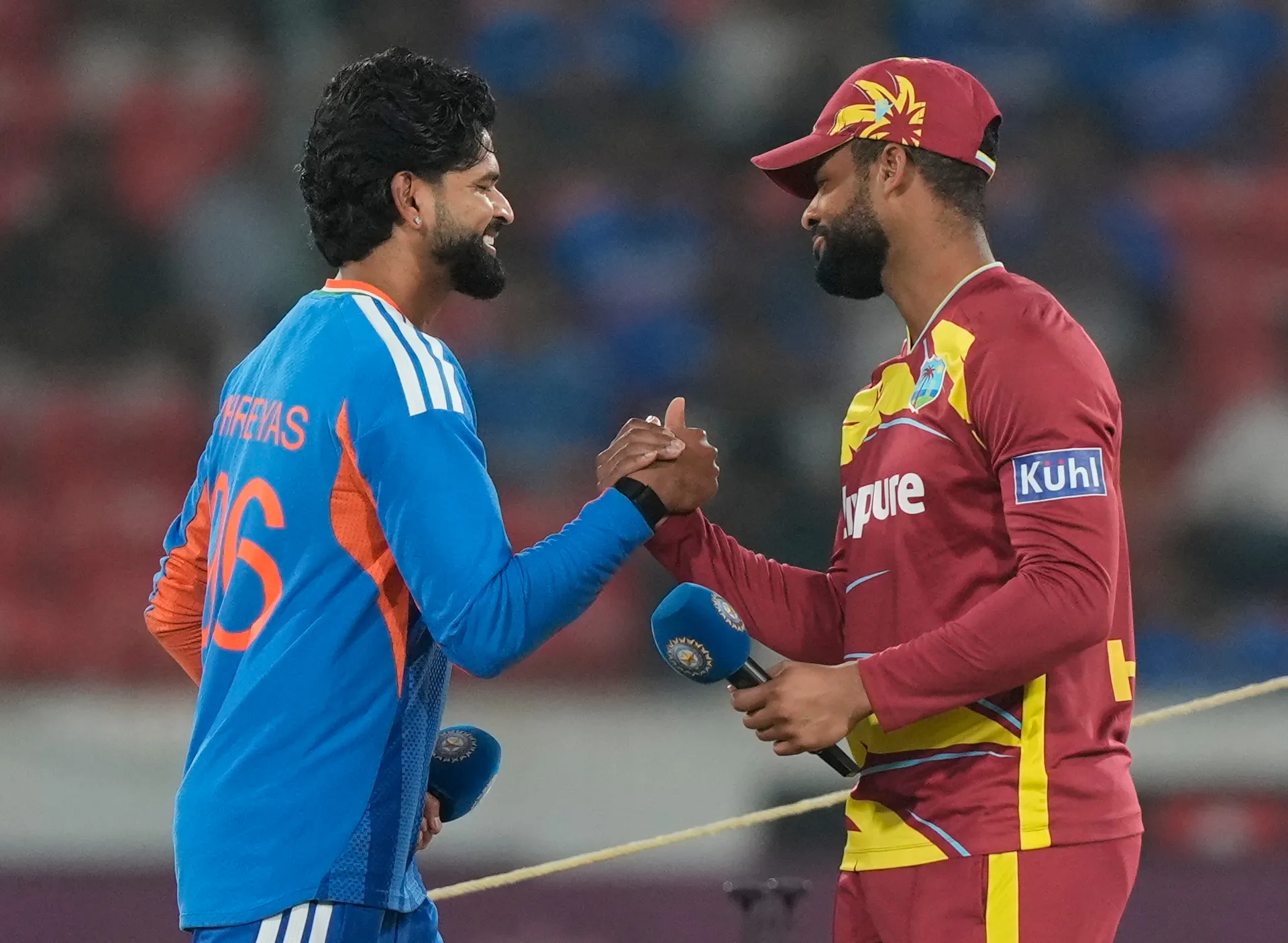
India host West Indies in the final match of the tour on Saturday with an all-time classic T20 series level at 2-2.
Who: India vs West Indies
What: Twenty20 International cricket series
Where: M Chinnaswamy Stadium, Bengaluru, India
When: Saturday, October 17, at 7pm (13:30 GMT)
How to follow: Al Jazeera Sport will have all the build-up from 11:30 GMT before our live text commentary stream
India host West Indies in the decisive T20 International series finale on Saturday after one of the most compelling white-ball tours in recent memory.
list of 4 itemsend of list
The five-game series is level at 2-2 before the match in Bengaluru after record-breaking feats by the tourists that have pushed the T20 World Cup holders to the limit.
Al Jazeera Sport takes a look at what has become a must-not-miss showdown.
The teams played a three-match One-Day International to begin the white-ball tour, which saw India take an unassailable lead after opening eight-wicket wins in Thiruvananthapuram and Guwahati.
After posting a mammoth 351-7 off their 50 overs – thanks largely to KL Rahul’s 129 off 87 balls – in New Chandigarh, India would have felt they had enough on the board to claim the third match, too.
Enter West Indies captain Shai Hope. The opener hit 162 off 143 balls in an unbeaten knock that led his side to a five-wicket win.
It was the West Indies highest ODI run chase.
India put the disappointment of the closing defeat in the ODI series behind them by claiming an eight-win win, with 5.2 overs to spare, in the first T20 of the series.
Despite fifties from Hope and Sherfane Rutherford, West Indies were bowled out for 171, with Naman Dhir taking three wickets for the hosts.
Hope then hit an unbeaten 102 off only 45 balls in the second match to lead West Indies to their highest successful Twenty20 run chase.
Hope hit nine sixes and six boundaries as the West Indies finished with 252-4 in reply to India’s 249-5.
India restored their series lead in the third match, but only via a narrow 14-run victory.
After being bowled out off the last ball of their innings, India posted 223 – led by Abhishek Sharma’s 69 off 30 balls.
Arshdeep Singh claimed three wickets as West Indies were restricted to 209-7.
It was time for the Hope show again in the fourth game of the T20 tour, as the wicketkeeper-batter hit his second century of the series.
The tourists struck 247-3, having been put in, with Hope hitting an unbeaten 102.
His nine sixes and four fours were a record tally for a West Indies batter in a T20 International.
The total was the second-highest first innings score in T20s against India, trailing England’s 257-3 in Southampton this year.
Opener Sanju Samson’s 56 off 23 balls set India off to a good start, but Keemo Paul’s five-wicket haul led West Indies to a 24-run series levelling win.
Hope joked after the fourth T20 that he was worried he may have to fork out excess baggage fees after picking up his third Player of the Match award on their tour of India.
“To be honest, they are a bit heavy, and we have got to look at the luggage weight,” he quipped after the win.
“I think we are going to have some problems going back home.”
Abhishek Sharma, Sanju Samson (w), Ishan Kishan, Shreyas Iyer (c), Tilak Varma, Naman Dhir, Nitish Kumar Reddy, Axar Patel, Prince Yadav, Mayank Yadav, Arshdeep Singh
Shai Hope (c and w), Jewel Andrew, Shimron Hetmyer, Rovman Powell, Sherfane Rutherford, Romario Shepherd, Roston Chase, Shamar Springer, Keemo Paul, Shamar Joseph, Gudakesh Motie
Published On 14 Oct 202614 Oct 2026
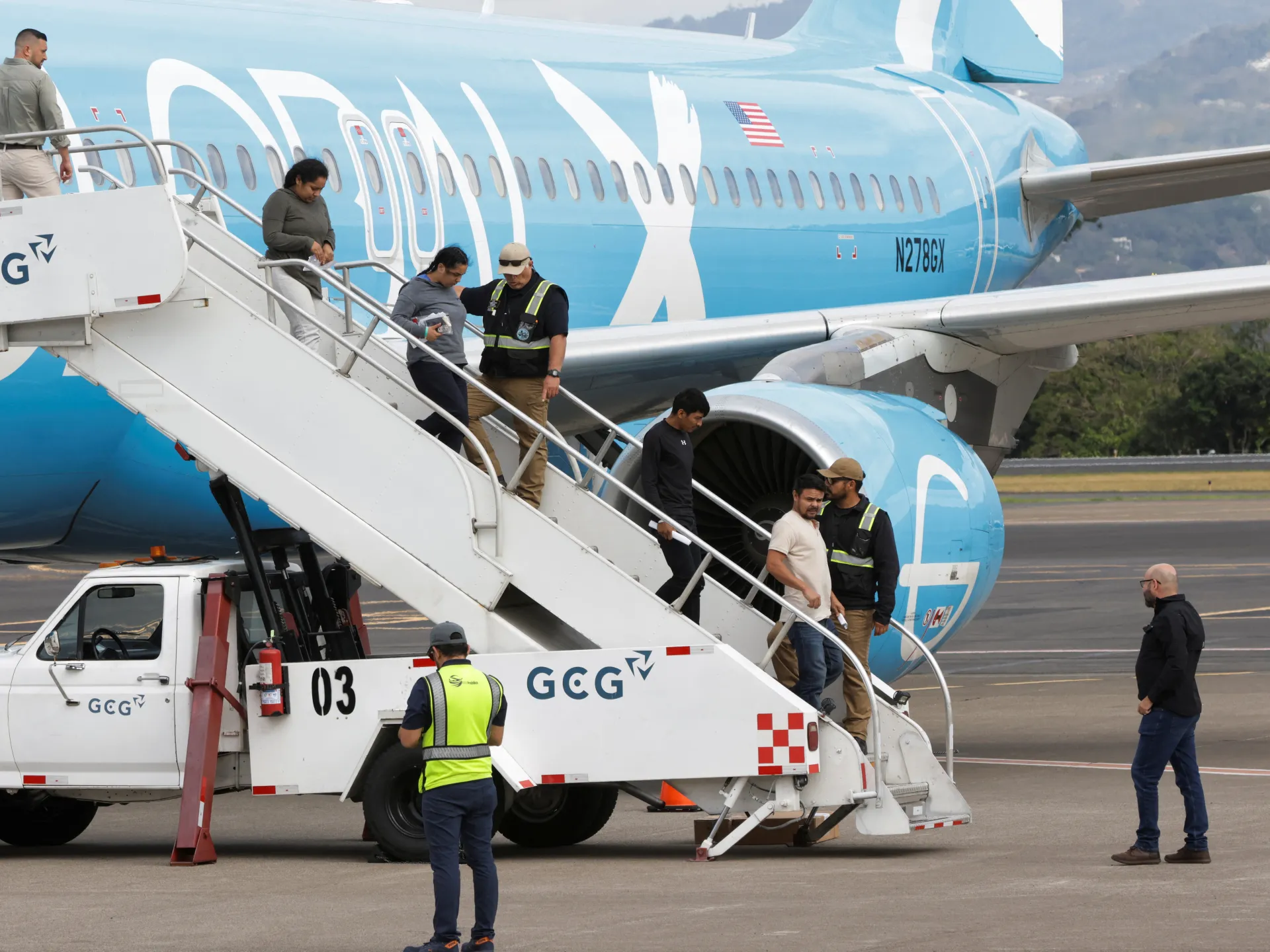
The Caribbean country of Jamaica has received its first third-country deportations from the United States, as part of an expanding set of international agreements under President Donald Trump.
On Tuesday, 22 deportees from the US arrived at Norman Manley International Airport in Kingston, Jamaica.
list of 3 itemsend of list
Media reports indicate they were subsequently boarded onto a bus and taken to an undisclosed location.
Such deportations – which often involve non-citizens who have no ties to their destinations – have faced widespread condemnation from human rights groups and advocates who have questioned their legality.
But Jamaica is among a growing number of countries to accept third-country deportations, as part of Trump’s effort to implement the largest mass deportation campaign in US history.
At least 35 countries have entered into third-country deportation agreements with the US, according to Third Country Deportation Watch, an advocacy project affiliated with the groups Refugees International and Human Rights First.
The Washington Post reported last month that the Trump administration has earmarked roughly $410m to support such efforts.
Jamaica signed a bilateral memorandum of understanding in June to receive third-country deportations. Under the plan, Jamaica will transfer any deportees to their home countries or other destinations after their arrival.
The country’s government has also pledged not to accept any deportees with criminal records.
“The government reiterates that this is a transit arrangement intended to facilitate the return of Third Country Nationals to their country of origin or other receiving countries,” Jamaica’s Ministry of National Security and Peace and its Ministry of Foreign Affairs and Foreign Trade said in a joint statement.
It added that care for the deportees will be supported by the International Organization for Migration, a United Nations organisation.
“The arrangement will not be funded by the Government of Jamaica,” the joint statement added.
Opposition leaders in Jamaica, however, spoke out against the deportation, framing the deal as a threat to the island’s security. They also questioned why the agreement had not been debated publicly.
“Jamaicans are being asked to trust a secret document that touches their security, their communities and their public services,” said Fitz Jackson, the opposition spokesperson on national security.
In response to Jackson’s statement, Foreign Minister Kamina Johnson Smith argued that any questions about the deportation deal “have all been answered”. She also indicated that the US has not agreed to make the deal public.
“As I explained before, some countries have agreed to receive criminals, we have not,” she wrote on social media.
“Some countries have had their agreements made public, but our partner has not agreed for this one to be.”
Legal challenges against the third-country deportations are ongoing in the US, where advocates have argued that deportees are being removed from the country without due process of law, the constitutional right to a fair hearing.
Critics have also argued that third-country deportations sometimes send immigrants to countries where they may face danger.
Some of the recipient countries, such as South Sudan, are in the midst of ongoing conflict or have faced accusations of serious human rights abuses.
Opponents have even said the third-country deportations are being used as a backdoor method for circumventing court protection orders.
Such orders may prohibit the US government from returning certain immigrants to their home countries, for fear of violence and persecution.
But by sending immigrants to third countries, critics say the Trump administration avoids violating such protection orders – though in some cases, the third country has then returned the deportee to the country identified in the US protection order.
In a February report by Democrats on the US Senate Foreign Relations Committee, one official said anonymously that the purpose of such far-flung deportations was to instil fear.
“The point is that the administration can threaten people that they will literally be dropped in the middle of nowhere,” the official said. “The point is to scare people.”
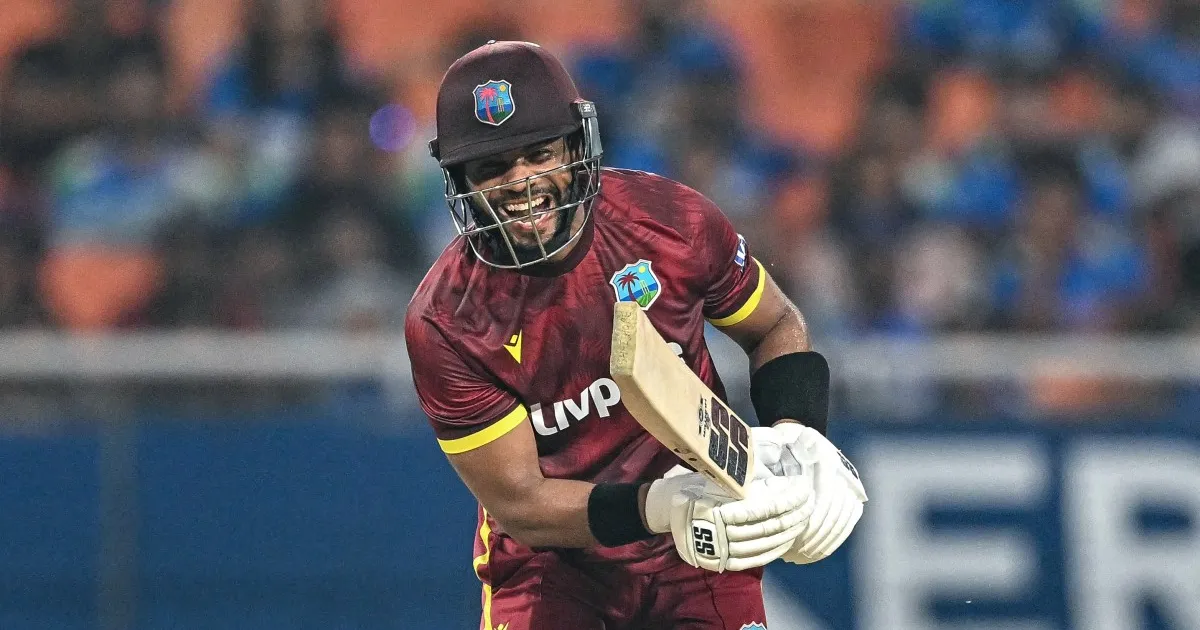
Shai Hope’s 162 leads the West Indies to a record cricket run chase as they beat India by five wickets in the third ODI.
Published On 4 Oct 20264 Oct 2026
Captain Shai Hope’s unbeaten 162 led West Indies to a record run-chase win against India in one-day international cricket in Chandigarh.
The West Indies achieved their highest ODI run chase on Saturday, reaching 352-5 and winning by five wickets with 10 balls to spare after India made 351-7, featuring Lokesh Rahul’s 129 not out.
list of 4 itemsend of list
India had already won the three-match series after eight-wicket wins in Thiruvananthapuram and Guwahati. But the West Indies, chasing for the first time in the series, overcame India for the first time since 2023.
Hope promoted himself to opening batter after Jewel Andrew reportedly injured a finger making a catch and had to go to hospital. After keeping wicket for all of India’s 50 overs in high humidity, he batted brilliantly to score his second successive hundred in the series but struggled in the last overs.
Fittingly, he hit the winning run.
“Felt something around the groin area but wanted to fight through till the end,” Hope said.
His second-highest ODI score, from 143 balls, included 17 boundaries and three sixes. Amir Jangoo added 67 off 56 and Keemo Paul 44 off 35.
“[Chasing is] always a lot easier in India, especially with the dew,” Hope said. “Glad we got over the line.”
Hope and Jangoo added 109 off 99 balls for the second wicket to defy an India bowling attack that recalled Mohammed Siraj and all-rounder Nitish Reddy and included debutant pacer Anshul Kamboj, who went wicketless.
Jangoo was run out in the 21st over, but Sherfane Rutherford (24) did not let the momentum slip. He added 56 with Hope, who reached 50 off 46 balls and 100 off 104 in his 21st ODI hundred and fifth against India.
Paul’s cameo included five fours as he added 65 off 61 balls with his skipper. Hope shifted gears after Paul was dismissed in the 41st over, caught off Gurnoor Brar.
Hope hit seven more fours and two sixes after his milestone, taking 62 off the last 39 balls faced to rush West Indies to victory.
India had to serve a slow over rate penalty for the last four overs, with an additional fielder inside the 30-yard circle, as Hope and Gudakesh Motie (19 not out) added 62 off 29 balls for the sixth wicket.
India won the toss again but skipper Shubman Gill was caught behind on 1 and Virat Kohli was bowled for a golden duck. Both fell to Jayden Seales.
Only 28 runs came in the first 10 overs, then Rohit Sharma and Rahul propelled the hosts.
Sharma resurrected the innings with 92 off 85 balls, adding 137 for the third wicket with Ruturaj Gaikwad.
Sharma took his time and was unlucky to miss a second consecutive hundred in the series; he was caught off Paul in the 25th over.
Four overs later, Gaikwad — 57 off 69 — was Seales’s third wicket.
That brought Rahul to the crease, and he led the charge past 350.
Rahul hit six sixes and 10 fours. He scored 50 off 41 balls and his second 50 off 39 balls. He enjoyed good partnerships with Naman Dhir and Brar and finished 129 not out off only 87 balls.
The teams begin a five-match Twenty20 series on Tuesday, starting in Lucknow, Uttar Pradesh.
Judge Leibowitz’s decision underscores state jurisdiction over voter qualifications, limiting federal actions.

Published On 2 Oct 20262 Oct 2026
A United States federal judge has ruled that a law criminalising voting by noncitizens is unconstitutional, dealing a setback for President Donald Trump’s administration as it cracks down on alleged election fraud ahead of November’s midterm elections.
US District Judge David Leibowitz in Miami dismissed a federal case on Thursday against Chelsea Cox, a Florida resident originally from Jamaica who had been charged in October 2025 with illegally voting in the 2020 presidential election.
list of 3 itemsend of list
Leibowitz, who was nominated to the bench by former Democratic President Joe Biden, found that under the US Constitution, only individual states, not the US Congress, have the authority to set voter qualifications.
Since every state already requires US citizenship to vote, he wrote, it is up to Florida, not the Department of Justice, to prosecute Cox for breaking that rule. “Florida can and does,” he wrote, noting the state already has its own laws against the conduct Cox is accused of.
The ruling applies only to Cox’s case and it does not bind judges elsewhere, though about 45 similar cases remain pending nationwide. At least four other defendants have raised the same constitutional challenge.
Court filings show Cox entered the US as a tourist in 1999, overstayed her visa, and later used a fraudulent birth certificate from the US Virgin Islands, a US territory in the Caribbean, to obtain a Florida driver’s licence and register to vote in 2012.
Trump has falsely claimed that noncitizen voting, which is already illegal and rare, cost him the 2020 election, and has cast it as part of a broader effort by Democrats to dilute Republican support.
The Department of Justice has charged at least 60 people with the offence since Trump returned to office in January 2025.
Among 129 people charged with “voting by an alien” since 2021, none was accused of conspiring to sway an election, backing a candidate, or being paid to vote, according to Reuters. Most were found to be lawful permanent residents who had registered by mistake or on the incorrect advice of an election worker or government clerk.
Cox’s lawyer, Bruce Udolf, welcomed the ruling and said he hoped authorities would not now seek to deport her, citing her declining health conditions.