Dove Cameron and Damiano David have tied the knot!
The 30-year-old former Disney star and pop starlet married the 27-year-old Italian rock singer in a civil ceremony Thursday at the town hall in Montalcino, Italy, per Vogue, which first shared details of their nuptials.
The couple began dating in 2023 after meeting at the MTV Video Music Awards a year prior, where they were both contending for best new artist — Cameron took home the prize.
After a long stretch on Disney playing identical twins on the show “Liv and Maddie” and the daughter of Maleficent and Hades in the “Descendants” film series, Cameron successfully entered the mainstream music landscape with her sultry vocal flair. In 2022, she released the smoky electro-pop, queer anthem “Boyfriend,” which reached No. 16 on the Billboard Hot 100 chart, and the theatrical “Breakfast,” a man-eater melody that declares she’s in charge.
David is the frontman of the Italian rock band Måneskin, which formed in Rome in 2016 and won the Eurovision Song Contest in 2021 with their song “Zitti e Buoni.” Now David is focused on his solo career; in 2025 he released his debut album, “Funny Little Fears,” which reached critical acclaim on various European charts, reaching gold status in France, Italy and Poland.
Cameron revealed the pair’s engagement in January, uploading a picture to her Instagram account that zoomed in on the engagement ring. The proposal took place in an “intimate moment” back in October 2025, the “56 Days” star would later tell Vogue in a Jan. 26 article.
The couple — who live in a quiet Rome neighborhood — kept hush about the wedding plan details, sharing with Vogue earlier this month only that a date was set for September.
HEIDI Klum has showcased her curves in a stunning see-through black gown at Milan Fashion Week.
The supermodel turned heads with her breathtaking appearance in Italy on Tuesday.
Heidi Klum stunned in a completely see-through black dress in new photosCredit: GettyThe supermodel attended the Milan Fashion Week’s Womenswear Spring/Summer 2027 eventsCredit: Getty
Photos obtained by The U.S. Sun captured Heidi, 53, smiling and waving to onlookers during a Womenswear Spring/Summer 2027 event.
The German beauty wore a completely sheer ankle-length, long-sleeved dress that left little to the imagination.
Sign up for the Showbiz newsletter
Thank you!
She strutted down the sidewalk in the racy outfit that exposed her bare butt through the thin fabric.
Heidi’s long legs were also on display with the gown’s super high slit at the bottom.
The former America’s Got Talent judge completed the look with black high heels, black sunglasses, and her long blonde hair in loose waves.
She also shared several videos of herself walking through the city in the daring outfit on Instagram.
Heidi returned to her old spot on the AGT panel earlier this month to fill in for her ex-co-star Simon Cowell.
She served as a guest judge for the last Golden Buzzer episode of the season while Simon undergoes back surgery.
Most read in Entertainment
The TV star previously served as a main judge on the talent competition series from Season 8 to Season 13.
She returned in 2020 for Season 15 and continued through Season 19 in 2024.
Since leaving the show, Heidi has been focusing on her many other endeavors, including hosting and judging the Project Runway reboot.
The mom of two is also preparing to host her infamous Halloween bash next month, which is always a star-studded affair.
Heidi showcased her curves in the daring dress that exposed her bare backsideCredit: Instagram/heidiklumHeidi recently returned to America’s Got Talent to fill in for Simon Cowell as a judgeCredit: Getty
Before her schedule picked up, she took some time off to enjoy multiple lavish getaways.
The runway model attended an Oktoberfest event earlier this week, sporting a skintight pink corset that could barely contain her breasts.
Before that, Heidi shared numerous photos on Instagram from her trip to St. Barts, where she wore an array of super skimpy swimsuits.
The reality star went completely topless while soaking up the sun on the island with her husband, Tokio Hotel guitarist Tom Kaulitz, 37, and friends.
She made the same move earlier this summer, ditching her bikini top while swimming in the ocean with her dog.
Heidi also freed her bare breasts while sunbathing on a swanky hotel balcony during a vacation to Cannes in May.
Located just north of the Centrale train station, Bolognina neighbourhood is more than just a Little Bologna. It is a completely different world from the medieval maze of palaces, churches and towers that define the city’s “Centro Storico”, which is increasingly filled with crowds of tourists as Bologna joins the big league of Italian getaway destinations.
There is an immediate visual difference as narrow cobbled lanes give way to wide, tree-lined avenues, pastel-coloured low-rise apartment blocks, spacious parks and piazzas. Bolognina sprang up at the beginning of the 20th century, initially to house families of workers from the railway, then from nearby manufacturing industries.
Today, the quarter is home to a diverse multi-ethnic population and remains a stronghold for militant leftwing politics, with the local community committed to avoiding gentrification. Tourists are certainly made welcome, and it is a delight to feel part of genuine local life.
Where to eat and drink
Trattoria di via Serra chef Tommaso Maio. Photograph: John Brunton
Eating out here makes a refreshing change from the city centre. Of course there are still spots serving traditional freshly made tagliatelle al ragù such as the atmospheric old-school trattoria La Golosità di Nonna Aurora. But you can also sample Georgian cuisine at Pane Georgiana, a sharing plate of Ethiopian and Eritrean dishes at Ristorante Africano Adal, spicy Sichuan cooking at Ba Hot Pot, or handmade tortellini and tortelloni stuffed with halal meat at the innovative Brodellini.
For vegetarians, the perfect spot is Piazza Martino, a cantina and deli owned by a nearby farm in the Bolognesi Hills that practises a “first we grow, then we eat” philosophy, transforming their organic produce into delicious aubergine parmigiana, vegan pepperoni lasagne, and courgette and potato polpette (balls).
Bolognina’s prime foodie street is Via Luigi Serra, symbolised by the fiercely independent Trattoria di Via Serra. The restaurant’s three small, rustic salons are always packed and getting a reservation isn’t easy as they don’t take bookings through social platforms and rarely answer the phone or emails. Chef Tommaso Maio and co-owner Flavio Benassi used to have a restaurant up in the hills nearby, but 13 years ago decided to come to the city, choosing Bolognina rather than the city centre for their new venture. “Our aim then, and still today, is to offer the locals here an old-fashioned neighbourhood trattoria where they can still order a comforting bowl of tortellini in capon broth, lasagne and freshly baked crescenti biscuits,” they explain.
A mural of local hero Lucio Dalla, an iconic Italian singer-songwriter. Photograph: John Brunton
If there is no free table at the Trattoria, then the street offers plenty of options, from hearty plates of cold cuts and cheeses at the deli-diner La Vecchia Bottega, cocktails, spritz and craft beers at the hip Fermento bar, or local wines at La Petite Enoteca. To finish the evening, there is often live music at the bars in Piazza Lucio Dalla, named after Bologna’s local hero, an iconic Italian singer-songwriter.
Cultural experiences
The monumental Holocaust memorial is one of the first things you see on arriving in the quarter. Photograph: Riccardo Bianchini/Alamy
Leave historic Bologna behind by walking from the central train station across the Matteotti bridge and you immediately come face to face with a striking Holocaust memorial, an austere, minimalist monument of two narrowly separated 10-metre high steel walls. Just opposite stands the massive Chiesa del Sacro Cuore di Gesù, dating back to 1912 when Bolognina was first being built. It is worth visiting just to marvel at the soaring 60-metre-high dome.
Hidden away in the backstreets in a former tram shed, La Memoria di Ustica Museum is a unique homage to a commercial flight between Bologna and Palermo that was mysteriously shot down in 1980 with no survivors. French artist Christian Boltanski has meticulously reconstructed the wreckage of the downed airliner and assembled the personal items belonging to the victims, creating an immense, intensely moving installation.
The impressive dome of Chiesa del Sacro Cuore di Gesù. Photograph: John Brunton
Checkpoint Charly is a thriving alternative art and artisan cooperative occupying a former lingerie warehouse. Workshops include ceramics, printmaking, photography, graphics and music, with a dozen cultural events presented each year. The DLF – Dopo Lavoro Ferroviario – is a sprawling park behind the station originally created in the 1920s for after-work activities for railway workers. This green lung has been saved from abandonment and now houses the laid-back all-day Kinotto Bar, the Vecchia Orsa DLF craft brewery and beer garden, a pizzeria, the Puccini concert arena and the Locomotiv Club, a live indie music venue.
Ilario di Lorenzis in his workshop with one of his hand-crafted bags. Photograph: John Brunton
Although this essentially residential neighbourhood may not be a shopping paradise, bargain hunters should plan to visit on the first Sunday of the month when the Piazza Lucio Dalla is transformed into a huge flea market. Over in the daily Mercato Albani, Ilario di Lorenzis has recently opened Intelligenza Artigianale, an atelier showcasing his funky hand-crafted bags, T-shirts and caps, while cycling fans should head for Bolognina Bike Shop, whose friendly owner, Dario Brunetto, repairs bikes and recycles vinyls, retro decor and collectible vintage cycling jerseys.
Don’t miss
A food stall in Mercato Abani. Photograph: John Brunton
Since opening in 1934, Mercato Albani has been the beating heart of Bolognina. Running down the middle of a shady tree-lined avenue, locals gather each morning for their daily shopping from bustling stalls selling Bologna’s speciality mortadella (pork salami) and prosciutto, fish, cheese and organic veggies. Then there is a complete change of personality from 5pm till around midnight when shuttered stands open up as lively cocktail and craft beer bars, the natural wine enoteca, Vineria Punk, plus casual diners serving pizza and pasta, vegan dishes and Greek cuisine. Giuseppe Agrello the owner of Bollore, a cool vermouth bar, explains that “when we were invited to open in the mercato, we insisted that during the day it should stay as it is and not become just another tourist food court. So we only begin in the evening and also organise concerts, art exhibitions and cultural events for the community.”
Where to stay
The eclectic Hotel Il Guercino. Photograph: John Brunton
Hotel Il Guercino is a delightfully quirky, family-owned hotel, extravagantly decorated with a mix of baroque and Asian influences, with a spa featuring sauna, hot tub and steam bath. Doubles from €150.
With Wowcher you can buy a 4* holiday to Marrakesh including a hotel stay and return flights from £59pp from October 5-9.
Seville, Spain
One of the best things about Seville is that it’s less than three hours away from the UKCredit: Alamy Stock Photo
Under three hours away from the UK, Seville is Spain’s fourth-largest city with lots to offer from its tasty tapas and fabulous flamenco.
Not to mention in early October temperatures tend to sit around 26C on sunny days.
Top spots to see include Plaza de Espana – and pop by El Rinconcillo, the city’s oldest tapas bar where a huge glass of wine barely costs £3.
With loveholidays, book a stay at the Ilunion Alcora Sevilla which has sweeping views of the city, and a luxury swimmingpool.
A four-night stay between October 19-23 starts from £279pp with return flights to London Gatwick.
Sharm El Sheikh, Egypt
Dubbed to be super popular next year (so get ahead of the game), Sharm El Sheikh is in Egypt.
The resort city on the Red sea has world-class reefs, incredible beaches and average highs of 31C in October.
Sharm El Sheikh has world-class reefs and incredible beachesCredit: Getty
For Brits, it has lots to offer alongside its sunshine like all-inclusive hotels and waterparks.
With Wowcher, there’s an offer for a seven-night 4* all inclusive Sharm El Sheikh getaway with return flights – the hotel has a spa, sauna, gym, tennis courts and watersports.
Book a stay at the Sharm Club Beach Resort from £299pp
Antalya, Turkey
Antalya has bright blue seas and can be as high as 26C in OctoberCredit: Getty
If you’re seeking autumn sunshine, why not look in what has been called ‘paradise on earth‘?
To make it even better, the average flight time from the UK is around four and a half hours.
There’s a current offer with Wowcher for a 4* Antalya getaway in a sea view hotel stay with breakfast and return flights included.
Book a stay from 5-8 October from £159pp.
Limassol, Cyprus
In Limassol, the largest waterpark is Fasouri Watermania WaterparkCredit: Alamy
Five hours away from the UK is the city of Limassol in Cyprus which has daytime highs of 27C next month.
Some favourite sunbathing spots include Kourion Beach and Pissouri Beach which has been described as a “beautiful rustic pebble beach with pristine water.”
With loveholidays, you can book into the Troodos Hotel which is minutes from Mount Olympus and is surrounded by natural beauty.
A seven-night holiday between October 5-12 starts from £369pp.
Reggio Calabria, Italy
Head to southern Italy for warm weather and vineyard toursCredit: Getty
In just three hours, you could be basking in the Italian sunshine in Reggio Calabria with city with sun, beaches, mountains, waterparks and lots ofhistory.
Not to mention there are highs of 26C in October and Brits can fly directly to Reggio Calabria from London Stansted and return fares start from under £30.
As southern Italy is the perfect place for vineyards, there are even vineyard tours and wine tastings for £20.
You can book a getaway with loveholidays to La Bussola a hotel with huge swimming pools and plenty of space to sunbathe.
A seven-night break between October 4-11 starts from £270pp.
Tenerife, Canary Islands
Tenerife has golden sand beaches and a huge Thai-themed waterparkCredit: Getty
The Canary Islands are a safe option for autumn sunshine, and in October, the island of Tenerife has highs of 26C.
The island also has hundreds of beaches, coastal towns with bustling promenades and head up to Mount Teide National Park on the cable car.
Siam Park, an enormous Thai-themed waterpark is open throughout next month too.
It has high-speed slides, family zones, beaches and plenty of swimming pools.
With Wowcher, book an all-inclusive break to Tenerife from October 5-8 including return flights from £169pp.
Fuerteventura, Canary Islands
Fuerteventura is the sunniest Canary IslandCredit: Getty
Tenerife’s trusty neighbour, Fuerteventura has the same high temperatures – and can actually be cheaper.
On the second largest Canary Island, you can explore a number of beaches like Playa de Matorral, Corralejo and Playa Bajo de la Burra.
It’s easy to take a boat excursion out into the waters and go snorkelling to spot colourful fish and sometimes even stingrays.
Also make sure to check out Acua Water Park and hike on Corralejo Natural Park.
With Wowcher, book an all-inclusive break to Fuerteventura including return flights from £179pp.
Sousse, Tunisia
Sousse is a coastal city in Tunisia and lots of pretty beachesCredit: Corbis via Getty Images
It’s no secret that Tunisia is a top spot when it comes to staying sunny during autumn.
In October, daytime highs can reach 28C – perfect sunbathing weather.
Sousse in particular is known for its sandy beaches and modern marina with boutique shops and boat trips.
Tunisia is relatively cheap too with a pint of beer costing less than £2.
With loveholidays, book a seven-night break between October 9-16 to Riadh Palms which has an enormous swimming complex – prices start from £415pp.
Dubai, UAE
Dubai has highs of around 35C in October making it the ideal autumn getawayCredit: Stefan Tomic
In the UAE, Dubai offers all the delights of an autumn getaway from its many luxury hotels to its thrilling waterparks and exotic beach clubs.
You can do all this next month while enjoying highs of 35C – and Emirates offers direct flights to Dubai which get there in seven hours.
Don’t forget to hit the shops or head to the Grand Souk for tasty treats like stuffed breads.
Or try a Iranian falooda — a sorbet-like dessert made of thin rice noodles and syrup.
With Wowcher, book a break to Dubai (a four or seven night stay) including breakfast and return flights from £449pp.
In terms of the ongoing conflict in the Middle East, the FCDO no longer advises against travel to the UAE, but warns that “the situation in the Middle East remains unpredictable”.
What to know as Brits may soon be turned away from 30 countries – The Mirror
Need to know
New scheme will be a requirement for British passport holders travelling to around 30 European nations, including Spain, France and Italy
(Image: Erlon Silva – TRI Digital via Getty Images)
British travellers to face new entry fees for European holidays from 2026 – what you need to know:
British holidaymakers face being turned away at European borders from 2026 unless they pay for a new digital travel document.
UK passport holders will need to register with the European Travel Information and Authorisation System (ETIAS) to enter 30 countries including Spain, France and Italy.
The fee has nearly tripled from the original estimate, now costing 20 euros per person instead of 7. A family of four with two children would pay 40 euros in total, with under-18s and over-70s exempt.
The scheme covers popular destinations across Europe, with travellers able to stay up to 90 days within any 180-day period once approved.
While most applications are expected to be approved “almost immediately”, rejections can occur for invalid passports, security risks, or incomplete applications.
The long-delayed system is now expected to launch within months, with the authorisation stored electronically against passports.
Should your application be denied, you have the right to appeal this decision.
‘Achtung! Staatsgrenze!” OK, the signpost marking the “state border” didn’t have exclamation marks but, with its no-nonsense Prussian font, it did feel quite shouty. The only thing was, no one on the Feistritzer Alm – a peaceful sweep of Alpine pasture at the meeting of Austria and Italy – was paying any attention to it at all.
Hikers hiked straight past. Mountain bikers used it to prop up their cycles. Cows grazed willy-nilly. And the patrons of the Schutzhütte Oisternig enjoyed their cold beers regardless of which country they were in. While official boundaries may have changed in these parts over the centuries, the magnificence of the mountains has not.
My husband and I had woken that morning in Austria, in the Carinthian village of Feistritz. After breakfast at the old Gasthof Alte Post, we’d bought a loaf from the bäckerei, climbed past the 15th-century church as its bells called worshippers for prayers and continued up through pine forest to these high Alpine meadows – and into Italy.
We were hiking the Alpe Adria, a long-distance trail jointly developed by Austria, Slovenia and Italy that runs from the foot of Grossglockner (Austria’s highest mountain at 3,798 metres) to the Adriatic coast. At 750km (466 miles), the full trail is too long for most people’s summer holidays. But a 135km (84 mile) loop – moderate-graded, doable in a week, with walking days of 15-24km (9-15 miles) – has been created where the three nations meet, to offer a multicultural taster. It’s an appealing idea; hikers love circuiting multiple countries – just look at the numbers crowding the Tour du Mont Blanc these days. While the Alpe Adria loop isn’t quite as dramatic as that, it does offer a much quieter alternative.
The writer near the Vratca Pass.
We started our journey by catching an early Eurostar to Amsterdam, where there was time for canals, beer and crispy bitterballen before boarding the Nightjet sleeper to Salzburg. In our adjoining capsule-like cabins, we watched the Netherlands segue into Germany, and woke at dawn to pasture, pines and peaks. On the final train from Salzburg to Villach, where we were beginning the loop, the Alps pressed closer, drawing us in.
Now, on the Feistritzer Alm, a day and a half into the walk, Austria was behind us (for the time being) and Italy beckoned, beautifully. Just around the hill from the Schutzhütte Oisternig sat the chapel of Our Lady of the Snows (or the Chiesa Madonna della Neve/Almkapelle Maria Schnee, depending on your linguistic preferences); beyond spread deep-green foothills and the jagged Julian Alps, sawing into a hot-blue sky.
From here, the rest of the day was all downhill, a drop through blessed shade and butterflies, on paths weaving through the pines and peeping out to the peaks, to end in the village of Valbruna, at the Valbruna Inn. We had a wonderful room, and spent time on our balcony, gazing past the geraniums to the sheer Jôf Fuart range, which reaches up to 2,666 metres.
We also spent time in the hotel’s Julius Kugy Library, a cosy den of books on alpinism, named after a writer-mountaineer legend. Born in 1858 to a Slovenian family in Gorizia – then part of the Austrian empire, now in Italy – Kugy is credited with opening up the Julian Alps. He never lost his reverence for nature, always encouraging others to explore with respect, curiosity and awe. I picked up one of his books and read from his introduction: “[This] tries to describe the mountains as a source of happiness, because such they were in my life.”
I couldn’t have agreed more and, with great happiness, we continued the next morning, following the Alpe Adria from Valbruna, across the Saisera River and up through fir and spruce to the Sanctuary of Monte Lussari, a ridge-top pilgrim church and hamlet, where the Virgin Mary is said to have appeared in 1360. I was less moved by the miracle, or the shops selling branded tote bags, liqueurs and slippers, than by the mountains scattered far and wide. We lingered to enjoy the view, then descended via alpenrose and ambling goats to Tarvisio, finding a different kind of happiness in the town’s gelaterias. Then, later that evening, we sat with cold beers on our balcony at the Hotel Nevada, watching as a storm crashed through, briefly erasing every mountain.
The village of Monte Lussari. Photograph: Marco Lissoni/Alamy
The next day brought more joy as the trail took us along the woodland-weaving Sentiero del Orso and then via a busy cycle path to the Fusine lakes. These twin glacial bowls are so arrestingly blue-green you’d think they’d been AI-ed if you weren’t standing right there. We found a quiet spot to picnic, listening to the whinnying of little grebes and staring beyond the dazzling water to the afternoon’s challenge via the rocks ahead: the haul up to Rifugio Zacchi.
The Alpe Adria loop usually ends each day in a valley bottom, where there are plenty of inns. But not tonight. Zacchi sits at 1,380 metres, tight-hugged by the intimidating peaks that mark the Slovenian border. After a muggy, magical ascent through forest to the refuge, I sat on the terrace, drinking a superb Aperol spritz, and stared at them, transfixed; a few booms of thunder rippled, just in case the power of nature had been in doubt.
The blue-green Fusine lakes. Photograph: Liubomir Paut-Fluerasu/Alamy
The food at Zacchi was excellent – venison ragù, chargrilled peppers, potato-pancake-like frico, made with local montasio cheese. Also excellent was the fact that, in a stroke of luck, we had a dorm to ourselves. We woke, refreshed and ready for the next border hop.
The most striking route would have been over the forbidding-looking Vratca Pass. The Alpe Adria took us there, for views east into Triglav national park, but didn’t cross. Instead, the trail backtracked down on the Italian side to follow a path through the verdant Sava Valley to the outdoorsy town of Kranjska Gora.
It was a pleasant entrance into Slovenia; however, our exit was spectacular. To get back to Austria the next day, we had to cross the Karavanke Alps and conquer the highest point of our route, the 1,842-metre Schwarzkogel. It was an unrelenting climb, at first amid pasture and shingle roofs, with sublime views to the Julian peaks, then deep in forest serenaded by thrushes, streams trickling to our side.
As we neared the top, we could see south across Slovenia’s surging summits, north across Carinthia’s electric-blue lakes and low hills. Squat white marker-stones began to appear too, strung along the ridge’s spine – an international border marked more casually than most front gardens. We slalomed between the posts, enjoying both the freedom of movement and the majesty of nature. For millennia the Alps have been physical and cultural barriers. The Alpe Adria is a bringing together; a source of mountain happiness.
The trip was provided by Walks Worldwide; the eight-day, self-guided Alpe Adria Tri-Country Trek is from £895 B&B. Accommodation in London was provided by Generator (rooms from £75, dorm beds from £11)
New mandatory entry requirement for UK travellers is about to come into force
A new scheme is about to come into force(Image: South agency via Getty Images)
British passport holders could be turned away at the border in Spain, France, Italy and several other destinations due to a post-Brexit scheme set to launch later in 2026.
Once the initiative comes into effect, UK holidaymakers will be required to pay for a digital travel authorisation document to gain entry to around 30 European nations. British travellers will need to register with the European Travel Information and Authorisation System (ETIAS), which will soon become an entry requirement for visa-exempt nationals visiting a specific group of 30 countries.
With a valid ETIAS travel authorisation, travellers can enter these European countries as often as they wish for short-term stays, typically up to 90 days within any 180-day period. Originally, the ETIAS was expected to cost around 7 euros per person, however it has since been confirmed the fee will be nearly triple that amount, coming in at 20 euros per eligible traveller.
Those aged under 18 or over 70 are exempt, meaning a family of four travelling with two children would pay 40 euros in total. Once the scheme is up and running, failing to hold a valid ETIAS could see you refused entry to any of the following countries: Austria, Belgium, Bulgaria, Croatia, Cyprus, Czech Republic, Denmark, Estonia, Finland, France, Germany, Greece, Hungary, Iceland, Italy, Latvia, Liechtenstein, Lithuania, Luxembourg, Malta, Netherlands, Norway, Poland, Portugal, Romania, Slovakia, Slovenia, Spain, Sweden, and Switzerland.
The scheme has faced numerous delays, and it is now anticipated that ETIAS will be launched over the next few months. The ETIAS is stored electronically against the passport.
While the vast majority of applications are expected to be approved “almost immediately”, if the system detects an error in your ETIAS submission, it could face rejection. Reasons for ETIAS applications being refused are reported to include holding an invalid passport, being considered a “risk” or having a Schengen Information System (SIS) alert, submitting an incomplete application, or failing to attend a mandatory interview.
Should your ETIAS application be turned down, you have the right to lodge an appeal.
Indonesia says vessel will be used to aid disaster relief across the archipelago, but its arrival comes amid drive to upgrade the military.
Published On 18 Sep 202618 Sep 2026
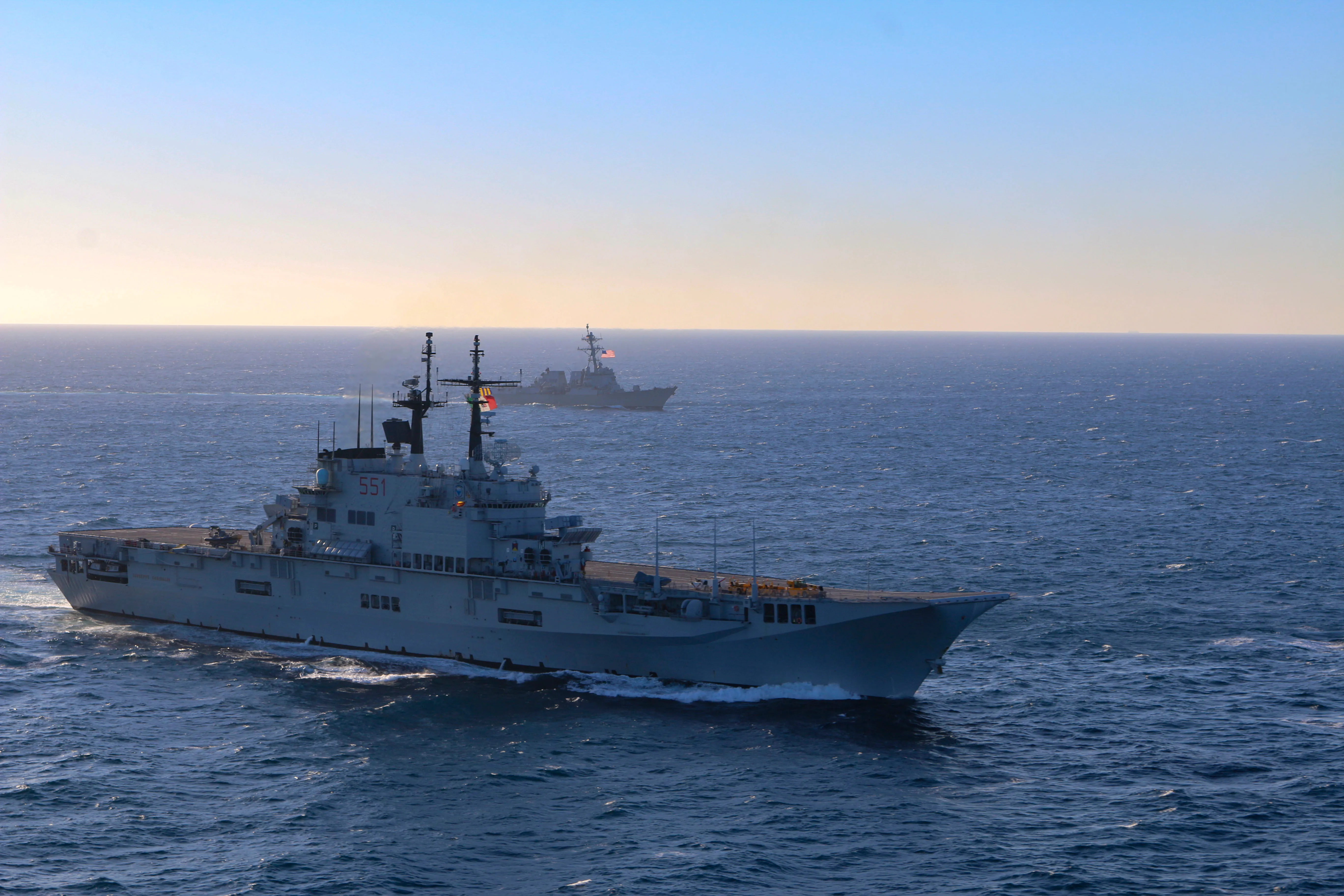
Indonesia has welcomed the delivery of its first-ever aircraft carrier with a military ceremony as the vessel arrived at a naval base.
The 41-year-old former Italian navy vessel Giuseppe Garibaldi docked in North Jakarta’s Tanjung Priok seaport on Friday, after sailing from Italy via Colombo and the Malacca strait, Indonesian Navy Chief of Staff Muhammad Ali told reporters.
Recommended Stories
list of 3 itemsend of list
Indonesia’s President Prabowo Subianto says the ship will be used to manage disasters across the archipelago. However, it arrives amid a drive to upgrade the military.
The 180-metre (590-foot) vessel can carry up to 18 helicopters and accommodate up to 830 personnel, a navy spokesperson said in a statement.
The carrier will be renamed KRI Sriwijaya, honouring the Srivijaya empire, a maritime kingdom based in Sumatra that became one of Southeast Asia’s dominant naval and trading powers between the seventh and 13th centuries.
“There are many disasters in this country. So we really need a vessel or platform that could carry many helicopters, because the helicopters can drop logistics quickly to remote areas,” Ali said.
However, he also noted that the ship could “be deployed for combat missions if necessary”.
Bolstering defence
The arrival of the vessel, which was commissioned by the Italian navy in 1985, comes as Prabowo has been pushing to upgrade Indonesia’s military assets and build closer defence cooperation with other countries.
Italy agreed to give Indonesia the carrier in March, after it was retired in 2014. The move was meant to bolster the two countries’ defence engagement.
Italy is seeking deals on submarines and aircraft, and gifting the carrier to Indonesia also saves it the cost of decommissioning the ship.
“Its condition is still very good and hopefully it can be used by the Indonesian navy for the next 15 to 20 years,” navy chief Ali said.
Indonesia’s Finance Ministry approved $450m in financing for the aircraft carrier programme in 2025. Opposition politicians worry the overall bill could be far higher.
However, Prabowo – formerly a general under the Suharto regime – has made building Indonesia’s defence assets and agreements a priority.
Jakarta signed an $8.1bn deal in 2022, when Prabowo was defence minister, to purchase 42 French-made Rafale fighter jets. India confirmed this year that it will supply the country with long-range missiles.
Indonesia has also agreed this year to a “Major Defence Cooperation Partnership” with the Trump administration in the United States, and a security treaty with Australia.
Italy’s defence minister warns of severe economic fallout if Bab al-Mandeb becomes impassable, bypassing EU delays.
Published On 18 Sep 202618 Sep 2026
Italy will deploy warships to ensure safe passage for its commercial vessels through the Bab al-Mandeb strait, Defence Minister Guido Crosetto said, adding that Rome would not wait for a joint decision from the European Union.
“We have the capabilities to protect the passage,” Crosetto said, warning that if the waterway became impassable, the economic consequences would be severe.
Recommended Stories
list of 3 itemsend of list
The Italian defence minister said that Rome “must not allow bureaucratic delays in decision-making to exacerbate an already complex situation”.
Bab al-Mandeb links the Red Sea to the Gulf of Aden, forming one of the world’s busiest shipping corridors between Europe and Asia and a critical route for oil, gas and container traffic heading to and from the Suez Canal.
Roughly 12 to 15 percent of global trade has historically passed through the narrow waterway, which separates Yemen from Djibouti and Eritrea on the African side and is only about 30km (19 miles) wide at its narrowest point.
The strait’s importance has grown sharply since Iran effectively seized control of the Strait of Hormuz earlier this year amid its war with the United States and Israel, choking off the world’s most important oil chokepoint and pushing much of the Gulf’s crude exports towards alternative routes.
Saudi Arabia, in particular, has increasingly relied on pipelines and Red Sea shipping to bypass Hormuz altogether, making the Bab al-Mandeb strait one of the last major arteries still open to Gulf oil reaching global markets.
Control of the strait has been contested for years, as Yemen’s government, Houthi rebels and, at times, forces in the region have held stretches of its coastline at different points since the war in Yemen began in 2015.
The significance of the strait has been hit dramatically in the past few weeks, when the Iran-backed Houthi movement launched a rapid offensive that brought the entirety of Yemen’s western Red Sea coast under its control, including several strategically located islands.
The advance has given the Houthis effectively unrestricted access to the waterway, a development seen as a major setback for international shipping, given the group’s history of attacking vessels it associates with the US or its allies in the region.
The US and the European Union have already carried out military operations aimed at better protecting merchant ships from Houthi attacks in the area, though those efforts have struggled to fully secure the route as fighting in Yemen has escalated.
Israeli prime minister pledges to advance two bills aimed at addressing the ‘immense damage’ done to Israeli soldiers.
Published On 17 Sep 202617 Sep 2026
Israeli Prime Minister Benjamin Netanyahu has pledged to pass a law that would revoke the citizenship of anyone who defames Israel’s soldiers, including the directors of NAZA, a documentary about Israeli soldiers’ killings of civilians in Gaza.
Directed by Israeli journalists Yuval Abraham and Rachel Szor, NAZA documents allegations that mass civilian deaths were built into Israel’s target decisions in its genocidal war against Palestinians in Gaza – something Netanyahu and the army reject.
Recommended Stories
list of 4 itemsend of list
The film won the Special Jury Prize at the Venice Film Festival last week. During his acceptance speech, Abraham said “our country is doing these crimes” and highlighted that Israel is systematically and deliberately targeting Palestinians in Gaza.
“NAZA” takes its title from an Israeli military term for expected “collateral casualties” and is built around anonymous interviews with intelligence officers and soldiers.
But it has also played into the charged domestic political atmosphere before Israel’s October 27 election, as public opinion polls suggest Netanyahu’s right-wing coalition could fall short of a majority in parliament.
On Tuesday, Netanyahu accused several of his election rivals of failing to take a tough stand against the documentary, claiming this made them unfit for office.
On Wednesday, he pledged to advance two bills that he said would address the “immense damage” done to Israeli soldiers in the film.
“The first [order]: To revoke the citizenship of anyone who defames [Israeli] soldiers, and the second: To hit them in their pockets and increase the statutory damages for defamation they can be sued for by 20 times,” Netanyahu said in a social media video. “We will hit them both in their pockets and in their citizenship, as their place is not with us.”
Netanyahu cited three examples in proposing the bills: “The recent film NAZA which portrayed [Israeli] officers and soldiers as war criminals”, 2025 remarks by left-wing ex-general-turned-politician Yair Golan that “a sane country does not kill children as a hobby”, and a military legal officer’s 2024 leak of a video showing soldiers abusing a Gaza detainee.
In 2022, Israel’s Supreme Court passed a law that permits stripping citizenship from Israelis who carry out actions that constitute a breach of trust against the state. Any new legislation would likely face similar court challenges.
More than 73,000 Palestinians, most of them civilians, have been killed in Israel’s genocidal war on Gaza since October 2023, according to health authorities.
EES delays update over 9 UK tourist destinations – key details – The Mirror
Need to know
The EES entry/exit system has been widely criticised for causing long EU border delays at airports in popular UK tourist travel destinations
Crowds of passengers gathered at passport control areas at Amsterdam Airport Schiphol following the introduction of a new European digital border control system(Image: Anadolu, Anadolu via Getty Images)
Need to know on EU delays: Latest over the controversial EES system
British holidaymakers could finally get relief from airport chaos as the EU has reportedly postponed its controversial Entry/Exit System across nine major countries.
Portugal, Italy, France, Belgium, the Netherlands, Germany, Malta, Greece and Switzerland have all been granted permission to postpone the EES system indefinitely, reports say. The scheme has caused delays of up to four hours at European airports this summer, but the Times reports the 9 nations have been allowed to delay implementing the scheme, with no timescale on when to actually bring it in.
The automated system forces non-EU residents to queue at special machines before entering 29 Schengen area countries. It was designed to track whether people have exceeded their permitted 90-day stays in Europe.
Despite the EU previously insisting there would be no extensions after September 6, countries have informally been allowed to drop the checks until the technology works properly. The system has faced fierce criticism from airlines including Ryanair.
Nadia from Greater Manchester described her Frankfurt airport experience as “pretty shambolic” after facing ridiculously long queues. “People missing their flights because of it is just not acceptable,” she said.
The controversial system has sparked widespread debate on social media, with one traveller saying: “They made a mess of it.”
‘I don’t eat mozzarella outside Puglia,” says our friend Savio. “It’s not the same.” Savio is a very opinionated foodie, so I take his words with a pinch of good Puglian sea salt (see below). He was adamant about the superiority of the stretched-curd cheese from his home turf.
Puglia is also the birthplace of ingredient du jour burrata, which originated in Andria, a few miles from Savio’s home town of Barletta. Andria forms one part of the triangular Barletta-Andria-Trani (BAT) province, often passed over for better-known parts of Puglia, despite the cheese connection and Barletta having miles of palm-backed, sandy beaches.
Illustration: Guardian Graphics
About a century ago, in the hills outside Andria, farmer Lorenzo Bianchino was snowed in and couldn’t get his milk to market. To save what he could, he revived an old technique for preserving butter (burro, hence burrata), stuffing cream mixed with mozzarella scraps (stracciatella) in a casing of the stretched-curd cheese.
There are now several burrata makers in Andria, the most famous being Caseificio Olanda, which offers demos, tastings and a museum. Late one morning, we watch Riccardo “Dino” Olanda, son of the founders, work his magic. He adds almost-boiling water to the curds, then mixes with hands red from doing this every day. As he stretches and massages the curds, a smooth velvety mass forms. “See how it’s shiny?” he says. “Means it’s ready.” Working quickly, he squeezes out round lumps between thumb and forefinger into the familiar mozzarella balls. This action is mozzare, hence the name.
He also makes little knots and plaits before moving on to burrata. Taking a warm mozzarella ball, he works it into a hollow bag with his fingers then fills it with cream and stracciatella before tying the top with string.
Riccardo Olanda making burrata
Afterwards, a dairy-heavy meal totally worth the cholesterol and calories: mozzarella and burrata to start, then bread with chunks of caciocavallo (a stretched-curd cheese), and a dessert of heart-shaped fresh ricotta with strawberry jam or cocoa.
And, I have to say, Savio is right. The mozzarella and burrata have a juicy, elastic texture and a gorgeous cheesy, umami flavour; the salt and flavour leached out by the whey the cheeses later sit in. How will I ever settle for Tesco Finest after this?
Over the next few days, eating our way around the province’s restaurants and food producers, I wonder whether it’s because the ingredients are so good that this area has so many food obsessives, or the other way round.
Barletta sees few foreign tourists, but it is full of Italian life. There are lots of independent shops, a Norman castle and cathedral to visit, and every evening people pour into the bars, clubs and gelaterie of thesette strade, seven parallel streets in the old town.
Down the coast, Trani, with its sea-facing romanesque cathedral and pretty harbour, attracts some tourists, but they are not in evidence at 7am when the fishing boats return. The men complain of rough seas and a poor catch, but from the back of the boats they’re soon selling mullet, octopus, skate, fat sea snails, monkfish and palombo (small shark) to restaurateurs and fishmongers. Thirtysomething Nicola says he went out at midday and got back at 3am. When does he sleep? “Never.” A fifth-generation fisher, he began helping on the boats aged six.
Fish straight off the boat at Trani docks. Photograph: Vittorio Sciosia/Alamy
We’ll eat fish later, but today is for pizza. Portento in Barletta is run by food nut Luigi Lacerenza. He has us try so many local products as antipasti – caprino goat’s cheese tasting of green mountains, grilled caciocavallo from an old couple who make just six a week and small-batch salami – that we’re almost too full for pizzas. But they are wonderful: one with sausage, olives, oyster mushrooms and yellow tomatoes; another with aubergines and grated cacioricotta.
In Cerignola, west of Barletta, Rosario Didonna used the money he won on a TV standup competition to turn his family’s deli into a cosy, wood- panelled restaurant, U’ Vulèsce (dialect for “peckish”). Rosario knows fishers by name, works with small farmers and wine producers, and invites nonne from all over southern Italy to demonstrate recipes in his kitchens.
We start with tasty goat prosciutto and plum-sized local olives called bella di Cerignola. Then an unforgettable prawn tartare served in sea urchin shells, hairy crab spaghetti (“the juice is better than lobster”), octopus with bean puree, and sea bass with orange mayo. He waves away our thanks: “I’m doing the best job in the world!”
Nicola Barbera at Masseria Barbera, a farm restaurant in the Alta Murgia national park, is equally inspired, but rather by what grows on the estate founded by his great-great-great-great-grandfather Riccardo, who fought with Garibaldi.Exuberantly bouncing us around the farm – it produces 90% of what the 100-cover restaurant needs – he shows us olives and vines, but also the “weeds” growing around them. “They’re eatable,” he says, grabbing handfuls of peppery rocket, and bitter but delicate wild chicory. From the abundant kitchen garden, he makes eight varieties of tomato sauce.
Masseria Barbera farm restaurant
We tuck into a lot of this for lunch: a pie with white onions, anchovy and sultanas; courgettes with mint and garlic; spaghetti with yellow tomatoes. (“I call it bastard sauce,” says Nicola. “Those tomatoes take three times as long to pick.”) Then, something I never thought I’d eat: grilled donkey fillet. I feel bad about the patient, mild-tempered beasts, but this is healthy, low-fat food, never intensively farmed. It’s also the best meat I’ve ever tasted.
Good food is made better by good olive oil, and producers here include Muraglia, known for organic oil in hand-painted, rainbow-stripe ceramic bottles, and Sabino Leone, offering tours of its ancient groves and oil mill for €15, plus tastings.
Sabino Leone olive oil
This area also offers plenty to do between meals. Barletta was the home of Italian painter Giuseppe De Nittis, who hung out with Degas and Manet, and took part in the first impressionist exhibition in Paris, in 1874. Over 200 of his works are now displayed in the 16th-century Palazzo della Marra (€6).
At Europe’s biggest salt pan, Salina Margherita di Savoia, there’s an expanse of peaceful ponds with a snow-white salt mountain to climb. Another day, an exhilarating ebike ride in the Alta Murgia with Filippo Tito of Cycling ’n’ Trek, through dense forest to peer with awe into an old bauxite mine that resembles a mini grand canyon. We get back ravenous, but in this corner of northern Puglia, that’s a blessing.
Where to stay
Until this century, Barletta had little tourist accommodation. Pick of the few B&Bs is Antica Dimora (doubles from €97), a restored 17th-century palazzo run by Lilly and Riccardo Manna. There are three smart bedrooms with lots of plants and breakfast features different local specialities each day.
Lama di Luna (doubles from €230) is an organic farm in deep countryside, with six rooms set around an 18th-century stone courtyard. A well and solar panels make it energy and water self-sufficient; half of its 200 hectares are left wild, the rest are planted with olives, vines, almonds and cherries. There’s a cinema, a library and a large pool shaded by 600-year-old olive trees.
Where (else) to eat
The view from A Sud dell’Anima restaurant, Minervino
Barletta’s 60-year-old Mosébakery is revered for its krapfenfilled doughnuts and sourdough croissants. There are also chocolates, ice-cream and cakes, all housemade, and great coffee.
Puglia has hundreds of gelaterie but experts rate Scoop in Canosa (which is called Puglia’s “Little Rome” for its catacombs, temple ruins and Roman bridge). Francesco Di Nunno makes ice-cream with local seasonal ingredients: raspberry and strawberry sorbets are available only in early summer; percoca yellow peach until mid-August.
There’s affordable fine dining at chef Luciano Matera’s Il Turracciolo in central Andria. Highlights for me are broad bean and chicory “meatballs”, bright green inside; a “hidden mushroom” under baked eggy topping; and pasta discs with whole and pureed green beans and peas.
At A Sud dell’Anima, chef Nadia Tamburrano uses modern techniques and hyper-local ingredients to make food of astonishing quality for a small hilltop town (Minervino, population under 8,000). Her antipasti explode with flavour thanks to house-cured capers and homemade mustard, syrups and purees. A main of sweetbreads wrapped in intestines feels a bit out-there, but is delicious, the intestines crispy as crackling.
Italy’s ancient cave city looks like something out of a storybook – and with October highs of up to 27C and no summer crowds, it could be the perfect autumn holiday destination for Brits
Whether it’s half-term breaks, cheaper shoulder-season deals or simply the lure of warm sunshine and guaranteed blue skies, searches and bookings tend to rise for last-minute getaways. From beach classics in Spain, Greece and Turkey to longer-haul hotspots, October has become the month when many of us “jet off” to swap jumpers and drizzle for one more hit of heat.
Italy boasts no shortage of places that deliver a sunshine fix well into autumn – from Rome’s ancient sights and café-lined piazzas to Venice’s dreamy canals and waterside walks. But if you’re after something that feels a little less “done” than the usual hotspots, Matera could be the perfect pick.
Tucked away in the southern region of Basilicata, the city is best known for its Sassi – ancient cave dwellings carved into the rock, now transformed into atmospheric hotels, restaurants and tiny bars.
It’s the kind of place made for slow exploring: cobbled lanes that twist between honey-coloured stone buildings, viewpoints that open up over terraced rooftops, and little squares where you can stop for a coffee or aperitivo in the late-afternoon sun.
Crucially, Matera tends to be calmer than Italy’s headline destinations, especially outside peak summer, which means you can soak up the scenery without battling huge queues.
October is also a great time to visit if you prefer sightseeing without the intense heat, with mild days that suit everything from wandering the old town to taking a day trip into the surrounding countryside.
And while Matera has a distinctly old-world feel, it still has plenty going on – from cosy trattorias serving local specialities to cultural sites and museums that dig into the city’s long, unusual history. For travellers looking to extend summer without the crowds, it’s an autumn escape that ticks a lot of boxes.
Content cannot be displayed without consent
Kathy, a travel content creator from New York, shared a video on TikTok offering viewers a captivating glimpse of Matera, widely known as the ‘City of Stone’.
The short clip showcases the cave dwellings and a narrow lane running alongside the stunning stone structures perched on a clifftop.
Her TikTok post caption reads: “Matera, a truly magical historical city like no other city. The oldest city in Italy and possibly all of Europe. It’s 9,000 years old!
“I highly recommend staying at least one night to fully experience the magic. Sunset is stunning, dinner in the cave-like restaurants is memorable, and sunrise is even better.”
The travel enthusiast described Matera as “truly breathtaking” and “easily one of [her] favourite places to visit while traveling through Puglia.
And judging by the comments section, people agreed with her. One travel fan wrote: “One of the most beautiful places I have visited, truly amazing.”
Another said: “Currently in Matera now, one of my favourite places we [have] visited. And a third added: “Dreamy!”
The European Union entry-exit system (EES) has caused repeated delays for Brits at major EU airports this year
14:40, 13 Sep 2026Updated 14:50, 13 Sep 2026
(Image: Anadolu, Anadolu via Getty Images)
British holidaymakers heading abroad may finally be able to breathe a sigh of relief over the widely-criticised EES system. The scheme forces non-EU residents to queue at special machines in airports before gaining entry to 29 nations within the so-called Schengen area – essentially the majority of the European Union.
However, there have been persistent reports of lengthy delays – some stretching to as long as four hours. A new report in the Sunday Times now reveals that the European Union has shelved the controversial entry-exit system (EES) across at least nine countries.
Portugal, Italy, France, Belgium, the Netherlands, Germany, Malta, Greece and Switzerland are all understood to have been granted permission to postpone full implementation of EES. The newspaper reports that there appears to be no deadline by which these countries must adopt the scheme, which has already sparked widespread reports of enormous queues at European airports this summer in destinations such as Mallorca, Faro, the Canary Islands and Milan.
The scheme has faced fierce criticism from Ryanair and others. The European Union describes the Entry/Exit System (EES) as an automated IT system designed to register non-EU nationals travelling on short stays each time they cross the external borders of participating European countries.
Following years of postponements, the system was rolled out from October 2025, with full implementation originally anticipated by the following April. However, faced with the prospect of significant border queues due to software failures, officials granted countries a 150-day grace period during which they could drop the checks to avoid travel chaos.
That rule ended on September 6. The EU previously insisted there would be no extension.
Yet the Sunday Times reports that at least nine Schengen countries are understood to have told the European Commission, which is responsible for overseeing the EES, that they would not enforce the new controls in full until the technology and systems were working correctly.
They have informally been allowed to do so with no time limits apparently in place to adopt the system, it is being reported. One of the main purposes of the system is to track whether non-EU citizens have spent more than their permitted 90 days in the bloc in a rolling 180-day period.
Social media has been awash with debate about the scheme. One post on Reddit saw a traveller say: “They made a mess of it. Seems many basic things like it is hit and miss on the document scanning but also things like people walk up with hats and headphones and the machine doesn’t tell them to remove them, and organisational things like if the machine errors the traveller has to back out and has no where to go.
“The right way to do this would have been progressive: start by getting some people eg 5% going through the machine lane, everyone else through normal.
“The vendor observes problems, fixes them, once machine working well, increase to 10%, then 20% and so on.” Another person said: “The general lack of functionality of so many IT systems across the EU is kind of astonishing.”
A third added: “It’s worse than that. There isn’t even consistent protocol/IT support within a single EU airport.”
Another put it more simply, saying: “I just miss having stamps.”
‘People are missing their flights’
Nadia, from Greater Manchester, told the Guardian in August she had made two trips to Schengen areas this summer. A trip to Tenerife in June was “quite straightforward”, but her experience in July at Frankfurt airport where she was picking up a connecting flight home, was much less so.
“The queue there was ridiculously long, and there was very limited information,” she says. “People were wandering around trying to work out where they needed to go.
“I’m very well travelled and pretty confident, but even I was slightly unsure and was thinking, is there some other queue I should be joining? There was no one nearby to check with without losing your place.”
Eventually, her passport was checked. “He didn’t actually take fingerprints then,” says Nadia, who is a solicitor. “I think the queue was so long they decided to dispense with that.
“It’s the efficiency of the system I question and the fact that individual member states’ systems do not talk to one another. They shouldn’t need to get information again if you have already gone through. It’s pretty shambolic, and I think people missing their flights because of it is just not acceptable, especially when there’s no recourse; it’s not your fault.”
Ryanair chief executive Michael O’Leary has repeatedly complained about EES. Speaking earlier this year, he said: “There’s a bit of Brexit in this too. Here, you voted for Brexit – f***ing join the queue.”
European Parliament’s Vice President Pina Picierno says Hsiao Bi-khim’s visit ‘was kept secret until her arrival to protect her participation’ in the conference.
Published On 11 Sep 202611 Sep 2026
Taiwanese Vice President Hsiao Bi-khim is making a rare visit to Europe, attending a forum on democracy in Italy alongside the island’s foreign minister, the presidential office said.
Hsiao has been invited to attend the Ventotene Conference for Freedom and Democracy, and is travelling with Taiwanese Foreign Minister Lin Chia-lung, the presidential office said in a brief statement.
Recommended Stories
list of 4 itemsend of list
Other details will be provided once the two return to Taiwan from the Italian island of Ventotene, it added,
While Taiwan’s foreign ministers occasionally visit Europe and other parts of the world that have no formal ties to the Chinese-claimed island, it is rare for an official as senior as the vice president to do so, given the risk of backlash from Beijing against the host nation.
Pina Picierno, vice president of the European Parliament, said Hsiao’s planned participation “was kept secret until her arrival to protect her participation” in the conference.
“No one can determine who can be hosted on European soil, what voices can be heard, and what presences must be hidden,” Picierno said in a Facebook post. “It is a simple and very clear message: intimidation cannot decide who participates in our democratic debate.”
“Freedom of debate is not negotiable with autocracies. And Ventotene, more than ever today, must continue to be the place where freedom and democracy are defended without fear,” she added.
The Ventotene conference takes place from Thursday until Saturday this week. Italy, like most countries, has no formal diplomatic ties with Chinese-claimed Taiwan.
Oleksandra Matviichuk, a 2022 Nobel Peace Prize laureate and president of Ukraine’s Centre for Civil Liberties, is also expected to participate in the conference.
China says Taiwan is one of its provinces, a view the democratically governed island strongly rejects.
Last November, Hsiao spoke at the Inter-Parliamentary Alliance on China’s annual summit, held in the European Parliament in Brussels.
“You’ve left everyone here stranded. You could’ve cancelled this flight hours ago which would’ve given many vulnerable people here half a chance,” one passenger wrote on X
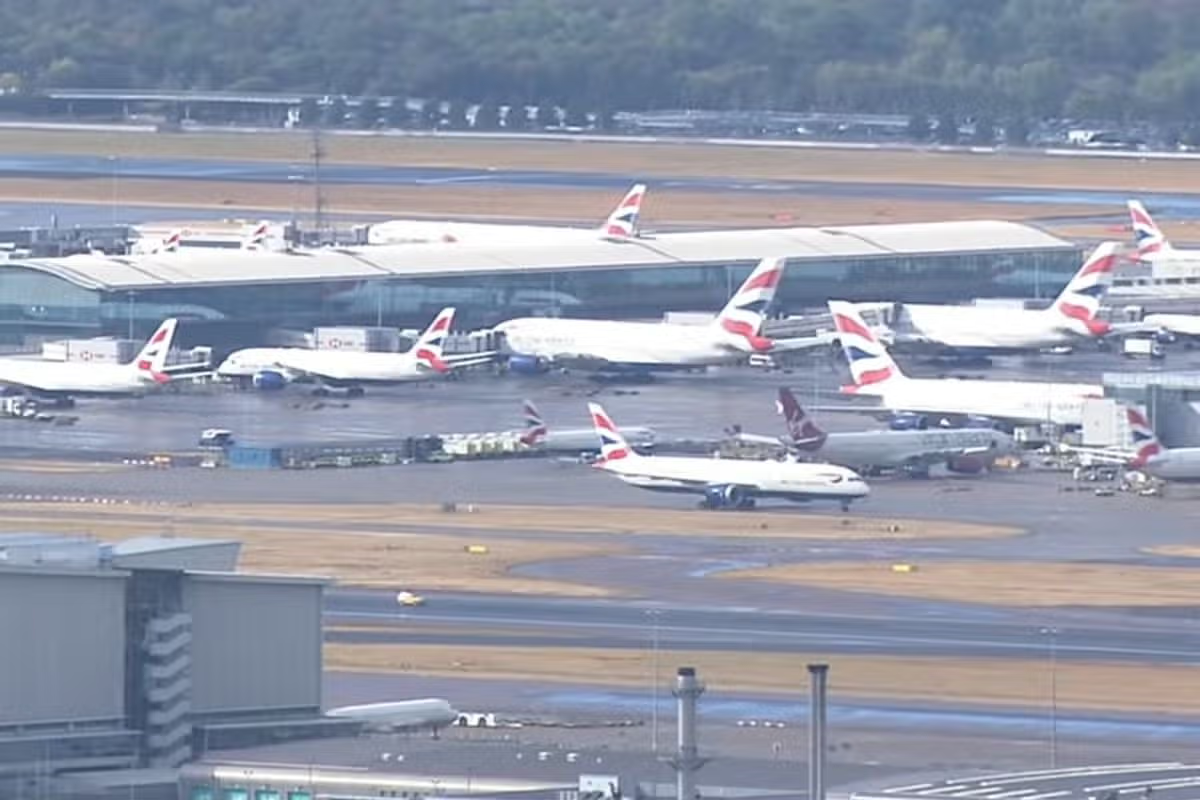
British Airways planes at Heathrow Airport(Image: Sky)
British Airways has been accused of leaving passengers stranded in Italy after thousands of flights were cancelled across the UK.
Tens of thousands of people were impacted on Tuesday after a technical issue by National Air Traffic Services (Nats) grounded flights.
Among the carriers affected by the air traffic control issue was British Airways (BA) – with a number of passengers taking to social media to complain about the situation.
Among them was Simon Weeks, who said he, along with others, had been left stranded in Italy for hours without any update from the airline.
Sharing a letter he received from BA late in the evening, the Brit claimed “all hotels” in the port city of Brindisi were now “fully booked”.
He added: “You’ve left everyone here stranded. You could’ve cancelled this flight hours ago which would’ve given many vulnerable people here half a chance.”
BA said it was forced to cancel or divert more than 100 flights on Tuesday, which had impacted “tens of thousands of customers”.
Passengers received a letter from the carrier apologising for the inconvenience, but were left to find a place to sleep themselves.
The statement read: “We’re sorry that your flight has been delayed overnight… We don’t underestimate the inconvenience this will cause.”
It continued: “We’re sorry, but we’re unable to provide you with accommodation, and you need to make your own arrangements.”
“You can submit a claim to us with your receipts and we will reimburse reasonable accommodation costs.”
The disruptions, expected to continue into Wednesday, impacted travel at airports including Heathrow, Gatwick, Manchester and Stansted.
Transport Secretary Heidi Alexander is set to speak with Nats’ chief executive officer Martin Rolfe on Wednesday before she addresses MPs in the Commons for the second reading of the Civil Aviation Bill.
Rolfe has said he “always accept(s) full responsibility” when asked if he was considering his position after the incident.
He told Sky News: “I am the CEO of a piece of critical infrastructure, so it is my job to take responsibility for that.
“What I absolutely take responsibility for is keeping people safe and delivering the best service we possibly can on a day like today.
“You will understand my focus is entirely about how we actually resolve this issue, get things back to normal, help our airlines, our airport customers and the travelling public.”
The midfielder, who will return to training in two weeks, will miss Wednesday’s Champions League game against Arsenal.
Published On 8 Sep 20268 Sep 2026
Scotland midfielder Scott McTominay has had successful surgery on a minor heart issue on Tuesday and will return to training in two weeks’ time, his club Napoli said.
The former Manchester United player recently experienced a heart rhythm disorder, something which is not considered serious but did require surgery.
“On Tuesday morning, Scott McTominay underwent an ablation procedure at Spire Manchester Hospital. The operation was a complete success,” the Serie A club said in a statement.
“McTominay will rest for two weeks and then resume training.”
McTominay, 29, has been a key player for Napoli since joining from Manchester United in 2024, scoring 27 goals in 82 matches.
But he was off-form in their opening two Serie A games.
Napoli previously said McTominay would miss Scotland’s upcoming Nations League fixtures against Slovenia (twice), Switzerland and North Macedonia.
Napoli, who have just three points from their opening three Serie A games this season, host Arsenal in the Champions League on Wednesday and then play Bologna and Fiorentina before the international break.
Who: Real Madrid vs Inter Milan What: Champions League league phase Where: Santiago Bernabeu, Madrid, Spain When: Tuesday, September 8, at 9pm (19:00 GMT) How to follow:Al Jazeera Sport will bring you all the build-up from 16:00 GMT ahead of our live text commentary stream
When Jose Mourinho left Inter Milan for Real Madrid in the summer of 2010, after leading the Italian outfit to Champions League glory, he was at the peak of his powers.
The Portuguese coach claimed an historic treble with Inter, clinching Serie A in the last week of the season and lifting the Coppa Italia.
Inter beat Bayern 2-0 in the Champions League final at Madrid’s Santiago Bernabeu stadium, winning the trophy for the first time since 1965 and becoming the first Italian team to win the treble.
The day after the final Mourinho said it was likely his last match in charge and about a week later his appointment at Real Madrid was finalised.
Now 16 years on, and beginning his second stint at Madrid, Mourinho kicks off the record 15-time Champions League winners’ European campaign against Serie A champions Inter on Tuesday at the Bernabeu.
Mourinho denies feeling pressure to lift Champions League
The Champions League is the only trophy that evaded Mourinho during his first stint at Real Madrid.
“No, it is two different spells,” he said when asked at a pre-match news conference if he was in debt to the club. “When I left in 2013, we won what we won and lost what we lost and we gave it our all. And that was that. What I need to do now has nothing to do with the past.”
“Back in 2010, we weren’t even reaching the quarterfinals of the Champions League and it had been ages since we’d played in a semifinal. Now we’ve won six Champions Leagues in a little over a decade.”
All eyes will be on how Real respond to their first setback of Mourinho’s second spell – a 1-0 defeat by Real Betis in La Liga on Friday.
“We want to win every match, every competition,” he said. But you have to work to accomplish stability. Stability. Stability … Structure …
“So Real Madrid need to reach that stability that is so important to achieve something great. But Real Madrid are Real Madrid, you need to win here no matter what.”
‘We all need to improve’
Sitting alongside Mourinho, star striker Kylian Mbappe was asked several times about his relationship with Vinicius Jr and the atmosphere in the Real dressing room.
“What does an improvement in the dressing room mean?” Mbappe said when asked if there had been a change from last year.
“Do you have the feeling that something wasn’t right last year? No, it’s the same as last year. It’s true we have a different coach, but it’s the same.”
Mbappe acknowledged his side have to improve in front of goal.
“I could say that I score more goals than some PSG players so they need to score more, but I have to be smart and acknowledge that I need to improve too, even if I do certain things that others don’t,” he said.
“It’s an endless debate. We all need to improve [in front of goal], and also with the ball.”
Mbappe after his penalty is saved by Betis keeper Alvaro Valles on Friday [Marcelo Del Pozo/Reuters]
What happened in Madrid’s last match?
Mbappe missed a late penalty as Troy Parrott scored his first goal for Real Betis in their 1-0 win on Friday, ending Mourinho’s perfect start to the La Liga season.
Madrid had won each of their first three matches under Mourinho in his second spell in charge, but Betis goalkeeper Alvaro Valles denied Mbappe from the spot deep into stoppage time to seal a memorable victory at La Cartuja.
Vinicius Junior hit the post in the first half from Arda Guler’s pass across the face of goal, with Mbappe foiled twice by heroic blocks from Natan Bernardo de Souza and Marc Bartra.
As Madrid struggled to break Betis down, the hosts took a surprise lead nine minutes from time when Parrott fired home the rebound after Thibaut Courtois had produced a fine save to deny Nelson Deossa’s header.
What happened in Inter’s last match?
A last-gasp winner from Lautaro Martinez sealed a breathless win for Inter as the Serie A champions fought back from two goals down to edge visiting Napoli 3-2 on Saturday.
The game exploded in the second half when Matteo Politano guided home a shot in the 50th minute before Rasmus Hojlund’s curler doubled the Napoli lead three minutes later.
Inter responded almost immediately when Martinez hammered in his first goal of the season from a Dimarco cross. Substitute Marcus Thuram came agonisingly close to a leveller when he headed off the post.
The France international would not be denied twice, though, and smashed a towering header past Alex Meret in the 82nd minute to level the scores.
Chances fell at both ends before Martinez’s penalty box instincts proved decisive in the 91st minute as Napoli failed to clear in a goalmouth scramble and the Argentina striker pounced to settle an extraordinary match.
Inter Milan’s Lautaro Martinez scoring his team’s winner against Napoli on Saturday [Isabella Bonotto/AFP]
Prediction
The Opta supercomputer makes Real Madrid the favourites, with a win probability of 56 percent. Inter given a 22.3 percent chance of winning.
Head-to-head
They have faced each other on 19 occasions; Madrid won 10 games, Inter won seven, and two ended as draws.
Somewhat surprisingly, Inter have not beaten Real Madrid since 1998, a game in which the great Roberto Baggio scored a brace for the Italians.
Last five encounters:
December 07, 2021: Real Madrid 2-0 Inter Milan (Champions League)
September 15, 2021: Inter Milan 0-1 Real Madrid (Champions League)
November 25, 2020: Inter Milan 0-2 Real Madrid (Champions League)
November 03, 2020: Real Madrid 3-2 Inter Milan (Champions League)
November 25, 1998: Inter Milan 3-1 Real Madrid (Champions League)
Real Madrid’s team news
Eduardo Camavinga, Arda Guler and Bernardo Silva will all miss the game due to suspensions carried over from last season.
Madrid also have a host of injuries to contend with as Eder Militao, Rodrygo, Ferland Mendy and Raul Asencio are all ruled out.
Aurelien Tchouameni, Thiago Pitarch, Endrick and Marc Cucurella face late fitness tests as they struggle to recover from injuries, but all are reportedly back in training.
Left-back Federico Dimarco is unavailable due to a knee injury, while new signing Djed Spence is still working his way back to full fitness after an undisclosed injury and is unlikely to feature.
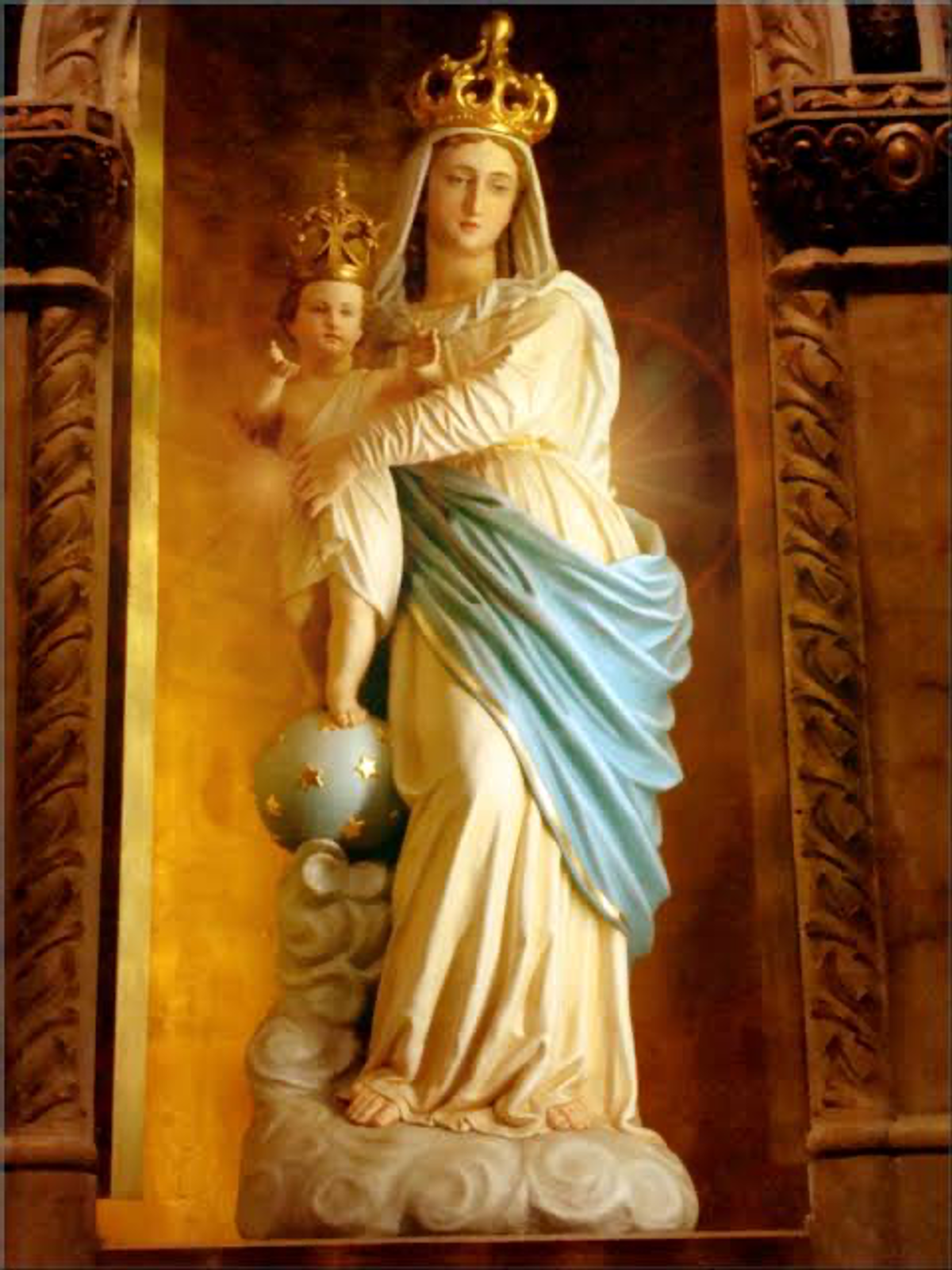
The date of birth of Mary is not recorded in the bible. The earliest writings about her life come from the ‘Protoevangelium of James’ which was written in the 2nd century AD. In this, her father is said to be Joachim, a member of one of the Twelve Tribes of Israel and his wife is Anne.
Though it’s not sure which date was decided first, the nativity of Mary is not surprisingly exactly nine months after the feast of the Immaculate Conception of Mary (December 8th).
This feast day originated in Jerusalem in the 5th century as the feast of the Basilica of Saint Anne, which was said to have been built on the shepherd’s field that was said to have been the home of Mary’s parents.
By the seventh century, the feast was being celebrated by the Byzantines and it was brought to Rome during the 7th century by Eastern monks. It would be a few more centuries before it became a feast day across Western Europe.
Another important feast day for Mary is Assumption Day (August 15th) which marks the assumption of her body into Heaven. This is seen as the most important feast day for Mary and observed in many countries as a public holiday. Due to the closeness of the dates of Assumption and the Nativity of Mary, the latter is not as widely celebrated as it once was.
Christians normally celebrate the day on which saints died to mark the beginning of their eternal life. There are three exceptions – Jesus Christ, the Virgin Mary, and Saint John the Baptist. Their births are also feast days as all three were born without Original Sin.
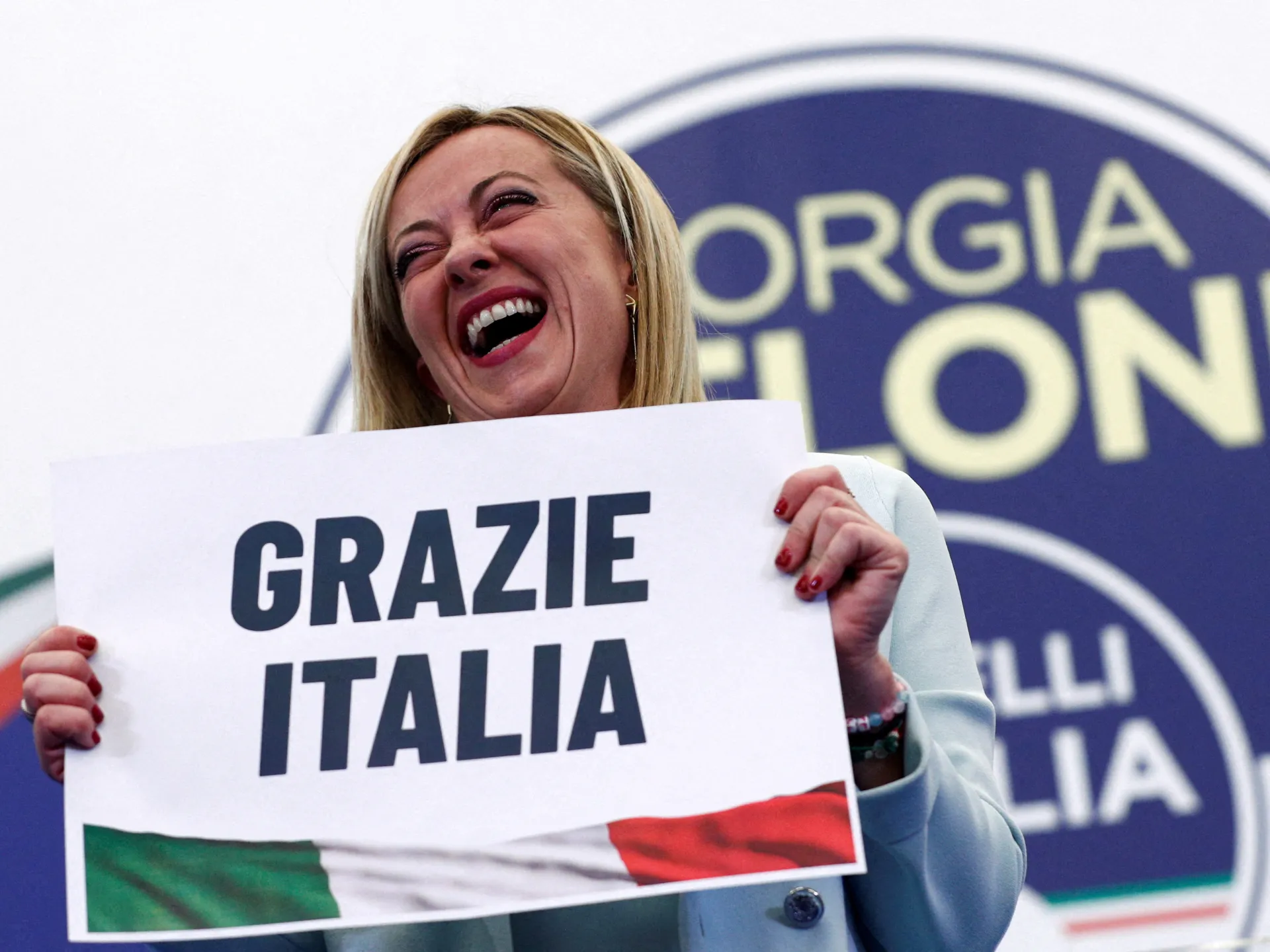
In the mountain resort of Abetone Cutigliano, nestled in the Tuscan-Emilian Apennines, supporters of Prime Minister Giorgia Meloni are celebrating.
On Friday, the Italian leader and her party set a record – leading the country’s longest-lasting government since World War II.
Recommended Stories
list of 3 itemsend of list
Famed for political instability, Italy has seen 68 governments in eight decades. While the late Silvio Berlusconi keeps the title of longest-serving premier, having held the premiership for a longer period over four terms, the government led by the far-right Brothers of Italy has now overtaken his record of 1,412 consecutive days in power.
Abetone Cutigliano, the prime destination for skiing enthusiasts, was one of the municipalities that made the accomplishment possible, overwhelmingly voting for Meloni’s party in the national elections of October 2022. Andrea Tonarelli, a councillor with Brothers of Italy’s local branch, said a seafront celebratory event is being held to mark the occasion.
“Those of us who can’t go will gather at the party’s local office to watch the rally,” the 35-year-old told Al Jazeera.
For Tonarelli, an engineer for the municipality, the milestone is a “point of pride”.
“Ten years ago, this result would have been unthinkable,” he said. “I feel emotional saying this, but the merit goes to those people who were able to get hold of the youth like me.”
A self-professed mountain dweller who joined Brothers of Italy in 2017, Tonarelli said he was enticed by the party’s opposition to the left’s “armchair environmentalism” that restricts hunting, thwarts big infrastructure projects and opposes selective woods logging.
He also embraced the party’s “patriotic” resolve to put “Italians first”, including through border protection and the promotion of local products and traditional heritage.
“Our main characteristic is believing in what we do and giving it our 100 percent,” he said. “This is not a milestone reached by Giorgia Meloni, by the party, or by a single militant. This is a milestone by an entire community that makes history in this nation.”
‘Profoundly symbolic’
Grazia Di Maggio, the youngest member of the Chamber of Deputies for Brothers of Italy, hailed the government’s record-breaking longevity as “profoundly symbolic”.
“Giorgia Meloni is the first woman to hold the office of prime minister and she comes from a right-wing background, which means no shortcuts and no favouritism,” the 31-year-old told Al Jazeera, hinting at Italy’s rebuke of Benito Mussolini’s totalitarian dictatorship and subsequent weariness of far-right ideologies.
Meloni has sought to distance herself from fascism, declaring in 2022 that the Italian right had handed the ideology “over to history”.
For Di Maggio, who left the southern region of Basilicata at the age of 18 and started her political career leafleting while pursuing a degree in communications in Milan, Meloni’s accomplishment sets an example.
“It’s a story that shows that passion, sacrifice and personal value can make a difference,” she said. “It demonstrates that a right-wing government can be credible, stable and uphold its responsibilities.”
Stable or static?
Analysts have questioned Brothers of Italy’s claim to a newfound political stability.
“Political stability is not measured by the government’s longevity,” Paolo Carusi, a lecturer in contemporary history at Roma Tre University, told Al Jazeera.
In previous decades, “governments would fall but political ideologies would remain stalwart,” Carusi said. “The current political scene is characterised by voter volatility … Italians don’t feel like voting any more – and if they do, they tend to reward parties that run for the first time.”
Carusi argued that two main factors enabled Meloni’s government to survive longer than others. First, Italy’s latest electoral law, dating back to 2018 and applied to the 2022 election that brought Meloni to power, worked to her advantage by allowing the right-wing coalition to obtain an absolute majority.
Second, Brothers of Italy gave up on much of its electoral programme to maintain stability, unlike previous governments that had alienated coalition partners by pursuing their own agendas.
As a result, Meloni is now grappling with the rapid ascent of a new far-right party led by former army general Roberto Vannacci, which has become the country’s fourth most popular political force only seven months after its launch.
In the upcoming 2027 general election, Vannacci’s National Future will be able to “claim to be the only true upholder of right-wing values,” Carusi said.
Political scientist Piero Ignazi, who lectures at the University of Bologna, said the government’s longevity signalled a period of stasis.
“Stability can be useful to create change, or it can be a way to remain static or even shift into reverse,” the analyst said, arguing that the latter describes the trajectory of Meloni’s government.
Italy’s economy remains fragile, with forecasts projecting its growth at a lacklustre 0.6 percent in 2026. Next year, it is expected to rank last in growth and first in public debt within the European Union.
Alongside Italy’s economy, social policies are also a cause for concern, Ignazi said.
The government has reformed the law to criminalise actions that previously resulted only in fines or civil penalties.
“The government introduced 52 new felonies and all of them have to do with the expression of public dissent and the right to protest,” he said. “This marks a dangerous setback which I believe is the harbinger of more to come if another right-wing government is elected.”
Ferrara in Emilia-Romagnawon me over precisely because it feels like Italy with the volume turned down. I stayed in a small family-run hotel near Via delle Volte, where mornings began with quiet cobbled streets and the smell of fresh pastries. The Palazzo dei Diamanti was almost empty when I visited, giving me space to enjoy its Renaissance art without crowds. Evenings meant cycling past terracotta walls to tiny trattorias serving pumpkin cappellacci, a traditional pasta dish. It’s a city that lets you slow down, breathe and enjoy its beauty. John
One of Germany’s greenest cities
The Great Garden at Herrenhausen. Photograph: DPA/AFP/Getty Images
Next to flashy Munich or cool Berlin, Hanover in northern Germany has a reputation of being boring. It is totally undeserved: there are world-class museums, such as the modern art gallery Sprengel, one of the best-preserved baroque gardens in Europe – the Great Garden at Herrenhausen – impressive Victorian era architecture, 640 hectares (1,680 acres) of city forest (the Eilenriede, nearly double the size of New York’s Central Park) and a large artificial lake just south of the centre that you can travel on with a bus ticket (or hire a boat). Explore the city and its surroundings on more than 600 miles of cycle paths, find independent shops in the well-heeled art nouveau district of List or the multicultural Linden, and relax in a deck chair on Ballhofplatz with tea and cake at the Teestübchen. Ulrike
Profile
Readers’ tips: send a tip for a chance to win a £200 voucher for a Coolstays break
Show
Guardian Travel readers’ tips
Every week we ask our readers for recommendations from their travels. A selection of tips will be featured online and may appear in print. To enter the latest competition visit the readers’ tips homepage
–
The Algarve’s city of crafts
The market in Loulé was designed in a neogothic style. Photograph: Cristina Arias/Getty Images
Bursting with Portuguese charm, Loulé is 10 miles inland from Faro, capital of the Algarve. The small city has a rich history of preserving traditional crafts, supported by Loulé Criativo, a network of community-driven artisans that keeps alive and celebrates the identity of Loulé and the Algarve. It includes the House of Weaving (Casa da Empreita) and the Watchmakers (Oficina do Relojoeiro) and Stringed Instrument Workshop (Oficina de Cordofones). In these vibrant spaces – where visitors can interact with artisans – the city’s heritage is preserved and passed down through generations. Sue
Unesco sites in northern France
The belfry of the Hotel de Ville at Place des Heros in Arras is a Unesco world heritage site. Photograph: Aliaksandr Antanovich/Getty Images
Arras, 35 minutes on the train from Lille, has two Unesco world heritage sites: the belfry of the Hotel de Ville and the Vauban Citadel. Exploring the Boves, a 10th-century network of tunnels which played roles in the first and second world wars, is an amazing experience. Above are two magnificent large squares in the Flemish style with a wide variety of alfresco cafes, restaurants and indie shops. Arras also holds one of the biggest Christmas markets north of Paris, noted for its amazing range of international gourmet foods. Bryan Boese
Artistry and cake in Sweden’s beautiful south
Points of View, the 2017 sculptures by Tony Craig, outside the free Malmö Konsthall arts centre. Photograph: Danita Delimont/Alamy
Malmö is easily accessible (being connected by bridge to Copenhagen) and very walkable. We enjoyed the free Malmö Konsthall arts centre with contemporary exhibitions and also the skateboard artistry in the square outside. The Western Harbour contains architectural gems, such as the twisted skyscraper Turning Turso, restaurants and swimming piers in a former industrial area. The cafe Hollandia offered classic Swedish cakes and a lovely atmosphere. The Disgusting Food Museum next door was an interesting cultural experience showing food considered to be delicacies in some countries, not so much in others. A sign shows the number of people who have thrown up (visit Hollandia first)! Elisabeth
Brilliant beach and seafood in Sardinia
The beautiful sandy beach of Poetto. Photograph: S Parente/Best of Travel/RM/Alamy
If you can tear yourself away from Poetto – surely one of the prettiest city beaches in Europe – you’ll find a lot more to love in Cagliari, capital of Sardinia. The huge indoor produce market is a riot of glistening seafood, local pecorino and sweet, nutty Sardinian treats. The town centre strides uphill from the port, with the elegant bulwark of Bastione St Remy delineating the ancient Castello district and serving up epic rooftop and coastal views. We missed the renowned archaeological museum, but that just gives us the perfect excuse to go back. Cagliari’s affordable seafood was a definite highlight, and Trattoria Lillicu’s chargrilled bream and calamari is another tempting reason to hurry back. Martha
The windows of the cathedral in the city of León are simply breathtaking. Photograph: Around the Corner Pics/Alamy
In León, colours grab your attention and take away words. León cathedral completely wrongfooted me. This city seems to be under the British tourist radar. I thought I’d already seen stained glass that was worthy of heaven – this was another level. Coupled with this was how visitors were reacting. Everyone was using the free audio guide. No one was just marching round and ticking off the sights. People were learning and savouring the experience. The humble ninth-century San Isidoro church, one of the most important romanesque buildings in Spain, is a refreshing contrast. Deborah
Norway’s art nouveau gem
The art nouveau waterfront of Ålesund. Photograph: Rudi1976/Alamy
Ålesund is one of Norway’s most beautiful stops on an already spectacular western coast, despite having been devastated by fire in 1904. We reached the small, rebuilt art nouveau city via the breathtaking winding roads of the Trollstigen (the “Troll’s Path”) and had our first sighting from the top of the panoramic Aksla mountain viewpoint. Exactly 418 steps lead down to the historic centre where museums, cafes, restaurants and shops cluster around the Brosundet Canal in renovated warehouses and ornate buildings. Kayaking, a rib boat ride or a trip to the stunning Geirangerfjord? We couldn’t choose so did them all! Teresa Stansby
The French city with a bit of everything
Saint-Malo’s tidal bathing pool. Photograph: Sasha Samardzija/Getty Images
I spent five days in Saint-Malo this August. It has everything: a beautiful walled city with lots of history, a variety of beaches offering shifts in light and character throughout the day, a modernist tidal pool with a high diving platform. The city has so much pride, and the art inspired by its famous landmarks make for great souvenirs. My favourite thing, though? The wonderful cider at La Passage (on Instagram) with my sister. And despite the heat everywhere else, the temperature never got above 25C. Sophie Amos
Winning tip: a watery Dutch master of a city
Leiden in the Netherlands is full of canals, squares and cafes. Photograph: Peter Conner/Alamy
Leiden starts badly. The walk from the station is grim. Scruffy bars and vape shops. And then, suddenly, this watery Dutch gem reveals itself. Canals shoot off from a boat-filled basin, each one lined with grand brick mansions tapering to elegant finials under the sort of blue lowland skies that typify every good (and bad) Flemish painting. Dig deeper into its narrow traffic-free courtyards and squares with cafes spilling out light and chatter, much as they did when Rembrandt trudged to the school that still stands here, just round the corner from his first tutor’s studio. He’d find it mostly unchanged if he walked back. At Christmas, an ice rink spreads across the main canal, and the smell of warm wine, cloves and crepes hovers over the market stalls. Bill Jones
Weekly insights and analysis on the latest developments in military technology, strategy, and foreign policy.
Indonesia is about to become the second Southeast Asian country to operate an aircraft carrier, nearly three decades after Thailand became the first with HTMS Chakri Naruebet. The latest addition to the region’s small carrier club is the former Italian Navy carrier Giuseppe Garibaldi, which departed Italy earlier this week, bound for Indonesia, where it will eventually become KRI Gajah Mada. Indonesian Navy Chief of Staff Admiral Muhammad Ali confirmed the ship’s departure on Tuesday.
Garibaldi is expected to spend more than 20 days making the journey from Italy to Indonesia, passing through the Suez Canal and Red Sea. Italian frigates are accompanying the carrier during the transit.
The Italian aircraft carrier Giuseppe Garibaldi alongside the Arleigh Burke class destroyer USS Forrest Sherman in the U.S. Sixth Fleet area of operations in 2022. U.S. Navy photo by Naval Air Crewman (Helicopter) 2nd Class Reuben Richardson
According to Admiral Ali, the ship is scheduled to reach Indonesia between September 15 and 20.
The carrier will retain its Italian identity throughout the voyage, sailing as Giuseppe Garibaldi under the Italian flag until the formal transfer, when it will be renamed and placed under Indonesian command.
Commissioned in 1985, Garibaldi was initially described as a “helicopter cruiser” before being redesignated as an aircraft-carrying cruiser in 1989 and receiving the Italian Navy’s AV-8B Harrier II jump jets. The ship subsequently served as Italy’s flagship and later shifted toward amphibious operations and command-and-control duties after the larger Cavour entered service.
Marina Militare – In addestramento con nave Garibaldi nel Golfo di #Taranto
At around 13,850 tons full load, Garibaldi combined a relatively compact aviation capability with a multirole weapon and sensor fit, at least in its early period of service. Its armament historically included two octuple launchers for Sea Sparrow/Aspide surface-to-air missiles, four Otomat Mk 2 anti-ship missiles, two 2 triple torpedo tubes, and three twin Oto Melara 40mm guns.
The Giuseppe Garibaldi underway in the Mediterranean during its early period of Italian Navy service. Note the Mk 29 octuple launcher for Sea Sparrow/Aspide immediately in front of the bridge. In the background is the Spanish Navy aircraft carrier Príncipe de Asturias, on which the Chakri Naruebet is closely based. U.S. Department of Defense
Indonesia is acquiring the ship through an intergovernmental grant arrangement rather than purchasing it through a conventional commercial transaction.
Although it has spent almost four decades in Italian service, the ship offers considerable flexibility, combining a large aviation facility with the ability to serve as a command and support platform.
Jakarta says it plans to use the ship primarily as a helicopter-capable aviation platform, with aircraft from the Indonesian Navy, Air Force, and Army expected to operate from its deck.
An Indonesian Navy AS565 Panther helicopter lands on the flight deck of the amphibious transport dock ship USS Green Bay, during a cross-deck exercise in the Java Sea in 2024. U.S. Marine Corps photo by Lance Cpl. Peter J. Eilen
Ahead of the ship’s arrival, preparations have included establishing a training facility at Juanda Naval Air Station/International Airport in Sidoarjo, East Java. Here, the large outline of a carrier flight deck has been painted on an apron/helipad area on the southern side of the installation, to familiarize naval pilots and deck crews with carrier flight-deck procedures.
The carrier flight deck outline at Juanda Naval Air Station. TNI AL
Thailand’s experience provides useful context here. When Chakri Naruebet entered service in 1997, it was configured to operate AV-8S Harriers as well as helicopters. The Harriers were subsequently retired, leaving the ship to perform a much broader range of roles, including helicopter operations, disaster response, training, and VIP duties. TWZ has previously examined that unusual evolution in detail.
HTMS Chakri Naruebet underway in the South China Sea in April 2001 with a single AV-8S and an S-70B seen on the deck. U.S. Navy
Royal Thai Navy AV-8S Matadors aboard HTMS Chakri Naruebet
Once in service, Indonesia will likely operate the Gajah Mada as a mobile aviation base. This will allow helicopters to provide transport, surveillance, logistics, search and rescue, disaster relief, and potentially anti-submarine warfare and amphibious support capabilities over much greater distances than when operating from land bases, and in much larger numbers than operating from other Indonesian Navy vessels.
The potential mission set is particularly relevant for Indonesia, whose territory stretches across thousands of islands.
Occupying a strategic position at the southern end of the South China Sea, Indonesia is also locked in a maritime dispute with China, including incidents in which Chinese fishing boats accompanied by Chinese Coast Guard vessels have entered Indonesia’s exclusive economic zone in the South China Sea. The tense situation as regards China seems to be driving something of a defense spending spree in Indonesia, with high-profile acquisitions including French-made Rafale fighters and submarines.
Meanwhile, in peacetime, disaster response is also a significant consideration for Indonesia. The Gajah Mada will be able to bring helicopters, personnel, supplies, and command-and-control capabilities to areas where local infrastructure has been damaged or where access is otherwise difficult.
The ship is also likely to take part in maritime security missions and regional deployments including multinational training exercises.
There is potential for Indonesia to adapt the warship for drone operations too, something that Italian shipbuilder Fincantieri has previously proposed. While Indonesia has not announced such a capability as part of the ship’s initial configuration, it has acquired Turkish-made Bayraktar TB3 drones, which have demonstrated operations from carrier decks.
Infographic on the TB3’s operational capabilities. Baykar
A Bayraktar TB3 on the deck of Anadolu during an exercise in the Eastern Mediterranean in April 2026. Photo by Orhan Cicek/Anadolu via Getty Images Anadolu
For Indonesia, a future combination of helicopters and drones could provide the Gajah Mada with persistent surveillance and potentially strike capabilities without requiring the country to develop a conventional fixed-wing carrier air wing.
How extensively Indonesia eventually makes use of any of its capabilities will depend on its ability to sustain the ship and build the associated aviation infrastructure and expertise.
The Indonesian Navy is constructing the warship’s future base in Lampung, on the southern tip of the Indonesian island of Sumatra. The facility is expected to be finished around the time the ship arrives and operational by the end of September.
The Italian carrier Giuseppe Garibaldi (C551) and the USS America (CV-66) conduct joint operations in the Adriatic Sea off the coast of Croatia in 1996. The image provides a good size comparison between the Italian warship and even a non-nuclear U.S. Navy aircraft carrier. DoD photo by Petty Officer 3rd Class Michael D. Flinn, U.S. Navy
The ship’s formal transformation into an Indonesian warship is planned for September 25. A commissioning and flag-changing ceremony is scheduled for that date, with President Prabowo Subianto expected to attend and officiate.
At that point, the carrier will become KRI Gajah Mada, taking its name from the famous Majapahit-era military commander and statesman.
The Navy plans to include the ship in celebrations marking the 81st anniversary of the Indonesian National Defense Forces, or TNI, in October.
Thailand’s experience with the Chakri Naruebet, which only very rarely goes to sea for any length of time, underscores the fact that buying a carrier is the relatively easy part. Creating a sustainable carrier aviation capability around it is much more challenging.
Nevertheless, the Gajah Mada gives Jakarta something it has never previously possessed: a large, dedicated maritime aviation platform capable of carrying helicopters from multiple services. As such, it could prove useful across a wide spectrum of missions.