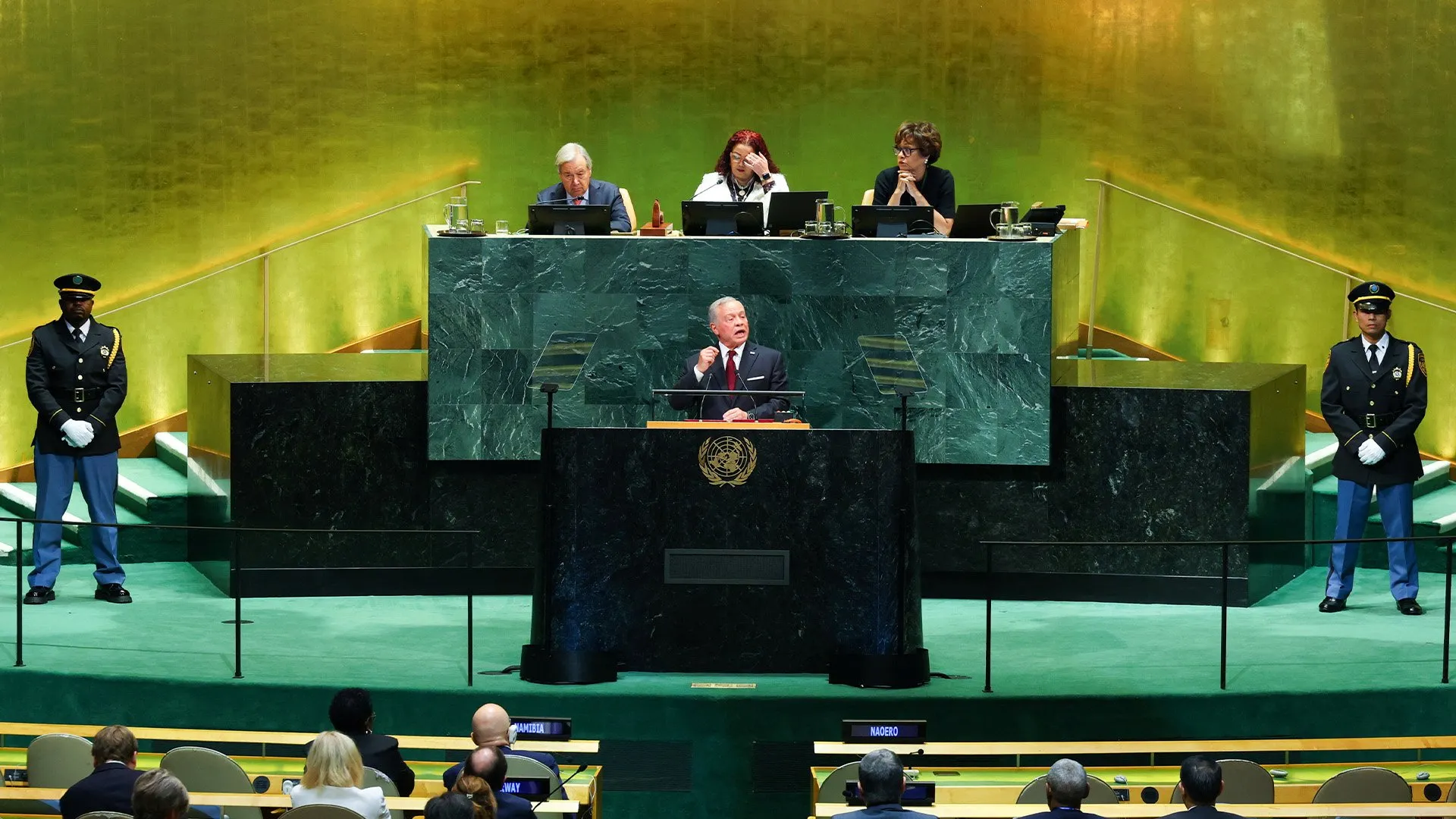
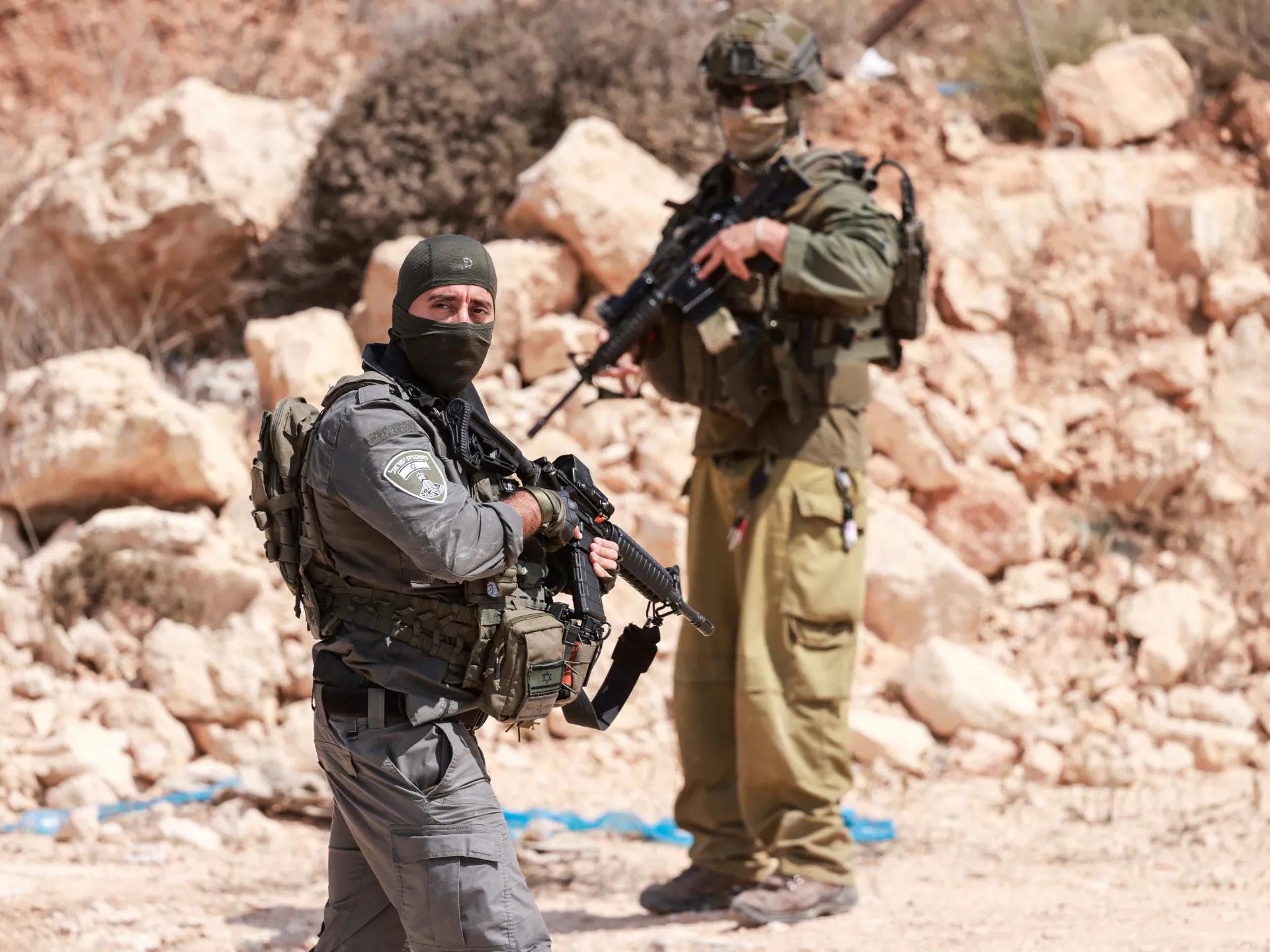
Jordan’s King Abdullah II decried Israeli settler incursions in the occupied West Bank as a strategy of ‘forced displacement’ that should be considered a war crime.
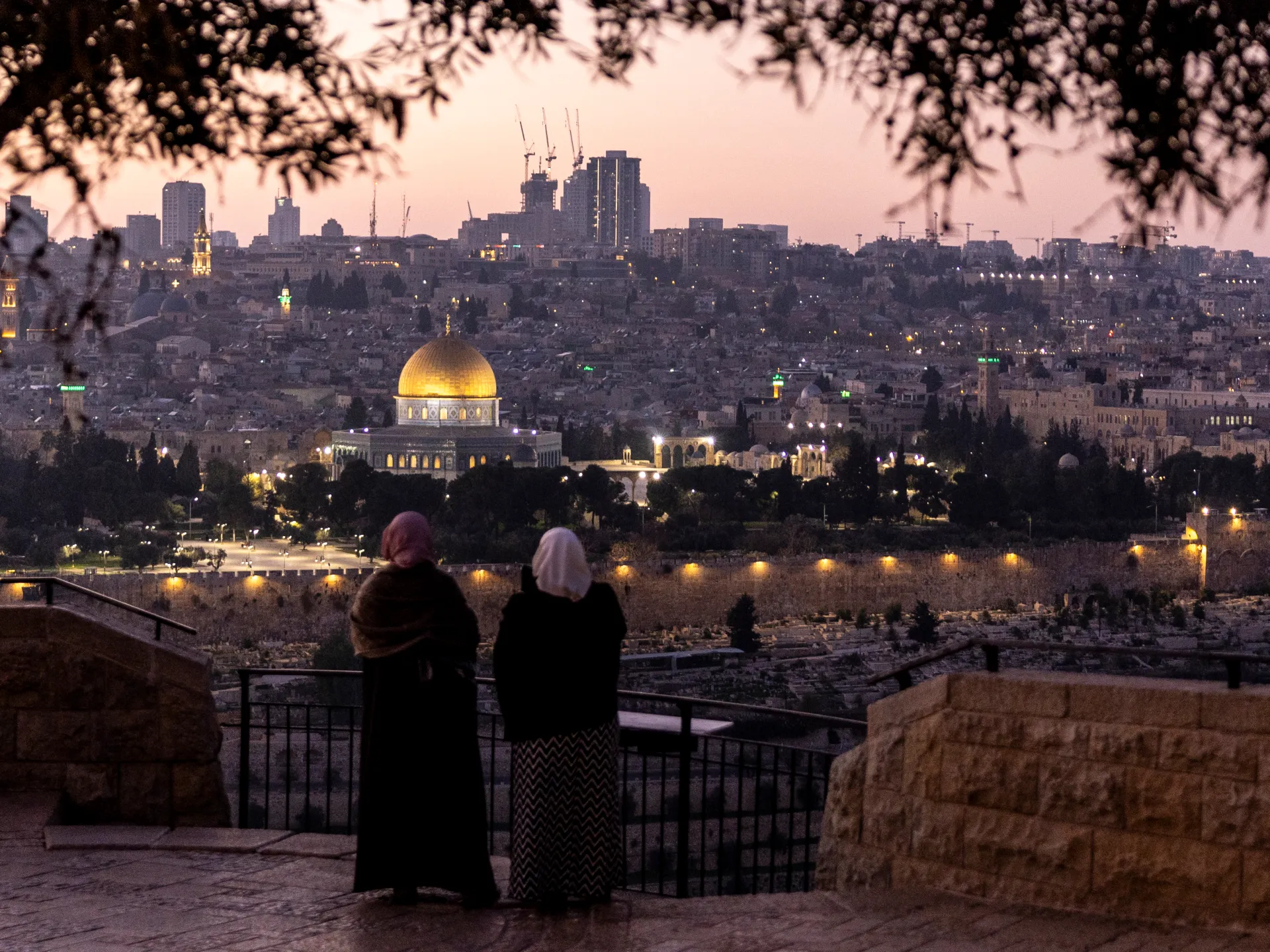
Israeli settlers have stormed the Al-Aqsa Mosque compound in occupied East Jerusalem again and performed Jewish prayers in the courtyard.
The weekend witnessed a series of provocative acts by Israeli politicians and settlers in the build-up to Yom Kippur, the holiest day in the Jewish calendar, and next month’s Israeli election.
Recommended Stories
list of 4 itemsend of list
On Thursday, National Security Minister Itamar Ben-Gvir and others again stormed the Al-Aqsa Mosque compound for Yom Kippur. Israeli Prime Minister Benjamin Netanyahu also visited a labyrinth of tunnels below occupied East Jerusalem on Saturday.
Early on Sunday morning, Netanyahu released videos and photographs on his official Instagram account documenting his participation in Jewish “Selichot” prayers at the Western Wall, known as the al-Buraq Wall to Muslims.
The tunnels lie underneath occupied East Jerusalem’s bustling Old City and the Al-Aqsa Mosque compound, making the incursions particularly sensitive for the occupied territory’s Palestinian population.
Translation: Happy New Year and a good final signature to all Israelis from the Western Wall.
Under the protection of security forces, Netanyahu, accompanied by several government ministers and thousands of Israeli settlers, made his way onto the plaza of the wall in occupied East Jerusalem on Saturday evening, ahead of Yom Kippur.
Footage shared by the prime minister showed him performing the rituals from behind bulletproof glass. In another video, Netanyahu and his wife, Sara, passed through one of the excavation tunnels running beneath the Western Wall while Jewish prayers took place.
“Well, we are in the tunnels at the al-Buraq Wall. It is moving to touch the rock of our existence. We are here very close to the Holy of Holies. We are here, and we will always remain here,” Netanyahu stated in the video.
Translation: Prime Minister Benjamin Netanyahu and his wife in prayer for the safety of Israeli soldiers tonight at the Western Wall.
Yom Kippur incursions
The prime minister’s subterranean visit unfolded alongside a wave of settler incursions into the holy site above ground.
On its official Facebook page, the Palestinian Jerusalem governorate reported that about 570 settlers had stormed the courtyards of the Al-Aqsa Mosque by 10am local time on Sunday. According to the governorate, the settlers performed Talmudic rituals and “epic prostrations” to mark Yom Kippur.
The Palestinian group Hamas strongly condemned the incursions in a press statement published on its official Telegram channel.
“The storming by Benjamin Netanyahu, against whom an arrest warrant has been issued by the International Criminal Court, of the tunnels and excavations beneath the blessed Al-Aqsa Mosque and the al-Buraq Wall, and the provocative statements and false claims accompanying it about the so-called Holy of Holies, represents a blatant attack on the identity of the Al-Aqsa Mosque and its status, and a provocation to the feelings of our Palestinian people and the Arab and Islamic nations,” the statement in Arabic said.
The group emphasised Al-Aqsa’s exclusively Islamic heritage and rejected Israel’s ongoing excavations under the holy site.
Religious or political?
Israel has been digging beneath occupied East Jerusalem for years, a move that has been condemned by archaeologists and the United Nations. The works are believed to be intended to find proof of the rampart wall of the Second Temple, but experts say there is no proof of this claim. Others view these measures as an attempt by Israel to cement its rule over occupied Palestinian land.
In 2022, Netanyahu led a cabinet meeting in the labyrinth, describing Israel as the “landlords of Jerusalem”. East Jerusalem has been earmarked as the capital of a future Palestinian state by Palestinians.
The timing of Saturday’s visit not only comes on the eve of Yom Kippur but also at a time of huge political significance for the Israeli leader, who trails in the polls against his rival Gadi Eisenkot, leader of the Yashar party.
Ahmed al-Hila, a political analyst specialising in Middle East affairs and the Arab-Israeli conflict, told Al Jazeera that Netanyahu is using religious symbolism to try to secure his political survival ahead of October’s general election.
“Benjamin Netanyahu wanted, through this visit … creating this symbolism for himself as a leader spearheading the right wing to consolidate the Israeli political and religious narrative in the Al-Aqsa Mosque, to attempt to gather the largest possible number of votes to serve as an electoral lever for him,” said al-Hila.
“As for the intense security mobilisation and Benjamin Netanyahu’s appearance behind a bulletproof glass shield [during a speech above ground], this is a direct indication that this city has not, up to this moment, submitted to Israeli security control, despite the repeated and frequent talk that Jerusalem is ‘the capital of the State of Israel’.”
The visit could also be a message to the wider world, amid global criticism of the controversial illegal settlement project E1, which the Israeli government has issued tenders for, and which appears designed to sever East Jerusalem from the occupied West Bank.
“What further confirms this conclusion is that initiating the settlement project called E1 does not only isolate the northern West Bank from its south … but this settlement project completes the isolation of the city of Jerusalem from its Palestinian surroundings,” Al-Hila said. “Therefore, this visit with its political symbolism confirms the idea of Israeli sovereignty over the city of Jerusalem.”
Separate attacks struck central refugee camps as officials warned Gaza’s health sector faces total collapse.
Published On 19 Sep 202619 Sep 2026
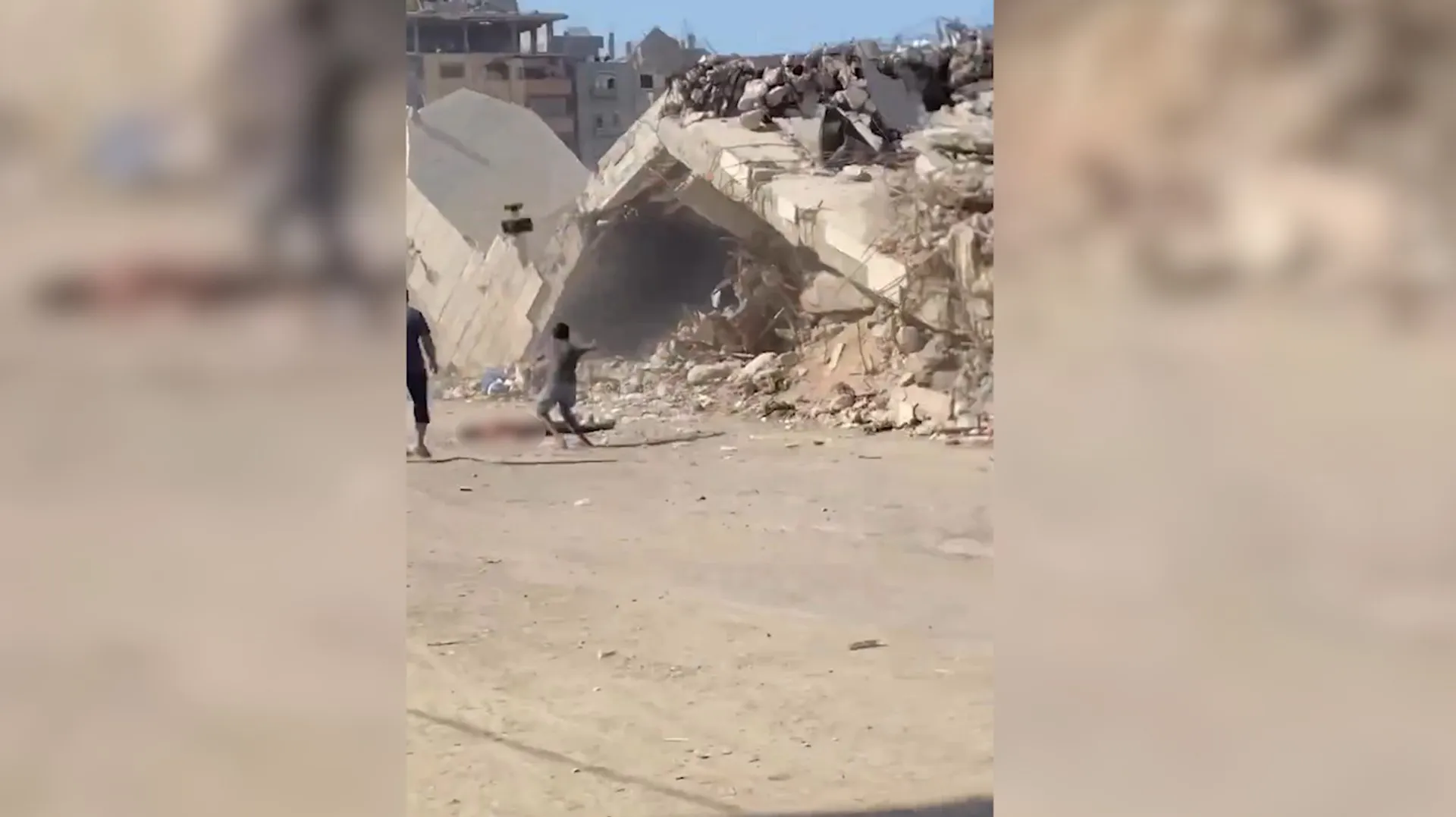
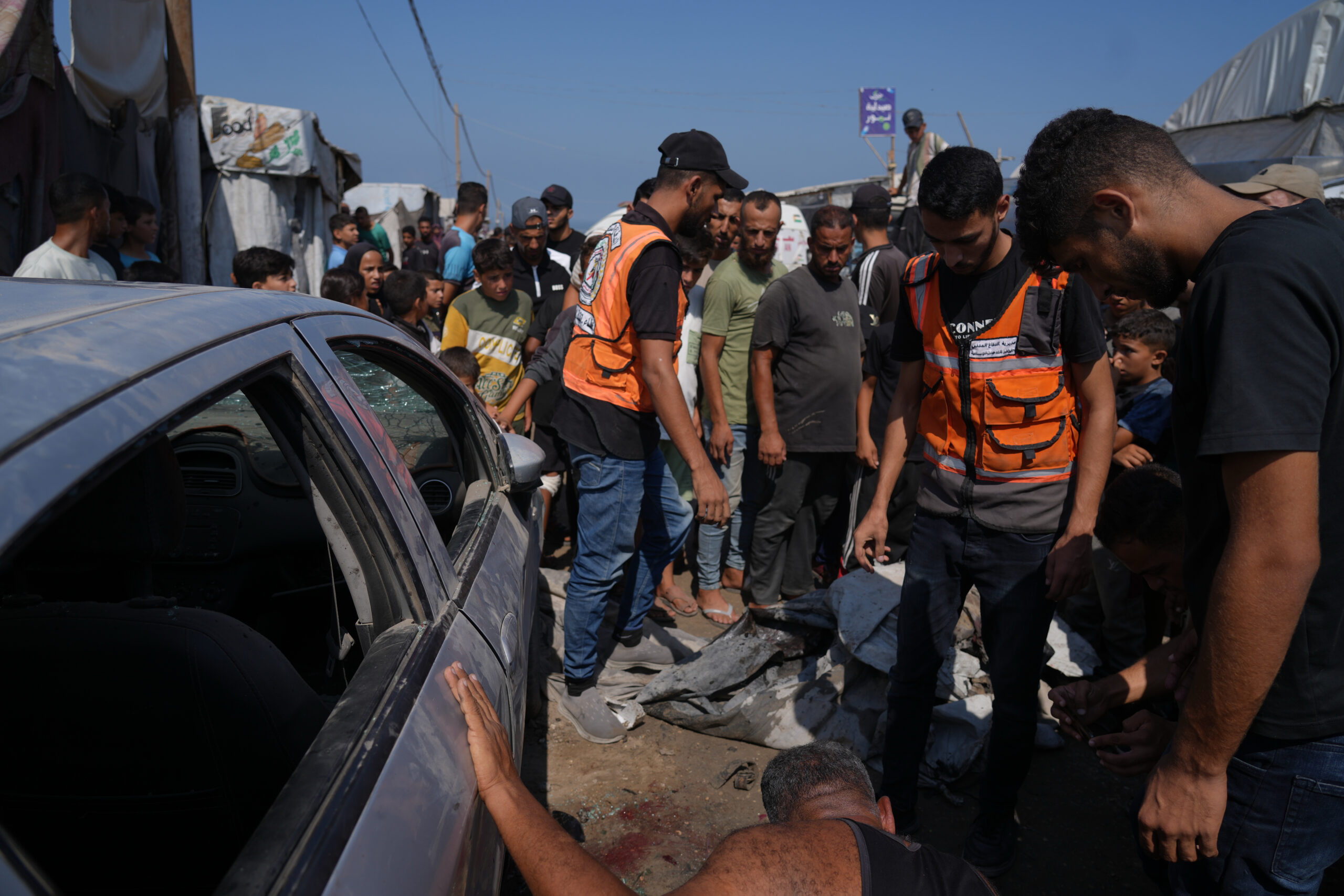
An Israeli strike on a motorcycle has killed one Palestinian and injured others, with one child in critical condition, reports the Palestinian Wafa news agency.
The air strike targeted the vehicle in the Sheikh Radwan neighbourhood, west of Gaza City, on Friday. Ongoing Israeli strikes on the besieged enclave have killed at least 1,381 people since the ceasefire was announced in October 2025.
Recommended Stories
list of 3 itemsend of list
Israel has killed at least 73,795 people and wounded 174,869 others since the start of its genocidal war in October 2023.
On Friday, the Israeli army also opened fire in the Nuseirat and al-Bureij refugee camps in the central Gaza Strip, reports Wafa. The attacks on tents sheltering displaced people have resulted in multiple injuries.
Earlier this week, an Israeli “double-tap” air strike killed a paramedic and a 15-year-old schoolboy in Gaza City. Israeli forces claimed they were targeting Hamas operatives.
Last month, UNICEF found that, on average, one child is killed a day by Israel.
Families are now confined to about a third of the enclave, sheltering among destroyed buildings, rubble and uncleared waste, the agency said.
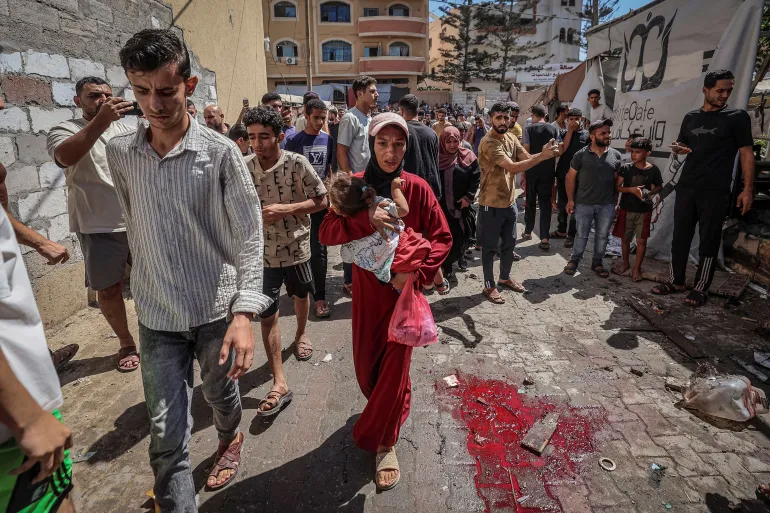
A Palestinian woman carries a girl past a blood stain on the ground after an Israeli drone strike on a cafe in al-Bureij camp, central Gaza Strip, on September 16, 2026 [File: AFP]
On Wednesday, a previously damaged building collapsed in Gaza City, killing at least 21 people, including 12 children. The Palestinian Civil Defence agency in Gaza struggled to recover bodies from under the rubble due to Israel’s severe restrictions on heavy equipment.
The Health Ministry warned on Wednesday that Gaza’s health system was on the verge of “total collapse” as Israel continues to limit the amount of medical aid and fuel permitted to enter the enclave.
Israeli politicians reacted to sanctions by states including the United Kingdom, France, and Canada on the country’s illegal settlements in the occupied West Bank with self-righteous anger. But what is the latest example of Israel’s international isolation brought on by its treatment of the Palestinian people has not been influential in swaying the electorate in the run-up to October’s elections, analysts tell Al Jazeera.
Responding to the UK Foreign Minister Ed Miliband’s accusation that Israelis were ethnically cleansing the occupied West Bank, Israel’s Gideon Saar accused his counterpart of spreading “outrageous lies” and attempting to interfere in the election through foreign pressure.
Recommended Stories
list of 4 itemsend of list
Israeli President Isaac Herzog also condemned the measures, branding them a “gross interference in the democratic elections” of Israel.
But, in reality, the majority of Jewish Israelis have supported their country’s genocidal war in Gaza and the occupation of the West Bank.
A poll from August, published as the death toll for Palestinians killed in the West Bank had already reached 76 this year, showed that more than half of Jewish Israelis supported retaining the illegal settlements as part of any future agreement on a Palestinian state, while nearly 40 percent supported annexing the territory in defiance of international law.
“People just don’t care that settlements are illegal,” Israeli political analyst Ori Goldberg said.
”Ed Miliband expressed a number of laudable sentiments when announcing the measures,” Goldberg said, referencing the UK foreign secretary’s references to his own Jewish heritage when announcing the cessation of trade with Israel’s illegal outposts. “But we’re at the stage where Israelis aren’t even interested in the truth so much as they are the sentiment.”
Little political impact
Israeli Prime Minister Benjamin Netanyahu goes into the elections at serious risk of losing, with many polls predicting that a coalition of parties opposed to him could win the majority in Israel’s parliament.
But it will not be issues like the settlement-related sanctions that will lose him votes, analysts said.
Public backing for the “government and opposition blocs are pretty hardened, and nobody is going to switch from one side to the other over sanctions arising from [the settlements],” Michael Koplow, chief policy officer at the Israeli Policy Forum, said. He added that the sanctions were unlikely to weigh as heavily with the electorate as “this government’s record and the related feelings people have about Netanyahu”.
“When people were asked what would determine their vote, security came first,” Israeli sociologist Yehouda Shenhav-Shahrabani said.
“I think there are several mechanisms operating simultaneously,” he added.
First, he said, is the normalisation of the settlements. In Israeli public discourse, the occupied West Bank is increasingly referred to by the biblical name “Judea and Samaria” – a shift he said was becoming institutionalised.
“Second, external sanctions don’t necessarily translate into domestic political costs,” Shenhav-Shahrabani said. “And perhaps most importantly, politically foreign pressure can be absorbed into an existing Israeli narrative [of anti-Semitism] rather than [changing how the issue itself is understood].”
No criticism of the voters
None of Israel’s most prominent politicians has criticised the government for its support of the settlements in defiance of international condemnation. Yair Lapid, a former prime minister and one of Netanyahu’s leading opponents, has, instead, focused his ire on the countries condemning Israel. “Imposing boycotts and sanctions on Israel is a grave mistake,” he said. “This is a wrong and dangerous policy, at the wrong time and for the wrong reasons.”
Another of Netanyahu’s principal rivals, Gadi Eisenkot – whose Yashar Party manifesto does not mention either the West Bank or Gaza – has declined to speak on the sanctions directly. Netanyahu has also yet to comment on the sanctions publicly, despite his Likud party having championed settlement expansion for decades.
“The sanctions haven’t particularly hurt Netanyahu, at least not as far as we can see in terms of direct influence on … polling,” said Dahlia Scheindlin, a pollster and public opinion researcher based in Tel Aviv.
Instead, the focus has been on other elements of an eventful electoral cycle, including the emergence of new challengers to Netanyahu on the right.
“We aren’t seeing any real backlash from the sanctions,” Scheindlin said. “Instead, it’s just getting filtered through what people already think of him – his critics dislike him even more, and his supporters basically say, ‘Well, the world hates us no matter what.’”
Israeli prime minister pledges to advance two bills aimed at addressing the ‘immense damage’ done to Israeli soldiers.
Published On 17 Sep 202617 Sep 2026
Israeli Prime Minister Benjamin Netanyahu has pledged to pass a law that would revoke the citizenship of anyone who defames Israel’s soldiers, including the directors of NAZA, a documentary about Israeli soldiers’ killings of civilians in Gaza.
Directed by Israeli journalists Yuval Abraham and Rachel Szor, NAZA documents allegations that mass civilian deaths were built into Israel’s target decisions in its genocidal war against Palestinians in Gaza – something Netanyahu and the army reject.
Recommended Stories
list of 4 itemsend of list
The film won the Special Jury Prize at the Venice Film Festival last week. During his acceptance speech, Abraham said “our country is doing these crimes” and highlighted that Israel is systematically and deliberately targeting Palestinians in Gaza.
“NAZA” takes its title from an Israeli military term for expected “collateral casualties” and is built around anonymous interviews with intelligence officers and soldiers.
But it has also played into the charged domestic political atmosphere before Israel’s October 27 election, as public opinion polls suggest Netanyahu’s right-wing coalition could fall short of a majority in parliament.
On Tuesday, Netanyahu accused several of his election rivals of failing to take a tough stand against the documentary, claiming this made them unfit for office.
On Wednesday, he pledged to advance two bills that he said would address the “immense damage” done to Israeli soldiers in the film.
“The first [order]: To revoke the citizenship of anyone who defames [Israeli] soldiers, and the second: To hit them in their pockets and increase the statutory damages for defamation they can be sued for by 20 times,” Netanyahu said in a social media video. “We will hit them both in their pockets and in their citizenship, as their place is not with us.”
Netanyahu cited three examples in proposing the bills: “The recent film NAZA which portrayed [Israeli] officers and soldiers as war criminals”, 2025 remarks by left-wing ex-general-turned-politician Yair Golan that “a sane country does not kill children as a hobby”, and a military legal officer’s 2024 leak of a video showing soldiers abusing a Gaza detainee.
In 2022, Israel’s Supreme Court passed a law that permits stripping citizenship from Israelis who carry out actions that constitute a breach of trust against the state. Any new legislation would likely face similar court challenges.
More than 73,000 Palestinians, most of them civilians, have been killed in Israel’s genocidal war on Gaza since October 2023, according to health authorities.
A 15-year-old boy has been killed in an apparent Israeli double-tap strike as he rushed to help a paramedic wounded in an attack moments before. Israel has killed around one child per day in Gaza since the 2025 ‘ceasefire’.
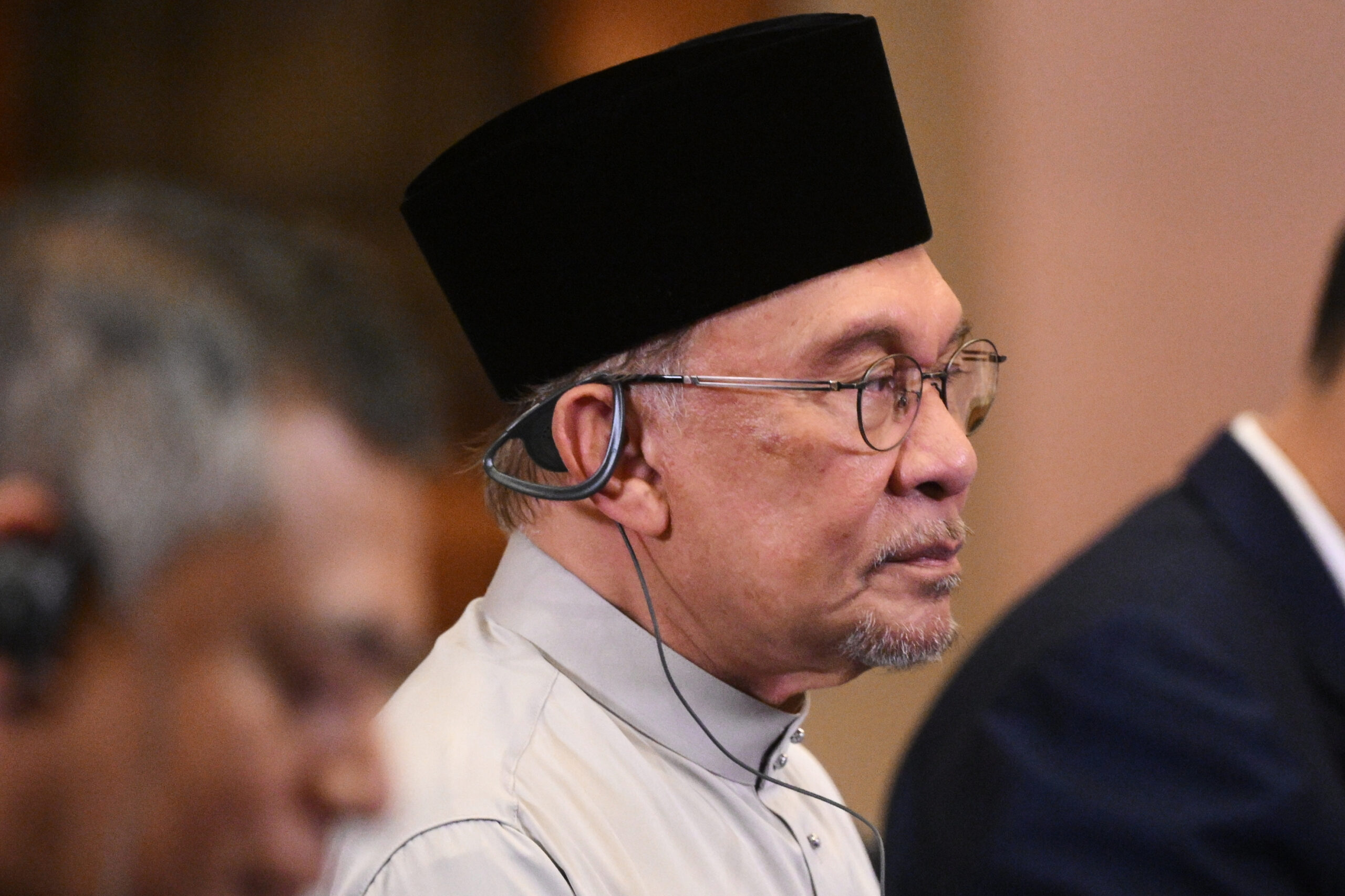
LONDON: Prime Minister Anwar Ibrahim vowed on Tuesday that shipments to Israel’s military would not be allowed to pass through Malaysia after cargo containers heading there were seized.
His comments came after Bloomberg reported that Malaysian authorities had halted all shipments heading to Israel from one of the country’s largest ports after three containers were stopped by authorities last month.
“We will not allow our country to be used as a conduit for any shipment that supports or contributes to Israel’s military capabilities and its atrocities against Palestinians and other innocent lives,” Ibrahim wrote on X.
“Any suspicious shipment will be subject to inspection and investigation in accordance with Malaysian law. Where a violation is established, decisive action will be taken.”
The three containers were stopped at Tanjung Pelepas Port on Aug. 19 and have been held ever since, the report said.
They were destined for Israel’s Ashdod port and contained products from China.
Malaysia has no diplomatic or trade relations with Israel, but cargo is allowed to transit through the country’s ports from one country to another.
Bloomberg reported that the seizure could be a shift in Malaysia’s approach to handling Israel-bound cargo.
Malaysia is a major shipping hub, located along some of the world’s busiest maritime routes through Asia.
The Malaysian Border Control Agency said the matter remains under investigation.
The seizure came just two weeks after a container destined for Israeli military technology company Elbit Systems from the Philippines was also stopped in Malaysia.
Malaysia has been one of the most prominent international critics of Israel and, in particular, the war on Gaza.
At the BRICS Summit in New Delhi at the weekend, Ibrahim condemned what he described as Israel’s “settler terrorism” in the occupied West Bank.
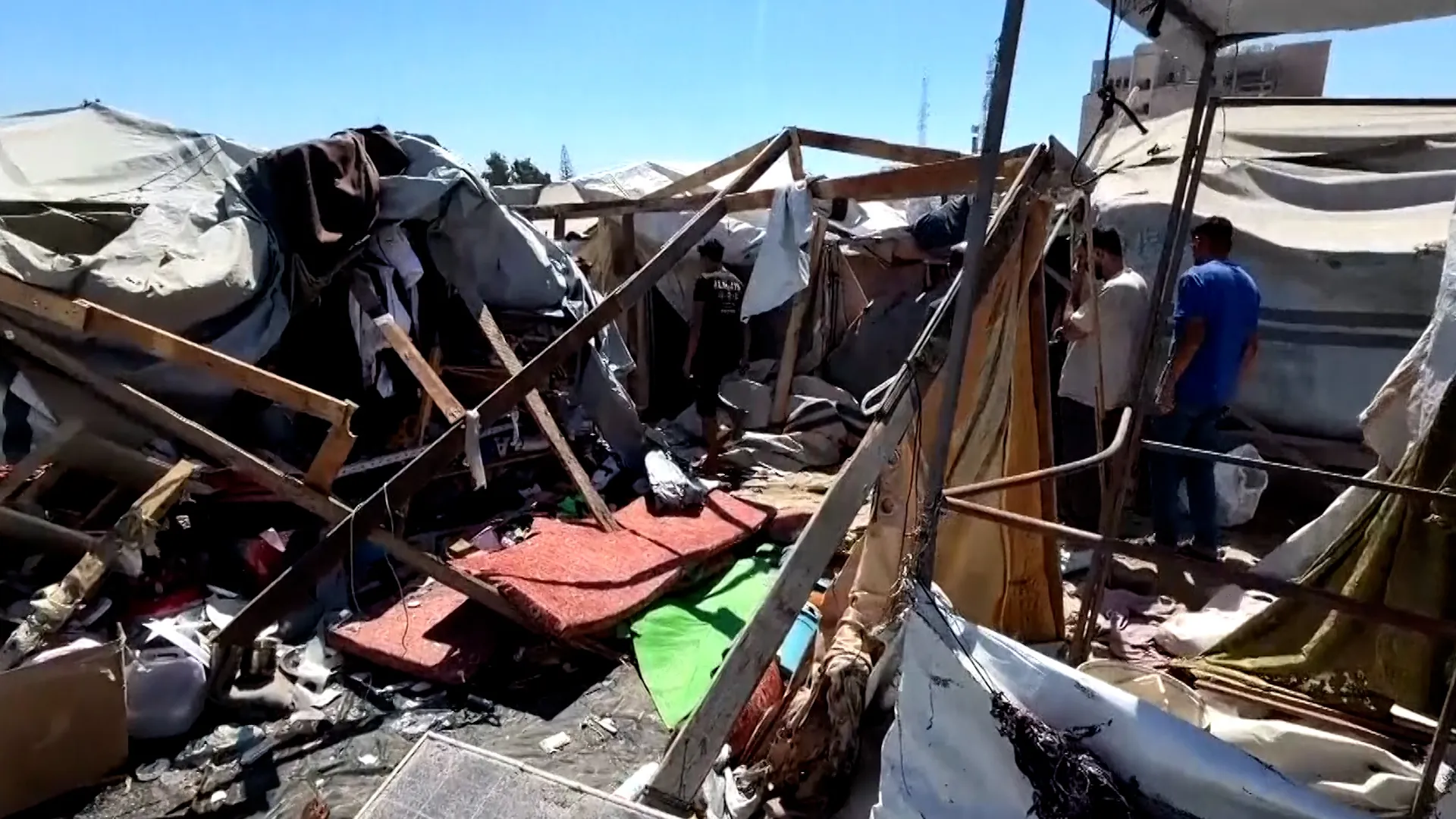
Israeli strikes across Gaza have killed at least one person and injured several. Residents say they were targeted outside tents in a Gaza City displacement camp.
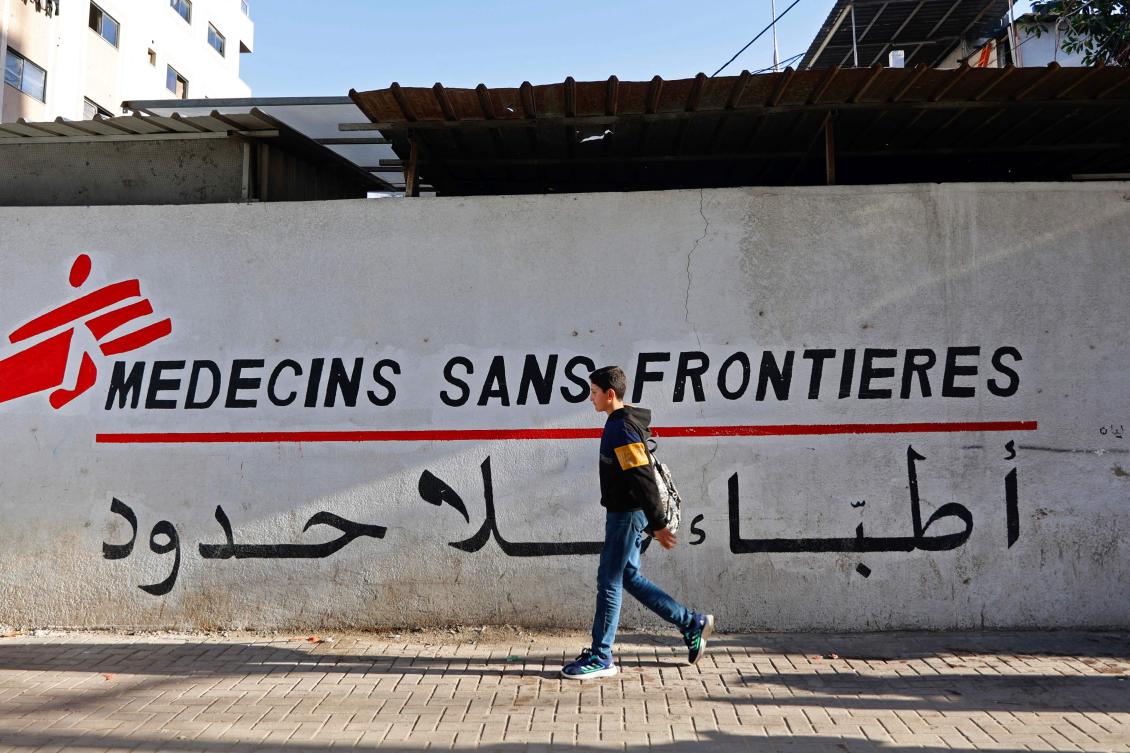
DUBAI: Medecins Sans Frontieres has rejected claims by Israeli authorities that it employed individuals with links to Hamas in Gaza, saying the allegations were only brought to the organization after the accused were killed.
“Medecins Sans Frontieres unequivocally refutes the allegations made by the Israeli authorities that we knowingly hired people with ‘ties to terrorism,’” MSF told Arab News in a statement.
“MSF would never knowingly employ anyone involved in military activities, which contradicts our core values and ethics. The MSF staff members whom Israel has alleged to have ‘ties to terrorism’ were only reported as such to our organization after they had been killed.”
On Friday, British newspaper The Telegraph revealed that Israeli lobby group UK Lawyers for Israel had written to British Home Secretary Shabana Mahmood, urging that the humanitarian organization be banned for its links to terrorism.
A report, produced by UKLFI, alleged links between MSF employees and militant groups, including Fadi Jihad Mohammed Al-Wadiya, an accused Palestinian Islamic Jihad member who was killed in Gaza City last year.
Al-Wadiya, a physiotherapist employed by MSF from 2018 to 2022 and again from Oct. 7, 2023, was killed in an Israeli airstrike in Gaza City on June 25, 2024. MSF condemned the strike at the time.
MSF initially rejected claims linking Al-Wadiya to the group. However, on Feb. 24 this year, Palestinian Islamic Jihad published a poster naming him as a “martyr commander” and identifying him as deputy head of its military manufacturing unit.
The charity later updated its post about Al-Wadiya, who remained listed as an employee on its website, to note that Palestinian Islamic Jihad had publicly stated on Feb. 24, 2026, that he had been a member of the group.
The report also accused Nasser Hamdi Abdelatif Al-Shalfouh, an MSF driver, of being a sniper for the Hamas Jabaliya battalion.
MSF questioned the reliability as well as the intention of Israeli authorities, who failed to consult with the organization prior to killing the supposed members.
“If Israeli authorities had reliable information about any MSF staff involvement in military activity, they never shared it with us before their deaths.”
The organization told Arab News that the latest allegations were part of a broader disinformation and smear campaign seeking to discredit it.
“For months, MSF has been the target of a disinformation campaign, and we strongly condemn the intentional spread of false allegations.”
Founded in 1971, MSF, also known as Doctors Without Borders, is an international medical humanitarian organization that provides emergency healthcare in conflict zones, disease outbreaks and other crises.
In Gaza, MSF’s teams provide surgical care, wound and burn treatment, maternal and pediatric services, physiotherapy, vaccinations, mental health support, water and sanitation assistance, and treatment for chronic diseases through hospitals, field hospitals and clinics.
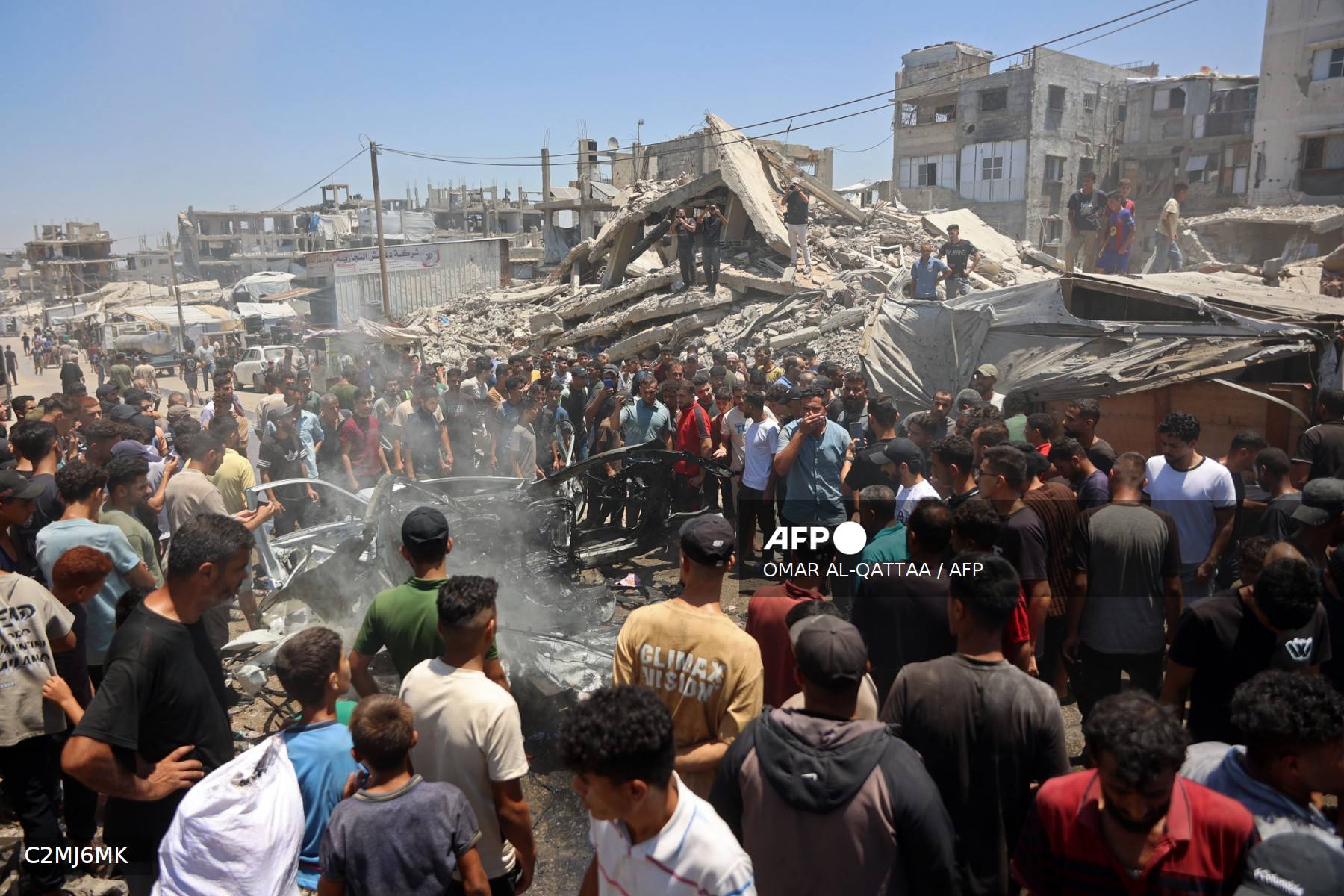
CAIRO: An Israeli airstrike on Sunday killed at least two Palestinians in a vehicle and wounded 13 others in the Gaza Strip, medical staff said.
The strike in the Tel Al-Hawa neighbourhood in western Gaza City, left the vehicle mangled, according to footage circulated on social media. Local medical staff told Reuters that they urged people to provide information that could help identify the two people who were killed and whose bodies were dismembered by the explosion.
The Israeli military said the strike targeted two Hamas militants, without giving further information.
An October 2025, U.S.-backed, ceasefire halted large-scale fighting in Gaza, but it has not ended Israeli strikes and there has been little progress on steps towards permanent peace. Hamas accuses Israel of violating the ceasefire and undermining efforts to implement U.S. President Donald Trump’s broader plan to end the Gaza conflict, which includes the Israeli withdrawal from the strip and the disarmament of Hamas. Israel says Hamas has been violating the deal.
More than 1,300 Palestinians, mostly civilians, have been killed in Gaza since the ceasefire took effect, according to the territory’s health officials, while the Israeli military says four Israeli soldiers have been killed.
Hamas does not usually disclose information about fatalities among its fighters.
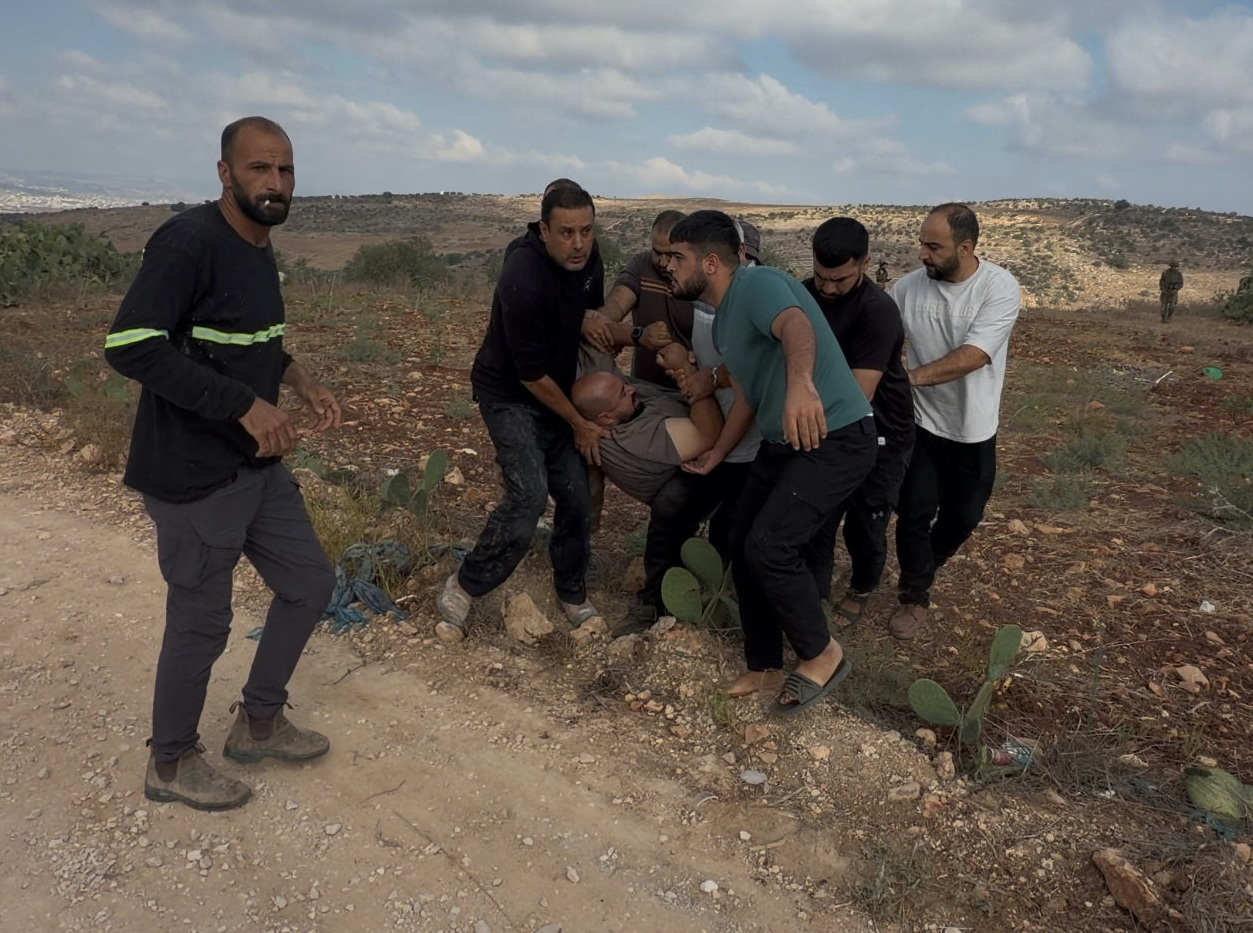
Israeli troops opened fire Saturday at a group of Palestinians who did not appear to be posing a threat in the occupied West Bank, wounding one man, according to video obtained by The Associated Press.
The video, shot by an eyewitness, showed the man falling to the ground near the Palestinian village of Faqqua, north of the West Bank.
At least 14 shots in total were fired during the duration of the video. They continued as several men rushed to move the injured man to safety before setting him down and tying a tourniquet around his leg in an apparent attempt to stop the bleeding.
Mahmoud Shahin, a resident of the village, said the Palestinians had rushed to the area after receiving reports that Israeli settlers had arrived there with a flock of sheep. He said Israeli soldiers then came and began firing in the air and toward the Palestinians.
He added that the wounded man was undergoing surgery at a hospital in Jenin.
Israel’s military said the video was authentic and confirmed its forces had fired toward the Palestinians, wounding one man, and said commanders would review the incident.
Under the ultranationalist government of Israeli Prime Minister Benjamin Netanyahu, settler violence in the West Bank has surged. The international community largely considers Israeli settlements to be illegal and obstacles to peace.
Over 700,000 Israelis now live in the West Bank and east Jerusalem, areas captured by Israel in the 1967 Mideast war and claimed by the Palestinians as parts of a future state.
On Tuesday morning, 12-year-old Sundus al-Hamamdeh left her home in the Masafer Yatta village of Khirbet al-Fakhit, and went to school.
It was the third day of the new school year in the occupied West Bank.
Recommended Stories
list of 3 itemsend of list
But when the sixth-grade student at al-Fakhit Secondary School returned from her classes, the house she had left behind was gone.
Israeli forces had carried out a large-scale demolition operation in Khirbet al-Fakhit, destroying homes, livestock shelters, water infrastructure, and solar-power installations.
For al-Hamamdeh, her house was more than four walls and a roof. It was her safe space, the place she came back to every day.
For children in Masafer Yatta, south of Hebron in the occupied West Bank, the spectre of demolition is always present.
Much of Masafer Yatta lies in Area C of the West Bank, where Israel has control over planning and construction. Israeli authorities justifies the demolition orders by saying that the structures were built without permits; Palestinians, backed by the United Nations, note that such permits are nearly impossible for them to obtain.
And it’s not just their homes that are under threat, but their schools.
On August 4, Israeli forces surrounded Shaab al-Butum school, according to Bassam Jabr, the director-general of education in Masafer Yatta.
An Israeli military bulldozer then demolished two rooms used by teachers and administrators, and a storage room.
The UN independently documented the demolition of the rooms, saying Israeli authorities had cited the lack of an Israeli-issued building permit.
Things could still get worse; the main school building remains under a demolition order.
Focus of attacks
Established in 2015, the school serves about 60 students from kindergarten through 11th grade. Its remote location makes transferring students to other schools particularly difficult, Jabr said.
Education officials have appealed to Israeli courts, and called on the United Nations and foreign governments to intervene.
But the schools remain under threat. Even as the Israeli military and settlers’ pogroms against Palestinians continue across the West Bank, Masafer Yatta is especially targeted.
The remote communities there have little ability to defend themselves and conditions are harsh. In addition, the Israeli military has designated large parts of the area a military firing zone, another justification for forcing out the Palestinian population.
Masafer Yatta’s schools are a central part of the effort to keep Palestinians here – ensuring that families do not have to travel far for their children to be educated. Palestinians argue that is why the schools have been particularly targeted.
Intisar Omar Abu Sabha, an administrative director at the Masafer Yatta Directorate of Education, says schools in the communities of Zif, ar-Rifaiyah, Umm Qussa, Umm al-Kheir, Jinba, Shaab al-Butum, Khirbet al-Daba, and al-Majaz are among those facing demolition orders.
In addition to the threats to their schools, students and teachers also have to navigate road closures, checkpoints, and the presence of settlers to reach their classrooms.
Abu Sabha said schools have also faced damage and settler incursions or harassment in and around their grounds. She describes a cycle in which children risk losing both their homes and their schools.
“Imagine a student who is at school, then returns home and finds their home demolished … and comes back the next day to find their school demolished,” she said.
Yasmeen Sallaq, a Palestinian lawyer, says the threat to the Masafer Yatta schools directly undermines children’s right to education.
But Sallaq says that Israeli restrictions on movement, military raids, arrests, displacement, and attacks affecting students and education workers make that right increasingly difficult to exercise.
“We face the demolition of schools every day, making the continuation of the educational process almost impossible,” Sallaq said.
It first received a demolition notice in 2016. Years of legal proceedings followed, but an appeal against demolition was dismissed this year, with efforts continuing to obtain an interim injunction.
The uncertainty has already taken a toll. Some girls are experiencing fear and anxiety, while others have transferred to different schools, al-Salameen said.
“The school is not just a place for education,” she said. “This school is the students’ only outlet.”
She fears the school’s demolition could push some girls out of education altogether if alternative schools are too far away or require them to travel along unsafe roads.
At Zif, 10th-grade student Rabiha Yousef Jibril described the school’s importance.
“I am growing up in this school, and my dreams are growing with me day by day,” Jibril said, adding that while students fear its demolition, they insist they will continue to attend.
“Even if they demolish the school, we will continue to study, even under the trees,” she said. “Even if they confiscate the books, we will keep them in our hearts, as well as our minds.”
BEIRUT: The Lebanese army and other security agencies reinforced their presence in the southern city of Nabatiyeh Thursday amid continued Israeli military escalation. An official Lebanese source told Arab News that Beirut had received no guarantees that the city would be spared an Israeli incursion following Israel’s takeover of the Ali Al-Taher ridge.
The Lebanese source said the enhanced army deployment was intended to “remove Israeli pretexts” for advancing into and occupying the city. “No foreign party, including the Americans, has provided Lebanon with guarantees that Israel will be restrained from pursuing its ambitions,” the source said.
Concerns are mounting over the city’s fate since Israel announced taking control of Ali Al-Taher, amid silence from Hezbollah, raising fears that Nabatiyeh could become vulnerable militarily. Nabatiyeh is approximately 12-15 km from the Israeli border.
Any slide toward widespread destruction would mark a major escalation in the conflict. Recent Israeli attacks have struck government and public facilities in Nabatiyeh, prompting President Joseph Aoun to condemn the targeting of a Finance Ministry building and the destruction of Ghandour Hospital.
In a statement, Lebanese Army Command stressed that the reinforcements did not constitute a new deployment, as army units were already present in Nabatiyeh and other areas not occupied by Israeli forces. It said the military had instead intensified its duties to reassure residents.
Interior Minister Ahmad Al-Hajjar said reinforcing the military and security presence was “an essential step to reassure residents,” adding that the state would continue strengthening its presence in the south to create conditions for people to return safely.
Prime Minister Nawaf Salam told Nabatiyeh Mayor Abbas Fakhruddin that supporting the resilience of residents was a priority. He said he was following up with security chiefs on increasing the presence of official state agencies alongside the army in Nabatiyeh. Lebanon is seeking to consolidate its authority inside the city and turn it into a broader model of state administration in areas exposed to Israeli military pressure.
The developments at Ali Al-Taher have made those efforts more urgent, with concerns that any area not quickly brought under effective state authority could, under the current balance of power, become the target of further Israeli military pressure.
The push coincided with a statement from the US Embassy on Thursday, as public calls grew in southern Lebanon against Hezbollah’s weapons. Residents of Tyre and Nabatiyeh have urged the Lebanese army to deploy and for weapons to be restricted exclusively to state institutions, while backing the government’s efforts to secure an Israeli withdrawal.
The US Embassy in Lebanon said Thursday that “the Lebanese people are making clearer every day their preference for Lebanese state institutions over Hezbollah’s weapons.” It added that “southern Lebanon does not belong to regional actors or militias.”
The embassy reaffirmed US support for the government’s declared objective of asserting sovereignty, with the Lebanese army responsible for enforcing it and decisions of war and peace remaining exclusively in the hands of the Lebanese state. The Lebanese army, meanwhile, issued a detailed statement outlining its activities since the signing of the US-sponsored framework agreement between Lebanon and Israel.
The statement came in response to what the army described as continued Israeli efforts to undermine existing arrangements, obstruct the army’s field operations and continue attacks on civilians that killed and wounded dozens of people a week ago. Lebanese Army Command said the escalation in Israeli strikes, alongside demolition and explosive operations in the south, “leaves no room for doubt regarding the aggressive intentions of the Israeli occupation.”
It said the Israeli escalation threatened implementation of the framework agreement between Lebanon and Israel, while continued attacks endangered existing understandings and arrangements and obstructed the army’s efforts to establish stability in the south. The army also warned that Israeli attacks and violations demonstrated an effort to undermine its credibility both inside Lebanon and before the international community.
The continuation and escalation of these attacks, alongside brutal demolition and explosive operations in the south, left no doubt about Israel’s aggressive intentions and contradicts international law, the statement added. Lebanese Army Command said specialist units had seized about 1,818 weapons and ammunition items during their operations.
The seized material included 10 rocket-launching platforms, seven rockets, seven drones, 51 projectiles, 10 aerial bombs and 1,560 pieces of light ammunition, in addition to large numbers of mines and explosive devices.
The army said units had also searched some homes in accordance with Lebanese law and with owner consent. It said residents had cooperated with the measures, particularly those related to removing unexploded ordnance and other dangers left behind by the war. Military units also opened roads totaling about 12 km in length as part of efforts to rehabilitate damaged areas, facilitate the movement of residents and troops and consolidate the army’s presence.
The measures included controlling movement in and out of operational areas, giving deployed units greater ability to monitor the area and prevent unauthorized armed activity. Lebanese Army Command said there had been no corresponding Israeli compliance.
According to army monitoring, Israel has committed about 7,700 violations since the framework agreement was signed on June 26. These include multiple attacks, as well as incidents in which Israeli forces opened fire near Lebanese army personnel and patrols.
GAZA: An Israeli strike in Gaza on Thursday killed a family including two children, Palestinian hospital and security sources said.
“The bodies of four members of the Ahmad family were recovered in pieces after an Israeli strike hit a house in the Beit Lahia Project area in the northern Gaza Strip,” an official at Al-Shifa hospital in Gaza City said, identifying the children as aged 12 and eight.
The Israeli military, contacted by AFP, said it was checking.
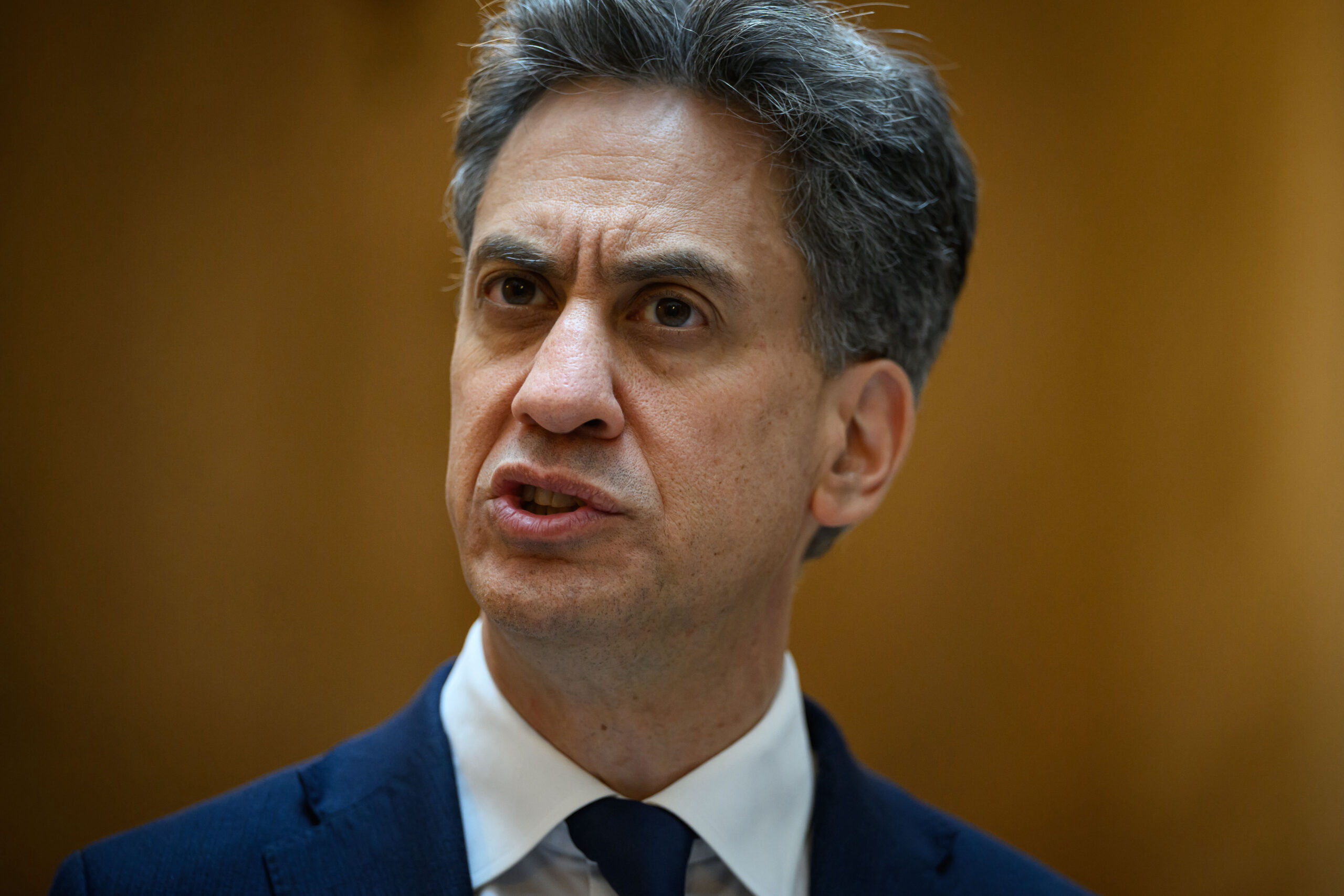
British Foreign Secretary Ed Miliband has said the United Kingdom will sanction illegal Israeli settlements in the occupied West Bank, describing the move as “overdue” and necessary to “salvage” a two-state solution to the Israeli-Palestinian conflict.
He made the comments on Tuesday as 11 nations joined the UK in supporting or considering curbs on trade in goods with settlements that are a barrier to a future Palestinian state.
Recommended Stories
list of 3 itemsend of list
But analysts say the step is far from enough to drive momentum for Palestinian statehood, threatened by ever-expanding settlements in the West Bank and an increasingly hostile Israeli political environment.
Tahani Mustafa, a lecturer in international relations at King’s College London, told Al Jazeera the latest anti-settlement measures are “modest” and unlikely to have a significant impact on ambitions for Palestinian statehood.
“After three decades of breakneck settlement expansion, Palestinian territory is only being held together by its sinews,” said Mustafa. “If what remains is still territorially viable as a state, it is only barely so. Much more decisive action is needed to salvage the two-state solution and a durable lasting solution to the conflict.”
Settlements dividing Palestinian territory
More than 30 years after the Oslo Accords set out a negotiating process aimed at resolving the Israeli-Palestinian conflict, the creation of a Palestinian state alongside Israel has remained the foundation of international efforts to forge peace.
But since the Oslo process began in 1993, the number of Israeli settlers in the West Bank, including occupied East Jerusalem, has ballooned from about 260,000 to more than 700,000, according to the Palestinian Bureau of Statistics, posing a glaring roadblock to the plan.
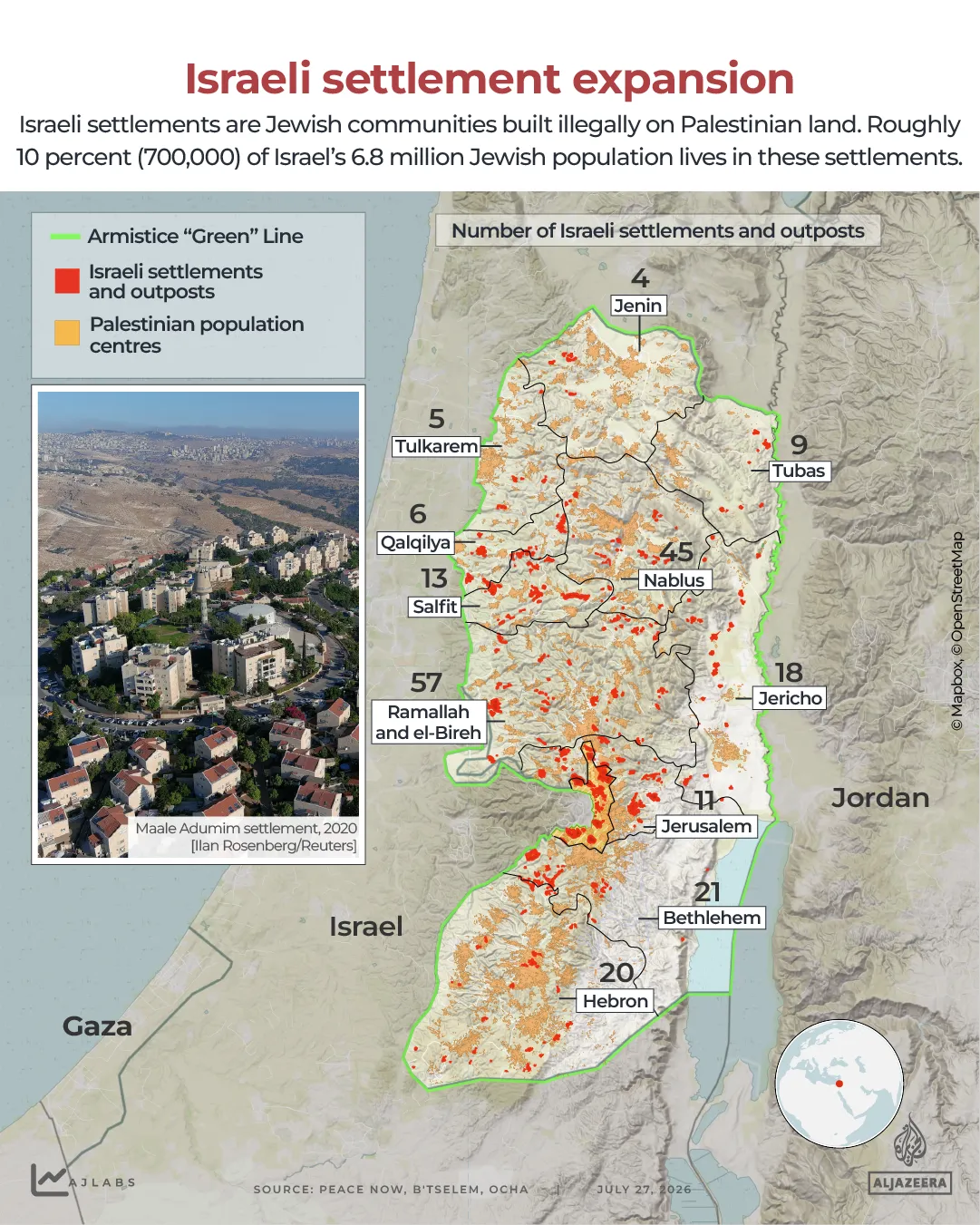
The challenge is not just the raw number of settlers, but their geographic spread. Today, many Israeli settlements are embedded deep inside West Bank areas that would be needed for a contiguous Palestinian state, including near major Palestinian urban centres such as Nablus, Salfit and Hebron.
Israel’s recent E1 settlement plan, which would build thousands of illegal housing units between the Israeli settlement of Maale Adumim and East Jerusalem, is a case in point. The plan would effectively split the West Bank in two and fully sever it from East Jerusalem, which Palestinians seek as their future capital.
(Al Jazeera)
Experts have long said Israel will need to dismantle some of its West Bank settlements, as it did in the Gaza Strip in 2005, to make room for a cohesive Palestinian state. But many Israeli settlements, especially those closer to Israel’s pre-war 1967 borders, would likely need to be addressed through land swaps.
“A complete withdrawal from some of the deeply embedded settlements is highly unlikely,” so land swaps would be the only way to create some form of Palestinian “territorial integrity”, Andreas Krieg, associate professor at King’s College London, told Al Jazeera.
However, such an arrangement – under which Israeli settlements close to the pre-1967 borders would become part of Israel and some “northern Arab-Israeli communities would be integrated into a Palestinian state” – would be “highly controversial” and face blowback from multiple communities, said Krieg.
He argued that Israelis would be certain to oppose any forced withdrawal from West Bank settlements, while some “Arab-Israelis may not want to live within a Palestinian state”.
Palestinian citizens of Israel make up approximately 21 percent of Israel’s overall population but are treated as second- or third-class citizens at the institutional level. According to rights groups, several dozen Israeli laws actively discriminate against Palestinian citizens across a number of issues, including education and housing.
Israeli ‘consensus’ against Palestinian state
Beyond the physical obstacle created by settlements is the Israeli political landscape, in which the idea of a Palestinian state has become toxic.
The government of Prime Minister Benjamin Netanyahu appears to be among the most hardline in Israel’s history on the issue. Netanyahu has emphatically ruled out the prospect of a Palestinian state, while his far-right Finance Minister Bezalel Smotrich, who also oversees Israeli settlements in the West Bank, has celebrated blocking Palestinian statehood as a badge of honour.
Israeli Finance Minister Bezalel Smotrich meets with families during the inauguration of the new Israeli outpost settlement of Mitzpe Makada near the Palestinian village of Dura in the West Bank, August 31 [Abir Sultan/EPA]
The views of Netanyahu’s most influential domestic critics do not deviate much. His top rival in elections slated for October, former military chief Gadi Eisenkot, has promised not to allow the establishment of a Palestinian state. And Naftali Bennett, a Netanyahu rival from the far right, fervently opposes Palestinian statehood.
As for the Israeli public, a June poll by the Council for a Secure America found that only 22 percent of Jewish Israelis favour a two-state solution, while 63 percent oppose it.
“The consensus within Israel, socially and politically, does not allow for any party to make any steps towards a Palestinian state,” said Krieg.
Meanwhile, Israel’s closest ally, the United States, is unlikely to apply significant pressure over Israel’s settlement policy so long as President Donald Trump remains in office for the next two and a half years, he added.
Krieg said a “best-case scenario” is for Israel’s next elected government to reverse some of the country’s recent settlement advances.
John Strawson, professor at the University of East London, said that any new Israeli government is “unlikely to support a Palestinian state”, but that a more moderate Israeli government may at least “stop the ethnic cleansing and other moves which are aimed at making that impossible”.
“Removing Netanyahu is the first step towards a two-state solution,” said Strawson.
Two states are the ‘only alternative to violence’
If the two-state model is still alive at all, it is largely due to pressure from the international community.
More than 150 countries, including the majority of European Union nations, have recognised Palestinian statehood. And several Arab states with whom Israel seeks better ties have indicated Palestinian statehood is a precondition for normalisation with Israel.
Krieg said Tuesday’s move by the UK and the 11 other mostly European nations is an “overdue step in the right direction”, but also “shows the laziness and lack of creativity on the part of the international community to actually think outside the box in terms of a two-state solution”.
Anders Persson, a political scientist specialising in the Israeli-Palestinian conflict, said that while the settlement sanctions are concerning to Israel, other previous anti-settlement measures, such as 2013 EU restrictions on funds for Israeli entities operating in occupied Palestinian territory, “changed little on the ground”.
He said the latest sanctions may be “too late” and “too limited … to save the two-state solution”.
Strawson said that while a two-state solution may “seem optimistic”, it is the only alternative to “permanent war and violence”.
LJUBLIJANA: A chill has set in between much of Europe and Israel recently over its treatment of Palestinians, but the Alpine nation of Slovenia is bucking the trend.
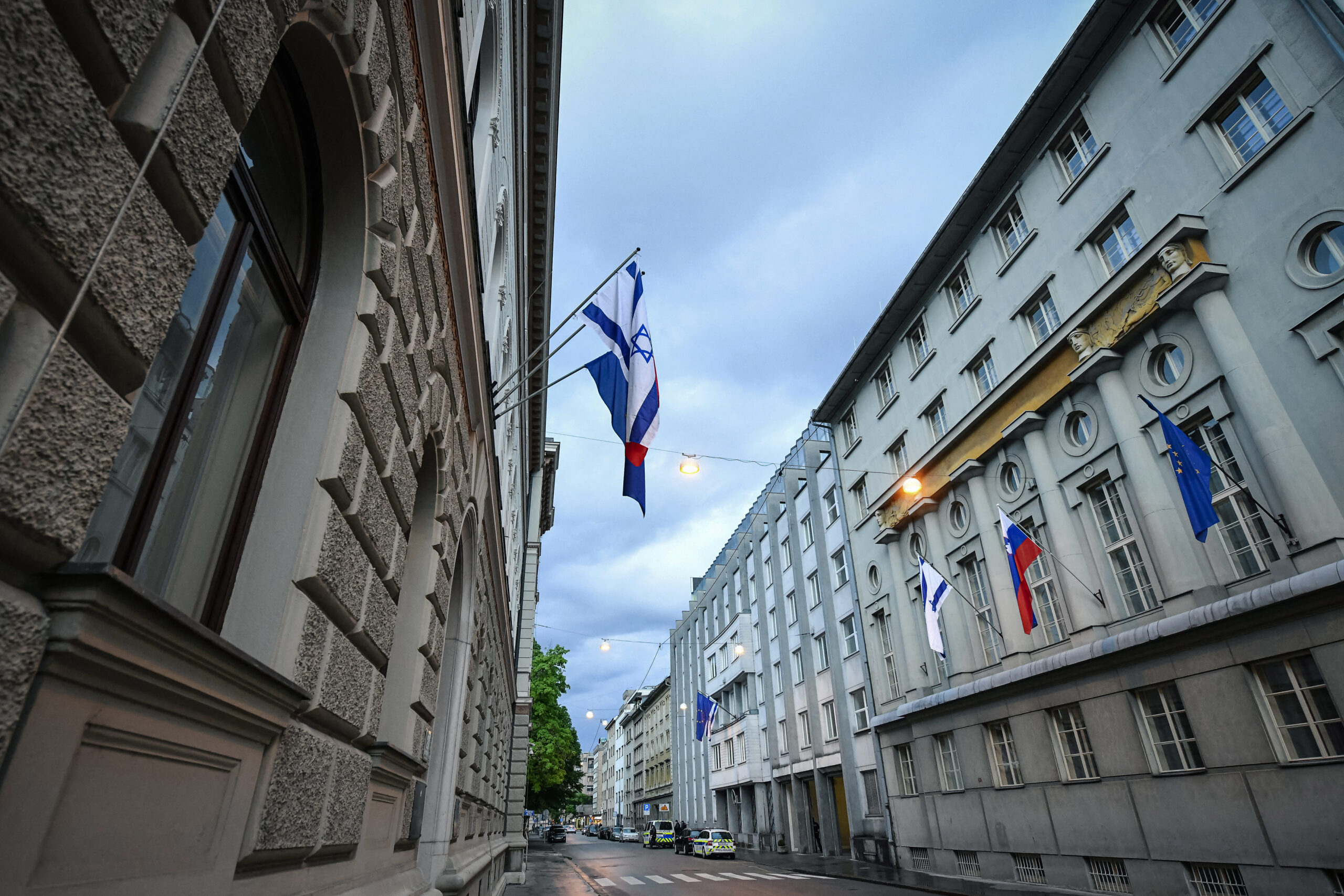
Under nationalist Prime Minister Janez Jansa Slovenia is launching a diplomatic reset of its relationship with Israel, which will send its foreign minister to open its first embassy in Ljubljana on Wednesday.
It is an about-face from the policies of the previous centre-left government, which had been one of the EU’s most critical voices on Israel’s military offensive in Gaza, which it described as “genocide”.
And it comes a day after the United Kingdom and other European countries provoked Israeli fury by banning imports from settlements in the occupied West Bank — the latest move by European governments grappling with growing international condemnation of Israeli policies towards Palestinians.
But in Slovenia, Jansa – who took office for the fourth time earlier this year, and who is often at loggerheads with the European Union – has instead received Israeli accolades for defying the EU over the West Bank settlements.
“Thank you PM Jansa for your courage and clarity amidst EU hypocrisy,” Prime Minister Benjamin Netanyahu posted on X late last month, after Slovenia vetoed an EU statement condemning the settlements.
Under Jansa, Slovenia has also reversed its own ban on imports from the settlements, lifted its arms embargo on Israel and scrapped entry bans on Netanyahu and two of his ministers.
In his first official visit to the country, Israel’s top diplomat Gideon Saar will inaugurate the embassy Wednesday, with his ministry describing Jansa as a “friend of Israel”.
Jansa has said his government was “only normalising Slovenia’s foreign policy and fixing the damage” caused by liberal ex-prime minister Robert Golob.
“To fulfil its priority of improving the well-being of Slovenians, the government will carry out pragmatic policies,” Jansa said in another post earlier.
‘Instrument’
Not all Slovenians are on board, however.
A poll conducted by the daily newspaper Delo in June found that 56 percent of Slovenians opposed closer ties with Israel, while 14 percent supported them.
Several rights groups have announced protests against the embassy’s inauguration, which has also drawn sharp criticism from the opposition.
Golob’s party has described the new embassy as “a return of the favour” for Israel’s alleged support of Jansa during the March election.
The last days of campaigning ahead of the March 22 vote were overshadowed by claims of foreign interference, with authorities probing whether Israeli company Black Cube was behind secretly recorded videos alleging graft in Golob’s government.
Jansa – who faced accusations his party was linked to the videos – has admitted to having met a Black Cube official, but denied being behind the videos.
Daily Dnevnik’s columnist Darijan Kosir in a weekend commentary said Jansa was serving “as the US-Israel’s Trojan horse” in the EU, taking the place of Viktor Orban, Hungary’s long-time premier who lost April elections.
Former president Danilo Turk told AFP that Slovenia has “become an instrument of Israeli policy”.
“This is a very uncomfortable situation,” said Turk, an International Law professor at Ljubljana University.
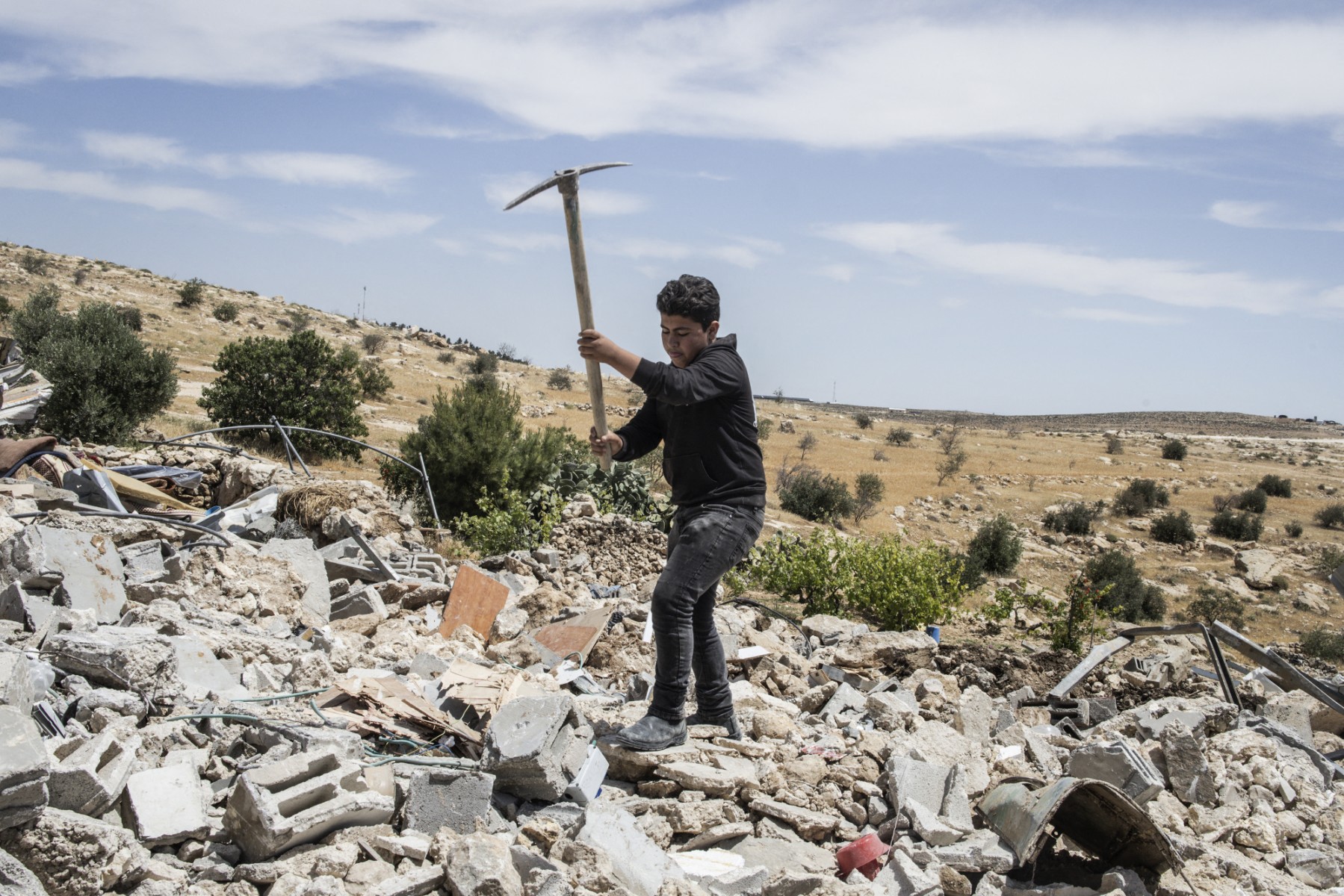
LONDON: Israeli forces demolished a home on Tuesday that belonged to a Palestinian family in the nomadic hamlet of Khirbet Khalla Al-Dabaa, located in Masafer Yatta, south of the occupied West Bank.
Fourteen members of the Mohammad Ali Dabbaba family lost their home when Israeli authorities demolished their 200-sq.-meter residence, constructed from tin and stone, according to the Palestine News Agency.
Forces also filled a crucial water well for the Bedouin community, destroyed electricity networks, damaged several water tanks, and uprooted 15 trees. Additionally, Israeli forces demolished a residential cave belonging to Abdullah Dabbaba, which housed six people.
Israeli authorities have issued demolition notices for 14 inhabited caves and several homes in Khirbet Khalla Al-Dabaa, the report added.
Masafer Yatta consists of nearly 15 Palestinian hamlets located in the southern West Bank; Khirbet Khalla Al-Dabaa is one of them. Israeli forces and settlers regularly invade the area in an effort to evict its total population of 1,150 residents, half of whom are children. Since the 1980s, the area has been designated a military zone by Israel.
In late August, armed Israeli settlers detained a 22-year-old British activist in the village of Umm Al-Kheir in Masafer Yatta, who was part of a “protective presence” initiative intended to support Palestinian residents. He was deported from Israel last week.
LONDON: The UK government is banning trade with Israeli settlements in the occupied West Bank, where it says “settler terrorists” are carrying out ethnic cleansing of Palestinians.
Foreign Secretary Ed Miliband says the UK will ban imports of all goods from the settlements, and some services including financing, construction, infrastructure, real estate and advertising for settlements.
In a toughening of its stance against Israel’s occupation, Miliband told lawmakers in the House of Commons that the government was acting to preserve the chance of a two-state solution.
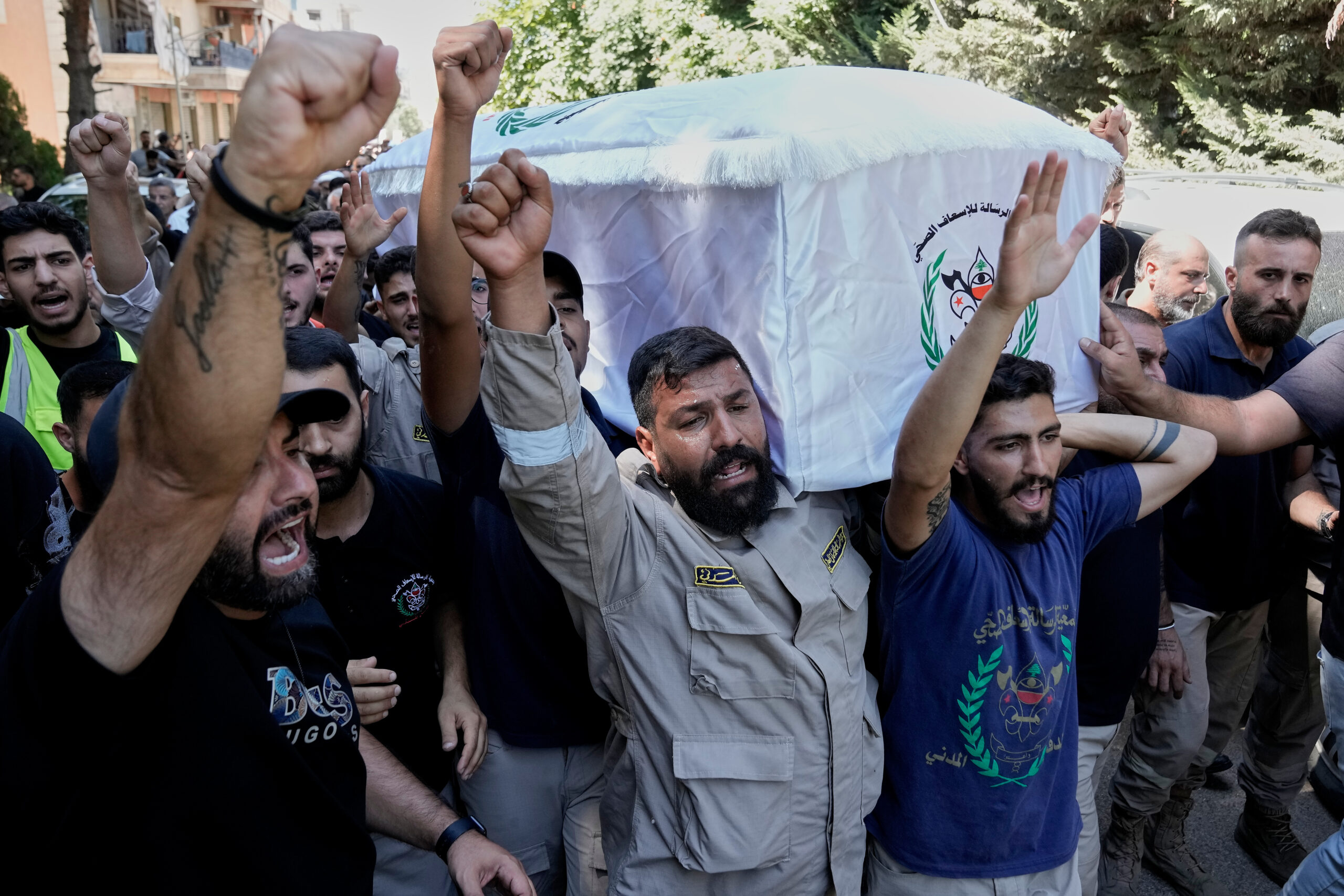
KFAR RUMMAN, Lebanon: Hundreds of people in south Lebanon gathered on Tuesday to mourn two Hezbollah members and their family, among them a three-month-old infant, killed by an Israeli strike a day prior.
The two brothers’ coffins, draped in the Iran-backed group’s yellow flag, portraits of them in camouflage fatigues fixed to the front, led the procession through the village battered by repeated conflict over nearly three years.
Another 10 coffins were covered in Lebanese flags, indicating that the rest of the Farhat family killed when Monday’s strike levelled their home were civilians.
Israel has launched airstrikes and a ground invasion in south Lebanon during the Middle East war, which erupted with joint US-Israeli attacks on Iran and spread to Lebanon after Hezbollah targeted Israel in support of its backer.
The fighting in Lebanon had calmed since a US-Iran memorandum of understanding and a framework agreement between Israel and Lebanon were both agreed in June.
But Beirut still reports recurring Israeli strikes, which it says have killed more than 4,300 people in total since March, and Israeli forces continue to occupy what it calls a “security zone” in the south.
A separate strike on Kfar Rumman on Monday killed an 18-year-old rescuer with the Risala Association, linked to the Hezbollah-allied Amal movement, the organisation said, who was mourned alongside the Farhat family on Tuesday.
“We have 13 killed including grandfather and grandmother, husbands and wives, and their children including a three-months old infant,” deputy mayor Nureddine Nureddine told AFP from the funeral.
“Someone put an end to these crimes,” Nureddine said, adding that the strike that killed the Farhat family “occurred at night, while they were sleeping”.
“There was no military activity, nothing.”
An AFP correspondent saw people marching to the cemetery, waving Hezbollah flags as women dressed in black wept, holding pictures of the dead as an Israeli drone flew overhead.
“Death to America, death to Israel,” mourners yelled.
– ‘A shred of honour’ –
The Israeli military said on Monday that it had struck Hezbollah “infrastructure sites” across southern Lebanon after the launch of two explosive drones towards its troops, as well as “several terrorists” it said were transferring weapons.
“The claim that several uninvolved individuals were harmed as a result of the strikes is being reviewed,” it said, adding that the military “will continue to operate to remove threats while remaining committed to the ceasefire agreement”.
Since Friday, at least 28 people have been killed in Israeli attacks on southern Lebanon, according to Lebanon’s health ministry.
Standing next to a picture of his own son, a Hezbollah member killed by Israel, Ghaleb Baalbaki slammed the Lebanese government for continuing direct talks with Israel.
“If they have even a shred of honour, the first thing they should do would be to stop the negotiations,” he said.
The lull in violence that began in June had allowed hundreds of thousands of displaced people to return home.
“Kfar Rumman was coming back to life, there were more than 1,400 people” in the town before the latest escalation, Nureddine said,
Far-right Israeli ministers began more forcefully advocating the wholesale removal of Palestinians in Gaza last week, offering timelines and government mechanisms to conduct illegal forced expulsions while displacement, demolitions and killings continued across Gaza and the occupied West Bank.
Israeli Defence Minister Israel Katz told a conference on Wednesday that removing Palestinians from Gaza is “the only solution”, saying Israel is prepared to do it “by sea, by air and by every way possible”, and that US President Donald Trump has merely “frozen” – not cancelled – his support for the idea.
Recommended Stories
list of 3 itemsend of list
Then, National Security Minister Itamar Ben-Gvir unveiled a seven-year plan, branded “Disengagement 710”, to remove Gaza’s roughly two million residents through what he called “voluntary emigration”.
Ben-Gvir added that, if re-elected, he would establish a Migration Ministry to expel Palestinians.
The US State Department said it “does not support any plan or proposal for the forced displacement, expulsion, or mandatory transfer of the population of Gaza” – but stopped short of directly condemning Katz or Ben-Gvir.
Gaza: Rising death toll amid airstrikes
Gaza’s death toll has continued climbing through near-daily strikes. An Israeli special forces raid near Gaza City’s American hospital on Tuesday killed at least four Palestinians, including two children and a woman, ending with the capture of Moin al-Arabeed, described by Israel as the head of Hamas’s internal security. A drone strike killed a child in Jabalia refugee camp on Wednesday, the same day an attack on a tent in Khan Younis killed one person.
On Thursday, two Palestinians, including a 13-year-old, were shot dead near Beit Lahia after Israel said they had crossed into an Israeli-controlled area, while a separate drone strike killed a man near a church compound in Gaza City’s Remal neighbourhood.
Strikes continued through the week’s end: On Sunday alone, Israel attacked near a school in Gaza City, wounding several, and a separate drone strike on a car near Gaza City’s Hamid intersection killed Youssef Akila and his young daughter, Wafaa.
Before dawn on Monday, at least five more Palestinians in Gaza were killed including three-year-old Saadi Ghalia, who was killed when an artillery shell struck a school in Deir el-Balah sheltering displaced people.
By Monday, the Palestinian Ministry of Health reported that 73,658 people have been killed and 174,622 wounded since October 2023, after 160 additional deaths were certified and added to the casualty figures. Of those, more than 1,340 have been killed since the October 2025 Israeli-Hamas “ceasefire”.
The recovery of bodies has slowly continued alongside the killings.
Families in northern Gaza held funerals on Sunday for around 100 people, including 60 children, whose remains were pulled from the rubble of Gaza City’s Zeitoun neighbourhood, many of them members of the extended Malaka family.
Gaza civil defence chief Raed al-Dahshan told Al Jazeera his teams could recover an estimated 8,000 more bodies still under the rubble within 90 days if given proper heavy equipment, but warned that without it, “this work will continue for years”. Between 10,000 and 14,000 people remain missing under Gaza’s rubble.
In the strip, humanitarian conditions continue to deteriorate without sufficient aid getting in. The World Health Organization warned that water contamination in Gaza has nearly tripled since January. The Palestinian Water Authority reported all five of Gaza’s wastewater plants have shut down entirely, with roughly 55,000 cubic metres of untreated sewage discharged daily.
West Bank: Demolitions and villages under siege
Meanwhile, Israeli forces carried out demolitions this week in the West Bank. In the community of Khirbet al-Tabban in Masafer Yatta, those demolitions were absolute – demolishing all 12 homes left 70 people, including 30 children, homeless.
“It’s wiping the village off the face of the earth,” council head Nidal Younis said. Residents, he added, intend to rebuild.
Israeli forces also destroyed four water wells and several greenhouses in nearby Beit Ummar in Hebron in the occupied West Bank, causing an estimated $60,000 in losses, and demolished a home in Nahalin in Bethlehem governorate.
Around Jenin, the bulldozing of hundreds of farmers’ trees continued along the Arraba-Yabad and Jenin-Nablus roads, part of six military orders issued in August to clear vegetation from across four Jenin-area villages, according to to the Palestinian Wafa news agency.
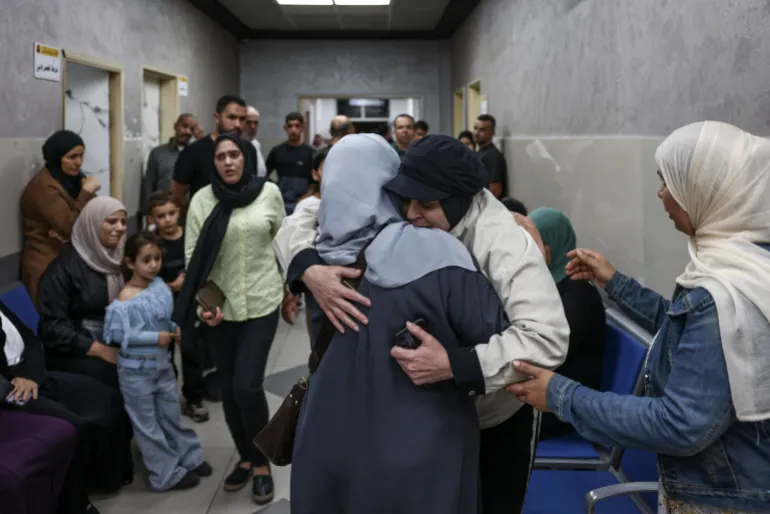
Relatives mourn two Palestinians killed in al-Mughayyir, east of Ramallah, following an Israeli settler attack and subsequent Israeli army raid, at the Ramallah government hospital in the occupied West Bank on September 2, 2026 [AFP]
In occupied East Jerusalem’s al-Bustan neighbourhood, community representative Fakhri Abu Diab said municipal bulldozers demolished a four-apartment building – the 60th demolition there since October 2023. On Monday morning another home was demolished in the East Jerusalem neighbourhood of Beit Hanina, according to Wafa, and authorities forced a Palestinian man in the city’s Jabal al-Mukaber area to demolish his home.
Despite all of the land and property destruction, last week’s most sustained violence centred on al-Mughayyir, northeast of Ramallah. Settlers and soldiers raided the village on the evening of Wednesday after accusing residents of stealing livestock.
Snipers took rooftop positions and opened fire as residents tried to stop settlers stealing sheep, killing Khalil Abu Alia, 16, and Mohammad Nassan, 19.
The Israeli military told the Times of Israel that troops were “securing the retrieval of livestock belonging to Israeli civilians” when a “violent riot” broke out and soldiers “fired at key instigators”. Eyewitnesses said Nasan was shot in the back.
In the days after, mourners were beaten and pepper-sprayed and their vehicle stolen, with an ambulance also attacked.
Wafa also reported late on Sunday that Israeli settlers killed Omar Tubasi, 20, and injured three people when they raided and opened fire on the village of Hajja, east of Qalqilya governorate in the occupied West Bank.
Elsewhere, settlers stormed Umm al-Khair in the South Hebron Hills on Friday, injuring a child. Soldiers who arrived declared the area a closed military zone that was enforced for Palestinians, not the settlers who remained.
In Turmus Ayya north of Ramallah, a settler wearing a T-shirt bearing the logo of the outlawed Kach movement was filmed atop a Palestinian home declaring “this land is Jewish” after US Ambassador Mike Huckabee visited the town and called settler violence “a form of terrorism”.
In Qusra, south of Nablus, a month-long siege of three homes continued, with the army initially blocking roughly 100 peace activists from delivering food and medicine. Settlers also stole water tanks and livestock in the Jordan Valley and sabotaged water lines serving a Bedouin encampment near Tayasir in the northern West Bank, according to reports and photos from local Palestinian activists.
In East Jerusalem’s Old City, Israeli police shot and killed Ibrahim al-Hendi, 33, from Beit Hanina, near Damascus Gate on Friday, claiming he had tried to stab an officer.
An Israeli air attack on Kfar Reman in southern Lebanon has killed at least 10 people, including an infant, with at least two others missing.
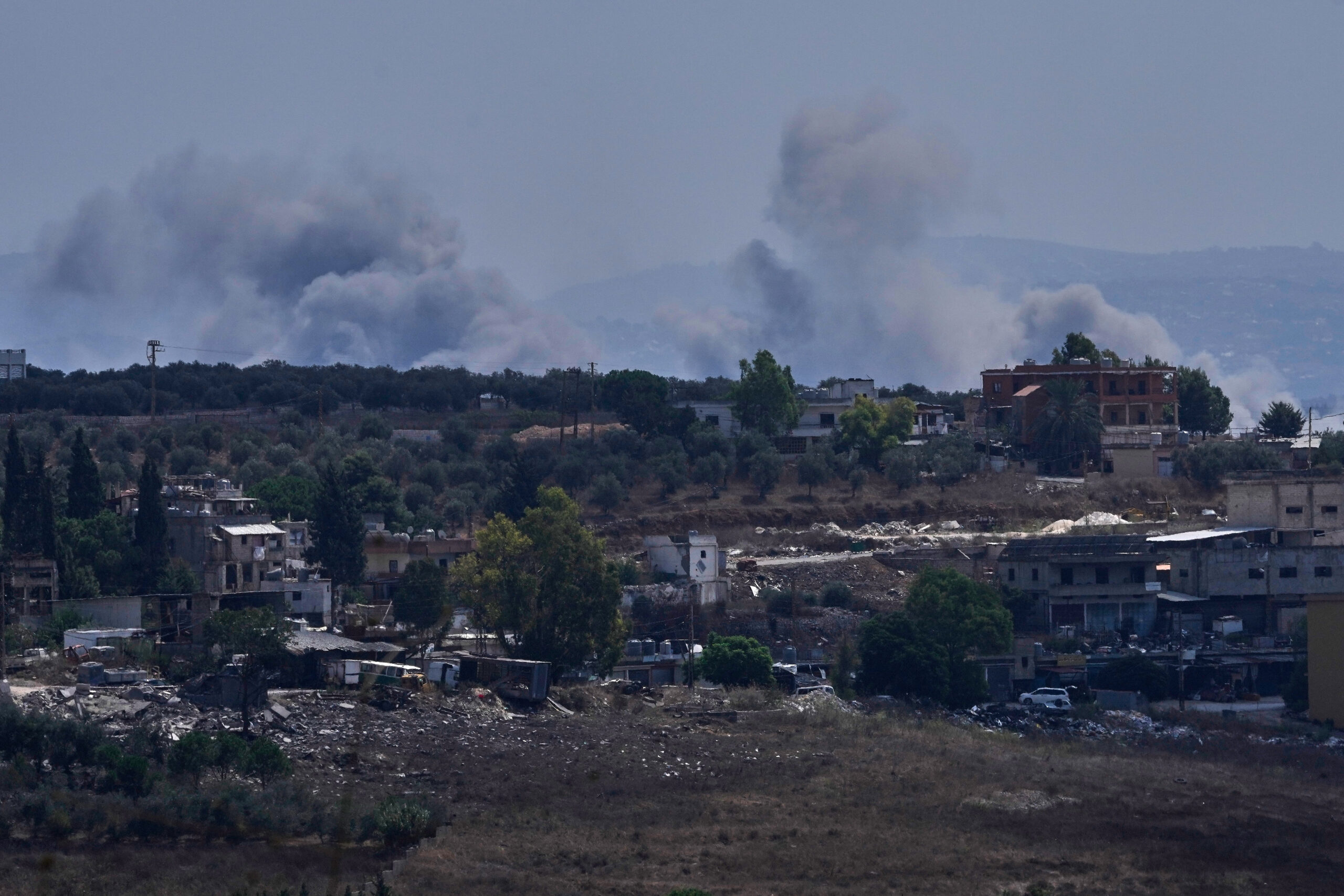
The attack early on Monday on the town in the Nabatieh district comes a day after at least seven people were killed and 20 others were wounded in Israeli air raids on the nearby town of Arab Salim.
Recommended Stories
list of 4 itemsend of list
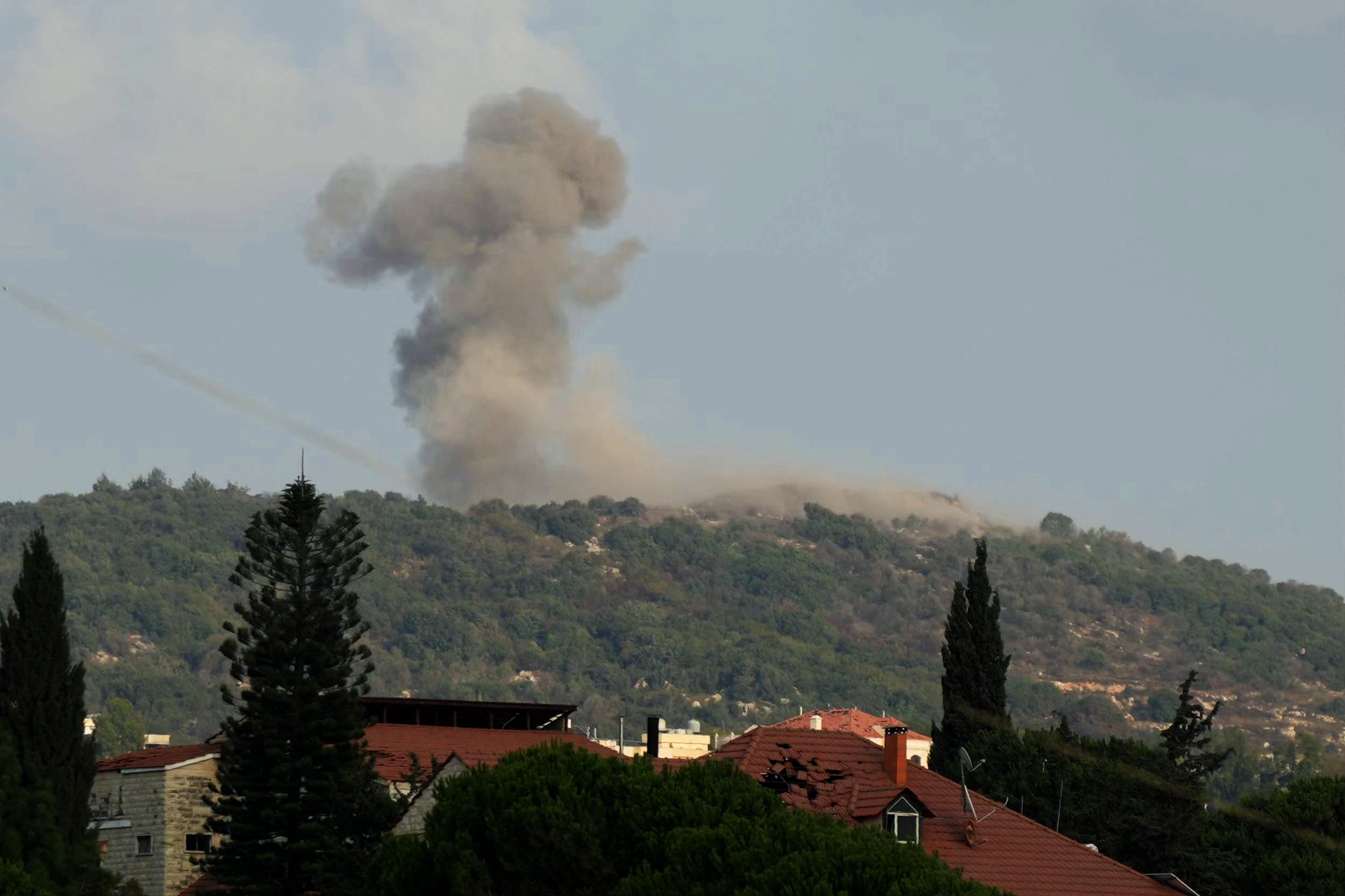
The Israeli military also struck a residential area in the town of Deir al-Zahrani in southern Lebanon overnight after it issued a forced evacuation order. The army says it targeted a building near a Hezbollah facility, which it claims was used to launch an explosive drone.
Attacks continued despite a United States-brokered ceasefire agreement between Israel and Lebanon in June.
Reporting from Kfar Reman on Monday after overnight strikes, Al Jazeera’s Zeina Khodr said “uncertainty and fear” are the prevailing feelings in southern Lebanon. “Among the dead are children, including a two-month-old infant,” she said.
“People just do not know what is next. There’s been a wave of Israeli attacks over the past 48 hours. Civilians are being killed. Residential homes are being destroyed,” she said, adding, “Recovery efforts by civil defence workers are continuing. They’ve been here throughout the night.”
ARAB SALIM: Lebanese President Joseph Aoun urged Washington and the international community to help stop Israeli attacks, which killed at least seven people on Sunday despite a truce and a framework deal aimed at halting the violence.
Israel said it had targeted Hezbollah operatives and sites in response to a drone attack a day earlier by the Iran-backed group on its troops in the vicinity of a strategic south Lebanon ridge.
It reported no casualties but accused Hezbollah of a “blatant violation.”
Israel this week said it had captured the Nabatieh-area Ali Al-Taher ridge, which it considers part of its self-declared “security zone” in south Lebanon.
Hezbollah, which has not claimed any attacks for weeks, has not commented on Israel’s declaration of control over the site.
Aoun said Sunday’s strikes, which damaged government premises and destroyed an out-of-service hospital, were “a dangerous escalation… reaching Lebanese state institutions” and health facilities.
He called on the international community — particularly the United States, which has sponsored direct Israel-Lebanon talks and a framework agreement between the sides in June — “to urgently act to stop these violations.”
Lebanon’s health ministry said two people were killed in strikes on south Lebanon’s Nabatieh Al-Fawqa, with two women also killed in nearby Arab Salim.
It said 20 other people including several women and three children were wounded there, as well as in the city of Nabatieh and town of Kfar Rumman.
The ministry later reported that a strike on a parking lot near Nabatieh killed three more people.
Hospital hit
The ministry said one of the strikes in Nabatieh Al-Fawqa “totally destroyed” the out-of-service Ghandour hospital, decrying “another grave violation of international humanitarian law.”
Israel’s army said it targeted Hezbollah operatives and infrastructure, including “weapons storage facilities and terrorist structures,” as well as “a Hezbollah command center that had been established inside a building previously used as a hospital.”
It had earlier issued its first evacuation notice in Lebanon in a month, warning residents near a building it called a Hezbollah facility in Arab Salim to leave ahead of an attack on the site.
It did not issue warnings for other areas where strikes were reported.
Lebanon’s state-run National News Agency (NNA) said that after the Israeli warning for Arab Salim, “enemy warplanes launched a strike on another house, destroying it” and killing the two women.
It said the Israeli military subsequently carried out a strike on the building threatened in the evacuation warning.
At the scene of the second strike, an AFP correspondent saw the ruins of a devastated villa, with large decorative columns laying on their side next to stairs littered with rubble.
Haidar Haidar, the brother of the building’s owner, told AFP that nobody had been living inside.
At the other site in Arab Salim where the two women were killed, a mattress, furniture and other items including a Hezbollah flag were strewn among the rubble, while neighboring buildings were also damaged.
‘Take action’
The NNA also reported a strike on a motorcycle in the Nabatieh area, and said that another in the city itself targeted a historical building and damaged offices belonging to finance and agriculture authorities.
An AFP correspondent there saw rubble and extensive damage to adjacent buildings, shops and vehicles, as heavy machinery cleared the road. Dust and debris covered chairs and desks in the regional ministry offices.
Nabatieh Mayor Abbas Fakhreddine said “the Lebanese government must take action… and at the least defend its institutions,” adding that it was the second time the official buildings had been damaged by strikes.
Lebanon was drawn into the wider Middle East war in March after Hezbollah attacked Israel in support of its backer Iran.
Israel responded with airstrikes and a ground invasion of Lebanon that Beirut says have killed more than 4,300 people.
Violence has decreased since a US-Iran memorandum of understanding on the broader regional conflict in June and the Israel-Lebanon framework agreement later that month.
Israeli forces are operating inside a self-declared “security zone” around 10 kilometers (six miles) deep inside Lebanon along the border.