Israel

Lebanon president says country is no longer a pawn amid Israel ceasefire | News

President Joseph Aoun promised to work to preserve Lebanon’s sovereignty and freedom.

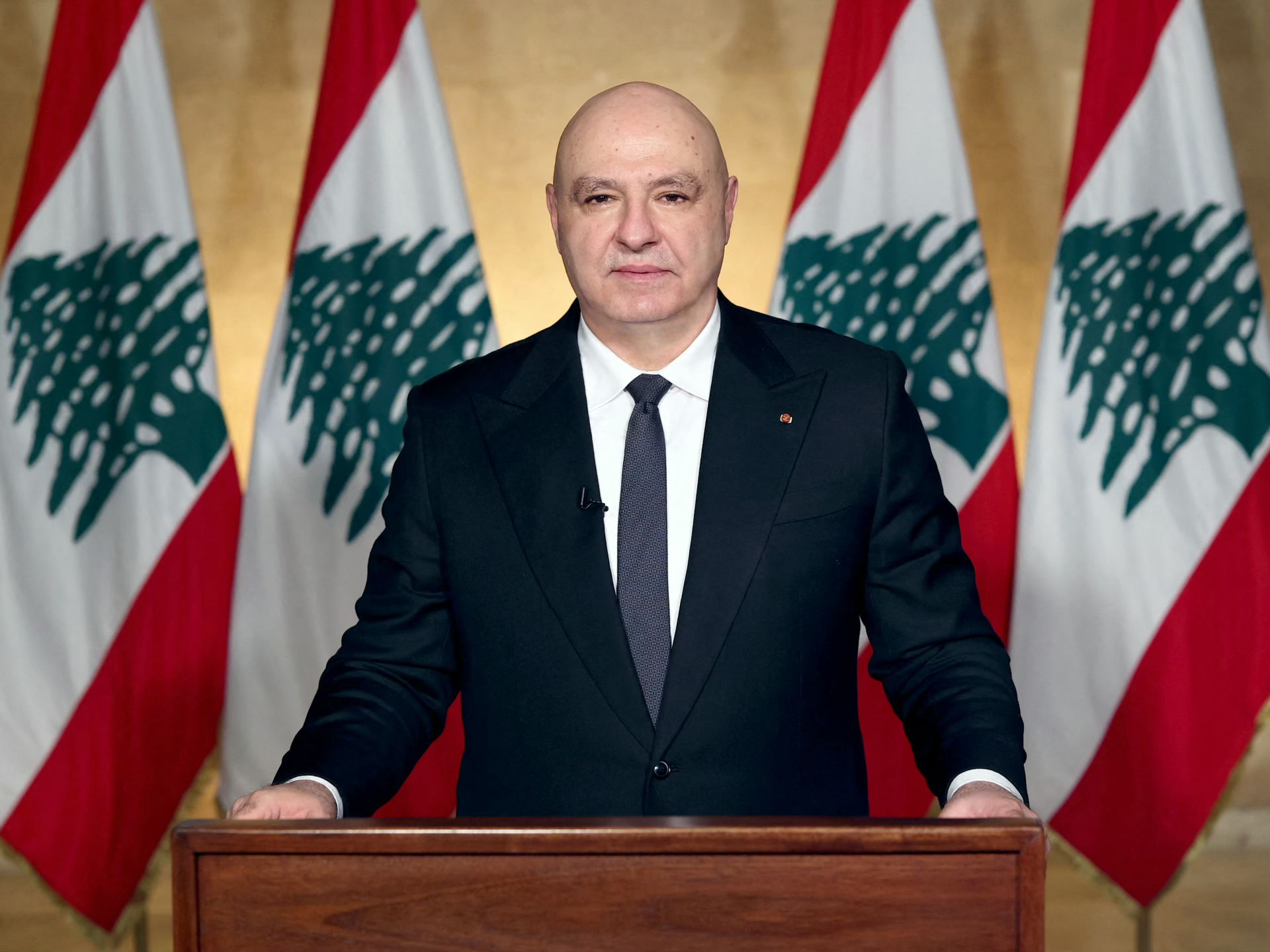
Lebanese President Joseph Aoun has said that the country would no longer be an “arena for anyone’s wars”, and that the ceasefire with Israel should lead to work on permanent agreements.

In a televised address to the Lebanese public on Friday, he said that Lebanon was no longer “a pawn in anyone’s game, nor an arena for anyone’s wars, and we never will be again”.

Recommended Stories

list of 3 itemsend of list

His speech comes a day after a 10-day ceasefire was announced between Lebanon and Israel, bringing respite from Israeli attacks that began on March 2, after Hezbollah fired at Israel, and have left more than 2,200 dead and more than a million displaced.

Aoun said that they were entering a phase of “transition from working on a ceasefire to working on permanent agreements that preserve the rights of our people, the unity of our land, and the sovereignty of our nation.”

He expressed gratitude to those who he said helped end the hostilities, naming United States President Donald Trump and “all our Arab brothers, foremost among them the Kingdom of Saudi Arabia”.

Aoun promised that any agreement reached would not infringe on the country’s rights or relinquish any of its land, and that the negotiations were not a weakness or a concession.

The ceasefire was announced days after Lebanon and Israel held their first direct talks in decades in Washington, which prompted criticism from the Lebanese population.

“Our objective is clear and declared: to stop Israeli aggression against our land and our people, to obtain Israeli withdrawal, to extend state authority over all its land by its own forces, to ensure the return of prisoners, and to enable our families to return to their homes and villages, in safety, freedom and dignity,” the president said.

Israel continues to occupy areas of southern Lebanon despite the truce, with Israeli Prime Minister Benjamin Netanyahu saying troops would not withdraw during the ceasefire.

Source link

Chinese response to Israel’s implementation of the Gaza playbook to wipe out towns in southern Lebanon

China has taken a firm stance against the Israeli escalation in Lebanon, strongly warning against the region becoming a second Gaza and considering the events a blatant violation of Lebanese sovereignty and international law. The most prominent features of the Chinese response up to April 2026 to this Israeli military escalation in southern Lebanon included condemning the targeting of civilians and emphasizing the protection of Lebanese sovereignty while rejecting Israeli violations aimed at destroying the infrastructure of southern Lebanon. The Chinese Foreign Ministry condemned the extensive Israeli raids targeting towns in southern Lebanon, stressing that Lebanon’s sovereignty and security are a red line that must not be crossed. China also emphasized the protection of Lebanese civilians, with Beijing unequivocally affirming that the protection of civilians and civilian objects in armed conflicts is a legal obligation and expressing its shock at the scale of casualties and destruction inflicted on southern villages and towns.

China’s position is based on a comprehensive vision linking the stability of southern Lebanon to a ceasefire in the Gaza Strip. Beijing believes that addressing the root causes of the conflict is the only way to prevent its spread throughout the Middle East. While condemning the destruction of Lebanese infrastructure and civilian areas, China’s Foreign Ministry denounced the Israeli airstrikes that killed hundreds of civilians and destroyed civilian infrastructure and property. Beijing categorically rejects any actions that lead to the destruction of infrastructure, considering them a violation of international law. China has consistently emphasized that Lebanon’s sovereignty, security, and territorial integrity are a red line that must not be crossed. Beijing has also declared its opposition to the Israeli ground incursion into southern Lebanon, warning that such actions exacerbate regional tensions. China has called for diplomatic solutions, urging all parties, especially Israel, to exercise maximum restraint and return to the path of political and diplomatic settlement, asserting that continued violence will not bring security to any party. China condemned the attacks targeting UNIFIL peacekeeping forces in southern Lebanon, stressing the need to ensure the safety of UN peacekeepers.

In this context, China deliberately directed veiled criticism at Washington regarding Israeli violations in southern Lebanon. China believes that the failure to contain the escalation in southern Lebanon is partly due to the military and political support provided to Israel by external powers, a clear reference to the United States, which hinders efforts to de-escalate the situation. Simultaneously, China warned of a second Gaza in southern Lebanon. Chinese Foreign Minister Wang Yi explicitly cautioned against a repeat of the Gaza tragedy in Lebanon, emphasizing that violence cannot replace right and justice. China is pressing in international forums, particularly the Security Council, for an immediate and permanent cessation of Israeli hostilities, warning against the region sliding into a full-scale war. This stance reflects China’s desire to bolster its role as a peacemaker in the Middle East and to rival American influence by adhering to political solutions and international law.

Here, China sharply criticized the American role in the Israeli war against southern Lebanon and its recent escalation in April 2026, arguing that Washington contributes to undermining regional stability through its military and political support for Israel. Beijing considered the military operations supported or participated in by the United States to be a flagrant violation of international law and the principles of national sovereignty. While warning against the militarization of the region, China criticized the expansion of the American military presence, describing it as irresponsible and warning that such steps exacerbate tensions rather than de-escalate them. Beijing believes that Washington’s approach to the international order reflects the values ​​of the law of the jungle and fuels chaos and instability in the Middle East. While criticizing the US for its double standards, China, through its Foreign Ministry spokesperson Mao Ning, condemned the continued Israeli strikes on towns and villages in southern Lebanon despite ongoing efforts to de-escalate the situation. She emphasized that Lebanon’s sovereignty and security must not be violated.

China called on Israel to immediately withdraw from southern Lebanon, warning against a repeat of the Gaza scenario. Chinese President Xi Jinping issued direct warnings demanding the immediate withdrawal of Israeli forces from southern Lebanon, cautioning that continued military operations could lead to a humanitarian catastrophe similar to what occurred in the Gaza Strip. He also called for an end to the Israeli escalation in southern Lebanon. China maintains that violence does not solve problems but rather exacerbates crises, urging maximum restraint to de-escalate the volatile regional situation. Chinese President Xi Jinping called for the immediate withdrawal of Israeli forces from Lebanese territory, asserting that their current military presence violates Lebanon’s sovereignty and territorial integrity. President Xi explicitly warned against allowing southern Lebanon to become another Gaza, pointing to the risk of a widespread humanitarian catastrophe and the destruction of civilian infrastructure.

To halt the cycle of violence and armed conflict in southern Lebanon, Chinese President Xi Jinping proposed a four-point peace initiative to bolster stability in the Middle East. This initiative includes a call for a multilateral peace conference under the auspices of the United Nations, the re-establishment of the border along the Blue Line between southern Lebanon and Israel, and a reaffirmation of China’s rejection of any violation of Lebanese sovereignty. The Chinese Foreign Ministry has repeatedly emphasized, most notably on April 9, 2026, that Lebanon’s sovereignty and security are a (red line) that must not be crossed. These Chinese moves position Beijing as an active diplomatic alternative in the region at a time of escalating international tensions between major powers and ongoing regional conflicts. China has begun diplomatic efforts by proposing several peace initiatives to halt the cycle of armed conflict in southern Lebanon. The most prominent of these is the call for a multilateral peace conference. Beijing proposed hosting an international peace conference aimed at stabilizing the region and reinforcing the border along the Blue Line separating Israel and Lebanon, under the auspices of the United Nations. China holds Israel fully responsible, considering the ongoing fighting in Gaza to be the root cause of the instability in the Middle East. Therefore, China called on the international community, particularly the major powers, to play a constructive role in achieving a comprehensive and lasting ceasefire in southern Lebanon and the Gaza Strip. China has also supported the UNIFIL peacekeeping force in southern Lebanon, strongly condemning any attacks on UNIFIL forces as violations of UN Security Council Resolution 1701. Here, China used its influence in the UN Security Council and international forums to emphasize that any military operations outside the framework of the United Nations violate its Charter. It described the Israeli strikes on towns and villages in southern Lebanon as unauthorized actions.

Based on the preceding analysis, we understand the accuracy of China’s linking of the tensions in southern Lebanon to the war in Gaza. China called for restraint to prevent the conflict from spreading regionally, based on its principles of supporting sovereign states like Lebanon and non-interference in the internal affairs of other countries. China also called for a return to the diplomatic track to halt the cycle of violent armed conflict in southern Lebanon perpetrated by Israel. China condemned the extensive Israeli strikes, stressing that Lebanon’s sovereignty and security must not be violated. It emphasized the need to protect Lebanese civilians and civilian infrastructure during Israeli military operations and called for de-escalation and immediate steps to calm the situation and prevent further escalation of the conflict in southern Lebanon.

Source link

World reacts to Strait of Hormuz reopening amid US-Iran conflict | US-Israel war on Iran News

Iran’s Foreign Minister Abbas Araghchi and United States President Donald Trump have said that the Strait of Hormuz is open to commercial vessels.

Araghchi declared on Friday that the strategic waterwat was “completely open” in line with the ceasefire between Israel and Lebanon that took effect the previous day.

Recommended Stories

list of 3 itemsend of list

Trump affirmed on social media that the strait was open, later claiming that Iran had agreed to “never close the Strait of Hormuz again”. However, he also posted that the US naval blockade on Iranian ports would “remain in full force”.

In parallel, France and the United Kingdom hosted a meeting in Paris involving about 40 countries, which agreed to play a role in restoring freedom of navigation in the Strait of Hormuz once the US-Israeli war on Iran stops.

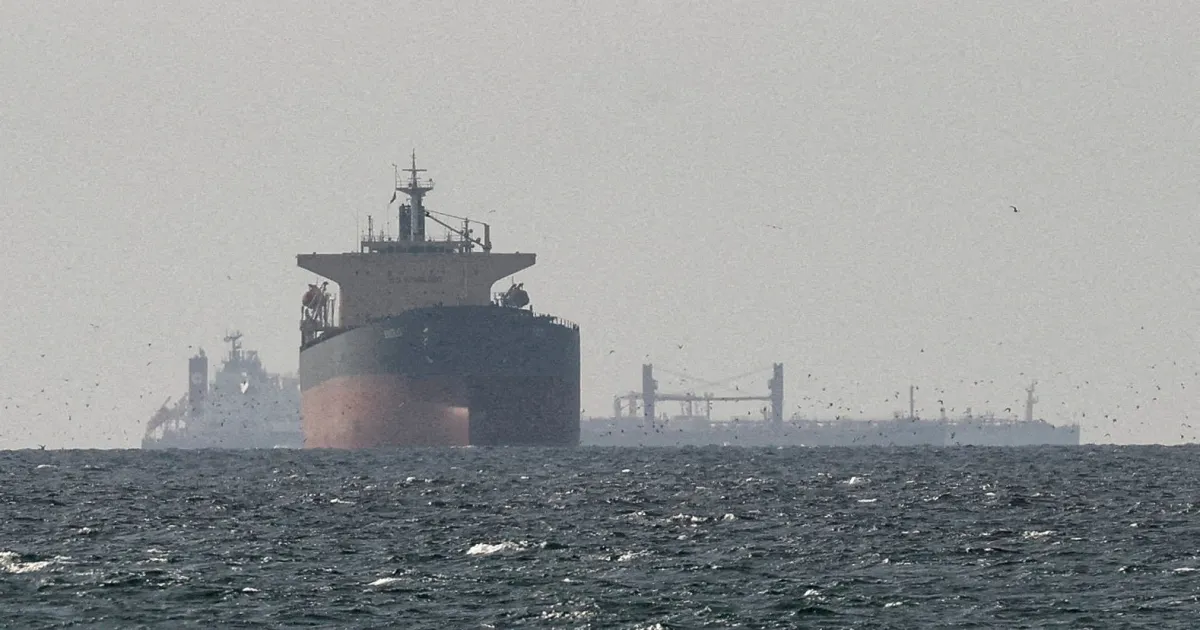
The blocking of tankers from using the strait, through which about 20 percent of the world’s crude flows on a typical day, has led to a global surge in fuel prices.

World leaders have welcomed the news with cautious optimism amid mixed messages from the US and Iran:

United States

“The Strait of Hormuz is completely open and ready for business and full passage, but the naval blockade will remain in full force and effect as it pertains to Iran, only, until such time as our transaction with Iran is 100% complete,” Trump wrote on Truth Social.

Minutes later, he issued another post saying the US Navy’s blockade on Iranian ships and ports “will remain in full force” until Tehran reaches a deal with the US, including on its nuclear programme.

Later, Trump told the news agency AFP that a deal to end the war on Iran was “close”, saying there were “no sticking points” left between Washington and Tehran.

Iran

Foreign Minister Abbas Araghchi posted on X that the strait was “declared completely open” and would remain open for the remaining period of the 10-day Israel-Lebanon ceasefire, which took effect overnight Thursday into Friday.

Some Iranian state media reports later appeared to contradict Araghchi’s announcement, with a senior military official telling state media that only nonmilitary vessels would be allowed to transit with permission from the Iranian Islamic Revolutionary Guard Corps (IRGC) Navy.

The Fars news agency, which is close to the IRGC, noted a “strange silence from the Supreme National Security Council”, the de facto top decision-making body in the country, as the status of the new supreme leader, Mojtaba Khamenei, remains unknown.

United Kingdom

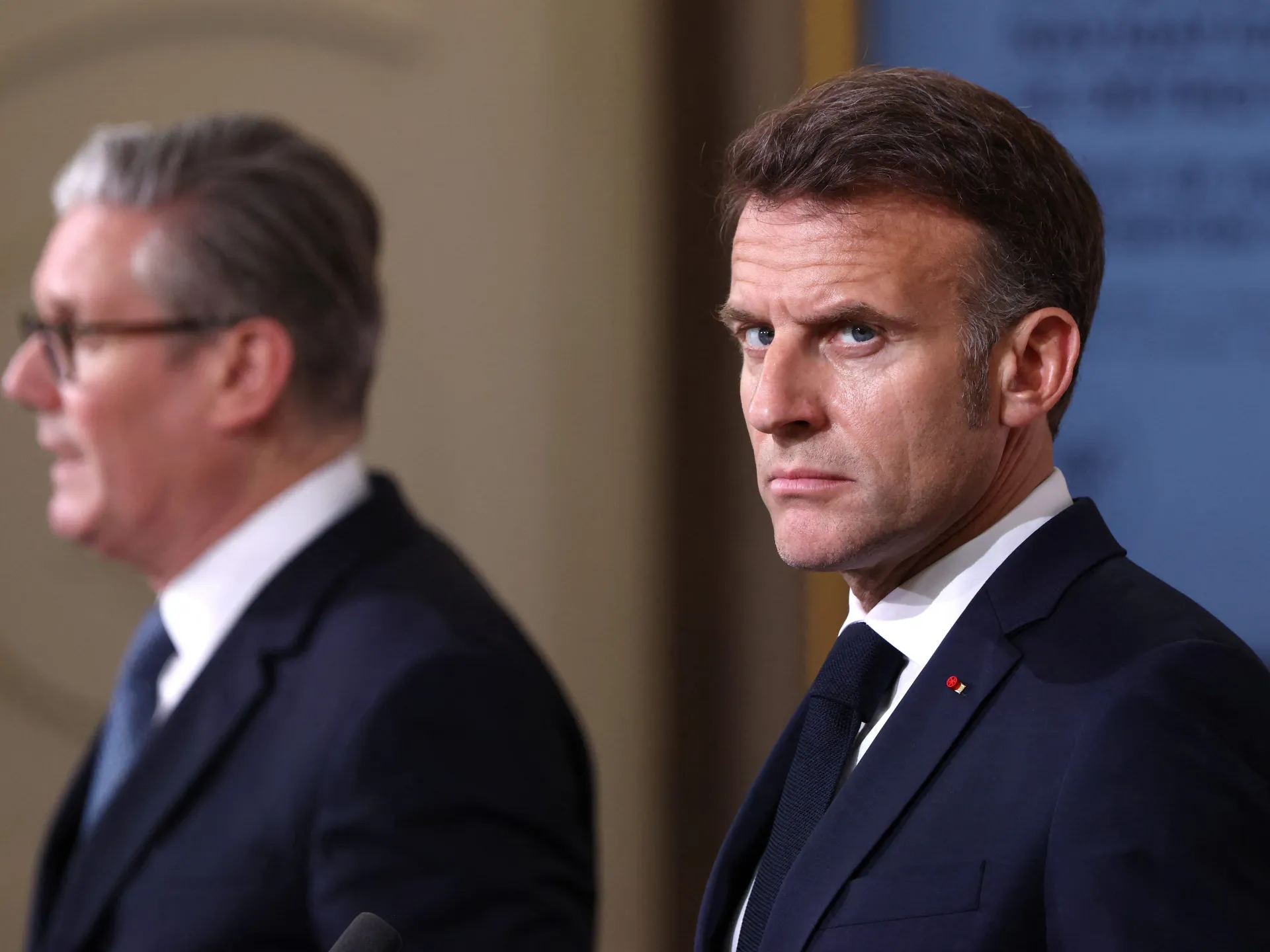
UK Prime Minister Keir Starmer cohosted a summit on a potential military mission to secure the Hormuz Strait with French President Emmanuel Macron in Paris on Friday, with about 30 to 40 countries participating in person or by video conference.

On the sidelines, Starmer cautiously welcomed news of the strait’s reopening but said it must become “both lasting and a workable proposal”.

He said the UK and France would lead a “strictly peaceful and defensive” multinational mission to protect freedom of navigation as soon as conditions allow.

France

Speaking after the gathering, Macron said, “We all demand the full, immediate and unconditional reopening of the Strait of Hormuz by all parties.”

“We all oppose any restrictions or system of agreements that would, in effect, amount to an attempt to ⁠privatise the strait – and, of course, any toll system,” he added.

Macron’s office said roles for members of the international coalition working to reopen the strait could include “intelligence, mine-clearing capabilities, military escorts [and] communication procedures with coastal states”.

Germany

Chancellor Friedrich Merz said Germany could contribute mine clearance and intelligence capabilities to the international mission, but would need parliamentary support and a ″secure legal basis″ such as a UN Security Council resolution.

He said he wanted US involvement in the international mission to secure shipping through the Strait of Hormuz. “We believe this would be desirable,″ he said.

Trump later appeared to rebuff his overtures, saying on social media that he had received a call from NATO, but declined its assistance in no uncertain terms.

Finland

Finnish President Alexander Stubb, who participated in the Paris summit, said on X, “We welcome Iran’s announcement on opening the Strait. Lasting solutions require diplomacy,”

United Nations

United Nations Secretary-General Antonio ⁠Guterres on ⁠Friday welcomed the opening ‌of Strait of Hormuz by Iran ⁠and said ⁠it was “a ⁠step in the ⁠right ⁠direction”.

International Maritime Organisation

Arsenio Dominguez, secretary-general of the UN shipping agency said, “We are currently verifying the recent announcement related to the reopening of the Strait of Hormuz, in terms of its compliance with freedom of navigation for all merchant vessels and secure ‌passage.”

Shipping companies

The Norwegian Shipowners’ Association said several things had to be clarified before any ships can transit the strait, including the presence of mines, Iranian conditions and practical implementation.

“If this represents a step towards an opening, it is a welcome development,” said Knut Arild Hareide, CEO of the association, which represents 130 companies with some 1,500 vessels.

A spokesperson for Germany’s Hapag-Lloyd Shipping Company said, “We are now beginning to assess the new situation and the risks involved … For the time being, therefore, we are still refraining from passing through the strait.”

In a statement, Denmark’s Maersk said: “We have noted the announcement. The safety of our crew, vessels and customers’ cargo remains our priority. Since the outbreak of the conflict, we have followed the guidance of our security partners in the region, and the recommendation so far has been to avoid transiting the Strait of Hormuz.

“Any decision to transit the strait will be based on risk assessments and close monitoring of the security situation, with the latest developments also included in the ongoing assessments.”

Markets

Oil prices plunged after Iran’s announcement that passage for commercial vessels would remain “completely open” for the duration of a 10-day ceasefire in Lebanon.

“This news is having an immediate impact on markets,” said Kathleen Brooks, research director at XTB. “This is the biggest development so far during the ceasefire, and it gives hope that the war will end soon, and supply chains will return to some normality.”
 

Source link

Lebanese return to devastated south as fragile 10-day truce takes hold | Israel attacks Lebanon News

Hezbollah warns it has its ‘finger on the trigger’ in case of Israeli violations of the temporary ceasefire.

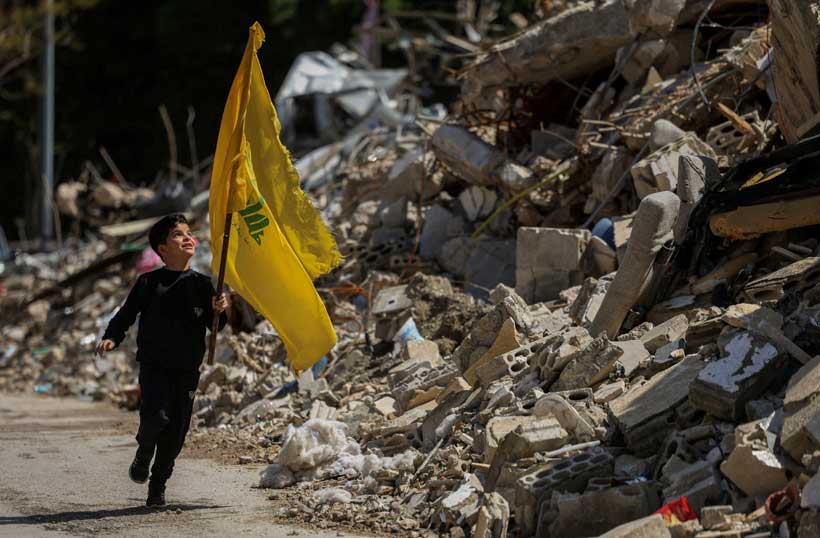
Displaced Lebanese have begun cautiously returning to their homes in the south after Lebanon and Israel agreed to a 10-day truce, even as the Lebanese army calls on residents to delay their return and Hezbollah warns it has its “finger on the trigger” in case of Israeli violations.

Tens of thousands of people poured into areas of southern Lebanon on Friday morning hours after the truce went into effect, many heading back to homes and villages battered by more than a month of Israeli attacks.

Recommended Stories

list of 3 itemsend of list

“People just couldn’t wait,” reported Al Jazeera’s Zeina Khodr from Nabatieh, one of the hardest hit areas.

“Even if it’s 10 days, they want to return to their homes. Some of them are just coming to see what remains of their homes, what remains of their lives.

“They want to show that they don’t want to give up their lands,” added Khodr.

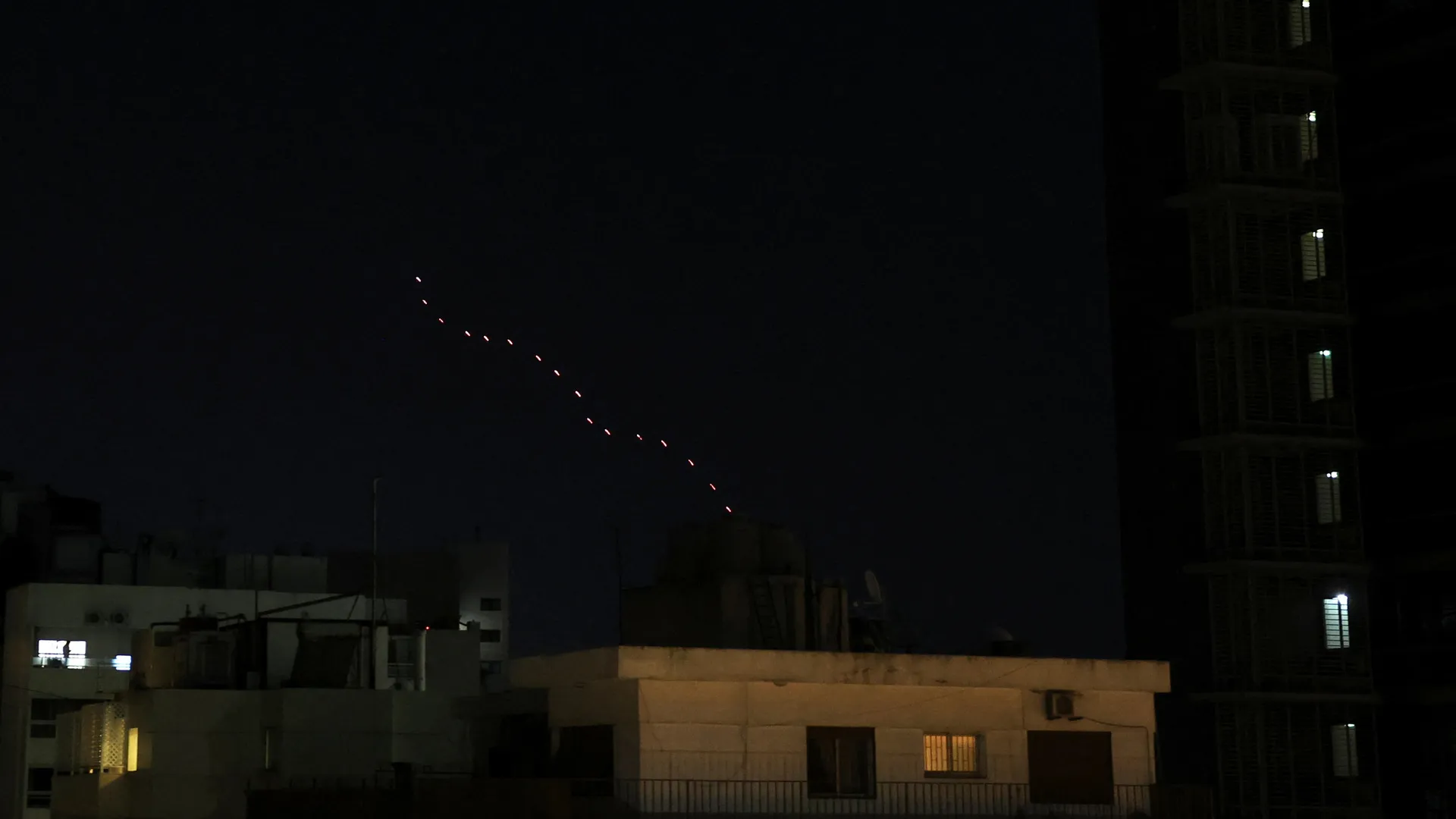
While the ceasefire largely appeared to hold, Lebanon’s army accused Israel of several early violations on Friday, including intermittent shelling of ‌southern Lebanese villages.

Lebanon’s National News Agency also reported that unexploded ordnance killed a boy in the town of Majdal Selem, while rescuers uncovered the bodies of at least a dozen people killed in earlier attacks in Tyre.

French President Emmanuel Macron warned that the ceasefire “may already be undermined by ongoing military operations” and called for “the safety of civilians on both sides of the border”.

Hezbollah said its fighters “will keep their finger on the trigger because they are wary of the enemy’s treachery”.

Israeli air strikes and a ground invasion of parts of southern Lebanon have killed more than 2,100 people and displaced some 1.2 million in the latest round of fighting, according to Lebanese authorities.

Hezbollah attacks, meanwhile, killed two Israeli civilians, while 13 Israeli soldiers were killed in Lebanon, according to Israel.

Israeli officials have said they intend to maintain control over Lebanese territory extending to the Litani River as a “buffer zone” against Hezbollah.

‘Unliveable’

As residents assessed the damage to their hometowns, some pledged to stay, while others – finding nothing to return to or fearing the fragile truce could collapse – said they would leave again.

“There’s destruction and it’s unliveable. Unliveable. We’re taking our things and leaving again,” said Fadel Badreddine, who returned to Nabatieh with his young son and wife. “May God grant us relief and end this whole thing permanently – not temporarily – so we can return to our homes and lands.”

Al Jazeera’s Khodr said “wherever you look you see damage, destruction” in Nabatieh. “So much has been lost in this conflict in the past 46 days.”

If the ceasefire holds, it could ease one of the main points of tension in US-Iran negotiations. Iran and mediator Pakistan had maintained that Lebanon should be covered in a separate US-Iran ceasefire framework, while Israel claimed it was not part of that deal and continued its attacks.

Ali Akbar Dareini, a researcher at Iran’s Center for Strategic Studies, said the Israel-Lebanon ceasefire had removed one obstacle to wider negotiations between the US and Iran because Tehran views the regional conflict as interconnected, describing this as a “unity of fronts”.

Pakistani Prime Minister Shehbaz Sharif, whose country hosted last week’s ceasefire talks between the US and Iran, welcomed the Israel-Lebanon truce on Friday and expressed “hope that it will pave the way for sustainable peace”.

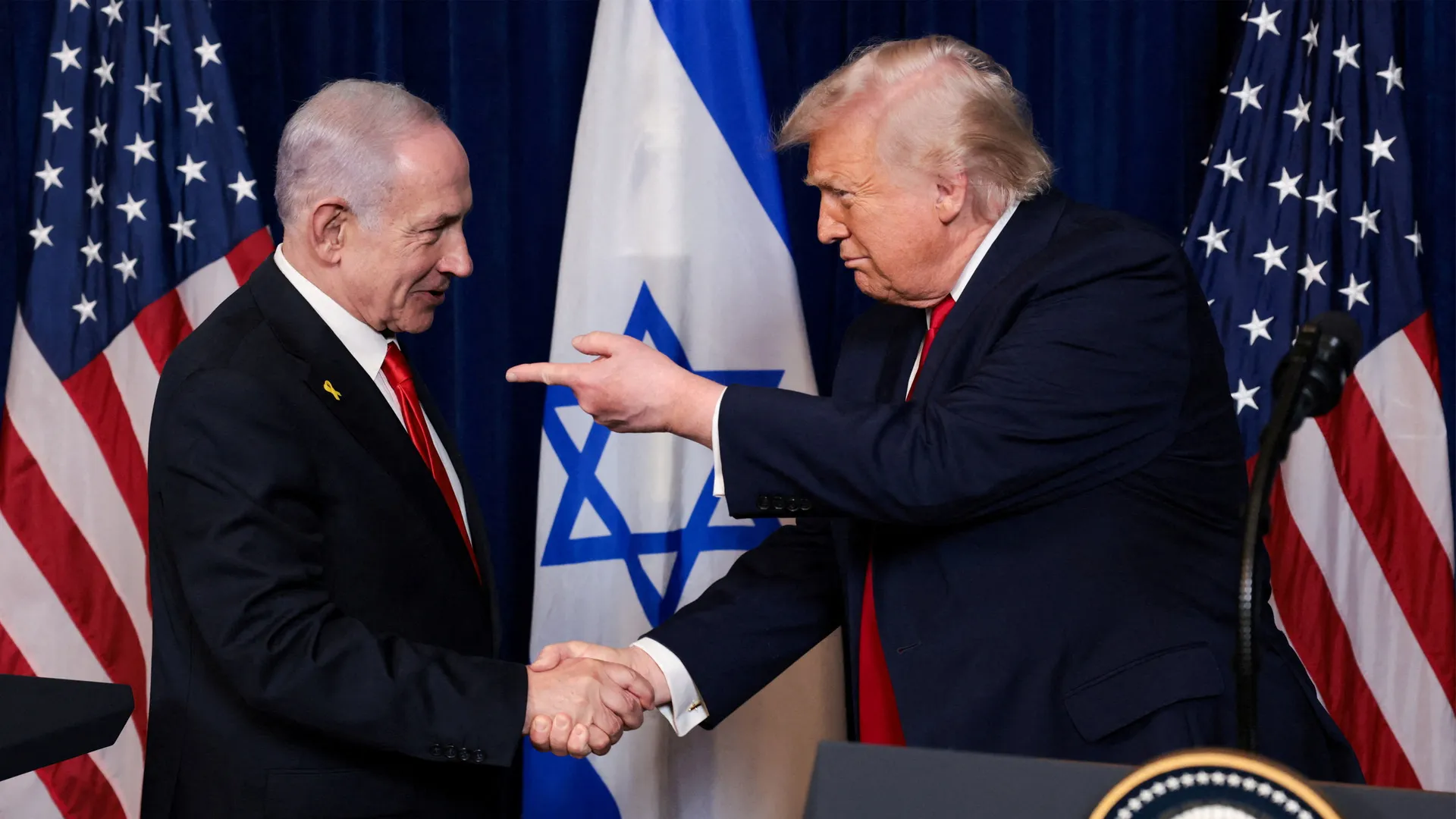
He also praised the mediation role of US President Donald Trump, who has invited Israeli Prime Minister Benjamin Netanyahu and Lebanese President Joseph Aoun to the White House for “meaningful talks”.

“Pakistan reaffirms its unwavering support for the sovereignty and territorial integrity of Lebanon, and will continue to support all efforts aimed at lasting peace in the region,” Sharif said on X.

Source link

‘Trump forced Israel into a ceasefire’ with Lebanon | Israel attacks Lebanon

NewsFeed

Abed Abou Shhadeh, a political commentator based in Israel, says the ceasefire between Israel and Lebanon is ‘extremely problematic, not only for Netanyahu, but for the Israeli public who were promised for two and a half years now, absolute victory’.

Source link