Israel

Why The Middle East Crisis Cannot Be Read Through Power Alone

There is another way to read the ongoing Middle East crisis, one that makes legible what standard analysis consistently struggles to explain. It begins not with capability but with the geometry of the system through which capability must travel to produce effects. The United States and its partners possess overwhelming military superiority over Iran, and that superiority is not in question, yet the conflict has produced a pattern that defies its logic. A superpower coalition has been unable to impose coherent strategic outcomes against an adversary operating through proxies, low-cost disruption, and the systematic exploitation of global commercial vulnerabilities.

Over the past two years, we have seen multiple instances of this kind of disruption with consequential effects on the global system. Houthi drones force the rerouting of global shipping, with Red Sea cargo volumes falling by roughly 50% through early 2024 as major carriers diverted around the Cape of Good Hope, adding up to two weeks to transit times, driving freight costs sharply higher across European markets, and costing Egypt nearly $800 million per month at peak in lost Suez Canal revenue. A non-state network spanning Lebanon, Yemen, Iraq, Syria, and Gaza has absorbed sustained air campaigns, targeted eliminations of senior commanders, and repeated ground operations without losing its capacity to generate coordinated pressure across multiple theaters simultaneously. The asymmetry seems to follow a deliberate strategic logic that raw power analysis struggles to read, precisely because the conflict operates on a surface that capability assessments were never designed to map. What this suggests is that the decisive variable is not what actors possess but whether the relationships connecting them can transmit coordinated action when the system is under strain.

When that system cannot coordinate, something important breaks down. An alliance that formally exists but faces operational friction at every decision point ceases to be an alliance in any meaningful strategic sense. A security guarantee that cannot be transmitted rapidly to the partner it is meant to protect has, in effect, already failed its primary function. It follows that the gap between what a system formally is and what it can actually do under pressure is not a secondary consideration but the surface on which this conflict is being decided. Conventional analysis, calibrated to count warheads and assess intentions, consistently leaves this gap unmapped.

Analysts know that Saudi Arabia’s OPEC production decisions have repeatedly positioned Riyadh against Washington’s economic preferences, they know that European energy dependency complicates transatlantic alignment, and they know that Iran’s proxy network extends across five countries and absorbs military pressure without fracturing. Yet what the available frameworks cannot do is convert that knowledge into a structural reading of the system. They show that these conditions exist. What they cannot show is how those conditions interact, where they compound, and what the aggregate geometry of their interaction means for whether coordinated action is possible at all.

Power analysis was built to read capability differentials between states, and it does that well. Alliance theory was built to read the conditions under which formal commitments hold or fail, and it does that too. Neither, however, was built to read the operational weight of the ties through which capability and commitment must travel to produce effects.

The instruments available are calibrated to answer questions different from those the current situation poses. Deploying them on a problem they were not designed to read produces the consistent failure to explain what is actually happening that has marked analysis of this conflict from the start.

Adjacency mapping is an instrument designed to read that gap by mapping connectivity, by which I mean their operational weight, specifically their capacity to carry coordinated action under strain. What distinguishes it from standard approaches is its unit of analysis. Rather than the actors themselves, it treats the weight of the relationships as primary. The question it asks is not who holds power but whether the ties connecting power-holders can transmit that power when the system needs them to. Two states can be formally allied, operationally integrated in name, and structurally disconnected at the same time, and nothing in standard analysis will tell you which of those conditions is actually operative until the moment of crisis reveals it.

The instrument assigns each significant relationship in the system a weight between 0 and 1, reflecting how frequently the two actors interact operationally, how reliably information moves between them, how the tie has behaved under recent stress, and how quickly it transmits pressure when the system is under strain. At the higher end of the scale, a weight at or above 0.6 indicates that coordination approaches automaticity, and the tie carries load without constant investment to maintain it. Around 0.3, friction accumulates. In this setting, decisions require deliberate effort at every juncture, slowing the system and making it susceptible to gradual degradation that never triggers a visible rupture. At or below 0.2, the tie has effectively ceased to function as a transmission pathway, leaving the actors operationally disconnected regardless of what their formal relationship nominally says.

These weights are analytical judgements calibrated against observable evidence. In other words, their value lies in making visible what experienced analysts already carry as intuition and in giving that intuition a structure precise enough to argue about. The numbers are therefore analytical judgements, not measurements. A more rigorous application would derive them from quantifiable indicators across each dimension, including military interoperability, intelligence exchange depth, crisis responsiveness, economic interdependence, and signaling consistency, averaged and weighted systematically. That work lies beyond the scope of this piece, but the architecture is designed to accommodate it.

There is a risk management dimension to this reading that is worth making explicit. Standard geopolitical risk assessment focuses on actor-level variables such as regime stability, military capability, and leadership intentions. What adjacency mapping adds is a structural layer that those assessments typically miss. A coalition whose load-bearing relationships operate in the friction zone is exposed to a category of risk that capability assessments do not capture and that becomes visible only when the system is read structurally.

What the matrix adds is the ability to see how compound weakness across multiple relationships produces cascading effects that bilateral assessment alone would struggle to predict. A system whose dominant actor holds several weak partnerships faces more than friction. As a consequence, the geometry of those weaknesses determines whether any concerted response is structurally possible at all. Aggregate capability becomes, in that light, secondary to that question.

If we apply this to the Middle East security complex, the instrument produces one possible reading. This reading differs considerably from the picture conventional analysis generates. Its value is not in the precision of the numbers but in making the system’s geometry visible enough to argue about.

The matrix below maps operational connectivity across the system’s key actors. The numbers are analytical judgements, not measurements.

The geometry they make visible is what matters here.

  US IL SA QA UAE OM KW BH PK IR PN
US 0.8 0.4 0.8 0.6 0.5 0.7 0.8 0.6 0.1 0.1
IL 0.8 0.5 0.4 0.6 0.2 0.2 0.4 0.1 0.1 0.1
SA 0.4 0.5 0.5 0.6 0.4 0.6 0.7 0.6 0.2 0.1
QA 0.8 0.4 0.5 0.4 0.4 0.4 0.3 0.3 0.2 0.1
UAE 0.6 0.6 0.6 0.4 0.3 0.5 0.6 0.4 0.1 0.1
OM 0.5 0.2 0.4 0.4 0.3 0.3 0.3 0.3 0.4 0.1
KW 0.7 0.2 0.6 0.4 0.5 0.3 0.5 0.2 0.2 0.1
BH 0.8 0.4 0.7 0.3 0.6 0.3 0.5 0.2 0.2 0.1
PK 0.6 0.1 0.6 0.3 0.4 0.3 0.2 0.2 0.5 0.1
IR 0.1 0.1 0.2 0.2 0.1 0.4 0.2 0.2 0.5 0.7
PN 0.1 0.1 0.1 0.1 0.1 0.1 0.1 0.1 0.1 0.5

The matrix is intentionally non-symmetric. Where operational influence flows asymmetrically between two actors, the weights reflect that directionality.

The matrix reveals, in this light, a system whose dominant actors are connected at fundamentally different weights. And more significantly, its most important bilateral relationship is operating in the friction zone. It’s formally excluded adversary has constructed the only alternative connectivity architecture in the system. What this implies is that the geometry of the conflict runs considerably deeper than standard alliance analysis tends to suggest.

On the coalition side, the US has high adjacency with Qatar, Bahrain, Israel, and Kuwait, ties that enable rapid coordination and require little maintenance, constituting the operational backbone of what Washington can actually activate quickly.

Its relationship with Saudi Arabia, however, sits at 0.4. That number is analytically more significant than almost anything else in the matrix. Saudi Arabia remains, on most readings, the relationship on which Gulf order coherence formally depends, the anchor of the security architecture since the 1970s, and it is operating in the friction zone where every significant decision requires renegotiation from scratch rather than flowing through an established channel. Saudi Arabia’s invitation to join BRICS in August 2023, yuan-denominated oil transactions with China, and its participation in the Chinese-brokered rapprochement with Iran in March 2023 all point in the same direction. Riyadh is hedging structurally toward China and the broader non-Western order, a posture that sits uneasily alongside its formal security alignment with Washington. Taken together, these are not isolated political episodes but evidence of a tie that has been operating below the coordination threshold for years and whose weakness is, on this reading, the system’s most consequential structural vulnerability.

Through the normalization architecture, the UAE has arguably become the system’s most structurally reliable node at 0.6 with both the US and Israel, its operational integration exceeding Saudi Arabia’s despite Saudi Arabia’s formal primacy. The Abraham Accords of September 2020 established the formal foundation for that integration. The operational depth it has since generated, across intelligence sharing, defence cooperation, and coordinated positioning on Iran, has made the UAE the coalition’s most functionally connected Gulf partner. Oman holds what is perhaps the system’s most anomalous position, meaningful adjacency with both the US coalition and Iran simultaneously, a profile no other state actor in the matrix replicates. That structural position gave Oman the back-channel role it played through the early phases of the conflict, with documented precedent in the secret US-Iran nuclear negotiations that began in Muscat in 2012 and ran through 2013. As the conflict has intensified, Pakistan has assumed the primary mediation function, but Oman’s position as a quiet facilitator has not disappeared; it has simply been supplemented by a node with more direct access to both capitals at this particular moment.

Pakistan has emerged as the conflict’s primary mediation node, hosting the highest-level direct negotiations between Washington and Tehran since 1979 and brokering the April 2026 ceasefire. That role reflects a structural position the matrix makes legible: high Saudi adjacency, a functioning Iran tie, and a rehabilitated relationship with Washington that no other regional actor currently combines. China’s influence over both Pakistani and Iranian decision-making operates as an exogenous pressure that the matrix only partially captures, and Pakistan’s own domestic constraints, including its difficulty developing direct channels with the IRGC, limit how far that mediation role can ultimately reach.

Iran’s position is where the matrix becomes most analytically revealing. Across the state actors in the system, Iran’s adjacency sits at or near fragmentation, built up through sanctions, absent operational channels, and decades of adversarial signalling that have left Tehran formally isolated from the coordination architecture the United States and its partners have constructed.

And yet the only high-weight tie Iran holds is with its proxy network at 0.7. That single number may go further toward explaining the architecture of the entire campaign than any other figure in the matrix.

It is an asymmetric relationship in which Tehran’s capacity to activate and direct exceeds the reverse influence those actors exert over Iranian strategic decisions. What that single structural condition implies goes further toward explaining the architecture of Iranian pressure operations than most analyses of Iranian intentions or capabilities tend to reach. Iran is geographically central and formally excluded. It is precisely that combination, positioned to apply pressure across every theatre while bearing none of the coordination costs that formal inclusion imposes. That, from this vantage point, is what makes legible a strategy that standard analysis, focused on actors and their capabilities, cannot see.

Seen through this lens, what Iran is doing across the region is something more structurally ambitious than a military campaign. It is attempting to restructure the matrix itself. The goal appears to be less about battlefield victory than about the gradual degradation of the ties connecting the United States to its regional partners, below the threshold at which coordinated response becomes automatic, eroding the will to keep paying the price of alignment while simultaneously building alternative adjacency in the nodes where US-aligned connectivity is weakest.

The Houthi campaign against Red Sea shipping is calibrated to stay below the threshold that would compel a unified military response. It introduces friction into the economic relationships connecting European states to the Gulf system, raising the cost of alignment with Washington’s regional posture without forcing the kind of direct confrontation that would unite the coalition. Strikes on Gulf infrastructure follow the same calibration, persistent enough to signal that the US security guarantee cannot insulate its partners from costs, yet restrained enough to avoid crossing the point at which coalition fragmentation becomes irrelevant because a unified response becomes compulsory. Across Iraq and Syria, simultaneous pressure from affiliated militias prevents the concentration of attention that sustained coalition coordination requires. In each case, the instrument targets a relationship rather than a capability, specifically the weight of the ties whose degradation would restructure the system’s geometry without requiring Iran to displace the existing order directly.

The US-Saudi tie at 0.4 is the primary focus of that degradation effort. Should that threshold be breached, Saudi Arabia hedges. As hedging reduces operational interactivity the tie weakens further. The process risks becoming self-reinforcing. Iranian military superiority over any individual partner is not required to sustain it.

The same logic extends across European actors, though not uniformly. Germany’s industrial exposure to energy price volatility, France’s residual strategic autonomy instinct, and the EU’s institutional preference for de-escalation all produce different thresholds for continued alignment with Washington. Their shared energy dependency gives them asymmetric stakes in the Gulf system’s stability, but their appetite for risk diverges from Washington’s in ways that are not identical across capitals, and each time Iran forces a decision about the cost of continued alignment, that divergence fragments the coalition’s coordination surface further.

By sustaining operational ties with non-state actors across the region, Iran is constructing alternative adjacency in precisely the nodes where US-aligned connectivity is weakest. These are populations and factions that the existing regional order has excluded from the dominant coalition’s coordination architecture. Deliberately so — Iran is building in the structural gaps the system leaves open. Displacing the existing order appears unnecessary. Becoming the more reliable pole of alignment for the actors that order has failed to integrate may be sufficient. All that is required is that the order fragment sufficiently at its margins for that offer to appear credible, and the current trajectory of US-Saudi friction and European hedging is steadily moving in that direction.

The coalition’s instruments are calibrated to military threats. The system, however, is failing along a different surface entirely, or so this reading suggests. The formal architecture remains largely intact, security guarantees have not been withdrawn, Gulf states remain formally aligned, and normalisation agreements hold. And yet the operational adjacency that gives that architecture its functional weight is under sustained pressure from an actor that has correctly identified the gap between formal commitment and operational tie as the system’s primary vulnerability. That identification is outpacing the coalition’s capacity to respond.

On this reading, the surface on which the conflict appears to be decided is not the one the coalition is defending.

What adjacency mapping reveals is a story about geometry. The system’s dominant actor holds formal commitments at weights the system cannot sustain under the pressure being applied to it. Its adversary, in turn, has built the only alternative coordination architecture in the space that those weakening ties leave open. The conflict is likely to be determined by which ties the system can no longer afford to lose under sustained and calibrated pressure. The question is whether the actors currently holding those ties in the friction zone can rebuild them to the coordination threshold before the process of degradation becomes irreversible. That is a question that capability assessments are not well-positioned to answer, and one that a structural reading of the system’s connectivity at least helps to make visible.

Source link

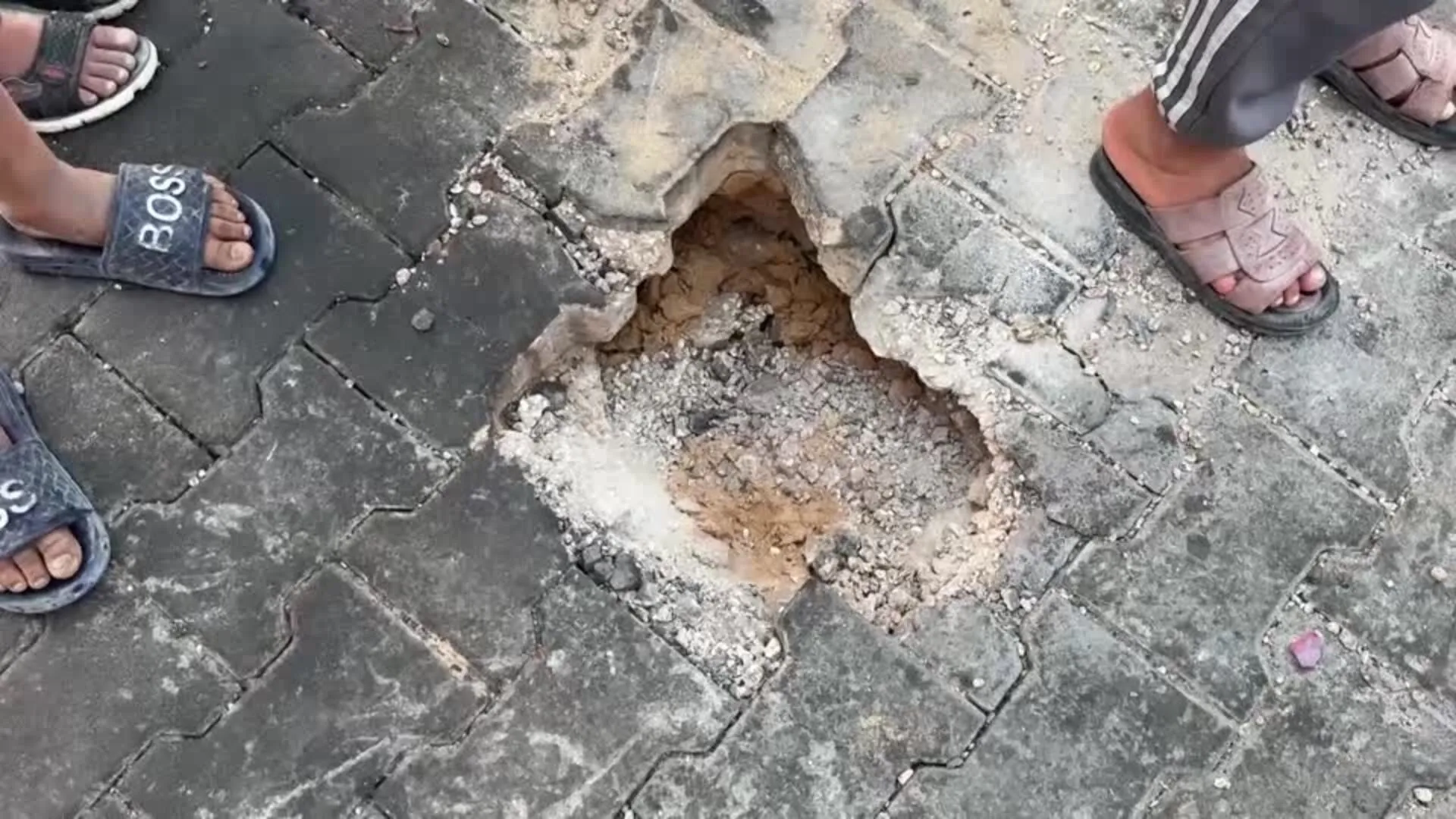
Israeli police destroy children’s footballs at Al-Aqsa mosque | Israel-Palestine conflict

NewsFeed

Video shows Israeli police confiscating and destroying footballs that were being played with by children in the courtyards of Al-Aqsa mosque in occupied East Jerusalem, in what mosque authorities described as part of ongoing restrictions on Palestinians inside the holy site.

Source link

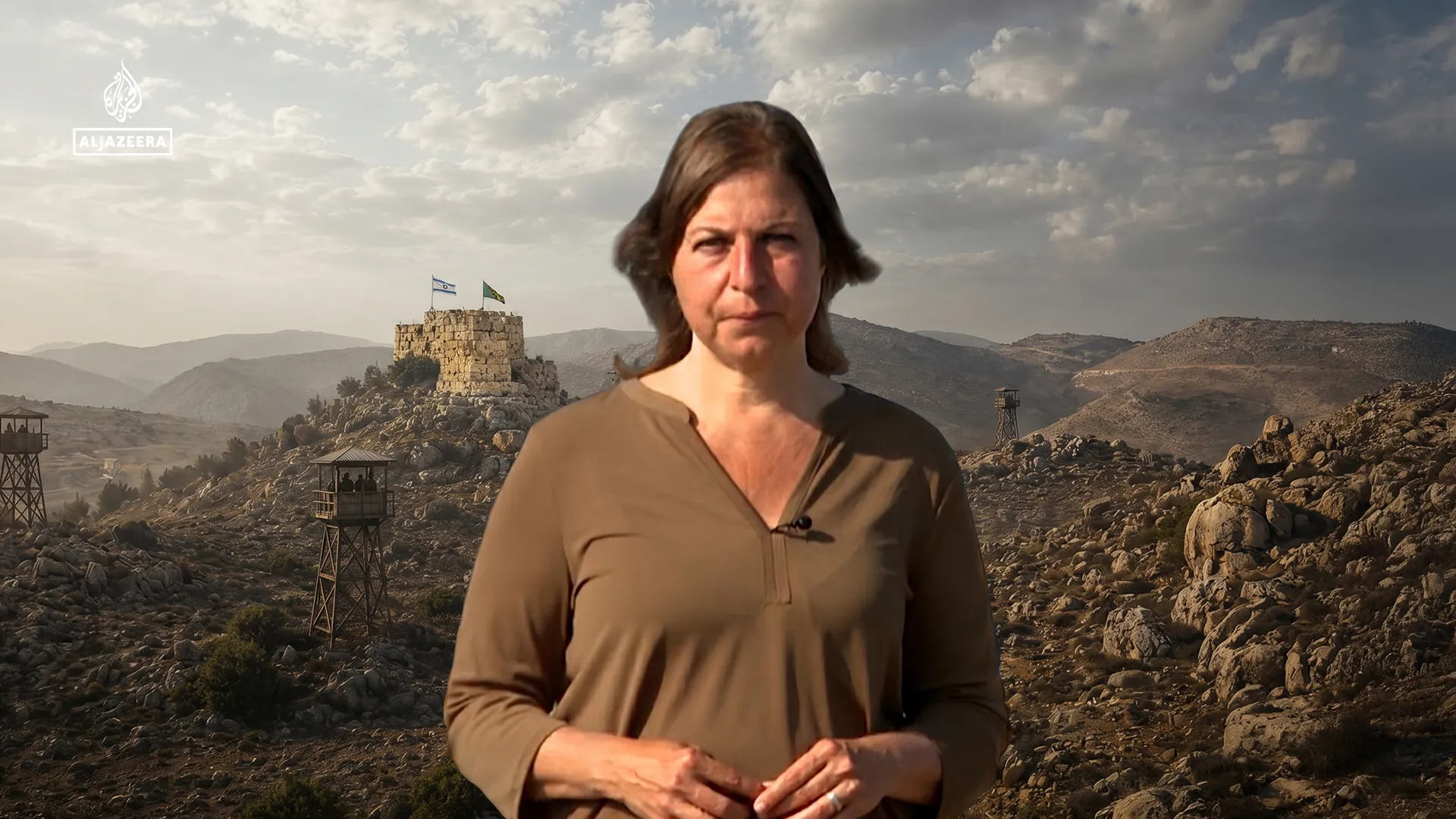
Lebanese man removes Israeli flag from castle in southern Lebanon | Newsfeed

NewsFeed

A Lebanese man who returned to his village in southern Lebanon after the temporary ceasefire was announced removes the Israeli flag from Beaufort Castle (Qalaat al-Shaqif). The castle which dates back to the 12th century is in the Nabatiyeh Governorate.

Source link

Outlines of a deal emerge with major concessions to Iran

Upbeat claims from President Trump over an imminent peace deal to end the war with Iran were met with deep skepticism Friday across the Middle East, where Iranian and Israeli officials questioned the prospects for a lasting agreement that would satisfy all parties.

The outlines of an agreement began to emerge that would provide Iran with a major strategic victory — and a potential financial windfall — allowing the Islamic Republic to leverage its control over the Strait of Hormuz to exact significant concessions from the United States and its ally Israel as Trump presses for a swift end to the conflict.

In a series of social media posts and interviews with reporters, Trump announced that the strait was “fully open,” vowing Tehran would never again attempt to control it. But Iranian officials and state media said that conditions remained on passage through the waterway, including the imposition of tolls and coordination with the Islamic Revolutionary Guard Corps.

Iranian diplomats posted threats that its closure could resume at any time of their choosing, and warned that restrictions would return unless the United States agreed to lift a blockade of its ports. Trump had said Friday that the blockade would remain in place.

“The conditional and limited reopening of a portion of the Strait of Hormuz is solely an Iranian initiative, one that creates responsibility and serves to test the firm commitments of the opposing side,” said a top aide to Iran’s president, dismissing Trump’s statements on the contours of a deal as “baseless.”

“If they renege on their promises,” he added, “they will face dire consequences.”

In an overture to Iran, Trump said Israel would be “prohibited” from conducting additional military strikes in Lebanon, where the Israeli government of Prime Minister Benjamin Netanyahu seeks to prevent Hezbollah, an Iranian proxy militia, from rearming, a potential threat to communities in the Israeli north.

But in a speech delivered in Hebrew, Netanyahu would say only that Israel had agreed to a temporary ceasefire, while members of his Cabinet warned that Israel Defense Forces operations in southern Lebanon were not yet finished. A top ally of the prime minister at a right-wing Israeli news outlet warned that Trump was “surrendering” to Iran in the talks.

It was a day of public messaging from a president eager to end a war that has proved historically unpopular with the American public, and has driven a rise in gas prices that could weigh on his party entering this year’s midterm elections.

Yet, Republican allies of the president have begun warning him that an agreement skewed heavily in Tehran’s favor could carry political costs of its own.

Trump was forced to deny an Axios report Friday that his negotiating team had offered to release $20 billion in frozen Iranian assets in exchange for Tehran agreeing to hand over its fissile material, buried under rubble from a U.S. bombing raid last year.

That sum would amount to more than 10 times what President Obama released to Iran under a 2015 nuclear deal, called the Joint Comprehensive Plan of Action, that was the subject of fierce Republican criticism in the decade since.

“I have every confidence that President Trump will not allow Iran to be enriched by tens of billions of dollars for holding the world hostage and creating mayhem in the region,” said Sen. Lindsey Graham (R-S.C.), a strong supporter of the war. “No JCPOAs on President Trump’s watch.”

Still, Trump said in a round of interviews that a deal could be reached in a matter of days, ending less than two weeks of negotiations.

He claimed that Tehran had agreed to permanently end its enrichment of uranium — a development that, if true, would mark a dramatic reversal for the Islamic Republic from decades developing its nuclear program, and from just 10 days ago, when Iranian diplomats rejected a U.S. proposal of a 20-year pause on domestic enrichment in favor of a five-year moratorium.

He said Iran had agreed never to build nuclear weapons — a pledge Tehran has made repeatedly, including under the Nuclear Nonproliferation Treaty, in a religious decree from then-Supreme Leader Ayatollah Ali Khamenei, and in the 2015 agreement — while continuing nuclear activities viewed by the international community as exceeding civilian needs.

And he repeatedly stated that Iran had agreed to the removal of its enriched uranium from the country, either to the United States or to a third party. Iranian state media stated Friday afternoon that a proposal to remove the country’s highly enriched uranium had been “rejected.”

Iran’s agreement to allow safe passage for commercial vessels through the Strait of Hormuz is linked to a ceasefire in Lebanon that the Israeli Cabinet approved for only a 10-day period. Regardless of whether it holds or is extended, Israeli officials said their military would not retreat from its current positions in southern Lebanon — opening up Israeli forces to potential attack by Hezbollah militants unbound by a truce brokered by the Lebanese government.

The Lebanese people, Hezbollah officials said, have “the right to resist” Israeli occupation of their land. Whether the fighting resumes, the group added, “will be determined based on how developments unfold.”

An Iranian official threw cold water on the prospects of reaching a comprehensive peace deal in the coming days, telling Reuters that a temporary extension of the current ceasefire, set to expire Tuesday, would “create space for more talks on lifting sanctions on Iran and securing compensation for war damages.”

“In exchange, Iran will provide assurances to the international community about the peaceful nature of its nuclear program,” the official said, adding that “any other narrative about the ongoing talks is a misrepresentation of the situation.”

Trump told reporters Friday that the talks will continue through the weekend.

While Trump claimed there aren’t “too many significant differences” remaining, he said the United States would continue the blockade until negotiations are finalized and formalized.

“When the agreement is signed, the blockade ends,” the president told reporters in Phoenix.

Times staff writer Ana Ceballos contributed to this report.

Source link

Lebanon president says country is no longer a pawn amid Israel ceasefire | News

President Joseph Aoun promised to work to preserve Lebanon’s sovereignty and freedom.

Lebanese President Joseph Aoun has said that the country would no longer be an “arena for anyone’s wars”, and that the ceasefire with Israel should lead to work on permanent agreements.

In a televised address to the Lebanese public on Friday, he said that Lebanon was no longer “a pawn in anyone’s game, nor an arena for anyone’s wars, and we never will be again”.

Recommended Stories

list of 3 itemsend of list

His speech comes a day after a 10-day ceasefire was announced between Lebanon and Israel, bringing respite from Israeli attacks that began on March 2, after Hezbollah fired at Israel, and have left more than 2,200 dead and more than a million displaced.

Aoun said that they were entering a phase of “transition from working on a ceasefire to working on permanent agreements that preserve the rights of our people, the unity of our land, and the sovereignty of our nation.”

He expressed gratitude to those who he said helped end the hostilities, naming United States President Donald Trump and “all our Arab brothers, foremost among them the Kingdom of Saudi Arabia”.

Aoun promised that any agreement reached would not infringe on the country’s rights or relinquish any of its land, and that the negotiations were not a weakness or a concession.

The ceasefire was announced days after Lebanon and Israel held their first direct talks in decades in Washington, which prompted criticism from the Lebanese population.

“Our objective is clear and declared: to stop Israeli aggression against our land and our people, to obtain Israeli withdrawal, to extend state authority over all its land by its own forces, to ensure the return of prisoners, and to enable our families to return to their homes and villages, in safety, freedom and dignity,” the president said.

Israel continues to occupy areas of southern Lebanon despite the truce, with Israeli Prime Minister Benjamin Netanyahu saying troops would not withdraw during the ceasefire.

Source link

Chinese response to Israel’s implementation of the Gaza playbook to wipe out towns in southern Lebanon

China has taken a firm stance against the Israeli escalation in Lebanon, strongly warning against the region becoming a second Gaza and considering the events a blatant violation of Lebanese sovereignty and international law. The most prominent features of the Chinese response up to April 2026 to this Israeli military escalation in southern Lebanon included condemning the targeting of civilians and emphasizing the protection of Lebanese sovereignty while rejecting Israeli violations aimed at destroying the infrastructure of southern Lebanon. The Chinese Foreign Ministry condemned the extensive Israeli raids targeting towns in southern Lebanon, stressing that Lebanon’s sovereignty and security are a red line that must not be crossed. China also emphasized the protection of Lebanese civilians, with Beijing unequivocally affirming that the protection of civilians and civilian objects in armed conflicts is a legal obligation and expressing its shock at the scale of casualties and destruction inflicted on southern villages and towns.

China’s position is based on a comprehensive vision linking the stability of southern Lebanon to a ceasefire in the Gaza Strip. Beijing believes that addressing the root causes of the conflict is the only way to prevent its spread throughout the Middle East. While condemning the destruction of Lebanese infrastructure and civilian areas, China’s Foreign Ministry denounced the Israeli airstrikes that killed hundreds of civilians and destroyed civilian infrastructure and property. Beijing categorically rejects any actions that lead to the destruction of infrastructure, considering them a violation of international law. China has consistently emphasized that Lebanon’s sovereignty, security, and territorial integrity are a red line that must not be crossed. Beijing has also declared its opposition to the Israeli ground incursion into southern Lebanon, warning that such actions exacerbate regional tensions. China has called for diplomatic solutions, urging all parties, especially Israel, to exercise maximum restraint and return to the path of political and diplomatic settlement, asserting that continued violence will not bring security to any party. China condemned the attacks targeting UNIFIL peacekeeping forces in southern Lebanon, stressing the need to ensure the safety of UN peacekeepers.

In this context, China deliberately directed veiled criticism at Washington regarding Israeli violations in southern Lebanon. China believes that the failure to contain the escalation in southern Lebanon is partly due to the military and political support provided to Israel by external powers, a clear reference to the United States, which hinders efforts to de-escalate the situation. Simultaneously, China warned of a second Gaza in southern Lebanon. Chinese Foreign Minister Wang Yi explicitly cautioned against a repeat of the Gaza tragedy in Lebanon, emphasizing that violence cannot replace right and justice. China is pressing in international forums, particularly the Security Council, for an immediate and permanent cessation of Israeli hostilities, warning against the region sliding into a full-scale war. This stance reflects China’s desire to bolster its role as a peacemaker in the Middle East and to rival American influence by adhering to political solutions and international law.

Here, China sharply criticized the American role in the Israeli war against southern Lebanon and its recent escalation in April 2026, arguing that Washington contributes to undermining regional stability through its military and political support for Israel. Beijing considered the military operations supported or participated in by the United States to be a flagrant violation of international law and the principles of national sovereignty. While warning against the militarization of the region, China criticized the expansion of the American military presence, describing it as irresponsible and warning that such steps exacerbate tensions rather than de-escalate them. Beijing believes that Washington’s approach to the international order reflects the values ​​of the law of the jungle and fuels chaos and instability in the Middle East. While criticizing the US for its double standards, China, through its Foreign Ministry spokesperson Mao Ning, condemned the continued Israeli strikes on towns and villages in southern Lebanon despite ongoing efforts to de-escalate the situation. She emphasized that Lebanon’s sovereignty and security must not be violated.

China called on Israel to immediately withdraw from southern Lebanon, warning against a repeat of the Gaza scenario. Chinese President Xi Jinping issued direct warnings demanding the immediate withdrawal of Israeli forces from southern Lebanon, cautioning that continued military operations could lead to a humanitarian catastrophe similar to what occurred in the Gaza Strip. He also called for an end to the Israeli escalation in southern Lebanon. China maintains that violence does not solve problems but rather exacerbates crises, urging maximum restraint to de-escalate the volatile regional situation. Chinese President Xi Jinping called for the immediate withdrawal of Israeli forces from Lebanese territory, asserting that their current military presence violates Lebanon’s sovereignty and territorial integrity. President Xi explicitly warned against allowing southern Lebanon to become another Gaza, pointing to the risk of a widespread humanitarian catastrophe and the destruction of civilian infrastructure.

To halt the cycle of violence and armed conflict in southern Lebanon, Chinese President Xi Jinping proposed a four-point peace initiative to bolster stability in the Middle East. This initiative includes a call for a multilateral peace conference under the auspices of the United Nations, the re-establishment of the border along the Blue Line between southern Lebanon and Israel, and a reaffirmation of China’s rejection of any violation of Lebanese sovereignty. The Chinese Foreign Ministry has repeatedly emphasized, most notably on April 9, 2026, that Lebanon’s sovereignty and security are a (red line) that must not be crossed. These Chinese moves position Beijing as an active diplomatic alternative in the region at a time of escalating international tensions between major powers and ongoing regional conflicts. China has begun diplomatic efforts by proposing several peace initiatives to halt the cycle of armed conflict in southern Lebanon. The most prominent of these is the call for a multilateral peace conference. Beijing proposed hosting an international peace conference aimed at stabilizing the region and reinforcing the border along the Blue Line separating Israel and Lebanon, under the auspices of the United Nations. China holds Israel fully responsible, considering the ongoing fighting in Gaza to be the root cause of the instability in the Middle East. Therefore, China called on the international community, particularly the major powers, to play a constructive role in achieving a comprehensive and lasting ceasefire in southern Lebanon and the Gaza Strip. China has also supported the UNIFIL peacekeeping force in southern Lebanon, strongly condemning any attacks on UNIFIL forces as violations of UN Security Council Resolution 1701. Here, China used its influence in the UN Security Council and international forums to emphasize that any military operations outside the framework of the United Nations violate its Charter. It described the Israeli strikes on towns and villages in southern Lebanon as unauthorized actions.

Based on the preceding analysis, we understand the accuracy of China’s linking of the tensions in southern Lebanon to the war in Gaza. China called for restraint to prevent the conflict from spreading regionally, based on its principles of supporting sovereign states like Lebanon and non-interference in the internal affairs of other countries. China also called for a return to the diplomatic track to halt the cycle of violent armed conflict in southern Lebanon perpetrated by Israel. China condemned the extensive Israeli strikes, stressing that Lebanon’s sovereignty and security must not be violated. It emphasized the need to protect Lebanese civilians and civilian infrastructure during Israeli military operations and called for de-escalation and immediate steps to calm the situation and prevent further escalation of the conflict in southern Lebanon.

Source link

World reacts to Strait of Hormuz reopening amid US-Iran conflict | US-Israel war on Iran News

Iran’s Foreign Minister Abbas Araghchi and United States President Donald Trump have said that the Strait of Hormuz is open to commercial vessels.

Araghchi declared on Friday that the strategic waterwat was “completely open” in line with the ceasefire between Israel and Lebanon that took effect the previous day.

Recommended Stories

list of 3 itemsend of list

Trump affirmed on social media that the strait was open, later claiming that Iran had agreed to “never close the Strait of Hormuz again”. However, he also posted that the US naval blockade on Iranian ports would “remain in full force”.

In parallel, France and the United Kingdom hosted a meeting in Paris involving about 40 countries, which agreed to play a role in restoring freedom of navigation in the Strait of Hormuz once the US-Israeli war on Iran stops.

The blocking of tankers from using the strait, through which about 20 percent of the world’s crude flows on a typical day, has led to a global surge in fuel prices.

World leaders have welcomed the news with cautious optimism amid mixed messages from the US and Iran:

United States

“The Strait of Hormuz is completely open and ready for business and full passage, but the naval blockade will remain in full force and effect as it pertains to Iran, only, until such time as our transaction with Iran is 100% complete,” Trump wrote on Truth Social.

Minutes later, he issued another post saying the US Navy’s blockade on Iranian ships and ports “will remain in full force” until Tehran reaches a deal with the US, including on its nuclear programme.

Later, Trump told the news agency AFP that a deal to end the war on Iran was “close”, saying there were “no sticking points” left between Washington and Tehran.

Iran

Foreign Minister Abbas Araghchi posted on X that the strait was “declared completely open” and would remain open for the remaining period of the 10-day Israel-Lebanon ceasefire, which took effect overnight Thursday into Friday.

Some Iranian state media reports later appeared to contradict Araghchi’s announcement, with a senior military official telling state media that only nonmilitary vessels would be allowed to transit with permission from the Iranian Islamic Revolutionary Guard Corps (IRGC) Navy.

The Fars news agency, which is close to the IRGC, noted a “strange silence from the Supreme National Security Council”, the de facto top decision-making body in the country, as the status of the new supreme leader, Mojtaba Khamenei, remains unknown.

United Kingdom

UK Prime Minister Keir Starmer cohosted a summit on a potential military mission to secure the Hormuz Strait with French President Emmanuel Macron in Paris on Friday, with about 30 to 40 countries participating in person or by video conference.

On the sidelines, Starmer cautiously welcomed news of the strait’s reopening but said it must become “both lasting and a workable proposal”.

He said the UK and France would lead a “strictly peaceful and defensive” multinational mission to protect freedom of navigation as soon as conditions allow.

France

Speaking after the gathering, Macron said, “We all demand the full, immediate and unconditional reopening of the Strait of Hormuz by all parties.”

“We all oppose any restrictions or system of agreements that would, in effect, amount to an attempt to ⁠privatise the strait – and, of course, any toll system,” he added.

Macron’s office said roles for members of the international coalition working to reopen the strait could include “intelligence, mine-clearing capabilities, military escorts [and] communication procedures with coastal states”.

Germany

Chancellor Friedrich Merz said Germany could contribute mine clearance and intelligence capabilities to the international mission, but would need parliamentary support and a ″secure legal basis″ such as a UN Security Council resolution.

He said he wanted US involvement in the international mission to secure shipping through the Strait of Hormuz. “We believe this would be desirable,″ he said.

Trump later appeared to rebuff his overtures, saying on social media that he had received a call from NATO, but declined its assistance in no uncertain terms.

Finland

Finnish President Alexander Stubb, who participated in the Paris summit, said on X, “We welcome Iran’s announcement on opening the Strait. Lasting solutions require diplomacy,”

United Nations

United Nations Secretary-General Antonio ⁠Guterres on ⁠Friday welcomed the opening ‌of Strait of Hormuz by Iran ⁠and said ⁠it was “a ⁠step in the ⁠right ⁠direction”.

International Maritime Organisation

Arsenio Dominguez, secretary-general of the UN shipping agency said, “We are currently verifying the recent announcement related to the reopening of the Strait of Hormuz, in terms of its compliance with freedom of navigation for all merchant vessels and secure ‌passage.”

Shipping companies

The Norwegian Shipowners’ Association said several things had to be clarified before any ships can transit the strait, including the presence of mines, Iranian conditions and practical implementation.

“If this represents a step towards an opening, it is a welcome development,” said Knut Arild Hareide, CEO of the association, which represents 130 companies with some 1,500 vessels.

A spokesperson for Germany’s Hapag-Lloyd Shipping Company said, “We are now beginning to assess the new situation and the risks involved … For the time being, therefore, we are still refraining from passing through the strait.”

In a statement, Denmark’s Maersk said: “We have noted the announcement. The safety of our crew, vessels and customers’ cargo remains our priority. Since the outbreak of the conflict, we have followed the guidance of our security partners in the region, and the recommendation so far has been to avoid transiting the Strait of Hormuz.

“Any decision to transit the strait will be based on risk assessments and close monitoring of the security situation, with the latest developments also included in the ongoing assessments.”

Markets

Oil prices plunged after Iran’s announcement that passage for commercial vessels would remain “completely open” for the duration of a 10-day ceasefire in Lebanon.

“This news is having an immediate impact on markets,” said Kathleen Brooks, research director at XTB. “This is the biggest development so far during the ceasefire, and it gives hope that the war will end soon, and supply chains will return to some normality.”


Source link

Lebanese return to devastated south as fragile 10-day truce takes hold | Israel attacks Lebanon News

Hezbollah warns it has its ‘finger on the trigger’ in case of Israeli violations of the temporary ceasefire.

Displaced Lebanese have begun cautiously returning to their homes in the south after Lebanon and Israel agreed to a 10-day truce, even as the Lebanese army calls on residents to delay their return and Hezbollah warns it has its “finger on the trigger” in case of Israeli violations.

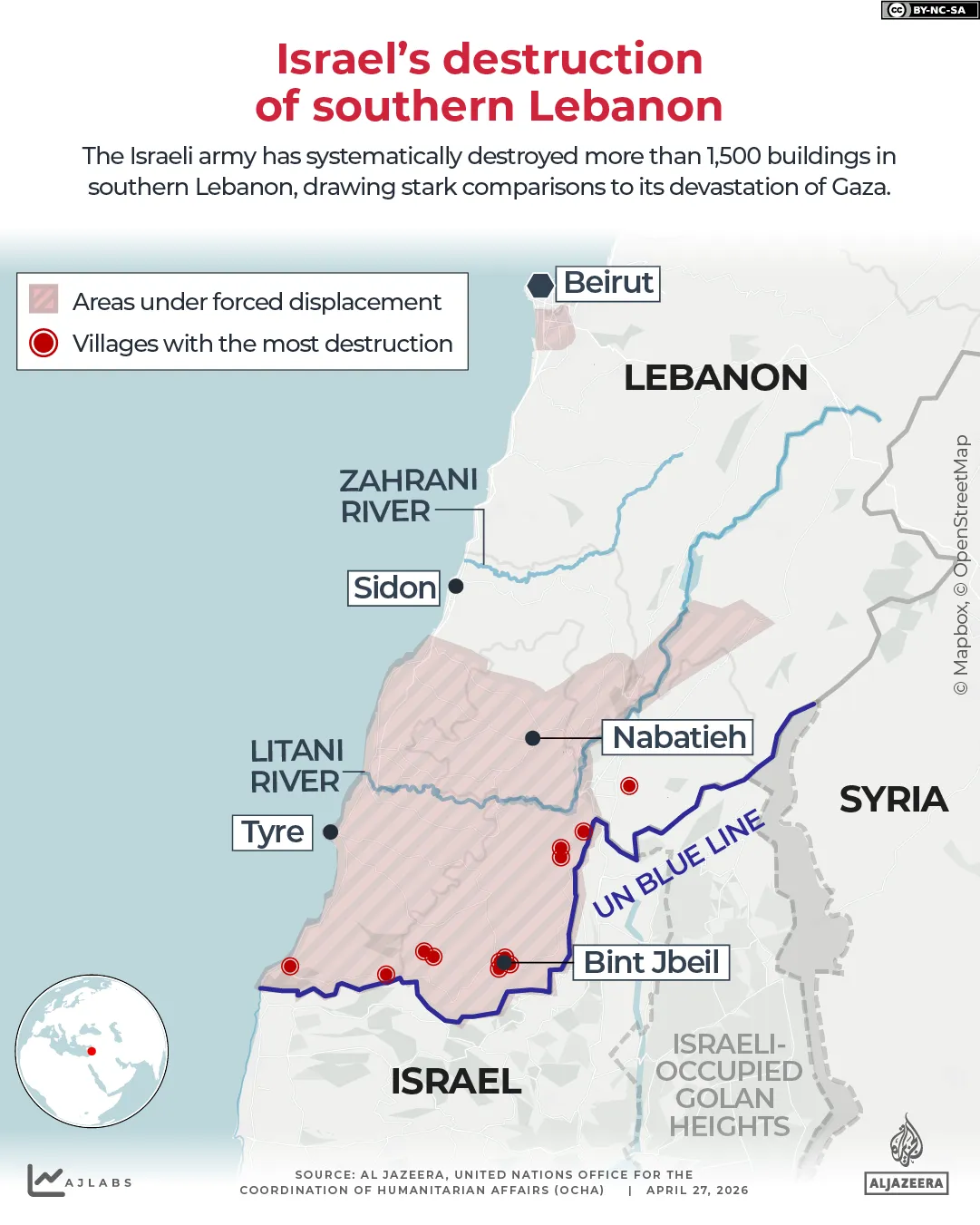
Tens of thousands of people poured into areas of southern Lebanon on Friday morning hours after the truce went into effect, many heading back to homes and villages battered by more than a month of Israeli attacks.

Recommended Stories

list of 3 itemsend of list

“People just couldn’t wait,” reported Al Jazeera’s Zeina Khodr from Nabatieh, one of the hardest hit areas.

“Even if it’s 10 days, they want to return to their homes. Some of them are just coming to see what remains of their homes, what remains of their lives.

“They want to show that they don’t want to give up their lands,” added Khodr.

While the ceasefire largely appeared to hold, Lebanon’s army accused Israel of several early violations on Friday, including intermittent shelling of ‌southern Lebanese villages.

Lebanon’s National News Agency also reported that unexploded ordnance killed a boy in the town of Majdal Selem, while rescuers uncovered the bodies of at least a dozen people killed in earlier attacks in Tyre.

French President Emmanuel Macron warned that the ceasefire “may already be undermined by ongoing military operations” and called for “the safety of civilians on both sides of the border”.

Hezbollah said its fighters “will keep their finger on the trigger because they are wary of the enemy’s treachery”.

Israeli air strikes and a ground invasion of parts of southern Lebanon have killed more than 2,100 people and displaced some 1.2 million in the latest round of fighting, according to Lebanese authorities.

Hezbollah attacks, meanwhile, killed two Israeli civilians, while 13 Israeli soldiers were killed in Lebanon, according to Israel.

Israeli officials have said they intend to maintain control over Lebanese territory extending to the Litani River as a “buffer zone” against Hezbollah.

‘Unliveable’

As residents assessed the damage to their hometowns, some pledged to stay, while others – finding nothing to return to or fearing the fragile truce could collapse – said they would leave again.

“There’s destruction and it’s unliveable. Unliveable. We’re taking our things and leaving again,” said Fadel Badreddine, who returned to Nabatieh with his young son and wife. “May God grant us relief and end this whole thing permanently – not temporarily – so we can return to our homes and lands.”

Al Jazeera’s Khodr said “wherever you look you see damage, destruction” in Nabatieh. “So much has been lost in this conflict in the past 46 days.”

If the ceasefire holds, it could ease one of the main points of tension in US-Iran negotiations. Iran and mediator Pakistan had maintained that Lebanon should be covered in a separate US-Iran ceasefire framework, while Israel claimed it was not part of that deal and continued its attacks.

Ali Akbar Dareini, a researcher at Iran’s Center for Strategic Studies, said the Israel-Lebanon ceasefire had removed one obstacle to wider negotiations between the US and Iran because Tehran views the regional conflict as interconnected, describing this as a “unity of fronts”.

Pakistani Prime Minister Shehbaz Sharif, whose country hosted last week’s ceasefire talks between the US and Iran, welcomed the Israel-Lebanon truce on Friday and expressed “hope that it will pave the way for sustainable peace”.

He also praised the mediation role of US President Donald Trump, who has invited Israeli Prime Minister Benjamin Netanyahu and Lebanese President Joseph Aoun to the White House for “meaningful talks”.

“Pakistan reaffirms its unwavering support for the sovereignty and territorial integrity of Lebanon, and will continue to support all efforts aimed at lasting peace in the region,” Sharif said on X.

Source link

‘Trump forced Israel into a ceasefire’ with Lebanon | Israel attacks Lebanon

NewsFeed

Abed Abou Shhadeh, a political commentator based in Israel, says the ceasefire between Israel and Lebanon is ‘extremely problematic, not only for Netanyahu, but for the Israeli public who were promised for two and a half years now, absolute victory’.

Source link

People in Beirut wary of trusting Israel will uphold Lebanon ceasefire | Newsfeed

NewsFeed

Lebanon’s residents say they are wary of trusting that Israel will abide by the ceasefire agreement announced by US President Donald Trump. Al Jazeera’s Justin Salhani reports from Beirut where residents tell him they are not celebrating.

Source link

Israel, Lebanon agree to 10-day cease-fire

April 16 (UPI) — President Donald Trump announced that Israel and Lebanon agreed to a 10-day cease-fire starting at 5:00 p.m., pausing Israel’s six-week war on Hezbollah in that country.

Trump spoke with Lebanese President Joseph Aoun and Israeli Prime Minister Benjamin Netanyahu on Thursday, both leaders confirmed, and agreed to the cease-fire and to work toward a more permanent peace between their countries.

Aoun and Netanyahu spoke to each other separately because Aoun declined to participate in a call with the Israeli leader because Israel was still bombing Lebanon, CNN reported.

“These two Leaders have agreed that in order to achieve PEACE between their Countries, they will formally begin a 10 Day CEASEFIRE,” he said in a post on Truth Social.

Vice President J.D. Vance, Secretary of State Marco Rubio and Joint Chiefs of Staff Chairman Dan Caine have been directed to work with officials of both countries to achieve a more lasting peace.

Lebanese Prime Minister Nawaf Salam in a statement thanked the United States, France, the European Union, Saudi Arabia, Egypt, Qatar and Jordan for helping to accomplish the cease-fire he had pursued “since the first day of the way,” NBC News reported.

After the United States and Israel launched the Iran war, Israel also launched offensives against the Iran-backed militia Hezbollah in Lebanon, from which it often launches attacks at Israel.

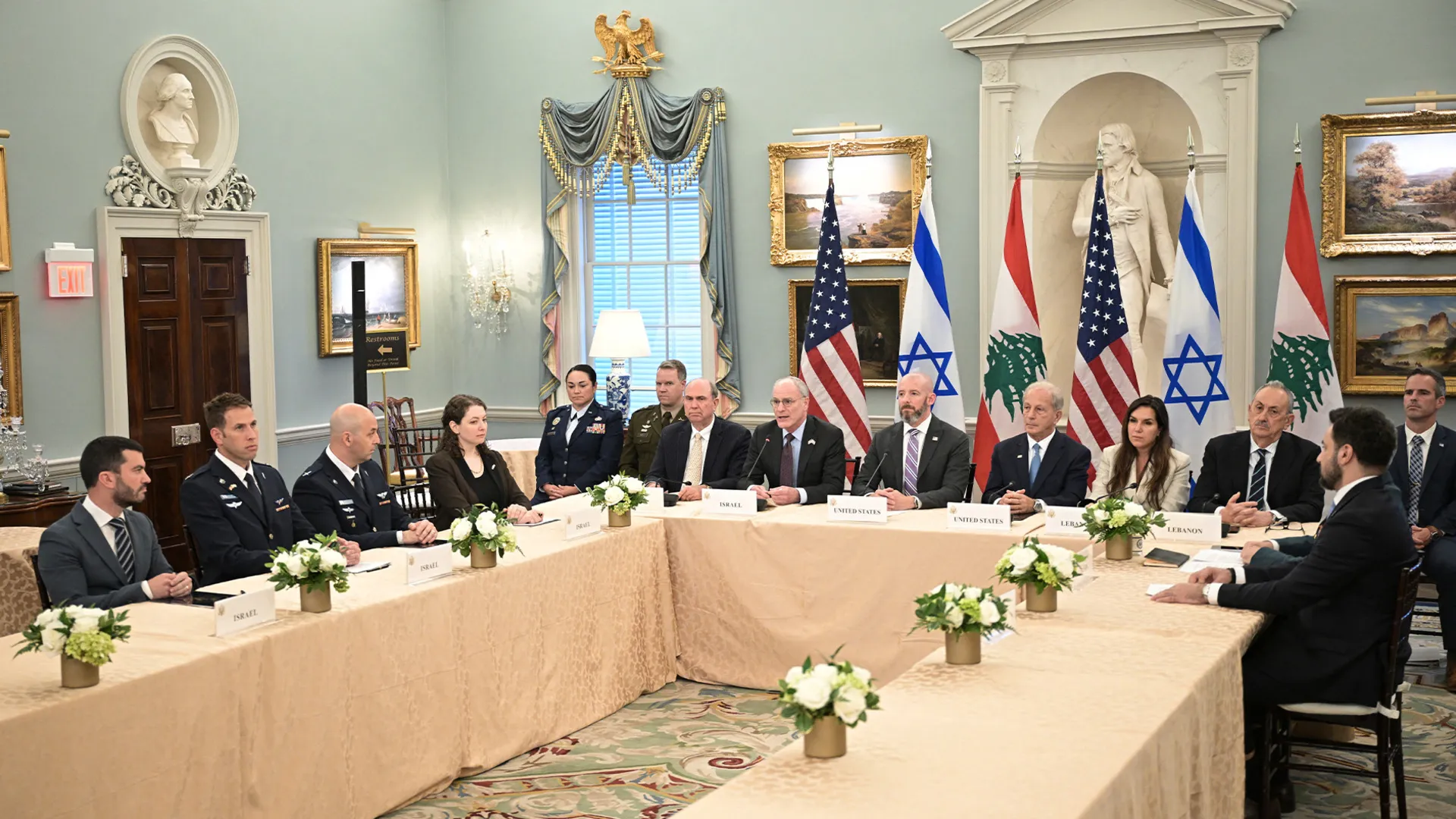
This week, delegates from the neighboring countries conducted diplomatic talks for the first time since 1993, meeting in Washington, D.C., to discuss a cease-fire and the larger issue of Hezbollah’s hijacking of Lebanese lands in order to target Israel.

Netanayhu said Thursday in a video statement that Israeli forces would “remain in a 10-kilometer security zone, which will allow us to prevent infiltration into communities and anti-tank missile fire.”

Calling the negotiations potentially historic, Netanyahu said that Israel’s chief goal is to disarm Hezbollah and its ability to invade or launch weapons across the Lebanese border into Israel.

“That is where we will remain,” he said. “We are not leaving.”

After the diplomatic talks on Wednesday, Rubio reinforced that a key part of the meeting and now peace talks between the two nations is to end Hezbollah’s destabilizing influence in Lebanon and the wider Middle East.

“We have to remember the Lebanese people are victims of Hezbollah,” Rubio said, also noting that accomplishing a lasting peace “will take time.”

First lady Melania Trump speaks during a House Ways and Means Committee roundtable discussion on protecting children in America’s foster care system in the Longworth House Office Building near the U.S. Capitol on Wednesday. The bipartisan group of lawmakers are looking to address challenges children in foster care face, including barriers to education and educational advocacy, housing, employment opportunities, financial independence, and technology. Photo by Bonnie Cash/UPI | License Photo

Source link

How Coachella grew from a small desert festival into a global cultural behemoth

Commenters who never have been — and never will go — complain about the cost, the influencers, the hype. Purists wax poetic about the days when they disappeared into three days of music and the field wasn’t overtaken by brands like Barbie and e.l.f. cosmetics. Defenders claim they can camp their way to an affordable weekend, and others spend the whole time posting. A select few even talk about great performances they saw — it’s still a music festival.

You’re reading the Essential California newsletter

Sign up to start every day with California’s most important stories.

But one thing everybody can agree on: Coachella has changed. I should know. I’ve been covering it as a journalist since 2007.

Rapid advancements in technology and mass adoption of social media have brought out the best and worst of the festival — not just on screens thousands of miles away, but to those of us trying not to trip over the makeshift photoshoot you might have seen on Instagram.

Coachella pre-2010 was a purist’s paradise

Some of Coachella’s most iconic moments happened before smartphones: The Flaming Lips in a human hamster ball in 2004; Daft Punk’s 2006 pyramid set; Rage Against the Machine reuniting and calling for the George W. Bush administration to be tried for war crimes in 2007. If you even had a cellphone when Coachella started in 1999 it was probably a Nokia brick or a flip phone with an antenna that had limited talk and text options.

In the early years, there were no brand activations on the field; nobody knew what an influencer was and the only corporate sign you saw was for Heineken in the beer gardens. (There was no Heineken House with its own stage, just signs advertising the beer.)

The grounds were also considerably smaller, making it easier to explore the different stages and discover new music. You didn’t have fancy food options, but a slice of Spicy Pie was less than $10. (Coachella upgraded its food options from festival staples to weekend outposts of L.A. restaurants in 2014.)

The music was the draw. The festival’s track record includes artists like the Killers, the Black Keys, Childish Gambino and Kendrick Lamar climbing up from small type to headliner on the lineup poster.

Livestreams and influencers made Coachella’s reach global

The vibes started to shift in 2010 as smartphones grew in popularity, although the service on the field was spotty. It was the first year Coachella offered a livestream — available via Facebook and MySpace. The next year, the stream moved to YouTube, where it remains and draws millions of viewers.

As Coachella expanded to twin weekends due to popular demand on the ground in 2012, it also had the first viral moment fans could enjoy from thousands of miles away: Dr. Dre and Snoop Dogg brought 2Pac back to life via a hologram.

Celebrities were always at Coachella (I spotted Ryan Seacrest, Corbin Bernsen, David Hasselhoff and Danny DeVito in my early years), but the rise of social media made celebrity culture a key part of the event. By 2011, TMZ was posting about stars like Lindsay Lohan. Clips from Coachella went viral and ended up on shows like “Tosh.0” and referenced in “Community.”

The art, which was always part of the festival, became bigger and more iconic. On the growing photo app Instagram, larger-than-life sculptures of astronauts started appearing in selfies.

Brands saw an opportunity. American Express, H&M and Samsung launched activations on-site in 2015. The party scene outside the festival, with non-affiliated events that were timed because everyone was in town for Coachella, became marketing vehicles. Brands are still cashing in more than a decade later.

The next watershed moment was Beyoncé in 2018. Today, most headlining sets at the fest feel as if they are designed for the viewing experience on the livestream rather than the fans on the field (ahem, Justin Bieber and his laptop). But Beyoncé’s spectacle was just as mind-blowing on-site as it was at home. A year later, the “Homecoming” special debuted on Netflix, widening the reach.

Coachella became a key part of the pop culture landscape, and then it became a cornerstone of the influencer economy.

Behind all the hype, there’s still a music festival hiding

I inadvertently photobombed approximately 500 people just trying to go to and from the press tent last weekend and my inbox is overflowing with requests for coverage of off-site events with brands, celebs and TikTok influencers, including social media clips.

But at the end of the day, Coachella is still a music festival, and a really good one at that. The Strokes, David Byrne, Jack White, Iggy Pop, Turnstile, Wet Leg, Fujii Kaze and even Less Than Jake in the Heineken House were some of the best performances I had seen in years.

Coachella is what you make of it. And besides, everyone knows there are fewer influencers on Weekend 2.

Today’s top stories

A health worker administers a measles test.

A health worker administers a measles test on Fernando Tarin, of Seagraves, Texas, at a mobile testing site outside Seminole Hospital District on Feb. 21, 2025.

(Julio Cortez / Associated Press)

Increasing measles cases in California

  • California in 2026 has already seen its highest number of annual measles cases in seven years amid an ongoing resurgence of a disease once considered effectively eradicated in the U.S.
  • The re-emergence comes as vaccination rates have tumbled nationwide in recent years.

Testing LAX’s long-awaited train

  • LAX’s 2.25-mile electric train system will begin running without passengers next week as testing advances following a series of delays.
  • The Automated People Mover system began construction in 2019 and was initially slated to open to the public in 2023.
  • Specific bottles of Xanax, one of the most widely prescribed medications to treat anxiety and panic disorders, has been recalled due to its failure to dissolve at a standard rate.
  • FDA officials are not warning against consuming the product at this time.

What else is going on

Commentary and opinions

This morning’s must-read

Another must-read

For your downtime

A reporter lies on an AI massage table.

Reporter Deborah Vankin gets a massage by an “Aescape” robot at Pause Wellness Studio.

(Christina House / Los Angeles Times)

Going out

Staying in

A question for you: Are you planning on leaving California for another state? If so, tell us why.

Laura says, “I left California during the pandemic. Part of the push factor for me was politics, but not blue politics. I had been living in OC since 2018 and was surprised it was so Conservative (and conservative). That became a bigger source of discomfort for me as the vaccine question demonstrated how our neighbors’ decisions can impact us directly. Rather than moving elsewhere in California, which would have sorted out the political discomfort nicely, I moved to a much more affordable state where I had family.”

Email us at essentialcalifornia@latimes.com, and your response might appear in the newsletter this week.

And finally … from our archives

Kendrick Lamar rapping into a microphone on a dark smoky stage with a dark red backdrop

Kendrick Lamar performs at Coachella Music & Arts Festival at the Empire Polo Club on April 16, 2017.

(Amy Harris / Invision / AP)

On April 16, 2018, Compton’s own Kendrick Lamar became the first hip-hop artist to win the Pulitzer Prize for music.

He won for his album “Damn.,” which the Times’ Mikael Wood heralded as Lamar’s graduation to pop superstardom.

Have a great day, from the Essential California team

Jim Rainey, staff reporter
Hugo Martín, assistant editor, fast break desk
Kevinisha Walker, multiplatform editor
Andrew Campa, weekend writer
Karim Doumar, head of newsletters

How can we make this newsletter more useful? Send comments to essentialcalifornia@latimes.com. Check our top stories, topics and the latest articles on latimes.com.

Source link

Turkiye’s Roketsan eyes top 10 exporter rank amid Middle East conflict | Business and Economy News

Modern warfare has dramatically changed as we have seen from the Russia-Ukraine war, conflicts involving Gaza, India and Pakistan, and the recent US-Israeli strikes on Iran. At the centre of this shift is a surging global reliance on drone and missile technology as well as advanced air defence systems.

Turkiye, one of the largest military powers in the Middle East, is increasingly positioning itself as a major supplier in the global defence sector. Central to this effort is Roketsan, a company founded in 1988 to supply the Turkish Armed Forces, which has since evolved into the country’s primary manufacturer of missile and rocket systems.

Recommended Stories

list of 3 itemsend of list

Currently exporting to approximately 50 countries, the firm is one of the fastest-growing defence companies globally.

So how did Roketsan secure a large share of the global arms trade?

Bypassing Western embargoes

Turkiye’s defence expansion was largely accelerated by restrictions placed upon it. Western embargoes aimed at halting its military advancement meant Ankara could not acquire the necessary technical systems or components.

In 2020, the United States imposed Countering America’s Adversaries Through Sanctions Act (CAATSA) restrictions on Turkiye – a key member of the transatlantic military alliance NATO. These sanctions targeted Turkiye’s military procurement agency, its chief Ismail Demir, and three other senior officials. Washington also ejected Ankara from the F-35 stealth jet programme in July 2019.

The measures came after Ankara purchased Russia’s S-400 missile defence system, which was seen as a potential threat to NATO security. The European Union also prepared limited sanctions and discussed restricting arms exports following energy exploration disputes in the Eastern Mediterranean.

To circumvent this, the country built an integrated, domestic defence ecosystem. Today, Turkiye relies on a vast supply chain of nearly 4,000 small and medium-sized enterprises (SMEs) scattered across the country. As a result, the Turkish defence industry now operates with a local production rate exceeding 90 percent.

Türkiye's defense industry now operates with a local production rate exceeding 90 percent, bypassing long-standing Western embargoes. [Al Jazeera]
Türkiye’s defence industry now operates with a local production rate exceeding 90 percent, bypassing long-standing Western embargoes [Al Jazeera]

This shift has yielded significant financial returns for Ankara. In 2025, Turkiye’s defence industry reported $10bn in exports. Roketsan’s General Manager Murat Ikinci told Al Jazeera that the company currently ranks 71st among global defence firms, with ambitions to break into the top 50, then the top 20, and ultimately the top 10.

To support this expansion, Turkish President Recep Tayyip Erdogan inaugurated several large-scale facilities last week, including:

  • Europe’s largest warhead facility.
  • new research and development (R&D) centre housing 1,000 engineers.
  • the “Kirikkale” facility dedicated to rocket fuel technology.
  • new infrastructure for the mass production of ballistic and cruise missiles.

These projects represent a $1bn investment, with the company planning to inject an additional $2bn to expand mass production capabilities.

The ‘Tayfun’ and modern warfare

Roketsan’s R&D strategy – which employs 3,200 engineers and makes the company the third-largest R&D institution in Turkiye – is heavily influenced by data gathered from ongoing global conflicts.

According to Ikinci, the war in Ukraine highlighted the impact of cheap, first-person view (FPV) and kamikaze drones supported by artificial intelligence. In response, Roketsan developed air defence systems like “ALKA” and “BURC,” alongside the “CIRIT” laser-guided missile.

The regional landscape was further complicated during the US-Israel war on Iran, as cheap Iranian-designed Shahed drones – recently upgraded by Russia with “Kometa-B” anti-jamming modules – overwhelmed defences and even struck a British base in Cyprus in March 2026. During the same month, NATO air defences were forced to intercept three Iranian ballistic missiles that entered Turkish airspace.

Meanwhile, the recent conflict between Israel and Iran showcased the use of complex attacks combining ballistic missiles with “swarms” of kamikaze drones designed to overwhelm air defences. This environment makes hypersonic technology a critical asset.

This brings the Tayfun (Typhoon) project into focus. Tayfun is a developing family of long-range ballistic missiles. Its most advanced iteration, the Tayfun Block 4, is a hypersonic missile engineered to penetrate advanced air defence systems by travelling at extreme speeds.

When Al Jazeera asked for specific details regarding the Tayfun’s exact operational range, Ikinci was elusive. “We avoid mentioning its range; we just say its range is sufficient,” he noted.

Similarly, historical Western sanctions have pushed Turkiye to form new cooperation initiatives, effectively accelerating an “Eastern shift” away from Western defence dependence. Turkish drones are now being used by a growing number of countries, including by Pakistan during its war against India last May.

Based on these threat assessments, Roketsan has prioritised five key areas of production:

  1. long-range ballistic and cruise missiles.
  2. air defence systems, including the “Steel Dome”, Hisar-A, Hisar-O, and Siper.
  3. submarine-launched cruise missiles, utilising the AKYA system to leverage Turkiye’s large submarine fleet.
  4. smart micro-munitions designed specifically for armed drones.
  5. long-range air-to-air missiles, a need highlighted by the brief India-Pakistan skirmish.

A strategic export model

Unlike traditional arms procurement, Turkiye is marketing its defence industry to international buyers as a strategic partnership.

“Our offer to our partners… is as follows: Let’s produce together, let’s develop technology together,” Ikinci stated.

İkinci emphasizes that Roketsan's international strategy is based on "partnership models" rather than simple sales. [Al Jazeera]
Rokestan’s General Manager Murat İkinci, right, emphasises that Roketsan’s international strategy is based on ‘partnership models’ rather than simple sales [Al Jazeera]


By establishing joint facilities and R&D centres in allied nations across the Middle East, the Far East, and Europe, Turkiye is attempting to secure long-term geopolitical alliances rather than purely transactional sales. Ikinci highlighted Qatar as a prime example of this model, describing it as a benchmark for technological, military, and security cooperation in the region.

Filling the global stockpile gap

This rapid expansion comes at a critical time for the global arms trade. Ongoing wars have severely depleted the stockpiles of advanced weapon systems worldwide.

During the recent US-Israel war on Iran, Washington relied heavily on multimillion-dollar Patriot and Terminal High Altitude Area Defense (THAAD) systems to intercept cheap Iranian drones targeting US assets across Qatar, Kuwait, Bahrain, Saudi Arabia, and the United Arab Emirates. With growing concerns that US interceptor supplies could run low, Gulf states – which have collectively detected over 1,000 drones in their airspace – are actively seeking alternative defence technologies, creating a highly lucrative opening for Turkiye’s missile industry.

Defence analyses indicate that even military superpowers like the US will require significant time to replenish their current air defence inventories due to the complexity and massive infrastructure required to build them.

Turkish defence officials view this shortage as a strategic opening. Having localised its supply chain, Turkiye claims it can manufacture and export these highly sought-after complex systems independently.

As global demand for air defence and ballistic technologies rises, Roketsan is aggressively reinvesting its revenues into production infrastructure to expand its footprint in the international arms market.

Source link

Hegseth says US blockade to continue, ready for new attacks on Iran energy | Donald Trump News

United States Pentagon Chief Pete Hegseth has said the military blockade of Iran’s ports will continue “as long as it takes”, saying Washington remained “locked and loaded” to attack Iran’s energy facilities.

The US Pentagon chief spoke on Thursday as a tenuous pause in fighting agreed to last week has continued. On Monday, President Donald Trump announced the military would blockade Iran’s ports in the Strait of Hormuz and the Persian Gulf after US-Iran talks in Pakistan failed to reach a breakthrough.

Recommended Stories

list of 3 itemsend of list

Hegseth struck an aggressive tone as he maintained the US military was monitoring Iran’s military movements during the pause in fighting, which currently is meant to extend through early next week.

“We are reloading with more power than ever before…even more importantly, better intelligence than ever before,” Hegseth said.

“As you expose yourself with your movement to our watchful eye, we are locked and loaded on your critical dual-use infrastructure, on your remaining power generation and on your energy industry,” he said.

Still, the Pentagon chief said the US prefers to resolve the conflict, which began with US-Israeli attacks on Iran on February 28, through diplomacy.

“You, Iran, can choose a prosperous future, a golden bridge, and we hope that you do for the people of Iran,” he said. “In the meantime and for as long as it takes, we will maintain this blockade, successful blockade, but if Iran chooses poorly, then they will have a blockade and bombs dropping on infrastructure, power and energy.”

On Wednesday, a Pakistani delegation arrived in Tehran to coordinate a new round of talks. While both sides have indicated they remained open to further negotiations, Major-General Ali Abdollahi, the commander of the Khatam al-Anbiya Central Headquarters of the Islamic Revolutionary Guard Corps (IRGC), warned that the US blockade could end the current pause in fighting.

White House spokesperson Karoline Leavitt, meanwhile, indicated the US maintained a positive outlook on future talks.

“At this moment, we remain very much engaged in these negotiations, in these talks,” she said.

But reporting from Tehran on Thursday, Al Jazeera’s Ali Hashem says deep-seated distrust remains. The US under Trump twice attacked Iran amid ongoing indirect talks over Iran’s nuclear programme, a fact that has cast a long shadow over the most recent bout of diplomacy.

“Clearly, there have been several messages conveyed to the Iranians. But rather than consolidating a feeling of trust and optimism, it seems that it’s already shaken,” he said.

“We saw a platform closely associated with the foreign ministry tweeting today, quoting a source saying that whatever is being demonstrated or said in the media regarding the optimism is just hype, and this is used for PR and it’s for President Trump to use in the markets,” he said.

Iran’s speaker of parliament, Mohammad Bagher Ghalibaf, who led the Iranian delegation in the talks with Iran, told his Lebanese counterpart on Thursday that a ceasefire in Israel’s invasion and ongoing bombardment of Lebanon is “as important” as the pause in fighting in Iran.

A Lebanon ceasefire has emerged as one of the main sticking points in talks, which also include control of the Strait of Hormuz and the future of Iran’s nuclear programme.

‘We will use force’

Speaking during the news conference on Thursday, General Dan Caine, the chairman of the Joint Chiefs of Staff, said so far, 13 ships leaving Iranian ports have turned around in response to US military warnings.

“If you do not comply with this blockade, we will use force,” Caine said.

Admiral Brad Cooper, the head of US Central Command (CENTCOM), meanwhile, said the US is using the wear to rearm and reposition its forces.

“We’re rearming, we’re retooling, and we’re adjusting our tactics, techniques and procedures. There’s no military in the world that adjusts like we do, and that’s exactly what we’re doing right now during the ceasefire,” said.

During questions with reporters, Hegseth also shot down reports that China was planning to send weapons to Iran amid the pause in fighting. Hegseth said Washington had received assurances from Beijing that this was not the case.

Hegseth also used a large portion of the news conference to attack US press coverage of the war, which the Trump administration is receiving criticism for its shifting objectives and justifications for launching the conflict.

Hegseth called the coverage “incredibly unpatriotic”.

Source link

Israeli army says soldiers accused of abusing Palestinian to return to duty | Israel-Palestine conflict News

Some of the reservists accused of sexually assaulting a detainee have already started combat roles, reports Israeli Army Radio.

Israeli military chief Eyal Zamir has authorised five soldiers accused of sexually assaulting a Palestinian inmate in the notorious Sde Teiman detention camp to return to reserve service after charges against them were dropped, according to Israeli media reports.

The soldiers, all from the Force 100 unit assigned to guard military prisons, are being reinstated despite an ongoing, internal military inquiry into their conduct.

Recommended Stories

list of 3 itemsend of list

Israeli Army Radio reported that some of the reservists have already returned to active duty, including deployment to combat roles.

An Israeli army statement, cited by Israel’s Haaretz newspaper, said: “The investigation does not prevent them from continuing to serve … the command-level investigation will be completed as soon as possible.”

The reinstatement comes after Israel’s top military lawyer dropped all charges against the soldiers last month, closing a case that had been among the most divisive in Israel’s recent history.

The soldiers had been charged with aggravated assault and causing severe injury, after footage broadcast by Israeli television showed them abusing a Palestinian man in Sde Teiman. The military’s own indictment described soldiers stabbing the detainee with a sharp object near his rectum, causing cracked ribs, a punctured lung and an internal tear.

A doctor at the facility, Yoel Donchin, told Haaretz he was so shocked by the Palestinian inmate’s condition that he initially assumed it was the work of a rival armed group.

Military Advocate General Itay Offir said the indictments were scrapped partly because of “complexities in the evidentiary structure” and “difficulties” arising from the detainee’s release to the Gaza Strip.

Rights groups condemned the decision as a legal injustice, with Amnesty International calling it “yet another unconscionable chapter in the Israeli legal system’s long-standing history of granting impunity to perpetrators of grave crimes against Palestinians”.

“Since the start of Israel’s genocide against Palestinians in the occupied Gaza Strip, and despite overwhelming evidence of widespread torture and abuse, including sexual violence, against Palestinians in Israeli detention centers, only one Israeli soldier has so far been sentenced over torturing a Palestinian detainee,” said the rights group in a statement.

Palestinians released from Israeli detention have reported suffering widespread abuse while in custody.

A February report by the Committee to Protect Journalists also cited dozens of formerly detained Palestinian journalists describing “routine beatings, starvation and sexual assault” in Israeli custody.

Source link

Is Iran’s economy buckling under war pressure or holding up? | US-Israel war on Iran

The Iran war has deepened the damage to its sanctions-hit economy, but oil revenues have provided a crucial cushion.

The US has spent decades trying to squeeze Iran economically.
Six weeks into the Middle East conflict, Tehran is still standing.
US and Israeli attacks on infrastructure, industry and trade have damaged Iran’s sanctioned economy even further.

But oil revenues have kept flowing, giving the regime a financial cushion.

The Strait of Hormuz is now at the centre of this economic battle; whoever controls it controls the pressure.

At the negotiating table, sanctions relief, billions in frozen assets and war reparations are all at stake.

Meanwhile, millions of Iranians are bearing the brunt of inflation, shortages and a collapsing currency.

Source link