Israel

Israel strikes southern suburbs of Lebanon’s capital Beirut | Israel attacks Lebanon

NewsFeed

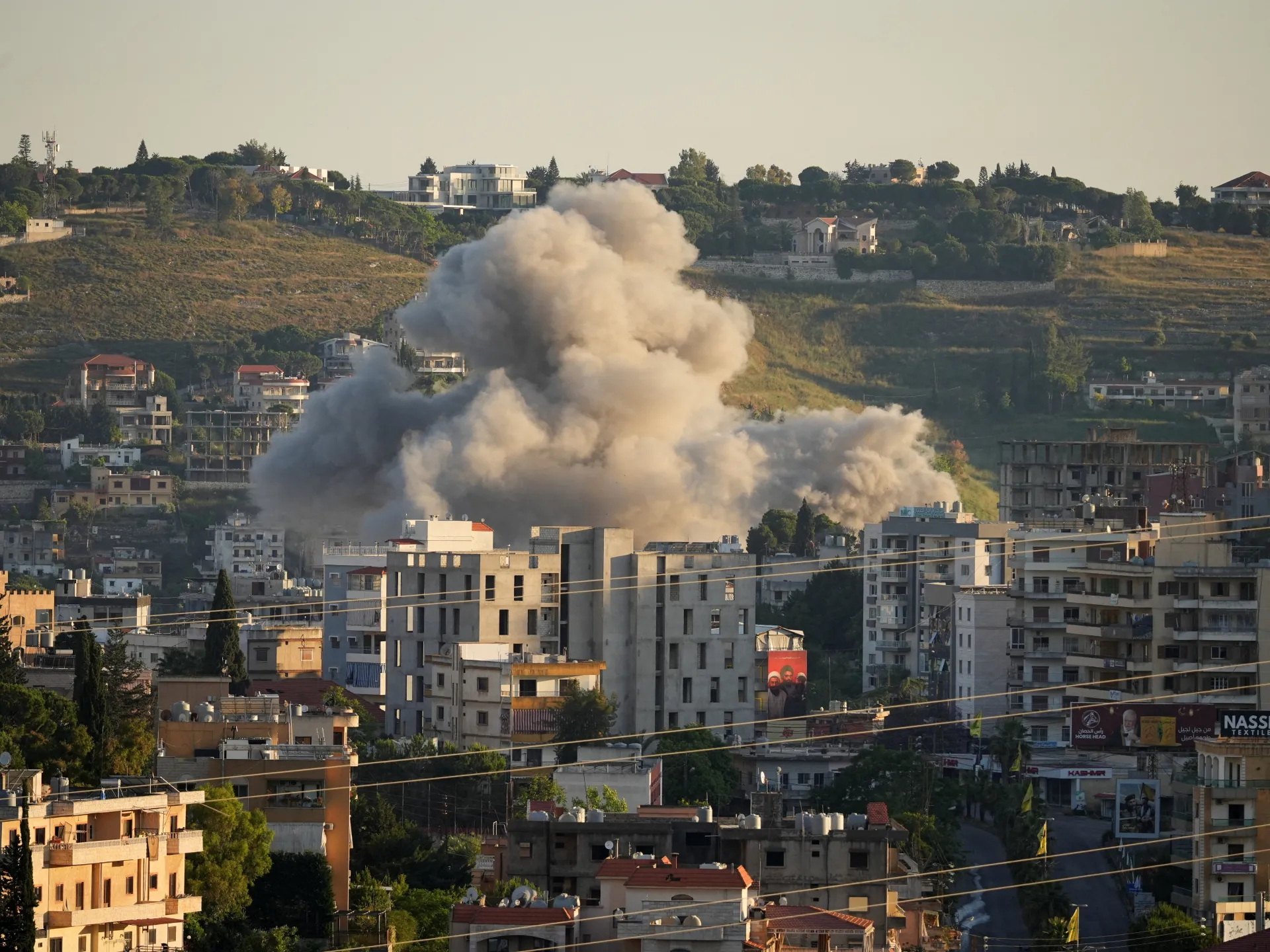
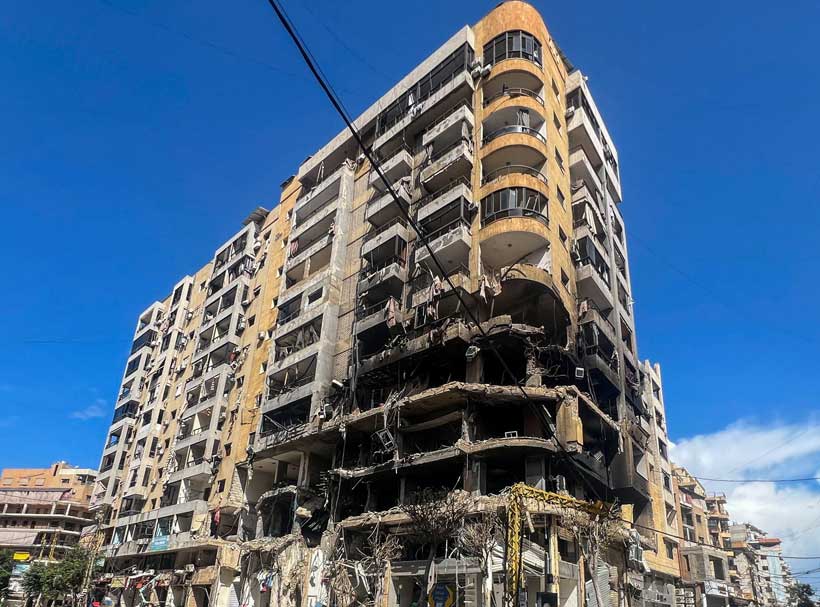
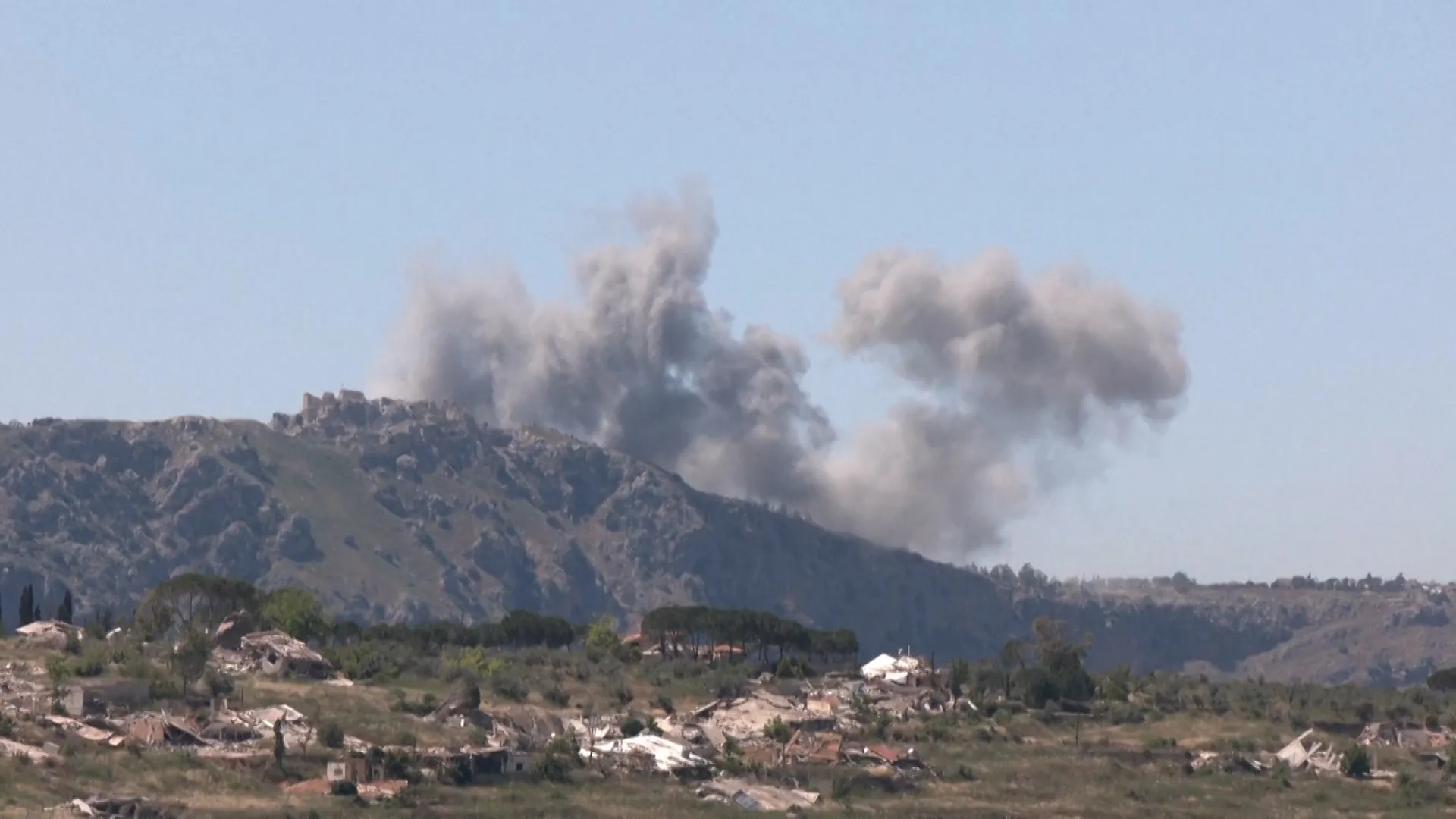
Videos show the aftermath of an Israeli attack on Beirut’s southern suburbs, with multiple explosions reported. Israel says it targeted Hezbollah headquarters, while Lebanese media says residential apartments were hit. The attack comes just days after US President Donald Trump told Benjamin Netanyahu that Beirut was off limits as Washington pursues a deal with Iran.

Source link

One killed, five wounded in shooting attack in Israel: Medics | News

Israeli police said they killed two suspects allegedly involved in the shooting.

At least one man has been killed and five wounded in central Israel, Israeli medics have said, in what police called a suspected “terror attack”.

Israeli rescue service Magen David Adom said a 35-year-old man died of gunshot wounds in the attack on Sunday, while the other casualties have been transferred to two hospitals. Two of those injured are in serious condition, it added.

Recommended Stories

list of 3 itemsend of list

Israeli police said they killed a suspect allegedly involved in the shooting following a manhunt. The suspected gunman was a Palestinian with Israeli citizenship from the nearby ⁠Israeli city Tayibe, they said, adding that police forces, border guard soldiers and special units were conducting searches for additional suspects. The weapon used by the attacker has been located, the police said.

“The public is asked to be vigilant, obey the instructions of the police and report any suspicious incident or person to the police,” it added.

In an earlier statement, the police said Israeli forces intervened after a report of shooting towards passersby at a gas station at the entrance to the Kochav Yair area, close to the ⁠occupied West Bank city ⁠of Qalqilya. The Israeli Broadcasting Authority said the attacker began a shooting spree at Kochav Yair and continued at the entrance to the nearby towns of Tzur Yitzhak and Tzur Natan.

A source told the Army Radio that the Israeli internal security agency and police have launched a raid campaign in Tayibe. A security cordoning has also been imposed on several neighbouring Arab villages.

Hamas commended the attack, calling it a “heroic” operation, but did not claim responsibility.

Israeli Prime Minister Benjamin Netanyahu’s office said it was holding a situational assessment on the shooting attack.

Lior Zilberberg, from the Israeli ambulance service Magen David Adom, has described the response after the shooting began in central Israel.

“We were in a large training exercise in a nearby community when we received reports … about gunshot casualties at several scenes close to us. We immediately stopped the exercise and set out with intensive care units and ambulances to the gas station in Kochav Yair, Tzur Yitzhak, and Tzur Natan,” said Zilberberg in a statement.

“During the drive, civilians signalled me to stop and called me to provide medical treatment to an unconscious casualty inside a vehicle. He was pulseless and not breathing, with gunshot wounds to his body, and after medical assessments we were forced to pronounce him dead.

“Near the vehicle, another injured person was lying conscious, suffering gunshot wounds to the upper body. After initial medical treatment at the scene, he was evacuated.”

Source link

Lebanon army chief in Pakistan, funeral plans for soldiers killed by Israel | Israel attacks Lebanon News

Funerals will be held for Lebanese officers killed in an Israeli attack in southern Lebanon, as Beirut’s army chief headed to Pakistan on a surprise visit amid ongoing mediation efforts in the wider United States-Israel war on Iran.

The Lebanese soldiers will be laid to rest on Sunday, a day after the brigadier general, captain and soldier were killed in an Israeli strike on a military vehicle on the Khardali-Nabatieh road, in an incident the Israeli army said it was investigating.

Recommended Stories

list of 4 itemsend of list

A ceasefire agreed on April 17 was meant to halt the fighting between Israel and Hezbollah, but Israel has continued to carry out near-daily attacks, prompting retaliatory ones from the Lebanese group. The violence has taken a disproportionate toll on civilians in Lebanon, where more than 3,500 people have been killed since hostilities resumed on March 2.

A further conditional ceasefire was announced by Lebanese and Israeli envoys last week in Washington, but was rejected by Hezbollah as it did not include the group or provide for Israel’s withdrawal from southern Lebanon.

Lebanese army chief Rodolphe Haykal left on Saturday for Pakistan, which has emerged as a central mediator between the US and Iran.

The visit is notable given the insistence by Washington – and by Lebanese leaders, including the president – that ceasefire talks for Lebanon remain separate from the US-Iran negotiations ‌mediated by Pakistan.

Fighting continues in southern Lebanon

Meanwhile, Israeli attacks hit several towns across southern Lebanon and the western Bekaa overnight, while Hezbollah said it launched rockets, artillery fire, and drone attacks against Israeli forces, including near the Beaufort Castle in Yohmor al-Shaqif.

Lebanon’s Ministry of Public Health said on Sunday that an Israeli raid on the town of Saksakiyeh a day earlier killed at least two people. The ministry added that 22 people were wounded in the attack, including three children and a woman.

Two others were wounded following an Israeli drone attack on the town of Shahabiyeh, Lebanon’s National News Agency (NNA) reported.

Israeli air attacks also hit the town of Qalawiya at dawn, and the towns of al-Qatrani, Byblos and Rihan in the Jezzine district overnight. The town of Deir Kifa in the Tyre district was also bombed, while Barashit and Chaqra in the same district were subjected to intermittent artillery shelling overnight.

NNA also reported artillery shelling in the towns of al-Mansouri and Bayt al-Sayyad in the Tyre district.

Israeli warplanes launched an attack on the town of Srifa. Local media also reported that Israeli fighter jets attacked Dweir, near Nabatieh, north of the Litani River.

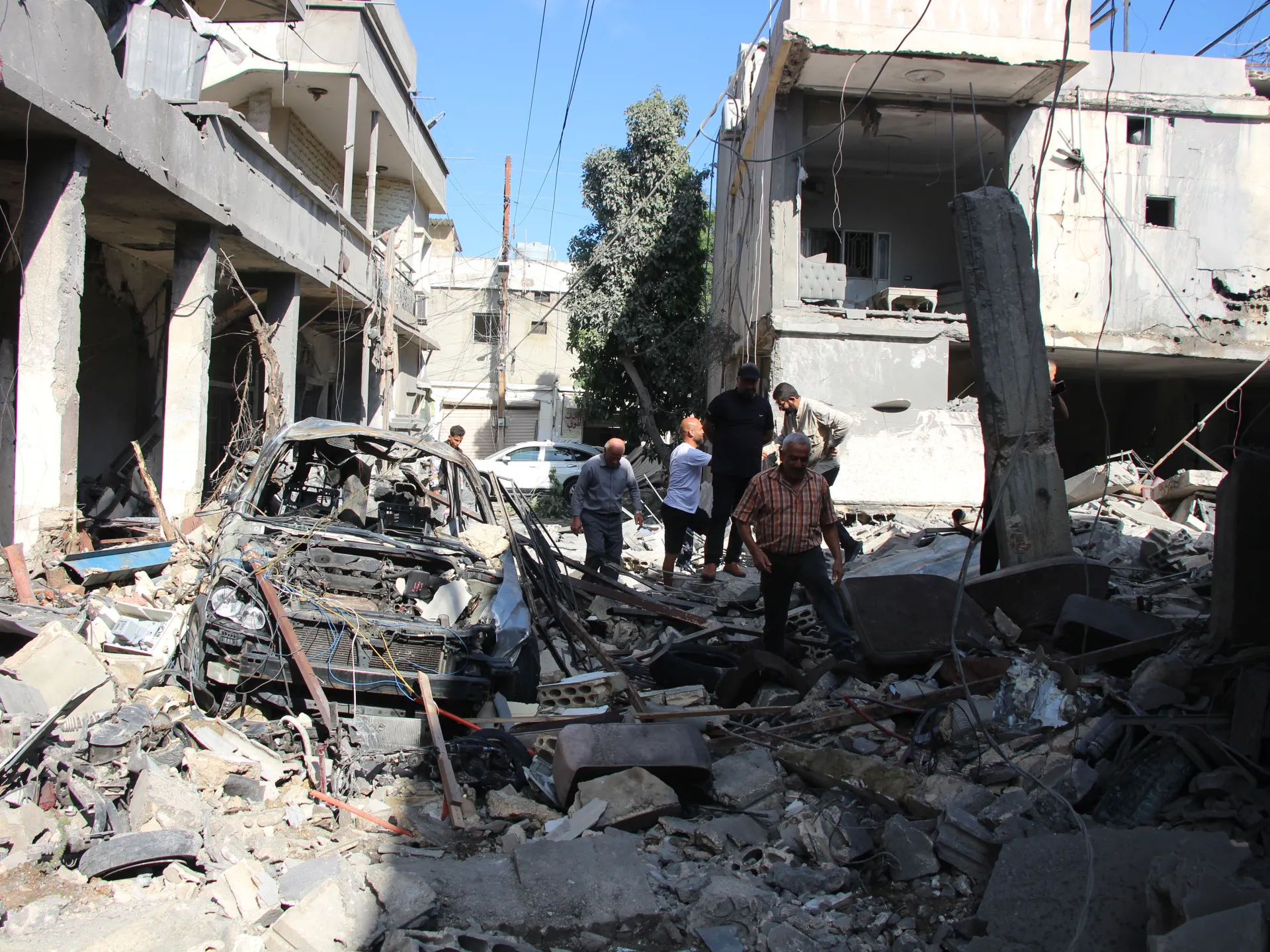
Paramedics, meanwhile, continue to look for survivors under the rubble following Israeli attacks.

“The pattern is part of what is being called the Gazafication of Lebanon, or Israel using actions normalised by the Gaza genocide,” said Al Jazeera’s Nour Odeh, reporting from Ramallah in the occupied West Bank.

“The targeting of schools in southern Lebanon, just like Gaza. Bombing Lebanese hospitals and clinics, also like Gaza. And the murder of journalists. Then there’s these so-called double-tap attacks against paramedics and rescue workers. Hundreds of Palestinian and Lebanese paramedics have been killed with this unlawful practice.”

Gazafication extends to the ceasefire, too, she added.

“The ‘Yellow Line’, first introduced in Gaza, has now swallowed 60 percent of the territory. In Lebanon, the ‘Yellow Line’ now includes nearly a fifth of the country. Both invisible lines keep expanding,” said Odeh.

No choice but negotiations, says Lebanese lawmaker

Najat Aoun Saliba, an independent member of Lebanon’s parliament, meanwhile, condemned Israel’s killing of the Lebanese soldiers and said President Joseph Aoun has no choice but to enter into negotiations with Israel.

“If we don’t have negotiations, what is the alternative? Is the alternative going to war? The war is not going to give us peace,” she told Al Jazeera.

Saliba said dialogue was the only viable path given the imbalance of power between Israel and Lebanon’s armies.

“The balance of power between the armies is not to be compared. Israel has a very strong army backed up by the United States. The Lebanese Armed Forces have been sidelined by a political will for 30 years, because they wanted to strengthen the presence of Hezbollah,” she said.

The lawmaker added that Hezbollah has not been able to stop Israeli aggression.

“Hezbollah is not able to stop any of these war crimes, and it’s not able to stop any of the invasions that Israel is doing. I think with … all these massacres and destruction, I don’t think we have a choice.”

The killing of Brigadier General Wissam Sabra, Captain Elie Khoury and soldier Hussein Ghozal came at a tense moment amid broader efforts to strike a deal between the US, Iran, Hezbollah, the Lebanese government and Israel.

Lebanese President Joseph Aoun said the attack was “aimed at thwarting all efforts to reach a solution”, while Prime Minister Nawaf Salam described it as “a heinous crime and an attack on Lebanon and all Lebanese people”.

Lebanon was drawn into the Middle East war when Iran-backed Hezbollah attacked Israel on March 2, following joint US-Israeli attacks on Iran.

Tehran has made a ceasefire in Lebanon between Israel and Hezbollah a condition for any peace deal with Washington.

Source link

Outrage over Palestinian ‘dog rape’ joke at Tribeca Film Festival | Israel-Palestine conflict

NewsFeed

A US influencer and actor have caused outrage after mocking Palestinians subject to rape and beastiality in Israeli prisons. Elon Gold and Lizzy Savetsky made the comments at the Tribeca Film Festival as they promoted a new film made in Israel.

Source link

China’s military and intelligence views on Lebanon-Israel talks

China strongly condemns the Israeli airstrikes and ground incursion into southern Lebanon, describing these operations as a dangerous escalation that threatens the stability of the entire region. China demands that Israel immediately cease its military operations and fully withdraw its forces from Lebanese territory, warning of the dangers of its incursions and violations of established lines. China views the fourth round of Washington talks between Lebanon and Israel and the military tensions as an extension of a broader crisis. Beijing sees this conflict as a consequence of the Gaza war, emphasizing clear principles in its intelligence and military assessment of the situation across several axes, most notably the necessity of an Israeli withdrawal and a ceasefire. Beijing calls for an immediate cessation of military operations and the withdrawal of Israeli forces from Lebanese territory, warning that expanding ground operations will drag the region into chaos. China’s efforts in the reconstruction of Lebanon focus on providing urgent humanitarian aid packages, signing development cooperation agreements, and encouraging Chinese companies to participate in infrastructure projects and long-term investments within the framework of China’s Belt and Road Initiative. China also defended the Lebanese position in the face of Israeli escalation at the United Nations, with its representative to the Security Council emphasizing that Israel’s advance to Beaufort Castle (Qalaat Al-Shaqif) was the most serious incursion into southern Lebanon in 30 years. He called on the international community to take urgent measures before the situation in Lebanon deteriorated further, demanding respect for Lebanese sovereignty and the withdrawal of all Israeli forces from southern Lebanon.

The most prominent features of these Chinese efforts for joint cooperation with the Lebanese side and the international community in the reconstruction of Lebanon and the cessation of Israeli attacks on southern Lebanon are the provision of direct financial and development support. The Chinese and Lebanese governments signed a development cooperation agreement in Beirut worth 50 million Chinese yuan to support reconstruction and sustainable development efforts, along with the provision of urgent humanitarian aid. China delivered shipments of emergency humanitarian aid through the Port of Beirut to alleviate the economic and living burdens on the Lebanese people. Furthermore, China encouraged the participation of Chinese companies and investments in reconstruction and development efforts in Lebanon. Beijing has expressed its readiness to encourage its major companies and national institutions to participate in Lebanon’s reconstruction projects and support the development of the energy, telecommunications, and infrastructure sectors through China’s Belt and Road Initiative. Lebanon has been a partner in this Chinese initiative since joining in 2017. China aims to enhance Lebanon’s role as a pivotal hub for trade and logistics in the Middle East. In addition to sustained Chinese diplomatic efforts, China has continued its diplomatic and developmental support for Lebanon, alongside its active participation in UN peacekeeping operations in southern Lebanon.

China’s role in halting the Israeli war on Lebanon has focused on exerting diplomatic pressure through the United Nations and utilizing international platforms to call for an immediate ceasefire and the withdrawal of Israeli forces from Lebanese territory, while supporting political and diplomatic solutions to prevent the conflict from escalating. China has consistently called for an end to Israeli military operations against Lebanon during UN sessions and warned that the collapse of ceasefires places the region on a more dangerous precipice. Beijing called for the immediate withdrawal of Israeli forces from the devastated Lebanese territories, emphasizing the need to respect international resolutions, Lebanon’s sovereignty and independence, and the protection of the United Nations Interim Force in Lebanon (UNIFIL). China stressed the importance of ensuring that UN peacekeepers could carry out their duties freely and safely and condemned any attacks against UNIFIL personnel. China also emphasized the need to intensify humanitarian aid to the Lebanese people to address the repercussions of the war and expressed its full readiness to contribute to restoring regional stability.

Here, Chinese diplomatic and intelligence agencies affirmed that Lebanon’s sovereignty and security must not be violated, stressing that extending the authority of the Lebanese state and protecting its stability are the fundamental pillars for preventing the entire region from sliding into a comprehensive regional war. They reiterated the necessity of respecting Lebanon’s sovereignty and security, considering the stability and protection of the Lebanese state as essential to preventing a full-blown regional war. China also expressed its full support for the role of the United Nations Interim Force in Lebanon (UNIFIL) and emphasized the need to provide guarantees for its protection and freedom of movement to carry out its mission. From an analytical perspective, Beijing believes that a political solution to the crisis must include respect for international resolutions and adherence to the two-state solution for Palestine and Israel. It also expressed concern that these negotiations might lead to regional arrangements that serve the interests of certain major powers and marginalize other parties in the region. On the other hand, China welcomes dialogue and diplomatic solutions as a means to ease tensions in the Middle East and supports efforts to restore Lebanon’s sovereignty. However, Beijing has criticized unilateral US actions in managing interconnected issues such as Gaza, Lebanon, and Iran, emphasizing the need to adhere to international resolutions and support regional stability, avoiding military interventions and the expansion of conflict.

Beijing adopts a clear strategic vision regarding the Lebanese crisis, which is summarized in its emphasis on respecting sovereignty. Chinese diplomacy strongly condemns any violations of Lebanese sovereignty and calls for an immediate halt to foreign military operations on Lebanese territory to ensure the safety of civilians. With Chinese intelligence and military agencies calling for a monopoly on weapons, a position reiterated by the Chinese Permanent Representative to the UN Security Council, China supports the Lebanese state as the sole guarantor of internal stability. This signifies Beijing’s strong support for the principle of state monopoly on weapons, considering official institutions the only guarantor of internal stability and the prevention of the country’s disintegration. China also supports the UNIFIL forces, opposing the termination of the UNIFIL mandate and demanding that it be enabled to fulfill its mission to ensure stability in southern Lebanon and contribute to regional de-escalation. Beijing emphasizes that escalation will not resolve crises, urging conflicting parties (including Washington and Tehran) to prioritize diplomacy and political negotiation to exercise restraint.

Source link

Pentagon said to raise threat level on Israel spying to ‘critical’ | US-Israel war on Iran News

Department reports raise concerns about increased espionage activity amid US-Israeli war with Iran, ceasefire talks.

The Pentagon’s intelligence arm has raised the assessed threat level on Israeli spying from “high” to “critical” in recent weeks, according to US media.

NBC News first broke news of the change on Friday, with The New York Times issuing its own report the following day.

Recommended Stories

list of 3 itemsend of list

The news outlets cited anonymous sources as saying the switch came in light of concerns over increasingly aggressive tactics related to the US-Israeli war with Iran.

They said the Pentagon’s Defense Intelligence Agency (DIA) had raised the alert level amid fears that Israel is increasingly attempting to surveil top US officials. The aim is allegedly to understand internal White House deliberations about ending the war.

US President Donald Trump and Israeli Prime Minister Netanyahu have publicly diverged in their approach to the war, which the US and Israel started on February 28.

Trump, on one hand, has repeatedly said he wants to bring the war to a close, amid mounting political pressure at home.

Netanyahu, meanwhile, has called for war to resume, despite an April 8 ceasefire. The fighting has been mostly paused since the temporary truce was announced, but efforts to reach a lasting agreement have repeatedly stalled.

The New York Times reported that, while Israel has been known to spy on the US, the DIA cited an uptick in activities beginning in late 2024, as the administration of US President Joe Biden increased pressure on Israel over its genocidal war in Gaza.

That increase continued into 2025, as Trump returned to the presidency and began deliberating about how to approach Iran.

The newspaper added that other recent intelligence assessments have also documented evidence that there are Israeli efforts to monitor Trump’s special envoy Steve Witkoff as well as Elbridge Colby, a top policy official at the Pentagon, and his deputy Michael DiMino IV.

Witkoff had been the lead negotiator in nuclear talks that preceded the initial US-Israeli attack on Iran in February.

Both NBC News and The New York Times cited unnamed US officials in their reports. The US Department of Defense did not immediately respond to a request for comment from Al Jazeera.

However, an unnamed spokesperson told both news organisations that the reports were “false”.

Still, the reported concerns are likely to raise questions over the close intelligence and military coordination between Israel and the US.

Washington has, for years, provided billions in military aid and weapons sales to Israel, including throughout the genocide in Gaza.

The US Congress is also currently debating a section of a new defence bill, which would integrate the two countries’ research and development for weaponry to an unprecedented degree.

While the US and its allies are known to regularly conduct intelligence operations on each other, officials told both NBC and The New York Times that Israel’s recent vigour was unique.

The New York Times reported that the increased DIA designation surpasses all current allies, as well as a handful of countries with more fraught relations.

Recent incidents included Israel’s military intelligence trying to plant listening devices at the DIA headquarters in 2021, according to the newspaper.

In 2025, Israel’s domestic intelligence agency, Shin Bet, was found to have tried to plant a similar device in a Secret Service vehicle, the report said.

Source link

7-month-old baby killed, parents wounded after Israeli forces open fire on vehicle in West Bank

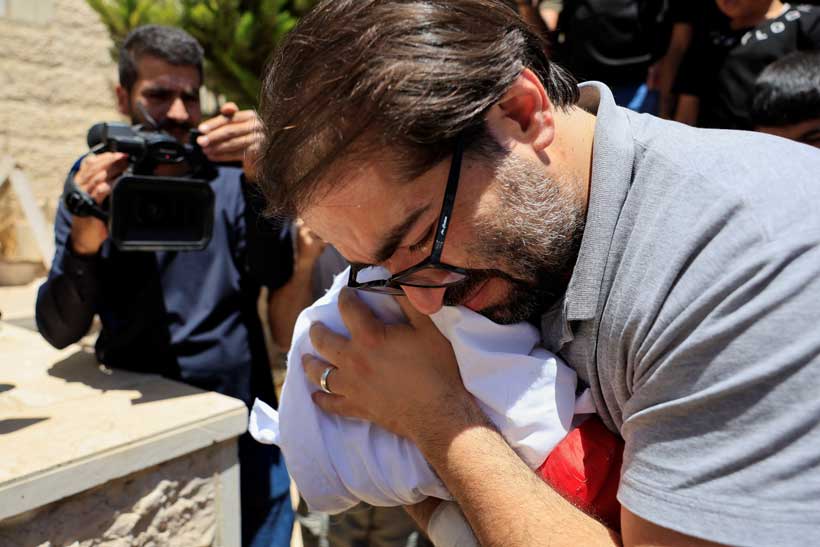
Israeli forces reportedly killed a seven-month-old Palestinian baby, Sam Fahd Abu Haikal, and injured his parents in the Tel Rumeida area near Hebron on Friday evening, according to the Palestinian health ministry. The baby’s grandmother described how the family stopped their car after seeing Israeli military vehicles when shots were fired at them. She recounted that a bullet hit the baby in the face and lodged in his mother’s cheek, while also grazing the father’s finger. The parents were treated for their gunshot wounds.

The Israeli military stated that during operations in Hebron, soldiers fired shots at a vehicle they thought was approaching them quickly. They acknowledged that three Palestinians, later determined to be “uninvolved civilians,” were injured, and the incident is under investigation. Tel Rumeida has a history of violence as Israeli settlers live with military protection among the Palestinian community. Recent EU data indicates over 700,000 settlers reside in East Jerusalem and the West Bank while more than 3 million Palestinians live there.

With information from Reuters

Source link

Activists disrupt German military exhibit over arms sales to Israel | Genocide News

NewsFeed

Pro-Palestine activists interrupted an army recruitment event during German Armed Forces Day. They climbed onto a tank and unfurled a banner reading ‘Genocide with German weapons’ and named Rheinmetall, a key arms supplier to Israel’s military.

Source link

‘Badge of honour’: Israeli settlers shrug off global condemnation | Occupied West Bank News

When the European Union issued its latest tranche of sanctions against Israeli settler groups and their leaders, Regavim, founded in part by the country’s Finance Minister Bezalel Smotrich, these groups welcomed the measures as a “badge of honour.”

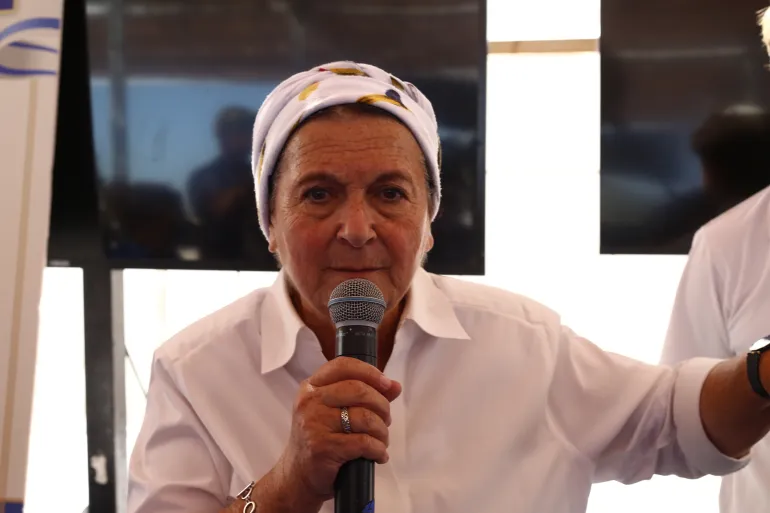
Another sanctioned figure, Daniella Weiss, whose movement, Nachala, has held conferences on the Gaza border to discuss plans for settlement expansion into the occupied Palestinian territory, likewise dismissed the European penalties as “ridiculous” and “banal”.

Recommended Stories

list of 4 itemsend of list

In total, the EU sanctioned four entities and three individuals associated with the settler movement, which includes high-profile characters such as Weiss, Regavim and its director, Meir Deutsch, and the Amana cooperative association, which offers logistical and financial support to settlements in the occupied West Bank.

Even government figures have been targeted in recent Western actions. Finance Minister Bezalel Smotrich, a son of the settler movement, was sanctioned by the United Kingdom, Canada and several other countries for his alleged role in supporting or enabling violence in the West Bank, highlighting how the settlement project has the support of the highest echelons of the Israeli state.

Overall, the nonchalant response from the targeted figures and entities suggests that none of the EU measures will do anything to stop settlement expansion or make individuals accountable for the growing wave of violence against Palestinians.

Ironically, the largely toothless measures might instead become a source of domestic prestige for their leaders, analysts say, as few would expect these hardline settler figures to spend their summers in Paris or London and thus be affected by the sanctions. Instead, a wave of terror in the occupied West Bank will likely continue, with the tacit support of the government.


Endemic violence

In the eyes of many activists and observers who spoke to Al Jazeera, the EU’s focus on group and individual “violations” falls far short of articulating the scale of the highly coordinated settler attacks or the extent to which the state and society support them.

Following the Hamas-led attack of October 2023, United Nations and human rights monitors have documented systemic lethal settler attacks in places such as the South Hebron Hills, where residents of villages like Susiya and Umm al-Khair have been killed or seriously injured in collective incursions.

In the northern West Bank, Palestinian residents of villages around Nablus and Ramallah have seen their homes, vehicles and olive groves torched during nighttime settler raids. Entire Bedouin herding communities in the Jordan Valley have also been forcibly displaced following sustained campaigns of intimidation and violence.

All of this underscores the depth and breadth of settler activity, which, according to people on the ground, has the direct support of the Israeli government.

“It’s gotten much worse since October 2023. They now have the courage to attack into the heart of densely populated Palestinian villages. I see them, they came into the heart of my village outside Ramallah, they feel safe to do so,” Tahseen Alayan, deputy director of Al-Haq, told Al Jazeera.

“If you buy a sheep, they will steal it. If you build a house, they will destroy it. If you buy a car, they will burn it.”

BE'ERI, ISRAEL - OCTOBER 21: Daniella Weiss, founder of the Nachalot Association, attends the Jewish religious holiday of Sukkot (Feast of Tabernacles) activities, where activist Jewish people set up numerous gazebos in the area as a tradition in Be'eri, Israel on October 21, 2024. Israelis and far-right politicians are demonstrating demanding the expulsion of Palestinians from the Gaza Strip and the reopening of settlements there, while others dream of invading many countries in the region in pursuit of “Greater Israel”. ( Enes Canlı - Anadolu Agency )
Daniella Weiss, founder of the Nachalot Association, described the EU sanctions as “ridiculous” and “banal” [Enes Canli/Anadolu Agency]

Examples of Israeli government complicity in these settler raids are not hard to find, and the statistics indicate collective efforts to entrench Israeli control over the West Bank, which has been occupied since 1967.

Israeli forces and settlers are accused of killing an estimated 1,168 people in the occupied West Bank since October 2023 and injuring a further 12,666 Palestinians. Another 33,000 people have been displaced, while Israel has also detained nearly 23,000 Palestinians in the West Bank during this period, many without charge.

“The violence does not happen in a vacuum,” Alayan continued. “This is an extension of the Israeli government; settlement is at the core of their identity. They are protected by the government and by the occupying services, and they freely admit it.”

A tragic incident that comes to mind is settler Yinon Levi, who allegedly shot dead Palestinian activist Awdah Hathaleen in Masafer Yatta last year. Despite the murder being captured on video, Levi nevertheless remains at large.

“Even if they are ever prosecuted, the sentences rarely reflect the severity of the crime,” Alayan said. “These people return to their homes and are seen as heroes.”

‘Entitlement and superiority’

This sense of impunity that settlers appear to be imbued with cannot be detached from the appointment to ministerial positions of leading figures or sympathisers of the settler movement – notably Ben-Gvir and Smotrich, the latter born in an illegal settlement in the occupied Golan Heights.

In a sign of state-settler cooperation to achieve direct control of the West Bank, in contravention of the Oslo Accords, Israel last year announced plans for the establishment of the E1 settlement that would link occupied East Jerusalem with its growing Maale Adumim bloc.

According to plans outlined by Smotrich, when established, this settlement would kill any hopes of the creation of a Palestinian state in the West Bank and Gaza and fulfil a biblical prophecy that many in the movement have been working towards.

Israeli far-right Finance Minister Bezalel Smotrich holds a map of an area near the settlement of Maale Adumim, a land corridor known as E1, outside Jerusalem in the occupied West Bank, on August 14, 2025, after a press conference at the site. [Menahem Kahana/AFP]
Israeli far-right Finance Minister Bezalel Smotrich holds a map of an area near the settlement of Maale Adumim, a land corridor known as E1, outside Jerusalem in the occupied West Bank, on August 14, 2025, after a news conference at the site [Menahem Kahana/AFP]

Daniel Bar-Tal, a professor of social-political psychology from the Department of Education at Tel Aviv University, interpreted the thinking behind the settlers leading this violence across the West Bank.

“It is divine order to settle West Bank. With divine order you do not argue but achieve it in the way Yehoshua carried it 3,000 years ago when he entered the promised land,” he explained. “He achieved it with sword, so we need to do the same.”

Shai Parnes of the Israeli human rights group B’Tselem told Al Jazeera that the absence of international pressure has bolstered the alliance between the state and settler movement.

“The Israeli regime is an apartheid regime based on Jewish supremacy and institutionalised discrimination against Palestinians,” Parnes told Al Jazeera.

“Any Israeli, civilian or soldier, who harms a Palestinian receives full immunity and support from the Israeli systems, and Israel itself receives this from the international community. These facts explain the Israelis’ sense of entitlement and superiority.”

Palestinian Nazem Saleh Shoman stands inside a pen at a sheep farm that was set on fire the previous night by Israeli settlers in the Palestinian village of Abu Falah in the central occupied West Bank on June 2, 2026.
Palestinian Nazem Saleh Shoman stands inside a pen at a sheep farm that was set on fire the previous night by Israeli settlers in the Palestinian village of Khirbet Abu Falah in the central occupied West Bank [AFP]

Yehouda Shenhav-Shahrabani, one of Israel’s leading sociologists, described the channelling of “Jewish supremacy” from the individual to the group, to the state, and back again, as a “closed loop”.

This, he said, fosters a sense of superiority among individuals, and when combined with a militarised society, makes violence against the native Palestinian population, who are in the way of realising this supposed biblical prophecy, almost inevitable.

“Some believe they’re in the West Bank because God said it was theirs. Others are there because they’re too poor to be anywhere else, and have been told they’re superior anyway,” he said.

“Two-thirds of the time, these same people are soldiers. They carry guns all the time. Looking on while they carry out this violence against Palestinians are other soldiers who believe almost exactly the same thing, and behind them politicians. Like I said, it’s a closed loop.”

Source link

France opens ‘war crimes’ probe into Israel’s treatment of Gaza activists | Human Rights News

French activists who took part in a Gaza-bound foreign aid flotilla accuse Israeli forces of abuse and torture.

French anti-terrorism prosecutors say they have opened a preliminary investigation into suspected “torture” and “war crimes” over Israel’s alleged mistreatment of French activists who took part in a Gaza-bound aid flotilla last month.

The probe was opened on Friday following a referral from the foreign ministry late last month, said the national counterterrorism prosecutor’s office (PNAT), after activists on the Global Sumud Flotilla accused Israeli authorities of severe mistreatment during their detention.

Recommended Stories

list of 3 itemsend of list

Israel abducted and detained some 430 activists from about 40 countries after intercepting them in international waters on May 18 as they made the latest in a string of attempts to break the blockade on Gaza, which the United Nations and human rights organisations say is illegal, describing it as a form of collective punishment.

Israeli far-right National Security Minister Itamar Ben-Gvir attracted widespread condemnation after he posted a video mocking the flotilla activists while they were bound.

France banned Ben-Gvir from entry and, like several other allies of Israel, summoned the Israeli ambassador over the incident.

Several French activists described what they said was a violent and humiliating ordeal when eight of them returned to France on May 22.

Two of the more than 30 French people who were on board the flotilla were still hospitalised in Turkiye, they told reporters.

One returnee described a soldier groping and slapping her in a dark container, and being terrified that she would be raped.

Another recounted detained activists being put in what she called a “stress position”, on their knees with their foreheads on the ground for several hours, while the Israeli national anthem played on repeat.

‘Most severe case of ill-treatment’ in a decade

Speaking to Al Jazeera late last month, Suhad Bishara, legal director at Adalah, the Israeli legal centre for Palestinian rights, said that without accountability, Israel will continue to use violence against activists.

“Based on accounts received, and drawing on over a decade of representing flotilla participants, this appears to be the most severe case of ill-treatment documented in the past 10 years, potentially amounting to torture,” said Bishara.

Adalah lawyers have been informed of repeated physical violence resulting in serious injuries, prolonged stress positions, and sexual humiliation and harassment.

The Global Sumud Flotilla said it has documented at least 15 cases of sexual abuse.

Lawyers for French flotilla activists have said they plan to file a separate complaint on behalf of their clients over allegations of rape, torture and humiliation.

The activists have refused to meet with the French government to discuss their experiences, accusing it of supporting Israel’s genocidal war on Gaza.

Asked by the AFP news agency to respond to the claims of mistreatment, the Israeli prison service said the accusations were “entirely without factual basis”.

Francesca Albanese, an outspoken UN expert on the Palestinian territory, has said the treatment of the flotilla activists “is a luxury compared to what is inflicted on Palestinians in Israeli prisons”.

Source link

Ireland imposes travel ban on Israeli ministers Ben-Gvir and Smotrich | Israel-Palestine conflict News

Irish Taoiseach Martin says the far-right ministers have shown ‘a desire to see the elimination of Palestinians from Palestine’.

Ireland has barred Israel’s National Security Minister, Itamar Ben-Gvir and Finance Minister, Bezalel Smotrich, from visiting the country, citing their conduct towards pro-Palestinian activists and support for policies that would displace Palestinians from their homeland.

Ireland’s Prime Minister Micheal Martin – known as the Taoiseach – confirmed the move on Friday, saying the two far-right ministers had advocated positions that amounted to “a desire to see the elimination of Palestinians from Palestine”.

Both Ben-Gvir and Smotrich have repeatedly called for Israel to annex Palestinian territories and push Palestinians out of Gaza, provoking condemnation from rights groups and several foreign governments.

Martin also referenced the treatment of pro-Palestinian activists who were part of a Gaza-bound aid flotilla last month.

Ben-Gvir provoked widespread condemnation when he shared video of himself mocking the detained activists as they knelt on the floor, blindfolded, with their hands bound.

In a statement, Ireland’s justice ministry said Justice Minister Jim O’Callaghan had instructed immigration officers to refuse entry to Ben-Gvir and Smotrich should they seek to enter the state.

Ben-Gvir became a minister in 2022, after an alliance with Smotrich’s far-right Religious Zionist party came third in legislative elections.

Smotrich, who himself lives on an illegal Israeli settlement, has been a vocal advocate of Israel annexing the occupied West Bank, saying he hopes to “kill the idea” of a Palestinian state.

Together, Ben-Gvir and Smotrich form a cornerstone of Israeli Prime Minister Benjamin Netanyahu’s right-wing coalition.

‘Justifies EU sanctions’

Addressing Ireland’s travel ban at a summit in Montenegro, Martin said the two Israeli ministers should also be subject to EU sanctions.

“In my view, their behaviour justifies sanctions at EU level as well, and that’s something that we will raise, whether we can get sufficient support across the European Union is a different matter,” Martin was quoted by Irish broadcaster RTE.

Since Israel’s genocidal attacks on Gaza, Ireland has been among the most outspoken critics of Israel.

In 2024, Ireland officially recognised the Palestinian state, after which Israel ordered the closure of its embassy in Dublin.

Ben-Gvir and Smotrich have faced bans from other European countries over their conduct, including Britain, Spain and Slovenia. Last month, France banned Ben-Gvir from entry.

Source link

Gaza, Iran, Lebanon: If ceasefires are in place, why do strikes continue? | US-Israel war on Iran News

On Wednesday, Israel and Lebanon announced yet another ceasefire – after they had seemingly already agreed to a truce on April 16.

Iran and the United States have formally had a ceasefire in place since April 8. And Israel and Hamas, the Palestinian group, have had a ceasefire in Gaza since October 10, 2025.

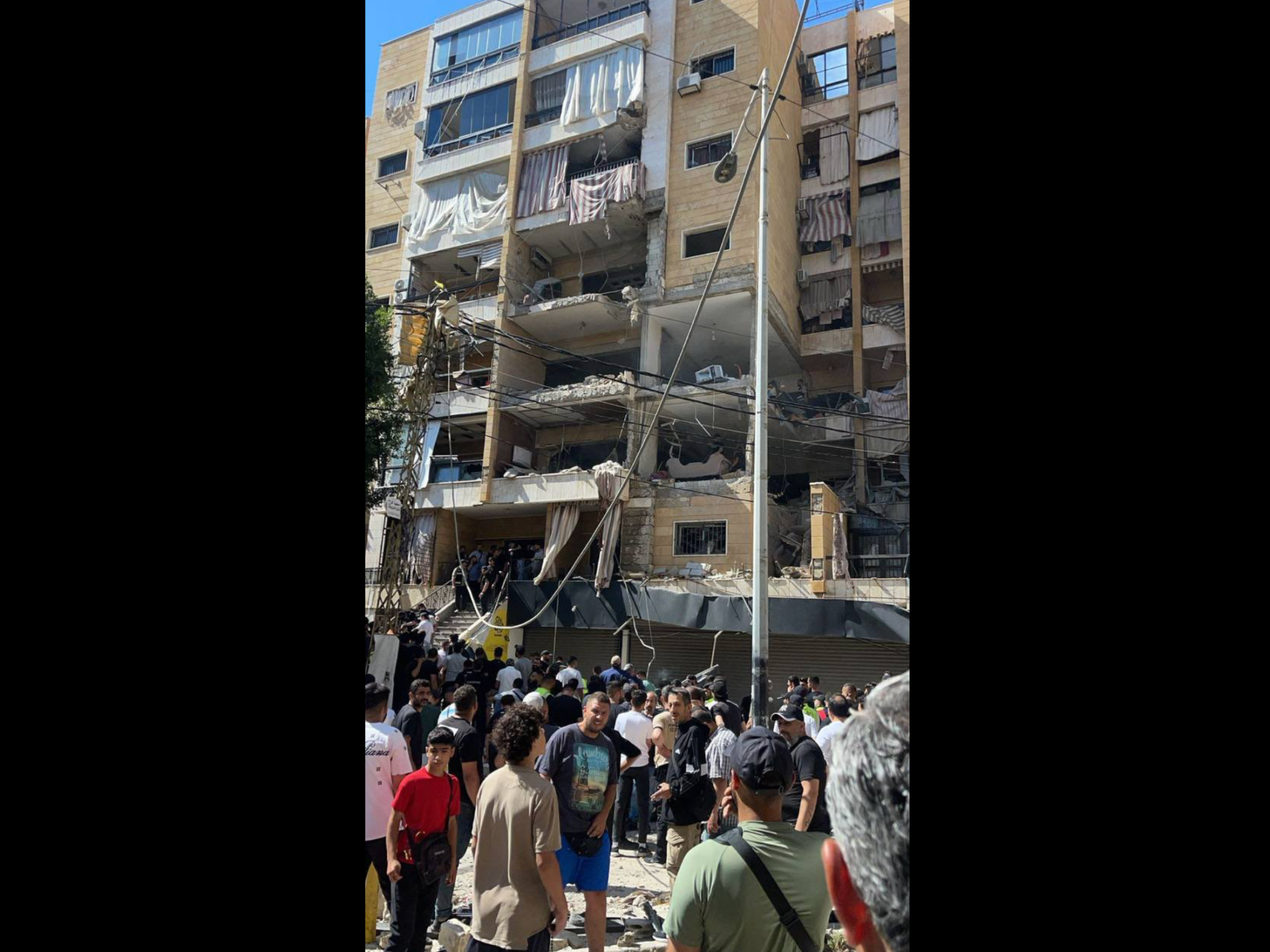
Yet Israel’s attacks on Lebanon continue unchecked, with strikes on the Naqoura and Nabatieh districts of southern Lebanon on Friday, resulting in at least one death. Iran and the US have continued to trade periodic attacks that have picked up in intensity in recent days. The Iranian military has also fired missiles and drones at Gulf nations such as the United Arab Emirates, Kuwait and Bahrain, which it accuses of enabling US attacks on Iran during the ceasefire.

And in Gaza, Israel continues to carry out bombings, including one that killed nine people in a residential building this week, despite a supposed truce aimed at ending its genocidal war on the Palestinian territory.

So what does it mean for a ceasefire to be in place when fighting continues? What does international law say? And why do violations so rarely lead to consequences?

We speak to legal experts to understand:

What is a ceasefire?

Simply put, it’s a pause in fighting designed to create space for negotiations, explained Mark Kersten, assistant professor of criminal justice and criminology at the University of the Fraser Valley.

“A ceasefire is effectively a cessation of hostilities, but typically not understood to be a permanent one,” he told Al Jazeera.

It is also often fundamentally a political agreement rather than a strongly enforceable legal instrument, said Michael Lynk, an emeritus professor at Western University in Canada.

Unlike peace treaties, which often have guarantors responsible for oversight and enforcement, ceasefires can be breached with few immediate legal consequences, Lynk told Al Jazeera.

This is especially true in Gaza and Lebanon, where the United States has acted as the principal broker and overseer. While some countries have criticised Israeli strikes in Lebanon, Lynk says there has been little pressure on Washington for allowing repeated violations.

“A number of Global North countries have criticised the continuing Israeli attacks on Lebanon despite the ceasefire, but they have not called out the US for allowing Israel to repeatedly breach the ceasefires in Gaza and Lebanon.”

So are ceasefires legally binding – or not?

Yes, they are, argues Toby Cadman, a British international human rights lawyer and cofounder of Guernica 37 Chambers.

But, like Kersten and Lynk, Cadman said that ceasefires – which he described as the “temporary, military and diplomatic suspension of military operations” – are inherently fragile. Unlike peace treaties, ceasefires do not resolve the underlying conflict or end the legal state of war.

“It suspends the fighting; it does not end the state of armed conflict,” he said.

Where there is a broader peace agreement, such as in Gaza, the ceasefire too stands – at least in theory – on a stronger footing, said Lynk. The Gaza peace plan that accompanied the ceasefire was endorsed by the UN Security Council through Resolution 2803, which calls for the agreement to be implemented “in its entirety, in good faith and without delay”.

In theory, states could ask the Security Council to sanction parties violating the Gaza agreement. In practice, Lynk explained, the US veto on the body means that neither Israel, nor the US itself, can realistically be censured.

“This is why ceasefires and peace treaties are ultimately political documents because it requires political will to enforce them,” Lynk said.

Who decides when a ceasefire has been violated?

Palestinians have repeatedly pointed to the violation of the Gaza ceasefire by Israel. The US and Iran routinely accuse each other of breaching their truce. And Israel and Lebanon do the same when it comes to their ceasefire.

So who decides whether a ceasefire has been violated – and by whom?

The answer, according to Cadman, is that “there is no neutral arbiter empowered to determine, with binding effect, who has breached.”

Monitoring mechanisms do exist, but they are largely political bodies overseen by the same states that brokered and guaranteed the agreements. In the case of Gaza and Lebanon, that is the United States. But Washington occupies the unusual position of mediator, guarantor and Israel’s closest military and diplomatic ally.

That means allegations of violations are often filtered through political calculations rather than assessed by an independent legal authority, say experts.

What about international law?

For Kersten, Gaza and Lebanon expose a fundamental contradiction within the international legal system. On paper, international law has succeeded in establishing a broad consensus about the legality of what is taking place.

“The vast majority of the world recognises that what is happening in both contexts is not just wrong, but illegal – thanks to international law.”

Yet recognition has done little to halt the violence. “Little is being done to save lives and stop the carnage,” he said.

The result is a widening gap between legal findings and political action. Courts can investigate, collect evidence and issue rulings as the International Criminal Court and the International Court of Justice have both done against Israel, but that does not stop bombs from falling or guarantee compliance on the ground.

For Kersten and Lynk, the problem is not a lack of legal standards; it is the persistent failure of states to enforce them, particularly when powerful actors are involved.

“The lack of effective accountability is the hole in the heart of international law and our modern international political system,” Lynk said.

But Kersten said what was clear was that international humanitarian law, human rights law and international criminal law remain fully applicable during a ceasefire.

“Ceasefire provides no legal cover to commit atrocities against civilians.”

That means allegations of war crimes can still be investigated and prosecuted even while a ceasefire is in effect.

Is ‘self-defence’ a justification for attacks during a ceasefire?

Cadman highlights the legal argument most frequently used to justify continued strikes by Israel on Gaza and Lebanon, and by the US against Iran: self-defence.

These arguments rest on Article 51 of the UN Charter, which carves out the right for states to launch unilateral military action against other nations if they are acting in self-defence.

But Cadman said the interpretation of that clause is heavily contested.

“Article 51 answers an armed attack that has happened or is genuinely imminent; it is not a standing licence for preventive strikes.”

So why do countries feel they can get away with attacks during a ceasefire?

Asked by reporters on Wednesday how he defined a ceasefire, given the continuing – though sporadic – attacks that the US and Iran have exchanged in recent weeks, US President Donald Trump said: “It’s a different part of the world, you know. I’d say in that part of a ceasefire is when you’re shooting in a more moderate manner.”

Trump’s comments underscore what legal experts say is at the heart of the persisting violence in Gaza, Lebanon and the Gulf: The lack of any meaningful enforcement mechanism.

The Security Council is constrained by veto powers. The ICJ can issue binding orders but cannot enforce them. The ICC can issue arrest warrants, but depends on states to carry them out.

“The unifying theme is an enforcement deficit,” Cadman said.

Cadman argued that the problem is not that international law lacks rules. Rather, those rules are often applied selectively. “The law is not formally different for Israel or the US; its application is selective.”

Source link

Hamas says won’t surrender arms but only police will carry weapons in Gaza | Gaza News

Hamas says it will not hand over its weapons right now, resisting ongoing disarmament demands and stating that the ultimate fate of its military arsenal will be decided following comprehensive discussions with other Palestinian factions.

Hossam Badran, a member of the Hamas Political Bureau, spoke exclusively to Al Jazeera about the group's vision for a long-term Hudna in Gaza. [Mohammad Mansour/Al Jazeera]
Husam Badran, a member of the Hamas political bureau, spoke exclusively to Al Jazeera about the group’s vision for a long-term ceasefire in Gaza [Mohammad Mansour/Al Jazeera]

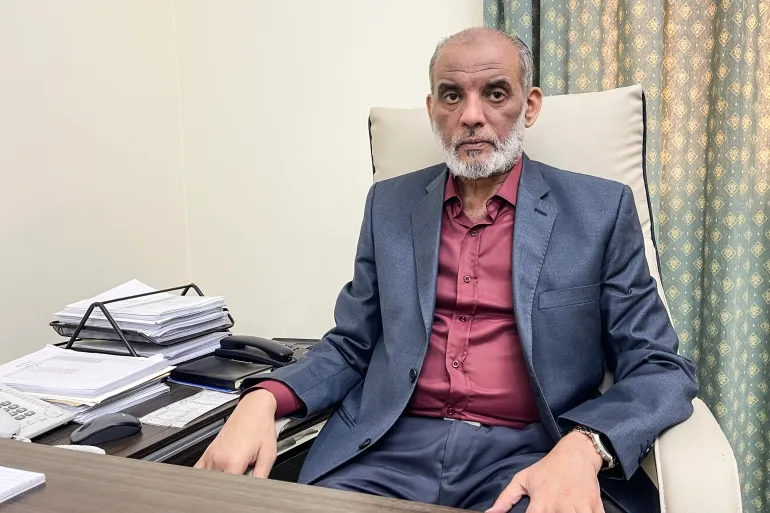
In an exclusive interview with Al Jazeera, Husam Badran, a member of the Hamas political bureau, offered an inside look into the group’s proposed solutions to the stalled negotiations, introducing the concept of a long-term hudna (truce).

“When this Palestinian committee [the National Committee for the Administration of Gaza (NCAG)] comes to take over the Gaza Strip, there will be no visible weapons in the streets and alleys of Gaza except the official weapons belonging to this committee, which is the official Palestinian police, ” Badran told Al Jazeera. “There will be no armed manifestations like the ones we were accustomed to in the Gaza Strip.”

But he clarified that this did not mean a formal surrender of arms.

“We are not talking about handing them over; we are talking about, at least, weapons not being visible except for the official weapons of the Palestinian police,” he said. “The details of this matter will be discussed within a national framework.”

The Hamas stance comes as an informed source told Al Jazeera that the group is preparing to send its delegation to Cairo for renewed talks, which are set to begin this weekend. Hamas had briefly delayed its participation to demand a halt to ongoing Israeli assassinations—such as the recent killings of military commanders Izz al-Din al-Haddad and Mohammed Odeh—to ensure a more favourable negotiating environment.

The disarmament of Hamas and the withdrawal of Israeli troops from Gaza remain the biggest sticking points in the United States-brokered October 2025 ceasefire plan.

Factional consensus in Cairo

The upcoming Cairo meetings will gather eight key Palestinian factions to form a unified national stance. Badran confirmed the attendance of representatives from Hamas, Palestinian Islamic Jihad (PIJ), the Popular Front for the Liberation of Palestine (PFLP), the Democratic Front for the Liberation of Palestine (DFLP), the PFLP-GC, the National Initiative, the Popular Resistance Committees (PRC), and the Democratic Reform Current affiliated with the Fatah movement.

These talks aim to salvage the ceasefire originally proposed by United States President Donald Trump. However, Badran noted that Israel has failed to implement even 30 percent of its phase one obligations, making any transition to subsequent phases impossible.

“We are talking about humanitarian aid … the Rafah crossing mechanism, the infrastructure, and the assassinations,” Badran explained. “The idea was a comprehensive ceasefire, but around 1,000 people have been killed. Saying Israel implemented even 30 percent is an overstatement.”

Only 150 to 250 aid trucks are entering the Gaza Strip daily instead of the agreed-upon 600, while the critical infrastructure for electricity, hospitals and fuel remains completely decimated.

The ‘disarmament’ deadlock

While Palestinian factions demand the fulfilment of these phase one survival metrics, Israeli officials and Nickolay Mladenov, the high representative for Gaza on Trump’s “Board of Peace”, are conditioning the transition to phase two on the disarmament of armed groups.

To break the deadlock, Mladenov recently presented a 15-point “roadmap” built by the ceasefire guarantors. In a May 2026 briefing to the United Nations Security Council, Mladenov defended the plan, emphasising that its architecture rests on a strict principle of reciprocity and verification. Addressing Palestinian concerns, Mladenov clarified that the roadmap explicitly dictates that “no Palestinian armed group will be required to transfer its weapons to Israel”. Instead, the decommissioning of weapons would be gradual, sequenced, and Palestinian-led, with all arms transferred to the NCAG.

Mladenov outlined that this disarmament process is tied directly to an Israeli military pullback. The plan commits Israel to a phased withdrawal of its forces to Gaza’s perimeter on an agreed timetable, conditional upon verified progress on decommissioning and the deployment of an International Stabilization Force (ISF) to act as a buffer.

Mladenov warned the UNSC of the severe consequences of rejecting the roadmap. With 85 percent of Gaza’s buildings damaged or destroyed, he stressed that “reconstruction financing will not follow where weapons have not been laid down”. Without an agreement, he cautioned, Gaza will remain divided, with Hamas holding administrative control over less than half the territory.

‘Negotiation time’ and Israeli expansion

However, Palestinians view this 15-point framework as a stalling tactic designed to extract concessions while Israel deepens its occupation. Palestinian political analyst Wissam Afifa told Al Jazeera that Israel is exploiting “negotiation time” to exhaust the population through continuous escalation.

“They shifted from Trump’s 20 points to a new square, the 15-point square, which revolves entirely around one single clause: disarmament,” Afifa explained. He noted that the Palestinian resistance has been cornered and asked to make major concessions without real guarantees, while the Israeli government uses the talks to advance its territorial goals.

According to Afifa, Prime Minister Benjamin Netanyahu is weaponising the negotiations for domestic electoral gains, expanding Israel’s control from 60 percent of Gaza to 70 percent or more. This expansion is happening while oversight mechanisms, such as the Civil-Military Coordination Center (CMCC), have completely failed and paralysed the monitoring process.

“We are facing a scenario where the occupation has reshaped the ceasefire on its own terms,” Afifa said, adding that Mladenov has in effect adopted the Israeli and American vision by demanding disarmament without offering a clear political horizon for “the day after”.

The National Committee hurdle

This ongoing expansion complicates the transition of power. Amid accusations that Hamas is clinging to power, the group’s spokesperson, Hazem Qassem, reiterated that Hamas is fully prepared to hand over all governance and security responsibilities to the Cairo-based National Committee. Badran confirmed that Hamas has prepared all necessary administrative and security files for the transfer.

However, the NCAG itself faces massive operational barriers and has become, as Afifa described, a “hostage” to Israeli pressure.

A member of the committee, speaking to Al Jazeera on condition of anonymity, firmly denied reports that the body would enter Gaza soon, outlining strict conditions for assuming power. The committee categorically refuses to operate behind the Israeli-controlled “Yellow Line” or to cooperate with Israeli-backed armed militias currently operating in the Strip, the source said.

Furthermore, the source stressed that the committee will not enter Gaza until the International Stabilization Force is deployed in the buffer zones separating Israeli forces from Palestinian areas.

While the political deadlock continues, the human toll mounts. Mladenov acknowledged in his UN briefing that ceasefire violations continue to kill civilians and obstruct humanitarian access.

Since the ceasefire took effect, ongoing Israeli military actions have killed 933 Palestinians and injured 2,868, raising the total death toll since October 2023 to 72,942, with 172,967 people injured.

Source link

How the world failed a mother’s children, killed in Israeli strikes on Gaza | Child Rights News

NewsFeed

Palestinian journalist and mother Aya Shamaa wrote about how an Israeli strike killed her children, newborn Ryan and seven-year-old Yaman. Like countless mothers in Gaza, she saw her children as gleams of hope amid a fragile ceasefire. Narrated by Al Jazeera’s Al Anoud Al Aqeedi.

Source link

Iran war day 98: Tehran raises doubts on deal as Lebanon fighting continues | US-Israel war on Iran News

Israel strikes Lebanon despite ceasefire, while Hezbollah rejects deal as death toll tops 3,500.

Israel has continued to carry out deadly strikes across Lebanon despite the announcement of a new US-brokered ceasefire agreement reached by Lebanese and Israeli officials in Washington, DC.

The violence has pushed the number of casualties higher, with Lebanon’s Ministry of Public Health reporting that at least 3,526 people have been killed and 10,733 wounded in Israeli attacks since March 2.

Meanwhile, Hezbollah leader Naim Qassem has dismissed the ceasefire as a “farce”, warning that northern Israel will remain a target as long as Israeli forces continue bombing Lebanon, raising more doubts about the prospects for a lasting truce.

Here is what we know:

In Iran

  • Iran adviser flags concerns over draft deal: Mohsen Rezaei, an adviser to Iran’s Supreme Leader Mojtaba Khamenei, said the draft memorandum of understanding being negotiated to end the war still contains “ambiguities” that need to be clarified. Speaking to Iranian state television, Rezaei also accused US President Donald Trump of trying to pressure Tehran into accepting Washington’s terms while keeping Iran’s own conditions “in a vague state”.

War diplomacy

  • Questions over US strategy: Reporting from Washington, DC, Al Jazeera’s Kimberly Halkett said the White House is facing growing questions over why a negotiated agreement with Iran is still needed after President Donald Trump repeatedly claimed US military action had “obliterated” Iran’s nuclear programme. Halkett said critics are asking: “If these military objectives have been achieved, then is there still a need for talks?” She added that “with each passing week that this war drags on” and negotiations remaining stalled, it is becoming increasingly difficult for the administration to reconcile its claims of success with the continued push for diplomacy.
  • Hezbollah rejects conditional ceasefire: Hezbollah leader Naim Qassem rejected the limited truce agreed to by Lebanese and Israeli representatives in the US, demanding a complete ceasefire and a full Israeli pullout from the country. Qassem also warned of more attacks on northern Israel, highlighting the difficulties in reaching a lasting peace. Both sides have blamed each other for breaking a previous ceasefire announced in April.

The Gulf

  • Oman oil terminal disruption: Reuters reported that Oman has suspended crude oil loading operations at its key Mina al-Fahal terminal after an explosion near its single-buoy mooring (SBM) berths. Citing unnamed sources, the agency said the blast occurred between SBM 1 and SBM 2 and was allegedly caused by a drone attack.

In the US

  • Trump says US does not need a deal to access Iran’s uranium: The US president said Washington could access Iran’s enriched uranium without reaching an agreement with Tehran, arguing the material is effectively “entombed”. Trump also said he does not plan to meet Iran’s Supreme Leader Mojtaba Khamenei, but he suggested a meeting could be possible if a deal is eventually reached, adding that “if it happened … I’d be respectful”.

In Israel

  • Ultra-Orthodox protest blocks major highway: Hundreds of ultra-Orthodox Israelis blocked Highway 1 in protest against the government’s enforcement of military conscription for religious students, according to Israel’s Channel 10. The demonstrations began after police stopped two ultra-Orthodox students and transferred one to military authorities. Large numbers of police and border guards were deployed to clear the highway and disperse protesters.

In Lebanon

  • Hezbollah rejection raises fears of escalation: Reporting from Beirut, Al Jazeera’s Ali Hashem said Hezbollah remains the key actor on the Lebanese side when it comes to decisions about fighting and any potential halt to hostilities with Israel, “regardless of what the Lebanese government says”. Given Hezbollah’s rejection of the US-brokered ceasefire, Hashem warned that further escalation is likely from both Hezbollah and Israel. He noted that southern Lebanon and the western Bekaa Valley experienced significant Israeli air and ground attacks on Thursday, adding that Hezbollah’s position suggests “it is going to be a very difficult situation” in the days ahead.

Source link

Hezbollah rejects US-brokered ceasefire deal between Israel and Lebanon | Newsfeed

NewsFeed

Hezbollah has condemned a US-brokered ceasefire framework accepted by Israel and Lebanon, describing it as harmful to Lebanon’s interests. The plan would establish Lebanese army-controlled security zones near the border, contingent on Hezbollah withdrawing its fighters.

Source link

Democrat fails to block US measure to deepen Israel military cooperation | Israel-Palestine conflict News

A congressional panel in the United States has rejected an effort to revoke a provision from the defence budget that would further integrate the US and Israeli militaries.

An amendment to sink the pro-Israel measure, introduced by Democratic Congressman Ro Khanna, failed in a voice call on Thursday in the House Armed Services Committee.

Recommended Stories

list of 3 itemsend of list

That defeat paves the way for the proposal to advance to the floor of the House of Representatives.

Khanna had argued that the provision in the National Defense Authorization Act (NDAA), formally called Section 224, rewards Benjamin Netanyahu at a time when the Israeli prime minister is trying to dictate US policy in the Middle East.

The progressive Democrat cited recent reports that President Donald Trump is angry at Netanyahu over Israel’s escalation in Lebanon.

“Everyone in America — whether you’re a Republican, an independent or a Democrat — says that we need to tell Netanyahu that America calls the shots, not the prime minister of any other country,” Khanna said.

“They want less cooperation and blank checks to Israel, not more. Only the United States Congress would dream up at this moment, ‘Let’s actually do more for Israel.’”

The vote on the amendment was taken by calling on committee members to say aloud either “yes” and “no”, and the “nays” clearly were more numerous. It was not recorded as a roll-call vote, which would require each member’s preference to be logged.

Section 224 would require the Pentagon chief “to designate an executive agent responsible for synchronising cooperative efforts between the United States and Israel”.

That official would be in charge of overseeing several joint initiatives, “including bilateral defence technology research, development, testing, evaluation, integration, and industrial cooperation”, the NDAA reads.

Netanyahu’s endorsement

Critics have raised concern that Section 224 may make US military aid to Israel more opaque, concealing the assistance as cooperation rather than a separate expense.

The measure also risks tethering the US military to its Israeli counterpart technologically at a time when the American public is rapidly turning against Israel, according to recent public opinion polls.

“As political pressure builds to reduce US military assistance to Israel, Section 224 provides the framework for continuing — and expanding — US-Israel military ties by entrenching Israeli technology within the US defense supply chain in a way that would shield it from the annual appropriations process,” the nonprofit lobbying group A New Policy said in a brief last week.

“The use of must-pass legislation as the NDAA as a mechanism of integration speaks to the plummeting popularity of continuing unconditional support to Israel.”

The measure comes as Netanyahu pushes to transform US aid to Israel from direct assistance to military “cooperation”.

The Israeli prime minister wrote a letter to Republican Congressman Marlin Stutzman endorsing a bill facilitating that transition.

In the letter, Netanyahu said, “The time has now arrived for us to move from aid recipient to partner.”

He added he supported Stutzman’s plan for a “new framework of joint defense cooperation, codevelopment, coproduction and mutual investment in areas including advanced missile defense, artificial intelligence … and next generation military platforms”.

Referencing the letter on Thursday, Khanna argued that Section 224 “directly” follows Netanyahu’s language.

“I am for Team America. I am for the interests of this country, and I believe that when Donald Trump ran, he ran ‘America First’,” the Democrat said.

“That includes American interests against any foreign country. We should have American sovereignty and make it clear that we strike 224. If we want to give aid to Israel, if we want to sell them weapons, that should be a vote for the entire Congress.”

But both Democrats and Republicans pushed back against his argument, saying that the provision aims to streamline existing cooperative programmes that benefit the US.

Key Democrat backs Section 224

Congressman Adam Smith, the top Democrat on the panel, said he was “very sympathetic” to Khanna’s frustration with Netanyahu.

“Mr Netanyahu insisted on this war with Iran that has strengthened Iran and weakened our position. I do not like his leadership of Israel or where he is going,” Smith said.

But he added that it is in the US’s interests to have deep military ties with Israel, a country accused by leading rights groups and United Nations investigators of committing genocide in Gaza.

“The reason that we have these partnerships with Israel, where we may not have as many developed partnerships with other NATO countries, is because Israel has actually been having to fight,” Smith said.

“They have faced drone attacks and missile attacks. They have had to develop new technologies, technologies that we’ve benefitted from.”

Rights advocates often decry the promotion of Israel’s weapons as “battle-tested” — because they have been tested on the Palestinian and Lebanese communities that they devastated, killing tens of thousands of people along the way.

Earlier on Thursday, Palestinian rights advocates warned against approving Section 224 during a news conference on Capitol Hill.

“It is unfathomable that this is the American response to a country that has, over the past two and a half years, carried out a genocide against Palestinians and started wars in both Iran and Lebanon,” said Margaret DeReus, the executive director at the Institute for Middle East Understanding (IMEU).

Republican Congressman Thomas Massie has promised to introduce an amendment to revoke Section 224 when the NDAA goes to a full House vote.

Source link