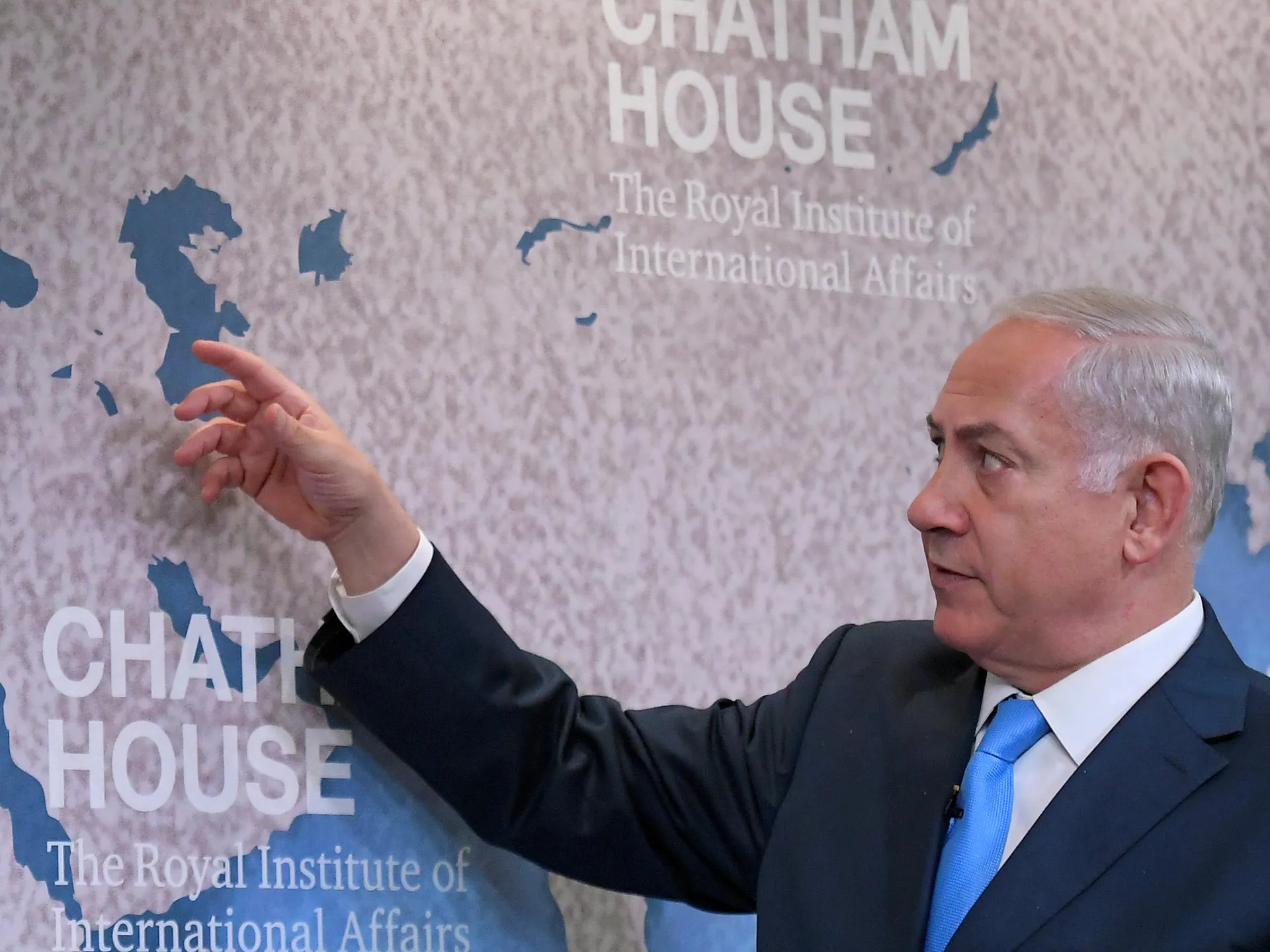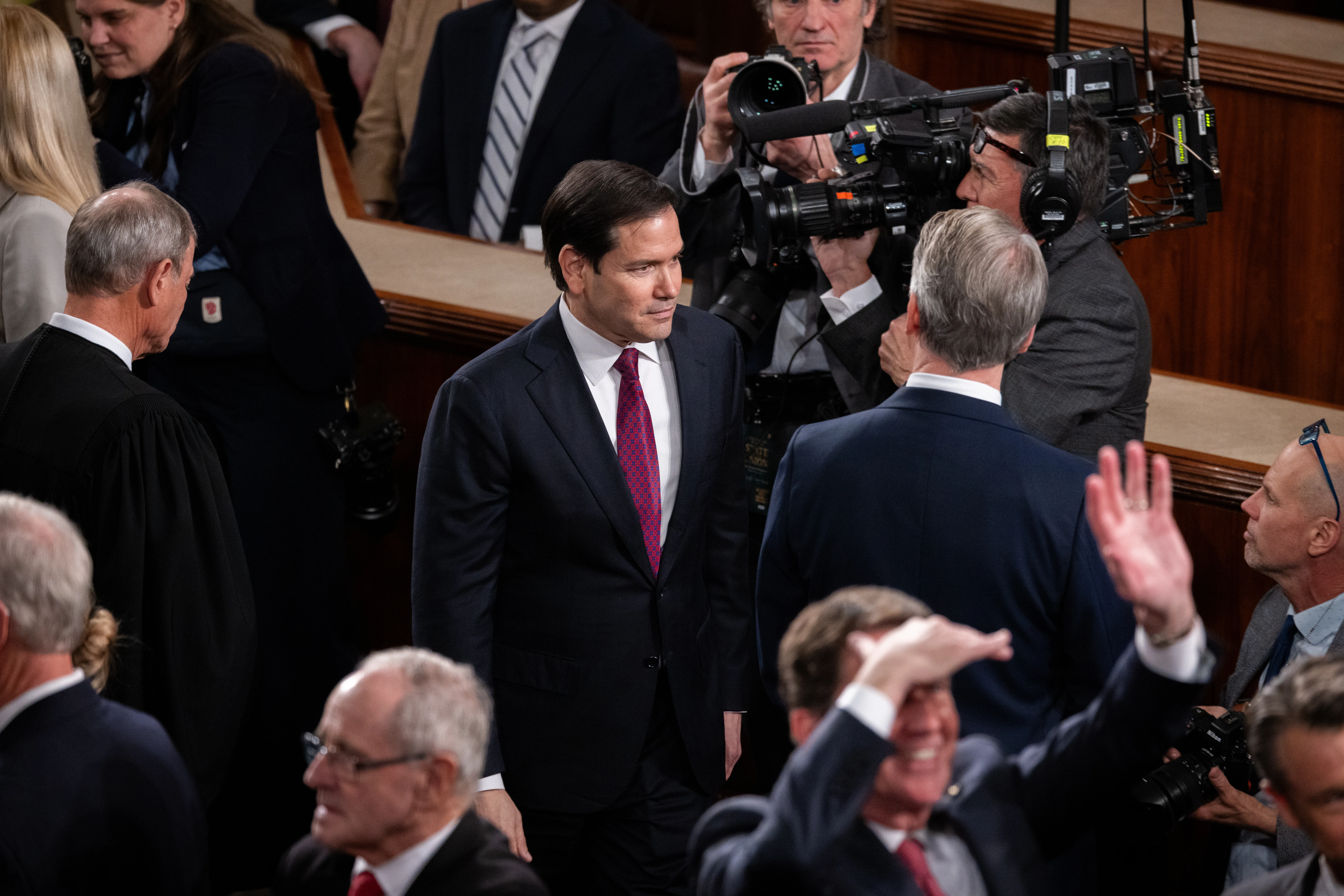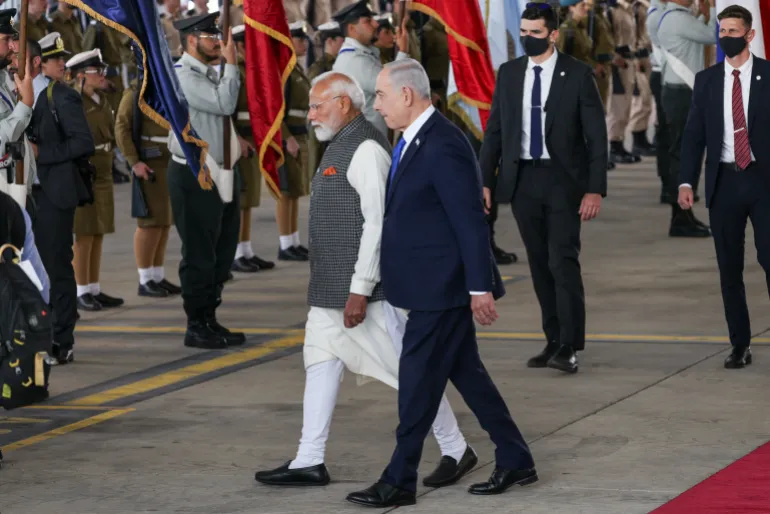
Israel

Why Iran resists giving up its nuclear program, even as Trump threatens strikes

Embassy staffers and dependents evacuating, airlines suspending service, eyes in Iran warily turning skyward for signs of an attack.

The prospects of a showdown between the U.S. and Iran loom ever higher, as massive American naval and air power lies in wait off Iran’s shores and land borders.

Yet little of that urgency is felt in Iran’s government. Rather than quickly acquiescing to President Trump’s demands, Iranian diplomats persist in the kind of torturously slow diplomatic dance that marked previous discussions with the U.S., a pace that prompted Trump to declare on Friday that the Iranians were not negotiating in “good faith.”

But For Iran’s leadership, Iranian experts say, concessions of the sort Trump are asking for about nuclear power and the country’s role in the Middle East undermine the very ethos of the Islamic Republic and the decades-old project it has created.

“As an Islamic theocracy, Iran serves as a role model for the Islamic world. And as a role model, we cannot capitulate,” said Hamid Reza Taraghi, who heads international affairs for Iran’s Islamic Coalition Party, or Hezb-e Motalefeh Eslami.

Besides, he added, “militarily we are strong enough to fight back and make any enemy regret attacking us.”

Even as another round of negotiations ended with no resolution this week, the U.S. has completed a buildup involving more than 150 aircraft into the region, along with roughly a third of all active U.S. ships.

Observers say those forces remain insufficient for anything beyond a short campaign of a few weeks or a high-intensity kinetic strike.

Iran would be sure to retaliate, perhaps against an aircraft carrier or the many U.S. military bases arrayed in the region. Though such an attack is unlikely to destroy its target, it could damage or at least disrupt operations, demonstrating that “American power is not untouchable,” said Hooshang Talé, a former Iranian parliamentarian.

Tehran could also mobilize paramilitary groups it cultivated in the region, including Iraqi militias and Yemen’s Houthis, Talé added. Other U.S. rivals, such as Russia and China, may seize the opportunity to launch their own campaigns elsewhere in the world while the U.S. remains preoccupied in the Middle East, he said.

“From this perspective, Iran would not be acting entirely alone,” Tale said. “Indirect alignment among U.S. adversaries — even without a formal alliance — would create a cascading effect.”

We’re not exactly happy with the way they’re negotiating and, again, they cannot have nuclear weapons

— President Trump

The U.S. demands Iran give up all nuclear enrichment and relinquish existing stockpiles of enriched uranium so as to stop any path to developing a bomb. Iran has repeatedly stated it does not want to build a nuclear weapon and that nuclear enrichment would be for exclusively peaceful purposes.

The Trump administration has also talked about curtailing Iran’s ballistic missile program and its support to proxy groups, such as Hezbollah, in the region, though those have not been consistent demands. Tehran insists the talks should be limited to the nuclear issue.

After indirect negotiations on Thursday, Oman’s Foreign Minister Badr al-Busaidi — the mediator for the talks in Geneva — lauded what he said was “significant progress.” Iranian Foreign Ministry spokesman Esmail Baghaei said there had been “constructive proposals.”

Trump, however, struck a frustrated tone when speaking to reporters on Friday.

“We’re not exactly happy with the way they’re negotiating and, again, they cannot have nuclear weapons,” he said.

Trump also downplayed concerns that an attack could escalate into a longer conflict.

Anti-government protest in Tehran, Iran, on Jan. 9.

This frame grab from footage circulating on social media shows protesters dancing and cheering around a bonfire during an anti-government protest in Tehran, Iran, on Jan. 9.

(Uncredited / Associated Press)

“I guess you could say there’s always a risk. You know, when there’s war, there’s a risk in anything, both good and bad,” Trump said.

Three days earlier, in his State of the Union address Tuesday, said, “My preference is to solve this problem through diplomacy. But one thing is certain, I will never allow the world’s number one sponsor of terror, which they are by far, to have a nuclear weapon — can’t let that happen.”

There are other signs an attack could be imminent.

On Friday, the U.S. Embassy in Israel allowed staff to leave the country if they wished. That followed an earlier move this week to evacuate dependents in the embassy in Lebanon. Other countries have followed suit, including the U.K, which pulled its embassy staff in Tehran. Meanwhile, several airlines have suspended service to Israel and Iran.

A U.S. military campaign would come at a sensitive time for Iran’s leadership.

The country’s armed forces are still recovering from the June war with Israel and the U.S, which left more than 1,200 people dead and more than 6,000 injured in Iran. In Israel, 28 people were killed and dozens injured.

Unrest in January — when security forces killed anywhere from 3,000 to 30,000 protesters (estimates range wildly) — means the government has no shortage of domestic enemies. Meanwhile, long-term sanctions have hobbled Iran’s economy and left most Iranians desperately poor.

Despite those vulnerabilities, observers say the U.S. buildup is likely to make Iran dig in its heels, especially because it would not want to set the precedent of giving up positions at the barrel of a U.S. gun.

Other U.S. demands would constitute red lines. Its missile arsenal, for example, counts as its main counter to the U.S. and Israel, said Rose Kelanic, Director of the Middle East Program at the Defense Priorities think tank.

“Iran’s deterrence policy is defense by attrition. They act like a porcupine so the bear will drop them… The missiles are the quills,” she said, adding that the strategy means Iran cannot fully defend against the U.S., but could inflict pain.

At the same time, although mechanisms to monitor nuclear enrichment exist, reining in Tehran’s support for proxy groups would be a much harder matter to verify.

But the larger issue is that Iran doesn’t trust Trump to follow through on whatever the negotiations reach.

After all, it was Trump who withdrew from an Obama-era deal designed to curb Iran’s nuclear ambitions, despite widespread consensus Iran was in compliance.

Trump and numerous other critics complained Iran was not constrained in its other “malign activities,” such as support for militant groups in the Middle East and development of ballistic missiles. The Trump administration embarked on a policy of “maximum pressure” hoping to bring Iran to its knees, but it was met with what Iran watchers called maximum resistance.

In June, he joined Israel in attacking Iran’s nuclear facilities, a move that didn’t result in the Islamic Republic returning to negotiations and accepting Trump’s terms. And he has waxed wistfully about regime change.

“Trump has worked very hard to make U.S. threats credible by amassing this huge military force offshore, and they’re extremely credible at this point,” Kelanic said.

“But he also has to make his assurances credible that if Iran agrees to U.S. demands, that the U.S. won’t attack Iran anyway.”

Talé, the former parliamentarian, put it differently.

“If Iranian diplomats demonstrate flexibility, Trump will be more emboldened,” he said. “That’s why Iran, as a sovereign nation, must not capitulate to any foreign power, including America.”
Source link

US, Israel bomb Iran: A timeline of talks and threats leading up to attacks | Israel-Iran conflict News

The United States and Israel have launched strikes on Iran despite ongoing talks between Washington and Tehran over Iran’s nuclear programme.

Iran responded to Saturday’s attacks with missile and air strikes across the region, including in Israel, Bahrain, Saudi Arabia, Qatar, the United Arab Emirates and Iraq.

Recommended Stories

list of 3 itemsend of list

Israeli officials said their strikes targeted Iran’s military and nuclear-related infrastructure, while airspace across Israel was closed and emergency measures imposed. Several other countries in the region also announced the closure of their airspace.

Meanwhile, President Donald Trump said Washington has begun a “major combat operation” in Iran, aimed at “eliminating threats from the Iranian regime”.

“This regime will soon learn that no one should challenge the strength and might of the United States Armed Forces,” he said.

The strikes came just two days after high-stakes US–Iran nuclear negotiations in Geneva, mediated by Oman, ended without a breakthrough. The US-Israel attack marks the most serious escalation since the brief but intense June 2025 war.

Here is a timeline of the events, including attacks and diplomatic overtures leading up to Saturday’s strikes by the US and Israel, and Iran’s fierce response.

June 13, 2025 — Israel launches major air strikes against Iranian nuclear and military facilities, amid ongoing talks between the US and Tehran. Iran responds within hours with large-scale missile and drone attacks on Israeli cities.

June 22 – The US strikes Iranian nuclear facilities at Natanz, Fordow and Isfahan, with Trump claiming the attacks degraded Tehran’s nuclear programme. Iranian officials said their programme was set back but not destroyed.

June 23 – In retaliation, Iran fires missiles towards Al Udeid airbase in Qatar, housing US soldiers. The missiles are intercepted, and no casualties are reported.

June 24 – After 12 days of fighting, a US-brokered ceasefire takes effect between Iran and Israel, ending all hostilities. Iran says at least 610 of its citizens were killed in the war, while Israel claimed 28 were killed on its side.

July 2 – Iranian President Masoud Pezeshkian signs legislation halting cooperation with the International Atomic Energy Agency (IAEA), barring its inspectors from accessing Iran’s nuclear facilities unless specifically authorised by the country’s Supreme National Security Council.

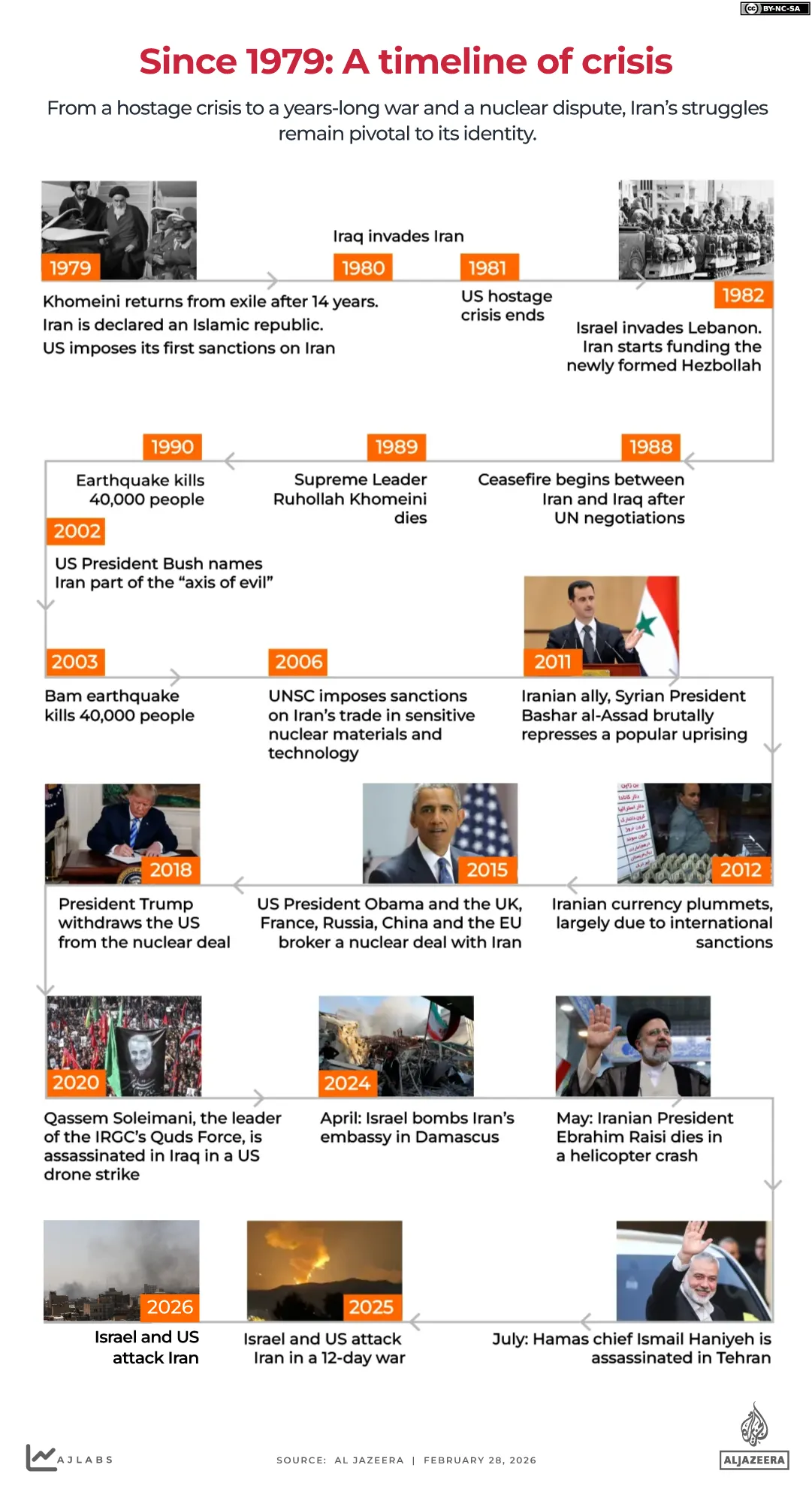
INTERACTIVE - IRAN timeline - FEB28, 2026-1772271216

July 22 – Abbas Araghchi, Iran’s foreign minister, says Tehran will not give up its uranium enrichment programme, despite a temporary halt due to “serious and severe” damages.

August 12 – Iranian police arrest as many as 21,000 people related to the 12-day war with Israel, according to state media.

August 22 – Iran agrees to resume nuclear talks later in the month with the United Kingdom, France and Germany, despite the threat of revived sanctions.

August 28 – The three European countries trigger a mechanism reinstating the United Nations’ sanctions on the Islamic republic for the first time in a decade.

November 1 – Oman urges both the US and Iran to go back to the negotiating table as Iran reiterates it will not stop enriching uranium.

November 7 – Trump says Iran has requested that Washington remove its crippling sanctions on Tehran, and that he is willing to talk about the issue.

December 28 – Protests break out in major cities, including Tehran, over soaring prices after the rial plunges against the US dollar.

January 8, 2026 – The internet is shut down across Iran following the outbreak of antigovernment protests, which have now spread beyond cities. The blackout lasts for more than two weeks.

January 13 – Trump tells Iranians to “keep protesting” , claiming that “help is on the way”, and that the US may be preparing for military intervention against Tehran. The US begins to bolster its military presence off Iran.

February 6 – Iran and the US begin indirect nuclear negotiations in Geneva, mediated by Oman, with the aim of reaching a deal to curb Tehran’s nuclear programme.

February 17 – High-level US–Iran nuclear talks resume in Geneva, again with Omani mediation.

INTERACTIVE-US Military presence in the Middle East June 2026-1772272730
(Al Jazeera)

February 22 – Oman confirms another round of discussions in Geneva, describing a “positive push” but admits that significant differences remain.

February 26 – A third round of nuclear talks concludes in Geneva, with mediator Oman saying “significant progress” was made and more discussions would be held the following week in Vienna.

February 27 – Oman’s foreign minister says Iran has agreed to degrade its current stockpiles of nuclear material to “the lowest level possible” — effectively to unrefined levels. US President Donald Trump says he prefers diplomacy but warns that “all options” remain available if diplomacy fails.

February 28 – Israel launches coordinated strikes on Iranian targets, including sites in and around Tehran. Iran retaliates by launching air and missile strikes across the region, including Qatar, United Arab Emirates, Saudi Arabia, Bahrain and Kuwait.

Source link

U.S. And Israel At War With Iran (Updated)

Israel has launched an attack on Iran, striking targets in Tehran.

A U.S. official has confirmed to TWZ that the U.S. is attacking Iran. Including strikes from air and sea, the official said. See updates down below.

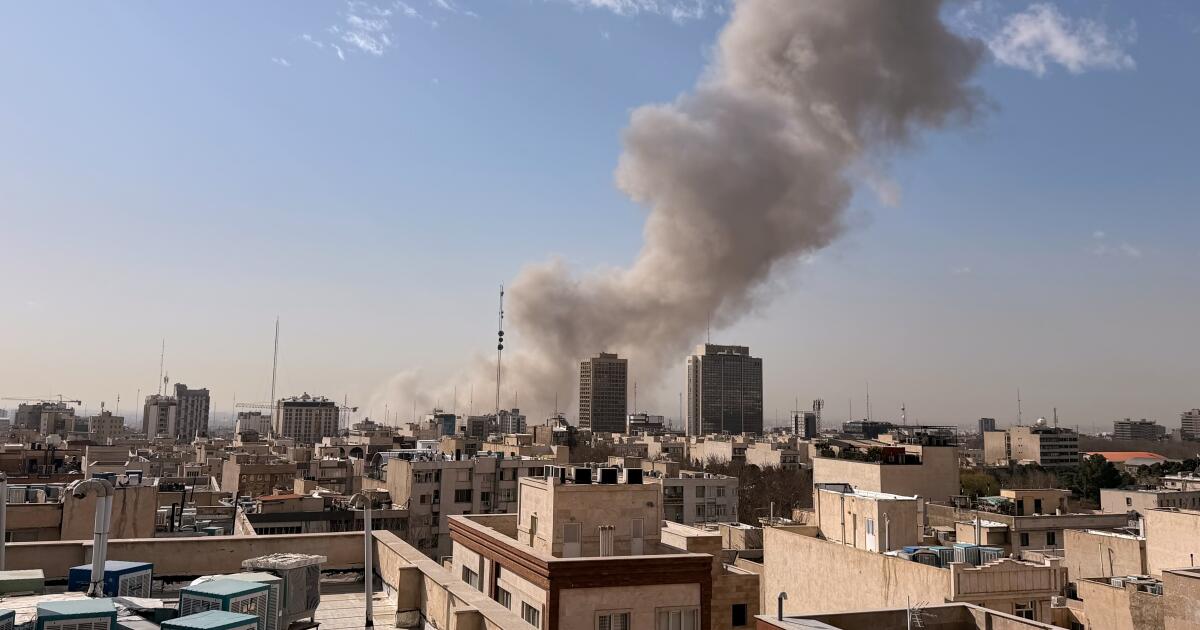
Details remain extremely limited at this time, but what we know is that Israel struck targets as part of what it is calling a preemptive strike. Images from the capital show smoke plumes rising in urban areas. In addition, we have seen video from Iraq showing what appear to be low flying cruise missiles or possibly fighter aircraft. Iraq has been the primary access point for the Israeli Air Force in past strikes on Iran.

BREAKING: Israel says it launched a preemptive strike against Iran and declares a nationwide state of emergency. Reports of explosions across the Iranian capital, Tehran. pic.twitter.com/mRXNHj3Yy8

— Ariel Oseran أريئل أوسيران (@ariel_oseran) February 28, 2026

Some on the ground are saying the strikes targeted Iranian leadership installations in the city, particularly those used by Supreme Leader Ali Khamenei, although we cannot confirm that at this time. Geolocation info will soon be coming that should shed light on the target set.

The IDF posted the following on X, stating:

The State of Israel has launched a preemptive attack against Iran. Israel’s Minister of Defense, Israel Katz, declares a special and immediate state of emergency throughout the state The State of Israel has initiated a preemptive attack against Iran to remove threats directed against the State of Israel. As a result, missile and drone launches against the State of Israel and its civilian population are expected in the very near term. Therefore, pursuant to his authority under the Civil Defense Law, Minister of Defense Israel Katz has now signed a special order mandating the imposition of a special state of emergency in the Home Front throughout the State of Israel, effective immediately. The instructions of the Home Front Command and the authorities must be followed, and individuals must remain in protected areas.

U.S. Central Command has declined to comment on the strikes in response to our direct inquiry to them.

This is a rapidly developing situation and we are going into rolling coverage on it below. Newest updates will be posted on top.

UPDATE: 5:45 AM EST—

It appears that Iran attacked U.S.-related sites in Bahrain, UAE, Qatar, Iraq and Kuwait. We are also hearing Saudi Arabia, but that is not confirmed. We are now getting responses from these countries condemning the attacks and some saying they reserve to right to respond. This is exactly how this conflict would quickly widen, as we have discussed for years, and most recently in this in-depth feature.

🚨Statement:Bahrain confirms attacks on sites within the Kingdom launched from outside its territory,a blatant violation of sovereignty. Authorities activated emergency plans. We condemn the attacks & reserves the right to respond in coordination w/ allies https://t.co/Ht7DjE8ZvD

— Abdulla R. Al-Khalifa (@AbdullaRAK) February 28, 2026

الإمارات تعلن التصدي “بنجاح” لعدد من الصواريخ الإيرانية على الدولة

أعلنت وزارة الدفاع تعرض دولة الإمارات العربية المتحدة اليوم لهجوم سافر بصواريخ باليستية إيرانية، حيث تعاملت معها الدفاعات الجوية الإماراتية بكفاءة عالية وتم التصدي بنجاح لعدد من الصواريخ.

كما تعاملت الأجهزة… pic.twitter.com/R0WkOLHQ8k

— وزارة الدفاع |MOD UAE (@modgovae) February 28, 2026

MIM-104 “Patriot” Surface-to-Air Missile Batteries with the U.S. Army attempting to down Iranian ballistic missiles over Erbil in Kurdistan, Northern Iraq. pic.twitter.com/NmY9xe0IxA

— OSINTdefender (@sentdefender) February 28, 2026

We are seeing video of flaming missile bodies on the ground in Syria and other locales. Whether they are a part of the ballistic missile or the interceptor isn’t clear in most cases.

One of the interceptor missiles fell a short while ago in the city of Inkhil in the countryside of #Daraa. The skies over Daraa Governorate are still witnessing continuous aircraft activity as a result of the war between #Iran and the United States. pic.twitter.com/OHWvL3YZvr

— Mohammad Alasakra (@mohammed_asakra) February 28, 2026

A major set of strikes appear to have done significant damage to a mountainside facility in eastern Iran that that is related to IRGC ballistic missile capabilities. Destroying the entrances to the missile caves is critical to lock as many of the weapons inside.

UPDATE: 5:15AM EST—

Fox News reports a U.S. official says American forces are not targeting regime targets. Instead they are going after military, industrial, especially missile-related ones. Israel is going after the regime.

US official: Israel is targeting Iranian leadership. The US is targeting military targets and ballistic missile sites that pose an “imminent threat.” The US military is not targeting Iran’s leadership.

— Jennifer Griffin (@JenGriffinFNC) February 28, 2026

IDF reportedly is now stating it is going after the top of the regime:

🚨🚨Israeli officials say the IDF has conducted strikes against Iranian senior commanders and political leaders including Supreme Leader Khamenei and President Pezeshkian

— Barak Ravid (@BarakRavid) February 28, 2026

IDF has warned Iranians near military-related industry in Iran:

“Urgent Warning to All Individuals Located Inside or Near Military Industrial Factories and Military Infrastructure Across Iran. You are in proximity to weapons and facilities that are dangerous. Dear Citizens, for the sake of your safety and health, we kindly request that you immediately evacuate these areas and remain outside them until a new announcement is issued. Your presence in these locations puts your life at risk.”

‼️هشدار فوری به کلیه افرادی که در داخل یا حوالی کارخانجات صنایع نظامی و زیر ساخت های نظامی در سراسر کشور ایران قرار دارند.
شما در مجاورت با تسلیحات و تاسیساتی هستید که خطرناک می باشند.
شهروندان گرامی، بمنظور امنیت و سلامت شما خواهشمندیم فورا از این اماکن خارج شده و تا انتشار… pic.twitter.com/rPrS97Dm4J

— ارتش دفاعی اسرائیل | IDF Farsi (@IDFFarsi) February 28, 2026

Video shows F-15C Bazs taking off on a sortie for today’s operation. It is armed with AIM-7 Sparrows, still not uncommon for IAFs F-15A-Ds. Still, a bit odd for the general mission. It also does not have external tanks. Possibly on domestic counter-drone duty, if indeed the video depicts what it claims.

UPDATE: 5AM EST —

From an IDF official to TWZ: “Confirm on attacks in Bahrain and Qatar. We are being striked and missile attack all over Israel. We are being informed that Bahrain Qatar and Jordan are being attacked as well.”

Videos show intercept occurring over Dubai:

UPDATE: 4:50 AM EST—

We are seeing a sizable impact from an Iranian missile on the 5th Fleet HQ in Bahrain.

New footage appears to show smoke rising from a secured compound in Bahrain with visible perimeter walls and communications infrastructure. The location appears consistent with a military facility in the Juffair area. pic.twitter.com/sgOHekkzF4

— WarMonitor (@TheWarMonitor) February 28, 2026

We are also seeing videos claiming to show smoke rising in the UAE.

A number of the USAF tankers that were in Tel Aviv have taken off:

U.S. Air Force aerial refueling tankers, staged at Tel Aviv’s Ben Gurion International Airport, have sortied.

They will likely support ongoing US/Israeli strike operations on Iran. pic.twitter.com/a4Z9Emoni7

— OSINTtechnical (@Osinttechnical) February 28, 2026

A video that shows an armada of fighters over Syria from this morning has surfaced:

UPDATE: 4:26 AM EST—

Iran is striking back across the Middle East, including Israel and U.S. interests along the Persian Gulf:

UPDATE: 4:10AM EST—

Iran appears (still unconfirmed) to have struck the Navy’s facility in Bahrain, the epicenter of the 5th Fleet.

Iran just attacked the U.S. Navy’s Naval Support Activity (NSA) Bahrain, with explosions and a large smoke plume reported within Mina Salman port. pic.twitter.com/eqqu3WZUvt

— OSINTtechnical (@Osinttechnical) February 28, 2026

A statement from the IDF gives a better overview of what the campaign seeks to accomplish:

The IDF Spokesperson’s Unit announces that the IDF and the US Armed Forces have launched a broad and joint operation to thoroughly degrade the Iranian terrorist regime and to remove existential threats to the State of Israel over time.

The strike targeted dozens of military targets and was carried out as part of a broad, coordinated, and joint operation against the regime.

The Iranian regime has not abandoned its plan to destroy Israel. In recent months, and despite the severe blow it sustained during Operation “Rising Lion”,  the IDF identified that the regime continued efforts to advance production, fortify, and conceal its nuclear program, alongside rehabilitating its missile production processes.

In addition, the regime has continued financing, training, and arming its proxies positioned on Israel’s borders. These actions constitute an existential threat to the State of Israel and pose a danger to the Middle East and the world as a whole.

In the months preceding the strike, close and joint planning was conducted between the IDF and the U.S. military, enabling the execution of the broad strike in full synchronization and coordination between the two militaries. The IDF, across all its branches, carried out a meticulous and long-term preparation process for this operation — both in defensive systems and in various offensive plans.

Video claiming to show an TLAM over Tehran:

UPDATE: 4AM EST—

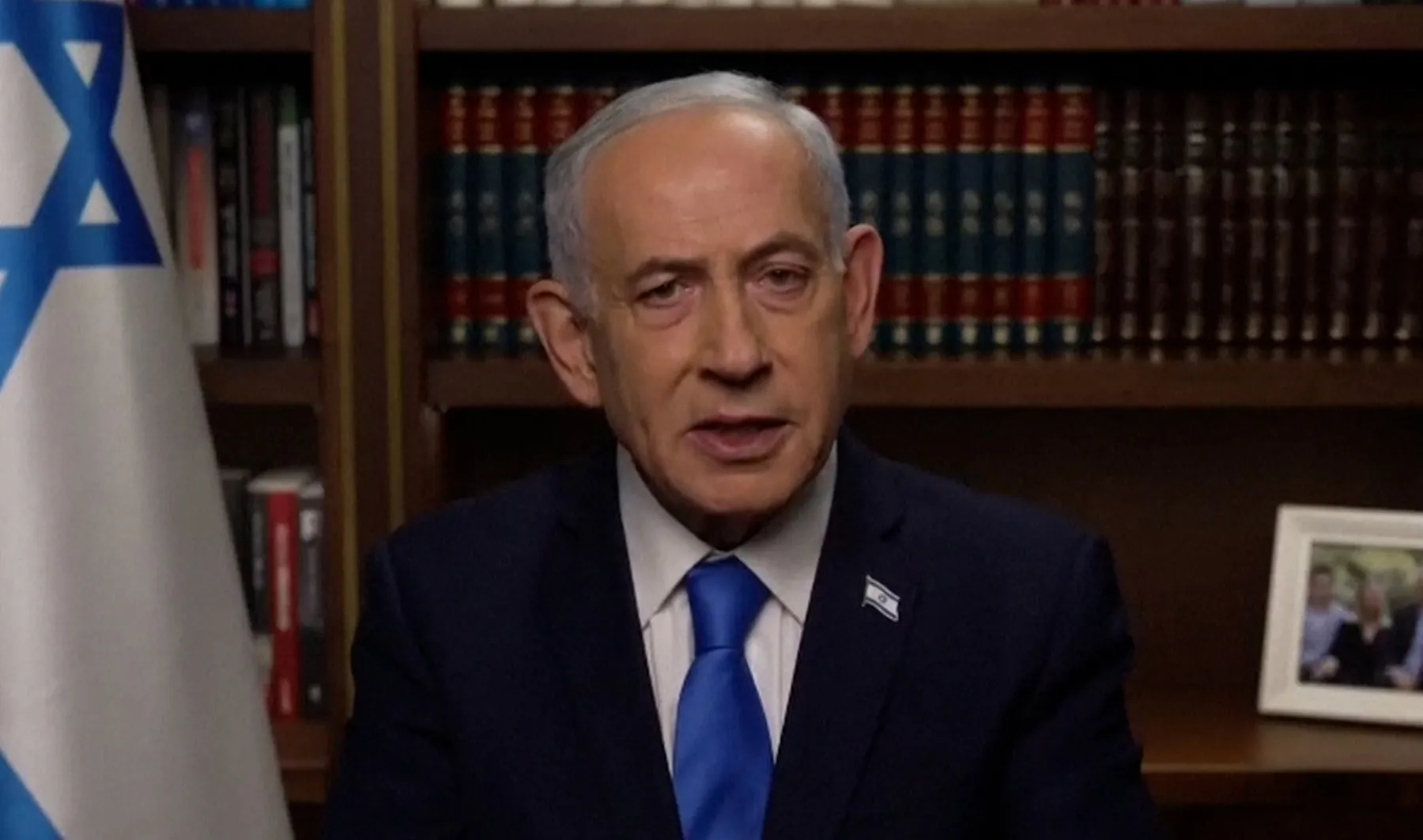
Netanyahu has now made an address, it states in part:

My brothers and sisters, citizens of Israel, just an hour ago, Israel and the United States embarked on an operation to remove the existential threat posed by the terrorist regime in Iran. I thank our great friend, President Donald Trump, for his historic leadership. For 47 years, the Ayatollahs’ regime has chanted “Death to Israel,” “Death to America.” It has spilled our blood, murdered many Americans, and massacred its own people. This murderous terrorist regime must not be allowed to arm itself with nuclear weapons that would enable it to threaten all of humanity.

Our joint operation will create the conditions for the brave Iranian people to take their fate into their own hands. The time has come for all parts of the Iranian people—the Persians, Kurds, Azeris, Baloch, and Ahwazis—to cast off the yoke of tyranny and bring freedom and peace-loving values to Iran.

I call on you, citizens of Israel, to heed the instructions of the Home Front Command. In the coming days, during Operation “Lion’s Roar,” we will all be called upon to show patience and strength of spirit. Together we will stand, together we will fight, and together we will ensure the eternity of Israel.

אחיי ואחיותיי אזרחי ישראל, לפני שעה קלה יצאנו ישראל וארה״ב למבצע להסרת האיום הקיומי מצד משטר הטרור באיראן.

אני מודה לידידינו הגדול הנשיא דונלד טראמפ על מנהיגותו ההיסטורית.

במשך 47 שנים קורא משטר האייתוללות ״מוות לישראל״, ״מוות לאמריקה״. הוא הקיז את דמינו, רצח אמריקנים רבים וטבח… pic.twitter.com/itTF5b4jB4

— Benjamin Netanyahu – בנימין נתניהו (@netanyahu) February 28, 2026

Right on time, the Houthis are now saying they are closing the Bab El Mandeb Strait that connects the Red Sea with the Gulf of Aden.

🚨 BREAKING: Houthi movement announces the closure of the Bab el-Mandeb Strait in the Red Sea and warns that they will target U.S. and Israeli ships.

— The Middle East (@A_M_R_M1) February 28, 2026

U.S. Mission in UAE and the Embassy in Jordan have also sent shelter-in-place alerts:

Subject: Security Alert – Shelter-In-Place – U.S. Mission UAE, Feb. 28, 2026

Location: UAE

Event: Due to regional hostilities, the U.S. Embassy in Abu Dhabi and the U.S. Consulate in Dubai have instructed staff to shelter-in-place (i.e., take cover). We recommend all Americans… pic.twitter.com/UurG3PY6Ol

— US Mission to UAE (@USAinUAE) February 28, 2026

The U.S. Embassy in Jordan is implementing a shelter-in-place for all personnel. We recommend all Americans do the same until further notice.
 
Actions to Take:
•Find a secure location within your residence or another safe building. Have a supply of food, water, medications, and… pic.twitter.com/lC7Tneb4b8

— U.S. Embassy Amman (@USEmbassyJordan) February 28, 2026

One of Israel’s prized submarines, which alas carry the country’s undeclared second strike nuclear deterrent, was seen booking it out of Haifa:

Hezbollah in Lebanon also got struck this morning.

Hezbollah infrastructure, including tunnel shafts and rocket launchers, were targeted in a wave of Israeli airstrikes across southern Lebanon this morning, the IDF says.

According to the military, Hezbollah was recently working to restore its military capabilities at the… pic.twitter.com/6XkF1hfP63

— Emanuel (Mannie) Fabian (@manniefabian) February 28, 2026

A prayer app that is popular in Iran has been hacked:

An Iranian app for tracking Muslim prayer times has been hacked.

Messages are encouraging armed forces to defect and “protect your compatriots. They will protect you in return.”

Another message says, “Help has arrived.”

Another, “It’s the time for reckoning.”

Via @Vahid pic.twitter.com/qoddvmE8W0

— Khosro K Isfahani (@KhosroIsfahani) February 28, 2026

An unexploded Tomahawk warhead is seen on the ground in Iraq:

UPDATE: 3:39 AM EST—

Pentagon has named this campaign Operation Epic Fury.

OPERATION EPIC FURY 🇺🇸

— Department of War 🇺🇸 (@DeptofWar) February 28, 2026

Reports are coming in that ballistic missiles hit Haifa in Israel:

BREAKING; Reports that Iranian ballistic missile hit Haifa.

At least 2 missiles were launched and 1 impacted and another was intercepted. pic.twitter.com/ABvIhKWzuq

— Global Surveillance (@Globalsurv) February 28, 2026

Air travel in the region is highly disrupted, with flights trying to figure out how to reroute around the conflict zone:

The IRGC has put out a statement:

“In the name of God, the Crusher of the Tyrants: In response to the hostile and criminal enemy’s aggression against the Islamic Republic of Iran, the first wave of extensive missile and drone attacks by the Islamic Republic of Iran towards the occupied territories has begun.”

Iran’s Ministry of Interior condemns the strikes and states:

“It brings to the attention of the great people of Islamic Iran that the criminal enemy, once again violating all international laws and during the negotiations, has again attacked our beloved homeland.”

UPDATE: 3:26 AM EST—

The IDF says a barrage of missiles is inboard from Iran.

❗️An additional barrage of missiles was launched toward Israel.

The Aerial Defense Array is currently identifying and intercepting threats.

— Israel Defense Forces (@IDF) February 28, 2026

Internet traffic in Iran has plummeted. Meanwhile Iranian state news says checkpoints are being set up and not to post any images or videos of targeted areas. It also warns of extreme instability in the coming hours.

⚠️ Confirmed: Network data show #Iran is now in the midst of a near-total internet blackout with national connectivity at 4% or ordinary levels. The incident comes amid US and Israeli combat operations and matches measures used during last year’s war with Israel. pic.twitter.com/1XunOr4Q19

— NetBlocks (@netblocks) February 28, 2026

UPDATE: 3:01 AM EST—

There are reports that major Iranian Navy/IRGC Navy bases on the Persian Gulf and Arabian Sea have been hit. This would make perfect sense to preempt a mining operation or attempted closure of the strait.

Reports that US forces have struck the Iranian IRGC Naval base at Asaluyeh this morning.

Explosions were also reported in the vicinity of the port at Chabahar. pic.twitter.com/OUcKGNFLEq

— OSINTtechnical (@Osinttechnical) February 28, 2026

We are also getting more indications of what was hit in Tehran. Regime, nuclear, and security apparatus targets.

From unconfirmed reports, it appears that the initial strikes have targeted leadership (Office of the Supreme Leader, Presidency), repression (Judiciary), military (MODAFL, missiles), nuclear (AEOI, potentially residual facilities)

— Nicole Grajewski (@NicoleGrajewski) February 28, 2026

Now the U.S. Embassy in Bahrain is sending a shelter-in-place alert. Bahrain is a major center of gravitas for the U.S. military and home of the 5th Fleet.

Message for U.S. Citizens

Subject: Bahrain Security Alert – Shelter-In-Place
Month DAY, 2026

Location: Bahrain

Event: The U.S. Embassy in Bahrain is implementing a shelter-in-place for all personnel. We recommend all Americans do the same until further notice.

Actions to… pic.twitter.com/MGjgxsS711

— U.S. Embassy Manama (@USEmbassyManama) February 28, 2026

Images are emerging showing spent boosters of Israel’s air-launched ballistic missiles laying in fields in Eastern Iraq. This is customary for IAF attacks on Iran at this point, with these weapons largely used to destroy air defenses and hit critical command and control related targets deep in Iran without putting manned aircraft at risk. We were first to report on these launches during Israel’s first direct strikes on Iran, which you can read about here. You can also read more about the latest of this unique class of weapon in the IAF’s inventory here.

Israeli KC-707 supposedly spotted refueling fighters over Syria:

Crown Prince Reza Pahlavi, whose fatally ill father, Mohammad Reza Pahlavi, fled Iran ahead of the 1979 Islamic revolution, is now living in exile in the U.S. He has been instrumental in urging Iranians to protest the regime.

In a statement on X, Pahlavi urged Iranian military, police and security forces to take action against the regime to protect the people.

“You have sworn an oath to protect Iran and the Iranian people—not the Islamic Republic and its leaders. Your duty is to defend the people, not a regime that has taken our homeland hostage through repression and crime. Join the people and help bring about a stable and secure transition. Otherwise, you will go down with Khamenei’s sinking ship and his regime.”

هم‌میهنان عزیزم،

لحظاتی سرنوشت‌ساز پیشِ روی ماست.

کمکی که رئیس‌جمهور ایالات متحده به مردم شجاع ایران وعده داده بود، اکنون رسیده است. این یک مداخله بشردوستانه است؛ و هدف آن، جمهوری اسلامی، دستگاه سرکوب و ماشین کشتار آن است؛ نه کشور و ملت بزرگ ایران.

اما، با وجود رسیدن این کمک،… pic.twitter.com/kRiamgeCpS

— Reza Pahlavi (@PahlaviReza) February 28, 2026

UPDATE: 2:45 AM EST—

Trump has addressed what he calls a “major combat operation inside Iran.” He lists Iran’s history of nefarious operations against the U.S. and others for decades and says he “isn’t going to put up with it anymore.” Trump says Iran will never have nuclear weapons and he will destroy their missiles and their missile industries, annihilate their Navy, and they will no longer be able to support proxies across the Middle East. He says there may be casualties as part of the operation. Trump tells Iranian troops and security forces that they will get immunity if they lay down their arms, or the alternative is they “will face certain death.” He tells the Iranian people to stay home as “bombs will be dropping everywhere” and the government will be theirs for the taking.

UPDATE: 2:27AM EST—

Israel’s N12 is reporting that the operation name is “Roar Of The Lion.”

שם המבצע באיראן: “שאגת הארי”

— החדשות – N12 (@N12News) February 28, 2026

N12 also claims a source said the Supreme Leader is in a secure hideout. Reuters also reported this.

המנהיג העליון של איראן נלקח למקום מסתור. גורם ישראלי: אנחנו הולכים על הכול, תכננו את זה במשך חודשים

— החדשות – N12 (@N12News) February 28, 2026

Strikes are occurring at sites throughout Iran. While these could be targeting time sensitive targets, many of these strikes would be used to prepare the battlefield for aircraft operations over Iran. In other words, degrading and destroying what’s left of Iran’s air defenses so strike aircraft can more safely operate over the country. These operations would likely occur tonight under the cover of darkness, where direct attacks on targets can be made. So tonight will look nothing like what we are seeing today.

UPDATE: 2:15AM EST—

A U.S. official has confirmed to TWZ that the U.S. is attacking Iran.

Meanwhile the Mossad is asking Iranians to “return Iran to its glorious days.”

As Israel launches strikes on Iran, the Mossad spy agency on its official Persian-language Telegram channel calls on Iranians to help “return Iran to its glorious days.”

“Our Iranian brothers and sisters, you are not alone! We have launched a highly secure and dedicated Telegram… pic.twitter.com/jnL937YR8e

— Emanuel (Mannie) Fabian (@manniefabian) February 28, 2026

We are getting unconfirmed reports that Israel has assassinated Iran’s defense minister.

UPDATE: 1:55AM EST—

Israel is preparing for a reprisal strike:

In the last few minutes, sirens were sounded all throughout Israel, with an advance instruction alert directly to cellular devices to stay within proximity to protected spaces. This is a proactive alert to prepare the public for the possibility of missiles being launched toward the State of Israel. The IDF emphasizes that the public is requested to stay in proximity to protected spaces.

In the last few minutes, sirens were sounded all throughout Israel, with an advance instruction alert directly to cellular devices to stay within proximity to protected spaces.

This is a proactive alert to prepare the public for the possibility of missiles being launched toward…

— Israel Defense Forces (@IDF) February 28, 2026

Flights are currently diverting away from the region and Iran has closed its airspace.

It appears USAF transport aircraft are trying to leave the ground prior to any kind of reprisal strikes. One ACARS message told a C-17 crew to remain on the ground in Jordan for as little time as possible not long before the strikes.

It’s looking like a U.S. strike on Iran could go down at any moment

A U.S. Air Force C-17 Globemaster III strategic airlifter with identification number 06-6166 en route to King Abdullah II Air Base in Jordan has been instructed to keep its ground time to an absolute minimum.… pic.twitter.com/1GIXRN14jt

— Egypt’s Intel Observer (@EGYOSINT) February 28, 2026

The daytime nature of the attacks would point to time sensitive targets being hit.

CNN is reporting that the U.S. was at least in coordination with Israel on the strikes, but that is not surprising at all even if Israel acted unilaterally in the kinetic action itself. There had been reports that the Trump administration favored Israel striking first so that it could then jump in once Iran responded with its own strikes.

A shelter-in-place order has been broadcasted in Qatar, home to the U.S. military’s largest installation in the region and what is presumed (and previously demonstrated) as the top U.S. target of Iran.

Message for U.S. Citizens:

The U.S. Embassy in Qatar is implementing a shelter-in-place for all personnel. We recommend all Americans do the same until further notice. 

Actions to Take:

– Find a secure location within your residence or another safe building. Have a supply of… pic.twitter.com/ENogjpfK5r

— U.S. Embassy in Qatar (@USEmbassyDoha) February 28, 2026

An Israel KC-707 was seen departing today, likely to support the strike operation. Minister of Defense Yoav Gallant posted simply “Good luck” with U.S. and Israeli flags on his X account along with an image of an IAF F-15D and him talking to crews.

Tyler’s passion is the study of military technology, strategy, and foreign policy and he has fostered a dominant voice on those topics in the defense media space. He was the creator of the hugely popular defense site Foxtrot Alpha before developing The War Zone.


Howard is a Senior Staff Writer for The War Zone, and a former Senior Managing Editor for Military Times. Prior to this, he covered military affairs for the Tampa Bay Times as a Senior Writer. Howard’s work has appeared in various publications including Yahoo News, RealClearDefense, and Air Force Times.


Source link

Iran strikes US military base in Bahrain as explosions heard across Gulf | Israel-Iran conflict

NewsFeed

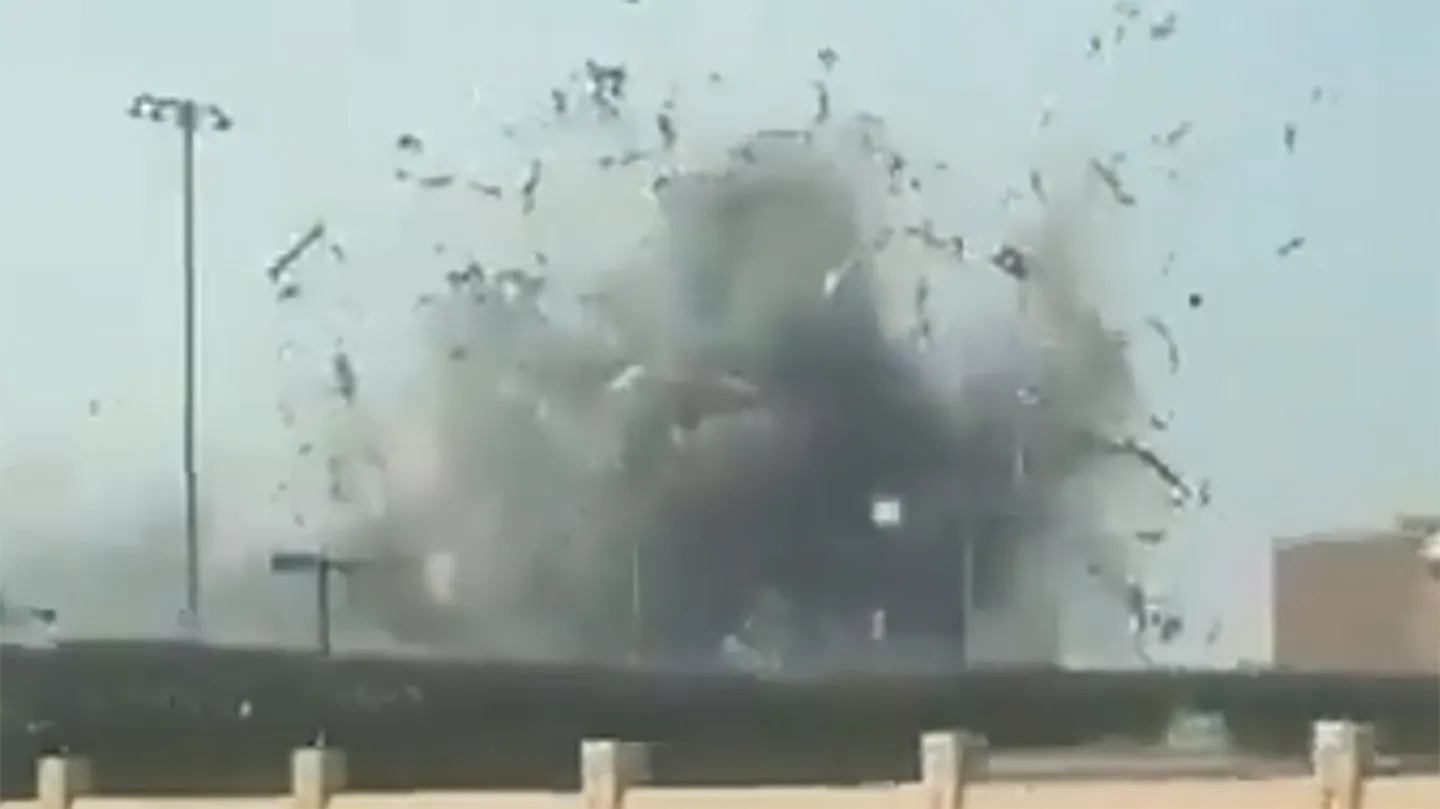
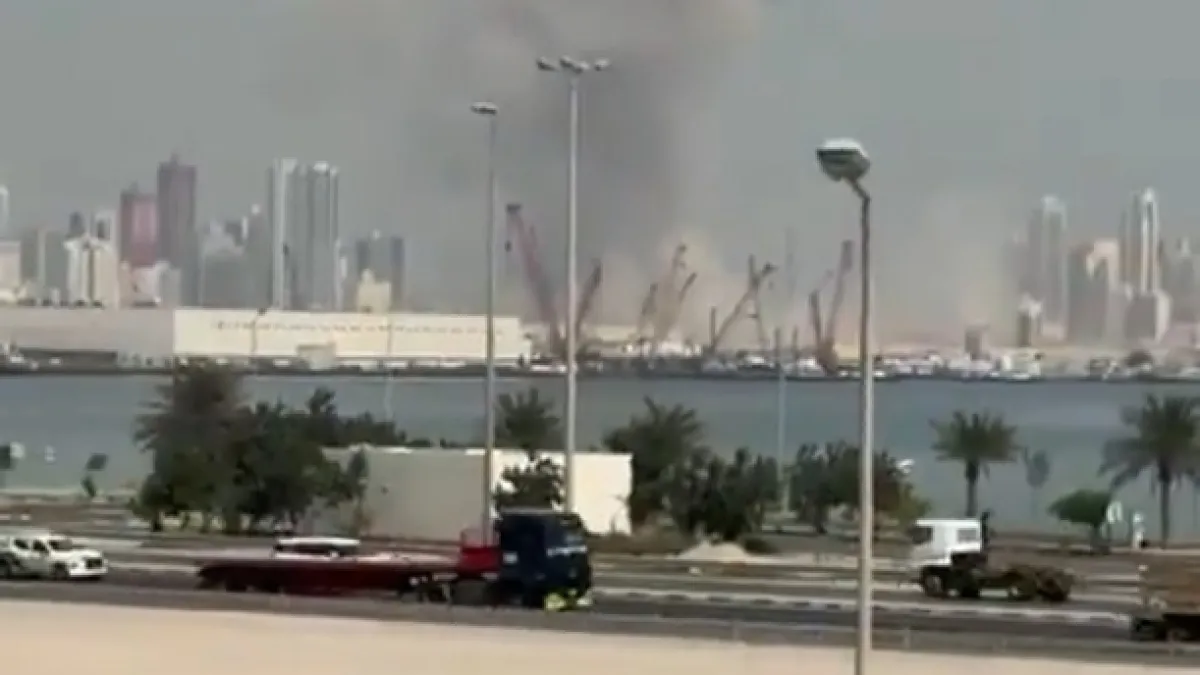
Video shows plumes of smoke rising after Iran targeted a United States military base in Bahrain, following Israel–US attacks across Iran. Two missiles were intercepted over Qatar and explosions were reportedly heard in Abu Dhabi, Kuwait and Saudi Arabia.

Source link

U.S. and Israel carry out strikes across Iran

Israel and the United States launched an air campaign against Iran on Saturday, striking Tehran and several other cities in what President Trump said was the start of “major combat operations.”

The attacks began with Israeli strikes Saturday morning — a workday in Iran — on Tehran, the capital, with residents speaking of attacks near the presidential palace and Iran’s National Security Council.

There were also reports of Israeli strikes on the Ministry of Intelligence, Ministry of Defense, the Atomic Energy Organization of Iran and a military complex.

Israel’s defense minister said the “pre-emptive strike” was to “remove threats against the State of Israel”.

It remains unclear the extent of the campaign and what its ultimate aim will be. But in an eight-minute recorded video message on Truth Social, Trump outlined a maximalist strategy that would see much of what he called “this very wicked, radical dictatorship from threatening America and our core national security interests.”

“We are going to destroy their missiles and raze their missile industry to the ground. … We are going to annihilate their navy. We are going to ensure that the region’s terrorist proxies can no longer destabilize the region or the world, and attack our forces,” he said. “And we will ensure that Iran does not obtain a nuclear weapon.”

He urged Iranians to take over their government.

“This will be probably your only chance for generations,” he said. “For many years, you have asked for America’s help, but you never got it. No president was willing to do what I am willing to do tonight.”

Trump also said U.S. military forces “may have casualties.”

Iran’s IRNA news agency quoted a source in the presidential office who said Iranian President Masoud Pezeshkian was unharmed in the strike.

Besides the capital, explosions could be heard in other the cities, including Isfahan, Karaj, Kermanshah and Qom, according to Iranian state media.

Both Israel and Iran shut down their airspace.

Cellphone and internet communications were disrupted shortly after the attacks began. Multiple Iranian state news websites also appear to have been hacked.

There was no immediate official response from Iran, but Ebrahim Azizi, the head of the Iranian parliament’s national security commission, vowed retaliation.

“We warned you!” he wrote on social media. “Now you have started down a path which end is no longer in your control.”

Residents reported hearing sounds of missiles flying over cities in Jordan, Syria and Lebanon in what was thought to be a missile barrage from Iran against Israel.

The attacks come two days after the U.S. and Iran concluded a third round of Oman-brokered negotiations in Geneva aimed at reducing tensions and stopping the prospect of war.

On Friday, Trump expressed displeasure with the pace of the talks, saying the Iranian side were not negotiating in “good faith” or giving in to U.S. demands. But Oman’s Foreign Minister Badr Albusaidi said a deal was “within reach.”

Source link

Netanyahu says US and Israel attacked Iran to remove ‘existential threat’ | Benjamin Netanyahu

NewsFeed

Israel’s Prime Minister Benjamin Netanyahu says the joint US‑Israel strikes on Iran aim to remove an ‘existential threat.’ He hailed the joint action as empowering the Iranian people to shape their own future and praised US President Donald Trump for his leadership.

Source link

Inside Israel’s Missile Shield: The Multi-Layered Defence Built to Counter Iran

As tensions between Israel and Iran periodically escalate, Israel has developed one of the world’s most sophisticated multi-layered air defence networks to counter ballistic missiles, drones, rockets, and cruise missiles. The system is designed to intercept threats at different ranges and altitudes, creating overlapping layers of protection against attacks from state actors and non-state groups.

The architecture reflects decades of missile threats from regional adversaries and has been refined through repeated real-world use. It combines domestically developed systems with U.S.-supported technology and integrated radar, command, and interception capabilities.

Long-Range Interception: Arrow System

The Arrow-2 and Arrow-3 systems form Israel’s top defensive layer against long-range ballistic missiles. Arrow-2 intercepts incoming missiles in the upper atmosphere, while Arrow-3 is designed to destroy threats in space before re-entry.

Developed primarily by Israel Aerospace Industries with support from Boeing, the Arrow program is tailored to counter high-altitude missile threats and allows for the safe dispersal of potential non-conventional warheads away from populated areas.

Mid-Range Shield: David’s Sling

David’s Sling targets medium-range ballistic missiles and cruise missiles fired from roughly 100 to 200 km away. It also intercepts aircraft and drones.

The system was jointly developed by Rafael Advanced Defense Systems and RTX Corporation and fills the operational gap between long-range Arrow interceptors and the short-range Iron Dome.

Short-Range Defence: Iron Dome

The Iron Dome system is designed to intercept short-range rockets, mortars, and drones. Operational since 2011, it uses radar tracking to determine whether an incoming rocket threatens a populated area. If the projectile is projected to land harmlessly, the system conserves interceptors by not engaging.

Originally designed to counter rockets with ranges of 4–70 km, analysts say its effective coverage has expanded. A naval variant deployed in 2017 protects maritime assets.

Directed Energy Layer: Iron Beam

Declared fully operational in late 2025, Iron Beam is a ground-based high-energy laser system designed to neutralize small aerial threats such as UAVs and mortar rounds. Instead of firing interceptors, the laser superheats targets until they fail mid-air.

Because it uses directed energy rather than missiles, Iron Beam is expected to dramatically reduce interception costs and provide rapid response against swarms of low-cost threats.

U.S. Support: THAAD Deployment

The United States deployed the THAAD (Terminal High Altitude Area Defense) system to Israel in 2024 to strengthen protection against ballistic missiles during heightened regional tensions. THAAD intercepts missiles in their terminal phase of flight and is a key component of U.S. strategic missile defence.

U.S. naval assets and ground-based systems have also assisted in intercepting missiles during previous attacks, highlighting close defence coordination between the two allies.

Air-to-Air Interception Capability

Beyond ground systems, Israeli fighter jets and attack helicopters have used air-to-air missiles to destroy incoming drones before they enter Israeli airspace. This adds flexibility and an additional interception layer, particularly against slow-moving aerial threats.

Analysis: A Layered Shield for a Complex Threat Environment

Israel’s defence network is built on the principle of layered interception, ensuring that if one system fails or is overwhelmed, another layer can engage the threat. This redundancy is crucial given Iran’s missile arsenal and the increasing use of drones and precision-guided munitions by regional actors.

The integration of Arrow, David’s Sling, Iron Dome, Iron Beam, and U.S. systems creates a comprehensive defence umbrella capable of engaging threats from space to low altitude. The addition of directed-energy weapons reflects a shift toward countering mass drone attacks and reducing the financial burden of interceptor missiles.

However, even sophisticated systems face challenges. Large-scale salvos could strain interceptor inventories, while evolving missile technologies and swarm tactics may test response capacity. As regional tensions fluctuate, Israel’s layered defence remains both a technological achievement and a critical strategic necessity.

With information from Reuters.

Source link

U.S. Secretary of State Marco Rubio to visit Israel amid Iran concerns

Feb. 27 (UPI) — Secretary of State Marco Rubio will visit Israel Monday and Tuesday to discuss Iran and other issues, the State Department announced Friday.

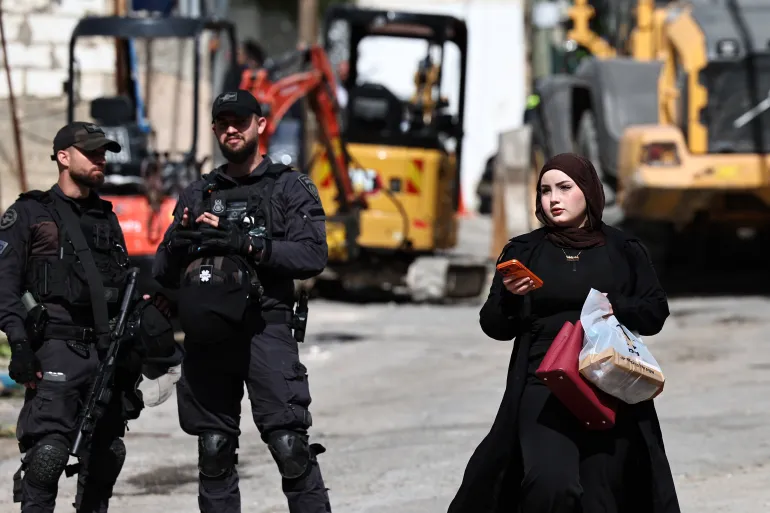
The visit comes amid concern that the United States will attack Iran, despite continued negotiation between the two. On Thursday, the U.S. embassy in Israel told its staff that they could leave because of “safety risks,” though there is no emergency.

“Persons may wish to consider leaving Israel while commercial flights are available,” the State Department said in its new guidance. “In response to security incidents and without advance notice, the U.S. Embassy may further restrict or prohibit U.S. government employees and their family members from traveling to certain areas of Israel, the Old City of Jerusalem, and the West Bank.”

CNBC reported Friday that Omani Foreign Minister Badr al-Busaidi will meet Friday with Vice President JD Vance and other officials in Washington for “previously unreported talks in an effort to stave off war with Iran.”

Al-Busaidi has mediated talks between American and Iranian officials to ease tensions over President Donald Trump‘s demands that Iran abandon its nuclear program.

Rubio’s visit to Israel is to “discuss a range of regional priorities including Iran, Lebanon and ongoing efforts to implement President Trump’s 20-Point Peace Plan for Gaza,” State Department spokesperson Tommy Pigott said in a statement.

Democrats are speaking out against a potential strike.

“The American people are still waiting for the strategic justification for a war with Iran that puts thousands of American personnel across the region in harm’s way,” Sen. Chris Coons, D-Del., said on X. “What is the evidence of an imminent threat?”

Trump said in his State of the Union speech Tuesday that he is still planning to work the differences out diplomatically.

“My preference is to solve this problem through diplomacy, but one thing is certain: I will never allow the world’s No. 1 sponsor of terror — which they are by far — to have a nuclear weapon,” he said.

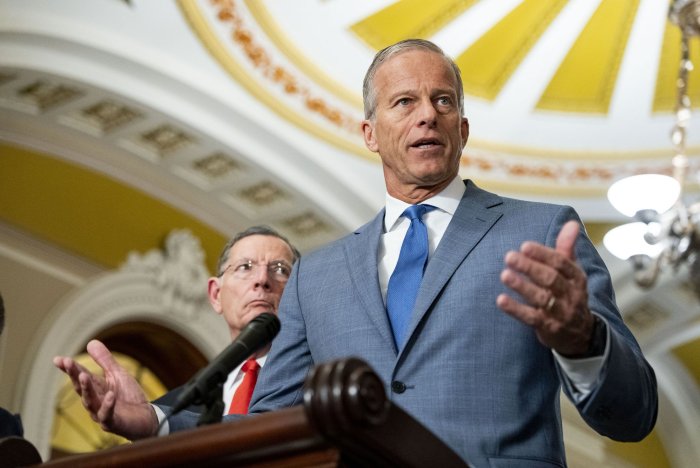
Senate Majority Leader John Thune, R-S.D., speaks during a press conference after the weekly Republican Senate caucus luncheon at the U.S. Capitol on Wednesday. Photo by Bonnie Cash/UPI | License Photo

Source link

Did Epstein help Israel push for a security deal with Ivory Coast? | Cybersecurity News

The latest tranche of documents released by the United States Department of Justice on the convicted sex offender and financier Jeffrey Epstein has caused an uproar and a slew of resignations by senior officials and businesspeople across the US and Europe.

In Africa, the more than three million emails, photos, and videos released on January 23 are also causing some aftershocks as they reveal the extent of Epstein’s connections with prominent African figures, though appearing in the Epstein files does not automatically indicate a crime or wrongdoing.

Recommended Stories

list of 3 itemsend of list

According to the documents, Epstein had ties with former South African President Jacob Zuma; Karim Wade, a politician and son of Senegal’s ex-president Abdoulaye Wade; and deceased Zimbabwean President Robert Mugabe.

The new files also shed more light on Epstein’s connections to a relative of Ivory Coast President Alassane Ouattara, who appeared to connect the two men. This connection reportedly opened the door for a friend of Epstein’s, Israeli Prime Minister Ehud Barak, to propose a mass surveillance system to Ouattara that would work in the West African country. It is unclear if such a system is in place now.

Epstein’s possible fixing role culminated in a formal 2014 security deal between the two countries, although the details of it are scant.

The revelations, in general, underscore the range of Epstein’s influence on powerful figures across continents.

Epstein, who was first convicted in 2008 on charges of sex trafficking, was found dead by suicide in his prison cell in 2019 while awaiting a trial on sex trafficking charges. His ex-girlfriend and co-conspirator, Ghislaine Maxwell, was convicted and sentenced in 2021.

Here’s what we know about the Ivory Coast deal and his ties to Africa’s political elite:

Ivory Coast
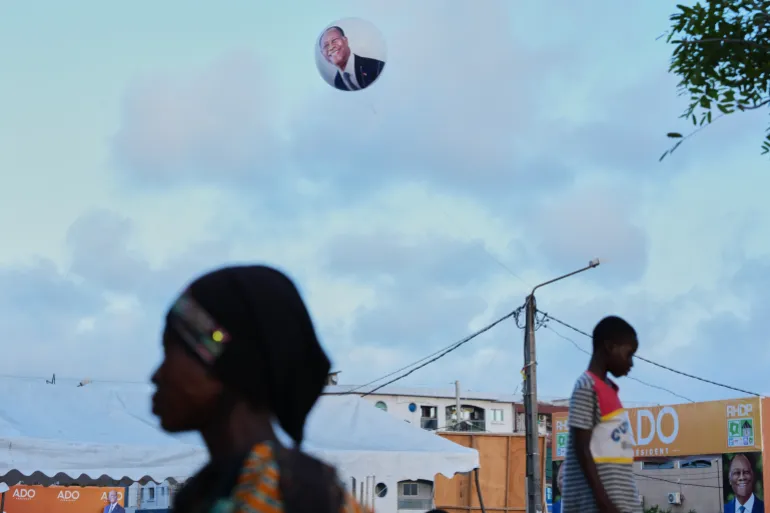
A balloon bearing the image of President Alassane Ouattara floats above supporters during a campaign rally in Koumassi, Abidjan, Ivory Coast, before the 2025 election [File: Misper Apawu/AP]

Israel and Ivory Coast: The context

Discussions between Ouattara and Barak appeared to start in mid-2012, after the Ivorian president travelled to Jerusalem for talks with Israeli leaders, presumably in hopes of striking a security agreement. Ouattara met Barak, who was then the Israeli defence minister, and Prime Minister Benjamin Netanyahu.

Five days before the trip, on June 12, 2012, exiled military officials linked to the Ivory Coast’s former president had attempted to overthrow Ouattara’s government.

Ouattara’s predecessor, Laurent Gbagbo, had refused to hand over power to Ouattara, and a civil war that killed at least 3,000 people ensued. The fighting had only ended about a year before when UN and French forces intervened and arrested Gbagbo.

Ouattara’s son, Dramane, and niece, Nina Keita, also met Epstein in New York on the same day, according to the Epstein files. It’s unclear what the parties discussed.

Keita, a former model, was friends with Epstein and travelled regularly on his private jet, according to the documents. She appeared to have connected Epstein with her uncle, as well as other highly placed Ivorian politicians, according to the documents.

The files showed that on September 12, three months after Epstein met Ouattara’s son, he again met Keita in New York.

He met Barak immediately after in a private meeting at the Regency Hotel in New York, according to a schedule published in the files. It’s not known what was discussed.

In November, Drop Site News reported that Epstein referred to a trip to the Ivory Coast, Angola and Senegal in a note to his assistant, but that there are no flight records to confirm the travels.

What did Israel propose to Ouattara?

A month after Ouattara’s travel to Jerusalem, an Israeli delegation visited Abidjan.

At the meetings, Ouattara reportedly asked about Israeli defence systems to overhaul security in his country, according to reporting by Calcalist, an Israeli publication that covered the exchanges at the time.

In late 2012, Ivorian Interior Minister Hamed Bakayoko travelled to Tel Aviv for a meeting with Barak, where they discussed a cybersecurity deal, Drop Site News found.

Then, in spring 2013, Barak, who had now left office as defence minister, travelled to Abidjan himself to converse with Ouattara in what would be their second meeting.

Barak presented an expensive security defence plan to the president, Calcalist reported. The $150m proposal encompassed border security, army training, and strategic military consulting, the publication said.

Drop Site News, in an investigation in November, added that the proposal included a mobile and internet surveillance centre, as well as a video monitoring centre.

The publication cited two sets of documents: an archive of leaked emails released by the Handala hacking group and hosted by nonprofit whistleblower site, Distributed Denial of Secrets, as well as earlier Epstein-linked documents released by the US House Oversight Committee in October 2025.

Barak’s surveillance centre was to be developed by the French-Israeli private security company, MF-Group, which specialises in surveillance systems, and was to be located in Abidjan, Drop Site News reported.

Email logs showed Epstein introduced Barak to Ouattara’s chief of staff later in September 2013, and planned a meeting in New York where the two men met.

Although Ouattara was pleased with the plan, he ultimately did not sign the deal because of the price tag, Calcalist reported.

Barak, in a response to Calcalist at the time, denied that he offered to build the Ivory Coast an intelligence apparatus. “The claims about establishing an intelligence apparatus and price offers are incorrect. These are private conversations, and the public has no interest in them,” he was quoted as saying.

ouattara
Ivory Coast’s President Ouattara being sworn in for another term at the Presidential Palace in Abidjan on December 8, 2025 [File: Sia Kambou/ Reuters]

What was the final agreement?

Although the plan appeared to be rejected, both countries continued to forge friendly ties.

In June 2014, then-Israeli Foreign Minister Avigdor Liberman was welcomed in Abidjan on a state visit.

Liberman had travelled to the country along with 50 Israeli businesspeople who were interested in investing in the Ivory Coast.

In a news release at the time, the Ivorian government said two agreements were signed: “One concerning regular consultations between the two countries and the other on defence and internal security.”

No details were provided. It is not known if Abidjan is using Israeli surveillance security systems.

Nevertheless, the Israeli-Ivorian security relationship has continued, with the latter buying military vessels, aircraft, and armoured tanks from Israeli weapons companies.

In 2016, a United Nations report found that Israeli firm Troya Tech Defence had sold weapons and night vision goggles to Ivory Coast in 2015, violating a UN arms embargo that was in place at the time.

In 2018, an investigation into Israeli spyware Pegasus, developed by the NSO Group, revealed that the malware had targeted journalists’ phones in the Ivory Coast. Pegasus, believed to be used by governments, was found to be operating in 45 countries.

In March 2023, privately owned Israel Shipyards, which builds naval vessels, delivered two offshore patrol vessels (OPVs) to Abidjan.

Critics of President Ouattara say the Ivory Coast has slid further from democracy under his rule and point to incidents like the Pegasus scandal, among other issues.

Former Israeli Prime Minister Ehud Barak gestures after delivering a statement in Tel Aviv, Israel June 26, 2019. [Corinna Kern/Reuters]
Former Israeli Prime Minister Ehud Barak in 2019 [Corinna Kern/Reuters]

Did Epstein and Barak strategise about other African countries?

Barak also tried to leverage the Boko Haram crisis in Nigeria for a security deal, according to Drop Site News, citing the new documents.

Epstein was aware of Barak’s business deals and advised him on doing business in Nigeria between 2013 and 2020, according to email exchanges.

Both saw the escalating violence in the West African nation not as a humanitarian crisis, but as a business opportunity, the publication found.

In June 2013, Barak attended a cybersecurity conference in Abuja, which organisers said privately was a pretext to meet Nigeria’s then-President Goodluck Jonathan.

It came after Nigeria awarded Israeli firm, Elbit Systems, a controversial contract to surveil digital communications in the country. Public outrage caused Jonathan to consider cancelling the project, but the government never announced that it was withdrawn.

Barak continued leveraging his access in Nigeria to promote Israeli products and services. In 2015, he facilitated the sale of Israeli biometric surveillance equipment to a private Christian university in Nigeria, Drop Site News found. The university, in a statement, denied the sale.

In 2020, the World Bank selected Barak’s intelligence firm, Toka, and the Israeli National Cyber Directorate to advise Nigeria on designing its national cyber-infrastructure.

Epstein, meanwhile, also facilitated high-level access for Sultan Ahmed bin Sulayem, ex-chairman of the Emirati firm DP World. In 2018, Epstein connected bin Sulayem with Jide Zeitlin, then-chair of Nigeria’s sovereign investment fund, for discussions on securing port ownerships in Lagos and Badagry.

Bin Sulayem, last March, visited Nigeria and proposed that DP World establish industrial parks at Nigerian ports. The proposal has not been approved.

Jacob Zuma
Former South African President Jacob Zuma in 2025 [File: Rogan Ward/Reuters]

Jacob Zuma

The new files revealed that Epstein had some relations with former South African President Jacob Zuma, who led the country from 2009 until 2018.

Epstein appeared to arrange a “small dinner” on behalf of Zuma in March 2010 at the Ritz Hotel in London.

It’s unclear what the purpose of the dinner was, but emails released as part of the Epstein files seemed to show that a Russian model was invited. The model was told her presence would “add some real glamour to the occasion”, according to emails sent by Epstein’s planner, whose name was redacted in the files.

In a different email, Epstein appeared to share that information with British politician Peter Mandelson, who is now under investigation for his links to Epstein. A host, whose name was redacted “is having dinner for zuma tomorrow night at the ritz„ i have invited a beautiful russina named (redacted) to attend,” he wrote.

It’s unclear if Mandelson responded.

After the dinner appeared to have taken place, one email sender whose name was redacted wrote to Epstein: “(Redacted name) was a delight last night and enchanted all those she met…By the way, Jacob Zuma was much more impressive and engaging than I thought he would be!”

Karim Wade

Politician and son of Senegal’s ex-President Abdoulaye Wade, Karim Wade’s name appeared 504 times in the released files.

Wade, under his father, was a minister with an open-ended portfolio, and was so powerful that he was nicknamed “minister of heaven and earth”.

His relationship with Epstein began in 2010, according to an investigation by the Organised Crime and Corruption Reporting Project (OCCRP), which cited the newly released files.

In an email to an unnamed contact in November of that year, Epstein wrote: “the President of Senegal is sending his son to see me in paris,” the publication noted. Over the years, they planned trips in Africa along with Emirati businessman, bin Sulayem. They also discussed business ideas, the files showed.

In 2015, after Wade was convicted on corruption charges by a new administration, records show Epstein approaching Norwegian leader of the Council of Europe, Thorborn Jagland, to ask about possibly filing an appeal at the European Court of Human Rights. Wade’s lawyers regularly updated Epstein on efforts to free him, according to OCCRP.

Senegal pardoned Wade in 2016, after which he went into exile in Qatar. Keita, niece to Ivory Coast’s President Ouattara, who appeared to play some role in the efforts to free Wade, texted Epstein: “Thank you for everything you have done for him!!!!”

Robert Mugabe

The Epstein documents revealed that the sex trafficker planned to meet then-President Mugabe to propose a new currency for Zimbabwe amid that country’s hyperinflation crisis.

In email exchanges back in 2015, Japanese financier Joi Ito recommended to Epstein that they both approach Mugabe to discuss the currency after the Zimbabwean dollar lost its value. It’s unclear if the meeting ever took place.

Released along with the emails were FBI documents from 2017, which appeared to show unverified testimony from a “confidential source” who said Epstein was a wealth manager for Russian President Vladimir Putin, as well as Mugabe.

Source link

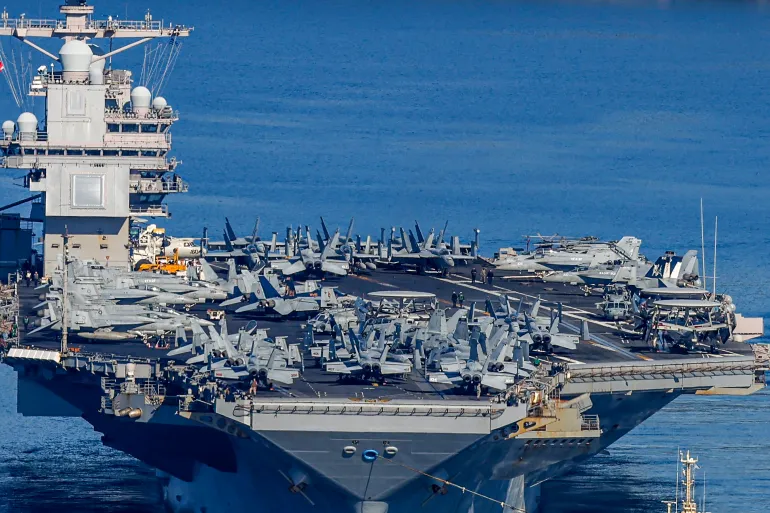
USS Gerald R. Ford’s Imminent Arrival Off Israel Comes As Negotiations Grind On

Though no deal was reached to end Iran’s nuclear arms ambitions, U.S. and Iranian officials both expressed cautious optimism after the third round of negotiations between the two nations concluded today. Even as the talks were underway in Geneva, more American military assets pushed toward the Middle East. On Thursday, the aircraft carrier USS Gerald R. Ford left Souda Bay on the Greek-owned island of Crete and will reportedly arrive off the Israeli coast as early as Friday. In addition, more F-35A Lighting II stealth fighters and F-15E Strike Eagle multirole fighters are on their way across the Atlantic for likely deployment to the region.

You can get a good sense of the state of play in this situation in our deep dive here.

The third round of indirect talks between the U.S. and Iran in Geneva ended inconclusively Thursday. 

“We have finished the day after significant progress in the negotiation between the United States and Iran,” Omani Foreign Minister Badr Albusaidi, who is moderating the talks, stated on X. “We will resume soon after consultation in the respective capitals. Discussions on a technical level will take place next week in Vienna. I am grateful to all concerned for their efforts: the negotiators, the IAEA, and our hosts the Swiss government.”

We have finished the day after significant progress in the negotiation between the United States and Iran. We will resume soon after consultation in the respective capitals. Discussions on a technical level will take place next week in Vienna. I am grateful to all concerned for…

— Badr Albusaidi – بدر البوسعيدي (@badralbusaidi) February 26, 2026

U.S. and Iranian officials offered positive assessments of the negotiations.

Iranian Foreign Minister Araghchi:

Today’s round was the best among the rounds so far. We clearly presented our demands to the American side.

Technical talks will be held on Monday to discuss detailed specifics.

We achieved good progress on the nuclear file and sanctions… pic.twitter.com/r5dEvvmYJn

— Clash Report (@clashreport) February 26, 2026

At issue is the future of Iran’s nuclear weapons program, but the negotiations do not involve Iran’s ballistic missile program, which the Trump administration is now saying could threaten the U.S. homeland in the near future. More about that later in this story. The U.S. is reportedly demanding that Iran destroy its Fordow, Natanz and Isfahan nuclear sites, deliver all enriched uranium to the U.S., agree to zero enrichment of its uranium, but can keep the Tehran reactor. In addition, the Trump administration is demanding that any deal be permanent and is offering Iran minimal sanctions relief, with more if the country is compliant with these demands. 

Here the demands US brought to Iran in Geneva:

1) Destroy all 3 nuclear sites: Fordow, Natanz, Isfahan

2) Deliver all enriched uranium to US

3) No sunset clauses

4) Zero enrichment, but can keep Tehran reactor

5) Minimal sanctions relief up front; more if Iran compliant

— Alex Ward (@alexbward) February 26, 2026

For its part, Iran “is unwilling to transfer any enriched uranium outside the country,” the official Iranian Press TV news outlet reported on Thursday. While the U.S. delegation demands all existing stockpiles be handed over, Iran insists that the enriched uranium should remain safeguarded within its borders.

“Foreign Minister Abbas Araghchi has said Iran remained ‘crystal clear’ that it would ‘under no circumstances ever develop a nuclear weapon,’ while also recognising the right of Iran’s people to the benefits of ‘peaceful nuclear technology,’” Al Jazeera reported.

The negotiations are taking place in the wake of statements by Trump and Secretary of State Marco Rubio laying out the administration’s case against Iran. Both warned that Iran is developing weapons that can strike the U.S. and has the means and intent to strike its assets, and those of allies, in the Middle East.

PRESIDENT TRUMP on IRAN: My preference is to solve this problem through diplomacy, but one thing is certain: I will NEVER allow the world’s number one sponsor of terror to have a nuclear weapon.

We have to be strong. It’s called peace through strength. pic.twitter.com/0CPKHtvQDt

— Department of State (@StateDept) February 25, 2026

SECRETARY RUBIO on IRAN: For a country facing sanctions, whose economy is in tatters, whose people are suffering, somehow they still find the money to invest in missiles of greater capacity every year. This is an unsustainable threat. pic.twitter.com/LGZJxPG33w

— Department of State (@StateDept) February 26, 2026

Meanwhile, the Trump administration reportedly would like to see Israel attack first to give the U.S. political cover.

“There’s thinking in and around the administration that the politics are a lot better if the Israelis go first and alone and the Iranians retaliate against us, and give us more reason to take action,” Politico stated

“The argument in Israel is that this would be a terrible strategic mistake, as it creates a lose-lose situation: if the strike fails, Israel would be blamed for dragging the United States into the conflict,” a high-ranking IDF official told us. “Israel would be accused of being a warmonger, a source of destruction and regional war, rather than a country seeking to reach an agreement. Israel could find itself completely isolated. This reflects the general discourse on the issue.”

This issue should be taken with a degree of skepticism since much of the behind-the-scenes reporting has been highly inaccurate.

Report: White House insiders say a first strike by Israel on Iran might create the optics needed to justify US military action.https://t.co/EszY1krx5r

— Jerusalem Post (@Jerusalem_Post) February 26, 2026

“Many actions are being carried out on the home front, among civilians, in order to protect them from missile strikes,” the IDF official added. “At the same time, there is very significant military readiness along the borders.”

While the Trump administration is pushing Iran to accept the deal or risk an attack, Democrats in the U.S. House of Representatives pledged Thursday “to force a vote next week on legislation to restrict President Donald Trump from attacking Iran without congressional approval,” Politico pointed out, adding that “the White House is already mobilizing to try and defeat it.”

The move by Minority Leader Hakeem Jeffries and his leadership team “will compel a tough and close vote for lawmakers as the Trump administration ramps up pressure on Tehran,” the outlet added.

JUST IN: House Dem leaders say the plan to force a vote on bipartisan Iran war powers legislation from Ro Khanna and Thomas Massie “as soon as Congress reconvenes next week.” pic.twitter.com/IxO7DSwQAT

— Connor O’Brien (@connorobrienNH) February 26, 2026

The sabre rattling and internal political machinations come as the U.S. has built up a massive force that includes two aircraft carrier strike groups and several other warships.

There are reports that the Ford, on a twice-extended deployment that has seen it enter the Mediterranean for the second time since departing Norfolk on June 24, 2025, will dock in Haifa, Israel. However, that seems dubious given that placing an aircraft carrier at a fixed location like that would make it a very attractive and high-volume target for an Iranian attack. The carrier would not benefit from its own defenses, and to a lesser degree, that of its escorts, when in port, as well.

There have been suggestions that the Ford’s Arleigh Burke class guided missile destroyer escorts will help provide protection for Israel against anticipated Iranian barrages. The Ford’s F/A-18E-F Super Hornets and E/A-18G Growler electronic warfare jets could also be used to attack Iran, but would have to fly across Israel or Lebanon, Syria or Jordan, and Iraq, to reach Iranian territory.

Haifa “suffered significant damage” during the 12-Day War in June, “with dozens injured from missile fire and structural damage to homes and municipality buildings,” the Jerusalem Post reported. “Haifa is home to the Israel Navy headquarters and the largest oil refinery in Israel, which was hit during the war, forcing a partial, temporary shutdown of some secondary facilities.”

The Pentagon’s first kamikaze drone unit is ready to participate if Trump decides to launch strikes on Iran, Bloomberg News reported, citing U.S. officials and analysts. The drone unit is known as Task Force Scorpion. It’s now ready for operations, U.S. Central Command spokesman Capt. Tim Hawkins told the news outlet in an emailed statement.

“We established the squadron last year to rapidly equip our warfighters with new combat drone capabilities that continue to evolve,” he said.

The U.S. military set up Task Force Scorpion late last year as the first operational unit armed with Low-Cost Uncrewed Combat Attack System (LUCAS) kamikaze drones, a design reverse-engineered from the Iranian-designed Shahed-136, in the Middle East. The establishment was seen as a major development, and offers a way “to flip the script on Iran,” according to a U.S. official. Last year, TWZ laid out a detailed case for why America’s armed forces should be investing heavily in rapidly-produced Shahed-136 clones as an adaptable capability that could be critical in future operations globally, as you can read here.

Just in: The Pentagon’s first kamikaze drone unit is ready to participate if President Donald Trump decides to launch strikes on Iran, according to US officials and analysts. https://t.co/DOPGwxi339

— Anthony Capaccio (@ACapaccio) February 26, 2026

In addition to the ships, scores of tactical jets, refuelers, airborne control planes, and other aircraft have already surged to the Middle East and Europe, with more on the way. At least another 12 F-35As from Hill Air Force Base in Utah, and six F-15Es each from Mountain Home Air Force Base in Idaho and Seymour Johnson Air Force Base in North Carolina are heading to Europe. That’s ahead of a likely deployment to the Middle East.

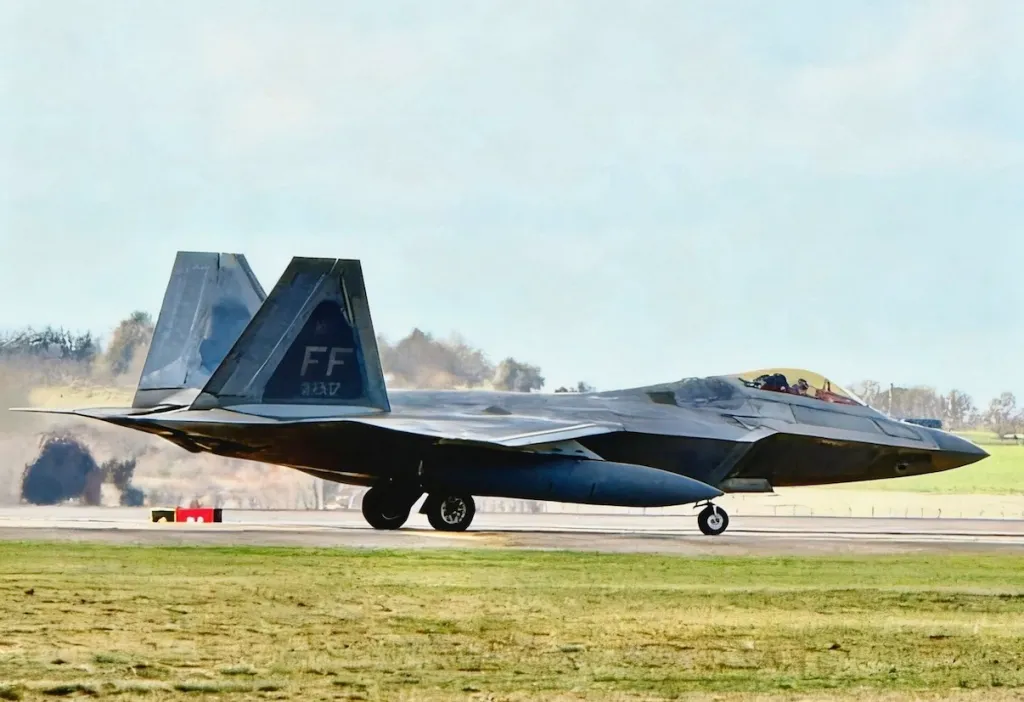
Aviation photographer Acr Explorer was kind enough to share images of F-35As and F-22s seen at Lakenheath Air Base in the U.K. on Thursday.

F-22 Raptor stealth fighters seen Thursday at Lakenheath Air Base in the U.K. (Acr Explorer)

The large influx of U.S. airpower has left U.S. bases in the region crowded and is one reason that F-22 Raptor stealth fighters have been deployed to Israel. Another is the likelihood that Israel will be fully integrated into any U.S. attack on Iran.

Beyond the Middle East and Europe, the U.S. is also building up forces at Diego Garcia, its Indian Ocean island outpost, which has been used as a bomber base in previous conflicts. As we noted yesterday, F-16CM fighters from the 35th Fighter Wing recently arrived on the island from Misawa Air Base in Japan. These would be key assets in defending the island from a possible Iranian attack. There is also indications that a bomber deployment to the base could be imminent. However, there are political questions to be solved before the base can be used for a strike on Iran. As we reported last week, the United Kingdom has apparently said it would not allow the use of the island for strikes on Iran, although Prime Minister Keir Starmer could still change his mind. You can read more about the force-protection mission at Diego Garcia — increasingly threatened by Iranian long-range attack drones and missiles — in our previous reporting.

While the talks between Washington and Tehran are scheduled to resume next week, remember that three days before the Operation Midnight Hammer strike on Iranian nuclear facilities last June, the White House said Trump would decide “within two weeks” about whether to strike or keep negotiating.

Though more negotiations are scheduled, Trump has acted militarily ahead of planned talks in the past. Regardless, with the Ford arriving very soon and other assets trickling into place, and fitting our own stated timeline, the window for strikes appears to be cracking open now, and will only get wider with each passing day.

Contact the author: howard@thewarzone.com

Howard is a Senior Staff Writer for The War Zone, and a former Senior Managing Editor for Military Times. Prior to this, he covered military affairs for the Tampa Bay Times as a Senior Writer. Howard’s work has appeared in various publications including Yahoo News, RealClearDefense, and Air Force Times.


Source link

When money is scarce, every choice counts: Bank, cash, or credit? | Israel-Palestine conflict

Gaza City – Amid the buzz of customers in the Remal neighbourhood in Gaza City, Samar Abu Harbied stops at a small, makeshift roadside stall to buy groceries to prepare an Iftar meal for her family, to break their fast during the Muslim holy month of Ramadan.

With no cash in her purse, the 45-year-old housewife asks the grocer if she could put the bill on credit, until her husband or son could wire the money to him.

“I have not touched a paper note for months. I don’t even have money to pay for a taxi. Now we walk a lot, for long distances,” Abu Harbied said.

Najlaa Sukkar, 48, was trying to catch her breath at the same stall, which is run by her son Abdallah, after a failed journey on foot to see a doctor for a post-surgery check-up and to buy medication.

Najlaa said she did not have enough money to pay the 30 shekel (US$9.5) check-up fees, and the only banknote she had, a 20-shekel bill, was so worn out that the pharmacist turned it down.

“I returned without receiving medical care,” she told Al Jazeera.

“At the pharmacy, they didn’t accept the banknotes as they were frayed. The taxi driver didn’t accept a banknote, only small change, which I don’t have. It is very difficult to get by. What a mess, we don’t know what to do!”

Palestinians in the Gaza Strip are struggling to conduct their daily lives amid a severe cash flow problem imposed by Israel immediately after it embarked on its genocidal war on Gaza in October 2023.

A US-brokered ceasefire that went into effect in October has brought little reprieve to Palestinians, who are still using worn-out currency they had from before the war, or must rely on a new system of electronic payments conducted through smart telephones amid limited internet coverage.

Palestinians in Gaza use the Israeli currency, the shekel, in their daily transactions, and depend on Israel to supply banks with new banknotes and coins.

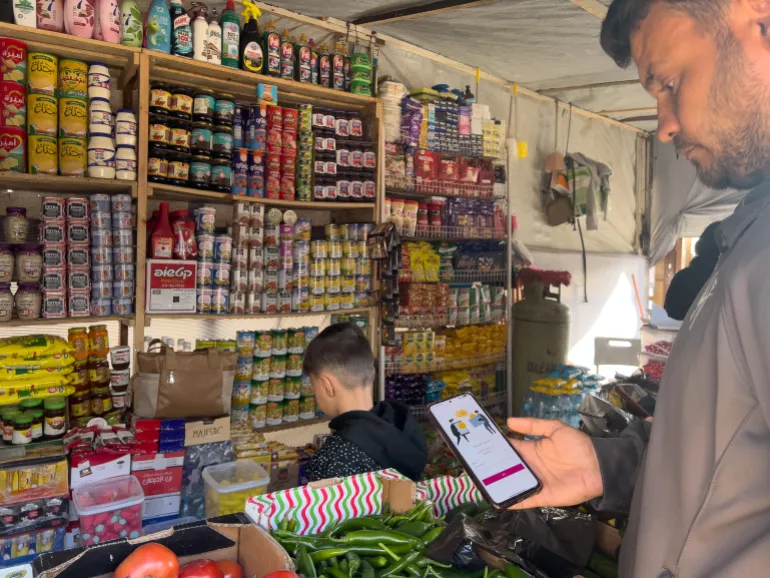
A customer pays for groceries using bank account transactions [Ola al-Asi/ Al Jazeera]
A customer pays for groceries using bank account transactions [Ola al-Asi/Al Jazeera]

Electronic payments

Palestinians were forced to turn to a digital payment system as a way to get around a severe shortage of Israeli shekel banknotes, a problem that has been exacerbated by the destruction of an estimated 90 percent of bank branches and cash machines.

The Palestinian Monetary Authority, working with internet service providers, has pushed for mobile-based electronic payments, including PalPay and Jawwal Pay, to help Palestinians overcome the liquidity problem.

Abu Harbeid said her son switched to electronic payments after he faced many problems using the 50 shekels per shift he was receiving while working as a night guard.

“My son, Shady, was receiving his daily wage in cash, which was worn and torn. We could hardly break it into smaller change or buy anything, as sellers don’t accept overused paper bills,” she told Al Jazeera.

“Moreover, the seller doesn’t accept it unless I spend it all, as they don’t have change. Now, as he is paid into his bank account, we buy everything through bank apps,” she added.

But digital payments have added another layer of hardship to a large segment of the population.

Most Palestinians still do not receive bank-transferred salaries, many lack access to smartphones, and those who have phones struggle to keep them charged in an area where electricity services are in severe crisis.

To add to that, there is still the problem of finding a good internet connection for the transfer process.

Abu Harbeid said a proper trip to the market requires her to have her husband or son with her to pay for goods. But neither can leave work to join her.

“I prefer cash in my hand; I could buy anything on the go,” Abu Harbied said.

Abdallah Sukkar, owner of a street grocery stall, writing down customers' details in a notebook [Ola al-Asi/ Al Jazeera]
Abdallah Sukkar, owner of a street grocery stall, recording the details of a customer buying goods on credit [Ola al-Asi/Al Jazeera]

Not only a liquidity shortage issue

Analysts say Gaza’s current economic reality started as a liquidity crisis, but has become an issue of transition from a regulated financial system to a fragmented survival economy shaped by scarcity, informality, and political constraints.

“However, as the months passed, the crisis evolved into something far more structural,” Ahmed Abu Qamar, member of the board of directors of the Palestinian Economists Association, told Al Jazeera.

“The black market now plays a dominant role in determining liquidity conditions. A small group of traders effectively manages cash circulation through high-commission cashing operations.”

He said that when money itself becomes a traded commodity, it signals severe distortion in the monetary system. “Cash, like any commodity, becomes subject to supply and demand dynamics. When it becomes scarce, its value increases beyond its nominal worth. From an economic perspective, this represents a structural disruption of the monetary system.

“The formal banking sector and the Palestinian Monetary Authority were sidelined. What we are seeing is the neutralisation of the formal monetary system,” he said.

Abu Qamar said the deeper issue was confidence – not just in cash, but in the financial system as a whole. “Cash is inherently difficult to track, whereas electronic payments are traceable and can be frozen or restricted. Implementing such a transition abruptly produces severe economic and social distortions,” he warned.

“Widespread selling on credit is not a sign of market stability – it is an indicator of declining incomes and weakened purchasing power. When debt expands rapidly without a parallel increase in income, the result is social fragmentation. Approximately 95 percent of households in Gaza depend on aid,” he added.

People purchasing goods at a grocery shop at Al-Zawya market [Ola al-Asi/ Al Jazeera]
People shopping for goods at a grocery store in az-Zawya market [Ola al-Asi/Al Jazeera]

Profiteering from Gaza’s woes 

The war has paved the way for middlemen to cash in illegally on the financial woes of Gaza, residents said.

Sukkar said that when her husband or sons needed cash, they were often forced to deal with brokers who charge a hefty commission that could reach 50 percent.

“We lose our money to them for nothing; they steal from us under our full consent,” she said.

Many residents, like Abu Harbeid, also do not trust bank transfers, saying they prefer physical cash in hand.

“I ask my sons, where does that money in the account appear?” said Sukkar.

“Who holds our money in their hands? I used to see money and count it, the banknotes and the change. On some days, when there are technical problems with the bank applications, we get nervous about the possibility of losing the money in their accounts,” she added.

Abdallah Sukkar, whose family ran a well-known family store in the Shujayea area in eastern Gaza before the war, said families who receive direct deposit salaries often buy with bank transfers.

“But I don’t like this method; I prefer cash,” he said.

He said he accepts all banknotes, whether new or worn-out ones, and allows people to buy on credit, but admitted that all of that affects his ability to make improvements to the roadside stall he now runs in place of his family’s old business.

He also complained of unpaid debts, adding that debts had soared by more than 500 percent during the war, while his profits barely reach 2 percent. He said he had given out 20,000 shekels’ worth of goods to new customers, “all of [whom] have become customers during the war”.

“People don’t have money; I can’t turn them away when they come to buy food on credit. It’s already catastrophic in Gaza,” he said.

“From the beginning of Ramadan till now, I haven’t had banknotes and change, which affects the sales. I don’t have small change to give to people who have cash, so they turn to other stalls or shops.

“Yesterday, when the bank application stopped, we were terrified that we might lose our money in the bank,” he said.

Source link

US-Iran talks conclude with claims of progress but few details | Nuclear Weapons News

Tehran, Iran – Another round of indirect talks between Iranian and United States officials ended with a mediator claiming “significant progress” but still no clear evidence that either side was willing to concede enough on their positions to avoid war.

After the conclusion of the talks in Geneva on Thursday, Iranian Foreign Minister Abbas Araghchi said further technical talks would be held next week in Vienna and progress had been “good”.

Recommended Stories

list of 3 itemsend of list

“These were the most serious and longest talks,” Araghchi said.

Omani Foreign Minister Badr bin Hamad Al Busaidi, who mediated the talks, said Iranian and US diplomats would consult with their governments before the Vienna talks.

Few details have emerged about the discussions, but Araghchi was reported to have met US envoy Steve Witkoff – if only briefly, according to Iran’s Tasnim news agency.

The Iranian team, led by Araghchi, handed over on Wednesday night Tehran’s written proposals to Al Busaidi, who also mediated previous rounds of talks in Geneva and Muscat.

The Omani diplomat then met with the US delegation on Thursday, led by Witkoff and US President Donald Trump’s son-in-law Jared Kushner. Al Busaidi mediated between the two teams throughout the day, and the US delegation also held separate talks over Ukraine.

Also taking part in the talks was Rafael Grossi, the director general of the International Atomic Energy Agency (IAEA), which will have to undertake nuclear monitoring and verification duties in Iran in case of any agreement.

The UN watchdog will hold several days of board meetings starting on March 6, which is around the 10- to 15-day deadline floated by Trump last week for Iran to reach a deal.

Western media outlets have suggested the board could once again consider a move to censure Iran depending on the results of the Geneva talks. Iran has accused Grossi of taking politicised action and criticised the IAEA after Israel attacked Iran in June, one day after the agency passed a resolution saying Tehran was not complying with its commitment to nuclear safeguards.

Gerald Ford carrier
The US Navy aircraft carrier USS Gerald R Ford departs Souda Bay on the island of Crete on February 26, 2026, for the coast of Israel, leading a second US carrier strike group to take up positions against Iran [Costas Metaxakis/AFP]

Fundamental differences

The two sides have been at odds over key issues, including uranium enrichment and missiles.

Washington has repeatedly emphasised, in lockstep with Israel, that it will not accept any nuclear enrichment taking place on Iranian soil, even at civilian-use levels agreed during the 2015 nuclear deal that Iran agreed with world powers. Trump unilaterally abandoned that deal in 2018.

In the days leading up to the Geneva talks, US officials increasingly focused on Iran’s ballistic missile programme, saying the missiles threaten US military bases across the Middle East as well as Israel. Iran has refused to entertain any talks on its conventional weapons. Iranian officials, including President Masoud Pezeshkian, have repeatedly said they will never develop nuclear weapons.

Speaking to local officials during a provincial visit, Pezeshkian also shot back at Trump’s assertion during a lengthy State of the Union speech that Iran was “the world’s number one sponsor of terror”.

Pezeshkian said numerous Iranian officials and nuclear scientists have been assassinated over the decades, particularly in the immediate aftermath of the country’s 1979 Islamic revolution.

“If the realities are seen fairly, it will become clear that Iran is not only not a supporter of terrorism, but one of the main victims of terror in the region and across the world,” he said.

The Iranian government’s IRNA news agency said Tehran’s proposal was expected to gauge US “seriousness” in the talks because it contained “win-win” offers.

Iranian officials have not publicly discussed all the details of their proposals, but they are believed to include diluting part of the country’s 60-percent enriched uranium and keeping the uranium inside the country. Iranian authorities envisage that could be paired with economic opportunities for the US related to Iranian oil and gas and the purchase of airplanes.

TEHRAN, IRAN - FEBRUARY 21: People are shop at Tajrish bazar in Tehran on February 21, 2026 in Tehran, Iran. In recent weeks, the United States has moved vast numbers of military vessels and aircraft to Europe and the Middle East, heightening speculation that it intended to strike Iran. (Photo by Majid Saeedi/Getty Images)
People shop at Tajrish bazar in Tehran on February 21, 2026 [Majid Saeedi/Getty Images]

Supreme Leader Ali Khamenei has maintained his tough rhetoric against the US as well, casting doubt on the chances of any agreement. He also said Trump would be unable to overthrow Iran’s government after the US president said regime change would be “the best thing that could happen” in Iran.

Araghchi said during an interview on Wednesday that even if Khamenei is killed, the theocratic establishment in Iran would carry on because it has legal procedures in place to appoint a successor. Pezeshkian added on Thursday: “They can eliminate me, eliminate anyone. If they hit us, a hundred more like us will come up to run the country.”

Double-digit inflation as Iran braces for war

Iranian and US officials have been hailing supposed “progress” in the indirect talks this month, but many Iranians continue to prepare for war.

In Tehran and across the country, people are buying bottled water, biscuits, canned foods and other essentials in case of a war.

“A few days ago, I bought a power bank to keep the electronics charged. Now I’m looking for a short-wave radio so we can hear the news if the state shuts down the internet and electricity infrastructure is bombed,” said a 28-year-old resident of the capital who asked not to be named.

As bombs fell during the 12-day war with Israel in June, Iranian authorities cut off almost all internet access for several days, followed in January by an unprecedented 20-day total blackout imposed on about 92 million people as thousands of people were killed during nationwide protests.

The Iranian government, which blames “terrorists” armed and funded by the US and Israel for the protests, has rejected Trump’s claim that 32,000 Iranians were killed during the demonstrations. It said more than 3,000 people were killed, and rejects documentation by the United Nations and international human rights organisations that its security forces were behind the killings.

As the threat of war intensifies, not all Iranians are capable of stocking up on food and other necessities due to rising inflation that has gripped the country for more than a decade as a result of a mix of chronic local mismanagement and US and UN sanctions.

According to separate reports by the Statistical Centre of Iran and the Central Bank of Iran released on Thursday, inflation has now shot beyond 60 percent.

The Statistical Centre put annual inflation in the Iranian month of Bahman, which ended on February 19, at 68.1 percent, while the Central Bank said it was 62.2 percent.

Food inflation was by far the strongest driver at a whopping 105 percent. That included a 207-percent inflation rate for cooking oil, 117 percent for red meat, 108 percent for eggs and dairy products, 113 percent for fruit and 142 percent for bread and corn.

Iran’s national currency, the rial, stood at about 1.66 million rials to the US dollar on Thursday, near an all-time low.

Source link

India and Israel pledge to boost cooperation on trade, defence | International Trade News

Narendra Modi’s visit to Israel has drawn criticism at home amid tensions over Israel’s genocidal war on Gaza.

Prime Minister Narendra Modi says India and Israel will collaborate more closely on defence technology while pursuing a free trade agreement, as he wrapped up a controversial two-day visit.

Modi and his Israeli counterpart Benjamin Netanyahu said at a joint news conference in Jerusalem on Thursday that they would also foster collaboration on technologies, such as artificial intelligence and cybersecurity, as their countries concluded more than a dozen bilateral agreements.

Recommended Stories

list of 3 itemsend of list

“The future belongs to those who innovate and Israel and India are bent on innovation,” said Netanyahu. “We’re proud ancient civilisations, very proud of our past. But absolutely determined to seize the future, and we can do it better together.”

A joint statement highlighted cooperation in the field of “horizon scanning”, describing it as a mechanism that “helps identify emerging global trends in areas like technology, economy and society, by leveraging data”.

Israel also agreed to allow 50,000 more Indian nationals into the country, where tens of thousands of South Asians have filled construction and caregiving jobs since new restrictions were placed on Palestinian workers at the start of its war on Gaza.

Strategic embrace

Modi’s visit, his second since he took office in 2014, has drawn criticism at home, signalling an ongoing expansion of India’s strategic embrace of Israel amid ongoing tensions over Israel’s genocidal war against Palestinians in Gaza, which has killed more than 72,000 people.

Confirming their growing ties, the leaders’ joint statement referenced the Hamas-led attack on Israel on October 7, 2023, and an April 2025 attack on tourists and civilians in Pahalgam, in Indian-controlled Kashmir.

“Terrorism cannot be accepted in any form or expression,” said Modi, who has historically supported the establishment of a Palestinian state yet has sometimes abstained from criticism of Israel in international forums, including the United Nations.

Earlier this month, India was among the countries that condemned Israeli measures to effectively deepen its control over the occupied West Bank.

Both countries also lauded United States President Donald Trump’s plan to advance the “ceasefire” in the Gaza Strip.

Source link

Blood tech: UK’s use of Israeli spyware that helps underpin a genocide | Israel-Palestine conflict News

The United Kingdom’s government is investing in spyware developed and tested on Palestinians in Gaza and the occupied West Bank despite its public criticism of Israeli action there.

In addition to the Corsight facial recognition technology used to track, trace and detain thousands of Palestinian civilians passing through checkpoints in Gaza and the West Bank, the UK government has disregarded its own public concerns over Israel’s war on Gaza and de facto annexation of the West Bank and has purchased spyware from at least two other Israeli-linked manufacturers: Cellebrite and BriefCam.

Recommended Stories

list of 4 itemsend of list

Cellebrite

Cellebrite is an Israeli company closely linked to that country’s military. It has developed software that can bypass passwords and security protocols on smartphones and computers and access data from them.

That software has been used extensively by the Israeli military on Palestinians across Gaza and the West Bank, including to harvest data from the phones of thousands of detained Palestinians, many of whom have been subjected to systematic torture, a report by the American Friends Service Committee said.

Cellebrite is also reported to have received support from the United States Department of Defense to work on technology designed to map underground tunnels in the Gaza Strip.

Despite its stated public concerns over Israeli action in Gaza and the West Bank, records show the UK has entered into several agreements to take advantage of the technology used by Israel in Palestinian territory.

According to public records, a number of UK police forces have purchased access to Cellebrite software, including the City of London Police, which renewed its one-year contract with the Israeli company for more than 95,000 pounds ($128,600) in June. Leicestershire Police also renewed its contract with the Israeli spyware company in March for 328,688 pounds ($445,300). The British Transport Police, the UK’s Serious Fraud Office, Kent and Essex police, and Northumbria Police have also entered into contracts with Cellebrite.

Inquiries from Al Jazeera to the UK Home Office, Home Secretary Shabana Mahmood and the UK Police’s commercial agent, Blue Light Services, have all gone unanswered.

However, while declining to comment on “specific customer relationships or contracts”, Victor Cooper, Cellebrite’s senior director of corporate communication, rejected the characterisation of the company’s activities as “hacking”, instead saying, “Cellebrite’s solutions are forensic tools used in legally sanctioned investigations and require physical possession of the device. They do not enable remote access.”

Rights groups have raised concerns over Cellebrite exporting its technology to hardline states worldwide, including Myanmar, Serbia and Belarus, where it has been used to extract information from the phones of opposition figures, journalists and activists.

BriefCam

The Israeli-founded company BriefCam, which was acquired by Canon in 2018 and then by the Danish company Milestone Systems last year, has been providing the UK’s Cumbria Police with surveillance software since at least 2022.

A further disclosure by Police Scotland in June confirms that Scotland’s police service is also considering using the service.

BriefCam was founded in 2007 by Shmuel Peleg, Gideon Ben-Zvi and Yaron Caspi based on technology developed at Israel’s Hebrew University.

The company provides video synopsis programmes to law enforcement agencies, governments and companies. Police forces and private firms can use BriefCam’s Protect & Insights platform to sift through and condense hours of CCTV and home-surveillance footage, making it easily searchable.

The system includes facial-recognition and licence-plate search tools and allows police to build “watch lists” of specific faces or vehicle plates.

The technology has been used in East Jerusalem, Palestinian territory illegally occupied by Israel.

According to undated files accessed by the research centre Who Profits, a tender document published by the Israeli Ministry of Housing and Construction inviting companies to bid for maintenance contracts for 98 security systems within East Jerusalem specified that the successful bidder must be able to maintain BriefCam’s software. Israeli public records also show that in 2021, Israeli police committed to a contract valued at $1m for BriefCam’s video analysis systems.

A May 2023 report by the rights group Amnesty International documented how surveillance technology, such as that provided by BriefCam, was instrumental in maintaining Israel’s subjugation of Palestinians.

According to the report, the use of surveillance software is critical in maintaining the “continued domination and oppression of Palestinians … [w]ith a record of discriminatory and inhuman acts that maintain a system of apartheid”.

While not mentioning BriefCam by name, the report continued: “The Israeli authorities are able to use facial recognition software – in particular at checkpoints – to consolidate existing practices of discriminatory policing, segregation, and curbing freedom of movement, violating Palestinians’ basic rights.”

According to the company, the software can also filter footage by a wide range of characteristics, including gender, age group, clothing, movement patterns and time spent in a given location.

And that, despite the technology’s links to the oppression of Palestinians, is what makes it attractive to UK police forces.

Cumbria Police has said it does not currently use the facial recognition capabilities of BriefCam’s technology.

A spokesperson for Cumbria Police also clarified that the force has been using BriefCam for “several years” and, before introducing the technology, it had “consulted Cumbria’s independent Ethics and Integrity Panel and Strategic Independent Advisory Group”.

A request for a copy of those findings went unanswered.

epa12723539 A Palestinian resident passes police officers in the Silwan neighborhood in east Jerusalem during a property demolition operation in Jerusalem, 10 February 2006. According to the Jerusalem Governorate of the Palestinian Authorities, Israel issued a demolition notice for more than 21 Palestinian homes in the al-Bustan neighborhood of Silwan, south of the Al-Aqsa Mosque in East Jerusalem. EPA/ATEF SAFADI
Police officers are deployed in occupied East Jerusalem, where, records show, technology supplied to the UK has been used extensively [File: Atef Safadi/EPA]

Corsight

As previously reported by Al Jazeera, the Israeli company Corsight, through a subcontract with UK company Digital Barriers, has also been selected by the UK Home Office to play a key role in its expansion of facial recognition vans.

In March 2024, long before the UK government chose to include Corsight within its rollout of facial recognition technology, The New York Times revealed that misgivings over Corsight’s facial-recognition technology in Gaza had led to various members of the Israeli military voicing objections to its use by Unit 8200, Israel’s cyberintelligence branch.

The expansion of systems such as those marketed by Corsight, Cellebrite and BriefCam is part of a global trade in Israeli spyware, developed and refined through prolonged surveillance of Palestinians, that is now being exported worldwide.

Rights groups warned that techniques pioneered in Israel are being used by governments to target activists, journalists and political opponents as concerns deepen over the spread of unregulated cyberwarfare tools.

“The government and police should not be awarding contracts to Israeli spyware firms under any circumstances,” Palestine Solidarity Campaign Deputy Director Ryvka Barnard told Al Jazeera. “These companies develop and test their products through Israel’s regime of military occupation and apartheid against Palestinians. It is unacceptable for public money to be given to these companies, allowing them to profit from and develop new products used to surveil and harm Palestinians.”

Source link

What is Greater Israel, and how popular is it among Israelis? | Israel-Palestine conflict News

Recent comments by United States and Israeli officials supporting the concept of a “Greater Israel” have raised alarm bells across the region and shed light on a vision once only rarely publicly spoken about.

An interview aired last week by the American right-wing podcaster Tucker Carlson with US ambassador to Israel Mike Huckabee started the current furore. Carlson, an influential figure who has been vocally critical of Israel over the past year, repeatedly asked Huckabee whether he supported Israel controlling all the land between the Nile River in Egypt and the Euphrates River in Iraq.

Recommended Stories

list of 3 itemsend of list

Huckabee, a Christian Zionist, would not disavow the belief that the Bible promised that land to Israel – even though it now encompasses all or part of Egypt, Iraq, Jordan, Lebanon, Saudi Arabia and Syria.

“It would be fine if they took it all,” Huckabee said, leading to anger from those countries and others in the region, many of which are close US allies.

Then, speaking on Monday, Israeli opposition leader Yair Lapid said that he would support “anything that will allow the Jews a large, broad, strong land and a safe haven for us”.

“Zionism is based on the Bible. Our mandate over the land of Israel is biblical, [and] the biblical borders of the land of Israel are clear … Therefore, the borders are the borders of the Bible,” the apparently secular Israeli politician said.

So what is Greater Israel exactly? And is it really an ultimate goal for some Israeli politicians?

Defining Greater Israel

The most expansionist claim for a Greater Israel is based on a biblical verse (Genesis 15:18-21), which narrates God making a covenant with Abraham that promises his descendants the land between the Nile and the Euphrates.

That would include the Jewish people, with the tribes of Israel believed to be descended through Abraham’s son, Isaac. But it would also include the children of another of Abraham’s sons, Ishmael (Ismail), regarded as the forefather of the Arabs.

Other definitions based on different biblical verses are narrower in their territorial scope and specify that the land of Israel would be promised to the tribes of Israel descended from Isaac.

How has Israel worked to achieve expansion?

The current state of Israel emerged from the British Mandate for Palestine in 1948. The mandate, created by the League of Nations in the wake of World War I and the occupation of Palestine by the British, geographically limited Israel upon its creation.

The 1948 war that followed the end of the mandate led to Israel taking control of all of Mandatory Palestine, with the exception of the West Bank and the Gaza Strip.

But Israel soon expanded by force – in 1967 it defeated Arab forces and took control of the West Bank and Gaza, as well as Egypt’s Sinai Peninsula, and Syria’s occupied Golan Heights. Israel continues to occupy all of those regions, with the exception of the Sinai, which it returned to Egypt in 1982.

Since then, Israel has ignored international law and continued occupying Palestinian and Syrian land, and has shown little respect for its neighbours’ sovereignty, occupying more land in Syria, as well as in Lebanon.

This needs to be broken down into two separate concepts – the expansion of Israel into the territory that immediately borders it, and the most extreme definition of Greater Israel: between the Nile and the Euphrates.

In terms of expansion into its immediate surroundings, Israeli Jews by and large support the annexation of East Jerusalem, which is occupied Palestinian territory, and the Golan Heights.

The Israeli government continues to move towards the de facto annexation of the occupied West Bank. Israeli politicians vary in how open they are in their support for the formal annexation of the West Bank, but most mainstream Israeli politicians are supportive of the illegal Israeli settlements in the territory.

An expansion of Israeli settlements into Gaza is not as popular, but is supported by far-right Israeli parties.

A Greater Israel, including parts of Jordan, or the most irredentist definition between the Euphrates and the Nile, is more controversial. Pre-1948, many Zionists sought not just Palestine but also Jordan for their future state – one of the most important Zionist armed groups at the time, the Irgun, even included the map of both Palestine and Jordan in its emblem.

But after the foundation of Israel this took a back seat, and open calls for a vastly expanded Israel were largely restricted to the fringes. But those fringes – far-right figures like Bezalel Smotrich and Itamar Ben-Gvir – are now in government, reflecting a wider radicalisation within Israeli society itself.

That means the Israeli ‘mainstream’, politicians such as Prime Minister Benjamin Netanyahu and centrists like Lapid, are either more open in their support for some form of Greater Israel beyond the West Bank, or less willing to publicly oppose it.

How threatened do regional countries feel?

Regional states have said that the annexation of the West Bank would be a red line, but have been unable to reverse Israel’s occupation.

Hints at a wider expansion have led to an angry reaction from Arab countries. This goes further back than Huckabee’s recent comments. For example, Jordan condemned Smotrich – Israel’s finance minister – when he gave a speech in 2023 at a podium that displayed a map that showed Jordan as part of Israel.

And Huckabee’s support for Greater Israel was roundly condemned by more than a dozen states, including Saudi Arabia, Egypt and Turkiye.

For Arab and Muslim states, the anger at the comments partially emanates from the sense of a lack of respect towards the sovereignty of regional states by a US official. But it also highlights fears that the balance of power in the region is weighted towards an Israel that is increasingly willing to attack across the Middle East, and has little interest in peace.

Even if the takeover of the land between the Nile and the Euphrates is not feasible, a region where Israel is the primary hegemon will likely lead to more attacks, more wars, and, if Israel determines it necessary, more occupation of land.

Source link

F-16s Arrive To Protect Diego Garcia, F-22s Forward Deploy To Israel

Secretary of State Marco Rubio updated U.S. legislators on Iran just hours before President Donald Trump issued warnings over Tehran’s nuclear ambitions in his State of the Union address. In the past days, U.S. military forces in the region have grown to the highest levels seen since the lead-up to the invasion of Iraq in 2003. New assets that have arrived include U.S. Air Force F-22 Raptors, reportedly in Israel, while F-16s have been deployed to Diego Garcia to protect the Indian Ocean outpost against potential Iranian attacks.

Rubio provided a rare intelligence briefing for congressional leaders — the so-called “gang of eight” — which includes the senior lawmakers from both parties in the House and Senate, as well as the chairs and ranking members of the House and Senate intelligence committees. The contents of the briefing are classified, but it underscores the wider preparations for potential significant military action against Iran.

WASHINGTON, DC - FEBRUARY 24: Secretary of State Marco Rubio arrives in the chambers of the U.S. House of Representatives ahead of President Trumpâs State of the Union address in Washington, DC on February 24, 2026. (Photo by Nathan Posner/Anadolu via Getty Images)
Secretary of State Marco Rubio arrives in the chambers of the U.S. House of Representatives ahead of the State of the Union address in Washington, DC on February 24, 2026. Photo by Nathan Posner/Anadolu via Getty Images Anadolu

The “gang of eight” receives classified intelligence from the White House in the form of briefings, and their content can include preparations for military operations. It is notable that the last time Rubio publicly briefed the group was on January 5, one day after the U.S. military launched its successful operation to capture Venezuela’s Nicolás Maduro.

Iran’s leaders know the consequences for pursuing nuclear weapons.

They should not repeat past mistakes.

— Senate Republicans (@SenateGOP) February 24, 2026

As he left yesterday’s briefing, Senate minority leader Chuck Schumer said: “This is serious, and the administration has to make its case to the American people.”

Following today’s classified briefing on Iran by Secretary of State Marco Rubio to members of the Gang of Eight, Senate Minority Leader Chuck Schumer, (D-NY), stated to reporters, “This is serious, and the administration has to make its case to the American people.” pic.twitter.com/VWv76XdO9N

— OSINTdefender (@sentdefender) February 24, 2026

“I’m very concerned,” added Jim Himes, the ranking democrat on the House intelligence committee. “Wars in the Middle East don’t go well for presidents, for the country, and we have not heard articulated a single good reason for why now is the moment to launch yet another war in the Middle East.”

Jim Himes, ranking D on House Intel, after Rubio/Ratcliffe Gang of 8 briefing: “I’m very concerned. Wars in the Middle East don’t go well for presidents, for the country, and we have not heard articulated a single good reason for why now is the moment to launch yet another war in…

— Laura Rozen (@lrozen) February 24, 2026

Rubio’s intel update preceded Trump’s State of the Union address last night, during which the U.S. president reaffirmed that Iran would never be permitted to acquire nuclear weapons.

In his address, Trump stated that he would rather handle rising tensions with Iran through diplomatic means. However, he also claimed that Tehran was developing ballistic missile technology that could potentially reach the United States, without providing further details.

“They’ve already developed missiles that can threaten Europe and our bases overseas,” Trump said. “And they’re working to build missiles that will soon reach the United States of America.”

This might be a reference to Iran’s burgeoning space-launch capability. Under this effort, Iran’s Islamic Revolutionary Guard Corps (IRGC) is developing advanced space-launch vehicles able to put satellites into orbit. While the program is officially non-offensive, there have been concerns that the same technologies could be used to help the IRGC develop long-range ballistic missiles.

Trump has repeatedly called upon Iran to give up its nuclear program, abandon its production of ballistic missiles, and terminate its support for overseas proxies such as Hezbollah in Lebanon and the Houthis in Yemen.

“We are in negotiations with them,” Trump continued. “They want to make a deal. But we haven’t heard those secret words: we will never have a nuclear weapon.”

PRESIDENT TRUMP on IRAN: My preference is to solve this problem through diplomacy, but one thing is certain: I will NEVER allow the world’s number one sponsor of terror to have a nuclear weapon.

We have to be strong. It’s called peace through strength. pic.twitter.com/0CPKHtvQDt

— Department of State (@StateDept) February 25, 2026

The developments came as U.S. military assets continued to flow into the region, providing more options for an operation against Iran, should Trump order it. Over the weekend, U.S. Air Force tankers and transports continued to arrive in the wider region after transatlantic flights.

As well as a second aircraft carrier, the USS Gerald R. Ford, which arrived in the eastern Mediterranean earlier this week, F-22s have also arrived in-theater, according to multiple reports.

Intersting choice.

USAF F-22 fighter jets redeployed from the UK will be stationed at the Ovda Air Base in southern Israel, per reports.

H/t to @EISNspotter as I believe that he broke the news first.

At this moment, we know about the redeployment of 11 F-22s (one from the… https://t.co/v1MKiiDXHr pic.twitter.com/4KOFvJl6yd

— Status-6 (War & Military News) (@Archer83Able) February 24, 2026

The stealth jets took off from RAF Lakenheath in England yesterday, confirmed by open-source flight tracking data and aircraft spotters, and are now at an Israeli Air Force base in the south of Israel, according to The Times of Israel. The base in question is reportedly Ovda, home to an Israeli Air Force F-16C unit.

A total of 12 F-22s were seen taking off from Lakenheath, although one apparently returned to the airbase due to a technical issue. The Raptors had arrived at the base last week.

The presence of F-22s — as well as KC-135 Stratotankers — in Israel reflects the fact that Israel will almost certainly be fully integrated into any potential U.S. operation against Iran. Furthermore, the United States has limited basing options in the region, including countries that have said they would not allow U.S. operations to have access to their airspace. Meanwhile, the threat of Iranian short-range missiles and drone strikes also limits where these U.S. assets can go.

As we have mentioned, very limited basing options for this due to threats and (supposed) airspace restrictions. US fighters basing in Israel was a given. https://t.co/taW12VlhqH

— Tyler Rogoway (@Aviation_Intel) February 24, 2026

Meanwhile, recent satellite imagery from Diego Garcia in the Indian Ocean reveals the build-up of aircraft at the base, which could be important to any U.S. plans for a sustained campaign of airstrikes against Iran. While long-range bombers periodically operate out of Diego Garcia, the facility is now hosting cargo and refueling support aircraft, as well as F-16CM fighters from the 35th Fighter Wing that recently deployed there from Misawa Air Base in Japan. These would be key assets in defending the island from a possible Iranian attack. As we reported last week, the United Kingdom has apparently said it would not allow the use of the island for strikes on Iran, although this position may well change. Regardless, the importance of the force-protection mission at Diego Garcia — increasingly threatened by Iranian long-range attack drones and missiles — is something we have discussed in the past.

New satellite image from MizarVision (ignore their poor AI overlay) of Diego Garcia shows multiple U.S. assets on the apron, including KC-135 tankers, a C-5, a C-17, a P-8, and F-16s. pic.twitter.com/2rnZd2sH2N

— Faytuks Network (@FaytuksNetwork) February 25, 2026

The Israeli media further reports that the country’s officials now believe that a U.S. attack on Iran is “unavoidable.”

One Israeli official quoted by the country’s Channel 12 news yesterday reportedly said that a diplomatic resolution to the conflict would be the “surprise of the year.”

However, such accounts should be treated with great caution, considering that such claims have been repeated relentlessly by Israeli media.

Israel media thinks the attack has been coming on many nights for weeks. The chances continue to rise, but don’t take this as a hard indicator in any way. Totally unreliable. https://t.co/b2uJsblvqi

— Tyler Rogoway (@Aviation_Intel) February 24, 2026

The next round of U.S.-Iran talks is scheduled to take place in Geneva tomorrow.

Iranian Deputy Foreign Minister Majid Takht-Ravanchi said that his country was “ready to reach an agreement as soon as possible,” in an interview with NPR.

Iran’s Deputy Foreign Minister Majid Takht-Ravanchi:

How can anybody expect Iran to be silent? We have to respond to US assets in the region.

Does sending an armada mean they want to intimidate Iran? That is not going to happen. Iranians have proved to be resilient.

There is… pic.twitter.com/pCxnrlE2D2

— Clash Report (@clashreport) February 24, 2026

“We want to do whatever’s necessary to make it happen,” he continued. However, Takht-Ravanchi added that the talks would relate only to Iran’s nuclear program, which may well not be enough to satisfy U.S. officials.

The U.S. delegation in Geneva will be led by Trump’s Middle East envoy Steve Witkoff. As well as Rubio, they will also include Trump’s advisor Jared Kushner, Vice-President JD Vance, CIA Director John Ratcliffe, Secretary of Defense Pete Hegseth, White House Chief of Staff Susie Wiles, and Director of National Intelligence Tulsi Gabbard.

Speaking last week, Trump said that if Tehran didn’t agree to a deal, the United States would have to “take it a step further.” The U.S. president gave a time limit of 10 days before “really bad things” would happen to Iran.

There have been other recent signs that the United States may be gearing up for an imminent operation.

Earlier this week, the U.S. Embassy in Beirut evacuated “dozens” of non-essential personnel as “a precautionary measure due to anticipated regional developments.”

Travel Advisory: Updated to reflect ordered departure of non-emergency U.S. government personnel and family members of government personnel on February 23.

On February 23 the Department of State ordered the departure of non-emergency U.S. government personnel and family members… pic.twitter.com/vfxdlAnXOf

— U.S. Embassy Beirut (@usembassybeirut) February 23, 2026

In other news out of Lebanon, Hezbollah has reportedly said that it will not hit back against the United States and its allies should the U.S. military launch “limited” strikes against Iran.

Elsewhere in the Middle East, Reuters reports that Saudi Arabia is ramping up its oil production and exports as part of a contingency plan in case a potential U.S. strike on Iran disrupts supplies from the region.

#SaudiArabia is increasing its oil production and exports as part of a contingency plan in case any U.S. strike on #Iran disrupts supplies from the Middle East, two sources familiar with the plan said on Wednesday.https://t.co/yg0zhkWksG

— Jason Brodsky (@JasonMBrodsky) February 25, 2026

Meanwhile, Rubio reportedly delayed a Saturday meeting with Israeli Prime Minister Benjamin Netanyahu to Monday, according to Israeli officials.

There have been concerns, at the highest levels, that, should the United States become involved in a conflict with Iran, the U.S. military could rapidly burn through its stockpiles of certain key weapons.

Reportedly, Gen. Dan Caine, the chairman of the Joint Chiefs of Staff, has warned Trump that such a campaign could have a severe impact on the U.S. stockpile of anti-missile interceptors, including the Patriot, Terminal High-Altitude Area Defense (THAAD), and ship-launched missiles such as the Standard series.

If this Iran thing really pops off, our stocks of critical interceptors, which take years and huge sums of money to build, will be really depleted. The stockpile is already an emergency. If Iran goes full send, SM-3, THAAD interceptors, PAC-3s etc will ran through. Once again,…

— Tyler Rogoway (@Aviation_Intel) February 23, 2026

Trump pushed back against those warnings, claiming that Caine was “against us going to war with Iran.”

“General Caine, like all of us, would like not to see War but, if a decision is made on going against Iran at a Military level, it is his opinion that it will be something easily won,” Trump wrote on his Truth Social platform. Caine “has not spoken of not doing Iran, or even the fake limited strikes that I have been reading about, he only knows one thing, how to WIN and, if he is told to do so, he will be leading the pack.”

JUST IN – Trump says reports that the Pentagon is warning him against attacking Iran are “100% incorrect,” and if the U.S. military goes to war with Iran “it will be something easily won.” pic.twitter.com/46xs950Q0F

— Disclose.tv (@disclosetv) February 23, 2026

‘The Pentagon seems to have discovered that if the US went in for a big campaign against the Iranian regime, they would be out of munitions.’

Professor Michael Clarke shares his analysis of the Iran-US tensions, following Donald Trump’s State of the Union address… pic.twitter.com/pqvGuuRXF9

— Sky News (@SkyNews) February 25, 2026

As to when a possible U.S. operation could be launched, Charles Wald, a retired Air Force general and former deputy commander of U.S. European Command, told The Guardian, “We could go now.”

Ward suggested that Trump’s ultimatums, combined with the scale of the military buildup, could force him into taking action.

Should that happen, the U.S. president’s options would include limited strikes intended to force Tehran to comply with Washington’s demands in the negotiations. Potentially, the U.S. military could also launch a more concerted offensive intended to decapitate or destabilize the Iranian government.

Much will likely hinge on the progress of the talks in Geneva tomorrow.

Contact the author: thomas@thewarzone.com

Thomas is a defense writer and editor with over 20 years of experience covering military aerospace topics and conflicts. He’s written a number of books, edited many more, and has contributed to many of the world’s leading aviation publications. Before joining The War Zone in 2020, he was the editor of AirForces Monthly.


Source link

India’s Modi tells Israel’s Knesset: ‘No cause justifies killing civilians’ | Narendra Modi News

Indian Prime Minister Narendra Modi defended Israel’s devastating war on Gaza, saying it stands by the country “with full conviction” – despite accusations of genocide against the Palestinian people.

Modi gave a speech to the Knesset, or parliament, on Wednesday, on the first day of his two-day visit and received a standing ovation as he stressed India’s enduring support for Israel.

Recommended Stories

list of 4 itemsend of list

It was the first time an Indian leader addressed the Knesset.

“India stands with Israel firmly, with full conviction, in this moment and beyond,” said Modi, condemning the October 7, 2023, attack by Hamas-led fighters as “barbaric”, adding “no cause can justify the murder of civilians”.

India’s leader was earlier greeted by Israeli Prime Minister Benjamin Netanyahu at Ben Gurion International Airport, where a welcoming ceremony was held.

In his own Knesset speech, Netanyahu thanked India for “standing by” Israel in the wake of October 7, and said the two nations shared “common interests”. He described Modi as “more than a friend, a brother”.

Modi said New Delhi expressed “strong support” for the Gaza peace initiative approved by the UN Security Council in November. It “offers a pathway”, he said, adding India believes “it holds the promise of a just and durable peace for all the people of the region”.

‘Trusted partners’

The Indian leader said the two countries are “trusted partners” and this “contributes to global stability and prosperity”.

He described their relations as “vital” for trade and security, and hailed “synergy” on artificial intelligence, quantum technology, and other topics.

“We are committed to further consolidating this relationship across many sectors,” he added.

Modi’s first trip to Israel was in 2017 after relations between the two countries warmed following his election in 2014. Netanyahu also visited India in 2018.

Haaretz newspaper journalist Gideon Levy told Al Jazeera that Modi’s visit cannot be underestimated.

“India is a highly important country and [Modi] showing himself … in these times when public opinion in India is very critical about Israel is a step that cannot be underestimated,” said Levy.

He pointed to similarities between Netanyahu and Modi, saying both are “nationalist, populist in a way, quite conservative, and hawkish. Both countries carry also some stains, Kashmir, Palestine, the West Bank”.

India's Prime Minister Narendra Modi and Israel's Prime Minister Benjamin Netanyahu attend a welcome ceremony upon Modi's arrival at Ben Gurion International Airport in Lod, near Tel Aviv, Israel February 25, 2026. REUTERS/Shir Torem
Modi and Netanyahu attend a welcome ceremony at Ben Gurion International Airport [Shir Torem/Reuters]

Israel’s largest arms buyer

In September 2025, India and Israel signed the Bilateral Investment Treaty to expand trade during far-right Israeli Finance Minister Bezalel Smotrich’s visit to India.

India is Israel’s largest arms buyer, spending $20.5bn on Israeli weapons between 2020 and 2024. In 2024, trade between the two, largely based on defence and security, stood at $3.9bn.

Modi has received criticism for his support for Israel during its genocide of Palestinians in Gaza, which has killed at least 72,073 people and wounded 171,756. At least 615 of those deaths occurred during the “ceasefire” agreed between Israel and Hamas last October.

Last week, India was one of the more than 100 countries condemning Israel’s recent moves to expand its control of the occupied West Bank and move towards annexation.

Imran Masood, a parliamentarian for India’s Congress party, urged Modi to address Gaza during his visit, saying, “if there is any morality then he should talk about death of children in Gaza”, ANI news agency reported.

“India’s stand is clear … that it supports Palestine,” said Masood.

Marian Alexander Baby, leader of the Communist Party of India, said Modi’s embrace of Israel is “a betrayal of India’s anti-colonial legacy and our long-standing position in support of the right to self determination of the Palestinian people, reaffirmed by UN resolutions that India has co-sponsored and voted for”.

Modi continues his visit to Israel on Thursday.

Source link

Report: Israel killed more journalists that any other country in 2025

Protesters at a World Press Freedom Day event in Kuala Lumpur hold a banner that reads, “Targeting Journalist is A Crime” and a poster of Palestinian-American Al Jazeera reporter Shireen Abu Akleh who was killed while reporting in the West Bank in 2022. Israel accepted she was likely killed by IDF fire, but said it was an accident. File photo by Fazry Ismail/EPA-EFE

Feb. 25 (UPI) — Two-third of the 129 journalists killed around the world while doing their jobs in 2025 were at the hands of Israel, said a new report out Wednesday.

The Committee to Protect Journalists said its annual tally of journalists and media workers killed, the worst in the more than three decades since it started collating the data in 1992, came amid armed conflict at historically unprecedented levels globally.

A record 86 members of the press were killed by Israeli fire, up from the previous record of 85 in 2024, more than 60% of whom were Palestinian reporters from Gaza. The others were killed in Lebanon, Yemen and Iran, said the New York-based CPJ.

There were nine recorded journalist killings in Sudan for the year, six in Mexico, four in Russia — with that figure incorporating Ukrainian press members killed by Russian forces — and three in the Philippines. A dozen-and-a-half other countries in Africa, the Middle East, Asia and Latin America accounted for the remaining 21 deaths.

Of the 129 total, CPJ said 47 were documented targeted killings, which CPJ classifies as murder.

“Within the context of rising conflict worldwide, Israel’s disregard for the lives of journalists — and the international laws intended to protect them — is unparalleled. Israel has now killed more journalists than any other government since CPJ began collecting records in 1992, making the Israel-Gaza war (which incorporates Israel’s killings in Gaza as well as its lethal attacks in Lebanon, Yemen, and Iran) the deadliest on record for journalists.

“Three of these killings, including one murder, occurred after the October 2025 ceasefire,” the committee said.

The CPJ said the surge in killings globally was being driven by an entrenched climate of impunity for attacks on press and media workers in which action to find and hold those responsible to account was increasingly rare.

“There have been almost no transparent investigations into the targeted killings in 2025 — the highest number of journalists deliberately killed for their work in the past decade — and no one has been held accountable,” said the CPJ.

“These killings of journalists violate international humanitarian law, which stipulates that journalists are civilians and should never be deliberately targeted,” it added.

That impunity emboldened those intent on silencing journalists, including in countries where there is no current armed conflict.

CPJ warned that the rise in killings was a reflection of the wider risks confronting press freedom amid the chilling effect of efforts to discredit journalists, abuse of the law to try to make fair, accurate and balanced reporting a crime and inflammatory rhetoric and harassment online, even in Western “liberal democracies.”

“Journalists are being killed in record numbers at a time when access to information is more important than ever. Attacks on the media are a leading indicator of attacks on other freedoms, and much more needs to be done to prevent these killings and punish the perpetrators,” warned CEO Jodie Ginsberg.

“We are all at risk when journalists are killed for reporting the news,” she added.

Former South African president Nelson Mandela speaks to reporters outside of the White House in Washington on October 21, 1999. Mandela was famously released from prison in South Africa on February 11, 1990. Photo by Joel Rennich/UPI | License Photo

Source link

Will Ethiopia be part of Israel’s ‘hexagon’ alliance rivalling its enemies? | Politics News

Days after Israeli Prime Minister Benjamin Netanyahu proposed forging a network of allied nations, including in the Middle East and Africa, to stand against what he called “radical” adversaries, the country’s president is on an official visit to key ally, Ethiopia.

It is not yet known which Arab and African countries will form part of Netanyahu’s hypothetical “hexagon of alliances”, which he said on Sunday will include Israel, India, Greece, Cyprus and others to stand against their enemies in the Middle East. Chief among those enemies is presumably Iran and its network of resistance groups from Hezbollah in Lebanon to the Houthis of Yemen.

Recommended Stories

list of 3 itemsend of list

Analysts doubt Israel could secure enough influence over nation-states to form a formal security pact.

However, the country is deepening its ongoing charm offensive in Africa, which it began during the genocide in Gaza, as its reputation suffered a decline on the continent, with the African Union (AU) releasing multiple statements condemning Israeli attacks on Palestinian civilians.

In a rare visit, Israeli President Isaac Herzog arrived in Ethiopia on Tuesday. The last presidential trip to the East African country took place in 2018.

“The relationship between our peoples is woven deep into the pages of history and human tradition,” Herzog said in a statement upon his arrival. “At the heart of the story of both our nations lies a clear common thread – the ability to join hands, unite resources of spirit and substance, to innovate, develop, and grow for the benefit of all.”

Herzog, on Wednesday, met with Prime Minister Abiy Ahmed who said the two leaders talked about “ways to improve collaboration in areas of mutual interest,” without revealing further details.

But beneath the surface, observers say the visit also represents a battle for influence over Addis Ababa, which has received similar high-level delegations from Turkiye and Saudi Arabia in recent days.

Netanhahu
Israeli Prime Minister Benjamin Netanyahu inspecting a guard of honour at the National Palace during his State visit to Ethiopia in 2016 [File: Tiksa Negeri/Reuters]

Shared ties and shared anger

Ethiopia and Israel are bound by several links, from shared histories of their people to shared scrutiny over recent political moves in the Horn of Africa that have angered several of the region’s influential nations.

Both countries maintain friendly ties largely due to the Beta Israel community, or Ethiopian Jews, who hail from northern Tigray and Amhara. Historically, Ethiopian Jews suffered religious persecution, and after Israel’s formation, it sought their emigration under its Law of Return policy. Between the late 1970s and mid-1990s, tens of thousands of Ethiopian Jews were covertly transported to Israel – during a time when several African countries, including Ethiopia, had cut off ties with Israel over the 1973 Yom Kippur War and its invasion of Egypt. On the cusp of a civil war in Ethiopia in 1991, Mossad, Israel’s spy agency, launched a daring operation that airlifted 14,000 Ethiopians over the course of just two days.

About 160,000 Ethiopian Jews now live in Israel. Many within the community have struggled to integrate and have complained of discrimination and racism. In 2019, tens of thousands of Ethiopian Jews flooded the streets in protest across Israeli cities after a 19-year-old of Ethiopian origin was shot dead by the police.

Ethiopia-Israel state relations have, meanwhile, remained steady. In 2016, when Netanyahu visited the country in his first prime ministerial visit – Addis Ababa became one of the first African countries to voice support for Israel’s long-sought observer status at the AU. Fierce opposition from South Africa, Algeria and other countries supporting Palestine delayed the process until 2021. Later, in 2023, the AU confirmed it had withdrawn the status.

Mashav, Israel’s aid agency, has, in the past decade, provided aid to Ethiopia in the form of agriculture and water cooperation projects, although Addis Ababa receives much more significant funding from wealthier partners like China. When Israel sponsored several African journalists on media trips to the country last year, Ethiopia was among the countries it invited journalists from.

More recently, both countries are bound by their support for Somaliland, which Somalia claims as part of its territory and which Israel sees as critical to its own national security, Hargeisa-based analyst Moustafa Ahmad told Al Jazeera.

In December, Israel recognised Somaliland’s statehood, becoming the first country to do so. Months before, there were unconfirmed talks about plans to move displaced Palestinians to Somaliland or to South Sudan, another key Israeli ally in the region. Analysts speculate that countries like South Sudan and the United Arab Emirates, another close friend of Israel, may also recognise Somaliland.

Israel’s focus on the Horn of Africa intensified after a late 2024 report from a United Nations expert panel, which found that the Somalia-based armed group, al-Shabab, was actively collaborating with Yemen’s Houthis. Where the Houthis were providing weapons and drone training, al-Shabab was, in return, granting access to a smuggling corridor stretching along the Somali coast and connecting to the Gulf of Aden, where Iranian weapons could be smuggled into Yemen.

The move to recognise Somaliland was therefore meant to disrupt that cooperation by stationing an Israeli naval base in the region, analysts note.

“It’s part of their calculations even if they haven’t said it publicly,” Ahmad said.

Several countries, as well as the AU, have pushed back on Israel’s recognition of Somaliland, calling it a violation of Somalia’s sovereignty. In Somaliland, however, many have celebrated the move.

Turkish President Tayyip Erdogan poses with Somali President Hassan Sheikh Mohamud and Ethiopian Prime Minister Abiy Ahmed following a press conference in Ankara, Turkey, December 11, 2024. Murat Kula/Presidential Press Office/Handout via REUTERS ATTENTION EDITORS - THIS PICTURE WAS PROVIDED BY A THIRD PARTY. NO RESALES. NO ARCHIVES.
Turkish President Recep Tayyip Erdogan holds hands with Somali President Hassan Sheikh Mohamud and Ethiopian Prime Minister Abiy Ahmed, left, following a media conference in Ankara, on December 11, 2024 [File: Murat Kula/Presidential Press Office/Handout via Reuters]

Addis Ababa under pressure

While neither Israel nor Ethiopia has provided details of topics on the agenda during Herzog’s visit, Somaliland is likely at the top of the list.

Addis Ababa had in 2024 enraged its neighbours after it signed a controversial port deal with Hargeisa that would allow it access to the sea, reportedly in exchange for a future recognition of Somaliland. Although massive and rapidly industrialising, Ethiopia is landlocked, having lost its sea access after Eritrea seceded in 1993. Prime Minister Abiy has often said sea access is critical for his country.

The fall-out between Ethiopia and Somalia was so severe that analysts sounded the alarm over possible armed conflict between the two neighbours until Turkiye, a key development partner for Mogadishu, stepped in to smooth things over by pressuring Addis Ababa to coordinate with Mogadishu instead.

It is likely, analysts say, that Israel is now hoping to push Ethiopia further towards recognising Somaliland, which boasts a 850km (528-mile) coastline. In Hargeisa, many are disappointed after more countries failed to follow Israel’s steps, Ahmad said.

Addis Ababa, though, might not appreciate further pressure at the moment as it faces increasing regional isolation on several fronts.

One key reason is the controversial Grand Ethiopian Renaissance Dam (GERD), which Egypt and Sudan say is blocking the water supply they need for irrigation.

A source of national pride for Ethiopians, the dam was funded almost entirely through citizens’ donations and government funds. Israeli engineers participated in the project, and Israel reportedly sold weapons to Ethiopia to protect the dam amid tensions with its neighbours, although the Israeli government denies this.

At the same time, Addis Ababa is also facing tensions with Eritrea, which has moved closer to Somalia and Egypt. Both countries have historically feuded, and recently, tensions have again risen over the 2020 Tigray War and Abiy’s repeated statements about his country needing access to the sea.

“Addis Ababa is cautious of making a decision that will cement its regional isolation at this time [because] it is clearly hedging among various actors seeking to influence the Horn of Africa and Red Sea region,” Ahmad said.

Pressure is also mounting on Addis Ababa from countries eager to keep the status quo.

On Sunday, Turkiye’s President Recep Tayyip Erdogan visited Ethiopia and said in his speech: “I would like to emphasise that Israel’s recognition of Somaliland does not benefit Somaliland or the Horn of Africa.”

His statement drew a backlash from Hargeisa, which called it “unacceptable interference” aimed at wrecking relations between Somaliland and its partners.

Meanwhile, Saudi Arabia, which is embroiled in an ongoing rift with the United Arab Emirates over how to deal with the conflict in Yemen, also intervened in the fray in February. Vice Minister of Foreign Affairs Waleed Elkhereiji was in Addis Ababa this week to discuss “regional peace”, just two weeks after Foreign Minister Prince Faisal bin Farhan Al Saud arrived in the city for talks with Abiy.

So far, it is unclear if Riyadh has recorded any success in influencing Addis Ababa.

How Israel will fare in that regard is also still unclear.

Source link

India’s Modi visits Israel: What’s on the agenda, and why it matters | International Trade News

Indian Prime Minister Narendra Modi will begin a two-day visit to Israel on Wednesday. Modi’s first trip to Israel was in 2017, when he was the first Indian leader to ever visit the country.

India was among the countries that opposed the creation of Israel in 1948, and for decades was one of the most forceful non-Arab critics of Israel’s policies towards Palestinians. It only established diplomatic ties with Israel in 1992, but since 2014, when Modi came to power, relations between the two countries have flourished.

Here is more about what is on the agenda for Modi’s visit, and why it is significant.

Who will Modi meet, and what will they talk about?

Modi is expected to land at the Ben Gurion international airport outside Tel Aviv at 12:45pm local time (10:45 GMT).

Israeli Prime Minister Benjamin Netanyahu is expected to welcome Modi at the airport, as he did during the Indian premier’s 2017 visit. The two leaders are scheduled to hold talks shortly after.

Then, at 4:30pm (14:30 GMT), Modi is scheduled to address the Knesset, the Israeli parliament, in Jerusalem. He then returns to Tel Aviv for the night.

On the morning of February 26, Modi is scheduled to visit the Yad Vashem museum, a memorial to Holocaust victims, before meeting Israeli President Isaac Herzog. Modi and Netanyahu will then meet again and oversee the signing of agreements between the two countries, before Modi departs Israel in the afternoon.

Overall, Modi and Netanyahu aim to use this visit to bolster strategic economic and defence agreements between India and Israel, officials from both sides have said.

“We don’t compete, we rather complement each other,” JP Singh, India’s ambassador to Israel, told state broadcaster All India Radio on Monday, speaking of relations with Israel. “Israel is really good at innovation, science and technology. Therefore, there will be a lot of discussion on AI, cybersecurity and quantum.”

The two countries signed a new Bilateral Investment Treaty in September last year, replacing the 1996 investment treaty, to provide “certainty and protection” to investors from both countries. They are also aiming to upgrade existing bilateral security agreements at this meeting.

In a video posted on the Israeli Embassy’s social media channels on Monday, Israel’s ambassador to India, Reuven Azar, said: “Our economic partnership is gaining real momentum. We signed a bilateral investment treaty, and we are moving forward to sign a free trade agreement, hopefully this year.”

Azar said that Israel wants to encourage Indian infrastructure companies to come to Israel to build and invest in the country.

He added: “We will deepen our defence relationship by updating our security agreements.”

In an X post of his own on Sunday, Netanyahu wrote that he is looking forward to greeting Modi in Jerusalem.

“We are partners in innovation, security, and a shared strategic vision. Together, we are building an axis of nations committed to stability and progress,” he wrote.

“From AI to regional cooperation, our partnership continues to reach new heights,” Netanyahu added.

How are India-Israel relations?

Relations between India and Israel have improved exponentially over the years. While still under British rule in the 1920s and 1930s, India strongly identified with the Palestinian struggle for independence.

In 1917, the United Kingdom signed the Balfour Declaration, promising Jews who had been displaced from Europe due to Adolf Hitler’s oppression a homeland in the British Mandate in Palestine. This was opposed by many nations, including India, which was fighting British colonialism at the time.

“Palestine belongs to the Arabs in the same sense that England belongs to the English, or France to the French,” Mahatma Gandhi, India’s most prominent freedom fighter who is revered as the father of the nation, wrote in an article in his weekly newspaper Harijan on November 26, 1938.

India was among the nations opposed to the creation of Israel in 1948. In 1949, India also voted against Israel’s UN membership. While it recognised Israel as a state in 1950, it was not until 1992 that the two formalised diplomatic relations, and economic relations gradually grew over the following two decades.

Since Modi became India’s leader in 2014, there has been a major shift in the relationship between India and Israel. Nine years ago, Modi was the first Indian prime minister ever to visit Israel.

India is currently Israel’s second-largest trading partner in Asia, after China. According to India’s Ministry of External Affairs, trade jumped from $200m in 1992 to $6.5bn in 2024.

India’s main exports to Israel include pearls, precious stones, automotive diesel, chemicals, machinery, and electrical equipment; imports include petroleum, chemical machinery and transport equipment.

Azad Essa, a senior reporter at Middle East Eye and author of the 2023 book Hostile Homelands: The New Alliance Between India and Israel, told Al Jazeera that Modi’s visit to Israel shows how far India’s relations with Israel have evolved over the past decade.

“Whereas a partnership existed, it was a lot more limited prior to Modi. [New] Delhi has now emerged as Israel’s strongest non-Western ally, so much so that it is now considered a ‘special relationship’, rooted in strategic cooperation and ideological convergence,” Essa said.

“This visit will be Netanyahu’s opportunity to offer appreciation to Modi, and will be used by him to show Israelis that he is a well-respected and popular leader in the Global South.”

Under Modi, India has become Israel’s top arms customer. And in 2024, during Israel’s genocidal war on Gaza, Indian arms firms supplied Israel with rockets and explosives, according to an Al Jazeera investigation.

Modi’s Hindu nationalist Bharatiya Janata Party (BJP) envisions India as a Hindu homeland, echoing Israel’s self-image as a Jewish state. Both India and Israel frame “Islamic terrorism” as a key threat, a label critics say is used to justify wider anti-Muslim policies.

“The alliance between India and Israel is not just about weapon sales or trade. It is about India’s open embrace of authoritarianism and militarism in building a supremacist state in Israel’s image,” Essa said.

“It is also a story about how security, nationalism and democratic language can be used to justify and normalise increasingly illiberal policies, and this has implications for democracies everywhere.”

Why is this visit significant?

Modi’s visit comes at a time of rising and complex geopolitical tensions in and around the Middle East.

Despite the warm relations between the two countries in recent decades, Modi’s trip comes just a week after India joined more than 100 countries in condemning Israel’s de facto expansion in the occupied West Bank. New Delhi signed the statement on February 18 – a day later than most – after initially appearing hesitant.

This week, Netanyahu claimed that he plans to form a new regional bloc of countries, which he termed a “hexagon” alliance, to stand against “radical” Sunni and Shia-majority nations.

On Sunday, Netanyahu said this alliance would include Israel, India, Greece and Cyprus, along with other unnamed Arab, African and Asian states. None of these governments has officially endorsed this plan, including India.

Analysts said Modi’s visit will be viewed by many as an endorsement of Israeli policies, however.

“The timing of the visit is notable because it comes at a time when Netanyahu has lost immense credibility around the world, and to have the leader of the world’s so-called largest democracy visiting Israel and showing affection to Netanyahu, who has a warrant in his name from the International Criminal Court, is a ringing endorsement of him and Israel’s policies,” Essa said.

Modi’s visit also comes at a time of heightened tensions between Iran and the United States.

India and Iran have long had a cooperative relationship. After Modi visited Iran in 2016, the two countries signed a major deal, allowing India to develop the strategically located port of Chabahar on Iran’s southeastern coast. However, after the US imposed additional sanctions on Iran last year and threatened to penalise all countries that do business with Tehran, India has reportedly started moving out of Chabahar.

In June 2025, India did not join the Shanghai Cooperation Organisation’s (SCO’s) condemnation of Israel’s attacks on Iran during the 12-day war between Iran and Israel. However, it did join a later condemnation by the BRICS grouping of major emerging economies of the Israeli and US attacks on Iran.

The US, which has been applying its own pressure on India over the past year in retaliation for its purchase of Russian oil, is building up a vast array of military assets in the Arabian Sea, close to Iran, as President Donald Trump increases pressure on Iran to agree to a deal over its nuclear programme and stock of ballistic missiles.

Trump said last Friday that he was considering a limited strike on Iran if Tehran does not reach a deal with the US. “I guess I can say I am considering that,” he told reporters.

Iran has said it is seeking a diplomatic solution, but will defend itself if Washington resorts to military action.

Israel will likely be a front-line participant in any escalation that might follow from US strikes or Iranian retaliation, analysts say.

Source link