Chamari Athapaththu hit a superb unbeaten 106 as Sri Lanka eased to a nine-wicket win over Ireland to keep their World Cup hopes alive.
Ireland were reduced to 18-3 in a sun-drenched Bristol before skipper Gaby Lewis (59) and Leah Paul (20) put on a 66-run partnership to help their side to a total of 130-5.
Sri Lanka captain Athapaththu raced to her best World Cup score, and the highest so far in the tournament, from just 61 balls, as victory was secured on 134-1 and with 4.3 overs to spare.
The Lions, who move up to four points, need to beat Scotland on Friday and hope results elsewhere go their way to secure a top-two spot in Group 2 and a place in the semi-finals.
Ireland have now lost all 21 of their World Cup games and the bottom side finish their campaign against West Indies on Saturday.
Three wins and three defeats to finish third in their qualifying group may not look like much, but there is plenty for Republic of Ireland to be proud of in how they navigated what many said was the ‘group of death’ in League A.
The bottom seeds, who had only won promotion to League A with a last-gasp goal against Belgium in a promotion/relegation play-off last year, were tipped to go straight back down to League B when they were drawn against France, Netherlands and Poland.
Manager Carla Ward always said they wanted to aim as high as possible, and while they fell short of scaling their Everest by narrowly losing to France in their final qualifier to miss out on automatic World Cup qualification, they still have a chance to reach next year’s tournament in Brazil.
They became the first side promoted to League A not to be relegated straight back down and the first to pick up not just two but three wins in the top tier, including that sensational win over Netherlands in Cork on Friday.
Their third-place finish has secured a seeded play-off in the autumn and they will be the team many will want to avoid when the draw is made on 18 June given how they have shocked Poland twice and the Netherlands and run France ever so close.
Ward’s overriding feelings when speaking to RTE were pride tinged with pain that they couldn’t get over the line, although she was philosophical in how far they have come and how far they can go.
“I’m incredibly proud of this group and I said it to them there. We’ve got a special, special group who work unbelievably hard. It shows you everything, the [French] scenes at the end, they didn’t have it easy tonight,” she said.
“France are a top, top side and the fact we are here disappointed tells you an awful lot about where we are.
“You can take so many positives. This campaign we have grown and got better and better. Whether we had won, drawn or lost tonight we wanted to continue on the journey. We are in a really good place going into October and that has to be the focus.”
A TINY island off the coast of Wexford could make for one of Ireland’s most spectacular summer day trips.
The breathtaking Saltee Islands are just a two-hour drive from Dublin — with a short ferry ride from Kilmore Quay bringing visitors straight to Great Saltee.
Sign up for the Travel newsletter
Thank you!
The Saltee Islands is ideal for a summer day outRazorbills, puffins and gulls can all be spotted at the brilliant bird sanctuary
The islands are famed for their incredible wildlife, with puffin-watching a must for anyone visiting during the summer months.
Day trippers can spend around three-and-a-half hours exploring the stunning island, spotting seabirds, seals and dramatic coastal views.
And with return ferry tickets costing €40 for adults, it could be the perfect seaside escape to kick off the summer.
The islands are located just 5km off Kilmore Quay in Co Wexford — and a 20-minute ferry trip is all it takes to get there.
Fabulous views across the seaCredit: Design Pics RF – GettyA black backed seagull with three chicks spotted on the Saltee Islands
Parking is available at Kilmore Harbour in the free public car park.
However, the little harbour is a busy spot during the summer months.
Visitors are advised to leave plenty of time to get to Kilmore Quay as parking spaces can be limited.
The ferry service picks visitors up at the top of the harbour in Kilmore Quay, beside the boat launching slip.
It brings passengers straight to Great Saltee, as permission to visit Little Saltee cannot be granted due to hazardous landing conditions.
But visitors can only access the island during certain hours each day.
Day trippers are allowed on the island between 11am and 4.30pm, and anyone landing on a boat outside these times will be asked to leave.
The popular Saltee Ferry is a daily service that runs from April to October every year.
A return ticket costs €40 for adults and €20 for children under 12.
Each ferry can carry up to 12 passengers at a time.
Visitors are advised to arrive at the ferry gate ten minutes before the trip.
A smaller transfer boat will meet the ferry just off the shore of the island.
It picks passengers up and brings them on the final part of the journey to Great Saltee.
Once you arrive, you will be given approximately three-and-a-half hours to explore the mesmerising island.
The ferry crew will give you an exact time to be back at the landing area for the return trip to Kilmore Quay.
The ferry trip can be booked in advance online at salteeferry.com.
The Saltee Islands are known as the most famous bird sanctuary in Ireland — and puffin-watching is a must on any trip there.
Puffin season is predominantly between May and June.
There are plenty to spot, so make sure to take lots of pictures.
One visitor said: “The trip of a lifetime. There were hundreds of puffins just a short stroll from the boat. If you sit quietly they’ll wander around you.”
But Discover Ireland chiefs have warned that the puffin population is in a dangerous position, and visitors are advised to keep their distance to avoid disturbing the wonderful birds.
As well as the magnificent puffins, the island is also home to an array of seabirds, from gannets and gulls to Manx shearwaters.
While exploring the picturesque island, you might also come across some friendly sea creatures.
Grey seals are known to breed around the Saltee Islands.
It is one of the very few places in eastern Ireland with a seal population.
Up to 120 animals are present in autumn and up to 20 pups are born annually.
The seals can regularly be spotted resting on the rocks around the island.
The Saltee Islands are among the most ancient islands in Europe.
As long ago as 3,500 to 2,000BC, people were living on the islands.
In December 1943, the Saltees were purchased privately by the late Prince Michael the First.
Since his death in January 1998, the islands have been owned by his five sons and one daughter.
Permission for people to visit the island was granted by the family in recent years — but visitors are asked to respect the island.
When the family is in residence, a flag will be flying at the house — which visitors are asked not to approach.
No one is allowed to stay or camp at the historic spot, but there is no admission fee for a day trip to the island.
But island chiefs have issued a major warning to visitors.
They said: “Please do not approach the nesting birds closer than six metres.
“The footfall is having a devastating effect on the bird population. Should visitors see photographers not obeying the signs, please explain to them that they are killing the birds and to use their lens instead of their feet.
“If things do not improve with the bird population due to the current footfall, we will be forced to close the island to visitors.”
‘If you take all these springs together in terms of flow, it’s by far the largest in Ireland, and one of the biggest systems in the world,” said Dr Benjamin Thébaudeau, geologist for the newly designated Unesco Joyce Country and Western Lakes Geopark in western Ireland.
Over a few days, I discovered that this massive system of limestone springs and caves is the engine that drives this landscape, in the same way as an underground train network powers a city. It’s a place where rivers disappear into limestone fissures and subterranean lakes, and where roads twist through drowned valleys beneath mountains shaped by fire and ice.
It’s also the dreamy, lush landscape of western Ireland that famously drew Hollywood to the village of Cong for The Quiet Man in 1952. Travelling through the geopark from the heart of County Galway into southern County Mayo, I based myself in Cong, which is effectively an inland island between Lough Mask and Lough Corrib. The village takes its name from the Irish for “narrows”, a reference to its tight, water-bound geography and the concentration of springs that rise and fall invisibly beneath the surface.
Water is everywhere and rarely still. It drains from Lough Mask through swallow holes before travelling unseen for miles through limestone fissures beneath Cong, eventually forcing its way back to the surface as cold springs around the village.
“If you look in the centre, you can see the current flowing in opposite directions,” Benjamin says, pointing beyond the interpretive boards towards the channels where he first noticed the phenomenon. “We call it the Hatchery because of its connection to wild fish, and the springs bubble up there, right in the middle.”
John Wayne and Maureen O’Hara in John Ford’s 1952 film The Quiet Man, filmed in County Mayo. Photograph: TCD/DB/Alamy
Yet I quickly realised that it is not only the geopark’s karst terrain and glacial valleys that give it such distinct character. At its core sits a living Gaeltacht where Irish is still spoken in daily life, embedded in place names, local conversation and nightly sessions at the third-generation Burke’s Bar (Tí Bhúrca) in nearby Clonbur. The language runs through the landscape as another ingrained system alongside rock, water and soil.
The Augustinian abbey at Cong was founded under Gaelic royal patronage, yet its surviving stone arches reflect the deep architectural imprint left by later Norman reconstruction. In the 12th century, Ruaidrí Ua Conchobair (anglicised to Rory O’Connor), the last high king of Ireland, spent his final 15 years within these walls following political collapse in Connacht, seeking a quiet sanctuary where the river meets the woods. Centuries later, the tides of power shifted brutally under Tudor administration. The abbey was suppressed, and Sir Richard Bingham, the notorious lord president of Connacht, turned Ashford Castle into a menacing administrative hub, temporarily pulling the region’s political gravity to Cong before authority drifted westward once more. The castle was bought in 1852 by the Guinness family with proceeds from the global flow of the black stuff. They transformed the medieval ruins into a grand Victorian hunting lodge, the luxury retreat we see today.
Like the landscape of the geopark itself, these stone landmarks remain, but they constantly change their form, mirroring the fluid cultural afterlife of Cong village. At The Quiet Man Museum, curator Lisa Collins spoke of the enduring pull of John Ford’s film. Honeymooning visitors still arrive dressed as Sean Thornton (played by John Wayne) and Mary Kate Danaher (Maureen O’Hara), she said, stepping into a version of Ireland that has long outlived the production and indeed the country itself. The museum has been designated a Treasure of European Film Culture by the European Film Academy, with plans to mark the 75th anniversary of the film in Cong next year.
The Quiet Man cottage museum; Cong, Co Mayo. Photograph: Image Source Limited/Alamy
Among the exhibits is the fishing rod used by the village priest during filming on the River Cong. Held for decades by the family of sound man Thomas A Carman before its donation to the museum, the prop brings one of the movie’s most famous comedic exchanges into the room. In that celebrated scene, Mary Kate speaks in the Irish language to Father Peter Lonergan as he casts for a legendary, elusive salmon. Standing by the water, she desperately explains that she has refused to consummate the marriage while her husband sleeps in a “mála codlata”, which translates as sleeping bag.
The language allows the exchange to move into a different register, beneath the radar of 1952 censorship, yet fully understood within the Gaeltacht where the film was shot. It functions as a form of cover, allowing meaning to sit just beneath the surface.
That subterranean world becomes tangible at the Pigeon Hole cave system just outside the village. The entrance drops steeply into the limestone through shiny, time-worn steps, leading into a narrow chasm. Below, a shallow underground river moves through darkness, untouched by sunlight.
It is here that the legend of the White Trout of Cong gathers around the water. The story tells of a young woman who vanished following the murder of her lover, only for a pure white trout to appear in the cave soon afterwards. It’s reminiscent of Father Lonergan’s mythical fish in The Quiet Man, and like everything here in Joyce Country and the Western Lakes, it’s part myth and part truth.
Benjamin notes that elements of the legend may not be entirely detached from observation. Fish living for generations in complete darkness can lose pigmentation over time, becoming pale or entirely white as a result of their environment. In that sense, the story does not sit apart from geology. Another truth is that fishing remains central here, both as practice and inheritance.
The ruined house and estate of MP and wine merchant George Henry Moore, who fed and saved his tenants from starvation during the great famine. Photograph: Eimantas Juskevicius/Alamy
Near Ashford Castle, a salmon hatchery attempts to support declining wild populations. The cold water that springs from the lakes should sustain fish stocks, but there are increasing environmental pressures.
“Maybe we are fighting a losing battle,” Benjamin said.
Climate change, warming seas and mounting pressure on river systems are all affecting wild Atlantic salmon. Trout remain more resilient, spending their lives within local waters such as Loughs Mask and Corrib rather than migrating out to sea.
Yet as the modern environment shifts, the landscape continues to hold older histories at different depths. Further inland at Carnacon, the ruins of the grand Moore Hall estate rise above Lough Carra from within encroaching woodland. One of the few Catholic-owned landed estates of its period, the house became associated with the great famine-era MP George Henry Moore and his colourful descendants, including the writer George Augustus Moore. Today, it sits partially collapsed since its destruction during the civil war, though the surrounding woods have absorbed rather than erased it. Paths thread through what was once a carefully controlled demesne, slipping into places where the estate’s geometry still survives beneath moss and root.
Not far away in Ballinrobe, another form of historical memory settles into language itself. It was here that Captain Charles Boycott, land agent for Lord Erne, became the focus of organised worker resistance during the land war in 1879. His name entered the global vocabulary as a verb, detached from its local origins yet still rooted in this terrain of contested land and memory. Moore Hall and Ballinrobe sit only a short distance apart, but together they reveal different expressions of the same pressures: ownership, resistance, inheritance, and the slow reshaping of meaning through time.
Further west, in Connemara, the landscape shifts dramatically once more as it reaches towards the Atlantic. At Killary Fjord, the land suddenly opens into deep water, a glacial incision dividing Connemara from Mayo. Here, the landscape’s buried secrets become visible. The fjord exposes geology directly, revealing the force with which ice once carved through the earth.
Lough Mask in County Mayo. Photograph: David Lyons/Alamy
To the south, Kylemore Abbey appears against the hillside above Pollacappul Lough. Built first as a private residence before later becoming a Benedictine monastery, it carries another layered story of adaptation and loss. Like Moore Hall, it reflects changing ownership and identity, though here the landscape mirrors it back perfectly in the still water.
Across these places, from Cong to Moore Hall, from Ballinrobe to Killary, patterns continue to repeat in altered forms. Water disappears underground before resurfacing elsewhere. Estates become ruins. Ruins become woodland. Language carries meanings beneath meanings. Stories survive by changing shape.
Returning again to Cong, I have a better understanding of how it forms part of a much larger system of geological flow, historical pressure and cultural inheritance. What holds this region together is not stillness, but movement beneath the surface.
And above Lough Nafooey (also called Lough Finny), not far from the hairpin bends etched into the volcanic ash surface of Aill Dubh (Black Cliff), long after the road narrows into silence once again, a cuckoo’s call crosses the hills, marking time in a landscape that never quite repeats itself in the same way twice.
Accommodation was provided by Michaeleen’s Manor B&B in Cong, County Mayo (twins and doubles €115 B&B, singles €70), and the Leenane Hotel in County Galway (doubles from €120 B&B)
Still, 80,000 seats is a lot to shift and in today’s environment, only the top heavyweights, plus a handful of other stars including Saul ‘Canelo’ Alvarez and Naoya Inoue can hit such heights.
For Taylor, 39, and her team to have ambitions to command such an audience is evidence of the reverence in which she is held.
After Friday’s news conference, the Bray native and team set off on a four-day promotional tour around the island of Ireland, beginning in her home town.
It may be a farewell, but a test and not a testimonial is how Taylor wants to sign off.
But she has no designs on getting swept up in the emotion with undefeated Frenchwoman Flora Pili standing in her way.
The Croke Park door appeared shut when an agreement could not be reached between Hearn and stadium authorities three years ago, so what has changed?
With costs to hire the stadium “twice as much as Wembley” according to the Matchroom chairman, it was difficult to see how the impasse would be broken.
For the company there is “not a whole lot financially” to be gained, but just as the rematch between Carl Froch and George Groves at Wembley Stadium in 2014 proved a big night for Matchroom, 80,000 at Croke Park can do likewise according to Hearn.
“That a female is fighting in front of 80,000 people, I think it’s the greatest moment of our [Matchroom’s] boxing history,” he said.
“We’re not going to be making much money on the night, but this is about more than that. My dad [Barry, Matchroom founder and president] might kill me, but what does it really matter what we make on a night like this?
“What we leave with is something we’ll never forget and also it’s important for the brand of our business.”
Ulster have been handed a major boost as winger Robert Baloucoune is fit enough to start Friday’s European Challenge Cup final against Montpellier.
Baloucoune was expected to be sidelined for three months after picking up an elbow injury in Ireland’s Triple Crown-sealing Six Nations win over Scotland in March.
But having returned to training ahead of schedule, the 28-year-old has been selected on the right wing by head coach Richie Murphy as Ulster bid to end a 20-year wait for silverware.
Baloucoune, who has scored six tries in seven games for Ulster this season, joins Mike Lowry and leading try-scorer Zac Ward in the back three, with Jacob Stockdale having already been ruled out.
In Stuart McCloskey’s absence, Jude Postlethwaite partners James Hume in midfield, while the first-choice half-back pairing of Jack Murphy and Nathan Doak are reinstated after starting last week’s United Rugby Championship loss to Glasgow on the bench.
In the pack, Angus Bell returns at loose-head prop for his Ulster swansong before returning to Australia, with Tom O’Toole at tight-head. A calf problem for vastly experienced hooker Rob Herring means Tom Stewart completes the front row.
Without suspended captain Iain Henderson, Harry Sheridan partners Cormac Izuchukwu in the second row, while flanker David McCann has returned to fitness to start alongside stand-in skipper Nick Timoney and Juarno Augustus in the back row.
Murphy has opted for a split of five-three split on the bench, with James McCormick, Eric O’Sullivan, Scott Wilson, Charlie Irvine and Bryn Ward providing forwards cover and Conor McKee, Jake Flannery and Ethan McIlroy as the backline replacements.
Irish Sport for Palestine accuses Israel of engaging in ‘genocide’ in war on Gaza ahead of UEFA Nations League game.
Published On 7 May 20267 May 2026
Leading Irish footballers have joined celebrities in a campaign urging the Republic of Ireland to boycott a UEFA Nations League match against Israel later this year.
An open letter sent to the Football Association of Ireland (FAI) from campaign group Irish Sport for Palestine accuses Israel of engaging in “genocide” in the war in Gaza and of breaching UEFA and FIFA statutes by allowing teams to play on occupied Palestinian land.
Recommended Stories
list of 4 itemsend of list
In November 2025, 93 percent of FAI members voted for its leadership to press UEFA to suspend Israel under those statutes, a mandate campaigners say the Irish governing body should “respect and represent”.
Israel has denied that its forces have committed genocide during the war in Gaza.
The letter, entitled “Stop the Game”, was signed by League of Ireland players, former men’s coach Brian Kerr and twice women’s player of the year Louise Quinn.
Irish rock band Fontaines D C, hip-hop trio Kneecap and singer-songwriter Christy Moore were among the other signatories, along with Oscar-nominated actor Stephen Rea.
Ireland are set to host Israel at Dublin’s Aviva Stadium on October 4, while a September 27 fixture designated as an Israeli home match is expected to be staged at a neutral venue.
The letter includes a statement from Shamrock Rovers captain and Professional Footballers’ Association of Ireland chair Roberto Lopes.
“We can’t ignore the humanitarian catastrophe in Palestine; the sheer loss of life there has to take precedence over any sporting consideration,” said Dublin-born Lopes, who is set to play at the World Cup for Cape Verde in June.
“Ireland has an opportunity here to lead and do what others won’t.”
Israel have played in UEFA competitions since the early 1980s after being excluded from Asian Football Confederation (AFC) competitions in the 1970s when several countries refused to play against them.
Ireland’s prime minister Micheal Martin said the two matches against Israel should go ahead.
“We have been critics and have opposed very strongly Israeli government policy within Gaza in particular. We condemned the Hamas attack on Israel which was absolutely horrific,” the taoiseach told The Irish Times.
“I think sport is an area that can be challenging when it crosses into the realm of politics.”
In February, FAI Chief Executive David Courell said the national team had no choice but to fulfil its obligations or risk harming the long-term sporting interests of Irish football, including potential disqualification from future competitions.
A poll by the Irish Football Supporters Partnership found 76 percent of respondents opposed the fixture being played.
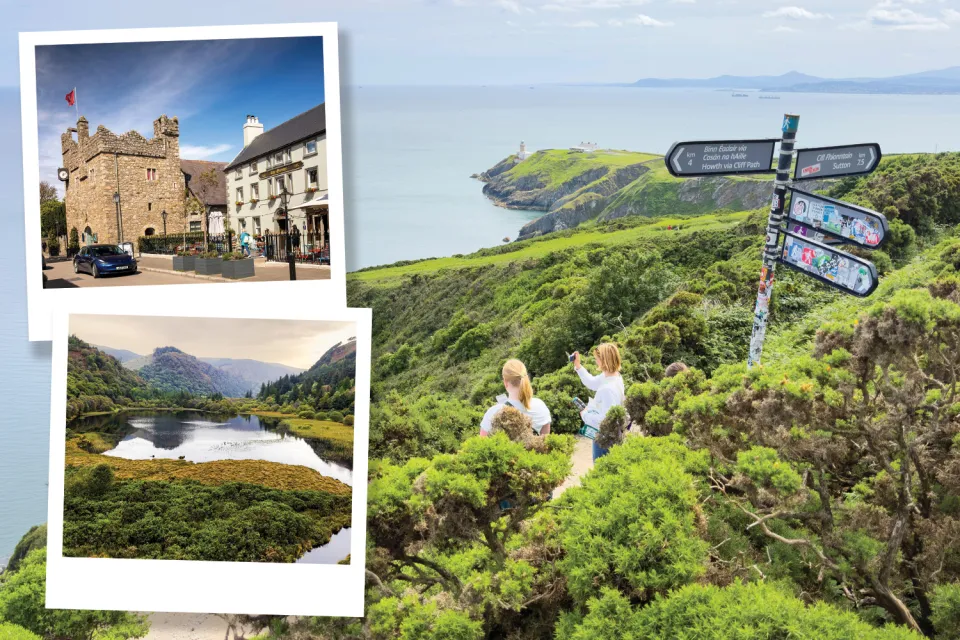
THIS stunning Irish island has rugged coastal walks, homemade goat’s cheese and some of the best wildlife spotting in the country.
Cape Clear Island lies just eight miles off the coast of West Cork and is Ireland’s most southerly inhabited Gaeltacht island.
Sign up for the Travel newsletter
Thank you!
Visitors can only get to the island by ferryCredit: AlamyCape Clear has a stunning, rugged coastlineCredit: Alamy
Visitors can reach the remote spot by ferry from Baltimore, with the journey taking around 40 minutes.
The island is known for its sparkling waters, dramatic coastline and wildlife-filled seas, where dolphins, whales and basking sharks can often be spotted.
And once on land, visitors can explore walking trails, visit the famous goat farm or enjoy a pint and a bite to eat before catching the ferry home.
Ferry tickets to the remote island start at just €9 for children’s tickets.
There are tours of the Fastnet Rock LighthouseCredit: Cape clear ferriesReturn tickets for adults to the island start at €20Credit: Hopkins Communications -Miki Barlok
Cape Clear Island is three miles long and one mile wide.
As a Gaeltacht island, the majority of people living there speak Irish, or Gaeilge.
Adult return tickets from Baltimore to Cape Clear cost €20, while children’s tickets cost €9.
There are also special family packages, including two adults and two children, for €50 return.
The island is a popular destination during the summer months with secondary school students looking to improve their Irish language skills on immersion courses.
The hillsides are covered in heather, gorse and other wildflowers, while the water sparkles beneath.
While on the ferry, passengers have a good chance of spotting wildlife beneath the waves.
Dolphins, basking sharks and even whales are known to frequent the waters surrounding Cape Clear.
From higher ground on the island, harmless basking sharks can often be seen lazily gliding through the waters close to shore.
And a number of companies provide boat tours specifically for dolphin and whale watching.
GOAT FARM
Once you’re on the island, there’s plenty to do to keep busy — including visiting the Cape Clear Goat Farm, or Cléire Goats.
The quaint farm was established in 1979 and is located near the Cape Clear Heritage Centre.
Visitors can meet the friendly goats and try delicious homemade goat’s cheese and ice cream.
And if visitors attend the farm between 10am and 12pm, they’ll get a chance to see the goats being milked.
There’s also the main heritage centre, the Fastnet Rock Lighthouse, which can be toured, and a world-renowned birdwatching observatory to visit.
There are also plenty of places to go for a paddle in the sea, or to kayak further out.
And on land, there are a number of walking routes that allow visitors to explore every inch of the island’s beauty.
FOOD AND ACCOMMODATION
Cape Clear has a small number of restaurants and bars that provide hearty meals and drinks.
There’s a farmers’ market every Sunday, a small grocery shop and a tourist shop.
Many people who visit the island choose to do a day trip, arriving on the ferry in the morning and leaving again in the evening.
But for those hoping to stay overnight, there are some accommodation options.
There are a few apartments, cottages and houses to rent.
There is also the Chléire Haven glamping site, which is a family-friendly camping site open from April to September.
There’s the Ard na Gaoithe B&B, which provides an early breakfast for guests and encourages Irish speaking.
It has been quite the season for Declan Caddell as Crusaders manager, who has successfully secured the north Belfast side’s Premiership status for next season after a penalty shootout victory over Annagh United.
The Crues had a one goal lead after the first leg, but Philip Donnelly’s penalty levelled the aggregate score after just five minutes before Lee Upton edged Annagh ahead.
In the 71st minute Stewart Nixon equalised in the play-off and sent the game to extra time, but neither side were able to find a goal.
During the penalty shootout, Musa Dibaga saved two penalties as the Crues sealed their survival and avoided what would have been just their second relegation in the club’s history.
“Credit to Annagh, they put it up to us,” Caddell told BBC Sport NI.
“For me, that game summarised our whole season in terms of a wee bit of bad luck, not playing for a full 90 minutes, injuries, everything relying on a last gasp, last minute, and credit to Dibaga as well for stepping in and making a difference.
“I’m just relieved to get over the line because it’s been a difficult year. Who would be a football manager, eh?”
Dungannon began their defence of the Irish Cup with a routine 3-0 victory over Championship side Ards at Stangmore Park, courtesy of first-half goals from Sean McAllister, Junior and Tiernan Kelly.
Rodney McAree’s side then came from behind in the sixth round to beat Portadown 2-1 with McAllister on the scoresheet again and Andrew Mitchell netting the winner.
Steven Scott, Cahal McGinty and Kobei Moore scored to help the Swifts see off H&W Welders 3-0 to reach the last four.
In a repeat of the 2025 decider, Dungannon beat Cliftonville 4-1 on penalties to reach the final again, with goalkeeper Declan Dunne saving two spot kicks in the shootout.
Coleraine began their Irish Cup campaign with a thumping 4-0 win over 10-man Crusaders at the Showgrounds in January.
After Brendan Hamilton was sent off for the Crues, Mark Connolly, Will Patching, James Akitunde and Joel Cooper all netted to secure a comfortable passage to the sixth round.
Ruaidhri Higgins’ men then required extra time to see off Carrick Rangers 4-1 at Taylors Avenue, with Matthew Shevlin coming off the bench to score a hat-trick to help them through.
Cooper and Shevlin were on target in a 2-0 quarter-final victory over Championship Limavady and the duo both also scored in the extra time 2-1 win against Larne in the last four at Windsor Park.
Ulster have received a boost with the news that Tom O’Toole, Nick Timoney and Jude Postlethwaite will be available after injury for Saturday’s European Challenge Cup semi-final against Exeter Chiefs at Affidea Stadium (17:30 BST).
Timoney returns after recovering from a hip injury, while O’Toole and Postlethwaite are at head coach Richie Murphy’s disposal after overcoming hand problems.
A squad update issued by Ulster Rugby on Monday confirmed that the trio have “all reintegrated fully into team training and are available for selection”.
Meanwhile, decisions on whether Angus Bell (foot), James Hume (neck) and Bryn Ward (shoulder) will be fit enough for selection for the encounter with the English Premiership side will be made later in the week.
All three have resumed elements of team training.
Callum Reid and Ben Carson will be unavailable for the last-four game as a result of foot and calf injuries respectively.
Both players sustained their injuries during Saturday’s 41-14 United Rugby Championship (URC) defeat by Munster in Limerick.
Eric O’Sullivan suffered a back injury during the match and will have his fitness monitored during the week.
Ulster are aiming to secure their first silverware for 20 years and the winner of their semi-final will face the winner of Sunday’s second semi-final between Montpellier and the Dragons in the final in Bilbao on 22 May.
April 17 (UPI) — An Irish man who allegedly laundered money and trafficked drugs and firearms throughout Europe was arrested in Dubai after officials in Ireland tracked him around the world.
Law enforcement officials in the United Arab Emirates said in a statement that Daniel Joseph Kinahan was arrested on Wednesday after a joint international criminal investigation, The Guardian and The Washington Post reported.
Officials from both Ireland and the UAE noted that the arrest comes after work in recent years to rein in “serious and organized crime.”
“The arrest comes as part of efforts to combat cross-border crime,” Dubai police said in a statement.
“The arrest followed the receipt of a judicial file from Irish authorities detailing the suspect’s alleged crimes and his involvement in an international criminal organization,” they said.
Kinehan is one of the leaders of the Kinahan Organized Crime Group and the founder of the MTK Global boxing management company.
In addition to Irish authorities, he was also being pursued by U.S. law enforcement because he was “believed to run the day-to-day operations” of the cartel, the Biden administration said when it announced sanctions against the group in 2022.
Officials in Dubai issued an arrest warrant after getting word from Irish authorities as part of a larger operation between Ireland and the UAE to stem criminal enterprises that operated in or through the two nations.
The report from Irish law enforcement had traced in him around the globe, including the use of fake names and other methods of avoiding arrest, and Kinehan was arrested within 48 hours of the the UAE warrant being issued.
Secretary of Health and Human Services Robert F. Kennedy, Jr. speaks during a House Appropriations Subcommittee on Labor, Health and Human Services, Education, and Related Agencies hearing on the budget for the Department of Health and Human Services in the Rayburn House Office Building near the U.S. Capitol on Thursday. Photo by Bonnie Cash/UPI | License Photo
For a club of Glentoran’s stature, it is hard to believe they are without a title in 17 years.
It has been a long wait for their supporters, who came out in their numbers, and that is why Friday’s game felt so significant to the club.
If Larne pick up the point they need against the Swifts, Glentoran will end the season without a trophy but things could have played out so differently.
They lost the BetMcLean Cup final to bitter rivals Linfield thanks to Chris McKee’s extra-time penalty, while the Irish Cup and County Antrim Shield both slipped away in shootout defeats.
After clawing their way back into the title race after looking out of contention before Christmas, the Glens look like they will come up just short in the league. It’s all about the fine margins.
“Whether we win the league next week or not, I think we have made huge improvements as a football club but that doesn’t take away the disappointment,” Devine said.
“Second, third – it is nothing and we have to accept that. We need a snooker and if we can get a snooker next week, it is important that we uphold our side of the bargain.
“I thank the fans with all my heart. This is a massive club that deserves success.”
Devine said the lack of a clinical edge was “painful” but his players “emptied the tank”.
They will now have to rebound as they travel to the north coast with hope, rather than expectation.
“We are not out of it, we have one more game left in the current campaign to try make sure we get a win,” Devine added.
“This league has thrown up a lot of shocks and surprises and crazy results over the years and hopefully we can do our side of the bargain, but Larne are firmly in the driving seat with a home game to go.”