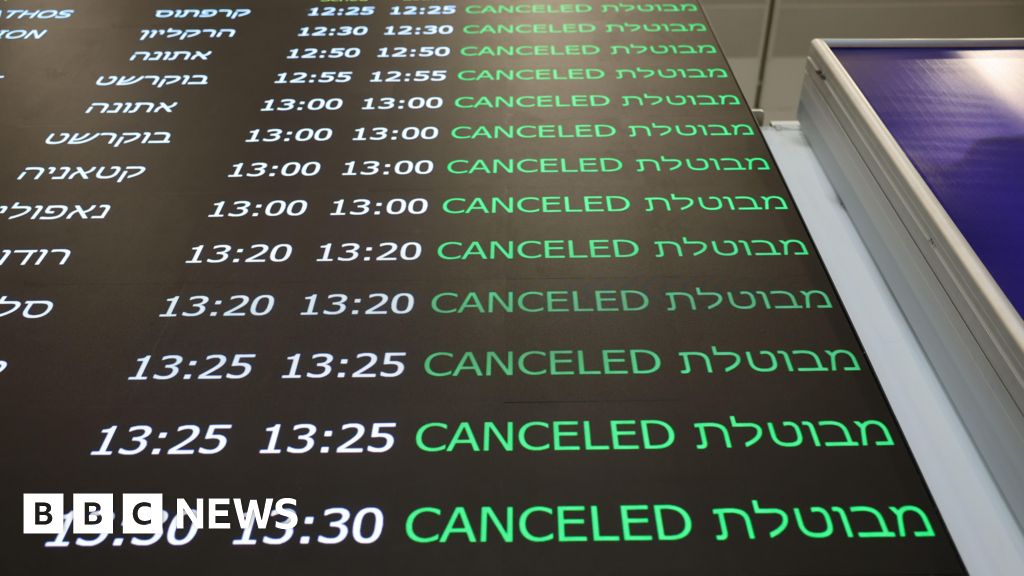
Flights cancelled as travel warnings issued after strikes on Iran
BA, Virgin Atlantic and Wizz Air are among major airlines to overhaul their schedules in light of the attacks.
Source link
BA, Virgin Atlantic and Wizz Air are among major airlines to overhaul their schedules in light of the attacks.
Source link
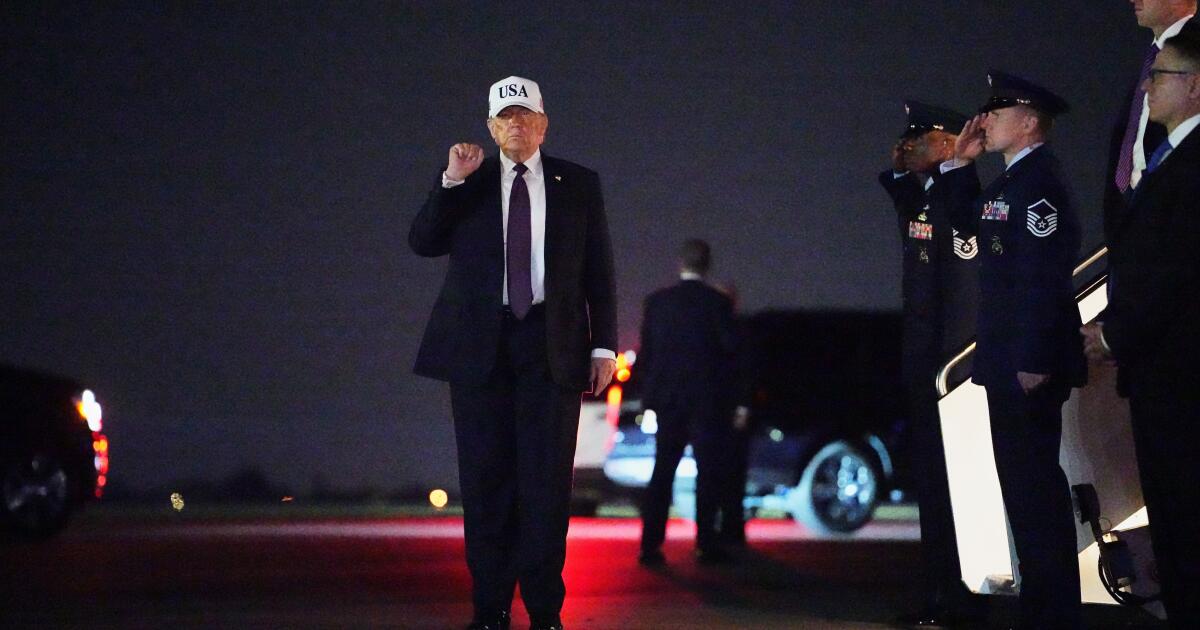
WASHINGTON — For a decade, President Trump promised to end what he calls forever wars, casting himself as a leader opposed to prolonged conflicts in the Middle East and who would rather pursue peace in the world.
Now, early in his second term, Trump is taking military action against Iran that could expand well beyond a limited effort to halt the country’s nuclear program.
In a video posted on Truth Social, the commander-in-chief said American forces also plan to “raze their missile industry to the ground” and “annihilate their navy.” He warned members of Iran’s military to surrender or “face certain death.” And urged the Iranian people to take the moment as an opportunity to rise up against their government.
“This regime will soon learn that no one should challenge the strength and might of the United States armed forces,” Trump said.
Trump, who has been considering a strike on Iran for several weeks, acknowledged he reached the decision to attack while aware of the human toll that could come with it.
“The lives of courageous American heroes may be lost, and we may have casualties. That often happens in war,” he said. “But we are doing this, not for now, we are doing this for the future, and it is a noble mission.”
Trump’s military campaign in Iran is a sharp turn in tone for a president who has long been critical of open-ended conflicts in the Middle East, and marks a shift from an America-first agenda message that helped him return to the White House.
“I’m not going to start a war. I’m going to stop wars,” Trump said in his November 2024 victory speech as he promised to focus national resources on domestic priorities rather than foreign conflicts.
As Trump advocated to bring home American forces from deployments around the world and to withdraw from key defense treaties, his position resonated with a war-weary electorate in the lead up to the election.
Fewer than six in 10 Americans (56%) believed the United States should take an active role in world affairs ahead of the election — the second-lowest level recorded since the question was first asked in 1974, according to polling by the Council on Foreign Affairs.
Trump’s posture on war in the Middle East had been consistent before he ran for office.
In 2013, he criticized former President Obama’s negotiations with Tehran, predicting in a post on Twitter, that Obama would “attack Iran because of his inability to negotiate properly.” That same year, Trump warned that “our horrendous leadership could unknowingly lead us into World War III.”
And in a heated February 2016 debate, Trump attacked former Florida Gov. Jeb Bush, stating that his brother George W. Bush lied about Iraq’s nuclear capabilities to get the U.S. into the Iraq War. Trump called the Iraq War a “big, fat mistake” that “destabilized the Middle East.”
“They lied. They said there were weapons of mass destruction. There were none, and they knew there were none,” he said.
Trump’s confrontation with Iran bears little resemblance to those early rebukes.
Trump has yet to present evidence of an imminent threat to the United States from Iran’s nuclear program — a capability he claimed to have “obliterated” just eight months ago — and has instead framed the military campaign as one to ensure Tehran never develops nuclear weapon at all.
“It is a very simple message,” he said. “They will never have a nuclear weapon.”
Trump’s shift has already drawn the attention of congressional Democrats, many of whom are calling the president out for backing out on his promise to end foreign wars — and are demanding that he involve Congress in any further military actions.
“Regardless of what the President may think or say, he does not enjoy a blank check to launch large-scale military operations without a clear strategy, without any transparency or public debate, and not without Congressional approval,” Sen. Alex Padilla (D-Calif.) said.
Sen. Adam Schiff (D-Calif.) criticized Trump for “drawing the country into yet another foreign war that Americans don’t want and Congress has not authorized.”
The military involvement in Iran is not the first time that members of Congress have complained about the Trump administration’s willingness to sideline the legislative branch on decisions that could trigger broader conflicts this year.
In January, Trump ordered military forces to capture former Venezuelan President Nicolás Maduro and said the United States would run the sovereign nation until further notice. He threatened military action in Colombia, whose leftist President Gustavo Petro has been one of Trump’s most vocal critics.
Trump has alienated allied nations when he said he was willing to send American troops to seize Greenland, a semi-autonomous territory of Denmark. And on Friday, he said U.S. is in talks with Havana and raised the possibility of a “friendly takeover of Cuba” without offering any details on what he meant.
His actions have coincided with his annoyance at not being awarded the Nobel Peace Prize for his efforts to seek peace in the world. At one point, the president said he no longer felt an “obligation to think purely of Peace” because he didn’t get the recognition.
Trump’s shifting tone, and his use of violent war imagery in his pretaped remarks about Iran, have rattled even part of his base.
“I did not campaign for this. I did not donate money for this,” said former Rep. Marjorie Taylor Greene, a conservative who recently left Congress after a bitter fight with Trump. “This is not what we thought MAGA was supposed to be. Shame!”
Republican leaders, however, are largely standing behind the president.
Senate Majority Leader John Thune (R-S.D.) said Iran “posed a clear and unacceptable threat” to the United States and has refused “the diplomatic off-ramps.” House Speaker Mike Johnson (D-La.) said Trump took the action after exhausting “every effort to pursue peaceful and diplomatic solutions.”
Other top Republican lawmakers rallied behind the president, too.
“The butcher’s bill has finally come due for the ayatollahs,” Sen. Tom Cotton, the chairman of the Senate Intelligence Committee, wrote in a post on X. “May God bless and protect our troops on this vital mission of vengeance, and justice, and safety.”
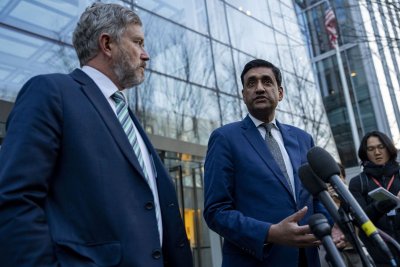

Feb. 28 (UPI) — While congressional reaction to the U.S.-Israeli attack on Iran overnight was largely split along party lines, Democratic and some Republican lawmakers expressed concern that President Donald Trump ordered the strikes without first seeking congressional approval.
Lawmakers — who had already been pushing to limit Trump’s ability to carry out lethal strikes on suspected drug-smuggling boats in the Caribbean — said they would renew their efforts to pass a war powers resolution.
Reps. Thomas Massie, R-Ky., said he was “opposed to this war” in a post on X Saturday morning.
“When Congress reconvenes, I will work with [Rep. Ro Khanna, D-Calif.] to force a congressional vote on war with Iran,” he wrote.
“The Constitution requires a vote, and your representative needs to be on record as opposing or supporting this war.”
NBC News reported that Massie and Khanna together wrote a war powers resolution ahead of the Iran attack. Under Article 1 of the Constitution, Congress, not the executive branch, has the power to declare war on another country.
NPR reported that the White House notified the top eight leaders in Congress — known collectively as the Gang of Eight — shortly before the attack.
Speaker of the House Mike Johnson showed his support for Trump’s actions to limit Iran’s nuclear program.
“Today, Iran is facing the severe consequences of its evil actions,” Johnson said in a statement posted on X. “President Trump and the administration have made every effort to pursue peaceful and diplomatic solutions in response to the Iranian regime’s sustained nuclear ambitions and development, terrorism and the murder of Americans — and even their own people.”
Johnson said the Gang of Eight received a briefing earlier in the week about the potential military action.
Senate Democratic leader Chuck Schumer of New York, meanwhile, called on the Trump administration to brief the Senate on the threat. He said he had asked Secretary of State Mark Rubio to be transparent with Congress and the American people about the objectives of the strikes and the subsequent steps.
“The administration has not provided Congress and the American people with critical details about the scope and immediacy of the treat,” he said on X.
“Confronting Iran’s malign regional activities, nuclear ambitions and harsh oppression of the Iranian people demands American strength, resolve, regional coordination and strategic clarity.
“Unfortunately, President Trump’s fitful cycles of lashing out and risking wider conflict are not a viable strategy.”
Tehran, Iran – Iranians are being directly addressed by leaders inside and outside the country after the United States and Israel launched attacks across Iran, prompting Tehran to respond with a wave of ongoing missile and drone attacks across the region.
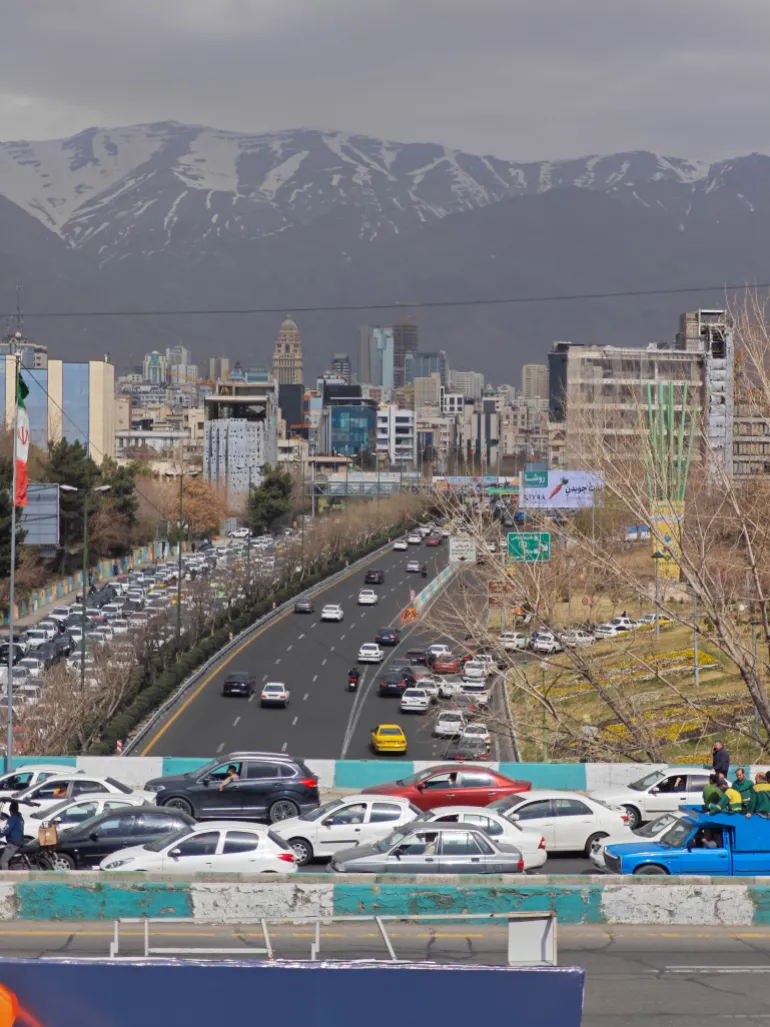
“In light of the continued joint operations by the US and the Zionist regime against Tehran and several other major cities, if possible while remaining calm, please travel to other centres and cities where it is feasible for you to do so,” read a text message sent to the 10 million residents of Tehran by the government on Saturday afternoon.
list of 3 itemsend of list
All outbound roads from the capital were heavily congested with traffic from the morning, shortly after the US and Israel began joint strikes that targeting more than 20 of Iran’s 32 provinces.
Inside Tehran, people also formed long queues in front of petrol stations, even as government authorities emphasised that they remain in control, saying that food and fuel supplies would not be a problem and that contingency plans were in motion.
Authorities also accommodated civilians trying to exit the city, including by setting up roadside refuelling stations. Many families were headed to three provinces to the north near the Caspian Sea, as they did during the 12-day war with Israel.
Last June, during the war, US President Donald Trump issued a direct warning telling all Tehran citizens to immediately evacuate.
But in a video message released shortly after the strikes began on Saturday, he urged the Iranian people to stay in their homes and wait for a suitable time to rise up and overthrow the theocratic establishment governing Iran since a 1979 Islamic revolution. He framed it as “probably your only chance for generations”.
Similar sentiments were echoed in separate video messages released by Israeli Prime Minister Benjamin Netanyahu and Reza Pahlavi, the son of Iran’s Mohammad Reza Pahlavi, the US-backed shah who was overthrown by clerics led by Ayatollah Ruhollah Khomeini during the revolution.
“Be vigilant and prepared so that at an appropriate time, which I will inform you precisely, you return to the streets for the final effort,” Pahlavi said.
This was in reference to nationwide protests that gripped Iran in January, during which thousands of civilians were killed, many on the nights of January 8 and 9.

Iranian authorities claim that civilians were killed by “terrorists” and “rioters” armed, funded and trained by the US and Israel. But the United Nations and international human rights organisations have blamed state forces for an unprecedented crackdown against peaceful protesters, and say tens of thousands have been incarcerated and some face execution.
Student protests also took place last week in Tehran and major cities, including the holy Shia city of Mashhad to the northeast and Shiraz to the south of Iran. A number of students were suspended, while others were arrested or summoned by intelligence authorities.
Universities and schools were declared closed after the strikes on Saturday until further notice, according to a directive by the Supreme National Security Council. Most had already been moved online until the end of the Iranian calendar year on March 20 in response to the unrest at other universities.
But dozens of people, many of them children, were killed after two schools were hit in southern Iran’s Minab and in Tehran.
State media showed paramilitary Basij members of the Islamic Revolutionary Guard Corps (IRGC) patrolling the streets of downtown Tehran on Saturday afternoon on motorcycles and vehicles and waving flags.
A similar gathering was recorded in Palestine Square, where pro-state groups shouted “Death to America” and “Death to Israel”.
The opening salvo in Tehran targeted the Pasteur neighbourhood in the downtown area, where government offices are located.
A satellite image and videos of the area showed that the compound housing the offices of the supreme leader was largely destroyed in the strikes. It was not immediately clear if Ayatollah Ali Khamenei was present at the time of the attack, but the foreign minister later told NBC News that Khamenei and President Masoud Pezeshkian were alive “as far as I know”.
Minutes after the start of the war, Iranian authorities began shutting down internet connections and mobile phone connections across multiple areas of Tehran. Some mobile connectivity was restored, but the internet shutdown was expanded across the country, with almost all traffic blocked and leaving only few proxy connections working to access the global internet.
The Islamic Republic had imposed an unprecedented 20-day total internet shutdown in January, and heavy state filtering was in place prior to the shutdown on Saturday.
Iranian authorities urged citizens on Saturday to only follow official state media, to report any suspicious activity, and to refrain from collaborating with “enemies” on pain of heavy punishment.
As daylight waned, Tehran’s streets emptied, but the sounds of explosions continued to ring loud.
Israel and the United States launched strikes on Iran on Saturday, hitting targets across the country. Iran urged its citizens to remain calm as it vowed a “crushing” response. Al Jazeera’s Ruby Zaman on what we know so far.
Published On 28 Feb 202628 Feb 2026
Share
President Trump’s decision to strike Iran creates new risks for a significant chunk of the world’s oil supply.
The Islamic Republic itself pumps about 3.3 million barrels a day, or 3% of global output, making it the fourth-largest producer in OPEC. But the nation wields far greater influence over the world’s energy supplies because of its strategic location.
Iran sits on one side of the Strait of Hormuz, the shipping lane for about a fifth of the world’s crude from key suppliers including Saudi Arabia and Iraq. While the waterway remains open, some oil tankers were avoiding sailing through following the attacks and ships were piling up on either side of the entrance, tracking data compiled by Bloomberg show.
Oil markets are closed for the weekend, and there was no initial information on whether the attacks on Iran and the country’s retaliatory strikes across the region Saturday targeted any energy assets.
Here are the pressure points to watch in oil as events unfold.
Iran produces about 3.3 million barrels of oil a day, up from less than 2 million barrels a day in 2020 despite continued international sanctions. The country has become more adept at skirting these restrictions, sending about 90% of its exports to China.
The largest oil deposits are Ahvaz and Marun and the West Karun cluster, all in Khuzestan province.
Iran’s main refinery, built at Abadan in 1912, can process more than 500,000 barrels a day. Other key plants include the Bandar Abbas and Persian Gulf Star refineries, which handle crude and condensate, a type of ultra-light oil that’s abundant in Iran. The capital, Tehran, has its own refinery.
For Iran’s overseas shipments, the Kharg Island terminal in the northern Persian Gulf is the main logistical hub. There was an explosion on the island Saturday, according to Iran’s semiofficial Mehr news agency, which didn’t provide details or make any reference to the oil terminal.
Kharg Island has numerous loading berths, jetties, remote mooring points and tens of millions of barrels of crude storage capacity. The facilities have handled export volumes exceeding 2 million barrels a day in recent years.
U.S. sanctions discourage most potential buyers of Iran’s crude, but private Chinese refiners have remained willing customers, provided they get steep discounts. For international shipments, Iran relies on a fleet of aging tankers that mostly sail with their transponders deactivated to avoid detection.
Earlier this month, Iran was rapidly filling tankers at Kharg Island, probably in an effort to get as much crude on the water and move vessels out of harm’s way in case the facility was attacked. It was a move similar to last June ahead of Israeli and U.S. attacks.
Any strike on Kharg Island would be a desperate blow for the country’s economy.
Iran’s main natural gas fields are farther to the south along the Persian Gulf coast. Facilities at Assaluyeh and Bandar Abbas process, transport and ship gas and condensate for domestic use in power generation, heating, petrochemicals and other industries.
The area is the main point for Iran’s condensate exports. During the June war, an attack on a local gas plant sparked jitters among traders, but didn’t cause a lasting spike in oil prices because it didn’t affect any export facilities.
Iran’s Supreme Leader Ayatollah Ali Khamenei warned on Feb. 1 of a “regional war” if his country was attacked by the U.S. Tehran has claimed that a full closure of the Strait of Hormuz is within its power.
It would be an extreme step that the country has never taken but remains a nightmare scenario for global markets.
Hormuz is the chokepoint for bulk of the Persian Gulf’s exports of crude and also refined fuels such as diesel and jet fuel. Qatar, one of world’s biggest liquefied natural gas exporters, also relies on the strait. At least three gas tankers going to or from Qatar had paused voyages following the latest attacks in the region, according to ship-tracking data.

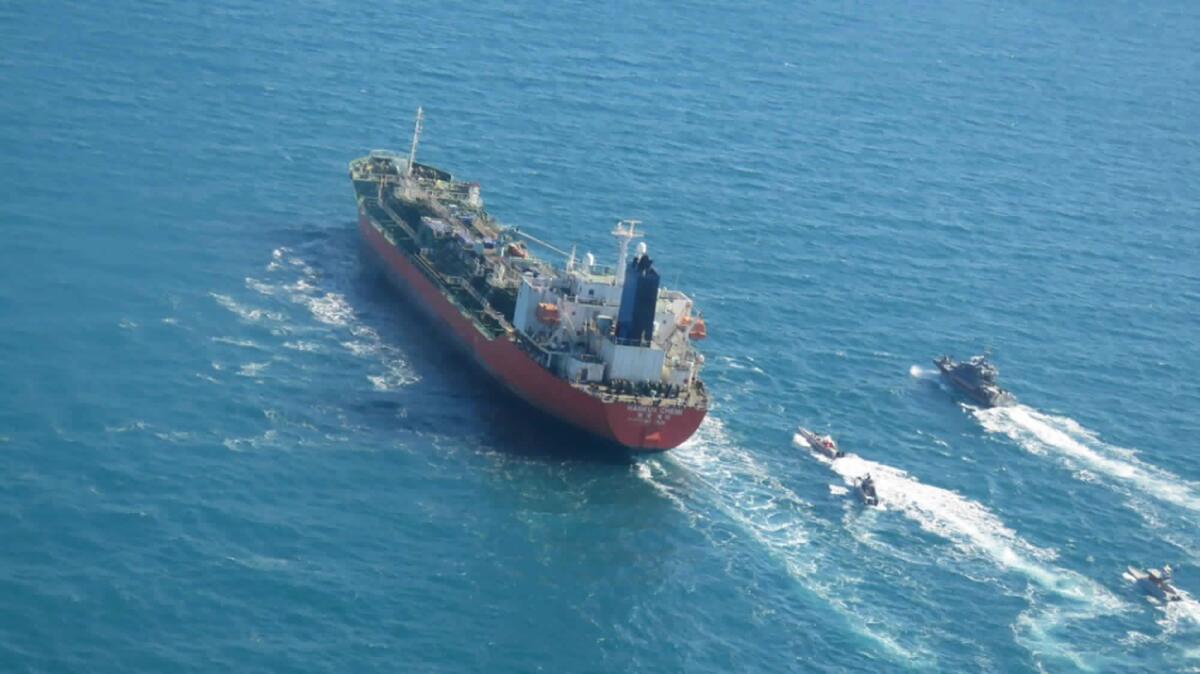
A seized South Korean-flagged tanker is escorted by Iranian Revolutionary Guard boats in the Persian Gulf’s Strait of Hormuz in January 2021. If Iran were to close the strait after the U.S.-Israel strikes Saturday, it would likely cause a massive disruption to exports and cause crude prices to spike.
(Tasnim News Agency via AP)
While OPEC members Saudi Arabia and the United Arab Emirates have some ability to reroute their shipments via pipelines that avoid Hormuz, closing the strait would still cause a massive disruption to exports and cause crude prices to spike.
There were signs that other Gulf producers were also accelerating shipments in February. Saudi Arabia’s crude shipments averaged about 7.3 million barrels a day in the first 24 days of the month, the most in almost three years. Combined flows from Iraq, Kuwait and the United Arab Emirates were set to climb almost 600,000 barrels a day from the same period in January, according to data from Vortexa Ltd.
In the past, Tehran has made retaliatory strikes on some of its neighbors’ energy assets. In 2019, Saudi Arabia blamed Tehran for a drone attack on its Abqaiq oil processing facility that halted production equivalent to about 7% of global crude supply.
Many observers say it’s improbable that Iran could keep Hormuz closed for long, making lower-impact actions like harassment of shipping more likely.
During last year’s war on Iran by Israel and the U.S., nearly 1,000 vessels a day were having their GPS signals jammed near Iran’s coast, contributing to one tanker collision. Sea mines are another long-threatened option for deterring shipping.
Oil surged the most in more than three years during the June war, with Brent crude rising above $80 a barrel in London. However, the gains quickly faded once it became clear that key regional oil infrastructure hadn’t been damaged.
Since then, concerns about an oversupply have dominated global markets, with crude in London ending 2025 about 18% lower than where it started.
Despite those fears of a glut, prices have surged 19% this year, partly due to fears of U.S. strikes on Iran.
With the main oil futures closed for the weekend, there’s limited insight into how traders are reacting to the latest attacks. However, a retail trading product, run by IG Group Ltd., was pricing West Texas Intermediate as high as $75.33, a gain of as much as 12% from Friday’s close.
Burkhardt and Di Paola write for Bloomberg. Bloomberg writer Julian Lee contributed to this report.
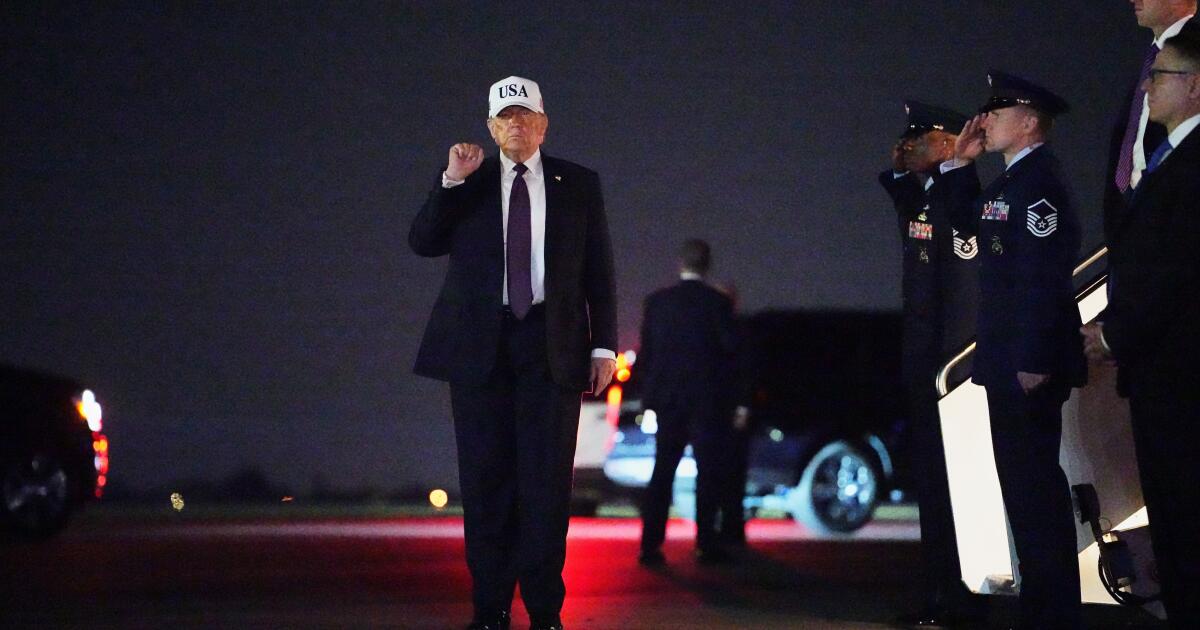
Democrats are pushing for a vote next week on a resolution to curtail President Trump’s authority to conduct strikes in Iran, a move that would reassert Congress’ role in approving the use of military might.
The effort was already underway to force a vote on a war powers resolution, but it gained fresh momentum as the U.S. and Israel bombed Iran beginning early Saturday, an action that Trump referred to in a video shortly afterward as “war.” House Democratic leaders announced this week — before the strikes — that they would begin procedures to force a floor vote on a resolution for Iran.
The resolution directs Trump to terminate the use of armed forces against Iran, unless explicitly authorized by Congress. Presidents of both parties have skirted around war powers resolutions in the past.
Passage is uncertain in the Republican-controlled House and Senate, with GOP members of both chambers expressing initial support for the bombing of Iran. Senate Majority Leader John Thune (R-S.D.) praised the attacks Saturday and said to reporters that the administration “better well make it about getting new leadership and regime change.”
But the effort for a war powers vote has gained the support of at least two House Republicans, Thomas Massie of Kentucky and Warren Davidson of Ohio, making it possible for the measure to pass the House if enough Democrats support the measure and enough members show up for the final vote.
On the Senate side, Republican Rand Paul of Kentucky, who voted for an earlier war powers resolution, said he would “oppose another presidential war.”
House Democratic leader Hakeem Jeffries of New York said Iran “is a bad actor and must be aggressively confronted for its human rights violations, nuclear ambitions, support of terrorism and the threat it poses” to allies in the region.
“However, absent exigent circumstances, the Trump administration must seek authorization for the preemptive use of military force that constitutes an act of war,” Jeffries’ statement said.
Rep. Ro Khanna (D-Fremont), a California Democrat who is co-sponsoring the resolution with Massie, urged lawmakers to reconvene in Washington on Monday to vote, calling the strikes the launch of “an illegal regime change war in Iran with American lives at risk.”
Massie on social media described the attack as “acts of war unauthorized by Congress.”
The resolution faced initial opposition from staunch pro-Israel House Democrats Jared Moskowitz of Florida and Josh Gottheimer of New Jersey.
Senate Democratic leader Chuck Schumer of New York said the Senate should pass the resolution but didn’t outright oppose the strikes. He complained that the administration did not lay out its case to Congress or the public.
Trump would surely veto the resolution if passed, but substantial GOP votes for it could persuade him to limit the attacks on Iran. The Senate passed a procedural vote for a resolution against the strikes in January that culminated in the capture of Venezuelan leader Nicolas Maduro, after which the White House sent Secretary of State Marco Rubio to Capitol Hill to testify to members.
The U.S. Constitution gives Congress the power to declare war, but no president since Franklin D. Roosevelt in World War II has used that formal declaration, instead relying on less expansive authorization to deploy military force. Congress passed the War Powers Resolution in 1973 to slow the Vietnam War.
However, most presidents have sought some level of buy-in and approval from Congress, which approves the budget for the Pentagon.
“The Constitution is clear: The decision to take this nation to war rests with Congress, and launching large-scale military operations — particularly in the absence of an imminent threat to the United States — raises serious legal and constitutional concerns,” Sen. Mark Warner (D-Va.) said in a statement. “Congress must be fully briefed, and the administration must come forward with a clear legal justification.”
Other Senate Democrats, including Tim Kaine of Virginia and Andy Kim of New Jersey, have also urged their chamber to vote on a similar measure to put checks on Trump’s use of military force in Iran.
Rubio notified the so-called Gang of Eight — the top congressional leaders in the House and Senate and on the intelligence committees — of the strikes, the White House said.
Sen. Roger Wicker (R-Miss.), the chair of the Senate Armed Services Committee, defended the strikes as “pivotal and necessary.”
“The President has stated the operation’s goals clearly: thwart permanently the ayatollahs’ desire to create a nuclear weapon, degrade their ballistic missile force and their production capacity, and destroy their naval and terrorism capabilities,” Wicker said in a statement.
Sen. Chris Coons (D-Del.) noted in his statement: “This is not how a democracy goes to war.”
Wasson writes for Bloomberg.
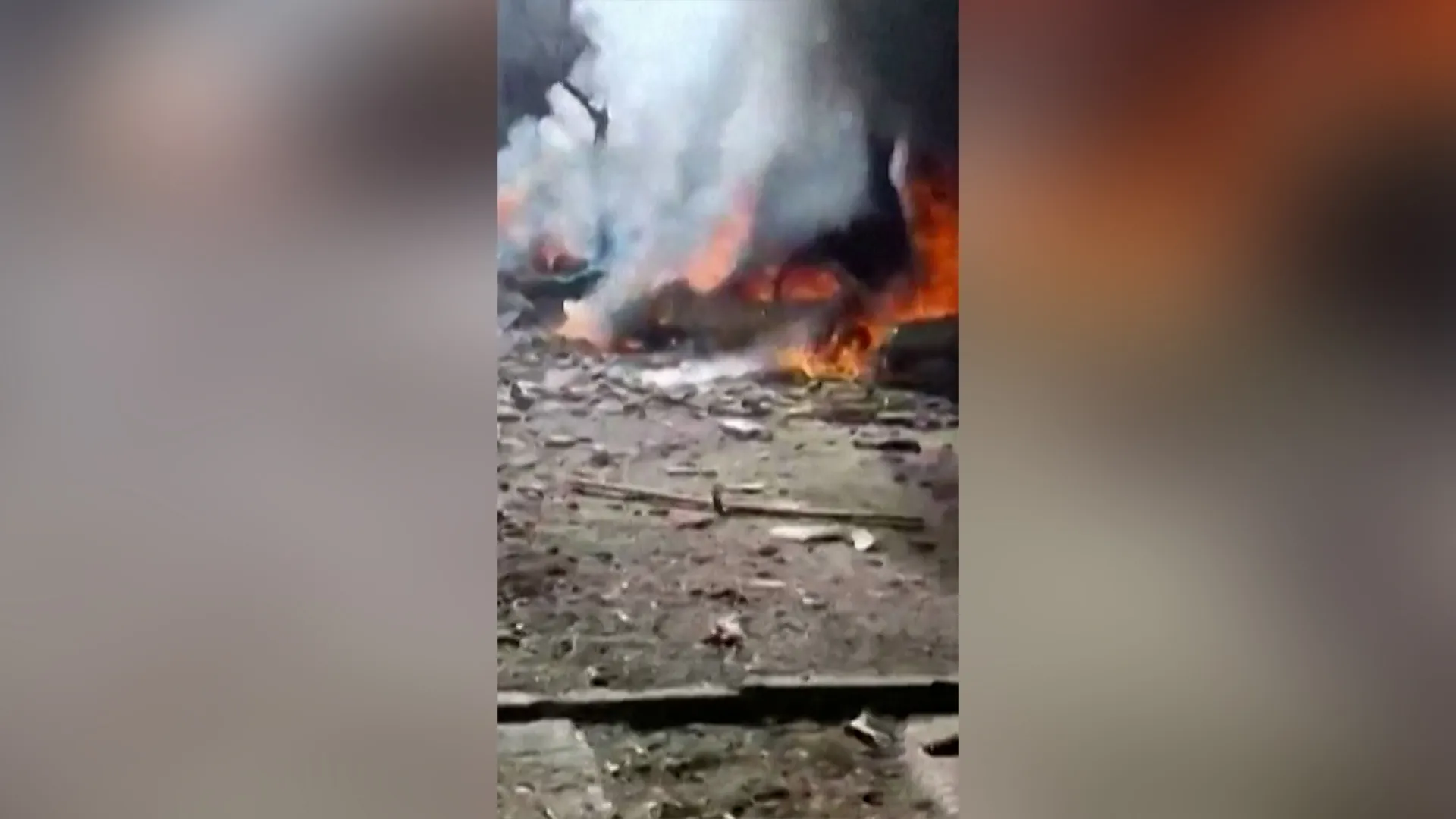
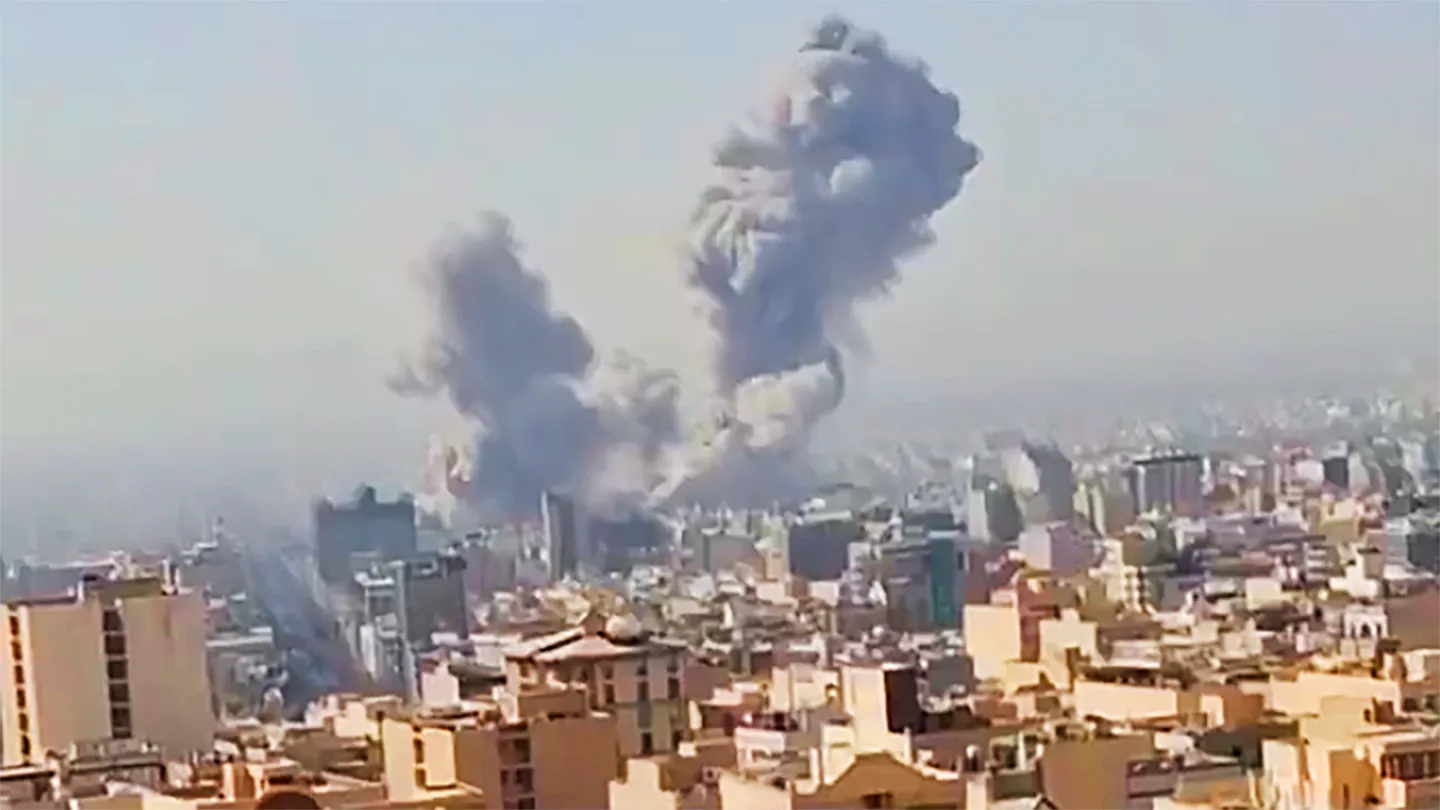
Footage from Tehran shows burned vehicles, wrecked buildings, towering plumes of smoke, and a massive crater after US-Israeli strikes on Iran.
Published On 28 Feb 202628 Feb 2026
Share
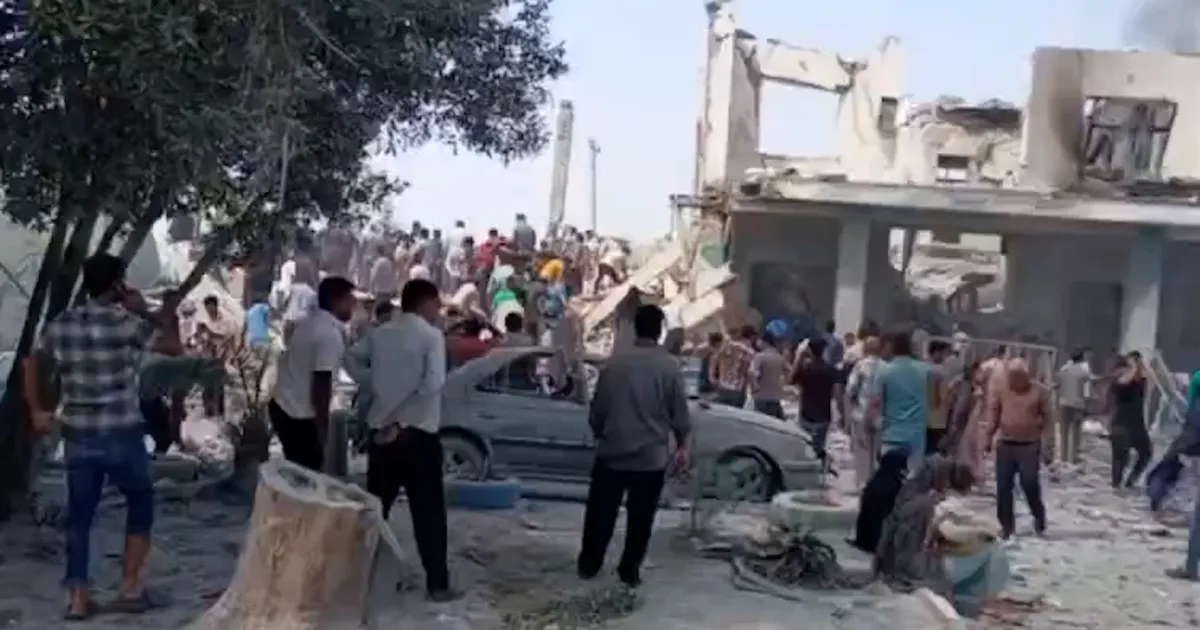
Footage from Minab, Iran, shows the aftermath of an Israeli-US strike on a girls’ elementary school that reportedly killed more than 50 people.
Published On 28 Feb 202628 Feb 2026
Share

Commentators within Israel have described a sense of business as usual in the wake of the country’s joint attack with the United States against Iran.
“It’s Saturday, so the streets are naturally quiet,” political analyst Ori Goldberg said from outside Tel Aviv, as he returned from his shelter for the second time.
“I think, politically, there’s a sense of triumphalism, of having attacked an enemy regime. Not really because we’re greatly invested in the future of the Iranian people, but because, through the genocide on Gaza, we’ve devalued human life,” he said, referring to the Israeli attacks on the besieged territory since October 2023.
Returning to shelters around the country is now the stuff of everyday life for most Israelis, he said.
Israel has been on high alert since it launched a wave of attacks on Iran, the country that its leaders have consistently portrayed as its nemesis for decades.
Announcing the attack through a video post on X, Israeli Prime Minister Benjamin Netanyahu framed the attack in characteristically apocalyptic terms, saying Israel and the US had launched attacks to “remove the existential threat posed [to Israel] by the terror regime in Iran”, and going on to call upon the Iranian people to rise against their own leaders in response to the US and Israeli unprovoked strikes upon their cities.
Iran has retaliated with its own waves of missiles and drones against Israel and US assets in the region. At least one person was reported wounded in northern Israel.
But the latest strikes against Iran were met warmly by Israel’s political elite.
“I want to remind us all: The people of Israel are strong. The IDF [Israeli army] and the Air Force are strong. The strongest power in the world stands with us,” opposition leader Yair Lapid wrote on social media, referring to the US.
“In moments like these we stand together – and we win together. There is no coalition and no opposition, only one people and one IDF, with all of us behind them.”
In a subsequent post written in Farsi, he echoed the prime minister’s calls for Iran to enact regime change from within, a longstanding Israeli policy.
Accounts of the relative calm in Israel stand in sharp contrast to previous escalations, when sources described panic and bulk buying before an anticipated Iranian response to the wave of strikes Israel launched against targets in Iran.
“People here are well trained,” Aida Touma-Suleiman, a Palestinian member of the Israeli parliament representing the left-wing Hadash-Ta’al faction, which is almost alone in opposing the strikes, said from her apartment near Haifa, where she had just returned from her shelter.
“This is what they’re saying all the time in the media: How well-trained and ready we are. It’s crazy. I don’t think any country in the world has experienced more war than we have, so this is what they mean by ‘trained’,” she said, referencing the wars on Iran, Lebanon, Yemen and Gaza that Israel has waged since the Hamas-led attack of October 2023.
As Touma-Suleiman spoke, she was interrupted by an alarm on her phone. “That’s not the alert. That’s a warning on my phone telling me there’s going to be an alert and then I’ll have to return to the shelter,” she explained, laughing drily. “You see what I mean about being well trained?”
Texting from Israel, Ahron Bregman, a senior teaching fellow at the Department for War Studies at King’s College London, described the relative calm and almost relief felt by many within the country that the uncertainty over war with Iran was at an end.
“Both Israel and the US are after the Iranian leadership. They hope to weaken it substantially, though I doubt they could topple it from the air,” he said, raising the possibility of a prolonged conflict.
However, how ready Israel might be for a lengthy war, and to what degree that might be Israel’s choice, was far from certain, Touma-Suleiman said.
“It will be the United States that determines how long the war will be. They’ll continue until they’ve achieved whatever it is they want,” she said.
“I don’t think Israel is ready for that. People are exhausted. The army is exhausted. I don’t know if they even have the reserves to manage a long war, and this is what Netanyahu is willing to gamble with, just so he can say to the public before elections: ‘Here is at least one victory.’”
Embassy staffers and dependents evacuating, airlines suspending service, eyes in Iran warily turning skyward for signs of an attack.
The prospects of a showdown between the U.S. and Iran loom ever higher, as massive American naval and air power lies in wait off Iran’s shores and land borders.
Yet little of that urgency is felt in Iran’s government. Rather than quickly acquiescing to President Trump’s demands, Iranian diplomats persist in the kind of torturously slow diplomatic dance that marked previous discussions with the U.S., a pace that prompted Trump to declare on Friday that the Iranians were not negotiating in “good faith.”
But For Iran’s leadership, Iranian experts say, concessions of the sort Trump are asking for about nuclear power and the country’s role in the Middle East undermine the very ethos of the Islamic Republic and the decades-old project it has created.
“As an Islamic theocracy, Iran serves as a role model for the Islamic world. And as a role model, we cannot capitulate,” said Hamid Reza Taraghi, who heads international affairs for Iran’s Islamic Coalition Party, or Hezb-e Motalefeh Eslami.
Besides, he added, “militarily we are strong enough to fight back and make any enemy regret attacking us.”
Even as another round of negotiations ended with no resolution this week, the U.S. has completed a buildup involving more than 150 aircraft into the region, along with roughly a third of all active U.S. ships.
Observers say those forces remain insufficient for anything beyond a short campaign of a few weeks or a high-intensity kinetic strike.
Iran would be sure to retaliate, perhaps against an aircraft carrier or the many U.S. military bases arrayed in the region. Though such an attack is unlikely to destroy its target, it could damage or at least disrupt operations, demonstrating that “American power is not untouchable,” said Hooshang Talé, a former Iranian parliamentarian.
Tehran could also mobilize paramilitary groups it cultivated in the region, including Iraqi militias and Yemen’s Houthis, Talé added. Other U.S. rivals, such as Russia and China, may seize the opportunity to launch their own campaigns elsewhere in the world while the U.S. remains preoccupied in the Middle East, he said.
“From this perspective, Iran would not be acting entirely alone,” Tale said. “Indirect alignment among U.S. adversaries — even without a formal alliance — would create a cascading effect.”
We’re not exactly happy with the way they’re negotiating and, again, they cannot have nuclear weapons
— President Trump
The U.S. demands Iran give up all nuclear enrichment and relinquish existing stockpiles of enriched uranium so as to stop any path to developing a bomb. Iran has repeatedly stated it does not want to build a nuclear weapon and that nuclear enrichment would be for exclusively peaceful purposes.
The Trump administration has also talked about curtailing Iran’s ballistic missile program and its support to proxy groups, such as Hezbollah, in the region, though those have not been consistent demands. Tehran insists the talks should be limited to the nuclear issue.
After indirect negotiations on Thursday, Oman’s Foreign Minister Badr al-Busaidi — the mediator for the talks in Geneva — lauded what he said was “significant progress.” Iranian Foreign Ministry spokesman Esmail Baghaei said there had been “constructive proposals.”
Trump, however, struck a frustrated tone when speaking to reporters on Friday.
“We’re not exactly happy with the way they’re negotiating and, again, they cannot have nuclear weapons,” he said.
Trump also downplayed concerns that an attack could escalate into a longer conflict.

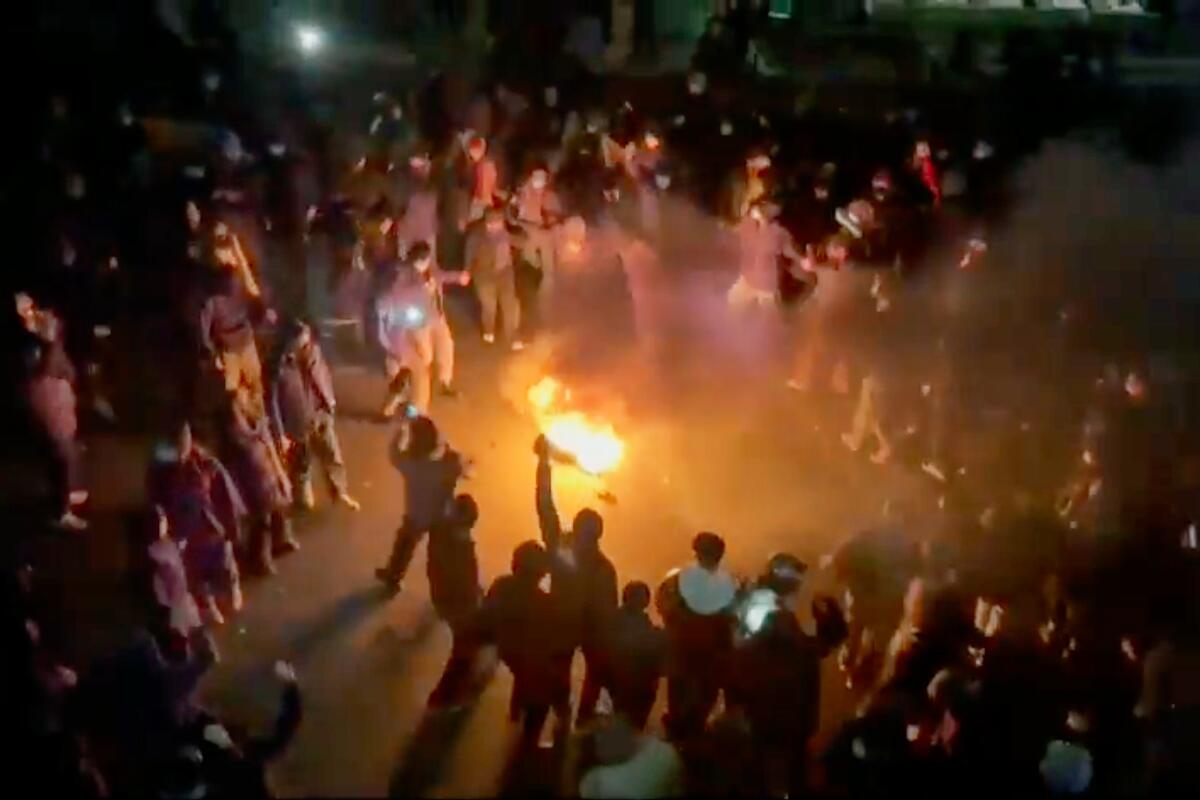
This frame grab from footage circulating on social media shows protesters dancing and cheering around a bonfire during an anti-government protest in Tehran, Iran, on Jan. 9.
(Uncredited / Associated Press)
“I guess you could say there’s always a risk. You know, when there’s war, there’s a risk in anything, both good and bad,” Trump said.
Three days earlier, in his State of the Union address Tuesday, said, “My preference is to solve this problem through diplomacy. But one thing is certain, I will never allow the world’s number one sponsor of terror, which they are by far, to have a nuclear weapon — can’t let that happen.”
There are other signs an attack could be imminent.
On Friday, the U.S. Embassy in Israel allowed staff to leave the country if they wished. That followed an earlier move this week to evacuate dependents in the embassy in Lebanon. Other countries have followed suit, including the U.K, which pulled its embassy staff in Tehran. Meanwhile, several airlines have suspended service to Israel and Iran.
A U.S. military campaign would come at a sensitive time for Iran’s leadership.
The country’s armed forces are still recovering from the June war with Israel and the U.S, which left more than 1,200 people dead and more than 6,000 injured in Iran. In Israel, 28 people were killed and dozens injured.
Unrest in January — when security forces killed anywhere from 3,000 to 30,000 protesters (estimates range wildly) — means the government has no shortage of domestic enemies. Meanwhile, long-term sanctions have hobbled Iran’s economy and left most Iranians desperately poor.
Despite those vulnerabilities, observers say the U.S. buildup is likely to make Iran dig in its heels, especially because it would not want to set the precedent of giving up positions at the barrel of a U.S. gun.
Other U.S. demands would constitute red lines. Its missile arsenal, for example, counts as its main counter to the U.S. and Israel, said Rose Kelanic, Director of the Middle East Program at the Defense Priorities think tank.
“Iran’s deterrence policy is defense by attrition. They act like a porcupine so the bear will drop them… The missiles are the quills,” she said, adding that the strategy means Iran cannot fully defend against the U.S., but could inflict pain.
At the same time, although mechanisms to monitor nuclear enrichment exist, reining in Tehran’s support for proxy groups would be a much harder matter to verify.
But the larger issue is that Iran doesn’t trust Trump to follow through on whatever the negotiations reach.
After all, it was Trump who withdrew from an Obama-era deal designed to curb Iran’s nuclear ambitions, despite widespread consensus Iran was in compliance.
Trump and numerous other critics complained Iran was not constrained in its other “malign activities,” such as support for militant groups in the Middle East and development of ballistic missiles. The Trump administration embarked on a policy of “maximum pressure” hoping to bring Iran to its knees, but it was met with what Iran watchers called maximum resistance.
In June, he joined Israel in attacking Iran’s nuclear facilities, a move that didn’t result in the Islamic Republic returning to negotiations and accepting Trump’s terms. And he has waxed wistfully about regime change.
“Trump has worked very hard to make U.S. threats credible by amassing this huge military force offshore, and they’re extremely credible at this point,” Kelanic said.
“But he also has to make his assurances credible that if Iran agrees to U.S. demands, that the U.S. won’t attack Iran anyway.”
Talé, the former parliamentarian, put it differently.
“If Iranian diplomats demonstrate flexibility, Trump will be more emboldened,” he said. “That’s why Iran, as a sovereign nation, must not capitulate to any foreign power, including America.”
The United States and Israel have launched strikes on Iran despite ongoing talks between Washington and Tehran over Iran’s nuclear programme.
Iran responded to Saturday’s attacks with missile and air strikes across the region, including in Israel, Bahrain, Saudi Arabia, Qatar, the United Arab Emirates and Iraq.
list of 3 itemsend of list
Israeli officials said their strikes targeted Iran’s military and nuclear-related infrastructure, while airspace across Israel was closed and emergency measures imposed. Several other countries in the region also announced the closure of their airspace.
Meanwhile, President Donald Trump said Washington has begun a “major combat operation” in Iran, aimed at “eliminating threats from the Iranian regime”.
“This regime will soon learn that no one should challenge the strength and might of the United States Armed Forces,” he said.
The strikes came just two days after high-stakes US–Iran nuclear negotiations in Geneva, mediated by Oman, ended without a breakthrough. The US-Israel attack marks the most serious escalation since the brief but intense June 2025 war.
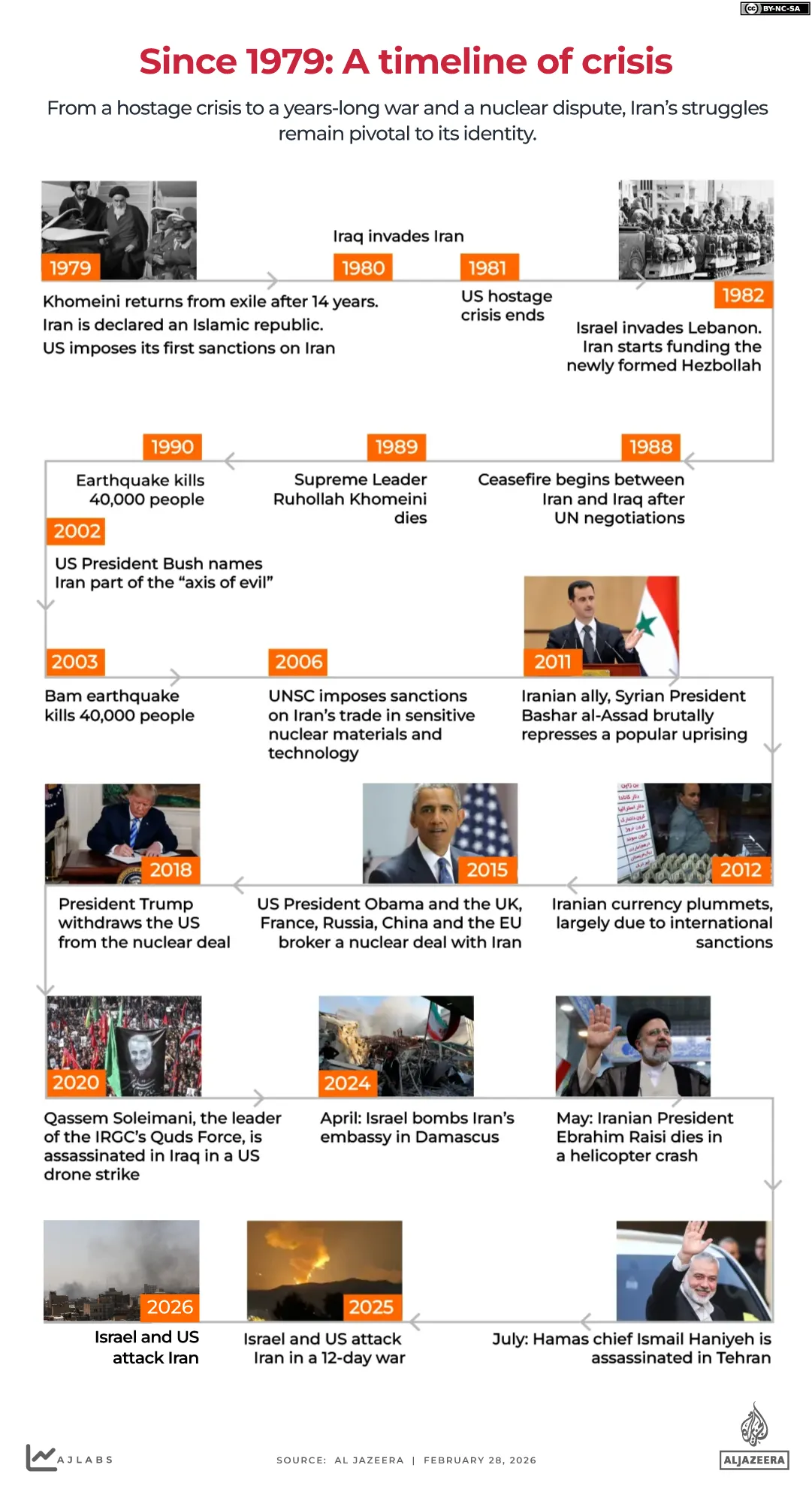
Here is a timeline of the events, including attacks and diplomatic overtures leading up to Saturday’s strikes by the US and Israel, and Iran’s fierce response.
June 13, 2025 — Israel launches major air strikes against Iranian nuclear and military facilities, amid ongoing talks between the US and Tehran. Iran responds within hours with large-scale missile and drone attacks on Israeli cities.
June 22 – The US strikes Iranian nuclear facilities at Natanz, Fordow and Isfahan, with Trump claiming the attacks degraded Tehran’s nuclear programme. Iranian officials said their programme was set back but not destroyed.
June 23 – In retaliation, Iran fires missiles towards Al Udeid airbase in Qatar, housing US soldiers. The missiles are intercepted, and no casualties are reported.
June 24 – After 12 days of fighting, a US-brokered ceasefire takes effect between Iran and Israel, ending all hostilities. Iran says at least 610 of its citizens were killed in the war, while Israel claimed 28 were killed on its side.
July 2 – Iranian President Masoud Pezeshkian signs legislation halting cooperation with the International Atomic Energy Agency (IAEA), barring its inspectors from accessing Iran’s nuclear facilities unless specifically authorised by the country’s Supreme National Security Council.

July 22 – Abbas Araghchi, Iran’s foreign minister, says Tehran will not give up its uranium enrichment programme, despite a temporary halt due to “serious and severe” damages.
August 12 – Iranian police arrest as many as 21,000 people related to the 12-day war with Israel, according to state media.
August 22 – Iran agrees to resume nuclear talks later in the month with the United Kingdom, France and Germany, despite the threat of revived sanctions.
August 28 – The three European countries trigger a mechanism reinstating the United Nations’ sanctions on the Islamic republic for the first time in a decade.
November 1 – Oman urges both the US and Iran to go back to the negotiating table as Iran reiterates it will not stop enriching uranium.
November 7 – Trump says Iran has requested that Washington remove its crippling sanctions on Tehran, and that he is willing to talk about the issue.
December 28 – Protests break out in major cities, including Tehran, over soaring prices after the rial plunges against the US dollar.
January 8, 2026 – The internet is shut down across Iran following the outbreak of antigovernment protests, which have now spread beyond cities. The blackout lasts for more than two weeks.
January 13 – Trump tells Iranians to “keep protesting” , claiming that “help is on the way”, and that the US may be preparing for military intervention against Tehran. The US begins to bolster its military presence off Iran.
February 6 – Iran and the US begin indirect nuclear negotiations in Geneva, mediated by Oman, with the aim of reaching a deal to curb Tehran’s nuclear programme.
February 17 – High-level US–Iran nuclear talks resume in Geneva, again with Omani mediation.

February 22 – Oman confirms another round of discussions in Geneva, describing a “positive push” but admits that significant differences remain.
February 26 – A third round of nuclear talks concludes in Geneva, with mediator Oman saying “significant progress” was made and more discussions would be held the following week in Vienna.
February 27 – Oman’s foreign minister says Iran has agreed to degrade its current stockpiles of nuclear material to “the lowest level possible” — effectively to unrefined levels. US President Donald Trump says he prefers diplomacy but warns that “all options” remain available if diplomacy fails.
February 28 – Israel launches coordinated strikes on Iranian targets, including sites in and around Tehran. Iran retaliates by launching air and missile strikes across the region, including Qatar, United Arab Emirates, Saudi Arabia, Bahrain and Kuwait.

The TWZ Newsletter
Weekly insights and analysis on the latest developments in military technology, strategy, and foreign policy.
Israel has launched an attack on Iran, striking targets in Tehran.
A U.S. official has confirmed to TWZ that the U.S. is attacking Iran. Including strikes from air and sea, the official said. See updates down below.
Details remain extremely limited at this time, but what we know is that Israel struck targets as part of what it is calling a preemptive strike. Images from the capital show smoke plumes rising in urban areas. In addition, we have seen video from Iraq showing what appear to be low flying cruise missiles or possibly fighter aircraft. Iraq has been the primary access point for the Israeli Air Force in past strikes on Iran.
BREAKING: Israel says it launched a preemptive strike against Iran and declares a nationwide state of emergency. Reports of explosions across the Iranian capital, Tehran. pic.twitter.com/mRXNHj3Yy8
— Ariel Oseran أريئل أوسيران (@ariel_oseran) February 28, 2026
Some on the ground are saying the strikes targeted Iranian leadership installations in the city, particularly those used by Supreme Leader Ali Khamenei, although we cannot confirm that at this time. Geolocation info will soon be coming that should shed light on the target set.
The IDF posted the following on X, stating:
The State of Israel has launched a preemptive attack against Iran. Israel’s Minister of Defense, Israel Katz, declares a special and immediate state of emergency throughout the state The State of Israel has initiated a preemptive attack against Iran to remove threats directed against the State of Israel. As a result, missile and drone launches against the State of Israel and its civilian population are expected in the very near term. Therefore, pursuant to his authority under the Civil Defense Law, Minister of Defense Israel Katz has now signed a special order mandating the imposition of a special state of emergency in the Home Front throughout the State of Israel, effective immediately. The instructions of the Home Front Command and the authorities must be followed, and individuals must remain in protected areas.
U.S. Central Command has declined to comment on the strikes in response to our direct inquiry to them.
This is a rapidly developing situation and we are going into rolling coverage on it below. Newest updates will be posted on top.
UPDATE: 5:45 AM EST—
It appears that Iran attacked U.S.-related sites in Bahrain, UAE, Qatar, Iraq and Kuwait. We are also hearing Saudi Arabia, but that is not confirmed. We are now getting responses from these countries condemning the attacks and some saying they reserve to right to respond. This is exactly how this conflict would quickly widen, as we have discussed for years, and most recently in this in-depth feature.
🚨Statement:Bahrain confirms attacks on sites within the Kingdom launched from outside its territory,a blatant violation of sovereignty. Authorities activated emergency plans. We condemn the attacks & reserves the right to respond in coordination w/ allies https://t.co/Ht7DjE8ZvD
— Abdulla R. Al-Khalifa (@AbdullaRAK) February 28, 2026
الإمارات تعلن التصدي “بنجاح” لعدد من الصواريخ الإيرانية على الدولة
أعلنت وزارة الدفاع تعرض دولة الإمارات العربية المتحدة اليوم لهجوم سافر بصواريخ باليستية إيرانية، حيث تعاملت معها الدفاعات الجوية الإماراتية بكفاءة عالية وتم التصدي بنجاح لعدد من الصواريخ.
كما تعاملت الأجهزة… pic.twitter.com/R0WkOLHQ8k
— وزارة الدفاع |MOD UAE (@modgovae) February 28, 2026
MIM-104 “Patriot” Surface-to-Air Missile Batteries with the U.S. Army attempting to down Iranian ballistic missiles over Erbil in Kurdistan, Northern Iraq. pic.twitter.com/NmY9xe0IxA
— OSINTdefender (@sentdefender) February 28, 2026
We are seeing video of flaming missile bodies on the ground in Syria and other locales. Whether they are a part of the ballistic missile or the interceptor isn’t clear in most cases.
One of the interceptor missiles fell a short while ago in the city of Inkhil in the countryside of #Daraa. The skies over Daraa Governorate are still witnessing continuous aircraft activity as a result of the war between #Iran and the United States. pic.twitter.com/OHWvL3YZvr
— Mohammad Alasakra (@mohammed_asakra) February 28, 2026
A major set of strikes appear to have done significant damage to a mountainside facility in eastern Iran that that is related to IRGC ballistic missile capabilities. Destroying the entrances to the missile caves is critical to lock as many of the weapons inside.
UPDATE: 5:15AM EST—
Fox News reports a U.S. official says American forces are not targeting regime targets. Instead they are going after military, industrial, especially missile-related ones. Israel is going after the regime.
US official: Israel is targeting Iranian leadership. The US is targeting military targets and ballistic missile sites that pose an “imminent threat.” The US military is not targeting Iran’s leadership.
— Jennifer Griffin (@JenGriffinFNC) February 28, 2026
IDF reportedly is now stating it is going after the top of the regime:
🚨🚨Israeli officials say the IDF has conducted strikes against Iranian senior commanders and political leaders including Supreme Leader Khamenei and President Pezeshkian
— Barak Ravid (@BarakRavid) February 28, 2026
IDF has warned Iranians near military-related industry in Iran:
“Urgent Warning to All Individuals Located Inside or Near Military Industrial Factories and Military Infrastructure Across Iran. You are in proximity to weapons and facilities that are dangerous. Dear Citizens, for the sake of your safety and health, we kindly request that you immediately evacuate these areas and remain outside them until a new announcement is issued. Your presence in these locations puts your life at risk.”
‼️هشدار فوری به کلیه افرادی که در داخل یا حوالی کارخانجات صنایع نظامی و زیر ساخت های نظامی در سراسر کشور ایران قرار دارند.
شما در مجاورت با تسلیحات و تاسیساتی هستید که خطرناک می باشند.
شهروندان گرامی، بمنظور امنیت و سلامت شما خواهشمندیم فورا از این اماکن خارج شده و تا انتشار… pic.twitter.com/rPrS97Dm4J— ارتش دفاعی اسرائیل | IDF Farsi (@IDFFarsi) February 28, 2026
Video shows F-15C Bazs taking off on a sortie for today’s operation. It is armed with AIM-7 Sparrows, still not uncommon for IAFs F-15A-Ds. Still, a bit odd for the general mission. It also does not have external tanks. Possibly on domestic counter-drone duty, if indeed the video depicts what it claims.
UPDATE: 5AM EST —
From an IDF official to TWZ: “Confirm on attacks in Bahrain and Qatar. We are being striked and missile attack all over Israel. We are being informed that Bahrain Qatar and Jordan are being attacked as well.”
Videos show intercept occurring over Dubai:
UPDATE: 4:50 AM EST—
We are seeing a sizable impact from an Iranian missile on the 5th Fleet HQ in Bahrain.
New footage appears to show smoke rising from a secured compound in Bahrain with visible perimeter walls and communications infrastructure. The location appears consistent with a military facility in the Juffair area. pic.twitter.com/sgOHekkzF4
— WarMonitor (@TheWarMonitor) February 28, 2026
We are also seeing videos claiming to show smoke rising in the UAE.
A number of the USAF tankers that were in Tel Aviv have taken off:
U.S. Air Force aerial refueling tankers, staged at Tel Aviv’s Ben Gurion International Airport, have sortied.
They will likely support ongoing US/Israeli strike operations on Iran. pic.twitter.com/a4Z9Emoni7
— OSINTtechnical (@Osinttechnical) February 28, 2026
A video that shows an armada of fighters over Syria from this morning has surfaced:
UPDATE: 4:26 AM EST—
Iran is striking back across the Middle East, including Israel and U.S. interests along the Persian Gulf:
UPDATE: 4:10AM EST—
Iran appears (still unconfirmed) to have struck the Navy’s facility in Bahrain, the epicenter of the 5th Fleet.
Iran just attacked the U.S. Navy’s Naval Support Activity (NSA) Bahrain, with explosions and a large smoke plume reported within Mina Salman port. pic.twitter.com/eqqu3WZUvt
— OSINTtechnical (@Osinttechnical) February 28, 2026
A statement from the IDF gives a better overview of what the campaign seeks to accomplish:
The IDF Spokesperson’s Unit announces that the IDF and the US Armed Forces have launched a broad and joint operation to thoroughly degrade the Iranian terrorist regime and to remove existential threats to the State of Israel over time.
The strike targeted dozens of military targets and was carried out as part of a broad, coordinated, and joint operation against the regime.
The Iranian regime has not abandoned its plan to destroy Israel. In recent months, and despite the severe blow it sustained during Operation “Rising Lion”, the IDF identified that the regime continued efforts to advance production, fortify, and conceal its nuclear program, alongside rehabilitating its missile production processes.
In addition, the regime has continued financing, training, and arming its proxies positioned on Israel’s borders. These actions constitute an existential threat to the State of Israel and pose a danger to the Middle East and the world as a whole.
In the months preceding the strike, close and joint planning was conducted between the IDF and the U.S. military, enabling the execution of the broad strike in full synchronization and coordination between the two militaries. The IDF, across all its branches, carried out a meticulous and long-term preparation process for this operation — both in defensive systems and in various offensive plans.
Video claiming to show an TLAM over Tehran:
UPDATE: 4AM EST—
Netanyahu has now made an address, it states in part:
My brothers and sisters, citizens of Israel, just an hour ago, Israel and the United States embarked on an operation to remove the existential threat posed by the terrorist regime in Iran. I thank our great friend, President Donald Trump, for his historic leadership. For 47 years, the Ayatollahs’ regime has chanted “Death to Israel,” “Death to America.” It has spilled our blood, murdered many Americans, and massacred its own people. This murderous terrorist regime must not be allowed to arm itself with nuclear weapons that would enable it to threaten all of humanity.
Our joint operation will create the conditions for the brave Iranian people to take their fate into their own hands. The time has come for all parts of the Iranian people—the Persians, Kurds, Azeris, Baloch, and Ahwazis—to cast off the yoke of tyranny and bring freedom and peace-loving values to Iran.
I call on you, citizens of Israel, to heed the instructions of the Home Front Command. In the coming days, during Operation “Lion’s Roar,” we will all be called upon to show patience and strength of spirit. Together we will stand, together we will fight, and together we will ensure the eternity of Israel.
אחיי ואחיותיי אזרחי ישראל, לפני שעה קלה יצאנו ישראל וארה״ב למבצע להסרת האיום הקיומי מצד משטר הטרור באיראן.
אני מודה לידידינו הגדול הנשיא דונלד טראמפ על מנהיגותו ההיסטורית.
במשך 47 שנים קורא משטר האייתוללות ״מוות לישראל״, ״מוות לאמריקה״. הוא הקיז את דמינו, רצח אמריקנים רבים וטבח… pic.twitter.com/itTF5b4jB4
— Benjamin Netanyahu – בנימין נתניהו (@netanyahu) February 28, 2026
Right on time, the Houthis are now saying they are closing the Bab El Mandeb Strait that connects the Red Sea with the Gulf of Aden.
🚨 BREAKING: Houthi movement announces the closure of the Bab el-Mandeb Strait in the Red Sea and warns that they will target U.S. and Israeli ships.
— The Middle East (@A_M_R_M1) February 28, 2026
U.S. Mission in UAE and the Embassy in Jordan have also sent shelter-in-place alerts:
Subject: Security Alert – Shelter-In-Place – U.S. Mission UAE, Feb. 28, 2026
Location: UAE
Event: Due to regional hostilities, the U.S. Embassy in Abu Dhabi and the U.S. Consulate in Dubai have instructed staff to shelter-in-place (i.e., take cover). We recommend all Americans… pic.twitter.com/UurG3PY6Ol
— US Mission to UAE (@USAinUAE) February 28, 2026
The U.S. Embassy in Jordan is implementing a shelter-in-place for all personnel. We recommend all Americans do the same until further notice.
Actions to Take:
•Find a secure location within your residence or another safe building. Have a supply of food, water, medications, and… pic.twitter.com/lC7Tneb4b8— U.S. Embassy Amman (@USEmbassyJordan) February 28, 2026
One of Israel’s prized submarines, which alas carry the country’s undeclared second strike nuclear deterrent, was seen booking it out of Haifa:
Hezbollah in Lebanon also got struck this morning.
Hezbollah infrastructure, including tunnel shafts and rocket launchers, were targeted in a wave of Israeli airstrikes across southern Lebanon this morning, the IDF says.
According to the military, Hezbollah was recently working to restore its military capabilities at the… pic.twitter.com/6XkF1hfP63
— Emanuel (Mannie) Fabian (@manniefabian) February 28, 2026
A prayer app that is popular in Iran has been hacked:
An Iranian app for tracking Muslim prayer times has been hacked.
Messages are encouraging armed forces to defect and “protect your compatriots. They will protect you in return.”
Another message says, “Help has arrived.”
Another, “It’s the time for reckoning.”
Via @Vahid pic.twitter.com/qoddvmE8W0
— Khosro K Isfahani (@KhosroIsfahani) February 28, 2026
An unexploded Tomahawk warhead is seen on the ground in Iraq:
UPDATE: 3:39 AM EST—
Pentagon has named this campaign Operation Epic Fury.
OPERATION EPIC FURY 🇺🇸
— Department of War 🇺🇸 (@DeptofWar) February 28, 2026
Reports are coming in that ballistic missiles hit Haifa in Israel:
BREAKING; Reports that Iranian ballistic missile hit Haifa.
At least 2 missiles were launched and 1 impacted and another was intercepted. pic.twitter.com/ABvIhKWzuq
— Global Surveillance (@Globalsurv) February 28, 2026
Air travel in the region is highly disrupted, with flights trying to figure out how to reroute around the conflict zone:
The IRGC has put out a statement:
“In the name of God, the Crusher of the Tyrants: In response to the hostile and criminal enemy’s aggression against the Islamic Republic of Iran, the first wave of extensive missile and drone attacks by the Islamic Republic of Iran towards the occupied territories has begun.”
Iran’s Ministry of Interior condemns the strikes and states:
“It brings to the attention of the great people of Islamic Iran that the criminal enemy, once again violating all international laws and during the negotiations, has again attacked our beloved homeland.”
UPDATE: 3:26 AM EST—
The IDF says a barrage of missiles is inboard from Iran.
❗️An additional barrage of missiles was launched toward Israel.
The Aerial Defense Array is currently identifying and intercepting threats.
— Israel Defense Forces (@IDF) February 28, 2026
Internet traffic in Iran has plummeted. Meanwhile Iranian state news says checkpoints are being set up and not to post any images or videos of targeted areas. It also warns of extreme instability in the coming hours.
⚠️ Confirmed: Network data show #Iran is now in the midst of a near-total internet blackout with national connectivity at 4% or ordinary levels. The incident comes amid US and Israeli combat operations and matches measures used during last year’s war with Israel. pic.twitter.com/1XunOr4Q19
— NetBlocks (@netblocks) February 28, 2026
UPDATE: 3:01 AM EST—
There are reports that major Iranian Navy/IRGC Navy bases on the Persian Gulf and Arabian Sea have been hit. This would make perfect sense to preempt a mining operation or attempted closure of the strait.
Reports that US forces have struck the Iranian IRGC Naval base at Asaluyeh this morning.
Explosions were also reported in the vicinity of the port at Chabahar. pic.twitter.com/OUcKGNFLEq
— OSINTtechnical (@Osinttechnical) February 28, 2026
We are also getting more indications of what was hit in Tehran. Regime, nuclear, and security apparatus targets.
From unconfirmed reports, it appears that the initial strikes have targeted leadership (Office of the Supreme Leader, Presidency), repression (Judiciary), military (MODAFL, missiles), nuclear (AEOI, potentially residual facilities)
— Nicole Grajewski (@NicoleGrajewski) February 28, 2026
Now the U.S. Embassy in Bahrain is sending a shelter-in-place alert. Bahrain is a major center of gravitas for the U.S. military and home of the 5th Fleet.
Message for U.S. Citizens
Subject: Bahrain Security Alert – Shelter-In-Place
Month DAY, 2026Location: Bahrain
Event: The U.S. Embassy in Bahrain is implementing a shelter-in-place for all personnel. We recommend all Americans do the same until further notice.
Actions to… pic.twitter.com/MGjgxsS711
— U.S. Embassy Manama (@USEmbassyManama) February 28, 2026
Images are emerging showing spent boosters of Israel’s air-launched ballistic missiles laying in fields in Eastern Iraq. This is customary for IAF attacks on Iran at this point, with these weapons largely used to destroy air defenses and hit critical command and control related targets deep in Iran without putting manned aircraft at risk. We were first to report on these launches during Israel’s first direct strikes on Iran, which you can read about here. You can also read more about the latest of this unique class of weapon in the IAF’s inventory here.
Israeli KC-707 supposedly spotted refueling fighters over Syria:
Crown Prince Reza Pahlavi, whose fatally ill father, Mohammad Reza Pahlavi, fled Iran ahead of the 1979 Islamic revolution, is now living in exile in the U.S. He has been instrumental in urging Iranians to protest the regime.
In a statement on X, Pahlavi urged Iranian military, police and security forces to take action against the regime to protect the people.
“You have sworn an oath to protect Iran and the Iranian people—not the Islamic Republic and its leaders. Your duty is to defend the people, not a regime that has taken our homeland hostage through repression and crime. Join the people and help bring about a stable and secure transition. Otherwise, you will go down with Khamenei’s sinking ship and his regime.”
هممیهنان عزیزم،
لحظاتی سرنوشتساز پیشِ روی ماست.
کمکی که رئیسجمهور ایالات متحده به مردم شجاع ایران وعده داده بود، اکنون رسیده است. این یک مداخله بشردوستانه است؛ و هدف آن، جمهوری اسلامی، دستگاه سرکوب و ماشین کشتار آن است؛ نه کشور و ملت بزرگ ایران.
اما، با وجود رسیدن این کمک،… pic.twitter.com/kRiamgeCpS
— Reza Pahlavi (@PahlaviReza) February 28, 2026
UPDATE: 2:45 AM EST—
Trump has addressed what he calls a “major combat operation inside Iran.” He lists Iran’s history of nefarious operations against the U.S. and others for decades and says he “isn’t going to put up with it anymore.” Trump says Iran will never have nuclear weapons and he will destroy their missiles and their missile industries, annihilate their Navy, and they will no longer be able to support proxies across the Middle East. He says there may be casualties as part of the operation. Trump tells Iranian troops and security forces that they will get immunity if they lay down their arms, or the alternative is they “will face certain death.” He tells the Iranian people to stay home as “bombs will be dropping everywhere” and the government will be theirs for the taking.
UPDATE: 2:27AM EST—
Israel’s N12 is reporting that the operation name is “Roar Of The Lion.”
שם המבצע באיראן: “שאגת הארי”
— החדשות – N12 (@N12News) February 28, 2026
N12 also claims a source said the Supreme Leader is in a secure hideout. Reuters also reported this.
המנהיג העליון של איראן נלקח למקום מסתור. גורם ישראלי: אנחנו הולכים על הכול, תכננו את זה במשך חודשים
— החדשות – N12 (@N12News) February 28, 2026
Strikes are occurring at sites throughout Iran. While these could be targeting time sensitive targets, many of these strikes would be used to prepare the battlefield for aircraft operations over Iran. In other words, degrading and destroying what’s left of Iran’s air defenses so strike aircraft can more safely operate over the country. These operations would likely occur tonight under the cover of darkness, where direct attacks on targets can be made. So tonight will look nothing like what we are seeing today.
UPDATE: 2:15AM EST—
A U.S. official has confirmed to TWZ that the U.S. is attacking Iran.
Meanwhile the Mossad is asking Iranians to “return Iran to its glorious days.”
As Israel launches strikes on Iran, the Mossad spy agency on its official Persian-language Telegram channel calls on Iranians to help “return Iran to its glorious days.”
“Our Iranian brothers and sisters, you are not alone! We have launched a highly secure and dedicated Telegram… pic.twitter.com/jnL937YR8e
— Emanuel (Mannie) Fabian (@manniefabian) February 28, 2026
We are getting unconfirmed reports that Israel has assassinated Iran’s defense minister.
UPDATE: 1:55AM EST—
Israel is preparing for a reprisal strike:
In the last few minutes, sirens were sounded all throughout Israel, with an advance instruction alert directly to cellular devices to stay within proximity to protected spaces. This is a proactive alert to prepare the public for the possibility of missiles being launched toward the State of Israel. The IDF emphasizes that the public is requested to stay in proximity to protected spaces.
In the last few minutes, sirens were sounded all throughout Israel, with an advance instruction alert directly to cellular devices to stay within proximity to protected spaces.
This is a proactive alert to prepare the public for the possibility of missiles being launched toward…
— Israel Defense Forces (@IDF) February 28, 2026
Flights are currently diverting away from the region and Iran has closed its airspace.
It appears USAF transport aircraft are trying to leave the ground prior to any kind of reprisal strikes. One ACARS message told a C-17 crew to remain on the ground in Jordan for as little time as possible not long before the strikes.
It’s looking like a U.S. strike on Iran could go down at any moment
A U.S. Air Force C-17 Globemaster III strategic airlifter with identification number 06-6166 en route to King Abdullah II Air Base in Jordan has been instructed to keep its ground time to an absolute minimum.… pic.twitter.com/1GIXRN14jt
— Egypt’s Intel Observer (@EGYOSINT) February 28, 2026
The daytime nature of the attacks would point to time sensitive targets being hit.
CNN is reporting that the U.S. was at least in coordination with Israel on the strikes, but that is not surprising at all even if Israel acted unilaterally in the kinetic action itself. There had been reports that the Trump administration favored Israel striking first so that it could then jump in once Iran responded with its own strikes.
A shelter-in-place order has been broadcasted in Qatar, home to the U.S. military’s largest installation in the region and what is presumed (and previously demonstrated) as the top U.S. target of Iran.
Message for U.S. Citizens:
The U.S. Embassy in Qatar is implementing a shelter-in-place for all personnel. We recommend all Americans do the same until further notice.
Actions to Take:
– Find a secure location within your residence or another safe building. Have a supply of… pic.twitter.com/ENogjpfK5r
— U.S. Embassy in Qatar (@USEmbassyDoha) February 28, 2026
An Israel KC-707 was seen departing today, likely to support the strike operation. Minister of Defense Yoav Gallant posted simply “Good luck” with U.S. and Israeli flags on his X account along with an image of an IAF F-15D and him talking to crews.
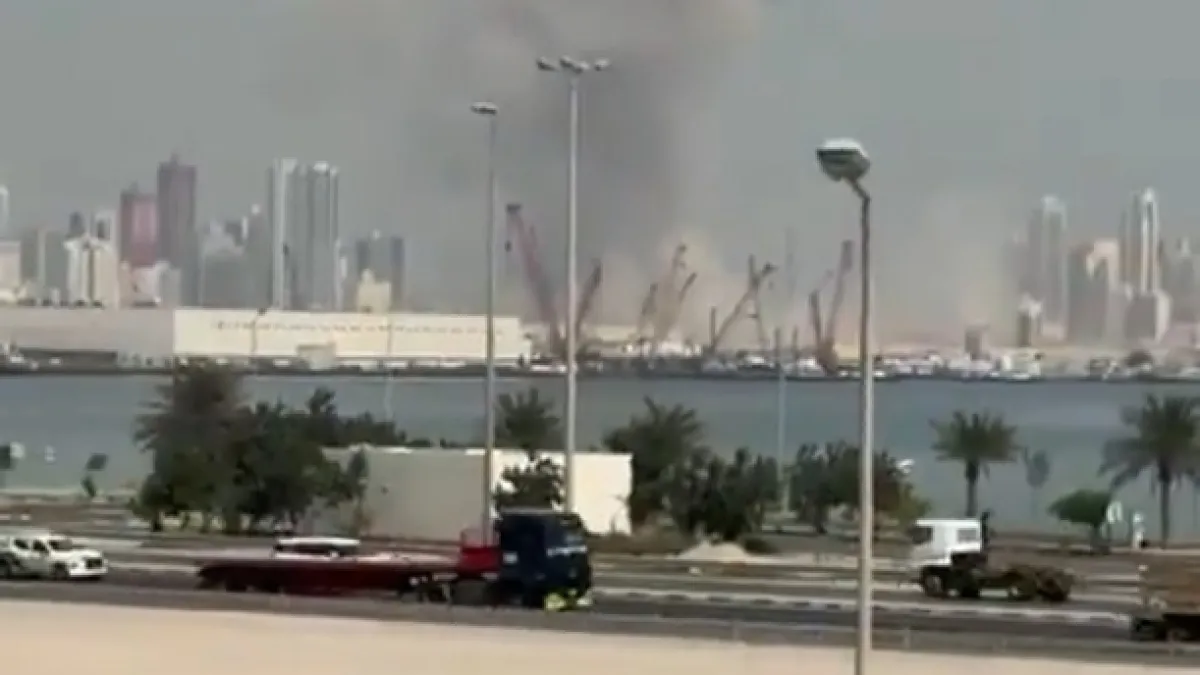
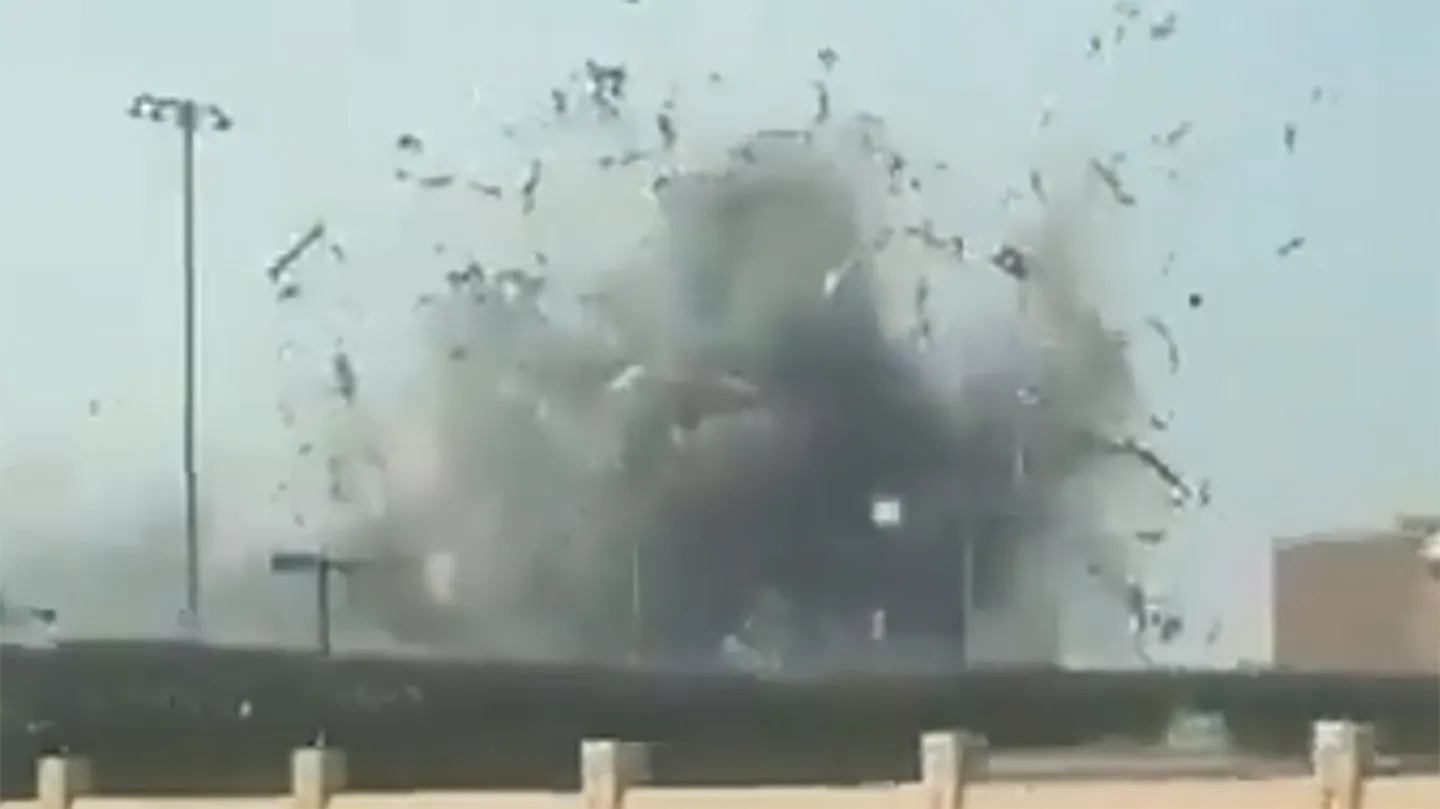
Video shows plumes of smoke rising after Iran targeted a United States military base in Bahrain, following Israel–US attacks across Iran. Two missiles were intercepted over Qatar and explosions were reportedly heard in Abu Dhabi, Kuwait and Saudi Arabia.
Published On 28 Feb 202628 Feb 2026
Share
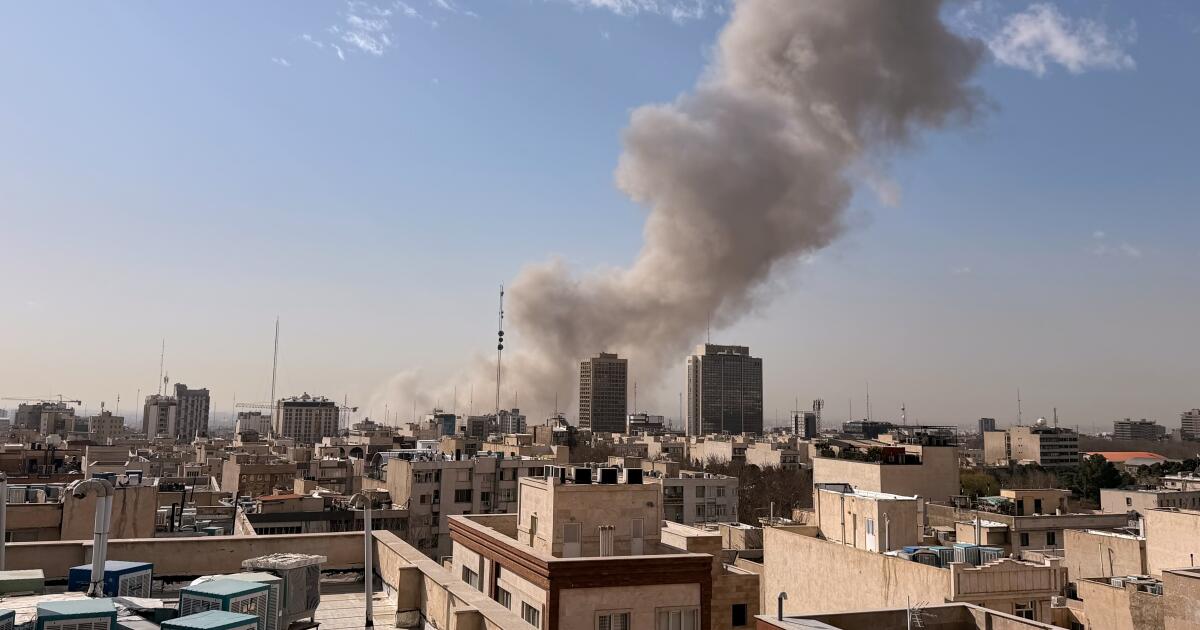
Israel and the United States launched an air campaign against Iran on Saturday, striking Tehran and several other cities in what President Trump said was the start of “major combat operations.”
The attacks began with Israeli strikes Saturday morning — a workday in Iran — on Tehran, the capital, with residents speaking of attacks near the presidential palace and Iran’s National Security Council.
There were also reports of Israeli strikes on the Ministry of Intelligence, Ministry of Defense, the Atomic Energy Organization of Iran and a military complex.
Israel’s defense minister said the “pre-emptive strike” was to “remove threats against the State of Israel”.
It remains unclear the extent of the campaign and what its ultimate aim will be. But in an eight-minute recorded video message on Truth Social, Trump outlined a maximalist strategy that would see much of what he called “this very wicked, radical dictatorship from threatening America and our core national security interests.”
“We are going to destroy their missiles and raze their missile industry to the ground. … We are going to annihilate their navy. We are going to ensure that the region’s terrorist proxies can no longer destabilize the region or the world, and attack our forces,” he said. “And we will ensure that Iran does not obtain a nuclear weapon.”
He urged Iranians to take over their government.
“This will be probably your only chance for generations,” he said. “For many years, you have asked for America’s help, but you never got it. No president was willing to do what I am willing to do tonight.”
Trump also said U.S. military forces “may have casualties.”
Iran’s IRNA news agency quoted a source in the presidential office who said Iranian President Masoud Pezeshkian was unharmed in the strike.
Besides the capital, explosions could be heard in other the cities, including Isfahan, Karaj, Kermanshah and Qom, according to Iranian state media.
Both Israel and Iran shut down their airspace.
Cellphone and internet communications were disrupted shortly after the attacks began. Multiple Iranian state news websites also appear to have been hacked.
There was no immediate official response from Iran, but Ebrahim Azizi, the head of the Iranian parliament’s national security commission, vowed retaliation.
“We warned you!” he wrote on social media. “Now you have started down a path which end is no longer in your control.”
Residents reported hearing sounds of missiles flying over cities in Jordan, Syria and Lebanon in what was thought to be a missile barrage from Iran against Israel.
The attacks come two days after the U.S. and Iran concluded a third round of Oman-brokered negotiations in Geneva aimed at reducing tensions and stopping the prospect of war.
On Friday, Trump expressed displeasure with the pace of the talks, saying the Iranian side were not negotiating in “good faith” or giving in to U.S. demands. But Oman’s Foreign Minister Badr Albusaidi said a deal was “within reach.”
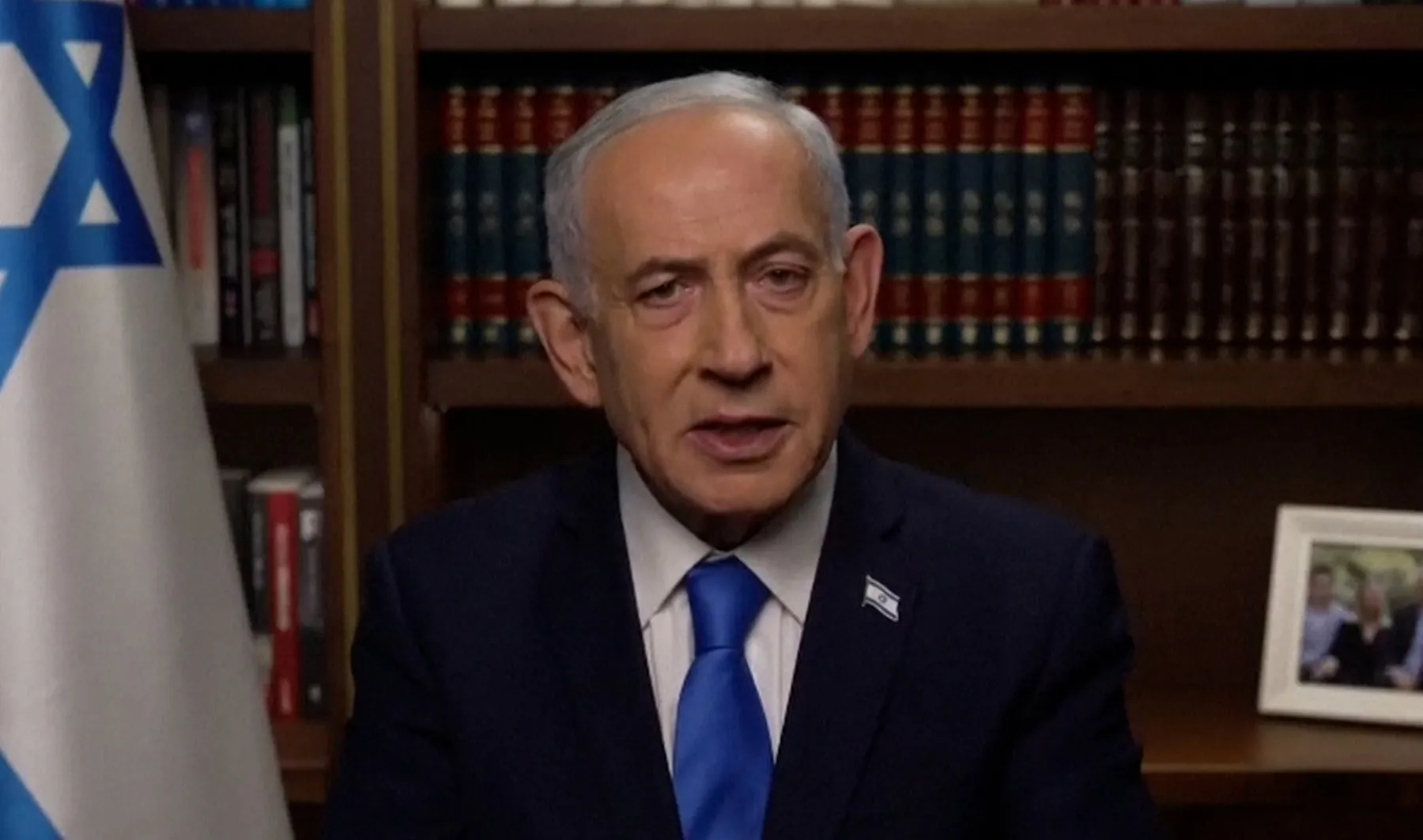
Israel’s Prime Minister Benjamin Netanyahu says the joint US‑Israel strikes on Iran aim to remove an ‘existential threat.’ He hailed the joint action as empowering the Iranian people to shape their own future and praised US President Donald Trump for his leadership.
Published On 28 Feb 202628 Feb 2026
Share
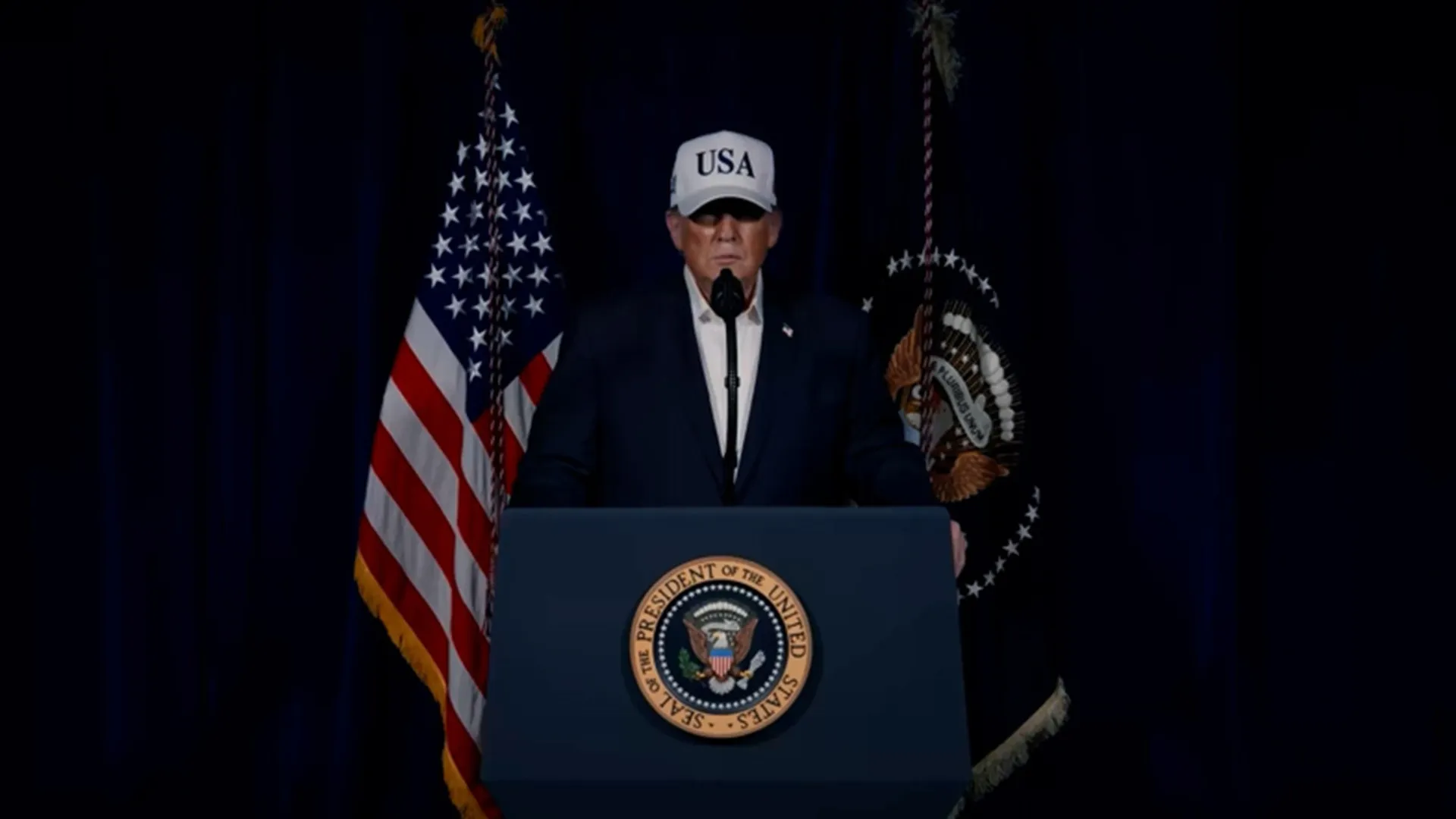
US President Donald Trump says American forces have begun “major combat operations” in Iran alongside Israel, aiming to eliminate what he described as imminent threats from the Iranian regime and defend the American people.
Published On 28 Feb 202628 Feb 2026
Share

The TWZ Newsletter
Weekly insights and analysis on the latest developments in military technology, strategy, and foreign policy.
Israel has launched an attack on Iran, striking targets in Tehran.
A U.S. official has confirmed to TWZ that the U.S. is attacking Iran. Including strikes from air and sea, the official said. See updates down below.
Details remain extremely limited at this time, but what we know is that Israel struck targets as part of what it is calling a preemptive strike. Images from the capital show smoke plumes rising in urban areas. In addition, we have seen video from Iraq showing what appear to be low flying cruise missiles or possibly fighter aircraft. Iraq has been the primary access point for the Israeli Air Force in past strikes on Iran.
BREAKING: Israel says it launched a preemptive strike against Iran and declares a nationwide state of emergency. Reports of explosions across the Iranian capital, Tehran. pic.twitter.com/mRXNHj3Yy8
— Ariel Oseran أريئل أوسيران (@ariel_oseran) February 28, 2026
Some of the ground are saying the strikes targeted Iranian leadership installations in the city, particularly those used by Supreme Leader Khamenei, although we cannot confirm that at this time. Geolocation info will soon be coming that should shed light on the target set.
The IDF posted the following on X, stating:
The State of Israel has launched a preemptive attack against Iran. Israel’s Minister of Defense, Israel Katz, declares a special and immediate state of emergency throughout the state The State of Israel has initiated a preemptive attack against Iran to remove threats directed against the State of Israel. As a result, missile and drone launches against the State of Israel and its civilian population are expected in the very near term. Therefore, pursuant to his authority under the Civil Defense Law, Minister of Defense Israel Katz has now signed a special order mandating the imposition of a special state of emergency in the Home Front throughout the State of Israel, effective immediately. The instructions of the Home Front Command and the authorities must be followed, and individuals must remain in protected areas.
U.S. Central Command has declined to comment on the strikes in response to our direct inquiry to them.
This is a rapidly developing situation and we are going into rolling coverage on it below. Newest updates will be posted on top.
UPDATE: 2:27AM EST—
Israel’s N12 is reporting that the operation name is “Roar Of The Lion.”
שם המבצע באיראן: “שאגת הארי”
— החדשות – N12 (@N12News) February 28, 2026
N12 also claims a source said the Supreme Leader is in a secure hideout. Reuters also reported this.
המנהיג העליון של איראן נלקח למקום מסתור. גורם ישראלי: אנחנו הולכים על הכול, תכננו את זה במשך חודשים
— החדשות – N12 (@N12News) February 28, 2026
Strikes are occurring at sites throughout Iran. While these could be targeting time sensitive targets, many of these strikes would be used to prepare the battlefield for aircraft operations over Iran. In other words, degrading and destroying what’s left of Iran’s air defenses so strike aircraft can more safely operate over the country. These operations would likely occur tonight under the cover of darkness, where direct attacks on targets can be made.
UPDATE: 2:15AM EST—
A U.S. official has confirmed to TWZ that the U.S. is attacking Iran.
Meanwhile the Mossad is asking Iranians to “return Iran to its glorious days.”
As Israel launches strikes on Iran, the Mossad spy agency on its official Persian-language Telegram channel calls on Iranians to help “return Iran to its glorious days.”
“Our Iranian brothers and sisters, you are not alone! We have launched a highly secure and dedicated Telegram… pic.twitter.com/jnL937YR8e
— Emanuel (Mannie) Fabian (@manniefabian) February 28, 2026
We are getting unconfirmed reports that Israel has assassinated Iran’s defense minister.
UPDATE: 1:55AM EST—
Israel is preparing for a reprisal strike:
In the last few minutes, sirens were sounded all throughout Israel, with an advance instruction alert directly to cellular devices to stay within proximity to protected spaces. This is a proactive alert to prepare the public for the possibility of missiles being launched toward the State of Israel. The IDF emphasizes that the public is requested to stay in proximity to protected spaces.
In the last few minutes, sirens were sounded all throughout Israel, with an advance instruction alert directly to cellular devices to stay within proximity to protected spaces.
This is a proactive alert to prepare the public for the possibility of missiles being launched toward…
— Israel Defense Forces (@IDF) February 28, 2026
Flights are currently diverting away from the region and Iran has closed its airspace.
It appears the USAF transport aircraft are trying to leave the ground prior to any kind of reprisal strikes. One ACARS message told a C-17 crew to remain on the ground in Jordan for as little time as possible not long before the strikes.
It’s looking like a U.S. strike on Iran could go down at any moment
A U.S. Air Force C-17 Globemaster III strategic airlifter with identification number 06-6166 en route to King Abdullah II Air Base in Jordan has been instructed to keep its ground time to an absolute minimum.… pic.twitter.com/1GIXRN14jt
— Egypt’s Intel Observer (@EGYOSINT) February 28, 2026
The daytime nature of the attacks would point to time sensitive targets being hit.
CNN is reporting that the U.S. was at least in coordination with Israel on the strikes, but that is not surprising at all even if Israel acted unilaterally in the kinetic action itself. There has been reports that the Trump administration favors Israel striking first so that it can then jump in once Iran responds with its own strikes.
A shelter in place order has been broadcasted in Qatar, home to the U.S. military’s largest installation in the region and what is presumed (and previously demonstrated) as the top U.S. target of Iran.
Message for U.S. Citizens:
The U.S. Embassy in Qatar is implementing a shelter-in-place for all personnel. We recommend all Americans do the same until further notice.
Actions to Take:
– Find a secure location within your residence or another safe building. Have a supply of… pic.twitter.com/ENogjpfK5r
— U.S. Embassy in Qatar (@USEmbassyDoha) February 28, 2026
An Israel KC-707 was seen departing today, likely to support the strike operation. Minister of Defense Gallant posted simply “Good luck” with U.S. and Israeli flags on his X account along with an image of an IAF F-15D and him talking to crews.
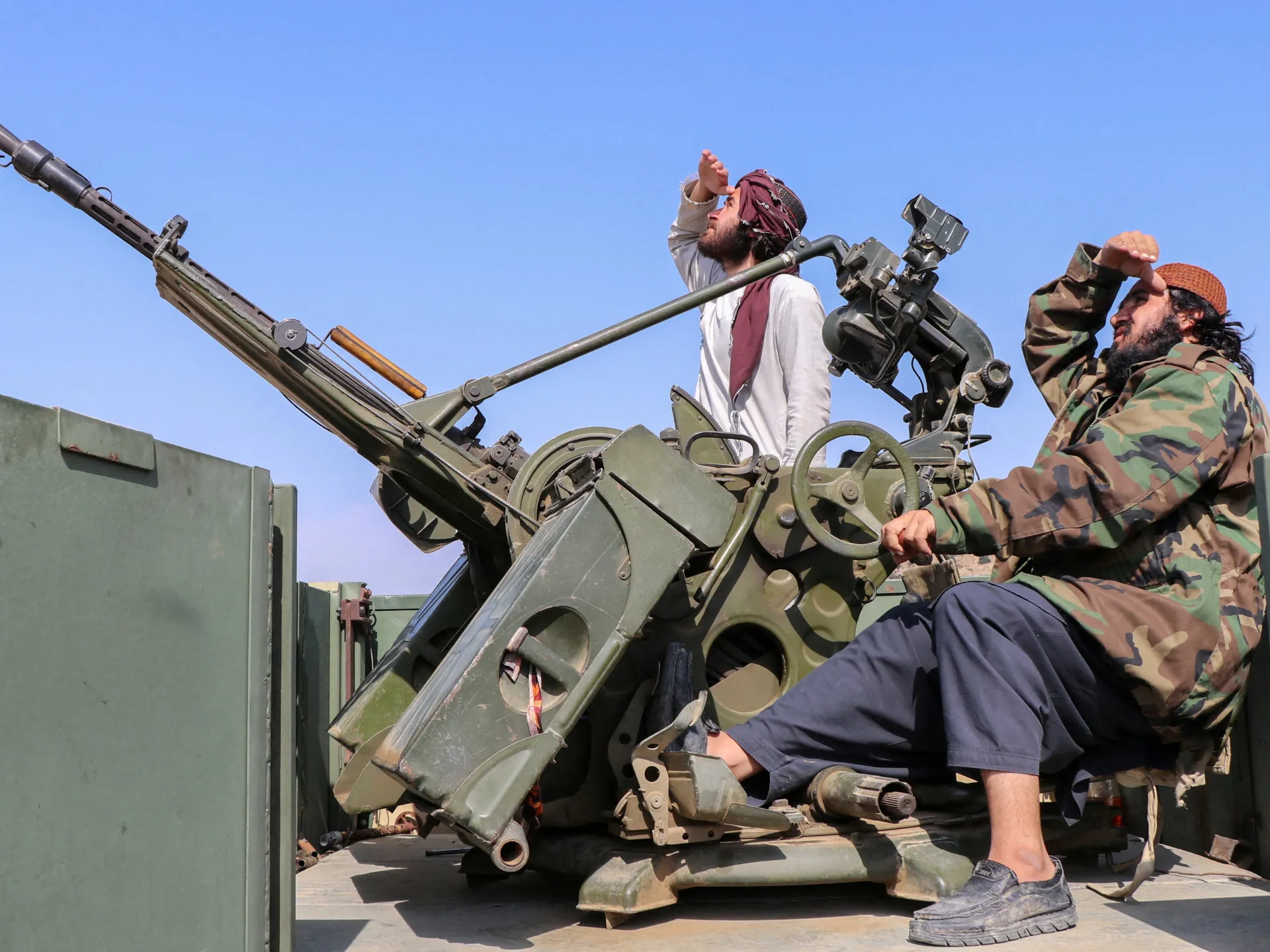
Pakistan says it has targeted Taliban forces in Afghanistan’s Kabul and border regions; UN chief says civilians also impacted.
Published On 28 Feb 202628 Feb 2026
Share

Oman’s Foreign Minister says most recent indirect talks between US, Iran ‘really advanced, substantially’ and diplomacy must be allowed do its work.
Iran agreed during indirect talks with the United States never to stockpile enriched uranium, said Oman’s top diplomat, who described the development as a major breakthrough.
Oman’s Foreign Minister Badr bin Hamad Al Busaidi also said on Friday that he believed all issues in a deal between Iran and the US could be resolved “amicably and comprehensively” within a few months.
list of 4 itemsend of list
“A peace deal is within our reach … if we just allow diplomacy the space it needs to get there,” Al Busaidi said in an interview with CBS News in Washington, DC, after Oman brokered the third round of indirect talks between the US and Iran in Geneva on Thursday.
“If the ultimate objective is to ensure forever that Iran cannot have a nuclear bomb, I think we have cracked that problem through these negotiations by agreeing [on] a very important breakthrough that has never been achieved any time before,” Al Busaidi said.
“The single most important achievement, I believe, is the agreement that Iran will never ever have nuclear material that will create a bomb,” he said.
“Now we are talking about zero stockpiling, and that is very, very important because if you cannot stockpile material that is enriched, then there is no way that you can actually create a bomb,” he added.
There would also be “full and comprehensive verification by the IAEA [International Atomic Energy Agency]”, he said, referring to the UN’s nuclear watchdog.
Oman’s top diplomat also said Iran would degrade its current stockpiles of nuclear material to “the lowest level possible” so that it is “converted into fuel, and that fuel will be irreversible”.
“This is something completely new. It really makes the enrichment argument less relevant, because now we are talking about zero stockpiling,” Al Busaidi said.
Regarding recent US demands regarding Iran’s missile programme, Al Busaidi said: “I believe Iran is open to discuss everything”.
Asked if he thought enough ground was covered in the most recent talks in Geneva to hold off a US attack on Iran, the minister said, “I hope so.”
“We have really advanced substantially, and I think, obviously, there remains various details to be ironed out, and this is why we need a little bit more time to really try and accomplish the ultimate goal of having a comprehensive package of the deal,” he said.
“But the big picture is that a deal is in our hands,” he added.
The foreign minister’s comment followed after he met earlier on Friday with US Vice President JD Vance and as US President Donald Trump continued to sabre-rattle while at the same time declaring he favoured a diplomatic solution with Tehran.
Trump said on Friday that he was not happy with the recent talks that concluded in Geneva.
“We’re not exactly happy with the way they’re negotiating,” Trump told reporters in Washington, adding that Iran “should make a deal”.
“They’d be smart if they made a deal,” he said.
Trump later said that he would prefer it if the US did not have to use military force, “but sometimes you have to do it”.
The US and Iranian sides are expected to meet again on Monday in Vienna, Austria, for more indirect negotiations.
As Washington escalates threats of military action against Iran, negotiations over Tehran’s nuclear programme continue behind the scenes. But while the Trump administration insists that the standoff is about security, Iran’s state media are pushing a very different narrative: that the crisis is a deliberate distraction from the Epstein scandal that continues to implicate the US president.
Contributors:
Dina Esfandiary – Middle East Lead, Bloomberg Economics
Fereshteh Sadeghi – Iranian journalist
Jamal Abdi – President, National Iranian American Council
Sina Toossi – Senior Fellow, Centre for International Policy
Indian Prime Minister Narendra Modi travelled to Israel this past week in a carefully choreographed display of solidarity. While Modi’s trip was celebrated in the Israeli media, criticism by Indian journalists was blocked back home. Leaving the two leaders to sign arms deals that will boost an already significant military partnership.
Nearly two years after Jair Bolsonaro’s fall from power in Brazil, the movement he built is searching for a new figurehead. A rising generation of young, evangelical, and hyper-online politicians is stepping in.
They are leveraging a sophisticated, decades-old religious media machine that evolved from radio and television into a powerful force on social media. Brazil’s political right is being reshaped for the digital age.
Featuring:
Anna Virginia Balloussier – Journalist, Folha de Sao Paulo
Caro Evangelista – Executive Director, ISER
Magali Cunha – Editor-in-Chief, Berreia Project
Published On 28 Feb 202628 Feb 2026
Share
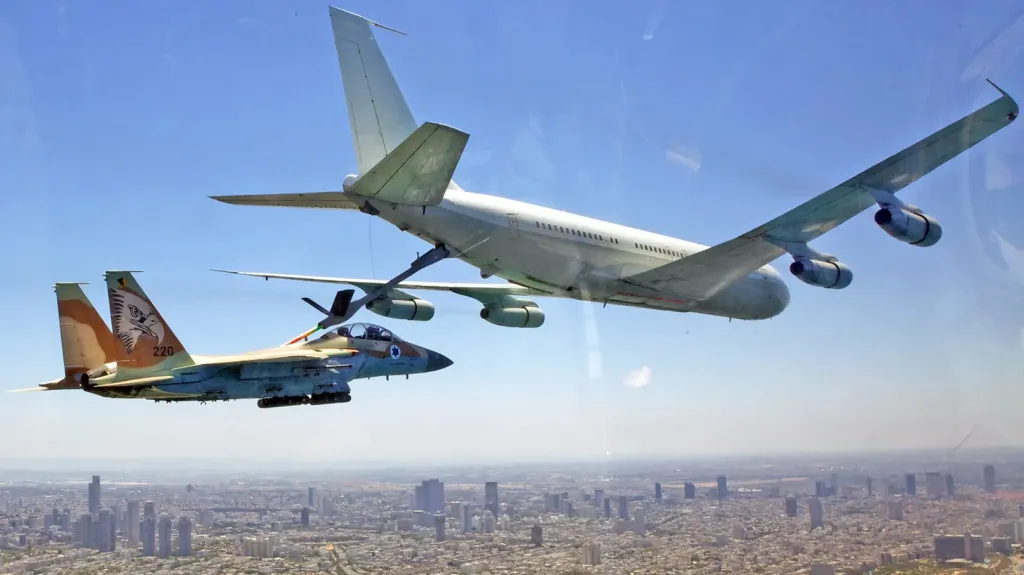
The TWZ Newsletter
Weekly insights and analysis on the latest developments in military technology, strategy, and foreign policy.
The U.S. Air Force now has at least 14 aerial refueling tankers forward-deployed in Israel ahead of potential strikes on Iran. Beyond supporting U.S. aircraft, an equally important role the tankers — and those spread across the region — could play is refueling Israeli fighters joining in the fight. The Israeli Air Force’s (IAF) entire tanker fleet consists of just seven nearly antique KC-707s, which imposes inherent limits on range, loiter time, sortie rates, loadout options, and other aspects of tactical air operations. Giving the IAF the full tanking resources of the U.S. would unlock its full combat potential.
Nine KC-46s and five KC-135s have arrived at Ben Gurion Airport since the start of this week. Ben Gurion is Israel’s main international airport, and is situated just to the southeast of Tel Aviv, roughly in the center of the country.
At least nine American refueling tankers arrived at Israel’s Ben Gurion Airport overnight as part of the United States’s massive buildup of military forces in the Middle East.
In all, 14 US refuelers arrived at Ben Gurion Airport in the past week. pic.twitter.com/POICMrC8DT
— Emanuel (Mannie) Fabian (@manniefabian) February 27, 2026
At least nine US Air Force refueling tankers have arrived at Israel’s Ben Gurion Airport as part of the US’s massive buildup of military forces in the Middle East. Jack Guez, AFP. pic.twitter.com/qNFy677lnE
— Benjamin Alvarez (@BenjAlvarez1) February 27, 2026
At least 11 U.S. Air Force F-22 Raptors are also now forward-deployed to the IAF’s Ovda Air Base in the southern tip of Israel. The F-22s had flown there after making a stop at RAF Lakenheath in the United Kingdom. A 12th Raptor reportedly had to return to Lakenheath due to a technical issue, but whether it may now have made its way to Israel is unclear.
Intersting choice.
USAF F-22 fighter jets redeployed from the UK will be stationed at the Ovda Air Base in southern Israel, per reports.
H/t to @EISNspotter as I believe that he broke the news first.
At this moment, we know about the redeployment of 11 F-22s (one from the… https://t.co/v1MKiiDXHr pic.twitter.com/4KOFvJl6yd
— Status-6 (War & Military News) (@Archer83Able) February 24, 2026
The tankers at Ben Gurion and the F-22s at Ovda are relatively small parts of the massive buildup of U.S. military forces across the Middle East in recent weeks. The large influx of U.S. airpower has caused crowding at other available bases in the region that sit outside the range of Iran’s short-range ballistic missiles and other standoff weaponry, which clearly played a part in deciding to utilize Israeli facilities for the deployment of additional aircraft. Israel would also be under threat of heavy retaliation in the event of any new U.S. operation targeting Iran. U.S. aircraft in Israel would be well-positioned to help provide more immediate defense against incoming Iranian threats, but those assets could also contribute heavily to strikes on Iran.
At the same time, as TWZ has previously noted, there are very strong signs that Israeli forces will be fully integrated into the defensive and offensive components of any potential new U.S. operation against Iran. The KC-46s and KC-135s now at Ben Gurion are a tanker force twice as big as what the IAF has in its inventory today. Each KC-46 also carries more fuel to offload to receivers than a KC-707 or a KC-135. All of this could offer a major boost in aerial refueling capacity, and the operational benefits that come along with that, to Israeli forces.

From the very start of what became the 12 Day War between Israel and Iran, TWZ pointed out that committing U.S. tankers to the fight could have massive force multiplying impacts for the IAF. In the weeks that followed, there were reports that the United States had done just this, but clandestinely and to a very limited degree, to help sustain the Israeli air campaign. The U.S. Air Force subsequently denied that this had been the case, after which we delved deep into what Israel would have otherwise had to have done to keep up the operational tempo.
As we wrote:
“Fitting as much external fuel on the fighters – the IAF’s F-15 fleets and F-16Is are all notably fitted with conformal fuel tanks and have the ability to carry drop tanks – was clearly necessary. Even dropping external tanks once they are empty to maximize range appears to have been part of the plan during the initial high-volume strikes. While drop tanks are expendable, they are not cheap and are usually retained unless performance has to be regained due to enemy threats or an in-flight emergency occurs. Dropping them to maximize an aircraft’s range is also an established tactic, but not a very sustainable one over the long term. It’s also one that is not needed if tanker support is readily available, nor is equipping the jets with maximum external fuel in the first place, in many circumstances.”
“Flying very carefully planned flight profiles to squeeze every bit of efficiency out of the range of IAF tactical jets was also clearly a tactic employed, although it leaves very little margin for error or combat contingencies. In addition, we know that Israel’s F-35Is have been tweaked to provide extra range. We don’t know exactly what this entails, and it could be a cocktail of measures, from software tweaks to internal or external fuel tanks. Regardless, it was reported that many IAF fighters landed on fumes after their initial sorties.”
“Regardless, maximizing Israel’s fighter force of close to 300 aircraft (total inventory, not what is actually available at any given time) in the opening waves of the war with just seven tankers may have been a feat that can be explained by careful planning, drop tanks, and the use of long-range standoff weaponry, at least early on. As the war continued, the magnitude of the sorties may have dropped, but the geographical depth and power of their strikes increased. These operations were sustained for nearly two weeks.”
“During the conflict, TWZ discussed how, at a certain point, Israel would have to drastically reduce its cadence of operations or wrap up the war. If the U.S. had not struck Fordow with B-2s, it’s possible the war would not have ended until the IDF was able to deal with that very hardened target, which would have likely required a ground operation very deep into a highly-defended area of Iran. Strikes would have eventually slowed as the IAF’s sortie rates degraded, and especially those of its overworked and geriatric tankers.”
As an aside, Israeli Ambassador to the United States Yechiel Leiter offered what looks to be the first official confirmation that range-extending fuel tanks for the F-35I are in service in an interview earlier this month. “We developed fuel tanks that extend the aircraft’s range without compromising stealth,” Leiter told the Israel Hayom newspaper.
Questions remain about these tanks, including whether they are internally or externally mounted. To date, no pictures have emerged that definitively show them fitted to an F-35I.

Regardless, truly robust tanker support would fundamentally change the IAF’s planning processes and operational possibilities. Access to the USAF’s tanker ‘bridge’ that will cover large swathes of the Middle East, keeping combat aircraft in the fight, will be an unprecedented operational reality for the IAF. More aerial refueling capacity would enable tactical jets to fly further, loitering over areas of the battlespace longer, and carry heavier ordnance loads. Greater reach and time on station could be extremely valuable when hunting for mobile high-value targets, like Iranian ballistic missile launchers. More range and loiter time could be equally important for responding to large waves of incoming Iranian missiles and drones in retaliation.
Far greater tanker support would also provide much higher safety margins for aircraft returning low on fuel from longer-range and/or long-duration missions. As noted earlier, it was reported that IAF fighters often landed on fumes after their initial sorties during the 12 Day War. It is somewhat shocking that aircraft were not lost to fuel starvation alone considering how closely they were operating to the edge of their endurance. Tankers forward-deployed in Israel could be similarly critical for providing recovery tanking, giving IAF aviators an extra margin of flight time, especially if everything doesn’t go as planned. The same can be said for U.S. fighter aircraft operating out of Israel. The F-22 has a notoriously short combat radius, for instance. Fuel starvation was an issue even in the mission to capture Maduro, for instance.
All around, U.S. tankers refueling Israeli jets during a future operation against Iran could only help greatly magnify the contributions of the latter, which would already be substantial in this scenario. IAF involvement would add hundreds of fighter aircraft, unique munitions, and more to the equation. On top of materiel aspects, Israeli pilots would bring immense experience about operations over Iran gained during the 12 Day War, as well as the benefits of analysis of lessons learned from the conflict. The rest of the Israel Defense Forces (IDF) and the Israeli intelligence apparatus would be able to provide other kinds of critical support.

12 Days of Precise Action
All of this also underscores the importance of Israel’s effort now to acquire a new fleet of six KC-46 tankers to replace its aging KC-707s. At least as of 2022, Boeing was expected to deliver the first KC-46s to the IAF before the end of this year.
It is still to be seen whether the U.S. will launch a new operation against Iran, and what role Israel will play if that decision is ultimately made. Many other questions remain to be answered, as well, as TWZ just recently explored in detail.
“It’d be nice if we could do it without, but sometimes you have to do it with,” U.S. President Donald Trump told reporters as he left the White House earlier today in response to a question about possible strikes on Iran. “We have the greatest military anywhere in the world. There’s nothing close. I’d love not to use it, but sometimes you have to.”
Trump on military force against Iran: “It’d be nice if we could do it without, but sometimes you have to do it with. We have the greatest military anywhere in the world. There’s nothing close. I’d love not to just it but sometimes you have to.” pic.twitter.com/kDh9oOeoPK
— Aaron Rupar (@atrupar) February 27, 2026
“They should make a deal, but they don’t want to quite go far enough. It’s too bad,” Trump also said today. “We’re not happy with the negotiation.”
“They don’t want to say the key words, ‘We’re not going to have a nuclear weapon,’ and they just can’t get there… So I’m not happy with the negotiation,” says @POTUS on Iran. pic.twitter.com/XN0S4ObS2x
— Rapid Response 47 (@RapidResponse47) February 27, 2026
“I met Vice President J.D. Vance today and shared details of the ongoing negotiation between the United States and Iran and the progress achieved so far,” Omani Foreign Minister Badr Albusaidi also wrote in a post on X today. “I am grateful for their engagement and look forward to further and decisive progress in the coming days. Peace is within our reach.”
I met Vice President JD Vance today and shared details of the ongoing negotiation between the United States and Iran and the progress achieved so far. I am grateful for their engagement and look forward to further and decisive progress in the coming days. Peace is within our… pic.twitter.com/fMHxWV0jgl
— Badr Albusaidi – بدر البوسعيدي (@badralbusaidi) February 27, 2026
U.S. and Iranian officials met in Oman yesterday for a second round of talks aimed at avoiding a conflict, and focused on Iran’s nuclear ambitions. The results of that engagement were inconclusive, though there are publicly stated plans for another round of talks next week.
If the U.S. government does decide to take action against Iran, the tankers at Ben Gurion are among the forces now in place to swing into action, and could easily find themselves refueling Israeli jets, as well as American ones. U.S. Air Force tanker support would be a massive force multiplier for the IAF that would allow it to have an even greater impact than it had in the 12 Day War.
Contact the author: joe@twz.com