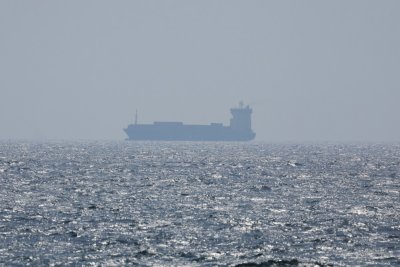
A container ship sails on the Strait of Hormuz, as seen from Ras Al Khaimah, United Arab Emirates, on June 23, 2025. Iran partially closed the Strait of Hormuz, a critical shipping path, to conduct military drills on Monday. File Photo by Ali Haider/EPA-EFE
Feb. 17 (UPI) — Oil prices climbed on Tuesday as Iran partially closed the Strait of Hormuz, a critical shipping path, to conduct military drills.
Fars, an Iranian news agency, cited “security precautions” as the reason for the closure, with no indication of when the Strait of Hormuz will fully open again.
About 13 million barrels of crude oil were transported through the strait each day in 2025, making up about 31% of oil shipments by sea. It is the main seaborne export route for Middle Eastern oil shipping to Asia.
Iranian naval forces began the drill “Smart Control of the Strait of Hormuz,” on Monday.
The drill involves deploying drones capable of striking aerial and maritime targets and is “focused on enhancing operational readiness, strengthening deterrence, and reinforcing multilayered defense,” Fars reported.
Tuesday is the first time that Tehran has closed any part of the Strait of Hormuz since President Donald Trump threatened military action against Iran in response to the killings of protesters.
The United States has posted warships on the Indian Ocean as Trump attempts to negotiate with Iran to scale back its nuclear program.
The United States and Iran held a second round of negotiations in Geneva on Tuesday. Trump was not present for those negotiations but said he would participate “indirectly.”
Feb. 17 (UPI) — U.S. President Donald Trump said he would participate “indirectly” in U.S.-Iran nuclear talks due to resume in Geneva on Tuesday.
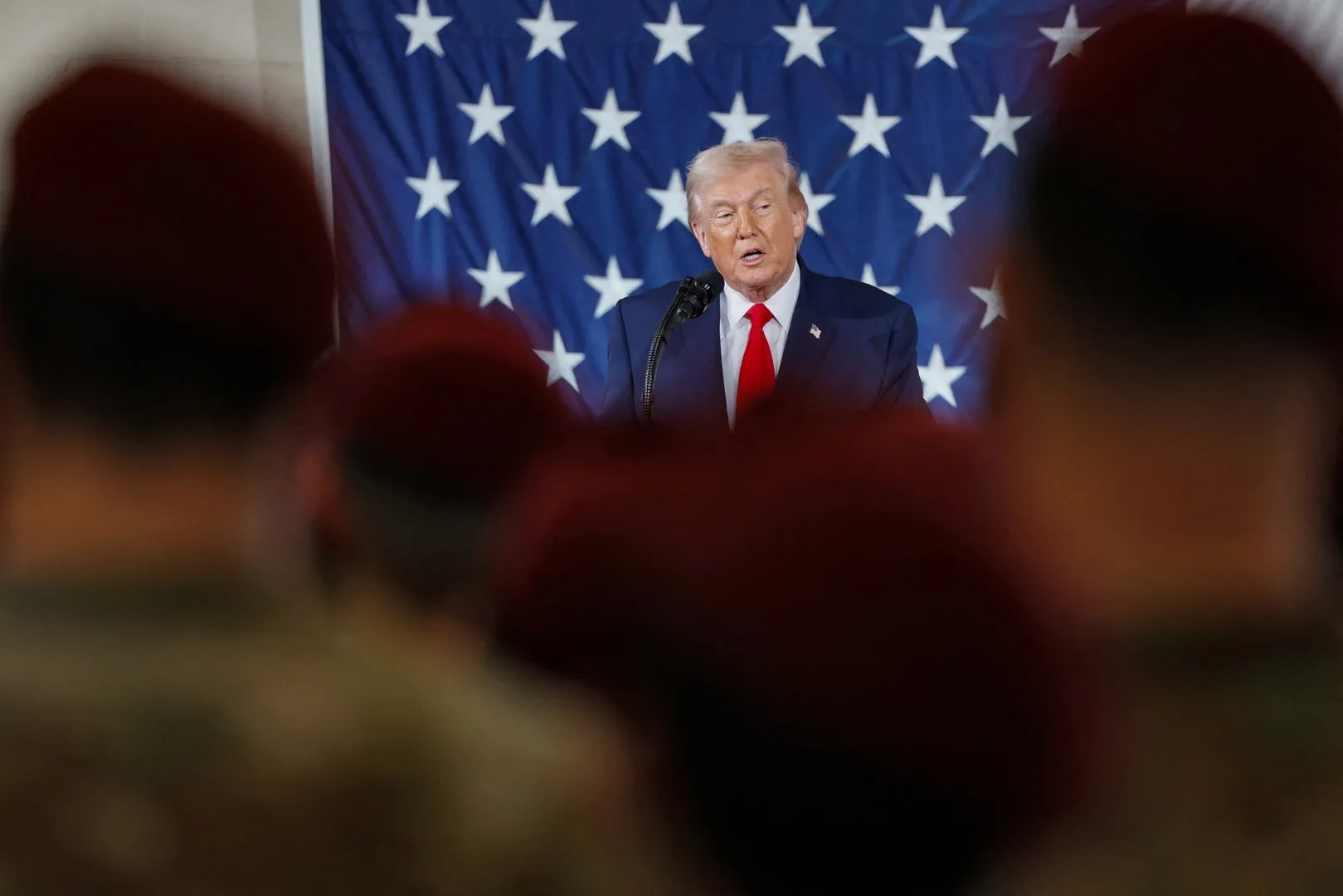
Speaking aboard Air Force One on Monday night, Trump said the negotiations were very important and he believed Tehran wanted to reach a deal, saying the fallout of not doing so would be very bad news, referencing U.S. air and missile strikes on the country’s nuclear facilities in June, following failed negotiations.
“I don’t think they want the consequences of not making a deal. We could have had a deal instead of sending the B-2s [stealth bomber aircraft] in to knock out their nuclear potential. And we had to send the B-2s. I hope they’re going to be more reasonable,” said Trump, who acknowledged that they were tough to negotiate with.
Similar optimism for its own prospects emanated from the Iranian side on Monday with the foreign ministry in Tehran saying it believed the United States’ position had shifted to “a more realistic one,” regarding Iran’s nuclear program.
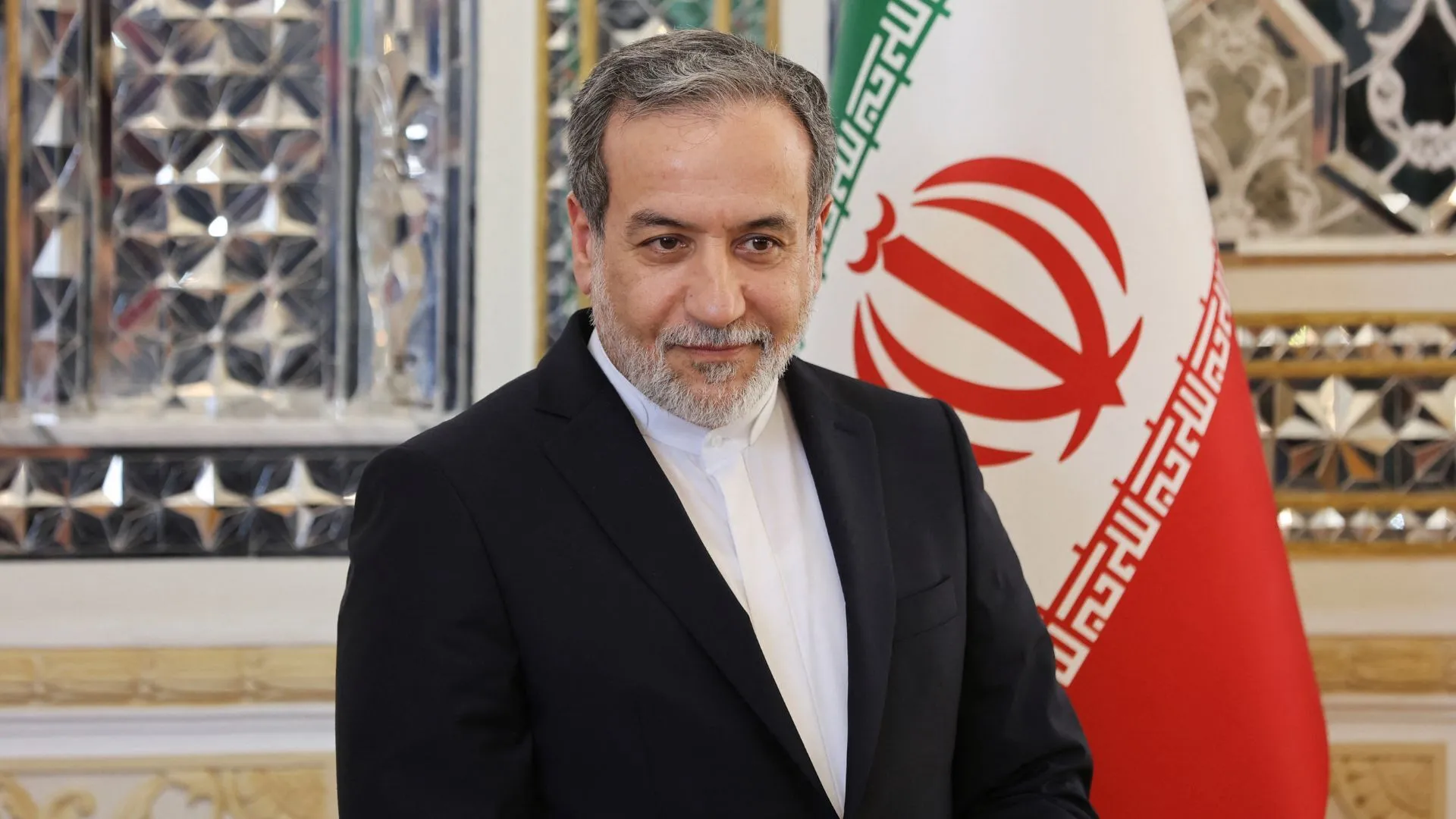
Following a meeting in Geneva on Monday with International Atomic Energy Agency director general Rafael Grossi on “technical matters,” Iranian Foreign Minister Abbas Araghchi said he was heading into the talks with “real ideas” to achieve a fair and just agreement, vowing Iran would not be coerced.
“What is not on the table: submission before threats,” he wrote in a post on X.
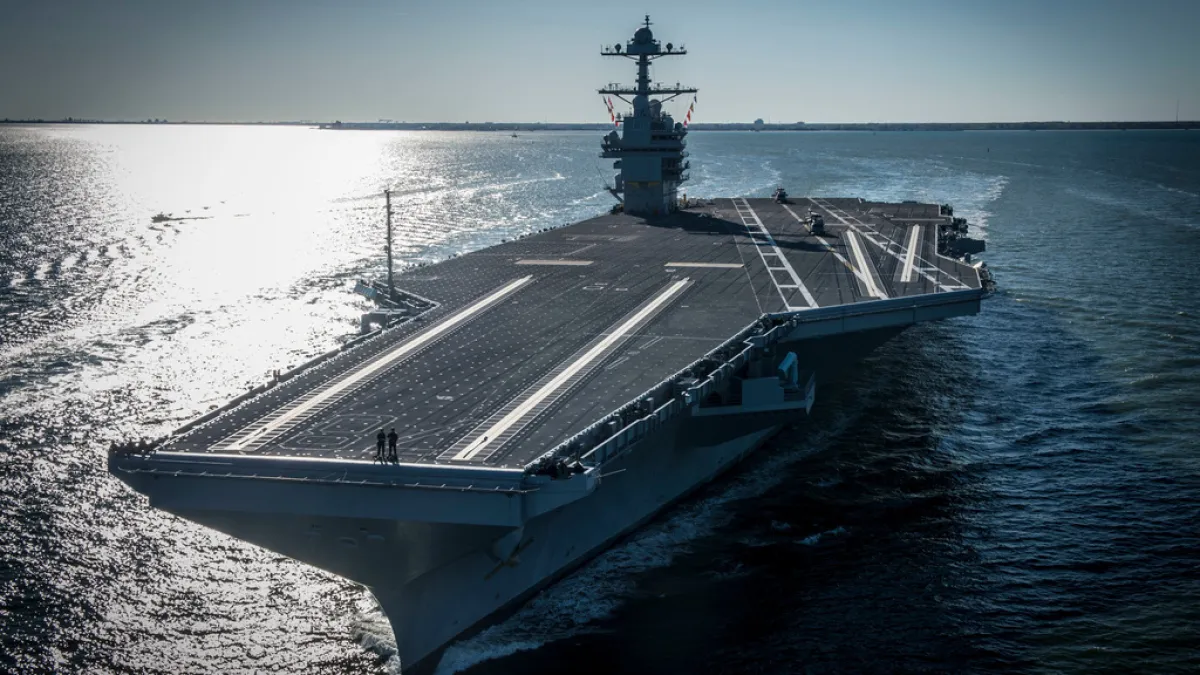
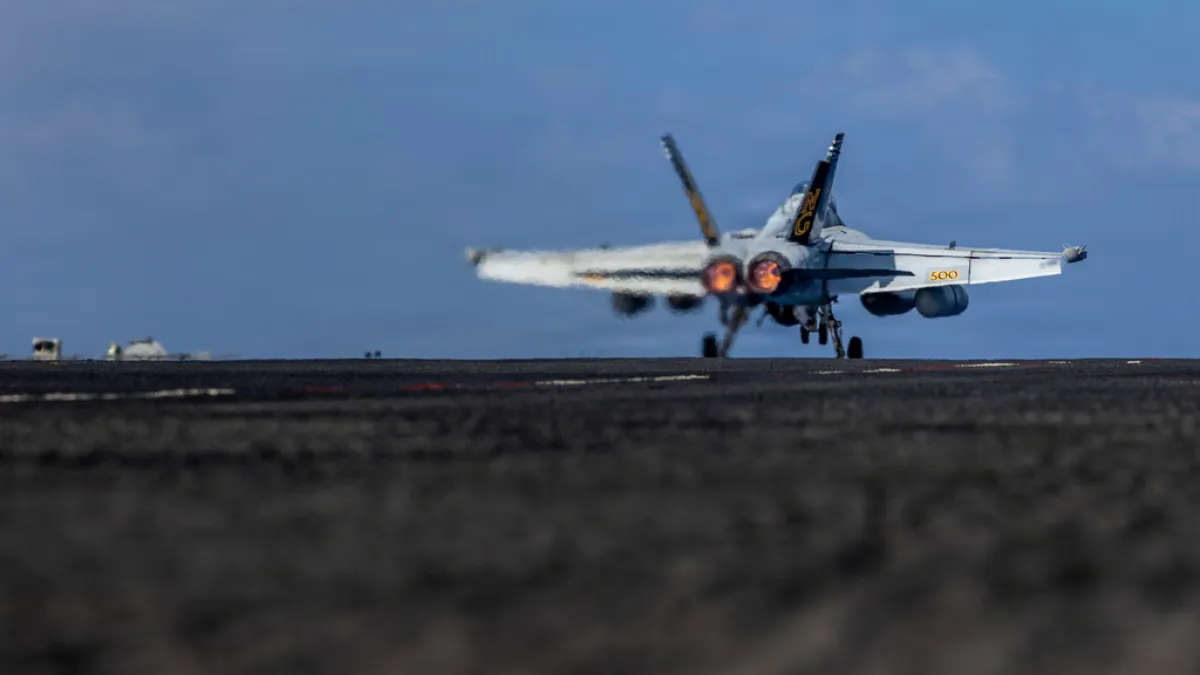
On Friday, Trump announced he was dispatching a second carrier strike group, the USS Gerald Ford, to the region to join an already substantial U.S. naval armada in the Arabian to ratchet up pressure on Tehran over its nuclear and ballistic missile programs and a deadly crackdown on protesters that began in late December.
Trump said he was deploying the world’s largest carrier to join the USS Abraham Lincoln strike group sent last month because if Iran didn’t “make a deal, we’ll need it.”
The Gerald Ford and its battleships and associated vessels, currently deployed in the Caribbean, are expected to arrive in the Arabian Sea in three to four weeks.
Tuesday’s negotiations pick up from talks in Oman on Feb. 6 where a U.S. team led by Trump’s special envoy Steve Witkoff and Jared Kushner, Trump’s son-in-law, met with the Iranian’s led by Araghchi, although proceedings were mediated by Omani officials and the two sides did not talk face-to-face.
As well as agreement on curtailing Iran’s enrichment of uranium, the Trump administration wants the talks to include its ballistic missile arsenal, a recent brutal crackdown on public protests and backing of regional proxies Hamas and Hezbollah.
Tehran has been pushing back, insisting it is only willing to discuss reining in its nuclear program — in exchange for sanctions relief.
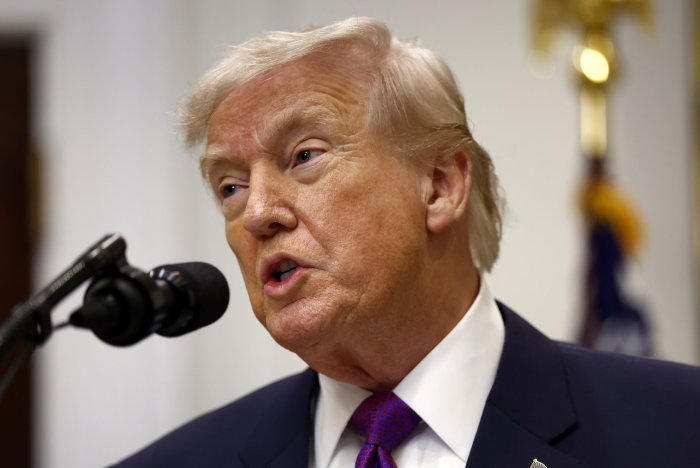
President Donald Trump speaks alongside Administrator of the Environmental Protection Agency Lee Zeldin in the Roosevelt Room of the White House on Thursday. The Trump administration has announced the finalization of rules that revoke the EPA’s ability to regulate climate pollution by ending the endangerment finding that determined six greenhouse gases could be categorized as dangerous to human health. Photo by Will Oliver/UPI | License Photo
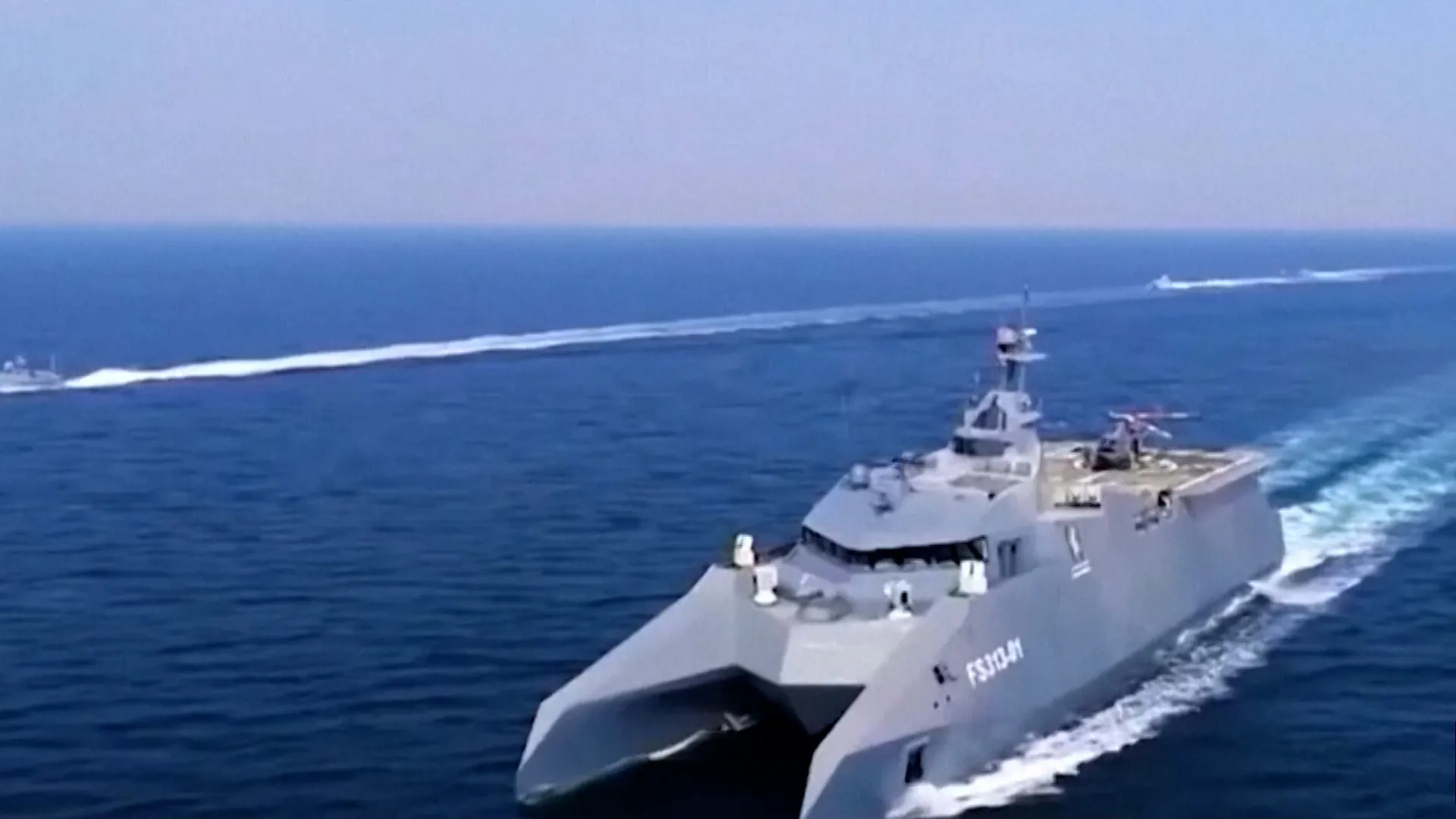
Iran launched naval drills in the Strait of Hormuz, Persian Gulf and Oman Sea, state TV reports, ahead of US-Iran nuclear talks in Geneva on Tuesday. Video shows Gen. Mohammad Pakpour, the head of Iran’s Islamic Revolutionary Guard Corps, overseeing the drills.
The latest tranche of the Epstein files contains more than three million documents – the largest release of its kind. In what appears to be a clumsy attempt at a cover-up by the US Department of Justice, the sloppily redacted names of high-profile perpetrators have failed to conceal the intricate web of global elites spanning politics, royalty, Hollywood and tech.
The fallout in Europe has resulted in a string of resignations, but in the US, there has been limited accountability for the politicians named in the files, including Donald Trump.
Contributors: Mehdi Hasan – Editor-in-chief and CEO, Zeteo News Chris Hedges – Host, The Chris Hedges Report Nikki McCann Ramirez – Politics reporter at Rolling Stone Danielle Moodie – Host, The Danielle Moodie Show
On our radar:
It’s been a month since Iranian authorities imposed a total internet blackout during a violent crackdown on antigovernment protesters. Since then, the state has ramped up the targeted repression of journalists and progressive politicians in Iran.
The limited information that has managed to make it out of the country, via Elon Musk’s Starlink, is now struggling against what experts say are internet filtering technologies from Chinese companies.
Tariq Nafi reports on Iran’s nationwide internet shutdown.
From choreographed flyovers to flags stretching the length of the field, no other sports league has marketed patriotism as aggressively or successfully as the United States’ National Football League, the NFL.
Militarism is embedded in sports and entertainment in the US, but, under the Trump administration, more state institutions are trying to get in on the act.
Ryan Kohls reports on the power and the spectacle of the Super Bowl.
Featuring: Howard Bryant – Sports journalist and author Kavitha Davidson – Podcast host, Sportly Gregory Daddis – Professor of history, Texas A&M University; retired colonel, US Army
Iran’s top diplomat says he hopes to ‘achieve a fair and equitable deal’ before high-stakes talks are held on Tuesday.
Iranian Foreign Minister Abbas Araghchi has arrived in Geneva for high-stakes second round of nuclear talks with the United States aimed at reducing tensions and avert a new military confrontation that Iran’s Supreme Leader Ayatollah Ali Khamenei has warned could turn into a regional conflict.
“I am in Geneva with real ideas to achieve a fair and equitable deal,” Araghchi wrote on X on Monday. “What is not on the table: submission before threats.”
Recommended Stories
list of 4 itemsend of list
Iran and the US renewed negotiations earlier this month to tackle their decades-long dispute over Tehran’s nuclear programme as US deploys warships, including a second aircraft carrier, to the region as mediators work to prevent a war.
Araghchi met with Rafael Grossi, the head of the International Atomic Energy Agency (IAEA), on Monday, after saying his team nuclear experts for a “deep technical discussion”.
The United Nations nuclear watchdog has been calling for access to Iran’s main nuclear facilities that were bombed by the US and Israel during the 12-day war in June. Tehran has said there might be a risk of radiation, so an official protocol is required to carry out the unprecedented task of inspecting highly enriched uranium ostensibly buried under the rubble.
Speaking to state-run IRNA news agency on Monday, foreign ministry spokesman Esmail Baghaei said the IAEA will play “an important role” in upcoming mediated talks between Iran and the US. But he also renewed Tehran’s criticism of Grossi for the director’s refusal to condemn military strikes on Iranian nuclear sites that are protected under agency safeguards as part of the Non-Proliferation Treaty (NPT).
Araghchi also said he would meet his Omani counterpart, Badr bin Hamad al-Busaidi, who mediated the first round of talks between Iran and the US since the war earlier this month.
Iran has repeatedly emphasised that it will not agree to Washington’s demand for zero nuclear enrichment, and considers its missile programme a “red line” that cannot be negotiated.
Meanwhile, the US continues to build up its military presence in the region, with President Donald Trump saying a change of power in Iran “would be the best thing that could happen” and sending in a second aircraft carrier.
Trump is again likely to send his special envoy Steve Witkoff and his son-in-law Jared Kushner to represent the White House in the Geneva talks. Brad Cooper, the most senior US military commander in the region, had unexpectedly joined the US delegation during the Muscat talks on February 6.
The talks also come over a month after Iran’s deadly crackdown against nationwide protests, with Iranian officials claiming “terrorists” and “rioters” armed and funded by the US and Israel were behind the unrest.
The UN and international human rights organisations have blamed Iranian authorities for the widespread use of lethal force against peaceful protesters, which killed thousands, mainly on the nights of January 8 and 9.
But the hardliners in Tehran are more concerned about any potential concessions that could be given during upcoming talks with the US.
Addressing an open session on Monday, one of the most hardline lawmakers in Iran’s parliament cautioned security chief Ali Larijani against giving inspection access to the IAEA befire ensuring Iran’s territorial integrity, the security of nuclear sites and scientists, and use of peaceful nuclear energy for civilian purposes under the NPT.
“When US warships have opened their arms to embrace Iranian missiles, US bases have opened arms to take our missiles, and the homes of Zionist military personnel are anticipating the sound of the air raid sirens, it is obvious that such conditions cannot be met at the moment,” said Hamid Rasaei, a cleric close to the hardline Paydari (Steadfastness) faction.
In the other diplomatic track pursued in Switzerland on Tuesday, officials will be discussing ways of ending the Ukraine war, which is approaching the end of its fourth year after Russia’s full-scale invasion in 2022.
But no immediate breakthrough appears in sight, with Ukrainian President Volodymyr Zelenskyy telling the annual Munich Security Conference on Saturday that Kyiv has “too often” been asked to make concessions.
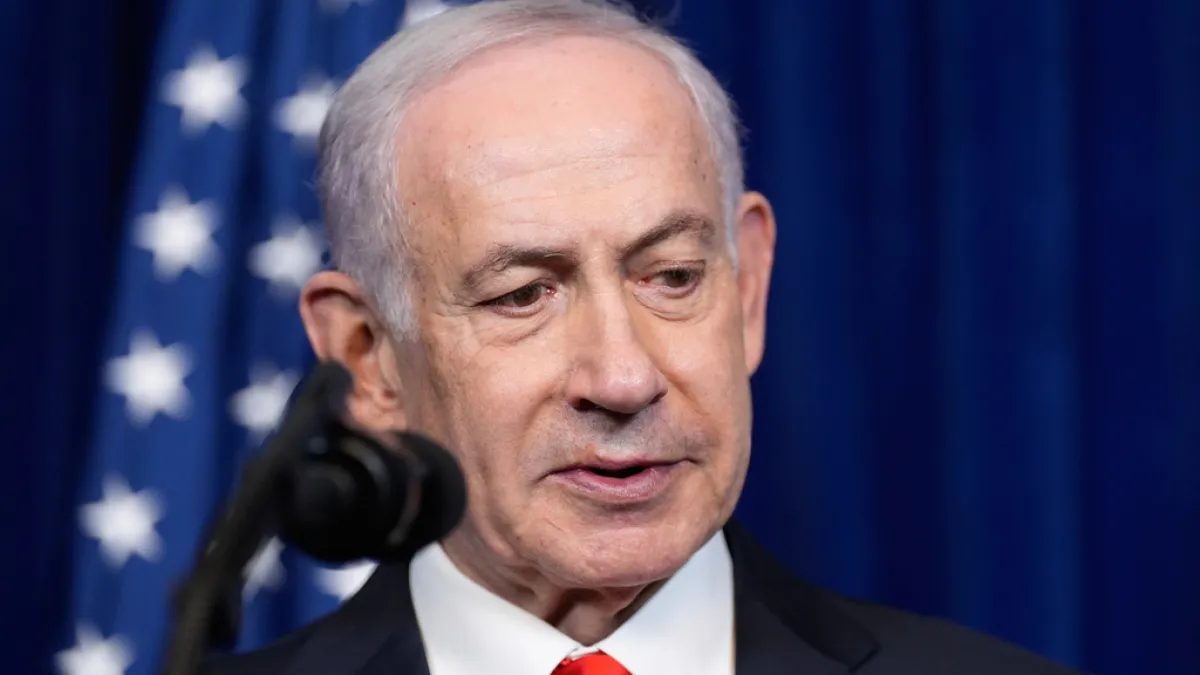
Israeli Prime Minister Benjamin Netanyahu has outlined the conditions he considers necessary for any prospective deal between the United States and Iran, including the dismantling of all of Tehran’s nuclear infrastructure.
His comments on Sunday came as Iranian Minister of Foreign Affairs Abbas Araghchi headed to Switzerland for a second round of nuclear talks with the US.
Recommended Stories
list of 3 itemsend of list
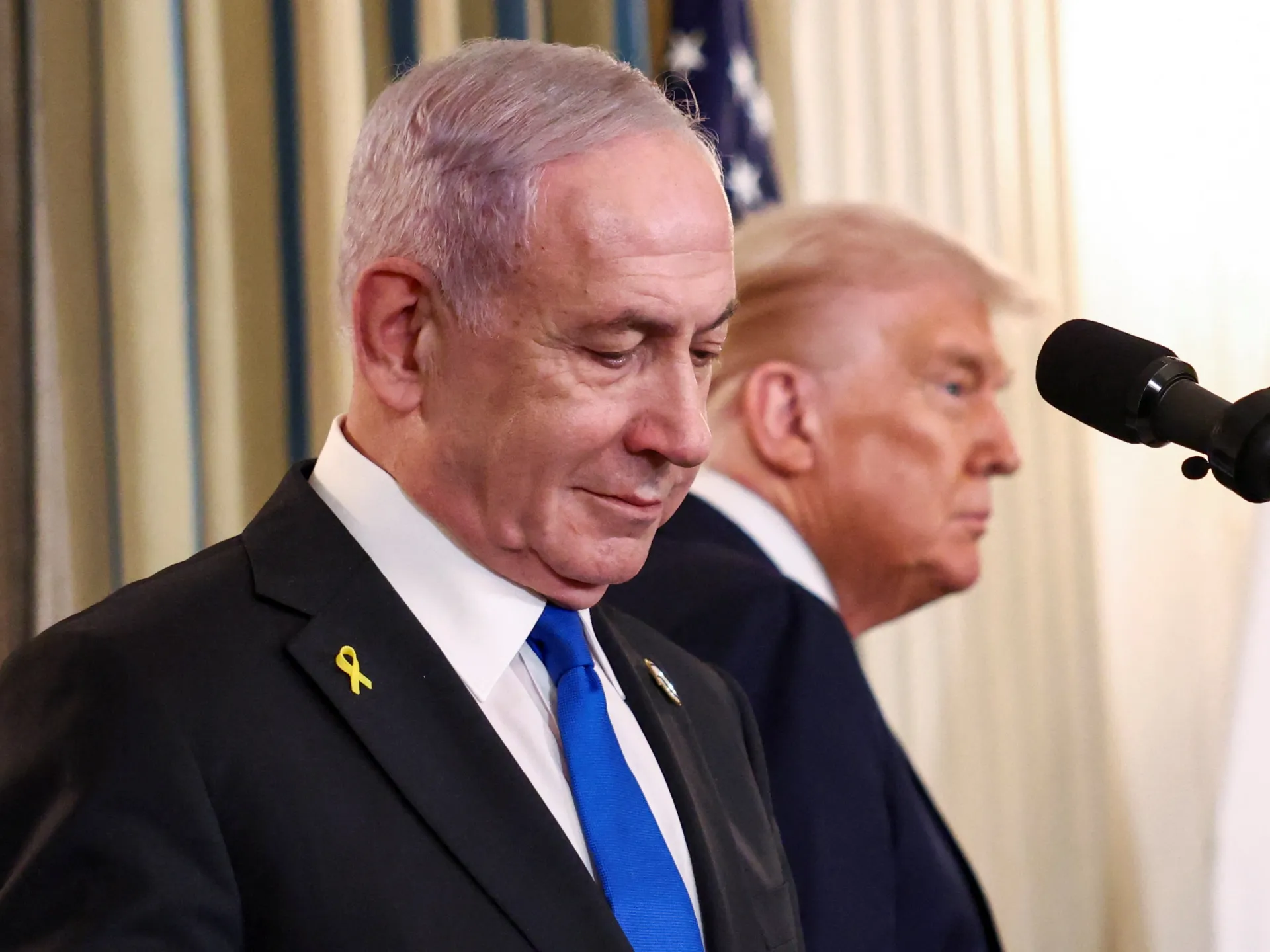
Speaking at the annual Conference of Presidents of Major American Jewish Organizations, Netanyahu said he was sceptical of a deal, but had told US President Donald Trump last week that any agreement must include several elements.
“The first is that all enriched material has to leave Iran,” he said.
“The second is that there should be no enrichment capability – not stopping the enrichment process, but dismantling the equipment and the infrastructure that allows you to enrich in the first place”.
The third, he said, was resolving the issue of ballistic missiles.
Netanyahu also called for sustained inspections of Tehran’s nuclear programme.
“There has to be real inspection, substantive inspections, no lead-time inspections, but effective inspections for all of the above,” he said.
Iran and the US resumed nuclear negotiations in Oman on February 6, months after previous talks collapsed when Israel launched an unprecedented bombing campaign against Iran last June, which started a 12-day war.
The US joined in the attacks, bombing three Iranian nuclear sites.
Netanyahu’s comments mark the first time he has spoken publicly on the discussions with Trump in Washington, DC, last Wednesday. The meeting was their seventh since Trump returned to office last year.
Trump told reporters afterwards that they had reached no “definitive” agreement on how to move forward with Iran, but that he had “insisted that negotiations with Iran continue to see whether or not a deal can be consummated”.
According to a report by Axios, the two leaders agreed to intensify economic strangleholds on Iran, mostly on its oil sales to China. More than 80 percent of Iranian oil exports current go to China.
The report, which cited US officials, said Netanyahu and Trump agreed in their meeting on the necessary end state: an Iran without the capability to obtain nuclear weapons. But they disagreed about how to get there.
Netanyahu told Trump it would be impossible to make a good deal, while Trump said he thought it was possible. “Let’s give it a shot”, Trump said, according to Axios.
Iran has long denied any intent to produce nuclear weapons, but has said it is prepared to discuss curbs on its atomic programme in exchange for the lifting of sanctions. It has ruled out linking the issue to missiles, however.
The CBS broadcaster, meanwhile, reported on Sunday that Trump had told Netanyahu during a meeting in Florida in December that he would support Israeli strikes on Iran’s ballistic missile programme if the US and Iran could not reach a deal.
The network cited two sources familiar with the matter.
There was no immediate comment from the US or Israel on the CBS report.
The renewed push for diplomacy comes after Trump threatened new attacks on Iran and sent a US aircraft carrier to the region, citing a deadly crackdown on antigovernment protesters in January.
Tensions in the region remain high, meanwhile.
On Friday, Trump said he was sending a second aircraft carrier to the Middle East, and openly discussed changing Iran’s government.
Asked if he wanted a government change in Iran, Trump responded that it “seems like that would be the best thing that could happen”.
Asked why a second aircraft carrier was headed to the Middle East, Trump said: “In case we don’t make a deal, we’ll need it … if we need it, we’ll have it ready.”
For its part, Iran has promised to retaliate to any attack, saying it will strike US bases in the Middle East.
The continued tensions have sparked fears of a wider regional war.
Foreign minister says regional powers have been ‘far more effective’ than European countries.
Published On 15 Feb 202615 Feb 2026
Share
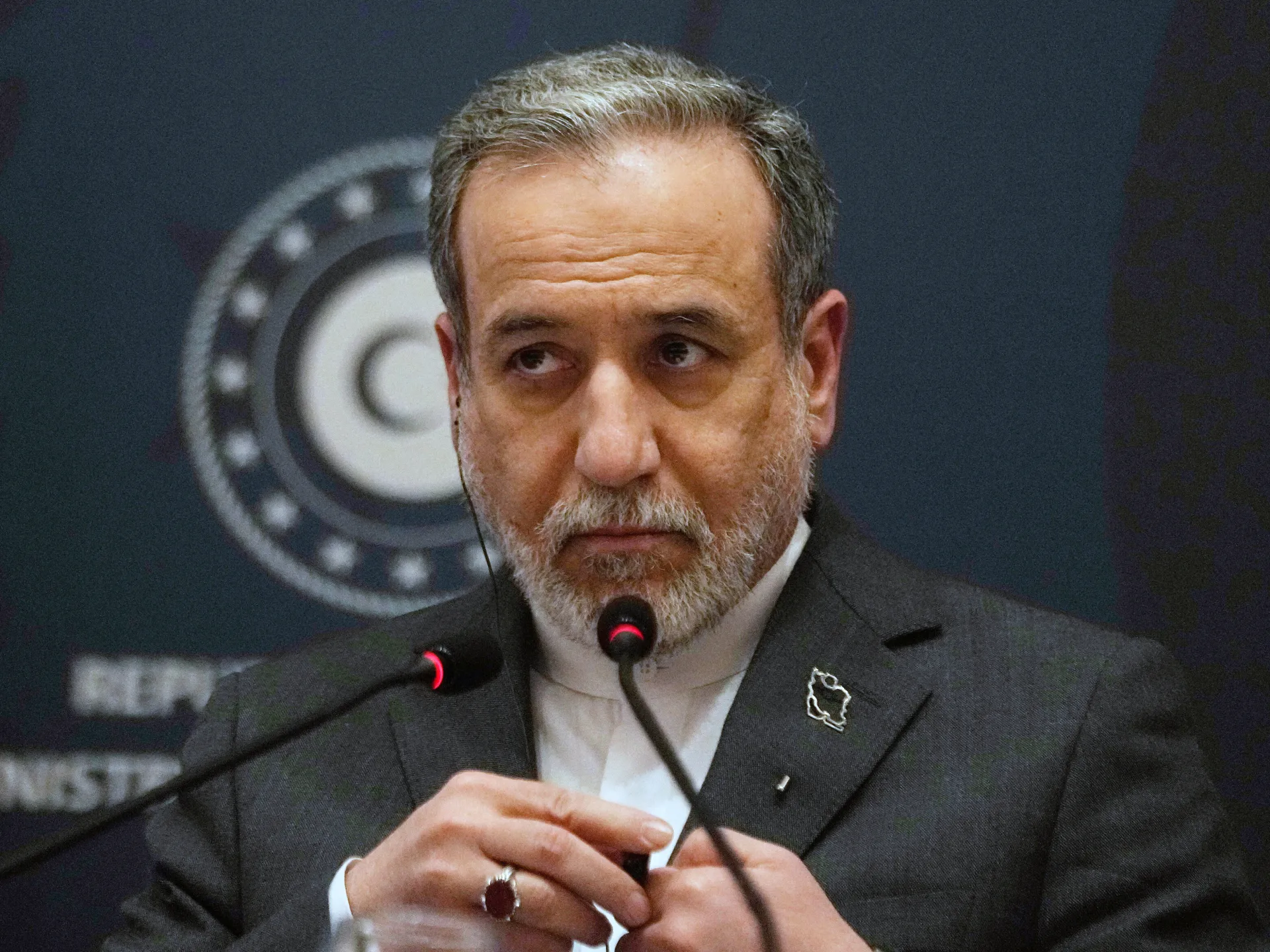
Iranian Foreign Minister Abbas Araghchi has derided the Munich Security Conference as a “circus”, accusing European powers of “paralysis and irrelevance” in efforts to revive nuclear negotiations with the United States.
Iranian officials were not invited to the annual security meeting in the German city.
Recommended Stories
list of 3 itemsend of list
“Sad to see the usually serious Munich Security Conference turned into the ‘Munich Circus’ when it comes to Iran,” Araghchi wrote on X on Sunday.
“The paralysis and irrelevance of the EU/E3 is displayed in the dynamics surrounding the current talks over Iran’s nuclear program. … Once a key interlocutor, Europe is now nowhere to be seen. Instead, our friends in the region [the Gulf] are far more effective and helpful than an empty-handed and peripheral E3.”
The E3 – which included France, the United Kingdom and Germany – were key players in the previous round of nuclear negotiations between world powers and Iran. That process culminated in 2015 with the Joint Comprehensive Plan of Action, a landmark agreement aimed at limiting the scope of Iran’s nuclear programme in exchange for sanctions relief.
The US under the first administration of President Donald Trump withdrew from the deal in 2018 and ramped up sanctions on Iran. Since then, the process has largely stalled. Still, the E3 maintained a role as a go-between with Tehran and Washington.
But since negotiations resumed last year, Gulf countries, such as Oman and Qatar, have taken the lead in facilitating talks between the US and Iran.
Araghchi made the remarks before leaving Tehran to lead a diplomatic and technical delegation to Geneva for a new round of nuclear talks with the US. The talks follow last week’s indirect negotiations in Oman, which is mediating the process, Iran’s Foreign Ministry said in a statement.
During his visit, Araghchi is expected to meet his Swiss and Omani counterparts, as well as the head of the International Atomic Energy Agency, Rafael Grossi, and other international officials.
Abas Aslani, a senior research fellow at the Center for Middle East Strategic Studies, said Araghchi’s comments “indicate a policy shift from the Iranian side that the E3 mechanism … is no longer a valid channel for resolution”.
“This nuclear mediation has moved from Europe to the region, and now the heavy lifting in diplomacy is done by regional players,” he said.
On Tuesday, Oman is to host talks between the US and Iran in Geneva after previous indirect negotiations in Muscat on February 6. Those talks were attended by US envoy Steve Witkoff and Trump’s son-in-law and adviser Jared Kushner.
US and Iranian officials previously held several rounds of talks in the Omani capital to discuss Iran’s nuclear programme last year. But that process was halted as Israel launched a 12-day war with Iran in June, which the US briefly joined by bombing three Iranian nuclear facilities.
The new rounds of negotiations come as tensions in the region remain high, with Trump moving more US military assets to the Middle East. On Friday, the US president said he was sending a second aircraft carrier to the region while openly talking about a change in Iran’s government.
Despite the new push for diplomacy, the two sides have maintained their positions. Iran has shown flexibility in discussing its nuclear programme, but the US wants to widen the talks to include Iran’s ballistic missiles and its support for regional armed groups – two issues that Tehran says are nonnegotiable.
Tehran, Iran – Iran says it will continue efforts to get out of a blacklist of a prominent global watchdog on money laundering and “terrorism” financing despite “20 years of obstruction” from domestic opponents.
The statement by the Financial Intelligence Unit of Iran’s Ministry of Economic Affairs on Sunday came two days after the Paris-based Financial Action Task Force (FATF) renewed its years-long blacklisting of Iran, according to a report by the official IRNA news agency.
Recommended Stories
list of 4 itemsend of list
The FATF also ramped up measures aimed at isolating Iran from global financial markets with a particular focus on virtual asset service providers (VASPs) and cryptocurrencies.
It recommended member states and financial institutions around the world to:
Refuse to establish representative offices of Iranian financial institutions and VASPs or consider the noncompliance risks involved.
Prohibit financial institutions and VASPs from establishing offices in Iran.
On a risk basis, limit business relationships or financial transactions, including virtual asset transactions, with Iran or people inside the country.
Prohibit financial institutions and VASPs from establishing new correspondent banking relationships and require them to undertake a risk-based review of existing ties.
Even the flow of funds involving humanitarian assistance, food and health supplies as well as diplomatic operating costs and personal remittances are recommended to be handled “on a risk basis considering the “terrorist” financing or proliferation financing risks emanating from Iran”.
What does the FATF move mean?
Iran has been blacklisted by the FATF for years and is currently on the list in the company of just two other countries: North Korea and Myanmar.
Since October 2019, Iran has had “heightened measures” like supervisory examination and external audit requirements recommended against it and has been subject to “effective countermeasures” since February 2020.
This contributed to making access to international transactions increasingly difficult or impossible for Iranian banks and nationals and made the country more dependent on costlier shadowy third-party intermediaries for transactions.
The new countermeasures emphasise existing frameworks but also specifically cite virtual assets, signalling an increased focus.
The fact that the FATF also urges countries and global institutions to remain wary of risks of having any dealings with Iran may mean even more limited transaction opportunities for Iranian entities and nationals.
Small banks maintaining old correspondent relations with Iranian counterparts may also reconsider after being recommended to re-evaluate existing links.
The isolation has hobbled state-run or private income streams and contributed to the continuous depreciation of the Iranian rial over the years.
Links with Iran’s nuclear dilemmas
The FATF, formerly known by its French name, was established by the Group of Seven (G7) countries in 1989 to combat money laundering but later had its mandate expanded to countering financing of “terrorism” and weapons of mass destruction.
It has been formally raising concerns about Iran since the late 2000s, which is also when it started calling for countermeasures as international tensions grew over Iran’s nuclear programme and the country was sanctioned by the United Nations Security Council.
But a year after Iran signed a landmark 2015 nuclear deal with world powers that lifted the sanctions, the FATF also acknowledged a “high-level political commitment” from Iran and agreed to an action plan for the country to address its compliance requirements.
The centrist government of President Hassan Rouhani, who had clinched the deals, pressed ahead with ratifying several laws needed to fulfil the action plan despite opposition from hardliners who were firmly against the increased financial transparency and international supervision.
But United States President Donald Trump unilaterally reneged on the nuclear deal in 2018, imposing a “maximum pressure” campaign that has remained in effect until today. The move empowered the argument from the hardliners in Tehran, who succeeded in blocking the ratification of the rest of the FATF-linked legislation, leaving the issue dormant for years.
Washington has retained the sanctions over the years with some of the latest – including the blacklisting in January of two United Kingdom-based cryptocurrency exchanges – allegedly connected to Iran’s Islamic Revolutionary Guard Corps.
The UN Security Council sanctions were also reinstated against Iran in September when Western powers triggered the “snapback” mechanism of the nuclear accord. They include an arms embargo, asset freezes and travel bans as well as nuclear, missile and banking sanctions that are binding for all UN member states.
Support for ‘axis of resistance’
The Iranian hardliners railing against any progress on FATF-related legislation have presented two main concerns.
They assert that fully adhering to the watchdog’s guidelines would curb Tehran’s ability to back its “axis of resistance” of aligned armed groups in Lebanon, Iraq, Yemen and Palestine. The axis lost its base in Syria with the fall of President Bashar al-Assad in December 2024.
Hardliners have also suggested that Iran’s ability to circumvent US sanctions may be significantly compromised by disclosing all the information required by the FATF.
Iran has been selling most of its oil to China at hefty discounts, using a shadow fleet of ships that turn their transponders off to avoid detection in international waters. The country has also for years been forced to rely on a capillary network of currency exchanges and intermediaries, some of them based in neighbouring countries, such as Türkiye and the United Arab Emirates.
To assuage some of the domestic concerns, two FATF-related laws ratified by Iran in 2025 were passed with special “conditions” and reservations infused in the text.
One of the main conditions was that the ratified regulations must not “prejudice the legitimate right of peoples or groups under colonial domination and/or foreign occupation to fight against aggression and occupation and to exercise their right to self-determination” and “shall not be construed in any manner as recognition of the Zionist occupying regime”, a reference to Israel.
Iran also said it would not accept any referral to the International Court of Justice and asserted that its own Supreme National Security Council would determine which groups qualify as “terrorist” outfits.
Those conditions were rejected by the FATF, leading to the increased countermeasures.
The watchdog also said it expects Iran to identify and freeze “terrorist assets” in line with relevant UN Security Council resolutions. Some of Iran’s nuclear and military authorities are among individuals sanctioned by those resolutions.
Tehran, Iran – Iran and the United States are presenting clashing views before expected talks as diaspora Iranians rally across the world to demand action after thousands were killed during last month’s nationwide protests.
Amid reports that a second round of mediated talks may take place over the coming days, Washington has maintained it wants to limit Iran’s missile programme and end all its nuclear enrichment. Iran has consistently rejected both demands, saying it could dilute highly enriched uranium – all said to be buried under rubble after being bombed by the US in June – in exchange for the lifting of sanctions.
Recommended Stories
list of 4 itemsend of list
US President Donald Trump said at the White House on Friday that he is sending a second aircraft carrier to the Middle East, adding that “regime change” in Iran would be the “best thing that could happen”.
Speaking at a conference in Tehran on Saturday aimed at attracting regional investment for railroad projects, Iranian President Masoud Pezeshkian thanked the leaders of Azerbaijan, Turkiye, Qatar, Oman, Saudi Arabia and others for mediating to prevent a US military attack.
“All of these countries are working so that we can resolve our own problems with peace and calm, and we are able to do this. We do not need a custodian,” Pezeshkian said, warning that a war would impact the entire Middle East.
Major rallies in US, Europe
A large number of Iranians abroad who are opposed to the theocratic establishment governing Iran since a 1979 revolution participated in rallies across the world on Saturday to demand an end to religious rule.
Reza Pahlavi, son of Iran’s US-backed shah who was deposed in the revolution, called on Iranians living abroad to be part of a “global day of action” aimed at “taking Iran back” from the Islamic Republic. He also addressed the Munich Security Conference in Germany and met with leaders such as Ukrainian President Volodymyr Zelenskyy and senior US Senator Lindsey Graham.
The three main cities designated for the protests were Munich, Los Angeles and Toronto. Iranians also marched in cities in Australia, including Sydney and Melbourne.
A similar rally last month in Toronto saw more than150,000 people in attendance and no adverse incidents, according to city police. About 100,000 people registered early to attend the Munich rally on Saturday.
The rallies are some of the largest ever held by the Iranian diaspora and the biggest since demonstrations in solidarity with the deadly 2022-2023 nationwide protests in Iran, triggered by the death in police custody of Mahsa Amini, 22, for allegedly wearing the mandatory hijab for women improperly.
The latest protests were held days after the Iranian establishment organised demonstrations and burned the flags of Israel and the US to mark the 47th anniversary of the 1979 revolution.
“They killed my innocent girl for a few strands of hair and nobody was held accountable, but now they record women with bare heads and so-called unconventional attire in their official ceremonies and nobody yells that Islam is in danger,” Amini’s father wrote in an Instagram story after state television interviewed a pro-establishment woman without a hijab.
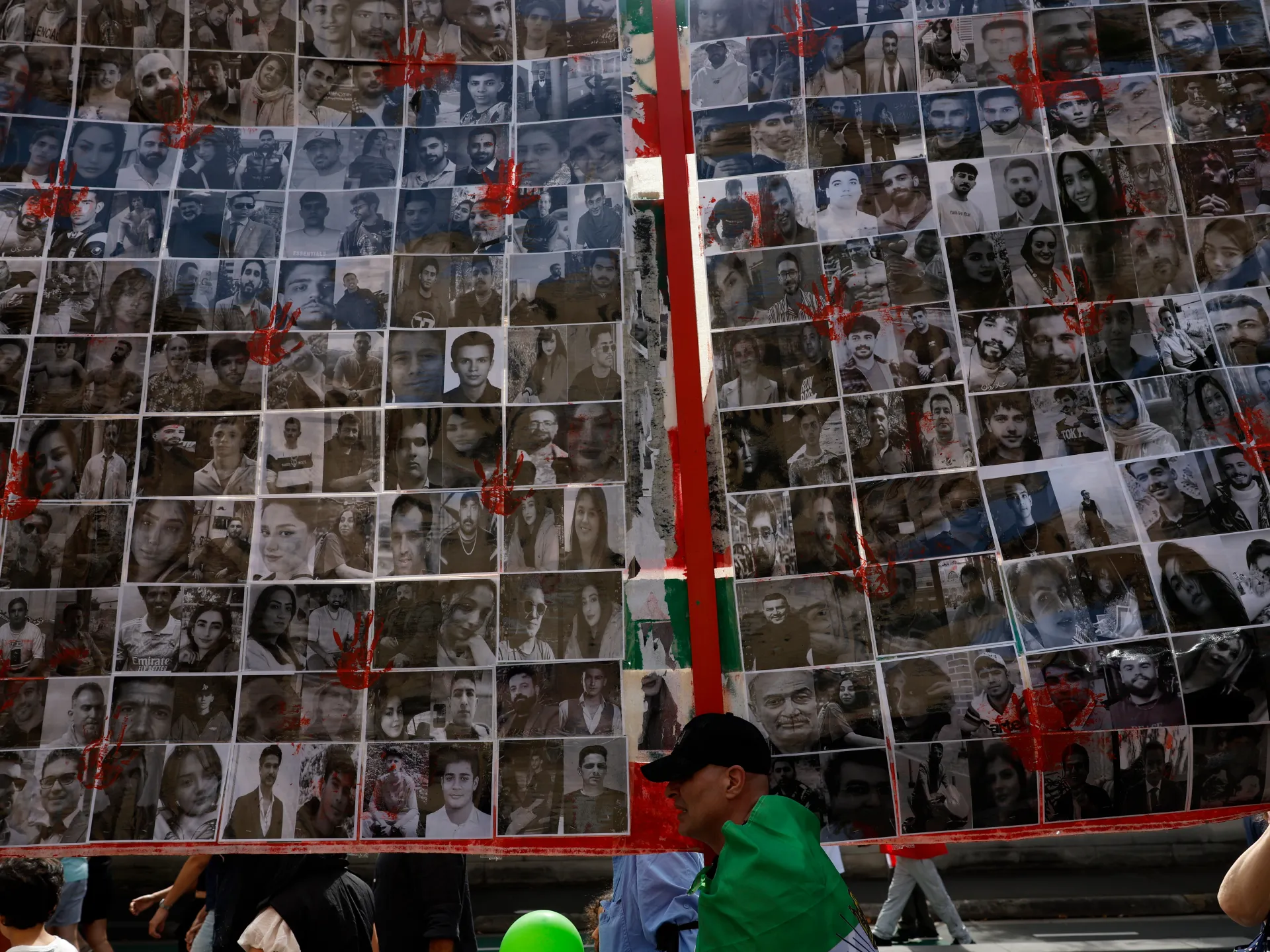
Since the killing of thousands of protesters last month, mostly carried out on the nights of January 8-9, similar rallies have been held to raise awareness in dozens of cities across the globe, including The Hague, Zurich, Rome, Budapest and Tokyo.
The United Nations and international human rights organisations said they documented widespread use of lethal force by state forces against peaceful protesters. But the Iranian government rejected all their allegations, claiming “terrorists” and “rioters” armed and funded by the US and Israel were behind the killings across Iran.
Families united in grief, strength
From Kuhchenar county in southern Iran’s Fars province to central Arak and Mashhad in the northeast, families continue to release footage online to commemorate their loved ones killed during the demonstrations.
Behesht-e Zahra, a cemetery in Tehran, was crowded on Friday as people gathered in solidarity with multiple families holding mourning ceremonies to mark “chehelom”, or 40 days since the killing of their loved ones.
Bereaved relatives somberly clapped, played music and showed the “victory” sign in an attempt to express pride, strength and defiance despite their losses.
Among those remembered were Ayda Heydari, 21, a medical student, and Zahra “Raha” Behloulipour, who attended Tehran University. Both were shot and killed with multiple live rounds in separate incidents.
The state-run Mehr news agency reported Heydari was “a victim of Mossad agents in recent riots” and released a short clip of an interview with her family. Heydari’s mother said her daughter was not a “munafiq”, a term the Islamic Republic uses to describe dissidents.
Mohammad-Hossein Omid, head of Tehran University, last week told the semiofficial ISNA news agency that “most” of the people taking part in the nationwide demonstrations were “protesters not terrorists”.
Concerns for prisoners
The Iranian judiciary confirmed on Saturday that a number of senior reformist politicians arrested last week for criticising the establishment were released on bail while others remained behind bars to face previous charges.
Vahid Shalchi, a deputy science minister, cited judiciary officials as saying “a considerable” number of arrested students will be released soon but did not say how many are being held.
Tens of thousands of people have been arrested during and after the protests, and human rights organisations said some are in immediate danger of being executed – allegations the Iranian judiciary has rejected.
Amnesty International said 18-year-old wrestling champion Saleh Mohammadi has been sentenced to public execution in Qom after being forced to make confessions about being involved in the death of a security agent.
Mai Sato – UN special rapporteur on Iran, who previously said more than 20,000 civilians may have been killed during the demonstrations – said three other people face execution and “What is happening now is not new.”
“The same patterns documented in those individual cases are being replicated on a mass scale after the nationwide protests,” she said.
A specific casualty toll from the demonstrations is unknown as information remains extremely limited because of ongoing heavy internet filtering.
Feb. 13 (UPI) — The U.S. military is sending the USS Gerald R. Ford, the world’s largest aircraft carrier, to the Middle East as tensions with Tehran over its nuclear program ratchet up, President Donald Trump confirmed Friday.
Trump told reporters he’s sending the vessel because if the United States and Iran doesn’t “make a deal, we’ll need it,” The Hill reported.
The vessel and its supporting warships, which are in the Caribbean, will join the USS Abraham Lincoln in a trek that’s expected to take about three to four weeks, The Guardian reported.
“We have an armada that is heading there and another one might be going,” Trump said in an interview with Axios on Tuesday.
An unnamed official said Trump made the decision to send the USS Gerald R. Ford to the Middle East after his Thursday meeting with Israeli Prime Minister Benjamin Netanyahu.
The U.S. Southern Command said in a statement to The Hill that it was carrying out “mission-focused operations to counter illicit activities and malign actors in the Western Hemisphere.”
“While force posture evolves, our operational capability does not. SOUTHCOM forces remain fully ready to project power, defend themselves, and protect U.S. interests in the region.”
U.S. and Iranian leaders have been involved in negotiations over Iran’s nuclear arms program. Tehran has shown willingness to scale back its nuclear program in exchange for a lifting of economic sanctions, but has declined to consider requests to scale back its ballistic missile arsenal.
President Donald Trump speaks alongside Administrator of the Environmental Protection Agency Lee Zeldin in the Roosevelt Room of the White House on Thursday. The Trump administration has announced the finalization of rules that revoke the EPA’s ability to regulate climate pollution by ending the endangerment finding that determined six greenhouse gases could be categorized as dangerous to human health. Photo by Will Oliver/UPI | License Photo
Trump says he believes negotiations with Iran will be ‘successful’ as he confirms USS Gerald R Ford deployment.
President Donald Trump says that he is sending a second aircraft carrier to the Middle East as the United States increases pressure on Iran over its nuclear and ballistic missile programmes.
Speaking at the White House on Friday, Trump confirmed that the USS Gerald R Ford would be leaving the Caribbean for the Middle East “very soon” as tensions remain high following indirect talks in Oman last week.
Recommended Stories
list of 3 itemsend of list
“If we need it, we’ll have it ready, a very big force,” said Trump, adding that he believed negotiations would be “successful” while warning it would be a “bad day for Iran” if the country failed to make a deal.
Later, Trump said a change of government in Iran would be the “best thing that could happen”.
“For 47 years, they’ve been talking and talking and talking. In the meantime, we’ve lost a lot of lives,” he said, in an apparent reference to Tehran’s crackdown on recent antigovernment protests that left thousands dead.
The imminent departure of the Gerald R Ford is part of an ongoing buildup of military hardware in the region, with the Abraham Lincoln carrier, several guided-missile destroyers, fighter jets and surveillance aircraft sent in recent weeks.
Trump’s comments come days after he met Israeli Prime Minister Benjamin Netanyahu in Washington, with the latter saying a “good deal” was expected while voicing reservations if any agreement did not also curb Iran’s ballistic missile programme. Tehran has publicly rejected US pressure to discuss the missiles.
Netanyahu has repeatedly called for further military action since Israel’s 12-day war against Iran in June, which the US briefly joined by attacking three Iranian nuclear sites, in a military operation dubbed “Midnight Hammer”.
Trump at the time said the US attacks had “totally obliterated” the nuclear facilities.
The indirect US-Iran talks were the first to be held since the June conflict, which halted previous rounds of negotiations between Tehran and Washington over potentially replacing the Joint Comprehensive Plan of Action (JCPOA), which Trump ditched during his first term in office.
Risk of escalation
The JCPOA, a deal reached between Iran, the US and several European powers, saw Tehran curtail its nuclear programme in exchange for sanctions relief.
Following Trump’s unilateral withdrawal in 2018, Tehran subsequently began enriching uranium beyond the limits set out in the agreement, though it has repeatedly denied Western claims it is seeking a nuclear weapon.
Upon taking office for a second time in January, Trump initially sought a new nuclear deal with Iran, but soon adopted a zero-enrichment policy long dismissed by Iranian negotiators as a non-starter.
As the latest attempts at negotiations continue, United Nations nuclear watchdog chief Rafael Grossi has had trouble getting Iran to agree on inspections of sites targeted in the 12-day war.
Grossi, who heads the International Atomic Energy Agency, told the Munich Security Conference that inspectors had returned to Iran after the 12-day war but had not been able to visit any of the sites targeted.
Grossi said dialogue with Iran since the inspectors’ return last year had been “imperfect and complicated and extremely difficult, but it’s there”.
The US president’s comments on Friday confirm his earlier indication that he was considering sending the Gerald R Ford, which has a nuclear reactor on board and can hold more than 75 military aircraft, to the region.
Gulf Arab nations have warned any attack could escalate into another regional conflict in a region still reeling from Israel’s genocidal war on Gaza.
US President Donald Trump says a second aircraft carrier strike group will deploy to the Middle East, increasing pressure on Iran as negotiations over its nuclear programme continue.
United States Treasury Secretary Scott Bessent has claimed that Washington engineered a dollar shortage in Iran to send the rial into freefall and cause protests on the streets.
In December and January, Iran was faced with one of the biggest antigovernment protests the country has seen since the Islamic revolution of 1979, prompted by the severe economic crisis.
Protests over soaring prices in Iran began with shopkeepers in Tehran who shuttered their shops and began demonstrating on December 28, 2025, after the rial plunged to a record low against the US dollar in late December. The protests then spread to other provinces of Iran.
Supreme Leader Ayatollah Ali Khamenei’s government responded with force. More than 6,800 protesters, including at least 150 children, are thought to have been killed in a sweeping crackdown by the government on the protest movement.
So, how did Washington create a “dollar shortage” in Iran, ultimately causing the rial to tank? And what effect has that had on the Iranian people?
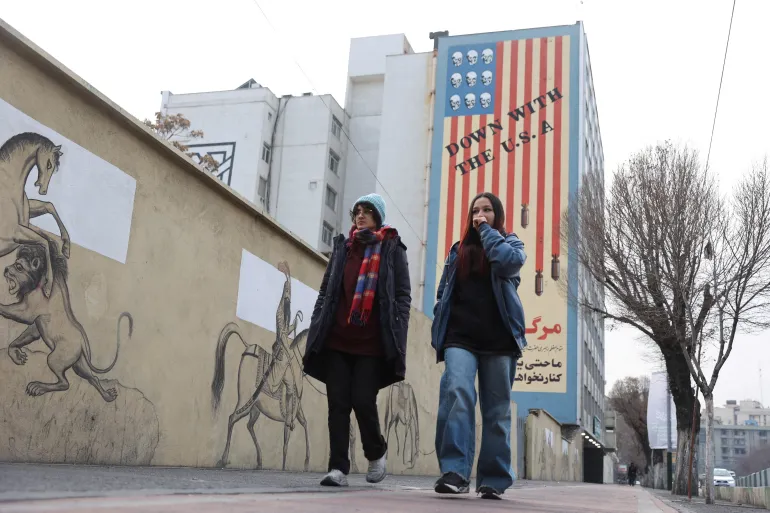
People walk next to an anti-US mural on a street as protests erupt over the collapse of the currency’s value in Tehran, Iran, January 2, 2026 [Majid Asgaripour/West Asia News Agency (WANA) via Reuters]
What is a ‘dollar shortage’?
A “dollar shortage” refers to when a country does not have enough US dollars to pay for things it needs from the rest of the world.
The US dollar is the main currency used in global trade, especially for oil, machinery and loan repayments, which means countries need a steady supply of it.
If exports fall and sanctions block access to the US financial system, dollars can become scarce. As a result, the local currency weakens, prices of imported goods rise, and inflation worsens.
In Iran, a “dollar shortage” was engineered by simultaneously blocking the two main channels of foreign exchange (FX) inflow: Oil exports and international banking access, said Mohammad Reza Farzanegan, an economist at Germany’s Marburg University. The US did this by imposing sanctions on Iranian oil, meaning anyone buying or selling it would be subject to punitive measures.
Given Iran’s dependence on oil for revenue, economic sanctions on its oil can create a severe FX constraint.
“By using secondary sanctions to threaten any global entity trading in dollars with Iran, the US traps Iran’s existing reserves abroad and prevents new dollars from entering the domestic market,” Farzanegan told Al Jazeera.
US Treasury Secretary Scott Bessent attends the 56th annual World Economic Forum (WEF) meeting in Davos, Switzerland, on January 20, 2026 [Denis Balibouse/Reuters]
What has US Treasury Secretary Scott Bessent said?
Replying to a query about dealing with Iran at a Congressional hearing last week, Treasury Secretary Bessent described the US strategy to send the Iranian currency plunging.
“What we [have done] at Treasury is created a dollar shortage in the country,” Bessent said, adding that the strategy came to a “grand culmination in December, when one of the largest banks in Iran went under … the Iranian currency went into freefall, inflation exploded, and hence, we have seen the Iranian people out on the street.
“We have seen the Iranian leadership wiring money out of the country like crazy,” Bessent added. “So the rats are leaving the ship, and that is a good sign that they know the end may be near.”
Before this, speaking with Fox News at the World Economic Forum last month in Davos, Bessent explained the role US sanctions played in driving the recent nationwide protests.
“President Trump ordered Treasury … to put maximum pressure on Iran, and it’s worked,” he said. “Because in December, their economy collapsed. They are not able to get imports, and this is why the people took to the streets.”
In both instances, Bessent referred to his earlier remarks at the Economic Club of New York, in March last year, when he outlined how the White House would leverage President Donald Trump’s “maximum pressure” campaign to collapse Iran’s economy.
In his address there, Bessent said the US “elevated a sanctions campaign against [Iran’s] export infrastructure, targeting all stages of Iran’s oil supply chain”, coupled with “vigorous government engagement and private sector outreach” to “close off Iran’s access to the international financial system”.
Iranian scholars stand in the Islamic seminary that was burned during Iran’s protests, in Tehran, Iran, January 21, 2026 [Majid Asgaripour/West Asia News Agency (WANA) via Reuters]
What effect did the dollar shortage have in Iran?
In January, the Iranian rial was trading at 1.5 million to the dollar – a sharp decline from about 700,000 a year earlier in January 2025 and about 900,000 in mid-2025. The plummeting currency triggered steep inflation, with food prices an average of 72 percent higher than last year.
In 2018, during his first presidency, Trump withdrew from the 2015 Joint Comprehensive Plan of Action, a deal between Iran and global powers limiting Tehran’s nuclear programme in return for sanctions relief.
Since re-election last January, President Trump has doubled down on his so-called “maximum pressure” to cripple Iran’s economy and corner Tehran to renegotiate its nuclear and regional policies. Last month, Trump threatened a 25 percent tariff on countries doing business with Iran.
Through the rigorous blocking of Iran from the global financial system by creating a dollar shortage, the US pushed Tehran towards a severe “import compression, [and as a result, Iran] cannot pay for the intermediate goods and machinery required for domestic production”, said Farzanegan, the economist.
The US strategy, he said, “is particularly devastating because it leverages commercial risk management against humanitarian needs”. In short, Washington’s strategy “makes the small Iranian market a commercial liability” for any company, even if they are only dealing with medicine, for instance, Farzanegan added.
A research paper published by Farzanegan and Iranian American economist Nader Habibi last year found that the size of Iran’s middle class would have expanded by an annual average of approximately 17 percentage points, between 2012 and 2019, if it were not for US action.
In 2019, the estimated size of loss in the middle-class share of the population in Iran was 28 percentage points, the research found.
“People lost their purchasing power, and savings were wiped out,” the economist told Al Jazeera. “This is a long-term destruction of the country’s human capital.”
Besides the US action is the existing vulnerability of Iran’s economic structure, with factors like long-term mismanagement, high rates of corruption and over-reliance on oil revenues making it fragile.
While the US sanctions created external shock, a lack of domestic structural reforms left the government with “no fiscal space to cushion the blow”.
What is the US’s endgame here – and will it succeed?
Bessent’s admission that Washington deliberately created a “dollar shortage” signals the US’s shift towards a total economic warfare narrative.
“This is economic statecraft; no shots fired,” Bessent said at the WEF in Davos last month.
“This admission may complicate the US’s diplomatic standing, as it confirms that the humanitarian channels for food and medicine are often rendered useless if the entire banking system is being targeted for collapse,” Farzanegan said.
Bruce Fein, a former US associate deputy attorney general who specialises in constitutional and international law, told Al Jazeera that this type of economic coercion is “as common as the sun rising in the east and setting in the west”, pointing to economic sanctions against Russia, Cuba, North Korea, China and Myanmar.
However, unlike in other cases where the US has applied economic pressure, Farzanegan said Iran’s case is “a unique experiment due to the duration and intensity of the pressure”.
Unlike Russia, which has a more diversified export base and larger reserves, Iran has been facing varied forms of sanctions for decades since the supreme leader took power in 1979.
“Iran has a sophisticated internal mechanism for sanctions circumvention that makes the ‘dollar shortage’ a game of cat-and-mouse rather than a one-time shock,” the economist said.
With a US armada currently stationed in the Arabian Sea, the US and Iran are in talks to defuse tensions. The US wants three key things from Iran: To stop enriching uranium as part of its nuclear programme, to get rid of its ballistic missiles and to stop arming non-state actors in the region.
Ultimately, observers say, the US wants regime change in Iran.
But Fein said his experience shows that economic sanctions alone “seldom, if ever, topple regimes … Regime change comes externally only with the use of military force.
“Iran’s dollar shortage will not oust the mullahs or Revolutionary Guard,” he said, referring to Iran’s current administrative structure.
The impoverishment of Iranians will diminish, Fein told Al Jazeera, “rather than promote the likelihood of a successful revolution because day-to-day survival will be the priority”.
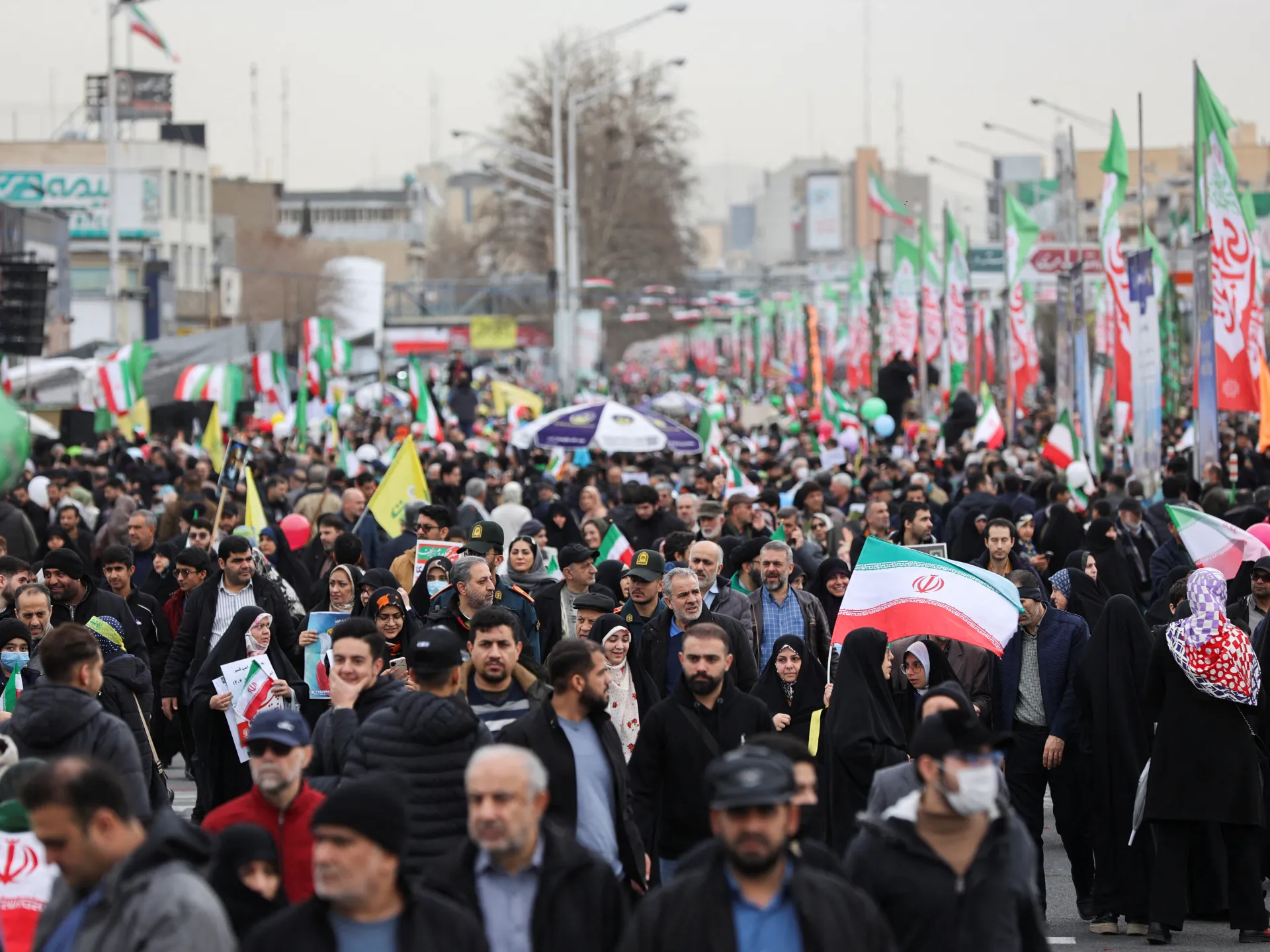
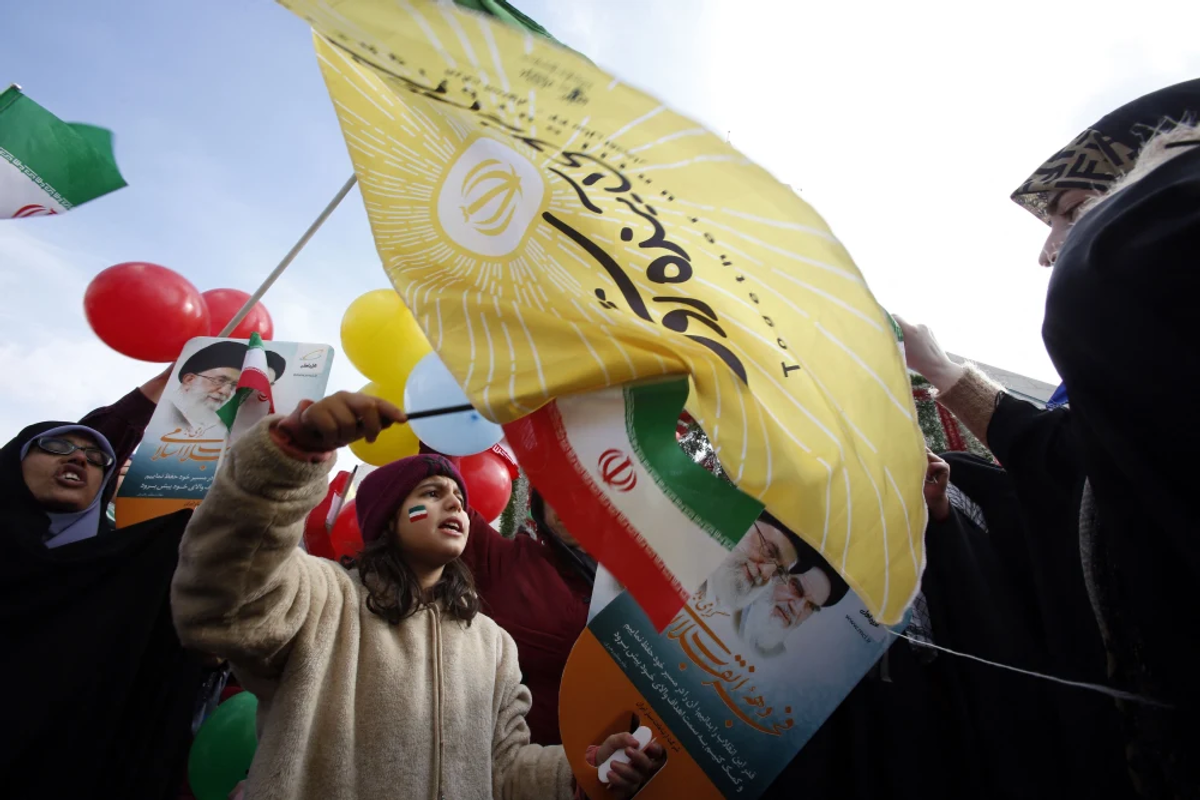
Tehran, Iran – Iran’s authorities have ratcheted up the messaging and reciprocal threats against the United States during state-organised rallies and celebrations commemorating the Islamic revolution across the country, one month after deadly nationwide protests.
Chants of “Death to America” and “Death to Israel” rang out on Wednesday in the state-run annual demonstrations, on a day of immense symbolic significance for the Islamic republic that consolidated its power during the 1979 revolution.
Recommended Stories
list of 3 itemsend of list
Near Enghelab (Islamic revolution) Square in downtown Tehran, authorities propped up five coffins for some of the top commanders in the US military.
The coffins had the US flag painted on them, and included the names and images of Central Command chief Brad Cooper, Chief of Staff Randy Alan George and others.
This year’s festivities are especially important to the theocratic establishment as they follow the 12-day war with Israel and the US in June, the nationwide protests starting in late December, and in defiance of a potentially looming war with the US.
Threatened with assassination by the US and Israel, Iran’s Supreme Leader Ayatollah Ali Khamenei did not make an appearance in the events. He also missed a highly symbolic annual meeting with army and air force commanders for the first time in his 36-year rule.
The 86-year-old supreme leader released a video message calling on Iranians to “disappoint the enemy” by participating in the revolution anniversary. All other senior political, military and judicial authorities also released similar messages urging supporters to mobilise.
An 81-year-old private businessman who was arrested and had his assets confiscated for observing a strike during the nationwide protests also wrote in a confession letter released by state media this week that he would participate in the rallies.
The Fars news agency, affiliated with the Islamic Revolutionary Guard Corps (IRGC), released a video of a “symbol of the devil” being burned during a state-organised event in the capital. The burned effigy appeared to depict a man with horns sitting on a pedestal marked with the US and Israeli flags.
People also burned and trampled on US and Israeli flags, while ballistic and cruise missiles capable of reaching Israel and the wreckage of Israeli drones shot down during last year’s war were displayed.
These are the types of missiles that Tehran has called its own red line, as Israeli Prime Minister Benjamin Netanyahu tries to corral US President Donald Trump into following the Israeli narrative that Iran’s missile programme, as well as its nuclear one, should be on the negotiating table.
State television flew helicopters over designated areas in Tehran and other cities where demonstrations were being held and described another “epic saga”, using a term favoured by Iranian authorities to talk about the annual demonstrations.
Those attending the rallies were hailed as “the dear people of Islamic Iran” who were marching to bolster the security of the country.
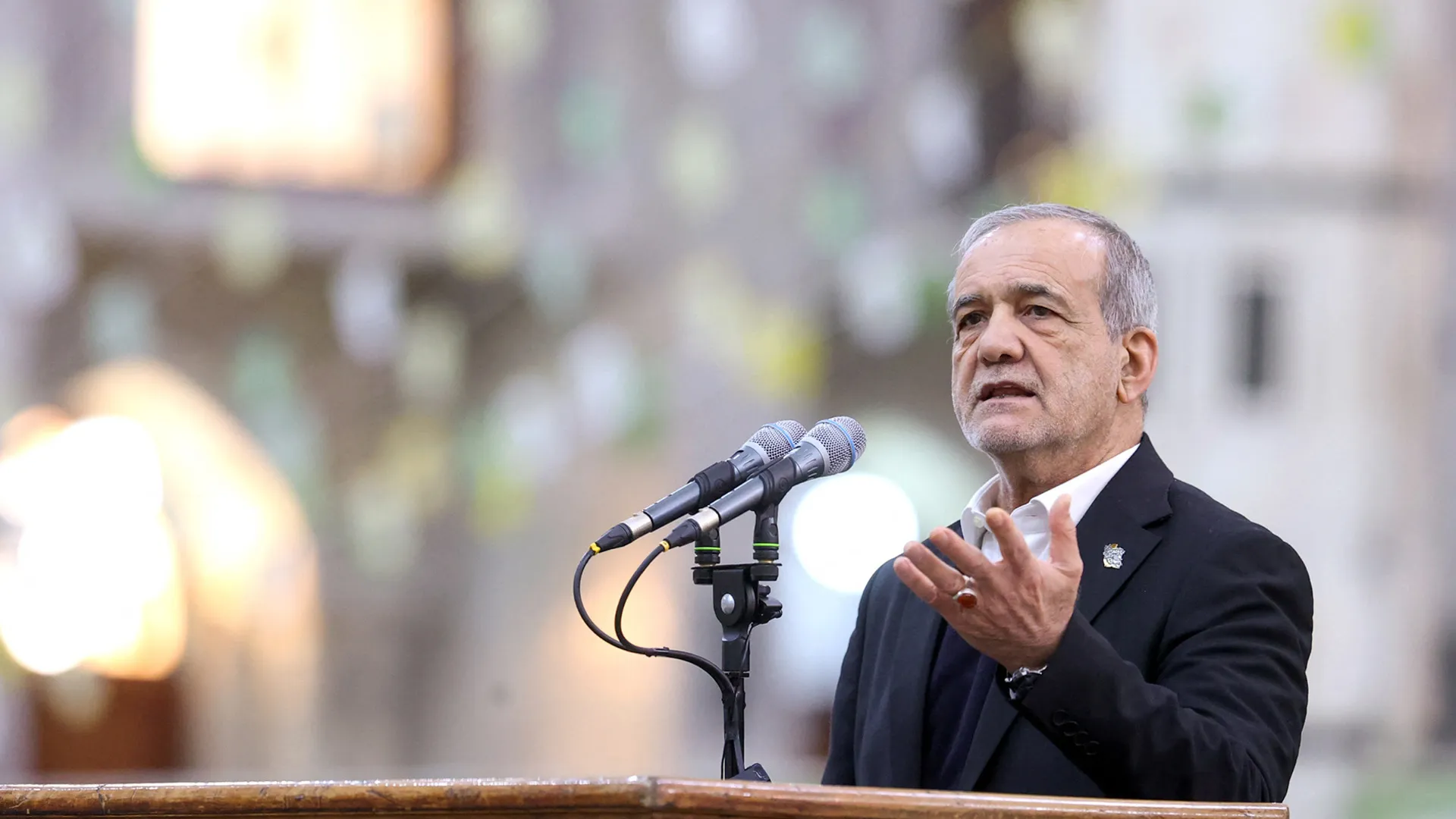
Iranian President Masoud Pezeshkian called for national unity in the face of external threats while insisting that his government is willing to negotiate over its nuclear programme.
Addressing the crowds in Tehran’s Azadi Square, Pezeshkian called for solidarity among Iranians in the face of “conspiracies from imperial powers”.
Competing chants
Huge fireworks exploding around the iconic Milad Tower on Tuesday night to celebrate the revolution anniversary were so loud that they alarmed some residents and hearkened back to the bombing runs of Israeli fighter jets during the 12-day war.
Translation: I was driving when suddenly there was the sound of an explosion and the sky lit up, I thought only that it was war and that I had to be beside my parents. I lifted my head again and saw that it was fireworks – as if they were shooting into people’s hearts to prove it wasn’t war. It was worse, because the elites were celebrating while we’re in mourning for those fallen [during the protests]. In Tehran and across the country, the authorities called on supporters of the establishment to shout “Allahu Akbar” in the streets and from their homes at 9pm local time on Tuesday night. Numerous videos circulating online show some people shouting those words, only to be met by competing shouts of “Death to the dictator” or cursing from their neighbours.
The authorities also discussed the nationwide protests during Wednesday’s events, and celebrated what they described as a triumph over “enemies”.
Ahmad Vahidi, the deputy head of the IRGC, told a state-organised event in Shiraz that Wednesday’s rallies marked a third “great defeat” for the US and Israel over recent months.
He said the 12-day war was the first one, and the second was the state-organised counterdemonstrations held on January 12, days after most of the protest killings were carried out on the nights of January 8 and 9.
Like Vahidi, police chief Ahmad-Reza Radan called the protests another “sedition” and said they were “a great project by the global arrogance” that was quashed.
The Iranian government claims that 3,117 people lost their lives during the unprecedented protest killings, all of them at the hands of “terrorists” and “rioters” armed and funded from abroad.
The US-based Human Rights Activists News Agency says it has confirmed about 7,000 deaths so far and is investigating nearly 12,000 other cases. United Nations Special Rapporteur on Iran Mai Sato said more than 20,000 civilians may have been killed but information remains limited amid heavy internet filtering by the state.
The UN and international human rights organisations have accused state security forces of being behind the killings. The UN Human Rights Council last month issued a resolution condemning the killings and calling on the Islamic republic to “prevent extrajudicial killing, other forms of arbitrary deprivation of life, enforced disappearance, sexual and gender-based violence” and other actions violating its human rights obligations.
Iran’s President Masoud Pezeshkian spoke out against intervention by ‘alien Westerners’ during a rally to mark the anniversary of the Islamic revolution. Celebrations have been taking place after weeks of US threats of military action.
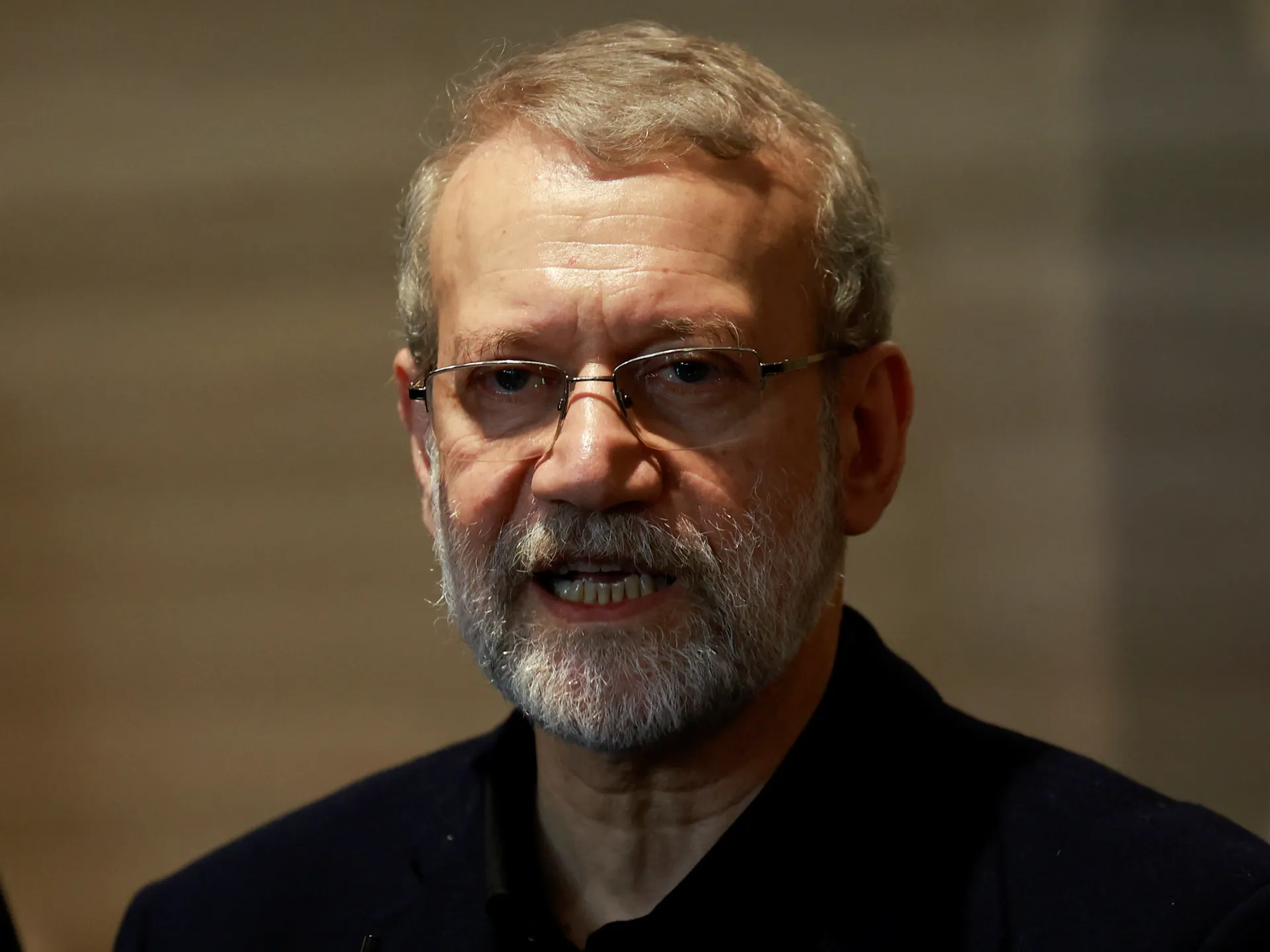
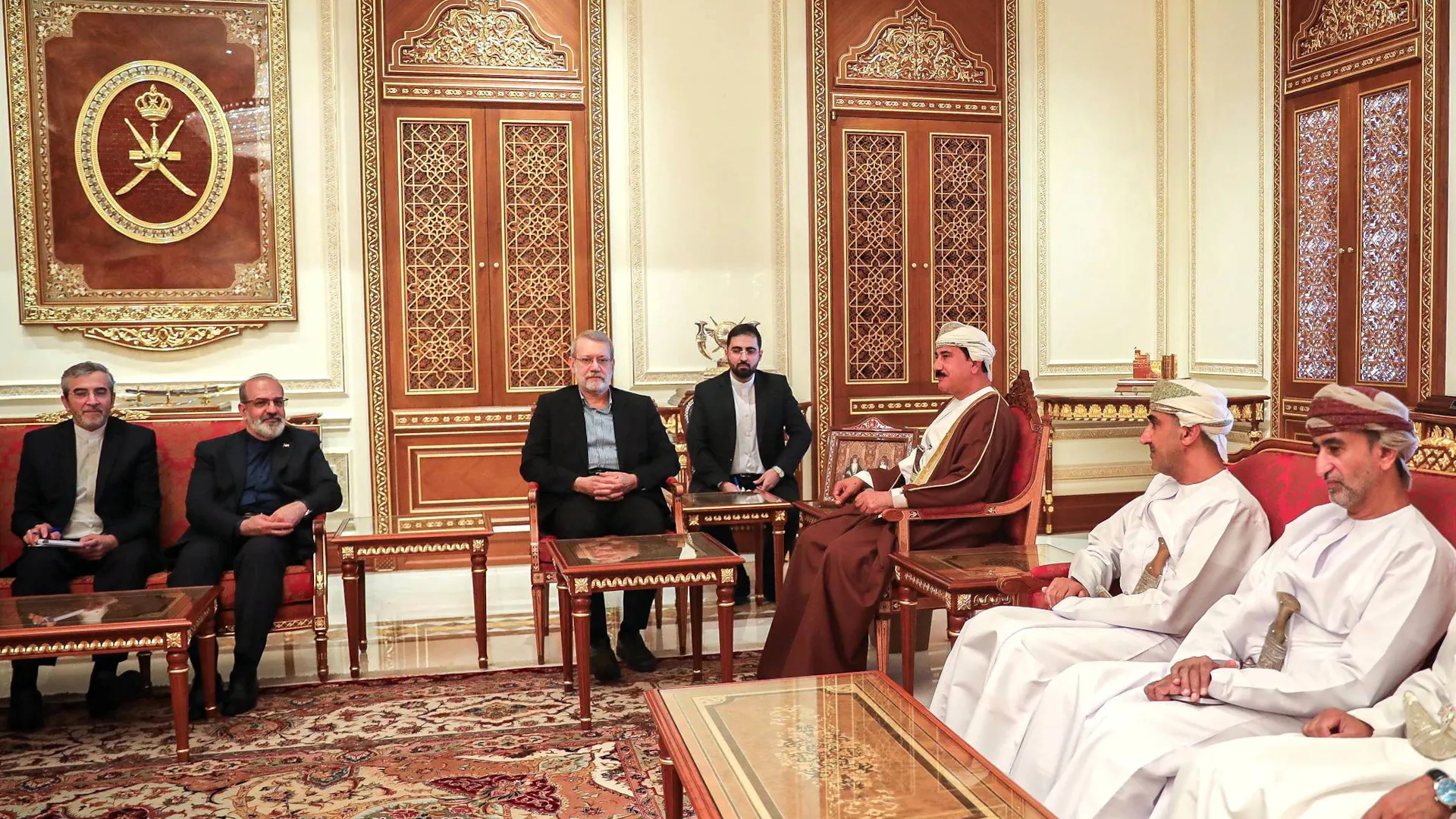
Senior Iranian official Ali Larijani has said Tehran is ready to engage in ‘realistic’ nuclear talks with the United States. Speaking in Muscat during a visit to mediator nation Oman, he said issues must be resolved through dialogue and not the ‘language of force’.
Iran had been an absolute monarchy ruled by the Pahlavi dynasty since 1925. In the 1960s, a series of reforms intended to modernise Iran had failed to improve the economic conditions. Large-scale rioting took place following the arrest of the cleric, Ayatollah Ruhollah Khomeini who had made a speech attacking the Shah. Khomeini was sent into exile in November 1964.
In 1978, resistance against the rule of the Shah intensified, with marches, demonstration, and strikes paralysing the country. Recognising that he had lost control and suffering from ill-health, the Shah left Iran on January 16th 1979.
On February 1st 1979, Khomeini made a triumphal return to Iran and led the campaign to overthrow the remnants of the Shah’s rule.
Ten days later, the Pahlavi royal regime was defeated when Iran’s military declared itself “neutral” after rebel troops overwhelmed those still loyal to the Shah.
Two months later, the new government held a referendum on establishing the Islamic Republic based on a new constitution replacing the Persian monarchy that had ruled for 2,500 years. This event is marked by another public holiday, Islamic Republic Day.
Khomeini served as Supreme Leader of Iran from 1979 to his death in June 1989.
The 10-day period from the return of Imam Khomeini until the revolution’s victory is celebrated annually in Iran and is known as the Ten-Day Fajr (Dawn).
United States President Donald Trump has continued to threaten Iran with possible military attacks if Tehran does not accede to his demands on issues ranging from nuclear enrichment to ballistic missiles.
In comments to the Israeli outlet Channel 12, published on Tuesday, Trump hinted at aggressive actions if no deal comes together with Iran.
Recommended Stories
list of 3 itemsend of list
“Either we reach a deal, or we’ll have to do something very tough,” Trump told the news outlet.
The remarks come as Iran’s security chief Ali Larijani meets with the sultan of Oman, Haitham bin Tariq Al Said, to discuss the results of talks between US and Iranian officials last week.
In recent weeks, Trump has touted an increase in US military forces in the region, having sent a “massive armada” to nearby waters. That deployment includes the USS Abraham Lincoln, an aircraft carrier.
Channel 12 and the news outlet Axios reported on Tuesday that Trump is also thinking about sending a second aircraft carrier to the Middle East.
That military build-up has spurred fears of an impending US strike against Iran. Critics fear such an attack could destabilise the region.
Already, on Monday, the US has issued guidelines to US-flagged commercial ships, warning them to stay “as far as possible” from Iranian territorial waters.
‘With speed and violence’
Since January, Trump has heightened US pressure on Iran, warning that his country’s military is “locked and loaded and ready to go”.
Trump has also compared Iran’s situation to that of Venezuela, where a US military operation on January 3 resulted in the abduction and removal of deposed President Nicolas Maduro.
“Like with Venezuela, [the US military] is ready, willing, and able to rapidly fulfill its mission, with speed and violence, if necessary. Hopefully Iran will quickly ‘Come to the Table’ and negotiate a fair and equitable deal,” Trump wrote on social media on January 28.
Late last month, his administration issued three overarching demands. They include an end to Iran’s uranium enrichment, a requirement to sever ties with regional proxies, and limits on the country’s ballistic missile stockpiles, a goal long sought by Israel.
During his first term, Trump pulled the US out of a 2015 deal that placed strict limits on Iran’s nuclear activities, in exchange for sanctions relief.
Now, Trump has resumed his “maximum pressure” campaign against Iran since taking office for a second term in January 2025.
That campaign has included severe sanctions and pressure to dismantle Iran’s nuclear programme, which Tehran insists is for civilian energy purposes only.
Already, last June, Trump authorised a military strike on three Iranian nuclear facilities, as part of a 12-day war between Iran and Israel.
Focus on anti-government protests
Trump’s renewed threats in January have coincided with a recent wave of anti-government protests in Iran.
The government in Tehran reacted to those demonstrations with a violent crackdown that reportedly killed thousands of people, drawing widespread condemnation from rights groups.
Reports have found that state security forces opened fire on crowds of protesters as the country was under an internet blackout.
On January 2 — one day before his military operation in Venezuela — Trump threatened to intervene on behalf of the protesters and “come to their rescue“, although he ultimately declined to do so.
Some analysts have pointed out that the proposed strikes on Iran would do little to aid the protesters, but would align with longstanding US and Israeli goals of reducing Iran’s military capacity.
The Iranian government has argued that the protests included the violent targeting of security forces by armed groups, resulting in the deaths of hundreds of officers. It has also accused outside powers like the US and Israel of backing the anti-government demonstrations.
Details around the protests and their crackdown remain difficult to verify, but Iranian officials have conceded that the government’s response killed thousands of people.
Departing for Washington, DC, Israeli prime minister hails his close ties to the US president amid nuclear talks with Iran.
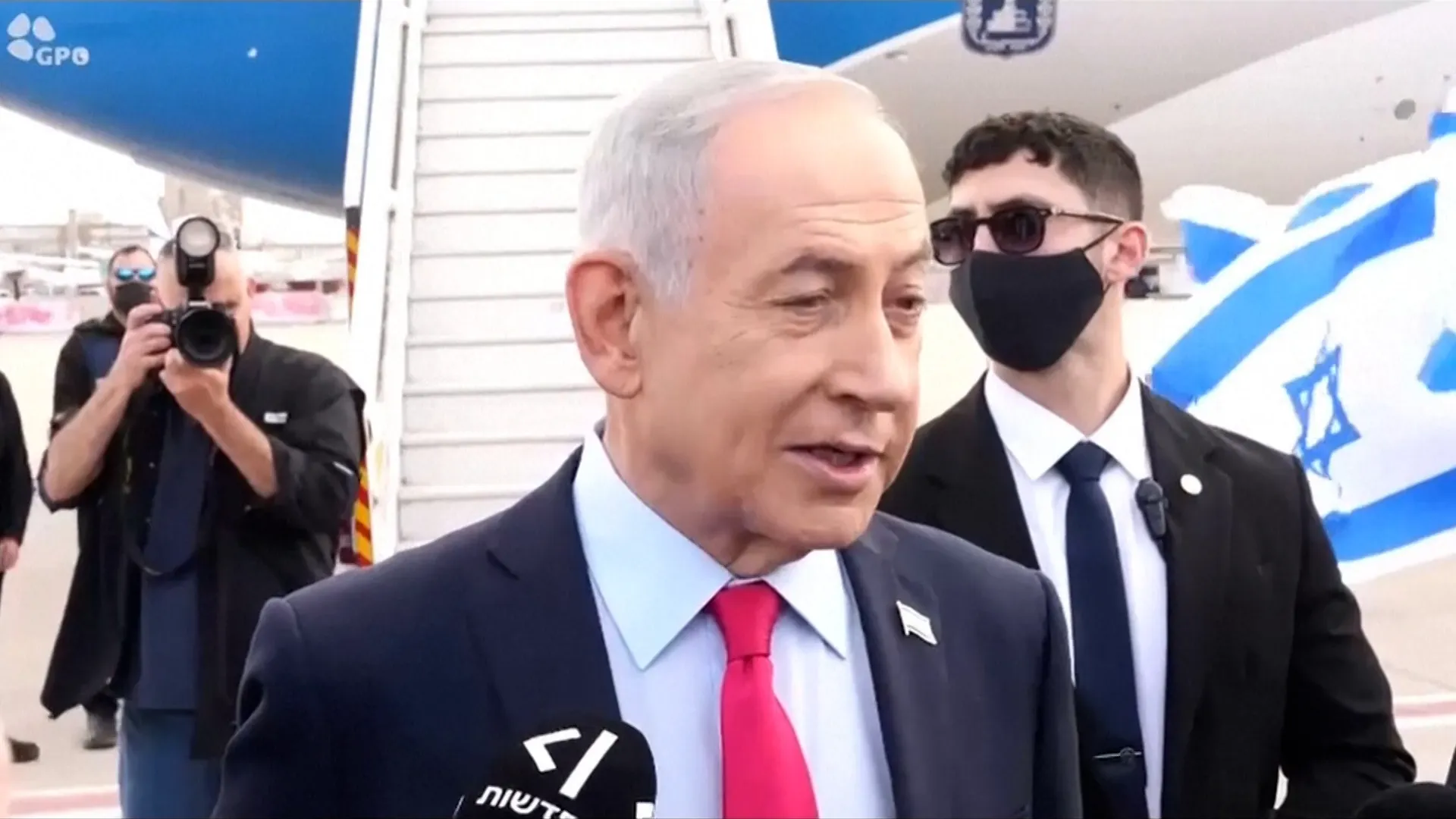
Israeli Prime Minister Benjamin Netanyahu said he will present Donald Trump with “principles” for negotiating with Iran as he heads to Washington, DC, for his sixth official visit with the US president over the past year.
Netanyahu hailed the “unique closeness” between Israel and the United States and his own warm ties to Trump before leaving Tel Aviv on Tuesday.
Recommended Stories
list of 3 itemsend of list
“I will present Trump with principles for negotiations with Iran that are important not only to Israel but to everyone who wants peace and security,” Netanyahu told reporters, according to The Jerusalem Post newspaper.
“In my opinion, these are important principles for everyone who wants peace and security in the Middle East.”
His visit comes days after Washington and Tehran concluded a round of nuclear talks in Oman – the first negotiations since the June 2025 war that saw the US bomb Iran’s main nuclear facilities after waves of Israeli attacks.
Israel is not part of those talks, but Netanyahu has long sought to exert influence over US presidents to shape Washington’s policies in the region.
Netanyahu did not provide details about his “principles” for a potential Iran deal, but he has previously said Tehran should agree to full disarmament of heavy weapons, akin to Libya’s 2003 deal with the West.
Iran has ruled out negotiations over its missile programme, which it views as one of its most important deterrents against Israeli attacks.
When Israel launched its surprise assault against Iran in June of last year – killing several of the country’s top generals and nuclear scientists as well as hundreds of civilians – Tehran relied primarily on its missiles to respond after air defences were taken out.
Iran fired hundreds of missiles at Israel, dozens of which penetrated the country’s multilayered air defences, killing 28 people and causing significant damage.
Iran’s Foreign Minister Abbas Araghchi told Al Jazeera on Saturday that Iran’s missile programme is a defence issue that is “never negotiable”.
Israel and the US may also push Iran to end support to its network of allied non-state actors in the region – including the Houthis in Yemen, Hezbollah in Lebanon, Hamas in Palestine, and armed groups in Iraq.
But that alliance, known as the Axis of Resistance, has already been weakened by Israeli assaults over the past two years.
Another sticking issue in the talks is whether Iran would be allowed to enrich uranium domestically.
While Tehran has said it would agree to strict limits and monitoring of its nuclear activities, it has maintained that domestic enrichment is a sovereign national right.
Despite Washington’s talks with Tehran, US Ambassador Mike Huckabee – who is joining Netanyahu on his trip – has stressed Israel and the United States have the same red lines when it comes to Iran.
“I think there’s an extraordinary alignment between Israel and the United States. Everyone would love to see something that would resolve without a war, but it will be up to Iran,” he told reporters.
“If they insist on holding nuclear weaponry and enriched uranium, then I think the president made very clear that this is not acceptable.”
The United States has moved the USS Abraham Lincoln aircraft carrier, destroyers, and fighter jets to the Middle East to pressure Iran into an agreement. Tehran says it won’t be swayed by threats of war.
Israeli Prime Minister Benjamin Netanyahu is heading to Washington to meet US President Donald Trump, saying Iran negotiations will be the “first and foremost” topic of discussion.