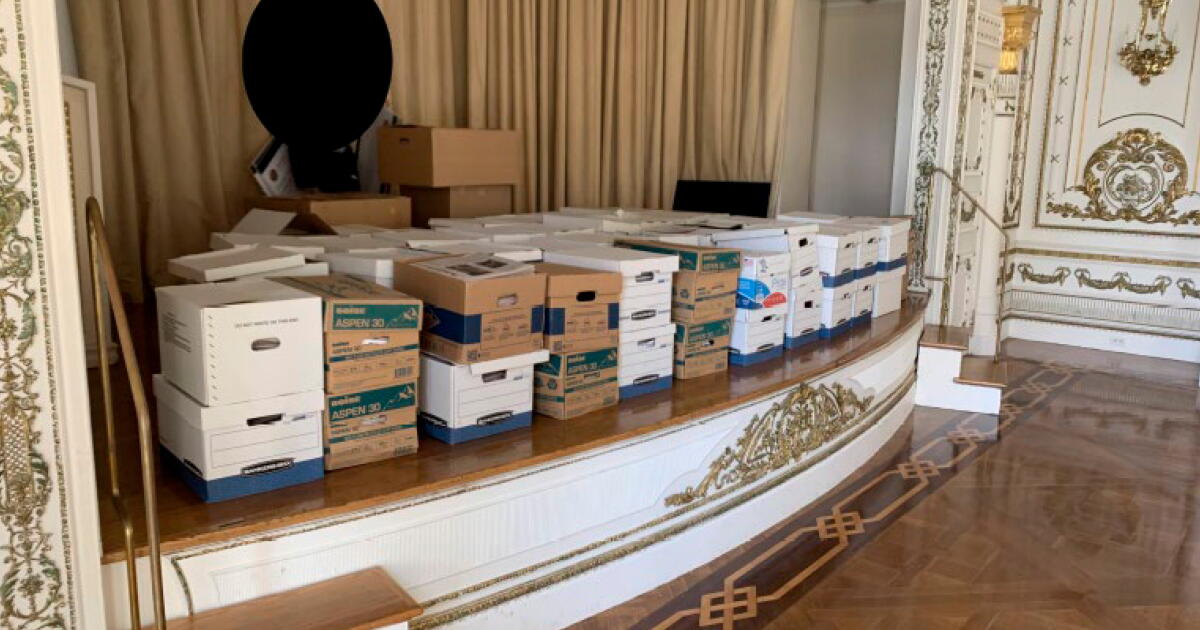
investigator

Minnesota authorities arrest ICE officer charged with shooting man

Tim Sullivan and Russ Bynum

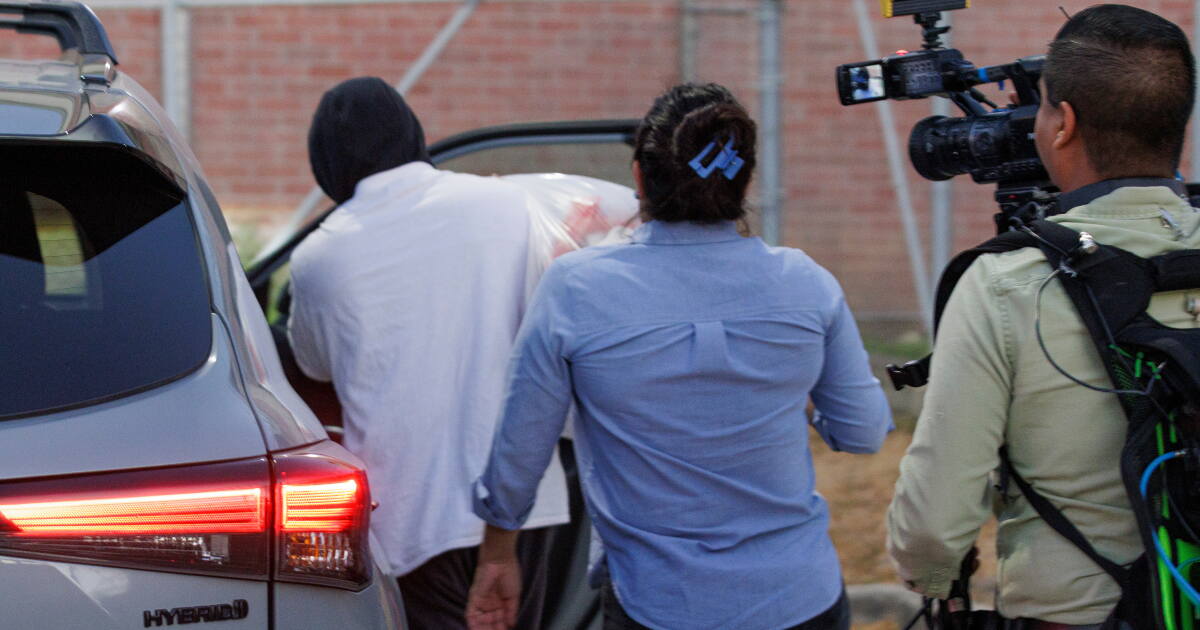
A federal immigration officer charged with shooting and wounding a Venezuelan man in January and lying about the circumstances to investigators made a brief initial appearance Thursday before a Minnesota judge after state authorities arrested him ahead of a separate hearing in federal court.

During Thursday’s hearing, Judge Paul Scoggin granted Immigration and Customs Enforcement officer Christian Castro bond. Castro wore an orange jumpsuit and appeared behind a glass enclosure.

His attorney, Daniel Gerdts, declined to comment.

Castro was being held without bond after the Minnesota Bureau of Criminal Apprehension arrested him Wednesday in downtown Minneapolis on state charges of assault and false reporting of a crime stemming from the shooting of Julio Cesar Sosa-Celis. Scoggin set bail at $400,000 with no conditions and $200,000 with conditions.

Castro also faces federal charges stemming from the shooting, which occurred during a federal immigration crackdown in the Minneapolis area. Prosecutors say Castro falsely told investigators he had been attacked with a broom and a shovel.

Arrest months after Minnesota charged him

Castro’s arrest by Minnesota authorities and appearance in state court followed a dispute between Minnesota prosecutors and Texas’ governor over Minnesota’s attempts to extradite Castro from his home state to face the state charges. One of the conditions Scoggin set for the lower bail amount for Castro was that he not fight extradition should he be released.

The lead prosecutor for the county handling the state case told reporters after the hearing that “Castro invented a story to justify shooting through a front door into a house with multiple people in it.”

“His appearance in a Hennepin County courtroom today is a critical step in our efforts to hold him accountable for that shooting,” Hennepin County Attorney Mary Moriarty said during a news conference.

Federal case also accuses Castro of lying

The next court hearing for Castro is scheduled for Friday. That hearing will be in federal court in St. Paul and involves the federal case in which he is charged with making false statements to investigators regarding the shooting. Castro’s defense attorneys in the federal case have said he plans to plead not guilty.

It’s the first Justice Department prosecution of a federal officer for actions taken during this year’s massive Operation Metro Surge, which brought thousands of agents to the Twin Cities and led to sweeping protests, arrests and the fatal shootings of two U.S. citizens by federal officers.

In both the federal and state cases against Castro, prosecutors say he shot Sosa-Celis in the leg while firing through the front door of a Minneapolis home. They say Castro later falsely reported he had been attacked with a broom handle and a snow shovel.

Trump administration says only federal authorities have jurisdiction

Minnesota authorities have battled with President Trump’s administration over who should handle any charges against Castro. The Department of Homeland Security has called Minnesota’s prosecution of Castro “unlawful and nothing more than a political stunt,” saying only federal authorities have jurisdiction.

Minnesota charged Castro months before his federal indictment. He was arrested in Texas in May on the Minnesota charges. But Texas Gov. Greg Abbott last month refused to sign an extradition warrant to hand him over to Minnesota authorities. He was released in Texas and soon after was indicted on the federal charges. He then turned himself in to federal authorities and returned to Minnesota on his own.

Sullivan and Bynum write for the Associated Press. Bynum reported from Savannah, Ga.

Source link

Hiltzik: Inside the NBA’s nuclear bomb on the Clippers

Question about the Clippers’ attempt to evade the NBA salary cap: Did they really think they could get away with it?

One rule I’ve developed in years of writing about financial scandals is that, as bad as a scheme appears at first, it’s more likely than not that the facts will turn out to be nastier than they appeared at first.

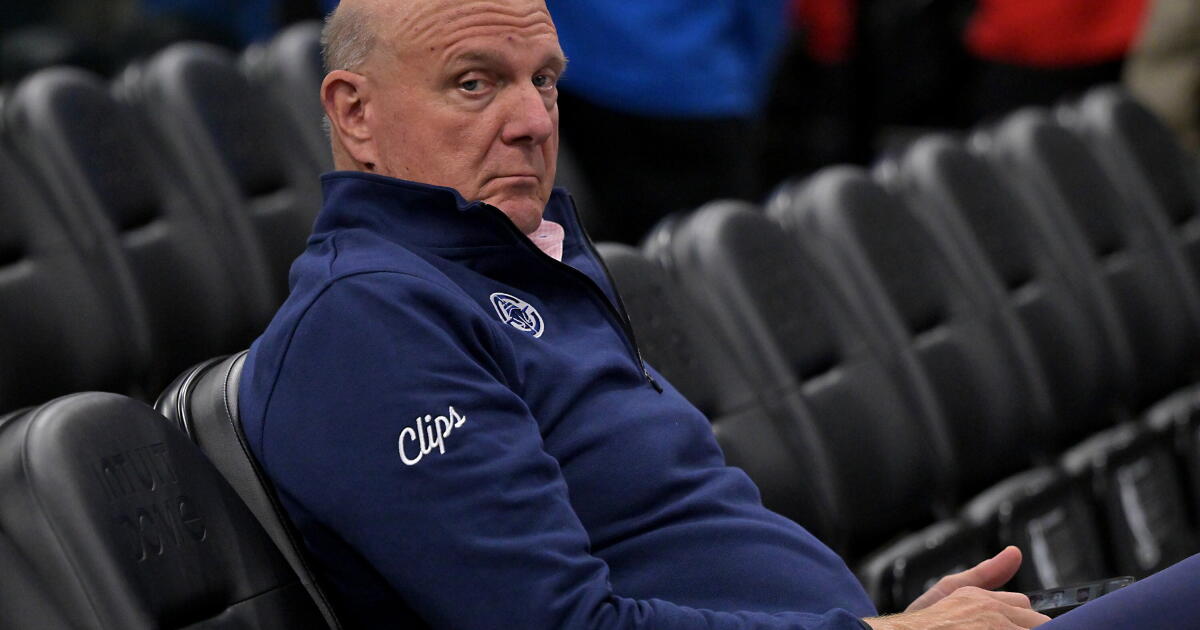
Case in point: The scandal swirling around the Los Angeles Clippers of the National Basketball Assn. and their billionaire owner, former Microsoft Chief Executive Steve Ballmer.

The story was initially broken one year ago by sports podcaster Pablo Torre, who reported on a suspect endorsement deal between a sustainability company named Aspiration and All-Star forward Kawhi Leonard that smelled like an attempt to circumvent the NBA’s strict salary cap. (Torre won a Pulitzer Prize for his reporting.)

I have no idea why we’d do this.

— Aspiration executive questioning its “endorsement” deal with Kawhi Leonard

By Sept. 2, when the NBA issued a series of nuclear sanctions against the team and Ballmer, it had become much bigger. The team, according to an investigative report the league released, actually orchestrated endorsement deals for Leonard with four companies that had been angling for business arrangements with the team, not just one, and took steps to hide the deals from public view.

Because of the extent to which these deals violated league rules and perhaps because the Clippers are repeat offenders (they were fined $250,000 in 2015 for a similar endorsement scheme involving then-free agent DeAndre Jordan), the league hit the team with its maximum penalties.

Get the latest from Michael Hiltzik

Commentary on economics and more from a Pulitzer Prize winner.

It fined the team $30 million and took away its first-round draft picks for five years, 2029-2033 (the team already had ceded its first-round picks for the next two years in trade deals). It suspended Ballmer from any league or team activities for one year and imposed a one-year suspension on Gillian Zucker, the team’s president of business operations, and a six-month ban on Lawrence Frank, its president of basketball operations.

The Clippers said they “vehemently reject” the accusations and called them the product of a “heavily biased investigation.” They said they would appeal the sanctions, though it’s unclear how they could do that.

Leonard, who appears to be on his way back to the Toronto Raptors, from whence he came to the Clippers in 2019, issued a statement accepting “full responsibility for lapses in judgment by people within my inner circle.” That’s an apparent reference to Dennis Robertson, his business manager and uncle, who the investigators said was a key figure pushing the Clippers to find “off-court income” for Leonard.

The report released by the NBA’s investigators at the law firm of Wachtell, Lipton, Rosen & Katz portrays Ballmer and the team as treating the league’s salary cap rules not as strict mandates, but as obstacles to be evaded, like traffic cones. And it describes efforts at subterfuge that seemed to reach a Gilbert & Sullivan-esque level of absurdity.

Ballmer is called out to an extent that one almost never sees when applied to the millionaires and billionaires who own most professional sports teams. That’s even more remarkable given his status in the NBA: With a reported net worth of more than $150 billion, he is the richest team owner by an enormous margin, outranking the next-place owners, the Adelson family, owners of the Dallas Mavericks, by about $115 billion.

The other NBA owners were reportedly stunned by the sheer arrogance of the Clippers’ behavior. That’s saying something, since one would expect that those in the billionaire class have had plenty of rannygazoo paraded past their eyes in the course of their business careers. Ballmer, who can often be seen bouncing around like a hyper-caffeinated party animal in the Clippers’ home arena, Intuit Dome, is no shrinking violet — he was known as a ferociously hard-charging, hands-on leader at Microsoft. The NBA faults him for being “knowingly” engaged in the team’s dealings with Leonard and creating its anything-goes culture.

The NBA values its salary cap as a key to a competitive balance, enabling even mid-market teams to reach the Finals — over the last 10 seasons, eight teams have reigned as champs. Its rules bar teams from initiating endorsement deals or other such arrangements for players by interpreting them as an underhanded breach of the cap; if teams are approached by a potential endorsement partner for a player, they can refer the partner to a player’s representatives but can’t participate in the dealmaking. They’re also required to report any such overtures to the league. The Clippers violated those rules, the investigators say.

The investigators say the team tried to circumvent the initiation clause via emails Zucker sent to three companies in 2020, implying that she was responding to their requests for introductions to Leonard.

The investigators found “no documentary evidence” that the companies genuinely initiated the requests. They viewed the emails merely as efforts to “create the appearance” that the Clippers were complying with the rules. The companies were Boingo, a wi-fi company at which Zucker’s husband was then chairman; Daktronics, a maker of scoreboards and video displays; and Lockton, an insurance brokerage.

All three were seeking to launch business relationships with the Clippers. The investigators asserted that the team implied to them that participating in its scheme to make illicit payments to Leonard by signing him to endorsement deals would help them win the contracts. They also found that the Clippers essentially assured the companies that it would cover their payments for the endorsement deals via their other contracts.

The investigators called these multi-year, multimillion-dollar endorsement deals, totaling $18 million, “peculiar.” None of the companies had ever signed an endorsement deal “of remotely the same financial magnitude” as these, nor have they done so since.

None of the deals was publicly announced, even though the whole point of signing a pro player to represent your company is to shout it from the rooftops. In any case, Leonard was nothing like a big, popular star—the investigators charitably referred to his “relatively insubstantial endorsement profile.” That hardly mattered, since the deals didn’t require Leonard to actually do anything for the money.

The key deal was with Aspiration, which was guided by the Clippers into paying Leonard $48 million over four years. When Joseph Sanberg, Aspiration’s co-founder and a board member, presented the deal to top executives, they were dumbfounded. “I have no idea why we’d do this,” one wrote in an email, according to the investigators.

But Sanberg assured them that the Clippers would adjust their contract with Aspire to cover the expense. Seeing that the deal was “cashflow neutral,” as an executive observed, they agreed.

Inside the Clippers’ front office, the contract for Aspiration to provide environmental services was seen as “super shady,” according to a text from one executive to another cited in the report.

Ballmer maintained in at least one interview that the endorsement deal was initiated by Aspiration: “They were off to the races on their own,” he told a television interviewer. “We weren’t involved.”

In fact, the investigators say, the Clippers initiated the contact with Aspiration, put the firm in touch with a business agent who was already a team contractor, and provided the agent with proposed deal terms. The investigators found that the endorsement deal was such a departure for Aspiration that Sanberg needed to be educated about what it should require from Leonard in return for his fees. Sanberg “doesn’t really know what to ask for,” the agent told his associates.

Ballmer maintains that he was the victim in this arrangement. He points the finger at Sanberg, who he says enticed him into investing $60 million in his failing firm, thereby causing him “reputational harm.” But Sanberg might be viewed as a target of convenience, given that he pleaded guilty last year to federal fraud charges associated with the collapse of Aspiration and has been sentenced to 14 years in prison. (The NBA investigators told the court in a pre-sentence letter that Sanberg “substantially assisted our investigation”—though in the investigative report they said they “remained cautious in relying on Mr. Sanberg’s information” unless it was “corroborated by other evidence.”)

Where does this leave the Clippers? Nowhere good. Ballmer’s acquisition of the team in 2014 was seen as a major step toward ending its years-long record of futility, dating to its origin as the Buffalo Braves in 1970. The team still has never played in the NBA Finals. Leonard hasn’t lived up to expectations — injuries have kept him off the court for nearly half of his games as a Clipper, as my colleague Mirjam Swanson notes.

Basketball mavens see the NBA sanctions as condemning the Clippers to as long as 10 more years in John Bunyan’s Slough of Despond. For a brief moment, Ballmer got Southern California fans excited about the team. Ten years from now, will anyone even remember they exist?
Source link

New grand jury subpoenas aimed at Trump-Russia probe, sources say

The Justice Department is demanding testimony before a Florida grand jury in an investigation aiming to establish an intelligence community conspiracy against President Trump, according to multiple people familiar with the matter.

New subpoenas being issued to former government officials represent an escalation in the yearlong investigation as the Justice Department pursues a loosely defined theory that members of the intelligence community who scrutinized Trump over the last decade, including over Russian interference in the 2016 election, conspired against him and violated his rights.

Investigators in recent days contacted some defense lawyers for witnesses advising them of forthcoming grand jury subpoenas. It was not clear how many, as of Tuesday, had received a subpoena or were still waiting to receive one, and the identities of the witnesses receiving subpoenas were also not immediately clear. The people who confirmed the subpoenas spoke on condition of anonymity to discuss a secretive grand jury investigation.

The investigation has focused in large part on the Trump-Russia probe

The contours of the conspiracy investigation aren’t fully known, but agents and prosecutors over the last several months have focused intensely on one of Trump’s chief grievances: the U.S. government response to Russian interference in 2016 and an intelligence community assessment that Moscow meddled on Trump’s behalf at the direction of Russian President Vladimir Putin.

Trump, who spent much of his first term shadowed by an investigation into whether his campaign colluded with Russia to sway the outcome of the election, has for years lashed out at the intelligence community finding and cast it as a “deep state” conspiracy to undermine the legitimacy of his win.

Investigators searching for potential crimes in connection with the intelligence community response have conducted numerous voluntary interviews, but the subpoenas prepared for witnesses in recent days represent an apparent effort to lock down sworn testimony before a grand jury.

It remains unclear whether anyone will be charged or for what offense, though lawyers for former CIA Director John Brennan have said they have been informed that he is a target as investigators examine whether he falsely testified to Congress — something he has repeatedly denied. The Justice Department last spring subpoenaed witnesses before a Washington grand jury as part of an investigation into Brennan but swiftly withdrew the subpoenas in favor of voluntary interviews.

The investigation is being run out of Florida, with the Justice Department in April bringing back into government service a top prosecutor from the Reagan administration, Joe diGenova, to serve as a counselor to the attorney general and help lead a team of agents and prosecutors.

DiGenova, who had previously asked then-Atty. Gen. Pam Bondi to appoint him to the job and has openly and repeatedly claimed Trump was the victim of an intelligence community conspiracy, declined to comment Wednesday when reached by the Associated Press.

In an indication of the wide-ranging nature of the investigation, the AP reported last month that DiGenova’s team has sought interviews with law enforcement officials involved in the 2022 FBI search of Trump’s Mar-a-Lago property in Palm Beach, Fla., which recovered a trove of classified documents.

Concerns from defense lawyers about a ‘favored’ judge

Investigators have set up shop in Fort Pierce, Fla., the home court of U.S. District Judge Aileen Cannon, the Trump-appointed jurist who repeatedly appeared skeptical of the classified documents case against him and ultimately dismissed it after concluding that the prosecutor who filed the charges was illegally appointed.

Lawyers for Brennan last year asked the chief judge of the federal court in Florida to prevent the investigation from being steered to Cannon, whom they described as a “favored” Trump judge. They have since sued the Trump administration, demanding a court order requiring prosecutors to preserve records from the investigation so that Brennan could challenge any potential prosecution of him as vindictive.

Trump came to office in 2017 under scrutiny from the intelligence and law enforcement community about whether his successful campaign had colluded with Russia, which stole politically damaging Democratic emails and orchestrated their release through WikiLeaks as part of a wide-ranging interference scheme.

The FBI and Justice Department investigated but found insufficient evidence to prove a criminal conspiracy between Russia and the Trump campaign, though investigators did find the campaign eagerly hoped to benefit from Moscow’s help.

Subsequent investigations by an inspector general and Justice Department prosecutors identified errors by agents who conducted the Russia probe but found no evidence of criminal wrongdoing by senior law enforcement officials or an anti-Trump conspiracy like what prosecutors are now hoping to prove.

Deeply frustrated by those outcomes, Trump has amplified his demands for retribution, which the Justice Department heeded last year by directing that prosecutors utilize a grand jury. Last year, Bondi directed prosecutors to put evidence before a grand jury after the release of documents aimed at calling into question the legitimacy of the Trump-Russia inquiry.

Tucker writes for the Associated Press.

Source link

LAPD internal affairs file spills details on racist recordings scandal

After LAPD recruitment officers were accused of making racist, sexist and homophobic comments — some of which were caught on tape — department leaders promised to look into whether they improperly disqualified any police applicants.

More than a year and a half later, the city is still waiting on the report.

But the contents of a separate LAPD internal affairs file reviewed by The Times has shed new light on the unit at the center of the scandal and how its officers responded to investigators who were looking into the matter.

No clear explanation has been given for the delay in publicly addressing the scandal’s effect on recruitment efforts.

In response to a records request from The Times, the city’s personnel department, which is conducting the inquiry, said it had not yet finished its review and had no timeline for doing so.

Last month, Los Angeles County Dist. Atty. Nathan Hochman charged Daniel Flores, the LAPD whistleblower who secretly recorded his colleagues, with 16 felonies, alleging he violated a state eavesdropping law. But, after criticism from Mayor Karen Bass and others, the district attorney downgraded the counts to misdemeanors with a diversion agreement that will probably allow Flores to avoid any time behind bars.

Flores’ recordings captured Los Angeles Police Department recruitment officers referring to Black people as “monkeys,” describing a female job applicant as “rapeable,” and saying “F—ing deport them, call ICE” during a conversation about Latinos, among a long list of other offensive remarks.

Asked about the pending LAPD report into the fallout from the tapes, Bass said in a statement that the review “has gone on too long.” The mayor said she had directed the personnel department to “complete the report and release it without further delay.”

Flores alleged in a complaint he filed with the LAPD in January 2025 that some recruits had been improperly rejected, adding to ongoing concerns about the department’s struggle to replenish its ranks.

As of last week, the LAPD had 8,507 sworn personnel — its lowest total since October 1995.

Even after efforts under Bass to streamline hiring and boost recruitment, Chief Jim McDonnell has warned that the department may not be adequately staffed in time for the 2028 Olympics.

McDonnell said after Flores’ allegations were made public in early 2025 that the personnel department would conduct a “biopsy” to examine “any adverse impacts” of the scandal on recruitment.

In a brief statement, the department said that it wouldn’t comment on what discipline, if any, had been meted out to the officers involved, citing state privacy law.

“The Department takes allegations of discriminatory or biased conduct seriously,” the statement read. “We are committed to ensuring the workplace is professional, respectful and free from misconduct.”

The Police Commission said in a statement that it is still waiting on the report, adding that “fair and equitable hiring of sworn and civilian employees remains a priority.”

The LAPD internal affairs investigative file reviewed by The Times described a frat-like office atmosphere in the Hiring and Evaluation Section in which Flores worked.

According to the internal affairs report, Flores claimed that at least one colleague, Shirley Burgos, had inappropriately disqualified candidates based on their appearance.

The report said that Burgos was captured in several recordings making fun of overweight candidates who were “ugly, creepy” people.

Another officer, Ayron McKay, told internal affairs investigators about an instance in which the unit’s officers were discussing a candidate who they believed was overweight.

Burgos then looked up the woman’s driver’s license picture on the DMV database, which several officers told internal affairs probably violated department policy, according to the report.

Burgos and McKay did not respond to inquiries to their work email accounts.

The internal affairs file said Flores recorded another officer saying he wanted to go to Big Bear, a popular winter sports destination in the San Bernardino National Forest, and roll the candidate down the ski slope. Meanwhile, according to the report, McKay asked the others how much they would pay to sleep with the woman, and referred to her as “Jabba the Hut.”

When asked about the conversation by internal affairs, the report said, McKay told investigators that the conversation started with Burgos venting about an applicant, but acknowledged that it should not have been allowed to continue.

In one recording made on Nov. 13, 2024, the report said, Burgos told her colleagues that she had released information about disqualified candidates to a friend of hers at the Los Angeles Sheriff’s Department, which is against LAPD policy.

The officers were all required to sign a confidentiality agreement that barred them from discussing candidates’ personal information with anyone outside the office.

During her internal affairs interviews, Burgos denied providing information to other agencies, saying it was clear from her laughter on the recording that she was joking.

Burgos told investigators that the only time she’d ever discussed a candidate with someone outside the department was during a conversation with an unnamed background investigator with the Sheriff’s Department or Santa Monica police — and said that was only to confirm that the candidate had in fact applied to the LAPD, according to the report.

The LAPD investigation noted that she and the other involved officers all denied that their office conversations had ever caused them to inappropriately disqualify a candidate.

The internal affairs report quoted the unit’s supervisor, Sgt. Denny Jong, a 20-year-department veteran, as describing his relationship with the officers under his command as friendly and professional; none of them had ever expressed discomfort about their work environment, he reportedly said.

Jong did not respond to emailed questions from The Times.

Several officers told investigators that they used gallows humor as a way to deal with the stress of working long hours in a small, windowless basement office.

According to the report, some officers, including Jong and McKay, acknowledged that the office banter sometimes crossed the line, but they denied that there was anything malicious about their comments. They also contended that the unit had little authority about which applicants advanced in the recruitment process — decisions, they said, that had to go through several layers of review.

During his internal affairs interviews, Jong often told investigators that he didn’t recall making certain inappropriate comments. The report said he also denied ever making any of the inappropriate comments that were contained in Flores’ complaint.

When he was confronted with audio of comments in which he referred to a candidate of Chinese descent as a terrorist, Jong said he was joking.

“He explained that this was based on current news stories at the time, which involved concerns over Chinese nationals attempting to infiltrate the country,” the internal affairs report said. “Jong was not serious and did not believe the candidate was a terrorist, but admitted the remark was an off-color joke and inappropriate for the workplace.”

Source link

AP Source: ICE officer charged with lying to investigators in the shooting of Venezuelan man

Federal prosecutors have charged a U.S. Immigration and Customs Enforcement officer with lying to investigators about the events leading up to the shooting of a Venezuelan man during the Minneapolis immigration crackdown earlier this year, a person familiar with the matter told the Associated Press.

The person was not authorized to publicly discuss the investigation and spoke on condition of anonymity. The person said Christian Castro, the officer who authorities say shot Julio Cesar Sosa-Celis in the leg in January, has been charged with making false statements to federal investigators.

The federal charges, which remain under seal, follow Castro’s release from jail last week after Texas’ governor refused to immediately sign an extradition warrant to hand him over to Minnesota authorities, who have charged him separately with assault and false reporting of a crime related to the same shooting.

Federal authorities had initially accused Sosa-Celis and another man of beating an officer with a broom handle and a snow shovel during the confrontation. But federal prosecutors dropped charges against the men after video evidence showed the officers may have lied about the encounter, and officials opened an investigation.

Earlier this week, a federal prosecutor working on the case told lawyers for Sosa-Celis and other victims that Justice Department officials blocked the prosecutor’s push to bring a more serious civil rights charge against the officer for the shooting, ProPublica reported.

But the person familiar with the investigation disputed the prosecutor’s characterization, saying the civil rights probe is continuing and there has been no final decision on whether to bring additional charges. The prosecutor, Matthew Evans, was fired on Thursday and is now under investigation for alleged obstruction of a grand jury probe, the person said.

An automatic email response from Evans’ Justice Department account said he was on leave. Other attempts to reach him were not immediately successful.

Castro was initially arrested in May in the Minnesota case, and he was held in custody in Brownsville, Texas, a city bordering Mexico, while Minnesota officials sought his extradition. But Texas Gov. Greg Abbott refused to immediately sign off, citing continuing investigations of fraud in government social service programs in Minnesota, which Trump used to justify his immigration crackdown there.

Minnesota officials had sought to stop the sheriff in Cameron County, Texas, from releasing Castro, out of fear that he would flee to Mexico. According to a lawsuit filed by Minnesota, Castro had a conversation with a woman, while he was incarcerated, where he spoke about marrying her and buying a house in Mexico after his release.

But Castro was released a week ago after a federal judge refused to order Texas to extradite him.

The Department of Homeland Security previously called Minnesota’s prosecution of Castro “unlawful and nothing more than a political stunt,” saying only federal authorities have jurisdiction in the case.

Castro was suspended from ICE without pay in February while federal authorities conducted the investigation.

“The men and women of ICE are entrusted with upholding the rule of law and are held to the highest standards of professionalism, integrity, and ethical conduct,” ICE’s acting director at the time, Todd Lyons, said then. “Violations of this sacred sworn oath will not be tolerated. ICE remains fully committed to transparency, accountability, and the fair enforcement of our nation’s immigration laws.”

Minnesota officials alleged that Castro, 52, fired through the front door of a home and shot Sosa-Celis in the thigh.

Castro and another officer had chased a different man, Alfredo Alejandro Aljorna, to the Minneapolis apartment duplex where he and Sosa-Celis lived. Minnesota prosecutors said the officer then falsely accused Sosa-Celis and another man of attacking an ICE officer with a broom handle and a snow shovel.

Attorneys for Sosa-Celis and Aljorna, who Minnesota officials have said were legally in the U.S., didn’t immediately respond to emails Thursday from the Associated Press.

Richer writes for the Associated Press.

Source link

Key takeaways from investigation into Edison’s role in Eaton fire

Recently revealed evidence from government investigators and court filings renewed questions about Southern California Edison’s claim that it operated its electrical grid safely before last year’s deadly Eaton fire.

Most records surrounding the fire’s cause have been sealed at the request of Edison and plaintiff attorneys. Yet new details revealed in court show that critical fire prevention equipment needed repair before the blaze and that vegetation under the tower where it ignited hadn’t been trimmed for years.

Los Angeles County and state fire investigators cited eight violations, including three of California’s criminal code, in their report released on Aug. 4. The details were blacked out as the district attorney continues an investigation into the devastating fire.

“We don’t believe there is a basis for criminal liability and we will cooperate with any review,” said Kathleen Dunleavy, an Edison spokeswoman.

The investigators said in the report that the Jan. 7, 2025 inferno, which killed 19 people and destroyed more than 9,000 homes and other structures, was caused by electrical arcing on an out-of-service transmission line in Eaton Canyon, which caused hot metal fragments to fall into the dried vegetation below.

Here are key takeaways from the investigative report and recent court filings by lawyers representing fire victims:

Edison didn’t turn off power on its Eaton Canyon transmission lines, despite emergency conditions.

Before the fire, the National Weather Service predicted a “life-threatening” windstorm, investigators wrote in their report released Aug. 4. Santa Ana wind gusts were forecast to reach speeds of 60 to 80 miles per hour, with peak gusts of 90 miles per hour in the mountains.

Earlier that day, Gov. Gavin Newsom declared a state of emergency because of an out-of-control fire that was burning homes in Pacific Palisades.

Despite those conditions, Edison kept power flowing through its high-voltage transmission lines built in the mountains above Altadena. Investigators noted that wind gusts at a weather station about a half-mile from the Edison tower where the fire started recorded gusts up to 68 miles per hour just before the first flames at 6:11 p.m. By 7, gusts were up to 85 miles per hour.

Dunleavy said the conditions did not meet the company’s internal standards for shutting off the lines.

“SCE was actively monitoring the transmission lines in Eaton Canyon on Jan. 7 and none of these lines met our de-energization criteria,” Dunleavy said.

Safety equipment on the out-of-service line was damaged before the fire but not fixed.

Edison had installed safety equipment at both ends of the out-of-service, unconnected transmission line in Eaton Canyon, including at the pylon known as Tower 208 where the fire ignited. But on the night of the fire, the equipment was broken, according to a June court filing.

The equipment was designed to send any unexpected power on the out-of-service line safely into the earth. The grounding equipment was necessary because the idle Mesa-Sylmar line ran parallel to 12 energized high-voltage lines, creating the danger of induction.

Induction happens when electromagnetic fields cause power on energized lines to jump to nearby idle equipment.

At Tower 208, a component known as a compression paddle was not securely bonded to the pylon, allowing debris to form and creating a dangerous air pocket, the filing said. The paddle was meant to be secured with four bolts, but only one bolt was used.

Government fire investigators also found broken equipment at one of the Mesa-Sylmar towers during a tour of the site with Edison after the fire. According to their report, investigators observed “the center conductor dangling free from the bridge section of the tower; it appeared that the remaining two conductors were not bored down to the tower bridge.”

The investigators said they discussed the equipment “abnormalities” with an Edison lineman and lawyer on the tour. “The Lineman said that they were not new and were like this last year; he was also unsure why they were not corrected when it was inspected,” the investigators wrote.

Asked why the equipment was not fixed, Dunleavy said, “We’re looking into that.”

She said the company strives to have a strong maintenance and inspection program and still was performing post-fire examinations and testing.

Edison kept the century-old, out-of-service Mesa-Sylmar line in place for decades, despite knowing idle lines could reenergize and spark fires.

Utilities have known for decades that unused lines can become energized from nearby electrified equipment through the induction process.

To teach employees about the danger, Edison created a training video featuring a 2007 incident in which a line known as the Kramer-Coolwater circuit was de-energized to allow work by a crew. The line became reenergerized while laying on the ground and started several fires, according to a retelling of the video in a July court filing by lawyers representing victims. Later that day, the crew’s foreman was injured when he touched the line.

Eleven years later, the Kramer-Coolwater circuit was unconnected from the grid, similar to the line in Eaton Canyon. Yet the line was electrified by induction from adjacent lines again in 2018, electrocuting a lineman who touched the conductor, the court filing said.

The company has said it kept the line in place even though it hadn’t carried power since 1971 because executives believed it could be used in the future.

Dunleavy said the induction event in the training video was different from what appears to have happened on Jan. 7 with the Eaton Canyon transmission lines.

“We had never seen an idle, de-energized transmission line cause an ignition,” she said.

Edison failed to clear vegetation below the tower where the fire ignited.

The investigators’ report said the fire ignited when electrical arcing on the idle line caused hot metal particles to fall into “the receptive fuel beds consisting of dry vegetation” below the tower.

The June court filing includes details from Google Earth images showing that the vegetation under Tower 208 had not been trimmed since at least 2021. Leaving the brush to grow violated Edison’s safety standard for “structure brushing,” the filing said.

Edison explained structure brushing in an article last year, describing how it cleared all vegetation around certain equipment, creating a 10-foot barrier to reduce the fire risk.

Asked why Edison let brush grow below the idle line, Dunleavy said, “We inspect and maintain all our equipment according to existing regulations and laws.”

Edison has sued L.A. County and other public entities, saying that their failures, including not clearing brush and delayed evacuation warnings, increased the fire’s destruction.

A fight over accountability

The first jury trial looking at whether Edison acted negligently in igniting the fire is scheduled to begin Jan. 25.

Later, state regulators will evaluate whether the company acted “prudently” in its actions related to the fire’s start.

Under a 2019 law brought by Newsom to protect utilities from bankruptcy, the companies automatically are deemed to have acted prudently if regulators sign off on their wildfire prevention plan.

Newsom’s safety regulators approved Edison’s plan just before the Eaton fire. That means Edison will be fully reimbursed for the billions of dollars in Eaton fire damages by a state fund that Newsom’s legislation created unless outside parties can prove Edison acted imprudently, negligently or worse.

“We continue to believe we will make a good faith showing of prudency,” Dunleavy said.

Newsom is working behind closed doors on legislation to further protect Edison and the state’s two other big for-profit electric utilities from the cost of wildfires caused by their equipment, the Times reported this year.

The three companies’ equipment ignited at least seven of the state’s 20 most destructive wildfires, according to CalFire. The Eaton fire was the state’s second-most destructive fire after the 2018 Camp fire, which killed 85 people and destroyed most of the town of Paradise. That fire, according to investigators, was ignited by an old transmission line owned by Pacific Gas & Electric.

The survivors of Eaton and other fires are fighting Newsom’s plan, saying it would leave California more vulnerable to utility-sparked fires.

“The real danger is what will happen to Californians if we further strip away these corporations’ financial incentives to prevent catastrophic fires,” Joy Chen, executive director of Every Fire Survivor’s Network, wrote in an analysis sent to state lawmakers this week.

“These are not innocent companies overtaken by climate change, nor is this an abstract problem of ‘wildfire liability,’” she wrote. “It is a continuing pattern of catastrophic corporate failure.”

Source link